A Room of One’s Own – Virginia Woolf (Le Monde’s 100 Books of the Century #69)

Today’s post is  the latest in a series of occasional posts where I look at works from Le Monde’s 100 Books of the Century.  Please see the separate page (link at the top) for the full list of books and an explanation of why I would do such a thing.

A Room of One’s Own grew out of lectures Virginia Woolf was asked to give at Newnham and Girton Colleges, Cambridge, in 1928. You can read the full essay in various places online. Women were only officially admitted to the university in 1948, and the fact that these talks were given 20 years previously shows just how ground-breaking Woolf was.  A Room of One’s Own is a vital proto-feminist text that remains relevant today.  The fact that you can buy bags, pillows, tea towels, deckchairs, mugs, notebooks ad infinitum with the book cover on is an indicator of how much the central image continues to speak to people, as well as the arguments themselves.
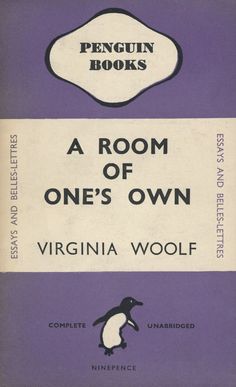
Image

(Image from: https://www.pinterest.com/particularbooks/postcards-from/)

The central image is: “a woman must have money and a room of her own if she is to write fiction.”  In other words, she needs a means to support herself, and space to reflect and think; she needs liberty, and these things have been traditionally denied to women.  They have been dependent on the men in their family for financial support, and not supposed to concern their pretty little heads with intellectual endeavour.  Woolf argues her points forcefully but wittily, you never feel you are being bludgeoned by polemic.  Take for example the opening paragraph:

“But, you may say, we asked you to speak about women and fiction – what, has that got to do with a room of one’s own? I will try to explain. When you asked me to speak about women and fiction I sat down on the banks of a river and began to wonder what the words meant. They might mean simply a few remarks about Fanny Burney; a few more about Jane Austen; a tribute to the Brontës and a sketch of Haworth Parsonage under snow; some witticisms if possible about Miss Mitford; a respectful allusion to George Eliot; a reference to Mrs Gaskell and one would have done.”

The paucity of women writers Woolf has at her disposal to refer to speaks volumes about the male dominance of writing up to this point, and the reliance on male point of view for literary portrayals of women:

“women have burnt like beacons in all the works of all the poets from the beginning of time — Clytemnestra, Antigone, Cleopatra, Lady Macbeth, Phedre, Cressida, Rosalind, Desdemona, the Duchess of Malfi, among the dramatists; then among the prose writers: Millamant, Clarissa, Becky Sharp, Anna Karenina, Emma Bovary, Madame de Guermantes … Indeed, if woman had no existence save in the fiction written by men, one would imagine her a person of the utmost importance; very various; heroic and mean; splendid and sordid; infinitely beautiful and hideous in the extreme; as great as a man, some think even greater.”

Of course, Woolf was a highly accomplished and inventive writer herself, and this is reflected in the lecture which is not traditionally academic but instead illustrated with fictional characters such as Judith Shakespeare, sister of the more famous William:

 “his extraordinarily gifted sister, let us suppose, remained at home. She was as adventurous, as imaginative, as agog to see the world as he was. But she was not sent to school. She had no chance of learning grammar and logic, let alone of reading Horace and Virgil. She picked up a book now and then, one of her brother’s perhaps, and read a few pages. But then her parents came in and told her to mend the stockings or mind the stew and not moon about with books and papers. […]She had the quickest fancy, a gift like her brother’s, for the tune of words. Like him, she had a taste for the theatre. She stood at the stage door; she wanted to act, she said. Men laughed in her face […]who shall measure the heat and violence of the poet’s heart when caught and tangled in a woman’s body? [She] killed herself one winter’s night and lies buried at some cross-roads where the omnibuses now stop outside the Elephant and Castle.”

As my extensive quoting shows, I think this is a fantastic essay, well worth reading. It isn’t flawless, it’s culturally biased towards the speaker and her audience: middle-class, white, Western women.  But Woolf never claims to have all the answers: “women and fiction remain, so far as I am concerned, unsolved problems.” (I think the idea of women as an unresolved problem is ironic and assertive, not derogatory?) A Room of One’s Own highlights enduring problems, relevant to both genders, of how to claim societal freedom that will permit individual voices to be heard. It also makes me very glad that I am a woman in this day and age; I may be embarrassed at how ridiculously over-educated I am (a perennial student) but at least I had the choice to become so.

To end, a picture of a room I wish was my own – it could do with a few more books, though…
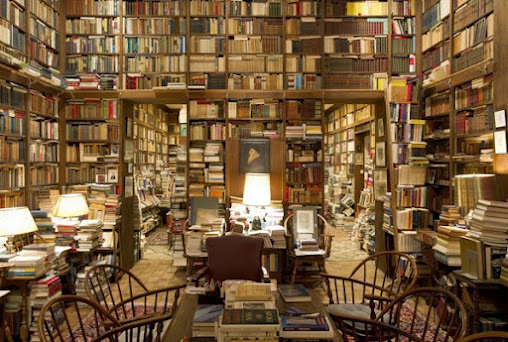
Image

(Image from http://pawilson.ca/are-there-some-books-you-keep-reading-over-and-over/ )

“I’ve met a lot of hardboiled eggs in my time, but you’re twenty minutes.” (Billy Wilder)

Happy Easter!  For those of you who don’t celebrate this festival, I hope you’re enjoying the long weekend (and possibly an abundance of chocolate).

Image

(Image from: http://www.sproutcontent.com/ )

For a theme for this post I was thinking about Easter, about sacrifice and redemption, and also about Spring, the season of renewal and regeneration that it coincides with.  I’ve opted for a novel with a self-sacrificing main character, and a poem that starts in April. They’re both quite odd texts: here’s to a weird Bank Holiday!

Firstly, A Prayer for Owen Meany by John Irving (1989, Black Swan).  Irving is an enormously popular author and Owen Meany is one of his most-loved protagonists: a boy “with a wrecked voice” who is so tiny people can’t resist picking him up, his skin “the colour of a gravestone; the light was both absorbed and reflected by his skin, as with a pearl, so that he appeared translucent at times”.  The story is narrated by his best friend Johnny Wheelwright, who is trying to come to terms with the role Owen has played in his life.  When they are 11, Owen hits a foul ball that kills Johnny’s mother immediately.  The boys reconcile by swopping their most treasured possessions: “He gave me his baseball cards, but he really wanted them back, and I gave him my stuffed armadillo, which I certainly hoped he’d give back to me – all because it was impossible for us to say to each other how we really felt.” 

When he returns the armadillo, Owen has taken its claws, which Johnny comes to realise is Owen’s way of telling him:  “GOD HAS TAKEN YOUR MOTHER. MY HANDS WERE THE INSTRUMENT. GOD HAS TAKEN MY HANDS. I AM GOD’S INSTRUMENT.” Owen’s speech is always in capitals to represent his bizarre voice, and as a device it really works, marking him out not only against the other characters but also in the book itself – you can flick through and find Owen immediately.  So, Owen is already unusual, but is even more extraordinary than people realise.  He thinks he is God’s instrument, and certainly Johnny agrees: “I now believe that Owen Meany always knew; he knew everything.” The events of their lives mean not only that “Owen Meany rescued me” and gave Johnny Christian faith, but that Owen’s absolute conviction in a greater scheme of things and his capacity for self-sacrifice are tested to the extreme. It’s so hard to say any more without giving away spoilers, but I urge you to read it.  A Prayer for Owen Meany is a novel as truly original as its protagonist, funny and sad, elegiac and uplifting.

Secondly, The Waste Land by TS Eliot, a hugely famous and notoriously difficult poem.  For what it’s worth, I would say don’t let the reputation it put you off.  If you fancy giving it a go, read it and let the “heap of broken images” wash over you, see what it brings.  You can always re-read using the footnotes (which will be copious – and Eliot’s own notes add more confusion rather than explication) to translate the Latin, Greek etc  and find out about the plethora of allusions.  The poem begins:

April is the cruellest month, breeding  

Lilacs out of the dead land, mixing         

Memory and desire, stirring      

Dull roots with spring rain.

These lines are an allusion to the start of The Canterbury Tales:

Whan that Aprill, with his shoures soote

The droghte of March hath perced to the roote

And bathed every veyne in swich licour,

Of which vertu engendred is the flour;

Whan Zephirus eek with his sweete breeth

Inspired hath in every holt and heeth

The tendre croppes…

As you can see, Eliot takes the same premise but where Chaucer sees pastoral idyll (admittedly evoked a little ironically) Eliot sees something bleaker, death amongst the renewal, cruelty amongst the desire.  The Waste Land is an odd, unsettling poem; its original title was going to be He Do the Police in Different Voices (a line from Our Mutual Friend) and The Waste Land is certainly a cacophony of voices, evoking different times, places and stories.  As an embittered commuter who used to cross London Bridge every day, the following passage always sticks in my mind:

Unreal City,         

Under the brown fog of a winter dawn,               

A crowd flowed over London Bridge, so many, 

I had not thought death had undone so many.  

Sighs, short and infrequent, were exhaled,       

And each man fixed his eyes before his feet.    

Flowed up the hill and down King William Street,          

To where Saint Mary Woolnoth kept the hours

With a dead sound on the final stroke of nine.

The Waste Land does this frequently, takes images that almost seem commonplace, like commuters walking over a bridge, and then undermines it, in this instance when you realise they are all ghosts, their movement seemingly without purpose. The Waste Land is a poem that defies easy explanation and raises far more questions than it answers.  It can be a frustrating read, but also a hugely rewarding one that benefits from multiple readings.

Who is the third who walks always beside you?              

When I count, there are only you and I together             

But when I look ahead up the white road            

There is always another one walking beside you             

Gliding wrapt in a brown mantle, hooded          

I do not know whether a man or a woman          

—But who is that on the other side of you?

For a very interesting discussion on The Waste Land and how we read, head over to Necromancy Never Pays.

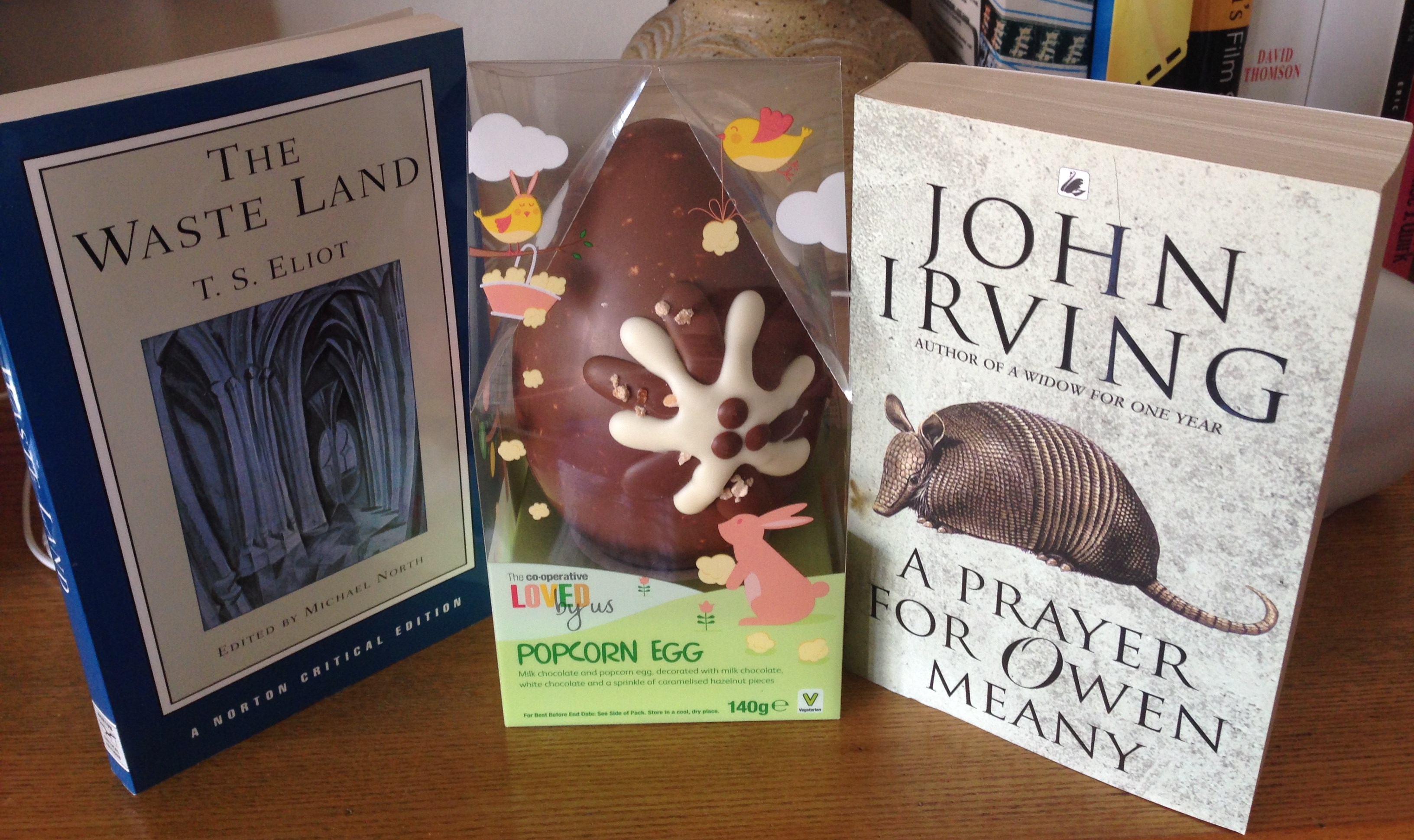
I feel like I should picture the books with an egg as odd and unsettling as the books themselves, a dinosaur egg or something.  (Or an armadillo egg?  But I’m feeling too lazy to make them, it is a Bank Holiday after all…) So here they are instead with a reassuringly chocolatey easter egg, a present from my brother:

Image

Six Characters in Search of an Author – Luigi Pirandello (Le Monde’s 100 Books of the Century #53)

This is the first in a series of occasional posts where I’ll be looking at works from Le Monde’s 100 Books of the Century.  Please see the separate page (link at the top) for the full list of books and an explanation of why I would do such a thing. I set myself the challenge in January and I’m only beginning to blog about it now; this does not bode well for my completing this challenge before I see in a century of my own…

(c) Glasgow Museums; Supplied by The Public Catalogue Foundation

(Image from: http://www.bbc.co.uk/arts/yourpaintings/paintings/old-lady-reading-83754)

Six Characters in Search of an Author is a play by Luigi Pirandello, originally written in Italian and performed in 1921 (my copy translated by Frederick May, 1954).  It’s a play about itself, about the theatre, and although philosophical and reflective, it’s also very silly.

“Life is full of things that are infinitely absurd, things that, for all their impudent absurdity, have no need to masquerade as truth, because they are true”

“What the devil are you talking about?”

A producer is putting on a play with a group of actors, who are only identified by their roles: Leading Lady/Leading Man/Ingénue and so on.  As we are presented with what appears to be a rehearsal, there is a sense of the play being simultaneously constructed and deconstructed in front of us.  The ideas are complex and it’s definitely not a play to approach when you’re tired and/or in need of escapism, but Pirandello undercuts the potentially pretentious self-reflexive philosophising with a good dose of humour, having the Producer complain early on:

“We’re reduced to putting on plays by Pirandello? And if you understand his plays…you’re a better man than I am! He deliberately goes out of his way to annoy people, so that by the time the play’s through everybody’s fed up…actors, critics, audience, everybody!”

Well, you can’t say he didn’t warn us.  The rehearsal of the play by Pirandello is interrupted by the arrival of six characters – Father, Mother, Step-daughter, Son, Boy and Little Girl.  They want the Producer to help them, as “the author who created us as living beings, either couldn’t or wouldn’t put us materially into the world of art.” They start to tell their story while the actors look on, and the stage directions tell us: “The CHARACTERS should not, in fact, appear as phantasms, but as created realities, unchangeable creations of the imagination and, therefore, more real and more consistent than the ever-changing naturalness of the ACTORS.” As the actors and characters interact (and bitch at each other and argue about representation) the play presents complex philosophical questions about truth, reality and identity, and whether any of us really has any idea what on earth is going on:

“Each one of us has a whole world of things inside him… and each one of us has his own particular world. How can we understand each other if into the words I speak I put the sense and value of things as I understand them within myself… while at the same time whoever is listening to them inevitably assumes them to have  the sense and value that they have for him…. We think we understand each other… but we never really do understand!”

In this way, Pirandello admirably manages to interrogate the relationship of theatre to representation, reality to illusion, art to life.  There are lots of meta-moments (the whole play is really one big metatheatrical experience); my favourites were where he drew attention to the play’s own limitations, studiously ignoring the Producer’s directive that “When you’re here you have to respect the conventions of the theatre!” and a great moment where the Son walks off, refusing to act because “I’m a dramatically unrealised character”.

Six Characters in Search of an Author is a hugely complex work and at the same time a short, humorous play.  I really enjoyed it, but I also think I could re-read it and each time think that I understood nothing from my previous readings.  I also wouldn’t be surprised if someone entirely hated it, and they would not be alone: apparently the playwright had to leave the premiere performance through a side-exit to avoid the throng of haters.  If you’re a writer, actor, theatre-lover or philosophy enthusiast, you’ll find a lot to interest you in Six Characters in Search of an Author.  If you like Waiting for Godot or Rosencrantz and Guildenstern are Dead, then this play could be for you.

Phew!  After all that deep reflection on the nature of theatre and our existence, I think it must be time for shark cat on a Roomba: