“All is vanity, nothing is fair.” (William Makepeace Thackeray)

Despite the fact that Fiction Fan announced today’s Vanity Fair review-a-long back in June, I have of course ended up writing this right up to the wire. Ah well, ‘twas ever such. Or certainly has been for the last few years on my faltering blog…

It’s probably a good thing though, as my usual verbose, stream-of-barely-conscious style is likely to have been even worse as I try to work out what on earth I could say about this enormous tome, such a well-known classic novel that despite having not read it before or seen any adaptations, I already knew the plot and lead characters.

So I’ve decided to focus just on one element of the novel: satire. Although published in 1847-8, Thackeray set Vanity Fair earlier, during the Napoleonic Wars, enabling him to point out to society how appalling and self-serving everyone is, without alienating his readers. Clever Thackeray.

Thackeray proclaims that Vanity Fair is “a novel without a hero”, and by the end of the novel, he has so thoroughly painted a picture of a materialist, corrupt, self-serving and shallow society, that heroism seems nigh on impossible. What we do have is the main protagonist of Becky Sharp:

“Miss Rebecca was not, then, in the least kind or placable. All the world used her ill, said this young misanthropist, and we may be pretty certain that persons whom all the world treats ill, deserve entirely the treatment they get. The world is a looking-glass, and gives back to every man the reflection of his own face.”

But if all this is sounding pretty grim, it really isn’t. I enjoy satire, particularly that of the century preceding Vanity Fair, but it can often leave rather a bitter taste. Thackeray largely avoids this because firstly, he seems to quite enjoy his characters, and secondly, he doesn’t aim for the moralistic teaching of some satirists. He never suggests there is a way for this world to be other than it is. Which is bleak, but also stops the tone being too heavy.

He also doesn’t make the reader feel too implicated. Regency England is even further removed from us than the original readers, and in setting it amongst the upper classes, he skewers a stratum of society very few inhabit.

“The whole baronetage, peerage, commonage of England, did not contain a more cunning, mean, selfish, foolish, disreputable old man. That blood-red hand of Sir Pitt Crawley’s would be in anybody’s pocket except his own; and it is with grief and pain, that, as admirers of the British aristocracy, we find ourselves obliged to admit the existence of so many ill qualities in a person whose name is in Debrett.”

So while amoral Becky climbs from very humble origins, as the daughter of an opera singer and a artist, by any means necessary with no concern for anyone other than herself, we can sit back feeling pretty smug, yes? Well, no. Thackeray positions the reader very cleverly by making Becky the most entertaining and compelling character. I certainly felt the novel was pointing out very clearly what it meant that I would rather hear about Becky and all her conniving, that about simple, kind Amelia (Emmy) or upright Captain Dobbin.

I didn’t like Becky, but I enjoyed her. While she could be spiteful and a bully to Amelia:

Women only know how to wound so. There is a poison on the tips of their little shafts, which stings a thousand times more than a man’s blunter weapon. Our poor Emmy, who had never hated, never sneered all her life, was powerless in the hands of her remorseless little enemy.

She also used all the vanities and weaknesses of not very pleasant people against them, was clever and entertaining, and was out to ensure her position and security in a world where everything was stacked against her. I would far rather hear about Becky than Emmy, who spent her time simpering over her repulsive husband, spoiling her revolting child, and crying whenever she wasn’t otherwise engaged.

“In two days he has adopted a slightly imperious air and patronizing manner. He was born to command, his mother thinks, as his father was before him.”

I’m not sure we’re supposed to think Emmy particularly misguided here. Thackeray is pretty scathing about those in charge. Those with privilege are those who lead, and there is nothing in their personal qualities to suggest this is wise. Sadly this has not dated.

Always to be right, always to trample forward, and never to doubt, are not these the great qualities with which dullness takes the lead in the world?

Thackeray exposes how these weaknesses of the ruling classes are indulged in a way that poorer members of society are not:

When we read that a noble nobleman has left for the Continent, or that another noble nobleman has an execution in his house—and that one or other owes six or seven millions, the defeat seems glorious even, and we respect the victim in the vastness of his ruin. But who pities a poor barber who can’t get his money for powdering the footmen’s heads; or a poor carpenter who has ruined himself by fixing up ornaments and pavilions for my lady’s dejeuner; or the poor devil of a tailor whom the steward patronizes, and who has pledged all he is worth, and more, to get the liveries ready, which my lord has done him the honour to bespeak? When the great house tumbles down, these miserable wretches fall under it unnoticed.”

Certainly along with the bullying, it was the financial exploitation of her staff that made Becky most problematic and unlikeable for me. However,  it’s very clear that Becky’s options, and Amelia’s, are limited and I thought Thackeray was surprisingly sympathetic to the position of women in society.

Although frequently compared to War and Peace, the writer Vanity Fair most put me in mind of was Jean Rhys. I think both she and Thackeray agree that morals are a privilege of the comfortably off, and those with choices (mainly men).

“And who knows but Rebecca was right in her speculations—and that it was only a question of money and fortune which made the difference between her and an honest woman? If you take temptations into account, who is to say that he is better than his neighbour? A comfortable career of prosperity, if it does not make people honest, at least keeps them so.”

I really enjoyed the humour and social commentary of Vanity Fair and I’m so glad today’s reviewathon prompted me to finally take it off the shelf. For those of you thinking about giving it a go, I should warn you that there are racist portrayals of some characters and countries primarily at the beginning, but these are thankfully short-lived and Thackeray doesn’t seem to be asserting that whites hold any kind of moral authority.

Frankness and kindness like Amelia’s were likely to touch even such a hardened little reprobate as Becky. She returned Emmy’s caresses and kind speeches with something very like gratitude, and an emotion which, if it was not lasting, for a moment was almost genuine. 

I’m not sure who else is taking part but I’ll add links to the other bloggers posting today as I find them 😊

Fiction Fan’s review

Rose Reads Novels

Jane at Just Reading a Book

LouLouReads

Sandra at A Corner of Cornwall

To end, for some reason I’ve been thinking a lot about Stevie Nicks lately. So I’ve decided to shoehorn her into this post by claiming that at the start of Vanity Fair, Becky and Amelia are almost definitely – ahem – on the edge of seventeen… (#sorrynotsorry)
Novella a Day in May #9

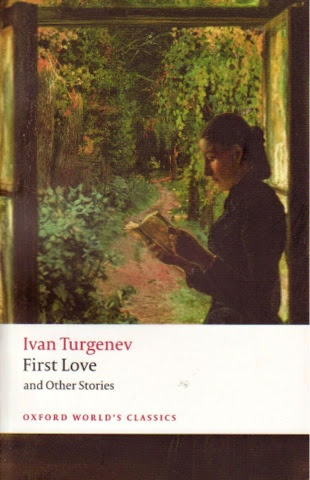
First Love – Ivan Turgenev (1860, trans. Isiah Berlin, 1950) 106 pages

This short tale of thwarted first love, told by a man, Vladimir Petrovich, looking back on the summer of 1833 when he was 16, manages to be both moving and funny. I felt for the pain of the young boy, whilst simultaneously rolling my eyes at the self-importance of teenagers (a bit how I feel watching Romeo and Juliet these days – kids!)

A young man is on the brink of adulthood, having just said goodbye to is tutor, when Princess Zasyekin moves in next door. The princess is uncouth and her house shabby:

“She took snuff as noisily as ever, and fidgeted and turned about on her chair as much as before. It never seemed to have entered her head that she was a princess.”

However, her daughter Zinaida is beautiful and poised, and has suitors in abundance. She teases them all, keeping them in a state of anticipation whilst remaining just out of reach. The young Petrovich is no different:

“But through the tears and the melancholy, inspired by the music of the verse or the beauty of the evening, there always rose upwards, like the grasses of early spring, shoots of happy feeling, of young and surging life.”

Yet there is always the sense that things are happening with Zinaida that our protagonist is too green to recognise. She seems genuinely fond of him and at one point even tells him so after he nearly breaks his neck jumping from a high wall (told you – kids!) yet there is something worldly and slightly damaged about her which Petrovich cannot begin to understand.

 “My arms were smarting from the nettles, my back ached, my head swam, but at that moment I experienced a sense of bliss such as I never again felt in the whole of my life. It flowed like a delicious pain through all my limbs and finally resolved itself in rapturous leaps and cries. Yes, indeed, I was still a child.”

First Love reminded me of The Go-Between and Great Expectations whilst being resolutely its own tale. In a short space it conveys a detailed, effective portrait of the awakening of a young person to both the love and corruption that the adult world has to offer.

“Just try new things. Don’t be afraid. Step out of your comfort zones and soar, all right?” (Michelle Obama)

A little while ago I went to see Edward St Aubyn interviewed and he was every bit as witty and compelling as I’d hoped. He mentioned that he finds dialogue the easiest part of writing, and an audience member asked him if he’d consider writing a play. St Aubyn said he didn’t really enjoy theatre (something along the lines of “I always seem to be in the middle of row M”) but that playwriting might be a bit of a holiday from novel writing, which I’m sure must have pissed off any playwrights in the audience sweating blood and ink over their drama.

Also, for any fellow Patrick Melrose series fans, and I know we are a precious bunch who don’t want to see TV mess up such novelistic perfection, he said he’d been on set to see the production that’s being made with Benedict Cumberbatch and he was very happy with it.

So, a long preamble to say that this is why I decided to look at playwrights writing prose this week.

Firstly, Samuel Beckett’s First Love and Other Novellas (1954-73, trans. Samuel Beckett and Richard Seaver) which I would argue aren’t novellas at all, they are all short stories (there are 4 stories in the collection and the 2 longest are only just over 20 pages). Pedantry aside, I would say if you like Beckett’s dramas you’ll like his short stories. It’s all here: existential crisis, bleak absurdism, humour and despair.

In The End, the first-person narrator is down on his luck, clothed in badly fitting clothes that ‘they’ have given him from a dead man, having burnt his (presumably to avoid disease). He eventually finds lodgings, but is turfed out and returns to an itinerant life:

“One day I witnessed a strange scene. Normally I didn’t see a great deal. I didn’t hear a great deal either. I didn’t pay attention. Strictly speaking I wasn’t there. Strictly speaking I believe I’ve never been anywhere. But that day I must have come back.”

Pretty Beckettian, no? I know he’s not for everyone, but what I like about Beckett is that all the absurdism and word-play is not an intellectual exercise only, but is underpinned by a great humanity and acute awareness of suffering which makes his work bleakly beautiful:

“The memory came faint and cold of the story I might have told, a story in the likeness of my life, I mean without the courage to end or the strength to go on.”

The idea of choosing the story we tell is continued in the next two stories, The Expelled where the narrator, having taken us through a day in his life concludes:

“I don’t know why I told this story. I could just as well have told another. Perhaps some other time I’ll be able to tell another. Living souls, you will see how alike they are.”

And also in The Calmative, where the narrator tells himself a story to assuage the fear of death:

“So I’ll tell myself a story. I’ll try and tell myself another story, to try and calm myself, and its there I feel I’ll be old, old, even older than the day I fell, calling for help and it came. Or is it possible that in this story I have come back to life, after my death? No, it’s not like me to come back to life, after my death.”

The final, titular story is needless to say, not a rose-tinted view of innocence and longing.

“I didn’t understand women at that period. I still don’t for that matter. Nor men either. Nor animals either. What I understand best, which is not saying much, are my pains. I think them through daily, it doesn’t take long, thought  moves so fast, but they are not only in my thought, not all.”

So, business as usual for Beckett despite the change in the form from drama 😀 If you’re not sure about Beckett but want to give him a go, you could do worse than start here; you’ll get a good flavour without having to pay extortionate theatre ticket prices only to find yourself stuck in the middle of row M.

Obligatory picture of Beckett’s amazing face:

Samuel_Beckett,_Pic,_1

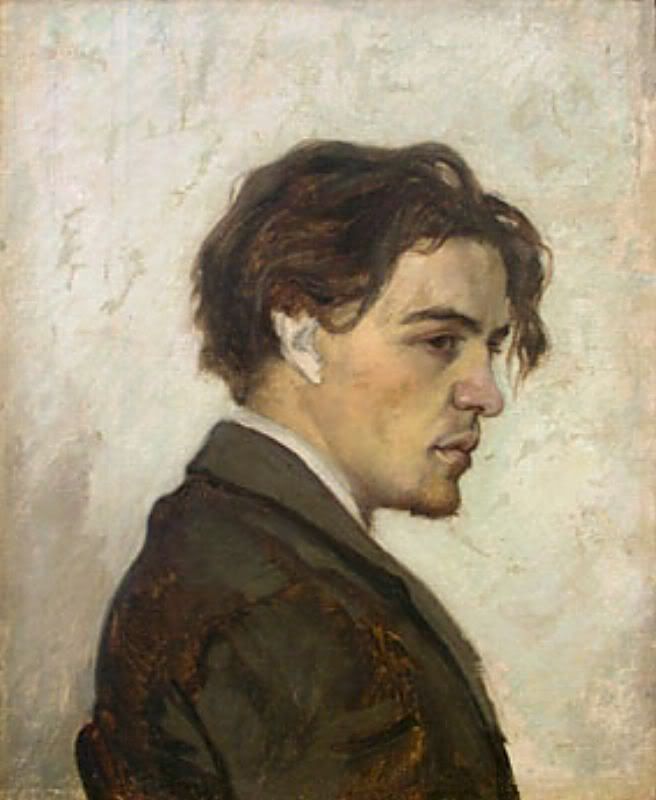
Secondly, About Love and Other Stories by Anton Chekhov (trans. Rosamund Bartlett, OUP 2004). I’m being a bit cheeky claiming Chekhov primarily as a playwright for the purposes of this blog post, given that the back of my edition of these stories has a quote from Raymond Carver proclaiming Chekhov “the greatest short story writer who has ever lived”.

Anton Chekhov, who took up writing after One Direction split up

Having read this collection, I would say he really is a master. Beautiful writing, not a word out of place (as you’d expect given the famous ‘gun’ instruction regarding not having any superfluous detail) and he is able to take the miniature and make it epic. In The Lady with the Little Dog, Chekhov takes a well-worn story of a bounder seducing an unhappy woman and turns it into a tragedy, without it ever becoming sentimental or overblown.

“She pressed his hand and started walking down the stairs, looking back at him  all the time, and you could see from her eyes that she really was not happy. Gurov stood for a while, listening, and then when everything had gone quiet he looked for his coat-peg and left the theatre.”

It is the story not of a great love affair, but a love that sneaks up on two people who were not looking for it and how it seems to bring nothing but misery, but with an ever-present promise of unrealised happiness.

The stories are ambitious in theme and they are truly profound, but that doesn’t mean they are without humour. Rothschild’s Violin begins:

The town was very small – worse than a village really – and the people who lived in it were mostly old folk who died so rarely it was quite annoying.”

Yakov is the unfortunate coffin maker in this healthy town and he is grumpy and horrible to his wife. When his wife dies, he expresses his unexpected feelings through his violin playing, to great effect:

“Rothschild listened intently, standing to one side, his arms folded on his chest. The frightened, confused expression on his face gradually changed to one of grief and suffering. He rolled his eyes, as if experiencing exquisite pain”

A story about the universality of pain and the expression of feeling beyond words is explored with a lightness of touch that almost borders magic realism. Chekhov writes with such subtlety and never patronises the reader.

It’s really hard to write about Chekhov’s short stories. They are so rich, so full of telling detail and so beautifully evoked that I have not done any justice to them here. I only hope that I’ve convinced you to pick up one of his short story collections and read the treasures for yourself.

To end, following my last post’s comment by Lucy, a festive video of 2 men stepping out of their comfort zones and looking slightly baffled about it all (“I’m David Bowie, I live down the road” 😀 ):