“I wanna be anarchy” (The Sex Pistols)

Do you ever get the feeling you want to kick over the traces and run away?  I’m really fed up with my job and while I daydream about jacking it all in through some dramatic gesture before setting off to backpack round the Greek islands, it’s not going to happen. Not if I want a home to return to – the pesky mortgage will insist on being paid.

7f5d661625t-work.gif

Fundamentally I’m not an anarchist, however much I might like to think I’m a free-wheeling, free-thinking rebel.

tumblr_n3gpy7nhan1rvzbdgo1_500

So I’ll just have to compensate by watching Marlon Brando films (any excuse) and reading about anarchy.  The novel and play I’ve chosen suggest anarchy may not be the best way to go anyway.

Firstly, The Secret Agent by Joseph Conrad (1907). I studied this for ‘A’ level and it’s no exaggeration to say it was the bane of my life.  I hated it.  I found it so unbearable I never actually finished reading it and wrote my exam essay based on the chapter summary at the back of the edition we used (not an exam technique I recommend, kids).  Events conspired against me and about ten years later I had to read it again for a course I was doing.  Much to my surprise, I didn’t mind it so much this time and found it quite readable.  A lesson there that I should return things I’ve previously written off – at the very least I can confirm my prejudices, which is always fun.

The Secret Agent was inspired by an actual event in 1894, where a French anarchist, Martial Bourdin, accidently blew himself up in Greenwich Park.  Conrad sets his story two years later, and the opening of the novels sets everything up expertly:

Mr Verloc, going out in the morning, left his shop nominally in charge of his brother-in-law.  It could be done, because there was very little business at any time, and practically none at all before the evening.  Mr Verloc cared but little about his ostensible business.  And, moreover, his wife was in charge of his brother-in-law.

The shop was small, and so was the house.  It was one of those grimy brick houses which existed in large quantities before the era of reconstruction dawned upon London.  The shop was a square box of a place, with the front glazed in small panes.  In the daytime the door remained closed; in the evening it stood discreetly but suspiciously ajar.

The window contained photographs of more or less undressed dancing girls; nondescript packages in wrappers like patent medicines; closed yellow paper envelopes, very flimsy, and marked two-and-six in heavy black figures; a few numbers of ancient French comic publications hung across a string as if to dry; a dingy blue china bowl, a casket of black wood, bottles of marking ink, and rubber stamps; a few books, with titles hinting at impropriety; a few apparently old copies of obscure newspapers, badly printed, with titles like The TorchThe Gong—rousing titles.  And the two gas jets inside the panes were always turned low, either for economy’s sake or for the sake of the customers.

This basically tells you all you need to know: the grimy sordidness of Verloc’s existence, the fact that he is involved in some sort of subterfuge, and the involvement of his family at the edges, with his wife, Winnie, devoted to her brother Stevie.

Verloc is utterly unlikeable – lazy and self-serving, he is not an anarchist dedicated to a higher cause.  His ‘comrades’ are equally despicable and pathetic, except for The Professor, who is altogether more sinister:

The Professor’s indignation found in itself a final cause that absolved him from the sin of turning to destruction as the agent of his ambition.  To destroy public faith in legality was the imperfect formula of his pedantic fanaticism; but the subconscious conviction that the framework of an established social order cannot be effectually shattered except by some form of collective or individual violence was precise and correct.  He was a moral agent—that was settled in his mind.  By exercising his agency with ruthless defiance he procured for himself the appearances of power and personal prestige.  That was undeniable to his vengeful bitterness.”

Conrad is highly sceptical of the motivation of those proclaiming themselves agents of societal change.  The group of would-be anarchists plot a violent act, and unfortunately, skirting around them is Verloc’s brother-in-law:

“There was no young man of his age in London more willing and docile than Stephen, she affirmed; none more affectionate and ready to please, and even useful, as long as people did not upset his poor head.”

Stevie is an obvious choice, for those who would not want to risk their own lives in carrying out terrorist acts, to manipulate and control.  The Secret Agent is fairly predictable, but the flash-forward/flash-back structure works well at sustaining plot tension, and its utter bleakness, while unrelenting, is effectively ironic in evoking politics where the principle is self-preservation above all else.

The Secret Agent was made into a film in 1996 starring Bob Hoskins as Verloc ,Patricia Arquette as Winnie, and Batman Christian Bale as Stevie:

Secondly, Accidental Death of an Anarchist by Italian theatre legend Dario Fo (1970), which you can read here. Like The Secret Agent,  it is based on actual events. Giuseppe Pinelli was an anarchist accused of bombing a bank who fell (?) to his death from a police station window in Milan in 1969. In Fo’s play version, events become farcical, beginning with the Maniac being interrogated at the police station by Inspector Bertozzo. The Maniac denies being a con artist and impersonator, insisting he is mentally ill:

“I have a thing about dreaming up characters and then acting them out. It’s called ‘histrionomania’ – comes from the Latin histriones, meaning ‘actor’. I’m a sort of amateur performance artist. With the difference that I go for ‘Théatre Verité’ – my fellow performers need to be real people, but people who don’t realise that they’re in my plays. Which is just as well, ‘cos I’ve got no money and couldn’t pay them anyway…”

 This metatheatrical theme runs throughout the play, with Fo using the dramatic form to demonstrate how public life can often involve playing a role.  The Maniac poses as a judge to interrogate the officials on the fourth floor and explore the events that led to the fall of the anarchist:

“MANIAC: We’ll stick with the ‘right at the start’ for the moment… One step at a time. So, at about midnight, the anarchist was ‘seized by a raptus’ – these are still your words – he was seized by a ‘raptus’ and went and threw himself to his death from the window. Now, what is a ‘raptus’? Bandieu says that a ‘raptus’ is a heightened form of suicidal anxiety which can seize even people who are psychologically perfectly normal, if something provokes them to extremes of angst, in other words, to utter desperation. Correct?

 SUPERINTENDENT AND SPORTS JACKET: Correct.

 MANIAC: So we need to find out who or what it was provoked this anxiety, this desperation. I suspect that the best way would be if we do a reconstruction. Superintendent, the stage is yours.

 SUPERINTENDENT: Me?

 MANIAC: Yes, go ahead: would you mind re-enacting your famous entrance?

 SUPERINTENDENT: I’m sorry, what famous…?

 MANIAC: The one that brought about the ‘raptus’.

 SUPERINTENDENT: Your honour, there must be a misunderstanding here. It wasn’t me who did the entrance, it was one of my officers…”

 As the role playing intensifies, so does the satire:

MANIAC: It’s true, I’m afraid: your careers are in tatters! Blame it on politics, friends! At the start you served a useful function: something had to be done to stop all the strikes… So they decided to start a witch-hunt against the Left. But now things have gone a bit too far… People have got very upset about the death of our defenestrated anarchist… they want someone’s head on the block, and the government’s going to give them – yours!

 […]

  SUPERINTENDENT: Your Honour, you’re going to have to advise us. What do we do now?

 MANIAC: How should I know?

 SPORTS JACKET: Yes – what would you advise?

 MANIAC: If I were in your shoes…

 SUPERINTENDENT: Yes?

 MANIAC: I’d throw myself out of the window!

In the second act a journalist turns up, the physical comedy intensifies and it all degenerates into total…well, you know.  Accidental Death of an Anarchist is very silly, but don’t let that fool you. The satire is sharp and the theatricality informed and accomplished. It’s a play with plenty to say and it does it with great energy and verve.

There’s really only one way to finish this post:

“What if there is no tomorrow? There wasn’t one today.” (Bill Murray, Groundhog Day, 1993)

Trigger warning: this post contains strong language and discussion of gruesome violence. Enjoy!

For almost two weeks (count ‘em: TWO WEEKS) I’ve had no computer.  It died 4 days before I had 12,000 words due for my Masters course so stress does not even begin to cover it, dear reader.  Once I’d got my essays done on my mother’s computer (which seems to view formatting as an opportunity to express a whimsical avant-garde approach to functionality  – don’t tell me they’re not sentient) I felt like I was back in the nineties.  Admittedly I had my phone made by a popular fruit-branded organisation so I wasn’t entirely offline, but it severely impacted my digital activity.  Now I have my preferred method of interweb access back, I thought I’d embrace twenty years ago:

giphy (2)

Now, for some people, their memories of the 90s are that it was like this:

tumblr_mmrf2nfBLi1r5r4uyo1_500

But let me tell you, people were angry in the 90s. My proof for this is the wave of new writing that emerged in British theatre at the time.  Sometime referred to as ‘in-yer-face’ theatre, writers like Sarah Kane, Mark Ravenhill and Patrick Marber wrote dark, challenging plays that usually involved protagonists waging psychological warfare on one another. So to start I thought I would look at one of the plays written by this new generation of dramatists; Jez Butterworth would go on to a work of genius in Jerusalem, but back in 1995 he had just written his first solo play, Mojo.

Mojo is set in a Soho nightclub, the Atlantic, in 1958 (unusually, as most new dramatic writing was resolutely contemporary. I remember seeing an interview with Butterworth at the time, where he said he did it to avoid being labelled ‘the voice of the generation’ which I thought staggeringly confident).  The owner of the Atlantic, Ezra, is locked in a power struggle with a fellow gangster, Sam Ross (neither of whom we ever see), over management of a pop ingénue (can you have a male ingénue? There are resolutely no women in this play) Silver Johnny.  Ezra’s employees Sweets, Potts and Skinny, his damaged son Baby, and the older lieutenant Mickey are stuck in the club, antsy with drugs and fear:

MICKEY. He’s out there. (Pause.)

POTTS. Out where? Out the back?

SKINNY. Fucking hell. Now?

SWEETS. Fucking hell.

POTTS. It’s a joke.  It’s Mickey’s joke.  It’s Mickey’s morning joke.

SWEETS. Out where?

SKINNY. Don’t you listen?  By the bins. That’s what they said. ‘You’re finished’ and ‘Look by the bins’.

SWEETS. You said ‘By the bins’. Mickey said ‘In the bins’.

POTTS. By the bins in the bins. Is that the issue here? If it’s ‘by’ are we safe?  If it’s ‘by’ is there a deal?

SKINNY. Mickey. Okay, okay. Indulge me. Please. Are you sure? Are you ten times out of ten sure that he’s passed away?

MICKEY. He’s fucking cut in half. He’s in two bins. (Pause.)

With their leader definitively dealt with, the boys are afraid to leave and stay sweating in the increasingly oppressive environment of the club, trying to hold things together while Baby, the deranged son of Ezra, completely unravels:

MICKEY. They’re going to come here…

BABY (overlapping) I wish I was more like you Mickey. I wish I was less like me, and more like you.

Pause.

MICKEY. Listen to me. They’re going to come here.

BABY. They’re going to come here.

MICKEY. Yes, I think they are.

BABY. Yes, I think they are.

MICKEY. If…Listen.

BABY. If…Listen.

MICKEY. Baby –

BABY. Baby –

Pause.

MICKEY. You think you’re in a book.

BABY. I am. I’m Spiderman.

Needless to say, it all falls spectacularly apart as power struggles intensify, betrayals are realised, and weaknesses exposed.  The feel of it is very reminiscent of Butterworth’s mentor, Harold Pinter’s, ‘comedies of menace’. The fast pace and punchy dialogue sweep the audience along to the violent end, as helpless witnesses to the carnage as the characters themselves.

I saw the revival of Mojo in 2013 (at the Harold Pinter theatre), and while the total absence of women in the play felt even more apparent, generally I felt it had stood the test of time (the 1997 film I found less successful, but it’s still worth a look for some wonderful performances). Butterworth’s avoidance of being the ‘voice of a generation’ seems to have paid off with longevity.

Secondly, another debut, which I chose because it won a prize that began in the 1990s, the IMPAC.  Andrew Miller’s Ingenious Pain follows James Dyer as he tries to come to terms with the fact that he is incapable of feeling any pain.  Born in the first half of the eighteenth century, James is an “unnatural child”, one who never cries, even at the moment of his birth. He disconcerts those around him even if they’re not entirely sure why. While James’ state may seem enviable, while he cannot feel pain he also cannot feel its opposite:

“Pain, pleasure. He has glimpsed their coast, their high cliffs; smelt in dreams the loaded offshore breezes. But still he is surrounded by a calm insensate sea; his ship high-sided, inviolable, its great grey pennants streaming. How could it be otherwise?”

James is oddly remote, unable to relate to his fellow beings, a detached observer that suits the present tense narrative. He is an unlikeable yet tragic figure:  used by conmen and collectors who are interested only in his freakishness. He knows something is missing but he is unsure as to what.

“She sobs, cannot stop herself from asking if he loves her, truly, as she loves him, utterly, for ever, ever and ever.

[…] Agnes is on her knees beside him.  He does not know what she is saying.  Is she happy, afraid?  Frankly she seems drunk.”

He joins the navy where he kills without feeling, and becomes a highly accomplished surgeon, servicing the friends of Lord Byron.  What is said about James could almost definitely have been said about the mad, bad peer himself:

“He appears to have been born without a soul.  What, then, has he to lose?”

Ingenious Pain is clearly based on meticulous research but the novel never falters under the weight of it all.  It is beautifully written, tightly plotted with a strange, compelling anti-hero at its heart.

To end, something that for me just is the 90s:

“There’s no such thing as autobiography, there’s only art and lies” (Jeanette Winterson) or “The poets have been mysteriously silent on the subject of cheese.” (G. K. Chesterton)

Recently I fell subject to one of those viruses that seems never ending.  Basically for about two and half weeks I was behaving like this:

200

(Only with much less impressive cheekbones). I wouldn’t bother mentioning it, stoic that I am, except it meant I had to turn down a last-minute ticket to see Zoe Wanamaker in Stevie, Hugh Whitemore’s play about the life of the poet Stevie Smith.  I love Zoe Wanamaker and I’m sure she’d be great as the idiosyncratic Smith, so I did not take this in my stride:

200 (1)

(Only with much less impressive cheekbones). So to compensate for my loss, I’m going to look at two other instances where the lives of poets have been imagined, in a novel and in a play.

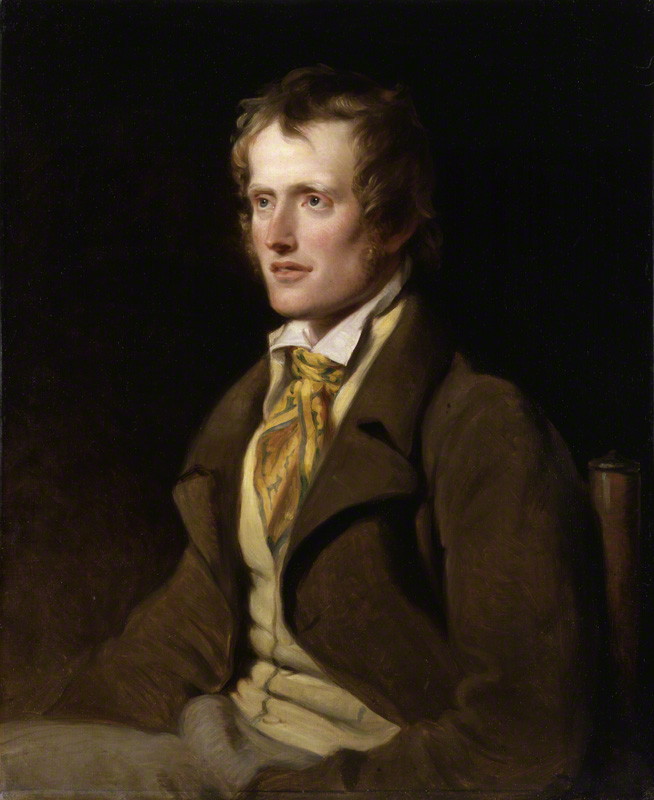
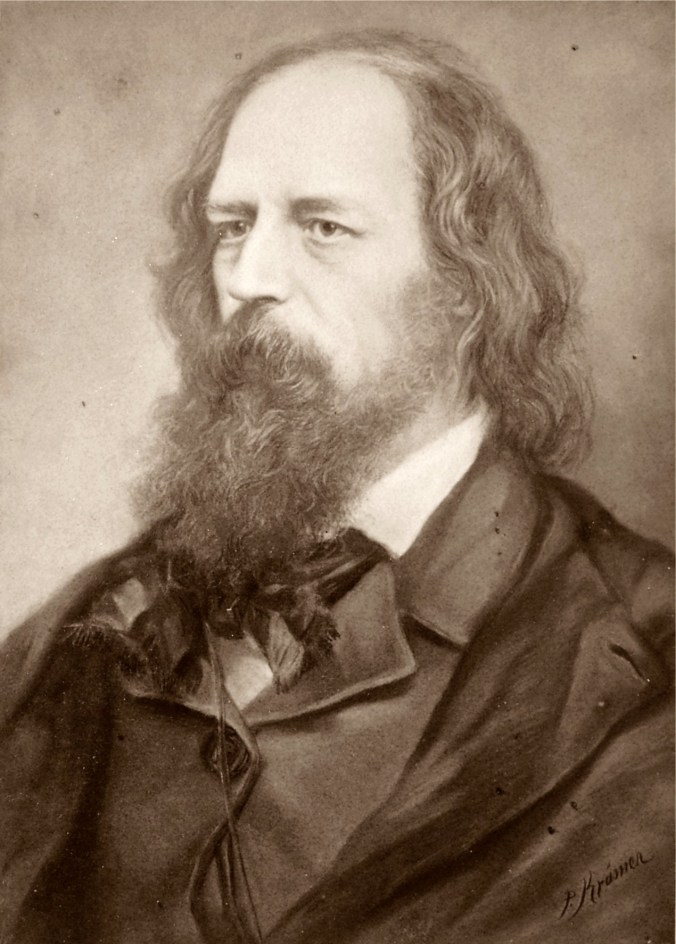
Firstly, John Clare (and to a lesser extend Alfred Lord Tennyson) as imagined by Adam Foulds in The Quickening Maze (Vintage, 2009), which was shortlisted for the Booker Prize in 2009.

NPG 1469; John Clare by William Hilton

Alfred_Tennyson.

John Clare suffered with poor mental health for most of his adult life, and for a time was an inpatient at High Beach Asylum in Essex.  The Tennyson brothers move nearby as Septimus is being treated for depression, but thankfully this isn’t an excuse for Foulds to create conversations on the nature of poetry between the two versifiers (can you imagine? ‘What think you Clare, of this long poem of mine?’ ‘Will you permit me Alfred, to suggest In Memoriam is better name than My Friend Hallam What Died?’ Ugh.  OK, so Foulds would never be that bad, but sometimes these things can be so clumsy as to become comical).

Instead Foulds looks at the lives contained within and without the asylum, and the nature of their various freedoms and restraints.  Alongside the patients live the profligate Dr Allen, who has progressive ideas on treatment but lacks the focus to truly push things forward; his daughter Hannah, desperate for freedom but unsure how to get it other than by marrying; the grieving Tennyson yearning for his dead friend and for critical approval; and of course Clare, the ‘peasant poet’, determined to leave the built environment of the asylum for the forest beyond:

“As he worked in the admiral’s garden…being there, given time, the world revealed itself again in silence, coming to him. Gently it breathed around him its atmosphere: vulnerable, benign, full of secrets, his.  A lost thing returning. How it waited for him in eternity and almost knew him. He’d known and sung it all his life.”

Things begin to unravel: Clare becomes progressively more deluded, the doctor veers towards bankruptcy again, Hannah harbours fantasies regarding Tennyson which amount to nothing. But The Quickening Maze is a novel of quiet, closely observed drama of domestic life (despite the asylum and famous poets), rather than enormous, declamatory moments:

“From her window, Hannah could see Charles Seymour prowling outside the grounds, swishing his stick from side to side. Boredom, a sane frustration, a continuous mild anger: Hannah thought he looked like a friend, someone whose life was as empty and miserable as her own…he raised a hand to lift his hat and found he wasn’t wearing one.  He smiled and mimed instead. Hannah gazed for a moment down at his shoes and smiled also.”

Foulds is an accomplished poet himself, and this shows itself in tightly constructed prose full of startling images:

“She liked the pinch of absence, the hollow air, reminiscent of the real absence. She wanted to stay out there, to hang on her branch in the world until the cold had burned down to her bones. She could leave her scattered bones on the snow and depart like light.”

The result is a tightly plotted novel that maintains a contemplative, elegiac quality: perfect for the poets it captures.

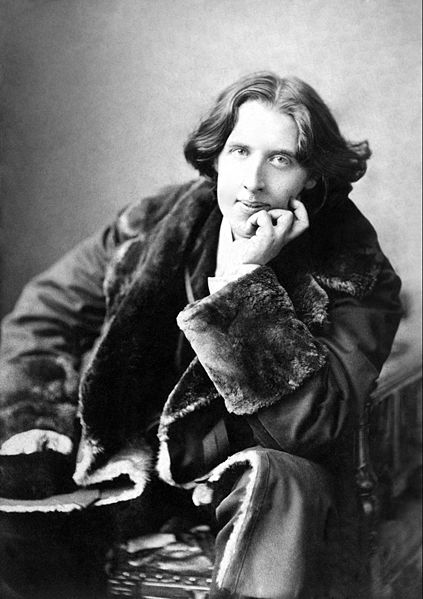
Secondly, Oscar Wilde, as imagined by David Hare in The Judas Kiss, which premiered at the Almeida in 1998.

423px-Napoleon_Sarony_-_Oscar_Wilde

The story of Oscar Wilde is so well-known, it can be difficult to imagine what more there is to be said on it.  What Hare gives his audience is an Oscar past his prime, bruised and sad, the architect of his own downfall.  The first act sees Wilde staying in London to face the court over allegations he is gay (which was illegal at the time) while his friends urge him to leave:

“Ross. Oscar, I’m afraid it’s out of the question. You simply do not have time.

Wilde. Do I not?

Ross. You are here to say your goodbyes to Bosie.

Wilde. Yes of course.  But a small drink, please, Robbie, you must not deny me.

Ross. Why, no.

Wilde. And then, of course I shall get going. I shall go on the instant.

Arthur. Do you want to taste, sir?

Wilde. Pour away. Hock tastes like hock, and seltzer like seltzer. Taste is not in the bottle. It resides in one’s mood. So today no doubt hock will taste like burnt ashes. Today I will drink to my own death.”

The knowledge we have of the outcome, rather than resigning us to Wilde’s fate, actually adds to the dramatic urgency.  I found myself desperately rooting for Ross, wishing Oscar would listen, that somehow the outcome would be different and he wouldn’t stay long enough to allow the courts to give him a two year sentence. But Wilde is stubborn, proud, defiant, and wonderful, as his selfish, weak lover Bosie testifies:

“You have wanted this thing. In some awful part your being, you love the idea of surrender.  You think there’s some hideous glamour in letting Fate propel you down from the heights!”

But Bosie doesn’t want Wilde to leave, rather stay and fight his battles for him with his father, the Marquess of Queensbury, who is  challenging Wide in court.  Between his own wilfulness and Bosie’s self-interest, Wilde agrees to stay…

In the second act we are in Italy with a Wilde after he has left prison and moved abroad “grown slack and fat and his face is ravaged by deprivation and alcohol”.  Bosie is enjoying himself with the local beauties, while Wilde is isolated and contemplative:

“I am shunned by you all, and my work goes unperformed, not because  of the sin – never because of the sin – but because I refuse to accept the lesson of the sin.”

The Judas Kiss is a tragic play, but not in the usual sense.  No-one dies, there is no physical violence, and yet we witness betrayal, destruction and loss.  It’s heart-breaking, and at the centre of it all is the great genius of Oscar Wilde, who we witness fading away.

To end, the words of a poet rather than words written about them. Wilde responded to this trauma through his art, and created The Ballad of Reading Gaol:

“I’ve got my country’s 500th anniversary to plan, my wedding to arrange, my wife to murder and Guilder to frame for it; I’m swamped.” (Prince Humperdinck, The Princess Bride)

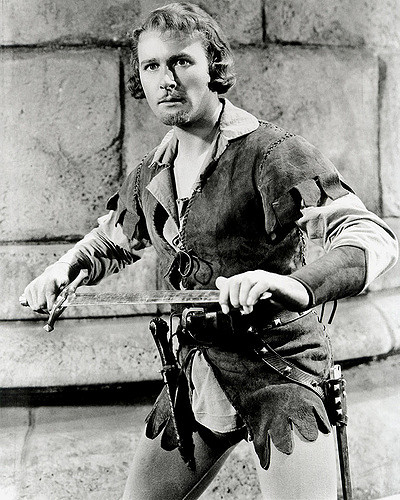
I have an enduring weakness for swashbucklers, which I think is due to watching Errol Flynn at an impressionable age.

1545181599_c4320d5653_z

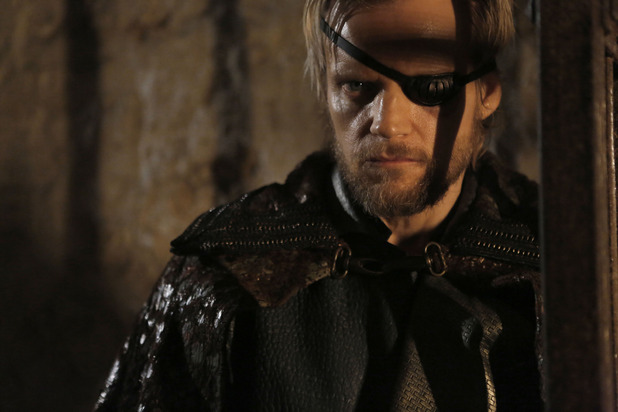
So of course I have been watching the BBC series The Musketeers, which ended a few weeks ago.  I was very put-out that [SPOILER ALERT] Marc Warren’s dastardly Comte de Rochefort died in the final episode. There wasn’t really any other option for his character, but Marc Warren always creates great baddies and I was sad to see him go (also he looked awesome– I think eyepatches should come back as a thing):

MW001 (13)

Image from here

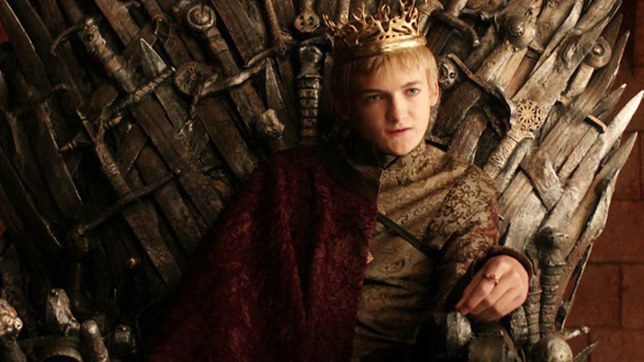
I thought I’d console myself by looking this week at literary villains.  There are so many great ones to choose from, and villains are often so much more compelling than the heroes.  Of course some of them are just downright despicable:

joffrey

Image from here

But generally the story is a sorrier place when they’re not in it (and therefore usually ends at that point).

Firstly, for obsessive, depraved stab-happy villains, you need never look further than Jacobean tragedy.  I’ve chosen Ferdinand from The Duchess of Malfi by John Webster (1612). Ferdinand is the twin brother of the titular character and he is barking mad (quite literally, as he thinks he is a werewolf and goes round digging up graves after dark).  He doesn’t want the sister he characterises as a ‘lusty widow’ remarrying.  To this end he employs melancholic henchman Bosola:

‘Your inclination to shed blood rides post

 Before my occasion to use you.  I give you that

 To live i’ the court here, and observe the duchess;

 To note all the particulars of her haviour,

 What suitors do solicit her for marriage,

 And whom she best affects.  She’s a young widow:

 I would not have her marry again.’

The poor Duchess, being female, is entirely disempowered against Ferdinand and her other brother, a corrupt Cardinal.  She only wants love:

“Why should only I,

Of all the other princes of the world,

Be cas’d up, like a holy relic?  I have youth

 And a little beauty.”

She finds affection with the pretty steward Antonio, but normal family life never stands a chance in the depraved court where your own brother is sexually obsessed with you “my imagination will carry me/ To see her in the shameful act of sin”  and spends his time, when he’s not pretending to be a wolf, imagining you in flagrante:

Happily with some strong-thighed bargeman;
Or one o’th’woodyard that can quoit the sledge
Or toss the bar; or else some lovely squire
That carries coals up to her privy lodgings.

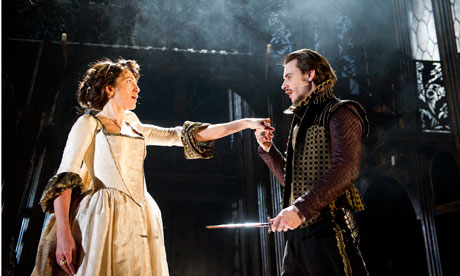
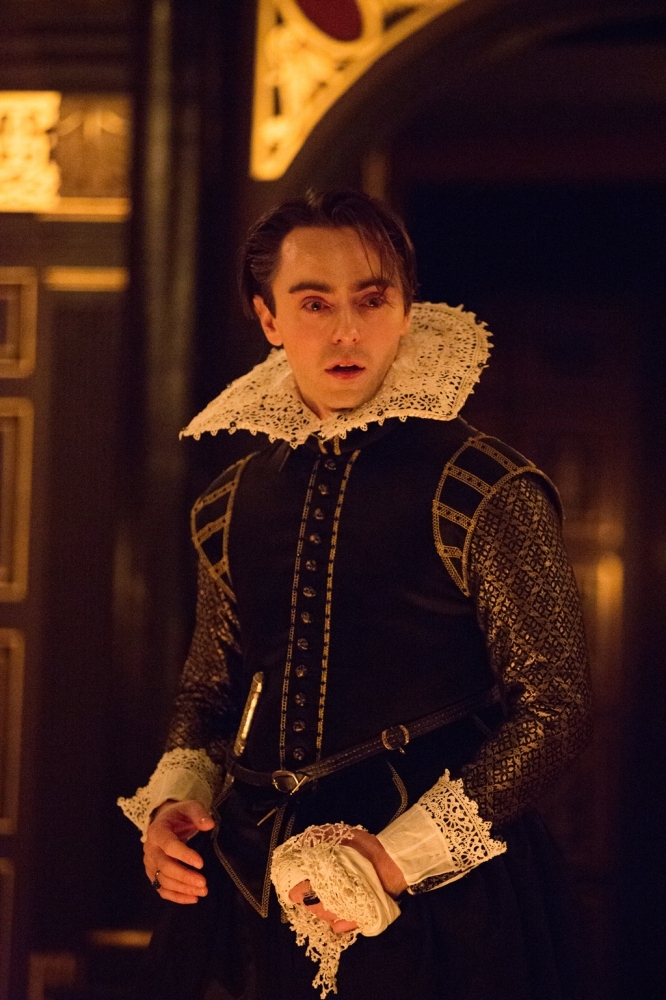
Yep, Ferdinand is insane.  Yet he’s part and parcel of a society that is utterly degraded and false.  In the hands of a good actor, he isn’t cartoony evil, twirling his moustache, but almost as much as a victim as the Duchess.  There have been two productions in London in recent years which have seen excellent performances by Harry Lloyd (Old Vic, 2012) and David Dawson (Globe, 2014) as Ferdinand, both of which captured his cruel depravity, and his tragedy.

duchess of malfi old vic  normal

Images from here and here

This being a Jacobean tragedy, I don’t think it’s a SPOILER to say that everyone dies, yet Webster gives Ferdinand a moment of clarity, and some of the most beautiful lines in drama, as his dying words:

Whether we fall by ambition, blood or lust,
Like diamonds we are cut with our own dust.

Amazing. Those final lines make Ferdinand complex and insightful, and a truly great villain.

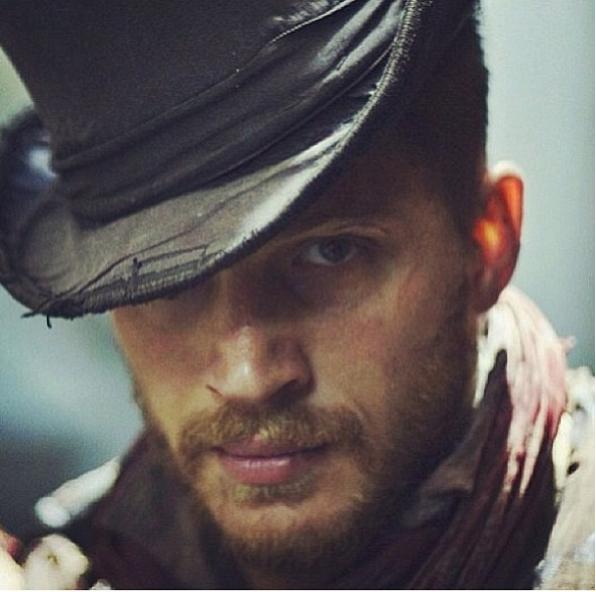
Secondly, another sure-fire source of colourful villains: Charles Dickens.  I’m not the biggest Dickens fan, but actually the things I don’t like about him (clearly delineated binaries like good/bad and one-dimensional stereotypes instead of fully realised characters) do make for opportunities to enjoy all-out villainy.  You can usually tell the villains in Dickens because he helpfully signposts them through names like Ezekiel Slime or similar.  In this instance, I’m going to look at David Copperfield’s (1849) Uriah Heep (see what I mean?) the obsequious clerk to David’s landlord Mr Wickfield. I chose him over a more obvious villain like Bill Sykes from Oliver Twist, because he’s more insidious (although Bill Sykes outdoes every villain in the millinery stakes):


tom-hardy--2-1485603292

Image from here

Bill Sykes never tries to present himself as anything other than downright terrifying, whereas Uriah Heep is always trying to convince everyone of his humility:

“”I got to know what umbleness did, and I took to it. I ate umble pie with an appetite. I stopped at the umble point of my learning […] I am very umble to the present moment, Master Copperfield, but I’ve got a little power!'”

Of course, he is far from humble.  Instead his fawning manner disguises a vicious class jealousy and powerful ambition to take over the Wickfield business through blackmail, before marrying the virtuous Agnes (as someone who can’t stand Dickens’ pious virgins I think it’s not a bad match, but I realise I may be alone in this). With Victorian beliefs that appearance demonstrated character, it seems improbable that anyone would ever trust the unattractive Heep:

“a youth of fifteen …whose hair was cropped as close as the closest stubble; who had hardly any eyebrows, and no eyelashes, and eyes of a red-brown, so unsheltered and unshaded, that I remember wondering how he went to sleep. He was high-shouldered and bony; dressed in decent black, with a white wisp of a neckcloth buttoned up to the throat; and had a long, lank, skeleton hand…”

Yet he still manages to ingratiate himself quite successfully and defraud the Wickfields amongst others.  Of course, this being Dickens, the good end happily and the bad unhappily, so his comeuppance is inevitable.  Heep is a highly effective villain, wholly unlikeable and so oily he just seeps across the page. Uriah Heep : a villain so villainous they named a rock band after him (really).

To end, probably the most single-minded, seductive villain of all time (George Sanders’ voice is a joy):

“There shall be no more novels about incest. No, not even ones in very bad taste.” (Julian Barnes)

Trigger warning: this post contains discussion of upsetting sexual subject matter.  Please do not read if you are not an adult or if you will find such discussion traumatic.

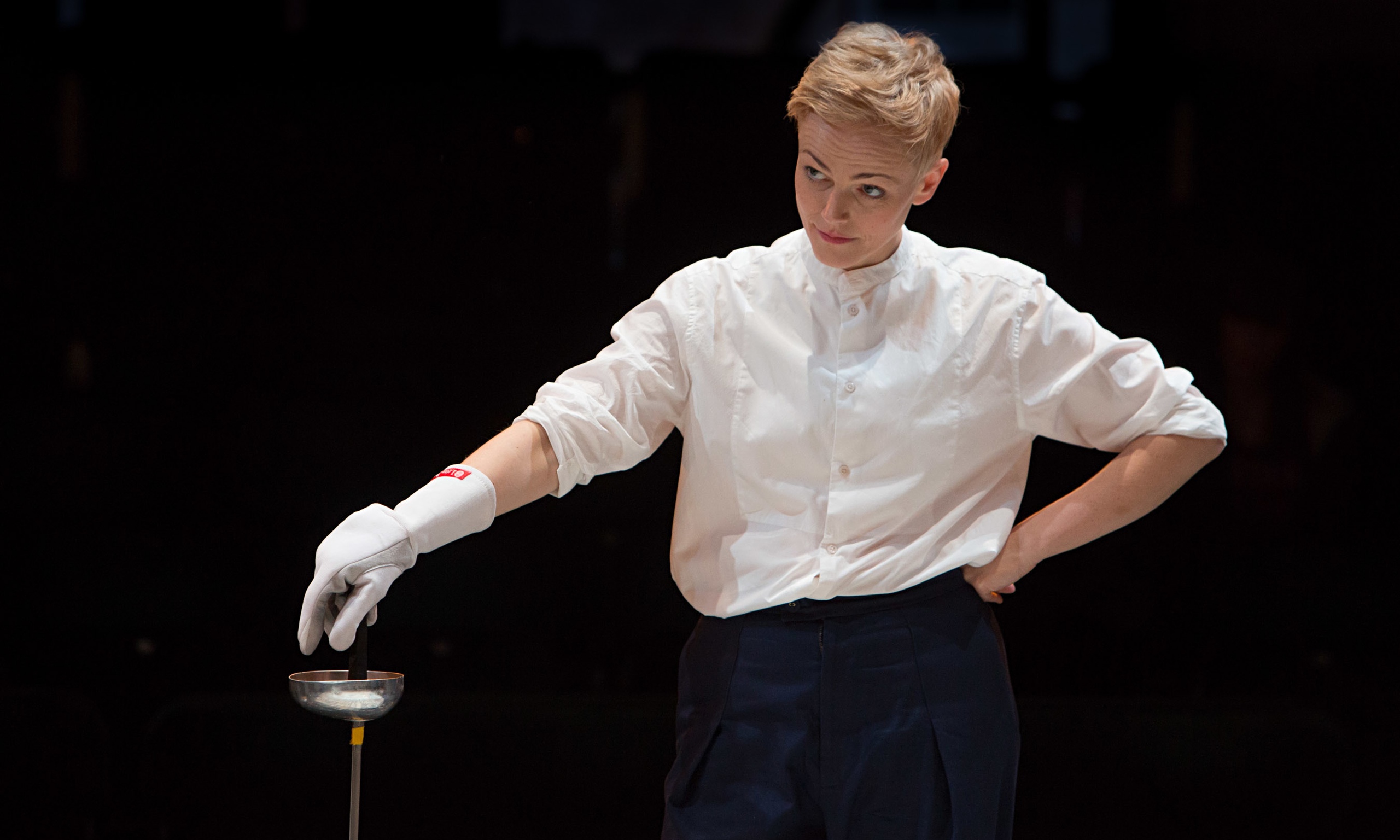
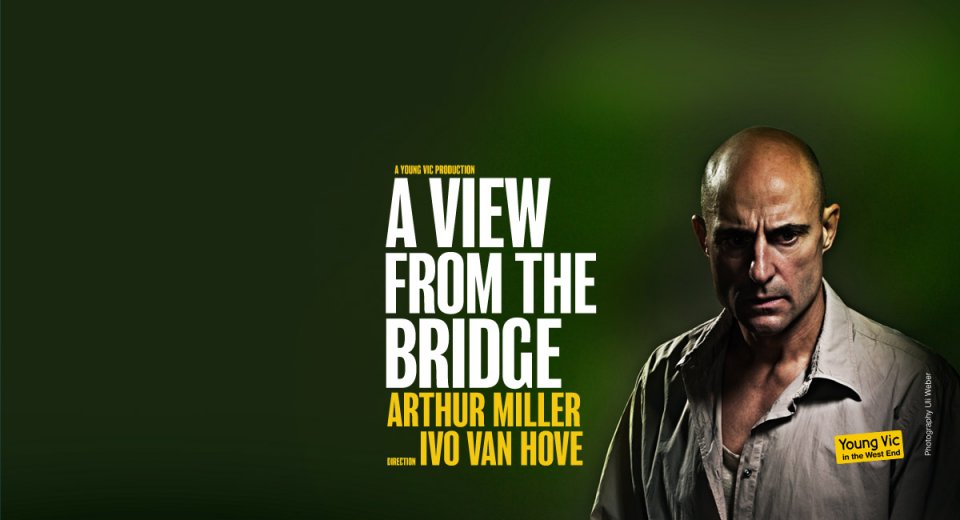
I’ve picked a rather disturbing theme for my post this week, as you may have guessed from the title quote. I try and pick a theme based on what’s been happening at the time, and for me this week it’s incest.  I feel I should qualify that statement rather rapidly: I went to see Maxine Peake’s Hamlet – that Oedipal family drama to end all Oedipal family dramas – and then I saw A View from the Bridge with Mark Strong.

maxine peake hamletnt_live_site_-_view_from_the_bridge_large

(Images from: http://www.theguardian.com/stage/2014/sep/21/hamlet-maxine-peake-royal-exchange-review-delicate-ferocityhttp://ntlive.nationaltheatre.org.uk/productions/ntlout9-a-view-from-the-bridge )

Then in my early modern literature class, someone pointed out that Tis Pity She’s a Whore (where a brother and sister are in a relationship) had warped her mind because when we read A King and No King (where a brother & sister struggle with their mutual attraction) she couldn’t see what the problem was & why they didn’t just get on with it.  Don’t get an education kids, it will put your moral compass on permanent fritz.

But if you can cope with the upsetting subject matter, there’s been some wonderful novels written about circumstances where incest occurs, so I hope you’ll stick with me.

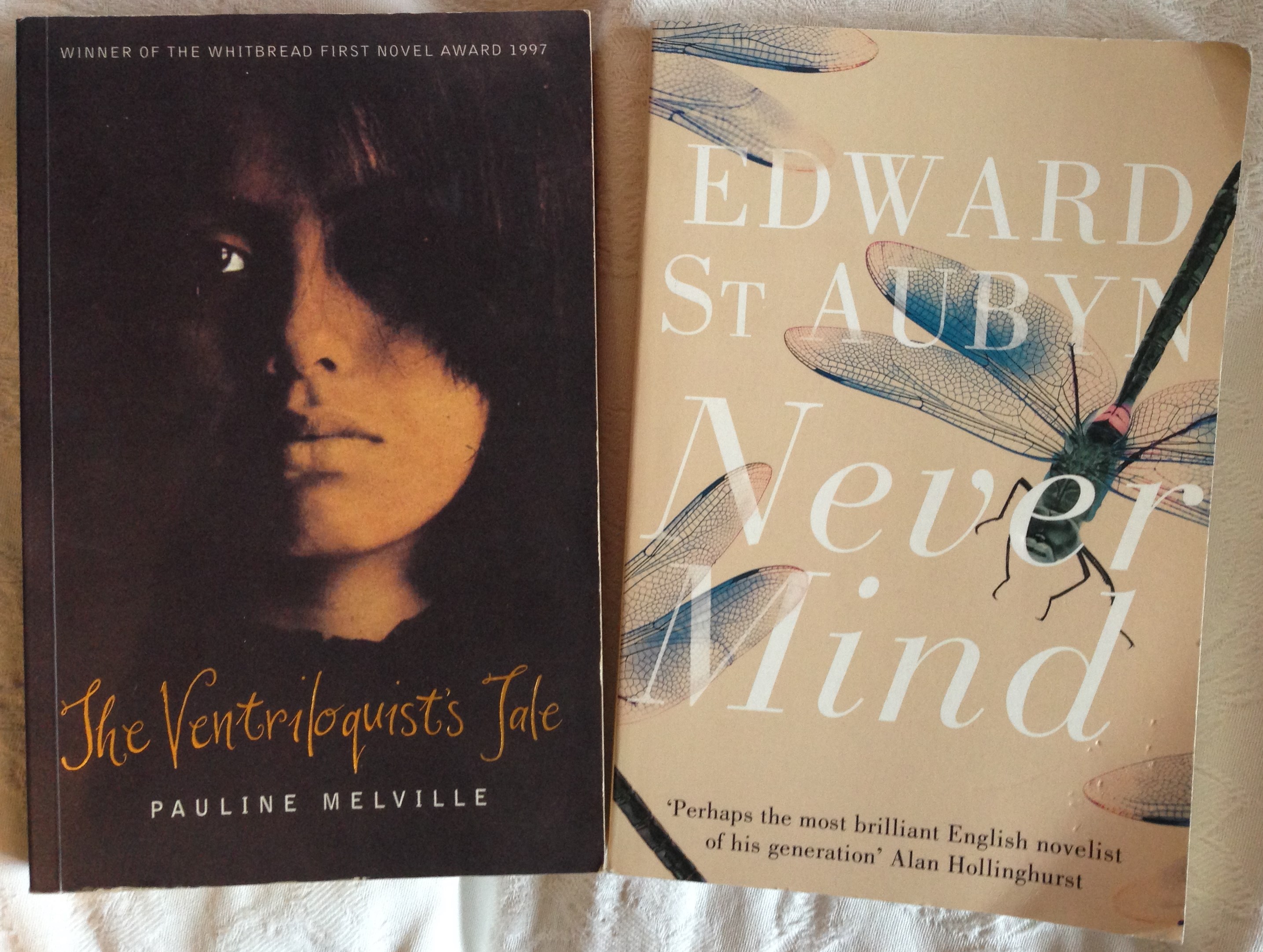
Firstly, Never Mind by Edward St Aubyn (1992).  This is the first of the Patrick Melrose quintet, St Aubyn’s series of autobiographical novels (the fourth, Mother’s Milk, was nominated for the Booker in 2006).  In this first novel , Patrick is five years old, living in France for the summer with his alcoholic mother and controlling, cruel father.  As Patrick explores the garden, creating adventures for himself, St Aubyn brilliantly evokes the microscopic view of a child:

“As Patrick approached the house, climbing as usual the right–hand flight of the double staircase because it was luckier, he turned into the garden to see if he could find the frog that lived in the fig tree.  Seeing the tree frog was very lucky indeed.  Its bright green skin was even smoother against the smooth grey skin of the fig tree, and it was hard to find it amongst the fig leaves which were almost the same colour as itself.  In fact, Patrick had only seen the tree frog twice, but he had stood still for ages staring at its sharp skeleton and bulging eyes…above all at the swelling sides which enlivened a body as delicate as jewellery, but greedier for breath.”

The third person narrative enables St Aubyn to shift between the various Melroses so that while the parents are reprehensible (the mother) and downright repugnant (the father) you understand why they are the way they are; how damaged they are and how they continue to inflict damage on all who surround them.

What makes it bearable is St Aubyn’s beautiful, intelligent prose; the delicate way he approaches the Melroses to capture this moment in family history.

“’What did you do today?’

‘Nothing,’ said Patrick, looking down at the floor.

‘Did you for a walk with Daddy?’ asked Eleanor bravely.  She felt the inadequacy of her questions, but could not overcome the dread of having them scantily answered.

Patrick shook his head. A branch swayed outside the window, and watched the shadow of its leaves flickering above the curtain pole.  The curtains billowed feebly and collapsed again, like deflated lungs.  Down the corridor a door slammed. Patrick looked at the clutter on his mother’s desk. It was covered in letters, envelopes, paperclips, rubber bands, pencils, and a profusion of different-coloured cheque books.  An empty champagne glass stood beside a full ashtray.”

SPOILER: And now, to quote the vampire Lestat, I’m going to give you the choice I never had. Never Mind is a great novel.  Edward St Aubyn is a hugely talented writer.  He was also repeatedly raped by his father as a small child and his novels are autobiographical.  In Never Mind, there is a scene where Patrick is raped by his father. I didn’t know this when I was reading the novel (I read the scene on a train, and had to get off at the next stop because I genuinely thought I was going to be sick), and I’m telling you so you can decide whether or not to read it. I would urge you to do as it is such a brilliant novel, but go in prepared.

Phew!  Let’s pause for a moment and go to a happy place:

giphy (1)

Secondly, The Ventriloquist’s Tale by Pauline Melville (1997) which won the Whitbread First Novel Award in 1997.  Set in Guyana and spanning most of the twentieth century, Melville uses the lives of generations of an Amerindian family to explore large themes: colonialism, the nature of love, religion and progress.  In contrast to Never Mind, this is a tale told with vivacity, serious but not depressing.

“Where was I? Oh yes. My grandmother.  She still refers with rage to a man called Charles Darwin who wandered through the region with the slow-motion frenzy of a sloth, measuring and collecting.  No one round here likes measurers, collectors and enumerators.  We cannot hoard in the tropics.  Use it or some other creature will eat it.  Sooner or later everything falls to the glorious spirit of rot with its fanfares of colours and nose-twisting stenches.”

The narrator/ventriloquist tells the story of the McKinnon family: Scottish Alexander McKinnon who builds a life in Guyana with 2 wives; his incestuous son and daughter; and the present day Chofy McKinnon, drawn back to Guyana through a love affair.

“It was confusing for McKinnon. He settled into the life well at one level, but every now and then he caught a glimpse of a world he did not understand at all.  He tried to discuss things with his father-in-law who was something of a philosopher and who explained to McKinnon that there was no point in trying to do anything about everyday life.  It was an illusion behind which lay the unchanging reality of dream and myth.”

These themes of The Ventriloquist’s Tale are heightened by the heady environment that challenges what is real:

“It was night and the deer was hiding somewhere in the tall grasses. Danny lay on the side of the sloping hill.  The rough grass under him felt like the pelt of an animal.  He almost imagined he could feel it breathing.”

Reading this novel engages all the senses: you can see, smell and taste all that is happening.  There’s a strong current of humour too; Melville has accomplished a novel that would be astonishing at any point in a writer’s career, but all the more so as a first novel.

001 (41)

“In the Bible, God made it rain for 40 days and 40 nights. That’s a pretty good summer for Wales…I was eight before I realised you could take a cagoule off.” (Rhod Gilbert)

As a companion piece to my post on Scottish writers, I thought this week I would look at Welsh writers.  Had I been even vaguely organised, I would have posted this 2 days ago to coincide with Dylan Thomas’ centenary, but better late than never….Firstly, a poem by Dannie Abse, a prolific poet who died in September this year.

download

(Image from: http://www.poetryarchive.org/poet/dannie-abse)

It’s so hard to describe Abse’s writing without resorting to clichés about Welsh writing; adjectives like lyrical force themselves to the fore.  Judge for yourself: in Poem and Message (1955), Abse uses the idea of a loved one “Out on the tormented midnight sea” finding solace in words, and the poem of love those words createYou can read the whole poem here.

“so from this shore of cold I write

tiny flashes in the Night.


Words of safety, words of love

a beacon in the dark”

[…]

one small luminous truth

of which our usual love was proof.

It reminds me of Shakespeare’s sonnet 116 whereby love “is the star to every wand’ring bark”. Abse uses simple language, and a familiar trope of love as a guiding light, to create a sense of love’s unquestionable power; it doesn’t need complex metaphors and obscure polysyllabic words to heighten it.  It ends with a beautifully direct couplet:

And I call your name as loud I can

and give you all the light I am.”

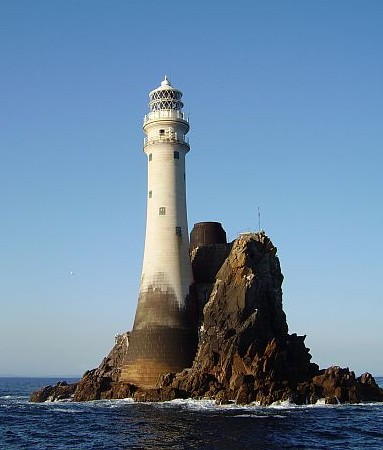
FastnetIRLE

(Image from: http://www.unc.edu/~rowlett/lighthouse/irlsw.htm)

Secondly, and in direct contrast to Abse’s refined feeling, Submarine by Joe Dunthorne (Penguin, 2008).  Oliver Tait is 15 and lives with his parents in Swansea.  His father is depressed and his mother:

“I have not established the correct word for my mother’s condition.  She is lucky because her mental health problems can be mistaken for character traits: neighbourliness, charm and placidity.  I’ve learnt more about human nature from watching ITV’s weekday morning chat shows than she has in her whole life.  I tell her ‘You are unwilling to address the vacuum in your interpersonal experiences,’ but she does not listen.”

Oliver is entirely typical and entirely untypical of a teenager.  He is convinced of his own superiority, passively observes the bullying of his classmates, is desperate to lose his virginity to the pyromaniac Jordana, and makes up stories about his neighbours:

“‘I know Mr Sheridan quite well, Oliver. He’s a painter decorator,’ he says…..

‘Andrew, he has the eyes and overalls of a killer,’ I say.”

Oliver is an outsider in his own life, and his voice is detached while seeking to belong.  The teenage conundrum – wanting to be entirely different and entirely the same as everyone else.  Even Oliver’s beloved Jordana lets him down:

“She’s been sensitised, turned gooey in the middle.

“I saw it happening and I didn’t do anything to stop it.  From now on, she’ll be writing diaries and sometimes including little poems and she’ll buy gifts for her favourite teachers and she’ll admire scenery and she’ll watch the news and she’ll buy soup for homeless people and she’ll never burn my leg hair again.”

Submarine is hilarious and yet still achieves a sensitive evocation of the torturous time of adolescence.  I could have picked almost any page at random and found a quotable line. Yes, it’s that good.  Just one proviso: don’t read it on the train unless you want to be one of those annoying people trying to muffle snorts of laughter between the pages, which I totally was…

There was a film adaptation of Submarine (dir. Richard Ayoade) in 2011:

“If at first you don’t succeed, try, try again. Then quit. There’s no point in being a damn fool about it.” (W. C. Fields)

For those of you that have put up with my posts over the last few months where I’ve banged on and on and on about finals, I promise this is the last time I’ll mention them.  I’ve received my results and I feel like this:

kerm

Hooray! So I thought this week I’d look at times when authors may have felt a similar way: two debut prize-winning novels.

Firstly, A Girl is a Half-Formed Thing by Eimear McBride (Galley Beggar Press, 2013) which won the Goldsmiths Prize last year, and the Baileys Women’s Prize for Fiction and the Desmond Elliot Prize, both this year.  If you have any interest in books, you’d have to have been living under a rock not to have heard of this novel.  Aside from all the breathless reviews, I’ve seen buses trundling along with huge posters commanding us to “Read it and be changed” (from Eleanor Catton’s review). Written in about 6 months when the author was 27, she struggled to find a publisher due to its inventive style and uncompromising subject matter.  She shoved it in a drawer, but 10 years later sent it to a small independent publisher.  Galley Beggar Press published the novel, and plaudits galore followed. I hope this signals a less conservative approach by publishers, but I’m sceptical…  Still, at least as far as AGIAHFT goes, they got there in the end (Faber and Faber have partnered with Galley Beggar Press to publish it on a much wider scale).

McBride is a huge fan of Joyce, and the novel is written as a stream of consciousness.  However, while many people can find Ulysses intimidating, AGIAHFT is only 200 pages long, and much more approachable.  It is, however, a tough read, both in style and content.  It details the narrator’s relationship with her brother, who is partly disabled from an operation on his brain as a child.

“I sneak. I snuck. I listened at the door. I heard them. I pondered you should send him to a special school.  Those marks aren’t fit for a boy that age.  Oh such clucking and glucking. Snob and preen herself. I hear my two are off to the convent.  Not a ladder in their tights or a pain in their heart. Such brilliance.  Unearthly. I snoot them. Aunt and uncle. Chintz for brains I hiss and think.  Listening listening.

Life is hard, and although her brother’s scars are visible to all, the narrator has scars of her own.  The stream of consciousness gives her experience an immediacy, unmediated by considered use of language, which places the reader right alongside her, and that is not an easy place to be.  She decides to use sex to get her classmates to leave her brother alone; she is raped by an uncle; she has a fractured relationship with her mother; and through it all is her tender but ambivalent relationship with her brother.

We were moving off now. From each other. As cannot be. Helped.  I didn’t help it from that time on.  You know. All that. When you said sit with me on the school bus. I said no.  That inside world had caught alight and what I wanted.  To be left alone.  To look at it.  To swing the torch into every corner of what he’d we’d done….Who are you?  You and me were never this. This boy and girl that do not speak. But somehow I’ve left you behind and you’re just looking on.”

AGIAHFT is as unique and extraordinary as all the hype would have you believe.

Secondly, Vernon God Little by DBC Pierre (Faber & Faber, 2003) which won the Booker, the Whitbread First Novel Award and the Bollinger Everyman Wodehouse Award for Comic Writing, all in 2003. Let’s get my wholly unoriginal but unavoidable observation out of the way first: this novel really reminded me of The Catcher in the Rye. Vernon Little is a teenager disgusted by the hypocrisy of the society he sees around him “I sense a learning: that much dumber people than you end up in charge”. He is desperately looking for a place to belong, but it’s not the barbeque sauce capital of Texas where he lives. His best friend Jesus has shot dead their classmates and taken his own life. Vernon is left to take the blame, as the society of the small town look for answers without listening to anything Vernon has to say.

His overbearing mother and her friends are all obsessed with diets, “Leona’s an almost pretty blonde with a honeysuckle voice you just know got it’s polish from rubbing on her last husband’s wallet.”; his psychologist is corrupt and abusive “the shrink’s building sits way out of town; a bubble of clinical smells in the dust.  A receptionist with spiky teeth and a voicebox made from bees trapped in tracing paper, sits behind a desk”; there’s a manipulative journalist unconcerned with truth, setting himself up as puppet-master.  Vernon God Little is scathing in its treatment of contemporary society: its focus on the easily discarded, the scandal-mongering and superficiality of the media, the ineptitude of those in power to exercise it with any integrity.  All this is bound up with a great deal of humour and truly inventive use of language.  As I hope the quotes so far demonstrate, the images throughout the novel are startling and evocative. Pierre uses the adolescence of his narrator to demonstrate how versatile language can be and how it can be reformed for individual expression.  One of my favourite lines was this:

“I get waves of sadness, not for me but for them, all mangled and devastated. I’d give anything for them to be vastated again.”

Funny, sad, original and thought-provoking: the entire novel of Vernon God Little held in a single sentence.

I know I said I wouldn’t mention finals again, but permit me, if you will, just one final milking of it:

dink

Happy weekend everyone!

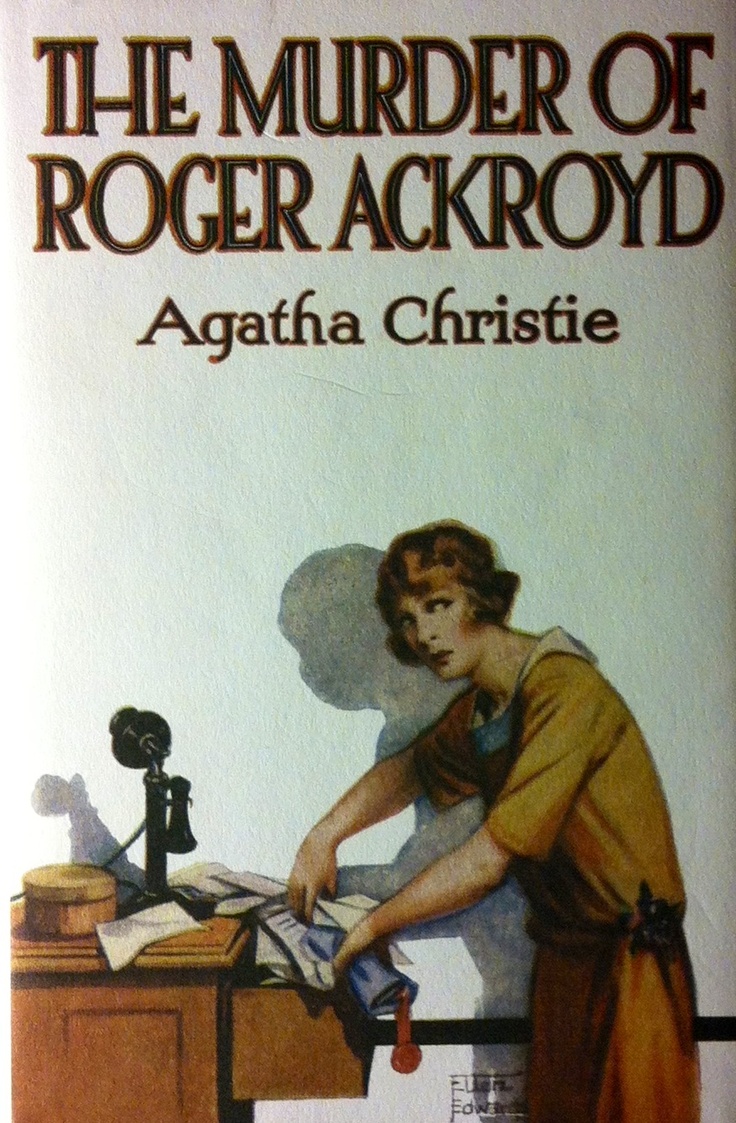
The Murder of Roger Ackroyd – Agatha Christie (Le Monde’s 100 Books of the Century #49)

This is part of a series of occasional posts where I look at works from Le Monde’s 100 Books of the Century. Please see the separate page (link at the top) for the full list of books and an explanation of why I would do such a thing.

The great thing about this reading challenge, and the very reason I set myself to do it, is that it means I read books I wouldn’t have normally. Usually this is because I hadn’t heard of them, but in the case of The Murder of Roger Ackroyd, it was because I thought I didn’t like Agatha Christie. I spent a summer when I was about 14 reading a Poirot omnibus, and I thought it was poorly written, with thin plots, shallow characterisation and an annoying central protagonist (I believe Christie shared this opinion of Poirot!) Despite a general love of the Golden Age of Detective Fiction, I haven’t picked up a Christie since. So I owe Le Monde (and the attractive bookseller who assured me it was the best of the Poirot novels – how I miss you, Blackwells) a great deal of thanks, because I really enjoyed The Murder of Roger Ackroyd.

001 (5)

(Image from: http://www.pinterest.com/pin/249316529344895760/)

The story is narrated by Dr James Sheppard, the village GP who lives with his nosy sister, the character of whom was a prototype of Miss Marple.

“Our village. King’s Abbot, is, I imagine, very much like any other village. Our big town is Cranchester, nine miles away. We have a large railway station, a small post office, and two rival ‘General Stores.’ Able-bodied men are apt to leave the place early in life, but we are rich in unmarried ladies and retired military officers. Our hobbies and recreations can be summed up in the one word, ‘gossip.’”

Within this inter-war bucolic tranquility, Sheppard is called to the suicide of Mrs Ferrars, a wealthy widow who was engaged to the eponymous victim. She sent Ackroyd a letter explaining she was being blackmailed over the poisoning of her first husband, but Ackroyd is murdered before he finds out who the blackmailer was. Enter a certain Belgian detective to solve the crime. He is Sheppard’s new neighbour, and they meet when Poirot hurls a vegetable marrow over the garden fence:

“’I demand of you a thousand pardons, monsieur. I am without defence. For some months now I cultivate the marrows. This morning suddenly I enrage myself with these marrows. I send them to promenade themselves – alas! not only mentally but physically. I seize the biggest. I hurl him over the wall. Monsieur, I am ashamed. I prostrate myself.’

Before such profuse apologies, my anger was forced to melt. After all, the wretched vegetable hadn’t hit me. But I sincerely hoped that throwing large vegetables over walls was not our new friend’s hobby.”

From this unpromising beginning, the two team up to catch the murderer. It’s difficult to say any more without spoilers, but I thought the novel was good fun (as the marrow scene shows), well-paced (only 235 pages in my edition) and confidently knowing:

“’The essence of a detective story,’ I said, ‘is to have a rare poison – if possible something from South America, that nobody has ever heard of- something that one obscure tribe … use to poison their arrows with. Death is instantaneous, and Western science is powerless to detect it.Is that the kind of thing you mean?’

‘Yes. Is there really such a thing?’

I shook my head regretfully.”

Amongst this levity however, there is a dark undertone – someone has been murdered, after all. And although Christie’s novels are not brutal and bloody (this was published in 1926) she does not let reader forget the inhumanity people are capable of displaying toward each other. The ending of the novel was really quite dark, and I thought it all rather wonderful.

One of Christie’s great achievements in the novel is how she distinctive she makes the voice of Poirot; it captures his unique personality perfectly. Here, David Suchet, who has filmed all the Poirot novels for television, explains how he achieves Poirot’s voice:

“True friends stab you in the front.” (Oscar Wilde)

This week’s post is about friendship, as  I’ve returned home from uni and had a great time catching up with friends I haven’t seen for a while.  When I was thinking of title quotes for this theme, the phrase that immediately sprang to mind was too long.  However, it’s lovely, so here it is:

“Piglet sidled up to Pooh from behind. “Pooh?” he whispered.
“Yes, Piglet?”
“Nothing,” said Piglet, taking Pooh’s hand. “I just wanted to be sure of you.”
 (A.A. Milne, Winnie-the-Pooh)

070711blogpost

(Image from http://www.artistsnetwork.com/art-blogs/the-artists-magazine-blog/pooh-and-piglet-illustration-auctioned-for-194000)

If that doesn’t make you go “aww..” you are a cold, cold person.

Firstly, Embers by Sandor Marai (1942, my copy Penguin 2001 trans. Carol Brown Janeway).  Embers is a deceptively simple novel, set over one evening, running to only 250 pages in my edition.   An elderly general lives in a castle, in melancholy stasis:

“The castle was a closed world…it also enclosed memories as if they were the dead, memories that lurked in damp corners the way mushrooms, bats, rats and beetles lurk in the mildewed cellars of old houses”

He prepares for a supper with his childhood friend, Konrad, who he hasn’t seen in 41 years.  Over the course of the evening, the betrayal that tore them apart will be voiced and answers sought.  Within this simple framework Marai explores the complexity of human relationships, with great delicacy:

“Their friendship was deep and wordless, as are all emotions that will last a lifetime”

“Their friendship, fragile and complex in the way of all significant relationships between people”

With a lesser writer the novel would be heavy-handed, clichéd, sentimental.  But Marai avoids these pitfalls by refusing to make things – feelings, events, motivations – simple or captured in reductive explanations.

 “The magical time of childhood was over, and two grown men stood there in their place, enmeshed in a complicated and enigmatic relationship commonly covered by the word ‘friendship’”

I can’t really say much more without giving away spoilers, but Embers is a beautifully written, intelligent book about the complications of the loves we have in our lives.  Marai never wastes a single word. I highly recommend it.

Secondly, Utterly Monkey by Nick Laird (4th Estate, 2005). Danny is living in London, doing a job he hates to pay for a flat he’s ambivalent about.  He has physically moved away from Northern Ireland, but his childhood follows him in the form of his oldest friend:

“Geordie Wilson was standing on the step.  His small frame was silhouetted against the London evening sky.  He looked charred, a little cinder of a man […] He could have been Death’s apprentice.”

Geordie’s in trouble, and seeks refuge with Danny. Their lives easily become as intertwined as when they were kids, despite the years apart, and as they infuriate each other they never really consider leaving the other one to cope alone. The notion of loyalty as a choice, and yet one that is rarely questioned, is given a further resonance by the fact that Danny and Geordie grew up through the Troubles.  Now both have left Belfast, but Utterly Monkey queries how much we ever leave our childhoods behind, and how feelings can remain inexplicable but powerful motivators for the action we take.

It’s a touching story, and I actually felt the over-arching plot was unnecessary, the carefully drawn characters would be enough to carry the story along.  However, this isn’t to suggest the plot is clumsy, and Laird uses his considerable skill as a poet to write effective prose, finding surprising and evocative images in the everyday:

“Outside the pub a tattered newspaper was lying against the kerb and the wind was freeing it sheet by sheet.  Some pages blew about restlessly further up the pavement.  One had managed to wrap itself around a lamppost and was flapping gently like a drunkard trying to hail a taxi.”

Laird is also funny (“He was an East Londoner, and appeared to suffer from the East London disorder of considering accidental eye contact an act of overt aggression.”) and this stops a tale that could be full of bitterness and regret from ever becoming recriminatory.  In fact, it makes it more realistic – there are friends who drive you mad, who make you wonder why the friendship continues, but the ties that bind somehow endure and stop life becoming too predictable.

To end, the trailer for one of my favourite films, The Station Agent (2003), which charts the beginnings of friendship between 3 people.  Peter Dinklage is now uber-famous as Tyrion Lannister, but here he is many years before, giving a very different, equally wonderful performance:

10 Most Influential Books – Part 2

This is the second half of a challenge looking at the 10 Most Influential Books in your life. It was started by Leah at The Perks of Being a Bookworm  and I was tagged by Emma over at A Wordless Blogger. Do check out their blogs and the other people taking part, it’s a fascinating challenge!

An Evil Cradling – Brian Keenan

Where to begin explaining this book?  I’m going to sound ridiculous, but I can’t think how else to say it:  this is one of the most moving, deeply profound books I’ve ever read, and it’s about what it is to be human.  I’m sorry to sound so hyperbolic, but it really is that extraordinary.  I wept throughout the whole thing.  Brian Keenan was kidnapped in Beirut and held hostage for just under 5 years, some of it with John McCarthy.  This book is an exploration of what he went through, and it’s just incredible.  It’s not a journalistic, factual account, although Keenan grounds the story in this type of detail.  It is much more a study of a human being in extremis.  If I had to quote from this book I’d never stop, so instead I googled and chose what seemed to be the most popular:

“Hostage is a man hanging by his fingernails over the edge of chaos, feeling his fingers slowly straightening. Hostage is the humiliating stripping away of every sense and fibre of body and mind and spirit that make us what we are. Hostage is a mutant creation filled with fear, self-loathing, guilt and death-wishing. But he is a man, a rare, unique and beautiful creation of which these things are no part.”

The Keenan/McCarthy story was filmed as Blind Flight.  The film isn’t a patch on An Evil Cradling, but it features superb performances from Ian Hart as Brian Keenan and Linus Roache as John McCarthy:

https://www.youtube.com/watch?v=HVAPMOY0VAY

The Turbulent Term of Tyke Tiler – Gene Kemp

Image

(Image from: http://www.fantasticfiction.co.uk/k/gene-kemp/turbulent-term-of-tyke-tiler.htm)

When I was seven, I’d read all the books in our classroom, and so my teacher sent me to another class to borrow books from there.  I was intimidated, the kids in that class were bigger than me, and the teacher was strict.  She was also kind and fair, and did she know her children’s literature.  She gave me loads of great books to read, and used to ask me what I thought about them.  This was one of the first she gave me, and I think it stands out because it was when I started to read children’s books that were written primarily not to teach you to read, but for the joy of reading. It’s aimed at late junior school age, and tells the story of Tyke and Danny, in their final year of Cricklepit School.  Tyke and Danny aren’t exactly naughty, but neither do they fit the teachers’ ideals of how pupils should behave.  It’s a touching story of friendship, following your own beliefs, and not always obeying all the rules. Worthwhile lessons, it seems to me.

 “That child has always appeared to me to be on the brink of wrecking this school, and as far as I can see, has, at last, succeeded.”

The Secret Garden – Frances Hodgson Burnett

Image

(Image from: http://en.wikipedia.org/wiki/The_Secret_Garden)

This book followed me throughout childhood.  I had the Ladybird version, and then when I was old enough my mother bought me the full-length original.  As a child I found the story of spoilt Mary Lennox discovering a locked garden and turning it into a paradise again with the help of her friends really magical, but throughout my adult life I’ve noticed this book has a far reaching influence. On a very basic level, I love gardening, and when I picture my perfect garden it’s always walled; my horticultural ideal carried from this novel.  But more than that, I think an interest in Victorian literature (although this book is strictly speaking Edwardian) and the Gothic can be traced back to this book.  Big house, mysterious noises, servants denying all knowledge, death a constant threat, time spent roaming around on moors – sound familiar?  If you want your child to embrace the Brontes, Wilkie Collins, Mary Shelley… start them off on The Secret Garden.  But mostly I think this novel influenced my choice of career. I became an occupational therapist.  The Secret Garden features a young boy, Colin, who is depressed, and constantly ill and weak.  He meets his cousin Mary, they work together in the garden (what we in the trade call meaningful occupation) and Colin’s mental health improves alongside his physical health.  So there you go: The Secret Garden is really all about the holistic health benefits of an individually tailored rehab programme.

“At first people refuse to believe that a strange new thing can be done, then they begin to hope it can be done, then they see it can be done–then it is done and all the world wonders why it was not done centuries ago.” 

The Temple – George Herbert

This collection of poems is a lesson to me to keep an open mind.  It’s resolutely religious, and I am not.  You’d think I’d get nothing out of it, but George Herbert has become one of my favourite poets.  I discovered him in a Renaissance literature class.  We’d just had 2 weeks of John Donne: sexy, naughty, clever, complicated Donne.  Now it was time for George Herbert.  Not sexy, not naughty.  Hugely clever, but written in a very simple style.  I loved his gentle tone, his worry of not being good enough and his search for peace and solace. Herbert showed me that while beliefs are different, a common ground of experience and feeling can always be found.  And maybe he’s sexier than he first appears: my tutor is convinced the penultimate line of this poem is a blow-job joke.  It’s always the quiet ones….

Love III

Love bade me welcome, yet my soul drew back,
Guilty of dust and sin.
But quick-ey’d Love, observing me grow slack
From my first entrance in,
Drew nearer to me, sweetly questioning
If I lack’d anything.

“A guest,” I answer’d, “worthy to be here”;
Love said, “You shall be he.”
“I, the unkind, the ungrateful? ah my dear,
I cannot look on thee.”
Love took my hand and smiling did reply,
“Who made the eyes but I?”

“Truth, Lord, but I have marr’d them; let my shame
Go where it doth deserve.”
“And know you not,” says Love, “who bore the blame?”
“My dear, then I will serve.”
“You must sit down,” says Love, “and taste my meat.”
So I did sit and eat.

Sexing the Cherry – Jeanette Winterson

220px-SexingTheCherry

(Image from: http://en.wikipedia.org/wiki/Sexing_the_Cherry)

If I had to recommend a Jeanette Winterson novel, I’d most likely choose Oranges Are Not the Only Fruit, which is probably why I’ve blogged on it in the pastOranges is her most accessible novel, her most famous, and it is brilliantly written.  The Passion I believe to be her best novel.  However, I’ve chosen Sexing the Cherry as more influential on me, as it was my first foray into magic realism (although Jeanette Winterson rejects that term) and opened my eyes to what fiction can do.  If it wasn’t for Sexing the Cherry, maybe I wouldn’t have discovered Angela Carter, or Gabriel Garcia Marquez.  Set mainly in the seventeenth century, it tells the story of Jordan, orphaned and found floating in the Thames, and his companion, Dog Woman, a gross figure in both adjectival senses, as they journey together around London and across time.  Sexing the Cherry challenges notions of outsider status, showing that there are few fixities by which to claim any sort of norm.

“Language always betrays us, tells the truth when we want to lie, and dissolves into formlessness when we would most like to be precise.” 

So there it is, the 10 books that have most influenced me….so far.  Here’s to discovering new influences and making time to revisit the old ones!

I’m not tagging anyone, or I’m tagging everyone, depending on how you look at it.  If you’d like to take part please consider yourself tagged, and don’t forget to refer back to Leah’s blog when you write your post.