“It’s not often one needs an elephant in a hurry.” (Phileas Fogg, Around the World in 80 Days, 1956 film)

I’m starting to write this post at 7pm on the final day of the1956 Club, hosted by Karen at Kaggsy’s Bookish Ramblings and Simon at Stuck in a Book. There used to be a time when I wrote my Club posts in advance of the week, so it’s fair to say my blogging still hasn’t quite got back on track yet😊

Unusually for this blog, my first read is a non-fiction work, My Dog Tulip by JR Ackerley, a book which took me by surprise. The blurb on the back of my NYRB Classics edition describes it thus:

“The distinguished British man of letters J. R. Ackerley hardly thought of himself as a dog lover when, well into middle age, he came into possession of a German shepherd […] she turned out to be the love of his life […] a bittersweet retrospective account of their sixteen-year companionship, as well as a profound and subtle meditation on the strangeness that lies at the heart of all relationships. In vivid and sometimes startling detail, Ackerley tells of Tulip’s often erratic behavior and very canine tastes, and of his own fumbling but determined efforts to ensure for her an existence of perfect happiness.”

So basically I was expecting a period piece Marley and Me. The trailer for the 2010 film did nothing to dissuade me of this:

Yet my experience of reading this was of a deeply eccentric and sometimes quite unnerving narrative. I didn’t dislike it, but it just wasn’t what I expected at all. I should have paid more attention to the use of ‘strangeness’ and ‘startling’ in the blurb. I think Ackerley was probably quite an independent thinker and so he writes about Tulip in really quite astonishing ways. He clearly adores his dog and captures her in almost poetic blazon style:

“these dark markings symmetrically divide up her face into zones of pale pastel colours, like a mosaic, or a stained glass window; her skull, bisected by the thread, is two primrose pools, the centre of her face light grey, the bridge of her nose above the long, black lips fawn, her cheeks white, and upon each a patte de mouche has been tastefully set.”

That’s lovely, but for much of the book Ackerley is quite determined to Tulip mated and pregnant, and I could have done without similar dwelling on the state of her vulva. I’m not a prude, and my job means I spend most of each day talking about human anatomy in very frank terms, but I was truly taken aback.

I guess if you have a pedigree dog you do have to concern yourself with such things? Every animal I’ve had has been resolutely mongrel and neutered/spayed and therefore unable to pass on their moggy/mutt genes 😊

Being an animal lover I am used to vet visits, but this book made me very glad I’m not taking my furry family members to the vets in the 1950s. The beginning of the book describes some truly distressing experiences and I am so grateful times have changed. Ackerley shares this view and can’t believe what is happening, until he and Tulip meet the lovely Miss Canvey. Tulip is untrained and appallingly behaved (according to the introduction Ackerley became something of a social pariah for the 16 years he spent with Tulip) and Miss Canvey tells it like it is: “ ‘Tulip’s a good girl. I saw that at once. You’re the trouble.’”

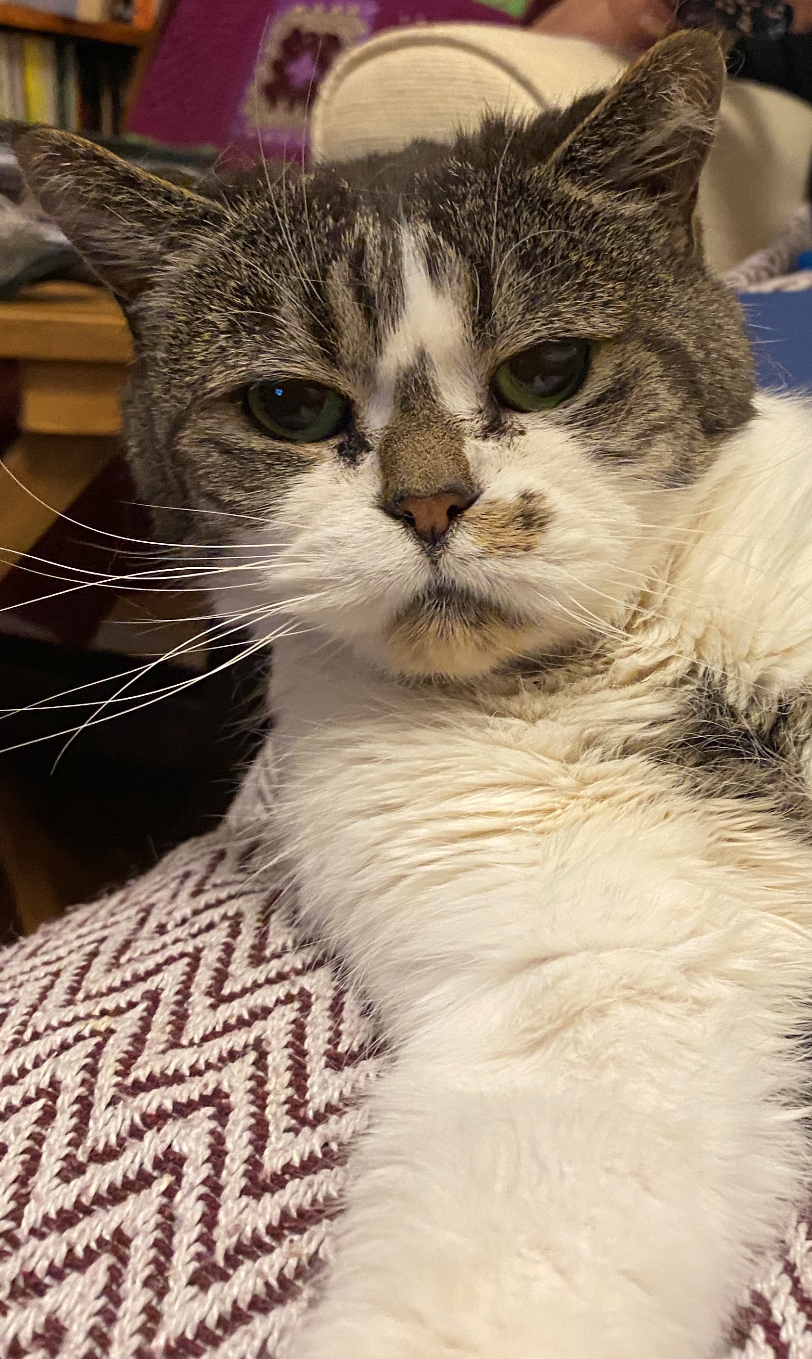
As an aside, I had to say goodbye to my sweet wee boy this June, and the vets could not have been kinder, or more respectful and caring. They even relaxed their own lockdown rules so I could be with him when he died (still all very careful and socially distanced). This was the last picture I took of him, just before he became unwell:
So I’m very glad Ackerley and Tulip find Miss Canvey, but unfortunately her insight doesn’t result in any changes and Ackerley observes: “people seem to resent being challenged whenever they approach their own sitting or dining rooms.”

He does feel some sympathy for the local shop owners though (somewhat surprisingly, as he does come across as a terrible snob), when Tulip fouls their frontage:

“True they were horrid people, but no doubt they had their burdens like the rest of us, and Tulip’s gift would not help to uplift their hearts to a sweeter view of life.”

Ultimately what Ackerley captures in My Dog Tulip is the close bond that is unique to every human and animal relationship; and what us animal lovers know for sure, that they behave infinitely better than humans:

“But if you look like a wild beast you are expected to behave like one; and human beings, who tend to disregard the savagery of their own conduct, shake their heads over the Alsatian dog. ‘What can you expect of the wolf?’ they say.”

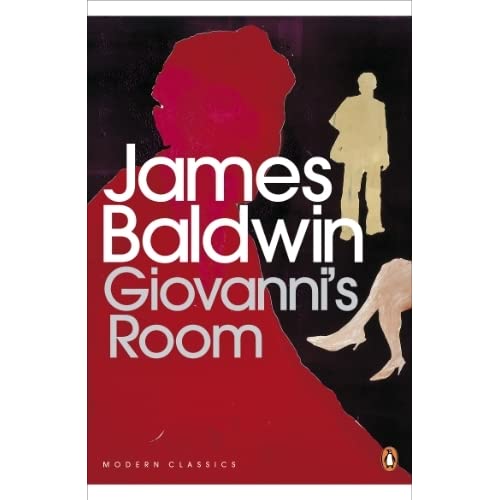
Secondly, Emma at Book Around the Corner suggested reading Giovanni’s Room by James Baldwin  and I am so glad she did. You can read Emma’s review here. This was my first James Baldwin and on the strength of this novella I’ll definitely be seeking out more of his work. He is a stunning writer: precise, poetic, insightful and so deeply moving. I knew from the opening lines, told from the point of view of young blond American David, that I’d found a writer to love:

“I stand at the window of this great house in the south of France as night falls, the night which is leading me towards the most terrible morning of my life. I have a drink in my hand, there is a bottle at my elbow. I watch my reflection in the darkening gleam of window pane.”

It’s a terrible morning because Giovanni, the man David loves, is going to be executed. They met in Paris in a gay bar where Giovanni was a barman, and quickly became lovers. Giovanni’s dilapidated lodgings provide the suffocating background to the most profound experience of David’s life:

“I scarcely know how to describe that room. It became, in a way, every room I had ever been in and every room I find myself in hereafter will remind me of Giovanni’s room. I did not really stay there very long – we met before spring began and I left there during the summer – but it still seems to me I spent a lifetime there.”

It is David’s self-hatred and wish to not be as he is that casts a shadow over their relationship. He longs for a fantasy life of heterosexual conformity:

“I wanted a woman to be for me a steady ground, like the earth itself, where I could always be renewed. It had been so once; it had almost been so once. I could make it so again, I could make it real.”

(David has a girlfriend, Hella, who is exploring Spain and deciding whether to accept his marriage proposal when he meets Giovanni.)This self-hatred means David is not always likeable but he is always believable. It makes him very judgemental towards how other gay men lead their lives, and he has horrible attitudes towards anyone he views as effeminate. His older friend Jacques picks him up on his behaviour, in an eloquent plea for humanity:

“There are so many ways of being despicable, it quite makes one’s head spin. But the way to be really despicable is to be contemptuous of other people’s pain. You ought to have some apprehension that the man you see before you was once even younger than you are now and arrived at his present wretchedness by imperceptible degrees.”

The story unfolds towards its inevitable tragedy that we know from the start is looming over the characters. It’s a heartwrenchingly sad tale that captures the deep and profound damage that can occur when the pain and frustration of a life unlived is inflicted on others.

I could have quoted so much from this novella. It is full of passages breathtaking in their beauty and wisdom. Effusively recommended.

“But people can’t, unhappily, invent their own mooring posts, their lovers and their friends, anymore than they can invent their parents. Life gives these and also takes them away and the great difficulty is to say Yes to life.”

To end, I’d normally pick a song from 1956 but none of them really took my fancy. So instead, a song for the year we’re in now. I’ve mentioned before that at times of trouble in my life there is one man I always turn to. That man is David Bowie. During the weirdness of 2020, he has not let me down. Yet also this year I’ve found myself seeking solace with another…

Bruce Springsteen has jokingly said that he writes the same song over and over. The song he’s referring to is about feeling powerless, trapped by circumstance, wanting to escape and still trying to reach out. That pretty much sums up the current situation doesn’t it?

I think so many of us are waiting on metaphorical sunny days. Here’s hoping they’re not too far away. At least I’ve managed to stop bursting into tears when he sings ‘everything’ll be ok’ which is a marginal improvement:

(Also at 4:25 Bruce does a knee slide, which contains the important message that you can be a 70 year old rock god but you’re never too old or too cool to launch yourself across a temptingly shiny floor like a giddy child…)

“Women want love to be a novel. Men, a short story.” (Daphne du Maurier)

This week is Daphne du Maurier reading week, hosted by Ali over at heavenali. It’s also Ali’s birthday today, so Happy Birthday Ali!

I read Rebecca as a teenager and thought it was great, but somehow never read anything else by du Maurier. I had the NYRB collection of her short stories in the TBR, and yet I always gravitate towards the novels I have, so I’m glad #DDMreadingweek gave me the kick I needed, as it’s a great read.

I’m rubbish at reviewing short story collections so please bear with me. This is an excellent selection of nine stories, five of which are 40+ pages, the shorter ones coming in between 10-20ish pages. For me the longer stories were the stronger in the collection – although all are compelling reads – so I’ll concentrate on a couple of those.

The first two were made into incredibly famous films, so I won’t dwell on those as many of you will know the stories. What I will say is Don’t Look Now is just as creepy as the film but with a really dark humour to it, and The Birds is miles better than the film (I’m not really a Hitchcock fan) and totally freaked me out to the extent that I’ve been looking askance at every pigeon which has crossed my path since.

In Blue Lenses,  Marda West has an operation to restore her sight. She is in hospital, intensely vulnerable, dependent on the nursing staff, her doctors and her husband. She has only what they say and the sound of their voices to go on. Already she feels unnerved, even around her husband:

“Now, for no known reason except that darkness, perhaps, had made her more sensitive, she was shy to discuss her eyes with him. The touch of his hand was the same as it had ever been, and his kiss, and the warmth of his voice; but always, during these days of waiting, she had the seed of fear that he, like the staff at the hospital, was being too kind. The kindness of those who knew towards the one who must not be told.”

She has the operation to fit the titular lenses as a temporary measure and is warned they will make everything monochrome. On using her eyes for the first time with the lenses, Marda is shocked to discover is that she now sees everyone with the head of an animal.

This could be funny, or ridiculous, but in du Maurier’s hands it is deeply upsetting. There is the suggestion that the animal Marda sees tells her something about the person. One nurse is a benign cow, the other a kitten. Her doctors are both terrier dogs, one a tenacious Jack Russell, the other a sweet natured Highland. Someone she trusted is a snake, possibly in cahoots with a vulture…

At first Marda believes it is an elaborate joke being played on her, but then she goes to the window:

 “An elderly cod, leaning on two sticks, was being helped into a waiting car by the boar headed porter. It could not be plot. They could not know she was watching them.”

She is completely isolated. No-one will believe her and they will think she is mad. Who can she trust? The cow? The Highland terrier? What will Marda do with this newfound insight into people and their motivations? What will happen when the permanent lenses are fitted?

“The utter hopelessness of her position was like damnation itself. This was her hell. She was quite alone, coldly conscious of the hatred and cruelty about her.”

Blue Lenses takes a bizarre premise to question what we choose to see, how much we really know people, and to dramatise how vulnerable we are when we trust. The denouement is devastating.

Split Second begins like many a domestic fiction, and uses this familiarity to lull us into a false sense of security:

“Mrs Ellis was methodical and tidy. Unanswered letters, unpaid bills, the litter and rummage of a slovenly writing-desk were things she abhorred. Today, more than usual, she was in what her late husband used to call her ‘clearing’ mood […] First, she checked the linen. The smooth white sheets lying in rows upon their shelves, pillow slips beside, and one set still in its pristine newness from the shop, tied with blue ribbon, waiting for a guest who never came.”

So far, so deeply ordinary. Then Mrs Ellis goes for a walk, a walk she has done many times before, and when she returns it is to find strangers living in her house and no-one with any idea who she is. The police are called, but to Mrs Ellis’ horror it is she who is taken to the station:

“Could this officer and his subordinate be genuine members of the police force? Or were they, after all, members of the gang? This would explain their strange faces, their obvious mishandling of the situation. In which case they were now going to take her away to some lair, drug her, kill her possibly.

‘I’m not going with you,’ she said swiftly.

‘Now Mrs Ellis,’ said the constable, ‘don’t give any trouble. You shall have a cup of tea down at the station, and no-one is going to hurt you.’

He seized her arm. She tried to shake it off. The young policeman moved closer.”

Split Second is incredibly clever in how it positions the reader. It shows us the epitome of middle-class calm, we think we know the story we are getting, then like the experience of Mrs Ellis, everything is thrown in complete disarray. Twice I thought I had the answer to what was happening, and twice I was wrong, having followed the false trails du Maurier had set up.

Split Second is a sad story, and one that suggests we can attempt to create all the calm and order we like in our own small setting, it will be no match for the chaos and disarray of other people in the wider world.

The common theme across many of the stories is people doubting their view of reality: feeling isolated and threatened with nowhere to turn. It is this that makes du Maurier’s stories so unsettling and upsetting. The horror comes not from the more outlandish situations but from the feeling of dread, of creeping insanity with no sanctuary in sight.

I’m sure someone told me once that there’s a lot of snobbery around Daphne du Maurier, that she was seen as a popular writer and therefore not a very good one. It really is ridiculous; du Maurier is such a good storyteller, she draws you in from the start, holds you there until she’s ready to let you go, and makes it look easy.

To end, there are many cinematic adaptations of du Maurier to choose from, but I’ve picked the title story of this collection, as it was an adaptation she approved of (unlike The Birds):

“Men are my hobby—if I ever got married, I’d have to give it up.” (Mae West)

My last post was about a romantically-involved couple for Valentine’s Day; this week I thought I’d look at a single person status much distrusted throughout literature: that of the spinster. Both my spinsters are inhabitants of beautiful Bristol, which I’d like to claim was down to well thought-through post-planning on my part, but was actually a total coincidence.

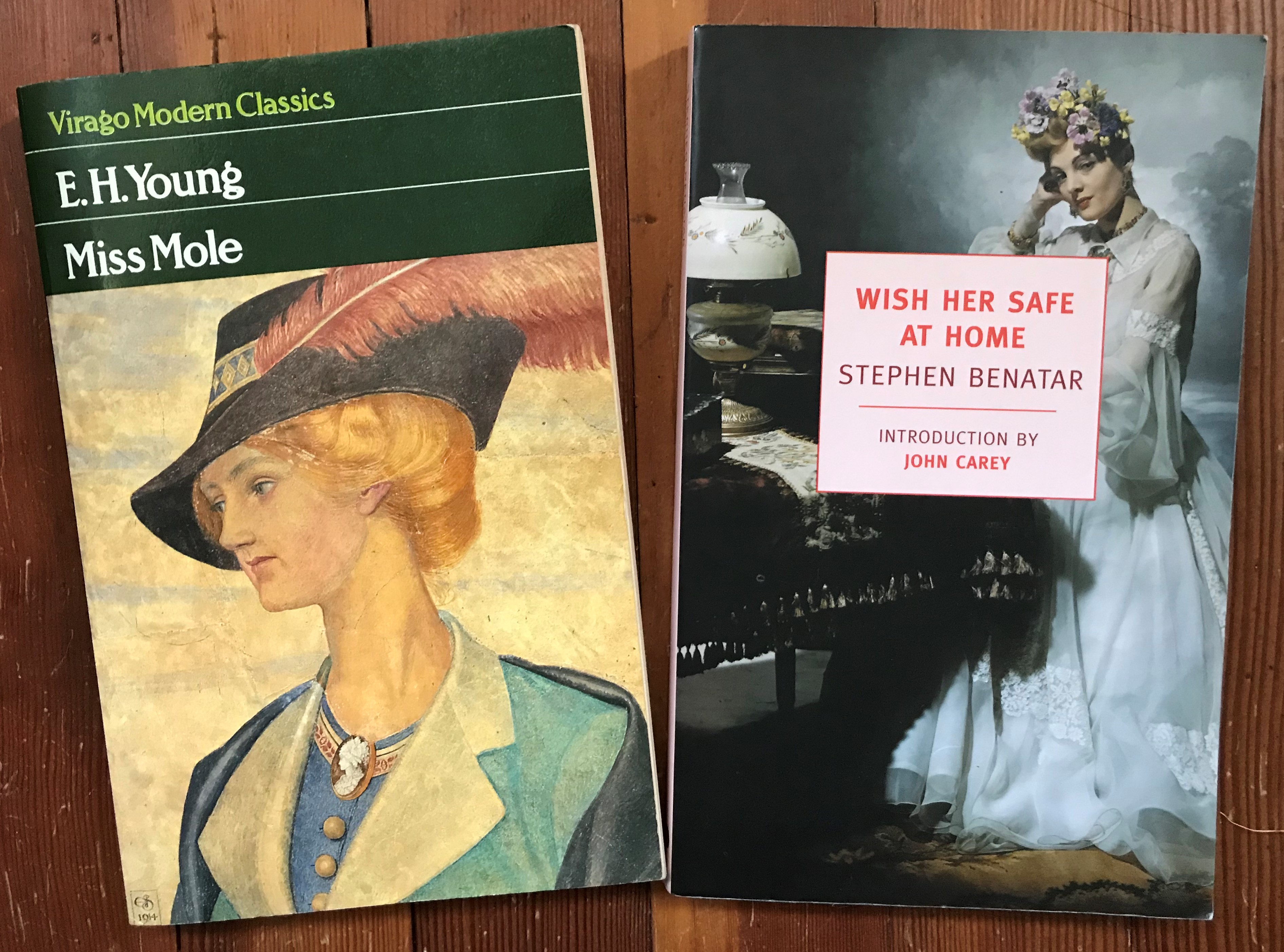
My first choice is the wonderful Miss Mole, titular heroine of the 1930 novel by EH Young. Hannah is in her late thirties, alone and shabby and the envy of no-one, yet she is a robust character who finds ways to survive and even enjoy life.

“She judged herself by the shadow she chose to project for her own pleasure and it was her business in life – and one in which she usually failed – to make other people accept her creation. Yes, she failed, she failed! They would not look at the beautiful, the valuable Hannah Mole: they saw the substance and disapproved of it and she did not blame them: it was what she would have done herself and in the one case where she had concentrated on the fine shadow presented to her, she had been mistaken.”

She is not delusional, rather she refuses to see herself as others see her -and why should she?

“This capacity for waiting and believing that the good things were surely approaching had served Hannah very well through a life which most people would have found dull and disappointing. She refused to see it so: it would have been treachery to herself. Her life was almost her only possession and she was as tender with it as a mother”

There is a strong streak of mischief in Hannah Mole too, and she enjoys teasing her well-to-do cousin Lilla, who finds her a job as a housekeeper to the reverend Robert Corder and his daughters Ethel and Ruth. This is not a remotely romantic set-up though. Corder is good at his job but he is also vain and self-centred, and enjoys his position in society because it means few people challenge him. Hannah sees him unblinkingly, and he does not like her.

“it would have horrified him to learn that he could not judge a clever or plain woman fairly. A clever one challenged him to combat in which he might not be the victor and a plain one roused in him a primitive antagonism. In failing to please him, a woman virtually denied her sex and became offensive to those instincts which he did his best to ignore.”

Hannah decides to improve things for his unhappy daughters, and feels a bond with his dead wife as she sets out to do so. She will manage things successfully, but in her own inimitable way:

“Hannah was not scrupulous about truth. She was not convinced of its positive value as human beings knew it, she considered it a limiting and an embarrassing convention.”

Hannah is realistic, but also hopeful and not remotely self-pitying. We also learn early on that she is brave, rescuing a suicidal man by smashing a window. She and a fellow tenant in her boarding house, Mr Blenkinsop, conspire to improve things for the man’s family, despite appearing to communicate at cross-purposes a great deal of the time. As she makes things work out for those around her, I really wanted things to work out for Hannah too, despite a shadow from her past looming – I think I viewed her with more compassion than she allowed herself:

“The desires, the energy, the gaiety were there, but they were ruled by an ironic conception of herself”

I really enjoyed spending time with Miss Mole. It’s a gentle novel, but it also doesn’t hide away from the realities of life for single women who are no longer young and without much money in the first half of the twentieth century, and how a judgemental society limits their choices.

Secondly, a spinster who would probably have done better without much money, Rachel Waring in Wish Her Safe at Home by Stephen Benatar (1982).  Rachel is in her late 40s with a boring job and a flatshare in London. Then her Great Aunt Alicia dies and leaves her a house in Bristol, and everything changes.

“And the hitherto dull, diffident, middle-aged woman who said to the taxi driver ‘Paddington please,’ felt in some respects more like a girl of seventeen setting out for exotic climes”

Rachel moves into the house and is determined to make the best of this fresh start:

“I had often discovered the secret of happiness: courage on one occasion, acceptance on another, gratitude on a third. But this time there was rightness to it – certainty, simplicity – which in the past mightn’t have seemed quite so all-embracing. Gaiety, I told myself. Vivacity. Positive thinking. I could have cheered.”

Gradually however, this vivacity spills over into something more. She becomes obsessed with the slave trade reformer Horatio Gavin who lived in her house centuries ago. She sees a portrait in a shop she believes to be him:

“I saw the portrait in the window.

I laughed out loud. I laughed right there, standing on the pavement, a spontaneous burst of laughter that was partly the effect of my ecstatic recognition of him and partly an aid to his more sober recognition of me

Wish Her Safe At Home details Rachel’s descent into serious mental illness. It is brilliantly done. Rachel begins as eccentric and gradually becomes truly unwell. The description of seeing the portrait is a perfect example. Most of us at some point have lost our filter in public: suddenly laughing at something remembered, or saying something out loud which we didn’t mean to. There are often experiences that we believe to be serendipitous for one reason or another. But Rachel suddenly takes this experience a step further in believing the portrait recognises her.

A novel from the first-person perspective of someone who is losing their mind is a tough read. I found it really got under my skin, more than any novel I’ve read in a long time. The first-person perspective also works brilliantly in positioning the reader in a place not exactly like Rachel’s, but certainly confused and paranoid on her behalf. There is a young couple, Roger and Celia who seem to like Rachel – why? Are they after her house? Do they feel sorry for her? Are they playing her from the start? Are they completely oblivious? Rachel’s unreliable narration means we cannot be sure.

“I don’t know when the following dialogue took place. Somehow it seems cut adrift from time, like a rowboat quietly loosened from its moorings, while its occupant, entranced, oblivious to each hill or field or willow tree upon her way lies whitely gleaming in her rose embroidered silk, trailing a graceful hand and sweetly carolling beneath a canopy of green”

That passage is meant to be overblown: Rachel is such a desperate character. Her delusions are romantic and an attempt to grasp a life so far half-lived, before it is too late. There’s nothing vindictive or cruel in her, and she is so incredibly vulnerable.

“Sometimes I felt utterly convinced I had been singled out for glory.

But not always. Far more often I felt I simply didn’t stand a chance”

I’ve not remotely done justice to the power, skill and subtlety of Wish Her Safe At Home. All I can say is: read it.

To end, the trailer for the film that apparently inspired Wish Her Safe at Home. The Ghost and Mrs Muir has had a special place in my heart since childhood. In all the times I’ve seen it, it’s never occurred to me that Mrs Muir is mentally ill. Wish Her Safe at Home has made me question everything…