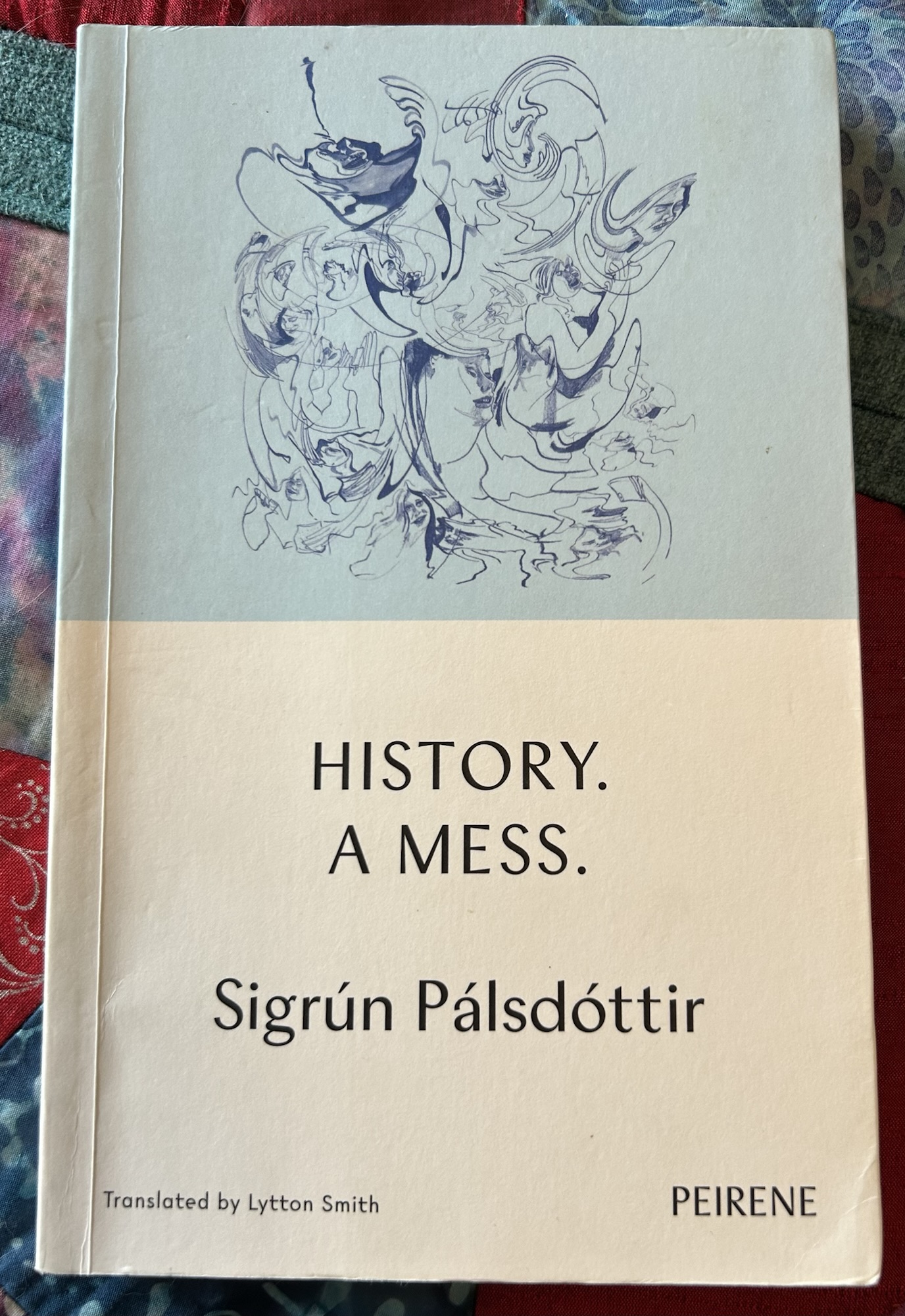
History. A Mess. – Sigrún Palsdóttir (2016 transl. Lytton Smith 2019) 173 pages
History. A Mess. Is narrated by a young unnamed PhD student. As the story opens, she is ecstatic as the research drudge job she had been given by her supervisor, transcribing the journal of a seventeenth-century artist known as SB, seems to have yielded a tremendous discovery: evidence of the first female artist in England.
“Frenzied jubilation thrilled through my body, words burst within me freighted with tremendous power, inside my head sentences and then pages formed one after the other so that by the time I stepped out of the building into the outside courtyard, my introduction was well underway.”
However, we soon learn that something went badly wrong. Five years on, she hasn’t handed in her thesis and she is back in Iceland with her husband Hans, barely leaving her house.
“Even if that person can seem occasionally distant, like Hans, so lost in his world that if you don’t reach out, grasp hold of him, he floats away, as he’s doing now, as I’m letting him do. I’m still trying to figure out what his reaction would be if I reached out for him and laid my cards on the table. Cards on the table. I suspect that his reaction would be sensible. And prudence is no use to me now. My problem calls for a radical solution.”
The fractured, repetitive quality to the sentences are indicative of the narrator’s struggles. The story becomes more hallucinatory and untethered as she seems to unravel further and further.
Some scenes are described that are so florid as to be clearly unreal. Others are grounded in the everyday so we don’t know whether have occurred or not – a skilled positioning of the reader alongside the narrator.
The story can be hard to follow at times, but from the hallucinations we’re able to unpick that she seems to be locking herself in a cupboard in her living room for much of the day. Her parents are around, and her mother is a major figure in her life.
Later in the novel she does leave her home to visit her mother for help in working out what to do about her thesis. Her walk there through the Reykjavik streets collapses reality and hallucination and seems never-ending, like a walk in dream.
“How often can you go over and over a dream in your mind until the scenario begins to crack apart, its images crumbling, their lifetime becoming nothing more than the moment it takes to call them up?”
History. A Mess. Is not an easy read. It is disorienting and confusing, but the writing is taut and so skilled that it never seems to be losing sight of itself. There also remains enough plot to keep pulling the story through, as well as a neat twist at the end.
A repeated refrain in the book is from Andre Breton, and summarises the novella succinctly:
“Everything leads us to believe that there exists a spot in the mind where the real and the imaginary will cease to appear contradictory.”
Marzahn, Mon Amour – Katja Oskamp (2019, transl. Jo Heinrich 2022) 141 pages
Marzahn, Mon Amour is a novella I’d been meaning to read for a while and I’m delighted to have finally got to it. Based on the author’s experience of retraining as a chiropodist in her middle-age, it is essentially a series of character sketches of her clients.
Initially her training is a struggle and she’s unsure of her new career:
“We had reached a low point, at people’s feet, and even there we were failing.”
“From writer to chiropodist – what a spectacular come down. I had forgotten how much people, the looks on their faces and their well-meant advice, got on my nerves.”
But on qualifying she gets a job in a salon in the titular area of Berlin, and begins to find her vocation:
“As always, the weather here in Marzahn, once the biggest expense of plattenbau prefab tower blocks in the former East Germany, seems more intense than in the centre. The seasons have more of a smell about them.”
Her boss is Tiffy “a grandmother, albeit a non-practising one”; Flocke is the chaotic nail technician. The chapters take the names of her clients, and Oskamp expertly captures a sense of the person in very few words:
Herr Paulke: “whenever I laughed at something that Herr Paulke said in his matter-of-fact way, emotion almost imperceptibly flashed across his face, a mix of incredulity, pride and shame. He was no longer used to anyone paying him any attention.”
The Mon Amour affection the author feels for her clients shines through. Often these are elderly people, disregarded by society, and Oskamp gets to know them over a period of months and even years. The act of caring for their feet is intimate, especially for those who may now be alone and not have much gentleness in their lives.
They all have stories to tell, such as Gerlinde Bonkat, who arrived as a refugee:
“She formulates crystal clear, quotable sentences and speaks an accentless German, with a faintly Nordic hint to its melody.”
Which isn’t to say Oskamp likes all her clients. Herr Pietsch is a former government worker who fails to realise his days of power are over: “All your life you’ve mistaken your position for your personality.” And there’s a disturbing portrait of a mother and daughter who visit where there is a query of elder abuse.
But generally Marzahn, Mon Amour is a gentle read.
“Frau Frenzel is seventy years old. She views the world with a cheerful contempt and won’t let anything or anyone spoil her mood. She reminds me of a hedgehog, with her nose perkily pointing upwards, lively button eyes and grey spiked mullet straight out of the 80s […] Amy, with whom Frau Frenzel shares her life, is a short haired dachshund.”
A lovely read and a wonderful tribute to the writer’s clients.
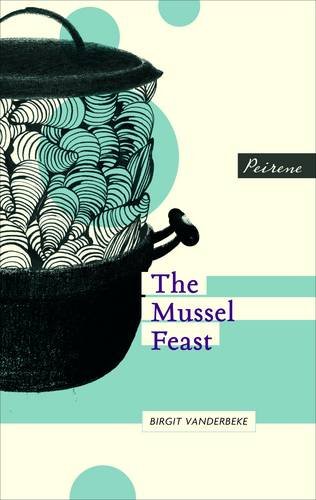
Peirene Press are one of my favourite publishers, with a focus on European contemporary novellas which so far have given me some wonderful reading experiences. The Mussel Feast is no exception, as it carefully and precisely builds a picture of a family tyrannised by the father, over the course of one evening.
Narrated by the teenage daughter of the family as she prepares the titular celebratory meal alongside her mother and brother, they await the return of their father who has bagged a promotion. The daughter doesn’t much like mussels, but it is how the family traditionally celebrates.
“Anyway, the noise came from the pot and as I glanced over I couldn’t help looking at the clock, too: it said three minutes past six. And at that moment my mood changed abruptly. I stared at the noisy pot […] it was a distinctly strange noise, which made me feel creepy; we were already twitchy and nervous, and now there was this noise.”
The father is late back, and the narrator reflects on what is happening that evening and on what has gone before:
“He couldn’t stand my mother’s knackered face, and so she switched to her after-work face, which she would paint on quickly in the bathroom at half-past five, before my father came home. But this after-work face only lasted for an hour and needed reapplying.”
Everyone in the family remains unnamed, fitting with thesense that they are all trying to fulfil a role for the father and that who they actually are is of secondary importance:
“We all had to switch for my father, to become a proper family as he called it, because he hadn’t had a family, but he had developed the most detailed notion of what a proper family should be like, and he could be extremely sensitive if you undermined these notions.”
The father is a deeply inadequate man, ashamed of his past in the GDR, and trying to convince his family of his superiority. His children don’t conform to gender stereotypes which annoys him. His wife isn’t pretty enough by his standards. The fact that he squanders their money and is fairly useless all round, is by-the-by:
“My mother earned money and did menial work, boiling the nappies in a huge pot, and cooking and shopping and children, all of which drove him nuts; my father was not cut out for such trivial jobs , and back then we would have frozen if my mother hadn’t lugged sacks of coal.”
By the time the following passage came I already had a clear idea of what was going on in this family, but I still found the matter-of-fact tone in describing such abuse truly shocking:
“He was extremely assured in his taste; he didn’t like his taste being questioned. I couldn’t bear the wall unit, as I told them that evening, due to my head having been smashed against it on a number of occasions.”
The tension in the novella builds expertly as, like the family, we wait for the father to return. The ending is ambiguous, but we know there are huge ramifications, because at the start of the novella the narrator tells us:
“what came in the wake of our abortive feast was so monumental that none of us have got over it yet”
Birgit Vanderbeke wrote this just before the fall of the Berlin Wall because “I wanted to understand how revolutions start.” In The Mussel Feast, it is a long time coming and also a matter of a few moments:
“Suddenly I no longer wanted him to come home, […] Mum looked at me, not as horrified as I’d expected, but with her head to one side, and then she smiled and said, well, we’ll see, and she didn’t sound as if she’d find it surprising or even terrible if he didn’t come home.”
The Mussel Feast has become a set text in Germany and deservedly so – the domestic setting is completely compelling but also has wider resonance which it carries lightly, the metaphorical never undermining the portrayal of abuse.
Marina Sofia posted at the start of the month on how stories that tend to be translated from the former Eastern bloc tend to be grim and hard-going, not reflective of the scope of literature of those countries at all. Unfortunately, Soviet Milk does not buck this trend. It’s an excellently-written novella though, and compelling portrait of a mother/daughter relationship and the impact of the state on people’s lives.
The imagery of milk is woven throughout the narrative and begins with a young single mother refusing to breastfeed her child:
“my mother was a young doctor. Perhaps she knew that her milk would have caused more harm than good to her child. How else to explain her disappearance from home immediately after giving birth? She was missing for five days. She returned with aching breasts. Her milk had stopped flowing.”
The narrative alternates between the mother and daughter. The mother is hard-working, committed to her gynaecology practice, but also distant and depressed.
“Having witnessed my father’s physical suffering, I decided to become a doctor. I’m not sure I loved him. Sometimes I felt sorry for him. Sometimes I hated him because I suspected that his self-destructive gene was deeply implanted in me and that with time it would grow and strengthen, no matter how hard I fought it.”
The daughter grows up a very different character. She is cared for by her grandmother and step-grandfather, and is a happy child, taking joy in simple pleasures. She is aware of her mother’s troubles though:
“I don’t remember Mother ever hugging me much, but I remember her needle-pricked thigh, where she practised injections. I remember her in bed with blue lips from the first time she overdosed, possibly as part of some medical experiment.”
But only possibly…her mother definitely self-medicates with various substances, and tries to overdose more than once. Her life isn’t laid out explicitly – we never know who the father of her child is – but she certainly struggles with life under communist rule.
“My mother continued to raise me as an honourable and faithful young Soviet citizen. Yet within me blossomed a hatred for the duplicity and hypocrisy of this existence. We carried flags in the May and November parades in honour of the Red Army, the Revolution and Communism, while at home we crossed ourselves and waited for the English army to come and free Latvia from the Russian boot.”
The story follows the banishment of the mother from Riga to an obscure part of the Latvian countryside, where she continues her gynaecological practice but without the research and clinical developments she so highly valued in the city. The daughter begins to recognise the limitations the state places on their lives, whilst simultaneously caring for her unpredictable, unhappy mother.
Although very much about Soviet rule, there is much in Soviet Milk that is universal: familial relationships, mental health, the impact of addiction beyond the addict, struggling against the forces that govern and circumscribe our lives. Yet however much I rail against the political nightmare we’re currently in, I don’t truly feel my existence is Orwellian, unlike the mother who finds a section of 1984:
“The whole dialogue sounded as if the speaker was standing right beside me, in my narrow room, as if he was describing my life right now.”
If Soviet Milk was solely from the mother’s perspective, it would be very bleak indeed. But the daughter has a teenager’s exuberance, and is living at a time when Gorbachev has just come into power…
A powerful, highly readable novella about two very different women.
Portrait of the Mother as a Young Woman – Friedrich Christian Delius (2006, trans. Jamie Bulloch 2010) 125 pages
Dear Reader, I’ve been somewhat absent from the blogosphere recently and I’ve really missed it. This was because at the end of March I decided on the spur of the moment to apply for a PhD which caught my eye. I had no plans for further study and so this meant April was spent in whirlwind of desperately trying to get my reading up to date, meeting with old tutors to remind them who on earth I am and begging for a reference, and then writing my application. The deadline is this Friday but I’ve now submitted my application and I’m hoping I might regain my sanity in the meantime. I don’t think I’ll get it, but my tutors have been really supportive and its good to shake things up now and again.
Aaaaaaannnnyway, I really enjoyed blogging on a novella a day in May last year, so I’m throwing myself back into it this year. I had such plans…. NADIM this year was going to be carefully thought through, with a good spread of countries (last year I ignored the southern hemisphere completely and lovely Naomi pointed out I’d also skipped Canada) and a wonderful balance of styles and subjects… yeah, that’s not happening. Instead this month (and I really hope to make it to the end) will be hastily cobbled together posts which completely fail to do the wonderful form of the novella any justice at all. But I still hope I manage to spread some novella love along the way 😊
I thought it apt to start with one from a publishing house that has done so much to champion the form: Peirene Press, who specialise in publishing contemporary European novellas, aimed to be read in one sitting. I’m a big fan of theirs and so I swooped down on Portrait of the Mother as a Young Woman when I saw it in my favourite charity bookshop.
Portrait of the Mother as a Young Woman is set over the course of one afternoon in Rome in 1943. Margherita is 19 years old, pregnant and alone as her husband is serving in the German army in Tunisia. She feels alien in a city where she doesn’t speak the language, and she is walking to a Bach concert at the Lutheran church.
“the immense city of Rome, still seemed to her like
a sea which she had to cross, checked by the fear of all things unknown, of the yawning depths of this city, its double and triple floors and layers, of the many thousand similar columns, towers, domes, facades, ruins and street corners, of endless number of pilgrimage sites for cultured visitors, which she walked past in ignorance, and of the faces of people in the streets, which were difficult to make out, in these stormy times of a far-off war which was drawing nearer every day”
And now, bear with me as I break something to you which you may have gathered from the quote above, which sounds awful but I promise it isn’t: the entire novella is one sentence. Wait, come back! It’s ok, really. Trust me 😉
There are paragraphs which make the whole thing easier, and Delius, possibly because he is a poet, has a great ear for rhythm. This means the sentence, broken by commas, works well in capturing the sense of someone walking, their thoughts falling into the pattern of their steps. I thought it was really effective and such an impressive feat of translation by Jamie Bulloch too.
“for two months she had crossed the Tiber almost every day via the Ponte Margherita, as if that were totally normal, but nothing was totally normal, especially not in these times, each day was a gift, each of the child’s movements in her belly a gift, each verse from the Bible and each glance across the Tiber”
Throughout her journey across the city, we learn about Margherita’s life in Germany and her new marriage. She is religious – daughter of and wife to clergymen – but not given to much reflection, preferring to stay silent in political discussions. Her husband and father are somewhat sceptical of the Reich, but Hitler has been in power throughout Margherita’s childhood and adolescence, she was part of the League of German Girls and it is only now, away from home, that she finds herself beginning to feel confused.
“On her own she could not work out what you were allowed and not allowed to say, what you should think and what you ought not to think, and how to cope with her ambivalent feelings”
Even though nothing of great note happens in the course of the novel, there is still an effective and believable character arc. Cut adrift, Margherita is beginning to learn who she is. There is a sense that this naïve, unquestioning woman is potentially quite steely, and as readers we know she will need that in the months and years to come.
“She sensed something within her rebelling against the constant obligation to stifle the feeling of longing with her reason and her faith, because feelings were forbidden in wartime, you were not allowed to rejoice with happiness, you had to swallow your sadness, and like a soldier you were forced to conceal the language of the heart”
I don’t normally do book haul posts but I thought I would just this once, to celebrate the end of my 2018 book-buying ban, which much to my amazement I stuck to for the entire year – not one book did I buy. (Actually, that’s not strictly true, I bought 6 books during the year, but all for other people, and not in a cheating I’ll-read-this-first-then-give-it-away-and-claim-it-was-a-present-all-along way, honest!)
But before I sound too smug (and I do feel pretty smug tbh, I have terrible willpower and never manage to stick to any resolution), it wasn’t a total success. The aim of the ban was for me to read the unread books I own, as my flat was starting to look like this:
There’s definitely a vast improvement, but the discovery of the library fiction section and a terrible reading slump in the latter part of the year meant I didn’t get through as many books as I hoped. So while the ban is over I’m planning to still try and exercise some restraint and get that TBR pile down further.
Anyhoo, on 1 January I ordered some books online which are winging their way to me, and then yesterday, for the first time in over a year, I set foot in the lovely bibliophile’s crack den charity book shop which is almost directly opposite my flat. This is what I came away with:
Yes, 10 books is me exercising restraint. You can see where the need for the ban came from, can’t you? And to be honest, I’m slightly regretting not buying the five or so (OK, it was more like 15) books I additionally considered but returned to the shelves because I am a whole new woman.
The first thing that caught my eye was this little collection of mini-plays by Michael Frayn, out on display because it was in a gimmicky sleeve and who’s going to fall for that and decide they immediately need this book? *cough*
I enjoy reading plays and Michael Frayn is a safe pair of hands, so I think this will be fun.
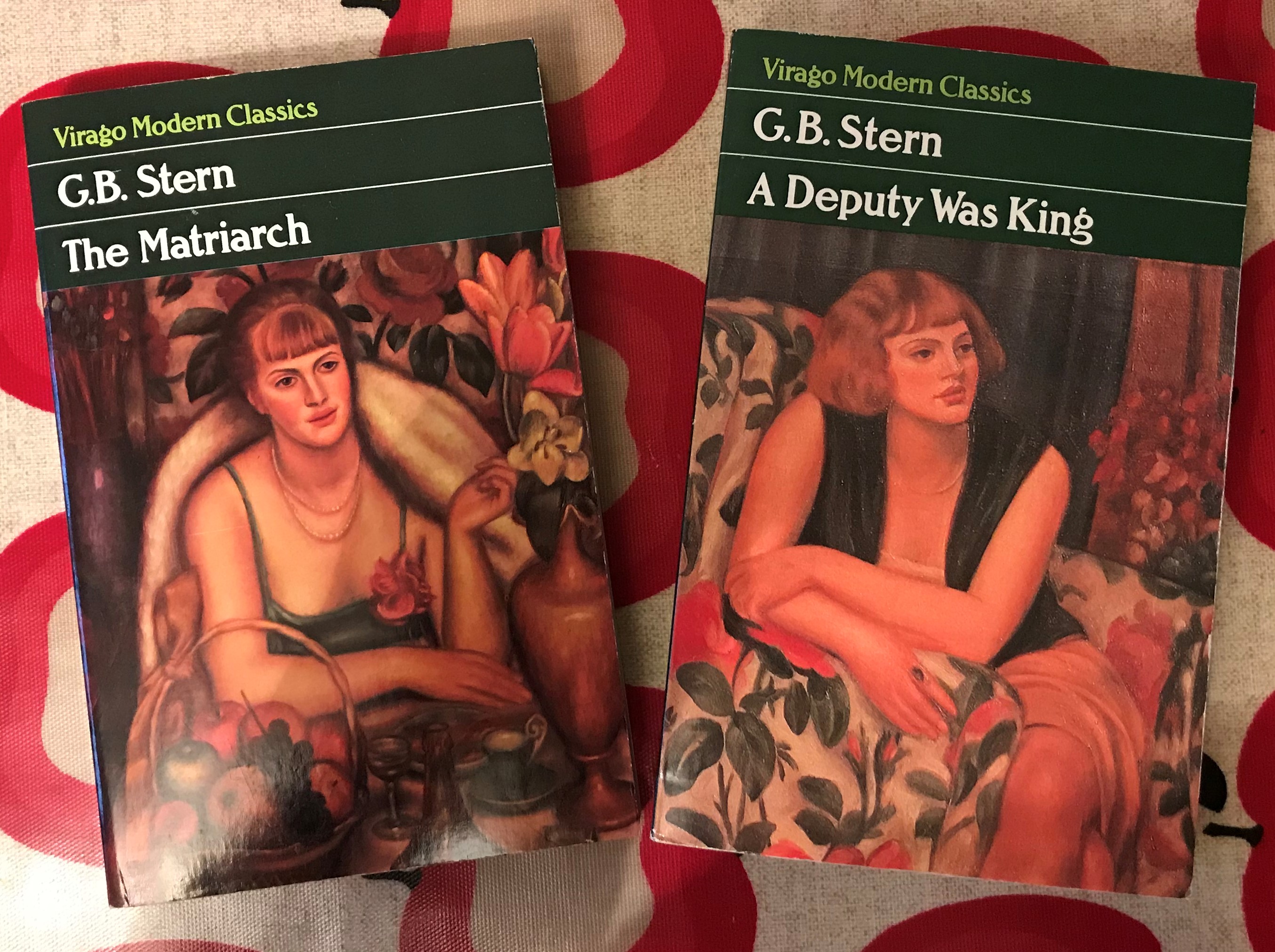
One of the many joys of charity bookshops is hunting down those green Viragos, and I found a lovely pair of GB Sterns in great condition. I’ve never read any GB Stern but I remembered her name from Jane at Beyond Eden Rock’s Birthday Book of Underappreciated Lady Authors. Part of my new-found restraint would generally include not buying more than one book by an author I’ve not read, but that lasted all of 5 minutes. They were green Viragos! In lovely condition! My willpower can only take so much…
These are the first two in the Rakonitz chronicles and the blurb on the back is really tempting, so I’m looking forward to these.
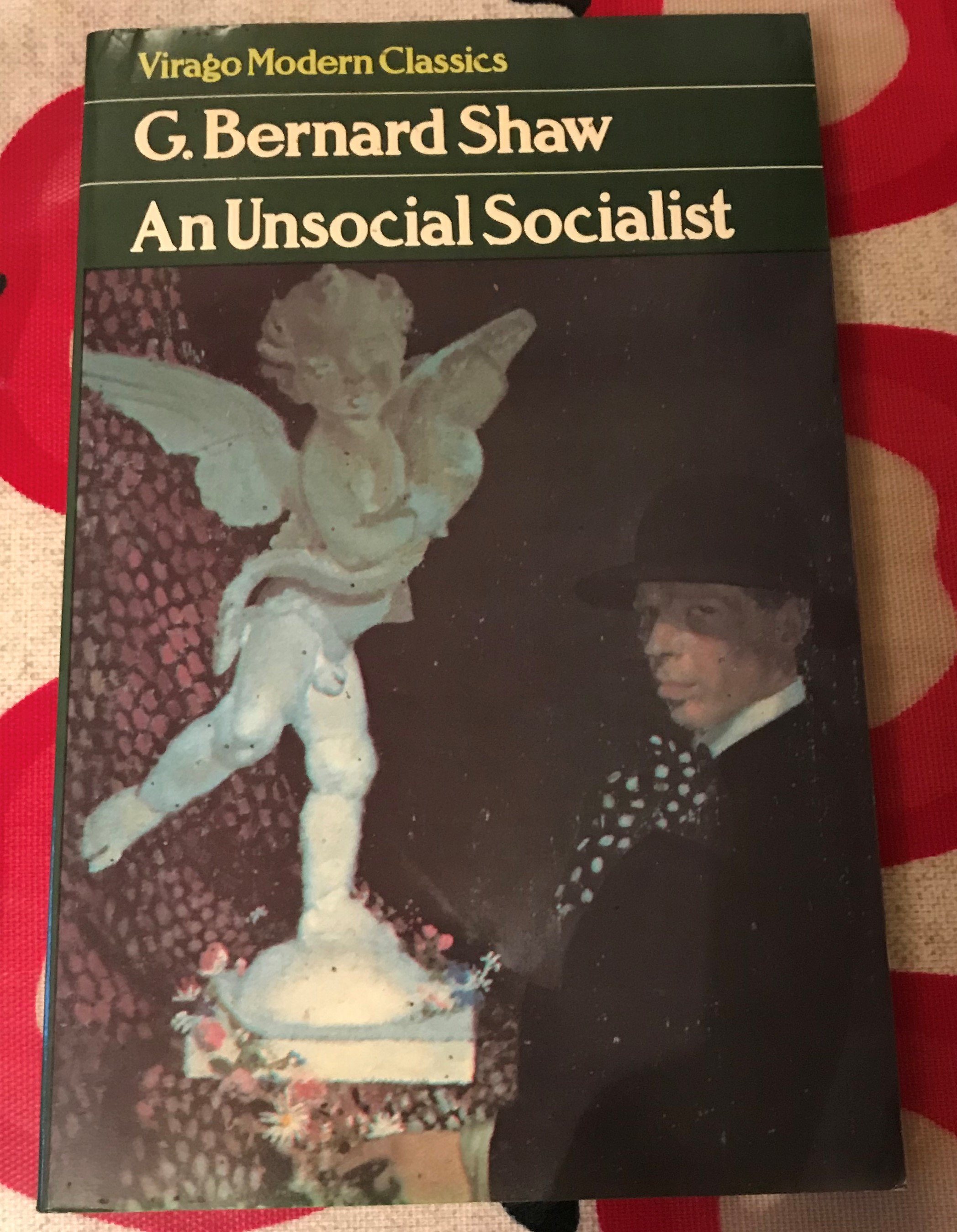
I bought one more green Virago:
I’m not a massive fan of Shaw but the blurb on the back says ‘Shaw’s view was that the false idealisation of women by men enslaved both sexes’ and he’s dismantling this in a comic way, so maybe this will be where I learn to like him.
Sticking with the theme of buying books because I trust the publishers, I picked up these by NYRB and Peirene:
The Delius is apparently a single 117-page long sentence, which frankly sounds horrific, but I trust Peirene and the translator is Jamie Bulloch who does great work so I’m still hopeful. And I do love a novella, which leads me to these:
The Auschwitz Violin, to my cynical mind, looked like an awful lot of other books with similar titles/themes which publishers love, but its novella length means I’ll give it a go, and it does look promising. The Vesaas I’ve never heard of but the reviews quoted on the back cover are rapturous and I enjoy Scandinavian literature so I’m looking forward to this.
Finally, I was pleased to come across Jill by Philip Larkin because Ali’s review last month reminded me that I wanted to read some of Larkin’s prose. Infuriatingly, that mark on the cover was caused by me trying to peel a label off, which I did carefully but it still damaged the cover:
When I’m in charge of the world, stickers will be banned from book covers, that’s a promise. Then I’ll try and sort out world peace and stuff, it’s all about priorities 😀
So, that’s my first book haul of the year! Looking back on the 2018 ban I would say I’ve learnt these things:
At the ripe old age of 41 I can still surprise myself
I might actually have some willpower after all
Its satisfying to see the TBR diminishing
I’m never going to not have piles of books
Which means I need to move somewhere with really cheap property prices to house them all
I still can’t be trusted in a charity bookshop
How about you, dear reader? Any bookish resolutions for 2019? Have you read any of my haul? Where would recommend I start?
Here’s to a wonderful year ahead with many great reads for all of us 😊 Apropos of absolutely nothing, but just because I’ve been listening to her a lot since 2019 started, here is Kate Bush doing a reggae cover of an Elton John song whilst playing a ukulele*. Because she can, because she’s awesome:
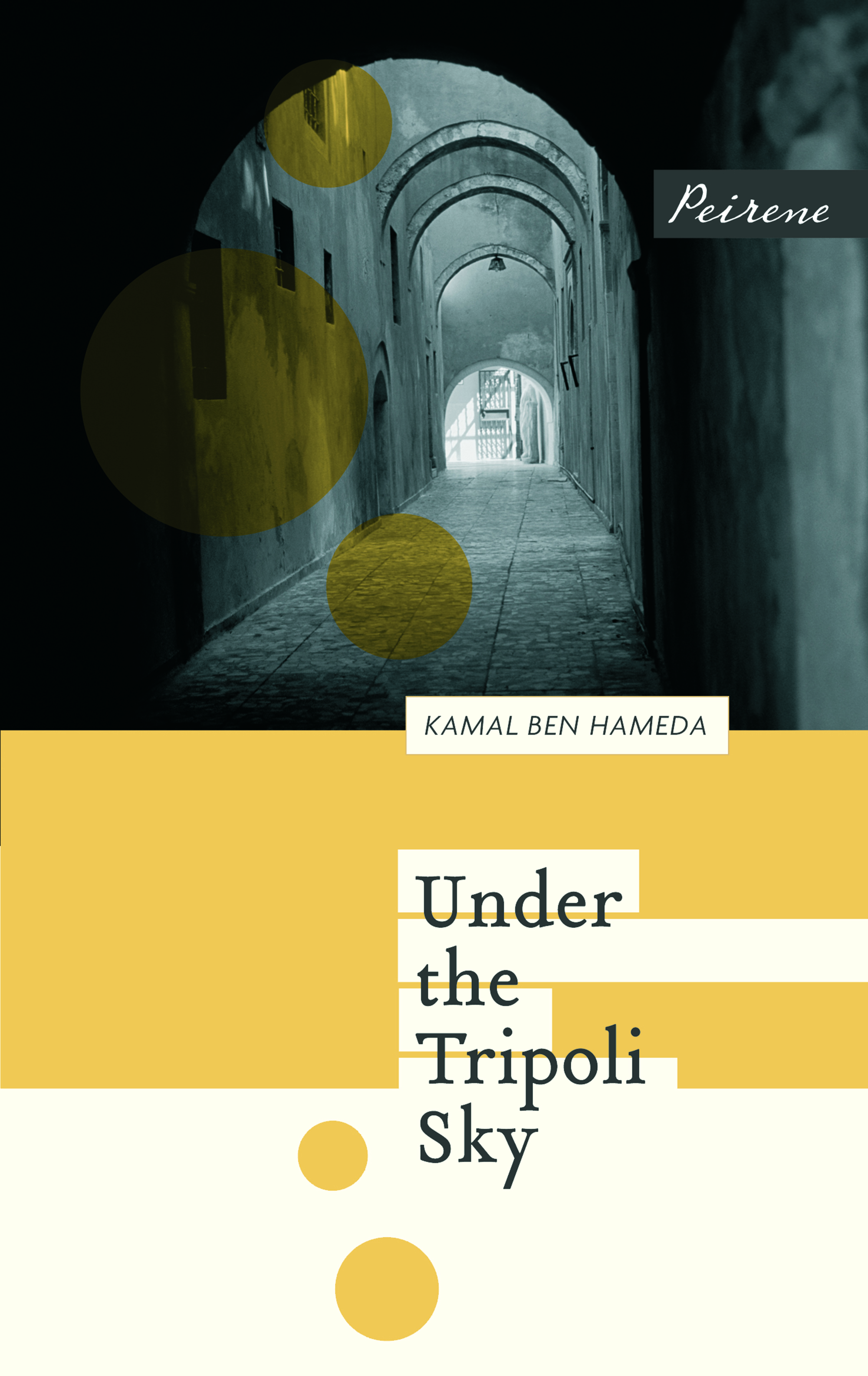
Under the Tripoli Sky – Kamal Ben Hameda (2011, trans. Adriana Hunter 2014) 104 pages
Under the Tripoli Sky by Kamal Ben Hameda is published by Peirene Press who specialise in publishing contemporary European novellas, aimed to be read in one sitting. Under the Tripoli Sky (written in French by a Libyan author now living in Holland) is part of their Coming of Age series. It’s also one more stop on my Around the World in 80 Books Reading challenge, hosted by Hard Book Habit.
Hadachinou is a young boy living in Libya before the revolution of 1969. The novella details his experience growing up in Tripoli surrounded by women: his mother, her friends, their daughters. Through a series of sketches he builds up an evocative, affectionate but unsentimental view of the lives of women where men are either absent or a drunken threat:
“My father, a solitary man given to prayer, shut himself away in the small bedroom at the back of the house when he came home from his shop or from the mosque. … As for Uncle Hadi, he spent nights in the company of other drunkards. ‘If their young wives want some fun and relaxation, they have to search for it elsewhere,’ Aunt Nafissa often commented, with her usual bitterness towards the male gender.”
The women don’t really notice Hadachinou and so he is given extraordinary access to their lives and experience.
“The tea ceremony was the only part of the day when my mother and her friends could live their lives in real time and tell their own stories. At last they could talk about dreams, longings and anxieties all in the same breath, and their bodies were at peace.”
He also moves across other boundaries in the city, attending mosque, synagogue and church. There is a sense of an exile looking back, and Tripoli with its heat, light, and bustling activity is beautifully realised. What also adds to a sense of Hadachinou recalling with longing, is the focus on food. This is not the story to read if you are on a diet. As homemakers, a great deal of the women’s lives are given over to preparing food, and Hadachinou describes the various meals in mouth-watering detail:
“Signora Filomena would take us to the pizzeria, where each of us could salivate over his or her choice of either a pizza with tomatoes and oregano flavoured anchovies, or an ice-cream with a subtle vanilla taste set off by crunchy slivers of bitter chocolate. She herself preferred the bar opposite and its famous sandwiches: grilled sardines between two slices of crusty bread whose dough was impregnated with olive oil infused with garlic and red chillies.”
Peirene’s inclusion of this as a coming of age story is understandable. Hadachinou undergoes his circumcision early in the novella; he also experiences awakening sexual desire. But while he is moving towards adulthood, this is very much a portrait of a city and a community on the brink of enormous change. It is stunningly written, capturing a society about to be torn asunder.
“Another person’s eyes are your origins and your kingdom. But other people can’t see you if they’re blinded by their search for an illusion…”
The Murder of Halland – Pia Juul (2009, trans. Martin Aitken 2012, 189 pages)
This novella is published by Peirene Press who specialise in publishing contemporary European novellas, aimed to be read in one sitting. The Murder of Halland is part of their Small Epic series.
The story opens with a domestic scene, Bess and her partner Halland watching a detective series before he goes to bed and she returns to her study to continue her work as a successful novelist. By the third page however, she is woken by a man at the door claiming he is arresting her for the murder of her husband: Halland has been shot dead in the town square outside their flat.
“The wet cobbles glistened in the morning light. Normally, the square would be deserted. Now it was filling with people. Roses bloomed against the yellow and whitewashed walls.”
While The Murder of Halland could be classed as a crime novel, I think this is misleading. The focus is not on finding out who killed Halland but rather the grief of Bess as she ricochets around the small town in confusion, discovering Halland wasn’t quite who she thought he was and wondering if she is grieving in the right way.
“I could see why Halland had hung up the picture. It was our first year together and we were happy. Anyone could see that. At least I could, now. Halland’s hair had turned completely white during his illness, but here his long mane was dark and only just starting to turn in grey. I traced the sharp line of his nose with my finger, his full mouth. He was looking at me, saying something. What did we say to each other in those days? What did we ever say? I couldn’t remember us talking. Did we even say good morning? Yes, we said good morning.”
Bess’ detached narration makes The Murder of Halland an unsettling read. We know it was not a happy relationship, but we don’t know exactly why. We don’t know in what way Halland was ill. All Bess’ relationships seem to occur at a step removed: she has tense phone calls with her mother, a half-hearted reconciliation with her grandfather, an estranged daughter who arrives back in her life but they don’t explore what this means for either of them…
This strange detachment meant that I started to doubt Bess’ reliability as a narrator. When I read crime fiction it’s weirdly, for comfort, partly because I stick to Golden Age, and partly for all the ends to be tied up nice and neatly. The Murder of Halland is not this type of novel. It leaves the reader with many more questions than answers, most of all through it’s “WHAT????” ending . Surprisingly, I didn’t think this made for an unsatisfactory read. The Murder of Halland is an intriguing character study at a moment of crisis, as complicated and unresolved as life itself.
You’re not wrong, JD. Mine is in definite box-of-frogs territory. It’s the thing I like most about her. I’ve been extraordinarily lucky, but a relationship such as ours will never be immortalised in literature given that we get on well and it would be inexorably dull. So for mother’s day (which it is today in the UK) I’m looking at two portrayals of mothers that are nothing like my own but which make for great reads. This post is dedicated not only to my own mother, but also to my sister-in-law, for whom today is her first mother’s day as a mother 🙂
My first literary mother is Mrs Ramsay from To the Lighthouse by Virginia Woolf. I chose this because Virginia Woolf is one of my mother’s favourite writers, and like the homebrew peach schnapps I once allowed past my lips, I deeply regret this now. How on earth do you write about anything by Virginia Woolf? Her writing is so rich, so multi-layered, so dense and yet so subtle that I don’t feel adequate to the task – which I’m sure the following discussion will prove beyond a doubt 😉
In To the Lighthouse, the Ramsay family descend on their holiday home in the Isle of Skye. Woolf’s stream-of-consciousness technique is perfect at capturing everything that occurs beneath the surface of an ordinary day, the deep significance below the seemingly insignificant:
“the monotonous fall of the waves on the beach, which for the most part beat a measured and soothing tattoo on her thoughts and seemed consolingly to repeat over and over again as she sat with the children the words of some old cradle song, murmured by nature, ‘I am guarding you – I am your support’, but at other times suddenly and unexpectedly, especially when her mind raised itself slightly from the task in hand, had no such kindly meaning, but like a ghostly roll of drums remorselessly beat the measure of life, made one think of the destruction of the island and its engulfment in the sea and warned her whose day had slipped past in one quick doing after another that it was all as ephemeral as a rainbow – this sound which had been obscured and concealed under the other sounds suddenly thundered hollow in her ears and made her look up with an impulse of terror.”
Mrs Ramsay is a nurturing and dedicated mother but here Woolf exposes the fractures that threaten a seemingly harmonious exterior. I think this passage is just brilliant – the setting up of the monotonous background noise that lulls yet twists in a moment, the mind rebelling against the self, the pure terror that we can be overwhelmed by our own feelings – all while domesticity continues undisturbed.
The family are surrounded by Mrs Ramsay’s nuturing love and the sea, and as the passage above shows, these are bound together in their constancy being mistaken for predictability. To the Lighthouse uses water imagery to great effect, the sustaining essence that can imperil and kill:
“how life, from being made up of little separate incidents which one lived one by one, became curled and whole like a wave which bore one up with it and threw one down with it, there, with a dash on the beach”
This is my experience of reading Woolf: small incidents, layered up into writing of such power that you surface from her novels feeling dashed by a powerful force.
If you’d like to read some proper reviews of this wonderful novel, there have been insightful and interesting posts written lately by bloggers including Lady Fancifull and Simon at Stuck in a Book. If you’d like to know more about the man Mrs Ramsay married, a man given to views such as: “He wondered if she understood what she was reading. Probably not, he thought. She was astonishingly beautiful.” Sarah has written a typically witty and entertaining post over at Hard Book Habit.
Secondly, The Blue Room by Norwegian author Hanne Orstavik (trans. Deborah Dawkin) one more stop on my Around the World in 80 Books Reading Challenge, hosted by Hard Book Habit. I can’t remember which blogger made me aware of this so if it was you please leave a comment! Peirene Press publish contemporary European novellas, and group them in sets of three, linked by theme. The Blue Room is part of the Coming-of-Age series, and concerns Johanne’s intense relationship with her mother; they live together while Johanne trains to be a psychologist. Her career choice is deeply ironic, given that she has no insight into the manipulative, controlling behaviour her mother directs towards her, or her own victimhood.
“She’s right, I thought, we belong together like two clasped hands.”
Well, two clasped hands can be affectionate, reassuring, but also restraining and restrictive. The novel takes place over the course of a day, when Johanne was due to leave to spend six weeks in the States with her boyfriend, yet wakes to find herself locked in the titular space and unable to leave. As she thinks back over recent events, relationships with her mother, boyfriend and God emerge and the reader is left to piece together what is going on beyond what Johanne doesn’t say. She is an unreliable narrator of her own life as we all are, because her perspective is limited by what she cannot see.
Her mother is deeply controlling and Johanne has the victim’s hypersensitivity to her abuser’s every need and whim. At no point does she articulate that it is her mother who has locked her in, unwilling to let her leave.
“Perhaps I’m locked in here as part of an experiment. Perhaps somebody’s pumping gases in and changing my consciousness.”
Johanne’s sexual fantasies abruptly break into the narrative, filled with violence, with herself as the dominated party in BDSM scenarios. Again, despite her training, she cannot see how this is bound up in her relationship with her mother:
“And what exactly, I asked, is the meaning of this pain? Don’t we grow when we’re happy? Mum looked at me: she seemed angry and said nothing.”
Johanne is young and naïve, lacking insight, both sweet and shocking. The Blue Room is a powerful novella about our closest relationships and how they influence us in ways we barely comprehend.
To end, a little treat for my mother and any other LDP fans out there – enjoy!










 madame bibi lophile recommends