It’s been hugely stressful few weeks, which meant my reading has fallen off a cliff. I didn’t get to my final read for #WITMonth but I hope to at some point (Magda Szabo’s The Door, where the bookmark has sat at page 50 for four weeks, despite my really enjoying it), and we’re two-thirds through September where I’ve failed to take part in SpinsterSeptember or ShortStorySeptember, both of which I was really looking forward to.
However… I have handed in my notice at work now, with no job to go to…
And while this is incredibly anxiety-provoking I think it speaks to it being the right decision that my reading has resumed (imperfectly, but resumed!) and I’m catching up on the blogosphere too 😊
So, this is a contribution to Short Story September hosted by Lisa at ANZ Lit Lovers. Hopefully I’ll get to some more of the short stories languishing in the TBR, even if it will be fewer than I planned. Do head over to Lisa’s blog to find out more, and join in!
The Casino by Margaret Bonham (1948), a collection of short stories which is Persephone No.48 and features an enlightening forward by Bonham’s daughter, Cary Bazalgette. Lisa has asked us to focus on one story, so I’m just going to focus on the titular one, but the whole collection is really a strong one.
A group of teenage girls are excited and trepidatious at the thought of going unaccompanied to the casino in the French seaside town in which they are holidaying. Bonham captures perfectly that time of life when you are not quite an adult and are impatient to experience the adult world, while finding the whole prospect terrifying and wishing you could be at home in your pyjamas.
“In the dusk, Giselle waited outside the iron gates. Her frock was pink and stuck out like a cake-frill, she undulated and giggled. In a line of four they went down the street towards the sea, past Sainte Claire where Giselle waved and Valentine looked sideways at seeing M. Chabouillard’s face a round whiskered disapproving moon at the window. Between Kitty’s steel confidence and Valentine’s detachment, Rhys walked with her eyes on the heaving channel, thinking of ruin.”
In a short space Bonham draws fully recognisable portraits of the girls. Kitty is determined to get on with adult life, Rhys is scared by the whole thing, Giselle naïve and child-like, Valentine somewhat indifferent and preoccupied with her painting.
The evening is one of anticipation, and of course it is an anti-climax:
“The restaurant was half-full, stuck with pink paper roses in white and gilt trellis. At the far end a damp, pink band played, the floor was cleared for dancing, the tables crowded round the walls. Kitty looked sulky, and ordered coffee without asking if anyone wanted something else, and at this Rhys was very much relieved, for her anxious fears had drawn a table covered with bottles of brandy, the bill paid by a leering stranger and Kitty the receipt. In her dark-red dress that gave her no pleasure she sat breathing carefully with her back to the wall.”
My comparable teenage experiences were of south London pubs and horrible West End nightclubs 😀 Yet this description of a provincial French casino really evoked for me the disappointment of the banal detail found in something you’ve been simultaneously dreading and enticed by when you’re a young adult.
It’s the perfect story with which to start the collection. Margaret Bonham really understands the art of the short story. Not a word is wasted in her sharply observed tales, and she writes with a light touch that belies her acute psychological observations.
To end, regular readers will be familiar with who I turn to in times of stress (although I must say I’ve been really touched by the unwavering support of my friends. There were some I put off telling because I thought they’d say “What the hell are you thinking???” They didn’t, and I feel quite teary about it all. Almost worth handing in my notice for!) Now back to David:
Day two of NADIM and I’m delighted that Simon at Stuck in a Book will be reading a book a day for the month too!
The Victorian Chaise-Longue – Marghanita Laski (1953) 99 pages
It’s been years since I read the very powerful Little Boy Lost by Marghanita Laski, and I kept meaning to get back to her. The Victorian Chaise-Longue is a short tale of domestic terror, and would appeal to anyone who is a fan of Daphne du Maurier’s short stories, or The Yellow Wallpaper.
It opens with Melanie who has recently given birth, and is now recovering from tuberculosis, being patronised by her doctor and her husband.
“‘Now listen to me,’ he said. ‘Because you’ve managed to be a good obedient girl so far, we’ve been able to conquer what might have been a very nasty little flare up, and if you let yourself get perfectly well and we keep a steady eye on you, there’s no reason why anything of the sort should ever occur again.’”
And…
“‘How clever you are, darling,’ said Melanie adoringly. ‘You make me feel so silly compared with you.’
‘But I like you silly,’ said Guy, and so he does, thought Dr. Gregory, watching them. But Melanie isn’t the fool he thinks her, not by a long chalk, she’s simply the purely feminine creature who makes herself into anything her man wants her to be.”
So as you can see, the horror is there from page one 😀
They decide that Melanie could do with a change of view, and so she lies down on the titular furniture, which she had found in a junk shop before she became unwell. It’s heavy and ugly, but she had been taken by it; she had also experienced a memory which wasn’t hers when looking at it, which she quickly brushed aside.
When she wakes up, she is still on the chaise-longue, but in a different room and a different era, with a harsh woman who calls her Milly not Melly. At first she believes herself to be dreaming, but:
“It was real, that touch of flesh. There was no conceivable atmosphere of dream of which that touch of rough dry flesh could be a part.”
Melanie is trapped there, feeling even more unwell, cared for by the woman who turns out to be Milly’s sister Adelaide, and a stereotyped housemaid.
Milly is in some sort of disgrace, incurring her sister’s barely concealed wrath. As she tries to piece together what has happened, Melanie recognises parallels with her own life:
“Sin changes, you know, like fashion.”
I mentioned at the beginning Daphne du Maurier and the feminist classic by Charlotte Perkins Gilman. The Victorian Chaise Longue perhaps suffers by these comparisons. It’s not quite as horrifyingly unnerving as du Maurier’s stories, or as overt in its wider themes as The Yellow Wallpaper. But it is an engaging, quick read, which doesn’t offer trite answers to Melanie’s predicament or the wider issue of women’s bodies so often being constrained by forces more powerful than they are.
Operation Heartbreak – Duff Cooper (1950) 155 pages
Operation Heartbreak is one of the few Persephone Books reprints written by a man, Duff Cooper, who served in Churchill’s government during the war and was married to socialite Diana Cooper. It is Persephone No.51 and I would say the title is entirely apt.
It follows the story of Willie Maryngton, born on the first day of the last century, which makes him too young to fight in World War I and too old in World War II. This is the great tragedy of his life, as Willie is devoted to the army and longs more than anything to see active service.
Willie is nice, pleasant, popular, but he never quite grasps anything, whether it is other people’s motives, the wider political situation, or any sort of life for himself beyond the armed forces. He witnesses others do so, and has a vague idea of world affairs, but everything drifts by him.
“It seemed to be his fate, he sometimes thought, to be a soldier who never went to war, and a lover who never lay with his mistress.”
He is a man out of his time, with both wars and with his love of the cavalry. He remains stubbornly committed to his horses despite being told that warfare is becoming mechanised. There is nothing he can do, and so he does nothing.
“Willie minded little how heavy [casualties] were if he was in it, but how could he bear to sit at home, hoping that his brother officers would be killed so that he could take their place?”
It’s a very sad tale as a pleasant, decent man really has no agency in his life. He places all meaning external to himself, and as such finds that he is dependent on indifferent forces to validate his existence. As a result, he holds that existence lightly.
“’I’m alone in the world, hale and hearty, just the sort of cannon-fodder they ought to be looking for – and, and, oh Hamilton, for God’s sake tell me – have I got a chance?’
Hamilton replied, ‘Not an earthly.’”
Now, SPOILERS. I wouldn’t normally discuss the ending of a book but I’m going to here because it’s really hard to explain my experience of reading this without doing so. I’ll be as vague as I can, but skip the rest of this post if you don’t want to know and just please believe me that Operation Heartbreak is truly worth reading.
The end of the novel is based on the true story of Operation Mincemeat. It is a well-known event in World War II, adapted into the film The Man Who Never Was, among others. Willie finds himself playing a pivotal role in the affair, and his real-life counterpart remains unnamed to this day.
I find it really intriguing that Duff Cooper – intelligent, sociable, successful; a hard-drinking womaniser and gambler, at the centre of so much – chose to write the story of Willie Marynton, a man seemingly very different from himself. In doing so, he shows real compassion for Willie, and for the real-life person whose identity remains unknown. The ending he gives Willie is an act of great kindness, and of commemoration. This makes Operation Heartbreak immensely moving, both in the story it tells and in what the novella represents as an act of respectful remembrance.
To end, a trailer for the latest adaptation of the true story:
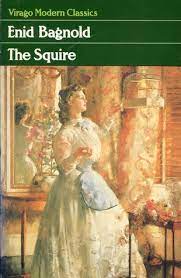
The Squire is a novella I have two copies of – one in Persephone edition and one in VMC. Sometimes I wonder if having several copies of the same books in different editions is the sign of a problem – but I suspect readers of this blog are the wrong people to ask 😀
The Persephone edition has smaller print so meets my novella criteria at coming it at under 200 pages (the VMC is 270 pages but much larger print and wide margins). Either way, it’s a quick read!
The squire of the title is the privileged middle-class lady of Manor House, wife of a “Bombay merchant” who is away in India on business (aka ripping off traders in the name of white imperialism) while she awaits the birth of her fifth child.
“Drifting towards the birth of her baby with a simple and enchanted excitement she walked in radiance like a bride.”
The novel covers the last few hours before the birth, and after. This is a life of ease, albeit with servant worries and a best friend more concerned with her latest love affair. The squire drifts through it all:
“She who had once been thirsty and gay, square-shouldered, fair and military, strutting about life for the spoil, was thickened now, vigorous, leonine, occupied with her house, her nursery, her servants, her knot of lives, antagonistic and loving.”
The setting is resolutely domestic. There are no concerns for the squire outside of this sphere. Reading it now, the order, predictability and comfort struck me as particularly poignant, as we know that in just over a year the world would change irrevocably. It’s unlikely the squire’s staff of seven for her family of six would still be in place once war was declared. But for now:
“The last curtain was drawn, the parlourmaid had gone and the hall was empty. It smelt of greenery and flowers and polish, very still, folded for its evening, waiting for its night.”
There is some lovely characterisation in The Squire. My particular favourites were her son Boniface, who determinedly stays in his own world, refusing to pander to his mother’s feelings by saying he missed her when he didn’t; and Pratt the butler, grumpy and unyielding, but also very fond of his mistress:
“Pratt bent his tall figure over the library fire, fire-tongs in hand…Only the firelight lit his trousers. The lights on the circuit had fused. The circuit involved the squire’s bedroom above, the staircase and landing outside. He heard her calling for a candle. He stood still (a dignified, black figure, holding the fire-tongs) because his smouldering nature was accustomed to save itself by inaction. Let her mend her fuse.”
Thankfully for the squire, the more accommodating live-in midwife arrives, swelling her staff to eight. The midwife and the squire have known each other for years and speak intimately and frankly, as you’d expect considering what they have been through together:
“ ‘As I grow older I come to consider men…husbands of women, husbands of mothers…as hindrances to my work.’
‘You wouldn’t get your work without them.’”
The Squire was considered very frank for the time, apparently HG Wells, despite his liberal views, was shocked at Bagnold’s use of the word nipple 😀 What surprised me as a twenty-first century reader was the squire’s alcohol consumption (port in gravy, sherries before dinner) and the readiness of the doctor to prescribe a “quarter of morphia” to a woman who has just given birth as he considers her over-excited. Later, after the squire has breastfed, she observes “the morphia still drifting about her like evaporating wool” so presumably the newborn has just had a dose of controlled drugs too – eek.
The Squire is beautifully written and very readable, capturing a particular experience of motherhood and birth at a very specific time.
This is my contribution to the third Persephone Readathon, hosted by Jessie at Dwell in Possibility.
It became apparent very quickly this year that my 2018 book buying ban would have no discernible impact at all if I didn’t rein it in again. So although not officially on a ban, I hadn’t bought any books since March and I’m trying to get that TBR stack down a bit further. This post covers the last two Persephones I had left in the pile… please note the use of past tense there. Those of you who follow me on twitter will know this happened a few hours ago:
I live opposite the greatest charity bookshop ever – what am I supposed to do? Two still had the bookmarks! I left 3 more Persephones behind in there (OK, so I already had those, but still… 😉 )
Firstly, Miss Buncle’s Book by DE Stevenson (1934), which is Persephone No.81. This simple story was an absolute joy. Unassuming spinster Barbara Buncle is desperate for money after her dividends stop paying out due to the financial crash. She decides to write a novel, and as she frequently asserts she has no imagination, she bases it on her village and the people she knows.
The novel is a smash hit, and the villagers are furious, apart from the doctor and his wife:
“I confess it amused me, Ellen – I know this is heresy in Silverstream, but it amused me immensely. It didn’t strike me as satire, nor could I find anything nasty in it. You can read it both ways… I’m pretty certain that its just a simple story, written by a very innocent person – a person totally ignorant of the world and worldly matters – perhaps even rather a stupid person.”
He’s only part right. Barbara Buncle has no side to her, so those who read the novel, Disturber of the Peace, as a satire are wrong. But she is not stupid. She is clear-sighted and that is what has enabled her to make such piercing portraits of her neighbours. The socially pretentious local bully Mrs Featherstone Hogg is determined to root out whoever has written about her in such unflattering (honest) terms:
“Once they knew who it was they could decide what was to be done, everything depended on who the man was. Whether it was the sort of man who could be terrorised, ostracised, or horse-whipped. At the very least he could be made to apologise and hounded out of Silverstream.”
Yet for all their objections, the villagers start to blur the lines between fact and fiction even further. A romance invented by Barbara develops in real life, and a deception she thought she invented turns out to be right on the money.
Barbara remains humble and somewhat bemused by it all. She is a sweet, endearing heroine but not overly saccharine. She has a strong practical streak and this is what led her to write in the first place and write so honestly.
“It represented food and drink to Barbara Buncle, and, perhaps, a new winter coat and hat; but above all, freedom from that awful nightmare of worry, and sleep, and a quiet mind.”
Miss Buncle’s Book is charming. The portraits of the villagers are colourful but not silly, the plot is escapist but not ridiculous. A perfect antidote to our troubled times.
Secondly, Saplings by Noel Streatfeild (1945), which is Persephone No.16 and wasn’t remotely escapist. It charts the disintegration of a family during the Second World War. A clever stroke by Streatfeild is that the Wiltshire family has every privilege: they are well off, able to send their children to family members rather than generally evacuate, they can buy houses away from the city and the father isn’t called up to military service. Yet still the conflict wreaks havoc on both the adults and their four children.
I don’t know if it was because I read all of Streatfeild’s children’s books when I was young and her voice somehow set off a distant echo with me, but I loved this from the start. The opening scene sees parents Alex and Lena with their four young children, Tony, Laurel, Kim and Tuesday, at the beach. This being an interwar middle-class family, they also have a nanny and governess with them. Just as well, because Lena is not remotely maternal. She believes a mother’s role is to look lovely and be charming, and her children will never be her priority.
“He wanted to be a family man, bless him. The children were darlings, but she was not a family woman, she was utterly wife, and if it came to that, mistress too, and she meant to go on being just those things. It didn’t matter giving into him occasionally, letting him be all father. When they were alone she would brush all that away and have him where she wanted him.”
I found the frank discussion of Lena’s sexuality surprising for a novel of the period, and Streatfeild doesn’t judge her harshly because of it, but shows rather how this private need of Lena’s unfortunately has far-reaching consequences. The pressures of war will drive everyone close to breaking, and Lena’s focus on her own needs is disastrous for her children. However, I don’t want to say too much about plot because it’s very easy to give spoilers, and the joy of Saplings is seeing the subtle portraits of the four children emerge.
“Laurel had been crying. Her cheeks had a stiff shiny look. Alex’s heart was wrung. He wanted to sit down by her and tell her how gloomy the house would be without her. That of all his children she had more tentacles round his heart. That he detested packing her off to a boarding school. That every night he would look for her funny plain little face and brisk plaits and would mind afresh because they were not there. But he had never spoken to her like that and tonight, poor scrap, was not the night to start. One word might start her crying again.”
Laurel and Tony probably suffer most. They are the eldest two and in very different ways the things left unsaid by adults effects them both profoundly. Streatfeild is expert in portraying children’s points of view without ever being patronising or sentimental and we see how the unthinking actions of adults are taken as grave injustices by the children. This could have so easily gone wrong: Saplings portrayal of the impact of war on children could have been mawkish and sickly-sweet. But actually it is even funny at times: Kim is a self-dramatising and demanding presence, and Streatfeild shows how he is charming but also, like his mother, entirely self-focussed and constantly playing to audiences.
“Kim thought of chalk blue butterflies. He raised his eyes to the ceiling. He looked like a Hollywood choirboy rounding off a film in which the her or heroine’s soul in the in the last reel flies heavenwards.”
Saplings is expertly written and I really felt I was alongside the four children, immersed in their world. It shows the waste of war for everyone, adults and children alike. What is particularly devastating though, is the suggestion that the adults are in a better position to recover than the children. The war will end, but you only have one childhood, and for Tony, Laurel, Kim and Tuesday theirs has been torn to shreds by warfare, and by adults who systematically fail to recognise what the children need and offer them sanctuary.
“To keep homes safe was basically what most men were fighting for. Lena and Alex’s home was just the sort of set-up he himself was fighting to keep. Beautiful, orderly, full of children.”
Last year when I took part in the Persephone readathon I ended on Visage’s Fade to Grey in honour of those covers. Frankly, I think I outdid myself. This time, try as I might. I couldn’t think of an 80s classic to shoehorn in, so instead here’s a mention of Noel Streatfeild in a Hollywood blockbuster. You’ve Got Mail has always baffled me: why would you get together with the corporate capitalist pig who destroyed your family business and has lied to you almost constantly? Anyway, this is a nice mention of Streatfeild’s children’s books (2.18-3.10) and then I recommend watching The Shop Around the Corner which You’ve Got Mail is based on, but unlike the remake, is utterly charming.
This is the second of two posts where I catch up on the reading I did, but the blogging I failed to do, for the wonderful Persephone Readathon hosted by Jessie at Dwell in Possibility. Thankfully Jessie said I could post late, so here it is, a month overdue *shameface*. Both my choices are short story collections, which I find really hard to write about so apologies in advance for not doing either of these wonderful books any justice whatsoever.
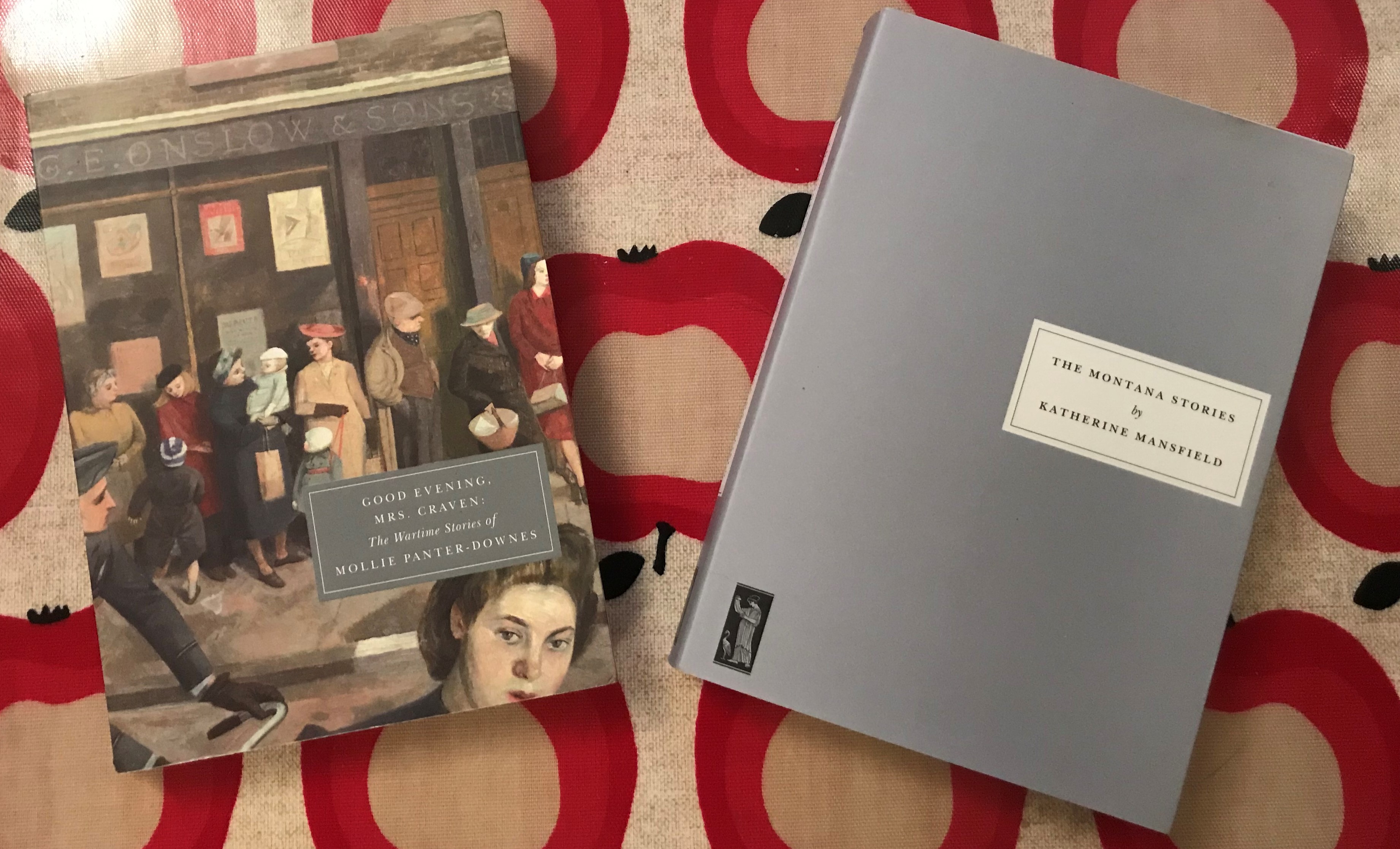
Firstly, Good Evening, Mrs Craven: The Wartime Stories of Mollie Panter-Downes by (unsurprisingly) Mollie Panter-Downes which is Persephone No.8. It features 21 stories which Panter-Downes wrote for The New Yorker between 1939 and 1944.
I wish I had picked up this collection when I had my reading slump, it would have been perfect. The pithy, concise portraits are a quick read, highly entertaining and insightful. Panter-Downes shows how human foibles don’t just disappear at the onset of war. The stories are amusing but never seek to trivialise the conflict. Rather they show how domestic life is driven by huge national change and small personality traits.
Meeting at the Pringles captures the organisation of women who find their raison d’etre during wars, and find themselves “happier, as a matter of fact, than they had been for the last twenty-one years” as they arrange a bandage-knitting party for the Red Cross. Similarly, an elderly Major in It’s the Real Thing This Time is overjoyed at the thought of conflict “[looking] up for the falling body of a German soldier like a lover watching for a sign from a stubbornly closed window”
Family life continues, but is subject to greater pressures than ever. Mrs Ramsay’s War sees a young mother taking in evacuees and being shocked by the realities of motherhood for the first time:
“On the afternoon the nurse went out, the harsher facts of infant life were concealed from her by the nursery maid, who let her have fun pretending to fool around with two little dears who were always perfectly dry, perfectly sweet-smelling, and done up in pretty organdie tied with ribbons.”
Her naivety is subject to the onslaught of the Clark family, and she can’t close her eyes to other, less agreeable, lives any longer:
“there didn’t seem to be a disinfectant invented that could drown the Clark smell of grinding, abject poverty, very different from the decent, cottagey variety with a red geranium on the window sill, which had been the worst Mrs Fletcher had encountered up to now.”
In As the Fruitful Vine another young mother, this one expectant, rues the fact that she has fallen pregnant during a time of international conflict: “In her mother’s day a pregnant woman spent a good deal of time on a sofa, thinking beautiful thoughts and resolutely avoiding unpleasant ones; people took care not to speak of anything shocking or violent in front of her”
All these small events will lead to irrevocable societal changes. This is perhaps most apparent in Cut Down the Trees where an elderly retainer is deeply disturbed by the changes being wrought on a country house: “the conspiracy against Dossie’s way of life, which they called a war and which had taken first the manservants and then the girls one by one, which had stopped the central heating, made a jungle of the borders and a pasture of the lawns, marooned the two old women in a gradually decaying house with forty Canadians, and made Mrs Walsingham stop dressing for dinner.”
Good Evening Mrs Craven is a wonderful collection of highly entertaining stories, showing what went on at home – what women, the very young and the very old got up to – while the soldiers were away. It’s a brilliant work, and if you think you don’t like short stories but want to give them another chance, I would say this is a perfect place to start.
Secondly, The Montana Stories by Katherine Mansfield, which is Persephone No.25. This remarkable collection contains everything Mansfield wrote between July 1921 and her death in January 1923, while she was being treated at the Chalet des Sapins in Montana, Switzerland, for the tuberculosis which would ultimately kill her.
The stories in this collection are of various length, some unfinished but still an enjoyable read. Unusually, they are collected chronologically, which is highly effective here, giving a sense of Mansfield’s preoccupations and creative focus in her final years. I’m just going to pick two which really stood out for me, though the whole collection is a strong one.
In Marriage a la Mode, a young couple find themselves in bewildering conflict, as Isabel is influenced by modern-thinking friends and William can’t work out how on earth to reach her. He’s unsure what toys to buy his children:
“ ‘It’s so important,’ the new Isabel explained, ‘that they should like the right things from the very beginning. It saves so much time later on. Really, if the poor pets have to spend their infant years staring at these horrors, one can imagine them growing up and asking to be taken to the Royal Academy.’
And she spoke as though a visit to the Royal Academy was certain immediate death to anyone…
‘Well, I don’t know,’ said William slowly. ‘When I was their age I used to go to bed hugging an old towel with a knot in it.’
The new Isabel looked at him, her eyes narrowed, her lips apart.
‘Dear William! I’m sure you did!’ She laughed in the new way.”
The story ends with Isabel doing something incredibly cruel. Yet I felt sorry for her and for William. Isabel isn’t happy but is looking for fulfilment amongst vacuous people and missing what is truly important. William is baffled and desperate. A sad story, all the more so for portraying its tragedy as so small and everyday, yet devastating.
In The Garden Party, the Sheridans are a well-off family planning the titular event when they learn a working-class neighbour has been killed. Their daughter Laura wants to cancel the party while the rest of her family find this ridiculous.
“They were mean little dwellings painted a chocolate brown. In the garden patches there was nothing but cabbage stalks, sick hens and tomato cans. The very smoke coming out of their chimneys was poverty-stricken. Little rags and shreds of smoke, so unlike the great silvery plumes that uncurled from the Sheridans’ chimneys […]
‘And just think what the band would sound like to that poor woman,’ said Laura.
‘Oh, Laura!’ Jose began to be seriously annoyed. ‘If you’re going to stop a band playing every time someone has an accident, you’ll lead a very strenuous life.’”
The story is about beginning to forge your own way beyond all that is familiar; it is also about deciding what is truly important. Mansfield writes with wisdom and insight, and a deceptively light touch. She’s masterful at the short story form and her stories absolutely stay with you.
To end, some highly impressive mascara-wearing and a song which tells a short story:
Oh dear Reader, its been a long time. Being British, I blame the weather. The hot period we had slowed my reading pace to that of a particularly lethargic snail, putting paid to my plans for the second half of #WITMonth. Then it took me far beyond the hot weather to recover firstly my reading and then my blogging and I posted absolutely nothing in September, despite hoping to participate in the wonderful Persephone Readathon hosted by Jessie at Dwell in Possibility. Thankfully Jessie said I could post ridiculously late, so here is the first of 2 very much belated posts looking at some lovely Persephone reads.
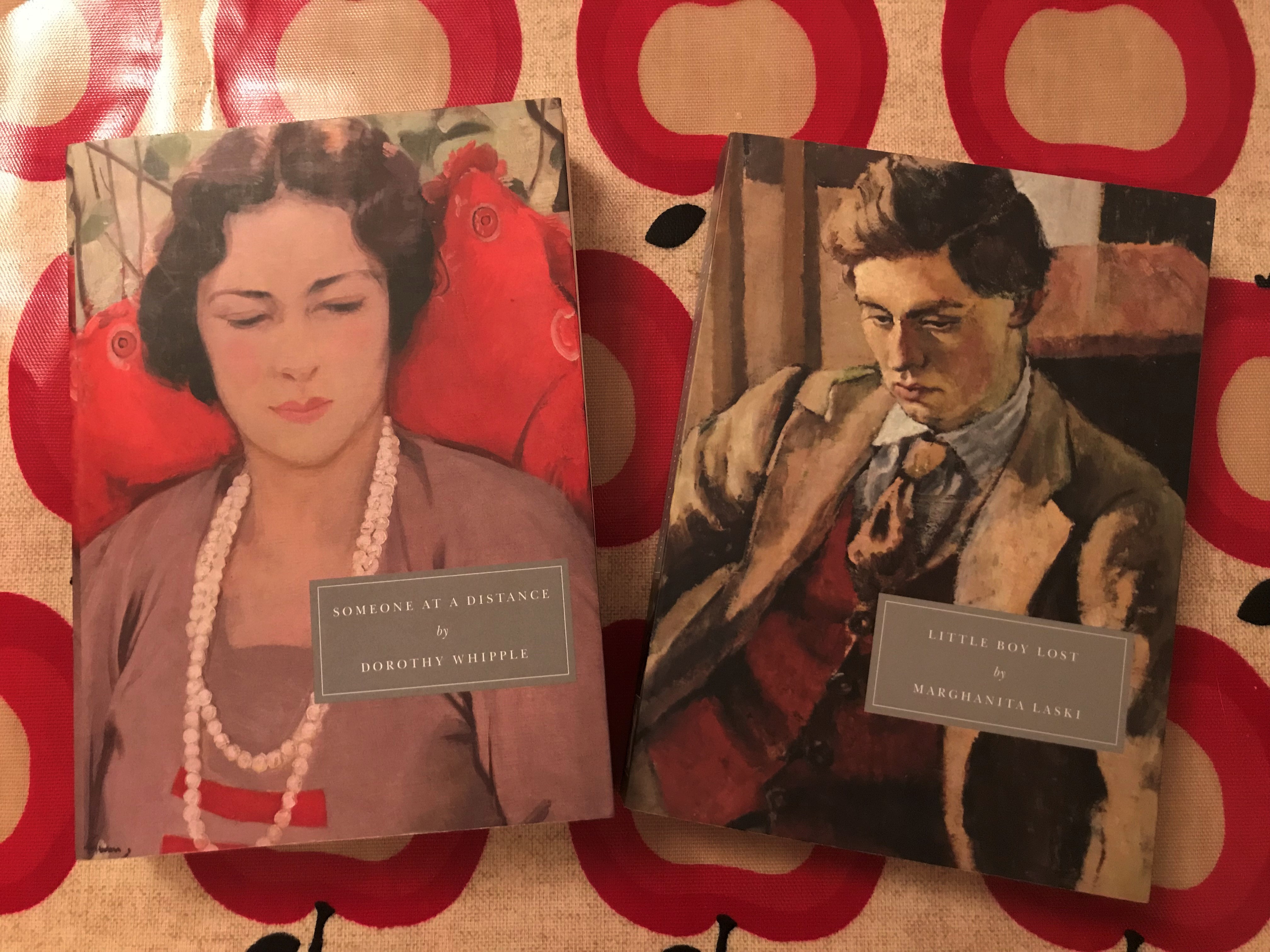
Firstly, Someone at a Distance by Dorothy Whipple (1953), which is Persephone No.3. I was trepidatious regarding this novel: a weak man cheats on his wife. Boo-hoo. But so many bloggers love this novel and of course they didn’t steer me wrong. It’s completely wonderful. Whipple is so witty, her writing is so perfectly judged, and her psychological insights so clear, that this novel was a brilliant study of human relationships. This is going to be a very quote-heavy review…
The novel begins with a portrait of an elderly matriarch whose son lives close by with his family.
“ ‘Why don’t you come and live with me? This great empty house…!’ said old Mrs North from time to time.
But her invitation was not accepted and she really didn’t want it to be. As it was she was able to nurse a perpetual grievance against her daughter-in-law for not coming to see her more often, and if she had her on the premises, she would have had to let that grievance go.”
Mrs North decides that she would like a companion though, so she advertises and chooses a young French woman, Louise, from the respondents. Louise is icy and brutal:
“The sight of other people’s happiness irritated her. Happy people were so boring. It was unintelligent to be happy, Louise considered. Her face took on an expression of cold reserve.”
She has been hurt in the past, but all the same, it is hard to feel any sympathy for her. She is shallow as a puddle, only interested in material gain. She cares nothing for people because she looks down on them all.
“She hated men, she told herself. But unfortunately it was through them that women had to get what they wanted, at any rate, women like herself. She was no career woman. No slaving in an office or profession for her. For a woman gifted in her own particular way as she was, there would be no need for that, she remarked to herself, as if discussing the situation with a friend such as she had never had.”
Mrs North adores Louise, because she is charmed by her. The rest of the family see her a little more clearly, but she still becomes embroiled in their lives. Avery and Ellen are happily married, their children are well-adjusted. Ellen is a homemaker while Avery works in town as a publisher; their separate spheres suit both as Avery wines and dines clients and Ellen runs the house and enjoys her garden.
“Ellen was what she was because she had never had reason to be otherwise. She had everything: a handsome husband, money, children, a charming house. All the same, Louise quite liked her.”
Louise returns to England a second time and at this point her affair with Avery starts. Whipple doesn’t demonise Louise, brutal and self-obsessed though she is, because she is a fully realised character. She is wholly believable as a damaged woman who wreaks havoc with total disregard for those who stand in her way. She has an affair with Avery because it suits her. She believes she will gain from it and so she makes it happen.
Whipple is brilliant and capturing the tragedy of lives torn apart when there are no huge scenes and you have to carry on to some degree.
“The first silence fell between them. Although, like an early snowflake, it didn’t lie. It melted away in the morning, and everything seemed as before.”
The tragedy of the disintegration of the North’s home is presented clearly and without sentimentality. Their daughter Anne is perhaps the greatest casualty:
“Until now, Anne had run joyfully forward, but now she was halted. She shrank back. She had learnt suspicion and distrust and most of all the fear of life that sickens the youthful heart and from which it takes so long to recover, if recover it does.”
Yet the adults suffer too. Ellen has had her complacent contentment ripped away from her, leading a life she never imagined.
“She added a boiled egg to the belated tea, to make one meal do for two. She had joined the great army of solitary women who have boiled eggs at night, the women without men.”
Meanwhile Avery, stuck with Louise because his pride won’t let him beg Ellen for forgiveness, soon realises that all he was depended on the bedrock of his home:
“His assets had been self-confidence, ability to get on with people, good looks, good humour, and much charm. Where were they now?”
Someone at a Distance manages to be both simple and hugely complex. The plot is straightforward and the circumstances it portrays are ordinary. Yet the psychology of the characters and the fallout of the betrayal are subtle and multi-layered. There is plenty here about the role of women: Louise feels trapped in bourgeoise circumstance and gets out the best way she knows how; Ellen has to learn to deal with the practicalities of finance while realising all that she did in building a home was so easily overlooked, by both herself and her family:
“She wondered if she would ever be able to take pleasure in things for themselves. For twenty years she had evidently taken pleasure in things so that she could use them for her husband and her children, pass them on to them in the way of beauty or food or comfort.”
This would be a great read for a book group. I can imagine the 3 adult characters would really divide people, with some seeing Louise as an all-out villain, Avery as a spineless creep and Ellen as pathetic. I didn’t feel this way, much as I disliked Louise, thought Avery an arrogant fool, and wanted to subject Ellen to a lecture on female emancipation. I found it very human and very believable, incredibly sad but not without hope.
Secondly, Little Boy Lost by Marghanita Laski (1949) which is Persephone No.28. This short novel is a heart-breaking portrayal of the impact of war on individuals, and how wounds that are unseen can tear people apart.
Hilary Wainwright is a British poet, who lost his wife and child in the Second World War in France. He knows his wife is dead, but there is a glimmer of hope that his son survived. Hilary has been so damaged by the conflict though, that his wish to be reunited with his son is complicated:
“If only the boy were already found, he thought, if I were married to Joyce, if my life were established, my conscience quieted and the old enchantments finally dead. But to achieve this I must kill the enchantments, myself undergo the agony of their death which will be the final death of the happiness Lisa and I has together. But I have no courage, I recoil from the pains of leaving the past behind.”
On the one hand Hilary makes his son a cipher: a symbol of perfection, of lost innocence, of what can never be regained. He’s not sure he wants him found. On the other hand, he wants his flesh-and-blood son back. The search, propelled by a man, Pierre, who feels he owes a debt to Hilary’s dead wife Lisa, leads to an orphan called Jean. Hilary is never sure the small boy is his, and as they spend time together it is apparent that both are lost:
“ ‘Hardly any boys get presents in wartime, because – because people are busy making guns.’ He meant his voice to sound reassuring but it came out choked with anger. The child looked frightened, but whispered doggedly, ‘The other boys have birthdays, and they get presents.’”
Hilary is far from perfect: he is selfish and not particularly likeable. Yet it is so clear that he is selfish because he cannot get past his own fear that love will open him to hurt again, and any more pain may mean he collapses completely. All the same, I couldn’t really see why, if he liked Jean and felt a connection, he didn’t just adopt him anyway. But then I think genetics are the least of what makes a family. Even without my investment in wanting to know if Jean is Hilary’s son, Little Boy Lost is a compulsive read, precisely written and tightly plotted.
Laski captures the absolute devastation of war: the wreckage of France, the malnourished orphans, the lost souls, without didacticism. She shows the futility of violence, and the struggle for humans to find meaning and integrity in the face of a world that seems intent on blotting these things out:
“The only good thing we can do, the only goodness we can be sure of, is our own goodness as individuals and the good that we can do individually. As groups we often do evil that good may come and very often good does not come and all that is left is the evil we have pointlessly done.”
To end, a tenuous link to say the least. Bing Crosby was in the film adaptation of Little Boy Lost, which by all accounts is pretty dire. So instead of a clip from that, here is Lord High Commander David Bowie singing Heroes on the Bing Crosby Show:
Today is Monica Dickens Day in Jane at Beyond Eden Rock’s Birthday Book of Underappreciated Lady Authors. I’d planned for May to be only novellas over here, but I couldn’t resist the chance to dig out 2 Persephone editions from the TBR and join in with Jane’s celebration. I’m glad I did, because I really enjoyed my first encounter with Monica Dickens.
Firstly Mariana (1940) which is part of the Persephone Classics range. On the Persephone website they say:
“We chose this book because we wanted to publish a novel like Dusty Answer, I Capture the Castle or The Pursuit of Love, about a girl encountering life and love, which is also funny, readable and perceptive; it is a ‘hot-water bottle’ novel, one to curl up with on the sofa on a wet Sunday afternoon. But it is more than this.”
That just about sums it up. On the one hand Mariana is a very simple novel, about a young girl called Mary growing up and reaching adulthood just as World War II breaks out. She has various infatuations and gets her heart bruised, if not quite broken, before she meets the love of her life. What raises it above this very ordinary premise is the fond characterisation and Dickens’ wit.
Mary herself is a determinedly independent soul:
“People were kind and friendly and amusing, but they thought that companionship and conversation were synonymous and some of them had voices that jarred in your head. There was a lot to be said for dogs.”
She has been this way her whole life, as her school report testifies:
“Mary is a dear little girl…but we find a tendency in her to resent authority to the point of resistance. Although she is popular with her fellow pupils, I am afraid she is a bad mixer, being at the same time intolerant and unconfident of others and disinclined to enter into the heart of the community.”
She lives with her mother who works in a dress shop, as her father died in the previous war. There is also her reprehensible, indulgent Uncle Geoffrey who leaves her aged 8 to catch the Tube home by herself. He subsequently goes off to Hollywood to make his name in the movies. What stops this being entirely whimsical is the first chapter: we know the adult Mary is waiting for news of her husband whose ship has been sunk in the conflict. So alongside the fun characters and the wit is the background of potential tragedy; things do not seem to bode well for Mary, given the titular reference to Tennyson’s poem.
But in the meantime there is gentle fun to be poked at the trials and tribulations of young love:
“She told herself that she had been through a searing experience which had left her as a woman set apart from love – a tragic figure. This sustaining vision had tided her over the misery of the end of last summer, until the excitement and newness of Dramatic College had given her something else to think about.”
Dickens is a wise writer though, and so while she presents her characters with a slightly askance view, she shows how their feelings make them who they are, and who they will be:
“She had thought that [he]was the answer to everything, and when she had found out that he wasn’t she had been left alone with no one on whom to pin her burden of romantic devotion.”
I really enjoyed Mariana, which I wouldn’t have assumed would be the case given the subject matter. Dickens is very readable and I whizzed through the novel. I enjoyed spending time with all the characters (apart from an awful arrogant Bullingdon club type who seemed to have future-Prime-Minister written all over him) and I enjoyed Dickens unpretentious, thoughtful style.
“A corner of the jigsaw of Mary’s life had been made into the right pattern, by unknown means. It seemed that one had little control over one’s own destiny. All one could do was to get on with the one job nobody else could do, the job of being oneself.”
Secondly, The Winds of Heaven (1955), which had far fewer likeable characters and was almost bleak at times, but just saved from being so by the gentle endurance of the main character, Louise, who is widowed and destitute.
“She reached for the ashtray, for she wanted to tap off the ash frequently, as she had seen highly-strung, busy people do. Louise was neither highly-strung, nor busy, but when she was in London, among people who all seemed to be doing something important in a hurry, she liked to try and keep pace.”
The reason Louise is destitute is because her husband, Dudley, who seems to have had absolutely no redeeming qualities, died and left her with all his worldly debts.
“Everyone said Louise was ‘wonderful’ about Dudley’s death, but she could not be anything else, because, shocking though it was to her, she hardly cared.”
“there was nothing for it but that Louise should stay with her daughters in turn to pass the summer months. It was all arranged at an embarrassing family conclave, where no-one could say what they were thinking, and each tried to outdo the other in unselfishness.”
And so The Winds of Heaven follows Louise as she moves from one daughter to another. Miriam lives in a suburb in the Home Counties and is an absolute snob; Anne is the laziest person on earth who has somehow managed to marry a lovely man who runs a smallholding and genuinely cares for Louise; Eva is an actor in London and having an affair with a married man. They clearly all take after their father as they are selfish and self-absorbed. They are also, in different ways, all quite unhappy, and Louise has no idea how to help.
“she had wanted the futile thing she had made of her marriage with Dudley to be justified at least by the emergence of three happy lives.”
The novel is episodic in nature and through it we learn about Louise and her daughters. It’s a very mid-20th century English family, full of unspoken truths, supressed conflicts, and love. The somewhat depressing state of Louise’s familial relations is lightened by two beacons of light in her life: a friend, and her granddaughter. Gordon Disher is a bed salesman and pulp-fiction author who becomes: “The oddest, but most comforting friend she had ever made”. Ellen is Miriam’s daughter who like Louise, is a misfit in the family (a good thing, seeing as how appalling they all are) and who provides genuine kinship.
“how delightful to be a grandmother with a responsive grandchild, who opened her heart to you without embarrassment, because she had no-one to talk to at home”
The Winds of Heaven captures a particular moment in time, where women had only just begun to stop being exclusively homemakers and enter the workplace. Louise feels she can’t support herself, because she doesn’t believe she has any skills. This leaves her in genteel middle-class poverty, dependent on her daughters. She is part of a vanished world, and is not treated kindly by those who are finding their way in a new one. Dickens handles this social commentary with an incredibly light touch though, and so The Winds of Heaven often reads more like a series of acerbic character studies than a commentary on mid-twentieth century gender roles. It’s always highly readable, quietly building to a dramatic, tragic denouement, where hope survives.
To end, Monica had a rather famous great-grandfather. To tell you all about him, here are the incomparable Horrible Histories, channelling The Smiths:
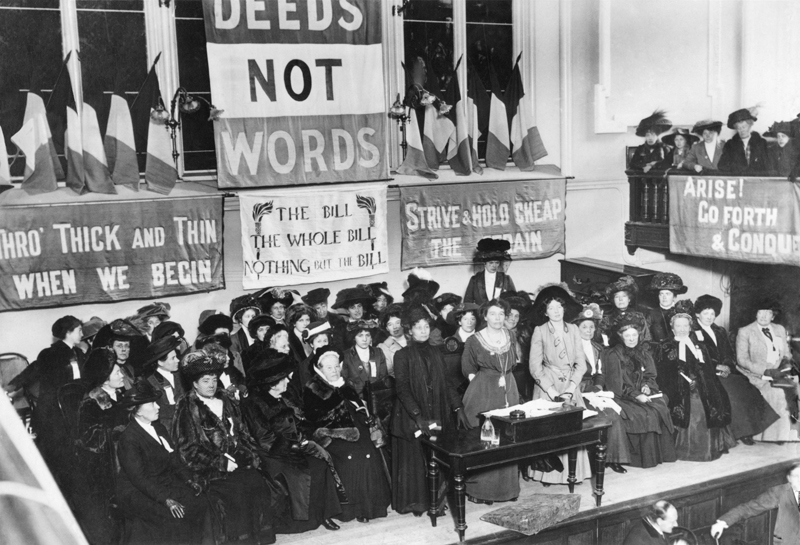
Today is the 100th anniversary of the 1918 Representation of the People Act in Britain receiving Royal Assent, which enabled all men and some women over the age of 30 to vote for the first time (it would be another 10 years before women got equal voting rights). There are lots of events going on this year to commemorate the centenary, but it’s also worth noting that the suffragettes argued for equal pay for equal work, and yet 100 years later (last week) Carrie Gracie has been giving evidence to MPs over pay discrimination at the BBC. This is just one example. The fight for equal rights worldwide is ongoing.
For this post I’ve picked one novel written by a suffragette and a short story from the twentieth-first century portraying suffragettes.
Firstly, No Surrender by Constance Maud (1911), who was a member of the Women Writers Suffrage League. I read a crusty copy from the library which had that pleasing old book smell, but Persephone have published it as one of their beautiful editions too, and if you’re on a book-buying ban like me, they also offer it as a free e-book.
Maud looks at suffrage primarily through the story of young cotton mill worker Jenny Clegg. Jenny Clegg’s father has all the power in their home while her mother does all the work:
“Her voice took on its usual apologetic tone with her lord and master. For Mrs Clegg was imbued with a spirit of such humility that she apologised not only for rising early and late taking rest, while fulfilling her manifold obligations towards her mate, such as bearing and raising his ten children, cooking, washing, mending, cleaning for the family, but even for her very existence up to the age of fifty-five in this strenuous service without pay.”
Mr Clegg squanders the money earned by the women in his family such as Jenny. He is selfish but supported by law and society in his behaviour:
“Mr Clegg regarded his daughter sternly, but without wrath. He answered her in measured tones, strong in his sense of his impregnable position, backed as he felt himself to be, not only by the law of the land, the tradition of generations, his own physical force and intrinsic superiority of sex, but by the innermost conviction and consent of all right-thinking womankind.”
Jenny’s political awareness is given direction when she encounters Mary O’Neil, a moneyed society girl who rebels against her class’ expectations of her and supports the suffragettes. There is humour in her mother’s friend Lady Walker’s attitudes towards her own gender:
“ ‘Can you suppose for one moment that a man like Horace Boulder, or even Penhaven, would have been attracted, had Helen or Cicely shown a tendency to independent interests and original thought?’ “
There were plenty of women against the suffragettes, and Lady Walker’s dismissal of them as “ ‘hysterical, unsexed creatures, with a mania against men.’” was not unusual. The character provides some much needed levity, but is never presented as ridiculous, as this internalised misogyny had a major impact on the lives of women at the time, helping maintain the limitations of their rights and freedoms.
Maud covers the main events of the movement up until that time, and uses various scenarios to get across the arguments of women’s suffrage: speeches from carriages, dinner party conversations, arguments between lovers. This is both the strength and weakness of the novel. No Surrender is an issue-lead novel, despite Maud placing a romance between Jenny and Joe Hopton, Labour party candidate, as the driving plot. As such, it sometimes falters under the weight of its intentions. Much as I dislike Dickens, he is an absolute master at dramatising his social commentary. Maud is not so gifted and sometimes No Surrender is overly didactic, with poorly realised characters and a sentimental tone. But I must stress that this is not all it is. It is also able to dramatise how:
“Courage, self-abnegation, forethought, invention, and a keen sense of humour marked the tactics of the militant movement.”
bringing a unique, personal perspective to balance the reportage (and lack thereof) regarding the movement. While at times I found the characterisation of the working classes a bit ‘gor blimey guv’nor’ (or perhaps I should say ‘ee by gum’ as its northern stereotypes) it’s still commendable that Maud roots the story in the working classes, and shifts the focus from the middle class suffragettes.
“’there’s a good many ladies who’d be doin’ far more good in the world if they thought more about their womanhood and less about their ladyhood’”
So all in all, a flawed novel but a fascinating one, written contemporaneous to the movement by someone who was directly involved.
Secondly, A Mighty Horde of Women in Very Big Hats, Advancing, the final and longest story in the short story collection The Apple by Michel Faber (2006), in which he revisits the characters and setting of his hugely successful novel The Crimson Petal and the White. I’m going to ignore the links to TCPATW to avoid spoilers for those who haven’t read it (it’s great – you should definitely read it!)
The story is narrated by an elderly man in a nursing home in the 1990s, recalling his life when he was very young, with his artist father, bohemian mother, and Aunt Primrose (who dresses in men’s clothes and shares a bed with his mother, but the menage a tois arrangement is never explicitly stated).
“You know, because I was a child in what’s now called the Edwardian era, and because I was born the day Queen Victoria died, I always think of the Edwardians as children. Children who lost their mother, but were too young to realise she was gone, and therefore played on as before, only gradually noticing, out of the corners of their eyes, the flickering shadows outside their sunny nursery. Shadows of commotion, of unrest. Sounds of argument, of protest, of Mother’s things being tossed into boxes, of fixtures being forcibly unscrewed, of the whole house being dismantled.”
Amongst this change, there is a conflict between old and new which is obvious to the small child on a daily basis:
“Bureaucrats, tradesmen, doctors, postmen, parsons, waiters, porters, the whole pack of them; they ignored my mother and Aunt Primrose, and directed their remarks to my father.”
But he is a preoccupied artist and it is the women who drive the lives of the household, with energy, fun, and strong political convictions:
“She an Aunt Primrose worked as a kind of music hall duo, Mama getting by on charm and disarming honesty, while Aunt Primrose supplied the sardonic touch. My father was – if you’ll excuse what’s definitely not meant as a pun – the straight man.”
The story culminates on Women’s Sunday, the Hyde Park rally of 21 June 1908 which was the first major meeting organised by the WSPU. A Mighty Horde of Women in Very Big Hats, Advancing covers a great many themes in its 60-plus pages: being part of stories we can’t fully comprehend, the flawed nature of memory, how history is made, the need to attach a narrative to our lives looking back. Faber is a brilliant storyteller, able to cover all this within a driving plot, authentic voice and lightness of touch. He’s said he won’t write any more since publishing Undying in 2016 following the death of his wife, and I sincerely hope he changes his mind. All the stories in The Apple were highly readable, they worked individually, as a whole, and as a sort-of sequel to TCPATW. He’s a great writer.
To end, a silly portrait of a suffragette but not one I can dismiss because it was probably the first time I learnt what a suffragette was:
Last week I mentioned that 2016 has been a terrible year so far. I don’t follow sport in any shape or form, but even I know Andy Murray has done his best to cheer up a post-Brexit UK by winning the men’s singles final at Wimbledon. Congratulations to all the winners!
Obviously these wins are the result of years of dedicated training, but we all experience things that culminate in one day now and again. So to celebrate I’ve picked two novels that deal with the events of one day.
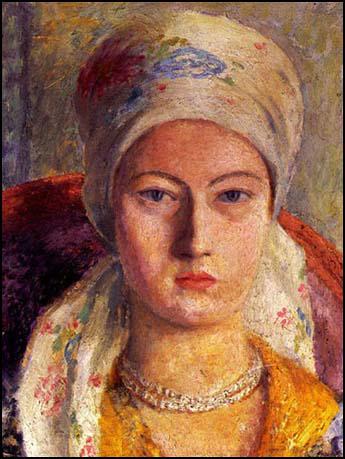
Firstly, Cheerful Weather for the Wedding by Julia Strachey (1932), who was one of the Bloomsbury group; this novel was originally published by Leonard and Virginia Woolf’s Hogarth Press, she was a niece of Lytton Strachey and was painted by Dora Carrington:
This novella details the morning of a wedding: the preparations, the arrival of guests, the bustling of servants. The bride doesn’t make an entrance for a while, instead we are treated to her mother, Mrs Thatcham, giving contradictory instructions to all and not seeing that this why things are not organised as she expects:
“with a look of sharp anxiety on her face as usual – as though she had inadvertently swallowed a packet of live bumble-bees and was now beginning to feel them stirring about inside her. She stopped and looked at the clock.
‘I simply fail to understand it!’ burst from her lips.
She trotted briskly out of the drawing-room in the direction of the kitchen.”
Apparently this woman, who veers between being frustratingly tedious and a downright bully, was based on Strachey’s mother-in-law…
Meanwhile, the guests start to arrive. There are some lovely character sketches of family members and assorted hangers-on, told with gentle – in the main – humour.
“a tall, grey-haired man, in black clerical clothes, with a gaunt white face reminiscent of a Pre-Raphaelite painting of Dante. It was Canon Dakin, or Cousin Bob of Hadley Hill as the family called him.”
There is a hilarious description of a lampshade wedding gift and Aunt Katie’s verdurous wedding hat. My favourite little scene was between deluded Aunt Bella, who is busy boring her nephew Lob with tales of how her servants “simply cherish me”, and is met with the following non-sequitur:
“‘My dear lady,’ replied the cheerful Lob, speaking unexpectedly loudly, and holding his glass of wine up to the light for a moment, “I don’t care two pins about all that! No! The question, as I see it, is quite a different one. The whole thing is simply this: Is it possible to be a Reckless Libertine without spending a great deal of money?’”
When we finally meet the bride, Dolly, it is clear all is not well. For starters, she has put away most of a bottle of rum to enable her to stagger down the aisle:
“At this moment Dolly was trailing slowly down the back staircase (which was nearer to her part of the house than the main one), her lace train wound round and round her arm. From out of the voluminous folds of this there peeped a cork and the top of the neck of the bottle. In her other hand was her large bunch of carnations and lillies.”
As Dolly is unsure of what she is doing and why, simultaneously there is an admirer of hers, Joseph, who may at any minute stop the wedding, though he is not sure of his motivations for doing so. Apparently Strachey was a fan of Chekov, and Cheerful Weather for the Wedding shows this influence in domestic subject matter and conflicted characters unable to take action. The humour is bittersweet: while the preparations and family members are portrayed with a light irreverence, the drunk bride and her inert friend? lover? – we are never told – bring a genuine sadness to proceedings. I couldn’t help feeling they were both on the brink of disaster.
“Dolly knew, as she looked around at the long wedding-veil stretching away forever, and at the women too, so busy all around her, that something remarkable and upsetting in her life was going steadily forward.”
Virginia Woolf’s opinion of Cheerful Weather for the Wedding was high: ‘I think it astonishingly good – complete and sharp and individual.’ Strachey doesn’t explain everything and leaves many questions in the reader’s mind as to what is going unsaid and undone on this nuptial morning (looking at the trailer for the 2012 film it looks as if everything is spelled out, so I will not be watching the film version – why? WHY??) While it is short, Cheerful Weather for the Wedding is not slight – witty, sardonic, sad and wise – it is a fully realised portrait of everyday tragedy.
Secondly, A Single Man by Christopher Isherwood (1964) tells a day in the life of George Falconer, an ex-pat English professor living alone in California just after the Cuban missile crisis, and grieving the loss of his partner Jim, killed suddenly in road traffic collision.
“And it is here, nearly every morning, that George, having reached the bottom of the stairs, has this sensation of suddenly finding himself on an abrupt, brutally broken off, jagged edge – as though the track had disappeared down a landslide. It is here that he stops short and knows, with a sick newness, almost as though it were for the first time: Jim is dead. Is dead.”
In the midst of this enormous pain, George carries on with his life: teaching a class, shopping, going to the gym, getting drunk with a friend.
“In ten minutes, George will have to be George; the George they have named and will recognise. So now he consciously applies himself to thinking their thoughts, getting into their mood. With the skill of a veteran, he rapidly puts on the psychological makeup for this role he must play.”
A Single Man is perfectly paced, capturing George’s numb putting-on-foot-in-front-of-the-other coping without losing narrative drive. The tone is gentle, treating George kindly, but without sentimentality – he is not always kind himself, and his views on those he encounters are unblinking. However, as we spend the day with George, we start to get glimmers of his desire to keep living, a sense that he will find meaning in carrying on. But then his grief completely side-swipes him:
“He pictures the evening he might have spent, snugly at home…only after a few instants does George notice the omission which makes it meaningless. What is left out of the picture is Jim, lying opposite him at the other end of the couch, also reading; the two of them absorbed in their books yet so completely aware of the other’s presence.”
There is sadness in A Single Man but it is not depressing. Rather it shows how life goes on in all its messy imperfection, and that can be OK, even when you are feeling far from fine.
A Single Man was made into a film in 2009, the directorial debut of fashion designer Tom Ford. It certainly looked amazing and had some wonderful performances by Colin Firth and Julianne Moore, but the screenplay made some significant changes and unsurprisingly, I prefer the book for its subtlety and nuance. Kudos to Ford though, for filming a book that takes place almost entirely within one man’s head.










 madame bibi lophile recommends