“Rough winds do shake the darling buds of May” (William Shakespeare)

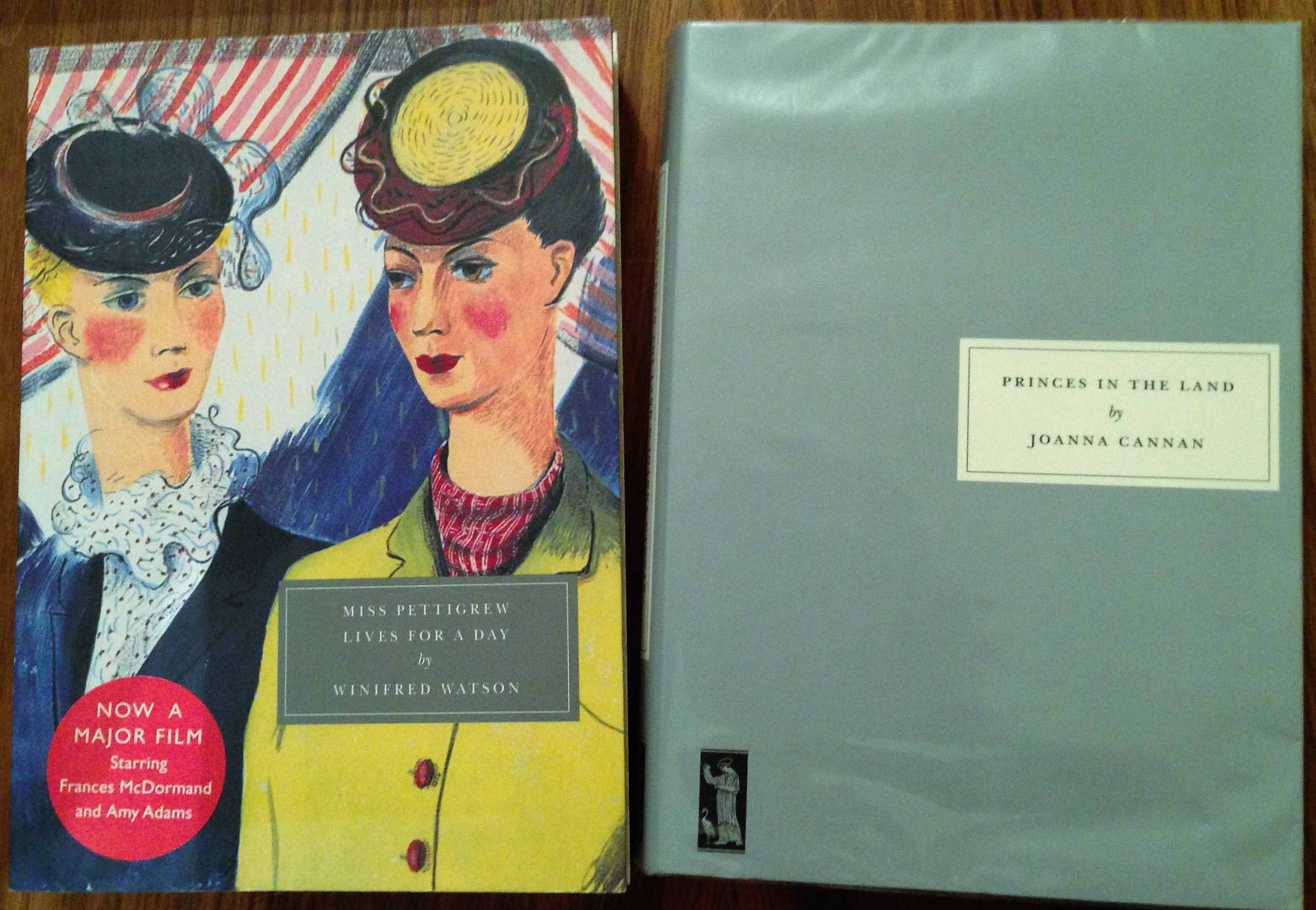
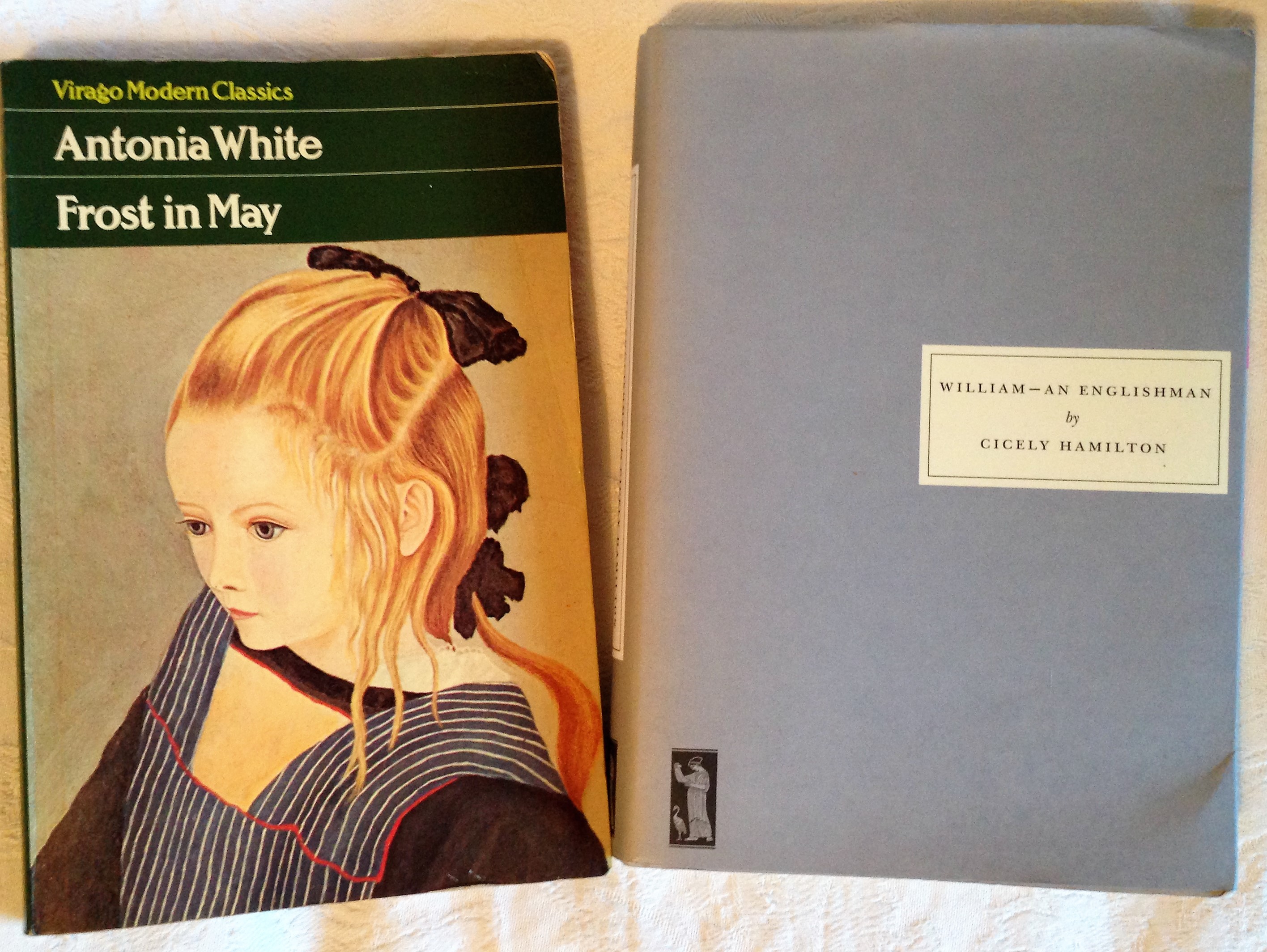
Last week I looked at The Enchanted April, so this week for May Day I thought I’d look at another Virago that helpfully has the current month in the title, Frost in May by Antonia White (1933). Virago was founded in 1973, with the Modern Classics imprint starting in 1978 “dedicated to the rediscovery and celebration of women writers, challenging the narrow definition of Classic”. Frost in May was the first Modern Classic title, so for this post I’ve paired it with the first Persephone title, as Persephone, founded in 1998, have a similar remit to publish lost or out of print books which are mainly written by women.

200 (2)

Frost in May is Antonia White’s autobiographical first novel, telling the story of Nanda Gray and her schooling at the Convent of the Five Wounds from the ages of 9 to 14. Nanda begins school as a devout child, finding her way in Catholicism:

“St Aloysius Gonzaga had fainted when he heard an impure word. What could the word have been? Perhaps it was ‘belly’, a word so dreadful that she only whispered it in her very worst, most defiant moments. She blushed and passionately begged Our Lady’s pardon for even having thought of such a word in her presence.”

White charts Nanda’s development throughout her school career.  She is from an ordinary middle-class family, her father a recent convert, and the other girls from aristocratic European Catholic families are glamorous and much more worldly:

“Leonie and Rosario were seasoned retreatants. They went into this solitary confinement with as little fuss as old soldiers going into camp. Rosario supplied herself with a great deal of delicate needlework if a vaguely devotional nature, while Leonie announced frankly that she was going to use her notebook to compose a blank verse tragedy on the death of Socrates.”

As Nanda becomes older, she begins to struggle with her faith, although there is never a sense that she will abandon it all together. Rather it is the story of a young person trying to find a true sense of meaning within her faith, rather than without it.

“She had often been rewarded by a real sense of pleasure in the spiritual company of Our Lord and Our Lady and the saints. But over and over again she encountered those arid patches where the whole of religious life seemed a monstrous and meaningless complication.”

If this sounds like it has no place in today’s secular world, I’ve not done Frost in May justice. The novel is about a young person’s growing realisation of self, explored with sensitivity. As a heathen book lover, I related to Nanda’s discovery of poetry:

“She read on and on, enraptured. She could not understand half, but it excited her oddly, like words in a foreign language sung to a beautiful air. She followed the poem vaguely as she followed the Latin in her missal, guessing, inventing meanings for herself, intoxicated by the mere rush of words. And yet she felt she did understand, not with her eyes or her brain, but with some faculty she did not even know she possessed.”

Frost in May is a short novel and a quick read, and I can see both why it was marginalised and why Virago chose it to launch its Modern Classics imprint. It is easy to overlook: a school story in which little happens, five years in a young girl’s life and no intrusive authorial voice to proclaim any wider profundity beyond the immediate story. Yet it has plenty to say about what is profound for the individual, the influences and experiences that shape us and leave an indelible mark. White’s light touch should not be mistaken for a lack of something to say.

“Do you know that no character is any good in this world unless that will has been broken completely? Broken and reset in God’s own way. I don’t think your will has quite been broken, my dear child, do you?”
IMG_0699

Secondly, William – An Englishman by Cicely Hamilton (1919) who was a suffragette and wrote this novel during the last year of World War I. The eponymous Mr Tully is a young man who prior to the war is a socialist, fired less by idealism and more by the need for something with which to occupy himself.

“The gentlest of creatures by nature and in private life, he grew to delight in denunciation, and under its ceaseless influence the world divided itself into two well-marked camps; the good and enlightened who agreed with him, and the fool and miscreants who did not…in short, he became a politician.”

William meets and marries a similarly dim suffragette, Griselda, and Hamilton’s satire of their unthinking politicking is relentless.  They are shown as well-meaning but avoiding any challenge to their ideals and any opportunity for genuine original thought. When a certain archduke is assassinated in Sarajevo, they pay it little mind as it does directly affect their parochial politics, and they head off on honeymoon to Ardennes. When they emerge from the Forest of Arden three weeks later, they are captured by soldiers and face a traumatic awakening as to the state of the world:

“So they trotted down the valley, humiliated, dishevelled, indignant, but still incredulous – while their world crumbled about them and Europe thundered and bled.”

Hamilton does not baulk from the realities of war – of which she had first-hand experience – and it is shown as bloody and brutal. The satire falls away as William becomes the everyman caught up in circumstances far beyond his control.

“It had not seemed to him possible that a man could disagree with him honestly and out of the core of his heart; it had not seemed to him possible that the righteous could be righteous and yet err. He knew now, as by lightening flash, that he, Faraday, a thousand others, throwing scorn from a thousand platforms on the idea of a European War, had been madly, wildly, ridiculously wrong – and the knowledge stunned and blinded him.”

Hamilton’s master stroke is that the things she satirised – William and Griselda’s lack of understanding, ignorance and youthful certainties – become the very things that drive home the human tragedy of the war. They are ordinary people who just wanted to live the life they imagined for themselves, and their powerlessness and profound losses are what makes this so very sad. The devastation of World War I is left in no doubt.

After all this talk of devastation, let’s pick ourselves up with some love poetry: the wonderful Harriet Walter reading the sonnet from which this post takes its title:
“Middle age is when your age starts to show around your middle.” (Bob Hope)

This post is my contribution to the 1938 Club, hosted by Kaggsy’s Bookish Ramblings and Stuck in a Book – do join in! As I rooted through my enormous TBR for books published in this year, I was astonished by the number I owned published in 1937 and 1939 – despairing, I turned to my Persephone pile and found two, hooray! So although it was scary biscuits there for a while, it all came up ticketty-boo in the end…and I promise that’s the last dubious 1930s slang you’ll hear from me 🙂

As it turned out, the two novels were linked thematically too: both are comic portraits of middle-aged women rediscovering themselves and proving that life can still hold surprises. Both were an absolute joy, so thank you Karen and Simon, for moving these to the top of the TBR and bringing them into my life that bit sooner!

the-1938-club

Firstly, Princes in the Land by Joanna Cannan. Patricia is a wild, horse-loving redhead, part of the landed gentry but determinedly not a debutante, not wanting to marry someone like her sister’s choice:

“Victor, a pink young man with china-blue eyes and hair as golden as Angela’s, who could and did express all life was to him and all his reactions to it in two simple sentences, ‘Hellish, eh?’ and ‘Ripping, what?’”

Patricia falls for Hugh, a middle-class scholar who offends her mother’s upper-class sensibilities:

“‘it’s the small things that jar – cruets and asparagus servers and ferns..’

‘Patricia,’ said Lord Waveney winking at his grand-daughter, ‘isn’t such a fine piece of porcelain that she can’t stand a jar. If I were a woman, I’d sooner my husband kept a cruet than a mistress. Damn it, I’d sooner he helped himself to asparagus with servers than whisky without discretion.’”

Patricia marries Hugh and as they both change over the years she ends up feeling vaguely disappointed; he is preoccupied professor, she has compromised who she was out of all existence. They have three children and as they grow older Patricia wonders what is left of her life:

“I’ve just got to grow old and feeble and ugly. And what then? She asked, passing the marmalade factory, diving under the bridge, fleeing on between lighted dolls’-houses, and answered herself: some foul disease- a paralytic stroke and your face all sideways, or cancer and your last words on earth a howl for morphia”

I realise this may sound resolutely depressing but it really isn’t. Princes in the Land is written with a light touch and is filled with witty observations. Cannan laughs at human foibles but does so with affection. Patricia soon cheers herself with the thought of her children, the fact that she is:

“Mrs Lindsay with a charming house and three nice children, one going into the Army, one not sure yet but perhaps publishing, one still too young to know but almost certain to do something with horses”

One by one, her children break the news to her that actually, they do not have the remotest inclination to follow the paths she has imagined for them. Patricia is a nice person, she is sensible and she loves her children, and so she steps back to let them make their own choices and mistakes. It means however, that she is not fulfilled through them, and so she is thrown back to thinking about what on earth she is going to do with the rest of her life:

“The kingdoms she had won for them they had rejected. August with his shiny black bag and his bowler hat, his two pounds a week and his gimcrack villa; Giles dispensing God as a remedy for discontent, boredom or sex repression; Nicola without an idea in her head beyond combustion engines – these weren’t the children for whom she’d given up fun and friendship, worked, suffered, worried, taken thought, taken care, done without, supressed, surrendered and seen her young self die.”

I hope it’s not too much of a SPOILER to say she works something out – the tone of the novel means I remained hopeful that she would, and it would have been a real shock if a depressing, bleak outcome had won. Princes in the Land is just lovely, and truly moving: I don’t think anyone on the bus noticed me having a little cry as I reached the end…

IMG_0696

Secondly, Miss Pettigrew Lives for a Day by Winifred Watson. Unlike Princes in the Land, Miss Pettigrew is all light and very little shade, but that is not a criticism. It’s a joyous novel: a day in the life of the titular poverty-stricken spinster, a woman society has written-off as having nothing to offer, whose willingness to embrace new experiences sees her reborn.

In desperate need of a job, Miss Pettigrew arrives at the apartment of the glamourous Delysia La Fosse:

“In a dull, miserable existence her one wild extravagance was her weekly orgy at the cinema, where for over two hours she lived in an enchanted world peopled by beautiful women, handsome heroes, fascinating villains, charming employers, and there were no bullying parents, no appalling offspring, to tease, torment, terrify and harry her every waking hour. In real life she had never seen any woman arrive to breakfast in a silk, satin and lace negligee. Every one did on the films. To see one of these lovely visions in the flesh was almost more than she could believe.”

Miss La Fosse has lots of experience but little common sense, Miss Pettigrew has no experience but much common sense. As she gets swept up in Miss La Fosse’s complicated love life, this virtue means she soon becomes indispensable. Rather than sitting in judgement of this Bright Young Thing, Miss Pettigrew finds herself enjoying this foray into a life hitherto unknown.

“ ‘Do you know what that is?’

‘It looks,’ said Miss Pettigrew cautiously, ‘very much like a Beecham’s Powder. Very good, I understand, for nerves, stomach and rheumatism.’

‘That’s cocaine,’ said Miss LaFosse.

‘Oh no! No!’

Terrified, aghast, thrilled, Miss Pettigrew stared at the innocent-looking powder. Drugs, the White Slave Traffic, wicked dives of iniquity, typified in Miss Pettigrew’s mind by the red plush and gilt and men with sinister black moustaches roamed in wild array through her mind. What dangerous den of vice had she discovered? She must fly before she lost her virtue. Then her common sense unhappily reminded her that no one, now, would care to deprive her of that possession.”

As the day progresses Miss Pettigrew dives headlong into events and finds herself forever changed.  This is a novel to read when you need a lift, to be carried along as Miss Pettigrew is on a wave of fun and silliness. It is also a reminder that to open yourself to the unknown is to allow space for hope, and for change, at any time in life.

“She didn’t care what happened. She was ready for it. She was intoxicated with joy again. Past questioning anything that happened on this amazing day.”

I haven’t seen the film of Miss Pettigrew but I definitely plan to – Frances McDormand, wonder of wonders:

“When you’re a Jet/You’re a Jet all the way /From your first cigarette /To your last dyin’ day.” (West Side Story)

This is a loooong post – strap in people, and bring Kendal mint cake.

download

These days I don’t generally socialise as part of a group (unless it’s a work do, an experience that Dante forgot to include in his descriptions of the circles of hell) but in the last week I’ve been out with two sets of friends, which was a lovely change. For this reason, in this post I thought I’d look  at writers who have famously been part of a group.

Firstly, A Moveable Feast by Ernest Hemingway, which was published after his death and recalls his time as a young man in Paris during the interwar period, part of une generation perdue, or lost generation:

“’’That’s what you are. That’s what you all are,’ Miss Stein said. ‘All of you young people who served in the war. You are a lost generation.’

‘Really?’ I said.

‘You are,’ she insisted. ‘You have no respect for anything. You drink yourselves to death…’”

Miss Stein is of course Gertrude Stein, and her literary salon attracts some of the greatest writers of the generation: F Scott Fitzgerald, Ezra Pound, Ford Maddox Ford (a less than flattering portrait), Hilaire Belloc, James Joyce… it really is astonishing that these minds were all in the same place at the same time.

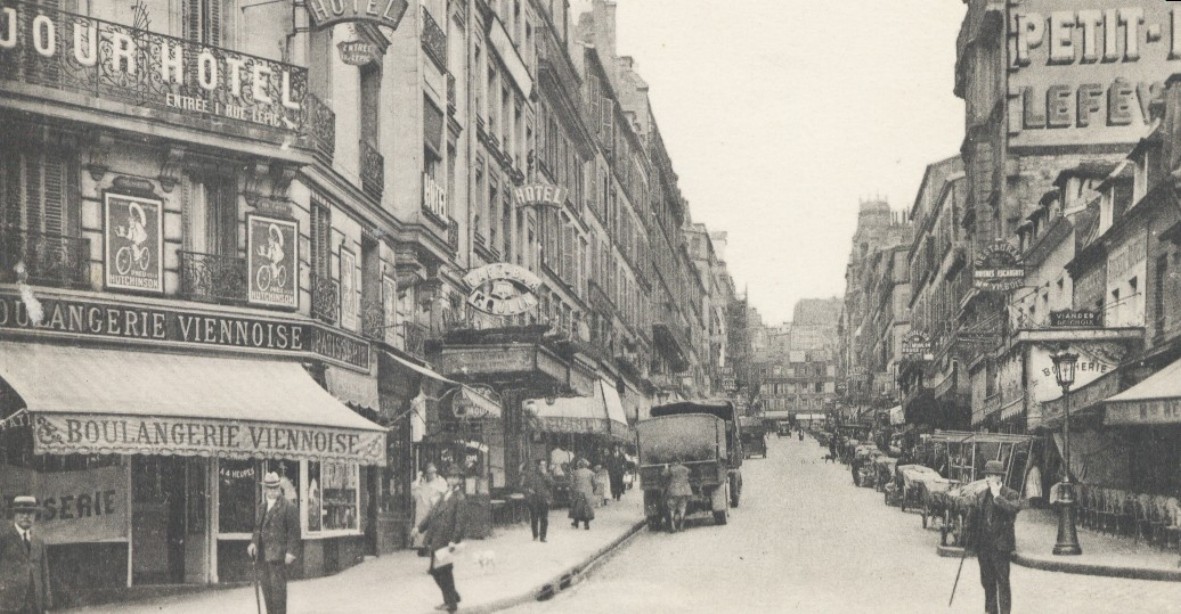
Montmartre in 1925

Montmartre in 1925

Image from here.

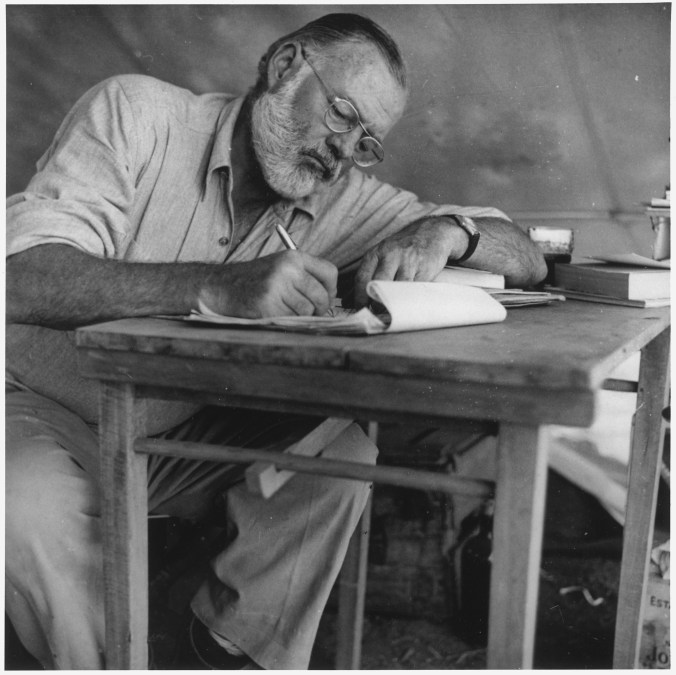
I can’t tell you how much I want to dislike Hemingway. He was macho, into bloodsports, treated women appallingly… but his writing just takes my breath away.  A Moveable Feast gives some insight into his craft; his drive to write what is true and to distil his writing into the sparse style he became so famous for:

“Since I had started to break down all my writing and get rid of all facility and try to make instead of describe, writing had been wonderful to do. But it was very difficult, and I did not know how I would ever write anything as long as a novel. It often took me a full morning of work to write a paragraph.”

He is filled with the arrogance and uncertainty of youth, completely committed to his craft:

“I’ve seen you beauty, and you belong to me now, whoever you are waiting for and if I never see you again I thought. You belong to me and all Paris belongs to me and I belong to this notebook and pencil.”

 “I would stand and look out over the roofs of Paris and think, ‘Do not worry. You have always written before and you will write now. All you have to do is write one true sentence. Write the truest sentence you know.’”

Ernest_Hemingway_Writing_at_Campsite_in_Kenya_-_NARA_-_192655

While he is sitting in cafes trying to write one true sentence, the young Hemingway comes into contact with various writers also trying to perfect their craft, including one of my favourite poets, Ezra Pound:

“Ezra was kinder and more Christian about people than I was. His own writing, when he would hit it right, was so perfect, and he was so sincere in his mistakes and so enamoured of his errors, and so kind to people, that I always thought of him as a sort of saint. He was also irascible, but so perhaps have been many saints.”

I just don’t understand how a person unfailingly described by all who knew him as being so generous, supportive and kind could also be such a massive fascist. It does make me feel a bit better about liking his poetry though. He also provides many of the episodes of comic relief in A Moveable Feast:

“I had heard complaining all my life. I found I could go on writing and that it was no worse than other noises, certainly better than Ezra learning to play the bassoon.”

Hemingway and his first wife were poverty-stricken in this period, and one of the places that offers succour is the now-famous English language bookshop Shakespeare and Company under the auspices of Sylvia Beach:

“On a cold windswept street, this was a warm, cheerful place with a big stove in winter , tables and shelves of books, new books in the window, and photographs on the wall of famous writers both dead and living.”

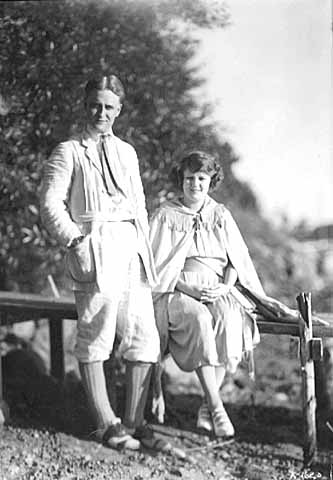
From within this perfect bookshop, Sylvia lends Hemingway and Hadley money and books, and helps create the man who would write this about F Scott Fitzgerald:

F_Scott_Fitzgerald_and_wife_Zelda_September_1921

“His talent was as natural as the pattern that was made by the dust on a butterfly’s wings. At one time he understood it no more than the butterfly did and he did not know when it was brushed or marred. Later he became conscious of his damaged wings and of their construction and he learned to think and he could not fly any more because the love of flight was gone and he could only remember when it had been effortless.”

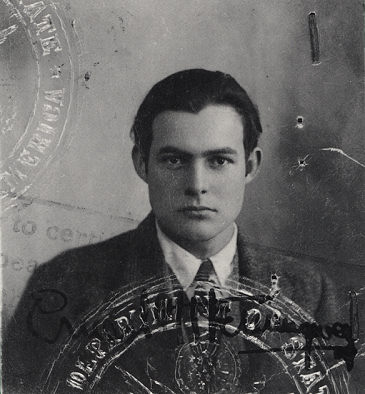
If that passage doesn’t want to make you weep at the tragic beauty of it all, then I don’t know if we can be friends.  Damn you Hemingway, you’ve made me love you just like all those other women who should have kept well away.  Thank goodness we didn’t meet when you looked like this:

ernest-hemingway1

Or things could have got messy. (Seriously, who looks like that in a passport photo? I look like I’m out on day-release in mine).

Woody Allen explored the attraction of this group of writers in Midnight in Paris. I liked the film, but even a friend who loathed it admitted Corey Stoll did a great job as Hemingway:

“But Paris was a very old city and we were young and nothing was simple there, not even poverty, nor sudden money, not the moonlight, nor right and wrong, nor the breathing of someone who lay beside you in the moonlight.”

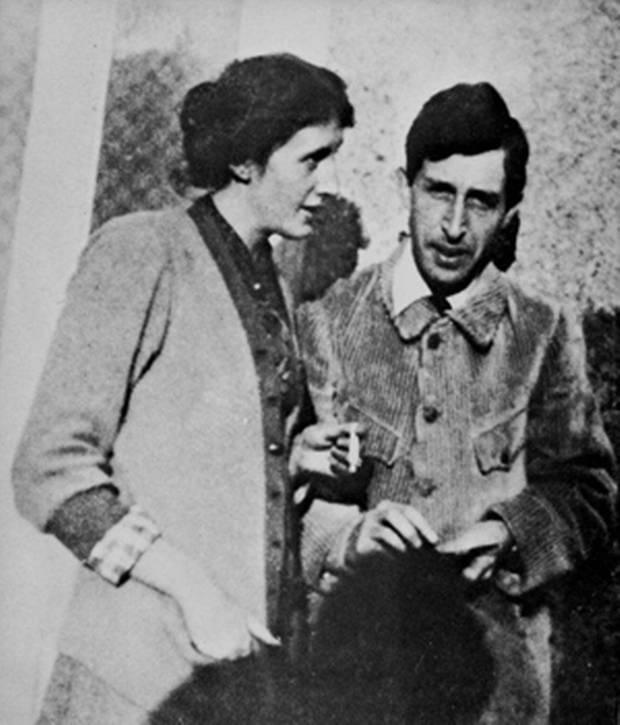
Secondly, The Wise Virgins by Leonard Woolf, who was part of the Bloomsbury group, and in his second (final) novel portrays his wife, Virginia.  He is also in the privileged position of being one of the few male authors published by Persephone Books, and their lovely edition of this novel includes an endpaper print by Vanessa Bell, Virginia’s sister.

Virginia and Leonard Woolf

Virginia and Leonard Woolf

Image from here

Harry Davis moves with his family into the stultifying suburban society of Richstead (Richmond/Hampstead) where he is introduced to the Garlands and their four daughters, who do nothing all day because that is all they are expected to do:

 “Harry felt the dull sense of depression creeping over him again. ‘It’s so bad,’ he said, ‘to be comfortable. That’s why you want to go on forever in the same place.’

‘But I like being comfortable,’ said Ethel decisively. ‘I don’t think it’s bad at all.’

Harry remained silent; he couldn’t think of anything more to say. Gwen watched his rather heavy face. She could not make him out; she was not sure whether she liked him or hated him at first sight. He seemed to be exceedingly ill-mannered, she thought.”

Harry is an artist, and wants so much more.  He meets the intellectual, free-thinking Camilla (seen as representing Virginia) and falls in love.  While I think reading the novel for biographical ‘clues’ misses the point and would prevent enjoying the novel fully, it’s not difficult to imagine Virginia agreeing with some of Camilla’s sentiments:

“’There’s so much from marriage from which I recoil. It seems to shut women up and out. I won’t be tied by the pettiness and the conventionalities of life. There must be some way out. One must live one’s own life’”

The difficulty is, most of the characters are too vacuous, lazy and pretentious to tread their own path. They’re not terrible people, but the Bloomsbury set seem to sit around all day trying to be clever, while the suburban set obsess over flowers. Apparently some found Camilla-as-Virginia offensive, but if that was what Woolf was doing, Leonard-as-Harry fares little better, too weak to ever seize the life he imagines, lacking the courage of his own convictions:

“He turned over, and lay flat, burying his face in the grass. Harry felt as if he himself were turning into stone. He just managed to say:

‘You think her absolutely cold?’

‘She’s a woman and a virgin: isn’t that enough?…What they want is to be desired – that’s all. And when they get that from some poor devil with a straight back and a clean face, they think they are in love with him, and he marries, to be disappointed.”

If all this sounds terribly tedious, it isn’t.  Woolf satirises early twentieth-century society and shows how it denies sexuality and oppresses men and women, but especially women.  It could be a bleak novel – none of the characters really know what they want or how to break free – but I think we’re not meant to take them as seriously as they take themselves. While it’s not a broad comedic novel, The Wise Virgins has plenty of humour in it:

“This gentleman was undoubtedly a clergyman; his red nose and the causes of it had made it difficult for him to be a minister of Christ for any long time in one place…his life had its advantages, he used to affirm in his more secular moments, because he never had to write a new sermon; one congregation after another listened to the same four which had escaped the wear and tear of wandering with their author up and down England.”

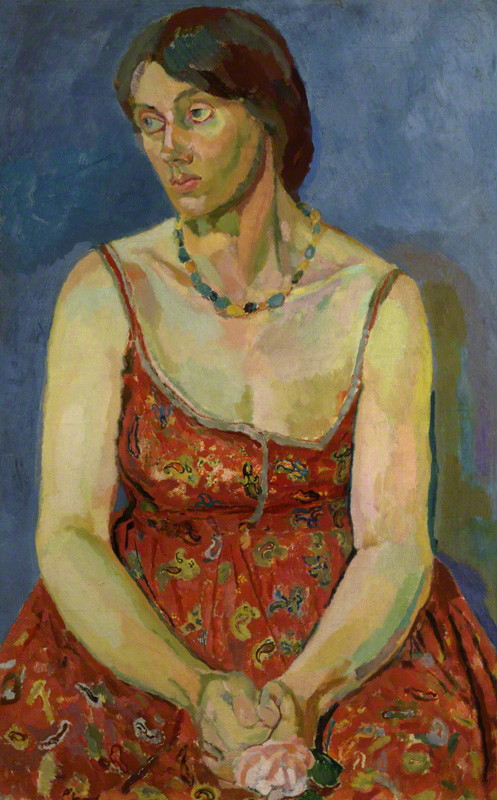
The Wise Virgins is about a denial of desires both individual and collective, and how damaging it can be. The Bloomsbury group in real-life were much more sexually liberated, and while I’m not sure the result was damage-limitation, it did result in some beautiful art:

Vanessa Bell painted by Duncan Grant

Vanessa Bell painted by Duncan Grant

Image from here

You made it to the end of this post! Thanks for reading, and here is your reward: