The Squire – Enid Bagnold (1938) 178 pages
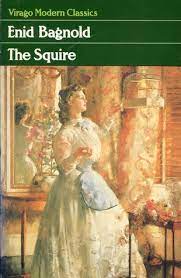
The Squire is a novella I have two copies of – one in Persephone edition and one in VMC. Sometimes I wonder if having several copies of the same books in different editions is the sign of a problem – but I suspect readers of this blog are the wrong people to ask 😀
The Persephone edition has smaller print so meets my novella criteria at coming it at under 200 pages (the VMC is 270 pages but much larger print and wide margins). Either way, it’s a quick read!
The squire of the title is the privileged middle-class lady of Manor House, wife of a “Bombay merchant” who is away in India on business (aka ripping off traders in the name of white imperialism) while she awaits the birth of her fifth child.
“Drifting towards the birth of her baby with a simple and enchanted excitement she walked in radiance like a bride.”
The novel covers the last few hours before the birth, and after. This is a life of ease, albeit with servant worries and a best friend more concerned with her latest love affair. The squire drifts through it all:
“She who had once been thirsty and gay, square-shouldered, fair and military, strutting about life for the spoil, was thickened now, vigorous, leonine, occupied with her house, her nursery, her servants, her knot of lives, antagonistic and loving.”
The setting is resolutely domestic. There are no concerns for the squire outside of this sphere. Reading it now, the order, predictability and comfort struck me as particularly poignant, as we know that in just over a year the world would change irrevocably. It’s unlikely the squire’s staff of seven for her family of six would still be in place once war was declared. But for now:
“The last curtain was drawn, the parlourmaid had gone and the hall was empty. It smelt of greenery and flowers and polish, very still, folded for its evening, waiting for its night.”
There is some lovely characterisation in The Squire. My particular favourites were her son Boniface, who determinedly stays in his own world, refusing to pander to his mother’s feelings by saying he missed her when he didn’t; and Pratt the butler, grumpy and unyielding, but also very fond of his mistress:
“Pratt bent his tall figure over the library fire, fire-tongs in hand…Only the firelight lit his trousers. The lights on the circuit had fused. The circuit involved the squire’s bedroom above, the staircase and landing outside. He heard her calling for a candle. He stood still (a dignified, black figure, holding the fire-tongs) because his smouldering nature was accustomed to save itself by inaction. Let her mend her fuse.”
Thankfully for the squire, the more accommodating live-in midwife arrives, swelling her staff to eight. The midwife and the squire have known each other for years and speak intimately and frankly, as you’d expect considering what they have been through together:
“ ‘As I grow older I come to consider men…husbands of women, husbands of mothers…as hindrances to my work.’
‘You wouldn’t get your work without them.’”
The Squire was considered very frank for the time, apparently HG Wells, despite his liberal views, was shocked at Bagnold’s use of the word nipple 😀 What surprised me as a twenty-first century reader was the squire’s alcohol consumption (port in gravy, sherries before dinner) and the readiness of the doctor to prescribe a “quarter of morphia” to a woman who has just given birth as he considers her over-excited. Later, after the squire has breastfed, she observes “the morphia still drifting about her like evaporating wool” so presumably the newborn has just had a dose of controlled drugs too – eek.
The Squire is beautifully written and very readable, capturing a particular experience of motherhood and birth at a very specific time.
 madame bibi lophile recommends