For my second contribution to Annabel’s Nordic FINDS month I’m looking at the second and third instalments in Ragnar Jónasson’s Hidden Iceland series, The Island and The Mist.
I know I enjoyed the first instalment of this series featuring police detective Hulda Hermannsdóttir, The Darkness, but I can’t remember anything about it. Thankfully you don’t need to have read it (or remember it) to enjoy the sequels.
These are quick, straightforward reads. Sometimes I find the phrasing a bit too straightforward with some clichéd phrases – I don’t know if this is Jónasson’s style or a translation decision – but Hulda is an appealing lead and the emphasis is on the mystery not sensationalist gore, which is very welcome. I’m not a big reader of contemporary crime so I don’t want an overly convoluted plot and I want characters that behave like real people in real (admittedly extreme) circumstances, both which The Island and The Mist deliver.
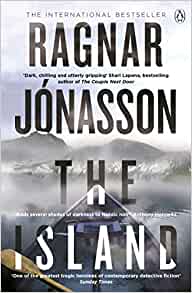
The Island (2016, trans. Victoria Cribb 2019) starts with a brief, highly unnerving prologue in 1988, before taking us back a year to 1987. Benedikt and his unnamed girlfriend are staying at her family’s holiday home:
“He was going to enjoy their stay, this weekend adventure in the middle of nowhere. The sense of isolation was enhanced by the thought that nobody knew they were there; they had a whole valley to themselves. It really was like a dream.”
This being a crime novel, anything idyllic fills the reader with a sense of deep foreboding and sure enough, the girl is found murdered. Hulda is a CID detective, tenacious and thorough, but she’s up against a traditional, sexist system:
“Her boss, Snorri, was an old school detective, quiet yet firm, with an aversion to modern technology”
He’s kind, but he tells her in no uncertain terms that her colleague Lýdur will be promoted above her, what with him having the obligatory Y chromosome and all. We see Lýdur take some very dubious decisions in his investigation into the girl’s murder.
Fast forward to 1997: Hulda has experienced a horrific family tragedy, and is living alone in a small, expensive flat in Reykjavik. Four friends – Dagur, Alexandra, Klara and (eek!) Benedikt are having a reunion on a remote island:
It was her first visit to the Westman Islands, the little archipelago of some fifteen volcanic islands and innumerable stacks and skerries that jutted dramatically out of the sea off the south coast of Iceland. […] Now, Heimaey was home to a thriving fishing industry but Alexandra could see the volcanic cone, still brown and ominously bare of vegetation, brooding above the white buildings of the town.
Only three of them will return.
Hulda, now middle-aged and wondering what her career has left to offer her, is dispatched to investigate. Inevitably she has to dig up what happened ten years previously and whether the motive for the latest murder lies in the past. An additional complication is that Lýdur is now her boss with his own reasons for wanting Hulda to reach conclusions as quickly and thoughtlessly as he does. But Hulda is her own woman and we’re never in any doubt she’ll find her way to the truth.
Although I did guess whodunit, there was an additional twist that took me by surprise and was genuinely a bit shocking.
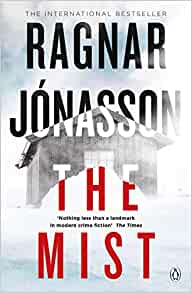
If I rarely read contemporary crime, I never read contemporary thrillers, but this is what The Mist (2017, trans. Victoria Cribb 2020) turned out to be, and I really enjoyed it. I think it helped that it’s a quick read; I probably couldn’t have sustained a long, tense story. The first two thirds of the novel are the deeply tense unfolding of events, and the last third is Hulda piecing together the crime scene in a fairly straightforward way.
It’s set around the same time as the opening events of The Island – Christmas 1987/February 1988 – and so at first I wondered if the UK publishing of these books was out of order, in the same way as Jónasson’s Dark Iceland series, but looking at publication dates it seems he decided to move back and forth in time with Hulda.
Hulda has hit a dead-end with her investigation of a young woman’s disappearance, and so she is sent to investigate a crime scene in a remote farmhouse in the east of the country. We’re then taken back to two months previously: Erla and Einar live in the farmhouse on land that Einar’s family have farmed for generations. Erla loves her husband but has always missed city life in Reykjavik.
“She was overwhelmed by the familiar feeling of emptiness that assailed her whenever something ran out and she knew she had no chance of replacing it. She was stranded here. To describe the feeling as emptiness didn’t really do it justice; it would be true to say she felt almost like a prisoner up here in the wilderness.
All talk of claustrophobia was forbidden on farm, though; it was a feeling they had to ignore, because otherwise it could so easily have become unbearable.
Suffocating…”
Erla and Einar’s familiar Christmas routine is interrupted by the arrival of a stranger, Leó. How he has reached them and what he is doing stranded in the middle of nowhere during a blizzard at a time when nearly everyone is at home, he can’t really explain. To send him away would be to send him to his death, and so Einar invites him to stay, despite Erla’s deep mistrust of the unknown man.
“It would be a white Christmas, as usual. Stiflingly white. And now this intruder had entered their peaceful home and poisoned the atmosphere. You couldn’t describe it any other way. He’d poisoned it. The wind whined outside – hardly a harbinger of peace on earth and goodwill to all men.”
The strain builds between the three people as they spend the night together in the remote, old-fashioned farmhouse, with electricity and phone lines both down and the snow relentlessly falling. Jónasson expertly maintains the tension, exacerbated by the persistent, inhospitable weather.
“In winter, not a day passed when she didn’t witness something that sent a shiver down her spine. She didn’t believe in ghosts, but the isolation, the silence, the damned darkness, they all combined to amplify every creak of the floorboards and walls, the moaning of the wind, the flicker of light and shadow, to the extent that she sometimes wondered if maybe she should believe in ghosts after all; if maybe that would make life bearable.”
Despite the minor reservations I mentioned earlier I do enjoy Jónasson’s writing. Hulda is believable and although she’s a-detective-with-a-tragic-past-who’s-overinvested-in-their-work she’s not destructive or self-pitying. She’s honest and humane and likable. In The Mist we learn more about what happened to bring her to the circumstances of The Island.
“But then that’s what her job was like at times, a game played out in the grey borderlands between day and night. No victory was ever sweet enough; her work was never really done. She could expect no praise or reward. The riddle had been solved to general indifference.”
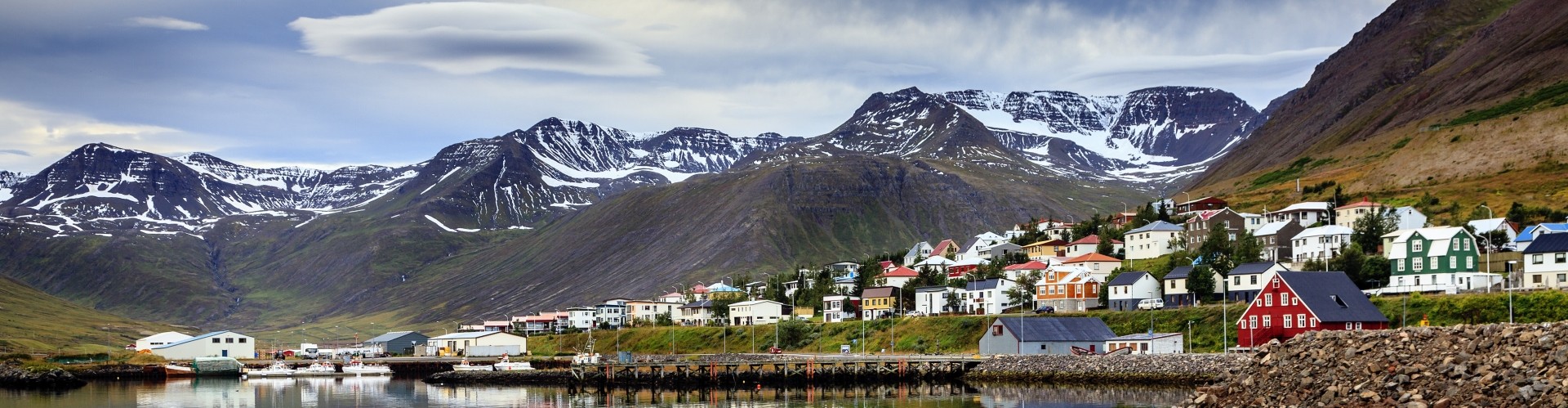
But a large part of the appeal for me is that Jónasson is great at evoking the Icelandic landscape. I never feel like the stories could occur anywhere else.
“Ellidaey appeared ahead, looking just like the pictures she’d seen; the single white speck shining amidst the green pasture gradually resolving itself into a house. Behind it the grassy slope reared up like a crest of a wave. As they drew closer, the black cliffs with their splashes of white bird droppings didn’t look as if they offered the visitor anyway up from the sea.”
To end, one of my favourite songs, which conveniently happens to be about mist (and also shares a name with my friend’s childhood hamster) :
 madame bibi lophile recommends