“January, month of empty pockets! Let us endure this evil month.” (Colette)

Happy Colette’s birthday! Regular readers will know how much I love Colette, and today I thought I’d look at two of her novellas which I had languishing in the TBR, La Vagabonde (The Vagabond) and L’Entrave (The Captive). Both follow periods in the life of Renée Néré, based on Colette’s experiences after her marriage to Willy ended.

In The Vagabond (1911, transl. © Martin Secker and Warburg 1954), Colette evokes beautifully her setting of Belle Époque music halls, and expertly weaves in her themes of aging, love and female freedom.

Renée has left her philandering husband Adolphe Taillandy and has no regrets about doing so. However, this has left her with no money, and so she has turned from her beloved writing to earn money on the stage.

“I had savoured the voluptuous pleasure of writing, the patient struggling with the phrase until it becomes supple and finally settles down, curled up like a tamed animal, the motionless lying in wait for a word by which in the end one ensnares it.”

She is in her early thirties, and painfully aware of aging in an industry that depends on appearance and artifice. Renée has a “face which is losing the habit of being looked at in daylight” and which poverty will not help. She enjoys the stage though, and the people in it.

“They swagger, tightly buttoned in a full-skirted overcoat of the fashion of two seasons ago; for the essential, the indispensable thing, is the possession not of a clean suit but of a ‘really classy’ overcoat which covers everything: threadbare waistcoat, shapeless jacket, trousers yellowed at the knees; a dashing, flashy overcoat, which makes an impression on the director or the agent, and which in the last resort enables one to throw off that ‘things aren’t shaping well’ in the jaunty tone of a man of means.”

Colette is not sentimental about the poverty or hardships of such a life. Early on she writes of the gradual but inevitable degradation of young chanteuse Jadin, in a way that is clear-sighted but heartbreaking.

Into Renée’s world comes Maxime Dufferein-Chautel, a rich feckless admirer. What follows is a love affair of sorts, one in which Renée never quite resolves her ambivalence.

“He does not want my well-being, this man, he merely wants me.”

“There are days when solitude, for someone of my age, is a heady wine which intoxicates you with freedom, others when it is a bitter tonic, and still others when it is a poison which makes you beat your head against the wall.”

Maxime is not unpleasant or abusive, but he is pretty dull:

“I forgive him all this ordinariness for the sake of a simplicity which has nothing humble about it, and because he finds nothing to say about himself.”

And Renée is painfully aware that getting into a relationship with him may require more than she is willing to give. As her friend Hamond points out:

“Be frank, Renée, be clear sighted, and tell me whether all your sacrifices [within marriage] haven’t only lost their value in your eyes since you recovered your free will? You assess them at their true worth now that you no longer love.”

Renée is offered a tour and vacillates about whether to go. Ultimately she does and her letters to Maxime form the latter part of the novella, although we never see Maxime’s replies. The Vagabond is determinedly Renée’s story and her voice.

“This evening I should not feel sleepy, and the spell of a book – even a brand new book with that smell of printers ink and paper fresh from the press that makes you think of coal and trains and departures! – even that spell will not be able to distract me from myself.”

Despite The Vagabond’s various urban settings, there is still plenty for fans of Colette’s depictions of the natural world to enjoy, such as this description of early Spring in Paris:  

“Towards the end of the afternoon, a mauve mist veils the avenues so that you do not know where they end, and the unexpected discovery of a wild hyacinth, with its three slender bells of artless blue swaying in the wind, has all the charm of a stolen joy.”

The Vagabond is slightly plotted with very little happening. It is not a slight tale though, but rather a distinctive plea for female independence alongside a consideration of how to reconcile this with romantic love and material necessity.

“Are you not he who, thinking he is giving, takes for himself? You came to share my life. To share, yes: to take your share!”

The Captive (1913, transl. Antonia White 1964) is set three years later. Renée is now financially solvent due to a legacy and whiling away her time in the south of France. She is still living the itinerant hotel-based life, unable to fully adjust to her new circumstances: “when a dog has been kept a long time on a lead, it does not go prancing off the moment you undo the catch of its chain”.

She finds herself with an unlikely trio of friends. There is young May, self-mythologising and fragile:

“Nature has drawn all the features of laughter itself in her round childish face; a Cupid’s bow mouth that tilts up at the corners like her mischievous eyes, a short little nose with quivering nostrils. But gaiety is not a perpetual fidgeting that betrays a lack of security, it is not chatter full of recriminations, nor is it a craving for everything that intoxicates. Gaiety, it seems to me, is something calmer, something healthier, something more serious.”

There is also May’s brutish lover Jean, and their friend, the opium-addicted Masseau.

“Yes, I’ve had enough of those people, it’s true. But, besides beginning to know myself, I’m also beginning to know the advantages and disadvantages of this extraordinary part of the world where mornings are enchanting and the nights, however starry, make one shiver in the discomfort of a double climate. Here cold nights are not invigorating and warm nights throb with fever rather than with passion.”

At the beginning of the novel Renée is determined to remain celibate. However, for reasons that entirely escaped this reader, she is attracted to Jean.

“A kiss, and everything becomes simple and enjoyable and superficial – and also a trifle coarse.”

She leaves Nice for Geneva to try and resist him, but they are eventually reunited. Their affair is wholly unsatisfactory for both of them. Colette explores the experience of a relationship based on sexual attraction without emotional intimacy, when the latter is also desired by both but remains elusive.

“I have insulted this lover, out there alone in the soft spring night, restoring his own identity; I have insulted him by giving him my body and supposing that this was enough. He has returned the insult.”

Like The Vagabond, it is Renée’s thoughts and experiences that the reader is privy to. We know very little about Jean and even less about what he thinks and feels. While he is not likeable, the portrayal of the affair is quite even-handed, as Renée acknowledges how little she is able to give of herself. What she does give may be as much a performance as any she made on the stage:

“You pretend to love me, you do love me. Every minute your love creates a woman better and more beautiful than myself whom you forced me to resemble.”

Somehow I didn’t find The Captive too depressing, although I’m not entirely sure why. There is something resilient about Renée even when she seems to be taking such sad decisions. Although she is adrift at this point in her life, I felt there was some hope she’d start to feel more anchored within herself soon.

“The darkness is ebbing. A faint wind stirs the trees, bringing a green smell of trampled grass. Behind the plane trees, the mound of the fortifications is emerging from the dusk and the sky is taking on the colour of a field of blue flax the subdued, slightly grey, slightly melancholy tint over summer dawn over Paris.”

To end, I was looking for archive footage from Folies Bergère to reflect Renée’s career, which led me to loads of cabaret footage, which led me to loads of Cabaret footage, which led me to this performance by Liza Minelli. Basically all roads lead to Liza 😀 I’ll never not be astonished by how the chair doesn’t move until she wants it to – the woman must have abs of steel:
“Writing’s not always a pleasure to me, but if I’m not writing every other pleasure loses its savour.” (John Braine)

This is my second contribution to the 1962 Club, hosted by Simon and Kaggsy, which is running all week. Do check out all the wonderful posts!

I picked up Life at the Top by John Braine because it is the sequel to Room at the Top (1957) which I really rated, with its depiction of the postwar north of England and Joe Lampton’s determination to leave his working -class life behind, whilst juggling complex sexual relationships. Life at the Top I didn’t find as compelling, but there was still a lot to enjoy.

Set ten years after Room at the Top, the novel follows Joe as he lives the life he thought he always wanted. Even if you’ve not read the first novel, take a guess as to how that’s working out for him 😀

“The truth was that I actually wanted a drink now, I wanted something to blur things slightly, to put a haze between me and the pink wallpaper and the pink cupboards and the white refrigerator and the electric oven and the mixing machine and the pink wall table and the pink covered stool; it was too bright and shiny and hygienic at eight o’clock on a March morning with Harling Crescent quiet under the weight of Sunday, it reminded me rather too coldly that I was thirty-five and a father of two children and at least ten pounds overweight.”

Joe adores his young daughter Barbara but feels alienated from his son Harry, who has been sent away to a school of his grandfather’s choosing. He and his wife Susan still sexually desire one another, but there seems to be little intimacy. Working at the family firm (Susan’s family), Joe is frustrated:

“I had stopped wanting things. I wanted power, power to put through my own ideas; I wanted to be taken seriously, I wanted to be something more than the boss’s son-in-law.”

He is going to become a local councillor, but that doesn’t suggest fulfilment to him (nor should it, bloomin’ Tory! 😀 )

“The prosperous middle-aged grumblers, the solid sensible citizens; I would sit here or in the committee room listening to them; taking great care not to offend them, and without my realising it, I would become exactly like them. Waiting my turn to grumble, waiting my turn for thrombosis, waiting my turn for death.”

So what does Joe do? Talk honestly with his nearest and dearest? Seek out a life of authenticity? Reflect honestly on the deep-rooted cause of his dissatisfaction and what he can do to make his life more fulfilling? No, of course not. He starts an affair with an attractive young journalist named Norah Hauxley and runs away to London.  The shadow of his former lover (from Room at the Top) still looms large, and I felt Alice was really the only woman Joe had loved:

“She was grown up. I hadn’t met a grown up woman in ten years, and for ten years I hadn’t felt the need to be with one. And Alice, even Alice, had been broken somewhere, she had lost the habit of happiness.”

Joe is not likable. He takes decisions that hurt others. He behaves selfishly. He’s a bit of a misogynist.But still I found myself staying alongside him as narrator, because he’s so honest. He doesn’t ask the reader to like him, because he doesn’t much like himself. I thought Braine did a brilliant job of presenting a man so of his time, and so completely believable.

Life at the Top doesn’t have a huge amount of plot, but I found it a compelling read in its honesty, particularly around flawed human relationships.

“I looked at her in surprise; I had not felt so close to her since we were first married. But I made no move to comfort her.”

Life at the Top is a short read, and I may not have stuck with it had it been longer. But as it was it was well-judged, and there are some developments in Joe’s familial relationships toward the end that I found truly moving. I’m glad the 1962 Club prompted me to finally pick this one up after it had been languishing in the TBR for many a year.

Life at the Top was adapted into a film in 1965, with the magnetic Laurence Harvey, who also starred in Room at the Top. Unfortunately the director changed from the first excellent film, and although I tried to watch the sequel, I found it so heavy-handed and unsubtle compared to the book that I gave up. But it did make me appreciate the book more!

So rather than a trailer for the film, here’s a 1962 song about rain, which the West Yorkshire town of Warley would be no stranger to:

“A woman happily in love, she burns the soufflé.” (Baron St. Fontanel, Sabrina 1954)

Trigger warning: mentions suicide

This is my second contribution to this week’s 1954 Club, hosted by Simon and Kaggsy, and a chance to revisit Barbara Comyns, having really enjoyed Our Spoons Came From Woolworths.

The opening line of Who Was Changed and Who Was Dead may have usurped The Crow Road* to become my favourite beginning to a novel ever:

“The ducks swam through the drawing-room windows.”

Thus the scene is set for an unsettling domestic tale where nothing can be taken for granted.

The Willoweed family live in an English village where the river has just flooded in June. Then follows pages of dead animals, which I was prepared for, having read Jacqui’s wonderful review but I was exceedingly relieved when it ended (unfortunately there was also a horrible cat death later). Much as I could have done without the litany of death, it sets the tone for the darkness that follows.

In 1911 Emma, Dennis and Hattie live with their father Ebin and their grandmother who rules with a rod of iron. She is permanently furious, which Ebin attributes as follows:   

“It’s all this cleaning, I suppose; but she can’t expect me to help; my hands are my best feature, and they would be ruined.”

Ebin does very little apart from make vague overtures towards his children’s schooling and sleep with the baker’s wife.

“‘Father makes me hate men,’ thought Emma as she pumped water into a bucket.”

This is not an idyllic pre-war rose-tinted existence. Money is tight, relationships are tense, there is sexual deceit, violent undercurrents that threaten to overwhelm, and macabre power games. Grandmother Willoweed treats the servants horribly, but Old Ives the handyman is a match for her:

 “They always exchanged birthday gifts, and each was determined to outlive the other.”

Their lives are disrupted by a mysterious illness that sweeps through the village. People kill themselves following horrific delusions. By the time the cause of the illness has been identified, tragedy has touched the family and violence has ensued. As the title tells us, lives will have changed irrevocably one way or another.

I don’t want to say much more as the joy of reading Barbara Comyns is being so unsettled as to have no idea which way she is going to take you. There’s no-one like her; her view is so singular, so disturbing and yet so compelling. I found Who Was Changed and Who Was Dead brutal and horrifying, and also funny and enchanting. I couldn’t look away.

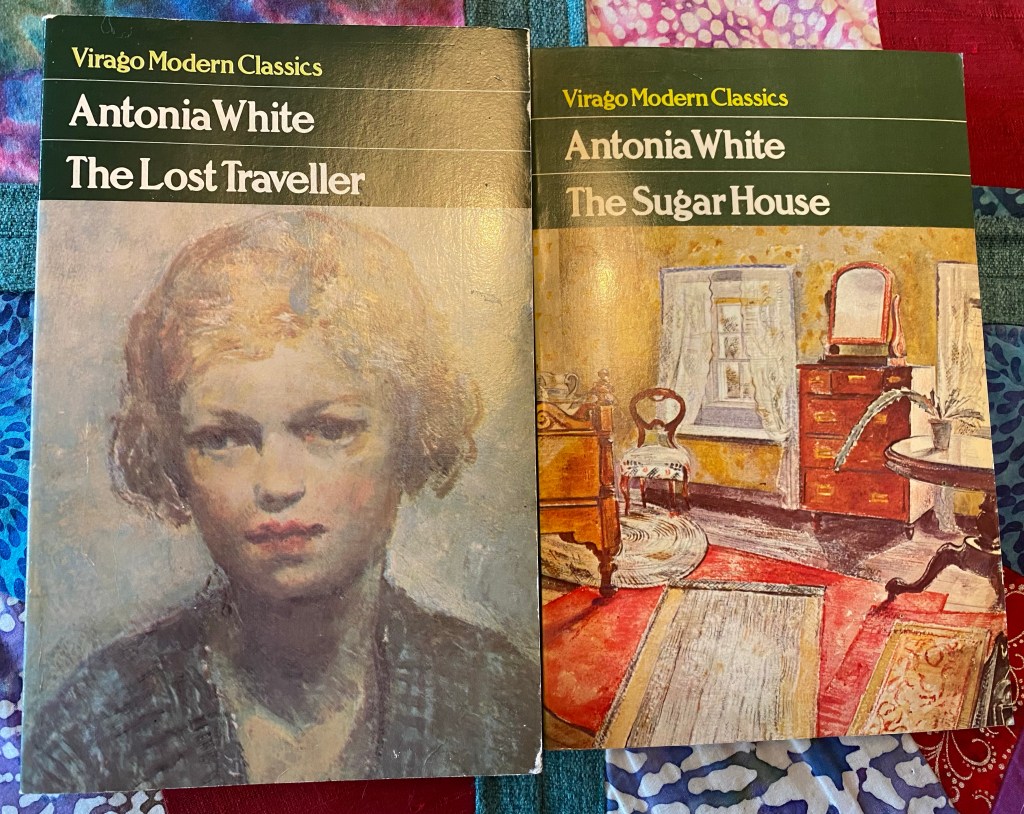
Secondly, I wrote last week about the middle two novels in Antonia White’s quartet, detailing the early life of Clara Batchelor, and now the final instalment, Beyond the Glass.

The novel picks up precisely where The Sugar House left off, with Clara and Archie having decided to separate. Clara moves back to her parents’ house to live with them and her grandmother in West Kensington. As she packs up her old life, she feels disassociated:

“She had the odd impression that it was not she who was stripping hangers and throwing armfuls of clothes into suitcases but some callous, efficient stranger. She herself was lying on the unmade bed, staring blankly at the cracks in the sugar-pink ceiling.”

This sense of disassociation deepens and broadens throughout the novel. When Clara announces to her mother “It’s a great relief not to have any feelings. I’m certainly not going to risk getting involved with anyone again.”

The reader of course knows what will happen. She attends a party with her friend Clive Heron (an intriguing character, my personal theory is he works for MI5) and falls instantly in love with the dashing soldier Richard Crayshaw.

What follows is such a clever exploration of someone slowly – then suddenly – unravelling. Clara stops eating and sleeping, she has a “strange sense of heightened perception” ever since she danced with Richard. She believes they communicate telepathically, a belief supported by others, but then she thinks the photographs of dead soldiers in her father’s study are speaking to her. She has gone from no feeling:

“Null and void. Null and void. She sat staring at the roses on her bedroom wall-paper, saying the words over and over again until she was half hypnotised.”

To too much feeling. At first her mania is disguised by being in love – plenty of people feel heightened and have reduced appetite and problems sleeping in the excitement of new romance. Certainly that is what Clara’s mother Isabel believes.

But gradually the reader begins to realise that Clara is really quite unwell. As Beyond the Glass is told from Clara’s perspective this takes some time, but it dawns us through others’ responses to her. In this way it is reminiscent of Wish Her Safe at Home, another excellent novel about severe mental illness.

Eventually she is ‘certified’ – made an in-patient at a public mental health hospital. The descriptions of the environment and the practices make me wonder how on earth anyone would have a hope of ever becoming well again. Thankfully mental health services, though chronically underfunded, are very different now.

I was so impressed with how White conveyed Clara’s disorientation and confusion, without making the narrative confusing and disorienting at all:

“Time behaved in the most extraordinary way. Sometimes it went at tremendous pace, as when she saw the leaves of the creeper unfurl before her eyes like a slow motion film, or the nurses, instead of walking along the passage, sped by as fast as cars. Yet often, it seemed to take her several hours to lift a spoon from her plate to her mouth.”

During her deep distress there are also echoes of events that occurred earlier in the narrative, particularly in The Sugar House, showing with the lightest of touches that her severe ill health has been building for a while:

“Since her marriage she had had an increasing sense of unreality, as if her existence had been broken off like the reel of a film.”

The recurring images of mirrors and glass as barriers reminded me of Plath’s The Bell Jar. Like The Bell Jar, this novel is based on the personal experiences of the author.

“She had an instantaneous vision of herself as someone forever outside, forever looking through glass at the bright human world which had no place for her and where the mere sight of her produced terror.”

Beyond the Glass ends on a note of hope, and faith, drawing on the Catholic thread that runs through all four novels. At times Clara’s Catholicism is more strongly felt in the story than at others, reflecting the character’s experience of her faith. I’m not religious but I felt the focus on this theme ended the novel and the series perfectly.

It’s so impressive that all the novels in the quartet are distinct and stand individually, while also developing across the sequence a fully realised portrait of Clara, and her family.

I’ve really enjoyed immersing myself in Clara’s life and I’m going to miss her (and her much-maligned mother, a great piece of characterisation). I wish Antonia White had continued writing her story.

“Something told her that, when they saw her again, they would know as well as she did that she no longer belonged to the world beyond the glass.”

To end, I finished my previous 1954 Club post with a filmed musical, so here’s another. The film of The Pajama Game is from 1957 but the Broadway show first appeared in 1954:

* “It was the day my grandmother exploded.”

“I hate the idea of sequels. I think you should be able to do it in one book.” (Jane Gardam)

This week I’m looking at two novels by Antonia White, prompted by the pending arrival of next week’s 1954 Club, hosted by Simon and Kaggsy. When I looked at the TBR for 1954 novels, one that I had was Beyond the Glass. However, it’s the final novel in a quartet, and I hadn’t read the middle two…

It’s been six years since I read Frost in May and I’m not sure why it’s taken me so long to pick up Antonia White again, because I really enjoyed that first instalment. Frost in May was written in 1933, and White didn’t continue the story again until 1950, going on to write the last two in the quartet in 1952 and 1954.

The Lost Traveller (1950) sees Nanda from Frost in May renamed Clara and returning to her childhood home in West Kensington to attend the funeral of her paternal grandfather. Her father is bereft, but in 1914 emotions were to be controlled absolutely:

“Suddenly he was touched by an old fear of which he had never spoken to anyone, the fear that one day he might lose all control of his mind. Against that there was only one weapon; his obstinate will.”

Mr Batchelor is a teacher who harbours academic ambitions for Clara. His feckless wife Isabel wants Clara to be beautiful. She is both of these things, but not to the extent that either of her parents would like. The complex family relationships are brilliantly portrayed by White: the mismatched parents, the passive aggressive power struggles between Isabel and her mother-in-law (“Mrs Batchelor’s face … assumed a look of patient malice.”) and in the middle of it all, adolescent Clara.

“At home, to be silent was taken for a sign one was sulking.”

After her mother is ill with the mysterious women’s problems that were always so common and yet so unspoken, Clara’s father can no longer pay her school fees (the NHS was over 30 years away) and so she has to leave Catholic boarding school to attend a local Protestant school. She’s actually quite happy there, and makes two friends, although neither of them are Catholic, to the concern of her convert parents.

“Isabel, who would never have come to such a decision on her own, was willing to follow him. Catholicism seemed to her a poetical and aristocratic religion.”

Clara’s religion plays a large part in The Lost Traveller, as she tries to establish what it means for her as a young adult, away from the structures of her convent school.

Of course, with the year being 1914, readers know what the family is about to live through. However, when war breaks out, the only person it really affects is Mr Batchelor, as he sees the population of his old boys steadily wiped out.

“If only he could have gone to the front with them, he would have been completely happy.”

Although Clara prides herself on not being as vacuous as her mother, in some ways she is just as self-focussed and oblivious:

“Since she had nobody at the front in love with her and was too young to be a nurse or W.A.A.C, Clara refused to take any interest in the progress of the war.”

So while the war takes place somewhere else, Clara struggles with her sense of self, trying to work out who she is and how to manage the tumultuous feelings of teenage life in a family where so much goes unspoken. Her father is devout, strict, and given to tempers. Clara adores him and yet there is distance between them:

“Why couldn’t he understand without being told that there was nothing she would not do, cut her hair off, hold her hand to the fire, if it would bring any comfort? Why couldn’t he realise that the one impossible thing was to speak?”

Meanwhile her mother is struggling with her life choices – or lack thereof – and is drawn to one of her husband’s colleagues, Reynaud Callaghan, who encourages her romantic fancies.

“‘But I love Versailles,’ she went on dreamily. ‘I had an ancestress at the court of Louis XVI. I should have adored that life. Those exquisite clothes and the balls by candlelight and the masquerades by moonlight.’”

Isabel is great creation: vain, shallow, a snob, and yet in many ways she sees more clearly than anyone else. She tries to talk to Clara about childbirth and sex, but Clara stops her. Clara’s naivete about both is astonishing yet believable.

An opportunity comes up for Clara to be a governess for six months to an aristocratic Catholic family,  which her family are keen she take up. I found her charge thoroughly unpleasant – an over-privileged, spoilt, entitled little brat. The type that grows up to run the country 😉

It’s there that Clara meets Archie Hughes-Follett, injured in the line of duty. He will come to play a much larger role in her life in The Sugar House.

“When she considered her vanity and duplicity and how little her beliefs influenced her behaviour, she began to wonder whether she might not be insensibly growing into a hypocrite.”

The Sugar House (1952) picks up Clara’s story six years later in 1920. She is an actress, having paid for her drama tuition herself with money made from working in a government office. She doesn’t seem wholly committed to her profession, but she is to her older lover Stephen Tye.

Needless to say, the reader may not be quite so enamoured of a man given to pronouncements such as: “‘No female novelist is worth reading,’ said Stephen. ‘Women can’t write novels any more than they can write poems.’” He then wheels out the tired old misogynist cliché that Branwell wrote Wuthering Heights. Sigh…

Thankfully we don’t have to endure this awful man for too long, as he ends up on a different tour to Clara. I thought the touring life was wonderfully evoked by White:

“Though towns changed, landlady’s sitting-rooms remained the same. There were always round tables with red or green serge cloths, aspidistras, photographs of seaside towns in plush frames and, in lucky weeks, a tinny, yellow-keyed piano.”

Clara often finds herself sharing rooms with fellow actor Maidie, who is at once much more devout and much more worldly than Clara. Religion is not such a strong theme throughout The Sugar House as it was in The Lost Traveller, but it is there as a constant.

When things fall apart with Stephen – as the reader knows they inevitably will – Clara returns to the security of what she knows: home, and Archie. He loves her, and unlike Stephen he respects her writing:

“I didn’t think even you could write anything which got me so much.”

However, he is conflicted and confused. He has the same childlike quality he had in The Lost Traveller, but his self-medicating with alcohol has worsened:

“Often he had sulked like a schoolboy but never had she seen him in this mood of aggressive bitterness.”

Clara doesn’t love him, but she marries him. Although Maidie has helped Clara to become less naïve, she is still hopelessly ignorant and to a modern reader the whole thing is doomed to failure. Probably to 1950s readers too, as this is Clara on her wedding day:

“She wondered if he had really expected her to run away. Her will was too paralysed even to formulate the wish.”

The titular house is their first married home, as Clara is desperate to leave the stifling atmosphere of her parents’ house. She finds a place in Chelsea, the portrayal of which is amusing for twenty-first century readers. Now it is one of the most expensive parts of London, but apparently in the 1920s it was bohemian and considerably less salubrious. This does not go down well with her upright father:

“ ‘No doubt you fill the place with short-haired women and long-haired men. Archie has all my sympathy if he prefers the public house.”

The horror!

Interestingly, what draws Clara to this atmosphere is the evidence of people working. Artists wander the streets with the tools of their trade tucked under the arms, and Clara realises she is desperate to write:

“Oh, God, don’t let me be just a messy amateur.”

However, her increasingly stressful married life where Archie fritters away money and drinks heavily means that she finds it hard to focus on work. The house, with its distempered walls that look like sugar icing, cramped rooms and two untidy people living it, begins to oppress her almost as much as her parents’ house.

“Once this sense of non-existence was so acute that she ran from the basement to the sitting room full of mirrors almost expecting to find nothing reflected in them.”

Eventually things reach a breaking point, at once dramatic and understated, entirely believable and very sad. I wouldn’t normally read books by the same author so close together, but I’m glad I did here. I’ve felt very much submerged into Clara’s world and completely involved in her story.

“Yet here, as there, she found herself both accepted and a little apart. She was beginning to wonder if there were any place where she did perfectly fit in”

All being well, Beyond the Glass next week!

(I should mention there is antisemitism expressed in both novels, particularly The Lost Traveller. However, the characters stating such views are never portrayed as admirable. I think writing in the 1950s, White was reminding a contemporary readership who would have had the holocaust in recent living memory, of the pervasiveness of racism in society).

To end, a song that sums up Clara and Archie’s situation pretty well:

“No live organism can continue for long to exist sanely under conditions of absolute reality.” (Shirley Jackson)

It is a truth universally acknowledged that 2020 has been a big old pile of pants. Initially I felt guilty about seeking some escapism – it seemed to be another facet of privilege that escapism was available to me – but now I think if it keeps you sane, do whatever works to come out the other side (and I need to keep reminding myself that there will be the other side…) So here are two enjoyable, light comic novels that have helped me keep possession of my remaining marbles.

Firstly, Kate reminded me that the Lucia novels by EF Benson are perfect for this sort of read. Having read Queen Lucia back in April for the 1920 Club, I was keen to read the sequel Lucia in London (1927), especially as fans of Mapp and Lucia tell me the novels get better as they progress.

It opens with the death of Lucia’s aunt by marriage, who had been very unwell for many years and lived to a ripe old age. All things considered:

“it had been generally and perhaps reasonably hoped among his friends and those of his wife that the bereavement would not be regarded by either of them as an intolerable tragedy.”

But to do so would deny Lucia a chance at self-dramatisation, so of course she goes all out for grief. Her donning of black and a pained expression is wonderfully satirised by Benson, as are the social niceties of bereavement when no-one genuinely cares for the departed:

“Georgie held her hand a moment longer than was usual, and gave it a little extra pressure for the conveyance of sympathy. Lucia, to acknowledge that, pressed a little more, and Georgie tightened his grip again to show that he understood, until their respective finger-nails grew white with the conveyance and reception of sympathy. It was rather agonising, because a bit of skin on his little finger had got caught between two of the rings on his third finger, and he was glad when they quite understood each other.”

It soon becomes clear that Lucia plans to decamp to London, to the aunt’s very swish home, leaving Riseholme reeling. Georgie understands the impulse but is surprised that Lucia is quite so keen to leave:

“He wanted, ever so much, to have a little flat in London (or a couple of rooms would serve) just for a dip every now and then in the life which Lucia found so vapid. But he knew he wasn’t a strong, serious character like Lucia, whose only frivolities were artistic or Elizabethan.”

As readers we know that Lucia is entirely frivolous of course, and she throws herself into the contemporary London scene with gusto.

“What she wanted was the foam of the wave, the topmost, the most sunlit of the billows that rode the sea. Anything that had proved itself billowish was her game, and anything which showed signs of being a billow, even if it entailed a vegetarian lunch with cocktails and the possible necessity of being painted like the artist’s wife with an eyebrow in one corner of the picture and a substance like desiccated cauliflower in the centre.”

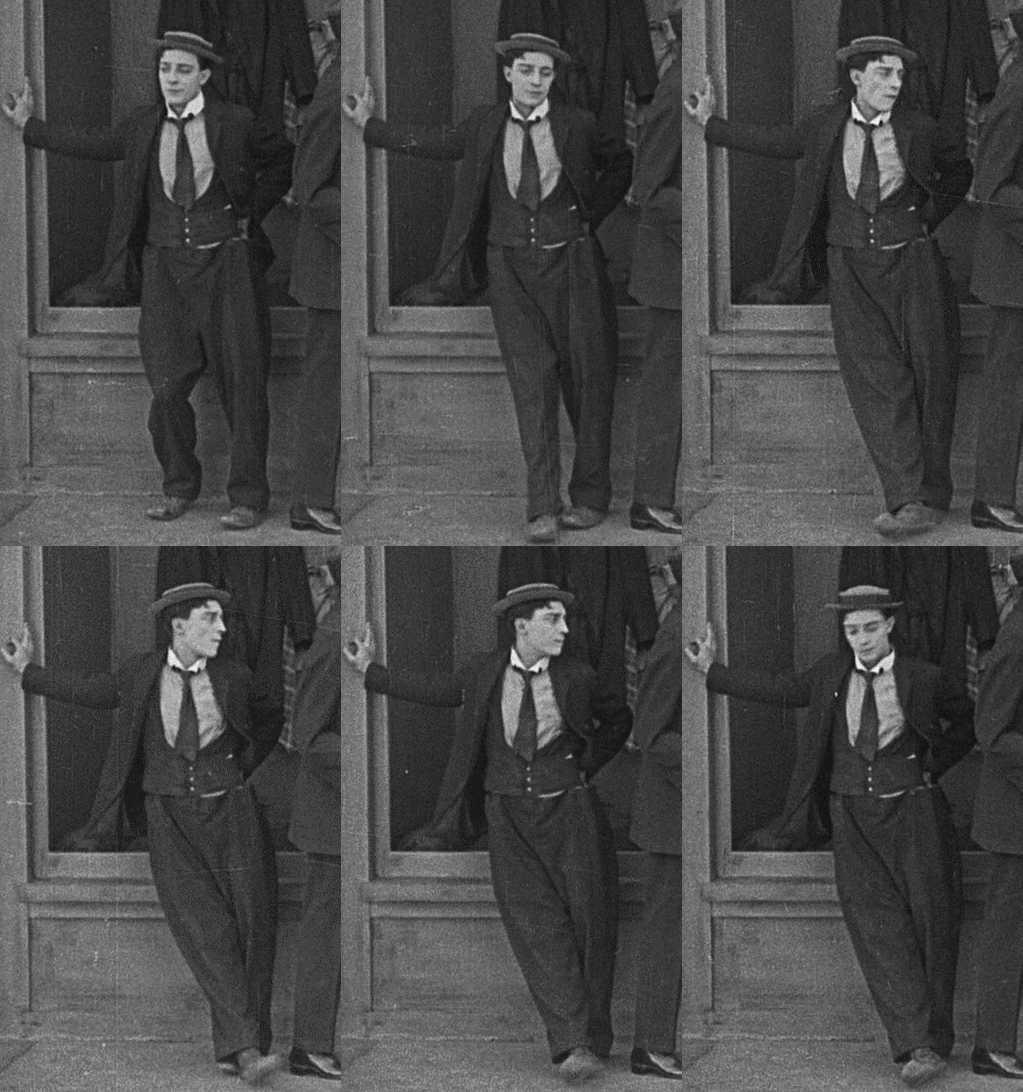
As a Londoner myself it struck me that nothing changes: 93 years on and the silliness of the fashionable London scene is still ripe for satirising. Benson pokes gentle fun, nobody is truly despicable or utterly destroyed. Personally I enjoyed the ongoing saga of Georgie’s Oxford bags, bought during “a moment of reckless sartorial courage”. Not everyone can carry off Oxford bags with the aplomb of Buster Keaton, after all:

Life at Riseholme continues at its usual pace – that is, a snail’s. It is a life they all enjoyed, one filled with enough little dramas and crises to keep them all amused. Now however, something is missing:

“Yet none of these things which, together with plenty of conversation and a little housekeeping and manicuring, had long made life such a busy and strenuous performance, seemed to offer an adequate stimulus. And he knew well enough what rendered them devoid of tonic: it was that Lucia was not here, and however much he told himself he did not want her, he like all the rest of Riseholme was beginning to miss her dreadfully. She aggravated and exasperated them: she was a hypocrite (all that pretence of not having read the Mozart duet, and desolation at Auntie’s death), a poseuse, a sham and a snob, but there was something about her that stirred you into violent though protesting activity, and though she might infuriate you, she prevented your being dull.”

Will Lucia make a splash in London? Will Riseholme find their way without her? Will she ever return? What do you think?

“Aren’t you feeling more Luciaphil? I’m sure you are. You must enjoy her: it shows such a want of humour to be annoyed with her.”

You can read Lucia in London online here.

Now a musical interlude, but one of which I’m certain Lucia would not remotely approve. You can’t get more London than Chas and Dave:

Secondly, Ali’s lovely post 10 vintage books of joy reminded me I had Something Light by Margery Sharp (1960) in the TBR, and so I dug it out forthwith. I adore Margery Sharp and her well-observed but gentle humour was just what I needed.

It opens “Louisa Mary Datchett was very fond of men.” Unfortunately for Louisa, this means she keeps running round after various wet blankets, helping them keep on track, buying them yogurt and mopping their brows. She’s getting older and her profession as a dog photographer only just keeps her afloat, so she decides she needs to get married.

“ ‘It’s not the suffragettes who’d be proud of me,’ thought Louisa bitterly, ‘it’s the Salvation Army. I may be the modern woman, the femme sole with all her rights, and I’m very fond of men, but it’s time I looked out for myself.  In fact it’s time I looked out for a rich husband, just as though I’d been born in a Victorian novel…’”

It’s a brilliant piece of characterisation that Louisa doesn’t come across as either a doormat or as mercenary. She’s a kind person, a wee bit lost, and trying to take the best decisions she can for a happy life.

We then follow Louisa’s various adventures trying to gain what she thinks she wants. She spends a week trying to secure a rich husband, another seven days rekindling an adolescent devotion and a further week acting as a housekeeper for a man whose ready-made family are appealing.

That’s pretty much it, plot-wise and there are no real surprises. In no way is this a criticism. A comfort read for me has a nice predictability to it and I enjoy watching things play out as I expect in an entertaining way.

What further makes this such an enjoyable read are the fond portraits of the various characters, and the little details. One suitor is frequently likened to a Sealyham terrier; bamboo framed spectacles are given far too much importance; Louisa wears a “rowdy housecoat, zebras on a pink ground”; the milkman is a constant source of sympathetic wisdom as well as dairy products; Louisa has to try and sell ugly beechnut jewellery on behalf of her Bohemian artist neighbour. Everyone is flawed, believably human, gently ribbed by the author. It’s an absolute delight.

“She was constantly being either sent for, like a fire engine, or dispatched, like a lifeboat, to the scene of some masculine disaster”

To end, an 80s pop classic as always, but presented in a lip sync scene of sibling bonding that makes me smile, and we all need things that make us smile right now:

Novella a Day in May 2019 #19

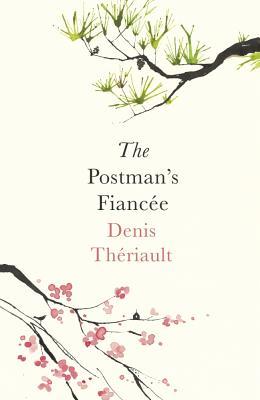
The Postman’s Fiancée – Denis Theriault (2016, trans. John Cullen 2017) 197 pages

(This post contains spoilers for The Peculiar Life of a Lonely Postman so don’t read on if you’ve any plans to read that novella.)

As Naomi pointed out, last year’s NADIM didn’t include a single Canadian author, so I’d planned on a few this year. But as my first post for NADIM 2019 explained, the best laid plans… Still, I have managed to include one, and here it is 😊

I really liked The Peculiar Life of a Lonely Postman when I read it a few years back. This sequel is told from the point of view of Tania, the waitress who loves Bilodo (the title character of the first book) and picks up the story shortly before Bilodo’s accident, carrying the tale on further.

As readers of the first book will know, Bilodo’s quiet, gentle existence appeals to Tania as she brings him his lunch each day:

“Tania could happily imagine him leading a monastic existence dedicated to calligraphy, saving himself physically and spiritually for the fortunate pilgrimess who would know how to find a pathway to his soul – a role for which Tania considered herself eminently qualified.”

Unfortunately Bilodo has no idea of her feelings until a cruel practical joke. Before they can talk it through, Bilodo is hit by a truck. This is where the first novella ends. In this sequel, he is given CPR by Tania and ultimately survives, but with no memory of recent years. Tania convinces him they were a couple, and engaged to be married.

“For that was the way she saw the matter: a case of confusion on the part of Destiny. In Tania’s eyes, she and Bilodo had been fated to meet and fall in love, and their botched romantic union stemmed from a karmic dysfunction which she felt it her legitimate right to remedy.”

And this is where my problems with this sequel begin. I wasn’t happy that the weird, metaphysical ending of The Peculiar Life of a Lonely Postman seemed to be undermined and explained away, but Theriault does rescue this by the end of The Postman’s Fiancee, so I can let that go…

My main reservation was with what Tania is doing. In The Peculiar Life of a Lonely Postman Bilodo isn’t behaving well: he’s steaming open people’s private letters and reading them before he delivers their post. Not great, but within that novella it’s sort of OK. But Tania is manipulating and deceiving someone she professes to love, while they have amnesia. There’s really nothing that makes that OK. While I don’t mind reading about people not behaving well, here it made me uncomfortable because I think we’re supposed to be rooting for Tania and for her and Bilodo to get together. And while Theriault is a highly accomplished and subtle writer, I couldn’t quite embrace the circumstances in this story.

Tania isn’t despicable so she does have reservations about what she’s doing:

“Wasn’t she wrong to interfere with his mind that way, and by doing so wasn’t she committing some kind of mental rape?”

But she finds herself unable to stop. What readers of the first novella know, and what Tania comes to realise, is that Bilodo’s life was a bit more complicated than the monastic existence she’d imagined for him. As the circumstances of Bilodo’s life start to catch up with them, how much longer will Tania be able to sustain the fiction of the life she desperately wants? And will Bilodo ever regain his memory?

The Postman’s Fiancee is about loneliness and the fantasies we project for ourselves and on to others. It’s about recognising people for who they are and all their complications, rather than who we wish they were. It’s well written, nicely paced and with excellent characterisation and so I do still recommend this both as a sequel and as a stand-alone novella, but the actions of poor despairing Tania did limit my enjoyment of it somewhat.

Novella a Day in May 2019 #12

Two More Pints – Roddy Doyle (2014, 115 pages)

Last year as part of NADIM I looked at Two Pints by Roddy Doyle, so I thought this year I’d look the sequel. Like its predecessor, it is written entirely as dialogue between two friends meeting for the titular drinks, and set on specific dates, this time between September 2012 and June 2014. Once again, a warning for swearing – well, it is Roddy Doyle after all 😀

The issues in this period, lest we forget, include the financial crisis, horsemeat in burgers, elections of the new Pope and the deaths of various celebrities. All this occurs alongside family events and disagreements over football.

 – Fiscal cliff.

– He’s shite.

– Wha?!

– He’s just copying the other fella.

– Wha’ the fuck are yeh talkin’ about?

– The rapper.

– Wha’ rapper?

– Fiscal Cliff.

The humour doesn’t detract from the realities though.

– My young one is in trouble. An’ her fella.

– Ah, no.

– The mortgage, yeh know.

– They can’t handle it?

– They’re fucked, God love them. They’ve been into the bank an’ tha’, to try an’ sort somethin’. But –

– No joy?

– It’s fuckin’ madness.

I was disappointed not to hear more about Damien, the grandson from Two Pints who was fracking in the back garden with a magimix, but I think at such a turbulent time, Doyle chose to focus very much on current affairs. The dialogue still felt entirely authentic though, and never heavy-handed.

The conversation is wide-ranging, and even poetry gets a mention, despite the short shrift it was given in Two Pints:

– See Seamus Heaney died.

– Saw tha’. Sad.

– Did yeh ever meet him?

– Don’t be fuckin’ thick. Where would I have met Seamus Heaney?

– That’s the thing, but. He looked like someone yeh’d know.

– I know wha’ yeh mean – the eyebrows an’ tha’.

– He always looked like he liked laughin’.

– One o’ the lads.

– Except for the fuckin’ poetry.

– Wha’ would possess a man like tha’ to throw his life away on poetry?

– Although fair enough – he won the Nobel Prize for it.

– He’d probably have won it annyway.

– For wha’ – for fuck sake.

– I don’t know. Football, plumbin’ – annythin’. Tha’ was what was special about him.

Another affectionate portrait of the people of Dublin, and Ireland at a particular moment in time.

Colette Week: Day 7 – The Last of Cheri (1926)

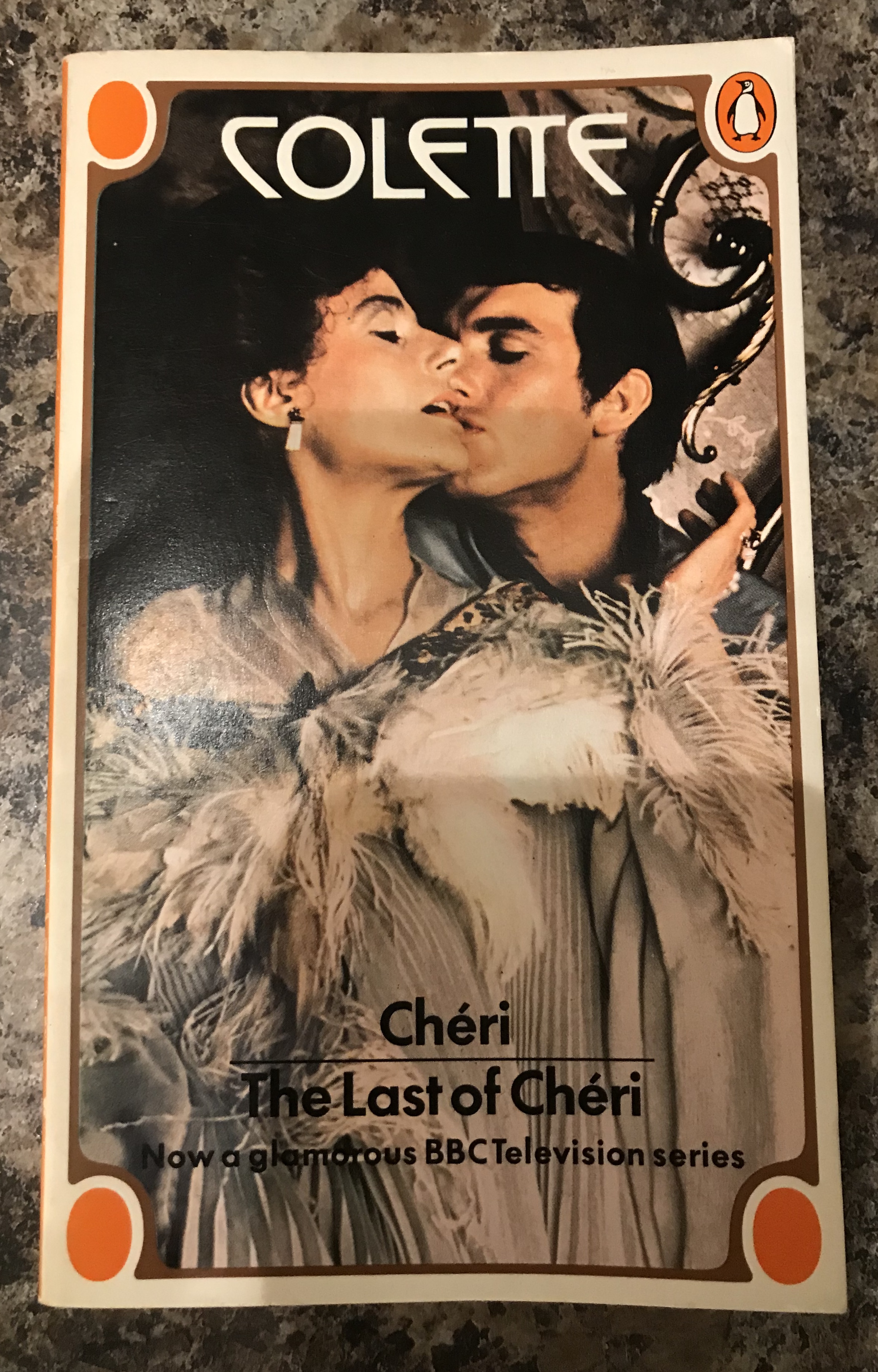
I thought it would be apt to finish Colette Week with a novel concerned with endings: The Last of Cheri (La Fin de Cheri). Here’s a reminder of my decidedly kitsch edition because it’s just so bad:

Thankfully I’m not quite so shallow as to let a hideous cover affect my enjoyment of Colette’s glorious writing (almost shallow enough, but not quite). The Last of Cheri is set 6 years later than Cheri, just after the end of World War I. He is no longer quite the callow youth he was: his affair with Lea and his experience of fighting in the trenches have left him cynical and damaged.

“he had come to scorn the truth ever since the day when, years ago, it had suddenly fallen from his mouth like a belch, to spatter and wound one whom he had loved.”

But, as the French wisely say, plus ça change, plus c’est la même chose. Cheri is still directionless, still without anything to live for beyond himself. Meanwhile his mother and wife have found purpose in war. Edmee is a nurse and consumed by her work at the hospital and extra-marital affairs, which Cheri agrees to.

“Cheri pulled out the small flat key on the end of its thin gold chain. ‘Here we go. In for another carefully measured dose of love. …’”

Cheri’s old friend Desmond is here too, still reprehensible, but like the women in Cheri’s life, having found purpose, setting up a popular nightclub where people try and forget what they and France have been through:

“They danced at Desmond’s, night and day, as people dance after war: the men, young and old, free from the burden of thinking and being frightened — empty-minded, innocent; the women, given over to a pleasure far greater than any more definite sensual delight, to the company of men: that is to say, to physical contact with them, their smell, their tonic sweat, the certain proof of which tingled in every inch of their bodies — the certainty of being the prey of a man wholly alive and vital, and of succumbing in his arms to rhythms as personal, as intimate, as those of sleep.”

If Cheri was told primarily from Lea’s perspective, The Last of Cheri is from Cheri’s perspective and Colette captures this wonderfully. Given that Cheri is so lost and directionless, the novella never appears so. The writing is insightful without being heavy-handedly psychological, and although set in town, Colette’s feel for the natural world remains:

“He noticed that the rosy tints of the sky were wonderfully reflected in the rain-filled gutters and on the blue backs of the low- skimming swallows. And now, because the evening was fresh, and because all the impressions he was bringing away with him were slipping back perfidiously into the recesses of his mind – there to assume their final shape and intensity — he came to believe that he had forgotten all about them, and he felt happy.”

This feeling of happiness is brief though, and occurs after a distressing meeting with Lea, so the reader knows Cheri is deluding himself. Like everyone else, Lea has moved on and is in a very different place, happy and fulfilled.

Poor Cheri. He is utterly lost and ricochets around without any idea as to how to remedy his emptiness. The crisis of meaning of a rich, good-looking playboy could test the reader’s patience, but Colette’s writing meant I had real sympathy for him. His life from the start meant he didn’t stand much of a chance:

“His childhood as a bastard, his long adolescence as a ward, had taught him that his world, though people thought of it as reckless, was governed by a code almost as narrow-minded as middle-class prejudice. In it, Cheri had learned that love is a question of money, infidelity, betrayals, and cowardly resignation. But now he was well on the way to forgetting the rules he had been taught, and to be repelled by acts of silent condescension.”

So, that’s the end of Colette week on the blog. I’ve really enjoyed submerging myself in her writing this week and I hope I’ve managed to convey just a tiny bit of how good she is. She has a deep understanding of people and a wonderful sympathy with the natural world. I find her evocative and capable of great artistry but with a real lightness of touch. Plus she wrote a lot of novellas, which always gets my vote 😊 She was a prolific writer so there’s plenty more to explore, which I’m really looking forward to.

Image from here

Colette Week: Day 4 – Claudine and Annie (1903)

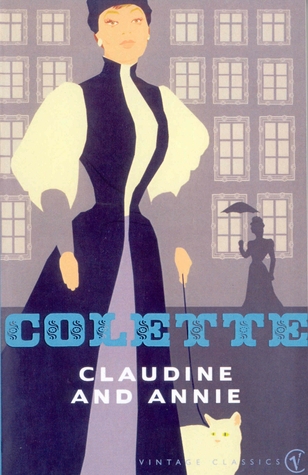
In Claudine and Annie, original title Claudine s’en va (trans. Antonia White 1962), we hear someone else’s impression of the free-spirited heroine, as the novel is told from the point of view of Annie, a very different woman to Claudine.

“I don’t know anything…except how to obey. He has taught me that and I achieve obedience as the sole task of my existence…assiduously…joyfully.”

He is her husband, Alain, who she has loved since childhood and has left her for many months in order to travel to Brazil and claim a legacy. We never meet Alain but he seems fairly repulsive, including saying that she shouldn’t take his rare compliments to heart, as:

“It is my own work I’m admiring; a lovable child, fashioned little by little into and without great difficulty into an irreproachable young woman and an accomplished housewife.”

He is controlling and has left her a list of instructions, including:

“Only one call on Renaud and Claudine, too fantastically unconventional a couple”

Thankfully, for those of us who are so fond of Claudine from the previous novels, Annie ends up disregarding this advice. She and Claudine get on well, spending time together as Claudine is part of Marthe’s, Annie’s sister-in-law, social circle.

“I was animated by an indiscreet curiosity, as if, by questioning Claudine, I was about to discover the secret, the ‘recipe’ of her lucky disposition that detached her from everything, and made her indifferent to gossip, petty quarrels, even to conventions.”

Claudine is attracted to Annie, but she and Renaud have an agreement to just have two people in their marriage since the Rezi drama, so nothing romantic occurs. From Annie we learn they are a devoted and very happy couple. Annie’s marriage, by contrast, is crumbling:

“Shattered, I searched obstinately for one memory in our past as a young married couple that could give me back the husband I believed I had. Nothing, I could find nothing – only my whipped child’s submissiveness, only his cold condescending smile.”

Marthe and her social set are not a happy bunch (apart from Renaud and Claudine). There are infidelities, relentless bitching, worries about money… and yet Annie has her eyes opened to the nature of her relationship with Alain and she cannot turn back.  Realistically, Annie is not ecstatic at her new life; she only knows it must happen.

“In those days which seem strangely far away I was more meek than terrified and almost happy in a timid, colourless way. Is my lot any better today, wandering hither and thither, demoralised yet more self-willed? It’s a very arduous problem for such a tired brain.”

Although I missed Claudine in this novella as the focus is very much on Annie, I still enjoyed this greatly. It was entertaining to see a character we know so well from a first-person point of view depicted through the eyes of Annie. I thought the voice of Annie was distinct from Claudine and of course I was rooting for her to leave Alain.

The story is fairly slight, but at just over 100 pages it is well-paced and suits its novella length. The final sentence was pitch perfect and such a satisfying ending to Annie’s story despite – or perhaps because of – many  unanswered questions.

And so I bid farewell to Claudine and I’m so sorry to see her go. Tomorrow, a stand-alone novella – is it any wonder I love Colette so much when her novels are so blissfully short? 🙂

Colette Week: Day 3 – Claudine Married (1902)

*This post contains spoilers for Claudine in Paris and Claudine Married*

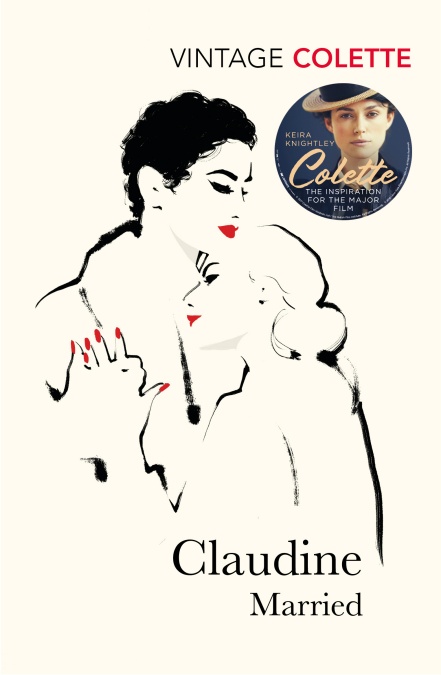
Claudine Married, original title Claudine en menage (trans. Antonia White 1960), continues the story of Claudine after she and Renaud return from honeymoon. It begins:

“Definitely, there is something wrong with our married life. Renaud knows nothing about it yet; how should he know?”

Claudine is finding it hard to adapt to married life, much as she loves her husband. It’s hardly surprising, given that she is young and inexperienced – though not naïve – and has married a man twice her age. She is growing up, and I found her more likable in this novel than the previous two, as she acknowledges her cruelty and disregard for others’ feelings in the past, particularly poor Luce. But she still has her childlike moments:

“Without listening to him, I suddenly put the ruby in my mouth, ‘because it ought to melt and taste like a raspberry fruit drop’! Renaud, baffled by this new way of appreciating precious stones, bought me sweets the following day. Honestly, they gave me as much pleasure as the jewel.”

The start of the novel has some particularly unsavoury scenes to my twenty-first century sensibilities, when Claudine and Renaud return to her old school and sexually tease/demand kisses from the young adolescents there. It was really unpleasant, but thankfully soon over, and Renaud’s voyeuristic enjoyment of Claudine’s lesbian encounters sets the scene for later in the novel.

Claudine has to learn to adapt to a shared life, and she struggles with this. Renaud is not quite what she hoped he would be:

“I hoped so ardently that Renaud’s will would curb mine, that his tenacity would eventually overcome my fits of rebellion; in short, that his character would match the expression of his eyes, accustomed to command and fascinate. Renaud’s will, Renaud’s tenacity! He is suppler than a flame, just as burning, just as flickering; he envelopes me without dominating me, Alas! Are you to remain your own mistress forever, Claudine?”

They are also temperamentally incompatible: Renaud is urbane and sociable and enjoys travelling while Claudine likes being at home in the country.

“There is nothing nomadic about me, except my mind.”

They enjoy their sex life, but even at these moments of closeness there are distances to be traversed:

 “To him [sexual] pleasure is something gay and lenient and facile, whereas it shatters me and plunges me into a mysterious despair that I seek and also fear.”

Colette is candid about sex in Claudine Married. It is not portrayed explicitly but it is dealt with directly. This includes when Claudine meets the charming Rezi:

 “All her movements, the turn of her hips, the arching of her neck, the quick raising of her arm to her hair, the sway of her seated body, all described curves so nearly circular that I could see the design of interlacing rings, like the perfect spiral of seashells, that her gentle movements left traced on the air.”

They begin an affair, fully endorsed by Renaud, who provides somewhere for them to go. This is partly because he is titillated by it, and partly because his view of sex is phallocentric and so he does not take same-sex attraction between women seriously (while he is homophobic towards his gay son):

“You women can do anything. It’s charming and of no consequence whatever…”

The change from menage to menage a trois with the shallow Rezi has disaster written all over it, and Claudine knows it:

“I know that common sense, because it is my own particular brand; it allows me, precisely one minute before fatal blunders, to enjoy the lucid pleasure of telling myself: ‘This is a fatal blunder.’”

When the inevitable blow comes, Claudine returns to her beloved Montigny and Colette’s beautiful depictions of nature are once more to the fore:

“I had been able to bathe my bear hands and trembling legs in thick, deep grass, sprawl my tired limbs on the dry velvet of moss and pine-needles, rest without a thought in my head, baked by the fierce, mounting sun…I was penetrated with sunlight, rustling with breezes, echoing with crickets and birdsong, like a room open on a garden”

Claudine Married is a witty novel about the ways we blunder about in our close relationships. Claudine loves Renaud but is bored in their marriage; she admits she doesn’t love Rezi but is in sexual thrall to her. How it all plays out is believable and sad, without being tragic or overblown. The ending wasn’t to my taste but is probably more in keeping with the early-twentieth century time of writing.

The novella also has plenty to say about gender roles and how male and female sexuality is treated differently by society, but does so lightly and I really enjoyed this aspect of the novel which seemed remarkably forward-thinking.

Colette is such a beautiful writer and Claudine’s voice was as distinct as ever. I’ll be sorry to leave her behind after Claudine and Annie, of which more tomorrow 😊