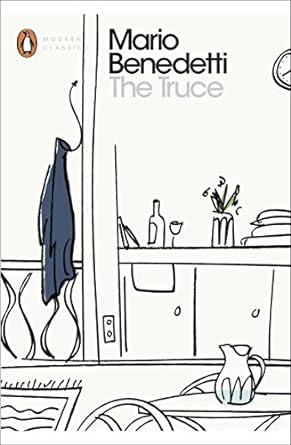
Continuing my endeavour to try and get some momentum back in my Around the World in 80 Books reading challenge, today I’m off to Uruguay, with Mario Benedetti’s The Truce: The Diary of Martín Santomé (1960, transl. Harry Morales 2015) which I was alerted to by Fiction Fan’s glowing review at the start of the year.
As the title suggests, the novella is in diary form, as Martín records his days in the run-up to his retirement, reflecting on how to live out his days. He is a quiet man in an administrative job; things are predictable.
“Today was a happy day; just routine.”
He is a widow of twenty years, and although he still has an eye for women (particularly their legs) he hasn’t had another relationship:
“The entire machinery of my emotions came to a halt twenty years ago when Isabel died. First there was pain, then indifference, then, much later, freedom, and then, finally, tedium. Long, lonely, constant tedium.”
His children Esteban, Jaime and Blanca are essentially unknown to him:
“At least Blanca and I have something in common: she, too, is a sad person with a calling for happiness.”
But although Martín is recording a lot of sadness, it’s not overly depressing. He has an acceptance of his life, and he makes quietly humorous observations, such as an old acquaintance learning of Isabel’s death:
“There is a sort of automatic reflex which makes one talk about death and then immediately look at one’s watch.”
Or his grief when his mother died:
“Only a fervent hatred of God, relatives and fellow man sustained me during that period.”
But things are about to change for Martín in ways he didn’t expect, when he falls in love with Laura Avellaneda, a work colleague half his age. While this would naturally raise questions about power dynamics and appropriateness, I felt it worked in The Truce, as Martín has been established as a gentle man, uninterested in wielding any sort of power or manipulation, and he is very respectful of Laura:
“I’m not going to demand anything. If you, now or tomorrow or whenever, tell me to stop, we won’t discuss the matter anymore and we’ll remain friends.”
In this short novel Benedetti perfectly evokes the gentle, slowly evolving love of Martín and Laura, and of Martín’s grief and acceptance of all he has lost in life alongside all that he still has. It suggests hope is still a realistic thing to hold onto, at any time.
The Truce isn’t sentimental, and although it depicts a romance it’s not rose-tinted. There is one point in particular where Martín behaves badly. He is not a perfect human-being and he causes hurt as well as joy to people.
But it is an empathetic tale, warmly clear-sighted towards ordinary people and all the foibles, weaknesses and strengths that we all carry.
The Truce is realistic, in a way that suggests even the most painful experiences can still be worthwhile. It explores how to not let pain overwhelm, and the importance of compassion for others and for the self:
“They suffer from the most horrible variant of solitude: the solitude of someone who doesn’t even have himself.“
This was my first experience of Benedetti and I’d be interested to read more by him. Apparently he wrote over ninety books so there’s plenty for me to choose from!
La Bastarda – Trifonia Melibea Obono(2016 trans. Lawrence Schimel 2018) 88 pages
My Around the World in 80 Books reading challenge is getting more difficult – but definitely possible – the closer I get to finishing, because I decided I’d only count books written by a person from that country, rather than just set there. This means I’m dependent on what is available in translation. So I was excited to come across La Bastarda, written by an author from Equatorial Guinea, and grateful to The Feminist Press for publishing it.
I didn’t realise until I’d finished it and googled further, that it’s a famous novella, banned in Equatorial Guinea and with its own Wikipedia page. It’s a wonderful read, so evocative and with a clear and compelling narrative voice. (The English translation also has a really interesting afterword by the historian Abosede George.)
The story is told by Okomo, who lives with her grandparents in a village close to the border with Gabon. The family is polygamous which makes the home crowded and busy, but she is isolated due to the circumstances of her birth:
“My mother got pregnant when she was nineteen and died while giving birth, her death brought about by witchcraft. From that moment I was declared a bastarda – a bastard daughter. I had been born before my father paid dowry in exchange for my mother. That’s why society looked at me with contempt and people called me ‘the daughter of an unmarried Fang woman’ or ‘the daughter of no man’.”
As an older teenager she is beginning to question the life mapped out for her and what she wants. She is keen to locate her father but this is absolutely forbidden by her grandfather Osá who lectures her on the history of the Fang people and her responsibilities:
“[My grandmother] told me to ask Osá if there were any women in our tribe since he had failed to mention any in his collection of heroes, but I didn’t obey.”
Okomo isn’t interested in her appearance or in marrying a man, running a home and having children, all of which are expected of her. She knows she may have an ally in her mother’s brother, the only person who has ever shown her any affection. But he is somewhat ostracised too:
“Uncle Marcelo was an isolated man who lived outside of society because he was a fam e mina or a ‘man-woman’ the men of the tribe accused him of this both in public and in private.”
While Okomo is trying to work all this out, she is drawn into the sphere of three older girls, and discovers her sexuality. She falls in love with Dina, who reciprocates her feelings. But in a small village, where same-sex relationships are taboo, theirs is a love with great risk attached to it.
La Bastarda is a tense narrative where the dangers for the girls and for Marcelo are made very clear. But it is also a story of first love, coming of age, self-discovery and the nurturing of chosen families. It addresses huge issues in such a short space without ever losing sight of the individual characters. A finely balanced story of defiance and resilience.
This my second contribution- just in time!- to the wonderful ReadIndies event which has been running all month, hosted by Karen and Lizzy.
Initially I planned for this post to be two novellas published by Fitzcarraldo Editions, in honour of the event’s origins as Fitzcarraldo Fortnight. However, the second novella I read was so unrelentingly brutal and grubby – though expertly written and translated – that ultimately I couldn’t recommend it that much. So instead this post covers the initial Fitzcarraldo novella which I loved, and the independently published novel I read after the second novella in order to recover!
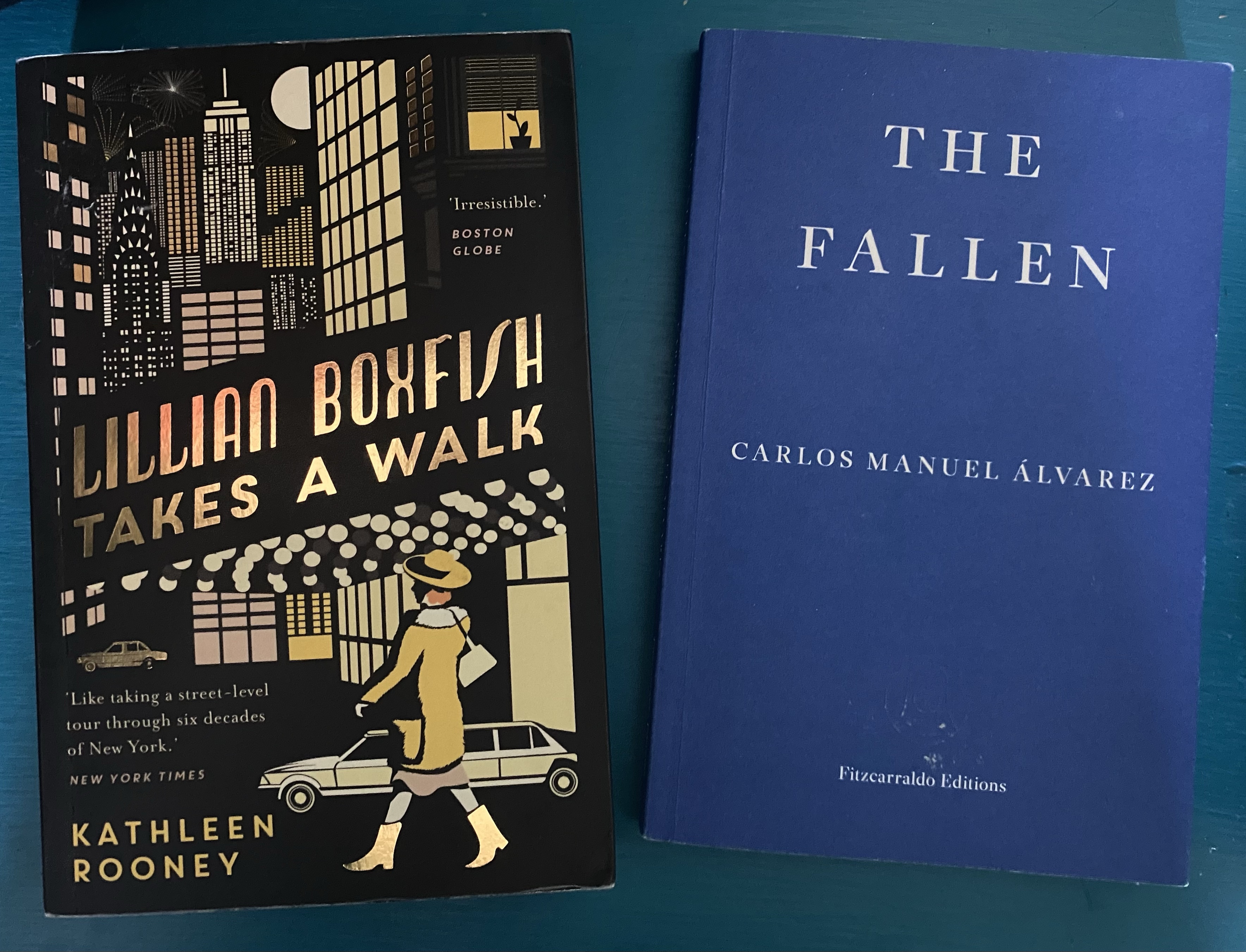
Firstly, The Fallen by Carlos Manuel Álvarez (2018 trans. Frank Wynne 2019) which forms a stop on my Around the Word in 80 Books challenge as it’s set in Cuba. The story follows one family over a short period, each member narrating a chapter at a time.
The mother, Mariana, is experiencing black-outs and fits, attributed to the treatment she had for womb cancer. Her husband Armando is a manager in a state-owned tourist hotel, committed to the communist ideals of the past even as the world moves on around him. His daughter María works with him and helps care for Mariana:
“I didn’t want to contradict her, I simply stood and watched. Just then, she hunched over and the strangest thing happened. Her face drained away, seemed to contract, like when you clench a fist, as though everything was drawing back around her nose. Her eyes fell, her forehead and mouth shrivelled and her cheeks began to wither. Then she burst into tears and collapsed.”
Meanwhile her brother Diego is completing his military service, devoid of any commitment to the cause:
“Armando, indefatigable, continued inoculating me with his positive energy, his moral code, his inexhaustible optimism, injecting me with a radioactive material that, on contact with the real world, simply exploded like acid in a burst battery and was transformed into frustration. I’m eighteen years old but I feel like an old man.”
All the characters are flawed in their different ways but all are recognisably human and sympathetic. I felt most for poor Armando, surrounded by corruption that nobody cared about but him:
“The truth is, they were firing him because he refused to accept others stealing, but since they couldn’t tell him that, they told him they were dismissing him for stealing,”
The contrast between Armando and his children effectively demonstrates the tension between the ideals of the past and the reality of the present. However, this is never done at the expense of characterisation the individual relationships. The tension within a family, vulnerable to disintegration as the health of its matriarch deteriorates, felt very real.
The polyphonic style builds up a picture of a loving family with all it’s frustrations, secrets and things left unsaid. It also demonstrates the differing responses of people to the same situation as we hear the same events given a different meaning by the various characters. This wasn’t at all frustrating as Álvarez managed to sustain an engaging and coherent narrative.
I really loved this novella. I thought the language was beautiful without obscuring the difficulties it was exploring for the family, and the device of using one family to explore wider Cuban society and history didn’t feel at all clunky or contrived.
“The acrid smell that tickled my grandfather’s nostrils still lingers. This is a pueblo fecund with the dry bittersweet dust of horseshit and with the sea a few kilometres away, even if we turn our back on it. The last street in the pueblo, the street that leads to the train station, the street where my grandfather settled, where my father started out in life, where later I started out, is broad but deserted, with much light on the asphalt, with light that trickles down the gutters and lighting the potholes, as though light were contained in a glass and the glass had tipped over. No one comes here.”
Secondly, the delightfully titled Lillian Boxfish Takes a Walk by Kathleen Rooney (2017) published by Daunt Books. This was a lovely escapist read – just the ticket after the second traumatic novella.
It’s New Year’s Eve in 1984, and the titular heroine is one year older than the century (although no-one knows this as she routinely lies about her age). Having moved to New York City when she started out on her career, she dons her fur coat (yuck) and her flame orange lipstick, to take a circuitous route around the city she loves – just about:
“The city I inhabit now is not the city that I moved to in 1926; It has become a mean-spirited action movie complete with repulsive plot twists and preposterous dialogue.
[…]
I love it here, this big rotten apple. I’m near my old haunts, my Sycamore trees, my trusty RH Macy’s.”
Lillian became an advertising copywriter for the famous store, the highest-paid woman in the industry in the 1930s, pioneering her own particular style:
“Nobody was funnier than I was, not for a long time, not for years. Mine was a voice that no one had heard speaking in advertisement before, and I got them to listen. To listen and then, more importantly, to act on what they’d heard.”
Lillian is based on the real person of Margaret Fishback, and the novel was written with the cooperation of Margaret’s family, with Lillian’s quoted copy actually belonging to Margaret.
Certainly Lillian’s memories of her life in New York seem authentic as she navigates a sexist working world unused to professional women. This may sound reminiscent of Mad Men, but I would say it’s not nearly as dark. It’s not totally light either – we learn Lillian had some very difficult times – but Lillian is resilient and peppy, and her voice rings out.
Like Mad Men though, Lillian Boxfish… brilliantly evokes a time and a place. You gain a wonderful sense of New York in the early decades of the twentieth century, with it’s rapid, optimistic growth, ever skywards.
“It was freshly built when Helen and I moved in, completed in 1926. The street noise then was different than now – everything was being constructed, going up, up, up. Progress is loud: riveters riveting, radios blaring.”
We hear about Lillian’s friends, her marriage to the dashing Max (contrary to all her plans) and raising her son Gian. But most of all we hear about Lillian’s relationship with herself, and it is one that has not always been easy:
“But there was no way to know, and no way to go back. I could not revise. I had been who I had been, and so I largely remained.”
Still, Lillian remains undaunted and in her ninth decade she remains interested in people. She encounters a few on her night-time perambulation, seemingly enjoying chatting about the mundane as much as she does the more dramatic encounters. Her career long behind her, she retains her pithy turn of phrase:
“Salt and pepper hair shellacked into an oceanic sweep above his leonine face. Like so many public television people, he was a former radio guide, with a voice made for broadcasting: even his name sounded like an avuncular chuckle.”
I really enjoyed my time with Lillian. Her voice was distinct, unique and entertaining. She described the love of her life – New York City – with clearsighted affection. A formidable woman, and a likable one.
“I am not going to stay off the street. Not when the street is the only thing that still consistently interests me, aside from maybe my son and my cat. The only place that feels vibrant and lively. Where things collide. Where the future comes from.”
To end, Lillian is haunted by a song she keeps hearing on the streets, a rap that she enjoys. Finally, it is identified for her:
This is a contribution to the wonderful ReadIndies event running all month, hosted by Karen and Lizzy.
I’ve also taken the opportunity to visit two more places on my much-neglected Around the Word in 80 Books challenge, which is not so separate as it might first seem. Deciding to read a book written by a person from each place I visit (rather than set there but written by an author from elsewhere), means I’m dependent on English language translations being available. Based on absolutely no evidence except my impression, it seems to me that independent presses are more willing to look far and wide for their lists.
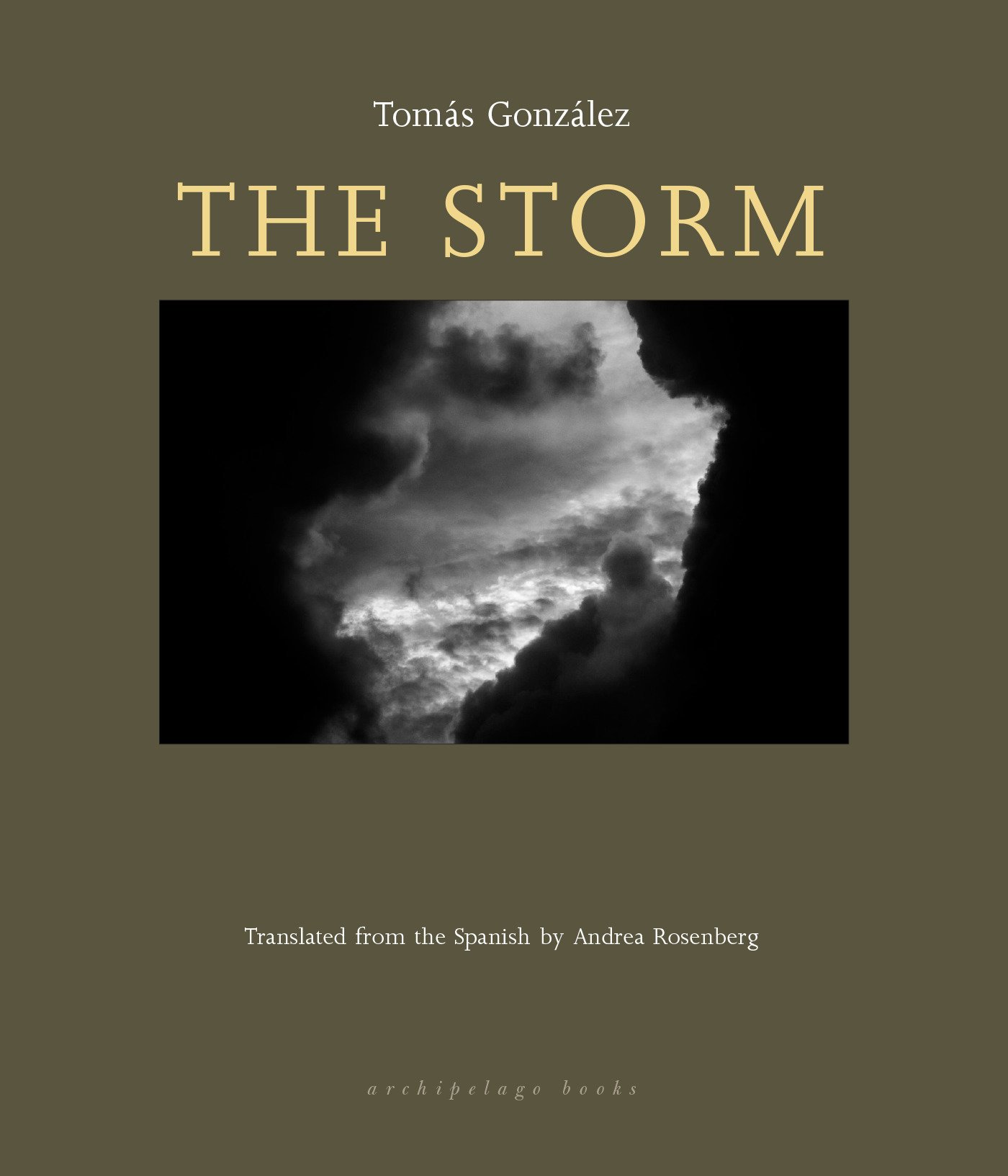
This is certainly the case for Archipelago Books, who publish my first choice of The Storm by Tomás González (2014, trans. Andrea Rosenberg 2018). They are a “not-for-profit press devoted to publishing excellent translations of classic and contemporary world literature.”
The Storm follows a family of hoteliers/fishermen as they set out for their usual catch, despite the impending titular weather. Set in a Columbian costal village, we also hear from the residents and tourists who are there the same night.
Mario and Javier are twins who despise their abusive father but are tied to him through where they live and how they earn their money. The novel opens with them loading their boat at the father’s insistence that they go out, despite the storm.
“To someone looking in from the outside, who couldn’t see the orange glow of hatred in the son’s belly nor the greenish flame of contempt in the father’s, time would seem to keep flowing the way it always had.”
The novella follows the three men out at sea and cuts back at various times to people in the village. The many voices didn’t feel clearly distinguished to me, but that may have been a deliberate choice as they form an effective Greek chorus. This includes the twins’ mother Doña Nora’s hallucinations. She is extremely unwell and the twins are loyal to her, blaming their hated father.
“Look, look at that sunset! he thought then, as if the orange on the horizon were presenting the conclusive argument against his brother’s darkness, his own darkness, and even the cruel and involuntary darkness of the madwoman back onshore.”
The Storm is determinedly unidealistic about family and coastal Caribbean tourist destinations – no pristine powdery white sand here – but it’s not depressing either. There is a humour and resilience, and even some compassionate moments between Doña Nora and the other permanent residents.
González expertly builds the tension in the novella, the family relationships reflecting the increased pressure and movement towards breaking point which occurs with a storm.
“Out at sea, the storm’s display intensified. Nobody really felt like talking, especially not about landscapes, so they didn’t say much, but now and then one of them would turn his head to look at it.”
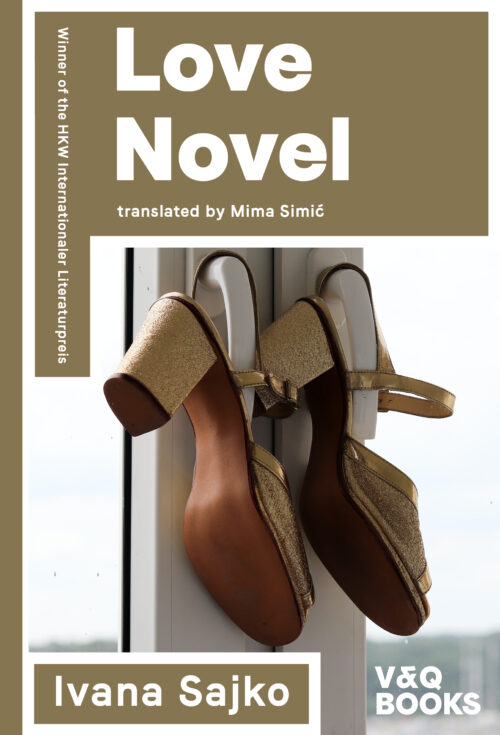
Secondly, Love Novel by Ivana Sajko (2015 trans. Mima Simić 2022) which like The Storm is about the destructive force of family. They also have in common that both books are lovely paperbacks with French flaps and both have the translators names on the covers – hooray!
Love Novel is published by V&Q Books and it was very kindly sent to me by ReadIndies host Kaggsy, so this seemed the perfect time to read it! V&Q Books is the English-language imprint of Voland & Quist, a German independent publisher.
The title is ironic, as the relationship between the young couple, parents to a small child, (all unnamed) is filled with barely supressed violence and hatred. They are both struggling to stay afloat in the circumstances they find themselves. She was an actor but has stopped working to care for their child; he is an unemployed scholar of Dante, living in his own circle of hell as the (unnamed) country they are in deteriorates further.
The novel begins in media res as we are thrown into a screaming fight between the two:
“reacting like a typical female, typical by his standards, meaning excessive, hysterical and self-destructive, since she’d deliberately pulled her hair out, deliberately curled up in the pose of a crushed alarm clock and forced tears to her eyes as if to take revenge on him with his classic scene of domestic violence.”
Sajko expertly balances the domestic detail alongside more surreal images that never detract from the desperate, oppressive circumstances she is depicting:
“Words comparable to quicksand. Crumbling between their teeth, getting crushed into slimy sand, slipping from their lips like muddy bubbles with no meaningful content. Dripping down their chins. They should both look in the mirror and commit the image to memory. To make them sick of it. But they won’t. They’d rather keep the mud gurgling until they run out of oxygen…”
The writing is also very even-handed between the two protagonists. There is no sense of taking sides as they are both shown as trapped and powerless, flailing against forces beyond them. She is constantly indoors:
“Women walk a mile between walls, lose a whole night over some bullshit, put superhuman effort into it, and then, instead of breaking down, surrendering and finally resting, they stay bolt upright, as if they’d swallowed a broom or simply turned to stone. They even manage to wear clean clothes.”
While he concerns himself with wider economic and political circumstances, without agency:
“All the days he slobbered away on the couch watching live parliamentary sessions and listening to them tell him from the podium that it’s time to tighten his belt, or take out a loan, at the top up kind, for bread, milk and phone bills, because everything that could be looted has been looted and everything that could be sold has been sold, and all the money is now gone until someone lends him some; and so they warned him to be careful with that, too, because other people’s money is easily spent and hard to pay back”
The style Sajko uses, with those long running sentences, works extremely well in depicting an unravelling situation, full of uncontrolled reactions and little reflection. (Paradoxically, I suspect to use this style well requires a lot of control and reflection!)
What I especially liked about Love Novel is that it demonstrates how love doesn’t occur in a vacuum. Sajko takes an ordinary couple in ordinary circumstances, and shows how unlikely enduring love is, if human beings are not allowed to thrive. If the economic and political situation of your country is entirely stacked against you, trying to cling onto your humanity and express love for another can seem an act of resistance, one that not everyone will have the strength for.
“While they still believed that love saves, that love feeds, that love fixes what’s broken, that love offers tacit answers to the most difficult questions and that it is, thank God, free.”
“And it didn’t matter that they tightened their belts down to the size of a noose”
Love Novel is undoubtedly a tough read, but it is not resolutely depressing. There is resilience there, and some hope, however qualified.
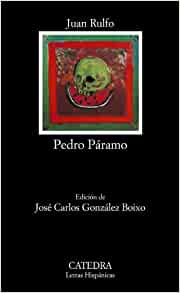
Pedro Páramo – Juan Rulfo (1987, trans. Margaret Sayers Peden 1993) 122 pages
I’m embarrassed to say I’d never heard of Pedro Páramo, as in the introduction to my edition Susan Sontag proclaims it “one of the masterpieces of twentieth century world literature”. Apparently it was huge influence on Gabriel García Márquez when he wrote 100 Years of Solitude. Eek, how have I not heard of it? I might have been intimidated had I known of its reputation, but as it was, I just picked it up because I thought it looked interesting and found all this out afterwards (I always read introductions at the end).
It opens with a man named Juan Preciado travelling towards an unknown town:
“I had come to Comala because I had been told that my father, a man named Pedro Páramo, lived there. It was my mother who told me. And I had promised her that after she died I would go see him.”
He meets a man who may be his brother, who tells him his father is both “living bile” and also dead, so he won’t be able to fulfil his mother’s wish to get what his father owes him.
Soon it becomes apparent that Pedro Páramo is not the only one who’s dead; Comala is a ghost town, filled with spirits of previous occupants. Juan can never be sure if anyone he meets is living or dead, and whether they are speaking of the present or the past.
As the various apparitions tell their stories the narrative moves back and forth across time and we learn of the events that led Comala to change from a thriving centre to a desolate no man’s land. Pedro is cruel and powerful, and that combination is devastating.
“the day you went away I knew I would never see you again. You were stained red by the late afternoon sun, by the dusk filling the sky with blood. You were smiling.”
I know a lot of people find magic realism off-putting, but I would urge you to give Pedro Páramo a try. The story of corruption and personal tragedy being acted out on the inhabitants of a town is grounded in a recognisable reality and the engaging story is easy to follow despite its complexity.
I know I’ve not said much about it here, but I really enjoyed discovering Comala alongside Juan so I don’t want to go into too much detail! The characters are intriguing and the story constantly surprising. Pedro Páramo is a richly detailed, mutli-layered novel that I’m sure will reward re-reading.
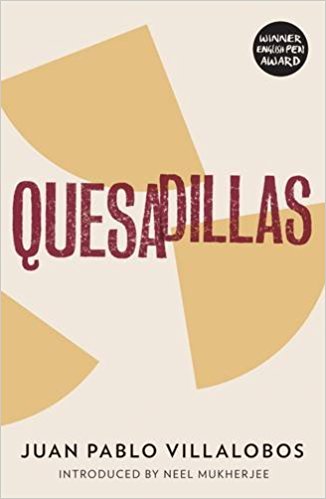
Quesadillas – Juan Pablo Villalobos (2012, trans. Rosalind Harvey 2013) 180 pages
Quesadillas is Juan Pablo Villalobos’ second novel, which I picked up having greatly enjoyed his first, Down the Rabbit Hole. Also, it’s published by AndOtherStories, who really are a wonderful publisher of contemporary, mainly translated, fiction. I highly recommend checking out their catalogue.
Back to Quesadillas. Like Down the Rabbit Hole, it is told from a child’s perspective, this time an older, more wordly child as Orestes (his father loves Greek mythology) is 13 years old. He lives with his five brothers, one sister and parents in a town where:
“there are more cows than people, more charro horsemen than horses, more priests than cows, and the people like to believe in the existence of ghosts, miracles, spaceships, saints and so forth.”
His mother insists the family is middle-class (unlikely as their home is “a shoe box with a lid made from a sheet of asbestos”) while his father swears profusely at the television:
“My father remained loyal to his healthy habit of insulting all politicians, applying a level of hostility in direct proportion to the devaluation of the peso.”
This is 1980s Mexico, where there is economic chaos and corrupt elections. Telling the tale from a 13-year-old’s point of view enables Villalobos to make astute political points about the impact of state mismanagement on the poor, without being overly didactic:
“ ‘we only have thirty-seven quesadillas and 800 grams of cheese left.’
We entered a phase of quesadilla rationing that led to the political radicalisation of every member of my family. We were all well aware of the roller coaster that was the national economy due to the fluctuating thickness of the quesadillas my mother served at home. We’d even invented categories – inflationary quesadillas, normal quesadillas, devaluation quesadillas and poor man’s quesadillas …. [in which] the presence of cheese was literary: you opened one and instead of adding melted cheese my mother had written the word ‘cheese’ on the surface of the tortilla”
Orestes’ twin brothers (no prizes for guessing they’re called Castor and Pollux) go missing and Oreo (as he’s known) sets off with older brother Aristotle to find them. Aristotle is convinced they’ve been abducted by aliens. After a fight, Oreo heads off alone and experiences life on the road. He manages to make money through peculiar means (there is a slight vein of magic realism running through the novella which explodes in all-out weirdness at the end) before returning home.
“What they were asking me to do was to start making up some lies that tallied with their idea of the world, damn it. But I hadn’t come home to tell the truth or learn to lie. I had come back because the class struggle had worn me out and I wanted to eat quesadillas for free.”
Quesadillas has a strong narrative voice in Oreo and it is funny, engaging and astute. The humour and surreal elements never obscure the portrayal of corruption or poverty. An entertaining and thought-provoking read.
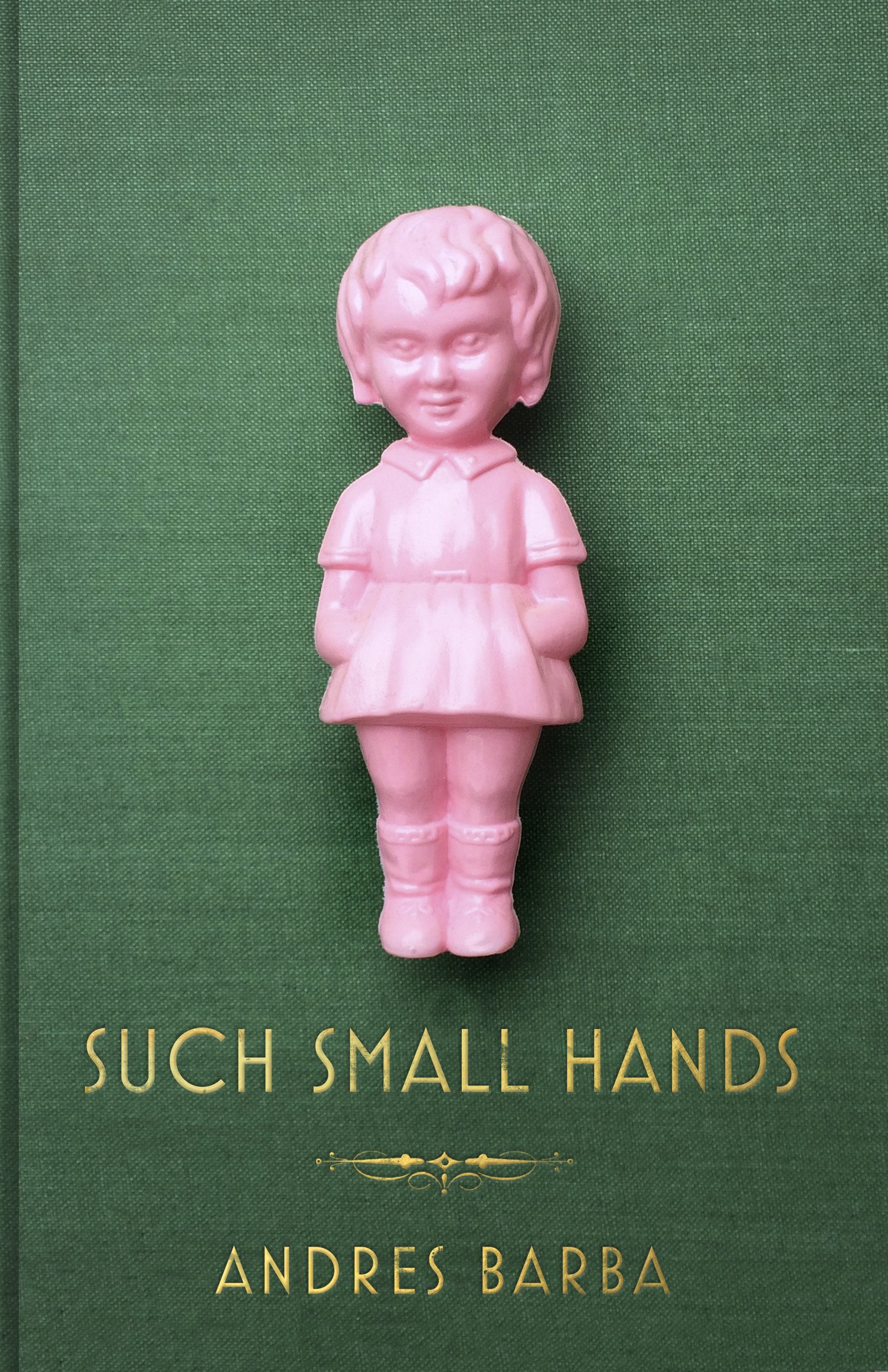
Such Small Hands – Andres Barba (trans. Lisa Dillman 2017) 101 pages
Well, this was super creepy. Institutionalised children *shudder*
Seven year old Marina is in a car accident.
“’Your father died instantly, your mother is in a coma.’ Lips pronounce them without stopping. Quick, dry words. They come in thousands of different, unpredictable ways, sometimes unbidden. Suddenly they just fall, as if onto a field. Marina’s learned to say them without sadness, like a name recited for strangers, like my name is Marina and I’m seven years old. ‘My father died instantly, my mother is in the hospital.’”
After her mother dies, Marina is sent to an orphanage, taking a doll given to her by the psychologist, which she has also called Marina. The other girls are both mesmerised and wary of Marina.
“Marina shrank and we grew. She stood alone, with her doll, by the statue of Saint Anne, watching us. Or was it the doll who was watching? We didn’t know who the doll really was. Because sometimes she looked like Marina, and she, too, seemed to have a hungry heart, and clenched fists close to her body, and she, too, was silent even when invited to join in; and she nodded her head back and forth, something we’d never seen a doll do before. And she seemed persecuted and excluded, too.”
Neither Marina or the girls understand the relationships they forge. There is fear and eroticism mixed in with tentative gestures towards friendship. Marina’s scar from the accident is a source of wonder.
“‘You can’t feel it?’
‘No. Well, only a little.’
Desire passed through the girl, too. Like stagnant water that suddenly begins to drain, imperceptibly.
And devotion mixed in with the desire.
‘Do you want to touch it?’
‘Yes.’
But the girl didn’t react right away.”
Barba gradually builds the tension and develops the girls’ games into something deeply disturbing and sinister, but wholly believable (there is an afterword which explains the real-life inspiration for the story). This tale will haunt me for a long time.
This week’s theme stems from a very boring reason. But I try to pick themes that relate to my life or what’s happening in the world in some way, and my life is very boring. In fact, the most remarkable thing about it is just how dull it is. So brace yourself reader, and try & stay awake while I tell you that I am a leasehold flat owner.
I’ve always hated this because my managing agents are inept slimebags truly reprehensible human beings, but I spent an evening last week consoling a friend who is a share-of-freeholder and is engaged in a long dispute with her one of her neighbours/fellow freehold sharers, which has now turned vaguely medieval and who she refers to by a most unsavoury nickname.
If you’re still with me, you deserve a little treat. Here’s a trailer for one of my favourite ever films which is rather apt:
So as I spent a long time thinking about flats recently, the theme is novels set in apartment blocks. Firstly, Paradises by Iosi Havilio (2012, trans. Beth Fowler 2013). Apparently this is a sequel to the author’s previous novel Open Door, which I haven’t read, but it didn’t seem to restrict my understanding of Paradises, which I found compelling. Following the death of her partner, an unnamed woman leaves her country home with her small child, Simon, and moves to Buenos Aires. She gets a job at the local zoo:
“Something about the gloomy light, the small of the enclosure, the watchfulness of the snakes in captivity produces a hole in my stomach, an anguish that forces me to increase my pace. I skirt the large tank of water turtles, ignore the lizards walk past the door saying nursery and go outside.”
The janitor, Canetti, takes a shine to her. He used to be a bank treasurer before losing his job through fraud and is filled with bitterness. He shows the woman the el Buti squat, presided over by the obese, immobile, morphine-addicted Tosca. She moves in:
“And yet despite the filth, the heat, those intestinal noises, and the smell of shit that rises in waves, at some point in the early hours Canetti’s words from the first time he brought me here come to mind: We’re safe here. I even babble them to myself to confirm it. And so I relax and rest a bit, although still without sleeping. On the third day I cover the windows with black bin bags to prolong the night.”
The voice of the young woman is matter-of-fact and she presents her extreme circumstances almost indifferently (Paradises has been compared to L’Etranger). This, combined with the present-tense, captured the numbness of grief and the sense of just getting through each moment. Yet according to the introduction by Alex Clark, the narrator’s passivity and weird equanimity was present in Open Door too, so maybe it’s just her character. Either way, I found her voice distinct and engaging. We follow her through her life as she juggles motherhood, work, relationships with idiodyncratic but wholly believable characters: seemingly spiky Iris who cares for Simon; the unpredictable Eloisa who seems to have no boundaries at all and drags the narrator along with her; the various residents of el Buti.
“each of us has to devise our truth in relation to the other”
The squat is surrounded by paradise trees, whose berries are poisonous and whose bark holds the cure. This duality is repeated throughout the novel: alienation sits alongside connection, love and grief are side by side. Paradises is an unsettling novel but at no point did I feel alienated from the unusual, detached woman telling the story. A remarkable achievement.
Let’s take a Vincent Cassel break (that’s definitely a thing, isn’t it?)
Secondly, A Far Cry from Kensington by Muriel Spark (1988) is set at “14 Church End Villas, South Kensington, that rooming house, shabby but clean, that today is a smart and expensive set of flats, gutted and restructured, far beyond the means of medical students, nurses, and the likes of us as we were.”
Narrated by the young widow Mrs Hawkins, she describes her time at the rooming house in the 1950s. She moves between jobs in publishing with little respect for her employers:
“Sir Alec was thin and grey and his voice matched his looks. It sounded like a wisp of smoke wafting from some burning leaves hidden by a clump of lavender.”
“I had a sense he was offering things abominable to me, like decaffeinated coffee or coitus interruptus”
Spark’s satire of publishing and writers is a joy, but A Far Cry From Kensington is also about capturing a moment in time when society is on the cusp of change. Relationships between the sexes are changing, and Mrs Hawkins pushes against societal expectations of women in the mid-20th century. She is resentful of being characterised as a capable widow (she feels this is partly due to her size and begins determinedly losing weight).
Meanwhile, there is tension in the house as someone is sending threatening anonymous letters to Wanda, a European seamstress who rooms there. The different residents begin to suspect each other while landlady Milly is certain it’s an outsider:
“Milly was upset at the suggestion that it was someone in the house, to the point of being almost mesmerized by the idea. She also feared further letters. ‘These things happen in threes’ said Milly in her way of uttering bits of folk-wisdom; she was spooning tea into the heated teapot. She always mixed tea with maxims.”
Mrs Hawkins is a great narrator: matter-of-fact, funny, uncompromising.
“I enjoy a puritanical and moralistic nature; it is my happy element to judge between right and wrong, regardless of what I might actually do.”
The plot around the victimisation of Wanda is frankly a bit bonkers and easily the weakest point in the novel, but despite a weak plot A Far Cry From Kensington is full of Spark’s wit and razor-sharp observation. Not a word in this short novel is wasted.
To end, a video putting the brutalist architecture of the Thamesmead flats to good use:
Starting with an obvious choice, Signs Preceding the End of the World by Yuri Herrera (2009, tr. Lisa Dillon 2015), published by the wonderful &Other Stories Press – I wrote about another of their Mexican novels here. Herrera looks at the illegal immigrant experience through Makina, seeking out her brother at the behest of her mother, and desperate to return home.
“You’re going to cross and you’re going to get your feet wet and you’re going to be up against real roughnecks; you’ll get desperate of course, but you’ll see wonders and in the end you’ll find your brother, and even if you’re sad, you’ll wind up where you need to be.”
Makina’s journey is both physical and mythical. As she travels through her homeland she has to ask men with pseudonyms for different types of help to get her across the border. The places she visits have similarly folkloric names: ‘The Place Where The Hills Meet’, ‘The Big Chilango’, ‘The Place Where People’s Hearts Are Eaten’ and across the border ‘The Place Where The Wind Cuts Like A Knife’. By not grounding Signs Preceding the End of the World in recognisable names and places, Herrera expands the simple journey to something much larger. Any tale of illegal immigration is going to have particular political resonances, but Herrera makes his heroine an Odysseus character and her trials a quest. While the tale is not surreal, there is a sense, as in myths and fables, that anything could happen:
“She looked into the mirrors: in front of her was her back: she looked behind but found only never-ending front, curving forward, as if inviting her to step through its thresholds. If she crossed them all, eventually, after many bends, she’d reach the right place; but it was a place she didn’t trust.”
Herrera is a writer who invents neologisms (definitely worth reading the interesting Translator’s Note for this novel) and so is fascinated by language. Through Makina’s journey he tracks the way that boundaries of countries, self and language are all permeable, and how this creates a modern, constantly shifting society:
“Makina senses in their tongue not a sudden absence but a shrewd metamorphosis, a self-defensive shift. They might be talking in perfect latin tongue and without warning begin to talk in perfect anglo tongue and keep it up like that, alternating between a thing that believes itself to be perfect and a thing that believes itself to be perfect, morphing back and forth between two beasts until out of carelessness or clear intent they suddenly stop switching tongues and start speaking that other one.”
Signs Preceding the End of the World is a fascinating, multi-layered novel, at once a story for our times but also engages with enduring, expansive themes. Hugely impressive.
And now I pause for thought to wonder if there are enough pictures of kittens in barrels to get me through a single news bulletin right now:
Secondly, Our Endless Numbered Days by Claire Fuller (2015) which I was alerted to last year by the many bloggers who loved this debut novel (written when the author was in her 40s – I must remember to tell my friend C who is coming to terms with the fact that she’s missed her window for those ‘30 Under 30’ type lists). I’m not going to buck the trend on this – I found it a compulsive read which I whizzed through to its gut-wrenching conclusion.
Peggy lives with her parents in the kind of north London middle-class bohemia that keeps Mini Boden in business. Peggy doesn’t wear Mini Boden though, as it’s 1976 and her mother is busy being a concert pianist while her father gets into arguments with his friends in the North London Retreaters group. This collection of (male) survivalists are convinced nuclear war is imminent. A personal crisis forces Peggy’s father to act on his rhetoric, and he takes her to Germany, to live entirely isolated in “Die Hutte”, in the middle of a forest. We know this fairytale has unravelled horribly from the opening line, told 9 years later by Peggy who is back in Highgate after a long absence:
“This morning, I found a black and white photograph of my father at the back of the bureau drawer. He didn’t look like a liar.”
The lie Peggy’s father told is astronomical: that the rest of the world has disappeared and they are the only two left living.
“ ‘We’re not going to live by somebody else’s rules of hours and minutes anymore,’ he said. ‘When to get up, when to go to church, when to go to work.’
I couldn’t remember my father ever going to church, or even to work.”
What follows is a narrative that moves back and forth between Peggy’s life in Die Hutte and that in 1985 Highgate with her mother and brother she never knew, Oskar. Fuller handles this extremely well, and I didn’t find the chopping back and forth disruptive or gimmicky. While not a thriller, Our Endless Numbered Days is definitely a page-turner, as Peggy’s comments drip-feed us information about what has gone on: there has been a fire, she has no hair, part of her ear is missing, her teeth are rotten, there is a man called Reuben involved in some way… and her father is no longer around.
The writing style is simple, and I found this a quick read, but the ideas are complex. Fuller is interested in the fantasies we tell ourselves and others in order to survive and the dangers inherent in not questioning these (insert heavy-handed political parallel here). She is interested in the price paid by powerless members of society when the powerful seek fulfilment by disregarding the needs of others (insert… well, you get the idea) and she is interested in the psychological fallout from childhood and our parents. I saw the twists a mile off, and sometimes Peggy’s voice wavered, but this may have been intentional and it really didn’t matter. Peggy’s complex fairytale was both extreme and subtle, quite a feat.
“Oskar rapped his knuckles on the thick white ice which had risen like a soufflé out of a bucket hanging on a nail beside the back door. I recognised it, it was the bucket my father and I had used…Oskar laughed and turned the handle twisting it hard; his mouth twisting too with the effort. The tap snapped off. And for the first time since I had come home I cried – for the music, for Reuben, but most of all for the waste of a bucket.”
To end, goodbye to a poet and musician whose work is bringing me some comfort – as always – in these troubled times:
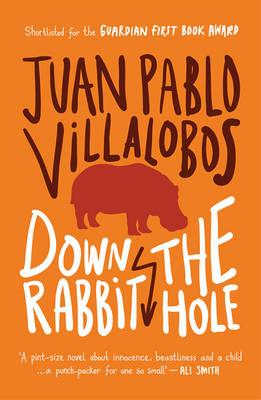
Firstly, Down the Rabbit Hole by Juan Pablo Villalobos (tr.Rosalind Harvey, 2011), which I picked up after reading Shoshi’s excellent review. It is published by And Other Stories, a not-for-private-profit company which concentrates mainly on translated fiction. That sentence makes me feel better about the world 🙂
Back to the novel: Tochtli (rabbit in Nahuatl, an indigenous language of Mexico), tells us about his love of samurai films, hats, learning new words, and his life as the young son of a drug baron, Yolcaut (rattlesnake).
“I think we have a very good gang. I have proof. Gangs are all about solidarity. So solidarity means that because I like hats, Yolcaut buys me hats, lots of hats, so many that I have a collection from all over the world and all periods of the world. Although now more than new hats what I want is Liberian pygmy hippopotamus. I’ve already written it down on the list of things I want and given it to Miztli. That’s how we always do it, because I don’t go out much, so Miztli buys me all the things I want on orders from Yolcaut.”
The isolation is a necessary part of his father’s business, whose paranoia is an occupational hazard that is no doubt keeping them all alive. The tragic effect that this is having on young Tochtli becomes increasingly apparent as the story progresses. Tochtli accepts his life, knowing no different, but to the adult reader he displays worrying signs of severe anxiety: wanting his head shaved because he doesn’t want ‘dead’ hair on him, compulsively wearing hats, constant severe stomach pains, and later, after he sees something his father tried to keep hidden, selective mutism. He also takes violence pretty much in his stride:
“One of the things I’ve learnt from Yolcaut is that sometimes people don’t turn into corpses with just one bullet. Sometimes they need three or even fourteen bullets. It all depends where you aim them. If you put two bullets in their brains they’ll die for sure. But you can put up to 1,000 bullets in their hair and nothing will happen, though it might be fun to watch.”
Although dealing with extremely serious subject matter, there is humour is the novel, such as Tochtli’s description of the preparation for a drug run to Liberia which he also goes on in order to get one of his beloved pygmy hippos:
“By the way, Franklin Gomez started being Franklin Gomez yesterday in the airport. That’s what his passport from the country of Honduras says: Franklin Gomez. There were problems because Franklin Gomez didn’t want to be Franklin Gomez. Until Winston Lopez convinced him.”
In such a short tale (70 pages in my edition)Villalobos effectively widens the narrative of drug trade away from the usual barons/dealers/ users paradigm to show how the fallout from the industry can reach far and wide, including devastating those too young to have a choice about their own involvement. It is a truly moving story, not about drugs (you can read an article by the author where he refutes the term narcoliteraturahere), but about children trying to cope with the messy, corrupt world adults create around them: sadly, pretty much a universal theme.
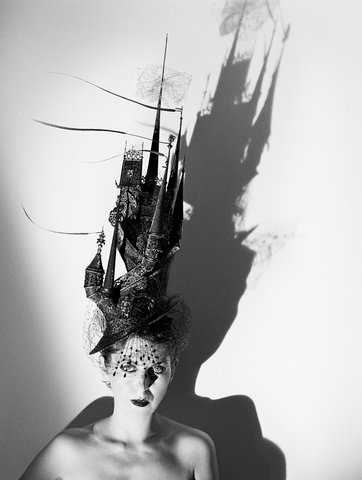
Fellow hat enthusiast, the late Isabella Blow, wearing Philip Treacy’s Castle hat
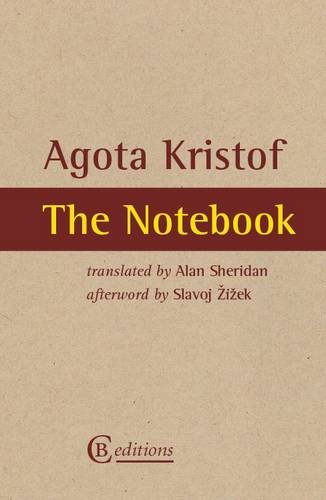
Secondly, The Notebook by Agota Kristof (1986, tr. Alan Sheridan, 1989) published by CB editions, a publishing house which focuses on short fiction, poetry and translations. Kristof was Hungarian but was exiled to French-speaking Switzerland in 1956, and wrote this, her first novel, in French.
Like Down the Rabbit Hole, The Notebook is told from a child’s point of view, in this instance twin boys – we never know their individual names and they always use the first-person plural – who are evacuated to live with their maternal grandmother in the countryside of an unnamed nation, but which is generally thought to be Hungary.
“We call her Grandmother. People call her the Witch. She calls us ‘sons of a bitch’…Grandmother never washes. She wipes her mouth with the corner of her shawl when she has finished eating and drinking. She doesn’t wear knickers. When she wants to urinate, she just stops wherever she happens to be, spreads her legs and pisses on the ground under her skirt.”
This woman shows them no love or affection (although as the novel progresses we learn to recognise the small signs that she does care for them) and life is tough. They work on her smallholding and undertake various psychological ‘exercises’ to try and adjust to their straightened circumstances.
“ ‘My darlings! My loves! My joy! My adorable little babies!’ When we remember these words, our eyes fill with tears. We must forget these words because, now, nobody says such words to us and because our memory of them is too heavy a burden to bear. So we begin our exercise again in a different way…By repeating them we make these words gradually lose their meaning and the pain that they carry in them is reduced.”
The tone of the narration is astonishing. As the boys become more and more detached in an effort to preserve themselves from the horrors they witness, the reader is faced with filling in the gaps regarding what is happening. The delivery is so matter-of-fact that more the once I found myself stopping, thinking ‘Wait a minute, what the…’, going back and finding that something devastating had been described and I’d nearly missed it.
“Words that define feelings are very vague; it is better to avoid using them and to stick to description of objects, human beings and oneself; that is to say, to the faithful description of facts.”
The Notebook is a shattering work, and a challenging read. Human relationships are warped under the pressures of war. More than once, these pretty, golden twins get drawn into adult sex games. A young girl who is named after her birth anomaly – Harelip is apparently her given name – engages in some truly upsetting sexual acts. A neighbour behaves with horrific cruelty toward a group of starving people (presumably Jewish prisoners) and the boys wreak a terrible revenge (which they never admit in the text but you know what has happened and why). It is a difficult read but a powerful one, which does not shy away from the damage done when the acts of nations cause individuals to lose sight of their humanity. It is a political book, but not a polemical one: the twins’ equanimity leaves the reader to draw their own conclusions.
“Later, we have our own army and government again, but our army and government are controlled by our Liberators. Their flag flies over all the public buildings. The photograph of their leader is displayed everywhere. They teach us their songs and their dances; they show us their films in our cinemas. In the schools, the language of our liberators is compulsory; other foreign languages are forbidden.”
Highly recommended, but go in prepared – brilliantly written and completely brutal.
The Notebook was adapted into a film in 2013, which completely passed me by. From this trailer it looks excellent, and thankfully laws protecting children and animals means certain scenes are guaranteed to have not been filmed, surely?




 madame bibi lophile recommends