“There are no ordinary cats.” (Colette)

Mallika at Literary Potpourri’s wonderful event  Reading the Meow has been running all week, do check out all the great posts prompted by our feline friends! Here is my post just in time…
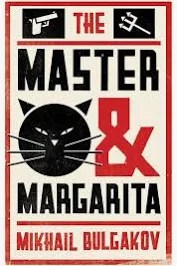
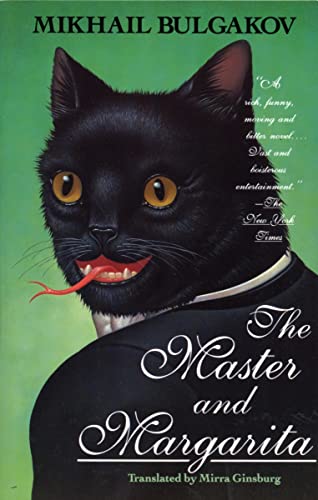
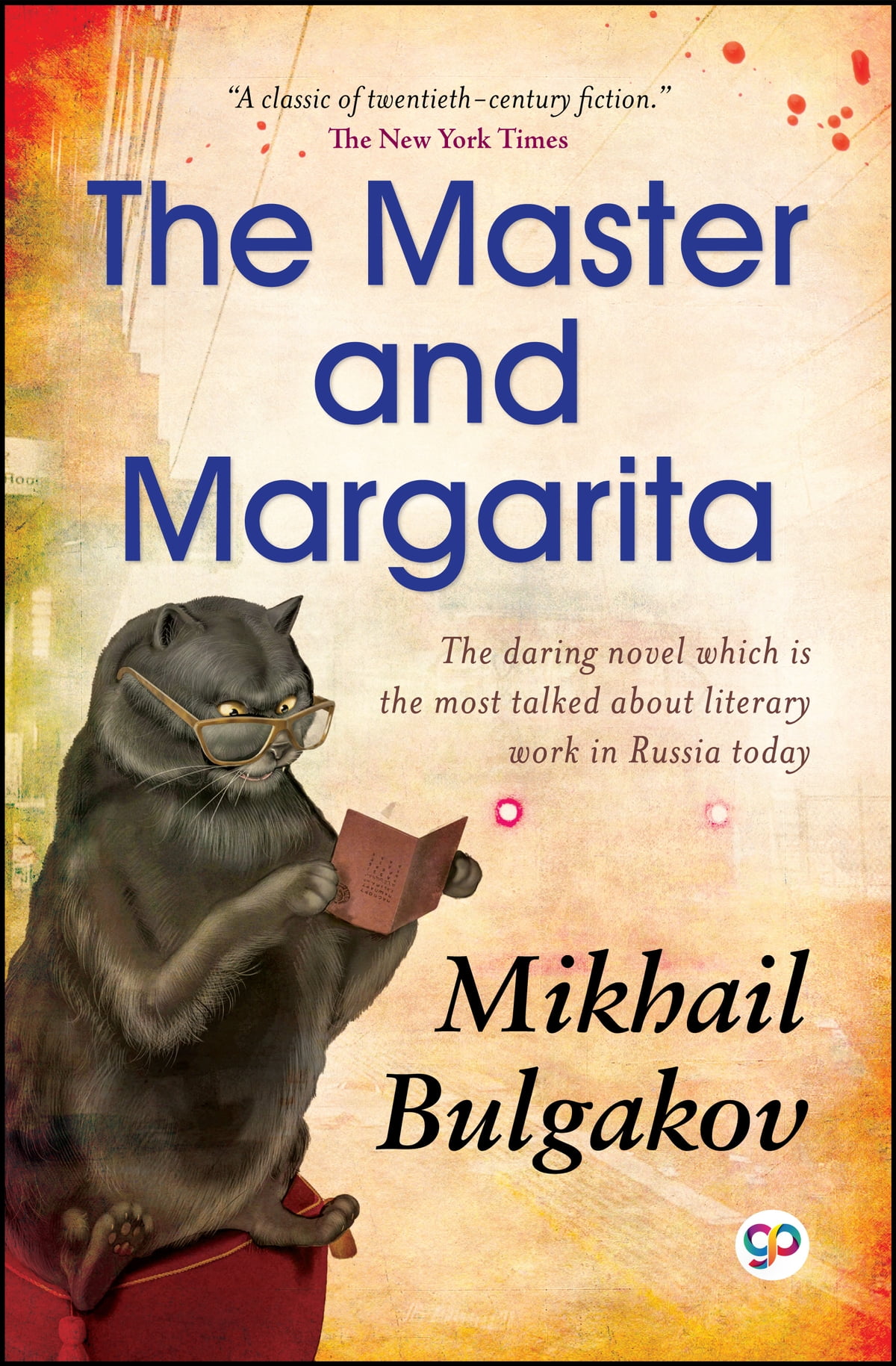
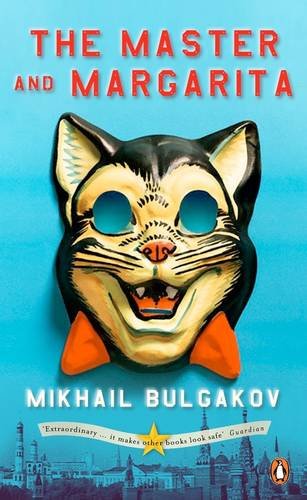
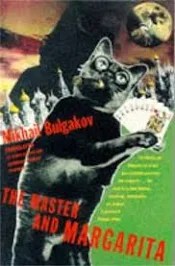
I’m grateful to Reading the Meow for finally getting me to pick up The Master and Margarita by Mikhail Bulgakov (finished in 1940, published in 1966) which is part of my Le Monde’s 100 Books of the Century Reading Challenge and has been languishing in my TBR for years. Although not ostensibly a book about cats, one does feature prominently as these various edition covers will attest:

The reason it had lain unread for so long was because I’m (aptly) a big scaredy-cat. I was really intimidated by this classic of twentieth-century fiction and I thought it would be far too complex and clever for me to understand. Which as it turned out, was broadly correct. I’m sure I didn’t pick up all the allusions and references, even with the notes in the back of my edition to help me (Alma Classics, trans. Hugh Aplin 2020 – I definitely recommend this edition and translation).  However, I still found it very readable and a lot to enjoy, especially regarding Behemoth, the character that meant I was reading it this week particularly.

The Devil arrives in 1930s Moscow as a Professor Woland, along with his entourage: red headed, bizarrely dressed Korovyev; sinister vampiric Azazello; beautiful Hella; and Behemoth, an enormous cat that walks on his hindlegs, talks, drinks vodka and plays chess.

The proceed to wreak havoc for three days in a series of carnivalesque scenes, using the greed and corruption of people against them.  It’s absolute chaos and carnage, but brilliantly Bulgakov shows that the devil doesn’t have to push very hard for all this to occur.

At the start of the novel, Woland predicts the shocking and absurd death of Berlioz, head of Massolit, a literary organisation. Once people hear of his death, this description of a barrage of statements in order to get Berlioz’s apartment is a good example of how Bulgakov balances social realism, satire, the comic and the desperate throughout:

“In them were included entreaties, threats, slanders, denunciations, promises to carry out refurbishment at people’s own expense, references to unbearably crowded conditions and the impossibility of living in the same apartment as villains. Among other things, there was a description, stunning in its artistic power, of the theft of some ravioli, which had been stuffed directly into a jacket pocket, in apartment No.31, two vows to commit suicide and one confession to a secret pregnancy.”

Meanwhile, Margarita, beautiful and unhappily married, is distressed because her lover, The Master, has committed himself to an institution and renounced his writing.

This is interspersed with the story of Pontius Pilate and Yeshua (Jesus), with the two stories echoing one another, and it emerges that this was the novel The Master was writing.

It is through the titular characters that Bulgakov prevents his satire becoming too bitter and alienating. Their devotion to each other and Margarita’s belief in The Master’s work is truly touching.

I don’t really want to say too much more as The Master and Margarita is such a complex, riotous piece of work that I think the more I try and pin it down the more I’ll tie myself in knots! It tackles the biggest of big themes; religion, state oppression, the role of art, love, faith, good and evil, how to live… It is a deeply serious work that isn’t afraid to be comical too.

But as this post is prompted by Behemoth, here is my favourite scene with him, getting ready for Satan’s Grand Ball on Good Friday and trying to distract from the fact that he is losing at chess:

“Standing on his hind legs and covered in dust, the cat was meanwhile bowing in greeting before Margarita. Around the cat’s neck there was now a white dress tie, done up in a bow, and on his chest a ladies mother-of-pearl opera glass on a strap. In addition, the cat’s whiskers were gilt.

‘Now what’s all this?’ exclaimed Woland. ‘Why have you gilded your whiskers? And why the devil do you need a tie if you’ve got no trousers on?’

‘A cat isn’t meant to wear trousers, Messire,’ replied the cat with great dignity. ‘Perhaps you’ll require me to don boots as well? Only in fairy tales is there a puss in boots, Messire. But have you ever seen anyone at a ball without a tie? I don’t intend to find myself in a comical situation and risk being thrown out on my ear! Everyone adorns himself in whatever way he can. Consider what has been said to apply to the opera glasses too, Messire!’

‘But the whiskers?’

‘I don’t understand why,’ retorted the cat drily, ‘When shaving today Azazello and Korovyev could sprinkle themselves with white powder – and in what way it’s better than the gold? I’ve powdered my whiskers, that’s all!’

[…]

‘Oh, the rogue, the rogue,’ said Woland shaking his head, ‘every time he’s in a hopeless position in the game he starts talking to distract you, like the very worst charlatan on the bridge. Sit down immediately and stop this verbal diarrhoea.’

‘I will sit down,’ replied the cat sitting down, ‘but I must object with regards your final point. My speeches are by no means diarrhoea, and you’re so good as to express yourself in the presence of a lady, but a series of soundly packaged syllogisms which would be appreciated on their merits by such connoisseurs as Sextus Empiricus, Martianus Capella even, who knows, Aristotle himself.’

‘The kings in check,’ said Woland.

‘As you will, as you will,’ responded the cat, and began looking at the board through the opera glass.”

I think overall I probably admire The Master and Margarita more than love it, and I enjoyed Bulgakov’s A Country Doctor’s Notebook more. But there is so much in this extraordinary, unique novel that will stay with me, and I’m sure it will reward repeat readings too.

To end, I tried to get my two moggies to pose with the book. With typical cattitude, they flatly refused 😀  So it’s back to 80s pop videos:
Novella a Day in May #25

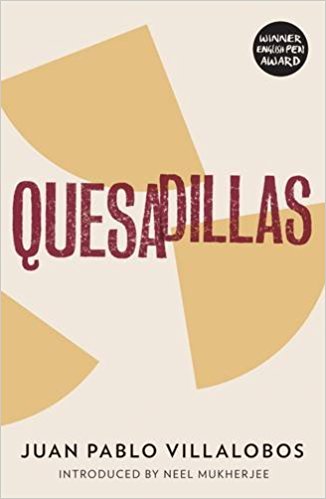
Quesadillas – Juan Pablo Villalobos (2012, trans. Rosalind Harvey 2013) 180 pages

Quesadillas is Juan Pablo Villalobos’ second novel, which I picked up having greatly enjoyed his first, Down the Rabbit Hole. Also, it’s published by AndOtherStories, who really are a wonderful publisher of contemporary, mainly translated, fiction. I highly recommend checking out their catalogue.

Back to Quesadillas. Like Down the Rabbit Hole, it is told from a child’s perspective, this time an older, more wordly child as Orestes (his father loves Greek mythology) is 13 years old. He lives with his five brothers, one sister and parents in a town where:

“there are more cows than people, more charro horsemen than horses, more priests than cows, and the people like to believe in the existence of ghosts, miracles, spaceships, saints and so forth.”

His mother insists the family is middle-class (unlikely as their home is “a shoe box with a lid made from a sheet of asbestos”) while his father swears profusely at the television:

“My father remained loyal to his healthy habit of insulting all politicians, applying a level of hostility in direct proportion to the devaluation of the peso.”

This is 1980s Mexico, where there is economic chaos and corrupt elections. Telling the tale from a 13-year-old’s point of view enables Villalobos to make astute political points about the impact of state mismanagement on the poor, without being overly didactic:

“ ‘we only have thirty-seven quesadillas and 800 grams of cheese left.’

We entered a phase of quesadilla rationing that led to the political radicalisation of every member of my family. We were all well aware of the roller coaster that was the national economy due to the fluctuating thickness of the quesadillas my mother served at home. We’d even invented categories – inflationary quesadillas, normal quesadillas, devaluation quesadillas and poor man’s quesadillas …. [in which] the presence of cheese was literary: you opened one and instead of adding melted cheese my mother had written the word ‘cheese’ on the surface of the tortilla”

Orestes’ twin brothers (no prizes for guessing they’re called Castor and Pollux) go missing and Oreo (as he’s known) sets off with older brother Aristotle to find them. Aristotle is convinced they’ve been abducted by aliens. After a fight, Oreo heads off alone and experiences life on the road. He manages to make money through peculiar means (there is a slight vein of magic realism running through the novella which explodes in all-out weirdness at the end) before returning home.

“What they were asking me to do was to start making up some lies that tallied with their idea of the world, damn it. But I hadn’t come home to tell the truth or learn to lie. I had come back because the class struggle had worn me out and I wanted to eat quesadillas for free.”

Quesadillas has a strong narrative voice in Oreo and it is funny, engaging and astute. The humour and surreal elements never obscure the portrayal of corruption or poverty. An entertaining and thought-provoking read.

“Raindrops on roses and whiskers on kittens/Bright copper kettles and warm woollen mittens/Brown paper packages tied up with strings/These are a few of my favourite things” (Maria Rainer/Julie Andrews, The Sound of Music)

I write to you from within a fog of lemsip and cough syrup.  Yes, this week I’ve had a grotty cold.  Nothing major by any means, but just enough to make me feel grim and make the days a little greyer.  So I thought for this post I’d cheer myself up and be totally self-indulgent, by choosing two books that are thematically linked only in the fact that they are two of my favourites.

Firstly, If Nobody Speaks of Remarkable Things by Jon McGregor (Bloomsbury, 2002).  This was McGregor’s first novel, longlisted for the Booker, and written when he was only twenty-six.  Choking down my jealousy, I am able to tell you that the accolades are highly deserved.  I think this is such a beautifully written, confident debut.  It tells the story of an ordinary street and its ordinary inhabitants, over the course of a day.

“The short girl with the painted toenails, next door, she says oh but did you see that guy on the balcony, he was nice, no he was special and she savours the word like a strawberry, you know she says, the one on the balcony, the one who was speeding and kept leaning right over, and they all know exactly who she means, he’s in the same place most weeks, pounding out the rhythm like a panelbeater, fists crashing down into the air, sweat splashing from his polished head.”

“In his kitchen, the old man measures out the tea-leaves, drops them into the pot, fills it with boiling water.  He sets out a tray, two cups, two saucers, a small jug of milk, a small pot of sugar, two teaspoons.  He breathes heavily as his hands struggle up to the high cupboards, fluttering like the wings of a caged bird.”

“She opens her front door, just a little, just enough, and she hops down her front steps, the young girl from number nineteen, glad to be out of the house and away from the noise of her brothers.  The television was boring and strange anyway, it was all people talking and she didn’t understand.  She taps her feet on the pavement, listening to the sound her shiny black shoes make against the stone…”

I hope these three examples give a good idea of why I love this novel so much.  McGregor is so skilled at finding the poetry in ordinary lives and how the self is expressed through seemingly innocuous actions.  Gradually the inhabitants of the street emerge as fully realised characters from the details of this one day.  This narrative is intertwined with a first person narrative, and you begin to realise that something significant, and tragic, took place on this ordinary day.  If Nobody Speaks of Remarkable Things is a novel of startling sensitivity and lyricism.

If this has whetted your appetite for McGregor’s novels, I discuss his second novel, So Many Ways to Begin here.

Secondly, Death and the Penguin by Andrey Kurkov trans. George Bird (1996, English translation 2001, Harvill Press).  How to describe this novel?  It’s frankly a bit bonkers and one of those I think I understand, but maybe it’s about something else entirely.  It’s a great read though.  It tells the story of Viktor, an aspiring writer who gets a job writing obituaries, and his pet penguin Misha, who he took on when Kiev zoo gave all its animals away: “he had been feeling lonely. But Misha brought his own kind of loneliness, and the result was now two complimentary lonelinesses, creating an impression more of interdependence than amity.”

The character of this depressed penguin is as vividly realised as any of the human characters, and you really start to feel for this bird who symbolises the existential crisis of his owner and others caught up in a post-Soviet world that they do not understand: “Sleeping lightly that night, Viktor heard an insomniac Misha roaming the flat, leaving doors open, occasionally stopping and heaving a deep sigh, like an old man weary of both life and himself.”

The fragile relationship between Viktor and Misha is tested to its limit by a series of surreal events.  Viktor’s friend Misha-Non-Penguin leaves his daughter Sonya with Viktor, and so he drifts into a family unit with this self-contained little girl and her nanny.  But meanwhile, someone is using his obituaries as a hit-list, and he is being followed by a mysterious stranger known only as the fat man…

“The Chief considered him through narrowed eyes.

“Your interest lies in not asking questions,” he said quietly.  But bear in mind this: the minute you’re told what the point of your work is, you’re dead. […] He smiled a sad smile.  “Still, I do, in fact, wish you well.  Believe me.””

Death and the Penguin is a surreal adventure story, a post-Soviet satire, an examination of the individual spirit up against forces that seek to control.  It’s funny and it’s sad, it has something to say, and it says it in a truly unique and engaging way.

Here are the novels with another of my favourite things, my psychotic cat (he looks calm in this photo, but trust me, he is hell-bent on world domination):

Image