Skin Deep – Antonia Lassa (transl. Jacky Collins) Blog Tour

After eleven years of blogging, it’s finally happening: I’m taking part in a blog tour 😀

And most delightfully, it coincides perfectly with my month of daily novellas. Skin Deep by Antonia Lassa (2023 transl. Jacky Collins 2023) comes in at 114 pages, making this Novella a Day in May 2023 – No.24.

One reason I don’t do blog tours usually is because I only blog about books I enjoy, so I can’t guarantee to take part. However, I trusted wonderful indie Corylus Books to see me right, and they did 😊 I thought Skin Deep was a great read.

It’s a challenge to have a detective story in so few words but the story didn’t feel diminished in any way by this. Yes, the solution is straightforward but I would much rather that than an overly convoluted, protracted story where I lose all sight of what’s happening and why on earth the person was killed in the first place.

Here is the blurb from Corylus Books:

“When police arrest eccentric loner Émile Gassiat for the murder of a wealthy woman in a shabby seaside apartment in Biarritz, Inspector Canonne is certain he has put the killer behind bars. Now he just needs to prove it. But he has not reckoned with the young man’s friends, who bring in lawyer-turned-investigator Larten to head for the desolate out-of-season south-west of France to dig deep into what really happened.

Larten’s hunt for the truth takes him back to the bustle of Paris as he seeks to demonstrate that the man in prison is innocent, despite all the evidence – and to uncover the true killer behind a series of bizarre murders.

Skin Deep is Antonia Lassa’s first novel to appear in English.”

All three protagonists are very believable and well-drawn. Although Canonne leaps to a lazy conclusion regarding the killer, he doesn’t doggedly stick to it. There is a lightness of touch in his portrait, including his contemplations of life and relationships, triggered by his missing tooth.

“The moment they went into the apartment, Canonne said to himself that they had got their man. The reason being that the place was impeccably tidy, more like the methodically kept home of a cold blooded serial-killer rather than a young man of twenty-six.”

This othering of Émile Gassiat because his lifestyle and sexual preferences don’t fit the stereotype of those of a good-looking young man is part of the wider themes in the book around difference and acceptance.

Larten is the perfect detective for the job in this regard, as he is comfortable with being viewed as Other and uses it to his advantage:

“Just as a small question-mark can alter the course and meaning of an entire sentence, no matter how complex and articulate it might be, Larten wanted those feminine touches that he included in his appearance or in his clothing, to act as a question mark at the end of each of the ‘sentences’ that constituted his identity. Something that would trouble others, getting them to question their own identity or fall for his charms. An invitation to dive into the unknown.”

He’s also a competent and driven detective who balances detailed investigation with an acute understanding of people.

“Larten could only add his own intuition, an argument that was not worth much in court but to which he clung. His intuition had failed him on very few occasions in his life, perhaps because he was a good wine taster.”

Skin Deep is such an accomplished crime novella. It balances poetic passages and societal commentary alongside characterization and plot with ease. Both the seedy seaside and cosmopolitan city were clearly evoked. I’m not a huge reader of contemporary crime and when I do read it, it is usually in translation – I would love to read a series of Larten novels as this camper-van dwelling wine enthusiast completely won me over.

Here are the stops from the rest of the tour, do check out the reviews for this great read:

Novella a Day in May 2023 – No.20

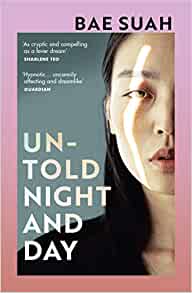
Untold Night and Day – Bae Suah (2013 trans. Deborah Smith 2020) 152 pages

When I see writing described as dreamlike, I often think of highly metaphorical language, perhaps with a heavy emphasis on sensory experience, and with an unreal quality. Untold Night and Day is definitely dreamlike, but not quite in the ways I’ve described.

It initially seems very much grounded in everyday experiences. Where it becomes dreamlike is that it follows its own logic, jumping about with recurring motifs, in a way that makes sense within itself but becomes more disconcerting the more you consider it.

“A man carrying a kitten in a birdcage pressed himself against the opposite wall of the alley to avoid her car. He was a preacher, a well-known figure in this alley; he went around surreptitiously stuffing pieces of paper bearing Bible verses into people’s pockets, so he’d been mistaken for a pickpocket and arrested more than once. While she waited for the lights to change at the end of the alley, the woman driving the green car took her hand off the wheel and raised a bottle of water to her lips. Still with the phone to her ear. Against the regular growl of the engine, the hum of the air conditioning.”

These images and characters recur throughout the novella, each time with their context slightly shifted. There are other repeated motifs, including to The Blind Owl, a deeply disturbing novella which I read back in 2019. The shifting repetitions unsettle the story but also ground it in its own world.

Ayami is a former actor who works at an audio theatre. We join her at the end of her last shift, in the oppressive heat of Seoul, where through the night she and her boss search for their missing friend Yeoni. The following day, she shows round a German writer who never wanted to be in Korea in the first place.

The two times echo each other and almost merge, but whenever the narrative almost seems on the verge of entirely disintegrating, it holds on to that interior logic and somehow pulls you along, trying to work out what is happening and where Yeoni could be.

“That was the secret of night and day existing simultaneously. Ayami discovered this through a single movement, bending down to pick up the pebble. And, remembering this simultaneous existence more vividly than she remembered herself, became unable to remember anything else.”

I realise this may be an entirely unhelpful review as I’ve not really said very much! But hopefully I’ve given a sense of why this novella is hard to describe and hard to review. I enjoyed it, but definitely not one to read when you’re in the mood for a linear plot and all questions answered at the end…

“I have to record whatever comes into my head in the same place it happens. Things occur to me as images, and as forms, not as words arranged into sentences. The images quickly dissipate after the moment’s passed, and once that happens there’s no way for me to capture them in language.”

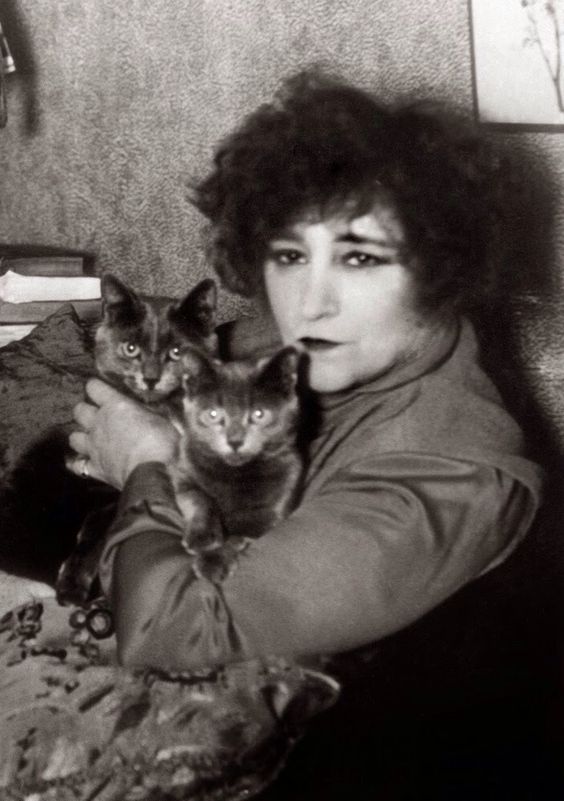
“Our perfect companions never have fewer than four feet.” (Colette)

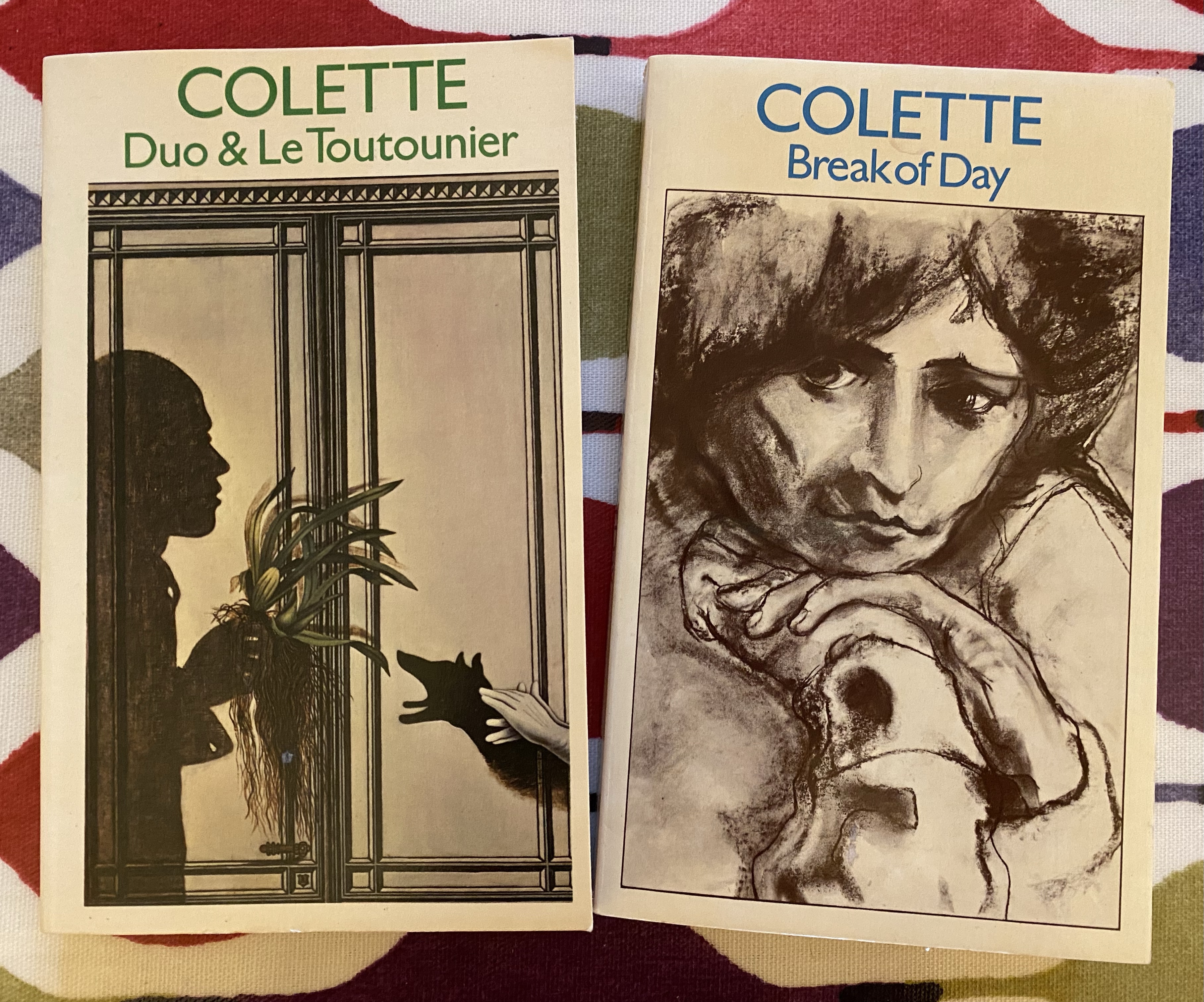
Mallika’s annual Book and Author Anniversaries post alerted me to the fact that today is the 150th anniversary of Colette’s  birthday, and the perfect prompt for me to get two of her books out of the TBR (in Women’s Press editions which pleases me – how I regret clearing out loads of my The Women’s Press books when I was trying to streamline before a move one time. Never get rid of books kids – better to die under a toppling pile than live with regret 😉 )

Firstly, Duo and it’s short sequel Le Toutounier (1934 & 1939; trans. Margaret Crosland 1974). Duo follows the discovery by Michel and immediate aftermath of his wife Alice’s short-lived affair with a colleague. They are on holiday in the south of France, somewhat isolated and under the watchful eye of Michel’s family retainer Maria. The novel is primarily dialogue between the couple as they try and decide what remains for them.

Colette’s love of the natural world is very much in evidence as she captures their holiday home and Alice’s feelings of suffocation:

“On the poplars the golden bronze of the new leaves still wrongfully occupied the place of the green. A crabapple tree, its white petals lined with bright red, had defeated the somewhat sickly Judas tree and the syringas in their attempt to escape the destructive shade of the shiny aucubas, extended their slender branches and their butter white stars through the broad grasping leaves, which were mottled like snakes.”

Her precise descriptions of people and their mannerisms also suit this tale especially well, expertly capturing the tension and careful watchfulness between two people fearful of their disintegrating relationship.

“He caressed her with a few crude words, which she heard with a quiver of her eyelashes, as though he had shaken a bunch of flowers over her. They both accepted these exchanges, which were caused by chance, travel, a sudden change of season.”

Michel and Alice don’t tear each other apart, but at the same time their relationship seems doomed. However, the precision and containment of the story to a few days in a specific place, doesn’t make for a heavy or oppressive read. Colette’s humour is always present, with some surprising phrases:

“Out of modesty the servant placed a saucepan lid over the milk.”

During Duo, we learn something of Alice’s family, her sisters Colombe, Hermine and Bizoute.

“When I think about my family as much as that, it’s because I’m finding Michel terribly boring.”

In Le Toutounier she visits their stuffy, smoke-filled Paris apartment with the titular “huge, indestructible sofa of English origin, battered down like a forest road in the rainy season.”

It’s a short novel (80 pages) and I can see why it was put in the same volume as Duo as I think it is best read following on from its predecessor, forming a portrait of an interlude in Alice’s life.

Bizoute is away from home, leaving Colombe and Hermine together with their complicated love lives. Neither of them are with available men and the situation escalates. But the focus in Le Toutounier is not on relationships between the sexes but rather between the sisters, and what it means for women in a family to be close to one another. As so often, Colette focuses her sensual descriptions on women, showing appreciation but not sentimentality:

“The fine woollen dressing gown with a pattern of embossed stitching fell over her quivering shoulders, and it’s pink glow rose to her cheeks, where the makeup had lost its delicate morning colour beneath successive layers of powder.”

Secondly, Break of Day (1928, trans. Enid McLeod 1949) which nowadays would probably be called autofiction, occupying a place between biography and outright fiction. ‘Colette’ spends the summer in Provence, contemplating her past and wondering about the future. All her preoccupations are here – the natural world, animals:

“After dinner I mustn’t forget to irrigate the little runnels that surround the melons, and to water by hand the balsams, phlox and dahlias, and the young tangerine trees, which haven’t yet got roots long enough to drink unaided in the depths of the earth, or strength to break into leaf without help, under the steady scorching of the heavens. The young tangerine trees, planted … for whom? I don’t know. Perhaps for me. The cats will spring sideways at the months when by ten the air is blue as a morning glory. The pair of Japanese hens, perching drowsily on the arm of a rustic arm chair, will chirp like birds in a nest. The dogs, already far away from this world, will be thinking of the coming dawn, and I shall have the choice of a book, bed, or the coast road”

Men and women:

“My true friends have always given me that supreme proof of devotion, a spontaneous aversion for the man I loved.”

“When a man’s glance is following certain household preparations, especially those for a meal, there is apt to be a look on his face that combines religious attention, boredom and fear.”

Her mother:

“On an autumn morning she was the first and only one to see herself reflected in the first disc of ephemeral ice in the well bucket, before her nail cracked it.”

“She would, alas, have judged us plainly, with that divine cruelty of hers which was innocent of wrath.”

Break of Day is fairly plotless save for a slight drama with two young people, but not quite stream of consciousness either, written in a more structured style. If you enjoy Colette’s writing then this is a little gem, but definitely not one to read when you want to be pulled along by a cracking yarn.

Overall the sense is of Colette (author/character) coming to terms with the last part of her life, with aging and with what remains. It isn’t sad but it has a melancholy quality, although I sensed few regrets and an acceptance of how her life had been lived so far and how it would continue.

“Everything is much as it was in the first years of my life, and little by little I recognised the road back.”

I loved all of these reads. It’s been a while since I picked up Colette and I wondered why I’d left it so long. She’s funny, incisive, precise, sensual, and absolutely in command of her own voice. There’s no-one like her.

To end, a 1970s performance to match my 1970s editions, about the breaking of day:  

“There is no more sagacious animal than the Icelandic horse.” (Jules Verne)

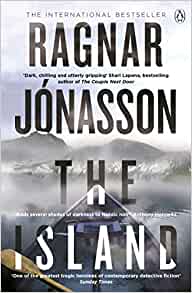
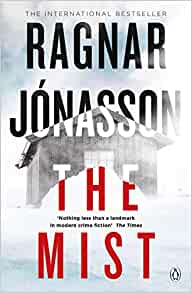
For my second contribution to Annabel’s Nordic FINDS month I’m looking at the second and third instalments in Ragnar Jónasson’s Hidden Iceland series, The Island and The Mist.

I know I enjoyed the first instalment of this series featuring police detective Hulda Hermannsdóttir, The Darkness, but I can’t remember anything about it. Thankfully you don’t need to have read it (or remember it) to enjoy the sequels.

These are quick, straightforward reads. Sometimes I find the phrasing a bit too straightforward with some clichéd phrases – I don’t know if this is Jónasson’s style or a translation decision – but Hulda is an appealing lead and the emphasis is on the mystery not sensationalist gore, which is very welcome. I’m not a big reader of contemporary crime so I don’t want an overly convoluted plot and I want characters that behave like real people in real (admittedly extreme) circumstances, both which The Island and The Mist deliver.

The Island (2016, trans. Victoria Cribb 2019) starts with a brief, highly unnerving prologue in 1988, before taking us back a year to 1987. Benedikt and his unnamed girlfriend are staying at her family’s holiday home:

“He was going to enjoy their stay, this weekend adventure in the middle of nowhere. The sense of isolation was enhanced by the thought that nobody knew they were there; they had a whole valley to themselves. It really was like a dream.”

This being a crime novel, anything idyllic fills the reader with a sense of deep foreboding and sure enough, the girl is found murdered. Hulda is a CID detective, tenacious and thorough, but she’s up against a traditional, sexist system:  

“Her boss, Snorri, was an old school detective, quiet yet firm, with an aversion to modern technology”

He’s kind, but he tells her in no uncertain terms that her colleague Lýdur will be promoted above her, what with him having the obligatory Y chromosome and all. We see Lýdur take some very dubious decisions in his investigation into the girl’s murder.

Fast forward to 1997: Hulda has experienced a horrific family tragedy, and is living alone in a small, expensive flat in Reykjavik. Four friends – Dagur, Alexandra, Klara and (eek!) Benedikt are having a reunion on a remote island:

It was her first visit to the Westman Islands, the little archipelago of some fifteen volcanic islands and innumerable stacks and skerries that jutted dramatically out of the sea off the south coast of Iceland. […] Now, Heimaey was home to a thriving fishing industry but Alexandra could see the volcanic cone, still brown and ominously bare of vegetation, brooding above the white buildings of the town.

Only three of them will return.

Hulda, now middle-aged and wondering what her career has left to offer her, is dispatched to investigate. Inevitably she has to dig up what happened ten years previously and whether the motive for the latest murder lies in the past. An additional complication is that Lýdur is now her boss with his own reasons for wanting Hulda to reach conclusions as quickly and thoughtlessly as he does. But Hulda is her own woman and we’re never in any doubt she’ll find her way to the truth.

Although I did guess whodunit, there was an additional twist that took me by surprise and was genuinely a bit shocking.

If I rarely read contemporary crime, I never read contemporary thrillers, but this is what The Mist (2017, trans. Victoria Cribb 2020) turned out to be, and I really enjoyed it. I think it helped that it’s a quick read; I probably couldn’t have sustained a long, tense story. The first two thirds of the novel are the deeply tense unfolding of events, and the last third is Hulda piecing together the crime scene in a fairly straightforward way.

It’s set around the same time as the opening events of The Island – Christmas 1987/February 1988 – and so at first I wondered if the UK publishing of these books was out of order, in the same way as Jónasson’s Dark Iceland series, but looking at publication dates it seems he decided to move back and forth in time with Hulda.

Hulda has hit a dead-end with her investigation of a young woman’s disappearance, and so she is sent to investigate a crime scene in a remote farmhouse in the east of the country. We’re then taken back to two months previously: Erla and Einar live in the farmhouse on land that Einar’s family have farmed for generations. Erla loves her husband but has always missed city life in Reykjavik.

“She was overwhelmed by the familiar feeling of emptiness that assailed her whenever something ran out and she knew she had no chance of replacing it. She was stranded here. To describe the feeling as emptiness didn’t really do it justice; it would be true to say she felt almost like a prisoner up here in the wilderness.

All talk of claustrophobia was forbidden on farm, though; it was a feeling they had to ignore, because otherwise it could so easily have become unbearable.

Suffocating…”

Erla and Einar’s familiar Christmas routine is interrupted by the arrival of a stranger, Leó. How he has reached them and what he is doing stranded in the middle of nowhere during a blizzard at a time when nearly everyone is at home, he can’t really explain. To send him away would be to send him to his death, and so Einar invites him to stay, despite Erla’s deep mistrust of the unknown man.

“It would be a white Christmas, as usual. Stiflingly white. And now this intruder had entered their peaceful home and poisoned the atmosphere. You couldn’t describe it any other way. He’d poisoned it. The wind whined outside – hardly a harbinger of peace on earth and goodwill to all men.”

The strain builds between the three people as they spend the night together in the remote, old-fashioned farmhouse, with electricity and phone lines both down and the snow relentlessly falling. Jónasson expertly maintains the tension, exacerbated by the persistent, inhospitable weather.

“In winter, not a day passed when she didn’t witness something that sent a shiver down her spine. She didn’t believe in ghosts, but the isolation, the silence, the damned darkness, they all combined to amplify every creak of the floorboards and walls, the moaning of the wind, the flicker of light and shadow, to the extent that she sometimes wondered if maybe she should believe in ghosts after all; if maybe that would make life bearable.”

Despite the minor reservations I mentioned earlier I do enjoy Jónasson’s writing. Hulda is believable and although she’s a-detective-with-a-tragic-past-who’s-overinvested-in-their-work she’s not destructive or self-pitying. She’s honest and humane and likable. In The Mist we learn more about what happened to bring her to the circumstances of The Island.

“But then that’s what her job was like at times, a game played out in the grey borderlands between day and night. No victory was ever sweet enough; her work was never really done. She could expect no praise or reward. The riddle had been solved to general indifference.”

But a large part of the appeal for me is that Jónasson is great at evoking the Icelandic landscape. I never feel like the stories could occur anywhere else.

“Ellidaey appeared ahead, looking just like the pictures she’d seen; the single white speck shining amidst the green pasture gradually resolving itself into a house. Behind it the grassy slope reared up like a crest of a wave. As they drew closer, the black cliffs with their splashes of white bird droppings didn’t look as if they offered the visitor anyway up from the sea.”

To end, one of my favourite songs, which conveniently happens to be about mist (and also shares a name with my friend’s childhood hamster) :

“A great doctor must have a huge heart and a distended aorta through which pumps a vast lake of compassion and human kindness.” (Adam Kay)

I really want to increase my blogging in 2023 – as I’m an incredibly strong-willed person who always achieves any goal they set, I have absolutely no doubt I will achieve this aim 😀

Anyway, the wonderful reading events that take place are always an incentive to help me on my way, and in January Annabel runs her enticing Nordic FINDS month.

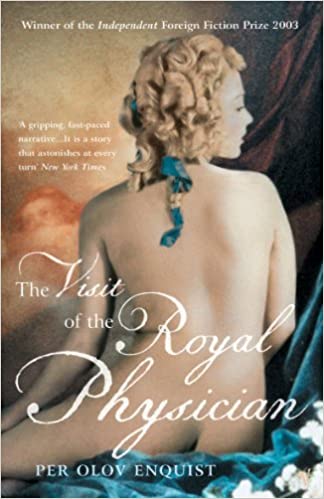
This meant that I have finally pulled a book from the TBR that has been languishing there for years: The Visit of the Royal Physician by Swedish author Per Olov Enquist (1999 trans. Tiina Nunnally 2001). A historical novel set in the 18th-century Danish courts, it tells the story of King Christian VII’s mental ill health, his marriage to Caroline Mathilde (sister to George III) and her affair with the titular German doctor, Johann Friedrich Struensee.

TVOTRP is hugely lauded, winning the August prize and the Independent Foreign Fiction Prize. This meant I went in with unfairly high expectations and at first I wasn’t sure this novel was for me. I suppose TVOTRP would be classed as a documentary novel, and initially I found this style distancing. However, by the end I was very much involved in this sad tale of people sacrificed to political power struggles where there is no room for humanity.

Even if the historical events are unfamiliar, the reader knows it will end with the execution of Struensee, as this is where the novel begins. We’re then taken back to his arrival at court, a man of the Enlightenment, viewed with some degree of suspicion by those resistant to change.

King Frederik V dies in his forties, and there is a vivid scene of him on his deathbed with his son, being abusive until the end. Christian is sixteen when he becomes King Christian VII and he is already struggling to comprehend reality.

“Christian explained, in a stubborn attempt to make sense of things, that he understood the court to be a theatre, that he had to learn his lines, and that he would be punished if he didn’t know them by heart.”

But was he one person or two?”

Enquist demonstrates so clearly that it would be some sort miracle if Christian managed to stay well in the environment of the court. He is not only abused by his family but by the courtiers; he is physically and mentally tortured.

Caroline Mathilde is 15 when they marry.

“Afterwards everyone agreed that it was unfortunate that she did indeed have talents. If the proper assessment had been made from the outset, namely that she possessed some talents, then the entire catastrophe might have been averted.

But no one could have predicted this.”

These teenagers are not expected to rule Denmark. They are expected to be figureheads and provide heirs, and not get in the way of the power-hungry politicians that surround them. When Struensee arrives in court, he poses a huge threat despite not appearing to want power at all. Firstly, he genuinely cares about Christian:

“It was understood that something had happened. The German doctor with the blonde hair, the quick but wary smile and the kindly eyes, had become somebody. Since he had no title and could not be placed within a precise hierarchy, this caused uneasiness.

Attempts were made to decipher him. He was not easy to decipher. He was friendly, discreet, and refused to make use of his power, or at least what was considered to be power.

People didn’t understand him.”

Secondly, he is a man of the Enlightenment, deeply threatening to Puritan courtiers like the advisor Guldberg, who is slowly growing his influence. Thirdly, he sleeps with the Queen:

“Christian, Caroline Mathilde, Struensee. Those three.

They seem to be observing each other with curiosity and suspicion. The court observed them too. As they observed the court. Everyone seemed to be waiting.”

The tension builds as the reader knows this situation will absolutely not be tolerated. And it seems such a travesty. The King is happy and cared for; the Queen is happy and fulfilled; the person taking decisions on behalf of the ruler is progressive, liberal, and trying to improve the situation of the masses. Why not let it continue?

Struensee is not naïve and he is filled with a sense of foreboding. Meanwhile, Caroline Mathilde seems to believe they can outwit the malevolent forces that are closing in…

“Her analysis surprised him.

He thought that her extremely lucid, extremely brutal view of the mechanisms of power had been born at the English court. No, she told him, I lived in a cloister. Then where had she learned all this? She was not one of those that Brandt, with some scorn, used to call ‘the female schemers’.

Struensee understood that she saw a different kind of pattern to his.”

The style of TVOTRP is really interesting. As I mentioned earlier, it’s a documentary style, but with an omniscient narrator so there is space given to the feelings and motivations of all the characters. The sentences are generally choppy, but often also poetic. Enquist balances these opposing approaches expertly. I never quite got past that initial distance I felt and so this stopped me absolutely loving the novel, but I did think it was an excellent and compassionate exploration of the pressures of public life and the dangers for those trying to change entrenched power structures.

Although not a depressing novel, it did seem desperately sad, for all concerned.

“The revolution that Struensee initiated was quickly stopped. It took only a few weeks for everything to revert to the way it was before, or to even earlier times. It was as if his 632 decrees, issued during the two years known as the ‘Struensee era’ were paper swallows, some which landed, while others were still hovering low over the surface of the field and hadn’t yet managed to alight on the Danish landscape.”

To end, I saw A Royal Affair (which tells the same story but isn’t an adaptation of this novel) when it came out in 2012. I don’t remember much of it now but I do remember enjoying it and thinking all three leads were excellent. From this trailer I would say Christian is portrayed less sympathetically than Enquist saw him, but it definitely looks worth a re-watch:

Novella a Day in May 2022 No.29

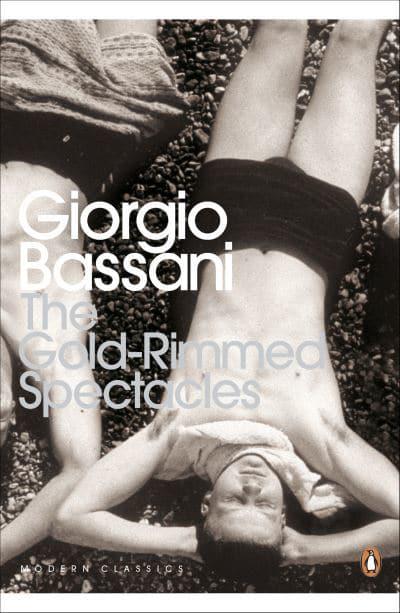
The Gold-Rimmed Spectacles – Giorgio Bassani (1958 trans. Jamie McKendrick 2012) 125 pages

I’ve been meaning to read Giorgio Bassani for a while and have The Garden of the Finzi-Continis in the TBR. This project in May seemed the ideal opportunity to read the first of his novels set in Ferrara, The Gold-Rimmed Spectacles. From this first encounter I can say I found Bassani to be a truly devastating writer.

The titular eyewear belongs to Dr Athos Fadigati, who has left Venice to settle in Ferrara. His story is told by a narrator looking back to when he was a young man and knew the doctor:

“It was in 1919, just after the other war. Because of my age, I who write this can only offer a rather vague and confused picture of that period. The town centre caffes spilt over with officers in uniform; lorries bedecked with flags continually passed by […] in front of the north face of the castle, a huge, scarlet advertising banner had been unfurled, inviting the friends and enemies of Socialism to come together to drink APERITIF LENIN”

The doctor is well-liked in the town, affable and competent at his work, a breath of fresh air after the old-fashioned medics previously available. In a small town though, people take an interest in everyone’s business, and no-one can work out why Dr Fadigati is single, or where he goes of an evening. When they realise he is gay, no-one cares so long as he is discreet. An insidious homophobia that can easily become explicit and threatening.  

“Yes – they said – now that his secret was no longer a secret, now that everything was as clear as could be, at least one could be sure how to behave towards him. By day, in the light of the sun, to show him every respect; in the evening, even if pressed chest to chest against him in the throng of Via San Romano, to show no sign of recognising him.”

Dr Fadigati starts commuting to Bologna along with the young university students of the town. He is such a sweet, kind man, who only wants to connect with others.

“He was happy, in the end, with the least thing, or so it seemed. He wanted no more than to stay there, in our third-class compartment, with the air of an old man silently warming his hands in front of a big fire.”

Unfortunately, the students – who have known him and been cared for by him their whole lives – do not always behave well: “little by little, without meaning to, all of us began to show him scant respect”. This includes a humiliating exchange with one of the young men, Deliliers, who doesn’t respect the doctor’s privacy and alludes to his sexuality in derogatory ways.

Things escalate during the annual family holiday to Riccione. The narrator sees the doctor and Deliliers together, and the town can no longer ignore the doctor’s sexuality. Around the same time, the narrator faces increasing antisemitism, demonstrated by fellow holiday-maker Signora Lavezzoli’s support of Hitler. The family find themselves treading a similar tightrope to the one Dr Fadigati has had to navigate, trying to stay safe amongst a discriminatory and prejudiced society.

“Romantic, patriotic, politically naive and inexperienced like so many Jews of his generation, my father, returning from the Front in 1919, had also enrolled in the Fascist Party. He had thus been a Fascist ‘from the very beginning’, and at heart had remained one despite his meekness and honesty. But since Mussolini, after the early scuffles, had begun to reach an agreement with Hitler, my father had started to feel uneasy.”

The Gold-Rimmed Spectacles makes full use of the reader’s knowledge of history. It is a deeply upsetting read, showing how quickly unspoken prejudice can escalate and be supported by wider political and legal frameworks. It demonstrates how easy it is for ordinary people to become part of widespread evil – one of the narrator’s friends decides to join the government, not through any ideological belief but because it is a useful opportunity. The ease with which it happens and the casual acceptance of the racial laws, is horribly believable.

Bassani uses the story of Dr Fadigati to fully drive home the consequences of the rise of Fascism and Nazism. It’s remarkable in portraying the tragedy that ensues in a deeply emotional but also carefully restrained way.

“The setting sun, cleaving through a dark cope of cloud that lay low on the horizon, vividly lit up everything: the Jewish cemetery at my feet the apse and bell tower of the Church of San Cristoforo only a little further on, and in the background high above the vista of brown roofs, the distant bulk of the Estense Castle and the Duomo. It was enough for me to recover the ancient, maternal visage of my hometown, to reclaim it once again all for myself, that atrocious feeling of exclusion that had tormented me in the last days to fall away instantly. The future of persecution and massacres that perhaps awaited us – since childhood I had heard them spoken of as always a possible eventuality for us Jews – no longer made me afraid.”

I’m so glad I finally picked up Bassani and I’ll be returning to him for sure. Just as soon as I’ve recovered from this novella, which could take some time…

Novella a Day in May 2022 No.28

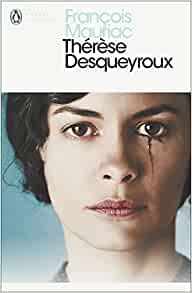
Thérèse Desqueyroux – François Mauriac (1927, trans. Gerard Hopkins 1972) 115 pages

Today’s choice sees me return to my much-neglected Le Monde’s 100 Books of the Century reading challenge with a classic of French literature.

The novella opens with Thérèse Desqueyroux being acquitted of trying to poison her husband.

“The smell of fog and of baking bread was not merely the ordinary evening smell of an insignificant country town, it was the sweet savour of life given back to her at long last. She closed her eyes and breathed deeply of the perfume of the sleeping earth, of wet, green grass. She tried not to listen to the little man with the short legs who never once addressed his daughter.”

As she journeys back to her home among pine forests in Landes in south-west France, she reflects on her marriage to Bernard and life so far.

“All around us was the silence: the silence of Argelouse! People who have never lived in that lost corner of the heath-country can have no idea what silence means. It stands like a wall about the house, and the house itself seems as though it was set solid in the dense mass of the forest, whence comes no sign of life, save occasionally the hooting of an owl. (At night I could almost believe that I heard the sob I was at such pains to stifle.)”

There is never any doubt that she tried to poison him. Her family know it and Bernard knows it. However, there is never an obvious reason given for her drastic action. It was an unhappy marriage, a strategic match between Catholic middle-class families, but Thérèse seems to have gone along with it happily enough, mainly due to her fondness for Bernard’s sister Anne (some commentators have suggested Thérèse is gay). She doesn’t love Bernard and she feels no desire for him, but surely history would be littered with bumped-off spouses if that were a reason for murder.

“When all was said, Bernard wasn’t so bad. There was nothing she detested more in novels than the delineation of extraordinary people who had no resemblance to anyone whom one met in normal life.”

When she returns to her husband, she is surprised to learn that the plan is for her to stay, but on what terms?

Thérèse Desqueyroux is a beautifully written, intriguing novel that raises questions without seeking trite answers, including who pays the price for male power; how to create agency when you have almost no choices; the nature of justice.

‘But if I did give you a reason it would seem untrue the moment I got it into words…’

As the cover of the Penguin Classics edition shows, this novella was adapted to film (for the second time) in 2012. This trailer suggests a wonderfully shot, faithful adaptation:

Novella a Day in May 2022 No.25

Freetown – Otto de Kat (2018, trans. Laura Watkinson 2020) 142 pages

At first I thought Freetown by Otto de Kat was going to be a very different novella, and I wasn’t sure about it. It opens with Maria talking to ex-lover Vincent about the disappearance of Ishmaël, a refugee from Sierra Leone who delivered her papers and subsequently became like a son to her.

This beginning made me think the novella was likely to be description of the search for Ishmaël and an exploration of his life. I wasn’t sure that such a story could be adequately told in such a short form. But instead, Ishmaël’s disappearance serves as the motivator for Maria and Vincent to reconsider their shared history.

Maria approaches Vincent as a confidant partly because of their previous intimacy, partly because of his work as a psychotherapist. The chapters are labelled with the two characters names and each serves as silent interlocutor to the other. Maria explains how Ishmaël came into her life:

“The conversation didn’t exactly flow, not that first time. He just nodded and gave me a hint of a smile. All that rain made it look more like crying. I gave him 10 euros, and thanked him for delivering our newspaper ….

I told him to come back if he was ever out of work. And that maybe I could help him. I’ve often wondered why I said that.”

When Vincent takes over the narrative we realise he is still very attached to Maria, and that he’s not really got over their separation:

“That is why I kept going. I am hoping they will find something new, go and do something else. I never managed that myself. I just ended up in a vague fog. I live by touch, doing everything by half measures in a state of semi consciousness.”

As the story progresses we learn more about Vincent and Maria’s relationships, with each other and with their spouses. Ishmaël however, remains elusive. Although at the beginning of the story Maria proclaims him family, we don’t really get to know him and it is questionable how much Maria did:

“All the time I knew him, he was always waiting… Always ready to go, to keep on running. That too.”

This doesn’t mean her grief is any less though, and there is a sense of grieving throughout Freetown. Both Vincent and Maria seem to carry a lot of sadness for times past. Ultimately, they seem to be telling one another stories of loss.

The theme is emphasised through what is missing from the narrative. Ishmaël initially seems to be established as the central character, but remains an absent presence throughout. Maria and Vincent rarely speak within one another’s narratives despite being spoken to.

“He’s been gone a year now, and I simply cannot explain who he really was. But whenever I attempt to characterise him, I just end up saying something about myself.”

Freetown is about the stories we tell ourselves, our need for personal narratives and how we constantly reconstruct these. It shows how we try and make sense of the world when it doesn’t always make sense, and how unknowable even the closest people in our lives can be.

It also suggests that despite these limitations we keep on trying, because human connection – however fleeting and flawed – is worth it even with the pain of its loss.

“He nearly always succeeded in telling me a story I understood.”

Novella a Day in May 2022 No.22

Troubling Love – Elena Ferrante (1992 trans. Anne Goldstein 2006) 139 pages

Although the popularity of Elena Ferrante’s Neapolitan quartet baffled me a bit, I had better luck with her stand-alone novella The Lost Daughter.  This meant I was keen to try Troubling Love, and having finished it I did think that maybe I should give the quartet another try…

Delia’s mother Amalia has died in odd circumstances – drowned, found wearing only her bra, a glamourous one that Delia thinks it out of keeping with her mother’s style. As she returns home to Naples from Rome for the funeral, Delia finds herself reflecting on her past and trying to piece together what happened with her mother, both then and more recently.

“The streets of topographic memory seemed to me unstable, like a carbonated drink that, if shaken, bubbles up and overflows. I felt the city coming apart in the heat, in the dusty grey light, and I went over in my mind the story of childhood and adolescence that impelled me to wander along the Veterinaria to the Botanic Gardens, or over the cobbles of the market of Sant’Antonio Abate, which were always damp and strewn with rotting vegetables.”

Delia reflects on her childhood and her abusive father, who possessively and violently guarded his attractive wife. Delia’s memories of her painful home life are conflicted and contradictory. She despises her father but also harbours a lot of anger and resentment towards her mother.

“We, on the other hand, thought that our father, because of everything he did to her, should leave the house one morning and be burned to death or crushed or drowned. We thought it and hated her, because she was the linchpin of these thoughts.”

The past and present become overlaid as Delia visits her (still violent) father and meets a childhood friend she hasn’t seen in years. She chases a man through the streets thinking he has the answers as to what her mother was doing before she died. As she explores further, memory and identity become confused and less clearly delineated.

“Sometimes that place, which belonged to a less reliable memory, consisted of a dimly lighted staircase and a wrought-iron banister. At other times it was a patch of light striped by bars and covered by a fine screen, which I observed crouching underground, in the company of a child named Antonio, who held me tightly by the hand. The sounds that accompanied it, like the soundtrack of a film, were pure commotion, sudden banging, as of things formerly in order that abruptly collapse.”

Troubling Love isn’t so much a mystery story as an exploration of grief, memory, identity, and the slippery nature of all of these things. It doesn’t offer easy answers. It looks at how so much of this is bound up with family, and how this can be difficult to reconcile.

“Childhood is a tissue of lies that endure in the past tense: at least, mine was like that.”

Troubling Love was adapted to film in 1995. I’ve not seen it, but the trailer looks faithful:

Novella a Day in May 2022 No.20

Sphinx – Anne Garréta (2015, trans.Emma Ramadan 2015) 121 pages

Sphinx is a novella which details a young protagonist falling in love with A***. Anne Garréta is a member of the OuLiPo and the particular constraint that she writes to in Sphinx is for both for lover and beloved to be genderless.

The narrator is taken to a club on Place Pigalle where they immediately fall for the charms of the dancer A***. Garréta evokes a seedy and glamorous nightlife that is both enticing and repellent:

“The wheezing of the ceiling fan, the rumble from the nearby stage, the sight of the red velvet sofa covered in holes, burned through buy cigarettes, and the feeling of exile between blue walls defiled with the imprints of dirty hands, brought me all the closer to that single, splenetic feeling so difficult to define: melancholia. I relished it to the point of drunkenness.”

Sphinx is a love story which I felt engages the mind rather than the emotions of the reader. This is because the narrator – although currently working as a DJ – is an academic and seems to approach documenting affairs of the heart in the same way as they would writing a research paper.

“I can’t define A*** as being anything other than both frivolous and serious, residing in the subtle dimension of presence without insistence.”

This includes some overblown, tortured sentences at times:

“Is there anything more vertiginous than gustative reminiscence?”

In her fascinating translators note at the end of the novella, Emma Ramadan explains how the constraints around gender (which is much more demanding for a French writer than an English-language writer) means that this tone needs to be adopted, and then:

“It becomes part of the narrator’s identity – he or she is a rather pretentious bourgeois(e) scholar who does not shy away from praising his or her own intelligence”

So although not overt, there is a thread of humour running through Sphinx, whereby we are not supposed to take the narrator nearly as seriously as they take themselves. And it is a novella that is definitely all about the narrator, not about A***. While limiting the characterisation of A*** serves the constraints around which Sphinx is written, it also succeeds in capturing the self-obsession that can be projected onto a supposed loved one.

“Perhaps I had only ever delighted in my own suffering, which I considered the purification of passions that, deep down I judged as absurd.”

Although Sphinx made me think more than it made me feel, and generally I hope for a reading experience that does both, I did find myself drawn into the narrator’s story, in spite of their distancing voice. I also thought the night-time scene was captured beautifully.

“I was about to turn 23, and for the three years the night crowd had passed before my eyes, I had seen reputations be made and dismantled. I had seen temporary passions transport places and individuals to the apex, and then, burning what they had once adored, those notorious night owls who make up the club scene would abandon them for no apparent reason for other idols destined for glory just as brief.”