“The life of every man is a diary in which he means to write one story, and writes another.” (JM Barrie)

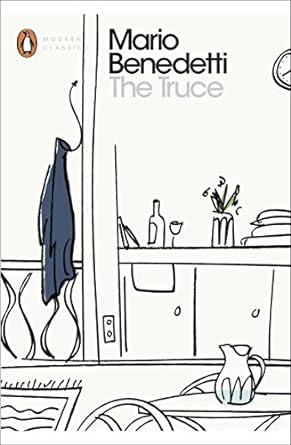
Continuing my endeavour to try and get some momentum back in my Around the World in 80 Books reading challenge, today I’m off to Uruguay, with Mario Benedetti’s The Truce: The Diary of Martín Santomé (1960, transl. Harry Morales 2015) which I was alerted to by Fiction Fan’s glowing review at the start of the year.

As the title suggests, the novella is in diary form, as Martín records his days in the run-up to his retirement, reflecting on how to live out his days. He is a quiet man in an administrative job; things are predictable.

“Today was a happy day; just routine.”

He is a widow of twenty years, and although he still has an eye for women (particularly their legs) he hasn’t had another relationship:

“The entire machinery of my emotions came to a halt twenty years ago when Isabel died. First there was pain, then indifference, then, much later, freedom, and then, finally, tedium. Long, lonely, constant tedium.”

His children Esteban, Jaime and Blanca are essentially unknown to him:

“At least Blanca and I have something in common: she, too, is a sad person with a calling for happiness.”

But although Martín is recording a lot of sadness, it’s not overly depressing. He has an acceptance of his life, and he makes quietly humorous observations, such as an old acquaintance learning of Isabel’s death:

“There is a sort of automatic reflex which makes one talk about death and then immediately look at one’s watch.”

Or his grief when his mother died:

“Only a fervent hatred of God, relatives and fellow man sustained me during that period.”

But things are about to change for Martín in ways he didn’t expect, when he falls in love with Laura Avellaneda, a work colleague half his age. While this would naturally raise questions about power dynamics and appropriateness, I felt it worked in The Truce, as Martín has been established as a gentle man, uninterested in wielding any sort of power or manipulation, and he is very respectful of Laura:

“I’m not going to demand anything. If you, now or tomorrow or whenever, tell me to stop, we won’t discuss the matter anymore and we’ll remain friends.”

In this short novel Benedetti perfectly evokes the gentle, slowly evolving love of Martín and Laura, and of Martín’s grief and acceptance of all he has lost in life alongside all that he still has. It suggests hope is still a realistic thing to hold onto, at any time.

The Truce isn’t sentimental, and although it depicts a romance it’s not rose-tinted. There is one point in particular where Martín behaves badly. He is not a perfect human-being and he causes hurt as well as joy to people.

But it is an empathetic tale, warmly clear-sighted towards ordinary people and all the foibles, weaknesses and strengths that we all carry.

The Truce is realistic, in a way that suggests even the most painful experiences can still be worthwhile. It explores how to not let pain overwhelm, and the importance of compassion for others and for the self:

They suffer from the most horrible variant of solitude: the solitude of someone who doesn’t even have himself.

This was my first experience of Benedetti and I’d be interested to read more by him. Apparently he wrote over ninety books so there’s plenty for me to choose from!

“It takes a village to raise a child.” (Proverb)

Well, as I predicted a significant part of my May was grim, but at least it was short-lived. So while I couldn’t commit to my novella a day in May project this year, I have managed to read a few novellas which I’m hoping to blog on before the end of the month. Here’s hoping June is a massive improvement!

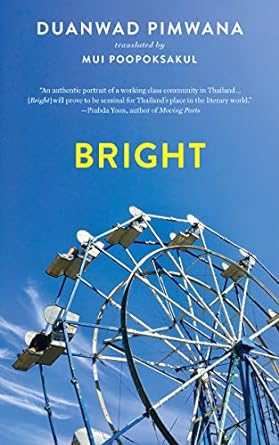
When I undertook the Around the World in 80 Books reading challenge, I wanted each book to be by an author from that country, not only set there. So the challenge has slowed as I try and locate appropriate translated fiction. Bright by Duanwad Pimwana (2002 transl. Mui Poopoksakul 2019) was apparently the first novel by a Thai woman to be translated into English. A volume of her short stories has also been translated, under the title Arid Dreams.

Bright almost reads like a series of short stories, except that the characters and setting are carried across the vignettes. It begins with a five-year-old boy, Kampol, being abandoned by his father who is taking his little brother Jon to live with his grandmother after their mother has left. But Bright isn’t unremittingly grim or a trip into poverty porn. The community of Mrs Tongan’s tenements rally round Kampol with varying degrees of willingness to ensure the boy is cared for.

“Kampol watched his father walk off until he disappeared. The flavour of the palo stew had grown distant, and the scent of detergent faint. He opened his hand: the blue action figure glinted in the dim light.”

We meet the various residents through Kampol’s eyes and we follow the events of the community alongside him. He plays with his best friend Oan, and is often cared for often by Oan’s hardworking mother Mon. But Pimwana never lets us forget that Kampol is carrying a lot of pain, just below the surface.

“He had found the best hiding place: you’d have to travel back in time to discover it. He skipped away joyfully. But then his melancholy caught up to him and his steps grew slow and measured – he didn’t know where to go.”

My heart sank when mobile caterer Dang offers Kampol a way to earn money if he keeps it quiet – but Dang only wants Kampol to walk on his back to relieve his aching muscles. Kampol also earns money running errands for soft-hearted Chong, the shopkeeper who finds it hard to refuse people credit. Bookish Chong was my favourite character, a man trying to convince the local kids of the joy of the printed word, without much success apart from Kampol.

“Chong was mournful as he watched the tree-cutting operation. The workers sawed off one section at a time, starting from the crown and working their way down. The pines disappeared, one top at a time, one tree at a time. Kampol stood next to Chong staring upward until the sky was empty. The notion of his mother, too, grew empty in his mind.”

The simple writing style worked really well in keeping the reader alongside Kampol while not claiming to be completely a child’s point of view. I found it direct and compelling in portraying a life with both hardships and joys in it.

Pimwana portrays a Thailand away from the tourist hotspots or glamourous settings. In doing so, she never patronises her characters or preaches of a life of either degrading poverty or sentimental saintly striving. The personalities in her pages are entirely believable, human and humane. It’s a fine balance that she achieves with the lightest touch. A hugely impressive and highly readable novella.

“He had felt lonesome before, many times in fact. But in those moments, even if he didn’t have anyone in the world, he had his familiar neighbourhood, with its familiar crevices and corners that he knew so well, which provided comfort. There was the wall outside Chong’s shop, where the jasmine bush stood, marked with dirt from where he leaned against it when he visited. Or there was the wedged fork of the poinciana. Or behind Mrs Tongjan’s house, his hideout beneath the shrub whose leafy branches bowed down and kissed the ground. When desolation struck, Kampol had these familiar nooks to embrace him.”

“Everything that mattered had happened already” (Natalia Ginzburg)

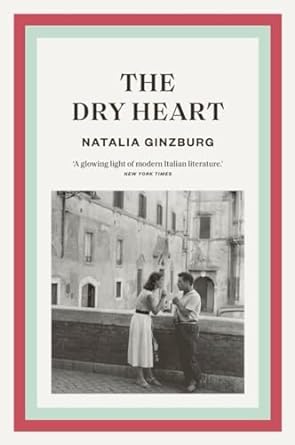
Last year I read All Our Yesterdays, which was my first experience of Natalia Ginzburg’s writing, and I absolutely loved her unfussy, direct style. The Dry Heart (1947 transl. Frances Frenaye 1952) is a much shorter work at just 108 pages but it packs a real punch.

On the first page, the unnamed narrator is with her husband in their home:

“I took the revolver out of his desk drawer and shot him between the eyes. But for a long time already I had known that sooner or later I should do something of the sort.”

And so this is a whydunit rather than a whodunit, as we are taken back to a time when a young, naïve girl marries a man who she knows does not love her:

“When a girl is very much alone and leads a tiresome and monotonous existence, with worn gloves and very little spending money, she may let her imagination run wild and find herself defenceless before all the errors and pitfalls which imagination has devised to deceive her.”

Initially her husband Alberto is interested in her, but not romantically. He reads Rilke to her and listens to all she has to say. But he is in love with Giovanna and he never pretends otherwise. They marry despite ambivalence on both sides.

She has friends, including Francesca who lives more independently and freely; and Augusto who is her husband’s friend but also kind and genuine towards her.  Yet the narrator still seems very isolated, and lonely within her marriage. Alberto obfuscates and disregards her feelings. Who she is and how his behaviour impacts on her is of no consequence to him.  

“I wanted to know a lot more about his feelings for me, but I couldn’t talk to him for long about anything important because it bored him to try and get to the bottom of things and turn them over and over the way I did.”

The simple, direct language lends itself to the length of the novella and also emphasises youth of narrator. The complexity of The Dry Heart lies in the characterisation and builds an intriguing portrait of a marriage.

Despite having undertaken such a violent act, the narrator doesn’t ask for sympathy, and doesn’t justify herself. She presents what happened without a trace of sentimentality or self-pity. Possibly she is detached and deeply traumatised, but as the reader comes to her at the point of the shooting, we don’t know if this voice is one of trauma or long-established.

By refusing to have the narrator engage in self-justification and avoiding any sense of authorial knowingness or psychological explanation, Ginzburg firmly places the why in the readers hands. It’s a masterstroke: she highlights patriarchal oppression, psychological warfare in marriage, the pitiable choices available for women and the danger of dismissing fellow human beings, without being remotely heavy-handed.    

The Dry Heart is hugely impressive and I’m looking forward to exploring Ginzburg further, thanks to the wonderful Daunt Books who are doing such a great job reissuing her work in translation.

It’s probably a mistake to follow every meandering of our feelings and waste time listening to every echo from within. That, in fact, is no way to live.”

To end, from a dry heart to a cold one:

“Everybody is a teenage idol.” (Barry Gibb)

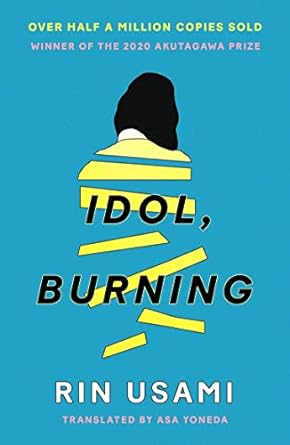
Idol, Burning by Rin Usami (2020 transl. Asa Yoneda 2022) took me into a world I knew nothing about – that of having an oshi. It is a complex culture and there are lots of interesting articles online about it. For the sake of brevity in this post I’ll describe it as where fandom is taken to another level, with devotional idolatry of your oshi, with apologies for huge oversimplification.

At the start of the novel, sixteen-year-old Akari is waking up to her social media DMs going into overdrive: her oshi, Masaki Ueno, part of boy band Maza Maza, has punched a fan. We follow her through the subsequent days as she struggles with the fallout of his behaviour.

Akari struggles even when things were going well with her oshi. She not academic, she doesn’t like her part-time job but she needs it to pay for all the merchandise associated with her oshi. (Without hammering it home, Usami makes it really clear the financial demands of having an oshi, and how this is exploited by merchandisers.) Her father is away overseas and she’s aware she frustrates her mother and studious sister.

Akari’s mind troubles her with a lack of focus outside her oshi, and her body troubles her too:

“Just being alive took a toll. To talk to someone you had to move the flesh on your face. You bathe to get rid of the grime that built upon your skin and clicked your nails because they kept growing. I exhausted myself trying to achieve the bare minimum, but it had never been enough. My will and my body would always disengage before I got there.”

What helps is her oshi:

“When my eyes met his, they reminded me how to really see. I felt an enormous swell of pure energy, neither positive nor negative, come rising up from my very foundation, and suddenly remembered what it felt like to be alive.”

Akari lives a substantial amount of her life online. Following her oshi’s accounts; blogging about her oshi; chatting with others who share her obsession and understand.

“Narumi sounded the same in person as she did online. I looked at her face, the round eyes and concerned brows overflowing with tragedy, and thought, There’s an emoji like that.

[…] Her facial expressions changed like she was switching out profile pictures.”

What was really clever in this novella (115 pages) and its translation is how Usami changed Akari’s tone and language depending on the medium she was using. The reader could see clearly how the person she created online through her blog and social media interactions wasn’t entirely authentic. It wasn’t entirely inauthentic either, and some of her closest relationships are with those she speaks to online – who of course, may not be entirely authentic either.

“When I pictured a world without Masaki, I thought about saying goodbye to the people here, too. It was our oshi that brought us together, and without him, we’d all go our separate ways. Some people moved over into different genres like Narumi had, but I knew I could never find another oshi. Masaki would always be my one and only. He alone moved me, spoke to me, accepted me.”

It’s a lonely world and there are hints Akari has been diagnosed with depression.

Through her devotion to Masaki we see all that Akari can do: she can be focussed, she can be insightful and she can be sensitive. It’s just that nothing other than her oshi prompts these behaviours.

We never learn the truth of Masaki’s actions and I was pleased about this. It is not his story, and while demonstrating the fallout of a celebrity flaming, Usami keeps the focus tightly on Akari. There is a Q&A with the author at the back of the novel and I wasn’t surprised to read that she has an oshi herself, because her portrayal of Akari is never patronising or pitying.

What Idol, Burning explores is how we all have to find a way to live, and that when this is focussed on something external and unpredictable – like a person and their constructed celebrity persona – then you can be in an incredibly vulnerable position. The novella ends on a tentatively positive note and I hoped Akari would learn to be the protagonist of her own life, rather than giving that power over so completely to someone else.

To end, I should definitely choose some J-pop, but I know absolutely nothing about it. So it’s back to 80s cheese, which I do know about 😀 Idol by name, Idol by nature…

“It takes courage to grow up and become who you really are.” (e. e. cummings)

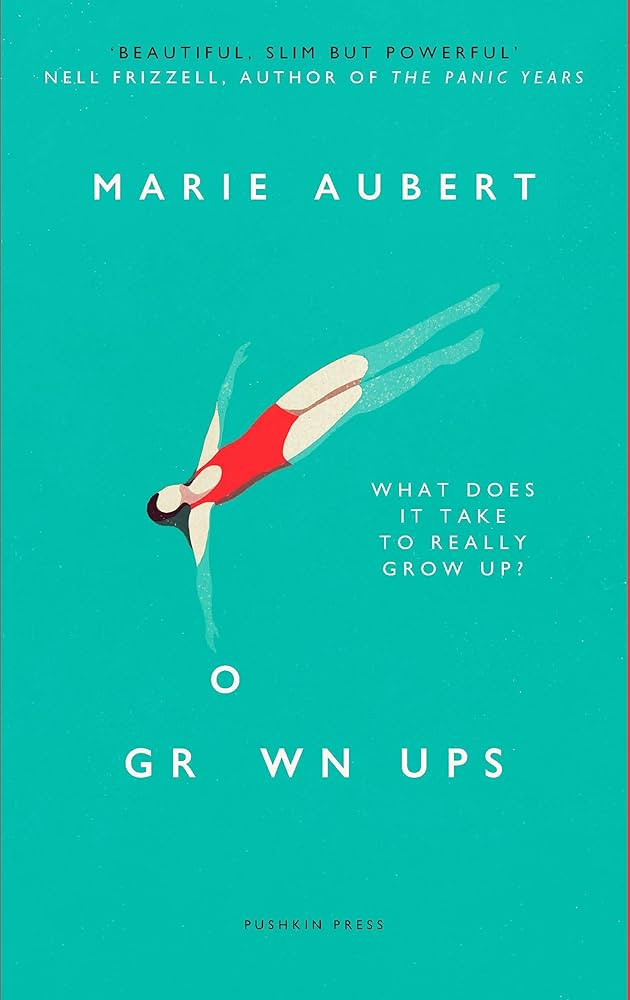
The blurb on the cover of my edition of Grown Ups by Marie Aubert (2019 transl. Rosie Hedger 2021) pushes it as ‘the perfect summer read’ and ‘pure escapism’ with which I couldn’t disagree more. Obviously we all have different reactions to books, but for me a novella (154 pages) about a woman coming to terms with her rapidly reducing choices regarding fertility, while at the summer house of her family with all its inherent tensions and rivalries, didn’t feel remotely escapist. Even when it’s darkly humorous and set in a log cabin in Norway 😉

Grown Ups features a very unlikable protagonist in Ida. She behaves really badly by anyone’s standards. But she was also recognisable and (somewhat) sympathetic.

At the start of the novel she is at a Swedish clinic having her eggs frozen:

“One day, I thought as I lay there in the gynaecology chair, one day things have to work out, one day, after a long line of married and otherwise committed and uninterested and uninteresting men, things have to work out, just lying there made me believe both men and child might materialise, just the fact that I was there and actually doing it was a promise that there was more to come, one day.”

I really felt for Ida. As the quote shows, she is feeling a bit desperate regarding the future as she turns forty, but pinning her hopes on a fantasy. As the story develops, the ambivalence she feels about what that future might look like is subtly portrayed. She doesn’t really seem to like children very much, but she doesn’t want that choice taken away from her. If she truly wants a committed relationship, why does she keep seeking out men who are already committed to someone else?

She travels to the family summerhouse in Norway for her mother’s birthday. Her sister Marthe is there with her husband Kristoffer and step-daughter Olea. The sisters relationship is full of long-held petty tensions, but it felt like they could actually be really close if they would just step outside of these entrenched behaviours. It doesn’t help that Marthe has redecorated the cabin without asking or even discussing it with Ida. She is also pregnant.

“‘I’m not as tough as you are,’ Marthe says, sounding a little sarcastic. It’s always the same, every summer, I’m quick to get into the water while Marthe takes her time, and then we each make digs about which approach is best.”

One of the hardest things to read in the book is Ida’s treatment of Olea. Recognising that Olea and Marthe don’t get on, Ida manipulates the child to increase her opposition to Marthe, just to prove something to Marthe and herself. She seems to have no fondness for Olea, and everything is performative rather than felt or understood.

“I’m the grown up now, I’m good at this. My tone is calm and kind, it feels familiar, like how things ought to be […] See, Marthe, I can do this, I’m the one who’s supposed to be doing this.”

Ida is destructive in her behaviour but only half-recognises this. I felt with Olea she didn’t really see the child as a person so didn’t fully recognise what she was doing. Flirting with Kristoffer on the other hand, she is fully aware of…

I’m making Ida sound more unlikable than she is and not doing justice to Aubert’s subtlety at all! The hurt Ida is experiencing is so clear, she is just seeking entirely flawed ways of managing that pain. Although she mentions friends, they are not named and she comes across as very isolated, particularly when her mother arrives with partner Stein.

“I feel the injustice, rampant and raging, there’s no one there to console me”

There’s also a passage where Ida describes dating and her hopes for more, where my heart just broke for her. It was filled with so much anger and loathing towards herself.

I looked on goodreads and yep, some readers really hated Ida 😀 But for me, while a lot of her behaviour was downright awful, I thought she was realistically portrayed as someone who has grown up thinking love is conditional and now doesn’t know who she is or what she really wants.

Grown Ups is well paced and things aren’t all tied up neatly at the end, which I liked as it didn’t undermine Ida’s situation or her feelings. I did have a sense Ida would carry on but maybe do a bit better. Unlike at the start of the story, there was hope for her grounded in something real.

To end, two sisters who seem to get on better than Ida and Marthe, singing about the struggles of trying to be grown up and a problem Ida has definitely experienced:

“Life was not an art-form, or rather, it was an extremely mixed genre.” (Antal Szerb)

Back in February, I read a collection of Antal Szerb’s short stories for the #ReadIndies event: Love in a Bottle published by Pushkin Press. I really enjoyed his writing and had his novel Journey by Moonlight (transl. Len Rix 2000) in the TBR too, which I decided to save for this week’s 1937 Club hosted by Kaggsy at Kaggsy’s Bookish Ramblings and Simon at Stuck in a Book.

When I think of farce, I tend to think of very broad-strokes comedy. Yet Journey by Moonlight manages to portray farcical circumstances with light humour and characterisation of great subtlety.

It begins with Mihály and Erzsi on honeymoon, having decided to formalise their relationship after an affair behind the back of Erzsi’s husband Zoltan.

“It was not exactly new or surprising to her that Mihály could say and do things she failed to understand. For a time she had successfully concealed her lack of comprehension, wisely asking no questions and acting as if eternally familiar with everything to do with him. She knew that this wordless assumption of authority, which he thought of as her ancestral, intuitive woman’s wisdom, was her strongest means of holding on to him.

[..]

And yet they had married because he had decided they understood each other perfectly, and that, for both, the marriage rested on purely rational foundations and not fleeting passion. For just how long could that fiction be sustained?”

Well, in answer to that question, not very long at all. Mihály loses Erzsi on a train in Italy and makes very little effort to reunite with her. Hardly surprising, given that even when they were physically together she was an abstract concept to him more than an actual living, breathing woman, his wife.

“[Erzsi] had become for him a sort of beautiful memory. He drank heavily to sustain this mood, to make himself believe that he wasn’t with Erzsi but with the memory of Erzsi. With Erzsi as history.”

Mihály is a drifter. To all appearances he has lived a life of bourgeois predictability, but inwardly he has drifted into it. Now he creates an outward life which reflects his inner life.

“At home and abroad he had been schooled in mastery. Not self-mastery, but the mastery of his family, his father, the profession which did not interest him. Then he had taken his place in the firm.

[…]

He had forced himself to become something other than what he was, to live never after his own inclination but as he was expected to. The latest and not least heroic of these exertions had been his marriage.”

The difficulty for Mihály seems to be recognising what his own inclinations are. He hasn’t supressed any great yearning or talent to take the path he has.

His overwhelming preoccupation is with the past. Acknowledging “there’s no cure for nostalgia”, he finds it impossible to live in the now or to take meaningful action in the present. As Erzsi’s ex-husband observes, Mihály is a man “so utterly withdrawn and abstracted that you have no real relationship with anybody or anything”.

At the start of his honeymoon he runs into a childhood friend, conman and thief, János Szepetneki. This sends Mihály into a protracted reverie, thinking about his other friends from that time, the elusive and compelling siblings Éva and Tamás Ulpius, and the religiously-minded Ervin. They will recur throughout the narrative, both absent and present as memories, symbols and occasionally like János, actual people. 

What stops this being completely tedious and self-indulgent is the strong vein of humour running through Journey by Moonlight. It is not overtly comic but it is consistently ironic. Mihály is both serious and faintly ridiculous and his most dramatic moments are consistently undermined.

There are entertaining interludes with the various people he encounters. My favourite occurs when the one decisive act he plans for himself is halted by an almost stranger insisting he become a godfather to a child he has never met. This request for lifelong duty occurs for no apparent reason and is one which Mihály greets with extreme reluctance. And yet, he is drawn in and distracted from his course:

“How distressing that the most sublime moments and stages of our lives can be approached only with the most banal expressions; and that, probably, these are indeed our most banal moments. At such times we are no different from anyone else.”

Yet Szerb doesn’t let the humour undermine the message of Journey by Moonlight. He is exploring how, as human beings, we recognise and live a meaningful, worthwhile life for ourselves. It’s a fine balance which he achieves expertly (the only clunky part for me was a long exposition by an academic friend of Mihály’s on dying as erotic act).

“And again he had the feeling that the really important things were happening elsewhere, where he was not; that he had missed the secret signal. His road led absolutely nowhere and his nostalgia now would gnaw him eternally, remain eternally unquenched, until he too departed.”

Szerb portrays the despair of human beings alongside our ridiculousness, and he does it all with great compassion.

“And sublime and terrible things always happened to him when life was stupid and precious.”

Marina Sofia also reviewed Journey by Moonlight this week, and you can read her wonderful post here.

To end, of the many songs about the moon, I chose this one from björk, because I thought it fitted the tone of Journey by Moonlight well. She takes her art seriously but she’s not afraid to be silly too:

“While there is life there is always the chance that something might happen.” (Antal Szerb)

This week I’m focussing on Pushkin Press as part of Kaggsy and Lizzy’s #ReadIndies event in order to read four books that have long been in the TBR. For this final post, my read is Love in a Bottle by Antal Szerb (1922-1943, transl. Len Rix 2013)

This was a really interesting collection, because the stories are presented chronologically and there’s a big gap whereby Szerb’s style changes considerably.

The first three stories are from 1922-23. Ajandok’s Betrothal, The White Magus, and The Tyrant all have a fable-like quality. Told in the third person, they are set in a timeless period and within realities that verge on mythical. While they were very well written, and diverting enough, I didn’t find them hugely interesting.

The rest of the stories are from 1932-1943 and these I found much more original and compelling. The first is Cynthia, a fragment which Pushkin Press omitted in a previous edition as Szerb probably didn’t intend it for publication. It begins:

“When they threw me out of Cambridge for my poor taste in neckties and generally immoral conduct, I enrolled at University College London, whose chief claim to fame (though they kept this private) was that its Dean was obliged, as a matter of principle, to see off any clergymen who dared set foot on the premises.”

I immediately felt hopeful that this change in tone and setting would be much more to my liking 😀

The tale itself is told from the point of view of an unpleasant but believable lothario who doesn’t seem to like women very much. This persona recurs through some of the other stories. In A Dog Called Madelon, a man laments that he has never been able to sleep with aristocratic women, despising the shop assistant he is with:

“He had been reflecting on the way his whole life had been frittered away on a procession of frightful little Jennys, when ever since boyhood he had yearned for a Lady Rothesay. History held the sort of erotic charge for him that others found in actresses’ dressing rooms – a truly great passion required three or four centuries historical background at the very least.”

In Musings in the Library, an “anti-Don Juan” who finds “women rarely please me” manages to completely fumble a fledgling love affair.

What stops these characters from being completely alienating to the reader is firstly, the wry humour that runs through the stories, and secondly the deep inadequacy of the protagonists. They are not meant to be heroic in any way, but rather deluded and sad. The stories all end in their failure, often with ironic circumstances.

In the titular tale, Szerb returns to mythology with Sir Lancelot and his love for Guinevere, but this is markedly different to the previous myth-like stories. Love in a Bottle has a more individual, authentic voice to the narration, and the humour of the contemporary-set tales is evident here too.

Szerb seems to view romantic love in these stories with some scepticism, but not disdain. It is the flawed characters which mean love is never fully realised, rather than problems with the idea itself. In fact, there is a feeling of hope towards love in the way Szerb consistently returns to the theme, but it is the humans involved who make it become ridiculous.

His tone is never bitter though, and he doesn’t judge his characters too harshly. To me Szerb seemed to be highlighting foibles while suggesting no-one was above them.

I also enjoyed Fin de Siècle where Szerb seemed to be having a lot of fun satirising writers. Thus Dr Johnson is noted for his “immortal banalities” and a group of writers who gather together include:

“Lionel Johnson, who would deliver his observations about the weather in the manner of a revelation: ‘There was a thick fog in Chelsea this morning.’ he would regularly announce, and glare balefully around the room, his hand clapped on some invisible sword.”

The humour, intelligence and readable style of the stories in Love in a Bottle has made me keen to explore Szerb more. Fortuitously I have Journey by Moonlight lined up for Kaggsy and Simon’s 1937 Club which is running 15-22 April – can’t wait!

“Looking back on the blissful days of my youth, as they begin to slip away from me, I can see now the best of them were those spent in the Bibliothèque Nationale in Paris.”

“My world was small and terrible.” (Isaac Babel)

This week I’m focussing on Pushkin Press as part of Kaggsy and Lizzy’s #ReadIndies event to finally read four books that have long been in the TBR. For this third post today my read is Odessa Stories by Isaac Babel (1916-1937 transl. Boris Dralyuk 2016).

The Introduction to this volume by translator Boris Dralyuk is really informative and provides some fascinating context to Babel’s writing. Odessa was a booming port when Babel was born in 1894; in 1900 around 140,000 of its 400,000 population was Jewish. Babel was part of a well-to-do family but was drawn to Odessa’s underbelly, writing stories about the legendary gangsters of the city.

Dralyuk also explains about translating the melting-pot language of Odessa, so I highly recommend reading the Introduction before you start on the stories (I often read Introductions at the end). Babel was only 45 when he was killed in Stalin’s purges.

The volume is divided into three parts: Gangsters and Other Old Odessans; Childhood and Youth; and Love Letters and Apocrypha. I always struggle to write about short story collections and generally Babel’s stories are so short that I don’t want to give spoilers. Here I just want to give a flavour and you can see if you might want to seek out these stunning stories for yourself.

The first part is mainly told in the third person and weaves together tales of violence and corruption, with recurring characters including “Benya Krik, gangster and King of the gangsters”. The tales are colourful and carnivalesque, but Babel never allows the broader strokes to obscure the unlawful methods that so many live by:

“At this wedding they served turkey, roast chicken, goose, gefilte fish and fish soup in which lakes of lemon glimmered like mother-of-pearl. Flowers swayed above the dead goose heads like lush plumage. Does the foamy surf of Odessa’s sea wash roast chickens ashore?”

At the same time, he doesn’t position the reader above the gangsters or way of life. Babel suggests that this side of Odessa is as it is because this the logical way to be, and it has emerged as part of the society, laws and political structures that surround it:

“Let’s not throw dust in each other’s eyes. There’s no one else in the world like Benya the King. He cuts through lies and looks for justice, be it justice in quotes or without them. While everyone else, they’re as calm as clams. They can’t be bothered with justice, won’t go looking for it – and that’s worse.”

The second part of the stories in Childhood and Youth becomes more personal, with first-person tales that follow on from one another in some instances. I understand The Story of My Dovecote is the most famous, and rightly so. Within this brilliant collection, it still stands out. (Skip the next two paragraphs if you don’t want to know any details in advance.)

A young boy has spent five of his ten years coveting a dovecote. He manages to find ways around the anti-Semitism at his school to do well academically and get the reward of finally being able to buy his doves. He sets out to the market with his money and gets his beloved birds, tucking them into his jacket. If your heart is sinking at this description, you are absolutely right…

The story is fifteen pages in this edition and completely devastating. I would urge anyone to read it, but it will absolutely stay with you. It will rip your heart out and stamp all over it. The final word of this story is “pogrom”.

There are lighter stories in this section too, such as The Awakening, about a precocious young man:

“Writing was a hereditary occupation in our family. Levi Yitzchak, who went mad in his old age, had spent his whole life composing a tale titled A Man With No Head. I took after him.”

Odessa Stories was my first experience of reading Babel and I was blown away. Babel clearly enjoyed the almost fabulist tales of Benya the King, but somehow never glamorised him. His writing is hugely entertaining but also truthful – the violence towards people and animals suddenly appears in the midst of the stories and jolts the reader to remember the visceral realities of what is being described.

In evoking the worst of human behaviour in Dovecote, Babel is restrained and absolutely drives home the tragedy.

Babel’s writing is intensely human, marrying together humour, violence, pathos and beauty seamlessly. I will definitely seek out more by him on the strength of Odessa Stories. Sadly, there isn’t much as his life was cut short. However, Pushkin Press publish Red Cavalry, another short story collection.

“For the first time I saw my surroundings as they actually were – hushed and unspeakably beautiful.”

Novella a Day in May 2022 No.25

Freetown – Otto de Kat (2018, trans. Laura Watkinson 2020) 142 pages

At first I thought Freetown by Otto de Kat was going to be a very different novella, and I wasn’t sure about it. It opens with Maria talking to ex-lover Vincent about the disappearance of Ishmaël, a refugee from Sierra Leone who delivered her papers and subsequently became like a son to her.

This beginning made me think the novella was likely to be description of the search for Ishmaël and an exploration of his life. I wasn’t sure that such a story could be adequately told in such a short form. But instead, Ishmaël’s disappearance serves as the motivator for Maria and Vincent to reconsider their shared history.

Maria approaches Vincent as a confidant partly because of their previous intimacy, partly because of his work as a psychotherapist. The chapters are labelled with the two characters names and each serves as silent interlocutor to the other. Maria explains how Ishmaël came into her life:

“The conversation didn’t exactly flow, not that first time. He just nodded and gave me a hint of a smile. All that rain made it look more like crying. I gave him 10 euros, and thanked him for delivering our newspaper ….

I told him to come back if he was ever out of work. And that maybe I could help him. I’ve often wondered why I said that.”

When Vincent takes over the narrative we realise he is still very attached to Maria, and that he’s not really got over their separation:

“That is why I kept going. I am hoping they will find something new, go and do something else. I never managed that myself. I just ended up in a vague fog. I live by touch, doing everything by half measures in a state of semi consciousness.”

As the story progresses we learn more about Vincent and Maria’s relationships, with each other and with their spouses. Ishmaël however, remains elusive. Although at the beginning of the story Maria proclaims him family, we don’t really get to know him and it is questionable how much Maria did:

“All the time I knew him, he was always waiting… Always ready to go, to keep on running. That too.”

This doesn’t mean her grief is any less though, and there is a sense of grieving throughout Freetown. Both Vincent and Maria seem to carry a lot of sadness for times past. Ultimately, they seem to be telling one another stories of loss.

The theme is emphasised through what is missing from the narrative. Ishmaël initially seems to be established as the central character, but remains an absent presence throughout. Maria and Vincent rarely speak within one another’s narratives despite being spoken to.

“He’s been gone a year now, and I simply cannot explain who he really was. But whenever I attempt to characterise him, I just end up saying something about myself.”

Freetown is about the stories we tell ourselves, our need for personal narratives and how we constantly reconstruct these. It shows how we try and make sense of the world when it doesn’t always make sense, and how unknowable even the closest people in our lives can be.

It also suggests that despite these limitations we keep on trying, because human connection – however fleeting and flawed – is worth it even with the pain of its loss.

“He nearly always succeeded in telling me a story I understood.”

Novella a Day in May 2022 No.9

The Bathroom – Jean-Philippe Toussaint (1985, trans. Nancy Amphoux & Paul De Angelis 1990) 102 pages

A young man decides he’s going to stay in his bathtub. Thankfully, his long-suffering girlfriend Edmondsson is happy to fund this indolent lifestyle. He leaves on occasion to talk to his decorators (who aren’t decorating as Edmondsson is vacillating between white and beige paint) and sit in the kitchen. Otherwise, he’s back in the bath:

“A friend of my parents was passing through Paris and came to see me. From him I learned it was raining. Stretching out an arm toward the washbasin, I suggested he take a towel […] I didn’t know what he wanted from me. When the silence had begun to seem permanent, he began to tell me about his latest professional activities, explaining that the difficulties he had to contend with were insurmountable since they were linked to incompatibilities of temperament among persons at the same hierarchical level.”

The novella is in three sections, each paragraph numbered. This unusual structure isn’t as irritating as it should be. It somehow emphasises the banality of his existence without becoming banal itself.

In the middle section, the narrator heads to Venice. In this beautiful and historic city, he mainly stays in his hotel room, taking up darts:

“When I played darts I was calm and relaxed. Little by little, emptiness would creep over me and I would steep myself in it”

We’ve seen that he can be socially awkward, guiding people into the toilet when showing them round the flat, mildly insulting the previous tenants, but later in the novella it seems this behaviour could be deliberate:

“I left the hotel and, in the street, asked a running man the way to the Post Office. I’ve always enjoyed asking people in a hurry for information.”

In the third section he heads back to Paris although I lived in hope Edmondsson was finally sick of him.

Apparently Touissaint is a fan of Beckett and The Bathroom definitely has the feel of Beckett: nihilistic, unreal verging on surreal, contained environments, experimental forms. It echoes itself and takes the reader in disorienting circles.

“Immobility is not absence of movement but absence of any prospect of movement.”

Not a novel for when you want a ripping yarn, but an interesting quick read.

“I would ask her to console me. Softly, she would ask, Console you for what? Console me, I would say”