“Two English meals a day would have done for me.” (Antal Szerb, The Pendragon Legend)

This month I started off my reading for Kaggsy and Lizzy’s #ReadIndies event with an author that the event had led me to discover last year: Gertrude Trevelyan. So it seemed apt to end this month’s reading with another author #ReadIndies had introduced me to last year: Antal Szerb. In 2024 reading Love in Bottle in February led to Journey by Moonlight for the 1937 Club in April. This time I’m looking at The Pendragon Legend (1934, transl. Len Rix 2006) which is published by the always reliable Pushkin Press.

The Pendragon Legend is Szerb’s first novel, and utterly bonkers. As I was reading it I remembered why I had enjoyed my previous Szerb reads so much: his wit, fun, intelligence without superiority, gentle ribbing without malice, make him such a joy.

The narrator Janos Bátky is a young scholar who spends his time hanging around the British Library Reading Room. Luckily for him, he has no need for money:

“My nature is to spend years amassing the material for a great work and, when everything is at last ready, I lock it away in a desk drawer and start something new.”

His current interest is Rosicrucians: “Nothing interests me more than the way people relate emotionally to the abstract.”  This ancient secretive organisation’s interests include: “Changing base metals into gold, deliberately prolonging the life of the body, the ability to see things at a distance, and a kabbalistic system for solving all mysteries.”

This leads to him being introduced to the Earl of Gwynedd who invites Janos to stay at Pendragon Castle and make use of his library. Janos heads off to Wales with some acquaintances in tow, unheeding the warnings of a mysterious telephone call… (why do people never heed mysterious telephonic warnings??)

Shortly into his stay there are both earthly concerns when bullets are stolen from his gun and metaphysical concerns where he seems to be haunted:

“Just to be clear on this: not for a moment did I think it could be any sort of ghostly apparition. While it is a fact that English castles are swarming with ghosts, they are visible only to natives – certainly not to anyone from Budapest.”

(This isn’t the only time Janos confuses England and Wales, despite the fact he encounters similar ignorance when people insist he must be German and that Hungary doesn’t exist: “’Come off it. Those places were made up by Shakespeare.’”)

There are femme fatales, reluctant heroes, knowing castle staff… my favourite character was the capable and blunt Lene Kretsch:

“This was how our friendship began: I set myself on fire and she put me out. I’d been sitting by the hearth with The Times. I’ve never been able to handle English newspapers – apparently one has to be born with the knack of folding these productions into the microscopic dimensions achieved by the natives – and, as I flicked a page over, the entire room filled with newsprint.”

And so The Pendragon Legend is a mystery, a thriller, a Gothic ghost story, a fable, and with the arrival of the Earl’s niece Cynthia, a romance, despite Janos’ callowness:

“I can never feel much attraction to a woman whom I consider clever – it feels too much like courting a man.”  

Maybe Cynthia has more tolerance for him as she comes from a family where: “At most, the Pendragons tolerate women within the limits of marriage, and even then without much enthusiasm.”

Szerb satirises romance along with all the other tropes and genres he employs, but always with affection and never with any disdain. Somehow Janos and assorted friends bumble their way through the mystery, despite the poisonings, blackmail and hauntings which dog their steps.

My one reservation is that it became a bit too esoteric towards the end, but this is a matter of personal taste and feels a bit mean-spirited in the face of such an affectionate and fun tale.

If you fancy a pacy, ridiculous, learned adventure, The Pendragon Legend is for you.

“I was filled with the tenderness I always feel – and which nothing can match – when I encounter so many books together. At moments like these I long to wallow, to bathe in them, to savour their wonderful, dusty, old-book odours, to inhale them through my very pores.”

“Life was not an art-form, or rather, it was an extremely mixed genre.” (Antal Szerb)

Back in February, I read a collection of Antal Szerb’s short stories for the #ReadIndies event: Love in a Bottle published by Pushkin Press. I really enjoyed his writing and had his novel Journey by Moonlight (transl. Len Rix 2000) in the TBR too, which I decided to save for this week’s 1937 Club hosted by Kaggsy at Kaggsy’s Bookish Ramblings and Simon at Stuck in a Book.

When I think of farce, I tend to think of very broad-strokes comedy. Yet Journey by Moonlight manages to portray farcical circumstances with light humour and characterisation of great subtlety.

It begins with Mihály and Erzsi on honeymoon, having decided to formalise their relationship after an affair behind the back of Erzsi’s husband Zoltan.

“It was not exactly new or surprising to her that Mihály could say and do things she failed to understand. For a time she had successfully concealed her lack of comprehension, wisely asking no questions and acting as if eternally familiar with everything to do with him. She knew that this wordless assumption of authority, which he thought of as her ancestral, intuitive woman’s wisdom, was her strongest means of holding on to him.

[..]

And yet they had married because he had decided they understood each other perfectly, and that, for both, the marriage rested on purely rational foundations and not fleeting passion. For just how long could that fiction be sustained?”

Well, in answer to that question, not very long at all. Mihály loses Erzsi on a train in Italy and makes very little effort to reunite with her. Hardly surprising, given that even when they were physically together she was an abstract concept to him more than an actual living, breathing woman, his wife.

“[Erzsi] had become for him a sort of beautiful memory. He drank heavily to sustain this mood, to make himself believe that he wasn’t with Erzsi but with the memory of Erzsi. With Erzsi as history.”

Mihály is a drifter. To all appearances he has lived a life of bourgeois predictability, but inwardly he has drifted into it. Now he creates an outward life which reflects his inner life.

“At home and abroad he had been schooled in mastery. Not self-mastery, but the mastery of his family, his father, the profession which did not interest him. Then he had taken his place in the firm.

[…]

He had forced himself to become something other than what he was, to live never after his own inclination but as he was expected to. The latest and not least heroic of these exertions had been his marriage.”

The difficulty for Mihály seems to be recognising what his own inclinations are. He hasn’t supressed any great yearning or talent to take the path he has.

His overwhelming preoccupation is with the past. Acknowledging “there’s no cure for nostalgia”, he finds it impossible to live in the now or to take meaningful action in the present. As Erzsi’s ex-husband observes, Mihály is a man “so utterly withdrawn and abstracted that you have no real relationship with anybody or anything”.

At the start of his honeymoon he runs into a childhood friend, conman and thief, János Szepetneki. This sends Mihály into a protracted reverie, thinking about his other friends from that time, the elusive and compelling siblings Éva and Tamás Ulpius, and the religiously-minded Ervin. They will recur throughout the narrative, both absent and present as memories, symbols and occasionally like János, actual people. 

What stops this being completely tedious and self-indulgent is the strong vein of humour running through Journey by Moonlight. It is not overtly comic but it is consistently ironic. Mihály is both serious and faintly ridiculous and his most dramatic moments are consistently undermined.

There are entertaining interludes with the various people he encounters. My favourite occurs when the one decisive act he plans for himself is halted by an almost stranger insisting he become a godfather to a child he has never met. This request for lifelong duty occurs for no apparent reason and is one which Mihály greets with extreme reluctance. And yet, he is drawn in and distracted from his course:

“How distressing that the most sublime moments and stages of our lives can be approached only with the most banal expressions; and that, probably, these are indeed our most banal moments. At such times we are no different from anyone else.”

Yet Szerb doesn’t let the humour undermine the message of Journey by Moonlight. He is exploring how, as human beings, we recognise and live a meaningful, worthwhile life for ourselves. It’s a fine balance which he achieves expertly (the only clunky part for me was a long exposition by an academic friend of Mihály’s on dying as erotic act).

“And again he had the feeling that the really important things were happening elsewhere, where he was not; that he had missed the secret signal. His road led absolutely nowhere and his nostalgia now would gnaw him eternally, remain eternally unquenched, until he too departed.”

Szerb portrays the despair of human beings alongside our ridiculousness, and he does it all with great compassion.

“And sublime and terrible things always happened to him when life was stupid and precious.”

Marina Sofia also reviewed Journey by Moonlight this week, and you can read her wonderful post here.

To end, of the many songs about the moon, I chose this one from björk, because I thought it fitted the tone of Journey by Moonlight well. She takes her art seriously but she’s not afraid to be silly too:

“While there is life there is always the chance that something might happen.” (Antal Szerb)

This week I’m focussing on Pushkin Press as part of Kaggsy and Lizzy’s #ReadIndies event in order to read four books that have long been in the TBR. For this final post, my read is Love in a Bottle by Antal Szerb (1922-1943, transl. Len Rix 2013)

This was a really interesting collection, because the stories are presented chronologically and there’s a big gap whereby Szerb’s style changes considerably.

The first three stories are from 1922-23. Ajandok’s Betrothal, The White Magus, and The Tyrant all have a fable-like quality. Told in the third person, they are set in a timeless period and within realities that verge on mythical. While they were very well written, and diverting enough, I didn’t find them hugely interesting.

The rest of the stories are from 1932-1943 and these I found much more original and compelling. The first is Cynthia, a fragment which Pushkin Press omitted in a previous edition as Szerb probably didn’t intend it for publication. It begins:

“When they threw me out of Cambridge for my poor taste in neckties and generally immoral conduct, I enrolled at University College London, whose chief claim to fame (though they kept this private) was that its Dean was obliged, as a matter of principle, to see off any clergymen who dared set foot on the premises.”

I immediately felt hopeful that this change in tone and setting would be much more to my liking 😀

The tale itself is told from the point of view of an unpleasant but believable lothario who doesn’t seem to like women very much. This persona recurs through some of the other stories. In A Dog Called Madelon, a man laments that he has never been able to sleep with aristocratic women, despising the shop assistant he is with:

“He had been reflecting on the way his whole life had been frittered away on a procession of frightful little Jennys, when ever since boyhood he had yearned for a Lady Rothesay. History held the sort of erotic charge for him that others found in actresses’ dressing rooms – a truly great passion required three or four centuries historical background at the very least.”

In Musings in the Library, an “anti-Don Juan” who finds “women rarely please me” manages to completely fumble a fledgling love affair.

What stops these characters from being completely alienating to the reader is firstly, the wry humour that runs through the stories, and secondly the deep inadequacy of the protagonists. They are not meant to be heroic in any way, but rather deluded and sad. The stories all end in their failure, often with ironic circumstances.

In the titular tale, Szerb returns to mythology with Sir Lancelot and his love for Guinevere, but this is markedly different to the previous myth-like stories. Love in a Bottle has a more individual, authentic voice to the narration, and the humour of the contemporary-set tales is evident here too.

Szerb seems to view romantic love in these stories with some scepticism, but not disdain. It is the flawed characters which mean love is never fully realised, rather than problems with the idea itself. In fact, there is a feeling of hope towards love in the way Szerb consistently returns to the theme, but it is the humans involved who make it become ridiculous.

His tone is never bitter though, and he doesn’t judge his characters too harshly. To me Szerb seemed to be highlighting foibles while suggesting no-one was above them.

I also enjoyed Fin de Siècle where Szerb seemed to be having a lot of fun satirising writers. Thus Dr Johnson is noted for his “immortal banalities” and a group of writers who gather together include:

“Lionel Johnson, who would deliver his observations about the weather in the manner of a revelation: ‘There was a thick fog in Chelsea this morning.’ he would regularly announce, and glare balefully around the room, his hand clapped on some invisible sword.”

The humour, intelligence and readable style of the stories in Love in a Bottle has made me keen to explore Szerb more. Fortuitously I have Journey by Moonlight lined up for Kaggsy and Simon’s 1937 Club which is running 15-22 April – can’t wait!

“Looking back on the blissful days of my youth, as they begin to slip away from me, I can see now the best of them were those spent in the Bibliothèque Nationale in Paris.”

“My world was small and terrible.” (Isaac Babel)

This week I’m focussing on Pushkin Press as part of Kaggsy and Lizzy’s #ReadIndies event to finally read four books that have long been in the TBR. For this third post today my read is Odessa Stories by Isaac Babel (1916-1937 transl. Boris Dralyuk 2016).

The Introduction to this volume by translator Boris Dralyuk is really informative and provides some fascinating context to Babel’s writing. Odessa was a booming port when Babel was born in 1894; in 1900 around 140,000 of its 400,000 population was Jewish. Babel was part of a well-to-do family but was drawn to Odessa’s underbelly, writing stories about the legendary gangsters of the city.

Dralyuk also explains about translating the melting-pot language of Odessa, so I highly recommend reading the Introduction before you start on the stories (I often read Introductions at the end). Babel was only 45 when he was killed in Stalin’s purges.

The volume is divided into three parts: Gangsters and Other Old Odessans; Childhood and Youth; and Love Letters and Apocrypha. I always struggle to write about short story collections and generally Babel’s stories are so short that I don’t want to give spoilers. Here I just want to give a flavour and you can see if you might want to seek out these stunning stories for yourself.

The first part is mainly told in the third person and weaves together tales of violence and corruption, with recurring characters including “Benya Krik, gangster and King of the gangsters”. The tales are colourful and carnivalesque, but Babel never allows the broader strokes to obscure the unlawful methods that so many live by:

“At this wedding they served turkey, roast chicken, goose, gefilte fish and fish soup in which lakes of lemon glimmered like mother-of-pearl. Flowers swayed above the dead goose heads like lush plumage. Does the foamy surf of Odessa’s sea wash roast chickens ashore?”

At the same time, he doesn’t position the reader above the gangsters or way of life. Babel suggests that this side of Odessa is as it is because this the logical way to be, and it has emerged as part of the society, laws and political structures that surround it:

“Let’s not throw dust in each other’s eyes. There’s no one else in the world like Benya the King. He cuts through lies and looks for justice, be it justice in quotes or without them. While everyone else, they’re as calm as clams. They can’t be bothered with justice, won’t go looking for it – and that’s worse.”

The second part of the stories in Childhood and Youth becomes more personal, with first-person tales that follow on from one another in some instances. I understand The Story of My Dovecote is the most famous, and rightly so. Within this brilliant collection, it still stands out. (Skip the next two paragraphs if you don’t want to know any details in advance.)

A young boy has spent five of his ten years coveting a dovecote. He manages to find ways around the anti-Semitism at his school to do well academically and get the reward of finally being able to buy his doves. He sets out to the market with his money and gets his beloved birds, tucking them into his jacket. If your heart is sinking at this description, you are absolutely right…

The story is fifteen pages in this edition and completely devastating. I would urge anyone to read it, but it will absolutely stay with you. It will rip your heart out and stamp all over it. The final word of this story is “pogrom”.

There are lighter stories in this section too, such as The Awakening, about a precocious young man:

“Writing was a hereditary occupation in our family. Levi Yitzchak, who went mad in his old age, had spent his whole life composing a tale titled A Man With No Head. I took after him.”

Odessa Stories was my first experience of reading Babel and I was blown away. Babel clearly enjoyed the almost fabulist tales of Benya the King, but somehow never glamorised him. His writing is hugely entertaining but also truthful – the violence towards people and animals suddenly appears in the midst of the stories and jolts the reader to remember the visceral realities of what is being described.

In evoking the worst of human behaviour in Dovecote, Babel is restrained and absolutely drives home the tragedy.

Babel’s writing is intensely human, marrying together humour, violence, pathos and beauty seamlessly. I will definitely seek out more by him on the strength of Odessa Stories. Sadly, there isn’t much as his life was cut short. However, Pushkin Press publish Red Cavalry, another short story collection.

“For the first time I saw my surroundings as they actually were – hushed and unspeakably beautiful.”

“I had a lion inside me that wouldn’t shut up!” (Ingrid Bergman)

This week I’m focussing on Pushkin Press as part of Kaggsy and Lizzy’s #ReadIndies event to finally read four books that have long been in the TBR. Today it is a book of two essays, City of Lions by Józef Wittlin and Philippe Sands.

Pushkin Press’ website describes the volume: “Lviv, Lwów, Lvov, Lemberg. Known by a variety of names, the City of Lions is now in western Ukraine. Situated in different countries during its history, it is a city located along the fault-lines of Europe’s history. City of Lions presents two essays, written more than half a century apart – but united by one city.”

The book comes with maps of Lwów and Lviv within the French flaps and photographs throughout which are both useful and illustrative, making a really lovely edition. It also forms another stop on my Around the World in 80 Books reading challenge.

Józef Wittlin was a poet and novelist and his essay My Lwów (1946, transl. Antonia Lloyd-Jones 2016) beautifully evokes his longing for a city he knows has gone forever, with his writing full of nostalgia and loss.

Wittlin is completely aware of his skewed view of the city, having left in 1922 and writing his essay sat in New York so many years later:

“Nostalgia even likes to falsify flavours too, telling us to taste nothing but the sweetness of Lwów today. But I know people for whom Lwów was a cup of gall.”

Yet still he longs for city of his past.

“Alright, so Lwów hasn’t got a decent river, or a legend. What would it need a river for? The urban planners and tourists say that if Lwów were graced with a river, it would be a second Florence. In my view Lwów has more greenery than Florence, though less of the Renaissance. Moreover, it resembles Rome…”

But as Wittlin evokes the cityscape, its smells, food and people with great artistry and passion, world events – recent at the time of his writing – do filter through. In his evocation of a culturally mixed European city in the early twentieth century, he would have been aware that the Jewish population which had made up around a third of Lwów’s inhabitants had been almost entirely wiped out.

“It is not Lwów that we yearn after all these years apart, but for ourselves in Lwów.”

Philippe Sands essay My Lviv (2016) is written in conversation with My Lwów and views the city through the eyes of someone who never lived there, but whose family history – and the reason they had to leave –  is firmly rooted there.

“I could have chosen to turn away from the stories stuffed into the cracks of each building, or what was hidden behind freshly plastered walls. I could have averted my gaze, but I didn’t want to. Observing with care was part of the reason for being there, seeking out what was left, traces of what came before.”

Sands essay is deeply personal as he revisits his grandfather Leon’s home city. It is an experience he feels deep in his bones:

“I understood it to be part of my hinterland, one that was buried deep because Leon would never speak of that past. His long silence hid the wounds of a family that was left and then lost, but from the moment I set foot in the place it felt familiar, a part of me, a place I had missed and where I felt comfortable.”

At the same time, Sands is visiting with broader knowledge of devastation wreaked by the Holocaust, and he sees these layers within Lviv, even when they aren’t overtly commemorated:

“The first time I stood in the courtyard behind the school, in the autumn of 2012, I had no idea what that yard had been used for. Now armed with that knowledge, that this vast and empty place was a gathering point for thousands of final journeys […] it was a place of terrible silences, the expression of a conscious desire not to remember.”

I found City of Lions a deeply moving read. It is an elegy for a lost time, a eulogy for those lost, and a stark reminder that history is lived and died through by ordinary people. Cities grow and change, but they build upon and contain all that has gone before. It is all there if we take the time and care to look.

At the same time, what these two very different evocations of the same city demonstrate so well is that we experience our surroundings through ourselves. Wittlin and Sands are writing as much about themselves as they are about the city, but the essays are no less fascinating for that.

“All women become like their mothers. That is their tragedy. No man does. That’s his.” (Oscar Wilde)

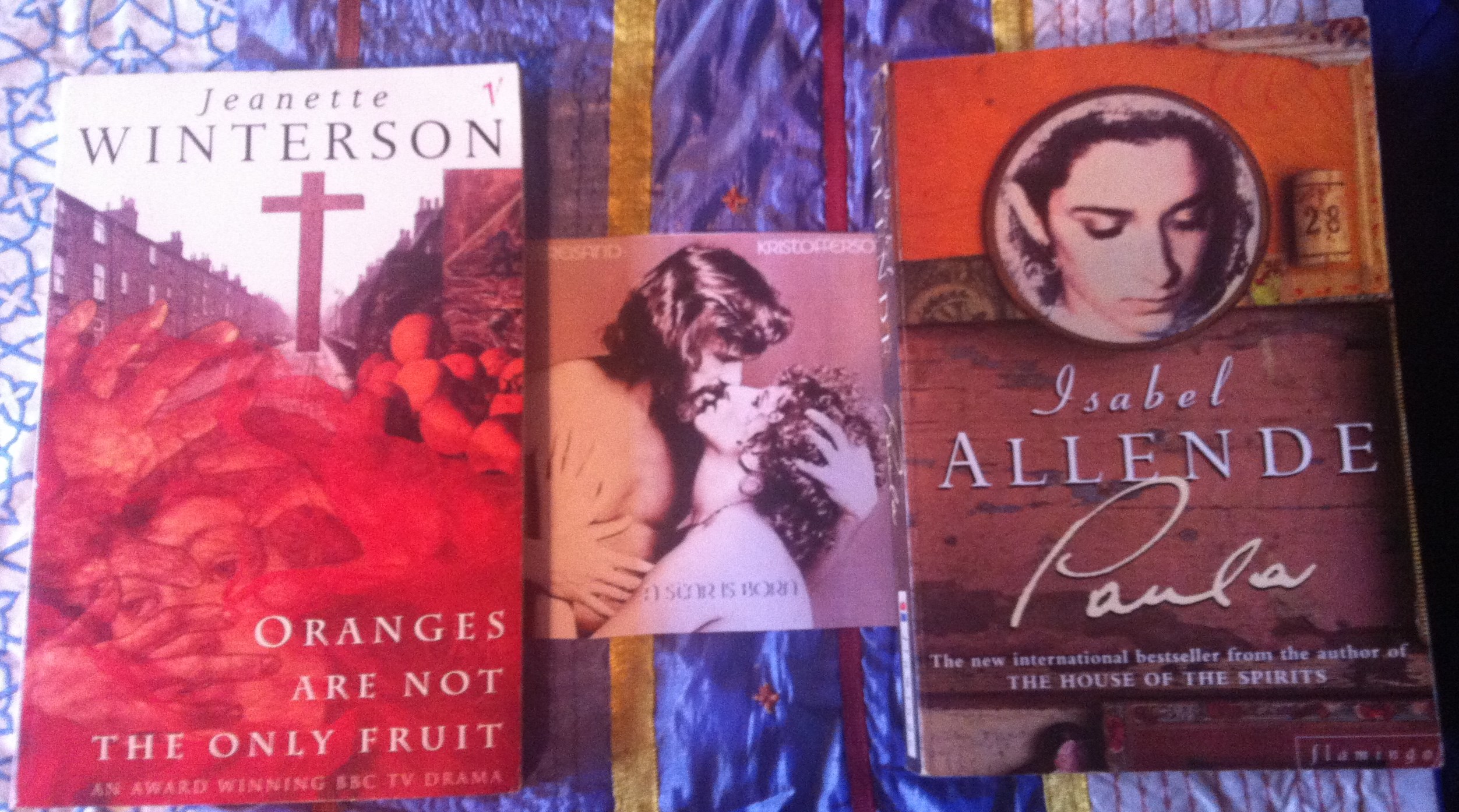
I inherited all the great loves of my life from my mother: literature, the theatre, film, Islay single malt whisky, and cheese that will blow out your nasal passages from 50 metres. We don’t agree on everything: Kris Kristofferson remains an enduring source of contention (me: total  1970s love god, have you seen A Star is Born? She: eyes are too small. Neither of us is willing to back down.) These enormous differences aside, we get on pretty well, and so Mother’s Day is a source of celebration in my family.  In the UK Mother’s Day is 10 March (for once I’ve managed to post on time, in fact a day early as tomorrow will be spent cooking up a feast for the family), so to any of you who aren’t from the UK, Ireland or Nigeria (ie where Mother’s Day is the 4th Sunday in Lent), I apologise and ask that you view this as a postponed/pre-emptive post depending on when Mother’s Day occurs for you. I’ve chosen one book written about a mother from the point of view of a child, and one written from a mother to her child.  Both merge fiction with biography and contain significant sadness, but both are about the triumph of the human spirit. Well, mother-child relationships can be among the most complex…

Firstly, a novel that my English teacher at school thought was very nearly perfectly written: Oranges Are Not the Only Fruit by Jeanette Winterson (1985, my copy Vintage, 1991).  Oranges tells the story of Jeanette, who grows up in an evangelical household in the north of England.  Her mother is a strong, dominant and domineering woman who initially believes Jeanette will help her in her idiosyncratic crusade against sin.  As Jeanette gets older, she realises she is attracted to women, and acts on this.  Her refusal to subdue who she is to the will of her mother leads to a failed religious intervention (almost exorcism) and eventually a breakdown in their relationship.  If this sounds utterly heavy and depressing, let me assure you it’s not.  Humour runs throughout the whole of Oranges, a gentle prodding at the absurdity of life:

““You can always tell a good woman by her sandwiches,” declared Pastor Finch.

My mother blushed.

Then he turned to me and said, “How old are you, little girl?”

“Seven.” I replied.

“Ah, seven,” he muttered. “How blessed, the seven days of creation, the seven branched candlestick, the seven seals.”

(Seven seals? I had not yet reached the Revelation in my directed reading, and I thought he meant some Old Testament amphibians I had overlooked….)

…”Yes,” he went on, “how blessed,” then his brow clouded. “But how cursed.” At this word his fist hit the table and catapulted a cheese sandwich into the collection bag;”

The narrative is interspersed with a fairytale that echoes the main narrative. This serves to broaden the perspective away from its immediate setting, and emphasise that while it is a unique story that is being told, it is also something familiar to us all, a fable.  We may not all be northern English, evangelical Christian and gay, but, in the words of the author:

“Everyone, at some time in their life, must choose whether to stay with a ready-made world that may be safe but is also limiting, or to push forward, often past the frontiers of commonsense, into a personal place, unknown and untried.”

Oranges is fantastically well written (when the author was just 24) and succeeds in being challenging and complex, but also easy to read and reassuring.  The language is poetic and exacting but never overblown:

“We lived in a town stolen from the valleys, a huddled place full of chimneys and little shops and back-to-back houses with no gardens. The hills surrounded us, and our own swept out into the Pennines, broken now and again with a farm or a relic from the war. There used to be a lot of old tanks but the council took them away.”

Oranges is one of my favourite books by one of my favourite authors and so of course, I highly recommend it.  The author was asked if it was autobiographical.  Her answer: “No not at all and yes of course.”  For those of you who enjoy it, I also recommend Why Be Happy when you Could Be Normal?,  Jeanette Winterson’s autobiography, (the title taken from a question her mother asked her when she came out) which shows the story behind Oranges, and also beyond it.

Secondly, Paula by Isabel Allende (1994, my copy Flamingo, 1995 trans. Margaret Sayers Peden). Tragically, in 1991, Isabel Allende’s 28 year old daughter Paula fell into a coma caused by porphyria, and died in 1992 having never recovered. Paula is the story Allende writes for her daughter as she waits for her in the hospital, bringing her novelist’s sensibilities to the story of her family’s life:

“Listen, Paula. I am going to tell you a story, so that when you wake up you will not feel so lost. The legend of our family begins at the end of the last century, when a robust Basque sailor disembarked on the coast of Chile with his mother’s reliquary strung around his neck and his head swimming with plans for greatness.”

Those of you who enjoy Allende’s fiction will find the same style here, and some very recognisable characters from The House of the Spirits. Allende writes vividly and with love of and for her family past and present.

“[Your grandmother] was drinking cheap pisco, and hiding the bottles in strategic places.  You Paula, who loved her with infinite compassion, discovered the hiding places one by one and without a word carried off the empty bottles and buried them amongst the dahlias in the garden.”

“Celia and Nicolas have asked me to come home to California for the arrival of their baby in May. They want me to take part in the birth of my granddaughter; they say after so many months of being exposed to death, pain, farewells, and tears, it will be a celebration to welcome this infant as her head thrusts into life. If the visions I had in dreams come true, as they have in other times, she will be a dark-haired, likeable little girl , with a will of her own. You must get better soon, Paula, so you can go home with me and be Andrea’s godmother.”

Time is not linear or earthbound in Paula, as the family’s past, present and spirits all exist in a mother’s story, evoked in a hospital room. The final third of the book sees Allende stop talking to Paula and instead speak to the reader, as she loses hope that her daughter will recover.   However, the death of her daughter is not an irretrievable loss for Allende who has an acute awareness of the afterlife and sees her family around her whether they are alive or dead.

“She died in my arms, surrounded by her family, the thoughts of those absent, and the spirits of her ancestors who had come to her aid. She died with the same perfect grace that characterised all the acts of her life.”

Paula is a hugely affecting narrative of one of the hardest experiences a mother can live through, but ultimately the enormity of the familial love that surrounds Paula is the strongest force, and this makes it a great Mother’s Day read.

Here are the books alongside the gorgeous Kris.  To my mother I say, Happy Mother’s Day, Maman, and I hope titling this post with a quote from your beloved Oscar compensates for my insistence on presence of Mr Kristofferson.  And yes, I am planning a substantial cheese plate for the meal tomorrow, don’t worry….

Image