Novella a Day in May 2025: No.24

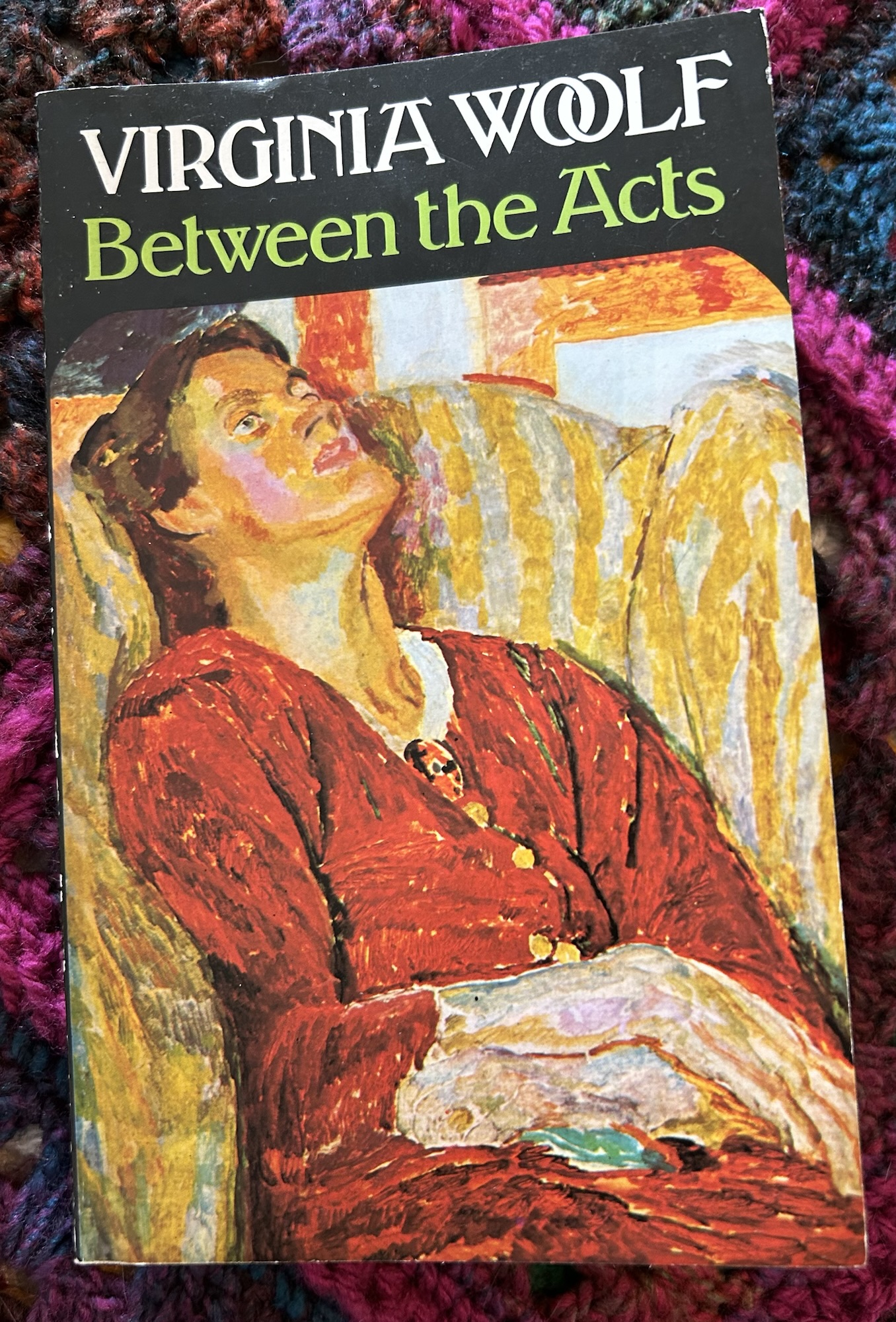
Between the Acts – Virginia Woolf (1941) 159 pages

Between the Acts is Virgina Woolf’s last novel and was published after her death. I’m a bit wary of posthumous novels; a note at the beginning from Leonard Woolf suggests it was pretty much as Virginia intended and only small corrections would have been made had she lived. This is somewhat contradicted by a letter she wrote to her publisher, so it’s impossible to know.

It is set over one day in 1939, before the war starts. It’s summertime, and at Pointz House somewhere in the middle of England, a pageant is taking place as it does every year.

The manor house belongs to the Oliver family: retired Bartholomew Oliver; his endearing, somewhat flaky widowed sister Lucy Swithin, his son Giles and Giles’ wife Isa.

A thread that pulls through the story is Isa’s attraction to gentleman farmer Rupert Haines. Woolf introduces this with startling synaesthetic imagery:

“Isa raised her head. The words made two rings, perfect rings, that floated them, herself and Haines, like two swans downstream. But his snow-white breast was circled with a tangle of dirty duckweed; and she too, in her webbed feet was entangled, by her husband, the stockbroker. Sitting on her three-cornered chair she swayed, with her dark pigtails hanging, and her body like a bolster in its faded dressing-gown.”

I so enjoy Woolf’s inventiveness, and this early passage also stood out, as she sets this tranquil, middle-class, midsummer scene:

“The nurses after breakfast were trundling the perambulator up and down the terrace; and as they trundled they were talking—not shaping pellets of information or handing ideas from one to another, but rolling words, like sweets on their tongues; which, as they thinned to transparency, gave off pink, green, and sweetness.”

But beneath the tranquillity, big emotions are brewing:

“”He is my husband,” Isabella thought, as they nodded across the bunch of many-coloured flowers. “The father of my children.” It worked, that old cliché; she felt pride; and affection; then pride again in herself, whom he had chosen. It was a shock to find, after the morning’s look in the glass, and the arrow of desire shot through her last night by the gentleman farmer, how much she felt when he came in, not a dapper city gent, but a cricketer, of love; and of hate.”

In true British stiff-upper-lipped style, love and hatred are subsumed by social convention and the need to host the pageant. The director Miss La Trobe arrives. My edition has a quote on the back suggesting this is self-portrait by Woolf, which if true is pretty startling:

“Rumour said that she had kept a tea shop at Winchester; that had failed. She had been an actress. That had failed. She had bought a four-roomed cottage and shared it with an actress. They had quarrelled. Very little was actually known about her. Outwardly she was swarthy, sturdy and thick set; strode about the fields in a smock frock; sometimes with a cigarette in her mouth; often with a whip in her hand; and used rather strong language—perhaps, then, she wasn’t altogether a lady? At any rate, she had a passion for getting things up.”

The pageant dramatises scenes from English history, and Elizabeth I is a sight to behold:

“Everyone was clapping and laughing. From behind the bushes issued Queen Elizabeth—Eliza Clark, licensed to sell tobacco. Could she be Mrs. Clark of the village shop? She was splendidly made up. Her head, pearl-hung, rose from a vast ruff. Shiny satins draped her. Sixpenny brooches glared like cats’ eyes and tigers’ eyes; pearls looked down; her cape was made of cloth of silver—in fact swabs used to scour saucepans. She looked the age in person. And when she mounted the soap box in the centre, representing perhaps a rock in the ocean, her size made her appear gigantic. She could reach a flitch of bacon or haul a tub of oil with one sweep of her arm in the shop. For a moment she stood there, eminent, dominant, on the soap box with the blue and sailing clouds behind her. The breeze had risen.”

Large portions of the novel are given over to the script of the pageant, written in verse. Yet astonishingly, Woolf still manages complex characterisation between the acts. There’s a small scene between two characters dismissed by those around them which I found so touching. Lucy Swithin is seen as something of an elderly fusspot; William Doge is a visitor subject to homophobia from Giles, in thought if not in deed but still recognised. At one point Lucy notices William is struggling with the company and takes him off for a tour of the house:

“Mrs. Swithin put her hands to her hair, for the breeze had ruffled it.

“Mr…” she began.

“I’m William,” he interrupted.

At that she smiled a ravishing girl’s smile, as if the wind had warmed the wintry blue in her eyes to amber.”

As always with Woolf, the text is so rich and multilayered and these are really just initial impressions. I’m sure I’d pick up so many other elements on a re-read, or even writing this post again. I just hope that however Woolf felt about Between the Acts, she judged her work more kindly than Miss La Trobe’s view of her pageant:

“She hadn’t made them see. It was a failure, another damned failure! As usual. Her vision escaped her.”
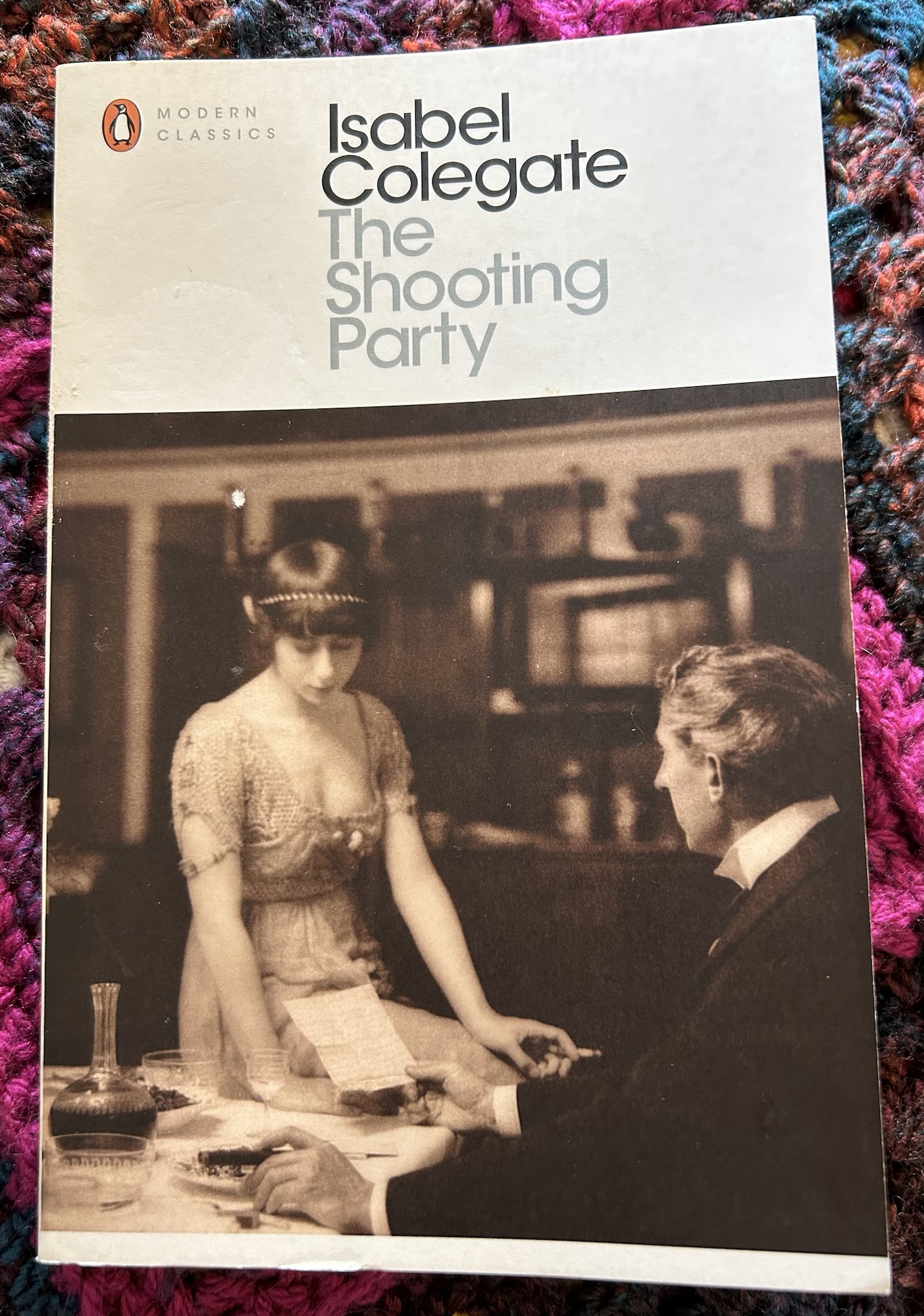
Novella a Day in May 2025: No.20

The Shooting Party – Isabel Colegate (1980) 191 pages

I’ll get my complaint about The Shooting Party out of the way first: there were about eleventy-million characters, far too many for a novella, and trying to keep them straight made my brain hurt. If ever a book needed a family tree/character list at the beginning it was this one. But other than that I really enjoyed it, so on with the post!

The Shooting Party was written in the latter part of the twentieth century but captures a bygone age just before the outbreak of World War I.  Colegate relies on our knowledge as readers that the lives she presents are on the brink of being changed irrevocably.

“I can’t say I positively want a war; and yet one gets the feeling sometimes – life is so extraordinarily pleasant for those of us who are fortunate enough to have been born in the right place – ought it to be so extraordinarily pleasant? – and for so few of us? And isn’t there sometimes a kind of satiety about it all – and at the same time greed?”

The titular event is taking place at Sir Randolph Nettleby’s Oxfordshire estate. Over the course of three days a group of privileged people will convene in the slaughter of hundreds of birds. It is absolutely grotesque, but thankfully Colegate spends very little time on the details of bloodsports, being more interested in the relationships between the characters. There were a few passages I skipped but it remained very readable.

Sir Randolph is aware that the world is changing. He despairs at the falling away of the old order as the world becomes increasingly mechanised and industrialised. The country estates are losing workers and he worries at the decline of the countryside.

He is quite a gentle patriarch in many ways, despite being so much a man of his time. Colegate doesn’t laugh at her characters, but there is humour throughout and I don’t think we’re supposed to take them entirely seriously all the time:

“Sir Randolph, unlike Minnie who aspired to it, considered cosmopolitanism a vice. It was alright to know your way around Paris, Sir Randolph thought, and to visit Italian picture galleries or the relics of the classical world, but generally speaking a man should stick to one country and be proud of it. If one wanted to travel there was always the Empire.”

His grandson Osbert doesn’t do well at school and the family are despairing at getting him ready for Eton, yet it is Sir Randolph who sticks up for him:

“Sir Randolph said, ‘Leave him alone. There’s no malice in him. Give him time and he’ll come along all right.’ He spoke as he might have spoken of one of his black, curly-coated retrievers, and like the retrievers Osbert in due course came along.”

Osbert has a pet duck named Elfrida Beetle and a source of tension throughout the novel is whether she will survive or get caught up with the wild ducks that the party are determined to shoot to pieces. There is also an impending sense of doom, beyond the war, as we know from the start of the novel that there is “an error of judgement, which resulted in a death”. Yet the final day of the shoot starts peaceably enough, as Sir Randolph reflects in his study:

“Freed from time, he felt influenced towards the familiar state of watchful calm, from which he was aroused by the slow crescendo and then rapid diminuendo of the breakfast gone being sounded by Rogers, an acknowledged master on the instrument.”

His wife Minnie was a favourite of the now-dead King, (another character reflects: “A pity English royalty was always so philistine.”) and like her husband she has a strong sense of duty and decorum. Unlike her husband she’s also quite a frivolous character, but this suits her role as hostess and she sees more than she says. She gets on well with her granddaughter Cicely, who shares her silliness, if not her circumspection.

“Olivia did not find Cecily boring. She liked her liveliness and suspected her of having more courage than she herself had ever had. Cecily might well choose to be unconventional; something to which Olivia had never aspired, in her actions at least. Her thoughts, generally speaking, she kept to herself.”

Olivia is Lady Lilburn married to Bob, a man so dull that even as I’ve just finished the reading the novella I can’t remember anything about him except a funny scene with him fussing over cufflinks. Another couple are Lord and Lady Hartlip, long married and quite prepared to indulge each other’s extra-marital dalliances. Where Lord Hartlip draws the line is Lady Hartlip’s compulsive gambling, which she has learnt to hide from him. Thus Colegate shows that privilege and comfort don’t equal happiness for all. In fact, happiness seems elusive to so many of these characters.

Apparently one of criticisms of The Shooting Party on publication was that it tried to shoehorn in all the Edwardian political issues and the characters were ciphers in service of these. I think this is a little unfair. As I mentioned at the start, there are soooo many characters that I can see where this criticism came from: a rich Jewish businessman subject to Anti-Semitism; a member of European aristocracy; bored wives; flighty debs; gamekeepers entrenched in the social order; a new generation coming up of self-made men… but I found them all believable and Colegate is interested in the person behind the type.

Colegate evokes the daily routines of life in a large country estate so well, and balances the inevitable elegiac quality with the practicalities of living; the sad desperation of some of the characters with humour. As the day moves on personalities are exposed and relationships change forever.

Novella a Day in May 2025: No.18

Across the Common – Elizabeth Berridge (1964) 186 pages

Back in 2023, I started off Novella a Day in May with Elizabeth Berridge’s The Story of Stanley Brent. I ended the post by saying I had Across the Common in the TBR and maybe I’d get to it later in the month 😀 Just two short years later…

Across the Common is told from the point of view of Louisa as she returns to her suburban childhood home, after leaving her artist husband Max.

“My grandfather had built the house in the eighties. It was tall and big and excelled in useless crenellations; in the front an immense stretch of holly hedge gave the house its name.”

Her two aunts, Seraphina and Rosa, still live in this Gothic pile and they are soon to be joined by Aunt Cissie:

“Since the war, which had robbed her of her second husband and her only son, something had shifted in her. A new, unbalanced cynicism revealed itself by a sarcastic twist of the mouth, a semiquaver of a shrug.”

Quite a contrast to Aunt Seraphina:

“it was all in her sigh: her lost opportunities for adventure, for love, for self-expression. She was more of a child than I had ever been, and I loved her again for her wild and illogical longings, her aching desire for drama.”

They live in an insular world. Cissie had left, so her worldliness means she wants a television on her return, but otherwise the aunts are preserved in a world long gone. The Hollies has always existed as a refuge for the women in the family, such as Louisa’s grandmother:

“She had merely withdrawn into the world of The Hollies, where unpleasant things like passion and unworthy emotions and reality were kept out by the high walls, lapped by the half tamed acres of the common.”

Louisa initially returned to her aunts for their familiarity and the need she feels to unravel who she is, based on experiences in her past which led to her leaving:

“I only wanted to remember it in order to remember something else, like turning the cut-glass top of a decanter bottle in the sun, to catch the sudden prismatic dazzle. This something lay with the aunts; it was an unease that spoiled relationships, a strange Braithwaite ambiance that lay like fallout over the family.”

However, she begins to realise that her past may be more complex than she realised, and there are secrets within the family to understand. The Gothic atmosphere is heightened when a solicitor passes on a sinister warning in a letter from her long-deceased father:

“Don’t, for your own sake, be misled by the cultivated exteriors of your aunts. They can smother, they can crush, they can exterminate.”

There’s also the fact that Louisa’s aunts are among the few people her husband struggles to tolerate:

“It was the Braithwaites, my mother’s family, who came outside Max’s indulgence. They filled him with a kind of detached horror. He was ruthless about them. Is ruthless. For he blames them for everything awry in me.”

Yet they are never caricatures of eccentric older women, but carefully drawn and fully realised. All three aunts were fabulous creations.

Berridge builds an atmosphere that feels both stifling and menacing, without being overtly threatening or devoid of love. There is humour here too, and I particularly enjoyed Aunt Seraphina’s habit of pilfering plant cuttings from Regent’s Park.

The Big Family Mystery is believable, providing enough plot to draw the story along, with Louisa’s growing understanding of her family history and herself being well-paced.

I have another Berridge in the TBR so hopefully it won’t take me two more years to get to it! She is so accomplished and her idiosyncratic characterisation is a joy.

“The Braithwaite way of life was a kind of anarchy that could scarcely be contained within one house.”

Novella a Day in May 2025: No.17

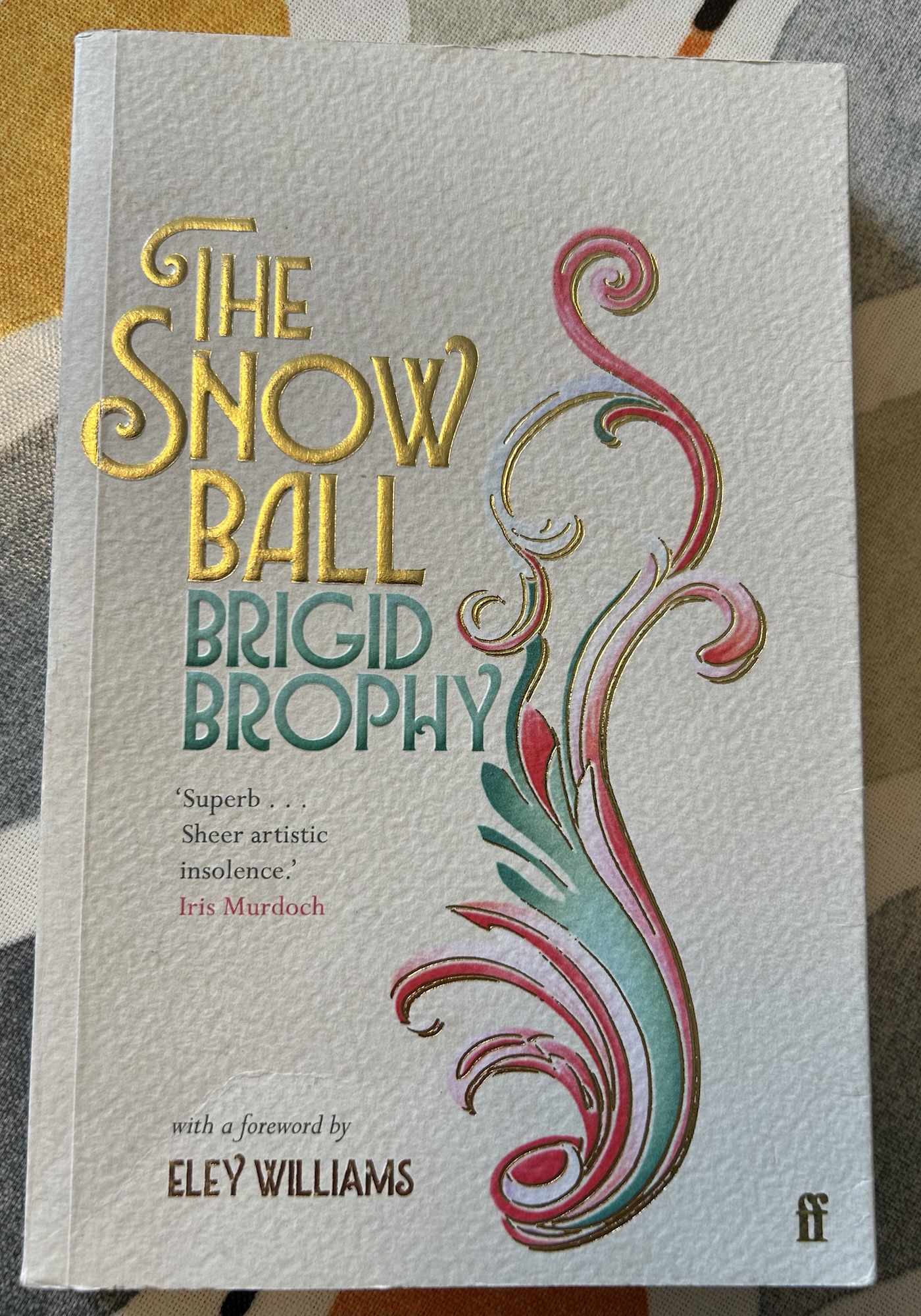
The Snow Ball – Brigid Brophy (1964) 196 pages

Brigid Brophy is an author who I’ve been meaning to try for a while, and The Snow Ball was a compelling introduction. It has an otherworldly quality, set over the course of one evening at the titular event and based on Mozart’s Don Giovanni.

An eighteenth-century fancy dress ball is being thrown by Anne and her fourth husband Tom-Tom at their Georgian London residence.  We follow Anna, Anne’s friend and confidant, throughout the evening. She is dressed as Donna Anna.

“Everyone grew a year older at once on New Year’s Eve, even those whose birthdays had been the day before. They gathered, Anna decided, for consolation: wearing historical costume to offset the advance of history.”

The incongruity and inaccuracy of the visual experience is used by Brophy to great effect, emphasising the unreality of the evening and showing how easily appearances can crack.

“Anna descended the grand staircase, knowing that Voltaire and Lady Hamilton were waiting for her in the crowd at the bottom. The noise, the scents, the very warmth of the people’s skins came to her as unmistakably twentieth century.”

Brophy has some startling images too, truly original turns of phrase. The décor is somewhat Rococo, with crumbling gold cherubs adorning the walls:

“It was as though between this room and Anna there was a genetic resemblance, a line of descent: as though it were a womb: into which, a newly born cherub in her early forties, she was always welcome to creep back.”

As this middle-aged cherub moves around the party she draws the attention of a man dressed in a black mask as Don Giovanni. She is also watched by Ruth, young and inexperienced, attending her first ball dressed as Cherubino and writing in her diary throughout the night:

“Feel there is something awful about all the people in the world, can’t think what they are here for—they don’t seem to matter—they are like atoms—they just move around without aim attracted or repelled by each other; hardly matters which. Anna K. is the most attractive woman I have ever seen. I detest her.”

We follow the seductions of the night, the dances people engage in both literally and metaphorically. Anna is a slightly subdued character next to the driven sexuality of Don Giovanni or the gregarious sociability of her friend Anne. Yet she is compelling as she tries to work out what happiness looks like for her as a recently divorced woman, against a background of revelry.

(Unlike its source inspiration, the seduction in The Snow Ball is explicitly successful and mutually consensual.)

The Snow Ball is eerie and unnerving while being recognisable. Its characters take pragmatic decisions surrounded by elevated theatricality – at one point peppermint creams rain down. It felt like a masque, but grounded in believable people rather than stock caricatures. It was hugely clever but not alienating and it’s definitely made me keen to pull Brophy’s The King of a Rainy Country out of the TBR.

“‘Have you noticed what a metaphysical ball this is?’ he said. ‘All these people bumping into one another and asking “Who are you?” even when they’ve known each other for years.’”

Novella a Day in May 2025: No.15

The Skin Chairs – Barbara Comyns (1962) 200 pages

I really enjoy Barbara Comyns. Her voice is so distinct, uniquely hers. She can present traumatic events – in The Skin Chairs, parental death, bullying and poverty – with an equanimity of tone which offers an idiosyncratic resilience.

The Skin Chairs is narrated by ten-year-old Frances. It opens with her going to stay with horrible relatives to give her mother a break from her six children; four girls and two boys. Frances’ Aunt Lawrence is a bully and her daughter Ruby is completely cowed by her, while her daughter Grace is her favourite and as such, completely unbearable.

“It was no wonder that the Lawrence family were so spiteful; it was dreadfully catching and gave one such a feeling of power.”

Frances’ stay with her relatives is extended as while she is away, her father dies. Ultimately her mother and her siblings move into a new house nearby called The Hollies. This gives the Lawrences a distressing amount of power over Frances’ mother, who struggles to adapt to her straitened circumstances.

“She never went shopping, although she ordered meat when the butcher called at the house (the fishmonger soon stopped calling because he said it wasn’t worth it when we always ordered herrings), and I think she would have considered it the final degradation to have been seen carrying a shopping basket.”

Her mother does learn to cook, but even that isn’t quite right:

“Mrs Hand prepared vegetables and we washed up, so she had none of the drudgery. Delicious iced cakes appeared on the table at teatime, vol-au-vent, lobster croquettes and chicken soufflés at midday and savoury supper in the evening. The little ones became bilious and, when Polly discovered that we had spent nearly a month’s supply of money in a week, we went back to stews and rice puddings, fish pie and baked apples.”

There isn’t much plot, except as Frances takes us through her days. Dramas are generally short-lived. The family struggle for money, and Frances struggles with her schoolwork.

We get to know others on the village. There is an appalling ongoing thread with a mother neglecting her child so she can have an affair with a Major. There is also the utterly eccentric Mrs Alexander who bombs around in a bright yellow car, wears gold shoes polished daily by her chauffeur, and keeps a menagerie of animals in cages:

“She had once kept a bear, but people had complained because it used to break into church during the services, and it had to be given to a zoo. ‘I sometimes wonder why I ever returned to England, so many unpleasant things happen here’.”

As with all the Comyns I’ve read there is cruelty present. Not least with the chairs, belonging to a General and said to be made from human skin. The cruelty is never dismissed although no-one is demonised, and Frances’ child’s view doesn’t obfuscate. It is presented without sensation.

Thankfully there is kindness too. Mr Blackwell arrives in the village, incredibly rich and kind to Frances during a time of acute distress. He doesn’t meet the Lawrences’ standards however:

“Then Aunt Lawrence told us the man was not a ‘gent’ at all, but a retired brass-founder. He was rolling in money, he owned an appalling Birmingham accent and would be quite impossible to know. I imagined him rolling in brassy coins all alone and felt sorry for him planning to live in a village where no one would know him.”

The horrible central image of The Skin Chairs suits Comyns well. She is so clever at presenting the domestic, but making it unnerving and almost Gothic. Yet The Skin Chairs is also gentle, and the characters – even the dreadful ones – treated with compassion. I’ve a few other Comyns’ languishing in the TBR and this made me keen to get them!

Novella a Day in May 2025 No.14

La Femme de Gilles – Madeleine Bourdouxhe (1937, transl. Faith Evans 1992) 122 pages

La Femme de Gilles is a curious read from a twenty-first century perspective. The protagonist Elisa is entirely bound up in her husband Gilles. Her existence is wholly for him: cooking for him, keeping his house, bearing his children that she loves only as an extension of him, sexual pleasure derived solely from pleasing him. It’s the extremity of these feelings at the obliteration of any personal motivation for her actions outside of Gilles that make her so extraordinary to my eyes.

So when Gilles starts an affair with Elisa’s sister Victorine, outwardly Elisa does very little:

“Whatever happened, whatever had already happened, the main thing was not to make a fuss, simply to watch, and act in subtle little ways to keep intact the love with which she’d surrounded him, and to which he would return one day. There was no escape from a love as strong as hers.”

Elisa’s initial realisation is heartbreaking, as she turns her back on Gilles and Victorine to get ready and accompany them to the cinema:

“One by one she fixed her gaze on some of the objects around her, things that made up her familiar world, then her eyes lit on her own hands as they closed the bag, and she saw they were trembling. Precisely at that moment Elisa knew that behind her back there was another world, a world that was complicated, threatening, unknown.”

In a such a short space, Bourdouxhe creates an acute psychological portrait, primarily of Elisa, but also of her unintentionally cruel husband and her vacuous sister:

“Afterwards it’s a question of trying to make sense of things, sense of life, and life doesn’t touch Victorine, it will never mark her smile or her eyes, which will stay young, clear, innocent for a long time. Unconscious offenders are the most dangerous of criminals.”

Yet she also sustains a real momentum to a story which primarily takes place in Elisa’s tortured head, and follows her inaction. It feels pacy and tense, even as Bourdouxhe steps outside of the narrative to directly address her characters:

“You are alone with the greatest pain you have ever known.”

Poor Elisa really is isolated. She can’t speak with her husband, her sister or her mother. The villagers in the remote area where she lives become aware and gossip about her. But Elisa doesn’t really want to leave, she just wants things to be as they once were:

Going from one place to another – is that really the world, or is it rather something very small, invisible, confused, something buried inside of us, something that we always take with us wherever we are, whether we’re here, or whether we are there? Whether we are far away or at home?”

La Femme de Gilles is an immersive read with incisive characterisation. Apparently Simone de Beauvoir was a fan (I tried to find what she said about it in the The Second Sex but my edition has a rubbish index). In her first novel, Bourdouxhe created a haunting narrative which I’m sure will stay with me.

Novella a Day in May 2025: No.2

Day two of NADIM and I’m delighted that Simon at Stuck in a Book will be reading a book a day for the month too!

The Victorian Chaise-Longue – Marghanita Laski (1953) 99 pages

It’s been years since I read the very powerful Little Boy Lost by Marghanita Laski, and I kept meaning to get back to her. The Victorian Chaise-Longue is a short tale of domestic terror, and would appeal to anyone who is a fan of Daphne du Maurier’s short stories, or The Yellow Wallpaper.

It opens with Melanie who has recently given birth, and is now recovering from tuberculosis, being patronised by her doctor and her husband.

“‘Now listen to me,’ he said. ‘Because you’ve managed to be a good obedient girl so far, we’ve been able to conquer what might have been a very nasty little flare up, and if you let yourself get perfectly well and we keep a steady eye on you, there’s no reason why anything of the sort should ever occur again.’”

And…

“‘How clever you are, darling,’ said Melanie adoringly. ‘You make me feel so silly compared with you.’

‘But I like you silly,’ said Guy, and so he does, thought Dr. Gregory, watching them. But Melanie isn’t the fool he thinks her, not by a long chalk, she’s simply the purely feminine creature who makes herself into anything her man wants her to be.”

So as you can see, the horror is there from page one 😀

They decide that Melanie could do with a change of view, and so she lies down on the titular furniture, which she had found in a junk shop before she became unwell. It’s heavy and ugly, but she had been taken by it; she had also experienced a memory which wasn’t hers when looking at it, which she quickly brushed aside.

When she wakes up, she is still on the chaise-longue, but in a different room and a different era, with a harsh woman who calls her Milly not Melly. At first she believes herself to be dreaming, but:

“It was real, that touch of flesh. There was no conceivable atmosphere of dream of which that touch of rough dry flesh could be a part.”

Melanie is trapped there, feeling even more unwell, cared for by the woman who turns out to be Milly’s sister Adelaide, and a stereotyped housemaid.

Milly is in some sort of disgrace, incurring her sister’s barely concealed wrath. As she tries to piece together what has happened, Melanie recognises parallels with her own life:

“Sin changes, you know, like fashion.”

I mentioned at the beginning Daphne du Maurier and the feminist classic by Charlotte Perkins Gilman. The Victorian Chaise Longue perhaps suffers by these comparisons. It’s not quite as horrifyingly unnerving as du Maurier’s stories, or as overt in its wider themes as The Yellow Wallpaper. But it is an engaging, quick read, which doesn’t offer trite answers to Melanie’s predicament or the wider issue of women’s bodies so often being constrained by forces more powerful than they are.

“The Riviera isn’t just a sunny place for shady people” (W. Somerset Maugham)

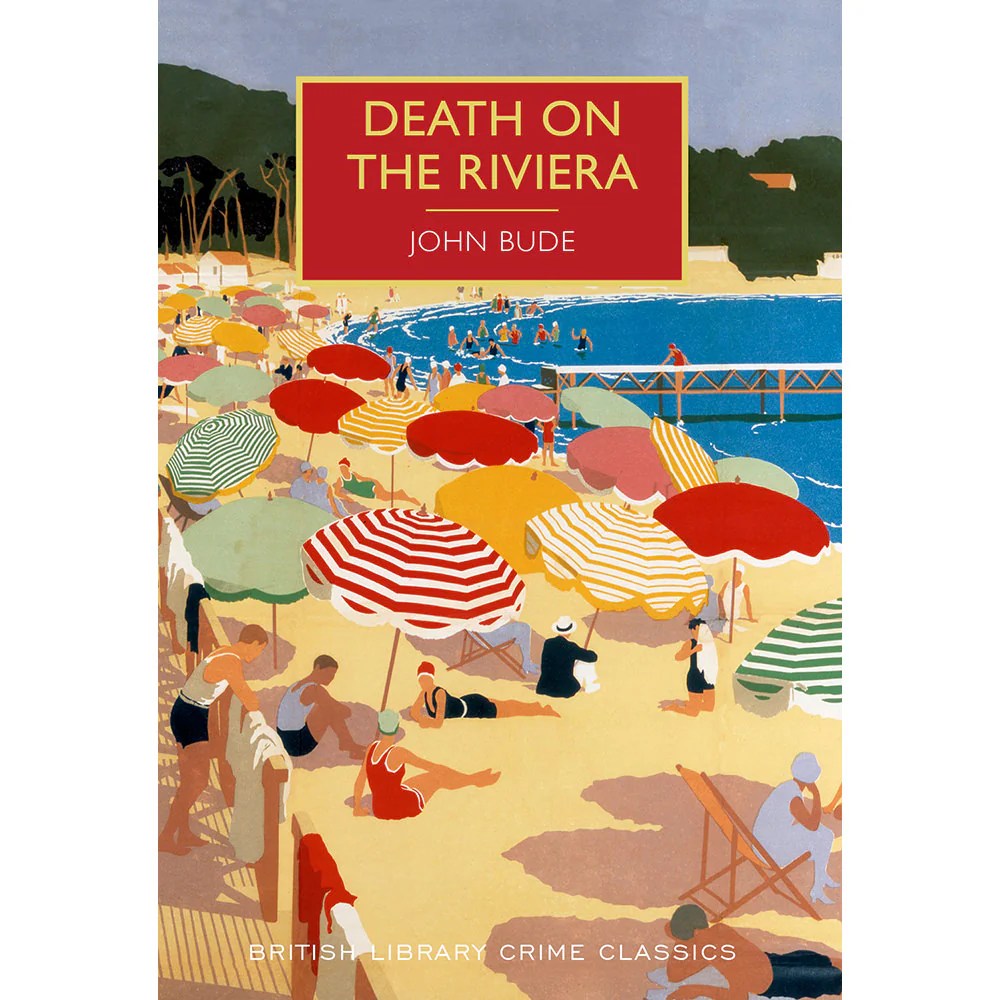
This is my final contribution to Kaggsy and Simon’s1952 Club which has been running all week. So far I’ve read two golden age mysteries for the club and I’m finishing with one too: Death on the Riviera by John Bude, in a pleasing British Library Crime Classics edition.

I read The Cheltenham Square Murder for the 1937 Club last year, and while I had enjoyed it, I didn’t think it was the strongest of Bude’s novels or a particularly perplexing mystery. This, I’m happy to report, was much stronger.

The story centres around the rich and privileged Nesta Hedderwick and her various assorted guests at her villa in the south of France.

“But for the nagging accusations of her weighing-machine life might have been perfect. She’d money; one of the loveliest villas in Menton; A large … collection of friends; splendid health; a sense of humour; and a virile capacity for enjoyment. Her husband, a successful but dyspeptic stockbroker, had died between the wars of ptomaine poisoning.”

Staying with Nesta are her niece Dilys; “smooth-faced bounder” Tony Shenton; Nesta’s companion Miss Pilligrew; beautiful Kitty; and a decidedly shifty artist:

“When Nesta had an artist living in the house she expected him to behave like one. Paul Latour certainly did his best to live up to the fin de siècle Bohemianism on which Nesta had directed her romantic ideas of the genre.”

Bude clearly has a lot of fun with Paul’s artistic swizz:

“A cod’s head capping the naked torso of a woman, balanced onto cactus leaves and garnished with the motif of lemons and spaghetti… Paul shrugged hopelessly.”

Although Dilys’ attitude to where she has found herself suggests Paul isn’t alone in his pretence:

“Just paste and cardboard and tinsel, like most of my aunt’s insufferable friends. Actually I find it rather boring. It gets that way after a time.”

So it seems the French Riviera is the perfect place for a counterfeiting operation, which is what brings DI Meredith and Acting-Sergeant Freddy Strang across La Manche, searching for Tony ‘Chalky’ Cobbett.

They work closely with Inspector Blampignon and refreshingly, the local police are shown to be entirely competent and pleasant to work with.

As the British and French police investigate the local forgers, Freddy runs into Dilys and they begin a very sweet romance, which brings the two threads smoothly together. When an acquaintance of the villa coterie goes missing, the police investigation widens.

One of my complaints with The Cheltenham Square Murder was that something completely and utterly obvious takes forever to be recognised by Meredith and I thought the same had happened here. Fortunately it turned out I’d fallen into exactly the assumption Bude had set up for the reader: at one point he has Meredith explain that when such an occurrence happens in mystery novels it always means the following…. a nice little meta joke with the reader which I appreciated 😊

Oddly, given the novel’s title, no-one is murdered until around page 160 of a 223 page novel. For my tastes, too long was spent on the counterfeiting and too little on people getting bumped off, but the investigation worked well and it was a steady police procedural without being plodding:

“He was visited by one of those revealing flashes of deduction that spring, not from any inspirational source, but from a clearly realised and logical appreciation of the facts.”

Death on the Riviera is well-paced and enjoyable, with enough characters for plenty of suspects without being completely baffling. The humour is gentle and light, and the setting beautifully evoked:

“It wouldn’t be easy, he realised, to take leave of this sunlit, sparkling coast with its terraced vineyards and olive groves, it palms and oleanders, it’s fantastic cacti, it’s mimosa-scented streets and impossibly blue seas. He thought of the Old Kent Road on a wet February night and shuddered.”

“Good authors don’t seem to do much good these days. Books have got so psychological.” (Laura Talbot, The Gentlewomen)

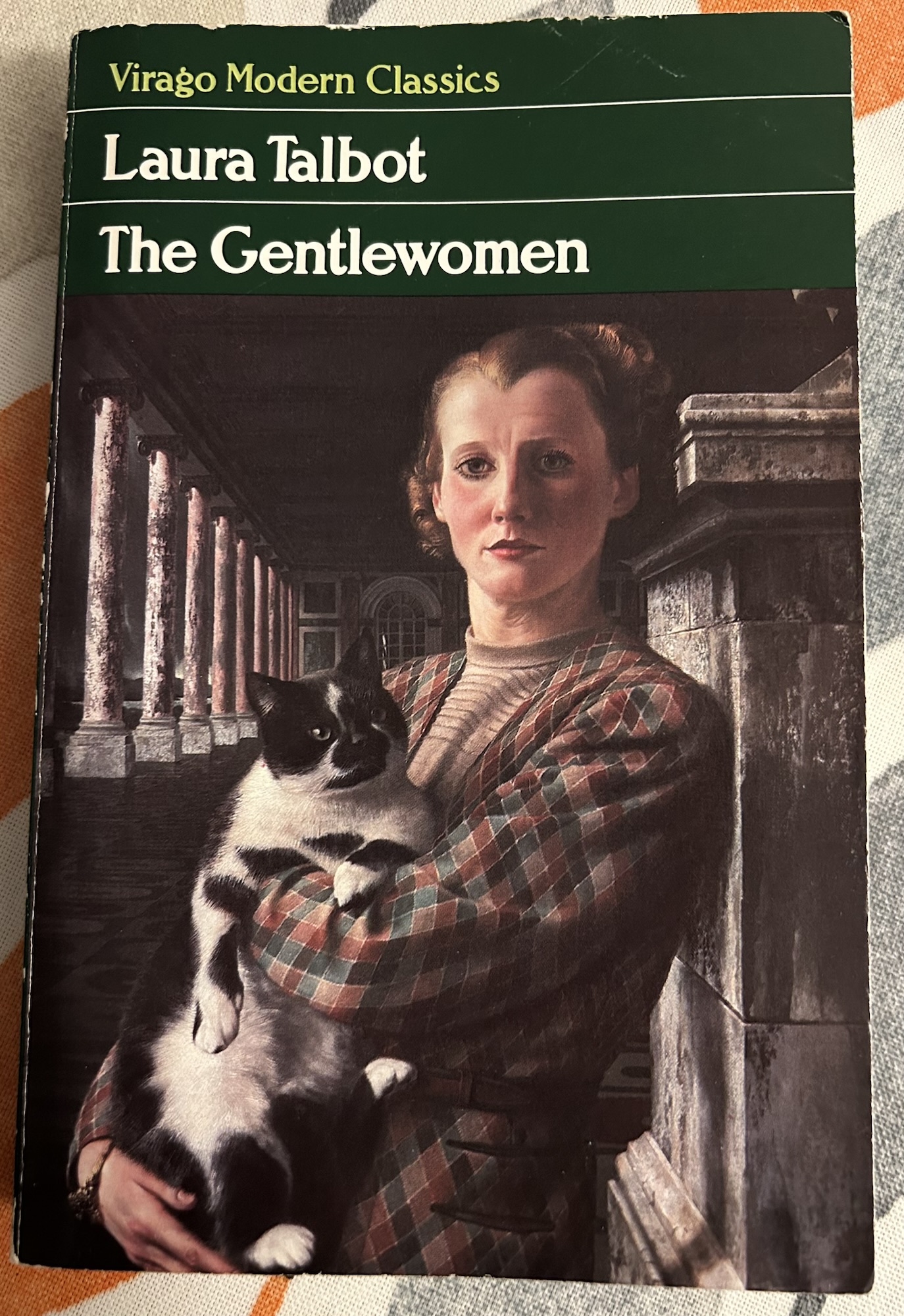
This is a contribution to Kaggsy and Simon’s1952 Club, running all week. One of the many great things about the Club weeks is that they encourage me to raid the TBR and get to books which could have languished there forever. Today’s book is a perfect example: an author and a novel I knew nothing about but which I greatly enjoyed.

Laura Talbot was the pen-name of Lady Ursula Chetwynd-Talbot, and her knowledge of the land-owning classes informs The Gentlewomen throughout. It tells the story of Miss Roona Bolby, a single woman growing older who has to earn her living as a governess. She clings desperately to her family’s genteel background and colonialism while around her the world changes irrevocably.

“When she had been sent back to England she had been seven. She had been told so much since that memories which had been sharp had become blurred by that which she had been told. It was difficult now to sort her own from Sita’s and Mavis’s. India had not faded with the journey home; from then on it had grown, it had become as much a part of her own life as of her Mother’s and Sita’s and Mavis’s.”

Thus she will tell anyone – repeatedly and incessantly – that she was born in India, as she wears gold Indian bangles and uses an Indian silver brush set. She remains oblivious to the fact that her background is a matter of utter indifference to everybody.

At the beginning of the novel she leaves her shabby boarding house Hillstone in Birmingham, (filled with characters which could have made a great novel in itself!) and heads to the country seat of the Rushford family.

The Second World War is ongoing, and so the house is not as it once was. Lord Rushford is overseas, there are two Italian POWs and Land Girls have working on the estate, and my favourite character, straight-talking Reenie, has never been a kitchen maid before.

Miss Bolby has been employed to tutor to the various children from both parents’ first marriages, while Nanny Becca cares for the younger toddler Bella. Jessy, Barby, Louisa and Ruth dislike their tutor, and why wouldn’t they? She is completely devoid of any warmth towards them, won’t call them by the names they use, and seems a pretty dull teacher.

In Miss Bolby, Laura Talbot has not created a likable protagonist. She is so bound up in outdated societal structures, she entirely fails to respond to people as people. Her snobbery infects all her thoughts and actions:

“I always think it helpful to know from what milieu people come, especially in these days when one so frequently find the unexpected.”

The Introduction to my edition suggests that the portrait of Miss Bolby is without compassion, but I disagree. While she is petty, silly and resentful, we see how thwarted she is through her memories. Her mother used phrases like “rather deuxième” about those she deemed socially inferior, failing to recognise the crassness of such a phrase – one which Miss Bolby echoes later in the novel. She also wished to be a singer, which her mother prevented.

And so while she declined suitors in her youth as never good enough, it is really only she who suffered, and continues to do so. She was beautiful, but rejected the chances that this gave her, and now when roles and opportunities for women are still so circumscribed, she is losing her looks too. Her world is getting smaller and smaller, and she exacerbates this.

“Drawing-rooms and dining-rooms were as passages, her presence in them transitory: she had been forced to grope as a moth gropes before flying out into the night.”

When Miss Pickford arrives at Rushford, the reader is shown another way for someone in similar circumstances to live. The other gentlewoman of the title, Miss Pickford has little advantages in her favour, but she enjoys people and is interested in them, is entirely without Miss Bolby’s pettiness and relentless judgements, and has genuine skill in her work as secretary. The children warm to her and call her Picksie, and no-one seems to consider her an “old bag” – an epithet frequently associated with Miss Bolby.

As this disparate group rub along together, there is a threat to Miss Bolby’s fragile sense of worth, grounded as it is on meaningless external attributes rather than who she is as a person. Her sister Sita made a marriage to Arthur Atherton-Broadleigh and lives abroad, so Miss Bolby puts great store by the connection (and by constantly referring to it) despite little knowledge of the actual realities of the relationship. Unfortunately for her, there is someone who knows Arthur’s past very well…

At the same time her Indian bracelets go missing, and this additional pressure on her psyche means she starts to behave quite viciously. While there is never quite the psychological disintegration that occurs in William’s Wife or Wish Her Safe at Home, The Gentlewomen did remind me of these novels, with the portrayal of societal pressure and delusion for women who wanted so much more from life.

The war is far away physically, but the drudge of various privations and the frequent noise of aeroplanes bearing down to the local airbase add an atmosphere of bleak strain, which becomes almost Gothic as it turns out Rushford has been burned out from fire in many places, and sits in overgrown, unmanageable grounds.

“War was a lonely battle for the lonely, for those not urgently connected with it, and in her case a lonely battle for what?”

In case this sounds very heavy, I should say I disagree with the Introduction in another way, when it says Talbot had no humour.  I think she is easy to underestimate because she is not interested in drawing attention to her writing at all; there is no strong authorial voice. Her style is to present the characters, and leave judgement to the reader. Often Miss Bolby’s pretentious assertions go ignored by her interlocutors which speaks volumes.

And so I found there were various moments of humour, from the wonderful Reenie, to the neighbour Lady Archie who consistently baffles her devoted husband by acquiring modern slang from the Squadron-Leader at the RAF base. Needless to say, this doesn’t fit in Miss Bolby’s schema at all:

“She had wondered all evening about Lady Archie, and who Lady Archie was and why she used such phrases as ‘It seems to ring a bell’ and ‘Same here’, which one expected from a Mr Billings, but not from a woman such as Lady Archie.”

“ ‘Wizard!’ said Lady Archie. ‘But I’ll have to consult Hughie about the car.’”

The tension builds in The Gentlewoman towards a somewhat melodramatic climax, but while I felt this came close to clumsy, it was also a real page-turner. On the strength of this novel, I would definitely be interested in reading more by Laura Talbot. (And although I’m not usually bothered by writer’s biographies particularly, I’m also intrigued by her third marriage, which took place two years after she published this novel, to Patrick Hamilton. How on earth did that come about?!)

Sadly, ultimately Miss Bolby’s harshest judgements are in the fleeting ones she puts upon herself:

“A failure, who had not lived fully in any sphere – who had always lived up on the fringe.”

“Nothing puts things in perspective as quickly as a mountain.” (Josephine Tey)

Today for the 1952 Club hosted by Kaggsy and Simon I’m looking at another golden age mystery. The Singing Sands by Josephine Tey features her regular detective, Inspector Alan Grant. It was found in her papers after she died and published posthumously, which usually makes my heart sink, but the novel seems pretty complete so I hope it was as she planned.

You can come across all sorts prejudices and snobberies in golden age crime and The Singing Sands has a strong one running throughout, which admittedly I’ve not encountered before in the genre: Tey is a total snob about Scotland. As far as I can work out her rules are:

  1. Be Scottish
  2. But speak with an English accent (by which I assume she means RP – I doubt my south London tones would cut the mustard)
  3. Don’t be from the city
  4. Especially don’t be from Glasgow
  5. Be from the Highlands
  6. Don’t be a nationalist
  7. Really don’t be from Glasgow

I take great exception to her attitude to Glasgow – it’s a beautiful city full of friendly people. Every time I go I’m knocked out and I’m still giving serious consideration to moving there. In the end when I came across these attitudes I just rolled my eyes and skipped on, and it didn’t affect my enjoyment of the novel. But as a counterbalance I urge everyone to (re)visit wonderful Glasgow!

On with the novel! It opens with Grant struggling with his mental health and deciding to visit his cousin Laura (Lalla) and her family in the Highlands to recuperate. The background of what led to Grant reaching this point is never quite specified but he seems to be experiencing burnout/PTSD.

As he disembarks the train, the grumpy attendant is trying to rouse the passenger in berth B Seven. Grant realises he is dead, and his interest in faces (detailed extensively in The Daughter of Time which is where the title quote comes from but would have worked very well in this novel too) is piqued:

“What would bring a dark, thin young man with reckless eyebrows and a passion for alcohol to the Highlands at the beginning of March?”

He also picks up B Seven’s newspaper, which has some cryptic verse scribbled on it. Much as Grant tries to focus on his family and the fishing expeditions he had planned, his mind keeps being drawn back to B Seven. The verse leads him to visit some of the islands to identify the landmarks mentioned:

“There was nothing else in all the world but the green torn sea and the sands. He stood there looking at it, and remembering that the nearest land was America. Not since he had stood in the North African desert had he known that uncanny feeling that is born of unlimited space. That feeling of human diminution.”

Although his colleagues in London have identified the body and ruled accidental death, Grant thinks both these conclusions are questionable. Despite trying to recover from his work, he can’t let it go. He is aware that keeping his mind occupied can be useful, but it is a fine balance:

“Grant was very conscious that his obsession with B Seven was an unreasonable thing; abnormal; that it was part of his illness. That in his sober mind he would not have thought a second time about B Seven. He resented his obsession and clung to it. It was at once his bane and his refuge.”

We follow Grant as he heals, with the help of his beautiful environment, the understanding of his family, and his pursuit of the truth.

“But for B Seven he would not be sitting above this sodden world feeling like a king. New born and self-owning. He was something more than B Seven’s champion now: he was his debtor. His servant.”

The Singing Sands is not heavily plot-driven and the mystery is slight, but it is still an enjoyable read, if a slightly unusual approach to the genre. Grant’s dogged pursuit of the truth of a death which others seem quick to disregard makes him endearing, and there are lovely descriptions of the Highlands. It’s a quick read that doesn’t outstay its welcome, and it is compassionate in its portrayal of mental health.

“In matters where A was at spot X at 5:30pm on the umpteenth inst, Grant’s mind worked with the tidiness of a calculating machine. But in an affair where motive was all, he sat back and let his mind loose on the problem. Presently, if he left it alone, it would throw up the pattern that he needed.”