Novella a Day in May 2023 – No.18

In Love – Alfred Hayes (1953) 120 pages

This is the third novella in as many days that I approached with some reservations, so at least I can feel smug that I’m not letting my biases get in the way of exploring some interesting books 😀

The reason for my trepidation in approaching In Love was that I thought it could be a misogynistic self-indulgent justification of how upset a man is when the woman he objectifies in some way demands to be seen as an actual person. And it definitely did have moments of misogyny and self-justification, but these were recognised by the narrator so while I didn’t like him or his behaviour, I didn’t feel he was asking me to.

(There is domestic violence and sexual assault within the story – neither are portrayed in extended length and I don’t cover it here but I wanted to mention it so readers would know to avoid the novella if these are triggers for you.)

The novella is a monologue by a man almost forty, sitting in a bar talking to a pretty girl in her mid-twenties. He recounts the tale of his break-up with another woman, while she remains a silent interlocutor. (She’s clearly much more patient than I am. Or not listening.) There’s really not much more to In Love, but I found it pulled me along through its pacey, readable style and evocation of a particular time.

It’s a story between two nameless people who seem quite lost. They are both searching for something more, and for a while cling to one another despite knowing that it will not bring happiness.

“What have I done, he said, to be so unhappy, and yet not to be convinced that this unhappiness, which invests me like an atmosphere, is quite real or quite justified?”

He is a writer, quite successful but seemingly distanced and adrift from other people. She is younger than him, divorced from a man she married very young, and in New York having left her daughter at home with her parents. She lives in an area that scares her, in a flat she doesn’t tidy, and answers the door in an unwashed towelling robe:

“This house, the way she lived, was only a hasty arrangement, thrown together to cover a time in her life which she did not consider to important, and in which she did not feel any necessity for putting things into any sort of final order. The final order had not yet arrived; she was waiting for it to arrive.”

There is a strong materialist theme running through In Love whereby money is given great importance, but also recognised as not really bringing you what you most need. It’s a time of societal change: post-war, with gender roles shifting but before the contraceptive pill and the liberations of the 1960s. This compounds their uncertainty – both are searching or waiting for something without being able to name what it is. There is a yearning in both of them, that she at least believes might be filled by money.

She leaves the writer for someone much richer. He takes it badly, the break-up becomes truly destructive.

“I knew that she had wanted what I was not prepared to give her: the illusion that she was safe, the idea that she was protected. She had expected, being beautiful, the rewards of being beautiful; at least some of them; one wasn’t beautiful for nothing in a world which insisted that the most important thing for a girl to be was beautiful. Perhaps now, I thought, she would have some other things she imagined she wanted: the cocker spaniel, the nursery with the wallpaper that had little sailing boats on it and flying fish, the lawn with an automatic sprinkler, and somebody else to do the dishes.”

In Love definitely had the feel of Mad Men to it with the New York setting, the era, the attitudes and the somewhat nihilistic view. If you liked that series, then this novella is definitely worth your time.

“It was all like something in a bad movie, if they still did things like that even in the movies; but mostly it was like something in a bad life.”

Novella a Day in May 2023 – No.9

The Hotel – Elizabeth Bowen (1927) 175 pages

The Hotel ticks a lot of boxes for me: interwar setting, repressed Brits abroad, characters thrown together through transient living arrangements, and of course novella length. My concern was that it’s Elizabeth Bowen’s debut novel and her prose can be pretty impenetrable at the best of times, let alone when she’s still honing her craft. However that proved unfounded as I found this an easier read by Bowen standards – I really enjoyed it.

The titular institution is located on the Italian riviera and is filled with genteel Brits, mainly women. The novel opens with the fallout from a row between two perfect examples of such: the companions Miss Pym and Miss Fitzgerald. The former ends up walking to tennis courts with Mrs Kerr, quite a coup as Mrs Kerr holds all the power among the hotel residents. The reasons for her occupying this elevated position are never quite clear, but her absolute self-assurance and manipulativeness surely contribute.

Mrs Kerr is looking for Sydney Warren, a beautiful, studious young woman whose family are worried about her. Sydney has come away with her cousin Tessa Bellamy, who has a vague malady:  

“She was distressed by any suggestion of impermanence; she was a lonely woman. One had to have Something in one’s life. She lay on a velvet sofa in her bedroom with the head pulled round away from the window and wished that she were religious woman and that it would be time for lunch and that Sydney would soon come in.”

The start of the novel is full of these pithy sketches of the residents. I especially enjoyed the elderly sisters-in-law Mrs and Miss Pinkerton:

“They were more closely allied to one another in the memory of Edward’s than they had either of them been to Edward himself…. Cherished little animosities reinforced their ties to one another; Rosina maintained to herself implacably that if she had been Edward’s wife she would have borne him children; Louisa was aware enough of this to be a little markedly generous to Rosina, who was not in a position to refuse anything that might be offered.”

They are hugely affronted by the arrival of an Anglican clergyman, James Milton, who unwittingly uses their reserved bathroom. Bowen is a brilliant observer of the manners and social customs of the hotel, treating it all with a wry affection:

“Beyond, down the long perspective to the foot of the stairs, one could see visitors take form with blank faces, then compose themselves for an entrance. Some who thought punctuality rather suburban would gaze into the unfilled immensity of the room for a moment, then vanish repelled. Others would advance swimmingly and talk from table to table across the emptiness, familiarly, like a party of pioneers. Men came in without their wives and did not always look up when these entered. Women appearing before their husbands remained alert, gazed into an opposite space resentfully, and ate with an air of temporising off the tips of their forks.”

Romantic relationships are treated with a great deal of scepticism in the novel: the pretty Lawrence sisters look to make pragmatic marriages; Mrs Lee-Mitterson panders to her ridiculous self-centred husband; it’s mentioned more than once how incompatible men and women are. It wouldn’t be a stretch at all to take a queer theory reading to many of the relationships in The Hotel, and it could also be read as demonstrating the value and endurance of platonic friendship.

The early character sketches and scene setting of The Hotel were completely wonderful, but for me the novella didn’t quite live up to this initial promise.  I was drawn into the various relationships and shifting allegiances, and the disarray caused by the arrival of Mrs Kerr’s much anticipated, determinedly aloof son Ronald was very enjoyable.  I think what stopped me unreservedly loving this was that I did find the characters ultimately quite distancing – Sydney Warren is meant to be reserved and a bit cold but I felt this distance as a reader too.

But still there was so much to enjoy and I found it a real treat.

“Notwithstanding the slight sense of degeneracy induced by reading novels before luncheon she had been enjoying Jude the Obscure.”

Novella a Day in May 2023 – No.8

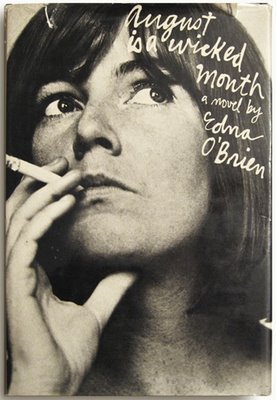
August is a Wicked Month  – Edna O’Brien (1965) 

Many, many years ago, decades even, when I was a sixth-former (that’s Year 12, kids) my English teacher gave out a list of suggested reading for A levels. Somewhat surprisingly, I didn’t finish it entirely (although just in case that seems worryingly off-brand, I should say my name still went round to the teachers on a list as the pupil who borrowed most library books that year) and I can remember the few that escaped me. One was August is a Wicked Month, and having read it now I’m a bit surprised it was on a sixth-form reading list. Because it is explicit. But it’s also very realistic so maybe my teachers thought it was responsible reading 😀

Ellen is in her late twenties and her ex-husband has taken their son camping. Ellen is not good at being alone and managing feelings:

‘I’ll just be,’ she said. A rare thing for her, racked as she was with anxiety, wondering always what would happen next, if an affair would be eternal, or if she loved her son over much, or if the wheels of a car they sat in would fly off and leave them half dead on the roadside.

So she decides to go to the south of France for sun and anonymous sex:

“She had been brought up to believe in punishment; sin in a field and the long awful spell in the Magdalen laundry scrubbing it out, down on her knees getting cleansed. She longed to be free and young and naked with all the men in the world making love to her, all at once. Was that why he ran?”

Written in 1965, this is not a tale of the joys of sexual liberation and freedom. Despite the setting, the tale is not glamorous. Ellen falls in with a crowd that includes a film star, but its all lonely and sad and isolating. She may as well have stayed away,

“She wanted to go home, not to London to the pipes of light but home to the race to which she belonged: and then she shivered uncontrollably, knowing that their thoughts were no longer hers. She had vanished back into childhood and the dark springs of her terrors.”

Everything Ellen does seems a misstep but not comically so. Her confused interactions with people, failed flirtations and disappointing sex just serve to highlight the inadequacy of human communication and the tendency to look for solace in precisely the wrong places.

This was the first Edna O’Brien I’ve read and I thought her writing was wonderful. She has a way of building images in a way that is so startling and disconcerting, but recognisable:

“Yellow all around, the lemons in the trees like lobes of light, the odd lit bulb, and his face yellow like parchment, from age. His blue eyes were not dead but were something worse. They had the sick look of eyes that will wounded and for whom death would be a relief.”

She can also be incredibly spiky and unforgiving:

“Her hands were long and white and soft. Hands into which cream and money had been poured and unlike the face they were able to be beautiful without showing the umbrage of the unloved.”

The only misstep for me was an event towards the end that seemed unnecessarily dramatic and as if there wasn’t enough faith in Ellen’s story as it stood to carry the novella. But a minor quibble overall – I’ll definitely be seeking out the Country Girls trilogy after this.

Novella a Day in May 2023 – No.6

The White Bird Passes  – Jessie Kesson (1958) 159 pages

Last year I read a short story by Jessie Kesson and I was so impressed I really wanted to try more of her work. Luckily I saw her novella The White Bird Passes in my local charity shop and swooped in. I wasn’t disappointed.

Eight year-old Janie lives with her mother in Our Lady’s Lane, aptly named because this side street is full of matriarchs, including Poll Pyke, Battleaxe and The Duchess. They live in absolute poverty, hand to mouth, and yet the story isn’t depressing because Janie isn’t depressed. She loves living where she lives.

The novella is based on Jessie Kesson’s early life and it is beautifully balanced portrayal. It doesn’t shy away from the realities (suicide, sex work, disease and infestations) but these sit alongside love, humour, enjoyment.

“The Green was as much part of the Lane as the communal pump in the causeway. If you weren’t in the Lane you were ‘down at the Green’. There is no third alternative. Even if there had been, you would have been out of your mind to have chosen it in preference to the Green.

The summer through, the Greens chair-o-planes, whirling high, blistered with colour and blared with music. The Devil’s Own Din was how the sedate residents of Hill Terrace described it in protest to the Lord Provost and the Town Council, but to the Laners who were the true lovers of the Green it was music.”

It authentically captures characters and dialogue, without ever descending into caricature. At no point is there any authorial judgement on the way the characters are living, it is simply as it is.

“Janie never had to beg for her own needs. There were better ways of satisfying them. The surest way to get a penny was to scour the football grounds for empty beer bottles and sell them back to the beer shops at half rate. A fair bargain, since the bottles hadn’t belonged to you in the first place. More remunerating but less infallible, was to stand outside The Hole in the Wall on Saturday night, bump into the first drunk man you saw, weep loudly, pretending he had bumped into you. That was usually a sure threepence forced into your palm. Sometimes it was sixpence if the man was drunk enough. For her other needs, Janie confined herself to the dustbins in High Street.”

Janie’s mother Liza comes from a reasonably well-off family who view her as a disgrace. When Liza takes her for a visit, we get a glimpse of a life away from urban poverty.

“Janie wondered at her mother’s easy intimacy with this country; her quick recognition of the flowers in the woodworkers’ gardens, with names unheard of in the Lane; Snow in Summer, Dead Man’s Bells, Love in a Mist, Thyme, yellow St. John’s wort, pink star bramble-blossom. ‘There’s going to be a good crop of brambles the year.’ Liza cast an experienced eye over them. ‘We’ll need to come for a day in autumn for the bramble picking.’ They wouldn’t of course. But Janie had learned to enjoy the prospect more than the reality.”

Eventually the Cruelty Man catches up with Janie and enacts the local opinion that “the bairn would be better in a home.”

This part of the story is not given the same consideration by Kesson. Again, there is no judgement. You can see why Janie was taken away and how it can be both the right and wrong decision. But the state orphanage is not Kesson’s consideration in The White Bird Passes. The story belongs to the Lane and the women of the Lane, especially to Janie and Liza.

“But Liza had been beautiful, Janie remembered. Almost like Shelley said. Her beauty made the bright world dim. Not quite the same though. All the other women of the Lane had been grey. Prisoners clamped firmly into the dour pattern of its walls and cobblestones. But Liza had always leapt burnished, out of her surroundings. And in the leaping had made the dim world bright.”

Novella a Day in May 2023 – No.5

The Life and Death of Harriett Frean – May Sinclair (1922) 184 pages

I am very fond of Victorian novels. Those huge, sprawling tales of domestic realism suit me very well in the right mood. However, the heroines do have a tendency towards pious self-sacrificing virgins, whose superhuman goodness is rewarded in the end by a rich husband and/or massive legacy. So even while they profess a dedication to heavenly rewards, they can do so from the comfort of being hugely loaded in the earthly realm, alongside a hottie in a big white shirt (which admittedly does sound pretty appealing).

It is this premise that May Sinclair takes issue with in The Life and Death of Harriett Frean.

Early in the novel there is an example of how the child Harriett behaves in the way expected of little Victorian girls, and as a result does not get her needs met. The only reward is a sense of self-satisfaction:

“Being naughty was just that. Doing ugly things. Being good was being beautiful like Mamma. She wanted to be like her mother. Sitting up there and being good felt delicious.”

Sinclair shows how this conditioning is reinforced through insidious guilt-trips:

“Understand, Hatty, nothing is forbidden. We don’t forbid, because we trust you to do what we wish. To behave beautifully…”

And so Harriett grows up idolising her parents and never questioning whether this mode of behaviour is more about convenience for others than actually what is right.

Harriett’s biggest sacrifice is refusing to enter a relationship with the man engaged to her friend. It is this she consistently returns to, through a life that never truly sees or allows for others. Sinclair shows the vanity and self-centredness wrapped up in supposed self-effacement:

“When she thought of Robin and how she had given him up, she felt a thrill of pleasure in her beautiful behaviour, and a thrill of pride in remembering that he had loved her more than Priscilla.”

The Life and Death of Harriet Frean explores how this type of behaviour – inauthentic, fundamentally dishonest – can lead to unhappiness in big and small ways, from never having cutlets served how you prefer to destitution for some. But Harriett never really learns, sticking stubbornly to her frame of reference even as life repeatedly demonstrates the inadequacy of doing so and the damage that can be done.

For me the novella remained just the right side of didactic, but I think had it been longer it may have drifted into preachiness. As it was, it remained an interesting counterpoint to all those fictional Victorian heroines who may not have found things quite so clear-cut in real life.

Novella a Day in May 2023 – No.1

The Story of Stanley Brent – Elizabeth Berridge (1945) 75 pages

Oh dear, I am so behind on everyone’s blogs and of course my own blogging. I hope everyone is well and reading lots of lovely books, and that those in the northern hemisphere are enjoying the longer, lighter days. I’m really hoping May sees me catching up with the blogosphere, and against my better judgement I’m going to give my annual Novella a Day in May a bash too…

Elizabeth Berridge is a writer that I really wanted to get to, and thankfully she has a couple of novellas to her name, so this month seemed the perfect time. The Story of Stanley Brent was her debut and at 75 pages it just makes my criteria for a novella* rather than a short story (in modern editions, my old edition is a bit shorter so I’m starting the month by cheating 😀 )

Opening five years into the last century with a proposal of marriage hastily undertaken on an aunt’s landing, Berridge expertly sets up the themes of her novella: domesticity, social awkwardness, romantic hopes butting up against worldly realities (in this instance, not being able to embrace fully as Ada is in a dressing gown and risks her decency).

The proposal brings out the very different characters of the titular protagonist and his betrothed:

“Ada saved quietly and fiercely for a good home, Stanley lived in the moment and hoped for some stroke of luck, content with the right to kiss his fiancé and hold her hand without reproach, to sit out dances with her. She was promised to him, that was enough.”

Things being enough while Ada hopes for more, will continue through their marriage. Stanley, so determinedly placed by Berridge at the centre of the story, is rarely the leading man of his own life. He drifts into middle management but doesn’t drive the estate agency in any direction and fails to keep up with the changing world. The First World War happens away from him, unable to join up due to a back problem. The Great Strike has a limited impact on his life beyond the train disruption challenging his commuting routine.

His lack of reflection or insight has traumatic consequences for Ada on their wedding night. The impact of total sexual ignorance is dealt with frankly by Berridge, reminding me of Ian McEwan’s On Chesil Beach:

“That her body, washed meticulously and yet ignored by her, should attain such an importance, should cause a good and decent man like Stanley to be so – so bestial and undignified, was shattering. If Stanley could not be trusted, who could? And yet her friends who were married seemed happy enough, they had children… at this a fierce fearful doubt struck her. Suppose they, as Stanley had said, taut and angry, his patience gone, suppose they enjoyed this hateful and frightening thing?”

Somehow the couple recover, conceive two children, and things tick along. Ada has an extra-marital affair, Stanley drinks more heavily over the years. They are lives of quiet desperation, and I felt Stanley’s story was a sad one, all the more so because he didn’t seem to realise he had the power to make it a different one.  

“He shook his head. It was all too big for him, he must keep to the small things, the concrete reasons, solid as stepping stones in turbulent waters.”

His father-in-law is another powerless, sad man in the story, one who plays an unfinished tune on the violins he makes and mends. A melancholy refrain in the book but somehow I didn’t find TSOSB depressing. It ends on a hopeful note, but one which may or may not be realised.

I was so impressed by this first encounter with Elizabeth Berridge and it definitely made me keen to read more. I have Across the Common by her and it’s fewer than 200 pages so maybe I’ll even manage it later this month 😊

Someone less impressed than me was a previous owner of my very old secondhand copy, who inscribed it with the following:

“Berthe, from Mother. Sorry, a very bad choice. No Spiritual Outlook. October 1945.”

I would love to have known how Berthe found it. I hope she enjoyed it more than her mother did.

*70-200 pages

“Leave no stone unturned.” (Euripides)

This week sees the arrival of the 1940 Club reading event, hosted by Kaggsy and Simon.

I always enjoy the Club weeks and this was no exception, as I’ve used the opportunity to read one of my favourite authors, Margery Sharp, and her comic novel The Stone of Chastity.

This short novel is immensely silly which, it is safe to say, is precisely the point. Professor Pounce has come across mention of the titular object while trying to duck out of a bridge game, and is entirely fixated on locating it and testing it (unchaste women fall off the stone – of course there’s no such test of virtue applied to men.)  

He arrives in the village of Gillenham to stay for the summer, with his endlessly patient sister-in-law Mrs Pounce and feckless nephew Nicholas, plus the mysterious and glamorous Carmen, whose role is undefined and therefore treated with suspicion by some of the villagers.

The opinion of the villagers and the potential discord caused by a chastity test is something Nicholas is all too aware, but of which the Professor remains blissfully aware.

“Wobbling down the road next morning, on a borrowed bicycle with the bundle of questionnaires stacked in its carrier, Nicholas Pounce felt himself to be, both literally and figuratively, in a very precarious position.”

Of course Nicholas is right, and while the villagers don’t react in quite the way he expects, react they do.

Mrs Crowner, the vicar’s wife, has concerns: “It is a deliberate attempt to arouse Pagan memories.”, while her husband maintains a benign indifference.  The moral indignation is left to fall to Mrs Pye, who unfortunately for the Professor does wield some power:

“He simply could not get his uncle to grasp the unpalatable fact that a scientific investigation into a renascent Norse legend might have a direct effect on the supply of milk and cream and butter and eggs.”

The delightfully named Mrs Thirkettle seizes the opportunity to proclaim possession of the stone and sell it to the Professor. Meanwhile Mr Thirkettle, through convoluted means, manages to get a day out the likes of which he’s never seen, and ongoing free beer at the local pub.

Arthur Cockbrow’s seduction of his maid hits a major bump in the road as she starts to refuse his advances, given that the Professor’s work is something to do with the powers that be (it isn’t):

“He could not understand it at all. His pursuit of Sally had lasted a full two weeks – quite long enough to satisfy her pride – and had never looked in the least hopeless. And now in some mysterious way the Government had stepped in! The Government! It was lunatic!”

Sally is not alone, as other single women in the village start to see the tactical benefit of keeping suitors at arms’ length: “The professor’s questionnaire had done several unexpected things, and one of them was to promote a hitherto impossible female trade unionism.”

There’s no doubt that the portraits of the villagers are a bit yokely and dated. But not nearly as much as I pessimistically anticipated, and Sharp never really suggests that the Pounces are in any way superior. Professor Pounce is ridiculous, Nicholas hopelessly naïve and self-focussed. The villagers are certainly savvy, and there’s also some truly touching scenes between Mr and Mrs Jim who own the pub and are shown to have an affectionate and loving relationship.

Everyone is treated with a light comic touch, and the characters gently ribbed for their human foibles, without any suggestion that the author or reader should consider themselves above such behaviour.

It’s a short novel and there’s some plot around Nicholas’ love life, the entanglements of the villagers, and the move towards the inevitable chastity testing – will anyone volunteer?

“The fateful morning dawned misty, with a promise of heat. By 10 o’clock the mist had melted into thin streamers. By noon the sky was a clear and cloudless dome of blue. It was a perfect day for testing chastity.”

I was really surprised by the attitude to chastity in a book written in 1940. There’s absolute acceptance of sex outside marriage to the extent it seems the norm rather than the exception. Unmarried women who aren’t virgins aren’t remotely judged, except by Mrs Pye and it’s clear she has her own reasons for doing so. Sharp seems to take the view that virginity is a social construct and pokes gentle fun at using it to attach any judgement towards human beings.

So mainly very silly indeed, but still with a point to make, particularly about the roles of women at the time. I found it delightful.

To end, a certain Madonna song would be the obvious choice. But I was in a shop a few days ago which was playing a truly dreadful version of this song, which only reminded me of the brilliance of The Pogues. So in honour of Mr Thirkettle’s legendary night on the tiles…

Novella a Day in May 2022 No.30

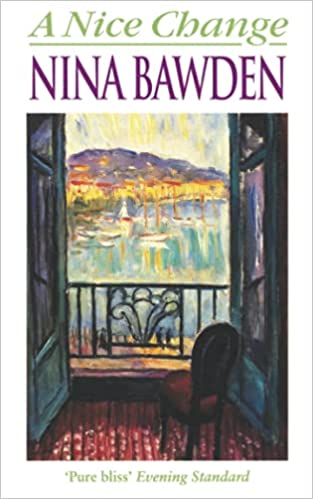
A Nice Change – Nina Bawden (1997) 192 pages

Although I wouldn’t describe Nina Bawden as a comfort read – she is far too sharply observant for that – it was with some relief that I started A Nice Change, after the traumas of The Gold-Rimmed Spectacles yesterday. A middle-class comedy of manners amongst holidaymakers in Greece sounded free of serious consequence and therefore just the ticket.

The story opens with solicitor Amy arriving in Athens airport with her husband Tom, a Labour MP, who has spotted his ex-mistress Portia heading to the same hotel as them:

“What the hell is she doing here? What the hell can he do? Amy has booked (a package deal, paid in advance) this reportedly comfortable hotel entirely for his benefit. She hates lying around pools, or on beaches, is bored by rich food as she is bored by rich people, likes to keep on the move when she travels. But he has just had a small but humiliating operation that made bicycling around Brittany, their earlier, energetic plan for this summer fortnight, out of the question.”

Despite being a philandering politician, Tom isn’t especially despicable. He’s not especially likable either. He’s just a middle-aged man worried about his waistline, dissatisfied at work but feeling too old to start anything new. He’s recognisable and ordinary, rather than a moustache-twirling villain.

“He could never again think of himself as an honest man. (There is a certain enjoyment in this self-abasement that he acknowledges occasionally, even though most of the time he prefers to see it as a decent humility.)”

Amy, on the other hand, seems quite a decent and caring person.

“Now it is only with Tom that she feels these physical characteristics to be shameful, disabling. With other people (more often with women than men) she is unselfconscious, competent, kindly, a good listener, even a good talker, on rare occasions quite witty. Well, cheery, anyway, she corrects herself.”

She is aware of Tom’s affair and knows it is over. She doesn’t want to know any details, so Tom spends the holiday worrying that Amy will discover who Portia is. Tom’s charming father arrives too, adding to his concerns.

Alongside these domestic woes are the other guests: Mr and Mrs Boot, an older couple who refer to each other as Mother and Daddy belying Mr Boot’s somewhat less-than-paternal traits; lovely young doctor Prudence Honey (ha!) awaiting the arrival of her extrovert grandmother; grieving widower Philip; and some mysterious elderly female twins, who Amy thinks look vaguely familiar…

Bawden is a great social observer, but never harshly judgemental:

“Connection thus established, they nod, and smile, and make various other small facial gestures to express friendly intentions towards each other and amused dismay at the suddenly crowded bar; every seat taken and not even much standing room since several of the newcomers have crutches or zimmer frames which they deploy cunningly to give them extra floor space.”

Although it’s a novella, Bawden handles all the characters expertly and none felt under-explored to me. There are various mysteries around the guests which gradually come to light without feeling contrived, and I thoroughly enjoyed my time at Hotel Parthenon.

Novella a Day in May 2022 No.28

Thérèse Desqueyroux – François Mauriac (1927, trans. Gerard Hopkins 1972) 115 pages

Today’s choice sees me return to my much-neglected Le Monde’s 100 Books of the Century reading challenge with a classic of French literature.

The novella opens with Thérèse Desqueyroux being acquitted of trying to poison her husband.

“The smell of fog and of baking bread was not merely the ordinary evening smell of an insignificant country town, it was the sweet savour of life given back to her at long last. She closed her eyes and breathed deeply of the perfume of the sleeping earth, of wet, green grass. She tried not to listen to the little man with the short legs who never once addressed his daughter.”

As she journeys back to her home among pine forests in Landes in south-west France, she reflects on her marriage to Bernard and life so far.

“All around us was the silence: the silence of Argelouse! People who have never lived in that lost corner of the heath-country can have no idea what silence means. It stands like a wall about the house, and the house itself seems as though it was set solid in the dense mass of the forest, whence comes no sign of life, save occasionally the hooting of an owl. (At night I could almost believe that I heard the sob I was at such pains to stifle.)”

There is never any doubt that she tried to poison him. Her family know it and Bernard knows it. However, there is never an obvious reason given for her drastic action. It was an unhappy marriage, a strategic match between Catholic middle-class families, but Thérèse seems to have gone along with it happily enough, mainly due to her fondness for Bernard’s sister Anne (some commentators have suggested Thérèse is gay). She doesn’t love Bernard and she feels no desire for him, but surely history would be littered with bumped-off spouses if that were a reason for murder.

“When all was said, Bernard wasn’t so bad. There was nothing she detested more in novels than the delineation of extraordinary people who had no resemblance to anyone whom one met in normal life.”

When she returns to her husband, she is surprised to learn that the plan is for her to stay, but on what terms?

Thérèse Desqueyroux is a beautifully written, intriguing novel that raises questions without seeking trite answers, including who pays the price for male power; how to create agency when you have almost no choices; the nature of justice.

‘But if I did give you a reason it would seem untrue the moment I got it into words…’

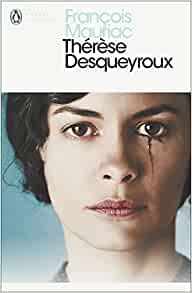
As the cover of the Penguin Classics edition shows, this novella was adapted to film (for the second time) in 2012. This trailer suggests a wonderfully shot, faithful adaptation:

Novella a Day in May 2022 No.24

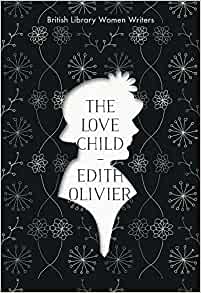
The Love Child – Edith Olivier (1927) 138 pages

The Love Child has been reissued as part of the British Library Women Writers series, a wonderful endeavour which has my fellow Novella a Day in May-er Simon Thomas as series consultant 😊

From the opening of The Love Child, I knew I was in for a treat:

“Agatha Bodenham had unconsciously moved a pace or two from the others, and she stood, isolated, near the head of her mother’s grave while the clergyman finished the service. She was wearing a dress of the shape and the tone of black which her dressmaker thought suitable for morning orders, and her hat was quite without character.”

Such a clever opening, and such detailed characterisation in so few words. This continues with clear-sightedness, yet with compassion too.

“She and her mother were women of peculiarly reserved natures, finding it hard to make friends, and holding their country neighbours at a distance. So reserved, too, that they had been barely intimate with each other, living through their days side by side without real mingling of experiences or sharing of confidences. Indeed, they had neither experiences nor confidences to share.”

Now her mother has died, Agatha is deeply, despairingly lonely. It has always been a lonely life in many ways, and she has never had many friends. Then she remembers a childhood imaginary companion, Clarissa. She wills Clarissa back to her, and the scamp – fleet of foot, irrepressible of nature – reappears. It’s not unheard of to retreat into fantasy at times of stress, but what lifts this from the psychological to the fantastical is that other people can see Clarissa too.

“She hardly believed it herself when she thought about it. She just didn’t think about it at all – she lived, and for the first time in her life.”

This presents a particular problem for Agatha as to how to explain Clarissa’s presence, the solution of which is the title.

“There was a special flavour about this scandal, because nobody believed it, however often it was repeated. The thing was unthinkable. To look at Agatha was to know that the policeman’s story was an impossible one, and yet its very impossibility made it the more amusing.”

Clarissa grows up with Agatha and the two are very much bound together. Clarissa encompasses all the behaviours that were supressed in Agatha long ago: appetites for food, for books, for life. However, as a person with those traits grows older, they are naturally going to want to experience more and varied things. Agatha feels Clarissa moving away from the insular world they have created together to beyond Agatha’s limits.

“Now Clarissa would be the guiding spirit, and it appeared she would at once step out of the artificial world which Agatha had created for them to live in, and go to the everyday world which had always been so comfortably and remotely outside, a world which seemed to Agatha at once more commonplace and more disconcerting than their own.”

In many ways The Love Child is a very sad novel. Agatha is so lonely and the solution to that loneliness is one that will cause her further pain. It’s not made clear in the novel whether Agatha is experiencing mental ill health or a truly wondrous manifestation. In a sense it doesn’t really matter because what is being portrayed, in a compelling and involving way, is the quiet desperation that could exist within an ordinary woman’s life in this period.

Agatha has no troubles or ostensible difficulties to contend with, but what she has is an entirely unfulfilled life and no idea of how to live differently. Her solution is extreme, and in many ways is one borne out of fear. She has been equipped with almost no life skills, and a fear of the wider world. It is no wonder that her solution is one that possibly lives only in her own head, and thrives in her domestic realm.

“Agatha thought she liked picnics, and in the long winter evening she often played at going to them with Clarissa. She felt rather differently about them in the summer, preferring them at a distance, like most things.”

I found The Love Child to be a sensitive and inventive novel. It was also highly readable and made me keen to seek out more of Edith Olivier’s work.