“When a Welsh person loves you, you’ll finally know how it feels to belong to poetry.” (Kamand Kojouri)

This is a contribution to Reading Wales 2022 aka the Dewithon, hosted by the lovely Paula over at Book Jotter. My VMC pile is reaching ridiculous proportions so I googled “Wales Virago” and was delighted to find that there were two authors I could take off the TBR for this year’s Dewithon.

Firstly, I chose Penelope Mortimer, as I’d enjoyed Daddy’s Gone A-Hunting and The Pumpkin Eater a great deal, finding her writing spiky and incisive. Mortimer was born in Rhyl, Flintshire and My Friend Says It’s Bullet-Proof (1967) was her sixth novel.

Muriel Rowbridge is a journalist on a trip to Canada, the only woman in a group of men, warned by her editor:

“Don’t go wandering off in one of your Virginia Woolf fits.”

She is very much the outsider, wanting to focus on her writing while the rest of her group view it as a bit of a jolly:

“they were pleased with themselves, thawing toward each other, throwing out remarks about wives, children, secretaries, which were immediately understood, as though they were giving a particular handshake or flicking back their lapels for identification.”

This is the working world of the 1960s, which we’re all familiar with from Mad Men at least. Her colleagues think it’s totally acceptable to comment on what she’s wearing and the attractiveness of her legs. Thankfully Muriel doesn’t spend much time with them, or indeed much time working. The trip is a time of reflection and recuperation for her, as she recovers from a mastectomy for breast cancer.

“How to deal with it, except with vague attempts at courage and acceptance, she had no idea.”

Although Penelope Mortimer did have lung cancer later in life, I’m not sure she had personal experience of breast cancer at this point. But I thought this was a sensitive exploration of a woman working out who she is after a life-changing experience. Muriel isn’t remotely self-pitying, but she does need to find self-compassion.

”the anger against herself raged brightly, a clear fire. She had never felt this anger before; she could never remember feeling it before. It was enlivening, making her very defined and sharp, as though she had become a weapon.”

She had left her married lover Ramsey when she was diagnosed, and he is back with his wife Flora, a situation neither Ramsey and Flora are sure they want. This led to some of the pithy observations on relationships between the sexes that I expect from Mortimer:

“Between us, he said, he was being eaten alive. If this was so, I don’t know why we were both starving.”

While in Canada, she meets Robert: “what had been an indeterminate distance between their hands, knees, faces, was now measured exactly: they were accessible to each other.”

While she feels ambivalent about their relationship, the sex does lead her towards a new acceptance of her changed body.

“She leant against the lift wall and slowly remembered the night; then realised that this was the first time she had woken, and dressed, without any sense of mourning.”

Amongst the sexist or paternalistic colleagues; the self-centred married lover; and the surgeon who possibly took an entire breast when a lumpectomy would suffice without considering what it would mean for Muriel, Robert is a reminder of what can be positive in male/female relationships. This doesn’t necessarily mean that its happily ever after either… Mortimer is determinedly realistic.  

I didn’t think My Friend Says Its Bullet-Proof was quite as strong as the other two Mortimers I’ve read, but it was an interesting examination of the choices available to women in the late 1960s. It questions how to navigate independence in a world that marginalises and objectifies you both professionally and personally.
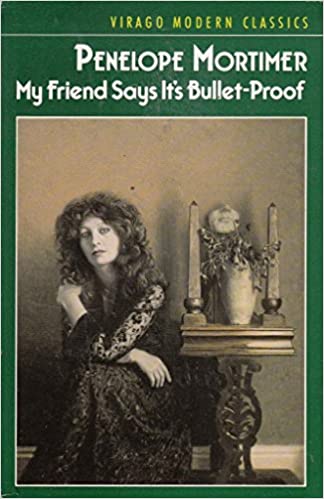
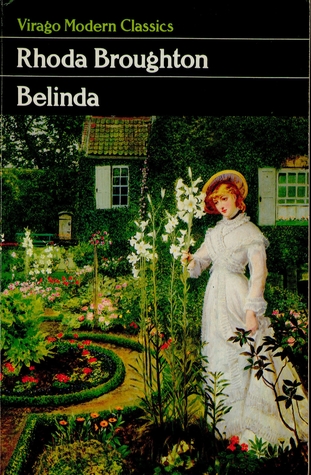
Secondly, a new-to-me author despite the vast number of novels she wrote; Rhoda Broughton, who was born in Denbighshire. Belinda (1883) was written roughly in the middle of her career, and my edition tells me she was alongside Mary Braddon as ‘Queen of the Circulating Library’.

Belinda is a satire, but that double-edged royal appellation did make me wonder if it was always read as such. Maybe I’m doing the fare of circulating libraries down, but I would have thought a tale of simpering Victorian virgin lovers was more typical of their stock than a satire of such stories. Regardless, if you read it straightforwardly as a romance because that’s what you were looking for, or as a satire because you were sick of such stories, Belinda would deliver.

The titular heroine is in Germany with her feckless, charming sister Sarah at the start of the novel:

“Away they go to Moritzburg, when the noon sun is warm and high; away they go, handsome, gay, and chaperoneless. There is no reason why their grandmother, who is a perfectly able-bodied old lady, should not escort them; but as she is sixty-five years of age, has no expectation of meeting a lover, and is quite indifferent to spring tints and German Schlosses, she wisely chooses to stay at home.”

Sarah is hugely popular with young men and is on her seventh fiancée. Belinda is unpopular, except with student David Rivers (aptly named, as he’s totally wet). The sisters wonder if Belinda’s nose is behind her lack of societal success:

“It is not case of measurement,’ says Sarah gravely; ‘I have seen noses several hands higher that were not nearly so alarming. It is a case of feeling; somehow yours makes them feel small. Take my word for it,’ with a shrewd look, ‘the one thing that they never can either forgive or forget is to feel small’”

It isn’t Belinda’s nose, unsurprisingly; it’s her fairly dull personality and her social awkwardness, matched only by that of her love interest:

“Is it her fault that all strong emotion with her translates itself into a cold, hard voice, and a chill set face? With other women it translates itself into dimples and pink blushes and lowered eyes. Ah!  but do they feel as she does? Sarah, for instance. When do men ever leave Sarah’s company with the down- faced, baffled, white look with which Rivers has more than once quitted hers? Preening themselves rather; with sleeked feathers and cosseted vanity.”

As you can see from the quote above, Broughton uses Belinda to poke fun at romantic mores, the silliness of them and the uselessness of them. She demonstrates how those who cannot master the light-hearted conventions end up tied in knots.

“‘And you were — and you were — one of the heavenly host up there!’  ends the young man, baldly and stammering.    But love is no brightener of the wits.

One of the heavenly host?’  repeats she, justly infuriated at this stale comparison.  ‘An angel, in short!  Must I always be an angel, or a goddess?  If anyone knew how sick I am of being a goddess!  I declare I should be thankful to be called a Fury or even a Ghoul, for a change!’

So saying, she turns her shoulder peevishly to him; and leaving the garden, begins to walk quickly along the road by the water, as if to make up for her late loitering.  He keeps pace with her, dumb in snubbed contrition, stupefied by love and, unhappily for himself, fully conscious of it; burningly aware of the hopeless flatness of his last simile, and rendered by his situation quite incapable of redeeming it by any brighter sally.”

The course of true love inevitably does not run smooth for the young lovers – ‘twas ever thus. However, Belinda’s understandable frustration with Victorian female conventions leads her to make some very questionable choices. For those of you who have read Middlemarch, these questionable choices will be most familiar. I don’t know what Oxford Rector Mark Pattison did to the women writers of late Victorian society but whatever it was, he really, really annoyed them. He provided the model for Casaubon in Middlemarch and here he is rendered as Professor Forth:

“She had known that she did not love him, but she had not known that he wore carpet slippers in the drawing-room.”

Belinda is well-paced and witty, but I think I would have like the satire to be slightly more explicitly evoked. At one point there seemed a never-ending round of cheeks blushing, lips whitening, words stumbling… and a pretty major suspension of my disbelief that Belinda and Rivers could really be in love, given they had barely spoken to each other but only mumbled vaguely while experiencing various body temperature changes.

I would have liked a slightly sharper authorial voice, or more scenes with witty, pragmatic Sarah and the frankly reprehensible grandmother, with whom I could only agree when she observed:

“Belinda is too everything, except amusing.”

I did enjoy Belinda though, and there was broad comedy too, including some nice scenes with pug dogs, and with social bull-in-a-china-shop Miss Watson:

“I shall certainly mention it to his mother. Lady Marion, when next I meet her,’ says Miss Watson resolutely; I do not think it would be acting a friend’s part not to do so.  I do not actually know her, but there is a sort of connection between us; I was at school for six months once at Brussels with a cousin of hers, and there is no doubt that there is something uncommonly louche about it.’”

To end, the BAFTAs earlier this month featured a performance from an 85 year-old Welsh singer/legend:

“Serious fiction is a dream which can become a nightmare.” (Brian Moore)

Thank you to everyone who left kind comments last week. Covid is dragging on with me but I do seem to be slowly improving – it’s not been great, despite my being tripled vaxxed (and very careful). I sincerely hope you all stay safe and well. Here is my second contribution to Reading Ireland Month 2022 aka The Begorrathon, hosted by Cathy at 746 Books. Do join in with the event if you can!

My choice this week was inspired by the Brian Moore at 100 readalong which Cathy also hosted throughout last year. I really wanted to join in, but my reading was pitiful. It’s not massively improved now to be honest, but it has improved enough that I was finally able to pick up this lovely hardback edition out of the TBR pile:

The only other Brian Moore I’ve read was The Colour of Blood, which I didn’t massively get on with. I didn’t dislike it, and I could tell it was really well written, but I just didn’t connect with it. All the Brian Moore love during last year’s event persuaded me to give him another try and I’m so glad I did. I Am Mary Dunne (1968) was an expertly written, engaging read and a complex character portrait.

We spend a day with the titular 32-year-old narrator, and it’s a bad day she’s having. A receptionist at her hairdressers asks for her name and she finds it escapes her. This sends her into a spiral of anxiety and reminiscences.

“When people say they remember everything that happened in their lives, they’re deceiving themselves. I mean if I were to try and tell anyone the story of my life so far, wouldn’t it come out as fragmentary and faded as those old snapshot albums, scrapbooks, and bundles of letters everyone keeps in some bottom drawer or other?”

She has been married three times, changing her name each time. With each of her husbands, escape seems to be motivating factor driving the marriage. She marries Jimmy in order to leave Canada and escape her home; she marries Hat to escape Jimmy; and she marries Tee because she wants to escape Hat, although with her third husband she also finds love and sexual satisfaction.

The narrative is fragmented, flicking back and forth between her past and present. We gradually piece together her life but Mary remains somewhat unknowable. Her husbands and her friend Janice – with whom she rows in restaurant – are more fully realised.  It’s a really clever piece of writing by Moore, where as readers we don’t get to know Mary despite the first-person narrative, because she doesn’t know herself.

“ ‘You’re an ingenue type.’ It was my acting epitaph, although I did not know it at the time. And in real life it’s no different. I play an ingenue role, with special shadings demanded by each suitor.”

Mary is attractive and Moore demonstrates how her physicality means people project their fantasies on to her. Because Mary is so obscure to herself, she easily gets lost in other people’s versions of her. She believes her first husband when he calls her insatiable, and she believes her second husband when he says she is a cold virgin. She accepts an older woman with a crush calling her Maria and attempting a Pygmalion scenario, and a full obliteration of her name through her third marriage “I am introduced to everyone as Mrs Terence Lavery”.

But Mary is not wholly sympathetic. She doesn’t always behave well, or kindly. She uses derogatory terms that I’m pretty sure would have been outdated and offensive in 1968. She sheds friends like she sheds identities. She changes people’s names too: Jimmy, Hat, and Tee are her husbands’ abbreviated names; the older Miss MacIver becomes Mackie. A man with a long-standing crush is amazed she doesn’t remember a nickname she gave him.

Mary refers frequently to an evil twin throughout the day, the part of her that behaves badly which she attributes to PMS. She says things she doesn’t mean and shakes uncontrollably. Part of the ambiguity around Mary is that by the end of the novel, I didn’t know if she was having a really bad day compounded by PMS (or PMDD); or whether she was seriously unwell. I did enjoy this bitchy thought that popped into her head about the portraits in her husband’s study:

“When I think of it, the arrogance of a man who could do the trivial work he does under the scrutiny of the likes of Tolstoy and Yeats. Proust gave up a world for his work. Terence wouldn’t even give up a party.”

I Am Mary Dunne sees the narrator having an existential crisis, fearing obliteration without any idea of who is being obliterated.

“I am beginning to die because some future me cannot keep me in mind.”

Yet I didn’t feel particularly hopeful by the end that the assertion in the novel’s title was any further realised than at the start of the story. It wasn’t a depressing tale, but Mary still seemed to have no idea of who she was. It was one of those stories that left me wondering what happened the next day, after the novel finished…

“I am no longer Mary Dunne, or Mary Phelan, or Mary Bell, or even Mary Lavery. I am a changeling who has changed too often and there are moments when I cannot find my way back.”

To end, a song about shifting identities by a master of reinvention:

“Idleness is an appendix to nobility.” (Robert Burton)

A little while ago I saw an epidemiologist on tv saying that eventually everyone will have had covid. And I thought, ‘no thank you all the same’, and carried on distancing as far as I could and wearing a mask. You can guess what’s happened, Reader. This post is brought to you from my covid-addled brain, apologies in advance if it’s even more waffly and incoherent than usual…

This is a contribution to Reading Ireland Month 2022 aka The Begorrathon, hosted by Cathy at 746 Books. It’s a great event so do join in if you can!

I’ve chosen two late novels by Molly Keane for this post and I really enjoyed revisiting this author who isn’t like anyone else. Her evocation of moneyed families in early twentieth-century Ireland is so deeply strange and disturbing, I always feel a sense of trepidation opening one of her stories…

Good Behaviour was published in 1981, when Keane had not published a novel for 29 years and nothing at all since the play Dazzling Prospect 20 years earlier. It was a huge success and shortlisted for the Booker Prize. It is a blistering, dark comedy of manners, perfectly paced and sharply observed.

It begins:

“Rose smelt the air, considering what she smelt; a miasma of unspoken criticism and disparagement fogged the air between us.”

I knew from that line that I’d love Good Behaviour, and now having finished the novel I can say it sets up the story and themes brilliantly: the domestic setting, sense of things rotting, the odd power dynamics, the uneasy roles, the undercurrents of anger.

Someone dies early on, in a way that leaves the reader uncertain as to how far they were nudged towards it, and this sense of not quite trusting that we are being given the full story continues as we are taken back in time by Aroon St Charles, daughter of an aristocratic family living in Temple Alice, a decaying pile, with her indifferent mother and philandering father.

“Behind him the green luminous gloom of glass within glass retreated inside the doors of a breakfront cabinet that filled one end of the dining room. Mummie had lined it with grey linen, so that all the glass objects floated and were lost in its spaces. It was like water or air at his back, as though the end wall were open to air or water. The austere outdoor look I knew had melted from him into the air, like the glass in the cupboard. Sitting there, he seemed extraordinarily dulled, dulled and happy.”

The novel is Aroon describing her childhood and early adulthood amongst the trappings of her class in 1920s Ireland. This being Keane, of course there is hunting and horses, but aside from a few pages where I thought the litany of dead animals was never going to end, it wasn’t too bad for squeamish readers such as myself.

Aroon does not fit in: she is not her adored brother Hubert; she is not physically adept; she is not charming and witty; and she is not beautiful. She enjoys food and is tall, in a time where women were expected to be flat-chested and dainty. She is not rich and so no men are interested in her. Her father likes her but is absent in various different ways throughout her life; her mother is at best indifferent to her but often mentally abusive.

“I turned away, my loneliness walking with me, taller than my own height as a shadow is tall – and irremediable as my height was.”

Aroon is a complex creation. At times I felt she couldn’t possibly be as naïve as her narration would have us believe. Did she really think the housekeeper was rubbing her father’s missing leg under the bedclothes to relieve phantom pain? Does she really not realise her brother is gay and his best friend is his lover? Does she really think she is concussed rather than completely sloshed? This isn’t me viewing it with twenty-first century eyes; other characters are perfectly aware of her father’s behaviour, the full extent of the housekeeper’s role, and her brother’s sexuality. They try to tell her but she doesn’t hear it and blunders on regardless.

Whether or not Aroon is an unreliable narrator or just hopelessly naïve, this characterisation is a master-stroke by Keane in balancing out the pitch black comedy of Good Behaviour. Aroon’s voice is so credulous, the novel written with such a light touch, that it means you whizz through the story without becoming hopelessly depressed at how grim Aroon’s situation is or how deeply unpleasant many of the people are. Good Behaviour is both eminently readable and deeply disturbing.

Queen Lear (also known as Loving and Giving, which I tell you so you don’t make the same mistake as me and end up blissfully unaware that you own two copies of the same novel) was published in 1988. Like Good Behaviour it features a female protagonist, Nicandra (named after her father’s favourite horse “the first Nicandra”), daughter of gentry, lonely and unhappy.

The story opens with eight-year-old Nicandra doing a round of the enormous home she lives in, visiting her parents and servants, barely tolerated by all. Again, the opening is lovely piece of scene-setting, telling the reader all we need to know about the characters and setting.

Nicandra’s mother is glamorous and engaging, and entirely uninterested in her daughter:

“When she was absent, the shadow of her presence was the assurance of a world of love. To earn her displeasure was to forgo all delight; through the days Nicandra devised love tokens, as much to stimulate interest towards herself as to express her deep affection.”

In one particularly unpleasant scene, Maman ties Nicandra to a chair, not to be released until she eats the cold spinach she hates. Her Aunt Tossie rescues her, much to Nicandra’s dismay, who was trying to psych herself up to eating the spinach and making this sacrifice for her mother.

In a novel full of selfish, unpleasant people, Aunt Tossie was the nearest I got to actually liking someone:

“She enjoyed nearly everything, even widow’s weeds, as her married life had not been as exciting as she might have wished”

That day, her mother runs off with one of the servants. She doesn’t say goodbye to her child, and no-one explains to Nicandra what has happened.

“Whatever it was that had come over her family today, Nicandra could not guess at. She had done her utmost to excite, please, soothe, serve; yet everything had gone awry. Pigeons, butterfly, bantams, Maman, Aunt Tossie – she had given her all to each, only Dada was left.”

From these inauspicious beginnings, the novel jumps forward to Nicandra as a young woman in the interwar years. Unsurprisingly, she has grown up naïve and desperate for love. She remains almost wilfully blind to everyone else’s relentless self-focus, to the extent where it’s hard to feel for her. She seems so determinedly oblivious as to be as self-obsessed as everyone else.  

There are also repeated references to her childhood bullying of Silly-Willie, a child on the estate who initially seems to have learning difficulties, expressed in the derogatory terms of the 1920s/1930s. Despite these prejudices, he grows up to essentially run the entire estate – albeit in a dilapidated condition due to Dada racing through money. Nicandra struggles with this arrangement as “a little incident” between them, buried in the past, is something she feels extremely uncomfortable about.

Nicandra of course falls for the first charming bounder to show her any interest, desperately seeking his love as she once did her mother’s, with about the same level of reciprocity.

“Although in manners bound, he held and played with her hand for the rest of the drive home, he felt he could have done instead with a nice talk about hunting.”

With very little else to occupy her, Nicandra marries Andrew. He enjoys her beauty and money, as well as an affair with her best friend Lal (this isn’t really a spoiler as the prospect is introduced almost simultaneously with the awful characters).

There are some very nasty elements for a novel titled Loving and Giving:  the bullying, and Andrew’s crass and cruel suggestion of how Nicandra should procure money from her family for an abortion (that she doesn’t want) “say it’s to drain the West Bog”. Repulsive.

What stops Loving and Giving from being absolutely relentlessly bleak in its portrayal of “cheap and amusing” lives where “tragedy gets tidied away” is the humour. We aren’t supposed to take these characters particularly seriously, or think that they are admirable or lead remotely useful lives. I particularly liked this pithy comment on the butler’s behaviour:

“the slight upwards twist he gave to the bottle took the place of the wry smile he would never allow himself to give”

And this observation on family politics:

“Properly speaking, Aunt Tossie should have presented Nicandra at court, which she would have greatly enjoyed doing. Dada, however, raised every obstacle and objection he could think of to baulk this plan because, as he put it, (only to himself), the dear old girl might feel her oats and something unfortunate could happen.”

Molly Keane is pretty blistering in her characterisation of the upper classes and in portraying the lives they live. Her novels are almost Gothic – certainly there are ruined buildings, hauntings from the past, almost ghoulish characters – but no supernatural elements. I enjoy her original phrasing and sharp observation, I even enjoy her awful characters (some of them anyway) when I’m in the right mood. I do find I need a palate cleanser afterwards though!

To end, a song about a family house, albeit a very different one to the those which Keane’s characters live in, and which provided the title of last week’s post:

“You think your pain and your heartbreak are unprecedented in the history of the world, but then you read.” (James Baldwin)

Trigger warning: mention of rape, domestic violence, racist violence

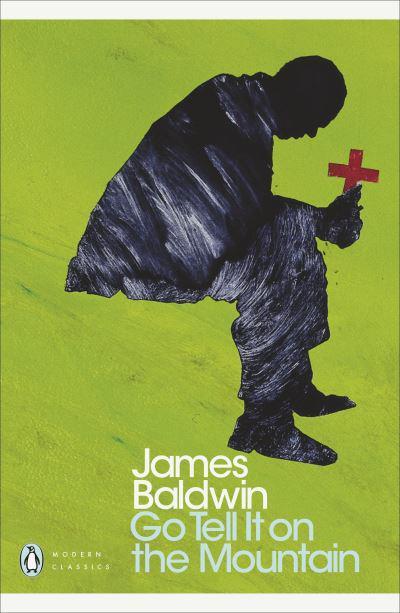
I was delighted when Go Tell It on the Mountain was selected for today’s review-a-long, as it has sat in my TBR for ages. I also really enjoyed October’s Vanity Fair review-a-long, and I fell in love with James Baldwin’s writing when I read Giovanni’s Room for the 1956 Club, back in October 2020.

Despite these various motivators, I was still worried I wouldn’t manage to join in, as my reading is slowly improving but still very poor, and my blogging is essentially non-existent. However, Go Tell It on the Mountain (1953) proved a good choice, as despite being a really tough read in terms of subject matter, it’s only 256 pages in my edition, can be read in an afternoon, and is full of Baldwin’s lyrical beauty.

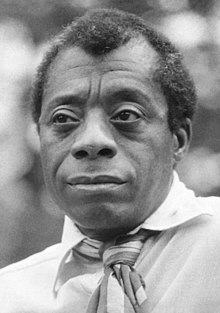
Photo by Allan Warren, courtesy Wikimedia Commons

The remaining obstacle is that it feels impossible to write about Go Tell It on the Mountain. It’s such a richly complex book and tackles such enormous themes, that I’m not even going to manage to approach doing it justice. So what follows is a few random thoughts 😊

The novel opens:

“Everyone had always said that John would be a preacher when he grew up, just like his father. It had been said so often that John, without ever thinking about it, had come to believe it himself. Not until the morning of his fourteenth birthday did he really begin to think about it, and by then it was already too late.”

John’s father Gabriel Grimes preaches at the Temple of the Fire Baptized, a Pentecostal storefront church in Harlem. John is ambivalent about religion, finding it restrictive and acutely aware of the temptations all around him;

“For John excelled in school, though not, like Elisha, in mathematics or basketball, and it was said that he had a Great Future. He might become a Great Leader of His People. John was not much interested in his people and still less in leading them anywhere, but the phrase so often repeated rose in his mind like a great brass gate, opening outward for him on a world where people did not live in the darkness of his father’s house, did not pray to Jesus in the darkness of his father’s church, where he would eat good food, and wear fine clothes, and go to the movies as often as he wished.”

However, he does have faith. We follow John throughout his birthday as goes to the cinema and enjoys Central Park, but also attends church:

“The Sunday morning service began when Brother Elisha sat down at the piano and raised a song. This moment and this music had been with John, so it seemed, since he had first drawn breath.”

Aged fourteen, John is still finding out who he is. This is bound up in religion and church, but also in his academic accomplishments which mark him out at school and within his family; and his rejection of his father as a masculine role model who demonstrates violence and hypocrisy, beating his family often.

“His father’s arm, rising and falling, might make him cry, and that voice might cause him to tremble; yet his father could never be entirely the victor, for John cherished something that his father could not reach. It was his hatred and his intelligence that he cherished, the one feeding the other.”

In the second part of the novel the prayers of John’s father, mother and aunt are powerfully explored. I don’t want to say too much about the plot here, as the characterisations first introduced through John’s point of view are so sensitively deepened through this second part, including that of his abusive father (who remains wholly unlikeable, but a fully realised character). As a reader I enjoyed watching these complex adults emerge without any foreknowledge.

John’s parents are the first generation since emancipation, and the trauma of slavery is just within lived experience, as GTIOTM is set in 1935. The depictions of racism, every day and institutional, are enraging.

“She looked out into the quiet, sunny streets, and for the first time in her life, she hated it all—the white city, the white world. She could not, that day, think of one decent white person in the whole world. She sat there, and she hoped that one day God, with tortures inconceivable, would grind them utterly into humility, and make them know that black boys and black girls, whom they treated with such condescension, such disdain, and such good humor, had hearts like human beings, too, more human hearts than theirs.”

Through John’s aunt Florence and his mother Elizabeth, Baldwin explores the additional patriarchal oppression women have to contend with. Florence’s academia is ignored to prioritise Gabriel’s, despite her desire for learning and his total disregard for it. Pregnancy outside of wedlock is left for the women to deal with. A woman who is gang-raped by white men is outcast:

“No man would approach her in honor because she was a living reproach”

There is a lot of compassion throughout the novel for female experience. With everyone there is a sense of things unspoken, in contrast to the vocal exuberance of preaching, and this is particularly true for the female characters.

“And he knew again that she was not saying everything she meant; in a kind of secret language she was telling him today something that he must remember and understand tomorrow. He watched her face, his heart swollen with love for her and with an anguish, not yet his own, that he did not understand and that frightened him.”

The final part of the novel follows John experiencing vivid religious visions, but I felt the ending was ambiguous, undermining the fervour. Baldwin demonstrates that human experience is subject to unpredictable forces, both internal and external, and I felt any certainty John believed in one day could be undone tomorrow. (For one thing, John doesn’t seem to acknowledge sexual attraction to Elisha, though as readers it seems to be there.)

As I mentioned at the beginning. I’ve found Go Tell It on the Mountain almost impossible to write about. I hope these few thoughts and extensive quotes have given some sense of it though! Baldwin is such gorgeous writer even with such harrowing subject matters: skilled but approachable, angry and compassionate, humane and unsentimental.

Now to dig If Beale Street Could Talk out of the TBR…

I’ll add in links to the other bloggers taking part today as I find them. Early signs are I’m out on a limb with this one, so please do check out the other reviews 🙂 :

Fiction Fan

Katrina

Rose

Kelly

“When you have expectations, you are setting yourself up for disappointment.” (Ryan Reynolds)

I would say my blogging this year has been a continual exercise in humility or humiliation, depending on my mood 😀 Once again, I have failed to realise my own expectations, this time that I would read The River (1946) and Breakfast with the Nikolides (1942) for Brona’s Rumer Godden Reading Week which ends today. I’ve really enjoyed the Rumer Godden novels I’ve read (The Greengage Summer, Black Narcissus, China Court, Kingfishers Catch Fire). Godden is a prolific author and I’ve barely scratched the surface so I was excited to see Brona’s event.

But sadly (predictably) yet again, I’ve ended up posting right up to the wire for a reading event. I’m just back from a weekend away in the New Forest with friends, and while I had a lovely time I got minimal reading done, so I’m not going to manage to squeeze in the second book. I have at least managed The River, which given that it’s only 111 pages cannot be taken as a sign my reading is recovering in any great way. Ah well…

In the preface to my edition, Godden describes how the novel was written following her passing-by her childhood home after many years, and the tone of the novella is elegiac, full of feeling for a time long past. It begins:

“The river was in Bengal, India, but for the purpose of this book, these thoughts, it might as easily have been a river in America, in Europe, in England, France, New Zealand … Its flavour would be different in each […]

That is what makes a family, the flavour, the family flavour, and no one outside the family, however loved and intimate, can share it.”

The family are a middle-class white family, living in India. Although told in third person, the point of view is that of Harriet, on the cusp of adolescence. Her family comprises her pregnant mother, father who runs a jute factory, older sister Bea and younger brother Bogey, toddler Victoria, and Nan.

Harriet is great character: strong-willed, stubborn, imaginative and inquisitive. She writes poems and it’s easy to assume that she is based on Godden. She’s struggling with changes in herself and her family. Bea is that bit older and drawing away from childhood, and therefore her younger siblings. Bogey is interested in local fauna and happy to be left to explore these alone. Harriet is left betwixt and between.

“ ‘You are always trying to stop things happening, Harriet, and you can’t.’

But Harriet still thought, privately, that she could.”

The short novel is full of gorgeous descriptions of India, from the bazaar:

“Harriet and the children knew the bazaar intimately; they knew the kite shop where they bought paper kites and sheets of thin exquisite bright paper; they knew the shops where a curious mixture was sold of Indian cigarettes and betel nut, pan, done up in leaf bundles, and coloured pyjama strings and soda water; they knew the grain shops and the spice shops and the sweet shops with their smell of cooking sugar and ghee, and the bangle shops, and the cloth shop where bolts of cloth showed inviting patterns of feather and scallop prints, and the children’s dresses, pressed flat like paper dresses, hung and swung from the shop fronts.”

To the plants and flowers:

“Soon the bauhinia trees would bud along the road, their flowers white and curved like shells. Now the fields were dry, but each side of the road was water left from the flood that covered the plain in the rains; it showed under the floating patches of water-hyacinth and kingfishers, with a flash of brilliant blue, whirred up and settled on the telegraph wires, showing their russet breasts.”

As a twenty-first century reader, I’m reading at a very different time to when The River was written, and I do approach Godden’s novels set in India with some trepidation. We know that imperialism and colonialism underpin this fictional family’s way of life. While Godden was definitely a product of this herself, I found the descriptions in this novella evocative rather than exoticising. I didn’t get a sense of othering in The River but maybe a more astute reader would. Harriet views India as home although she is aware she doesn’t wholly fit in.

The natural environment and Harriet’s developing identity come together when she has an almost mystical experience by the cork tree in the garden:

“She put her hand on the tree and she thought she was drawn up into its height as if she were soaring out of the earth. Her ears seemed to sing. She had the feeling of soaring, then she came back to stand at the foot of the tree, her hand on the bark, and she began to write a new poem in her head.”

Although Harriet is infatuated with Captain John – a man injured both physically and psychologically by the war – it is her love affair with words that comes through so strongly. It’s a profound portrait of a child who will grow into a writer and how deeply the vocation is felt within her.

I think even if I hadn’t read the preface, the sense of how Godden came to write this is so clear. It is someone trying to evoke a place and life close to their hearts, with an awareness it has gone forever. The River is a quick read, not plot heavy, but a distinctive and memorable portrait of the gains, pains, lessons and losses of growing up.

Jean Renoir adapted The River in 1951 but the trailer seemed to me to be taking a very different tone to the book. I don’t know if this is reflective of the film itself, but it means it’s back to 80s pop videos! Regular readers of my witterings will not be at all surprised at the song choice to finish this post:

“I got a brand new combine harvester.” (The Wurzels, 1976)

My blogging is still decidedly patchy but I really enjoy Kaggsy and Simon’s Club weeks, so I was determined to take part in this week’s 1976 Club. So far it’s shaping up to be another excellent selection so do head over to their blogs to see all links to reviews 😊

I decided to go with two authors I’m very fond of, but who perhaps don’t provide the sharpest contrast… these are two short, spiky novels, darkly humorous and incisive in their portrayals of ordinary lives.

Firstly, A Quiet Life by Beryl Bainbridge. The cover of my edition has a quote from Hilary Mantel calling it ‘one of the funniest books I have ever read’, which tells me that Hilary Mantel and I have very different senses of humour. There are definitely funny moments in A Quiet Life but, like a lot of Bainbridge’s writing, I found it pretty bleak too.

Set just after the end of the Second World War, it tells the story of a family from the point of view of the eldest son Alan. Living in a coastal town near Liverpool (probably Formby, where Beryl grew up), his parents are very much unhappily married.

Once well-off, they now live in straightened circumstances. His mother expected more, going to a finishing school abroad and marrying a self-made man, who now unfortunately, has lost all he made. Theirs is a house of loaded silences, resentments, bickering, secrets and frustration.

“The marble statue of Adam and Eve, recently brought down from the landing, was shaky on its pedestal. Even the row of decorative plates, painted with roses and hunting scenes, might roll on their shelf above the door and bounce upon the red carpet. Madge said it was like walking through a minefield.”

Bainbridge captures perfectly the constant repressed tensions of living in such a situation. There is no honesty here, just lives of quiet desperation as his mother reads romantic fiction and his father struggles in isolation.

“Though the war was over, Father was still caught in a cross-fire, harassed by battles, by phantom cities tumbling about his ears. This moment – as then – he could be slumped over the driving wheel, hands raised in an abject gesture of surrender.”

Meanwhile their two children muddle through. Depressingly, Alan sees his future playing out just like his parents. This doesn’t particularly bother him, despite the fact that:

“He always did as he was told and he resented that no-one noticed.”

Meanwhile, Madge his sister runs wild, doing exactly what she likes and knowing how to manipulate her way out of any repercussions. She isn’t remotely vicious, she just knows what will enable her to do what she wants.

“She didn’t seem to grasp that it was the trouble she caused him personally that was his main concern. He was long past marshalling the reasons for his parents behaviour […] All he wanted was for Madge to stay indoors at night, so he needn’t return to find his father jumping up and down, demented, at the kerb.”

The dejection and anxiety of all their lives – except possibly Madge, who seems determined to carve out something more – is brilliantly captured by Bainbridge in small, telling details. In a world where no-one says very much and very little happens, she manages to build the tension to breaking point, to an ordinary, sadly predictable tragedy.

‘We had a garden when your father and I were first married, big enough for a game of tennis. We had a maid called Matty. We had so much space…You have no idea what it was like.’ She stood by the hearth, one foot resting on the cracked tiles.

‘We’ve got space now,’ said Madge from the floor. ‘You won’t let us use it.’

Alan thought suddenly it was why Madge went out so much, why he did himself. There wasn’t room for them. If he had his way he’d light a fire every day in the lounge and lie full-length upon the good-as-new sofa.”

Secondly, Afternoon of a Good Woman by Nina Bawden. The titular woman is Penelope, ironically named as she herself observes, as she is not a faithful wife but plans to leave her husband Eddie and her two daughters for her lover, after she has finished her afternoon’s work as a Justice of the Peace.

“Will they blame me? I hope not. I have taught them to be tolerant as I have taught them regular habits and sound ethical principles. The only thing I have failed to teach them, I sometimes think guiltily, is how not to be boring.”

The afternoon she spends in court sees her reflect on her life so far, her choices and attitudes. It is not only her major life-altering decision that is prompting this introspection:

“Someone has sent me twenty aspirins in a brown envelope, and that anonymous accusation rumbles on in the depths of my mind like a monotonous menacing drum, sharpening my sympathies with all accused persons, alerting my memory, forcing me to examine my own failures, seek out my own guilt.”

This unnerving situation adds a sense of foreboding, or even slight menace, to the day. Yet there is insidious violence throughout Penelope’s experiences, which gradually emerge.

Penelope sees herself at the more liberal end of society’s views:

“ ‘Do you think old, respectable aunts should not be listened to?’ The Judge smiles politely. He knows about compassionate lady magistrates, that smile says; all their soft-hearted arguments.

I am stung. Does he think I am not worth listening to?”

Yet some of her views expressed in this novel are deeply disturbing: “Some women invite [flashers] behaviour”; “Girls often pretend to be more upset than they are. It’s expected of them.”

As well as her internalised misogyny, Penelope has to manage the daily sexism of a 1970s workplace, a mix of being patronised and/or lusted after. The condescending Judge invites her to a lunch that is clearly more than a meal…

As she reflects on her relationship with her step-brother Steve, step-sister April’s violent marriage, and her step-mother Eve’s mental ill health, I think Penelope is supposed to be callow and unthinking, certainly in terms of how she viewed April’s violent marriage when she was younger. However, Penelope is not wholly unlikable, mainly because she doesn’t cut herself much slack and she does try to help people, however misguidedly. She doesn’t justify what she’s doing or try to make it better than it is. She simply explains how she reached that point:

“My life, my active, happy, purposeful life suddenly seemed empty to me, dreary and useless. The speed with which this had happened was terrifying. One minute I was walking calmly along, feet on firm ground, the next I had tumbled into this frightening black chasm. How had it happened? Why did I feel like this? It was more than unhappiness.”

Afternoon of a Good Woman feels like a snapshot in time, not only of Penelope’s life but also of 1970s attitudes to women, violence, crime, sexual behaviour (Eddie’s preferences are detailed and Penelope’s affair is a somewhat contentious relationship, even without the betrayal), sexual assault, work and family, public versus private personas. For a short novel it covers a lot of ground, and manages to do so with ease. I’m really glad I read it for the 1976 Club as it felt very much of it’s time.

“And indeed, to be fair to myself (and if I can’t be fair to myself, how can I be trusted to be fair to others?), in the magistrates court, where I sit almost weekly, the margin of error that puts me on the side of the judges and not of the judged sometimes seems very narrow.”

To end, of course the 1970s give me an opportunity to indulge my love of David Bowie. In 1976 he starred in The Man Who Fell to Earth:

“Light tomorrow with today!” (Elizabeth Barrett Browning)

Today is the longest day of the year for those of us in the Northern hemisphere, so I thought I’d celebrate with a couple of light reads (haha – sorry.) It’s also my beloved and much-missed great aunt’s birthday, so I’ve chosen two novels I think she would have approved of – she wasn’t a great reader but I hope she’d enjoy these.

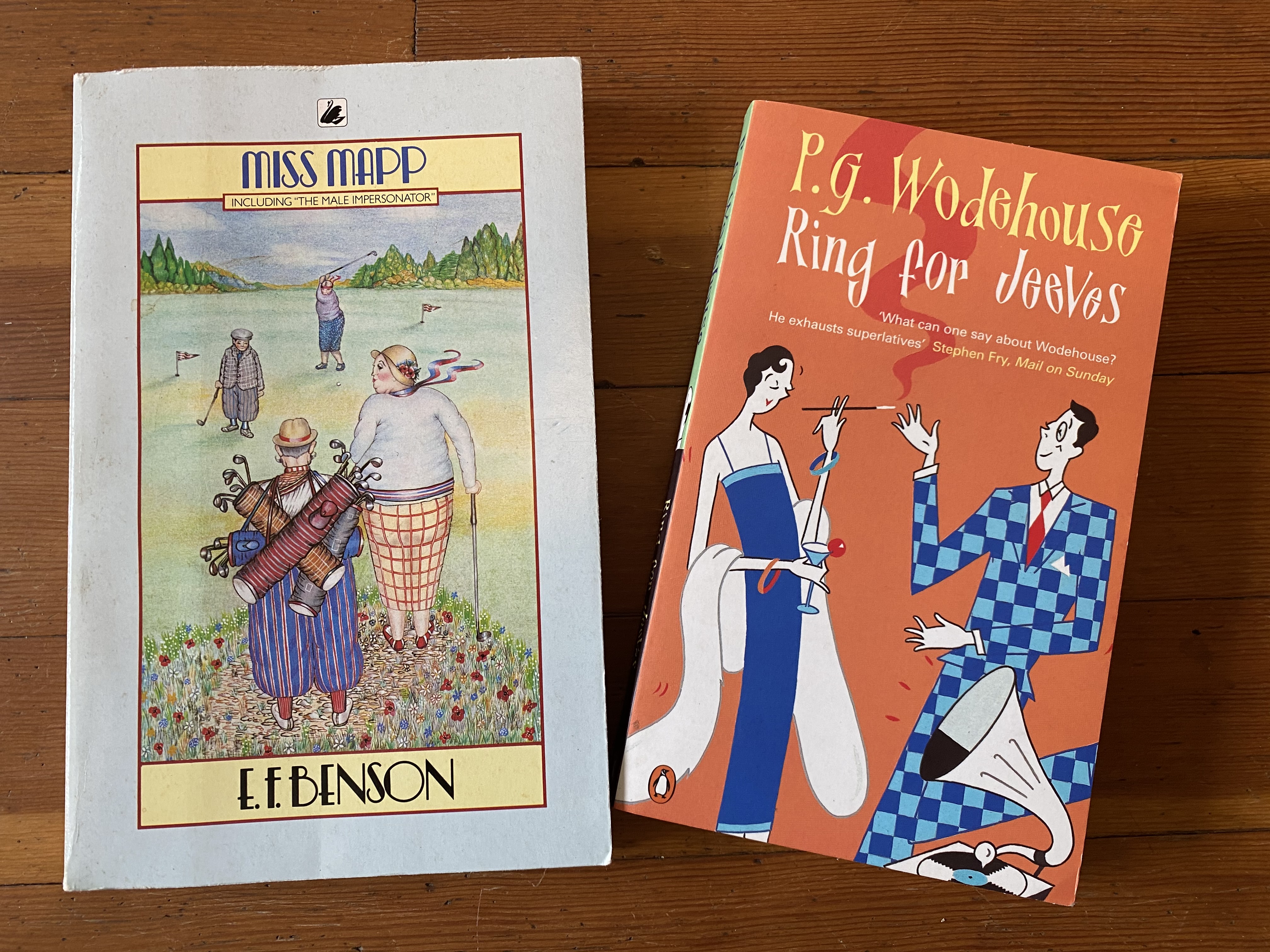
Firstly, Miss Mapp by EF Benson (1922). This is the second in the Mapp and Lucia series and so far I’ve really enjoyed Queen Lucia and Lucia in London, (unintentionally I read them out of order but I don’t think it matters) although fans of the series tell me things really take off once the two meet one another. Those of you who follow me on twitter will know I managed to bag the next two titles from the charity shop just at the weekend, but for now the much anticipated meeting will have to wait, as Lucia’s dominion of Riseholme is only given a passing mention in Miss Mapp. The titular character is far more concerned with the comings and goings of her home town:

“There was little that concerned the social movements of Tilling that could not be proved, or at least reasonably conjectured, from Miss Mapp’s eyrie.”

Her house is perfectly positioned in order to view all her neighbours as they go about their business. She is only interested in the genteel society in which she circulates, so we hear very little about the working classes of Tilling. Rather the focus is on the delightfully-named retired military men Captain Puffin and Major Flint; Isabel Poppit who lives “with a flashy and condescending mother” named Godiva; and Mrs. Plaistow with her troublesome teeth.

Eventually Miss Mapp leaves her eyrie and goes shopping:

“All these quarrelsome errands were meat and drink to Miss Mapp: Tuesday morning, the day on which she paid and disputed her weekly bills, was as enjoyable as Sunday mornings when, sitting close under the pulpit, she noted the glaring inconsistencies and grammatical errors in the discourse.” 

This is a brilliant piece of scene-setting by Benson. Miss Mapp, poised at her window before launching herself onto the High Street, tells us all we need to know about Tilling and those who populate it – including their weak in-jokes, feeble and yet guarded fiercely by those who aim to be the first to reference it in conversation:

“Au reservoir, Diva dear,” she said with extreme acerbity, and Diva’s feet began swiftly revolving again.

Sadly, we don’t linger long with the Tillingite who appealed to me most, as Miss Mapp does not share my interest:

“For on emerging, flushed with triumph, leaving the baffled butcher to try his tricks on somebody else if he chose but not on Miss Mapp, she ran straight into the Disgrace of Tilling and her sex, the suffragette, post-impressionist artist (who painted from the nude, both male and female), the socialist and the Germanophil, all incarnate in one frame. In spite of these execrable antecedents, it was quite in vain that Miss Mapp had tried to poison the collective mind of Tilling against this Creature. If she hated anybody, and she undoubtedly did, she hated Irene Coles. The bitterest part of it all was that if Miss Coles was amused at anybody, and she undoubtedly was, she was amused at Miss Mapp.”

Absolutely nothing of any importance happens in Tilling. There are machinations over dresses; worry over food-hoarding which affects no-one; an argument between Puffin and Flint that neither really understand; a refusal to acknowledge daylight saving time. It’s all very silly and none the worse for it.

“Naturally any permanent quarrel was not contemplated by either of them, for if quarrels were permanent in Tilling, nobody would be on speaking terms any more with anyone else in a day or two, and (hardly less disastrous) there could be no fresh quarrels with anybody, since you could not quarrel without words.” 

Miss Mapp is greatly enjoyable when you want an escapist read. You can lose yourself in the petty concerns and schemes of Tilling for a few hours, wondering about nothing more serious than the ripeness of redcurrants for making a fool.

My only reservation on finishing it was whether Miss Mapp was too scheming – was she in fact a lonely character? Although she knew everyone’s business, did she really have any intimacy in her life? But my edition also had the short story The Male Impersonator, which features this exchange about Miss Mapp at the end, between Miss Mapp’s frenemy Godiva Poppit and a new arrival to Tilling:

“ ‘Oh but she mustn’t be hurt,’ said Miss Mackintosh. ‘She’s too precious, I adore her.’

‘So do we,’ said Diva. ‘But we like her to be found out occasionally. You will too, when you know her.’”

So then my soft heart felt a lot better 😊

Secondly, Ring for Jeeves by PG Wodehouse (1953). The nonsensical shenanigans of Wodehouse are a go-to comfort read for me, but in recent years I’ve struggled. Living through a succession of overprivileged self-serving, corrupt toffs determined to govern this country into absolute ruin with a total disregard for anyone who doesn’t share their enormous inherited advantages means laughing at the upper classes has somewhat lost its appeal. *climbs down off soapbox and getting back to talking about books*

However, I thought I’d give Ring for Jeeves a go, and I did enjoy it so maybe I’m mellowing. Wodehouse’s characters are so completely bonkers that no-one would suggest they should be in charge of a single thing. In fact, as the title suggests, if anything the novel suggests handing over all power to the lower orders.

Ring for Jeeves sees the titular valet without Wooster (*faints from shock*) as Bertie is away on some sort of retreat, learning – much to Jeeves’ consternation – to darn his own socks. Thus we find Jeeves looking after Bill, a man “in the normal state of destitution of the upper class Englishman” who is desperate for money:

“Rowcester Abbey – pronounced Roaster – was about a mile from the Goose and Gherkin. It stood- such portions of it as had not fallen down – just beyond Southmolton in the midst of smiling country. Though if you had asked William Egerton Bamfylde Ossingham Belfry, ninth earl of Rowcester, its proprietor, what the English countryside had to smile about these days, he would have been unable to tell you. Its architecture was thirteenth-century, fifteenth-century and Tudor, and its dilapidation twentieth-century post-World War Two.”

Bill has begun making some money posing as bookmaker Honest Patch Perkins at the races. The start of the novel sees him and Jeeves tearing back to Rowcester Abbey because they owe Captain Biggar £3000 for a winning bet. The furious Captain is in hot pursuit.

At the country pile, Bill’s infinitely more capable sister has arrived with her husband Rory. This being Wodehouse the fond couple have conversations along the following lines:

“ ‘Now would I be likely to drop a brick of that sort, old egg?’

‘Extremely likely, old crumpet. The trouble with you is that, though a king among men, you have no tact.’”

Monica thinks she can flog Rowcester to Rosalinda Spottsworth, who is obscenely rich and interested in various esoteric matters including ghosts, which surely the abbey must have. Soon everyone – including Captain Biggar who is in love with Mrs Spottsworth – are all under the same leaking roof:

“Jeeves had entered, bearing coffee. His deportment was, as ever, serene. Like Bill, he found Captain Biggar’s presence in the home disturbing, but where Bill quaked and quivered, Jeeves continued to resemble a well-bred statue.”

Will Bill solve his financial difficulties and marry the lovely vet who lives nearby? Will Captain Biggar confess his feelings for Mrs Spottsworth and manage not to kill Bill and Jeeves? Will Rory manage not to put his foot in it several times over? Will it all work out OK in the end?

Of course it will.

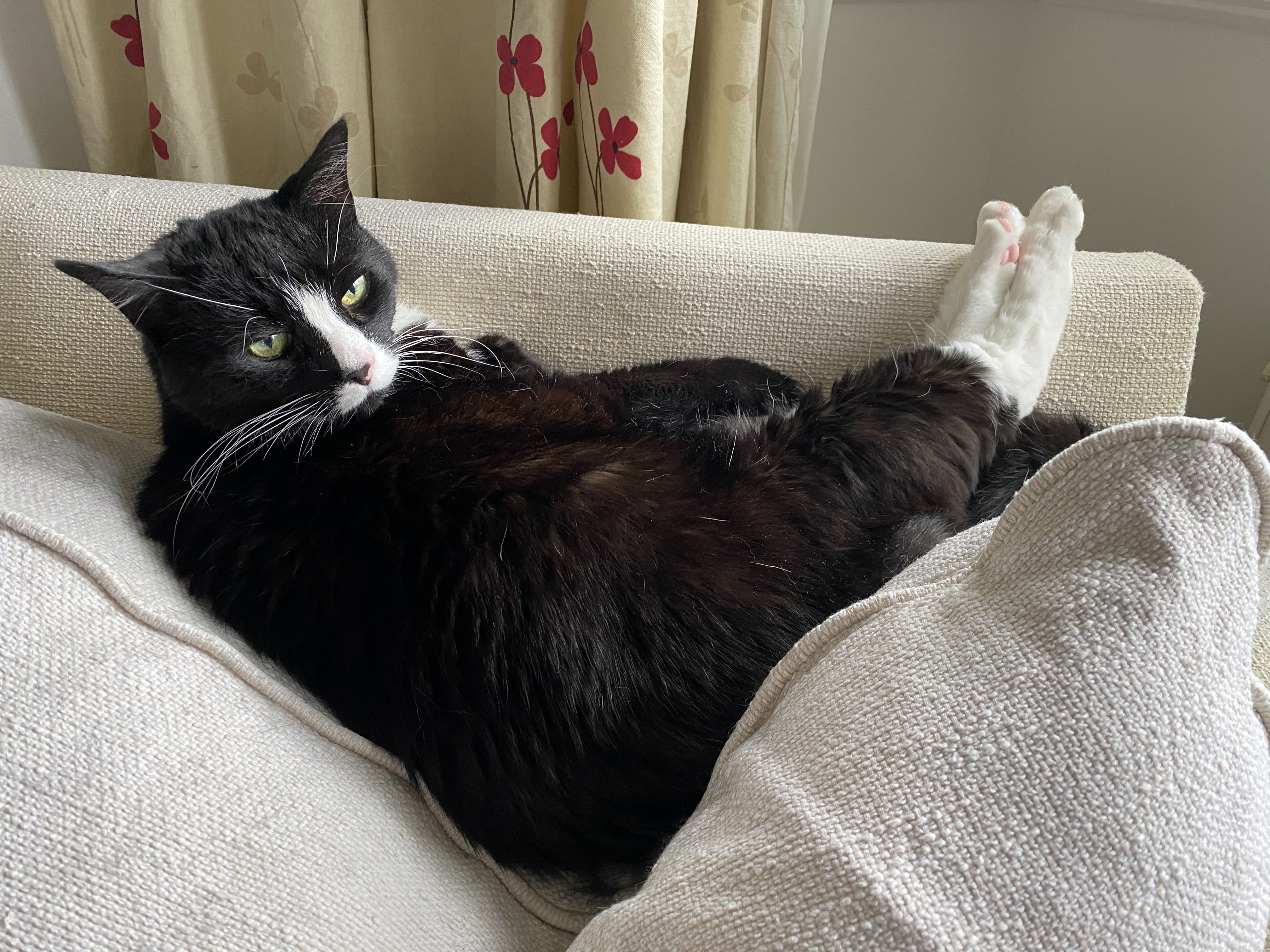
To end, I’ve mentioned before how Bruce Springsteen is proving himself a support to me, especially when my cat died last June. Sadly, his buddy decided to join him this February, and I’m finding it very hard. Here he is in a self-fashioned hammock, the crazy kid:

Anyway, along with stalwart David Bowie, Bruce continues to provide solace, so here he is singing about light (there are credits running over it which is a bit annoying but I really like this version):

“I like simple things, books, being alone, or with somebody who understands.” (Daphne du Maurier)

This is my contribution to Ali’s Daphne du Maurier reading week, and much to my own amazement I’ve managed to post on time – hooray! I really enjoyed taking part in 2019 and reading du Maurier’s creepy, unsettling short stories. This time I’ve plumped for two of her most famous novels which I’ve never got round to reading, despite enjoying Rebecca as a teenager.

Firstly, Jamaica Inn (1936), a gothic period drama set in the 1820s. Mary Yellan is 23 when her mother dies, leaving her orphaned and having to live with her Aunt Patience, who is married to Joss Merlyn, landlord of the eponymous coaching inn. Mary would like to live alone and run her own farm, which is clearly a ridiculous notion:

“‘A girl can’t live alone, Mary, without she goes queer in the head, or comes to evil. It’s either one or the other. Have you forgotten poor Sue, who walked the churchyard at midnight with the full moon, and called upon the lover she had never had? And there was one maid, before you were born, left an orphan at sixteen. She ran away to Falmouth and went with the sailors.’”

So off she treks to a “wild and lonely spot” 12 miles outside Bodmin in Cornwall.  Du Maurier does a great job of creating gothic unease, both in the scenery and the relationships within Mary’s family.

“To the west of Jamaica high tors raised their heads ; some were smooth like downland, and the grass shone yellow under the fitful winter sun; but others were sinister and austere, their peaks crowned with granite and great slabs of stone.  Now and again the sun was obscured by cloud, and long shadows fled over the moors, like fingers. Colour came in patches; sometimes the hills were purple, ink-stained and mottled, and then a feeble ray of sun would come from a wisp of cloud, and one hill would be golden-brown while his neighbour still languished in the dark. The scene was never once the same, for it would be the glory of high noon to the east, with the moor as motionless as desert sand; and away to the westward arctic winter fell upon the hills, brought by a jagged cloud shaped like a highwayman’s cloak, that scattered hail and snow and a sharp spittle rain on to the granite tors.”

Joss is violent and binges on alcohol, and Mary’s Aunt Patience is completely destroyed by her marriage. She serves a useful dramatic purpose, providing the reason that morally upright Mary doesn’t report her uncle when it emerges that he makes his money through wrecking: luring ships onto rocks, murdering the sailors and stealing the loot.

“And, although there should be a world of difference between the smile of a man and the bared fangs of a wolf, with Joss Merlyn they were one and the same.”

The portrayals of the criminals in Jamaica Inn are dated, with more than a hint of ableism and classism. But Joss Merlyn is slightly more complex, and there is a sense of the pain he has experienced in his life that has led to him becoming the man he is. By enduring her life at Jamaica Inn, Mary meets her uncle’s brother Jem, and romance ensues:

“He was no more than a common horse-thief, a dishonest scoundrel, when all was said and done[…] Because he had a disarming smile and his voice was not unpleasing, she had been ready to believe in him”

What follows is a well-paced tale of Mary being drawn into her uncle’s life of crime far more than she would like, yet also feeling increasingly alienated from the good people of the town. It was this latter aspect that interested me most. What du Maurier seemed to be exploring was how a woman finds her own way in the world, and how the easiest path may not be the truest one.

“There would never be a gentle season here, thought Mary;”

Through the course of the novel Mary learns that a gentle season may not be what she wants; that her authentic life is one not led within the heart of society. Ultimately she’s quite a tough heroine, and she forges her own path.

At first I wasn’t sure Jamaica Inn was really for me: it seemed a bit formulaic and I’m not really one for gothic romance – usually the men are abhorrent, violence is indulged and somehow supposed to be attractive. Yet Jem could be gentle with Mary and they actually had a laugh together which is not very gothic at all. Sexual attraction is also dealt with frankly, and although it is a romantic tale (a young pretty girl wandering on the wild moors, a ruggedly handsome lover…) in some ways romance is given short shrift:

“There was precious little romance in nature, and she would not look for it in her own life. She had seen the girls at home walk with the village lads; and there would be a holding of hands, and blushing and confusion, and long-drawn sighs, and a gazing at the moonlight on the water […] They would look at the stars and the moon, or the darning sunset if it was summer weather, and Mary, coming out of the cow-shed, wiped the sweat from her face with dripping hands, and thought of the new-born calf she had left beside its mother. She looked after the departing couple, and smiled, and shrugged her shoulders, and, going into the kitchen, she told her mother there would be a wedding in Helford before the month was past.”

I wish I’d read Jamaica Inn after Rebecca in my teens, I probably would have loved it then. Reading it at 44 means it will probably not be amongst my favourite du Maurier – I didn’t find as much to admire as I did with her short stories –  but I thought she put an interesting heroine amongst the romantic tropes and her descriptions of the natural world are stunning. She also succeeded in writing a page-turning ripping yarn, and sometimes that is exactly what is needed when you pick up a novel.

The BBC adapted Jamaica Inn in 2014. I watched it, but the main thing I remember is everyone complaining about the mumbling:

Secondly, My Cousin Rachel (1951) which I thought was excellent. Du Maurier’s voice felt more individual in this and I wondered if in the intervening 15 years she had become more confident in her craft. The story and characterisation seemed more complex too.

It opens with a fairly graphic description of a hanged man that I could have done without, but it serves well in introducing the narrator Philip, orphaned and subsequently raised by his cousin Ambrose, a misogynist landowner, adored by Philip despite his uncompromising ways.

Du Maurier foreshadows the events of the story, and also it’s ambiguity:

“No one will ever guess the burden of blame I carry on my shoulders; nor will they know that every day, haunted still by doubt, I ask myself a question which I cannot answer. Was Rachel innocent or guilty?”

Ambrose in middle-age takes his winters abroad, for the sake of his chest. There he meets the titular distant relative, and they marry. Philip is perturbed by this, but not nearly as much as he is when Ambrose’s letters become infrequent, scribbled and paranoid:

“For God’s sake come to me quickly. She has done for me at last, Rachel my torment. If you delay, it may be too late. Ambrose.”

Philip hastens to Italy, only to find Ambrose died three weeks previously and his wife has disappeared. When he returns to England and finds Rachel is due to visit he is determined to expose her for the villain she is. This resolve lasts, ooh, about five minutes:

“I was glad I had the bowl of my pipe to hold, and the stem to bite upon; it made me feel more like myself and less like a sleep-walker, muddled by a dream. There were things I should be doing, things I should be saying, and here was I sitting like a fool before the fire, unable to collect my thoughts or my impressions. The day, so long-drawn-out and anxious, was now over, and I could not for the life of me decide whether it had turned to my advantage or gone against me.”

The local people are equally charmed by Rachel’s beauty and wit. Philip’s friend Louise, the daughter of his guardian, points out Rachel is beautiful – something Philip has not mentioned. The skirting around his attraction for Rachel exposes him as an unreliable narrator, insofar as we would all be unreliable narrators of our own lives:

““How simple it must be for a woman of the world, like Mrs Ashley, to twist a young man like yourself around her finger,” said Louise.

I turned on my heel and left the room. I could have struck her.”

What follows is what du Maurier seems so expert at: building an atmosphere of tense unease, where the truth of a situation remains determinedly obscure. Philip is naïve, but are the more sceptical viewpoints of his friends and advisors any more valid?

“Here I was, twenty-four, and apart from the conventional years at Harrow and Oxford I knew nothing of the world but my own five hundred acres. When a person like my cousin Rachel moved from one place to another, left one home for a second, and then a third; married once, then twice, how did it feel? Did she shut the past behind her like a door and never think of it again, or was she beset with memories from day to day?”

Whether Rachel is conniving and manipulative is difficult to ascertain and this works so well in sustaining tension throughout. It also enables du Maurier to demonstrate how a beautiful woman with very few rights in law is subject to the fantasies and whims of men who hold the power. Rachel remains unknown to the reader because she remains unknown to Philip, and yet he professes he loves her.

Philip is not likeable – he is callow, arrogant, and violent. But he is somewhat sympathetic as he knows so little of life, floundering around in situations he doesn’t understand and is painfully ill-equipped to manage. Ultimately it is this quality that provides the persistent mystery of My Cousin Rachel, a mystery we must all find our own answer to:

“The point is, life has to be endured, and lived. But how to live it is the problem.”

My Cousin Rachel was adapted most recently on film in 2017. I’ve not seen it but it’s certainly beautifully shot if this trailer is anything to go by:

PS Happy birthday Daphne, born on this day in 1907, and to #DDMreadingweek host Ali – have a wonderful day!

“I’m afraid of nothing except being bored.” (Greta Garbo as Camille, 1936)

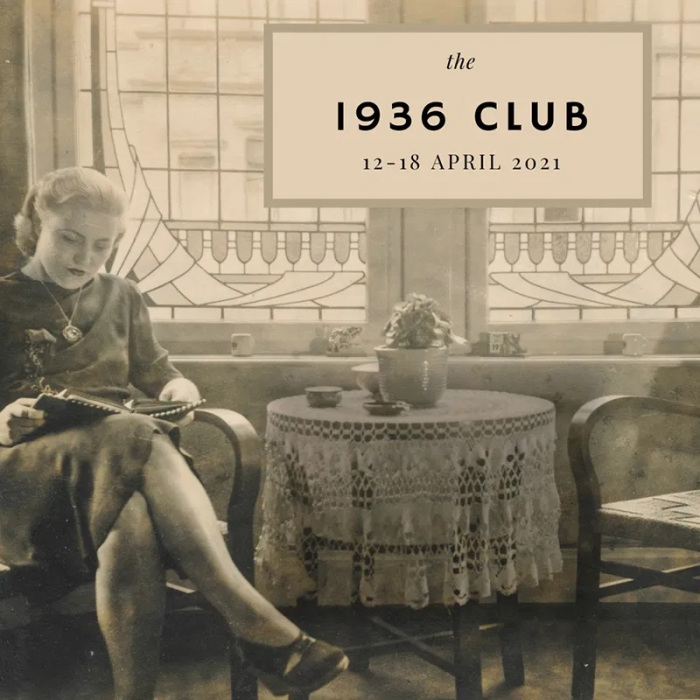
Way back in the mists of time, 12-18 April to be exact, Kaggsy and Simon ran the 1936 Club. Although my reading has recovered somewhat, my blogging is still non-existent. So although I’d read two novels from the year, I failed miserably to write on them at all. This is my much belated attempt to recover lost ground…

I picked the two novels simply because they were the right year and in the TBR pile, but as it turned out they were thematically linked, both dealing with extramarital affairs. Spoiler alert: don’t do it kids, it causes misery. Yet although both novels show the pain caused by the affairs, they are not moralising or didactic. Rather, they are well-observed character studies of people looking for happiness in the wrong places.

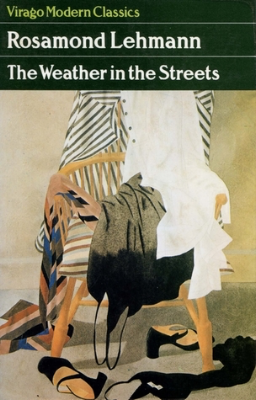
The Weather in the Streets is Rosamond Lehmann’s sequel to Invitation to the Waltz (1932), which in an entirely unhelpful way I hope to blog on in a few weeks. I read the novels in order, but you don’t need to have read the first to enjoy the second.

The Weather in the Streets continues the story of Olivia Curtis, now in her late twenties and divorced, living an impoverished bohemian existence with her cousin Etty in London. When her father is taken ill, she catches the train back to the family home and finds herself sitting opposite Rollo Spencer, who was kind to her at the titular dance in the first novel.

“He burst out laughing; and she was struck afresh by what she remembered about him years ago: the physical ease and richness flowing out through voice and gestures, a bountifulness of nature that drew one, irrespective of what he had to offer.”

I thought that was so clever, the capturing of a realisation of physical attraction alongside a foreshadowing of what will follow: “irrespective of what he had to offer”. What Rollo can offer is very little at all, given that he’s married and has entire life away from Olivia, separated by class and circumstance, that she can never be part of.

“She looked away. A bubble of tension seemed to develop and explode between them.”

This tension is acted on and the two begin to see each other. I was particularly struck by the passage describing Olivia’s feelings after they first sleep together. Throughout the novel Lehmann switches between first and third person and here we are entirely with Olivia:

‘Then it was afterwards. He said, whispering:

‘I’m your lover…’

I thought about it. I had a lover. But nothing seemed changed. It wasn’t disappointing exactly…The word is: unmomentous…Not wonderful – yet…I couldn’t quite look at him, but it was friendly and smiling. His cheek looked coarse-grained in the light of the lamp. I saw the hairs in his nostrils…I was afraid I’d been disappointing for him….Thinking: Aren’t I in love with him after all then? …We hadn’t said love once, either of us…Thinking: It’s happened too quickly, this’ll be the end…”

Depicting the ordinariness of it all is a brave move but I thought it was the strength of this novel. It’s not romantic, it’s not two people being swept away, it’s also not sordid or bitter. Its individuals who feel a connection trying to build happiness within their unsatisfactory lives, in a deeply misguided way.

The Weather in the Streets is also excellent in its depiction of the loneliness of an affair. The title is from a scene where Olivia is sat inside Rollo’s car, looking out from behind the window. This separation exists in all her relationships to an extent: she lives in a society where emotions occur out of sight and you certainly don’t impose your feelings on others by daring to discuss them or letting social mores slip for a minute. For example, when your husband might be dying:

“The lurking threats of change, of disaster, retreated before Mother’s impregnable normality. Rather pale, rather drawn and dark about the eyes, but neat, but fresh, erect, composed as ever, preoccupied with the supervision – in retrospect – of the arrival, checking up on detail with nearly all her customary minuteness and relish…Mother was being wonderful.”

The affair exacerbates the loneliness it is attempting to relieve. This is in especially sharp relief when Olivia has to experience an (illegal) abortion entirely on her own – finding the money, visiting the doctor, dealing with the aftermath.

Apparently some contemporary critics thought Rollo was a total bounder. I didn’t read it that way; I thought he was a weak man who has always done entirely what is expected of him and then wonders one day why on earth he isn’t happy. Rather than reflect on his life and try and work out who he is, he carries on doing entirely what would be expected by having an affair.

“He said more than once, ‘Darling, don’t care too much about me, will you?’

‘Don’t you want me to love you then?’ I said.

‘Yes, yes I do terribly. Only you mustn’t sort of think too much of me, will you? I’m not much good, and mind you remember it. Don’t expect a lot of me will you? I’ve never been any use to anyone…’”

It is desperately sad but Lehmann never suggests the story is a tragic one. People endure, but unfortunately so do their unmet needs for intimacy, acceptance and love.

“’Don’t be frightened.’ I did love him, then. It was what one had always longed for, never expected to have – someone appearing quietly at need, saying that – someone for oneself…”

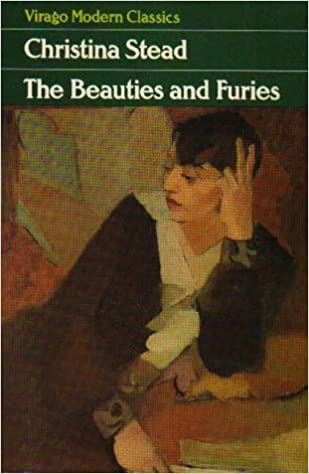
I had less tolerance for the protagonists of Christina Stead’s The Beauties and Furies. They were vacuous and self-obsessed and I was pleased to leave them behind. It was Stead’s excellent writing that both made them so believably unbearable and kept me going to the end of the novel.

The novel opens with Elvira Western on a train to Paris, having left her husband Paul for her young student lover Oliver (the lover’s names are similar and I did wonder if for two such vain people the attraction was how they saw themselves reflected in one another…)

She sits with a lace buyer called Marpurgo, little knowing that he will manipulate how her affair plays out.  He will exploit the very obvious faultlines in the relationship, but it never feels like much of a loss, as from the start Stead casts an ironic eye over the romance:

“ ‘You won’t have any more trouble – in your life! Think of that: here’s someone who loves you dearer than all the world. Put your head on my shoulder…’

It gave her a crick in the neck.”

Oliver sees himself as a Marxist intellectual, although nothing he does really demonstrates either of these aspirations. Elvira’s indolence is repeatedly emphasised and she cannot join Oliver in his pursuit of ideas if she is not warm, rested and fed, such as when he takes her to see Faust:

“she had not liked it although they had a box to themselves, because she was hungry.”

Neither seem particularly invested in the affair, more the idea of the affair. Oliver sleeps with lace-maker Coromandel and actress Blanche, both a contrast to Elvira as they display a degree of self-determinism, not that he’s interested. Elvira meanwhile, seems to just potter about. It’s mentioned that she gave up a promising education, but she seems disinclined to do anything, as Elvira’s husband observes:

“he works in the archives and reads her the political news, and she does nothing at all. She sits in cafes.”

When Elvira becomes pregnant, they both know they are not able to care for a baby, but they also vacillate between keeping it or taking the same decision as Olivia in The Weather in the Streets:

“This second marriage would be even worse than the first, because she had to cope with a brilliant young man’s impatience and disappointment. She said to herself babyishly:

‘I want a baby and a comfortable home: I don’t want to be part of the intelligentsia.’”

Meanwhile Oliver ponders:

“I am sending my seed from generation unto generation, a man full of humility.”

Spare me.

In many ways The Beauties and Furies is a novel of ideas. The sitting around in cafes arguing about politics, psychology and society gives plenty of scope for Stead to explore issues through her characters and it really captures some of the early twentieth century concerns.

“ ‘The real thought of the middle-class woman,’ complained Elvira, ‘is the problem of economic freedom and sexual freedom: they can’t be attained at the same time. We are not free. The slave of the kitchen and bedroom.’”

What stops it being overly weighty is the high degree of scepticism shown towards Elvira and Oliver, and ultimately I read The Beauties and Furies as a satire on bohemian pretentiousness and self-delusion. I’m not sure that’s correct but certainly Stead turns a sharp eye on conceit and hubris. She can be absolutely scathing towards her characters, such as this instance of Elvira becoming distressed:

“her prolific ego, masked in pathos, had them in its tendrils.”

Ouch! Although I couldn’t love The Beauties and Furies I still found much to enjoy. The incisive, well-observed writing did whet my appetite for more Stead – I have Cotter’s England in the TBR and I’m hoping for slightly less intellectual exposition and a bit more character-driven story.

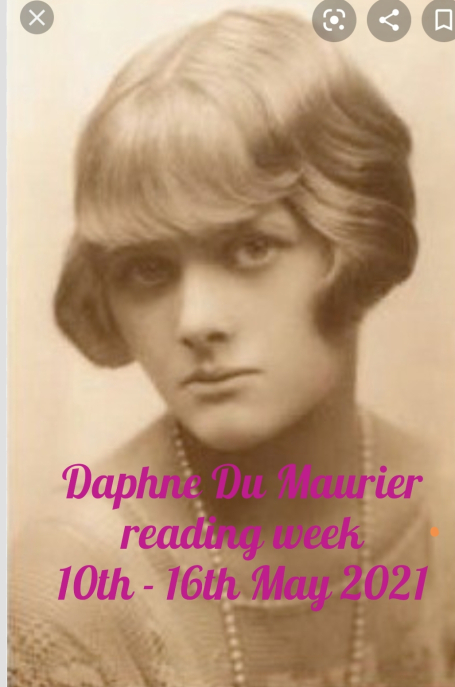
Next I’m hoping to take part in Ali’s Daphne du Maurier reading week, which is running 10-16 May. Will I manage a post for it before the end of July? Watch this space… 😀

To end, I adore Greta Garbo, which is why I picked a quote from Camille to head the post, and why I’ll end the same way:

“No live organism can continue for long to exist sanely under conditions of absolute reality.” (Shirley Jackson)

It is a truth universally acknowledged that 2020 has been a big old pile of pants. Initially I felt guilty about seeking some escapism – it seemed to be another facet of privilege that escapism was available to me – but now I think if it keeps you sane, do whatever works to come out the other side (and I need to keep reminding myself that there will be the other side…) So here are two enjoyable, light comic novels that have helped me keep possession of my remaining marbles.

Firstly, Kate reminded me that the Lucia novels by EF Benson are perfect for this sort of read. Having read Queen Lucia back in April for the 1920 Club, I was keen to read the sequel Lucia in London (1927), especially as fans of Mapp and Lucia tell me the novels get better as they progress.

It opens with the death of Lucia’s aunt by marriage, who had been very unwell for many years and lived to a ripe old age. All things considered:

“it had been generally and perhaps reasonably hoped among his friends and those of his wife that the bereavement would not be regarded by either of them as an intolerable tragedy.”

But to do so would deny Lucia a chance at self-dramatisation, so of course she goes all out for grief. Her donning of black and a pained expression is wonderfully satirised by Benson, as are the social niceties of bereavement when no-one genuinely cares for the departed:

“Georgie held her hand a moment longer than was usual, and gave it a little extra pressure for the conveyance of sympathy. Lucia, to acknowledge that, pressed a little more, and Georgie tightened his grip again to show that he understood, until their respective finger-nails grew white with the conveyance and reception of sympathy. It was rather agonising, because a bit of skin on his little finger had got caught between two of the rings on his third finger, and he was glad when they quite understood each other.”

It soon becomes clear that Lucia plans to decamp to London, to the aunt’s very swish home, leaving Riseholme reeling. Georgie understands the impulse but is surprised that Lucia is quite so keen to leave:

“He wanted, ever so much, to have a little flat in London (or a couple of rooms would serve) just for a dip every now and then in the life which Lucia found so vapid. But he knew he wasn’t a strong, serious character like Lucia, whose only frivolities were artistic or Elizabethan.”

As readers we know that Lucia is entirely frivolous of course, and she throws herself into the contemporary London scene with gusto.

“What she wanted was the foam of the wave, the topmost, the most sunlit of the billows that rode the sea. Anything that had proved itself billowish was her game, and anything which showed signs of being a billow, even if it entailed a vegetarian lunch with cocktails and the possible necessity of being painted like the artist’s wife with an eyebrow in one corner of the picture and a substance like desiccated cauliflower in the centre.”

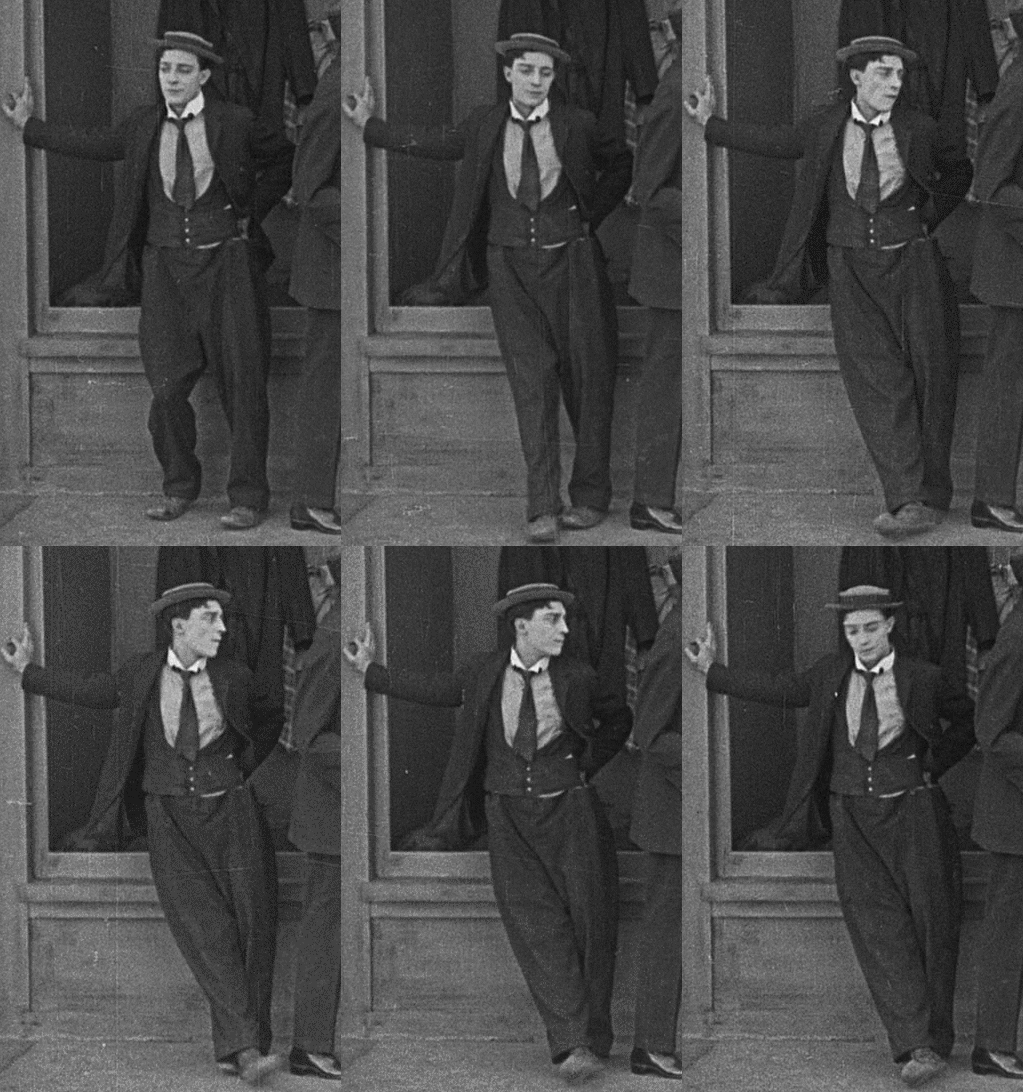
As a Londoner myself it struck me that nothing changes: 93 years on and the silliness of the fashionable London scene is still ripe for satirising. Benson pokes gentle fun, nobody is truly despicable or utterly destroyed. Personally I enjoyed the ongoing saga of Georgie’s Oxford bags, bought during “a moment of reckless sartorial courage”. Not everyone can carry off Oxford bags with the aplomb of Buster Keaton, after all:

Life at Riseholme continues at its usual pace – that is, a snail’s. It is a life they all enjoyed, one filled with enough little dramas and crises to keep them all amused. Now however, something is missing:

“Yet none of these things which, together with plenty of conversation and a little housekeeping and manicuring, had long made life such a busy and strenuous performance, seemed to offer an adequate stimulus. And he knew well enough what rendered them devoid of tonic: it was that Lucia was not here, and however much he told himself he did not want her, he like all the rest of Riseholme was beginning to miss her dreadfully. She aggravated and exasperated them: she was a hypocrite (all that pretence of not having read the Mozart duet, and desolation at Auntie’s death), a poseuse, a sham and a snob, but there was something about her that stirred you into violent though protesting activity, and though she might infuriate you, she prevented your being dull.”

Will Lucia make a splash in London? Will Riseholme find their way without her? Will she ever return? What do you think?

“Aren’t you feeling more Luciaphil? I’m sure you are. You must enjoy her: it shows such a want of humour to be annoyed with her.”

You can read Lucia in London online here.

Now a musical interlude, but one of which I’m certain Lucia would not remotely approve. You can’t get more London than Chas and Dave:

Secondly, Ali’s lovely post 10 vintage books of joy reminded me I had Something Light by Margery Sharp (1960) in the TBR, and so I dug it out forthwith. I adore Margery Sharp and her well-observed but gentle humour was just what I needed.

It opens “Louisa Mary Datchett was very fond of men.” Unfortunately for Louisa, this means she keeps running round after various wet blankets, helping them keep on track, buying them yogurt and mopping their brows. She’s getting older and her profession as a dog photographer only just keeps her afloat, so she decides she needs to get married.

“ ‘It’s not the suffragettes who’d be proud of me,’ thought Louisa bitterly, ‘it’s the Salvation Army. I may be the modern woman, the femme sole with all her rights, and I’m very fond of men, but it’s time I looked out for myself.  In fact it’s time I looked out for a rich husband, just as though I’d been born in a Victorian novel…’”

It’s a brilliant piece of characterisation that Louisa doesn’t come across as either a doormat or as mercenary. She’s a kind person, a wee bit lost, and trying to take the best decisions she can for a happy life.

We then follow Louisa’s various adventures trying to gain what she thinks she wants. She spends a week trying to secure a rich husband, another seven days rekindling an adolescent devotion and a further week acting as a housekeeper for a man whose ready-made family are appealing.

That’s pretty much it, plot-wise and there are no real surprises. In no way is this a criticism. A comfort read for me has a nice predictability to it and I enjoy watching things play out as I expect in an entertaining way.

What further makes this such an enjoyable read are the fond portraits of the various characters, and the little details. One suitor is frequently likened to a Sealyham terrier; bamboo framed spectacles are given far too much importance; Louisa wears a “rowdy housecoat, zebras on a pink ground”; the milkman is a constant source of sympathetic wisdom as well as dairy products; Louisa has to try and sell ugly beechnut jewellery on behalf of her Bohemian artist neighbour. Everyone is flawed, believably human, gently ribbed by the author. It’s an absolute delight.

“She was constantly being either sent for, like a fire engine, or dispatched, like a lifeboat, to the scene of some masculine disaster”

To end, an 80s pop classic as always, but presented in a lip sync scene of sibling bonding that makes me smile, and we all need things that make us smile right now: