“I have a great deal of difficulty in beginning to write my portion of these pages, for I know I am not clever.” (Esther Summerson in Bleak House)

I’m not a fan of Dickens. I don’t like his caricatured villains, I don’t like his insipid virgin heroines, I don’t like his sentimentality. This may explain why it’s taken me thirty years to open the copy of Bleak House given to me as a teenager by my mother, as it’s one of her favourite novels. It begins:

“London. Michaelmas term lately over, and the Lord Chancellor sitting in Lincoln’s Inn Hall. Implacable November weather. As much mud in the streets as if the waters had but newly retired from the face of the earth, and it would not be wonderful to meet a Megalosaurus, forty feet long or so, waddling like an elephantine lizard up Holborn Hill. Smoke lowering down from chimney-pots, making a soft black drizzle, with flakes of soot in it as big as full-grown snowflakes—gone into mourning, one might imagine, for the death of the sun. Dogs, undistinguishable in mire. Horses, scarcely better; splashed to their very blinkers. Foot passengers, jostling one another’s umbrellas in a general infection of ill temper, and losing their foot-hold at street-corners, where tens of thousands of other foot passengers have been slipping and sliding since the day broke (if this day ever broke), adding new deposits to the crust upon crust of mud, sticking at those points tenaciously to the pavement, and accumulating at compound interest.”

And that’s how long it took me to absolutely love Bleak House. Which just goes to show that as always, my mother knows best 😀 (as do the bloggers who recommended I choose this as my tome reading after a month of novellas – many thanks!)

Bleak House follows the fortunes of three young people caught up in a long-running legal wrangle:

“Jarndyce and Jarndyce drones on. This scarecrow of a suit has, in course of time, become so complicated that no man alive knows what it means. The parties to it understand it least, but it has been observed that no two Chancery lawyers can talk about it for five minutes without coming to a total disagreement as to all the premises. Innumerable children have been born into the cause; innumerable young people have married into it; innumerable old people have died out of it.”

Esther Summerson, Ada Clare and Richard Carstone find themselves under the guardianship of John Jarndyce, a benevolent older distant relation of the latter two. Ada and Richard fall in love, but it is Esther rather than the young lovers who is the focus, her first-person narration alternating with that of an omniscient narrator.

She is from a mysterious background, not knowing who her parents are and raised by an abusive godmother. “Your mother, Esther, is your disgrace, and you were hers”. Esther is a Victorian heroine though, so rather than becoming defensive or angry, she decides she will:

“strive as I grew up to be industrious, contented, and kind-hearted and to do some good to some one, and win some love to myself if I could. I hope it is not self-indulgent to shed these tears as I think of it. I am very thankful, I am very cheerful, but I cannot quite help their coming to my eyes.”

Although tediously self-deprecating at times, generally I found Esther really likable. Her narrative is can be witty and some of her portraits of others almost sharp, so I did wonder if the reader wasn’t supposed to take her modest protestations entirely at face value, at least not consistently.

The omniscient narrator widens the tale to explain the various legal dealings of Chancery Lane and all its hangers-on, alongside the situation of the Dedlock family:

“there is no end to the Dedlocks, whose family greatness seems to consist in their never having done anything to distinguish themselves for seven hundred years.”

The current incumbent Sir Leicester Dedlock does little to change this history of his family as he “is generally in a complacent state, and rarely bored. When he has nothing else to do, he can always contemplate his own greatness. It is a considerable advantage to a man to have so inexhaustible a subject. After reading his letters, he leans back in his corner of the carriage and generally reviews his importance to society.”

He is devoted to his beautiful, fashionable, remote wife Honoria, who the reader quickly realises has A Big Secret in Her Past. Hmm, based on what we know of the other characters so far, what on earth could it be…?  

It’s not hard to guess what it is as the clues are laid on pretty thickly, and I thought the imagery when Esther first sees Lady Dedlock was so striking:

“It was easy to know that the ceremonious, gouty, grey-haired gentleman, the only other occupant of the great pew, was Sir Leicester Dedlock, and that the lady was Lady Dedlock. But why her face should be, in a confused way, like a broken glass to me, in which I saw scraps of old remembrances, and why I should be so fluttered and troubled (for I was still) by having casually met her eyes, I could not think.”

Dickens weaves together the various strands of the story, the main plots and all the subplots with brilliant dexterity. Sometimes with these big Victorian baggy monsters (to steal a phrase from Henry James) the stories can flag a bit, as the authors are trying to keep them going for a number of episodes in the serial. I really didn’t feel this with Bleak House. The story kept driving forward and all the various plots came together so cleverly, contriving to make a well-paced page-turner.

What really struck me about Bleak House though, is that it is a story of great compassion. Of course I knew Dickens had a strong social conscience and his work has a social message to it. But Bleak House demonstrated a degree of understanding and sympathy that I wasn’t expecting. Unmarried mothers, those struggling with addictions, human weakness and vulnerability – none are judged. Those who are judged are the ones who seek to profit from such.

Which brings me on to Mr Tulkinghorn… I said at the beginning I’m not usually keen on Dickens’ villains, finding them too caricatured. The lawyer Tulkinghorn was medacious, conniving, cold as ice, completely believable and completely terrifying. Truly villainous.

Although there are romantic elements to Bleak House, it is not an overly romantic tale. It is a novel much more concerned with the fall-out on the vulnerable members of society from immovable and self-serving institutions. Perhaps the main way in which the novel has dated is an engagement that seemed highly questionable to me, but as it remains chaste and ultimately everyone comes to their senses, it didn’t overly offend my modern sensibilities 😀

If I’ve made Bleak House sound a heavy read though, I’ve done it a disservice. I found it very often funny, whether satirically critiquing the legal system or broader nonsense like Mrs Guppy trying to throw John Jarndyce out of his own home and resisting all attempts to explain the illogicality of such a move. It has its sad moments too, and is genuinely moving in places.

And just in case a Victorian novel may seem to have no relevance to our modern world, I leave you with this exchange between Esther and Miss Flite:

“I said it was not the custom in England to confer titles on men distinguished by peaceful services, however good and great, unless occasionally when they consisted of the accumulation of some very large amount of money.

“Why, good gracious,” said Miss Flite, “how can you say that? Surely you know, my dear, that all the greatest ornaments of England in knowledge, imagination, active humanity, and improvement of every sort are added to its nobility! Look round you, my dear, and consider. YOU must be rambling a little now, I think, if you don’t know that this is the great reason why titles will always last in the land!”

I am afraid she believed what she said, for there were moments when she was very mad indeed.”

This is an excessively long post and I’ve barely scratched the surface of Bleak House. But in summary: funny, sad, socially engaged, well-paced, emotionally affecting, entertaining, original. An absolute masterpiece.

To end, I remember watching the BBC adaptation of Bleak House when it came out and thinking it very well done. Now I’ve read the book I might go for a rewatch, as I don’t remember it that well and it does look entertaining (especially Charles Dance as Tulkinghorn):

“When a Welsh person loves you, you’ll finally know how it feels to belong to poetry.” (Kamand Kojouri)

This is a contribution to Reading Wales 2022 aka the Dewithon, hosted by the lovely Paula over at Book Jotter. My VMC pile is reaching ridiculous proportions so I googled “Wales Virago” and was delighted to find that there were two authors I could take off the TBR for this year’s Dewithon.

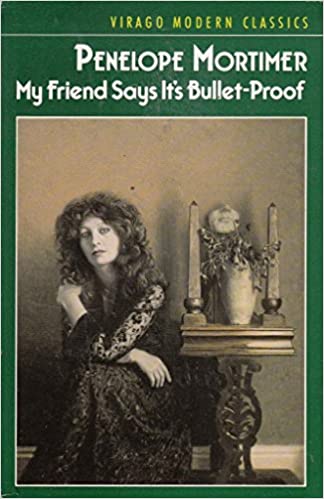
Firstly, I chose Penelope Mortimer, as I’d enjoyed Daddy’s Gone A-Hunting and The Pumpkin Eater a great deal, finding her writing spiky and incisive. Mortimer was born in Rhyl, Flintshire and My Friend Says It’s Bullet-Proof (1967) was her sixth novel.

Muriel Rowbridge is a journalist on a trip to Canada, the only woman in a group of men, warned by her editor:

“Don’t go wandering off in one of your Virginia Woolf fits.”

She is very much the outsider, wanting to focus on her writing while the rest of her group view it as a bit of a jolly:

“they were pleased with themselves, thawing toward each other, throwing out remarks about wives, children, secretaries, which were immediately understood, as though they were giving a particular handshake or flicking back their lapels for identification.”

This is the working world of the 1960s, which we’re all familiar with from Mad Men at least. Her colleagues think it’s totally acceptable to comment on what she’s wearing and the attractiveness of her legs. Thankfully Muriel doesn’t spend much time with them, or indeed much time working. The trip is a time of reflection and recuperation for her, as she recovers from a mastectomy for breast cancer.

“How to deal with it, except with vague attempts at courage and acceptance, she had no idea.”

Although Penelope Mortimer did have lung cancer later in life, I’m not sure she had personal experience of breast cancer at this point. But I thought this was a sensitive exploration of a woman working out who she is after a life-changing experience. Muriel isn’t remotely self-pitying, but she does need to find self-compassion.

”the anger against herself raged brightly, a clear fire. She had never felt this anger before; she could never remember feeling it before. It was enlivening, making her very defined and sharp, as though she had become a weapon.”

She had left her married lover Ramsey when she was diagnosed, and he is back with his wife Flora, a situation neither Ramsey and Flora are sure they want. This led to some of the pithy observations on relationships between the sexes that I expect from Mortimer:

“Between us, he said, he was being eaten alive. If this was so, I don’t know why we were both starving.”

While in Canada, she meets Robert: “what had been an indeterminate distance between their hands, knees, faces, was now measured exactly: they were accessible to each other.”

While she feels ambivalent about their relationship, the sex does lead her towards a new acceptance of her changed body.

“She leant against the lift wall and slowly remembered the night; then realised that this was the first time she had woken, and dressed, without any sense of mourning.”

Amongst the sexist or paternalistic colleagues; the self-centred married lover; and the surgeon who possibly took an entire breast when a lumpectomy would suffice without considering what it would mean for Muriel, Robert is a reminder of what can be positive in male/female relationships. This doesn’t necessarily mean that its happily ever after either… Mortimer is determinedly realistic.  

I didn’t think My Friend Says Its Bullet-Proof was quite as strong as the other two Mortimers I’ve read, but it was an interesting examination of the choices available to women in the late 1960s. It questions how to navigate independence in a world that marginalises and objectifies you both professionally and personally.

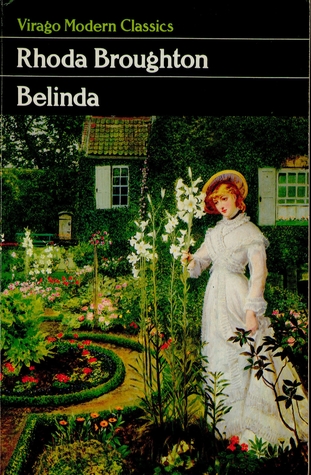
Secondly, a new-to-me author despite the vast number of novels she wrote; Rhoda Broughton, who was born in Denbighshire. Belinda (1883) was written roughly in the middle of her career, and my edition tells me she was alongside Mary Braddon as ‘Queen of the Circulating Library’.

Belinda is a satire, but that double-edged royal appellation did make me wonder if it was always read as such. Maybe I’m doing the fare of circulating libraries down, but I would have thought a tale of simpering Victorian virgin lovers was more typical of their stock than a satire of such stories. Regardless, if you read it straightforwardly as a romance because that’s what you were looking for, or as a satire because you were sick of such stories, Belinda would deliver.

The titular heroine is in Germany with her feckless, charming sister Sarah at the start of the novel:

“Away they go to Moritzburg, when the noon sun is warm and high; away they go, handsome, gay, and chaperoneless. There is no reason why their grandmother, who is a perfectly able-bodied old lady, should not escort them; but as she is sixty-five years of age, has no expectation of meeting a lover, and is quite indifferent to spring tints and German Schlosses, she wisely chooses to stay at home.”

Sarah is hugely popular with young men and is on her seventh fiancée. Belinda is unpopular, except with student David Rivers (aptly named, as he’s totally wet). The sisters wonder if Belinda’s nose is behind her lack of societal success:

“It is not case of measurement,’ says Sarah gravely; ‘I have seen noses several hands higher that were not nearly so alarming. It is a case of feeling; somehow yours makes them feel small. Take my word for it,’ with a shrewd look, ‘the one thing that they never can either forgive or forget is to feel small’”

It isn’t Belinda’s nose, unsurprisingly; it’s her fairly dull personality and her social awkwardness, matched only by that of her love interest:

“Is it her fault that all strong emotion with her translates itself into a cold, hard voice, and a chill set face? With other women it translates itself into dimples and pink blushes and lowered eyes. Ah!  but do they feel as she does? Sarah, for instance. When do men ever leave Sarah’s company with the down- faced, baffled, white look with which Rivers has more than once quitted hers? Preening themselves rather; with sleeked feathers and cosseted vanity.”

As you can see from the quote above, Broughton uses Belinda to poke fun at romantic mores, the silliness of them and the uselessness of them. She demonstrates how those who cannot master the light-hearted conventions end up tied in knots.

“‘And you were — and you were — one of the heavenly host up there!’  ends the young man, baldly and stammering.    But love is no brightener of the wits.

One of the heavenly host?’  repeats she, justly infuriated at this stale comparison.  ‘An angel, in short!  Must I always be an angel, or a goddess?  If anyone knew how sick I am of being a goddess!  I declare I should be thankful to be called a Fury or even a Ghoul, for a change!’

So saying, she turns her shoulder peevishly to him; and leaving the garden, begins to walk quickly along the road by the water, as if to make up for her late loitering.  He keeps pace with her, dumb in snubbed contrition, stupefied by love and, unhappily for himself, fully conscious of it; burningly aware of the hopeless flatness of his last simile, and rendered by his situation quite incapable of redeeming it by any brighter sally.”

The course of true love inevitably does not run smooth for the young lovers – ‘twas ever thus. However, Belinda’s understandable frustration with Victorian female conventions leads her to make some very questionable choices. For those of you who have read Middlemarch, these questionable choices will be most familiar. I don’t know what Oxford Rector Mark Pattison did to the women writers of late Victorian society but whatever it was, he really, really annoyed them. He provided the model for Casaubon in Middlemarch and here he is rendered as Professor Forth:

“She had known that she did not love him, but she had not known that he wore carpet slippers in the drawing-room.”

Belinda is well-paced and witty, but I think I would have like the satire to be slightly more explicitly evoked. At one point there seemed a never-ending round of cheeks blushing, lips whitening, words stumbling… and a pretty major suspension of my disbelief that Belinda and Rivers could really be in love, given they had barely spoken to each other but only mumbled vaguely while experiencing various body temperature changes.

I would have liked a slightly sharper authorial voice, or more scenes with witty, pragmatic Sarah and the frankly reprehensible grandmother, with whom I could only agree when she observed:

“Belinda is too everything, except amusing.”

I did enjoy Belinda though, and there was broad comedy too, including some nice scenes with pug dogs, and with social bull-in-a-china-shop Miss Watson:

“I shall certainly mention it to his mother. Lady Marion, when next I meet her,’ says Miss Watson resolutely; I do not think it would be acting a friend’s part not to do so.  I do not actually know her, but there is a sort of connection between us; I was at school for six months once at Brussels with a cousin of hers, and there is no doubt that there is something uncommonly louche about it.’”

To end, the BAFTAs earlier this month featured a performance from an 85 year-old Welsh singer/legend:

Novella a Day in May 2020 #27

The Doctor’s Family – Margaret Oliphant (1863) 153 pages

Halfway through the final week of NADIM 2020 and for the first time this month it’s feeling do-able! I don’t want to tempt fate (especially as I’m changing broadband providers this week) but I’m hopeful I might actually complete a novella for every day…

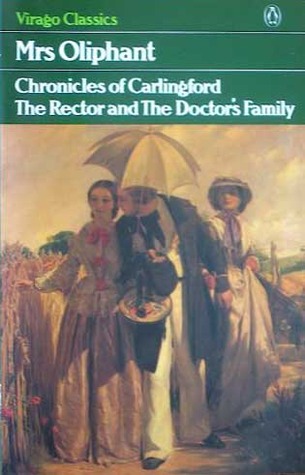
After the brutality of First Love yesterday, I thought I’d take refuge in Victorian gentility. Also, I thought it would make a change from my resolutely twentieth and twenty-first century choices this month. The Doctor’s Family takes place in the fictional town of Carlingford, a setting Margaret Oliphant revisited in four subsequent novels as well as the short story The Rector, which was included in my Virago edition.

Dr Edward Rider has come to Carlingford after his wastrel brother Fred caused him to lose his practice elsewhere. He lives:

“in the new quarter of Carlingford; had he aimed at a reputation in society he could not have done a more foolish thing; but such was not his leading motive. The young man, being but young, aimed at practice.”

Unfortunately Fred has followed him to Carlingford where he does very little except smoke pungent pipes and go out to waste money. However, Oliphant doesn’t paint Fred as evil (to my twenty-first century eyes he sounded depressed) and she doesn’t paint Dr Rider as wholly virtuous. He can be short-tempered and dismissive to his patients, more than once he takes out his anger on his horse (thankfully not dwelt on in detail but still repulsive), and he doesn’t have high ideals about his vocation, though he is a reasonable doctor. In other words, the brothers are flawed human beings each muddling through, and bound by a “strange interlacement of loathing and affection”.

His family suddenly enlarges in a way Dr Rider did not expect, when Fred’s wife, children and sister-in-law all – never alluded to by Fred – arrive from Australia. They rent a house on the outskirts of town and Dr Rider visits initially out of a sense of duty more than any affection, as Susan, Fred’s wife is petty and spiteful, and his children are feral. His sister-in-law Nettie, on the other hand, is capable and practical, and essentially runs their entire lives for them.

Again, the characterisation here is subtle. Nettie isn’t one of Dickens’ holier-than-thou self-sacrificing virgins. Rather she is a determined, independent young woman who sees what needs to be done and does it. Oliphant makes it clear that Nettie gains from the situation, that it suits her.

“Those brilliant, resolute, obstinate eyes, always with the smile of youth, incredulous of evil, lurking in them, upon her bewildered advisor. ‘I am living as I like to live.’”

Short-tempered Dr Rider develops feelings for Nettie and can’t understand how she puts up with her selfish, demanding, draining family. She is less judgemental than he is:

“She knew their faults without loving them less, or feeling it possible that faults could make any difference to those bonds of nature.”

But while the family seem settled in their slightly unconventional ways, events will conspire to change things irrevocably.

This is the first time I’ve read Margaret Oliphant and I enjoyed her immensely. I liked her flawed characters and her resistance to showing situations as morally black-and-white, which can sometimes be the case in Victorian fiction (and I’m a big fan of the period and the women writers). I read The Rector as well (but I’ve not discussed it here as it’s not a novella) and found that story lighter and wittier than The Doctor’s Family. Both together mean I’d be interested to see how Oliphant developed the inhabitants of Carlingford in later novels.

If you like Victorian social realism but can’t face the hefty tomes that genre often involves, if you like Elizabeth Gaskell’s Cranford, or if you sometimes wish George Eliot wasn’t so heavily intellectual, then a trip to Carlingford will be just perfect for you.

There are no great surprises for the reader in The Doctor’s Family; things work out exactly as you’d expect. But that is no criticism and especially in these uncertain times, it’s a perfect example of the solace to be found in reading.

“Human sacrifice, dogs and cats living together… mass hysteria!” (Dr Peter Venkman, Ghostbusters)

This week I bought my first Christmas present of the year.  I was really pleased with it.  Then as I gazed at it I realised the first present I’d bought this year was for my brother & sister-in-law’s cats.  From my cats.  I’m gifting between cats.  That’s who I’ve become.

anigif_enhanced-buzz-27619-1375801508-0

So I’m sharing my pain as mad cat lady with the interwebs. But I also love dogs, its just I can’t convince one to live with me in my tiny London flat. So in a spirit of inclusivity, and a rejection of the idea that you are either a dog-person or a cat-person, I’m looking at one novel about a feline, and another featuring a sarcastic dog.

Firstly, The Guest Cat by Takashi Hiraide (trans. Eric Selland).  This short novel is a delicate, sensitive study of the unspoken ties that bind. A small stray cat, adopted by the neighbours, arrives in the house of the narrator and his wife.  They live a quiet life, he a poet and she a proof-reader, and the cat brings a spirit of unpredictability into their lives:

“Chibi’s dependence would manifest itself in unexpected ways, even while performing acts of incredible athletic skill.  Casting aside the Ping-Pong ball, she turned about at an acute angle, yet in the next moment she had placed her tiny paw on the head of a toad concealed in the shade of one of landscape rocks. Then just as suddenly she flew to the other side of the garden, extending one of her front legs to slip into a clump of bushes.”

The novel is a mix of the closely observed and the philosophical/metaphysical:

“When she began to sleep on the sofa – like a talisman curled gently in the shape of a comma and dug from a prehistoric archaeological site – a deep sense of happiness arrived, as if the house itself had dreamed this scene.”

Hiraide captures how animals bring their own energy, changing dynamics in relationships, affecting homes and the people therein. They are catalysts (no pun intended) and their full effects can be both quiet and far-reaching:

“I opened the window and welcomed in the guest, accompanied by the winter sunrise, and the mood inside the house was restored. Chibi was our first New Year’s visitor. They call the visitors who go around to all the houses on New Year’s Day to wish everyone happy new year ‘pilgrims’.”

You don’t have to like cats to enjoy The Guest Cat.  Chibi could be any animal or transforming external force; it is her impact rather than her cat-ness that Hiraide is interested in.  The Guest Cat’s story is one of love, change, resilience and loss.

 “’See, I told you. She’s our girl.’

…or so my wife said, although she knew she wasn’t really ours. Which is why it seemed all the more as if she were a gift from afar – an honoured guest bestowing her presence upon us.”

Here are my two, utterly engaged with the whole idea of buying their cousins a gift, and with being part of a blog post:

004 (4)

It’s quite hard to find a dog in literature which doesn’t end in a way which has me in floods of tears. Thankfully, the full title of the well-known comic novel by Jerome K Jerome is Three Men in a Boat, To Say Nothing of the Dog!  It is a blessed relief to tell you that fox terrier Montmorency makes it through in one piece. Thank goodness, because look at this face:

fox terrier

Image from: http://www.vetstreet.com/dogs/smooth-and-wire-fox-terrier

“To look at Montmorency you would imagine that he was angel sent upon the earth, for some reason withheld from mankind, in the shape of a small fox terrier. There is a sort of Oh-what-a-wicked-world-this-is-and-how-I-wish-I-could-do-something-to-make-it-better-and-nobler expression about Montmorency that has been known to bring tears into the eyes of pious old ladies and gentlemen.”

J and his friends George and Harris are hypochondriacs who are convinced they all have terrible diseases. In order to recouperate they decide to sail a boat along the Thames to Oxford. J’s dog is not impressed:

“The only one who was not struck with the suggestion was Montmorency. He never did care for the river, did Montmorency.

‘It’s all very well for you fellows,’ he says; ‘you like it, but I don’t.  There’s nothing for me to do. Scenery is not my line, and I don’t smoke.  If I see a rat, you won’t stop; and if I go to sleep, you get fooling about with the boat, and slop me overboard. If you ask me I call the whole thing bally foolishness.’

We were three to one, however, and the motion was carried.”

Usually I’m not keen on anthropomorphism, but with Montmorency it really works.  He acts as a slightly detached commentator on his three bally foolish companions and never loses his dogginess – he remains very much the fox terrier. The four of them head off to the water and as anyone who has read the novel will know, very little happens yet much hilarity ensues.  The three men are absolutely useless with any practical considerations, such as putting all their food into one disgusting stew:

 “Towards the end, Montmorency, who had evinced great interest in the proceedings throughout, strolled away with an earnest and thoughtful air, reappearing, a few minutes afterwards, with a dead water-rat in his mouth, which he evidently wished to present as his contribution to the dinner; whether in a sarcastic spirit, or with a genuine desire to assist, I cannot say”

I love the idea of a sarcastic dog.  Three Men in a Boat was apparently first intended as a travel guide, which seems astonishing for such an unrelentingly funny book.  Attempts to act as a guide remain, but the humour always forces its way in:

“From Abingdon to Nuneham Courtenay is a lovely stretch. Nuneham Park is well worth a visit,  It can be viewed on Tuesdays and Thursdays. The house contains a fine collection of pictures and curiosities and the grounds are very beautiful.  The Pool under Sandford lasher, just behind the lock, is a good place to drown yourself in.”

By some miracle they make it to Oxford, and Montmorency shares my love of the city of dreaming spires:

“We spent two very pleasant days in Oxford. There are plenty of dogs in the town of Oxford. Montmorency had eleven fights on the first day, and fourteen on the second, and evidently thought he had gone to heaven.”

I must admit though, I’ve never fought a dog any time I’ve been to Oxford. It’s also safe to say he would not approve of the theme of this post:

“When Montmorency meets a cat, the whole street knows about it; and there is enough bad language wasted in ten seconds to last an ordinary respectable man all his life, with care.”

To end, a reminder that the dividing line between cat & dog may not be as clear-cut as we think: