This is the ninth instalment in my 2024 resolution to read a book per month from Anthony Powell’s A Dance to the Music of Time sequence. Published between 1951 and 1975, and set from the early 1920s to the early 1970s, the sequence is narrated by Nicholas Jenkins, a man born into privilege and based on Powell himself.
The ninth volume, The Military Philosophers, was published in 1968 and is set in the latter part of World War Two. It forms the final part of the war trilogy within the sequence, after The Valley of Bones and The Soldier’s Art.
Nick is working in Whitehall as a military liaison during the later stages of the war, and Powell captures the quirks and foibles of his colleagues in these powerful – for some – administrative roles. He demonstrates how soldiers are still people with all their flaws; and how everyday concerns run alongside such enormous ones as the fate of nations and the likelihood of imminent death.
During an air raid, Nick reflects:
“Rather from lethargy than an indifference to danger, I used in general to remain in my flat during raids, feeling that one’s nerve, certainly less steady than at an earlier stage of the war, was unlikely to be improved by exchanging conversational banalities with neighbours equally on edge.”
While I don’t suppose Powell was anti-war or anti-establishment, he brings his clear sight to all he portrays, including the venerated men of war. An imposing portrait of the man who came to personify the previous war is described:
“Kitchener’s cold and angry eyes, haunting and haunted, surveying with the deepest disapproval all who came that way.”
And in a rare instance of Powell describing a real-life character (though never named), Field-Marshall Montgomery is all too believably portrayed:
“An immense, wiry, calculated, insistent hardness […] one felt that a great deal of time and trouble, even intellectual effort of its own sort, had gone into producing this final result. The eyes were deep set and icy cold.”
There’s absolutely no jingoism in The Military Philosophers. Nick is a loyal soldier, but he doesn’t automatically equate the behaviour of his country with honourable deeds:
“The episode strongly suggested that the British, when it suited them, could carry disregard of all convention to inordinate length; indulge in what might be described as forms of military bohemianism of the most raffish sort.”
Truly terrifying is the development of Widmerpool in this volume. Already a deeply unnerving character, Powell has him arrive in the volume with some levity:
“‘You must excuse me,’ he said. ‘I was kept by the Minister. He absolutely refused to let me go.’
Grinning at them all through his thick lenses, his tone suggested the Minister’s insistence had bordered on sexual importunity.”
Later we are reminded of Widmerpool’s absolute lack of any morality, when he describes the Kattyn Forest Massacre as merely “regrettable”.
By the end, he is truly sinister, observing “I have come to the conclusion that I enjoy power.” He informs Nick that he will revel in the command of empire overseas. The racism is explicitly stated; the violence of imperialism implied.
Various associates from Nick’s past reappear in his life. We learn that Nick’s childhood friends Stringham and Templar are both most likely dead, and sadly so is my favourite character General Conyers, succumbing to a heart attack after chasing looters and trying to stop the theft of a refrigerator.
Stringham’s niece, Pamela Flitton, plays a significant role in this volume, essentially by sleeping with a lot of different men and being furious the whole time. Let’s just say her taste in partners leaves a lot to be desired…
There are lighter moments too, and I particularly enjoyed Nick’s colleague Finn risking both a court martial and being stripped of his VC, in his desperation to collect a fresh salmon and using a military car to do so.
The volume ends with the Victory Service at St Paul’s, and then Nick going to collect some civilian clothes at Olympia. It is a subdued ending, deliberately so.
“Everyone was by now so tired. The country, there could be no doubt, was absolutely worn out.”
I found the tone very moving, reflective of all the loss that had been experienced through the war years and all that must now be endured in the immediate post-war period.
“The London streets by this time were, in any case, far from cheerful: windows broken: paint peeling: jagged, ruined brickwork enclosing the shells of roofless houses. Acres of desolated buildings, the burnt and battered City lay about St Paul’s on all sides.”
This is the eighth instalment in my 2024 resolution to read a book per month from Anthony Powell’s A Dance to the Music of Time sequence. Published between 1951 and 1975, and set from the early 1920s to the early 1970s, the sequence is narrated by Nicholas Jenkins, a man born into privilege and based on Powell himself.
The eighth volume, The Soldier’s Art, was published in 1966 and is set in 1941.Unlike the previous few novels, this only had three chapters, the middle one depicting Nick’s leave in London, bookended by his experiences in the army while still billeted in Northern Ireland.
As I mentioned in the previous volume’s post, Nick doesn’t really fit in with army life. But he doesn’t particularly labour on this, or feel sorry for himself. I enjoyed this exchange when he runs into Bithel again:
“’Told me you were a reader – like me – didn’t you?’
‘Yes I am. I read quite a lot.’
I no longer attempted to conceal the habit, with all its undesirable implications. At least admitting to it put one in a recognisably odd character of persons from whom less need be expected than the normal run.”
In this volume I felt I saw a much fuller picture of Nick’s touchstone Widmerpool. Is machinatious a word? If it isn’t, the character of Widmerpool suggests it should be, because his machinations inform his behaviour through and through.
Nick is acting as his secretary, desperate to get away.
“Indeed, it was often necessary to remind oneself that low spirits, disturbed moods, sense of persecution, were not necessarily the consequences of serving in the army, or being part of a nation at war, with which all inclusive framework depressive mental states now seemed automatically linked.”
Nick manages to stay out of Widmerpool’s connivances due to the latter’s egomaniacal need for control. However, he can observe his senior officer’s behaviour at much close quarters than before, including:
“An amateur soldier in relation to tactical possibilities, and … a professional trafficker in intrigue”
“[My] incredulity was due, I suppose, to an underestimation, even after the years I had known him, of Widmerpool’s inordinate, almost morbid self-esteem.”
By the end of the novel Widmerpool is moving on, and I had a horrible feeling that by the end of this novel sequence he might be Prime Minister…
Another of Nick’s schoolfriends is present in the company. Stringer, maintaining his sobriety, turns up as a mess waiter.
“Friendship, popularly represented as something simple and straightforward – in contrast with love – is perhaps no less complicated, requiring equally mysterious nourishment”
Stringer is an intriguing character, with a deep sense of sadness about him. We’ve never learnt what led him to self-medicate with alcohol, and now he is sober he seems to have an extreme resignation to life. He seems too equanimous, knowing no joy. I find him quite haunting.
In the middle chapter Nick uses his leave to visit friends in London. His wife Isobel and young child get a passing reference. If I was Isobel I’d be mightily annoyed that my husband spent his army leave in Blitz-torn London rather than in the country with his newly-expanded family, but maybe she’s more tolerant than I am.
This middle section was hugely moving. Powell conveys the tragedy of war, of lives cut short without warning. Of the senseless waste and cruel arbitrariness of it all. He does it all with understatement which perfectly drives home the horror, and how this became a regular occurrence for so many. It was an astonishing chapter.
It is in army life that Powell finds his comedy and satire. This was probably the most sad, most moving, and most silly and funny of all the volumes I’ve read so far.
I particularly enjoyed a completely daft dinner scene between two Colonels, one called Eric, one called Derrick. Powell uses the rhyming names to full effect, having both of them end their sentences with the other’s name, as they engage in a furious, but politely mannered argument.
“Both habitually showed anxiety to avoid a junior officer’s eye at meals in case speech might seem required. To make sure nothing so inadvertent should happen, each would uninterruptedly gaze into the other’s face across the table, with all the fixedness of a newly engaged couple, eternally enchanted by the charming in appearance of the other.”
There’s also Nick’s experience of inciting the wrath of a General, when he admits he doesn’t like Trollope and prefers another author:
“‘There’s always Balzac, sir.’
‘Balzac!’
General Liddament roared the name. It was impossible to know if Balzac had been a very good answer or a very bad one.”
The more I read of this sequence the more impressive I find it. Powell’s wit, humanity, clear-sightedness, and ability to balance the various aspects of life are really extraordinary. And he does it all with such a light touch.
“All the same, although the soldier might abnegate thought and action, it has never been suggested that he should abnegate grumbling.”
To end, I’m feeling quite smug for working out that I can shoehorn in an 80s pop video by choosing one by some of the Blitz Kids (and fair to say 80s pop videos did not generally follow an Anthony Powell-esque light touch 😀 ):
This is the seventh instalment in my 2024 resolution to read a book per month from Anthony Powell’s A Dance to the Music of Time sequence. Published between 1951 and 1975, and set from the early 1920s to the early 1970s, the sequence is narrated by Nicholas Jenkins, a man born into privilege and based on Powell himself.
The seventh volume, The Valley of Bones, was published in 1964 and is set at the start of World War Two, when Nick has joined the army as an officer.
I’ve said when reading previous novels in the sequence that I’m intrigued by Nick’s outsider’s view, as it’s not clear where it comes from since he seems so much a part of the society he portrays. In the army, the distinction is clearer. Nick finds himself billeted to South Wales within a company made up mostly of bankers, very different to his bohemian artsy London life.
“I indicated that I wrote for the papers, not mentioning books because, if not specifically in your line, authorship is an embarrassing subject for all concerned.”
Nick casts his sharp eye over these new associates in the same way he has for his friends, family and acquaintances up to this point. A central character is Captain Rowland Gwatkin, a man who seems simultaneously devoted to the army and entirely bewildered by it too:
“Gwatkin lacked in his own nature that grasp of ‘system’ for which he possessed such admiration. This deficiency was perhaps connected in some way with a kind of poetry within him…Romantic ideas about the way life is lived are often to be found in persons themselves fairly coarse- grained.”
Gwatkin is really tightly wound, and there is a sense of impending doom at best, destruction at worst with him.
Nick is an indifferent soldier, neither very good nor absolutely awful. There is some consideration of philosophical theories of war, but primarily Nick is interested in those who surround him:
“It is a misapprehension to suppose, as most people do, that the army is inherently different from all other communities. The hierarchy and discipline give an outward illusion of difference, but there are personalities of every sort in the army, as much as out of it.”
Powell brilliant portrays the simmering tensions in the company, both from the mix of personalities attempting to work together within and the increasing threat from Hitler without. There are those with alcohol problems, death by suicide, and broken hearts, yet the days mostly pass in utter tedium. Nothing changes even after the company is uprooted to a posting to Northern Ireland:
“At Castlemallock I knew despair. The proliferating responsibilities of an infantry officer, simple in themselves, yet, if properly carried out, formidable in their minutiae, impose a strain in wartime even on those to whom they are a lifelong professional habit; the excruciating boredom of exclusively male society is particularly irksome in areas at once remote from war, yet oppressed by war conditions.”
As Adjutant Maelgwyn-Jones observes: “That day will pass, as other days in the army pass.”
Yet there is some light relief too, such as an inspection from a visiting General, seemingly obsessed with breakfast foodstuffs:
“The General stood in silence, as if in great distress of mind, holding his long staff at arm’s length from him, while he ground it deep into the earth the surface of the barnhouse floor. He appeared to be trying to contemplate as objectively as possible the concept of being so totally excluded from the human family as to dislike porridge.”
And Nick does get some weekend leave in order to catch up with his family. There he finds people thrown together, behaving oddly and under strain. In other words, not so very different from his army posting. As his pregnant wife Isobel observes: “the war seems to have altered some people out of recognition and made others more than ever like themselves.”
In The Valley of Bones Anthony Powell shows himself uninterested in the glorification of war or in any sort of jingoism. He also doesn’t fall into the trap of a wholly satirical, detached point of view either. He manages a delicate balance between conveying the seriousness of war alongside the human inadequacies and frailties of those expected to enact it.
He also pulls an absolute masterstroke at the finish. The boredom, the admin, the essentially unthreatening – if somewhat self-destructive – colleagues are turned upside down in an instant, and Nick finds himself carried forward, powerless in a situation about which he has a deep sense of foreboding. It’s a chilling ending and I’m anxious to see how it plays out in the next volume, The Soldier’s Art.
“In the army – as in love – anxiety is an ever present factor where change is concerned.”
To end, a song absolutely synonymous with wartime Britain for many, which seems particularly apt for Nick as he’s always running into people he met previously:
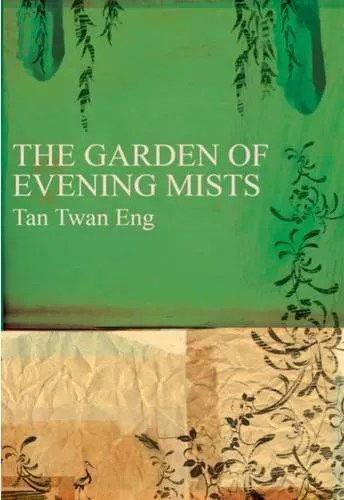
Continuing my plan to try and take my Around the World in 80 Books reading challenge by the scruff of the neck, today I’m off to Malaysia. The Garden of Evening Mists by Tan Twan Eng (2012) has been hugely lauded and it had completely passed me by. I rectified this situation by taking it with me on a long weekend in the New Forest recently, and it definitely suits those moments when you have a decent amount of time to commit to it.
The story opens in the 1980s,Yun Ling is a high court judge, just about to retire. This means she is leaving the bustle of Kuala Lumpur to return to her home in the Cameron Highlands.
“Most people in Kuala Lumpur couldn’t bear the stench, especially when the river was running low between monsoon seasons, but I had never minded that, in the heart of the city, I could smell the mountains over a hundred miles away.”
She hasn’t been back for years, and her return encourages her to reflect on her past:
“The garden’s name in English: Evening Mists. I felt I was about to enter a place that existed only in the overlapping of air and water, light and time.”
The main focus of her reflections is the time she spent as apprentice to a gardener who had been employed by the Emperor of Japan. Nakamura Aritomo is a mysterious figure, best known to his South African neighbour Magnus Pretorious, who still doesn’t know him hugely well, or why he seems to be in self-imposed exile in this remote part of Malaysia.
The past narrative begins in 1951 and Teoh Yun Ling is the sole survivor of a Japanese POW camp, where her sister died. She wants to build a Japanese garden in memory of her sister:
“Yun Hong kept our spirits up by talking about the gardens we had visited in Kyoto, describing even the smallest details to me. ‘This is how we’ll survive,’ she told me, ‘this is how will walk out of this camp.’”
In order to build her garden, Yun Ling is going to need the help of Aritomo, and for that to happen she needs to learn to trust a Japanese man despite associating him with her torturers.
“The imminent rain in the air smelt crisp and metallic, as though it has been seared by the lightning buried in the clouds. The scent reminded me of my time in the camp, when my mind had latched onto the smallest, most inconsequential thing to distract myself: a butterfly wafting from a patch of scrub, a spider web tethered to twigs by strands of silk, sieving the wind for insects.”
The relationship between Yun Ling and Aritomo is undoubtedly the centre of the story, but this is an ambitious novel and covers a great many themes, including the aftermath of World War Two and pre-independence Malaysia. (There are a few info-dump moments but not many.) It shows how power is achieved through violence, during British colonialism and beyond.
Within a carefully evoked historical context, Tan Twan Eng explores how we heal from trauma; how we reconcile to ourselves and to others; how we find redemption, and how we can forgive. It’s an immensely powerful story, and Yun Ling has to navigate her survivors guilt and overwhelming anger, to try and work out how on earth she is going to continue with her life.
“Walking in the garden I had heard about almost half a lifetime ago, I wished Yun Hong were here with me. She would have enjoyed it more than me. I wondered what I was doing here, living the life that should have been my sister’s.”
From goodreads I know some readers found Yun Ling too detached and remote a voice within her own story. Although some of the characterisation in the novel felt thin at times, I didn’t have a problem with Yun Ling’s voice. I thought it worked well in conveying her detachment through trauma, and it also balanced the style of storytelling. The descriptions are so richly detailed (sometimes a bit too much for my austere tastes) that to have a highly emotive voice amongst it all would have been too much.
“Birdsong song sparkles the air; mists topple over the mountains and slide down their flanks, slow and soundless as an avalanche witnessed from miles away. Instinctively I turn to look behind me, expecting Aritomo to chide me with a look or a scathing word. I see only my own footprints on the dusty floorboards as the bamboo blinds creak softly in the wind.”
Amongst this beauty are some gruesome scenes too, both in the 1950s setting and in Yun Ling’s memories of the camp. I didn’t find this gratuitous at all and thought they were responsibly handled, but wanted to warn any readers late to The Garden of Evening Mists like me that it is certainly not an unrelentingly pretty read.
Underpinning all periods is the theme of memory, effectively evoked through the shifting back and forth between timelines. Tan Twan Eng demonstrates how we cling to memory, how important it can be despite its unreliability. He shows how this can limit our knowledge of ourselves, others and circumstances, yet it remains vitally important.
The Garden of Evening Mists presents complex people and situations and demonstrates how, even when we don’t know everything and can’t rely on what we do know, all are worthy of compassion.
“Are all of us the same, I wonder, navigating our lives by interpreting the silences between words spoken, analysing the returning echoes of our memory in order to chart the terrain, in order to make sense of the world around us?”
To end, has anyone seen the adaptation from 2019? From this trailer I can’t decide if I want to watch it…
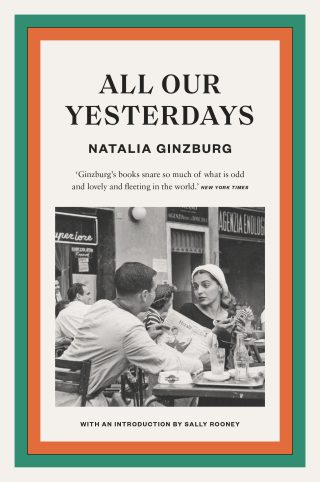
Daunt Books are such an interesting publisher and I was keen to read Natalia Ginzburg having heard wonderful things in the blogosphere, so I swooped on All Our Yesterdays (1952, transl. Angus Davidson 1956) when it turned up in my local charity bookshop. I think I’d read somewhere that this wasn’t the best place to start with this author, but I absolutely loved it.
The novel follows two families living in a northern Italian town from the 1930s, through the war years to peacetime. Although the blurb on the French flaps of my edition suggests Anna, the daughter of the poorer family, is the protagonist, really Ginzburg follows them all to a greater or lesser extent, with no overarching plot other than the sequence of years.
Although this approach sounds like a shortcoming, it works so well. It’s not a documentary novel but it gestures towards this with an omniscient neutral(ish) viewpoint and only reported speech. This felt unusual to read, but is so clever in capturing the everyday experiences of those living through extraordinary circumstances.
Anna’s siblings are Concettina, Ippolito, and Giustino. Concettina is popular with boys but struggles to find a purpose in life; Ippolito channels his energies into anti-Fascist activities with his friend from the richer family across the road:
“Emanuele and Ippolito did not even know Italy, they had never seen anything except their own little town, and they imagined the whole of Italy to be like their own little town, an Italy of teachers and accountants with a few workmen thrown in, but even the workmen and the accountants became rather like teachers in their imagination.”
Their lives are equally dictated by world events and by commonplace ones. Anna falls pregnant by her boyfriend and marries an eccentric older man, Cenzo Rena, moving with him to the southern village of Borgo San Costanzo. Her affair with her self-involved, callow boyfriend was no great passion, and while her marriage to Cenzo Rena attracts approbation, he is a warmer, more generous man than the one her own age.
“She was alone with Giuma’s face that gave her a stab of pain in her heart, and every day she would be going back with Giuma amongst the bushes on the river bank, every day she would see again that face with the rumpled forelock and the tightly closed eyelids, that face that had lost all trace both of words and of thoughts of her.”
These are people destined to be on the outskirts of war. Cenzo Rena holds a lot of sway in his local area and does help Jewish people fleeing the Nazi occupation, but on the whole the story of All Our Yesterdays is not one involving soldiers or revolutionaries. It is about ordinary people and for them the conflicts of war are reported facts not lived experience. The latter for them includes a lot of mundanity:
“And the bread in town was rationed and was a kind of soft, grey dough that you couldn’t ever digest, the bread was like the soap and the soap was like the bread, both washing and eating had become very difficult.”
Yet this doesn’t mean the story isn’t affecting, or that the characters avoid tragedy. There are some truly tragic events that are hugely affecting. Ginzburg manages to be even-handed in her treatment of her characters but not detached. Her writing is warm but unsentimental as she demonstrates that flawed people are as worthy of love and mourning as idealised ones.
In case I’ve made it sound unremittingly serious, I should mention that there humour in All Our Yesterdays too. There are romantic entanglements that are treated with a degree of levity, and eccentric housekeepers/family retainers with various foibles. All life is here.
I can’t think of another writer who approaches Ginzburg’s style, and looking back on it I can’t explain how she does what she does. This was a story that snuck up on me, the deceptively simple storytelling drawing me in more than I realised until I was totally immersed. An extraordinary novel.
“Fanfares of trumpets usually announced only small, futile things, it was away fate had of teasing people. You felt a great exultation and heard a loud fanfare of trumpets in the sky. But the serious things of life, on the contrary, took you by surprise, they spurted up all of a sudden like water.”
To end, of course there’s a very famous song I could post on the theme of Yesterday, but instead, to continue the mix of despair alongside levity: have you seen a parrot singing Creep by Radiohead?
Operation Heartbreak – Duff Cooper (1950) 155 pages
Operation Heartbreak is one of the few Persephone Books reprints written by a man, Duff Cooper, who served in Churchill’s government during the war and was married to socialite Diana Cooper. It is Persephone No.51 and I would say the title is entirely apt.
It follows the story of Willie Maryngton, born on the first day of the last century, which makes him too young to fight in World War I and too old in World War II. This is the great tragedy of his life, as Willie is devoted to the army and longs more than anything to see active service.
Willie is nice, pleasant, popular, but he never quite grasps anything, whether it is other people’s motives, the wider political situation, or any sort of life for himself beyond the armed forces. He witnesses others do so, and has a vague idea of world affairs, but everything drifts by him.
“It seemed to be his fate, he sometimes thought, to be a soldier who never went to war, and a lover who never lay with his mistress.”
He is a man out of his time, with both wars and with his love of the cavalry. He remains stubbornly committed to his horses despite being told that warfare is becoming mechanised. There is nothing he can do, and so he does nothing.
“Willie minded little how heavy [casualties] were if he was in it, but how could he bear to sit at home, hoping that his brother officers would be killed so that he could take their place?”
It’s a very sad tale as a pleasant, decent man really has no agency in his life. He places all meaning external to himself, and as such finds that he is dependent on indifferent forces to validate his existence. As a result, he holds that existence lightly.
“’I’m alone in the world, hale and hearty, just the sort of cannon-fodder they ought to be looking for – and, and, oh Hamilton, for God’s sake tell me – have I got a chance?’
Hamilton replied, ‘Not an earthly.’”
Now, SPOILERS. I wouldn’t normally discuss the ending of a book but I’m going to here because it’s really hard to explain my experience of reading this without doing so. I’ll be as vague as I can, but skip the rest of this post if you don’t want to know and just please believe me that Operation Heartbreak is truly worth reading.
The end of the novel is based on the true story of Operation Mincemeat. It is a well-known event in World War II, adapted into the film The Man Who Never Was, among others. Willie finds himself playing a pivotal role in the affair, and his real-life counterpart remains unnamed to this day.
I find it really intriguing that Duff Cooper – intelligent, sociable, successful; a hard-drinking womaniser and gambler, at the centre of so much – chose to write the story of Willie Marynton, a man seemingly very different from himself. In doing so, he shows real compassion for Willie, and for the real-life person whose identity remains unknown. The ending he gives Willie is an act of great kindness, and of commemoration. This makes Operation Heartbreak immensely moving, both in the story it tells and in what the novella represents as an act of respectful remembrance.
To end, a trailer for the latest adaptation of the true story:
Although I read a lot of golden age detective fiction as it is my go-to comfort read, I rarely blog on it. I’m making an exception this week though, as The Crime at Black Dudley, the first Albert Campion mystery by Margery Allingham, was published in 1929. This makes it perfect for the 1929 Club, running all week and hosted by Simon and Kaggsy.
In this first outing, Campion is not the primary detective. This role falls instead to George Abbershaw:
“He was a smallish man, chubby and solemn, with a choir-boy expression and a head of ridiculous bright-red curls which gave him a somewhat fantastic appearance.
[…]
His book on pathology, treated with special reference to fatal wounds and the means of ascertaining their probable causes, was a standard work, and in view of his many services to the police in the past his name was well known and his opinion respected at the Yard.
At the moment he was on holiday, and the unusual care which he took over his toilet suggested that he had not come down to Black Dudley solely for the sake of recuperating in the Suffolk air.
Much to his own secret surprise and perplexity, he had fallen in love.
He recognized the symptoms at once and made no attempt at self-deception, but with his usual methodical thoroughness set himself to remove the disturbing emotion by one or other of the only two methods known to mankind – disillusionment or marriage.”
So George heads to a somewhat foreboding enormous country pile, home of Wyatt Petrie, an academic, and his uncle Colonel Coombe (there always seem to be Colonels in GA mysteries don’t there? They seem to have been much more prolific then.) There is to be a party of Bright Young Things descending for the weekend.
An isolated country house, a closed circle of characters not entirely well-known to one another, what could go wrong…? Early on, George is drawn to a wall display:
“Yet it was the actual centre-piece which commanded immediate interest. Mounted on a crimson plaque, at the point where the lance-heads made a narrow circle, was a long, fifteenth-century Italian dagger. The hilt was an exquisite piece of workmanship, beautifully chased and encrusted at the upper end with uncut jewels, but it was not this that first struck the onlooker. The blade of the Black Dudley Dagger was its most remarkable feature. Under a foot long, it was very slender and exquisitely graceful, fashioned from the steel that had in it a curious greenish tinge which lent the whole weapon an unmistakably sinister appearance. It seemed to shine out of the dark background like a living and malignant thing.”
How on earth will the murder take place? What weapon will possibly be used? That’s right, Colonel Coombe is poisoned. Only kidding, of course he’s stabbed with the heavily foreshadowed Black Dudley Dagger.
However, that is not the only dampener on the party. Two men, sinister associates of the deceased, proclaim that no-one is allowed to leave until a missing item is returned to them. They succeed in convincing everyone of their seriousness through direct and effective means. (One of them is German and my heart sank a bit, anticipating caricatured xenophobic villainy, but thankfully although there is some it’s not extensive, and it soon becomes apparent that *small spoiler* he is not the true villain).
What will George do? Can he unmask the murderer? Can he protect his beloved Meggie long enough to propose? Well, among the party is one Albert Campion. George finds him foolish and irritating. Silly George! It’s obvious to the reader that there is More To Albert Than Meets The Eye…
“Everybody looked at Mr Campion. He was leaning up against the balustrade, his fair hair hanging over his eyes, and for the first time it dawned upon Abbershaw that he was fully dressed, and not, as might have been expected, in the dinner-jacket he had worn on the previous evening.
His explanation was characteristic.
‘Most extraordinary,’ he said, in his slightly high-pitched voice. ‘The fellow set on me. Picked me up and started doing exercises with me as if I were a dumb-bell. I thought it was one of you fellows joking at first, but when he began to jump on me it percolated through that I was being massacred. Butchered to make a butler’s beano, in fact.’
He paused and smiled fatuously.”
The main flaw of The Crime at Black Dudley is that mysterious, capable, comic Campion is so clearly the hero that the story feels a bit unbalanced and lacking when he’s not around. He dominates until he suddenly doesn’t – leaving the story before the end. George sees it through for the reader, but it makes for something of an anti-climax.
However, that quibble aside, The Crime at Black Dudley is a very enjoyable golden age mystery. As well as the tropes already mentioned, there are trapdoors, secret passageways and international criminal gangs. It’s a short fun read, and it made me keen to spend more time with perplexing Campion. As the Bright Young Things might say, (but probably never did) even if it’s not entirely the cat’s pyjamas it is still a crashing good lark.
From the silly to the serious, and my usual disclaimer that I know Ernest Hemingway was a fairly terrible human. He treated women badly, he loved blood sports which is abhorrent, I have no doubt that had we ever met, Hemingway and I would have viewed each other with mutual contempt. I also know that I just adore his writing, in a way I can’t fully explain. I do like pared-back style, but there’s something indefinable in his writing that I just find so moving. A Farewell to Arms was published in 1929 and it opens:
“In the late summer of that year we lived in a house in a village that looked across the river and the plain to the mountains. In the bed of the river there were pebbles and boulders, dry and white in the sun, and the water was clear and swiftly moving and blue in the channels. Troops went by the house and down the road and the dust they raised powdered the leaves of the trees. The trunks of the trees too were dusty and the leaves fell early that year and we saw the troops marching along the road and the dust rising and leaves, stirred by the breeze, falling and the soldiers marching and afterwards the road bare and white except for the leaves.”
If I tell you I was already inexplicably tearful by the time I reached the end of that passage you know you’re not going to get a coherent or balanced review of this book in any way 😀
The novel follows the story of Frederic Henry, an American volunteer paramedic in Italy during the First World War, and his relationship with Catherine Barkley, an English nurse. Initially I found their behaviour rather silly, but then I had to remind myself that they were very young, and living through traumatic circumstances.
“I went out the door and suddenly I felt lonely and empty. I had treated seeing Catherine very lightly, I had gotten somewhat drunk and had nearly forgotten to come but when I could not see her there I was feeling lonely and hollow.”
“‘I’ll say just what you wish and I’ll do what you wish and then you will never want any other girls, will you?’ She looked at me very happily. ‘I’ll do what you want and say what you want and then I’ll be a great success, won’t I?’”
No Catherine, that’s a truly terrible idea. Familiarise yourself with feminist theory and pull yourself together!
I thought Hemingway’s iceberg style of writing, not spelling everything out and trusting the reader to fill in gaps, worked extremely well throughout. Being so matter-of-fact about war, death and injury drove home its seriousness rather than treating it lightly. It meant that nothing was made easier by a more descriptive or metaphorical style. Here Henry is wounded badly (skip the next quote if you’re at all squeamish!):
“I sat up straight and as I did so something inside my head moved like the weights on a doll’s eyes and it hit me inside behind my eyeballs. My legs felt warm and wet and my shoes were wet and warm inside. I knew that I was hit and leaned over and put my hand on my knee. My knee wasn’t there. My hand went in and my knee was down on my shin. I wiped my hand on my shirt and another floating light came very slowly down and I looked at my leg and was very afraid.”
A Farewell to Arms is not relentlessly bleak though. There are touches of humour between Henry and his friends, or in Henry’s observations of his medical care:
“I have noticed that doctors who fail in the practice of medicine have a tendency to seek one another’s company and aid in consultation. A doctor who cannot take out your appendix properly will recommend to you a doctor who will be unable to remove your tonsils with success. These were three such doctors.”
It’s also not bitter. Henry becomes disillusioned with the war but again, the iceberg style works well in presenting the hopelessness and destruction of ideals, without being cynical or maudlin, such as Henry’s conversation with his friend who is a priest:
‘I had hoped for something.’
‘Defeat?’
‘No. Something more.’
‘There isn’t anything more. Except victory. It may be worse.’
‘I hoped for a long time for victory.’
‘Me too.’
‘Now I don’t know.’
‘It has to be one or the other.’
‘I don’t believe in victory anymore.’
‘I don’t. But I don’t believe in defeat. Though it may be better.’
‘What do you believe in?’
‘In sleep,’ I said. He stood up.
It occurred to me towards the end of the novel, when Henry uses a racial slur, that until that point I hadn’t really considered whether I liked any of characters. At that point I reflected that I didn’t much. Catherine is somewhat underwritten, the first-person narrative reflecting Henry’s youthful egotism in love, and Henry himself wasn’t particularly easy to warm to. But actually this was irrelevant. Hemingway wasn’t asking the reader to like or not like his characters. He was presenting them as they were, as flawed humans caught up in violence and destruction, and pointing out utter futility of it all.
“I did not say anything. I was always embarrassed by the words sacred, glorious and sacrifice and the expression in vain. We had heard them, sometimes standing in the rain almost out of earshot, so that only the shouted words came through, and had read them, on proclamations that were slapped up by billposters over other proclamations, now for a long time, and I had seen nothing sacred, and the things that were glorious had no glory and the sacrifices were like the stockyards at Chicago if nothing was done with the meat except to bury it. There were many words that you could not stand to hear and finally only the names of places had dignity.”
To end, the trailer for the 1932 film adaptation starring Gary Cooper:
Unfortunately due to the weird summer we’re having (unseasonably hot/unseasonably cold on repeat) the scourge of my life, the devil’s seed, aka grass pollen, is still in abundance and I am refusing to go anywhere that isn’t made of concrete/steel/brick, or some combination thereof.
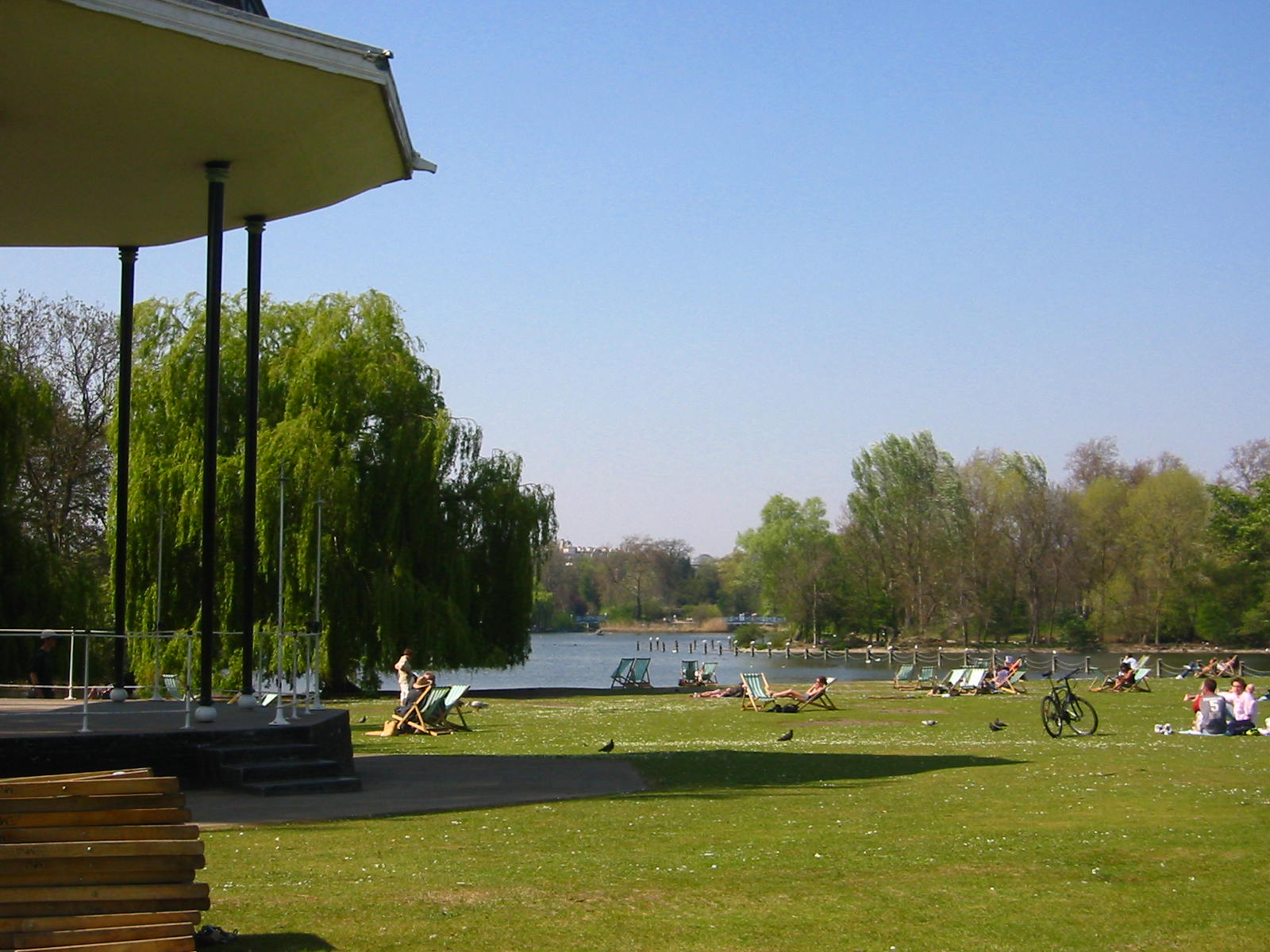
Well, I’ll tell you, Leo. You live through books of course, same as always. So this week I’m visiting my favourite London park, Regent’s, via two wonderful novels.
Firstly, The Heat of the Day by Elizabeth Bowen (1948), where protagonist Stella lives near Regent’s Park and where the opening scene sees counterspy Harrison flirting with Louie, an ordinary young woman who is open to affairs while her husband is away fighting the war.
“The very soil of the city at this time seemed to generate more strength: in parks outsize dahlias, velvet and wine, and the trees on which each vein in each yellow leaf stretched out perfect against the sun blazoned out the idea of the finest hour. Parks suddenly closed because of time-bombs – drifts of leaves in the empty deckchairs, birds afloat on the dazzlingly silent lakes – presented, between the railings which still girt them, mirages of repose.”
This eerie quality pervades the whole novel. While there is a plot – Harrison wants Stella to spy on her lover Robert, who is spying for the Germans – I felt this was not the driving force of what Bowen is writing about. Instead I think what she is considering is a very specific generation of people at an extraordinary moment in time.
“Younger by a year or two than the century, [Stella] had grown up just after the First World War with the generation which, as a generation, was come to be made to feel it had muffed the catch. The times, she had in her youth been told on all sides, were without precedent – but then so was her own experience: she had not lived before.”
There is a sense throughout the book of things left unsaid, sentences unfinished, and yet a deep understanding that exists between everyone living through the war.
“So among the crowds still eating, drinking, working, travelling, halting, there began to be an instinctive movement to break down indifference while there was still time. The wall between the living and the living became as solid as the wall between the living and the dead thinned. In that September transparency people became transparent, only to be located by the just dark flicker of their hearts.”
People behave in ways that they wouldn’t normally, but they can barely remember what normal is, or why they would behave that way in the first place. Bowen tends to overwrite, but as with the other novels of hers that I’ve read, this quality didn’t bother me as much as it does usually, and I felt it particularly apt here. I just let the writing and the atmosphere wash over me. Thankfully, I’ve not lived through that type of war, but to me Bowen seemed to have done an incredible job at capturing the heightened yet oddly detached experiences that would have occurred:
“But they were not alone, nor had they been from the start, from the start of love. Their time sat in the third place at their table. They were the creatures of history, whose coming together was of a nature possible in no other day”
The Heat of the Day is about the tragedy of war in the widest sense, where no guns go off and people carry on whilst feeling torn apart. Sad, desperate, quiet, and beautifully evoked.
Next, Mrs Dalloway by Virginia Woolf (1925) and my shortest review ever. Here it is: Virginia Woolf is a genius and Mrs Dalloway is pretty much a perfect novel. That is all.
I really don’t think I can review Mrs Dalloway. I find Woolf’s writing so rich, multi-layered and complex I feel I can’t possibly do it any kind of justice. Woolf’s treatment of a day in the life of society hostess Clarissa Dalloway and shell-shocked Septimus Smith is so sensitive and sophisticated, I feel like a gibbering idiot. Instead here are some passages:
Clarissa: “She could see what she lacked. It was not beauty; it was not mind. It was something central which permeated; something warm which broke up surfaces and rippled the cold contact of man and woman, or of women together.”
Septimus in the park with his wife: “Happily Rezia put her hand with a tremendous weight on his knee so that he was weighted down, transfixed, or the excitement of the elm trees rising and falling, rising and falling with all their leaves alight and the colour thinning and thickening from blue to the green of a hollow wave, like plumes on horses’ heads, feathers on ladies’, so proudly they rose and fell, so superbly, would have sent him mad. But he would not go mad. He would shut his eyes; he would see no more.”
The recurring motif of the chiming of Big Ben: “The leaden circles dissolved in the air.”
Finally: “It was a splendid morning too. Like the pulse of a perfect heart, life struck straight through the streets.”
*Sigh* Even if you’ve already done so, please read Mrs Dalloway. And then read it again.
To end, the most wonderful cinematic ending: Withnail and I, and the wolves of London Zoo viewed from Regent’s Park.





 madame bibi lophile recommends