I’ve finished at work now and my leaving gift was bookshop.org vouchers (to quote my colleague: “Tell me what you want so you don’t get some rubbish you’ll never use” 😀 ) which of course I started spending the same day! My first purchase was two novellas because it is #NovNov after all, hosted by hosted by Cathy and Bookish Beck.
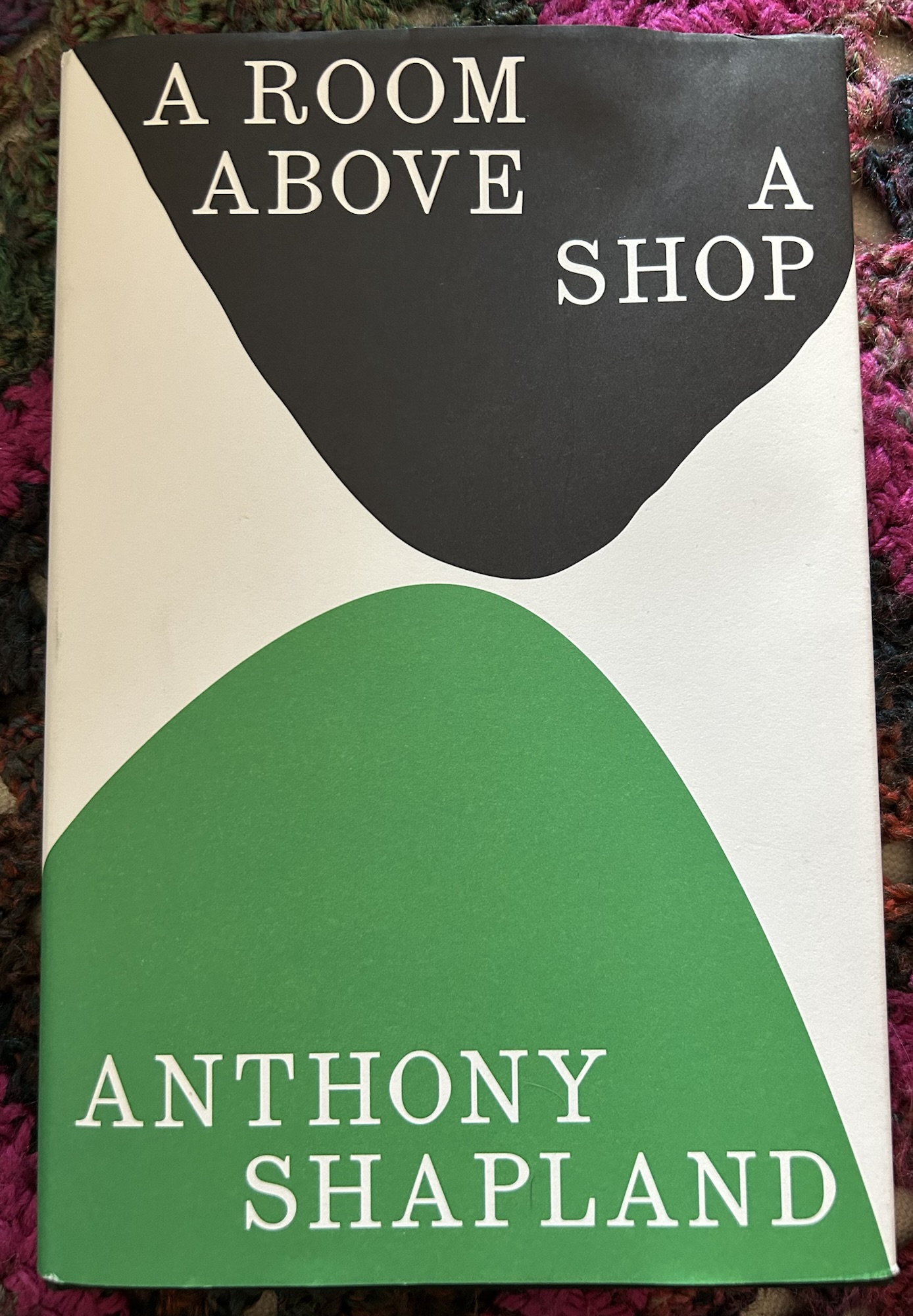
It was Susan’s review of A Room Above a Shop by Anthony Shapland (2025) which made it a must-read for me, and my astronomical expectations were met entirely. It’s a beautifully written, carefully observed and deeply moving novel.
M has inherited a hardware shop from his father. Part of the place for years and providing a community service, everyone knows who he is without knowing him at all.
“Keeping shop hours, he is the ear of the village, the listener. They never register his life at all, upstairs in that one room.”
He meets B, somewhat younger than him, in the pub, and invites him to meet on Carn Bugail on New Year’s Eve.
“He’s not quite sure what he’s walking towards. A pulling and pushing – his instinct says go; his anxiety says stay. Either choice feels wrong. He can’t not act.”
They know it is the start of something, they know there is attraction between them, but they live in a small community, still reeling from miners’ strikes and with increasing homophobia driven by a fear of a new illness, HIV.
“Paid work is fragile, rare. Divisions still run deep; picket-angry graffiti still visible, disloyal homes shunned. Pockets are empty, borrowing and mending and patching. Everything feels temporary. Desperate.”
When B takes a job at M’s shop and moves into the spare space upstairs, little more than a cupboard but useful for appearances’ sake, they build a life together. But it is a hidden life which takes place behind closed doors, and runs beneath the performance they undertake each day as colleagues in the shop. It is both familiar and filled with tension.
“This hill is a bright map of his childhood. A play track for stunt bikes, a den, a place to be lost, to disappear with siblings. Or away from them. A place to loiter and mitch dull school days out until the bell. The place to be alone with this feeling that he’s different to the others.”
Shapland achieves something remarkable in just 145 pages, with plenty of space on the page. He crafts a fully realised portrait of two people and their relationship within a clearly evoked setting. The historical details are light touches, just enough to give a flavour of the time and certainly enough to build the pressure that M and B are living under.
His writing is incredibly precise, so although the story is short, it is not a quick read. Every single word carries its full weight to create beautiful sentences. I found myself double-checking the author bio to see if he was poet as he writes with such sparse care, but apparently not.
A Room Above a Shop is so moving. Witnessing the silences that surround M and B, the way they are unable to make the most everyday, harmless expressions of love and care towards one another, or to have their relationship acknowledged by anyone other than themselves, is quietly devastating.
“No word or deed reaches the ground from this floating platform, on this mattress, this raft, on this ocean adrift in the afternoon sun. This room lightly tethered by stairs.”
To end, a scene of coming out in a 1980s Welsh mining village from Pride, and apparently pretty accurate of the real-life person’s experience:
This is a contribution to Reading Wales 2022 aka the Dewithon, hosted by the lovely Paula over at Book Jotter. My VMC pile is reaching ridiculous proportions so I googled “Wales Virago” and was delighted to find that there were two authors I could take off the TBR for this year’s Dewithon.
Firstly, I chose Penelope Mortimer, as I’d enjoyed Daddy’s Gone A-Hunting and The Pumpkin Eater a great deal, finding her writing spiky and incisive. Mortimer was born in Rhyl, Flintshire and My Friend Says It’s Bullet-Proof (1967) was her sixth novel.
Muriel Rowbridge is a journalist on a trip to Canada, the only woman in a group of men, warned by her editor:
“Don’t go wandering off in one of your Virginia Woolf fits.”
She is very much the outsider, wanting to focus on her writing while the rest of her group view it as a bit of a jolly:
“they were pleased with themselves, thawing toward each other, throwing out remarks about wives, children, secretaries, which were immediately understood, as though they were giving a particular handshake or flicking back their lapels for identification.”
This is the working world of the 1960s, which we’re all familiar with from Mad Men at least. Her colleagues think it’s totally acceptable to comment on what she’s wearing and the attractiveness of her legs. Thankfully Muriel doesn’t spend much time with them, or indeed much time working. The trip is a time of reflection and recuperation for her, as she recovers from a mastectomy for breast cancer.
“How to deal with it, except with vague attempts at courage and acceptance, she had no idea.”
Although Penelope Mortimer did have lung cancer later in life, I’m not sure she had personal experience of breast cancer at this point. But I thought this was a sensitive exploration of a woman working out who she is after a life-changing experience. Muriel isn’t remotely self-pitying, but she does need to find self-compassion.
”the anger against herself raged brightly, a clear fire. She had never felt this anger before; she could never remember feeling it before. It was enlivening, making her very defined and sharp, as though she had become a weapon.”
She had left her married lover Ramsey when she was diagnosed, and he is back with his wife Flora, a situation neither Ramsey and Flora are sure they want. This led to some of the pithy observations on relationships between the sexes that I expect from Mortimer:
“Between us, he said, he was being eaten alive. If this was so, I don’t know why we were both starving.”
While in Canada, she meets Robert: “what had been an indeterminate distance between their hands, knees, faces, was now measured exactly: they were accessible to each other.”
While she feels ambivalent about their relationship, the sex does lead her towards a new acceptance of her changed body.
“She leant against the lift wall and slowly remembered the night; then realised that this was the first time she had woken, and dressed, without any sense of mourning.”
Amongst the sexist or paternalistic colleagues; the self-centred married lover; and the surgeon who possibly took an entire breast when a lumpectomy would suffice without considering what it would mean for Muriel, Robert is a reminder of what can be positive in male/female relationships. This doesn’t necessarily mean that its happily ever after either… Mortimer is determinedly realistic.
I didn’t think My Friend Says Its Bullet-Proof was quite as strong as the other two Mortimers I’ve read, but it was an interesting examination of the choices available to women in the late 1960s. It questions how to navigate independence in a world that marginalises and objectifies you both professionally and personally.
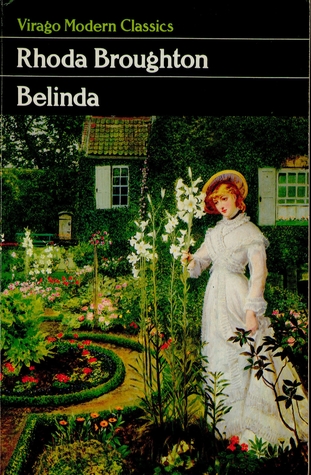
Secondly, a new-to-me author despite the vast number of novels she wrote; Rhoda Broughton, who was born in Denbighshire. Belinda (1883) was written roughly in the middle of her career, and my edition tells me she was alongside Mary Braddon as ‘Queen of the Circulating Library’.
Belinda is a satire, but that double-edged royal appellation did make me wonder if it was always read as such. Maybe I’m doing the fare of circulating libraries down, but I would have thought a tale of simpering Victorian virgin lovers was more typical of their stock than a satire of such stories. Regardless, if you read it straightforwardly as a romance because that’s what you were looking for, or as a satire because you were sick of such stories, Belinda would deliver.
The titular heroine is in Germany with her feckless, charming sister Sarah at the start of the novel:
“Away they go to Moritzburg, when the noon sun is warm and high; away they go, handsome, gay, and chaperoneless. There is no reason why their grandmother, who is a perfectly able-bodied old lady, should not escort them; but as she is sixty-five years of age, has no expectation of meeting a lover, and is quite indifferent to spring tints and German Schlosses, she wisely chooses to stay at home.”
Sarah is hugely popular with young men and is on her seventh fiancée. Belinda is unpopular, except with student David Rivers (aptly named, as he’s totally wet). The sisters wonder if Belinda’s nose is behind her lack of societal success:
“It is not case of measurement,’ says Sarah gravely; ‘I have seen noses several hands higher that were not nearly so alarming. It is a case of feeling; somehow yours makes them feel small. Take my word for it,’ with a shrewd look, ‘the one thing that they never can either forgive or forget is to feel small’”
It isn’t Belinda’s nose, unsurprisingly; it’s her fairly dull personality and her social awkwardness, matched only by that of her love interest:
“Is it her fault that all strong emotion with her translates itself into a cold, hard voice, and a chill set face? With other women it translates itself into dimples and pink blushes and lowered eyes. Ah! but do they feel as she does? Sarah, for instance. When do men ever leave Sarah’s company with the down- faced, baffled, white look with which Rivers has more than once quitted hers? Preening themselves rather; with sleeked feathers and cosseted vanity.”
As you can see from the quote above, Broughton uses Belinda to poke fun at romantic mores, the silliness of them and the uselessness of them. She demonstrates how those who cannot master the light-hearted conventions end up tied in knots.
“‘And you were — and you were — one of the heavenly host up there!’ ends the young man, baldly and stammering. But love is no brightener of the wits.
One of the heavenly host?’ repeats she, justly infuriated at this stale comparison. ‘An angel, in short! Must I always be an angel, or a goddess? If anyone knew how sick I am of being a goddess! I declare I should be thankful to be called a Fury or even a Ghoul, for a change!’
So saying, she turns her shoulder peevishly to him; and leaving the garden, begins to walk quickly along the road by the water, as if to make up for her late loitering. He keeps pace with her, dumb in snubbed contrition, stupefied by love and, unhappily for himself, fully conscious of it; burningly aware of the hopeless flatness of his last simile, and rendered by his situation quite incapable of redeeming it by any brighter sally.”
The course of true love inevitably does not run smooth for the young lovers – ‘twas ever thus. However, Belinda’s understandable frustration with Victorian female conventions leads her to make some very questionable choices. For those of you who have read Middlemarch, these questionable choices will be most familiar. I don’t know what Oxford Rector Mark Pattison did to the women writers of late Victorian society but whatever it was, he really, really annoyed them. He provided the model for Casaubon in Middlemarch and here he is rendered as Professor Forth:
“She had known that she did not love him, but she had not known that he wore carpet slippers in the drawing-room.”
Belinda is well-paced and witty, but I think I would have like the satire to be slightly more explicitly evoked. At one point there seemed a never-ending round of cheeks blushing, lips whitening, words stumbling… and a pretty major suspension of my disbelief that Belinda and Rivers could really be in love, given they had barely spoken to each other but only mumbled vaguely while experiencing various body temperature changes.
I would have liked a slightly sharper authorial voice, or more scenes with witty, pragmatic Sarah and the frankly reprehensible grandmother, with whom I could only agree when she observed:
“Belinda is too everything, except amusing.”
I did enjoy Belinda though, and there was broad comedy too, including some nice scenes with pug dogs, and with social bull-in-a-china-shop Miss Watson:
“I shall certainly mention it to his mother. Lady Marion, when next I meet her,’ says Miss Watson resolutely; I do not think it would be acting a friend’s part not to do so. I do not actually know her, but there is a sort of connection between us; I was at school for six months once at Brussels with a cousin of hers, and there is no doubt that there is something uncommonly louche about it.’”
To end, the BAFTAs earlier this month featured a performance from an 85 year-old Welsh singer/legend:
Well, it’s strange times indeed that we are living through my bookish friends. May you all, and your families and friends, stay safe and well.
My blogging was already decidedly scarce although I kept making (wasted) efforts to get it back on track. Now with all that is happening my workload is through the roof (those tips on how to fill your hours during home working/isolation etc are completely wasted on me) and what hours I do have to spare I’m finding it hard to read in due to all the anxious feelings.
I have started doing yoga every morning though, which I’ve been claiming I’m about to do for at least the last eleventy million years, so its not all bad 😀 (and for anyone else feeling anxious, it seriously helps. If nothing else swearing at the perfect vision of the instructor as you sweatily try to wrap your ankles round your head is a great stress reliever.)
Anyway, I read a wonderful novella a while ago in preparation for the Wales Readathon 2020 aka Dewithon hosted by the lovely Paula at Book Jotter. Originally I was going to pair it with How Green Was My Valley by Richard Llewellyn but sadly that classic remains unread on my shelves due to the aforementioned brain chatter. Instead, here is just one book but it’s totally deserving of a post all to itself.
Cove by Cynan Jones (2016) is only 95 pages long and shows how intense such a tight form can be. The writing is lyrical, precise, beautiful. Every word carries its full weight.
A man is adrift at sea, having been struck by lightning. He is disoriented and in pain.
“His mouth is crusted with salt. He does not know where he is. There is a pyroclast of fine dried ash across his skin.
When he comes to, the strongest thing he feels is the tingling in his hands. It feels as if they are distant things, strange ringing bells. Finds out anew he cannot move his arms. He does not remember getting back into the kayak. Does not understand. The ground is moving. Is sure that if he moves he will abolish himself. Holds on to himself like a thought coming out of sleep.”
Gradually, a sense of where he is and what he needs to do to survive emerges:
“Saw on his skin, a grey dust above the point his arm had lain in the water, felt the knowledge of it flutter, float inside him. A sense of himself, a fly trapped the wrong side of the glass.”
We stay with the man as he assesses what resources he has; what state he is in physically; and as his memories gradually return, hazy and confused, Eventually he has a sense of a particular reason that he must return home, but will he make it?
“When he saw the address label on the bag he saw his name. It was like looking into an empty cup. Then he heard a voice say it. The knowledge it gave down was as delicate as an image sitting on the surface of the water, disrupting as he moved to reach it.
He let it go, instinctively.”
Cove is a stunning novella that occupies a space between prose and poetry. Its economy and lyricism make it poetic, its clear plot pulls you through the story.
I’ve not done Cove justice at all as my brain is kaput, so all I can do is urge you to read it for yourselves 😊
To end, if you’d like to embrace some Welsh culture but are also finding reading a struggle, I can recommend an excellent Welsh language tv thriller, Hidden (it’s bilingual on BBC4). Both series (I’ve just finished watching the second) are pared back and tense. You always know who did it; the interest is in the quiet, steady way the police piece it together and the psychological portraits of all involved. They are also a really, really tough watch, so now might not be the best time, but for future times when we’re feeling more robust…
If only traditional Welsh wisdom would reach current leaders, who seem determined to build walls both literal and metaphorical rather than bridges at the moment… *sigh*
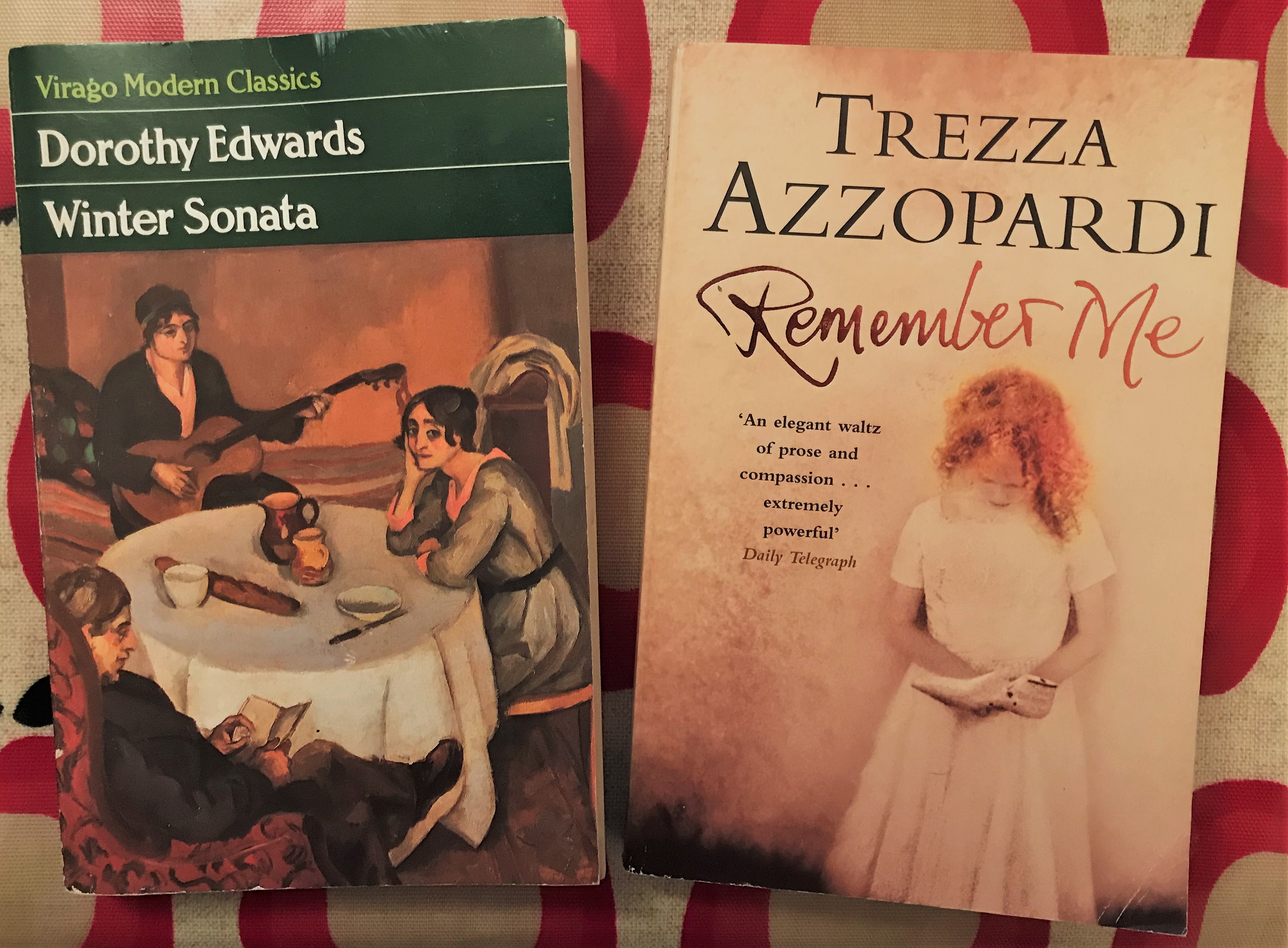
Firstly, Winter Sonata by Dorothy Edwards (1928), who was born in Glamorgan in 1903. This was her only novel after she tragically died by suicide when she was 31, six years after its publication.
Arnold Nettle is a shy man and in frail health. He moves to a village where his family own the Post Office, to work there and recuperate.
“Every evening at six o’clock Arnold Nettle used to come home from the post-office and walk slowly along to his lodgings. The sun was setting and it would disappear behind the black feathery branches of the trees, leaving streaks of red in the grey sky. He went in and had his tea, and then he usually sat reading by the fire or practising a bit on his cello. Sometimes, of course, he sat simply looking into the fire, and it seemed he was a little nervous even in his own society, because often he would blush and smile shyly to himself. At ten o’clock he would put his book and his cello back in their places and fasten the window and go to bed.”
So, a simple life conveyed in a simple style. I wasn’t sure about this style at first, whether it was deliberate to convey Arnold’s thought processes and deliberately quiet life, or whether it was the inexperience of the writer. It worked well for Arnold, and it did change slightly when the story focussed on other characters. Arnold is asked by a local family to play his cello for them; Olivia and Eleanor live with their aunt, Mrs Curle, and her son George. Arnold is very much taken with Olivia.
“Olivia smiled at him too and made him sit down, He still kept the gloves firmly in his hands, but he sat down smiling at them all and asked in a comparatively loud voice, ‘Where is your cat?’ and since this was the first quite independent remark he had ever made in that house, it almost gave the rather absurd impression that he had this evening come there especially to see the cat.”
The story follows these young people and also Mr Premiss, a self-focussed cad who is friends with George, and Pauline, Arnold’s landlady’s daughter. Very little happens so this is not the novel for you if you like a strong plot, but I thought it worked effectively in capturing people and a place at a moment in time, over the course of one winter.
Ultimately though I decided the naïve style was due to Dorothy Edwards’ inexperience as a writer. There are far too many occasions on which Olivia’s eyes are described as sad, her sister’s as blue. This description is not always out of place:
“Olivia looked about her with her large, rather childlike but sad eyes. Her happy mood had gone in some way; she did not feel so full of energy. There is something, too, rather unpleasant about winter; it is cold and frozen and nothing seems to move, and yet there is no sense of rest anywhere.”
Yet far too frequent. But what really stopped me loving this novel was a feeling of detachment from the characters. For me as a reader, I don’t need to like the characters but I do need to feel involved with them in some way. Again, this may have been a stylistic choice – Olivia seems depressed, Arnold is alienated, and so creating this feeling in the reader helps capture the feelings of the characters:
“At supper he was very careful to listen to the conversation and not to get lost in his own thoughts. But even then he listened, and even took part in it, almost as though he were dreaming it all. They sat around the table like stars, and when they spoke their voices seemed to come to him from far away”
I only write about books I would recommend, and I would recommend Winter Sonata, but with some reservations. I found it an interesting novel with some beautiful writing but also a bit unsatisfying. I’ve definitely not done it justice here and in capturing a quiet desperation within ordinary lives it is restrained and accomplished. What I am sure of is that Dorothy Edwards was a talented writer and may have just been finding her feet with this. I’d certainly like to read Rhapsody, her collection of short stories. Had she lived and carried on writing, I think she could have been really successful.
Secondly, Remember Me by Trezza Azzopardi (2004) who was born in Cardiff and based the main character of this novel, Winnie, on Nora Brindle, a woman who lived on the streets of Cardiff.
“There was a panicky sort of wind about, swirling everything up from the gutter and blowing dirt in your face. Eyes full of grit; with my case and the bin liner…I was wearing my silver coat with the plastic bag in the inside pocket, and the shoes I’d got from the Salvation Army the week before. I had my case with me. I always took my case.”
Winnie is homeless but shelters in an abandoned shop that she has some previous connection to, along with some young homeless boys. They move on and she is on her own when a young woman breaks in a steals her case. Her pursuit of her things leads Winnie to remember the past, and Azzopardi moves seamlessly back and forth across time.
Winnie has been considered odd since she was a child. Her mother seems to suffer from depression, although in the first half of the twentieth century it isn’t called that. All young Winnie knows is that her frail mother is wasting away in bed, and like Winnie, she communes with the dead.
“I avoided cracks in the pavement, I crossed my fingers and touched wood, and at night, I prayed. Despite everything, the ghosts took their fill. Each day a little more of my mother was stolen. In no time at all, her eyes went hard as jet; her hair, brittle as spun sugar.”
We follow Winnie through her life: evacuation during the war, bullying at school, falling in love. She lives with her grandfather after her mother dies and her father tries to keep Winnie’s memories of her alive:
“A handkerchief, a ribbon, a heart-shaped locket sprinkled with rust; these are objects, artefacts, proof of life. I balance his memories, all the same, storing them on top of mine, carefully leaning one against the other like a stack of playing cards. I am building a tower without bells. Later I will bring it all down, in an earthquake of my own.”
What we witness is that time and again Winnie is used by people. Azzopardi shows with a deft touch how society will judge Winnie – homeless, unloved, likely mentally ill – harshly, although she has never been vindictive or deliberately tried to hurt anyone. Meanwhile those who use her – usually male, employed, solvent – get away with it.
Remember Me isn’t remotely sentimental and Winnie never asks for pity. She is an unreliable narrator, but then everyone would be an unreliable narrator of their own life – how can it possibly be seen with any objectivity?
“Who cares about an old woman and a few bits of tat? No one, that’s who, no one on the world.”
Winnie’s life is hard, and unfair, and yet her resilience and a message of hope endures to the very end.
Following Winnie’s lead, here is a memory of my own: when I was a student in the 90s, there was the Cool Cymru music explosion, with the chart success of bands like Manic Street Preachers, Super Furry Animals, and The Stereophonics amongst many others. When Catatonia appeared on Top of the Pops to perform Mulder and Scully in 1998, I think it was the first time I’d heard an English-language pop song sung in a Welsh accent (I’m not counting Bonnie Tyler because I think she didn’t mean for her accent to slip through), much to the pleasure of my Welsh housemate at the time. Here is their lead singer Cerys Matthews performing a traditional Welsh folk song:
As a companion piece to my post on Scottish writers, I thought this week I would look at Welsh writers. Had I been even vaguely organised, I would have posted this 2 days ago to coincide with Dylan Thomas’ centenary, but better late than never….Firstly, a poem by Dannie Abse, a prolific poet who died in September this year.
It’s so hard to describe Abse’s writing without resorting to clichés about Welsh writing; adjectives like lyrical force themselves to the fore. Judge for yourself: in Poem and Message (1955), Abse uses the idea of a loved one “Out on the tormented midnight sea” finding solace in words, and the poem of love those words create. You can read the whole poem here.
“so from this shore of cold I write
tiny flashes in the Night.
Words of safety, words of love
a beacon in the dark”
[…]
one small luminous truth
of which our usual love was proof.
It reminds me of Shakespeare’s sonnet 116 whereby love “is the star to every wand’ring bark”. Abse uses simple language, and a familiar trope of love as a guiding light, to create a sense of love’s unquestionable power; it doesn’t need complex metaphors and obscure polysyllabic words to heighten it. It ends with a beautifully direct couplet:
Secondly, and in direct contrast to Abse’s refined feeling, Submarine by Joe Dunthorne (Penguin, 2008). Oliver Tait is 15 and lives with his parents in Swansea. His father is depressed and his mother:
“I have not established the correct word for my mother’s condition. She is lucky because her mental health problems can be mistaken for character traits: neighbourliness, charm and placidity. I’ve learnt more about human nature from watching ITV’s weekday morning chat shows than she has in her whole life. I tell her ‘You are unwilling to address the vacuum in your interpersonal experiences,’ but she does not listen.”
Oliver is entirely typical and entirely untypical of a teenager. He is convinced of his own superiority, passively observes the bullying of his classmates, is desperate to lose his virginity to the pyromaniac Jordana, and makes up stories about his neighbours:
“‘I know Mr Sheridan quite well, Oliver. He’s a painter decorator,’ he says…..
‘Andrew, he has the eyes and overalls of a killer,’ I say.”
Oliver is an outsider in his own life, and his voice is detached while seeking to belong. The teenage conundrum – wanting to be entirely different and entirely the same as everyone else. Even Oliver’s beloved Jordana lets him down:
“She’s been sensitised, turned gooey in the middle.
“I saw it happening and I didn’t do anything to stop it. From now on, she’ll be writing diaries and sometimes including little poems and she’ll buy gifts for her favourite teachers and she’ll admire scenery and she’ll watch the news and she’ll buy soup for homeless people and she’ll never burn my leg hair again.”
Submarine is hilarious and yet still achieves a sensitive evocation of the torturous time of adolescence. I could have picked almost any page at random and found a quotable line. Yes, it’s that good. Just one proviso: don’t read it on the train unless you want to be one of those annoying people trying to muffle snorts of laughter between the pages, which I totally was…
There was a film adaptation of Submarine (dir. Richard Ayoade) in 2011:







 madame bibi lophile recommends