“The weather is like the government, always in the wrong.” (Jerome K. Jerome)

What, in the name of Tomasz Schafernaker, is going on with the weather? (For those of you in countries where this legend doesn’t broadcast, he became my favourite –and I didn’t even know I needed one – when he ended a forecast with: “So, in summary…” then blew a raspberry and gave the thumbs-down. Succinct and accurate, Tomasz.)
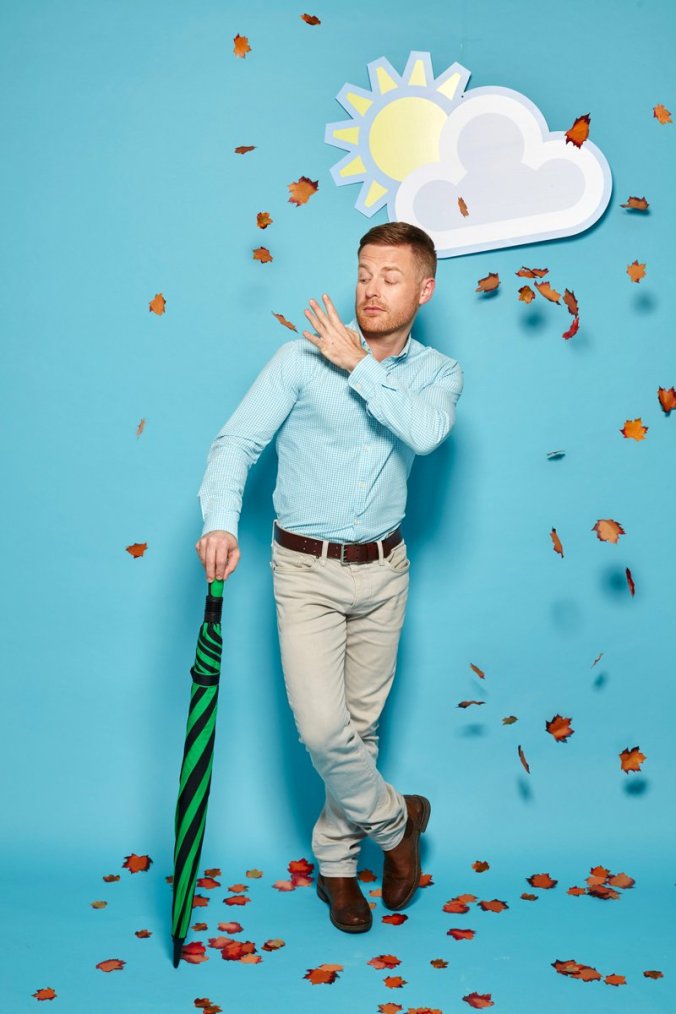
DBEd6C7XkAArbJ4

Image from here

Here in the UK we’ve had a weirdly mild winter, with the exception of 3 days this week which were the seasonal norm, and now we’re back to disconcertingly warm.  Meanwhile the east coast of the US has had the worst snow storm in 100 years. This has now passed and apparently skies have brightened, but please stay safe if you are there, reader. To give myself the sense of winter which is lacking here, I thought I would look at 2 snowbound novels. Inevitably, these will not be set in Britain, and so they also represent two more stops on the Around the World in 80 books reading challenge – hoorah! Coincidentally, they are also both collected short stories which do form a sort of narrative, so don’t be put off, short-story-phobes.
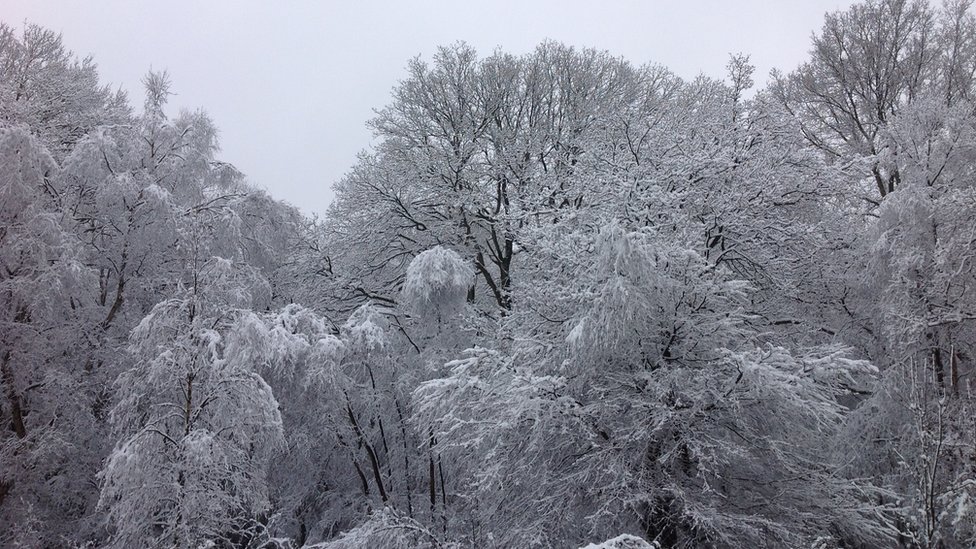
_65866840_rogerbruce

Image from here

Firstly, A Winter Book by Tove Jansson, who I’ve written about before, a Finnish writer who wrote in Swedish, best known for the Moomins but a wonderful writer for adults too.  If you’re a fan of Jansson and have read her semi-autobiographical The Sculptor’s Daughter, then you might find this repetitive as the vast number of stories are taken from there. However, if you want to dip a toe into Jansson to see how you get on with her, this is as good a place to start as any.

Much is written from a child’s perspective and Jansson’s independent, stubborn and wonderfully inventive nature shines through. In the story Snow (I’m being resolutely obvious in my choices) she finds herself snowbound with her mother in an unfamiliar house.

“But I said nothing because I didn’t like this strange house. I stood in the window and watched snow falling, and it was all wrong. It wasn’t the same as in town. There it blows black and white over the roof or falls gently as if from heaven, and forms beautiful arches over the sitting-room window. The landscape looked dangerous too. It was bare and open and swallowed up the snow, and the trees stood in black rows that ended in nothing. At the edge of the world there was a narrow fringe of forest. Everything was wrong.”

Jansson’s world is small, yet enormous.  Much is set on her beloved island of Klovharu, and in Snow this is narrowed down to a single house, yet with her child’s imagination, it becomes a fairytale, in the Grimm sense, with a feeling of unreality and menace.

“Next morning the daylight was green, underwater lighting throughout the room. Mummy was asleep. I got up and opened the door and saw that the lamps were on in all the rooms although it was morning and the green light came through the snow which covered the windows all the way up. Now it had happened. The house was single enormous snowdrift, and the surface of the ground was somewhere high up above the roof.”

Jansson’s style is simple and pared back, which I think makes it all the more wonderful. It captures a child’s voice without artifice and is dramatic in its directness.

There is a similar sense of surreal wonder in The Iceberg, a delightful story where the young girl spots an iceberg floating nearby with a grotto hollowed out of it:

“My hands and my tummy began to feel icy-cold and I sat up. The grotto was the same size as me, but I didn’t dare to jump. And if one doesn’t dare to do something immediately, then one never does it.

I switched on the torch and threw it into the grotto. It fell on its side and lit up the whole grotto, making it just as beautiful as I had imagined it would be. …it was so unbearably beautiful that I had to get away from the whole thing as quickly as possible, send it away, do something! So I sat down firmly and placed both feet on the iceberg and pushed it as hard as I could It didn’t move.

‘Go away!’ I shouted. ‘Clear off!’”

This magical, humorous tale is pure Jansson: a truly memorable delight.

Secondly, A Country Doctor’s Notebook by Mikhail Bulgakov, a collection of his stories about being a newly-qualified doctor in an isolated practice, serving poverty-stricken rural Russian workers.

“The nearest street lamps are thirty-two miles away in the district town. Life there is sweet: it has a cinema, shops. While the snow is whirling and howling out here in the open country, there on the screen no doubt, the cane-brake is bending to the breeze and palm trees sway as a tropical island comes into view….”

He is the only doctor in the practice and finds himself woefully underprepared, his distinction in exams teaching him nothing about how to do his job.

“I tried to talk evenly and gravely, and to repress impulsive movements as far as possible, to walk and not run as twenty-four-year-olds do who have just left university. Looking back, I now realise that the attempt did not come off at all…I had been shown round the hospital and was left in no doubt whatever that it was generously equipped. With equal certainty I was forced to admit (inwardly of course) that I had no idea what many of these shiny, unsullied instruments were for.”

Jon Hamm and Daniel Radcliffe in the 2012 TV adaptation

Jon Hamm and Daniel Radcliffe in the 2012 TV adaptation

Image from here

Living in fear of a patient presenting with a strangulated hernia, Bulgakov somehow manages to muddle through, and actually seems to make a fairly decent doctor despite his own fear and misgivings: “I thought to myself: ‘What am I doing? I shall only kill the child.’ But I said: ‘Come on, come on – you’ve got to agree! You must! Look, her nails are already turning blue.”

Bulgakov’s writing throughout these stories might surprise fans of his surrealist masterpiece The Master and Margarita, as it is a determinedly realistic and linear narrative. However, it is bleak, funny, highly readable, and there are a few hints of what was to come once Bulgkov gave up his medical practice and turned all his attention to writing…

“Outside was a sight I had never seen before. There was no sky and no earth – only twisting, swirling whiteness, sideways and aslant, up and down, as though the devil had gone mad with a packet of tooth powder.”

To end, unapologetically cute footage of Japanese snow monkeys warming up in hot springs:

“There are two types of women in the world: those who like chocolate and complete bitches” (Dawn French)

Happy New Year! (for those of you using the Gregorian calendar).  It is one of life’s small cruelties that if you live in the Northern hemisphere, a grey, dark, cold time of year is also inexorably bound with resolutions to lose weight.  It’s entirely illogical: your body is bound up in layer upon chunky layer of clothing, and all you want to eat is comforting, stodgy carbs.  Far better to start a diet in March – its brighter, starts getting warmer, the prospect of salad is less likely to send you howling in despair from the room (unless that’s your modus operandi all year round, and you are not alone).  There’s a sense of approaching summer and the associated disrobing to act as an incentive to lose those extra layers you’ve acquired that you can’t hang in the wardrobe.  But right now its January. So, until those spring-like days, let us glory in girth, fellow book-lovers, and embrace loose baggy monsters.  This was Henry James’ term for those long Victorian novels, and they are perfect for this time of year.  If the holiday season has left you feeling like a baggy monster yourself, settle down with a huge book: you can wallow, a verb that suits your newly enormous body, in its vastness & lose yourself and the dark days that surround you; you can claim it’s a novella and make your body look smaller by comparison, optical illusion being so much easier than giving up all the fun stuff; and if you go for a paper version rather than an e-book the weight itself will act equally as well as a gym workout for your biceps (er, maybe). ‘Tis the season of the baggy monster!

I’ve gone for an obvious choice of baggy monster, George Eliot’s Middlemarch (published 1871-2. My copy: Penguin Classics 1965). Writing about Middlemarch is really difficult for me as it’s my favourite novel ever.  Ever.  And I find when things are that close to me, I can’t really explain them or talk about them objectively.  Lots of people can’t bear George Eliot and find her too intellectual and moralising.  Fine – I have no come back.  She’s both of those things.  But if you give Middlemarch a chance, the rewards can be huge.  The characterisations of the inhabitants of this middle-England town are fully drawn, as the length of the novel allows for such scope.  There is no reliance on stereotypes (Mr Dickens, take note), and even the unlikeable characters are understandable.  Eliot can be as witty and incisive as Jane Austen (“plain women he regarded as he did the other severe facts of life, to be faced with philosophy  and investigated by science”/ “she held it still more natural that Mr Lydgate should have fallen in love at first sight of her.  These things happened so often at balls, and why not by morning light, when the complexion  showed all the better for it?”), but for those of you who share my brother’s view that Austen is just “full of silly girls giggling behind fans” rest assured she’s also very different.  Virginia Woolf called Middlemarch “one of the few English novels written for grown up people”, by which I think she means that the story continues beyond marriage – the ultimate purpose of the plot is not achievement of a socially acceptable breeding arrangement but more a study of how people work, individually and within society.  There are big themes tackled: politics, education, professional fulfilment, religion…If that sounds dry, I promise there’s enough plot to keep you going, with the various stories of the ambitious Dr Lydgate, idealistic Dorothea, vacuous Rosamond, immature Fred Vincy… and now I’ll stop reducing Eliot’s great characters to a single adjective.  It’s also got Will Ladislaw in it, a Byronic hero who can easily equal Darcy in the “pouting air of discontent” love-god stakes, it’s just that the latter’s PR is so much more tenacious.  One of my tutors once told me he re-read Middlemarch regularly, and the final few paragraphs always made him cry (not that it’s  a tragic ending, just realistic).  I hope if you give Middlemarch a go, that it truly moves you.

In the course of writing the above paragraph I’ve realised that this post will turn into a baggy monster itself if I continue to attempt to capture these vast panoramic books in any sort of meaningful description.  So, like so many New Year’s resolutions, I’m going abandon my good intentions and instead write about a book that (in my copy) runs to a comparatively succinct 222 pages. Like Water for Chocolate by Laura Esquivel (published 1989. My copy: Black Swan, 1994), unlike the baggy monsters, keeps the plot fairly simple – Tita and Pedro love each other, tradition dictates they can’t be together, so he marries her sister to be around her.  You may not get a wallow in the depths of 800+ pages but it’s still a great choice for this time of year.    Firstly, its set in Mexico (and I should admit I read it in translation, if you can read it in the original Spanish so much the better) so if you can’t afford a warm holiday away from all the grey you can at least travel between the pages of a book.  Secondly, each chapter has a month title and an associated recipe and is hugely evocative around food: vicarious calories are delicious and also involve no cheating from your diet if you are insane enough to try and lose weight in January.  Amongst quail in rose petal sauce (March) and northern style chorizo (May) there is also a recipe for making matches (June), just in case you wondered. Finally, it is magic-realist in style: the female protagonist’s birth sees the kitchen awash in tears “When the uproar had subsided and the water had been dried up by the sun, Nacha swept up the residue the tears had left on the red stone floor. There was enough salt to fill a ten-pound sack – it was used for cooking and lasted a long time.” A bit of unreality – just what you need to help face the harsh realities of a northern winter.

So settle down with a great (in terms of both literary value and/or size) book and enough provisions to see you through (e.g. Kendal mint cake, or a family bar of chocolate.  With the latter you can always claim to be striking a blow against sociocultural constructions as a method of control (or something) by eating it all yourself.  This also works for family bags of crisps) and enjoy! I was planning to picture the books alongside some mojito cupcakes that I’d made for a friend’s birthday, but they went totally wrong – possibly due to the fact that my scales broke and so I guessed all the ingredients weights.  Hmmn, thinking about it, that’s almost definitely where my error lay. This succeeded in putting me in a cranky mood and incapable of thinking of another picture so instead here is a baggy monster who lives with me.  Proof, if proof were needed, that the world is a better place for having baggy monsters in it.

Image