This is my contribution to Dean Street December hosted by Liz at Adventures in Reading, Running, and Working From Home. Tom Tiddler’s Ground by the delightfully named Ursula Orange (1941) is part of their Furrowed Middlebrow imprint and I thought it was an absolute joy.
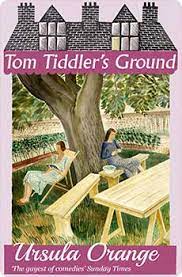
It tells the story of Constance Smith and her childhood friend Caroline Cameron, who find themselves living together again in the early days of World War II. Caroline is urbane and worldly, leaving behind her life in London with her husband John. She is entirely self-focussed and amoral, but also quite caring regarding people. Despite her shortcomings, I really liked her.
Constance could not be more different. We are introduced to her early on through the thoughts of the billeting officer who is trying to persuade people in the quiet village of Chesterford to take evacuees:
“Mrs Latchford grimaced and lit a cigarette. A thoroughly unenviable job altogether, and she felt she deserved a few minutes respite with nice, schoolgirlish, foolish Constance Smith. Foolish? Well, of course, it always looked a little foolish to see a woman of over thirty behaving like an enthusiastic bride, even after two years of marriage. But apart from that and her volubility and her poppings out and her nippings in and all her silly mannerisms, was Constance at all foolish? Certainly she handled the relations-in-law-in-the-village situation well, or rather did not handle it at all, but accepted it so naturally and pleasantly that she might really be said to be on the best of terms with her sister-in-law, Mary Hodges, the local greengrocer’s wife.”
Her husband Alfred is an utterly self-centred snob, intent on social climbing and ashamed of his sister. He married well-to-do Constance for social advancement and he doesn’t love her. Caroline sees this clearly on arrival in the village with her daughter Margeurite.
The other evacuee is Mrs Gossage, who seems entirely disinterested in everyone, including her baby son Norman.
We follow this unlikely group of housemates as they adjust to their much-changed living arrangements. The story moves between the characters but is told primarily from Caroline’s point of view, which I thought worked well. She has good insights into other people and is entirely clear-sighted about herself too:
“There was a certain note in her voice that led Caroline to suspect that Lavinia belonged to that large class of people who find children sweet, but rather prefer they should go and be sweet upstairs in the nursery. It was an attitude she entirely sympathised with and absolutely hated people for.”
Constance as narrator would be far too guileless to carry the reader along. And of course, Caroline’s arrival in the village offers an outsider’s view on the characters and various intrigues. But what is lovely too, is Caroline’s changing attitude towards the village. Initially she is greatly amused by everyone, but as time moves on she starts to see them as real people, her “strange lapses into sincerity” possibly becoming longer lasting. This isn’t a trite city-girl-learns-the-true-value-of-Things-when-forced-into-small-town-life tale however. Orange is not at all sentimental about people:
“Caroline, looking at the expression on Mary’s face, marvelled at the extraordinary cruelty of the thoroughly respectable woman.”
“There was no doubt Constance, in her misery, was very pathetic. There was no doubt she was also rather irritating.”
But there’s not a bitter tone either. I found the characters recognisable and portrayed with human understanding. Caroline would be rather a controversial figure for the time, but Orange doesn’t judge her.
“It’s my red finger-nails that put the idea of asking me into her head, I’m sure.”
I liked the fact that Caroline didn’t overly judge herself, which would seem somehow hypocritical, but she does recognise that her actions hurt people, which she regrets.
There are serious concerns in Tom Tiddler’s Ground; adultery, bigamy, child neglect and lack of choices for women. Somehow Orange balances that with a knowing humour without belittling the issues at all.
My favourite character was George, Constance’s gentle, drifting brother:
“What could you do with a man who loved women, who loved domestic life, but who (according to Constance) had never seemed to want to marry anyone in particular? A man who obviously adored other people’s children, but who had none of his own? A man who had plenty of personality and probably (under all that indolence) considerable abilities, but who had never settled any profession or career? The only answer was – nothing, you could do nothing with him. And […] that was, of course, what George preferred. Caroline liked him enormously.”
We learn more about George’s background, who to my twenty-first century eyes had PTSD from World War I. Orange builds to a satisfying denouement, tying up many characters pasts with the present in a way that promises a better future, despite the war.
I really loved Tom Tiddler’s Ground, and got very excited about the thought of exploring Ursula Orange further, thinking the humour and characterisation made her another Margery Sharp. However, Stacy Marking’s excellent introduction to this edition explains the publishers took exception to Caroline as a character, and so she adjusted her style for later books, which also contained more snobbery (somewhat in evidence here but not overly stressed – Mrs Gossage is definitely treated with condescension, but also compassion). If anyone has read any other novels by Ursula Orange I’d love to know how you found them, especially as DSP publish some other titles.
“‘I suppose we ought to be thinking about Christmas,’ said Constance, a few days later. Everybody became conscious of a very strong disinclination to think about anything of the sort.”
To end, it’s a time of year when Nat King Cole is on heavy rotation, and quite right too. Here he is singing about orange (sort of 😉 )


 madame bibi lophile recommends