Journey into the Past – Stefan Zweig (1976 German publication; trans. Anthea Bell, 2009) 84 pages
Although I’ve since read and blogged about The Post Office Girl, this was the first Stefan Zweig I’d read and at first I wondered why everyone rated him so highly as a writer. Then I realised what he was doing in Journey into the Past was immensely clever.
It tells the story of a love affair between a student, Ludwig, and the wife of his employer, who is not named. The story begins with them on a train in the 1920s, and with Ludwig’s thoughts travelling back into the past to remember how they first met before the First World War separated them.
At first, I thought the description of the affair overblown and naïve.
“From that first meeting he had loved this woman, but passionately as his feeling surged over him, following him even into his dreams, the crucial factor that would shake him to the core was still lacking – his conscious realisation that what, denying his true feelings, he still called admiration,respect and devotion was in fact love – a burning, unbounded, absolute and passionate love.”
At this point I was thinking Zweig perhaps wasn’t for me 😉
But as the story developed – they admit their love but it remains unconsummated, he goes abroad and then war breaks out, separating them for longer than they ever anticipated – it dawned on me that this style choice was entirely deliberate and conscious. What Zweig shows us is a world before modern technological warfare, a world that was brutally torn apart. These naïve young lovers are part of a society, a life, that was utterly destroyed.
So although we know they are reunited, it is not with the same youthful self-obsession or indulgent love that they had previously.
“‘Everything is just as it used to be, don’t you think?’ she began, determined to say something innocent and casual, although her voice was husky and shook a little. However he did not echo her friendly, conversational tone, but gritted his teeth.
‘Oh yes, everything.’ Sudden inner rage forced the words abruptly and bitterly out of his mouth. ‘Everything is as it used to be except for us, except for us!’”
Journey into the Past is not a depressing book despite portraying losses that are glimpsed and barely articulated. It is about the impact of international conflict on the lives of individuals in the smallest, most profound ways. Zweig questions whether those loses can be overcome, and I still don’t know what I think.
I feel foolish for my initial impression of this novella: I hadn’t realised I was in the hands of a master.
Today is Monica Dickens Day in Jane at Beyond Eden Rock’s Birthday Book of Underappreciated Lady Authors. I’d planned for May to be only novellas over here, but I couldn’t resist the chance to dig out 2 Persephone editions from the TBR and join in with Jane’s celebration. I’m glad I did, because I really enjoyed my first encounter with Monica Dickens.
Firstly Mariana (1940) which is part of the Persephone Classics range. On the Persephone website they say:
“We chose this book because we wanted to publish a novel like Dusty Answer, I Capture the Castle or The Pursuit of Love, about a girl encountering life and love, which is also funny, readable and perceptive; it is a ‘hot-water bottle’ novel, one to curl up with on the sofa on a wet Sunday afternoon. But it is more than this.”
That just about sums it up. On the one hand Mariana is a very simple novel, about a young girl called Mary growing up and reaching adulthood just as World War II breaks out. She has various infatuations and gets her heart bruised, if not quite broken, before she meets the love of her life. What raises it above this very ordinary premise is the fond characterisation and Dickens’ wit.
Mary herself is a determinedly independent soul:
“People were kind and friendly and amusing, but they thought that companionship and conversation were synonymous and some of them had voices that jarred in your head. There was a lot to be said for dogs.”
She has been this way her whole life, as her school report testifies:
“Mary is a dear little girl…but we find a tendency in her to resent authority to the point of resistance. Although she is popular with her fellow pupils, I am afraid she is a bad mixer, being at the same time intolerant and unconfident of others and disinclined to enter into the heart of the community.”
She lives with her mother who works in a dress shop, as her father died in the previous war. There is also her reprehensible, indulgent Uncle Geoffrey who leaves her aged 8 to catch the Tube home by herself. He subsequently goes off to Hollywood to make his name in the movies. What stops this being entirely whimsical is the first chapter: we know the adult Mary is waiting for news of her husband whose ship has been sunk in the conflict. So alongside the fun characters and the wit is the background of potential tragedy; things do not seem to bode well for Mary, given the titular reference to Tennyson’s poem.
But in the meantime there is gentle fun to be poked at the trials and tribulations of young love:
“She told herself that she had been through a searing experience which had left her as a woman set apart from love – a tragic figure. This sustaining vision had tided her over the misery of the end of last summer, until the excitement and newness of Dramatic College had given her something else to think about.”
Dickens is a wise writer though, and so while she presents her characters with a slightly askance view, she shows how their feelings make them who they are, and who they will be:
“She had thought that [he]was the answer to everything, and when she had found out that he wasn’t she had been left alone with no one on whom to pin her burden of romantic devotion.”
I really enjoyed Mariana, which I wouldn’t have assumed would be the case given the subject matter. Dickens is very readable and I whizzed through the novel. I enjoyed spending time with all the characters (apart from an awful arrogant Bullingdon club type who seemed to have future-Prime-Minister written all over him) and I enjoyed Dickens unpretentious, thoughtful style.
“A corner of the jigsaw of Mary’s life had been made into the right pattern, by unknown means. It seemed that one had little control over one’s own destiny. All one could do was to get on with the one job nobody else could do, the job of being oneself.”
Secondly, The Winds of Heaven (1955), which had far fewer likeable characters and was almost bleak at times, but just saved from being so by the gentle endurance of the main character, Louise, who is widowed and destitute.
“She reached for the ashtray, for she wanted to tap off the ash frequently, as she had seen highly-strung, busy people do. Louise was neither highly-strung, nor busy, but when she was in London, among people who all seemed to be doing something important in a hurry, she liked to try and keep pace.”
The reason Louise is destitute is because her husband, Dudley, who seems to have had absolutely no redeeming qualities, died and left her with all his worldly debts.
“Everyone said Louise was ‘wonderful’ about Dudley’s death, but she could not be anything else, because, shocking though it was to her, she hardly cared.”
“there was nothing for it but that Louise should stay with her daughters in turn to pass the summer months. It was all arranged at an embarrassing family conclave, where no-one could say what they were thinking, and each tried to outdo the other in unselfishness.”
And so The Winds of Heaven follows Louise as she moves from one daughter to another. Miriam lives in a suburb in the Home Counties and is an absolute snob; Anne is the laziest person on earth who has somehow managed to marry a lovely man who runs a smallholding and genuinely cares for Louise; Eva is an actor in London and having an affair with a married man. They clearly all take after their father as they are selfish and self-absorbed. They are also, in different ways, all quite unhappy, and Louise has no idea how to help.
“she had wanted the futile thing she had made of her marriage with Dudley to be justified at least by the emergence of three happy lives.”
The novel is episodic in nature and through it we learn about Louise and her daughters. It’s a very mid-20th century English family, full of unspoken truths, supressed conflicts, and love. The somewhat depressing state of Louise’s familial relations is lightened by two beacons of light in her life: a friend, and her granddaughter. Gordon Disher is a bed salesman and pulp-fiction author who becomes: “The oddest, but most comforting friend she had ever made”. Ellen is Miriam’s daughter who like Louise, is a misfit in the family (a good thing, seeing as how appalling they all are) and who provides genuine kinship.
“how delightful to be a grandmother with a responsive grandchild, who opened her heart to you without embarrassment, because she had no-one to talk to at home”
The Winds of Heaven captures a particular moment in time, where women had only just begun to stop being exclusively homemakers and enter the workplace. Louise feels she can’t support herself, because she doesn’t believe she has any skills. This leaves her in genteel middle-class poverty, dependent on her daughters. She is part of a vanished world, and is not treated kindly by those who are finding their way in a new one. Dickens handles this social commentary with an incredibly light touch though, and so The Winds of Heaven often reads more like a series of acerbic character studies than a commentary on mid-twentieth century gender roles. It’s always highly readable, quietly building to a dramatic, tragic denouement, where hope survives.
To end, Monica had a rather famous great-grandfather. To tell you all about him, here are the incomparable Horrible Histories, channelling The Smiths:
Grief is the Thing with Feathers – Max Porter (2015, 114 pages)
Max Porter’s first novel Grief is the Thing with Feathers was published to much fanfare in 2015,which is encouraging in today’s increasingly conservative publishing industry, as this novella is a true original. In fact, it’s difficult to call it a novella, as its more like a patchwork of prose, poetry, monologue, fantasy and the commonplace.
A woman has died suddenly, leaving behind a husband and two young boys, reeling with grief. Into their shattered lives comes Crow:
“I find humans dull except in grief. There are very few in health, disaster, famine, atrocity. Splendour or normality that interest me (interest ME!) but the motherless children do. Motherless children are pure crow. For a sentimental bird it is ripe, rich and delicious to raid such a nest.”
Crow is far from sentimental: he is foul-mouthed, aggressive and terrifying. He is also exactly what the family need; particularly a family headed by a Ted Hughes scholar.
“In the middle, yours truly. A smack of black plumage and a stench of death. Ta-daa!”
The voices alternate between Crow, Dad and Boys. The mixed narrative, compiled of short passages and lots of white space on the page effectively captures the disorientation and incoherence of grief. We never know exactly what Crow is: metaphor, collective fantasy, actual manifestation. The oversized bird, the madness and uncontrollable force of grief, exists alongside Dad trying to keep a hold on the everyday concerns of raising two boys:
“There was very little division between their imaginary and real worlds, and people talked of coping mechanisms and childhood and time. Many people said ‘You need time’, when what we needed was washing powder, nit shampoo, football stickers, batteries, bows, arrows, bows, arrows.”
The Boys are not distinguished from each other. They play and pretend, they are violent and angry and thoughtful and decent. Their passages are the most poem-like:
“Dad has gone. Crow is in the bathroom
where he often is because he likes the
acoustics. We are crowded by the closed
door listening. He is speaking very slowly,
very clearly. He sounds old-fashioned, like
Dad’s vinyl recording of Dylan Thomas.”
Grief is the Thing with Feathers deserves all its plaudits and then some. It is a taut, beautifully written, experimental exploration of grief which effectively captures the fallout of a death on a family. It is brave, tender, unsentimental and deeply moving. Cathy over at 746 Books wrote recently of the theatrical adaptation which looks amazing. I’m sure this tale will transfer powerfully to stage.
“They offer me a space on the sofa next to them and the pain of them being so naturally kind is like appendicitis. I need to double over and hold myself because they are so kind and keep regenerating and recharging their kindness without any input from me.”
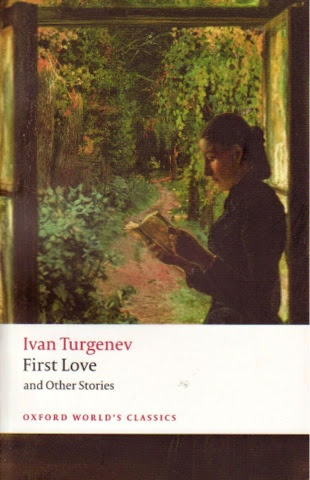
First Love – Ivan Turgenev (1860, trans. Isiah Berlin, 1950) 106 pages
This short tale of thwarted first love, told by a man, Vladimir Petrovich, looking back on the summer of 1833 when he was 16, manages to be both moving and funny. I felt for the pain of the young boy, whilst simultaneously rolling my eyes at the self-importance of teenagers (a bit how I feel watching Romeo and Juliet these days – kids!)
A young man is on the brink of adulthood, having just said goodbye to is tutor, when Princess Zasyekin moves in next door. The princess is uncouth and her house shabby:
“She took snuff as noisily as ever, and fidgeted and turned about on her chair as much as before. It never seemed to have entered her head that she was a princess.”
However, her daughter Zinaida is beautiful and poised, and has suitors in abundance. She teases them all, keeping them in a state of anticipation whilst remaining just out of reach. The young Petrovich is no different:
“But through the tears and the melancholy, inspired by the music of the verse or the beauty of the evening, there always rose upwards, like the grasses of early spring, shoots of happy feeling, of young and surging life.”
Yet there is always the sense that things are happening with Zinaida that our protagonist is too green to recognise. She seems genuinely fond of him and at one point even tells him so after he nearly breaks his neck jumping from a high wall (told you – kids!) yet there is something worldly and slightly damaged about her which Petrovich cannot begin to understand.
“My arms were smarting from the nettles, my back ached, my head swam, but at that moment I experienced a sense of bliss such as I never again felt in the whole of my life. It flowed like a delicious pain through all my limbs and finally resolved itself in rapturous leaps and cries. Yes, indeed, I was still a child.”
First Love reminded me of The Go-Between and Great Expectations whilst being resolutely its own tale. In a short space it conveys a detailed, effective portrait of the awakening of a young person to both the love and corruption that the adult world has to offer.
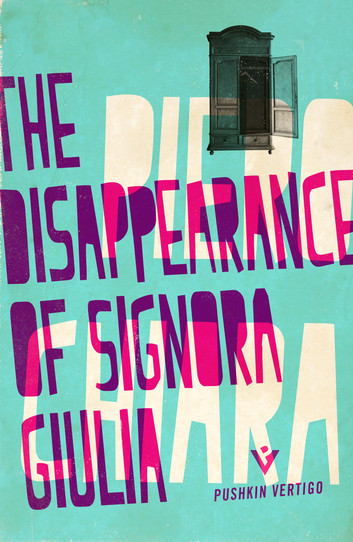
The Disappearance of Signora Giulia – Piero Chiara (1970, trans. Jill Foulston 2015) 122 pages
The Disappearance of Signora Giulia was initially published in an Italian newspaper as a serial and is now available in English translation thanks to Pushkin, as part of their Vertigo imprint. It is a quick, snappy crime thriller that does not aim for trite resolution but rather an exploration beneath the surface of a life to the murky depths.
Corrado Sciancalelpre is “blessed with a special form of intuition, that peculiar mental agility that enables great policemen to delve into the minds of criminals.”
Thankfully, he is also happy married and liked in the town in northern Lombardy where he works – no tortured alcoholic with a secret past here.
A powerful lawyer, Esengrini, asks Sciancalelpre to investigate the titular vanishing of his wife. Every Thursday, Guilia has been going to Milan to visit their daughter at boarding school, but now she has failed to return and two bags of her things are missing too. Sciancalelpre agrees and what follows is essentially a police procedural, but the short length of the story ensures the pacing remains tight.
Sciancalelpre is resolutely unsentimental but not without sympathy. The more he investigates, the more he feels for the missing woman:
“He didn’t say ‘Poor Signora Giulia to Esengrini when he visited him in his office every few days towards evening. With Esengrini, he spoke only of the undeniably disappointing results of a search conducted throughout the whole of Italy with Signora Giulia’s photo.”
It’s impossible to say much more about a crime novella without including spoilers. Suffice to say there are plenty of red herrings, people and relationships who are not what they seem. The Disappearance of Signora Giulia is a diverting read, when you’re in the mood for a crime novel you’ll finish quickly. It is not a simple tale though, and the resolution is a complex one that leaves questions unanswered. This wasn’t a source of frustration but rather felt realistic.
I really enjoyed this, Chiara’s first novel to be translated into English despite his huge popularity in Italy, and I hope there will be many more translations to follow.
After Claude – Iris Owens (1973) 206 pages (cheating my own criteria by 6 pages)
Trigger warning: mentions rape
I bought this one day when I finished the book I was reading more quickly than expected and I was waiting for a friend, who was late. I don’t like being without a book to read on my person and I found a late-opening charity shop. Amongst the Da Vinci Codes and James Patterson’s entire back catalogue I was thankful to spy a New York Review of Books logo. They’re a reliable, interesting publisher and so I found myself launched into the acerbic wit of Iris Owens, totally unprepared.
After Claude is funny, but it also features a despicable heroine. Kudos to Owens for not feeling it is necessary to write an attractive, likeable female for her lead, but really, Harriet Daimler is one of the most infuriating, obnoxious and unpleasant people ever committed to paper. She moves from friend to friend, sponging off them until her unrelenting selfishness alienates them and they chuck her out. She may be depressed: she sleeps all day, watches trashy quiz shows and eats, that’s it. But any sympathy the reader may feel is limited by her rudeness, prejudice and manipulations towards all who cross her path. She frequently uses homophobic language; she is racist; she denies her own Jewishness without realising that her denials illuminate that which she is trying to hide:
“ ‘Mazeltov,’ he congratulated me in an unfamiliar tongue.”
Who doesn’t know what Mazeltov means? Harriet is also completely delusional. The story begins “I left Claude, the French rat.” What quickly emerges is that Claude has thrown her out, sick of her utter selfishness and bitterness.
“Claude, who had learned his English in England, spoke with one of those snotty, superior accents, stuffed into a slimy French accent, the whole mess flavoured with an occasional American hipsterism, making him sound like an extremely rich, self-employed spy.”
What Claude quickly learns is that trying to throw someone out who won’t listen and is totally self-interested, is no mean feat.
“ ‘Me a bore?’ I laughed, amazed that the rat would resort to such a bizarre accusation. I have since learned never to be amazed at what men will resort to when cornered by a woman’s intelligence.”
Over the course of the story we learn how Harriet and Claude met, when she was thrown out of her friend Rhoda’s house, for something horrific which I won’t include for fear of spoilers, but would you live with someone who treated you thus?
“Had I been insensitive when I told her ‘Rhoda, I have nothing per se against your karate classes but rather than pin all your hopes on a rapist, wouldn’t a cruise make more sense?’”
What kept me reading was partly wanting to see what would happen to someone so extremely selfish and self-serving that normal rules don’t apply: Harriet could do anything. Also, amongst the rancour are some bitingly funny observations, such as this regarding a friend’s marriage:
“It goes without saying that though ideally suited and ecstatically happy, Jerry and Maxine had flown directly from their wedding ceremony to group therapy, paying top prices for the privilege of insulting each other in front of an audience.”
What happens to Harriet after Claude is bizarre. She meets a guru-type and ends up begging to be allowed to join their cult, even after suffering sexual humiliation at their hands. Ultimately then, Harriet is both horrible and pitiful, extremely vulnerable but bent on destroying anyone who might want to help.
Like a pratfall in which someone ends up genuinely hurt, After Claude is funny but you feel you shouldn’t laugh; it’s painful and you want to tear your eyes away. Owens is an accomplished writer but I’m not sure I could have stood a much longer novel.
We Have Always Lived in the Castle – Shirley Jackson (1962, 146 pages)
Well, this was a deeply creepy read. Shirley Jackson’s final novel tells the story of eighteen year-old Merricat, living with her older sister Constance and Uncle Julian in self-imposed isolation, ever since Constance was found not guilty of murdering the rest of the family with arsenic. The townspeople don’t trust the verdict, and the family are shunned. Merricat’s days are filled with ritual, both domestic and talismanic of her own devising, with a threat of violence never far away [skip the first sentence if cruelty to animals is a trigger]:
“I found a nest of baby snakes near the creek and killed them all; I dislike snakes and Constance had never asked me not to. I was on the way back to the house when I found a very bad omen, one of the worst. My book nailed to a tree in the pine woods had fallen down. I decided that the nail had rusted away and the book – it was a little notebook of our father’s, where he used to record the names of people who owed him money, and people who ought, he thought, to do favours for him – was useless now as protection. I had wrapped it very thoroughly in heavy brown paper before nailing it to the tree, but the nail had rusted and it had fallen, I thought I had better destroy it, in case it was now actively bad, and bring something else out to the tree, perhaps a scarf of our mothers, or a glove. It was really too late, although I did not know it then; he was already on his way to the house.”
‘He’ is Cousin Charles, whose arrival disturbs the fragile balance within the house. Constance and Merricat have a close relationship, but not a healthy one. They are both somewhat infantilised, and are co-dependent in complex ways. Charles is interested in getting Constance out and about, and his hands on the family money. Jackson superbly racks up the tension without ever resorting to clichés. There are also moments of levity, mainly around Uncle Julian’s eccentricities and non-sequiturs.
“ ‘Jonas is asleep in the lettuce,’ I said.
‘There is nothing I like more than cat fur in my salad,’ Constance said amiably.
‘It is time I had a box,’ Uncle Julian announced. He sat back and looked angrily at his papers. ‘They must all be put in a box this very minute. Constance?’
…
‘He is dishonest. His father was dishonest. Both my brothers were dishonest. If he tries to take my papers you must stop him; I cannot permit tampering with my papers and I will not tolerate intrusion. You must tell him this Constance. He is a bastard.’
‘Uncle Julian –‘
‘In a purely metaphorical sense, I assure you. Both my brothers married women of very strong will. That is merely a word used – among men my dear; I apologize for submitting you to such a word – to categorise an undesirable fellow.”
We Have Always Lived in the Castle is a powerful read and an astonishing one. With its atmosphere of unspoken threat and insidious menace, all set within a ritualised domesticity, it is deeply disturbing. Undoubtedly a gothic masterpiece.
Cliffs – Olivier Adam (2005, trans. Sue Rose, 2009) 147 pages
Set over the course of a single night, Cliffs shows the enduring damage caused to the child – now a grown man – of a parent who dies by suicide.
The narrator is sitting on a balcony on the Normandy coast in the middle of the night, gazing at the cliffs where his mother died, while his partner and child lie sleeping in the room behind him. As he sits and smokes, he reflects on his life with his abusive father and his traumatised brother:
“We weren’t supposed to breathe move speak feel. We weren’t supposed to need anything, pocket money or comfort or affection or smiles or advice, we weren’t supposed to expect anything except the slaps, smacks or wallops he dealt out”
Later he meets other damaged souls, drawn together by a mutual recognition:
“We’ve grown up in fear of our fathers, the troubled silence of our mothers, the empty space formed by abstract, imaginary places, without edge or centre.”
Cliffs isn’t a depressing book; it is a story of survival, of endurance even when we are irrevocably damaged by experience.
“This way of life didn’t cure me of anything, it was merely possible when I couldn’t cope with any other kind of life, particularly the one I’d just left behind. It was a life of silence, space and absence, of maintaining an acute presence within objects, the shifting play of light, the still motion of water, the perfumes, the texture of the air. It was a life in which I finally found a niche, quiet but peaceful, a body filled with air and fog, a mind completely given over to the noise of the sea and the wind, the company of birds.”
Cliffs is beautifully written, but the beauty in no way detracts from the raw hurt experienced by narrator. It is an intense read, haunting and memorable.
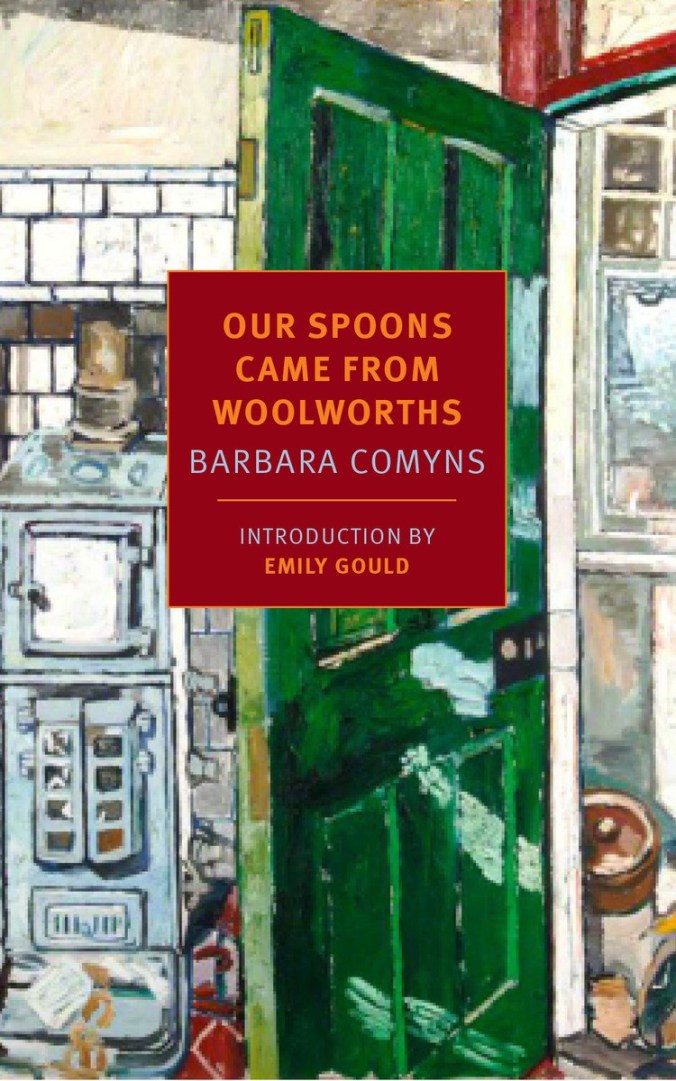
Our Spoons Came From Woolworths – Barbara Comyns (1950, 195 pages)
Our Spoons Came From Woolworths is the first Barbara Comyns I’ve read, attracted by the whimsical title and it being a Virago. I’m so glad I picked this up. Our Spoons Came From Woolworths was a compelling read, and not nearly as whimsical as I had assumed.
The NYRB edition
It tells the story of Sophia’s marriage at a young age to Charles, an artist, in the 1930s. They are painfully naïve, and Charles especially has no idea about money:
“He said Eva had told all her relations about the coming baby, and they had asked him masses of questions about how he was going to support a wife and family. They had given him some money, though, four pounds in all. I was glad to hear this as we only had one golden guinea left in the dresser drawer, but my gladness did not last long, because it turned out he had already spent the money on some paints, brushes, books and an enormous walnut cake from Fullers.”
With the arrival of the baby, the poverty becomes even more pressing. Charles is monumentally selfish and self-absorbed, but not quite despicable. He’s just clueless and self-centred, and this means his actions are inadvertently cruel. Although the situation is quite desperate, Comyns’ voice is matter-of-fact and never asks for sympathy. There is a light, almost surreal humour present:
“Charles said he had borrowed some money to send telegrams to his relations saying we had a boy of six ounces. I told him it was six pounds not ounces, but he said a few pounds either way wouldn’t make any difference. But Charles’ telegrams caused a huge sensation, and his family was most disappointed when in due course they discovered we had quite a normal baby.”
But the humour always highlights the bigger picture, such as Charles’ disregard and disinterest in his children. While Comyns is unsentimental, this does not mean she is unaware of the power of her story. She has plenty to say about the role of women in interwar Britain and the hypocrisies that meant they were expected to marry and then make the best of it, with little means of support beyond their husbands. She also shows how this is bound up in sexual politics, with male infidelity so much more accepted than female, yet women deserving an equal right to happiness:
“Some time later, when I realised I had been unfaithful, I didn’t feel guilty or sad, I just felt awfully happy I had had this experience, which if I had remained ‘a good wife’ I would have missed, although, of course, I wouldn’t have known what I was missing. I felt quite bewildered. I had …been a kind of virgin all the time. I wondered if there were other women like this, but I knew so few women intimately it was difficult to tell.”
The story is also an indirect plea for a welfare state. What Sophia and her children endure would not be life-threatening after the end of the Second World War, with a social safety net established to protect them from absolute destitution and starvation.
But I worry now I’ve made Our Spoons Came From Woolworths sound very heavy, which it isn’t. Comyns knows how to say serious things with a lightness of touch that is quite remarkable. You’re not left in any doubt as to Sophia’s desperation, but it remains a hopeful novel about human resilience. It’s generally thought to be thinly-disguised biography (Comyns was married to the painter John Pemberton between 1931-5 and had two children with him) and Comyns makes her point about these types of stories – concerning women and poverty – desperately needing to be heard at a time when no-one really wanted to listen, in deadpan comic style:
“This book does not seem to be growing very large although I have got to Chapter Nine. I think this is partly because there isn’t any conversation. I could just fill pages like this:
‘I am sure it is true,’ said Phyllida.
‘I cannot agree with you,’ answered Norman.
‘Oh, but I know I am right,’ she replied.
‘I beg to differ,’ said Norman sternly. That is the kind of stuff that appears in real people’s books. I know this will never be a real book that business men in trains will read, the kind of business men that wear stiff hats with curly brims and little breathing holes in the side. I wish I knew more about words.”
Although I understand from other bloggers that Comyns’ other novels are very different, I am now officially an ardent fan.
Jamilia – Chingiz Aitmatov 96 pages (1957, tr. 2007 James Riordan although the publishers don’t say if this was from Kyrgyz or Russian – Aitmatov wrote in both)
Narrated by Seit, the brother-in-law of the beautiful titular protagonist, Jamilia is reminiscent of The Go-Between, in that it is told from the point of view of the young observer of an older person’s love affair, from a time in his life when he is looking back on his past.
Set during the war, Jamilia’s husband is away fighting. An injured soldier, Daniyar, returns to the village where he was born:
“ ‘We are content and so are the spirits of our ancestors. And now, God willing, we’ll finish off the Germans and live in peace and Daniyar will raise a family like the rest of us, his own smoke will rise from the hearth.’
By invoking Daniyar’s ancestors they were saying he was one of us. And that is how a new kinsman appeared in our village.”
Daniyar, Seit and Jamilia travel regularly by cart to take the grain from the harvest to the train station. Aitmatov writes with economy yet is able to evoke a vivid scene with few words. He captures the land of Kyrgyzstan with true sensitivity and the land is an integral part of the story:
“Eager to reach home, the horses trotted briskly, the stones scraping beneath their feet. The cool wind brought with it the bitter pollen of flowering wormwood, and the faint aroma of ripening wheat. Mingling with the smell of tar and horse sweat, it all made us faintly dizzy.”
During the journeys back and forth, the quiet, unassuming Daniyar is teased by the vivacious Jamilia and Seit. Then Daniyar starts to sing, and everything changes:
“If only I could recreate his song. It contained few words, yet even without words it revealed a great human soul. I have never heard such singing before or since. The tune was like Kirgiz or Kazakh, yet in it was something of both. His music combined the very best melodies of the two related peoples and had woven them into a single, unrepeatable song. It was a song of the mountains and the steppe, first soaring into the sky like the Kirgiz mountains, then rolling freely like the Kazakh steppe.”
What lifts this tale above the ordinary is Aitmatov’s beautiful writing, but also how the story expands a simple, almost fable-like, narrative into something broader. Jamilia is about romantic love, but told at a step removed by a man who grew up to become a painter; it also becomes about art, and the transcendental nature of love and art. Jamilia falls for Daniyar because of his voice. Seit becomes seized with a desire to create, and takes his first tentative steps towards his life’s vocation. Jamilia is about how love, in all its variety of forms and circumstance, unites us all:
“I felt it was not simply a love for another person, it was somehow an uncommon, expansive love for life and earth.”






 madame bibi lophile recommends