“You have to know a full story before you can get a feeling about a thing, and you can never judge anyone.” (Donal Ryan, Heart Be at Peace)

Donal Ryan is one of my favourite contemporary writers so I’m delighted to be squeezing this post in on the final day of Reading Ireland Month, hosted by Cathy at 746 Books.
It’s been seven years since I read his polyphonic debut, The Spinning Heart, so I came to the follow up, Heart, Be At Peace, with only a hazy recollection of the characters and plot. Like its predecessor, Heart, Be At Peace has twenty-one chapters, each narrated by a different inhabitant of a County Tipperary town.

While the first novel considered the fallout of the economic crash on a cross-section of the town, Heart, Be at Peace looks at how illegal drugs and associated money, violence and desperation impact so many.

Both books are centred on, and begin with, Bobby Mahon. He is struggling, and there is a sense of it only being a matter of time before he either explodes or implodes:

“There’s this thing that happens me now nearly every day. It feels like a stab of something in my middle, not pain exactly, just a kind of force that takes the air out of me so that I have to stop what I’m doing for a few seconds until it passes. It only comes on me when I let my thoughts drift.”

This is the uniting thread that pulls the various narratives together. Gradually a picture builds of Bobby becoming more and more enraged at the audacity shown by the shameless drug dealers. Despite the different narrators and their varying concerns, bubbling in the background is Bobby and his Achilles’ heel, observed by older man Jim:

“Bobby Mahon Is one of these rare men who measures himself against the well-being of the people around him.”

I was glad to see Lily the witch/sex worker return, this time worrying about her granddaughter Millicent who is caught up with abusive dealer Augie Penrose. It’s not just Lily who has a sixth sense though – I thought this had more supernatural beliefs and encounters than its predecessor, but maybe my memory is failing!

Although this novel included one chapter narrated by a ghost, if you’re not keen on the supernatural in books, rest assured there are many grounding elements. Lily herself observes “belief itself is a kind of magic.”

While later in the novel Brian realises: “I always work off impressions, and my impressions, it turns out, are mostly shite.”

There’s a lot of sadness in Heart, Be at Peace as is to be expected given the themes, but Ryan leaves it to the reader to piece some events together and draw their own conclusions, which stops it being sanctimonious or sentimental. A reported death is truly sad, and to the reader seems suspicious, but is accepted as a heart attack by the characters.

There’s also the endurance of Pokey Burke, instrumental in the in local desolation caused by the building crash and now finding ways to make money off the poorest people again. His is a cynical presence but an entirely believable one.

There is resilience too. Rory, one of Bobby’s young workers, is madly in love and expecting his first child:

“all things tend towards chaos. I close my eyes against the mad torrent of panic. This is okay, I think. This is life, this is life, this is how it’s meant to be.”

And also humour. A standout voice for me was Trevor, self-aggrandizing and clinically delusional but with an interesting turn of phrase:

“the bus stopped and he was gone, and I was left to writhe beneath the gaze of some kind of a working-class Medusa.”

And there is kindness, experienced by Vasya, an immigrant camping on land at the edge of town. His observation suggests Bobby may not be wrong in seeing himself inextricably bound to his community:

“I was reminded of how small this world is, how closed-in this country is, like a bowl containing berries that you can pick up and swirl so that each berry touches another berry in the space of an instant.”

By the end I felt there was a possibility Ryan may revisit this town and the people again. I hope so.

“The first words of every story tasted fresh.” (Bernard MacLaverty, Midwinter Break)

I read Grace Notes by Bernard MacLaverty when it came out in 1997 – nearly 30 years ago! I really loved it and although generally with books I remember themes, atmosphere and how I felt reading it, I rarely remember specifics such as characters or plot. With Grace Notes I can still remember some of the exquisite sentences, so it is a mystery to me why I have only just returned to this writer. Thank goodness for Reading Ireland Month, hosted by Cathy at 746 Books giving me a push!

Midwinter Break (2017) follows Gerry and Stella, a long-term couple now in late middle-age, as they spend a short city break in Amsterdam. Without explicitly stating their situation, but rather presenting it for the reader to observe, MacLaverty conveys their shared history, love and sense of humour.

“I suppose we’re lucky to have each other to ignore.”

They are entirely used to each other’s presence as a constant, both used to considering the other as much from habit as from affection.

“He had to cross the main road rumbling with traffic and reached out to take Stella by the hand before realising she wasn’t with him.”

Yet over the space of the weekend, tensions from deep-rooted differences and past trauma will come to the fore. Stella is undergoing an existential crisis:

“There are important questions to be answered. How can we best live our lives? How can we live good lives?”

She is a lifelong Catholic, while Gerry is an atheist. There is a sense that this need not be an insurmountable difference, except Gerry is dismissive of her beliefs and his drinking is becoming problematic. He foolishly believes his various deceptions go unnoticed by his wife. She has given up trying to get him to understand what religion gives her:

“Prayer was summoned intensity, held there in the head and in the heart. Something good, something spiritual. Articulated, spoken inwardly, wished to the point of aching.”

As they visit tourist destinations such as the Rijksmuseum (where a long description of the old woman reading portraits sounded very much like my avatar picture!) they talk, bicker, laugh, eat, drink. It is a testament to MacLaverty’s excellent characterisation and subtle evocation of their relationship that these surface behaviours exist alongside deeper crises without lessening their seriousness.

He portrays this couple with such a light touch, so although the reader feels they have reached a point of no return in their marriage, where after this mini-break nothing will be the same, it never feels melodramatic.

Similarly, MacLaverty crafts passages of such precise beauty, yet Midwinter Break never feels overwritten.

“Gerry’s hands lay in his lap and his eye was drawn to the window. The end of the daylight striking the glass obliquely created a glittering, grisaille effect. Like ground glass, a layer of dust activated by almost horizontal light transformed the window into Waterford crystal. No expense spared for the Irish pubs of Amsterdam.”

I thought that was just stunning: perfectly evoking an everyday scene so clearly, so poetically, and then undermining it with the gentle comedy of the prosaic final line.

Another description I found so tenderly observant was Gerry meeting his son for the first time:

“You are mine and I will love you till the day I die. He kissed his fingertips and conveyed the kiss to the baby’s face slowly, as if it could be spilled on the way down.”

Midwinter Break is just shy of 250 pages yet it captures the big questions of life alongside finely observed evocations of the everyday. I thought it was entirely wonderful.

The adaptation of the novel is in cinemas now and I’m going to see it on Sunday. Given the two leads, I have high hopes…

Reading Ireland Month: Two novellas by Clare O’Dea

I’m late joining Reading Ireland Month, hosted by Cathy at 746 Books which is such a shame as I really enjoy this event every year. But I’m hoping to squeeze a few reads in before the end of the month and so far I’ve manged two novellas by a new-to-me author.

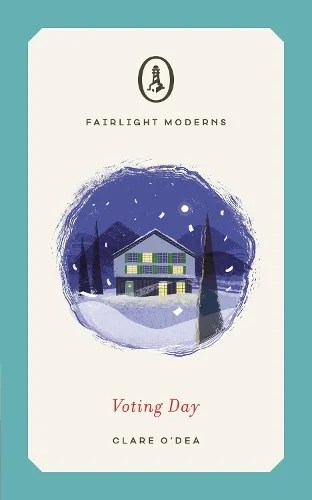
Voting Day by Clare O’Dea (2022), is published by indie Fairlight Books. The author is originally from Dublin but has been living in Switzerland for more than two decades. The novella explores the failure of women’s suffrage in the referendum of 1959; Swiss women didn’t get the vote until 1971.

We start the day of the referendum with Vreni, exhausted wife of a farmer, who believes:

“The system worked well and women didn’t know enough about politics.”

She is travelling to Bern, for surgery on her prolapsed womb. I really felt for her when she reflected:

“Rest was the word that jumped out at her when he explained the ins and outs. She was giddy about the prospect of rest. She would be looked after, two weeks in hospital and one week in the convalescent home.”

Meanwhile, her daughter Margrit is one of the first generation of young single women to work independently in the city, encountering misogynistic assumptions from male colleagues about what this means for her sexual availability:

“They did not profess their profound respect for you before beginning a campaign of casual touching that seemed to reflect special understanding between you […] nor were they handsome and cultured, these dangerous men. They hid their claws until it was too late.”

On her admission to hospital, Vreni catches the eye of the cleaner Esther, who is from the Yenish traveller community. She has suffered under the racist policies of social services:

“Somebody somewhere decided that our little home was too full and too free. They took three of us away and left the younger ones. They wanted to see children in straight lines with clean dresses and plaited hair.”

Esther subsequently struggled as a single mother:

“I had to solve my problem during Ruedi’s naps before the money ran out. When he fell asleep in my arms after a feed, I would gently place him in the playpen where he would be safe if he woke. And I would run, run from one end of the town to the other, looking for solutions.”

And we realise that Ruedi is Vreni’s foster child. The situation is so heart-rending, Vreni unintentionally exacerbating Esther and Ruedi’s pain. Pivotal is Beatrice, Esther’s boss and the only one of the four protagonists truly concerned with the referendum.

“She thought she had braced herself for this, but hope would always wriggle in, that treacherous friend.”

Voting Day effectively demonstrates the way women’s rights are circumscribed in society by both formal and informal systems of power. It does so without losing sight of its characters and conveys so much of their individual stories in an incredibly short space. I found it highly readable, whizzing through it to an end that was reassuring without being entirely unrealistic.

“Can you be content and heartbroken in the same bed on the same night? It seems you can.”

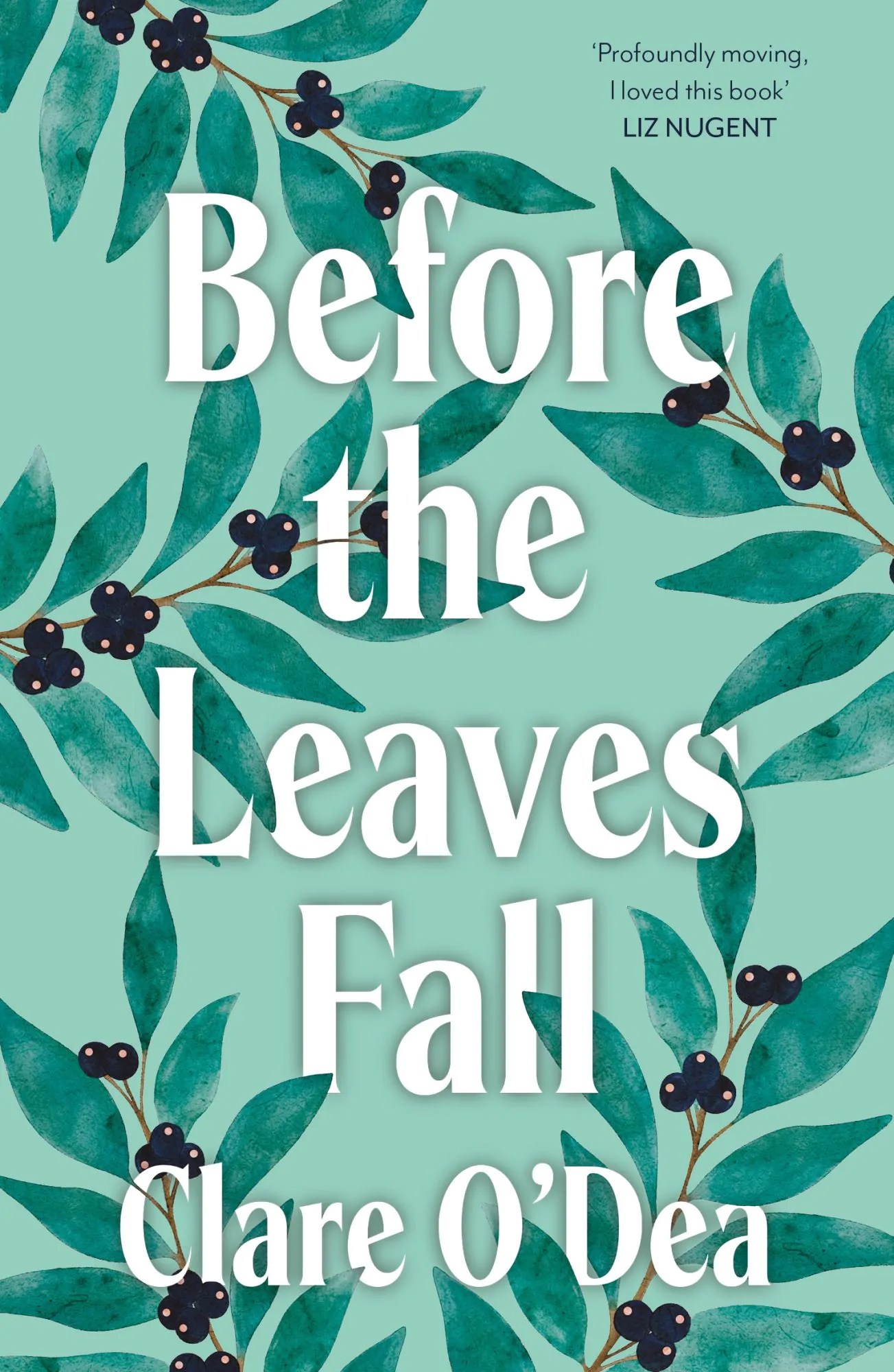
In Before the Leaves Fall (2025, also Fairlight Books) O’Dea revisits Ruedi and Margrit, now both in old age. There are some lovely echoes throughout, such as the opening scenes of rösti, Vreni’s homemade expertise contrasting with Ruedi’s ‘slimy’ shop-bought version.

Margrit is in a care home, spiky and determined to avoid the enforced social niceties at all costs:

“Better this than the nonsense Nadja was peddling, yoga and meditation. Margrit had been caught in a talk about mindfulness the other day because her legs were acting up, and she hadn’t been able to leave the dayroom quickly enough. You had to be vigilant in this place.”

Ruedi is retired, widowed and now working for Depart, an assisted dying organisation. This is the decision Margrit has taken, reluctant to live through another winter (hence the title) and struggling with her significantly reduced mobility and lack of independence. Ruedi is her assigned volunteer, to ensure she is comfortable with her decision. He mustn’t become emotionally involved.

“She was not only escaping. She was also reaching for something. Not freedom necessarily, not oblivion, but the feeling of putting herself first. She wanted to own herself once and for all, regardless of what the others – her husband, had children, the experts, even the people in this home – might think or want.”

But of course, once they realise who one another are, feelings are quick to grow. Margrit was a beacon of kindness and compassion in Ruedi’s difficult childhood.

“Margrit, a person who finally looked at him and saw something worth kindling. Margrit Sutter with the lovely wavy hair and smart clothes, the girl who smiled and played Ludo with him and told stories of Bern.”

He now becomes one of the few she allows beyond her tough carapace, as they remember the old days and learn who one another became. Both are disappointed in the relationships they have with their children and grandchildren. Both are grieving their spouses, particularly Ruedi who had a happy marriage.

“‘I grew old.’

‘It happens to the best of us.’ She smiled for the first time since he had met her.”

O’Dea is very good at writing children – sweet Ruedi in Voting Day and now his grandson Florian, perhaps less likeable but entirely believable.

Before the Leaves Fall follows the developing friendship between Margrit and Ruedi, as they both reflect on seemingly uneventful lives and how well these have been lived, as well as what living there is left to do. It’s deeply moving in its portrayal of how we hurt the ones we love and how insurmountable gaps in communication can seem.

As different relationships grow and develop through Before the Leaves Fall, they are evoked with compassion but without sentimentality.

Both novellas tackle Big Issues but without any didacticism. The interest is not in what should or shouldn’t be happening, but in what does happen and how this affects ordinary people.

“The bottle of grief was never empty. Always another sip to take, and another sip after that. You got used to the taste.”

To end, how I first learnt of women’s suffrage, dubbed into the language of the characters of these books:

The Murder Pool – Stella Blómkvist (transl. Quentin Bates) Blog Tour

TW: mentions sexual assault, paedophilia, violent crime

Today I’m taking part in a blog tour for Corylus Books, an indie publisher with a focus on translated crime fiction. The Murder Pool (2019, transl. Quentin Bates 2025) is the fourth Stella Blómkvist mystery I’ve read as part of Corylus’ blog tours and it’s my favourite so far.

Here is the summary from Corylus Books:

“Sometimes murder runs in the family. Or does it? When a well-known artist is found in Snorri’s Pool with an axe buried deep in his chest, Stella Blómkvist is immediately thrown in at the deep end, brought in to defend the apparently harmless young man the police have in their sights as the killer.

The man’s mother had spent time prison, convicted of the killing of a personal trainer, despite her protestations of innocence. Stella can’t help being drawn into both the cold case and this fresh murder, with a trail of guilt that stretches half-way around the world.

As if she doesn’t have enough to keep her busy, Stella’s pursuing a political high-flyer suspected of being a serial rapist, and defending a senior police officer on corruption charges that have all the  hallmarks of a vendetta.

But the toughest challenges Stella faces are among her own loved ones…”

The opening scene has Stella objectifying a client who approaches her with details of a sexual assault, and I found myself wondering if I’d reached the end of the road with this lawyer. But I’m glad I persevered because in fact this installment saw her at her most well-rounded; humanity to the fore as much as her tough doggedness in pursuing the truth for her clients.

The Murder Pool is pacy, nicely convoluted without being utterly confusing, and with plenty of commentary on Icelandic society which never felt heavy-handed. I thoroughly enjoyed it.

Stella’s long-term girlfriend Rannveig is working on a documentary about miscarriages of justice, and asks for her opinion on one woman in particular, Hjördís, who was accused of running her lover over in her car, causing life-changing injuries. Having served her time, Hjördís is protesting her innocence. Stella isn’t sure either way…

Later that night, to try and walk off insomnia, Stella wanders down to Snorri’s Pool which is where, as the blurb tells us, she discovers a famous artist “obviously stone dead. And not of his own volition.”  

It turns out the chief suspect is Hjördís’ son, and he’s adamant he didn’t do it. He becomes Stella’s client and her investigation leads her into the very murky waters of political and police corruption, drug smuggling, serial sexual assaults, and money laundering.

(I want to flag that the details of two rapes are given in the novel. It isn’t remotely gratuitous but could be very triggering for some readers.)

“That’s why they went so far as to arrest a high-ranking police officer, considering personal favours and loyalties have long been commonplace between top officials. Anything else would be madness.”

Characters from previous novels reappear (including my favourite, news blogger Máki), some of them much to Stella’s chagrin, which was fun:

“A cunning devil with a voice is smooth as silk and a polished manner, but with razor teeth.”

Also fun is Stella being employed by deputy police commissioner Vígbergur Antonsson, arrested on charges of corruption without knowing explicitly what he is accused of. Stella’s tussle within, due to her distrust of police, and without as she tears into the prosecution, was hugely entertaining.

Grounded as it is in modern institutions and with the financial collapse still looming large (Antonsson’s stores of cash are used to accuse him of bribes, but he points out he doesn’t trust the banks), it all felt very believable and of course, not unique to Iceland at all.

The Murder Pool whips along at great pace while still allowing for all the threads to be fully explored. It also manages to treat issues such a rape, paedophilia and sex tourism with the seriousness they deserve without losing sight of the demands of a thriller. The exposure of the corruption woven throughout society is effective and pointed.

I thought this was the most sophisticated of the Blómkvist novels so far, without compromising any of what makes this such a popular series. Stella goes from strength to strength!

“Bravery and cunning are a good mix, and a recipe for success.”

Here are the stops from the rest of the tour, so do check out how other bloggers got on with The Murder Pool:

“At seventy-one dawn still found her undaunted, if not always undamaged.” (Colette, My Mother’s House)

Although I mentioned in my previous post that I rarely write about memoir, here is another post on the same genre, as I thought it would be perfect for Mother’s Day (today in the UK). A short while ago I picked up a little hardback which had Colette’s meditations on her mother in one volume, My Mother’s House and Sido (1922/1929 transl. 1953 Una Vincenzo Troubridge and Enid MacLeod/Enid MacLeod).

Image from here

Colette clearly adores her mother and admits in the preface the limitation of what she is attempting in these volumes:

“I am not at all sure that I have put the finishing touches to these portraits of her; nor am I at all sure that I have discovered all that she has bequeathed to me. I have come late to this task. But where could I find a better one to form my last?”

My Mother’s House is a series of vignettes which have an energetic immediacy, while Sido perhaps has more of a sense of the older Colette looking back, split into Sido (her mother) The Captain (her father) and The Savages (her siblings).

Colette is the youngest child of her mother’s second marriage, born to parents who adore one another. My Mother’s House is formed through a series of brief chapters, intensely readable, as Colette evokes the late nineteenth-century Burgundy landscape of her childhood beautifully, with a love of the natural world she inherited from her mother Sido.

“I shall never be able to conjure up the splendour that adorns, in my memory, the ruddy festoons of an autumn vine borne down by its own weight and clinging despairingly to some branch of the fir-trees. And the massive lilacs, whose compact flowers — blue in the shade and purple in the sunshine — withered so soon, stifled by their own exuberance.”

Sido is shown as a woman intricately bound with her surroundings, tending her garden with love and knowledge.

“She was already out of sight, but her voice still reached us, a brisk, soprano voice full of inflections that trembled at the slightest emotion and proclaimed, to all and sundry, news of delicate plants, of graftings, of rain and blossomings, like the voice of a hidden bird that foretells the weather.”

She is also a hard worker, running her house and rearing her children.

“Why did no one ever model or paint or carve that hand of Sido’s, tanned and wrinkled early by household tasks, gardening, cold water and the sun, with its long, finely tapering fingers and its beautiful, convex, oval nails?”

There’s nothing saccharine in Colette’s fond reminiscences, and Sido emerges as a feisty, determined character. There’s a very funny chapter on her run in with the locate curé where it’s not totally clear who has emerged victorious (Sido is a non-believer) and I also enjoyed how she dealt with the upset which the precocious Colette experiences by reading beyond her years:

“There’s nothing so terrible as all that in the birth of a child, nothing terrible at all. It’s much more beautiful in real life. The suffering is so quickly forgotten, you’ll see! The proof that all women forget is that it is only men—and what business was it of Zola’s anyway?—who write stories about it.”

Colette’s father is also written about with love, particularly in The Captain section of Sido:

“And he would fasten on his chosen one that extraordinary, challenging, grey-blue gaze of his, which revealed his secrets to no one, though sometimes admitting that such secrets existed.”

These two volumes are just gorgeous: gentle, loving, funny, real. Colette’s parents are portrayed as strong individual characters, brought together by a deep and enduring love, raising a family in circumstances that are not always easy.

My favourite aspect of Colette’s writing is always her evocation of the natural world and there is so much to savour here. However, I’ll end with this mention of how Colette the writer started to emerge, under the sceptical eye of Sido:

“Beautiful books that I used to read, beautiful books that I left unread, warm covering of the walls of my home, variegated tapestry whose hidden design rejoiced my initiated eyes. It was from them I learned, long before the age for love, that love is complicated, tyrannical and even burdensome, since my mother grudged me the prominence they gave it.”

To end, a track from the CD I bought my mother for today (yes a CD, she is 82 and while she embraces much of modern technology streaming music would not go down well 😀 ):