“Happiness is a very fragile thing.” (Barbara Comyns)

It was JacquiWine’s review of The Juniper Tree by Barbara Comyns (1985) last month that encouraged me pick this from the TBR in time for Novellas in November, hosted by hosted by Cathy and Bookish Beck.
I really enjoy Comyns’ individual voice. She can give a sharp edge to stories presented seemingly without guile which works well within the premise here, taking as a starting point the Grimm Brothers fairytale of the same name:

My mother she killed me,
My father he ate me,
My sister, little Marlinchen,


Gathered together all my bones
Tied them in a silken handkerchief,


Laid them beneath the juniper-tree,
Kywitt, kywitt, what a beautiful bird I am.

Thankfully Comyns writes a less cannibalistic/abusive version but there are fairytale motifs from the story scattered throughout. This gives the novella a somewhat unreal, atemporal quality, although references are made to the 1980s.

The striking opening scene directly draws on the Grimm tale, as Bella Winter (physically similar to Snow White, although she feels highly self-conscious of a facial scar) travels to Richmond in search of a job:

“I noticed a beautiful fair woman standing in the courtyard outside her house like a statute, standing there so still. As I drew nearer I saw that her hands were moving. She was paring an apple out there in the snow and as I passed, looking at her out of the sides of my eyes, the knife slipped, and suddenly there was blood on the snow.”

The affluent woman is Gertrude, married to Bernard.  Bella ultimately gets a job over the river in Twickenham with Mary:

“Her teeth were small and pointed rather as an animal’s, indeed she resembled an animal with her delicate boned face with its merry expression, perhaps a squirrel.”

But this doesn’t prevent Bella becoming more and more entwined in Gertrude and Bernard’s life. It’s not surprising that she is in search of a family. Her mother is cold and judgemental:

“There was one shadow that I kept in the back of my mind as much as possible, and that was my mother. To me she was almost like a wicked fairy, poor woman.”

Bella also left behind a selfish lover Stephen, who was driving when the accident occurred which left her with the scar on her face, for which he blames her.

But Bella has a young daughter Marline, also known as Tommy, who she loves dearly. Tommy is biracial and both she and her mother face racism throughout. However, they build a happy life, living above Mary’s antique/junk shop and transforming a “gritty” back yard into a pretty walled garden.

They regularly cross the river to Gertrude and Bernard’s abundant, if carefully curated, home. Bella enjoys sitting with Gertrude under the titular tree, where territorial magpies build their nest and watch the comings and goings.

It’s hard to say more without venturing into spoilers, but if this is sounding a bit contrived and fey, there are enough prosaic details to ground the story, and humour too:

“I was glad to return to the freedom of the shop and to be queen of my own home—eat cornflakes or baked beans for supper, wear a dressing gown for breakfast and read books that did not improve the mind in bed.”

I also thought there was scepticism regarding relationships between the sexes here, no guarantee of happy-ever-afters. As well as positive portrayals, both Stephen and Bella’s mother are abusive to partners, and Bernard is in an ambiguous Pygmalion role. Families are shown as places of anger and destruction as well as nurturing, and Bella has to chose her people to create a happy life.

The undercurrent of death also stops the story feeling whimsical, and there is a very upsetting death which takes place, precipitating Bella needing inpatient mental health care. Although not gratuitous or gruesome, it is something some readers would want to avoid so if you want to know, DM me!

The introduction to my NYRB edition mentions the ending being abrupt, but I have to disagree. The ending ties up everything as much as it can and I can’t see anywhere further the story could go, having fulfilled its fairytale basis and continued into a pragmatic 1980s conclusion.

To end, a very young Björk making her film debut in an adaptation of the Grimm Tale:
“The power of books, this marvellous invention of astute human intelligence.” (Mariama Bâ)

My Around the World in 80 Books reading challenge is much neglected, so I was pleased to find a novella from a Sengalese writer in my local charity bookshop/goldmine, in time for Novellas in November hosted by Cathy and Bookish Beck.

So Long a Letter by Mariama Bâ (1980, transl. Modupé Bodé-Thomas, 1981) is only 89 pages long but covers major themes, around choices available to women in 1970s Senegal; polygamous marriage; Sengalese society emerging from colonialism; and generational difference. It is framed as a letter from Ramatoulaye to her long-term friend Aissatou, but as one long letter with no reply, it doesn’t really feel like an epistolary novel.

At the start of the novel, Ramatoulaye’s husband Modou has just died. As she undertakes four months and ten days of mourning as part of her Islamic faith, she reflects on the pain caused when Modou took his second wife, Binetou, a friend of their eldest daughter.

“I have enough memories in me to ruminate upon. And these are what I am afraid of, for they smack of bitterness. May their evocation not soil the state of purity in which I must live.”

Ramatoulaye trained as a teacher and works at the university, but finds herself considering what she gave up for married life:

“How many dreams did we nourish hopelessly that could have been fulfilled as lasting happiness and that we abandoned to embrace others, those that have burst miserably like soap bubbles, leaving us empty handed?”

Having met her husband during training, she has been married for thirty years and raised twelve children. Now the children are older and with her husband gone, she finds herself caught between generations:

“It was the privilege of our generation to be the link between two periods in our history, one of domination, the other of independence. We remained young and efficient, for we were the messengers of a new design.”

Yet her daughters are the ones achieving a marriage of equal partners, and while Ramatoulaye welcomes this, she struggles with other behaviours such as wearing trousers and smoking:

“The unexpectedness of it gave me a shock. A woman’s mouth exhaling the acrid smell of tobacco instead of being fragrant.”

The full extent of Modou’s disregard of Ramatoulaye emerges later in the novel: he didn’t tell Ramatoulaye he was courting Binetou or considering marriage, but leaves one day not to return. His friends arrive at the house to explain he has married again and left the family.

A strength of the story is Ramatoulaye’s refusal to outright condemn the young second bride. She recognises that Binetou has been pushed by her mother to marry for financial gain.

“Binetou, like many others, was a lamb slaughtered on the altar of affluence.”

And when Binetou doesn’t behave kindly, Ramatoulaye frames it thus:

“A victim, she wanted to be the oppressor. Exiled in the world of adults, which was not her own, she wanted her prison gilded. Demanding, she tormented. Sold, she raised her price daily. What she renounced, those things which before used to be the sap of her life which she would bitterly enumerate, called for exorbitant compensations, which Modou exhausted himself trying to provide.”

There is a strong sense of sisterhood running through So Long a Letter. In writing to her recently divorced friend, the narrative remains between two women, creating an intimacy and a focus on unmediated female experience.

“I am not indifferent to the irreversible currents of women’s liberation that are lashing the world. This commotion that is shaking up every aspect of our lives reveals and illustrates our abilities.

My heart rejoices each time a woman emerges from the shadows.”

To end, a film adaptation was released this year. From the trailer, it looks faithful to the book:

“Everyone else my age is an adult, whereas I am merely in disguise.” (Margaret Atwood)

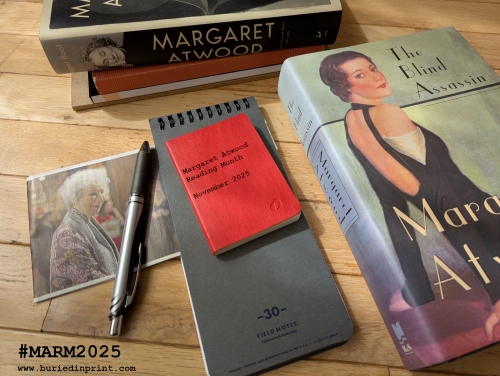
This is a contribution to Margaret Atwood Reading Month, hosted by Buried in Print. Happy Margaret Atwood’s birthday!

I really enjoy poetry, from ancient to contemporary, but I often neglect to pick it up. So MARM was a perfect opportunity to get back to reading it, as I had a copy of Atwood’s volume Dearly (2020), with its striking cover of iridescent feathers, in the TBR.

Dearly was written between 2008-2019 and includes a lot of Atwood’s enduring concerns: the natural world; the destruction of the planet; power structures that are imposed on others. There is also consideration of aging and death, and the volume is dedicated in absentia to her partner of many decades, Graeme Gibson, who died in 2019.

Atwood’s poetry is so accessible. She is an acute observer which suits poetry, and she conveys this without impenetrable allusion or obscure metaphor. In Salt she layers a series of images in evoking the past:

“Once in a while there was a pear or plum

or a cup with something in it,

or a white curtain rippling, or else a hand.

Also the mellow lamplight

in that antique tent,

falling on beauty, fullness,

bodies entwined and cherishing,

then flareup, and then gone.”

It was her consideration of aging and loss which appealed to me most in this volume, and there are some beautifully tender poems, full of love without sentimentality. In Blizzard:

“My mother, sleeping.

Curled up like a spring fern

although she’s almost a century.

I speak into her topmost ear,

the one thrust up like a wrinkled stone

above the hills of the pillows:”

And of course her titular poem, about shifts in language entwined with personal loss, which if you click the last link in this post you can hear her read. Her deep love for her life partner resonates throughout this volume, written before he died but filled with the anticipatory grief his dementia diagnosis gave rise to. Mr Lionheart in particular I found so moving, weighing what is being lost and what remains, for both the person with dementia and those who care for them:  

“There’s birdsong, however,

from birds whose names have vanished.”

Before she concludes:

“Lions don’t know they are lions.

They don’t know how brave they are.”

What I haven’t captured here is Atwood’s characteristic wit and warmth, but rest assured it is here! There are poems that conclude with pithy lines, making me smile more than once. She is clever and funny and entertaining. Published just before she turned 81, in Dearly she is as engaged with the modern world and engaging as ever.

I found this essay about writing Dearly which includes Margaret Atwood reading the titular poem, so I highly recommend heading there for a read and listen.

To end, from Zombie:

“The hand on your shoulder. The almost-hand:

Poetry, coming to claim you.”

“My nails are my rhythm section.” (Dolly Parton)

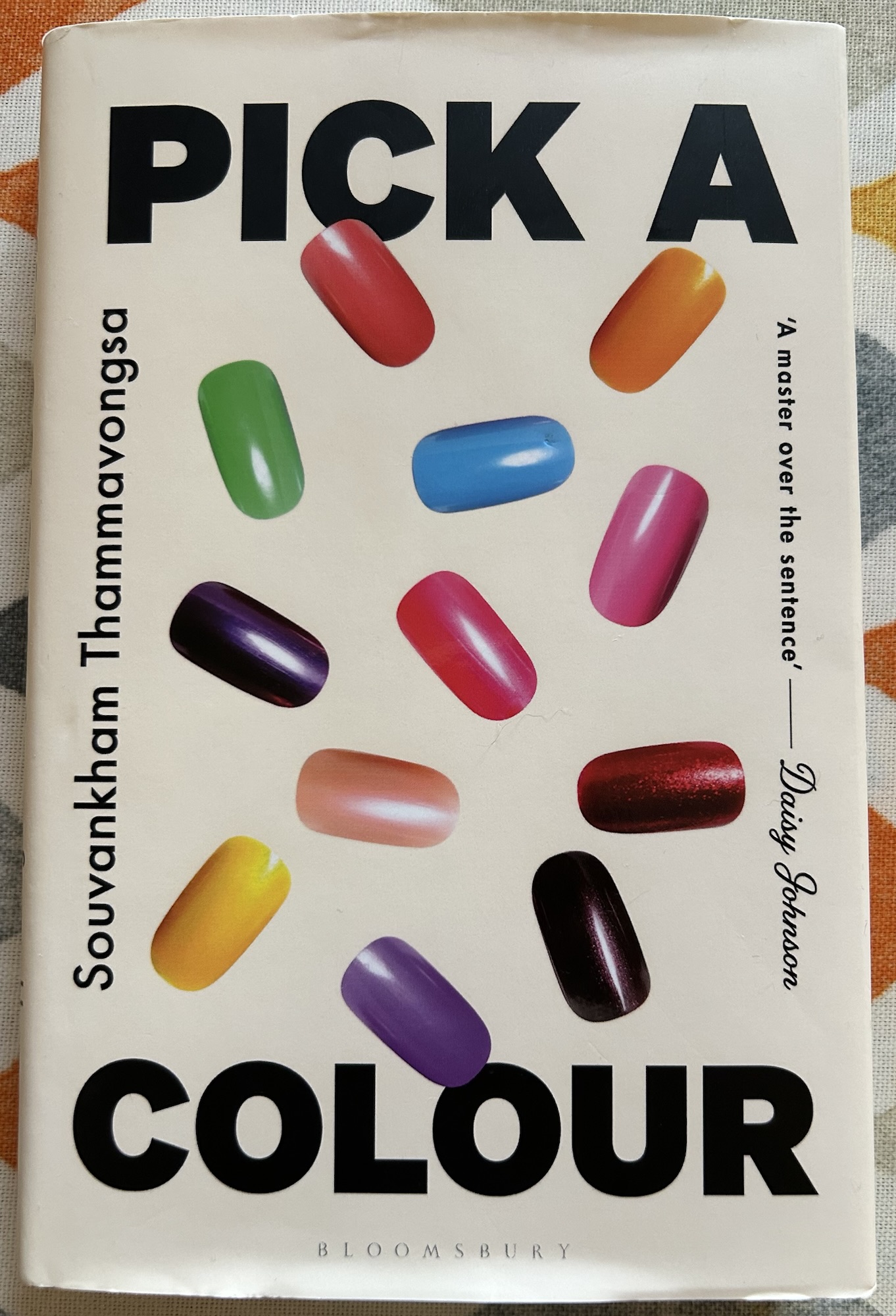
I mentioned buying two novellas in my post for A Room Above a Shop, and the other one was Pick A Colour by Souvankham Thammavongsa (2025). Once again, it was Susan’s enticing review which sent me in search of a copy!

Thank you so much to everyone who left good wishes when I mentioned finishing at work, and this post about a novella in a workplace seems apt for the update that I have a new job – I am extremely relieved! But I’ve a few weeks off between and so far I’m enjoying lots of reading and relaxation 😊

Earlier this year I read Marzahn, Mon Amour by Katja Oskamp which is set in a chiropodist/nail bar in a Berlin suburb. There’s something so appealing about a workplace setting, with disparate characters thrown together, and with a shop there’s the added unpredictability of who can walk in the door at any moment. Pick a Colour is set over the course of one day in Susan’s nail bar and manages all these elements so well.

Susan’s is owned by Ning, an ex-boxer who used to work for the bullying Rachel at the Bird and Spa salon a small distance away. Her nail bar has been open for five years and is called Susan’s because everyone who works there – including Ning – wears name badges with that name on it. The customers don’t notice.

“Looking at the two of us, them sitting on a chair above me, and me down low, you’d think I am not in charge. But I am. I know everything about them, whether or not they tell me. You look at something long enough and you begin to see everything in its details. And you’d be surprised what people tell you when they think you are a stranger and they’re never going to see you again.”

There is a strong theme of power, privilege and colonialism running through Pick a Colour. The city it is set in is unnamed, and the language spoken by the nail technicians is not specified, but they speak it in front of clients who don’t share it, and don’t understand that they are being appraised and gossiped about.

Quick-witted colleague Mai has a suggestion for Ning’s young, serial-dating and phone-obsessed client:

“She says quickly, ‘I know a guy for her.’ It is as if she’s been lining them up somewhere just for this moment.

‘What guy do you know.’

‘My dad,’ she says. ‘He’s single.’

We laugh because the man is old as a raisin that fell underneath the fridge from eighty years ago.

‘He doesn’t know how to text, though,’ I say. ‘So I don’t think it will work out for them.’

 I turn back to the waitress.”

Ning deliberately remains enigmatic: to her clients, her colleagues and as a narrator. A new staff member, Noi, joins and Ning is stern with her. She doesn’t join the others for lunch and for clients who ask about her life she makes something up. As readers we are privy to her memories of working for Rachel and her boxing coach Murch so we are aware of some of her trauma, but much remains unexplained.

“I look at the finger I don’t have. I’m actually quite proud of it and want to hold it up anytime someone sits in my chair. If my body has a centrepiece, it’s this space where something used to be.”

We follow Ning, Mai and Noi throughout the day as they expertly manage the logistics of the salon and the psychologies of their clients with skill, humour, compassion and also disdain when appropriate. Pick a Colour has a deceptive lightness of touch in its exploration of some major themes, encouraging consideration of what lays beyond the surface.

“I’m sure she has friends to talk to over brunch, maybe a therapist, but you don’t want to tell your friends stuff like this. Want to keep up the appearance of what everyone thinks happiness should look like.”

To end, I nearly chose My Name is Not Susan by Whitney Houston, but instead here are Dolly and Patti LaBelle demonstrating the title quote:

“All of my close friends are emotional train wrecks.” (Patrick de Witt)

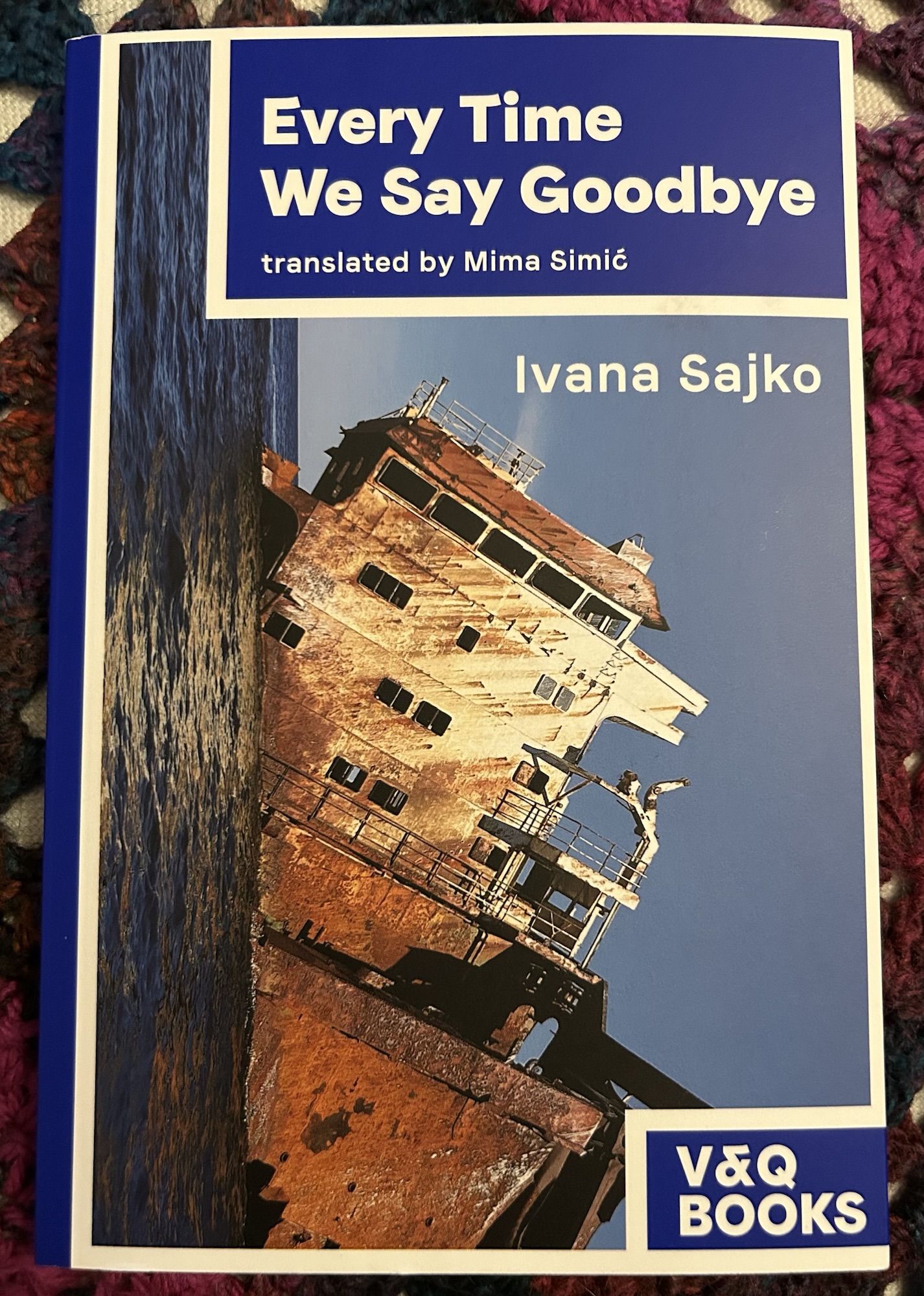
I don’t get many books sent to me by publishers, but I was really pleased to be offered Every Time We Say Goodbye from V&Q Books who specialise in writing from Germany. Ivana Sajko was born in Zagreb and her translator Mima Simić is Croatian, they both now live in Berlin. Back in 2023 I read Love Story from the same author, translator and publisher and found it powerful and unflinching.

With everything that’s been going on for me with work it’s taken me some time to get to it, but at 118 pages it’s a perfect Novellas in November read, hosted by Cathy and Bookish Beck.

A writer leaves his partner to catch a train from south-east Europe through to Berlin.

“Leaving nothing behind but the story of a man travelling through Europe hit by another crisis, boarding a train convinced that it doesn’t really matter why he’s leaving, as he has no reason to stay, the story of a man sinking into his notebook, grasping mid-descent at his messy notes, each of them opening a new abyss beckoning another fall, a man who still cannot bring himself to open the flat box of photographs from his mother’s drawer,”

Each short chapter is a single sentence, and while I know this sounds off-putting, I thought it worked brilliantly. The long, weaving sentences broken by commas perfectly captured the sense of memories surfacing back and forth against the physical rhythm of the train journey.

The narrator is not particularly likable but he is recognisable and believable. As he considers how his relationship failed and looks back on his life so far, his experiences are inextricably bound to the time and geography he lives within.

“Everyone left because they had to: my mother, my father, my brother, and all these goodbyes weren’t dramatic gestures but quiet moments of stepping onto a train or a bus, followed by long rides in uncomfortable seats with stiff legs, full bladders, a restless heart and the anticipation of the final stop, which meant a new beginning and facing expectations”

Twenty-first century Europe is shown as a place of dislocation, whether through wars, socio-economic pressures, or pandemics. The impossibility of the personal and political being distinct from one another is variously explored. The writer’s depression is at least partly due to what he witnessed as a journalist:

“I lay on the ground at Tovarnik station amid garbage and people now grown in distinguishable, on the filthy platform strewn with large stones, under the European Union flag that flapped ironically next to a border crossing sign that read ‘Croatia’ and ‘EU’”

And I particularly liked this observation about how international covid restrictions made explicit the shortcomings in his and his mother’s relationship:

“The plague was our internal standard, and now that it had also driven the rest of the world apart, our few metres gap became the global standard, the plague revealed the fatality of the smallest gestures and the significance of shortest distances, a single step towards or away from a person could help or harm them; gestures we’d used to hurt each other suddenly became protective, so we didn’t really need to make an effort to adopt the new regulations”

Grounded as it is the events and establishments of the day, Every Time We Say Goodbye still remains a slippery narrative, questioning the subjectivity and reliability of memory and how we understand our experiences:

“I’d like to write about him making faces and winking at me across the table, but none of that is true, I remember none of it, my brother has no face at all, he has no smile, no voice, no drops of sweat glisten on his skin, no scabs on his knees, he has no clear outline, there are no concrete details to him, every time I look in his direction, all I can see is a murky silhouette of a boy, he’s too far away”

There is a lot packed into this slim novella. It is undoubtedly a commentary on contemporary Europe; but it also portrays the inadequacy of human communication and understanding, and how this can wreak damage in our closest and most intimate relationships. Trauma is visited on large and small scales.

Not an easy read, but one I am glad to have read for its brave choices in style and subject matter. If, like me, you enjoy a Translator’s Note, there is a really interesting one from Mima Simić included.

To end, of course I was going to go with the obvious choice, an absolute classic:

“Small and growing businesses are the beating heart of our economy and the soul of our communities.” (Mary Portas)

I’ve finished at work now and my leaving gift was bookshop.org vouchers (to quote my colleague: “Tell me what you want so you don’t get some rubbish you’ll never use” 😀 ) which of course I started spending the same day! My first purchase was two novellas because it is #NovNov after all, hosted by hosted by Cathy and Bookish Beck.

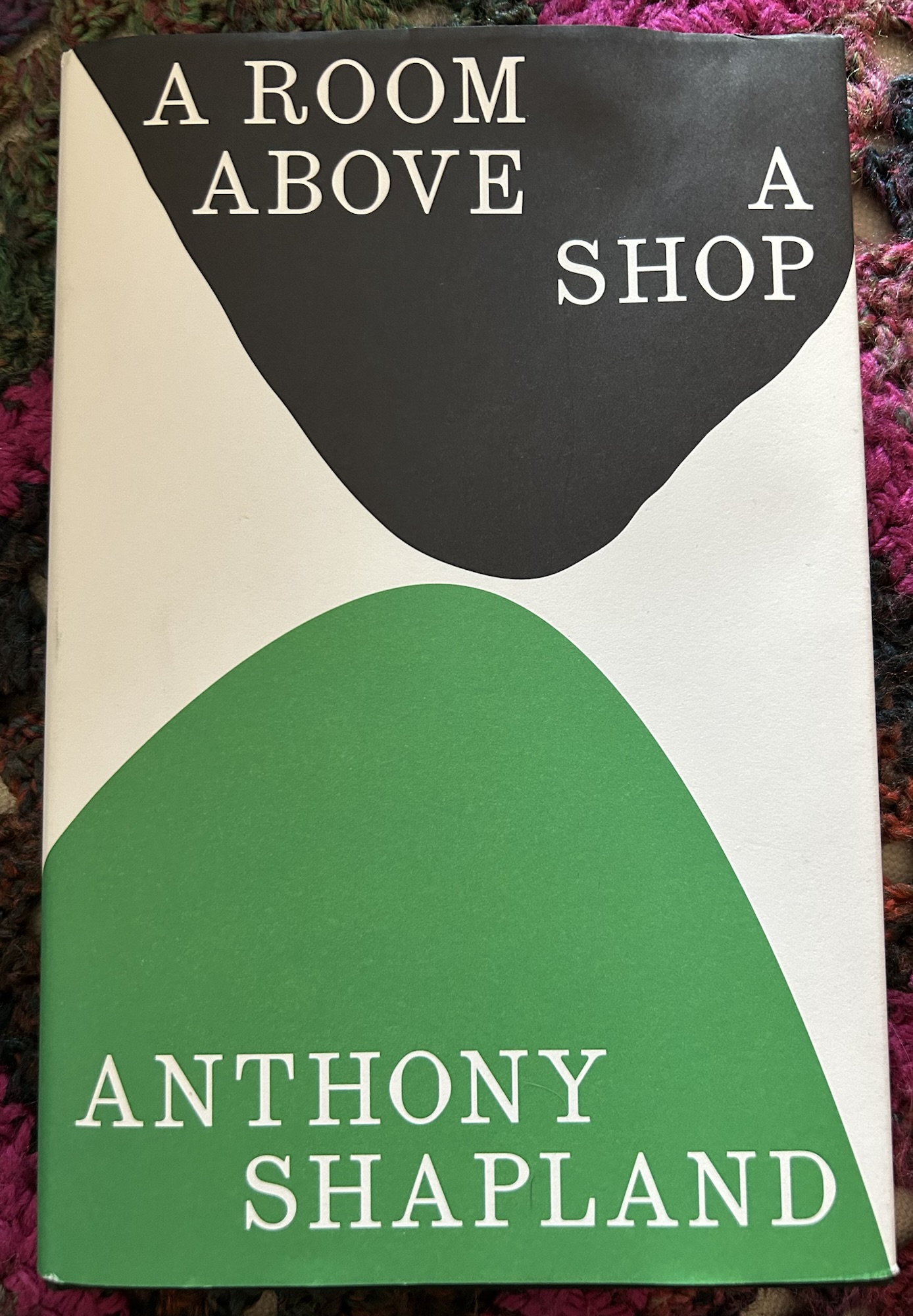
It was Susan’s review of A Room Above a Shop by Anthony Shapland (2025) which made it a must-read for me, and my astronomical expectations were met entirely. It’s a beautifully written, carefully observed and deeply moving novel.

M has inherited a hardware shop from his father. Part of the place for years and providing a community service, everyone knows who he is without knowing him at all.

“Keeping shop hours, he is the ear of the village, the listener. They never register his life at all, upstairs in that one room.”

He meets B, somewhat younger than him, in the pub, and invites him to meet on Carn Bugail on New Year’s Eve.

“He’s not quite sure what he’s walking towards. A pulling and pushing – his instinct says go; his anxiety says stay. Either choice feels wrong. He can’t not act.”

They know it is the start of something, they know there is attraction between them, but they live in a small community, still reeling from miners’ strikes and with increasing homophobia driven by a fear of a new illness, HIV.

“Paid work is fragile, rare. Divisions still run deep; picket-angry graffiti still visible, disloyal homes shunned. Pockets are empty, borrowing and mending and patching. Everything feels temporary. Desperate.”

When B takes a job at M’s shop and moves into the spare space upstairs, little more than a cupboard but useful for appearances’ sake, they build a life together. But it is a hidden life which takes place behind closed doors, and runs beneath the performance they undertake each day as colleagues in the shop. It is both familiar and filled with tension.

“This hill is a bright map of his childhood. A play track for stunt bikes, a den, a place to be lost, to disappear with siblings. Or away from them. A place to loiter and mitch dull school days out until the bell. The place to be alone with this feeling that he’s different to the others.”

Shapland achieves something remarkable in just 145 pages, with plenty of space on the page. He crafts a fully realised portrait of two people and their relationship within a clearly evoked setting. The historical details are light touches, just enough to give a flavour of the time and certainly enough to build the pressure that M and B are living under.

His writing is incredibly precise, so although the story is short, it is not a quick read. Every single word carries its full weight to create beautiful sentences. I found myself double-checking the author bio to see if he was poet as he writes with such sparse care, but apparently not.

A Room Above a Shop is so moving. Witnessing the silences that surround M and B, the way they are unable to make the most everyday, harmless expressions of love and care towards one another, or to have their relationship acknowledged by anyone other than themselves, is quietly devastating.

“No word or deed reaches the ground from this floating platform, on this mattress, this raft, on this ocean adrift in the afternoon sun. This room lightly tethered by stairs.”

To end, a scene of coming out in a 1980s Welsh mining village from Pride, and apparently pretty accurate of the real-life person’s experience: