“The life of every man is a diary in which he means to write one story, and writes another.” (JM Barrie)

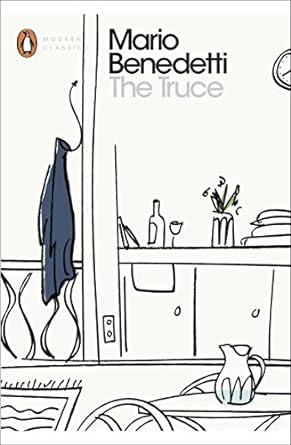
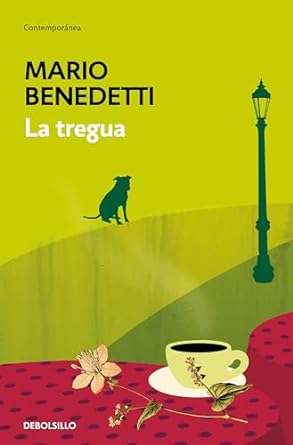
Continuing my endeavour to try and get some momentum back in my Around the World in 80 Books reading challenge, today I’m off to Uruguay, with Mario Benedetti’s The Truce: The Diary of Martín Santomé (1960, transl. Harry Morales 2015) which I was alerted to by Fiction Fan’s glowing review at the start of the year.

As the title suggests, the novella is in diary form, as Martín records his days in the run-up to his retirement, reflecting on how to live out his days. He is a quiet man in an administrative job; things are predictable.

“Today was a happy day; just routine.”

He is a widow of twenty years, and although he still has an eye for women (particularly their legs) he hasn’t had another relationship:

“The entire machinery of my emotions came to a halt twenty years ago when Isabel died. First there was pain, then indifference, then, much later, freedom, and then, finally, tedium. Long, lonely, constant tedium.”

His children Esteban, Jaime and Blanca are essentially unknown to him:

“At least Blanca and I have something in common: she, too, is a sad person with a calling for happiness.”

But although Martín is recording a lot of sadness, it’s not overly depressing. He has an acceptance of his life, and he makes quietly humorous observations, such as an old acquaintance learning of Isabel’s death:

“There is a sort of automatic reflex which makes one talk about death and then immediately look at one’s watch.”

Or his grief when his mother died:

“Only a fervent hatred of God, relatives and fellow man sustained me during that period.”

But things are about to change for Martín in ways he didn’t expect, when he falls in love with Laura Avellaneda, a work colleague half his age. While this would naturally raise questions about power dynamics and appropriateness, I felt it worked in The Truce, as Martín has been established as a gentle man, uninterested in wielding any sort of power or manipulation, and he is very respectful of Laura:

“I’m not going to demand anything. If you, now or tomorrow or whenever, tell me to stop, we won’t discuss the matter anymore and we’ll remain friends.”

In this short novel Benedetti perfectly evokes the gentle, slowly evolving love of Martín and Laura, and of Martín’s grief and acceptance of all he has lost in life alongside all that he still has. It suggests hope is still a realistic thing to hold onto, at any time.

The Truce isn’t sentimental, and although it depicts a romance it’s not rose-tinted. There is one point in particular where Martín behaves badly. He is not a perfect human-being and he causes hurt as well as joy to people.

But it is an empathetic tale, warmly clear-sighted towards ordinary people and all the foibles, weaknesses and strengths that we all carry.

The Truce is realistic, in a way that suggests even the most painful experiences can still be worthwhile. It explores how to not let pain overwhelm, and the importance of compassion for others and for the self:

They suffer from the most horrible variant of solitude: the solitude of someone who doesn’t even have himself.

This was my first experience of Benedetti and I’d be interested to read more by him. Apparently he wrote over ninety books so there’s plenty for me to choose from!

Murder Under the Midnight Sun – Stella Blómkvist (transl. Quentin Bates) Blog Tour

Today I’m taking part in a blog tour for Corylus Books, a lovely indie publisher with a focus on translated crime fiction. Back in September last year I took part in a blog tour for Murder at the Residence by Stella Blómkvist so I was looking forward to reacquainting myself with the tenacious lawyer in Murder Under the Midnight Sun. This novel was published in Iceland in 2015 and translated by Quentin Bates in 2023. The identity of the author remains a mystery…

Here is the blurb from Corylus Books:

“What does a woman do when her husband’s charged with the frenzied killing of her father and her best friend? She calls in Stella Blómkvist to investigate – however unwelcome the truth could turn out to be.

Smart, ruthless and with a flexible moral code all of her own, Stella Blómkvist is also dealing with a desperate deathbed request to track down a young woman who vanished a decade ago.

It looks like a dead end, but she agrees to pick up the stone-cold trail – and she never gives up, even if the police did a long time ago.

Then there’s the mystery behind the arm that emerges from an ice cap, with a mysterious ruby ring on one frozen finger? How does this connect to another unexplained disappearance, and why were the police at the time so keen to write it off as a tragic accident?”

As the blurb demonstrates, and as with Murder at the Residence, Stella finds herself with several plates to spin. Murder Under the Midnight Sun packs a lot into just 214 pages without ever seeming relentless or overwhelming. It’s expertly paced.

The Icelandic setting plays a part in the police’s indifference to the historic disappearance of a young British holidaymaker.

“People have vanished in Iceland before and never been found, without any indication of foul play.”

[…]

She’s far from the only missing person that Iceland’s natural world hasn’t given back.”

If anything, this serves to heighten Stella’s determination as she’s more than happy to butt up against the police, often with the help of her friend, the news blogger Máki. It’s through Máki that Stella finds herself increasingly caught up in Cold War intrigues that want to stay buried, and early on there’s a stunning set piece whereby Stella nearly ends up buried herself, down an icy crevasse.

The past and present are woven together seamlessly and the smaller population of Iceland make the connections between characters seem less contrived than they could in a more populous setting. The modern day murder of Stella’s friend Rannveig’s father and best friend was just convoluted enough to keep me guessing while being resolved satisfactorily in a short novel.

My one reservation – which I didn’t have with the previous novel – was Stella’s conduct in her private life. I’ve absolutely no issue with her being a woman who goes after what she wants. But when what she wants is a woman in a highly vulnerable state, and when her method of getting that woman is to ply her with strong alcohol, I’m not alongside. I don’t have to like everything about a protagonist to enjoy a novel and I did really enjoy Murder Under the Midnight Sun. If Stella can just be more respectful of informed sexual consent in future, that would make my enjoyment unreserved.

That aside, I did like Stella’s relentless pursuit of answers and her humorous self-belief:

“My cousin Sissi gazes at me with frank admiration in his eyes.

‘You’re one of a kind,’ he says.

I smile demurely. I agree entirely with his sentiment.”

Fingers crossed for more Stella translations!

Here are the stops from the rest of the tour, so do check out how other bloggers got on with Murder Under the Midnight Sun:

“It takes a village to raise a child.” (Proverb)

Well, as I predicted a significant part of my May was grim, but at least it was short-lived. So while I couldn’t commit to my novella a day in May project this year, I have managed to read a few novellas which I’m hoping to blog on before the end of the month. Here’s hoping June is a massive improvement!

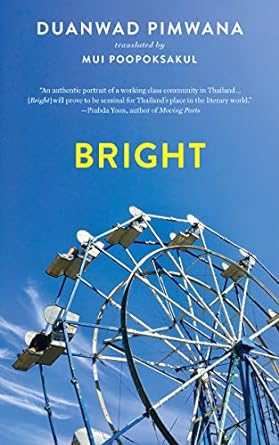
When I undertook the Around the World in 80 Books reading challenge, I wanted each book to be by an author from that country, not only set there. So the challenge has slowed as I try and locate appropriate translated fiction. Bright by Duanwad Pimwana (2002 transl. Mui Poopoksakul 2019) was apparently the first novel by a Thai woman to be translated into English. A volume of her short stories has also been translated, under the title Arid Dreams.

Bright almost reads like a series of short stories, except that the characters and setting are carried across the vignettes. It begins with a five-year-old boy, Kampol, being abandoned by his father who is taking his little brother Jon to live with his grandmother after their mother has left. But Bright isn’t unremittingly grim or a trip into poverty porn. The community of Mrs Tongan’s tenements rally round Kampol with varying degrees of willingness to ensure the boy is cared for.

“Kampol watched his father walk off until he disappeared. The flavour of the palo stew had grown distant, and the scent of detergent faint. He opened his hand: the blue action figure glinted in the dim light.”

We meet the various residents through Kampol’s eyes and we follow the events of the community alongside him. He plays with his best friend Oan, and is often cared for often by Oan’s hardworking mother Mon. But Pimwana never lets us forget that Kampol is carrying a lot of pain, just below the surface.

“He had found the best hiding place: you’d have to travel back in time to discover it. He skipped away joyfully. But then his melancholy caught up to him and his steps grew slow and measured – he didn’t know where to go.”

My heart sank when mobile caterer Dang offers Kampol a way to earn money if he keeps it quiet – but Dang only wants Kampol to walk on his back to relieve his aching muscles. Kampol also earns money running errands for soft-hearted Chong, the shopkeeper who finds it hard to refuse people credit. Bookish Chong was my favourite character, a man trying to convince the local kids of the joy of the printed word, without much success apart from Kampol.

“Chong was mournful as he watched the tree-cutting operation. The workers sawed off one section at a time, starting from the crown and working their way down. The pines disappeared, one top at a time, one tree at a time. Kampol stood next to Chong staring upward until the sky was empty. The notion of his mother, too, grew empty in his mind.”

The simple writing style worked really well in keeping the reader alongside Kampol while not claiming to be completely a child’s point of view. I found it direct and compelling in portraying a life with both hardships and joys in it.

Pimwana portrays a Thailand away from the tourist hotspots or glamourous settings. In doing so, she never patronises her characters or preaches of a life of either degrading poverty or sentimental saintly striving. The personalities in her pages are entirely believable, human and humane. It’s a fine balance that she achieves with the lightest touch. A hugely impressive and highly readable novella.

“He had felt lonesome before, many times in fact. But in those moments, even if he didn’t have anyone in the world, he had his familiar neighbourhood, with its familiar crevices and corners that he knew so well, which provided comfort. There was the wall outside Chong’s shop, where the jasmine bush stood, marked with dirt from where he leaned against it when he visited. Or there was the wedged fork of the poinciana. Or behind Mrs Tongjan’s house, his hideout beneath the shrub whose leafy branches bowed down and kissed the ground. When desolation struck, Kampol had these familiar nooks to embrace him.”

“Apparent simplicity of outlook is always suspicious.” (Anthony Powell)

This is the fifth instalment in my 2024 resolution to read a book per month from Anthony Powell’s A Dance to the Music of Time sequence. Published between 1951 and 1975, and set from the early 1920s to the early 1970s, the sequence is narrated by Nicholas Jenkins, a man born into privilege and based on Powell himself.

The fifth volume, Casanova’s Chinese Restaurant, was published in 1960 and begins by considering a bombed-out pub from World War Two, which triggers memories of the past and events of the 1920s and 1930s. It expands on relationships from the previous novels and portrays various marriages.

This shifting back and forth through time means characters who have died are resurrected, and minor ones expanded upon. Although perhaps they would rather not be, finding themselves the subject of Powell’s razor-sharp observations:

“The sight of Mr Deacon always made me think of the Middle Ages because of his resemblance to a pilgrim, a mildly sinister pilgrim, with more than a streak of madness in him, but then in every epoch a proportion of pilgrims must have been sinister, some mad as well.”

“[St John Clarke’s] name was rarely seen except in alphabetical order among a score of nonentities signing the foot of some letter to the press.”

The gathering alongside Mr Deacon at the pub leads to two of the main characters in this volume: Moreland the composer whom Nick befriends, and his acquaintance, the really quite disturbing music critic Maclintick.

“Under his splenetic exterior Maclintick harboured all kind of violent, imperfectly integrated sentiments. Moreland, for example, impressed him, perhaps rightly, as a young man of matchless talent, ill equipped to face a materialistic world.”

Marriage is the major theme of this volume, and the scenes of Maclintick’s domestic life are truly horrible. Only marginally more disturbing are the descriptions of Nick’s schoolfriend Stringham battling with his alcoholism, and his childhood secretary Miss Weedon opportunistically using it to control him.

There are of course lighter sides to the tale too. Powell takes his satirical eye to relationships between the sexes, both in dating:

“Barnby always dismissed the idea of intelligence in a woman as no more than a characteristic to be endured.”

And later in marriage, as Moreland laments: “I shall be glad when this baby is born. Matilda has not been at all easy to deal with since it started. Of course, I know that is in the best possible tradition.”

Powell doesn’t dwell on Nick’s marriage to Isobel in great detail, but in the brief glimpses we have they seem happy together, despite sadnesses to contend with. Nick also seems to enjoy his extended, eccentric in-laws. Erridge has gone to fight in the Spanish Civil War, without success:

“His time in Spain seems to have been a total flop. He didn’t get up to the front and he never met Hemingway.”

There’s also Nick’s description of his mother-in-law Lady Warminster, more affectionate than biting: “She looked as usual like a very patrician Sibyl about to announce a calamitous disaster of which she had personally given due and disregarded warning.”

By far my favourite scene was at Lady Warminster’s party, where the reader gets to know St John Clarke further, his having made only brief appearances in previous volumes:

“He came hurriedly into the room, a hand held out in front of him as if to grasp the handle of a railway carriage door before the already moving train gathered speed and left the platform.

‘Lady Warminster, I am indeed ashamed of myself,’ he said in a high, rich, breathless, mincing voice, like that of an experienced actor trying to get the best out of a minor part in Restoration comedy. ‘I must crave the forgiveness of you and your guests.’

He gave a rapid glance round the room to discover whom he had been asked to meet, at the same time diffusing about him a considerable air of social discomfort.”

Nick’s touchstone of Widmerpool only makes brief appearances: “I should never have gone out of my way to seek him, knowing, as one does with certain people, that the rhythm of life would sooner or later be bound to bring us together again.” but he manages to seem an entirely menacing background presence regardless.

I’m enjoying A Dance to the Music of Time more and more. Powell’s satire is never bitter or leaves me feeling uncomfortable, as satire can sometimes do. He’s clear-sighted and affectionate without being sentimental. Returning to the sequence is starting to feel like catching up with your wisest, wittiest friend. An absolute delight.

“Marriage, partaking of such – and thousand more – dual antagonisms and participations, finally defies definition.”

To end, if either of The Proclaimers are married, then I hope they wore nicer suits at their actual weddings:

“Everything that mattered had happened already” (Natalia Ginzburg)

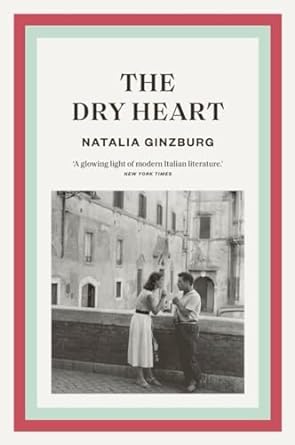
Last year I read All Our Yesterdays, which was my first experience of Natalia Ginzburg’s writing, and I absolutely loved her unfussy, direct style. The Dry Heart (1947 transl. Frances Frenaye 1952) is a much shorter work at just 108 pages but it packs a real punch.

On the first page, the unnamed narrator is with her husband in their home:

“I took the revolver out of his desk drawer and shot him between the eyes. But for a long time already I had known that sooner or later I should do something of the sort.”

And so this is a whydunit rather than a whodunit, as we are taken back to a time when a young, naïve girl marries a man who she knows does not love her:

“When a girl is very much alone and leads a tiresome and monotonous existence, with worn gloves and very little spending money, she may let her imagination run wild and find herself defenceless before all the errors and pitfalls which imagination has devised to deceive her.”

Initially her husband Alberto is interested in her, but not romantically. He reads Rilke to her and listens to all she has to say. But he is in love with Giovanna and he never pretends otherwise. They marry despite ambivalence on both sides.

She has friends, including Francesca who lives more independently and freely; and Augusto who is her husband’s friend but also kind and genuine towards her.  Yet the narrator still seems very isolated, and lonely within her marriage. Alberto obfuscates and disregards her feelings. Who she is and how his behaviour impacts on her is of no consequence to him.  

“I wanted to know a lot more about his feelings for me, but I couldn’t talk to him for long about anything important because it bored him to try and get to the bottom of things and turn them over and over the way I did.”

The simple, direct language lends itself to the length of the novella and also emphasises youth of narrator. The complexity of The Dry Heart lies in the characterisation and builds an intriguing portrait of a marriage.

Despite having undertaken such a violent act, the narrator doesn’t ask for sympathy, and doesn’t justify herself. She presents what happened without a trace of sentimentality or self-pity. Possibly she is detached and deeply traumatised, but as the reader comes to her at the point of the shooting, we don’t know if this voice is one of trauma or long-established.

By refusing to have the narrator engage in self-justification and avoiding any sense of authorial knowingness or psychological explanation, Ginzburg firmly places the why in the readers hands. It’s a masterstroke: she highlights patriarchal oppression, psychological warfare in marriage, the pitiable choices available for women and the danger of dismissing fellow human beings, without being remotely heavy-handed.    

The Dry Heart is hugely impressive and I’m looking forward to exploring Ginzburg further, thanks to the wonderful Daunt Books who are doing such a great job reissuing her work in translation.

It’s probably a mistake to follow every meandering of our feelings and waste time listening to every echo from within. That, in fact, is no way to live.”

To end, from a dry heart to a cold one:

“Everybody is a teenage idol.” (Barry Gibb)

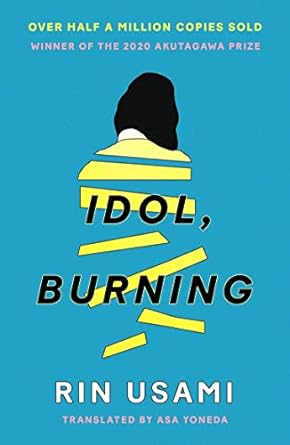
Idol, Burning by Rin Usami (2020 transl. Asa Yoneda 2022) took me into a world I knew nothing about – that of having an oshi. It is a complex culture and there are lots of interesting articles online about it. For the sake of brevity in this post I’ll describe it as where fandom is taken to another level, with devotional idolatry of your oshi, with apologies for huge oversimplification.

At the start of the novel, sixteen-year-old Akari is waking up to her social media DMs going into overdrive: her oshi, Masaki Ueno, part of boy band Maza Maza, has punched a fan. We follow her through the subsequent days as she struggles with the fallout of his behaviour.

Akari struggles even when things were going well with her oshi. She not academic, she doesn’t like her part-time job but she needs it to pay for all the merchandise associated with her oshi. (Without hammering it home, Usami makes it really clear the financial demands of having an oshi, and how this is exploited by merchandisers.) Her father is away overseas and she’s aware she frustrates her mother and studious sister.

Akari’s mind troubles her with a lack of focus outside her oshi, and her body troubles her too:

“Just being alive took a toll. To talk to someone you had to move the flesh on your face. You bathe to get rid of the grime that built upon your skin and clicked your nails because they kept growing. I exhausted myself trying to achieve the bare minimum, but it had never been enough. My will and my body would always disengage before I got there.”

What helps is her oshi:

“When my eyes met his, they reminded me how to really see. I felt an enormous swell of pure energy, neither positive nor negative, come rising up from my very foundation, and suddenly remembered what it felt like to be alive.”

Akari lives a substantial amount of her life online. Following her oshi’s accounts; blogging about her oshi; chatting with others who share her obsession and understand.

“Narumi sounded the same in person as she did online. I looked at her face, the round eyes and concerned brows overflowing with tragedy, and thought, There’s an emoji like that.

[…] Her facial expressions changed like she was switching out profile pictures.”

What was really clever in this novella (115 pages) and its translation is how Usami changed Akari’s tone and language depending on the medium she was using. The reader could see clearly how the person she created online through her blog and social media interactions wasn’t entirely authentic. It wasn’t entirely inauthentic either, and some of her closest relationships are with those she speaks to online – who of course, may not be entirely authentic either.

“When I pictured a world without Masaki, I thought about saying goodbye to the people here, too. It was our oshi that brought us together, and without him, we’d all go our separate ways. Some people moved over into different genres like Narumi had, but I knew I could never find another oshi. Masaki would always be my one and only. He alone moved me, spoke to me, accepted me.”

It’s a lonely world and there are hints Akari has been diagnosed with depression.

Through her devotion to Masaki we see all that Akari can do: she can be focussed, she can be insightful and she can be sensitive. It’s just that nothing other than her oshi prompts these behaviours.

We never learn the truth of Masaki’s actions and I was pleased about this. It is not his story, and while demonstrating the fallout of a celebrity flaming, Usami keeps the focus tightly on Akari. There is a Q&A with the author at the back of the novel and I wasn’t surprised to read that she has an oshi herself, because her portrayal of Akari is never patronising or pitying.

What Idol, Burning explores is how we all have to find a way to live, and that when this is focussed on something external and unpredictable – like a person and their constructed celebrity persona – then you can be in an incredibly vulnerable position. The novella ends on a tentatively positive note and I hoped Akari would learn to be the protagonist of her own life, rather than giving that power over so completely to someone else.

To end, I should definitely choose some J-pop, but I know absolutely nothing about it. So it’s back to 80s cheese, which I do know about 😀 Idol by name, Idol by nature…

“It takes courage to grow up and become who you really are.” (e. e. cummings)

The blurb on the cover of my edition of Grown Ups by Marie Aubert (2019 transl. Rosie Hedger 2021) pushes it as ‘the perfect summer read’ and ‘pure escapism’ with which I couldn’t disagree more. Obviously we all have different reactions to books, but for me a novella (154 pages) about a woman coming to terms with her rapidly reducing choices regarding fertility, while at the summer house of her family with all its inherent tensions and rivalries, didn’t feel remotely escapist. Even when it’s darkly humorous and set in a log cabin in Norway 😉

Grown Ups features a very unlikable protagonist in Ida. She behaves really badly by anyone’s standards. But she was also recognisable and (somewhat) sympathetic.

At the start of the novel she is at a Swedish clinic having her eggs frozen:

“One day, I thought as I lay there in the gynaecology chair, one day things have to work out, one day, after a long line of married and otherwise committed and uninterested and uninteresting men, things have to work out, just lying there made me believe both men and child might materialise, just the fact that I was there and actually doing it was a promise that there was more to come, one day.”

I really felt for Ida. As the quote shows, she is feeling a bit desperate regarding the future as she turns forty, but pinning her hopes on a fantasy. As the story develops, the ambivalence she feels about what that future might look like is subtly portrayed. She doesn’t really seem to like children very much, but she doesn’t want that choice taken away from her. If she truly wants a committed relationship, why does she keep seeking out men who are already committed to someone else?

She travels to the family summerhouse in Norway for her mother’s birthday. Her sister Marthe is there with her husband Kristoffer and step-daughter Olea. The sisters relationship is full of long-held petty tensions, but it felt like they could actually be really close if they would just step outside of these entrenched behaviours. It doesn’t help that Marthe has redecorated the cabin without asking or even discussing it with Ida. She is also pregnant.

“‘I’m not as tough as you are,’ Marthe says, sounding a little sarcastic. It’s always the same, every summer, I’m quick to get into the water while Marthe takes her time, and then we each make digs about which approach is best.”

One of the hardest things to read in the book is Ida’s treatment of Olea. Recognising that Olea and Marthe don’t get on, Ida manipulates the child to increase her opposition to Marthe, just to prove something to Marthe and herself. She seems to have no fondness for Olea, and everything is performative rather than felt or understood.

“I’m the grown up now, I’m good at this. My tone is calm and kind, it feels familiar, like how things ought to be […] See, Marthe, I can do this, I’m the one who’s supposed to be doing this.”

Ida is destructive in her behaviour but only half-recognises this. I felt with Olea she didn’t really see the child as a person so didn’t fully recognise what she was doing. Flirting with Kristoffer on the other hand, she is fully aware of…

I’m making Ida sound more unlikable than she is and not doing justice to Aubert’s subtlety at all! The hurt Ida is experiencing is so clear, she is just seeking entirely flawed ways of managing that pain. Although she mentions friends, they are not named and she comes across as very isolated, particularly when her mother arrives with partner Stein.

“I feel the injustice, rampant and raging, there’s no one there to console me”

There’s also a passage where Ida describes dating and her hopes for more, where my heart just broke for her. It was filled with so much anger and loathing towards herself.

I looked on goodreads and yep, some readers really hated Ida 😀 But for me, while a lot of her behaviour was downright awful, I thought she was realistically portrayed as someone who has grown up thinking love is conditional and now doesn’t know who she is or what she really wants.

Grown Ups is well paced and things aren’t all tied up neatly at the end, which I liked as it didn’t undermine Ida’s situation or her feelings. I did have a sense Ida would carry on but maybe do a bit better. Unlike at the start of the story, there was hope for her grounded in something real.

To end, two sisters who seem to get on better than Ida and Marthe, singing about the struggles of trying to be grown up and a problem Ida has definitely experienced:

“All good stories are told with varying degrees of reluctance.” (Claire Keegan)

As I mentioned in my last post, I’m disappointed not to be doing my novella a day in May project this year, but for my sanity something had to give! Simon is undertaking a book a day for the month which I’m sure will give me many ideas for next year 😊

I still plan to focus on novellas this month though, and last year when I read Small Things Like These by Claire Keegan, a few people mentioned that I read needed to read Foster. How right they were, it’s an extraordinary novella.

Apparently it started life as a New Yorker short story (it has two copyright dates) and although I haven’t read that version, as a novella I would say it is completely realised in just 88 pages.

A young girl is taken to the west of Ireland to live with the Kinsellas, her aunt and uncle, as her mother is heavily pregnant and struggling with the number of children she has to care for.  Her father gambles away the family heifer and there isn’t enough food to go round, or time for adequate physical or emotional care.

At the place where she is to spend the summer, chores are achieved daily on the farm and within the home. There is enough food and enough care.

“Her hands are like my mother’s hands but there is something else in them too, something I had never felt before and have no name for. I feel at such a loss for words but this is a new place, and new words are needed.”

Although the time is never specified, it seems to be around the 1970s/early 1980s as there is a discussion of hunger strikers. The narrator is nameless and we’re not sure of her age, but I would say somewhere around nine to eleven years old.

“I am in a spot where I can neither be what I always am nor turn into what I could be.”

Keegan trusts the reader not to need everything spelled out. We get a sense of the wider family dynamics and the feelings of various family members without them being explicitly stated. The slowly building bonds of trust and affection between the young narrator and the Kinsellas are so delicately evoked and tenderly realised.

A stunning scene sees the narrator and Mr Kinsella walking along the beach. When they turn around to walk back, he can only see her footprints

“’You must have carried me there.’

[..]

We stand then, to pause and look back out at the water.

‘See, there’s three lights now where there was only two before.’

I look out across the sea. There, the two lights are blinking as before, but with another, steady light, shining in between.

‘Can you see it?’ he says.

‘I can,’ I say. ‘It’s there.’

 And that is when he puts his arms around me and gathers me into them as though I were his own.”

There is also the gradual understanding by the narrator that a life is possible, and exists, beyond that which she has always known.

“But this is a different type of house. Here there is room, and time to think. There may even be money to spare.”

Throughout, there is an awareness that this is a temporary time, with a defined end date. The situation cannot endure and the narrator and the Kinsellas will have to part.

Foster is a stunning novella. A deeply moving and perfectly crafted gem, complete in itself, down to the final devastating line.

I’ve not seen the film adaptation of Foster, but it looks faithful, and beautifully shot:

“I record these speculations…to emphasise the difficulty in understanding, even remotely, why people behave as they do.” (Anthony Powell)

I’ve just managed to keep up my 2024 resolution to read a book per month from Anthony Powell’s A Dance to the Music of Time sequence this April! It’s been a bit of a month and May looks equally challenging so I won’t be doing my Novella a Day in May this year, though I will focus on novellas for the month as I had some lined up that I’m really keen to read.

Back to A Dance to the Music of Time! Published between 1951 and 1975, and set from the early 1920s to the early 1970s, the sequence is narrated by Nicholas Jenkins, a man born into privilege and based on Powell himself.

The fourth volume, At Lady Molly’s, was published in 1957 and is set in the 1930s before the start of World War Two. Politics is only mentioned very occasionally though, and the focus remains on the relationships between an insular set of people.

This is the volume where I started to get a sense of the dance. With marriages a strong theme, the characters circle around, encountering one another for periods before spinning off again. Others weave in and out.

 Nick is now working as a script writer and his affair has ended. At the start of the novel he is taken by a colleague to a party at Lady Molly Jeavons. Once again he runs into acquaintance/talisman Widmerpool:

“Yet, for some reason, I was quite glad to see him again. His reappearance, especially in that place, helped to prove somehow rather consolingly, that life continued its mysterious, patterned way. Widmerpool was a recurring milestone on the road”

Widmerpool is engaged to Mildred Haycock, who is quite a few years older than him and has a colourfully described past. Later we learn that Widmerpool’s political aspirations are growing, and there is a chilling speech he gives Nick over lunch at his club, in favour of appeasement of Hitler.

Once again I was struck by Powells astute, clear-sighted assessment of people. Surrounded as it is by a satirical comedy of manners, he can really pack a punch when he chooses.

“Sentiment and power, each in their way, supply something to feed the mind, if not the heart. They are therefore elements operated often to excess by persons in temperament unable to love at all, yet at the same time unwilling to be left out of the fun, or to bear the social stigma of living emotionally uninteresting lives.”

There are lighter portraits too of course. My favourite in At Lady Molly’s was retired General Alymer Conyers. In his eighties, he spends his retirement reading Virginia Woolf, practising the cello, and learning about psychoanalysis:

“‘Been reading a lot about it lately,’ said the General. ‘Freud – Jung – haven’t much use for Adler. Something in it, you know. Tells you why you do things. All the same, I didn’t find it much help in understanding Orlando.’

Once more he fell into a state of coma.”

Quiggin and Mona Templar reappear (“She was like a strapping statue of Venus conceived at a period when more than a touch of vulgarity had found its way into classical sculpture.” Ouch.) living in a cottage owned by Erridge, who is now Lord Warminster. The lord of the manor dresses in scrappy clothes, has a big beard and gives a lot of his money away to good causes. I work near Shoreditch so none of this sounds like remotely remarkable manhood to me, but to his 1930s aristocratic family he seems mad. I’ve read somewhere he may have been based on George Orwell!

Nick meets two of Erridge’s sisters when he visits, including Isabel, “a bit of a highbrow when she isn’t going to night clubs”. He falls in love at first sight but their courtship happens entirely away from the eyes of the reader. Powell’s interest isn’t romance, but rather the dynamics of relationships and how these play out in the wider world.

“Women may show some discrimination about whom they sleep with, but they’ll marry anybody.”

There are so many ways A Dance… is of its time (which I think is exactly as intended) but it also doesn’t age, through Powell’s astute characterisation. I was very struck by this comment early on in At Lady Molly’s:

“One of those men oddly prevalent in Victorian times who sought personal power through buffoonery”

You don’t have to look very far back through our Prime Ministers to find a much more recent example…

I absolutely whizzed through At Lady Molly’s and I’m really looking forward the next volume, Casanova’s Chinese Restaurant.

To end, a beautifully simple rendition of a song about Molly:

“It was an uncertain Spring.” (Virginia Woolf, The Years)

This is my final post for the brilliant1937 Club, which has been running all week and hosted by Kaggsy at Kaggsy’s Bookish Ramblings and Simon at Stuck in a Book. In the end I did stick to my planned reads for the week:

Apparently Leonard Woolf thought The Years the poorest of Virginia’s novels, but it was also far and away her best-selling work. So I was intrigued to know how I’d find it…

The titular years of this novel are 1880;1891;1907;1908;1910; 1911;1913;1914;1917;1918; and the Present Day. And so Woolf covers the end of the Victorian era to World War I and beyond, through the lens of the middle-class Pargiter family. Except for 1880, she portrays one day in their lives, some with significant events, others very ordinary.

In 1880, Rose Pargiter, mother to young adults Eleanor, Morris and Edward, teenagers Milly and Delia, and pre-teens Martin and Rose, is in bed in their London townhouse, dying from a long illness. Woolf captures the conflicted feelings and strain for the family around this time, particularly for Delia:

“She longed for her to die. There she was – soft, decayed but everlasting, lying in the cleft of the pillows, an obstacle, a prevention, an impediment to all life. She tried to whip up some feeling of affection, of pity. For instance, that summer, she told herself, at Sidmouth, when she called me up the garden steps…But the scene melted as she tried to look at it.”

Over in Oxford where Edward is studying, their cousin Kitty is trying to find a role for herself and struggling against the constraints of late Victorian womanhood:

“”When I was your age,” Miss Craddock continued, remembering her rôle as teacher, “I would have given my eyes to have the opportunities you have, to meet the people you meet; to know the people you know.”

“Old Chuffy?” said Kitty, remembering Miss Craddock’s profound admiration for that light of learning.

“You irreverent girl!” Miss Craddock expostulated. “The greatest historian of his age!”

“Well, he doesn’t talk history to me,” said Kitty, remembering the damp feel of a heavy hand on her knee.”

Each time Woolf jumps forward, she trusts the reader to keep up and doesn’t get bogged down by lots of explanation or exposition. We are given a snapshot the characters, whoever she is focussed on, and we fill in the gaps to a greater or lesser extent.

There are phrases and echoes across the different sections, tying them all together and giving a coherence to what could have been a more fragmentary, less satisfying novel. I also liked the repeated motif of starting each section with a birds-eye view of the time of year. I was particularly fond of this opening to 1908:

“It was March and the wind was blowing. But it was not “blowing.” It was scraping, scourging. It was so cruel. So unbecoming. Not merely did it bleach faces and raise red spots on noses; it tweaked up skirts; showed stout legs; made trousers reveal skeleton shins. There was no roundness, no fruit in it. Rather it was like the curve of a scythe which cuts, not corn, usefully; but destroys, revelling in sheer sterility. With one blast it blew out colour – even a Rembrandt in the National Gallery, even a solid ruby in a Bond Street window: one blast and they were gone. Had it any breeding place it was in the Isle of Dogs among tin cans lying beside a workhouse drab on the banks of a polluted city.”

As the above shows, Woolf grounds her tale in a recognisable topography and as always I found her descriptions of London detailed and realistic, and of Oxford too, even all these years later.

Alongside these recognisable realities, there was also plenty to enjoy regarding Woolf’s unique and arresting descriptive powers. I’m a big fan of Woolf and I just love her way of capturing inner moments, especially unreal, discombobulating moments, such as Eleanor at a dinner party during an air raid:

A little blur had come round the edges of things. It was the wine; it was the war. Things seemed to have lost their skins; to be freed from some surface hardness; even the chair with gilt claws, at which she was looking, seemed porous; it seemed to radiate out some warmth, some glamour, as she looked at it.”

Woolf brings all the characters together in the final section for a party given by Delia. She emphasises the fallacy of a reunion by highlighting the aloneness felt by many of the family. North, son of Morris, is back after many years abroad and feels detached from everything. His sister Peggy is somewhat bitter and frustrated. She tries to get Eleanor to talk about the Pargiters childhood, but Eleanor is much more interested in life now.

“That was odd, it was the second time that evening that somebody had talked about her life. And I haven’t got one, she thought. Oughtn’t a life to be something you could handle and produce? – a life of seventy odd years. But I’ve only the present moment, she thought. Here she was alive, now, listening to the fox-trot. […] Yes, things came back to her. A long strip of life lay behind her. Edward crying, Mrs. Levy talking; snow falling; a sunflower with a crack in it; the yellow omnibus trotting along the Bayswater Road. And I thought to myself, I’m the youngest person in this omnibus; now I’m the oldest…Millions of things came back to her. Atoms danced apart and massed themselves. But how did they compose what people called a life?”

There isn’t a plot so much in The Years, only as much as there are plots to any life. Woolf captures times and places for a particular family without trying to drive the novel unrealistically. Yet The Years is still a pacy read, the driving forces being the times that are lived through and the human will to carry on.  

To end, some footage of 1930s London, although I doubt Virginia ever got herself caught up with rush hour workers: