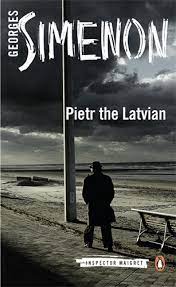
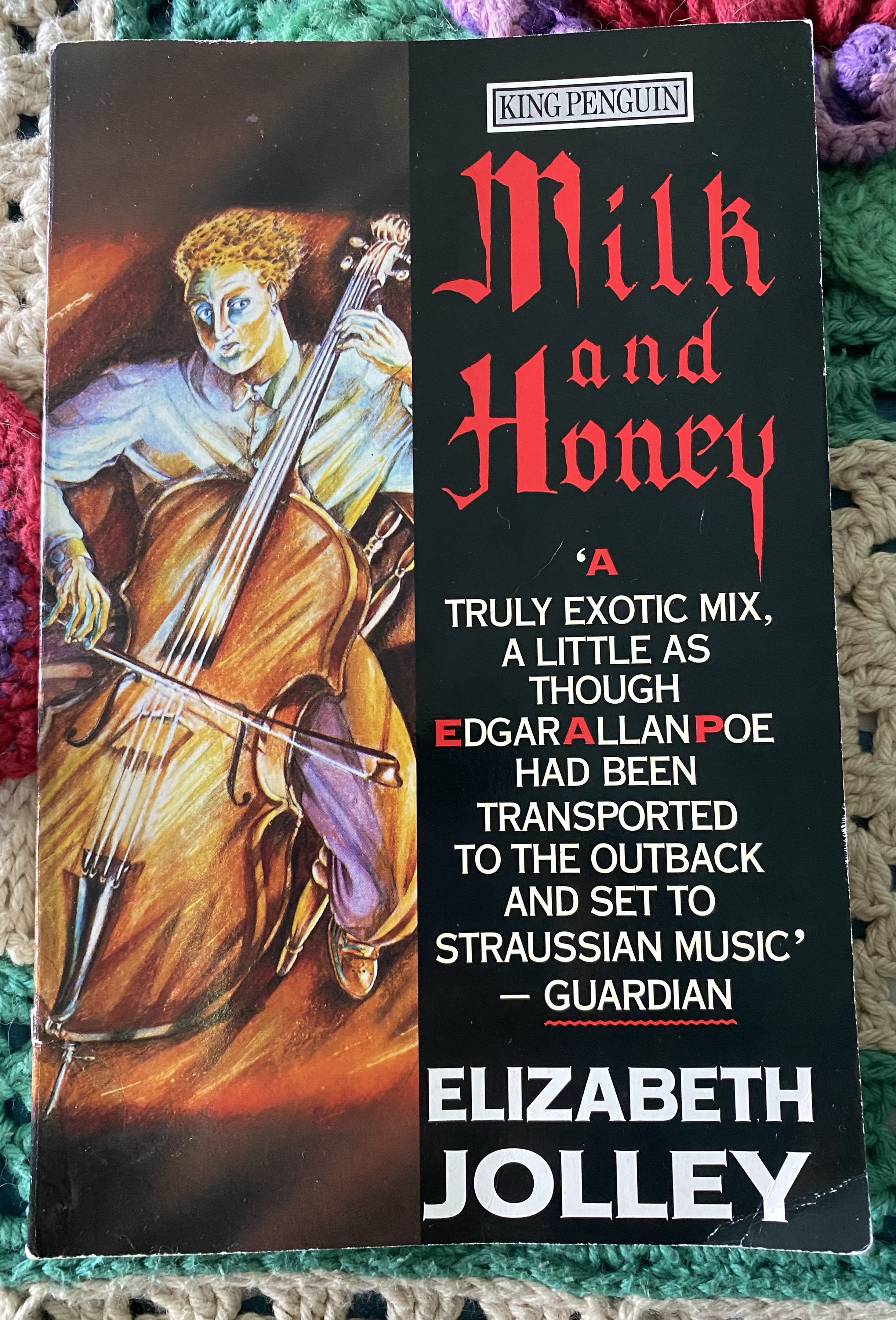
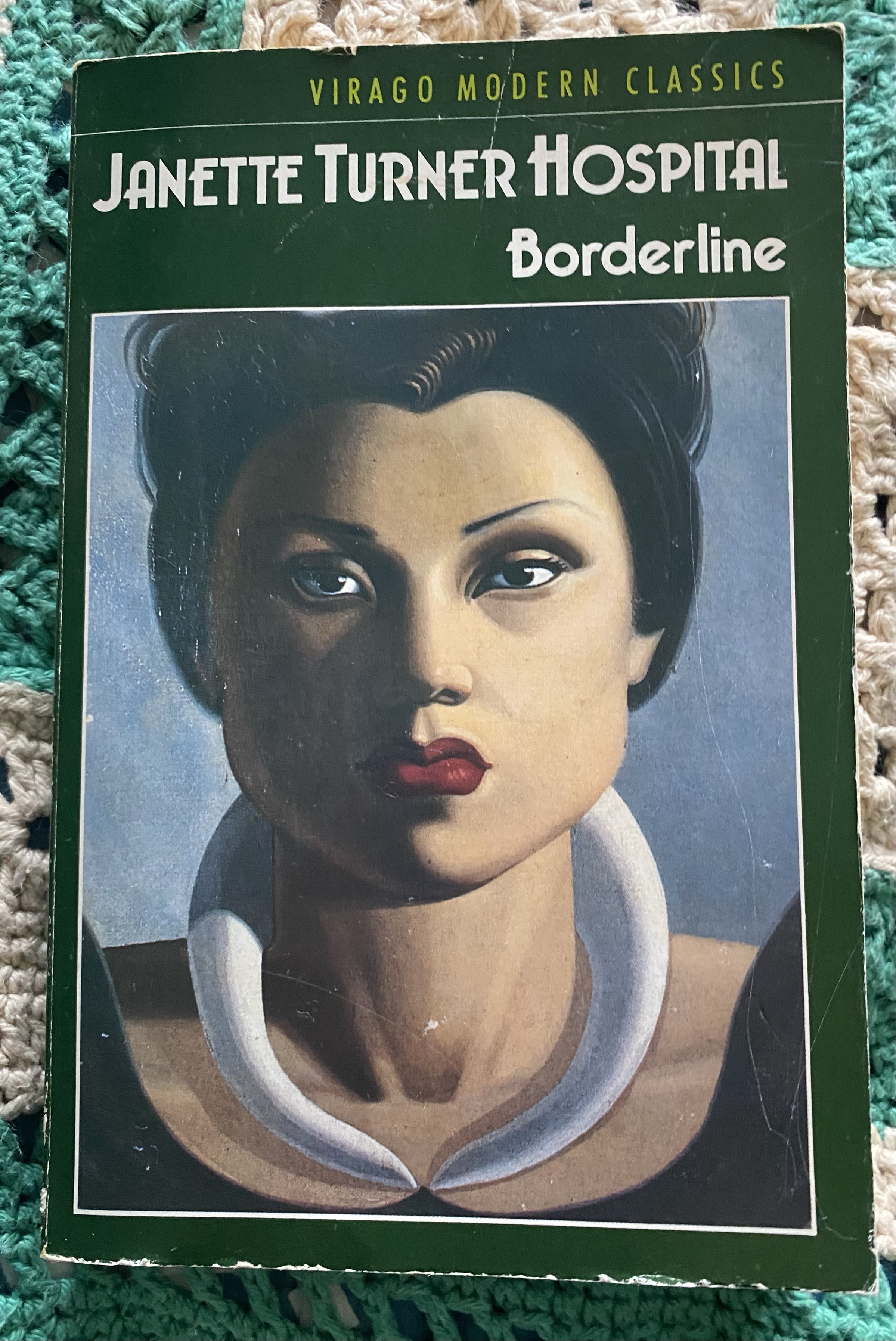
“I regret profoundly that I was not an American and not born in Greenwich Village.” (John Lennon)

The 1962 Club, hosted by Simon and Kaggsy, starts today and is running all week which I am very excited about 😊 The Club weeks are always great and I’m really looking forward to seeing the posts. This is the first of  what I hope will be three contributions, but as I never blog as much as I mean to, failure is almost inevitable!

The Golden Spur was Dawn Powell’s last novel, and it’s a humorous look at the bohemian arts scene of late 1950s New York, specifically Greenwich Village. This was a world Powell was very much a part of and my edition features an effusive introduction from Gore Vidal who was one of her close friends.

We are introduced to the artists and writers – both up and coming, and those very much faded and failing – their hangers-on and their varied associates through the outsider view of Jonathan Jaimison. He is in his late twenties and recently discovered that his father isn’t the domineering tyrant he grew up with, but someone from this scene, back when his mother was hanging out with Prohibition-era flappers.

So Jonathan leaves his Ohio home and soon makes his way to the titular bar, at the start of his quest to find his biological father:

“Through a gap in the plum velvet cafe curtains he could see the bar … He breathed deep of the heady New York air, that delirious narcotic of ancient sewer dust, gasoline fumes, roasting coffee beans, and the harsh smell of the sea that intoxicates inland nostrils. Then he pushed open the door.”

He’s quickly adopted by Lize and Darcy, two frenemies who sleep with the same male artists, although it’s not entirely clear why, as they seem to have no great fondness for men or for art:

“The girls never asked questions about a man’s private interests or listened when he tried to tell them. For them it was enough that he was a man and that he was there. Who needs a talking man?”

“That his newest canvas was gone should have told her something, but she wasn’t sure which was the new one because all his pictures looked alike to Lize. Great lozenges of red and white (‘I love blood,’ he always said), black and grey squares (‘I love chess,’ he’d say), long green spikes (‘I love asparagus’). All Lize had learned about art from her life with painters was that the big pictures were for museums and the little ones for art.”

As Jonathan makes his way in New York, he moves between two generations: the young artists and the fading interwar generation. There is a nostalgia for the Prohibition period and what New York was then which is beautifully evoked, alongside a recognition that New York is a city that continually makes itself and its inhabitants anew:

“Jonathan recognised New York as home. His whole appearance changed overnight, shoulders broadened, apologetic skulk became swagger; he looked strangers in the eye and found friendship wherever he turned. With the blight of Jaimison heritage removed, his future became marvellously incalculable, the city seemed born fresh for his delight. He took for granted that his mother’s little world, into which he had dropped, was the city’s very heart.”

Although The Golden Spur is described as a comic novel, I didn’t find it laugh-out-loud funny. Rather I’d describe it as affectionately satirical. It ribs the 1950s arts scene and the vacuous people drawn to it, but it never has a bitter or nasty tone:

“Anybody with a tube of paint and a board was an artist. But writers were not writers unless decently unpublished or forever muffled by a Foundation placebo.”

“‘I just want to be overestimated,’ Earl shouted, ‘like everybody else, goddammit.’”

Despite the overarching plot being Jonathan’s search, this really isn’t a plot-driven novel. Rather, the question of his paternity is a device to introduce the various characters and their world. It’s a novel to read for the evocation of the city, of a particular society found within it, and for the characterisation and the wit. In the way that Tales of the City was serialised in the San Franciso Chronicle, I felt The Golden Spur could have worked similarly in The Village Voice. It’s almost a series of sketches, albeit well realised ones.

I can’t say I loved this quite as much as Gore Vidal clearly did, but then he probably recognised a lot of the characters and situations within the novel. I still found a great deal to enjoy, and Powell certainly has a way with words:

“She was making more and more passes at the wrong men, then trying to recoup with stately cultural pronouncements in her refined Carolina accent, which she kept polished up like her grandfather’s shotgun, ready to bring recalcitrant suitors into line.”

To end, I was going to go with the song Little Lize because that’s the only other time I’ve come across the name. I thought it would be easy to get a good quality version as the massively successful Fisherman’s Friends have recorded it. But I couldn’t find a decent one so here they are instead singing about never leaving home. New York isn’t for everyone…

“You’re on earth. There’s no cure for that.” (Samuel Beckett)

This is my third read for AusReading Month 2023 hosted by Brona at This Reading Life and so far I’ve been very lucky with my choices from the TBR, they’ve all been striking and compelling reads. I’m grateful this month-long event has finally prompted me to get to them.

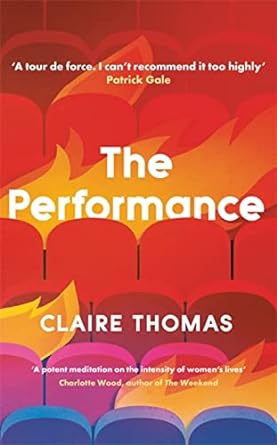
I was immediately taken with the premise of Claire Thomas’ The Performance when it was published in 2021, as it is set in one of my favourite places to be: the theatre. Also I’m shallow and I really liked the cover too, with flames licking through the seats.

Set during a performance of Samuel Beckett’s Happy Days in a Melbourne theatre, the novel follows the thoughts of three women in the audience.

Margot is a professor nearing unwanted retirement:

“Margot refuses to be patronised by sudoku puzzles or the cryptic crossword – lifting a pen towards one of those activities announces you as a gullible geriatric – and she has instead embarked on this careful consideration of her past.”

Ivy is a rich patron of the theatre, who has recently had a child many years after the death of her first, and has been a huge Beckett fan since her student days:

“Ivy pulled down her SB picture after a further year of tertiary education bloated with critical theory, once the idea of idolising a dead white man had become too embarrassing to have on public display.”

And Summer is a young usher who doesn’t know key facts about her past and is trying to manage her anxiety about the future:

“Summer wishes that she were more even-tempered. She wishes she noticed less and worried less and cared less. She knows there are better ways to live a functional life. Well, she hopes that there might be better ways to live a functional life and she just hasn’t worked them out yet.”

Like Winnie on the stage, trapped in earth up to her waist (then up to her neck in the second half), the three women are rendered immobile by the conventions of theatre-going. As they sit in the auditorium, there are bushfires edging ever closer…

“Everyone seems engrossed. The performance is working on them. Perhaps they are immune to what is going on outside this cold bubble of culture. Maybe they already felt safe in their city or their suburbs, buffered from the threat of the distant, unpredictable flames.”

Thomas balances all the elements of the story so well. The three women are all fully realised and believable individuals and the performance they are watching intrudes enough to give a sense of the play without being jarring or gimmicky.

Speaking of which… the interval is written in playscript style which is clearly marked in the book with grey-edged pages, so I knew it was coming and wasn’t convinced. But on reading it in context I thought it was well-justified. It gave a sense of the change of environment and pace for the characters in a clever way, without losing sight of what had gone before or would come after. I can be a bit grumpy about such techniques but really can’t complain here 😀

I thought the themes regarding the roles of women and environmental crisis were so deftly handled too. Happy Days lends itself to these really well and provided a constant background reverberation, alongside the threat of encroaching fires.

Meanwhile, the three women are trying to work out which parts of their many roles feel performative and which feel authentic:

“Summer is not effortlessly cool. She is not effortlessly anything. Performing in the right way each day is exhausting her.”

“Ivy suspects that feeling confused about whether one is being ironic is a key indicator of approaching middle age.”

“So [Margot] imagined being someone without a professorial chair. Someone who had not written several books. Someone who had not won many prestigious awards and grants for her work […] and those erasures were only momentarily tolerable before she felt panicked and bereft.”

As the quote about Ivy shows, there is a dry humour running through The Performance that keeps it engaging. Like Beckett, Thomas uses humour to keep explorations of existential crisis becoming utterly overwhelming for the reader/audience.

This is the first work I’ve read by Melbourne-based Claire Thomas and I’ll definitely seek out more. Apparently she’s currently working on her third novel and I’d be interested to read her first, Fugitive Blue.  

“This is what’s so special about theatre, Ivy thinks. This forced intimacy between strangers. This shared experience of watching or not watching other people performing right now in this delicate moment. Anything could happen beside me or in front of me, but here I am, sitting here, just doing this play.”

To end, a brief interview with Judith Lucy who played Winnie in the Melbourne Theatre Company’s production of Happy Days earlier this year:

“Men are afraid that women will laugh at them. Women are afraid that men will kill them.” (Margaret Atwood)

This is my second contribution to  AusReading Month 2023 hosted by Brona at This Reading Life.

Trigger warning: mentions physical and psychogical violence; domestic violence and gaslighting.

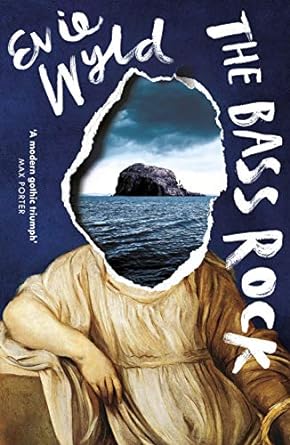
I absolutely loved Evie Wyld’s first two novels, After the Fire, A Still Small Voice (which was set in Queensland) and All the Birds, Singing (which was set in Scotland and Australia and won the Miles Franklin Award). Despite this I was slow to pick up her third novel The Bass Rock (2020) which won the Stella Prize in 2021, so I’m really glad this reading event finally prompted me to get to it. Evie Wyld was born in London and lives there now, after growing up on her grandparents’ farm in New South Wales; her wiki entry describes her as an Anglo-Australian author.

The Bass Rock is mainly set in North Berwick in Scotland, the titular rock being in Firth of Forth (there’s a great picture of the Bass Rock accompanying this Guardian review here), and across three different timelines. My heart always sinks at multiple timeline novels – usually one of the strands is far more compelling than the rest and I find myself whizzing through sections to get back to the one I’m enjoying most. But Wyld balanced all her elements expertly: formally through structure, and informally as they echoed one another while maintaining coherent yet distinct voices.

The contemporary strand is told in the first person by Viv. She is feeling entirely adrift after the death of her father and has had to spend some time as an inpatient being treated for her mental health. Now she is occupied trying to catalogue the possessions of her grandmother and great-aunt, with limited success.

“If I eat the cruciferous vegetables and cream the disgusting leg I would feel better and I would look better and I would be better. I scratch my leg through my tights until I feel the satisfactory glow of broken skin.”

In the second strand, we meet Ruth who, in the aftermath of the Second World War, has married Patrick. He is a widower with two young sons, Michael and Christopher, and has moved Ruth .to North Berwick. She is trying to find her place there, somewhat hindered by the fact that Patrick is barely ever at home. Instead, Ruth’s mainstay is her housekeeper Betty.

Finally, there is a strand told in the first person from the point of view of an eighteenth-century young man, about a woman called Sarah fleeing towards North Berwick after she is accused of witchcraft. This I thought was the least compelling narrative, but I think that was a deliberate choice. The Bass Rock is not about what men think. It is about what they do, and how too often that can involve violence towards women.

The Bass Rock really got under my skin. Its themes are domestic violence, societal violence, gaslighting and abuse. Through the different stories of these women across the ages, Wyld demonstrates how society both implicitly and explicitly condones and perpetrates this.

As Betty summarises to Ruth: “‘Men do these things and then they take on with their lives as though it’s all part and parcel.’ She placed the knife back on the table, laced her small fingers together and caged them over her knee.”

Or as Ruth’s sister Alice pragmatically observes: “’And in order to be able to enjoy your life there are certain things that one has to accept. It’s not being deluded, I won’t have that – it’s seeing things for what they really are, and buggering on until eventually the penny drops and you find yourself living a very fruitful life partly with them but partly with yourself. And the great thing is, they almost always die first.’”

Undoubtedly this novel is a tough read. I think what Wyld did brilliantly was show the insidious, everyday nature of so much abuse and how it is sustained. There is a particularly terrifying scene – ordinary, familial – demonstrating how ‘reasonable’ abusive men collude together to protect their own interests as part of the power structures that serve them so well, and fail women and children.

Wyld makes a great case for trusting your gut: Viv and her sister are on a train, pursued by a violent ex, they know they need to do something – move, pull the cord – but somehow remain frozen. Ruth knows Patrick is gaslighting her but somehow is persuaded to ignore what she fundamentally feels, both about her own situation and that of her step-sons.

But there is humour here too, mainly through Viv:

“I’m a little embarrassed by the assortment of snacks I bought during the day – honeyed almonds and wasabi peas. They are in bowls and I think it looks like I’m throwing some do, rather than persuading a homeless sex worker to stay with me because there might be a ghost.”

Yes, there is a supernatural element to The Bass Rock but it is a constant background murmur, rather than direct plot point, so don’t let that put you off if you are not keen on ghost stories. Looking on goodreads, those who came to The Bass Rock for a gothic tale were disappointed, and I do think it’s poor marketing to label it as such. There are gothic elements, and a tv adaptation could definitely choose to shoot it in such a way, but I would argue it’s not a thoroughly gothic novel. The ghost – if there is one – forms part of the wider theme of going with what you know rather than with what others try to persuade you to believe.

The Bass Rock is incredibly accomplished and I didn’t feel its themes ever overwhelmed story or characterisation. Recently I read a short story by one of my favourite writers on a similar subject, and was disappointed. In that instance I felt the characters were only there to enact the wider argument – both they and the plot felt flimsy. But here I found the characters and the plot compelling, with the wider themes making it an immensely powerful read.

There’s a five minute interview with Evie Wyld talking about The Bass Rock and visiting the location here

“As they crossed the June and reached the peak, the bay became visible, with the Bass Rock looming behind it. On clear days with the low tide it appeared so close that it might have beached itself on the sand, as if it were unmoored and went where it pleased.”

To end, an 80s song as usual, and I thought I’d choose rock with a heavy bass, because I have no shame when it comes to silly puns 😀 Classic song though…

“We owe it to our children to be better stewards of the environment. The alternative? – a world without whales. It’s too terrible to imagine.” (Pierce Brosnan)

Last year I only just managed a post for AusReadingMonth and in fact the month had already ended in Australia, so I was determined to do better this year, for AusReading Month 2023 hosted by Brona at This Reading Life. So I’m pleased to be posting on the first day of October, and I’m hoping to get a couple more reads in before the end of the month – a three hour train journey to Newcastle this week should help me on my way…

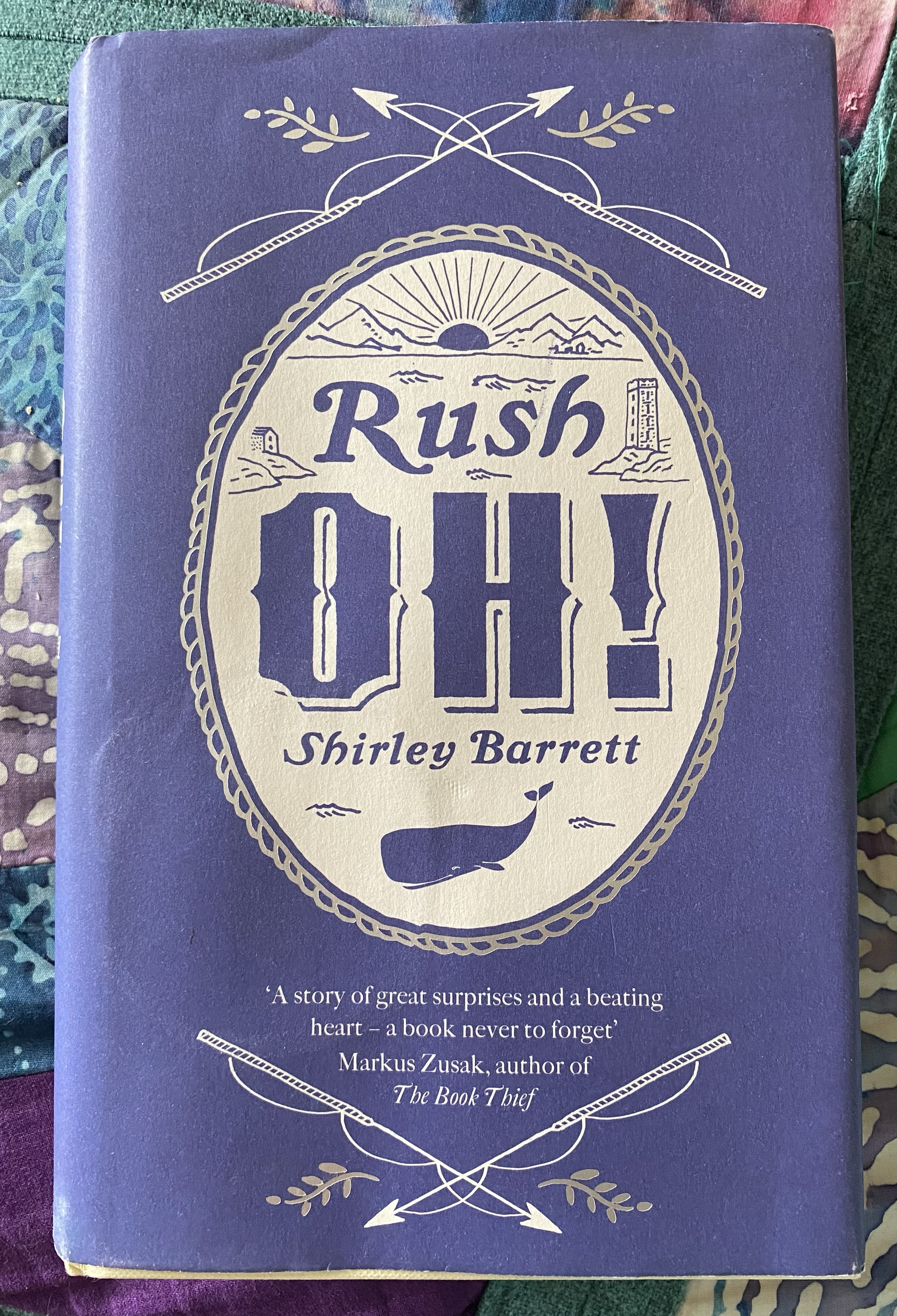
Now, I am definitely not in the market for a novel about whaling, but I remember Rush Oh! by Shirley Barrett getting a lot of love in the blogosphere when it came out in 2015, so I was persuaded to give it a try. Barrett was born in Melbourne and lived in Sydney, she was a filmmaker as well as an author and Rush Oh! was her first novel.

Rush Oh! is loosely based on a famous New South Wales whaling family, but Barrett explains in an Author’s Note at the end that she made a lot of changes and it is a work of fiction. There were a few passages I had to skip and one particular scene, but generally I found not too traumatic a read. It’s told from the point of view of nineteen-year-old Mary Davidson, the eldest daughter of a famous whaler, George ‘Fearless’ Davidson.

As Mary isn’t a whaler, and the season of 1908 is a particularly bad one, there isn’t much whale slaughter. When it does occur, Mary and her sister Louisa are horrified at “the ghastly brutality” they witness, Louisa refusing to speak to her father. Many years later, when George harpoons a whale without the need to bring it in for earning money, Mary finds this entirely unconscionable as killing for its own sake. Rush Oh! remains well-balanced and I didn’t feel Barrett was putting modern sensibilities into a historical figure.

The Davidson’s live in Eden and George sails from Twofold Bay with his crew which includes five Aboriginal men. They are helped in their work by a “gentlemen’s agreement” with a pod of Orcas, who herd Humpback and Sperm whales into the bay, knowing they will get a share of the spoils.

“I awoke suddenly to hear a distant but determined smack! It was a Killer whale flop-tailing, surely? Smack! There it was again, and no doubt about it this time. I jumped out of bed and hurried out to the veranda – my father was running stiff-legged down to the sleeping huts, shouting, ‘Rush oh! Get up, boys! Rush oh!’

The Orcas are well-known to the family, who give them names: Hooky, Humpy, Typee, Jackson, led by Tom:

“In spite of his distinguished years, his demeanour was ever that of a cheeky schoolboy, the sort that might steal your apples or throw rocks at you from across the street, but nonetheless a good boy in his heart and loved by all who knew him. As well as his duties as Chief Scallywag and Rouseabout, it was Tom who would generally take it upon himself to alert my father and his men whenever he and his companions had herded a whale into the bay.”

For the Aboriginal crew members, the Orcas are recognised as ancestors.

Into this world arrives handsome John Beck, an ex-Methodist-minister. Mary falls hard for him, but as her mother has died and she has a fractious relationship with her sister, she turns to novels and etiquette articles for advice on how to talk to men:

“I had often notice to certain archness deployed by the heroines when addressing members of the opposite sex and I strived to emulate this tone whenever the opportunity arose, which was infrequently. […] In desperation, I had even attempted to engage my uncle Aleck in repartee, but it was difficult to sparkle when constantly having to repeat things in a louder voice.”

Poor Mary. She is awkward and surrounded by older fisherman and her relatives, trying to eke out paltry food supplies to feed them all. She is looking back on this time from 30 years hence, and there is no bitterness in her tone. Rather there is a gentle humour and acceptance of who she was then and who she is now.

Her youth and naivete are also demonstrated in the style of the tale, with little sketches throughout (Matt Canning was the illustrator) and sometimes tying herself in knots with her syntax:

“I fear it will only invite comparisons with Mr Melville that will not be flattering. (I mean, they will not be flattering to me; they will be perfectly flattering to Mr Melville).”

But she is intelligent and funny and she cares for her family; I found her believable and charmingly honest.  The humour could be gently mocking at times:

“The age at which Uncle Aleck started whaling was a variable thing, but it was consistent in the fact that it was always younger than anybody else’s.”

But really it was fond more than anything, such as the fishermen’s reaction to John Beck’s sermonising:

“‘Father, since you asked, I have not been buffeted by temptation in a long time,’ said Uncle Aleck.

‘Me neither,’ admitted Arthur Ashby.

‘I would very much like to be buffeted by temptation, but sadly no one is buffeting me,’ said Salty.

‘I wonder if we could get onto the business of praying for a whale,’ said my father.”

Rush Oh! doesn’t fall into the info-dump trap of some historical fiction and wears its research lightly, evoking the setting beautifully and not losing sight of the story at all. My only reservation was that the point of view varies without stating so: Mary describes scenes she wasn’t present for. Although she states at one point this is because she heard about it from John Beck, it didn’t quite work for me.

But this is a minor quibble about an original and engaging tale with a clear-voiced narrator. The ending was left somewhat open on a couple of storylines and while I know that could irritate some readers I thought it worked really well in terms of allowing Mary a life beyond the story without everything tied off neatly.

Shirley Barrett wrote one other novel before she died in 2022. I understand The Bus on Thursday is very different to Rush Oh! but the strength of this novel has made me keen to read it.

To end, I do try and shoehorn in an 80s pop video where I can, and this one seemed apt:

Murder at the Residence – Stella Blómkvist (transl. Quentin Bates) Blog Tour

Today I’m taking part in a blog tour for Corylus Books, a lovely indie publisher with a focus on translated crime fiction. The novel Murder at the Residence offers an enduring mystery aside from the story: Stella Blómkvist is the name of the protagonist, not the author. Apparently there’s lots of speculation but it’s never been confirmed who writes this popular series. Murder at the Residence was published in 2012, the first of a second wave of Stella books, after a break since 2006.

Here is the blurb from Corylus Books:

“It’s New Year and Iceland is still reeling from the effects of the financial crash when a notorious financier is found beaten to death after a high-profile reception at the President’s residence. The police are certain they have the killer – or do they? Determined to get to the truth, maverick lawyer Stella Blómkvist isn’t so sure.

A stripper disappears from one of the city’s seediest nightspots, and nobody but Stella seems interested in finding her. A drug mule cooling his heels in a prison cell refuses to speak to anyone but Stella – although she has never heard of him. An old man makes a deathbed confession and request for Stella to find the family he lost long ago.

With a sharp tongue and a moral compass all of her own, Stella Blómkvist has a talent for attracting trouble and she’s as at home in the corridors of power as in the dark corners of Reykjavík’s underworld.

Stella Blómkvist delivers an explosive mix of murder, intrigue and surprise, and is one of Iceland’s best-loved crime series.”

The start of the novel sees Stella cruising for a New Year hook up. Her voice throughout is direct and no nonsense, and this includes articulating her sexual needs clearly. Sadly for Stella she doesn’t find a hottie to see the year in with, but she does meet Dagnija and Ilona, two Latvian women brought to Iceland on empty promises and finding themselves dragged into sex work. When Ilona disappears, Dagnija asks for Stella’s help.

Stella’s pretty busy, what with a dying man asking her to find his adopted daughter, a drug courier to defend, a young injured activist to support, and a family christening ending with the discovery of a dead body:

“The murder in the church at Bessastaðir was naturally the lead news item on both TV channels. Understandable, as it’s been a few centuries since there was last a murder at Bessastaðir. That’s as far as we know. And the President was in residence that weekend.

The body is that of a well-known financier.”

The financier Benedikt Björgúlfsson seems no great loss, but the story is bound up in the political situation in Iceland at the time:

“There were anonymous claims online that Benedikt must have been murdered by someone who had been with him at the President’s reception on Friday. The conclusion is that the guilty party has to be among society’s most powerful individuals. Others argue that this murder is the man on the street fighting back, that this is a foretaste of what other wealthy banksters can expect if the courts don’t get round to locking them up.”

As the various strands of Stella’s work start to come together, Murder at the Residence brilliantly portrays how political machinations and police corruption should concern everybody, because they affect everything. And while the story evokes its Iceland setting beautifully, it is sadly universal.

“Presumably you know the Icelandic politicians never, ever, resign due to poor judgement in their work. Taking responsibility for their own mistakes is something that simply missing from their genetic makeup.”

“Are wealthy playboys with reputations in ruins still Iceland’s heroes?”

Living in the UK means I’m not sure there was really a need to specify Iceland(ic) in those sentences….

Anyway, while Stella is (rightly) cynical regarding those in power, she’s not embittered like me 😀 So her voice remains clear-sighted and resolute but never alienating.

“It’s the familiar old song about bad foreigners making every effort to destroy Iceland’s innocence. But it’s on the overblown side this time. Our own homegrown criminals have long been perfectly capable of shovelling illegal drugs into the country. Not that they haven’t formed a few alliances along the way with European mafiosi.”

She has a softer side too – there is a budding romance, and also her young daughter Sóley Árdís to provide some work/life balance.

Murder at the Residence is expertly plotted and I just about kept up! If you’re the sort of reader who keeps notes and makes character lists when they read, those habits would serve you very well here.

The personal and political, plot and characterisation were all finely balanced. The story was also clear about the violence and corruption in the world Stella was investigating, but never gratuitous. I really enjoyed Stella’s distinctive voice and I’d love to spend more time with her. Fingers crossed more translations will follow.

Here are the stops from the rest of the tour, so do check out how other bloggers got on with Murder at the Residence:

“I think of a writer as a river: you reflect what passes before you.” (Natalia Ginzburg)

A desperate scrabbling attempt to get a final post written for Women in Translation Month!

Daunt Books are such an interesting publisher and I was keen to read Natalia Ginzburg having heard wonderful things in the blogosphere, so I swooped on All Our Yesterdays (1952, transl. Angus Davidson 1956) when it turned up in my local charity bookshop. I think I’d read somewhere that this wasn’t the best place to start with this author, but I absolutely loved it.

The novel follows two families living in a northern Italian town from the 1930s, through the war years to peacetime. Although the blurb on the French flaps of my edition suggests Anna, the daughter of the poorer family, is the protagonist, really Ginzburg follows them all to a greater or lesser extent, with no overarching plot other than the sequence of years.

Although this approach sounds like a shortcoming, it works so well. It’s not a documentary novel but it gestures towards this with an omniscient neutral(ish) viewpoint and only reported speech. This felt unusual to read, but is so clever in capturing the everyday experiences of those living through extraordinary circumstances.

Anna’s siblings are Concettina, Ippolito, and Giustino. Concettina is popular with boys but struggles to find a purpose in life; Ippolito channels his energies into anti-Fascist activities with his friend from the richer family across the road:

“Emanuele and Ippolito did not even know Italy, they had never seen anything except their own little town, and they imagined the whole of Italy to be like their own little town, an Italy of teachers and accountants with a few workmen thrown in, but even the workmen and the accountants became rather like teachers in their imagination.”

Their lives are equally dictated by world events and by commonplace ones. Anna falls pregnant by her boyfriend and marries an eccentric older man, Cenzo Rena, moving with him to the southern village of Borgo San Costanzo. Her affair with her self-involved, callow boyfriend was no great passion, and while her marriage to Cenzo Rena attracts approbation, he is a warmer, more generous man than the one her own age.

“She was alone with Giuma’s face that gave her a stab of pain in her heart, and every day she would be going back with Giuma amongst the bushes on the river bank, every day she would see again that face with the rumpled forelock and the tightly closed eyelids, that face that had lost all trace both of words and of thoughts of her.”

These are people destined to be on the outskirts of war. Cenzo Rena holds a lot of sway in his local area and does help Jewish people fleeing the Nazi occupation, but on the whole the story of All Our Yesterdays is not one involving soldiers or revolutionaries. It is about ordinary people and for them the conflicts of war are reported facts not lived experience. The latter for them includes a lot of mundanity:

“And the bread in town was rationed and was a kind of soft, grey dough that you couldn’t ever digest, the bread was like the soap and the soap was like the bread, both washing and eating had become very difficult.”

Yet this doesn’t mean the story isn’t affecting, or that the characters avoid tragedy. There are some truly tragic events that are hugely affecting. Ginzburg manages to be even-handed in her treatment of her characters but not detached. Her writing is warm but unsentimental as she demonstrates that flawed people are as worthy of love and mourning as idealised ones.

In case I’ve made it sound unremittingly serious, I should mention that there humour in All Our Yesterdays too. There are romantic entanglements that are treated with a degree of levity, and eccentric housekeepers/family retainers with various foibles. All life is here.

I can’t think of another writer who approaches Ginzburg’s style, and looking back on it I can’t explain how she does what she does. This was a story that snuck up on me, the deceptively simple storytelling drawing me in more than I realised until I was totally immersed. An extraordinary novel.

“Fanfares of trumpets usually announced only small, futile things, it was away fate had of teasing people. You felt a great exultation and heard a loud fanfare of trumpets in the sky. But the serious things of life, on the contrary, took you by surprise, they spurted up all of a sudden like water.”

To end, of course there’s a very famous song I could post on the theme of Yesterday, but instead, to continue the mix of despair alongside levity: have you seen a parrot singing Creep by Radiohead?

“I often think that the night is more alive and more richly coloured than the day.” (Vincent Van Gogh)

Life has caused me to fall behind on blog writing, so unusually I’m writing this a few weeks after having read the book. Thankfully I found this one really stayed with me and I can get it in just in time for the last week of Women in Translation Month 😊

Having really enjoyed Mieko Kawakami’s Miss Ice Sandwich (2013) during my novella reading in May, I was delighted to find a copy of All the Lovers in the Night  (2011, transl. Sam Bett and David Boyd 2022) in my local charity bookshop. It’s very different to my previous read of hers, and while I didn’t enjoy it as immediately as Ms Ice Sandwich,  it did grow on me.

Fuyuko Irie is in her thirties and lives alone. She used to work in an office but her alienation from her colleagues means she prefers working at home. Her colleague/friend Hijiri is supportive of her talents and sends her regular work as a freelance proofreader, this work suiting her precise and solitary nature.

But this means that Fuyuko is even more isolated and achingly lonely. Kawakami is so good at capturing that modern urban alienation for people living surrounded by others but unable to connect, the feelings compounded when in the midst of a crowd.

“As I passed below the haloes of green and red traffic signals, I was taken by this strange view of the evening, the city streets full of people – people waiting, the people they were waiting for, people out to eat together, people going somewhere together, people heading home together. I allowed my thoughts to settle on the brightness filling their hearts and lungs, squinting as I walked along and counted all the players of this game that I would never play.”

It looks like things could change for Fuyuko when she meets Mitsutsuka, a physics teacher. Light is important to Fuyuko – every Christmas Eve (her birthday) she walks the streets at night looking at the illuminations. As Mitsutsuka explains the workings of light to her, they begin a tentative friendship, with brief points of connection offering glimmers of hope:

“‘Um, do you think the light you’re thinking about and the light I’m talking about are, um, the same thing?’

‘Of course they are, Mitsutsuka said with a smile. ‘We’re talking about the same light.’”

In a flashback chapter we learn more about Fuyuko’s background, and why she finds herself in the situation she does. There is an event in the past that Fuyuko describes without naming it in the way that I think most readers would, suggesting she doesn’t fully recognize her trauma or why she is making subsequent self-destructive decisions.

Kawakami subtly demonstrates how Fuyuko could change things for herself, but also how wider society makes this extremely difficult for her. She and Hijiri are women who have made very different choices and present themselves very differently to the world, but both struggle under the expectations placed on women and the fact that these are not an easy fit for either of them. A brief meeting with old school friend Noriko suggests traditional choices are not always happy ones either.

“I’d been on my own for ages, and I was convinced that there was no way I could be any more alone, but now I’d finally realised how alone I truly was. Despite the crowds of people, and all the different places, and a limitless supply of sounds and colours packed together, there was nothing here that I could reach out and touch. Nothing that would call my name. There never had been, and there never would be. And that would never change, no matter where I went in the world.”

All the Lovers in the Night is a slow burn novel, despite being only just longer than novella length. As I mentioned at the start, it was a story that grew on me and I found Fuyuko’s voice more compelling the more I read. A few weeks on and she’s really stayed with me.

Despite the sadness and alienation running through All the Lovers in the Night, I thought it ended with a suggestion of hope. That incrementally things can change, and improve. That imperfect people can make poor decisions but might still be moving towards a brighter time while doing so.

To end, any excuse for the wonderful Patti Smith:

Deadly Autumn Harvest – Tony Mott (transl. Marina Sofia) Blog Tour

When I took part in a blog tour for Corylus Books earlier in the year, it was for a novella, which helpfully chimed with my Novella a Day in May reading. The bookish stars have aligned again for my taking part in a Corylus Books blog tour, as Deadly Autumn Harvest (2020) by Romanian author Tony Mott fits perfectly with my plans for #WITMonth reading, translated as it is by lovely blogger Marina Sofia (2023).

Here is the blurb from Corylus Books:

“A series of bizarre murders rocks the beautiful Carpathian town of Braşov. At first there’s nothing obvious that links what look like random killings. With the police still smarting from the scandal of having failed to act in a previous case of a serial kidnapper and killer, they bring in forensic pathologist Gigi Alexa to figure out if several murderers are at work – or if they have another serial killer on their hands. Ambitious, tough, and not one to suffer fools gladly, Gigi fights to be taken seriously in a society that maintains old-fashioned attitudes to the roles of women. She and the police team struggle to establish a pattern, especially when resources are diverted to investigating a possible terrorist plot. With the clock ticking, Gigi stumbles across what looks to be a far-fetched theory – just as she realises that she could be on the murderer’s to-kill list.”

I don’t read much contemporary crime because I don’t want to read about women being killed in various gruesome ways. I’m relieved to say I thought Deadly Autumn Harvest got the balance right between giving enough detail so that the horrors were realised, but with nothing being gratuitous. There was a responsibility in how the victims were portrayed, so you got a sense of them as people and the injustice in how their lives ended.

Forensic pathologist Gigi Alexa is an intriguing figure too. Cascading curly blonde hair and resolutely dressed in bright colours, I thought she was an idiosyncratic and believable investigator, good at her job and super-committed, yet not entirely detached:

“Usually, by the time she got to see the bodies, they had been drained of any semblance of life or a back story, they were mere puzzles to be solved. But today it had all been a little too close for comfort.”

She’s also a scientist who is not above a bit of superstition:

“Three bad omens. She counted them. First, she stumbled over her slippers as she got out of bed, so she went to the bathroom in her bare feet. Then she stepped into the sand that Morty had scattered from his litter tray. Thirdly, once she got into the kitchen, her coffee machine refused to get going so she would have to boil up Greek coffee instead. Three signs of bad luck on a Tuesday – no doubt more would follow.”

As Gigi and her team investigate the murders, she has to contend with various frustrations in the male-dominated environment. She’s not surrounded by idiots though. I liked her relationship with her boss CI Matei, and Emil, her colleague in pathology. There was also some humour (alongside remembrance of previous toxicity) in the reappearance of her impeccably turned-out ex, Superintendent Vlad Tomescu. (Slight spoiler, skip the next sentence and quote if you don’t want to know!) Gigi becomes single during the novel and her sardonic reflections on this state also lightened the tone:

“She didn’t miss him at all. It would be a while yet before she started missing the warmth of someone to curl up with in bed. Maybe during the winter. Except maybe by then she would have invested in an electric blanket.”

The mystery is very well-paced and the novel isn’t overlong at just 225 pages. We are there at the moment of the killings at various points, before we are returned Gigi and her team’s investigation. Although I’d be amazed if anyone guesses the connection before Gigi, we’re given a fair chance to guess the perpetrator. I’d like to proclaim I worked out who did it, but I suspected absolutely everyone at some point 😀

Deadly Autumn Harvest is a quick, compelling read with a truly chilling murderer pursued by a team of believable, well-rounded investigators.  

Finally I should just say that Deadly Autumn Harvest definitely made me want to visit Braşov! I’ve never been, it sounds absolutely beautiful and with Gigi and her team on the case there won’t be any serial killers left to spoil my holiday – perfect.

Here are the stops from the rest of the tour, so do check out how other bloggers got on with Deadly Autumn Harvest:

“Well, I woke up Sunday morning/With no way to hold my head that didn’t hurt./And the beer I had for breakfast wasn’t bad,/So I had one more for dessert.” (Kris Kristofferson)

I had such a book hangover after Bleak House. I couldn’t settle to anything. A friend of mine who loves a certain 80s singer has a phrase when she hears other warblers: “He’s alright, but he’s not George Michael.” Well, I kept picking up books that were alright, but they weren’t Bleak House. So few books are, I find…

Then I remembered that when Simon did his books of the year round up last year, I’d recognised two were on my TBR pile. Surely books good enough to make the final cut would see me right? Of course they did 😊 Hooray for bloggers and their brilliant recommendations!

Firstly, the novella which made the top of Simon’s list, A Jest of God by Margaret Laurence (1966). This was the second in Laurence’s Manawaka sequence, but thankfully they can all be read as standalones as I’d not read anything by her before. On the strength of this, I’ll definitely be seeking out her writing again.

A Jest of God is an intimate character study of Rachel Cameron, a thirty-four-year-old teacher who lives with her emotionally manipulative mother above the Manitoba funeral business her father ran until he died.

The novel is narrated in the first-person, and Rachel’s mind is an oppressive and tense place to be. She is highly anxious and self-censoring:

“There. I’m doing it again. This must stop. It isn’t good for me. Whenever I find myself thinking in a brooding way, I must simply turn it off and think of something else. God forbid that I should turn into an eccentric. This isn’t just imagination. I’ve seen it happen. Not only teachers, of course, and not only women who haven’t married. Widows can become extremely odd as well, but at least they have the excuse of grief.”

This anxiety and second-guessing is not helped by her mother’s behaviour, which is self-pitying, judgemental and highly manipulative. Rachel recognises this, but is at a loss as to how to extricate herself:

“Her weapons are invisible, and she would never admit even to carrying them, much less putting them to use.”

“All such words cling to the mind like burrs to hair, and I can never seem to brush them away, as I know I should do.”

Rachel’s mother is not an out-and-out baddie though, and Laurence expertly demonstrates the vulnerability and fear that underlies her machinations. Similarly, Rachel does not always behave well. In one particular scene early in the book, she actually behaves despicably and doesn’t make amends despite her instant remorse. She is a complex, contradictory character, wholly believable. Laurence treats her tenderly but unflinchingly; without judgement but also without sentiment.

Rachel could so easily be a stereotype: a lonely single woman, living with her mother. But Laurence side-steps clumsy characterisation, or easy dismissal of Rachel, by delicately exploring the true meaning of the adjective so often attached to unmarried women approaching middle-age: she is desperate. She is absolutely desperate and despairing. She is lonely, and feels trapped in the life she has always known, with no way out. She wants things to be different, but she doesn’t know how. She is deeply, existentially sad.

1966 is a time of societal change, when women like Rachel could feel stifled by convention and also have some sexual freedom. So when Nick, and old schoolfriend appears, there are brief moments of physical connection. But in only seeing things from Rachel’s point view, the reader is able to realise how little intimacy there is. And that is what Rachel needs, more than the sex which Nick offers. Yet she doesn’t know how to achieve this:

“I talk to him, when he is not here, and tell him everything I can think of, everything that has ever happened, and how I feel and for a while it seems to me that I am completely known to him, and then I remember I’ve only talked to him like that when I’m alone. He hasn’t heard and doesn’t know.”

In some of Nick’s reported speech, the reader picks up on things Rachel ignores. She is so bound in her own intense feelings, she can’t really hear the cues Nick gives, over her relentless inner voice.

“He’s thirty-five, not fifteen. His past such gauche public performances. What he worried about Rachel? I’m not worried. I’m perfectly alright. Well, relax, then. I am relaxed. Oh? Shut up. Just shut up.”

A Jest of God is such an accomplished novel that is also so approachable. I found Rachel’s voice got under my skin very quickly and distinctly, and I had to read on. I think it works very well as short novel, longer would have been too oppressive and difficult to sustain I suspect. But at the length it is it remains powerful and impactful, and not as depressing as I’ve made it sound!

Ultimately there is resilience and change for Rachel, even some defiance. And there are brief moments of humour, such as Rachel trying to duck her colleague Calla’s constant invitation to attend Tabernacle with her:

“At least I have postponed it, and perhaps by that time some reasonable excuse will come along, or I’ll be dead.”

A stunning novel: a precise and compassionate character study, clever and humane. I’m so glad to have discovered Margaret Laurence at long last.

“Something must be the matter with my way of viewing things. I have no middle view. Either I fixed on a detail and see it as though it were magnified – a leaf with all its veins perceived, the fine hairs on the back of a man’s hands – or else the world recedes and becomes blurred, artificial, indefinite, an abstract painting of a world.”

Secondly, after being in Rachel’s head, I looked forward to some comic relief from an author I always enjoy: Margery Sharp. Four Gardens (1935) was number ten in Simon’s list. But this wasn’t as comic as some of her other novels; it had a slightly elegiac tone and the relationships included a certain sadness. But it wasn’t a sad novel overall, and I sunk into Four Gardens with pleasure.

Four Gardens follows the life of Caroline Chase from late teens to middle-age and the titular spaces she finds herself in. The device with gardens isn’t remotely heavy-handed and for a significant section of the novel they barely feature. But Caroline is a gardener, given half a chance, and it is instinctive and natural to her:

“Her step, as she now redescended to the rose garden, was therefore a proper gardeners tread – slow, considerate, with long abstracted pauses for survey and meditation. She also, without thinking, removed her hat and gloves.”

This is her first garden, one she trespasses into, and as she meets her first love there, it has a dreamlike quality. Perhaps this is why her love of gardening is so easily disregarded when she leaves behind youthful folly to marry the determinedly sensible Henry:

“For all these things in themselves – love at first sight, undying devotion, and general aloofness – were very exciting indeed; it was only in connection with Henry that they became so curiously prosaic.”

And so for many years Caroline doesn’t garden at all. She runs a house and she raises her son and daughter in the town where she has always lived. She is the creator of a safe space for her children and an unwavering routine for her staid but affectionate husband.

Despite the love she feels for her family and the tranquillity of her home life, I did find an element of melancholy to Caroline’s domestic arrangements. Her family are near and dear, but there seemed to be very little intimacy: she and Henry rarely communicate about anything beyond practical considerations, and she doesn’t really understand her children at all. She also despises her closest friend in the village, Ellen Watts  – a monstrous and wholly believable creation. Caroline reflects very little though, and so any concerns are quickly subsumed in the relentless demands of domesticity:

“Thinking – the deliberate exercise of the brain – did not come naturally to her.”

But I wouldn’t want to give the impression that Four Gardens is ponderous or heavy-going in any way. It felt quite a realistic presentation of Edwardian contentment, though not without Sharp’s gentle jibes, such as this discussion of wallpaper where Caroline evokes her husband’s approval to counteract her mother’s reservations:

“Mrs Chase was at once silenced. […] It would have seemed perfectly reasonable to her that Caroline, who was in the house all day, should have suited her surroundings to the taste of a man who was out of it.”

I did want Caroline to exert herself in some way, to stake a claim beyond her roles meeting everyone else’s needs. Finally she does it, when she starts growing runner beans during World War I, and realises how much she is nurtured by time with her plants:

“there was usually a quiet space, between twelve and half-past, when the first work of the house was finished and before the children’s dinner became a pressing consideration; and these thirty minutes Caroline began to guard and cherish as a precious treasure.”

The war years are beautifully evoked by Sharp, with all their worry alongside self-serving censorious behaviour of some in the village.  After the war, everything changes. Caroline finds herself mistress of a large house, with a garden she can’t touch unless she wants to incur the wrath of a succession of gardeners:

“The garden was looking well. But it always did look well, and gave her no special pleasure […] It was perfectly designed and perfectly kept, and to Caroline completely uninteresting.”

Meanwhile, her children are vaguely affectionate, patronising strangers. They change the names she loves, Lily becoming Lall and Leonard, Leon. They are academically accomplished and having had money their whole lives, utterly contemptuous of it. These Bright Young Things live by a morality that is absolutely baffling to Caroline, and there is a lovely echo of an earlier scene between Caroline and her mother in a later conversation between Caroline and Lall. The reader can see they are so much more alike than either realises, dramatic irony at its lightest.

I’m not one for biographical readings of novels but something of the tone of Four Gardens – affectionate, gentle, slightly sad –  did make me consider the dates. In Caroline, Sharp is writing about her parents’ generation, so maybe that explains it… or maybe it has nothing to do with it at all, who knows?  

Caroline’s fourth garden finally sees her able to do as she pleases. I couldn’t help feeling she might really surprise her children, and herself 😊 A warm, engaging story of a woman’s outwardly ordinary adult life during great societal change.

To end, Paul Newman adapted A Jest of God as Rachel, Rachel for his directorial debut. This very odd trailer doesn’t make it seem overly appealing:

“I have a great deal of difficulty in beginning to write my portion of these pages, for I know I am not clever.” (Esther Summerson in Bleak House)

I’m not a fan of Dickens. I don’t like his caricatured villains, I don’t like his insipid virgin heroines, I don’t like his sentimentality. This may explain why it’s taken me thirty years to open the copy of Bleak House given to me as a teenager by my mother, as it’s one of her favourite novels. It begins:

“London. Michaelmas term lately over, and the Lord Chancellor sitting in Lincoln’s Inn Hall. Implacable November weather. As much mud in the streets as if the waters had but newly retired from the face of the earth, and it would not be wonderful to meet a Megalosaurus, forty feet long or so, waddling like an elephantine lizard up Holborn Hill. Smoke lowering down from chimney-pots, making a soft black drizzle, with flakes of soot in it as big as full-grown snowflakes—gone into mourning, one might imagine, for the death of the sun. Dogs, undistinguishable in mire. Horses, scarcely better; splashed to their very blinkers. Foot passengers, jostling one another’s umbrellas in a general infection of ill temper, and losing their foot-hold at street-corners, where tens of thousands of other foot passengers have been slipping and sliding since the day broke (if this day ever broke), adding new deposits to the crust upon crust of mud, sticking at those points tenaciously to the pavement, and accumulating at compound interest.”

And that’s how long it took me to absolutely love Bleak House. Which just goes to show that as always, my mother knows best 😀 (as do the bloggers who recommended I choose this as my tome reading after a month of novellas – many thanks!)

Bleak House follows the fortunes of three young people caught up in a long-running legal wrangle:

“Jarndyce and Jarndyce drones on. This scarecrow of a suit has, in course of time, become so complicated that no man alive knows what it means. The parties to it understand it least, but it has been observed that no two Chancery lawyers can talk about it for five minutes without coming to a total disagreement as to all the premises. Innumerable children have been born into the cause; innumerable young people have married into it; innumerable old people have died out of it.”

Esther Summerson, Ada Clare and Richard Carstone find themselves under the guardianship of John Jarndyce, a benevolent older distant relation of the latter two. Ada and Richard fall in love, but it is Esther rather than the young lovers who is the focus, her first-person narration alternating with that of an omniscient narrator.

She is from a mysterious background, not knowing who her parents are and raised by an abusive godmother. “Your mother, Esther, is your disgrace, and you were hers”. Esther is a Victorian heroine though, so rather than becoming defensive or angry, she decides she will:

“strive as I grew up to be industrious, contented, and kind-hearted and to do some good to some one, and win some love to myself if I could. I hope it is not self-indulgent to shed these tears as I think of it. I am very thankful, I am very cheerful, but I cannot quite help their coming to my eyes.”

Although tediously self-deprecating at times, generally I found Esther really likable. Her narrative is can be witty and some of her portraits of others almost sharp, so I did wonder if the reader wasn’t supposed to take her modest protestations entirely at face value, at least not consistently.

The omniscient narrator widens the tale to explain the various legal dealings of Chancery Lane and all its hangers-on, alongside the situation of the Dedlock family:

“there is no end to the Dedlocks, whose family greatness seems to consist in their never having done anything to distinguish themselves for seven hundred years.”

The current incumbent Sir Leicester Dedlock does little to change this history of his family as he “is generally in a complacent state, and rarely bored. When he has nothing else to do, he can always contemplate his own greatness. It is a considerable advantage to a man to have so inexhaustible a subject. After reading his letters, he leans back in his corner of the carriage and generally reviews his importance to society.”

He is devoted to his beautiful, fashionable, remote wife Honoria, who the reader quickly realises has A Big Secret in Her Past. Hmm, based on what we know of the other characters so far, what on earth could it be…?  

It’s not hard to guess what it is as the clues are laid on pretty thickly, and I thought the imagery when Esther first sees Lady Dedlock was so striking:

“It was easy to know that the ceremonious, gouty, grey-haired gentleman, the only other occupant of the great pew, was Sir Leicester Dedlock, and that the lady was Lady Dedlock. But why her face should be, in a confused way, like a broken glass to me, in which I saw scraps of old remembrances, and why I should be so fluttered and troubled (for I was still) by having casually met her eyes, I could not think.”

Dickens weaves together the various strands of the story, the main plots and all the subplots with brilliant dexterity. Sometimes with these big Victorian baggy monsters (to steal a phrase from Henry James) the stories can flag a bit, as the authors are trying to keep them going for a number of episodes in the serial. I really didn’t feel this with Bleak House. The story kept driving forward and all the various plots came together so cleverly, contriving to make a well-paced page-turner.

What really struck me about Bleak House though, is that it is a story of great compassion. Of course I knew Dickens had a strong social conscience and his work has a social message to it. But Bleak House demonstrated a degree of understanding and sympathy that I wasn’t expecting. Unmarried mothers, those struggling with addictions, human weakness and vulnerability – none are judged. Those who are judged are the ones who seek to profit from such.

Which brings me on to Mr Tulkinghorn… I said at the beginning I’m not usually keen on Dickens’ villains, finding them too caricatured. The lawyer Tulkinghorn was medacious, conniving, cold as ice, completely believable and completely terrifying. Truly villainous.

Although there are romantic elements to Bleak House, it is not an overly romantic tale. It is a novel much more concerned with the fall-out on the vulnerable members of society from immovable and self-serving institutions. Perhaps the main way in which the novel has dated is an engagement that seemed highly questionable to me, but as it remains chaste and ultimately everyone comes to their senses, it didn’t overly offend my modern sensibilities 😀

If I’ve made Bleak House sound a heavy read though, I’ve done it a disservice. I found it very often funny, whether satirically critiquing the legal system or broader nonsense like Mrs Guppy trying to throw John Jarndyce out of his own home and resisting all attempts to explain the illogicality of such a move. It has its sad moments too, and is genuinely moving in places.

And just in case a Victorian novel may seem to have no relevance to our modern world, I leave you with this exchange between Esther and Miss Flite:

“I said it was not the custom in England to confer titles on men distinguished by peaceful services, however good and great, unless occasionally when they consisted of the accumulation of some very large amount of money.

“Why, good gracious,” said Miss Flite, “how can you say that? Surely you know, my dear, that all the greatest ornaments of England in knowledge, imagination, active humanity, and improvement of every sort are added to its nobility! Look round you, my dear, and consider. YOU must be rambling a little now, I think, if you don’t know that this is the great reason why titles will always last in the land!”

I am afraid she believed what she said, for there were moments when she was very mad indeed.”

This is an excessively long post and I’ve barely scratched the surface of Bleak House. But in summary: funny, sad, socially engaged, well-paced, emotionally affecting, entertaining, original. An absolute masterpiece.

To end, I remember watching the BBC adaptation of Bleak House when it came out and thinking it very well done. Now I’ve read the book I might go for a rewatch, as I don’t remember it that well and it does look entertaining (especially Charles Dance as Tulkinghorn):