Novella a Day in May 2020 #15

Often I am Happy – Jens Christian Grondahl (2016 trans. the author 2017) 167 pages

I really enjoyed the female narrator’s voice in Often I Am Happy. She is an ordinary, decent person who can also be quite cranky and sarcastic. It’s a woman’s voice that we don’t hear in fiction very often.

Ellinor is grieving her husband Georg, who was married first to her best friend Anna. Anna has been dead forty years and in her grief for Georg, Ellinor talks to Anna.

“You were my country, first one and then the other, and now I am stateless.”

She tells Anna about her life with Georg and raising Anna’s children. She is clear-sighted but also compassionate:

“He was so considerate, and I think he had come to be really fond of me. The years passed, mind you, and in the end we belonged together, simply because we lived side by side. We underestimate the power of habit while we’re young, and we underestimate the grace of it, Strange word, but there it is.”

Ellinor is seventy years old, and is a woman who has lived long enough to know who she is and to accept herself and the world without sentimentality. This means she sometimes loses the social niceties that her suburban step-children and their partners wish she had kept. Ellinor was raised by a single mother with little money, and never really felt she fitted in with the bourgeois surroundings she found herself in as an adult:

“since you died, the women of the commercial upper middle classes have found a post-colonial solution to the difficult arithmetic problem of career multiplied with self-realisation plus motherhood. You get yourself a third-world servant and call it cultural exchange, but nine out of ten live in the basement where they can Skype with the children they’ve had to leave behind”

Ellinor decides to leave the suburbs and move back to the multi-cultural, urban area she was raised in. Her family do not understand this choice, and she begins to withdraw from them, uncertain that she ever really fitted in with them anyway:

“There is nothing like a conflict to do the difficult work for you. It is an underrated remedy, cowardly as we are, but it makes everything so much easier. Free at last, I thought, and stepped out onto my bike.”

Ellinor is not bitter, and she’s not bitchy. She’s actually content, and as the title tells us, although deeply sad in her grief, she’s doing ok. But she has reached a point where she no longer compromises her view or actions, because why should she need to?

“Apparently, nothing is more purifying for people’s self-esteem than to place themselves at the very edge of someone else’s grief and show that they are not at all dizzy.”

Often I Am Happy is a wonderful character study of an older woman, and a portrait of deep grief experienced within a life that still needs to be led on the individual’s own terms.

“his absence felt like a lump growing inside me, making me suffocate. I never felt so alone. One is used to reality responding or just resounding with whatever one thinks or feels. Death shuts up the living; the real is our enemy in the long run.”

Novella a Day in May 2020 #14

No Signposts in the Sea – Vita Sackville West (1961) 156 pages

Continuing with the Virago theme from yesterday, here is another of their delightful offerings. I do enjoy Vita Sackville-West’s writing and I feel like she never gets the recognition she deserves. I suppose when your name is forever linked with the genius of Virginia Woolf, you’ll always suffer by comparison… No Signposts in the Sea is her final novel and it’s a brittle, slightly flawed gem.

Edmund Carr is a successful journalist and self-made man, who knows he doesn’t have long to live. As a result, he has followed the woman he loves from afar, Laura Drysdale, onto a cruise to unnamed places which seem to be southern Pacific islands.

The narrative is entirely from Edmund’s viewpoint, and at first I thought I’d struggle because that viewpoint seemed to be relentlessly bitchy one:

“ ‘it is lucky for some people,’ I say to Laura, ‘that they can live behind their own faces.’”

However, Edmund’s incredibly painful situation – both in terms of his life nearing its end and his unspoken love for Laura (possibly a reference to Petrarch?) means that he is more vulnerable than he has ever been.

“Geographically I do not care and scarcely know where I am. There are no signposts in the sea.”

As he reflects on life and on the nature of romantic love, Edmund does develop as a character and begins to soften his brittle, urbane exterior:

“I realised for the first time how greatly our apprehension of people depends on the variation of conditions under which we see them, and thought it possible that we may never truly perceive them at all.”

Certainly the reader sees more of Laura than he does. In our objectivity something is obvious to us that Edmund remains unaware of, caught as he is in his obsession, his jealousy, and his confusion. Sackville-West shows how much those early romantic feelings can often be a reflection of the lover’s insecurities, fantasies and desires, and very little to do with the loved one.

“I heard her say no, no more coffee thank you, and it was as though she had said Edmund, my darling, I love you.

Love does play queer tricks.”

No Signposts in the Sea is a romantic novel in its way though, because it suggests that by moving beyond these infatuated feelings, a deep love and rewarding companionship – such as Vita enjoyed with Harold Nicholson – is possible.

Less romantic are the racist views in evidence among the white, privileged, cruise passengers, sadly of its time but surely beginning to be outdated in 1961.

I didn’t think No Signposts in the Sea was a strong as some of the other novels I’ve read by Sackville-West. The characterisation is a bit thin, especially regarding Edmund’s love rival, Colonel Dalrymple. Vita Sackville-West was extremely unwell as she wrote this so could not have been at the height of her powers, but there is still much to enjoy.

“Dusk began to fall; I wished never to arrive; I wished to continue forever between land and water in a dream region so wild and beautiful.”

Novella a Day in May 2020 #13

The Aloe – Katherine Mansfield (1916, this edition 1983) 79 pages

The Aloe was Katharine Mansfield’s first punt at writing her short story Prelude, and so while it’s not entirely satisfactory as a fully realised story in its own right, there’s still a lot to enjoy here. It also forms another stop on my Around the World in 80 Days Reading Challenge

It begins with the Burnell family moving to a new home further out in the New Zealand countryside. The opening is told from the children’s point of view as the three of them are old enough to realise what is happening but too young to take an active part. I thought Mansfield captured the detailed minutiae of children’s lives so well:

“Kezia liked to stand so before the window. She liked the feeling of the cold shining glass against her hot little palms and she liked to watch the funny white tops that came on her fingers when she pressed them hard against the pane”

Once they arrive at the larger, more remote house, the attention shifts to the adults. Mansfield is incredibly subtle in her characterisation, drawing psychologically astute portraits but leaving the reader to work out what it means for this group of people to be living together.

Stanley Burnell is optimistic and eager about the move, little realising the various pressures it places on the women of the household, mainly because he is out in town all day:

“He was enormously pleased – weather like this set a final seal upon his bargain – he felt somehow – that he had bought the sun too and got it chucked in dirt cheap.”

His wife Linda is neither entirely happy nor completely unhappy, but certainly she is part of a generation of women given to mysterious ailments like headaches which enable her to spend a day in a room closed off from the rest of the household. She able to do so because her mother Mrs Fairchild is so capable and domesticated:

“There was a charm and grace in all her movements. It was not that she merely ‘set in order’; there seemed to be an almost positive quality in the obedience of things in her fine old hands.”

One piece of characterisation I really liked was Beryl, Linda’s sister. There is a hint that she may be trying to seduce her brother-in-law, mainly through boredom and a need to feel loved. As she writes a letter to her friend full of news that she knows is insincere, superficial prattle, she has this insight:

“Perhaps it was because she was not leading the life that she wanted to – she had not a chance to really express herself – she was always living below her power – and therefore she had no need of her real self – her real self only made her wretched.”

In lesser hands Beryl would just be a flighty, flirty, dreamer with the potential for real destruction, but Mansfield shows how all the women are forced into certain roles because society doesn’t give them the choices it affords to men. This is never didactic though; the reader is left to draw their own conclusions.

The Aloe only covers two days in this family’s life (though Mansfield ultimately wrote three short stories about the Burnells) but so much is explored, reading it is still a rich experience. My only reservation is that my delicate sensibilities could have done without the duck-killing scene (which I skimmed.) The novella does end rather abruptly but then it was never quite intended to be read as it is now.

Novella a Day in May 2020 #12

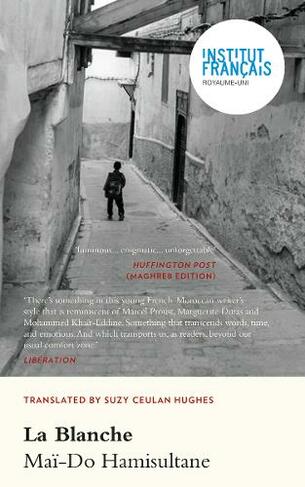
La Blanche – Mai-Do Hamisultane (2013, trans. Suzi Ceulan Hughes 2019) 80 pages

La Blanche is set largely in Casablanca, and so forms another stop on my much-neglected Around the World in 80 Books reading challenge, hosted by Hard Book Habit who sadly don’t seem to be blogging any more but it’s a great challenge so do join in if you can!

 La Blanche is narrated by a young woman whose grandfather was murdered in their home in 1992. Along with her mother she flees Morocco to France, but following a painful break-up of a relationship finds herself heading back to the land of her birth.

“It rained heavily in the night. Torrential summer rain. I didn’t sleep a wink. Perhaps partly too, because I’m anxious about going back to Morocco. It’s as though I’d been bracketing off my childhood for years. Once I’d arrived in France I’d never thought about my childhood in Casablanca again. I’d left it all over there, apart from a little scrap of white paper, folded in four, that I always keep with me.”

The narrative moves back and forth across time, building a picture of her privileged childhood in Casablanca, the violence that shattered it, and the psychological fall-out from a disintegrating romantic relationship as an adult. This is handled expertly and is never confusing, blending together with ease to create a fully realised portrait of this young woman’s life.

The language is taut and every word placed carefully – hence this novella only comes in at 80 pages – but the story is in no way underwritten. Hamisultane has a startling and inventive way of writing, such as here, when the narrator awakes to realise her lover has left:

“It’s morning. The bed is empty. Light is flowing across the room. I close the shutters because I’m afraid it might flow straight though my body.”

It’s so impressive that La Blanche was a debut novel. The time shifts, language and characterisation are handled so deftly making for a satisfying and evocative read.

“My grandfather wakes me.

It is dawn.

He’s taking me out with him.

‘As quick as you can,’ he says to me. ‘While we can still see the morning dew beading the blooms on the rose bushes.’”

Novella a Day in May 2020 #11

The Suicide Shop – Jean Teule (2007, trans. Sue Dyson 2008) 169 pages

It’s a funny one this. I only post about books I recommend and I do recommend this quirky, gothic, post-apocalyptic tale, but something stopped me loving it as much as some of Gallic Books other offerings.

The titular shop is run by the Tuvache family, who for generations have offered people ways to end their lives. They are mournful in nature and bleak in outlook, apart from Alan, the youngest Tuvache who is bad for business.

“please PLEASE stop smiling! Do you want to drive away all our customers? Why do you have this mania for rolling your eyes round and wiggling your fingers either side of your ears? Do you think customers come here to see your smile?”

Poor Alan’s schoolwork is no better, failing to capture the environmental desolation that humans live with:

“A path leading to a house with a door and open windows, under a blue sky where a big sun shines! Now come on, why aren’t there any clouds or pollution in your landscape? […] Where’s the radiation? And the terrorist explosions? It’s totally unrealistic. You should come and see what Vincent and Marilyn were drawing at your age!”

Alan and his siblings are named after famous suicides: Turing, van Gogh and Monroe. Vincent refuses to eat and is planning a grisly theme park where people can die in various inventive ways, Marilyn is depressed and feels ugly and cumbersome. They are a perfect fit for their family; only Alan resolutely forges his own path, despite living in a shop where the carrier bags state: “Has your life been a failure? Let’s make your death a success!”

There isn’t a plot so much in The Suicide Shop, rather we follow the family through the years as Alan proves an irresistible sunny force, exerting more influence over his family than they initially realise. Their bafflement with Alan reminded me of The Addams Family, (which I loved as a child), completely at a loss as to what to do with someone who doesn’t share their world view.

“We force him to watch the TV news to try and demoralise him”

As you’d expect, the humour in The Suicide Shop is very dark. It sells rusty razor blades with a sign that says “even if you don’t make a deep enough cut, you’ll get tetanus” but overall it’s a gentle humour, like the woman who grows attached to the trapdoor spider she buys to end her life, names it Denise and starts knitting it booties.

Looking on goodreads, there’s plenty of people who adored this story and I’m not entirely sure why I’m not one of them.  But I still found The Suicide Shop a quick, diverting read with some entertaining touches.

“Life is the way it is. It’s worth what it’s worth! It does it’s best, within limitations. We mustn’t ask too much of life either. It’s best to look on the bright side.”

The Suicide Shop was made into an animated film in 2012, directed by Patrick Leconte. Here’s the English language trailer:

Novella a Day in May 2020 #10

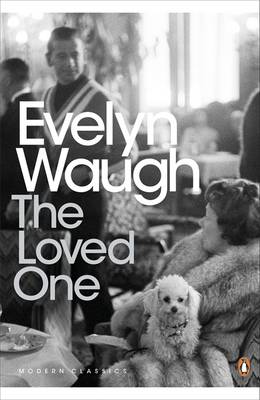
The Loved One: An Anglo American Tragedy – Evelyn Waugh (1948) 127 pages

The Loved One was written following Waugh’s experience of visiting Hollywood to discuss an adaptation of Brideshead Revisited. In the novella he satirises Hollywood and how death has become a business. It’s a pretty brutal attack, particularly towards the end.

It begins with a portrait of two ageing Hollywood tycoons, Sir Ambrose Abercrombie:

“He was still on what Lady Abercrombie fatuously called the ‘right’ side of sixty, but having for many years painfully feigned youth, he now aspired to the honours of age. It was his latest quite vain wish that people should say of him: ‘Grand old boy.’”

And Sir Francis Hinsley: “His swimming-pool which had once flashed like an aquarium with the limbs of long-departed beauties was empty now and cracked and overgrown with weed.”

Dennis Barlow, a poet who was fired from a story of Shelley’s life and now works at Happier Hunting Ground pet funeral service, lives with Sir Francis. Dennis enjoys his work:

“there at the quiet limit of the world he experienced a tranquil joy”

But Sir Ambrose feels it reflects badly on the ex-pat community. When Sir Francis kills himself, no-one is particularly upset. Dennis finds discovering the body “rude and momentarily unnerving”, but it brings him into contact with Whispering Glades funeral home and fragrant cosmetician Aimee Thanatogenos.

I thought this was the strongest part of the novel, as Waugh turns his satirical eye to the façade and sentimentality that can accompany the business of death. I particularly liked the question of how Sir Francis should look in his coffin:

“ ‘shall I put him down as serene and philosophical or judicial and determined?’”

Dennis starts courting Aimee, and she find herself torn between him and the inappropriately named Mr Joyboy, the senior mortician who is something of a celebrity in his place of work:

“As he passed among them, like an art master among his students, with a word of correction here or commendation there, sometimes laying his gentle hand on a living shoulder or a dead haunch, he was a figure of romance, a cult shared by all in common, not a prize to be appropriated by any one of them”

How the relationships play out in The Loved One is particularly vicious. Waugh is scathing about the cruel disregard human beings can demonstrate towards one another and what this means for individuals and for society as a whole. The title of this novella is bitterly ironic.

Novella a Day in May 2020 #9

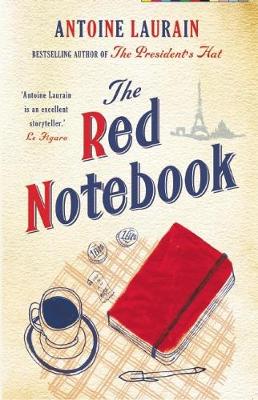
The Red Notebook – Antoine Laurain (2014, trans. Emily Boyce and Jane Aitken 2015) 159 pages

The Red Notebook walks a very thin line and I suspect for some readers it will have crossed that line, from whimsical romance at a distance, to creepy stalker tale. Looking at goodreads most seem to have gone for the former, and that’s how I read it too, but I’m not entirely unsympathetic to the latter view.

Anyway, I’ll put my psychological reservations to one side and let you know about a charming novella that conjures Paris beautifully, features a cameo from Patrick Modiano, and plays into that old romantic trope of lovers that are destined for one another.

Laure is a widow in her 40s who mugged for her mauve handbag and ends up in hospital in a coma. Bookseller Laurent – similar name, similar age to Laure – finds her bag after the mugger has dumped it having removed ID, purse and mobile phone. He tries to hand it in but police bureaucracy means he ends up holding on to it, trying to piece together the owner from its contents:

“a little fawn and violet leather bag containing make-up and accessories, including a large brush whose softness he tested against his cheek. A gold lighter, a black Montblanc ballpoint (perhaps the one used to jot down her thoughts in the notebook), a packet of licorice sweets…a small bottle of Evian, a hairclip with a blue flower on it, and a pair of red plastic dice.”

The titular notebook is part of the contents, and it is a diary which Laurent reads to try and find clues to who Laure is:

“I’m scared of red ants.

And of logging on to my bank account and clicking ‘current balance’.

I’m scared when the telephone rings first thing in the morning.

And of getting the Metro when its packed.

I’m scared of time passing.

I’m scared of electric fans, but I know why.”

Laurent has some success in piecing together Laure’s life, and in the process we learn about them both. Laurent has a teenage daughter who is brattish but loving, and a girlfriend to whom he’s not entirely committed. He likes his job and he’s interested in literature.

He’s also increasingly interested in Laure and a sequence of events lead to him collecting her dry cleaning and cat-sitting for her (!) It was at this point I thought things had gone too far, but then Laurain manages to tip the balance of power in a believable turn of events that meant the story kept me on side.

If you’re in the mood for some escapism across the channel and some gentle romance, then The Red Notebook could be just the ticket.

Novella a Day in May 2020 #8

Where You Once Belonged – Kent Haruf (1990) 187 pages

I adore Kent Haruf. Our Souls at Night is one of my all time favourite novels (novellas). And yet Where You Once Belonged didn’t quite hit the spot for me. I can’t decide if its because it didn’t work or if its because I didn’t want it to have the ending it had, however believable. I’m writing this a few weeks after reading it and I deliberately left it a while, thinking I’d know by now, but I don’t.

Anyway, Haruf is a wonderful writer and you should definitely read Where You Once Belonged, and everything else he’s written too 😊

Set in the fictional town of Holt, Colorado where Haruf sets all his work, Where You Once Belonged tells the story of Jack Burdette from the point of view of one of his school friends.

The story opens with Burdette returning to Holt as a prodigal son, the charismatic chancer who ripped everybody off and fled. There’s a wonderfully understated comic scene in which the Deputy Sheriff is alerted to Burdette’s whereabouts:

“Willard allowed his feet to droop from the desktop and slowly he sat up in the chair. He leaned forward and began to brush the fingernail clippings from his shirtfront onto the green blotter on the desk. He was making a neat pile. ‘Something bothering you, Ralph? You sound a little excited.’

‘What?’ Bird said.

He was standing behind the office counter, panting and sweating, his face red as beets and his eyes looking as though they belonged in the head of an alarmed poodle.”

This is a brilliant way to set up the drama of Jack Burdette. Holt is a small town, what does the reader care what happened there? But in this way Haruf sucks us right in to the drama of Burdette’s story.

Jack Burdette is a legend in the town. A huge, macho, charismatic man who excelled at football and it getting everyone else to make his life as easy as possible.

“He was taller and stronger – taller and stronger than anybody else in the school. By the time we graduated the spring of 1960 he was six feet four and weighed two hundred and forty pounds… He was like a full-grown man among mere children, a colossus amongst pygmies… He was a kind of high-school boy’s high school boy: the supreme example of what was possible and absolute.”

He only graduates because Wanda, the woman who loves him – who he uses mercilessly – writes his school  papers for him. When he leaves school he works at the farmers co-op, gets quickly promoted, and remains a big fish in a small pond.

These types are always hard to create in fiction, as its hard to get the reader to buy into the charisma of the character, as so much charisma relies on the face-to-face energy of a person. But with Burdette we know things went badly wrong from the start of the story and that he is back looking bloated and jaundiced, so we are not expected to ever buy into him.

Yet his friend, Pat Arbuckle, who runs the local paper and therefore believably wants to document all that occurs in Holt, shows how people enjoyed Burdette, without really ever knowing him.

“For we had all begun to expect the unusual of him by that time, while he, for his part, had already learned – if acting on bent and sheer heedless volition  can be said to be a form of learning – not to disappoint the expectations of anyone. Least of all his own.”

Where You Once Belonged is an effective portrayal of small town life and how local legends grow up. Burdette remains unknowable, and in this way the reader is positioned in the same way as most of the town.

“the center of that constant and admiring group of backslapping men, while he told his jokes and stories and they all laughed.”

Yet unlike the townspeople, we realise that Burdette is almost evil. He causes deep, tragic hurt to more than one person and appears to care for precisely no-one. When he arrives back in Holt, the inhabitants are angry, but the reader – certainly this one – is scared as to how it will play out. Burdette is unpredictable, and he is cruel, whether intentionally or through utter disregard for other people…

As I said at the start, I didn’t like the ending of this, but I think that’s my sentimentality rather than Haruf’s misjudgement 😉 As always with Haruf, the town and its people are closely, compassionately observed and completely believable.

The writing was precise and beautiful. I only wish he’d written more.

Novella a Day in May 2020 #7

Monsieur Linh and His Child – Philippe Claudel (2005, trans. Euan Cameron 2011) 130 pages

I only knew Philippe Claudel as a film director until Emma’s review of Monsieur Linh and His Child put his work as a novelist on my radar. Do head over to Emma’s review as she has lots of interesting things to say about this novella. She also rightly pointed out it would be a perfect read for NADIM, so here it is!

Monsieur Linh arrives in an unspecified French port town as a refugee from an East Asian war. His son and daughter-in-law were killed, and he has fled with his baby granddaughter, Sang Diû.

“Six weeks. This is how long the voyage lasts. So that when the ship arrives at its destination, the little girl has already doubled the length of her life. As for the old man, he feels as if he has aged a hundred years.”

Monsieur Linh is a lonely and isolated figure. His fellow refugees cook for him but do so without any warmth or affection. He is deeply traumatised and lives only for his granddaughter.

One day, walking in the unfamiliar town with its cars, strange food, odd smells and a language he doesn’t understand, he meets Monsieur Bark, when they sit on the same park bench. Monsieur Bark is a widower who is grieving deeply for his wife.  He smokes and talks incessantly, although Monsieur Linh cannot understand a word.

“When Monsieur Bark speaks, Monsieur Linh listens to him very attentively and looks at him, as if he understood everything and did not want to lose any of the meaning of the words. What the old man senses is that the tone of Monsieur Bark’s voice denotes sadness, a deep melancholy, a sort of wound the voice accentuates, which accompanies it beyond words and language, something that infuses it just as the sap infuses a tree without one seeing it.”

The language barrier does not mean that there is a lack of understanding between the two men. Claudel demonstrates without sentimentality how a true friendship develops between them, affectionate and accepting and full of meaning for both. These two deeply traumatised men are able to help each other heal in a way that is wholly believable and deeply moving.

Monsieur Linh and His Child is a wonderful, heartwarming story about the nature of unconditional love, friendship, and how we can help alleviate others’ pain without words. It’s about the humanity that bonds us all, and that is a timely reminder in today’s political climate. Highly recommended.

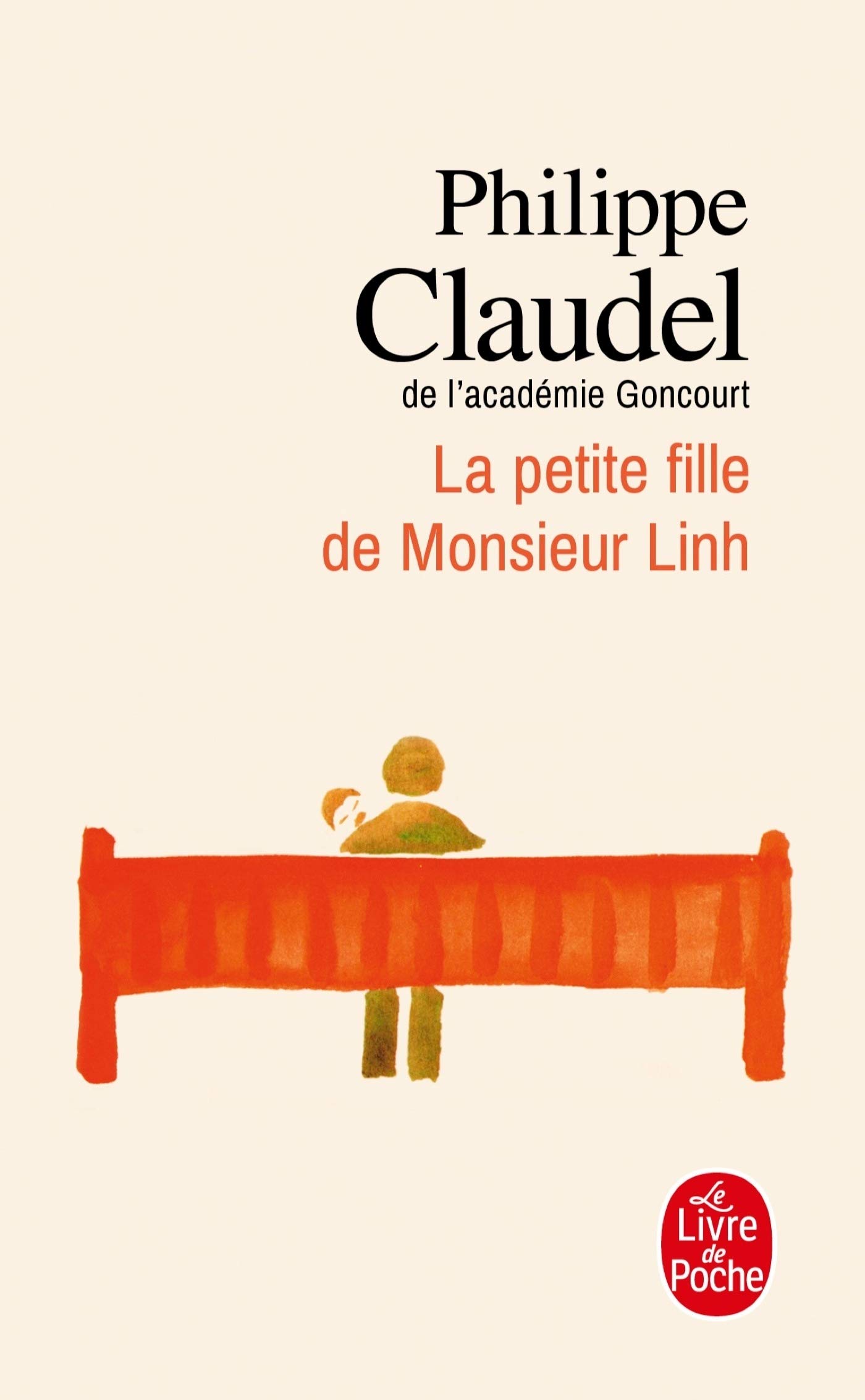
Here is the French cover, because as Emma rightly pointed out, the UK edition is ugly:

Novella a Day in May 2020 #6

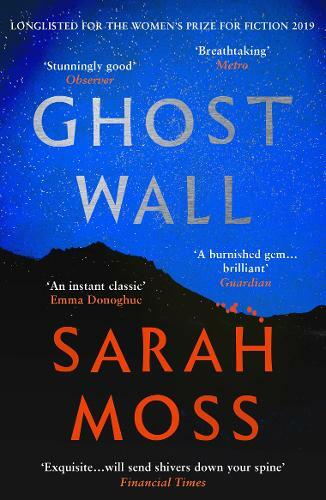
Ghost Wall – Sarah Moss (2018) 149 pages

Trigger warning: discusses domestic abuse

Ghost Wall is the first of Sarah Moss’ work that I’ve read, despite hearing wonderful things about her in the blogosphere. My excuse is I kept getting her confused with another author with whom I’ve had a mixed experience, in other words, I’m an idiot 😀 Turns out the blogosphere was absolutely right, Moss is an immensely skilful writer.

Ghost Wall begins with a young woman being sacrificed, probably in pre-Christian England. That brief but deeply disturbing description over, the story picks up in the latter part of the twentieth century.

Silvie is spending the summer with her parents and some students re-enacting Iron Age life: living in a hut, cooking foraged food over fires.

“When I woke up there was light seeping around the sheepskin hanging over the door. They probably didn’t actually have sheep, the Professor had said, but since we weren’t allowed to kill animals using Iron Age technologies we would have to take what we could get and sheepskins are a lot easier to pick up on the open market than deerskins. While I was glad…I thought the Professor’s dodging of bloodshed pretty thoroughly messed up the idea that our experiences that summer were going to rediscover the lifeways of pre-modern hunter gatherers.”

Silvie’s teenage scepticism brings a dry humour to what would otherwise be a very bleak tale. Her father is a bus driver obsessed with British pre-history. He is a misogynist and domestically violent, and he uses this period in history to justify his beliefs and actions:

“women in the family way and feeding babies the way nature intended as long as they could, which was also what he said whenever he caught me or Mum buying sanitary protection. Women managed well enough, he said, back in the day, without spending money on all that, ends up on the beaches in the end, right mucky.  Or they died, I said, in childbirth, what with rickets and no caesarians, but you won’t be wanting me pregnant, Dad, for authenticity’s sake? … Hush, said Mum, cheek, but she was too late, the slap already airborne.”

The experiment simultaneously excites and challenges Sylvie’s father. He is not wholly unsympathetic – Moss shows how it is the limitations placed on him that lead to his frustration, but plenty of people have those without beating their nearest and dearest. He is a racist and a fantasist:

“He wanted his own ancestry, wanted a lineage, a claim on something. Not people from Ireland or Rome or Germania or Syria but some tribe sprung from English soil like mushrooms.”

Yet Silvie shares her father’s interest in history, and his intelligence. She doesn’t despise everything about the experiment and she has better knowledge than the slightly disengaged archaeology students who are helping out.

 “The edges of the wooden steps over the stile touch your bones, an unseen pebble catches your breath. You can imagine how a person might learn a landscape with her feet. But we hadn’t yet crossed any bog and I was pretty sure it would feel different in winter.”

Silvie’s mother is utterly cowed – as far as we can tell – by the man she married.

“Mum often spoke of sitting down as a goal, a prize she might win by hard work, but so rarely achieved that the appeal remained unclear to me.”

Although in some ways a resolutely domestic tale – albeit in a replica Iron Age hut – what emerges from the context of the human sacrifice at the beginning to Silvie and her mother’s subservient roles in the experiment, is how women have frequently paid the price of the systems and structures that powerful men erect to serve their own ends while claiming a higher purpose.

Moss slowly builds the tension in this novel as the experiment exerts pressure on the family and exposes its faultlines. I found it unbearably tense and a perfect example of the power of a novella which is tautly written.

It is this power which means this could be a very triggering read for people and I do advise to proceed with caution, but if you’re in a position to read it, Ghost Wall is an immersive and gut-wrenching read.