Novella a Day in May 2019 #17

Crimson – Niviaq Korneliussen (2014, trans. Anna Halager, 2018) 175 pages

I think Crimson might be the first ever literature I’ve read by a Greenlandic author, and as such its  another stop on my Around the World in 80 Books reading challenge, hosted by Hard Book Habit.

Unfortunately, I think I might be a bit too old for this novella. My twenties were a lot of fun and a lot of stress; I have colleagues in their twenties and I enjoy their company but I’ve absolutely no desire to recapture or relive that time. So Crimson’s tales of five Greenlandic twentysomethings getting drunk, sleeping around, falling in and out of love and desperately trying to work out who they are held my attention, but didn’t really engage me beyond that.

Each section focuses on a different character. Fia is repulsed by her boyfriend’s penis and dumps him, but it is only when she sees Sara that she admits she is attracted to women.

“ ‘It’s over’ were my final words.

Then, just like that, I was free.

But the word ‘free’ didn’t bring with it ‘relief’.”

Instead Fia finds herself in the bewildering situation of living temporarily with her brother’s best friend, and trying to manage her feelings for Sara, who has a partner.

Inuk is Fia’s brother. He feels stifled by his home and flees to Denmark after his affair with a famous married man is exposed:

“Greenland is not my home. I feel sorry for Greenlanders. I’m ashamed of being a Greenlander. But I’m a Greenlander. I can’t laugh with Danes.

[…]

I’m terribly homesick but I don’t know what sort of home I’m longing for.”

Arnaq is Inuk’s best friend and Fia’s flatmate. She’s relentlessly social and struggling:

“My chapped lips are the colour of red wine, My hair is still partying. My makeup is smeared all over my face and I have huge bags under my eyes. My body is trying so hard to stay alive that I can’t concentrate on my polluted mind. I drink what’s left of the Coke, lie down on my bed and take out my mobile to check the time.”

Ivik is Sara’s partner and struggling with gender identity. Their story includes graphics of phone screens, showing how the drama of young lives is often played out by technology. But this prosaic language exists alongside the poetic as Ivik works out what they need:

“The sun brightens my eyes, which have only seen the world in black for a long, long time. I can smell the previously frozen earth melting. The warm breeze sounds like a song.”

Finally Sara, partner of Ivik and lust-object of Fia, tells her tale and brings the stories together. Sections of her narrative end with meaningless hashtags which was really annoying, e.g. #dontgotogether or #1#2. If the hashtags had been witty or expanding the perpsective this could have worked better.

Sara, who until this point has been somewhat idealised through the eyes of others, is shown to have her own problems, with feelings of dirtiness and unworthiness. Her sister has just had a baby and Sara notices the obsession with gender that this involves. It’s also a very modern birth announcement via Facebook, where Sara stalks Fia:

“She finally changed her profile picture. I’m unable to see all her photos because we’re not friends on Facebook, so I gaze at her new profile picture for quite a while. I catch myself smiling. I hover over ‘Add friend’ for a long time. No, if she was really interested, she would have sent a friend request. I log off. Go to Google. Google knows everything.”

I only write about books I recommend and it’s undoubtedly great to hear a young Greenlandic voice. Korneliussen was only 24 when she wrote this and she translated it herself into Danish. The writing sometimes seemed to me naïve and bit clunky, but as I said, I’m probably not the target audience for this novella. I’m grateful to Virago for giving English-speaking readers this opportunity to hear her, even if the subject matter bored me slightly. I’d definitely still be interested to see what Korneliussen writes in future.

To end, the title comes from the Joan Jett classic which means a lot to Fia and Sara:

Novella a Day in May 2019 #16

A Whole Life – Robert Seethaler (2014, trans. Charlotte Collins 2015) 149 pages

After the traumas of The Blind Owl yesterday, lets all recuperate in a beautiful Austrian village😊 But that’s not to say that A Whole Life is a comfort read; it’s exactly what the title says – the tale of one man’s whole life, containing tragedy and joy.

Andreas Egger arrives in the village as a young orphan, at the start of the twentieth century. His uncle doesn’t really want him and he is bullied violently by him until he gets old enough to demand it stop, but not before his leg has been broken and badly reset, leaving him with a lifelong limp.

Nonetheless he is a strong and valued manual labourer in the village, later working for the cable car company, shinning up and down the mountains. Egger is a loner but not lonely; ultimately he is a man of the valley, mountains and meadow of his village.

“Sometimes on mild summer nights, he would spread a blanket somewhere on a freshly mown meadow, lie on his back and look up at the starry sky. Then he would think about his future, which extended infinitely before him, precisely because he expected nothing of it. And sometimes, if he lay there long enough, he had the impression that beneath his back the earth was softly rising and falling, and in moments like these he knew that the mountains breathed.”

From this small village Egger witnesses the many and rapid changes of the twentieth century. He participates in some – his only protracted period of time away is when he is a prisoner of war – but mostly he just observes. There are the major upheavals:

“The mayor was no longer a Nazi these days, geraniums hung outside the windows again instead of swastikas”

And also the social shifts, such as the quiet village becoming beset by tourists:

 “He had already been so long in the world: he had seen it change and seem to spin faster with every passing year, and he felt like a remnant from some long buried time, a thorny weed still stretching up, for as long as it possibly could, towards the sun.”

Egger also experiences some major changes in his personal life, but to avoid spoilers I won’t give details. I’ve seen A Whole Life compared to Stoner and while I do love Stoner I think this is quite different. Although both are about male, twentieth-century, somewhat isolated lives, I didn’t find this nearly so sad.

“Drops of water trembled on the tips of the blades, making the whole meadow glitter as if studded with glass beads. Egger marvelled at these tiny, trembling drops that clung tenaciously to the blades of grass, only to fall at last and seep into the earth or dissolve to nothing in the air.”

A beautifully written novella which demonstrates how a life can look quiet and small from the outside but be entirely rich and fulfilling. Above all, it’s about walking your own path.

“And in the mornings after the first snowmelt, when he walked across the dew-soaked meadow outside his hut and lay down onto one of the flat rocks scattered there, the cool stone at his back and the first warm rays of sun on his face, he felt that many things had not gone badly after all.”

Novella a Day in May 2019 #15

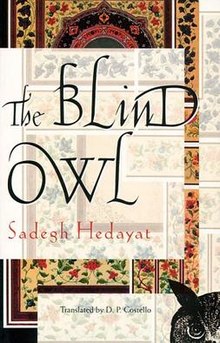
The Blind Owl – Sadeq Hedayat (1937, trans. DP Costello 1957) 106 pages

This was a really challenging read, and though an astounding work, I was grateful for the novella length as it was tough to take.

Sadeq Hedayat was an Iranian writer and is considered an innovative titan of Persian literature; he’s a best-selling author in his home country. This novel was initially banned on publication, and according to Wiki there is still censorship of his work (I’ve not linked to the Wiki page because much to my horror there’s a picture of his dead body on it). Sadly, he died by suicide, and The Blind Owl certainly feels authentic in its portrayal of someone losing all sense of reality and suffering mental ill health. I’m giving this post a trigger warning for some pretty disturbing imagery in the third quote, although I’ve not picked the worst in the novella, I wanted to give a true sense of it.

“Will anyone ever penetrate the secret of this disease which transcends ordinary experience, this reverberation of the shadow of the mind, which manifests itself in a state of coma like that between death and resurrection, when one is neither asleep nor awake?”

The unnamed narrator earns his living by painting pen cases. He may or may not have killed someone:

“How could I have resisted it, I, an artist, shut up in a room with a dead body? The thought aroused in me a particular sensation of delight.”

It’s a disorienting narrative. It’s not clear what is true or false: the events described could be entirely in the man’s head and what The Blind Owl describes is him lying on his bed, thinking/hallucinating. It’s a stream of extremely disturbed consciousness. Images and events recur and shift slightly, adding to a sense of disorientation and being witness to someone’s spiralling thoughts.

“A sensation which had long been familiar to me was this: that I was slowly decomposing while I yet lived. My heart had always been at odds not only with my body but with my mind, and there was absolutely no compatibility between them. I had always been in a state of decomposition and gradual disintegration. At time I conceived thought which I myself felt to be inconceivable.”

The narrator has no compassion for humanity and this is what adds to making The Blind Owl such a tough read. He is misanthropic, and so the coldly related details of violence, dead bodies and decomposition are truly horrifying.

I don’t want to put people off reading The Blind Owl because it is truly a brilliant piece of writing, but definitely one for when you’re strong enough to take it, with a comforting escapist read lined up for afterwards.

“Am I a being separate and apart from the rest of creation? I do not know. But when I looked in the mirror a moment ago I did not recognise myself.”

Novella a Day in May 2019 #14

The Spinning Heart – Donal Ryan (2012, 156 pages)

I was first made aware of Donal Ryan on Cathy’s blog when she reviewed his short story collection, A Slanting of the Sun and the writing sounded wonderful. The Spinning Heart is Ryan’s first novel and was longlisted for the Man Booker and Guardian First Book Award, winning won Book of the Year at the Irish Book Awards. It reminded me of Jon McGregor’s Reservoir 13, in that it builds a picture of a community in quiet crisis through a variety of viewpoints. However, whereas McGregor uses omniscient narration, Ryan has each of the 21 chapters narrated by a different person. He manages this brilliantly, keeping the story flowing but still managing to convey different voices without jarring.

The story begins with Bobby Mahon:

“My father still lives back on the road past the weir in the cottage I was reared in. I go there every day to see is he dead and every day he lets me down. He hasn’t yet missed a day of letting me down. He smiles at me; that terrible smile. He knows I’m coming to check is he dead.”

This opening paragraph introduces many themes in the novel: families, abuse, inheritance (financial and psychological), uncomfortable but inescapable feelings. Each person in the story is linked to the others either directly or indirectly, and through their individual stories we get a rich portrait of a town, the people in it, and their shared lives.

It is a resolutely contemporary story. The collapse of the Celtic Tiger has had a devastating effect, and everyone is reeling. Bobby was foreman for Pokey Burke, the local building contractor who has fled leaving unpaid builders, unregistered for government help, destitute. There is a ghost town of a new estate with only two residents in it.

Young Brian is thinking of trying Australia for work. He has a good mind but sees no future in study, nor in Ireland itself, especially since breaking up with his girlfriend.

“On an intellectual level, I couldn’t give a shite about her. It’s a strange dichotomy, so it is; feeling and knowing; the feeling feels truer than the knowing of its falseness. Jaysus, I should write this shite down and send it Pawsy before I go.”

Ryan never deals in stereotypes despite many recognisable characters. There is Brian’s postmodern musings, and Lily, the  town’s aging sex worker’s poetic and tender feelings for her children.

“I love all my children the same way a swallow loves the blue sky; I have no choice in the matter. Like the men that came to my door, nature overpowers me.”

The character studies are individual and collective, like the town. So we learn more about how highly Bobby is thought of in the community, despite him introducing himself to the reader in that first chapter as damaged and failing. The builders respect him, women find him attractive, he’s a sporting hero and his wife is devoted. Long-time resident Bridie sums it up:

“There’s something in that boy, the way he looks at you while he’s talking, sort of embarrassed so that you want to hug him, and with a distance in his eyes even when he’s looking straight at you, that makes you think there’s a fierce sadness and a kind of rare goodness in him.”

It is what happens to Bobby that forms the plot of the novella.

The Spinning Heart ends on a note of hope but you still know things could go badly wrong. Ryan manages to convey the toughness of contemporary lives in dire straits caused by family histories and contemporary political mismanagement, without ever being didactic or depressing. It’s unflinching but hugely compassionate.

“the dead stillness I’d assume, the way I’d almost hold my breath while he spoke, it was the very same as when I’d be trying not to startle a wild animal”

And now I really must get to A Slanting of the Sun which I’ve been meaning to read ever since Cathy’s post…

“Women want love to be a novel. Men, a short story.” (Daphne du Maurier)

This week is Daphne du Maurier reading week, hosted by Ali over at heavenali. It’s also Ali’s birthday today, so Happy Birthday Ali!

I read Rebecca as a teenager and thought it was great, but somehow never read anything else by du Maurier. I had the NYRB collection of her short stories in the TBR, and yet I always gravitate towards the novels I have, so I’m glad #DDMreadingweek gave me the kick I needed, as it’s a great read.

I’m rubbish at reviewing short story collections so please bear with me. This is an excellent selection of nine stories, five of which are 40+ pages, the shorter ones coming in between 10-20ish pages. For me the longer stories were the stronger in the collection – although all are compelling reads – so I’ll concentrate on a couple of those.

The first two were made into incredibly famous films, so I won’t dwell on those as many of you will know the stories. What I will say is Don’t Look Now is just as creepy as the film but with a really dark humour to it, and The Birds is miles better than the film (I’m not really a Hitchcock fan) and totally freaked me out to the extent that I’ve been looking askance at every pigeon which has crossed my path since.

In Blue Lenses,  Marda West has an operation to restore her sight. She is in hospital, intensely vulnerable, dependent on the nursing staff, her doctors and her husband. She has only what they say and the sound of their voices to go on. Already she feels unnerved, even around her husband:

“Now, for no known reason except that darkness, perhaps, had made her more sensitive, she was shy to discuss her eyes with him. The touch of his hand was the same as it had ever been, and his kiss, and the warmth of his voice; but always, during these days of waiting, she had the seed of fear that he, like the staff at the hospital, was being too kind. The kindness of those who knew towards the one who must not be told.”

She has the operation to fit the titular lenses as a temporary measure and is warned they will make everything monochrome. On using her eyes for the first time with the lenses, Marda is shocked to discover is that she now sees everyone with the head of an animal.

This could be funny, or ridiculous, but in du Maurier’s hands it is deeply upsetting. There is the suggestion that the animal Marda sees tells her something about the person. One nurse is a benign cow, the other a kitten. Her doctors are both terrier dogs, one a tenacious Jack Russell, the other a sweet natured Highland. Someone she trusted is a snake, possibly in cahoots with a vulture…

At first Marda believes it is an elaborate joke being played on her, but then she goes to the window:

 “An elderly cod, leaning on two sticks, was being helped into a waiting car by the boar headed porter. It could not be plot. They could not know she was watching them.”

She is completely isolated. No-one will believe her and they will think she is mad. Who can she trust? The cow? The Highland terrier? What will Marda do with this newfound insight into people and their motivations? What will happen when the permanent lenses are fitted?

“The utter hopelessness of her position was like damnation itself. This was her hell. She was quite alone, coldly conscious of the hatred and cruelty about her.”

Blue Lenses takes a bizarre premise to question what we choose to see, how much we really know people, and to dramatise how vulnerable we are when we trust. The denouement is devastating.

Split Second begins like many a domestic fiction, and uses this familiarity to lull us into a false sense of security:

“Mrs Ellis was methodical and tidy. Unanswered letters, unpaid bills, the litter and rummage of a slovenly writing-desk were things she abhorred. Today, more than usual, she was in what her late husband used to call her ‘clearing’ mood […] First, she checked the linen. The smooth white sheets lying in rows upon their shelves, pillow slips beside, and one set still in its pristine newness from the shop, tied with blue ribbon, waiting for a guest who never came.”

So far, so deeply ordinary. Then Mrs Ellis goes for a walk, a walk she has done many times before, and when she returns it is to find strangers living in her house and no-one with any idea who she is. The police are called, but to Mrs Ellis’ horror it is she who is taken to the station:

“Could this officer and his subordinate be genuine members of the police force? Or were they, after all, members of the gang? This would explain their strange faces, their obvious mishandling of the situation. In which case they were now going to take her away to some lair, drug her, kill her possibly.

‘I’m not going with you,’ she said swiftly.

‘Now Mrs Ellis,’ said the constable, ‘don’t give any trouble. You shall have a cup of tea down at the station, and no-one is going to hurt you.’

He seized her arm. She tried to shake it off. The young policeman moved closer.”

Split Second is incredibly clever in how it positions the reader. It shows us the epitome of middle-class calm, we think we know the story we are getting, then like the experience of Mrs Ellis, everything is thrown in complete disarray. Twice I thought I had the answer to what was happening, and twice I was wrong, having followed the false trails du Maurier had set up.

Split Second is a sad story, and one that suggests we can attempt to create all the calm and order we like in our own small setting, it will be no match for the chaos and disarray of other people in the wider world.

The common theme across many of the stories is people doubting their view of reality: feeling isolated and threatened with nowhere to turn. It is this that makes du Maurier’s stories so unsettling and upsetting. The horror comes not from the more outlandish situations but from the feeling of dread, of creeping insanity with no sanctuary in sight.

I’m sure someone told me once that there’s a lot of snobbery around Daphne du Maurier, that she was seen as a popular writer and therefore not a very good one. It really is ridiculous; du Maurier is such a good storyteller, she draws you in from the start, holds you there until she’s ready to let you go, and makes it look easy.

To end, there are many cinematic adaptations of du Maurier to choose from, but I’ve picked the title story of this collection, as it was an adaptation she approved of (unlike The Birds):

Novella a Day in May 2019 #13

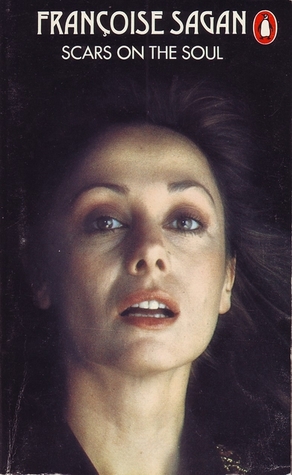
Scars on the Soul – Francoise Sagan (1972 trans. Joanna Kilmartin 1974) 124 pages

This is a strange novella. It’s a story of a Swedish brother and sister living in France, and an extended reflection on Sagan’s writing life: a direct address to the reader.

“It isn’t literature, it isn’t a true confession, it’s someone tapping away at her typewriter because she’s afraid of herself and the typewriter and the mornings and the evenings and everything else.”

Sagan tells the story of Sebastian and Eleanor van Milhelm who are entirely feckless and devoted to one another.

“Life without her, drink without her, were like lukewarm water, Not a bad thing, all said and done, to have one’s life circumscribed to that extent by someone who – whatever she might say – was as much his slave as he was hers.”

While they are not quite incestuous, they certainly have an unhealthy attachment to one another. They move around living off their looks, finding benefactors who will pay for their lifestyle so that neither have to get jobs.

“ ‘Someone’ being that providential person who, because of their charm, their wit, their luck, would act as temporary provider for brother and sister. This person so far had never failed to materialise and was usually discovered by Sebastian, Eleanor, as in this case, being too lazy to go out.”

Yet the van Milhelms are not despicable. They are not malicious or even particularly manipulative; there is the sense that those they live off share an understanding whereby everyone knows what the deal is. There is a sense of ennui as their lives are essentially empty, yet it’s a sad story rather than a depressing one.

Scars on the Soul is certainly a post-modern novella, drawing attention to the art of Sagan as a writer and the artifice of the novel.

“There are moments when I’m on the point of writing ‘But I digress,’ an old-fashioned courtesy to the reader, but pointless in this case, since my purpose is to digress. Nevertheless, this blow-by-blow account of eroticism has irritated me. I’m returning to my van Milhelms ‘who frequently indulge in that sort of thing but never talk about it.’”

I think this novella wouldn’t be for everyone, as it is neither one thing nor the other – not fiction or non-fiction, not short story or essay. Yet I found it satisfying. I was invested in the van Milhelms story and I enjoyed Sagan’s witty reflections on writing and her fame after many years (this was written in her late 30s after the success of Bonjour Tristesse at the prodigiously young age of 18). It’s not something to read when you want a meaty, plot-driven story but Sagan is a hugely talented, skilled writer and there is much of interest here both in the fiction and in the portrait of one writer’s life.

Novella a Day in May 2019 #12

Two More Pints – Roddy Doyle (2014, 115 pages)

Last year as part of NADIM I looked at Two Pints by Roddy Doyle, so I thought this year I’d look the sequel. Like its predecessor, it is written entirely as dialogue between two friends meeting for the titular drinks, and set on specific dates, this time between September 2012 and June 2014. Once again, a warning for swearing – well, it is Roddy Doyle after all 😀

The issues in this period, lest we forget, include the financial crisis, horsemeat in burgers, elections of the new Pope and the deaths of various celebrities. All this occurs alongside family events and disagreements over football.

 – Fiscal cliff.

– He’s shite.

– Wha?!

– He’s just copying the other fella.

– Wha’ the fuck are yeh talkin’ about?

– The rapper.

– Wha’ rapper?

– Fiscal Cliff.

The humour doesn’t detract from the realities though.

– My young one is in trouble. An’ her fella.

– Ah, no.

– The mortgage, yeh know.

– They can’t handle it?

– They’re fucked, God love them. They’ve been into the bank an’ tha’, to try an’ sort somethin’. But –

– No joy?

– It’s fuckin’ madness.

I was disappointed not to hear more about Damien, the grandson from Two Pints who was fracking in the back garden with a magimix, but I think at such a turbulent time, Doyle chose to focus very much on current affairs. The dialogue still felt entirely authentic though, and never heavy-handed.

The conversation is wide-ranging, and even poetry gets a mention, despite the short shrift it was given in Two Pints:

– See Seamus Heaney died.

– Saw tha’. Sad.

– Did yeh ever meet him?

– Don’t be fuckin’ thick. Where would I have met Seamus Heaney?

– That’s the thing, but. He looked like someone yeh’d know.

– I know wha’ yeh mean – the eyebrows an’ tha’.

– He always looked like he liked laughin’.

– One o’ the lads.

– Except for the fuckin’ poetry.

– Wha’ would possess a man like tha’ to throw his life away on poetry?

– Although fair enough – he won the Nobel Prize for it.

– He’d probably have won it annyway.

– For wha’ – for fuck sake.

– I don’t know. Football, plumbin’ – annythin’. Tha’ was what was special about him.

Another affectionate portrait of the people of Dublin, and Ireland at a particular moment in time.

Novella a Day in May 2019 #11

It was a few years ago now that I looked at Embers, Sandor Marai’s 1942 novel set over one evening. If, like me, you liked Embers – the more famous novel in the UK – then I think you’ll like Esther’s Inheritance too. It is a similarly constrained piece of writing, also set primarily over one evening, focussed on an anticipated guest.

“We are bound to our enemies, nor can they escape us.”

However, the psychology of this novella was harder for me to manage as a reader.

Esther lives in the house she inherited from her father with her ancient retainer Nunu:

“Nunu thinks she knows everything about me. And maybe she does know the truth, the simple ultimate truth we dress up in so many rags all our lives.”

As a young woman Esther loved Lajos – now, around 20 years later, he has telegrammed to say he will visit the next day. This sends her back to his letters and her memories of the past.

“I marvelled at the fierce workings of this aimless energy. In each of his letters he addressed me with power enough to move anyone – especially a highly sensitive woman – indeed, whole crowds, even masses. It wasn’t that he had anything particularly ‘significant’ to say… He was always writing about the truth, about some imagined truth that he had just realised and urgently wanted me to know.”

But Lajos is utterly vacuous:

“Later we discovered that Lajos himself had never read, or had simply scanned the authors and thinkers, the works and ideas that he so emphatically recommended, wagging his head and chiding us with good-humoured severity. His charm acted on us like a cheap wicked spell.”

Yet when he arrives with an entourage of vague and bitchy hangers-on Esther still feels drawn –  possibly less to him than she once was, but certainly to how he made her feel.

“But there was a time when I was close to him when my life was as ‘dangerous’ as his. Now that this danger has passed I can see that nothing is as it was, and that such danger was in fact the one true meaning of life.”

The full extent of Lajos’ previous betrayal is revealed during the visit, as is a betrayal by another. There is a suggestion at one point that possibly Lajos had authentic feelings for Esther for a brief moment, for whatever they were worth.

Esther is fully aware of what Lajos is like and all he has done, and yet when he inevitably makes the move for his latest self-serving rip-off scheme she seems ready to capitulate. It really is rather baffling.

I only write about books I recommend and I do recommend this because Marai is such a beautiful writer. But a lot of the psychology and plot of this novella depends on the charm of Lajos, which is difficult to convey on the page and was completely lost on this reader. Maybe I’m not subtle enough for Esther’s Inheritance. I suspect in some ways this would work well as a film, where a charismatic actor could bring Lajos’ charm to life.

“When somebody appears out of the past and announces in heartfelt tones that he wants to put ‘everything’ right, one can only pity his ambition and laugh at it”

Novella a Day in May 2019 #10

The Hunting Gun – Yasushi Inoue (1949, trans. Michael Emmerich 2013) Pushkin Press 106 pages

Published by the wonderful Pushkin Press, The Hunting Gun tells of the fallout from an extramarital affair via three letters, from the daughter of the woman involved, the betrayed wife, and finally the woman herself when she knows she is going to soon die.

The letters are sent to a poet who has published the titular poem about a man he once saw.

“He had simply struck me, as he came along the path with his shotgun over his shoulder and a pipe in his mouth, as having a sort of pensiveness about him that one did not ordinarily see in hunters- an atmosphere that seemed, in the crisp early-winter morning air, so extraordinarily clean that after we had passed each other I couldn’t help turning back.”

The man, Misugi Josuke, recognised himself in poem and has sent three letters he received to the poet, in order to explain why he had that atmosphere about him.

The first letter is from Shoko, the daughter of Saiko, with whom Misugi had an affair. Shoko only learns about the affair from reading her mother’s diary.

“And then I heard, very distinctly, the sound of that stack of words I had seen in her diary the night before SIN SIN SIN, piled as high as the Eiffel Tower – crashing down on top of her. The whole weight of the building she had erected from her sins in the course of the past thirteen years, all those floors, was crushing her exhausted body, carrying it off.”

Shoko’s letter is full of anger and betrayal, at both her mother and Misugi, the family friend. In contrast, Misugi’s wife, Midori, is surprisingly measured and even funny. But she acknowledges she has known for many years, and the hurt is not as fresh as that first day.

“I am sure you have had the experience of going for a swim in the ocean in early autumn and discovering that each little movement you make causes you to feel the water’s chillness more intensely, and so you stand there without moving. That was precisely how I felt then: too frightened to move. Only later did I arrive at the happy conclusion that it was only right to deceive you the way you had deceived me.”

Finally we hear from Shaiko, mother to Shoko, best friend to Midori and lover of Misugi, writing a letter to be opened after her death.

“Even after I die, my life will still be waiting here hidden in this letter until it is time for you to read it, and the second you cut the seal and lower your eyes to read its first words, my life will flare up again and burn with all its former vigour, and then for fifteen or twenty minutes, until you read the very last word, my life will flow as it did when I was alive into every limb, every little corner of your body, and fill your heart with various emotions. A posthumous letter is an astonishing thing, don’t you think?”

The Hunting Gun is a short, simply constructed novel that manages to convey emotions and characterisation of real complexity. The affair is shown to involve so many more people than just the immediate couple, and how the fallout and hurt from such a betrayal cannot be anticipated. Inoue shows the capacity human beings have for causing deep, irreparable sadness in one another, but the tone is never judgemental. A beautifully observed novella.

“Why, when we had just formed a united front, so to speak, to battle for our love, why, at a moment that should have been the most fulfilling, did I tumble into that helpless solitude?”

Novella a Day in May 2019 #9

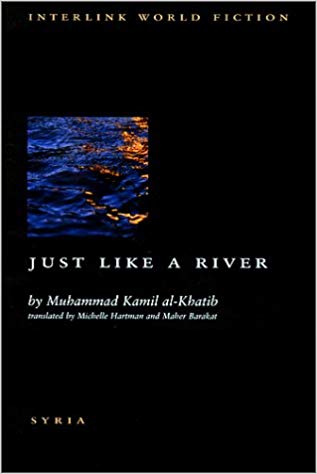
Just Like a River – Muhammad Kamil al-Khatib (1984, trans. Michelle Hartman and Maher Barakat, 2003) 110 pages

Just Like a River was Syrian writer Muhammad Kamil al-Khatib’s first novel, set in Damascus in the 1980s. It forms another stop on my much-neglected Around the World in 80 Books reading challenge, hosted by Hard Book Habit. The novella looks at the lives of a group of Syrians, with different chapters from different viewpoints. In this way, al-Khatib builds a picture of the individuals, Damascus, and the wider Syrian political situation.

Dallal is the young daughter of Yunis, a Chief Sergeant in the army. She struggles with the expectations placed on women where she lives and idealises life overseas:

“Young European women live alone. They rent rooms and come home at night when they like. Over there, men do not harass women in the streets but are polite like Doctor Morton White.”

Ha! Unfortunately we know she is sadly mistaken, in both this and in her assessment of her professor. He is self-centred and shallow, and exoticises Syrian women without really bothering to get to know a single one:

“He had illusions that he would discover Arab women through Dallal. He would explore this Middle East that was shrouded in secrets.”

By returning to characters over various chapters al-Khatib deepens the individual portraits. Yusuf is in love with Dallal and his friend Zuhayr at first seems a real misogynist. Then it becomes apparent that his flippancy hides a deeper hurt, and he is as cynical about men as he is women:

“What do we offer them other than a mirror image of our fathers’ backwardness? We act as if we are only thieves or guards of their hymens.”

The portrayal of women is sympathetic, so Dallal is seen as young and naïve rather than ignorant and prideful. Her friend Fawziya is hurt yet optimistic:

“Fawziya was a disappointed woman. Her tempestuous love affair with Sami caused her to have a general disrespect for men, coupled with a longing for some certain, but unknown, man… She and her mother dealt with things just as one might expect two destroyed women in solidarity with each other would. They were two women betrayed by both men and time, and who persevered, waiting for a certain something, a certain man, a certain incident. This is why they spent so much time reading coffee cups and interpreting dreams.”

As they all deal with the day-to-day concerns of family conflict and unspoken feelings, the political situation is building in the background. When he is called to the army, Yusuf is not particularly concerned. As it becomes clear that the conflict may be escalating, he meets it with grim humour:

“ ‘They don’t give us good weapons or enough of them. Look, can’t you see how the bombs fall down like paper?’

Yusuf laughed. ‘I fear that we, not the missiles, are paper,’ he said.”

Just Like a River is an evocative and memorable portrait of a group of people struggling against the forces directing their lives, and themselves. If that makes it sound heavy or depressing, it isn’t. It looks at huge themes straight on, but does so with compassion and understanding.