“All great novels are great fairytales.” (Vladimir Nabokov)

Last week the news included a feature with Jeanette Winterson talking to children about fairytales and ways in which these narratives might be rewritten.

I think Jeanette would approve of my upbringing. I have a clear memory of a bedtime story told to me by my mother when I was aged about four: a girl with the same name as me was offered the opportunity to swop places with a princess. She did so, and didn’t like it because all she did was shake hands with people for the whole day and she had to keep her clothes clean rather than running about with her friends getting as mucky as she liked. This was around the same time as Charles and Diana getting married, and while the world went princess mad, my mother told me “He doesn’t love her, you know.” Safe to say by that tender age I thought being a princess vastly overrated.
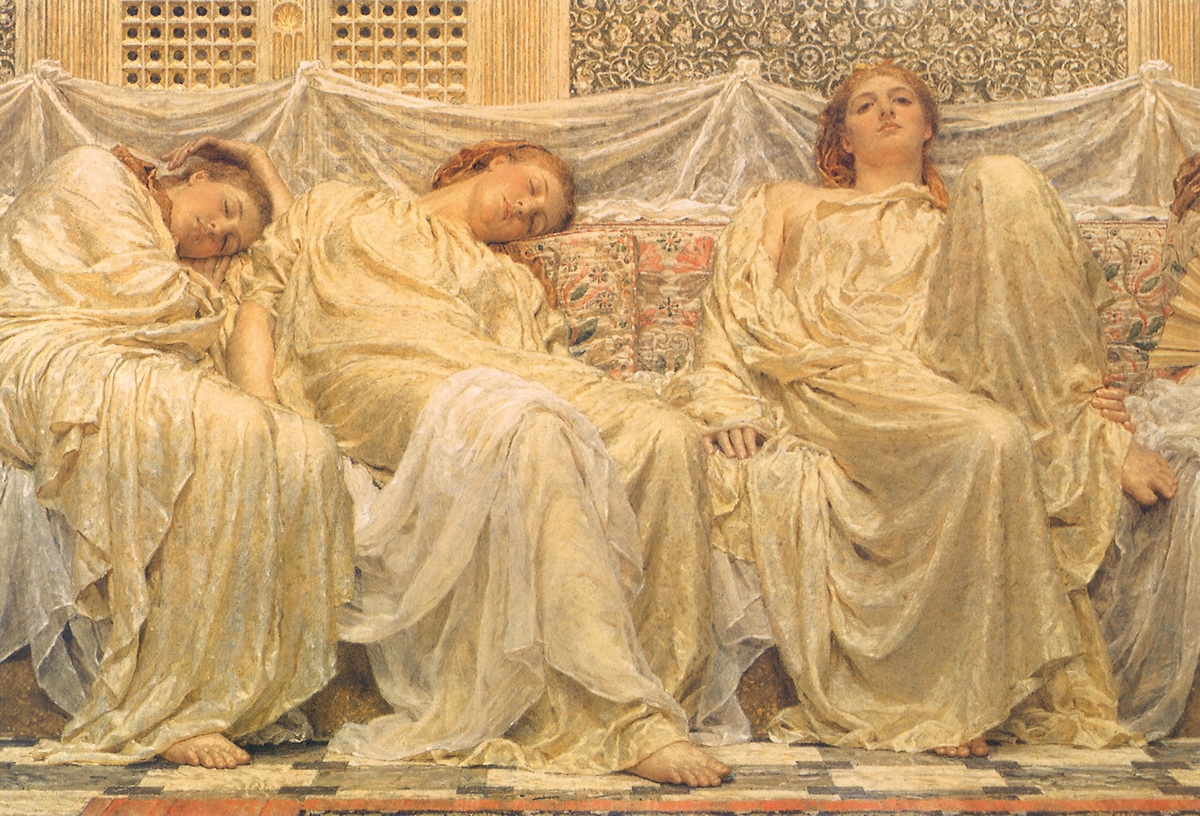
Pretty as a princess: bored, bored, booorrrred......

Pretty as a princess: bored, bored, booorrrred……

So in honour of Jeanette and my mother, this week I’m looking at novels that rework a fairytale narrative to some extent.  Firstly, a young girl living in a castle with her sister, brother, father and step-mother. Except her sister is beautiful & they love each other, and the stepmother is batty and awesome and holds the whole family together, in I Capture the Castle by Dodie Smith (1949).

“I have just remarked to Rose that our situation is really rather romantic – two girls in this strange and lonely house. She replied that she saw nothing romantic about being shut up in a crumbling ruin surrounded by a sea of mud.”

So says Cassandra Mortmain, 17-year-old narrator of her family’s trials and tribulations as they live in a castle in the 1930s with no money, as her writer father isn’t doing any writing. Her stepmother Topaz is an unusual mix of naked-communer-with-nature and grounded housewife:

“She has a very deep voice- that is, she puts one on; it is part of an arty pose, which includes painting and lute playing. But her kindness is perfectly genuine and so is her cooking.”

Two American men arrive to disrupt this picturesque but borderline-starving idyll, and what follows is a coming of age novel, as Rose plans to marry one of them and Cassandra comes to terms with her feelings about her sister, family, life, love and money.

 “Never have I felt so separate from her. And I regret to say that there were moments when my deep and loving pity for her merged into a desire to kick her very hard.”

And I really don’t think I have the words to convey how I feel about this novel. I could layer superlative upon superlative and not get close. It is a wonder.

I wish I’d read it as a teenager, because then I could have read it another ten times (minimum) by now. I wish I’d met Cassandra Mortmain years ago but at least I have her in my life now. She is witty, insightful, wise and funny.

“Noble deeds and hot baths are the best cure for depression.”

Her family are flawed and eminently loveable. The story is eccentric but not self-consciously so; it is heart-warming but not sentimental. I absolutely adored it.

“It’s going to be happy ever after, just like in fairy tales.  – And I still wouldn’t like it. oh, I’d love the clothes and the wedding. I am not so sure I should like the facts of life, but I have got over the bitter disappointment I felt when I first heard about them, and one obviously has to try them sooner or later. What I’d really hate would be the settled feeling, with nothing but happiness to look forward to.”

I Capture the Castle was adapted into a film in 2003. It can’t possibly be as good as the book but Bill Nighy means I’ll probably like Father more in the film:

Secondly, The Snow Child by Eowyn Ivey (2012), based on various fables of snow children, particularly Arthur Ransome’s Little Daughter of the Snow. In 1920s Alaska (one more stop on my Around the World in 80 Books Reading Challenge, hosted by Hard Book Habit), Jack and Mabel are homesteaders with a huge grief in their marriage: they lost a child and are unable to conceive any more. The drama in the landscape of their new home reflects their grief:

“It was beautiful, Mabel knew, but it was beauty that ripped you open and scoured you clean so that you were left helpless and exposed, if you lived at all.”

One night, the two of them carve a snow child, and shortly after they are visited by its embodiment:

“There was the child herself, her face a mirror of the one Jack had sculpted in the snow, her eyes like ice itself. It was fantastical and impossible, but Mabel knew it was true – she and Jack had formed her of snow and birch boughs and frosty wild grass.”

 “Jack would have spoken to her, but her eyes – the broken blue of river ice, glacial crevasses, moonlight – held him. She blinked, her blond lashes glittering with frost, and darted away.”

The child, Faina, visits them each year when it snows, and a delicate, fragile bond is formed. Mabel and Jack are respectful of her need for freedom and are careful not to swamp her with the force of their immense love:

 “like a rainbow trout in a stream, the girl sometimes flashed her true self to him. A wild thing glittering in dark water.”

Ivey writes beautifully regarding both landscape and people. She explores grief and love in its various forms with great sensitivity and never offers trite answers. The fabulism brings an unnerving quality to the story, where you are never sure what might happen. The Snow Child is always completely believable in its emotion and characterisation, alongside startling images that disconcert:

“She told no-one of the otter. Garrett would want to trap it; Faina would ask her to draw it. She refused to confine it by any means because, in some strange way, she knew it was her heart. Living, twisting muscle beneath bristly damp fur.”

To end, a fairytale that survived my childhood scepticism, and my adult cynicism too 🙂
“Those who love deeply never grow old; they may die of old age, but they die young.”(Dorothy Canfield Fisher)

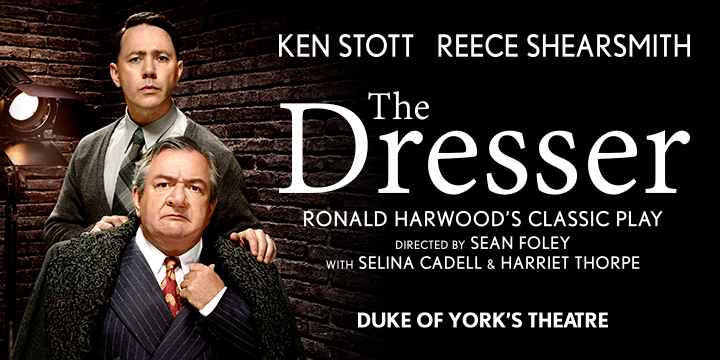
Last week I saw The Dresser with Ken Stott and Reece Shearsmith.

the-dresser-9573

Image from here

Reece Shearsmith in particular gave a really moving performance. The cast were universally good and it was an interesting exploration of love in various guises amongst a group of people who are no longer young. For this reason,  I thought I’d look at novels exploring love later in life.

Firstly, Mr Loverman by Bernardine Evaristo (2013), which is a simple novel in some ways, the coming-out tale of 74 year-old Barrington Jedidiah Walker, and I loved it. Firstly there is the cover, which absolutely captures how I saw the main character:

mr-loverman-cover-with-quote

“Still spruced up and sharp-suited with rather manly swagger. Still six foot something with no sign of shrinkage yet. Still working a certain je ne sais whatsit. I might have lost the hair on my head, but I still got a finely  clipped moustache in the style of old Hollywood romancers. Folk used to tell me I looked like a young Sidney Poitier. Now they say I resemble a (slightly older) Denzel Washington. Who am I to argue? The facts is the facts. Some of us have it, some of us do not. Bring it on, Barry. Bring it on…”

Then there is the character of Barry himself: intelligent, witty, kind, selfish, self-centred, sexist. A mass of compelling and endearing contradictions. A sexist who uses the word “mentalate” rather than menstruate, yet who supports a lesbian he barely knows through a degree in Woman’s Studies. A flamboyant, confident, outgoing man who cannot come out through fear of judgement; unapologetic of his sexuality yet resistant to certain labels “I ain’t no homosexual, I am a ….Barrysexual!”, despite the love he feels for his partner of 60 years, Morris.

“He is my Morris and he always been my Morris. He’s a good-hearted man, a special man, a sexy man, a history-loving-man, a loyal man, a man who appreciates a good joke, a man of many moods, a drinking man and a man with whom I can be myself, completely.”

Barry has been married to Carmel for the majority of their lives, a woman with whom he has little in common:

“Carmel still don’t get arty-fartiness, and the only culture that interests her is the one she decimates with bleach.”

Yet Evaristo shows Carmel’s side of the story brilliantly, and cruelty of Barry’s lies and deception. The impact on Carmel, though she remains oblivious and thinks him a womaniser, is considerable and destructive. While we root for Barry, we are also aware of his disregard for other’s feelings, including his two daughters, especially the eldest with whom he has a strained relationship. And yet just at the points where I would be close to losing all sympathy for Barry, Evaristo would remind me of all he had to contend with:

“All of my life I’ve watched couples holding hands, kissing in the street, on the bus, in pubs. I’ve watched couples walking arm in arm, ruffling each other’s hair, sitting on each other’s laps, dancing closely…

And never, not once, have I ever felt able even to link arms with the man I love.

Me and Morris exchange sidelong glances, and flicker.

He grabs my hand and squeezes it for a few seconds.

It is our first public display of physical affection in sixty years.”

Mr Loverman is also a story of identity, colonialism, immigration first and second-generation, and prejudice in many forms.

“And so what if me and my people choose to mash up the h-english linguish whenever we feel like it, drop prepositions with our panties, piss in the pot of correct syntax and spelling, mangle our grammar at random? Is this not our post-modern, post-colonial prerogative?”

Barry is an intelligent, well-educated ( devoted to his various night school classes), well-read and funny guide through these issues, who provides plenty of food for thought whilst suggesting love always wins out, and there’s plenty to go round.  A brilliant character study which engages with huge themes in a compelling but never didactic way, Mr Loverman, like Barry himself, is an absolute gem.

Now would be an opportunity for the song from which the novel takes its title, but I am less forgiving than Barry regarding Mr Shabba Ranks’ homophobia. So instead here is a pop video interested in addressing the issue:

Secondly, Our Souls at Night, the last novel by Kent Haruf (2015). Unlike Barry and Morris, Addie and Louis become lovers later in life, although they have known each other for years. The novel begins with Addie visiting Louis to make a proposition: that he visit her at night so they sleep together. It is not a request for sex, but for companionship, conversation, and comfort. They live in small town and know from the outset that their arrangement will not go unnoticed:

“It’s some kind of decision to be free. Even at our ages.

You’re acting like a teenager.

I never acted like this as a teenager.  I never dared anything. I did what I was supposed to.”

The short novel (179 pages in my edition) follows the tender, tentative relationship that builds between Louis and Addie. Haruf’s writing is sparse and he hammers nothing home.  Instead he presents moments in unadorned prose, leaving the reader to recognise the meaning.

“Addie turned off the light. Where’s your hand?

Right here beside you where it always is.”

The moments layer into a narrative which presents a touching, believable relationship between two strong, independent individuals who also recognise their need for intimate human contact. Haruf is interested in what human beings can give to each other in the simplest, most fundamental terms. This is further explored through their relationship with Addie’s grandson, a boy traumatised by his parents acrimonious split, who is healed through humble activities with Louis (ball games, camping) and adopting a rescue dog.

“The boy was asleep. The dog lifted her head from the pillow, looked up at Louis and lay back again.

In Addie’s bedroom Louis put his hand out the window and caught the rain dripping off the eaves and came to bed and touched his wet hand on Addie’s soft cheek.”

Haruf is a wonderful writer, presenting moments of extraordinary delicacy and complexity distilled to their essence. Beautiful.

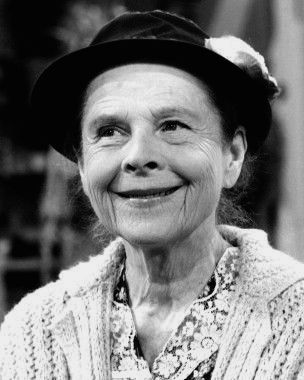
To end, a picture of Ruth Gordon (I don’t know why I don’t do this every week). Because her face is amazing, and one of her most famous roles was in Harold and Maude, a controversial older person romance. In real life she was married to the same person for 43 years and he was with her when she died. Also, completely unconnected to theme but just because I think it’s awesome, when she died aged 88 she was planning the next play she was going to write.


3f1f4088e2230633f7c12b6bb903245b--gordon-aging

Image from here

“It’s the end of the world as we know it” (REM)

Kate from booksaremyfavouriteandbest suggested this week’s title & theme  – I think we all know why.

http-%2f%2fmashable-com%2fwp-content%2fuploads%2f2013%2f06%2fjohnny-depp-panics

Starting with an obvious choice, Signs Preceding the End of the World by Yuri Herrera (2009, tr. Lisa Dillon 2015), published by the wonderful &Other Stories Press – I wrote about another of their Mexican novels here. Herrera looks at the illegal immigrant experience through Makina, seeking out her brother at the behest of her mother, and desperate to return home.

“You’re going to cross and you’re going to get your feet wet and you’re going to be up against real roughnecks; you’ll get desperate of course, but you’ll see wonders and in the end you’ll find your brother, and even if you’re sad, you’ll wind up where you need to be.”

Makina’s journey is both physical and mythical.  As she travels through her homeland she has to ask men with pseudonyms for different types of help to get her across the border. The places she visits have similarly folkloric names: ‘The Place Where The Hills Meet’, ‘The Big Chilango’, ‘The Place Where People’s Hearts Are Eaten’ and across the border ‘The Place Where The Wind Cuts Like A Knife’. By not grounding Signs Preceding the End of the World in recognisable names and places, Herrera expands the simple journey to something much larger. Any tale of illegal immigration is going to have particular political resonances, but Herrera makes his heroine an Odysseus character and her trials a quest. While the tale is not surreal, there is a sense, as in myths and fables, that anything could happen:

“She looked into the mirrors: in front of her was her back: she looked behind but found only never-ending front, curving forward, as if inviting her to step through its thresholds. If she crossed them all, eventually, after many bends, she’d reach the right place; but it was a place she didn’t trust.”

Herrera is a writer who invents neologisms (definitely worth reading the interesting Translator’s Note for this novel) and so is fascinated by language. Through Makina’s journey he tracks the way that boundaries of countries, self and language are all permeable, and how this creates a modern, constantly shifting society:

“Makina senses in their tongue not a sudden absence but a shrewd metamorphosis, a self-defensive shift. They might be talking in perfect latin tongue and without warning begin to talk in perfect anglo tongue and keep it up like that, alternating between a thing that believes itself to be perfect  and a thing that believes itself to be perfect, morphing back and forth between two beasts until out of carelessness or clear intent  they suddenly stop switching tongues and start speaking that other one.”

Signs Preceding the End of the World is a fascinating, multi-layered novel, at once a story for our times but also engages with enduring, expansive themes. Hugely impressive.

And now I pause for thought to wonder if there are enough pictures of kittens in barrels to get me through a single news bulletin right now:

Secondly, Our Endless Numbered Days by Claire Fuller (2015) which I was alerted to last year by the many bloggers who loved this debut novel (written when the author was in her 40s – I must remember to tell my friend C who is coming to terms with the fact that she’s missed her window for those ‘30 Under 30’ type lists). I’m not going to buck the trend on this – I found it a compulsive read which I whizzed through to its gut-wrenching conclusion.

Peggy lives with her parents in the kind of north London middle-class bohemia that keeps Mini Boden in business.  Peggy doesn’t wear Mini Boden though, as it’s 1976 and her mother is busy being a concert pianist while her father gets into arguments with his friends in the North London Retreaters group. This collection of (male) survivalists are convinced nuclear war is imminent. A personal crisis forces Peggy’s father to act on his rhetoric, and he takes her to Germany, to live entirely isolated in “Die Hutte”, in the middle of a forest.  We know this fairytale has unravelled horribly from the opening line, told 9 years later by Peggy who is back in Highgate after a long absence:

“This morning, I found a black and white photograph of my father at the back of the bureau drawer. He didn’t look like a liar.”

The lie Peggy’s father told is astronomical: that the rest of the world has disappeared and they are the only two left living.

“ ‘We’re not going to live by somebody else’s rules of hours and minutes anymore,’ he said. ‘When to get up, when to go to church, when to go to work.’

I couldn’t remember my father ever going to church, or even to work.”

What follows is a narrative that moves back and forth between Peggy’s life in Die Hutte and that in 1985 Highgate with her mother and brother she never knew, Oskar. Fuller handles this extremely well, and I didn’t find the chopping back and forth disruptive or gimmicky. While not a thriller, Our Endless Numbered Days is definitely a page-turner, as Peggy’s comments drip-feed us information about what has gone on: there has been a fire, she has no hair, part of her ear is missing, her teeth are rotten, there is a man called Reuben involved in some way… and her father is no longer around.

The writing style is simple, and I found this a quick read, but the ideas are complex. Fuller is interested in the fantasies we tell ourselves and others in order to survive and the dangers inherent in not questioning these (insert heavy-handed political parallel here). She is interested in the price paid by powerless members of society when the powerful seek fulfilment by disregarding the needs of others (insert… well, you get the idea) and she is interested in the psychological fallout from childhood and our parents.  I saw the twists a mile off, and sometimes Peggy’s voice wavered, but this may have been intentional and it really didn’t matter. Peggy’s complex fairytale was both extreme and subtle, quite a feat.

“Oskar rapped his knuckles on the thick white ice which had risen like a soufflé out of a bucket hanging on a nail beside the back door. I recognised it, it was the bucket my father and I had used…Oskar laughed and turned the handle twisting it hard; his mouth twisting too with the effort. The tap snapped off. And for the first time since I had come home I cried – for the music, for Reuben, but most of all for the waste of a bucket.”

To end, goodbye to a poet and musician whose work is bringing me some comfort – as always – in these troubled times:

“Deep-versed in books and shallow in himself.” (John Milton)

Well, Milton’s got my number. My shallowness extends to books themselves –against conventional wisdom, I definitely judge by the cover.  Thank goodness I do, otherwise whole publishing marketing teams would be out of business.  This week I’m hoping other people aren’t as shallow as me as I’m starting a new job and I hope they overlook whatever gibbering first impression I make to see the hard-working-team-playing-but-definitely-not-a jobsworth- and-will-never-steal-your-lunch-from-the-fridge colleague within.

50ba5ea307fe9576ddd4d4bfcb86d13c

I was also thinking about first impressions and book covers following an interesting post by Lady Fancifull a few weeks back, about a marketing campaign which played on this exact bias.  Earlier in the year, I was persuaded by another blogger, Cathy at 746 books, to stop being so shallow when I won a book in her giveaway, encouraged by her great review, although its cover meant I would never have picked it up normally. So in this post I’m going to look at the book I was lucky enough to win, and a book whose cover would have attracted me even if I wasn’t already a fan of the author.

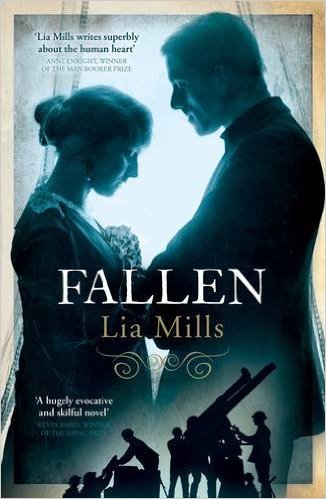
Firstly then, Fallen by Lia Mills (2014). Here’s the cover:

51v0yqwpal-_sx324_bo1204203200_

Yuck, right? Curlicues – seriously? I would never have picked this up, thinking it looked like a fluffy romance, which is not my taste at all. But while there is a love affair in Fallen, it is not romanticised. Mills is interested in the fallout from war on both those who served and those who remained behind (often women) and how a generation of young people were irrevocably damaged.

Katie Crilly is living in Dublin in 1915 and trying to find her way in a world where she doesn’t know what she wants, except that she definitely doesn’t want what others expect of her. Then her twin brother Liam announces he’s off to join the war effort.

 “He went into his room and shut the door. The latch clicked like a scold’s tongue, made me wish I’d a more generous heart. The silence on the landing was so deep I heard my own pulse tick.”

Liam dies, and Katie has to cope with profound grief, and the fact that her grief is commonplace:

“We’d heard that, in the Dardanelles, many of the Dublins were put off their boats into water that was too deep for them. Pulled under by the weight of their packs, they drowned, while Turkish bullets and mortar fire tore into their comrades and churned the sea red. The gas unleashed at Ypres, around the time that Liam died, was still claiming lives two months later. Every second person on Sackville Street wore a black armband, or a cuff.”

While all this is happening, the Easter Rising explodes onto the already wrecked population of Dublin. Katie finds herself stranded in the home of friends who are also giving shelter to a wounded soldier, Hubie, who knew Liam. Hubie, his wounds visible and invisible, is furious at the ignorance of those who have remained at home. Katie does not turn her face away from the horrors of war and recognises in Hubie a fellow haunted soul:

 “If you love someone, and that person dies, all that love becomes a burden, a weight accumulating, pooling inside you, with nowhere to go. What do you do with it? … Sometimes it gathered itself into a shape, a shadow, peeled itself off the ground and attached itself to my heel. It followed me and spoke, in Liam’s voice”

Fallen is about an ordinary life caught up in exceptional circumstances. It is about how to find meaning in a world where national events dwarf the individual. Ultimately it is a hopeful book, about how a fractured self can be rebuilt, whole but wholly different.

And it is very much about Dublin: Mills evokes a strong sense of place and Fallen was a perfect choice for Two Cities One Book, in the centenary year of the Easter Rising.

“There was something raw about the morning, as though layers of the city’s skin had rubbed off during the night.”

Secondly, The Nakano Thrift Shop by Hiromi Kawakami (2005, tr. Allison Markin Powell, 2016). I was excited to read this as I’d loved Strange Weather in Tokyo and was disappointed that none of Kawakami’s other work had been translated into English. The Nakano Thrift Shop was translated this year and like Strange Weather, the cover features one of Natsumi Hayashi’s beautiful levitating photographs:

Gorgeous, no? The pictures really capture the vibrancy, unpredictability and humour of Kawakami’s writing.

In The Nakano Thrift Shop, Hitomi takes a job at the eponymous business, uncertain of what she wants from life and hoping that the job will be undemanding:

“With its second-hand goods (not antiques), Mr Nakano’s shop was literally filled to overflowing…Mr Nakano would raise the shop’s shutter and, with a cigarette between his lips, he’d arrange the goods intended to tempt customers outside the front of the store…Sometimes ash from his cigarette fell on the turtle paperweight’s back, and Mr Nakano roughly brushed it off with a corner of the black apron that he always wore”

The owner has several ex-wives and a mistress. Despite his unprepossessing appearance, Mr Nakano has irresistible charm:

“I’d heard the phrase ‘a boyish grin’, but Mr Nakano’s grin was decidedly middle-aged. There was something scruffy about it. And yet, at the same time, it was also a winning smile. I suppose it’s the kind of smile that women, as they age, can’t resist”

Hitomi, Nakano, his artist sister Masayo and the driver Takeo form an unlikely quartet as they are thrown together. And really, very little happens. These four idiosyncratic, wholly believable characters rub along together in their day-to-day lives of triumphs and tragedies, some larger than others, explored through different objects in the shop. Takeo and Hitomi begin a tentative, on-again-off-again relationship that was heart-breaking, real and funny in its tenderness, misunderstanding, affection and frustration:

“I would eat a diet rich in vegetables, seaweed, and legumes, and every day would be sparkling and bright, my life brimming with health and vitality. While imagining this, I was again filled with a general sort of sadness. I definitely wasn’t sad because I was thinking about Takeo. Definitely not.”

This is not the novel to read when you’re in the mood for a heavily plotted, eventful story. Yet Kawakami captures the drama of everyday lives and their meaning. Her writing can also be startling, so while it is concerned with the ordinary it is never banal:

“The skin on Saskiko’s cheeks was glowing with an inner light. Just like the bottom of the gin jug, they reflected a dusky and beautiful radiance.”

The Nakano Thrift Shop is touching and life-affirming, but never sentimental. Fingers crossed for further translations…

To end, some shameless objectification of someone whose outward appearance has been my idea of perfection since 1981:

The Lost Honour of Katharina Blum – Heinrich Boll (Le Monde’s 100 Books of the Century #64)

This is part of a series of occasional posts where I look at works from Le Monde’s 100 Books of the Century.  Please see the separate page (link at the top) for the full list of books and an explanation of why I would do such a thing.

The Lost Honour of Katharina Blum or, how violence develops and where it can lead by Heinrich Boll (1974, tr. Leila Vennewitz 1975) is a satire on anti-communist paranoia written in a reportage style. If that summary and the cumbersome title of the novel makes you feel like this:

gepoe

Stick with me. Boll manages to convey the story with a fast pace and a light touch which means that the narrative carries you along and you don’t feel bludgeoned with polemic. He also undercuts the objectivity that his narrator is proclaiming, questioning the facts that are presented, even when we know what has happened – that Katarina Blum has shot and killed Totges, a journalist for a (fictional) newspaper Die Zeitung.

“Let there not be too much talk about blood here, since only necessary differences in level are to regarded as inevitable; we would therefore direct the reader to television and movies and the appropriate musicals and gruesicals; if there is to be something fluid here, let it not be blood […] Totges was wearing  an improvised sheikh costume concocted from a rather worn sheet, and the effect of a lot of blood on a lot of white is well known; a pistol is then sure to act almost like  spray gun, and since in this instance the costume was made out of a large square of white cotton, modern painting or stage effects would seem to be more appropriate here than drainage. So be it. Those are the facts.”

How Katharina came to do such a thing is told from a variety of viewpoints, capturing the events of four days from when she meets Gotten, a bank robber and suspected radical at a party, to the time when she commits the murder. Die Zeitung spins its own story around events, outraged that one of their own has been killed. The newspaper reporting is comical:

“The pastor of Gemmelsbroich had the following to say: ‘I wouldn’t put anything past her. Her father was a Communist in disguise, and her mother, whom on compassionate grounds I employed for a time as a charwoman, stole the sacramental wine and carried on orgies in the sacristy with her lovers.’”

Yet at the same time this is the crux of satire. The newspaper is able to spin such tales, eagerly gobbled up by its readers, without censure. The print media both perpetuates and exacerbates the tragedy, as the lies spun around the ‘Red’ Gotten and Scarlet Woman Katharina cause the hard-working, honest Katharina to become so desperate as to take a life.

Of course, The Lost Honour of Katharina Blum was written over 40 years ago so the reality it portrays is barely recognisable now. An irresponsible sensationalist press, whipping up public feeling, vilifying marginalised groups, passing judgement on female sexuality…nope, can’t think of a single contemporary parallel.

1273

“Everything will be done to avoid further blockages and unnecessary buildups of tension. It will probably not be possible to avoid them entirely.”

Much as I enjoyed the novel and fancy admire the brilliant mind of Kris Kristofferson, I think I’ll be skipping this made-for-TV adaptation (cue 80s-tastic trailer):

“There is no greater agony than bearing an untold story inside you.” (Maya Angelou)

This week’s post is about novels which build on the untold stories of other novels. This was prompted by last week’s post where I looked at the The Plague by Albert Camus. I mentioned that there were essentially no women in the book but I neglected to say that there is another significant group missing from this Algeria-set tale: Arabs. In The Plague, Camus makes reference to events depicted in The Outsider (L’Etranger):

 “Grand had personally witnessed an odd scene that took place at the tobacconist’s. An animated conversation was in progress and the woman behind the counter started airing her views about a murder case that had created some stir in Algiers. A young commercial employee had killed an Algerian on a beach”

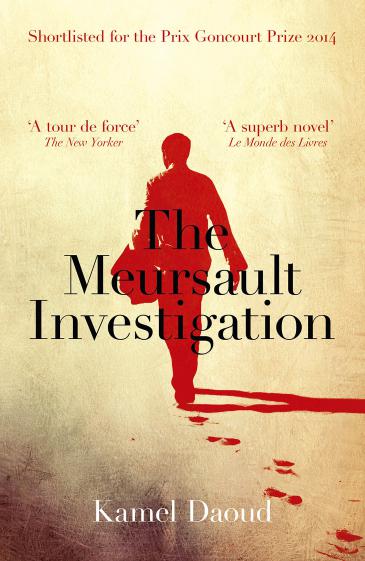
The Arab killed by Meursault in The Outsider is nameless. In The Meursault Investigation (2014, tr. John Cullen, 2015) Algerian writer Kamel Daoud has given him a name and expanded the events of The Outsider to show the fallout from the murder on the victim’s family.

the_meursault_investigation_


“Well, the original guy was such a good storyteller, he managed to make
people forget his crime, whereas the other one was a poor illiterate God created apparently for the sole purpose of taking a bullet and returning to dust – an anonymous person who didn’t even have the time to be given a name.”

Told by Harun, the victim’s brother, to a silent interlocutor in a bar, the story brings home the emotional fallout of a person – famous yet anonymous – being killed:

“My brother Musa was capable of parting the sea, and yet he died in insignificance, like a common bit player, on a beach that today has disappeared”

Yet it also questions why, in this touchstone of twentieth-century literature, those in the story and the readers of it do not interrogate what is depicted more:

“the court preferred judging a man who didn’t weep over his mother’s death to judging a man who killed an Arab”

The Meursault Investigation, despite its slim size (142 pages in my edition) is a hugely ambitious work. Obviously it is in conversation with The Outsider (from the outset with the opening line “Mama’s still alive today”, echoing Camus’s opener of “Mother died today”) but it is using this a starting point to explore issues around colonialism, post-colonialism, language (Daoud writes in French, not Arabic):

 “I’m going to take the stones from the old houses the colonists left behind, remove them one by one, and build my own house, my own language. The murderer’s words and expressions are my unclaimed goods. Besides, the country’s littered with words that don’t belong to anyone anymore. You see them on the facades of old stores, in yellowing books, on people’s faces, or transformed by the strange creole decolonisation produces.”

 Big themes, but Daoud explores them with a lightness of touch and a dry humour which stops it becoming unbearably heavy. Like Camus, he raises questions without offering trite answers. A worthy companion to the classic which inspired it.

 “I’m philosophising? Yes, yes I am. Your hero had a good understanding of that sort of thing; whether or not to commit murder is the only proper question for a philosopher, the only one he ought to ask. All the rest is chit chat. However, I’m only a man sitting in a bar. It’s the end of the day, the stars are coming out one by one, and the night has already given the sky a positively exhilarating depth.”

Both the books I’ve picked this week are quite serious, so let’s pause and spend some time with a drunk raconteur slightly less coherent than Harun:

Secondly, March by Geraldine Brooks (2006) the story of the missing father in Little Women, which won the Pulitzer. Prize-winning novels can be a mixed bag, and leave me feeling more than a little peevish*, wondering if the judges and I have even read the same book. Not in this instance, as March is both beautifully written and very readable.  But firstly, I need to get something off my chest. This is my edition:

827196-_uy200_

That Richard and Judy Book Club sticker is permanent. PERMANENT. O monstrous disfigurement! Removable stickers are bad enough: they’re not really removable, they leave a sticky mess and no matter how much I scrub, even if the sticky bit goes, there’s always a weird, oleaginous*disc-shaped mark left on the cover. They never tell me anything I want to know – in this case, that I’m reading something recommended by Richard and Judy. Why, publishers? WHY? No-one wants this! NO-ONE.

*deep breath*

 Back to March, which gives voice to the absent father in Little Women, and the year he spends away from home fighting in the American Civil War. A man of strong convictions who sees his family’s poverty as part of a wider cause and follows a vegan diet meaning all his little women have to do the same, he begins the war with ideals challenged but intact:

“If war can ever be said to be just, then this war is so; it is action for a moral cause, with the most rigorous of intellectual underpinnings. And yet everywhere I turn, I see injustice done in the waging of it.”

Brooks does not pull her punches on these injustices; at times March was harsh reading. March reflects on his life and how he has come to be involved in the fighting, which includes a violent awakening to the horrors of slavery. Unsurprisingly, the horrors continue during the conflict and March has to take difficult decisions that challenge his beliefs not only in social justice and moral causes, but in who he is as a man. At the same time, the portrait of Marmee is extended and complicated beyond the source novel. She is angry:

“I only let him do to me what men have ever done to women: march off to empty glory and hollow acclaim and leave us behind to pick up the pieces. The broken cities, the burned barns, the innocent injured beasts, the ruined bodies of the boys we bore and the men we lay with.”

Although Brooks doesn’t dwell on this, there is also the suggestion that Marmee is racist. Despite participating in the underground railway and supporting emancipation, when she arrives in Washington to see her husband and encounters free black people, she wonders: “are there no end to these people?” A bold move by Brooks, but one that results in flawed, complex characters who are wholly believable.

March is a sad book, but not depressing. Ultimately it is about endurance, against the odds, and how we hold together even when feeling utterly broken. Like Little Women, it is also about family, whether they are physically with us or not:

 “One day I hope to go back. To my wife, to my girls, but also to the man of moral certainty that I was…that innocent man, who knew with such clear confidence exactly what it was he was meant to do”

To end, what my own family sadly lacks is a catchy theme tune:

* Following last week’s post comments: today’s blog post was brought to you by the words peevish and oleaginous, thanks to Kate at booksaremyfavouriteandbest  🙂

“The problem with the world is that everyone is a few drinks behind.” (Humphrey Bogart)

This post is my contribution to the 1947 Club, hosted by Karen at Kaggsy’s Bookish Ramblings and Simon at Stuck in a Book, do check out their blogs and join in!

1947-club-pink

Firstly, In a Lonely Place by Dorothy B Hughes, which I was inspired to pick up after reading Jacqui’s excellent review. Dix Steele is a war veteran who has recently moved to LA. He runs into one of his army buddies, Brub, who updates Dix on his career choice since the army:

“He came sharply into focus. The word had been a cold spear deliberately thrust into his brain. He heard his voice speak the cold, hard word. ‘Policeman?’ But they didn’t notice anything. They thought him surprised, as he was, more than surprised, startled and shocked.”

Why the problem with Brub being a policeman? Brub is investigating a strangler who is terrorising the young women of the city. Dix is intrigued by this and carefully questions his friend on the investigation, gleaning as much information as he dare. The third-person narration is from Dix’s point of view and we are privy to his disturbing thoughts, including his attitude to the strangler’s latest victim:

“The only exciting thing that had ever happened to her was to be raped and murdered. Even then she’d only been subbing for someone else.”

It emerges then, that Dix is a deeply disturbed human being.  He is filled with anger, and feels alienated from the rich society of LA (although he is staying in a stylish apartment loaned from a friend, whose car, clothes and accounts he has also appropriated) and from the marital happiness he sees between Brub and his wife, although he is dating a beautiful actress, Laurel Gray:

“To hell with happiness. More important was excitement and power and the hot stir of lust. Those made you forget. They made happiness a pink marshmallow.”

In a Lonely Place works well as thriller, it is tightly written and the narrative tension is maintained. However, like Highsmith’s Ripley novels, it also works extremely well as a character study of a complex human being. Dix is not likeable, but at the same time he is damaged and lonely, unable to see a way out of his desperation.

“He was there for a long time. Lost in a world of swirling fog and crashing wave, a world empty of all but these things and his grief and the keening of the fog horn at sea. Lost in a lonely place. And the red knots tightened in his brain.”

I thought I knew the story as I had studied the 1950 film at university, but in fact the film is very different. It is a wonderful film noir, and because of the significant plot changes, it doesn’t matter which you experience first. I recommend both the book and the film of In a Lonely Place:

Secondly The Plague (La Peste) by Albert Camus, which I read in the English translation by Stuart Gilbert (1948). Set in the Algerian coastal city of Oran, it is one more stop on my Around the World in 80 Books Reading Challenge, hosted by Hard Book Habit. The story begins with the rats of the city gruesomely dying in abundance.

“It was as if the earth on which our houses stood were being purged of its secreted humours – thrusting up to the surface the abscesses and pus-clots that had been forming in its entrails. You must picture the consternation of our little town, hitherto so tranquil, and now, out of the blue, shaken to its core”

Yuck,yuck,yuck. Told by a narrator who doesn’t identify himself (there are no women in this tale) until the end, The Plague recounts the experience of Dr Rieux who works treating the victims; Grand, who works on his novel but never gets beyond constantly re-writing the first line; Cottard, who is suicidal before the plague but reinvigorated by the outbreak; Rambert who was only visiting Oran for work but now finds himself trapped, and a handful of other citizens. The Plague is told in a deceptively simple style, and captures the oppressive atmosphere of a town trapped in quarantine, where you might die at any moment:

“Thus, in a middle course between these heights and depths, they drifted through life rather than lived, the prey of aimless days and sterile memories, like wandering shadows that could have acquired substance only by consenting to root themselves in the solid earth of their distress.”

Amongst this desperation there is also surprising humour (Camus was associated with absurdism):

“One of the cafes had the brilliant idea of putting up a slogan: ‘The best protection against infection is a bottle of good wine’, which confirmed an already prevalent opinion that alcohol is a safeguard against infectious disease.”

And with regard to the officials of the town:

“That, in fact, was what struck one most – the excellence of their intentions. But as regards plague their competence was practically nil.”

Yet of course this was written by one of the foremost philosophers of the twentieth century, and so there is more to this tale than the plague in Oran. It has been read as an allegory for French resistance to Nazism but it is wider than any one reading.

“What’s true of all the evils in the world is true of plague as well. It helps men rise above themselves. All the same, when you see the misery it brings, you’d need to be a madman, or a coward, or stone blind, to give in tamely to the plague.”

While they don’t give in, the reactions to the plague by the characters are various but also oddly subdued – there is very little panic or revolt. The desperation is quiet but Camus shows the tragedy of this as life goes on under the shadow of an indiscriminate threat: “the habit of despair is worse than despair itself”.

The Plague is a remarkable novel, straightforward yet complex, that would lend itself to repeated re-readings, and which is both bleak yet hopeful. Thus when Camus writes:

 “each of us has the plague within him; no one, no one on earth, is free from it”

He is pointing out the common humanity which unites as well as the plague of existence.

I don’t want to end a blog post with the phrase ‘plague of existence’ so instead I’ll end it with the phrase chuckles of stardust.

… and a song written in 1947 (this performance from 1962) which suggests it’s all OK really:

“An artist is someone who should raise questions rather than give answers. I have no message.” (Michael Haneke)

Today is National Poetry Day in the UK and the theme is Messages. I fully endorse this choice, primarily because I didn’t have to think twice about which retro pop video I could shoehorn into this post:

Arguably any poem is a message, but I’m lazy don’t believe in shying away from the obvious so I’ve chosen two poems that are titled as messages. Nothing kills a poem like analysing it to death, hence not one of my typically waffling posts this week 🙂

Firstly, back to the 8th century and prolific poet Wang Wei (I’m not sure who translated the poem, but I took the version from here). I chose it because it also references autumn, which is apt right now for those of us in the northern hemisphere.

Message to P’ai Ti

Cold and blue now are the mountains
From autumn-rain that beat all day.
By my thatch door, leaning on my staff,
I listen to cicadas in the evening wind.
Sunset lingers at the ferry,
Cooking-smoke floats up from the houses…
Oh, when shall I pledge Cheih-yu [the great hermit] again
And sing a wild poem at Five Willows?

I love the simplicity of the poem, and how evocative it is of a slightly melancholic moment taken to reflect at the end of the day.

Secondly I chose Message by Dorothy Richardson, because it echoes Wang Wei as it also picks up on autumn, and ends with a question, this time to a silent interlocutor rather than the self. I also chose it because I’m really enjoying reading about Jane and Sarah’s experiences reading her Pilgrimage series, but I haven’t yet got round to these novels…

Seeing in flight along the lifting wind,
Like sudden birds peopling an empty sky,
Those last crisped leaves so long you had passed by –
Where dark they hung that had been fire behind
The pasture whose scant blossoms kept in mind
Our summer now grown gold for memory –
Did you remember as you saw them pass,
Flutter and sink, sully the silvered grass,
That each forsaken stem bears, fast asleep,
An eager bud to tell the tale of spring?
Will you forget, hearing darkness weep,
How each hour moves toward their awakening?

I liked how this poem concentrates on one action, a leaf in the air, and yet weaves a wide experience around it, structured in quite a complex way. The iambic pentameter (more or less, Richardson plays with rhythm a bit) echoes Shakespeare’s sonnets, which I just adore. The message of this poem is one I need to remember – I find the dark days of winter hard-going, so I will remind myself how each forsaken stem contains an eager spring bud in those seemingly never-ending grey days of January and February…

To counteract my comparative reticence in this post, some indulgence to finish. A second – yes, second! – 1979 pop video. Happy Thursday 🙂

“I don’t know what London’s coming to — the higher the buildings the lower the morals.” (Noël Coward)

It was the autumn equinox last week here in the UK, which means summer for us is officially over and everyone’s back at work. For this reason I thought I’d look at the theme of London as it’s where I live and work, alongside eleventy-million others. Those heady summer days are rapidly becoming a distant memory under the realities of train strikes (salt rubbed into the wound of a service so bad it often seems like Southern rail are running a surrealist immersive art installation they’ve forgotten to tell anyone about) and falling temperatures. For this reason, and after the tribulations of The Notebook last week, I’ve chosen 2 comic novels for a bit of light relief.

Firstly, NW by Zadie Smith (2012) or, how I learned to stop worrying and love Zadie Smith, if you will. This is Smith’s fourth novel (she recently published her fifth, Swing Time) and it’s the first of her much-lauded fiction that I’ve truly enjoyed. Until this point I always preferred her journalism and essays, but NW is the point at which her fiction really grabbed me.

Set in the part of London whose postcode gives the book its title, NW experiments with various forms, hopping between stream-of-consciousness, text-speak, first and third person, diagrams… It is a successful approach, creating the multiple voices and sensory overload that London offers, without descending into a chaotic mess. Edgware Road:

“Sweet stink of the hookah, couscous, kebab, exhaust fumes of a bus deadlock. 98, 16, 32, standing room only – quicker to walk! Escapees from St Mary’s Paddington: expectant father smoking, old lady wheeling herself in a wheelchair smoking, die-hard holding urine sack, blood sack, smoking. Everybody loves fags. Everybody. Polish paper, Turkish paper, Arabic, Irish, French, Russian, Spanish, News of the World. Unlock your (stolen) phone, buy a battery pack, a lighter pack, a perfume pack, sunglasses, three for a fiver, a life size porcelain tiger, gold taps.”

Leah, Natalie (who used to be called Keisha), Felix and Nathan grew up on the same Caldwell estate and went to the same school. As adults, their lives have diverged, but they all still live in the area (Willesden) and their stories overlap and layer one another, broadening each of their individual tales.  Leah and Natalie are each other’s oldest friend.  Both are married – more or less happily – and employed, building their lives. But whereas Natalie spent the 90s knuckling down to work and is now a successful barrister, Leah spent it enjoying rave culture and now has a socially responsible but low-paid job, which creates a tension in their relationship:

“Leah watches Natalie stride over to her beautiful kitchen with her beautiful child. Everything behind those French doors is full and meaningful. The gestures, the glances, the conversation that can’t be heard. How did you get to be so full? And why so full of only meaningful things? Everything else Nat has somehow managed to cast off. She is an adult.”

Of course, when we get to Natalie’s version of the story Leah has alluded to, we realise all is not as it seems. Natalie is not entirely happy; she has not shrugged off Caldwell, nor does she entirely want to. There are areas of her life where she still refers to herself as Keisha, and when she gives birth to the first of her beautiful children it is her childhood friends and family that give most comfort:

“People came with advice. Caldwell people felt everything would be fine as long as you didn’t actually throw the child down the stairs. Non-Caldwell people felt nothing would be fine unless everything was done perfectly and even then there was no guarantee. She had never been so happy to see Caldwell people.”

Another section of the novel follows recovering addict Felix around the borough. He is emerging from a destructive life into something more positive.  As he moves around the area, between the people of his old life and new, his story simultaneously captures the transformation which his home town is undergoing:

“He steadied himself with a hand on the Tavern’s back door: fancy coloured glass now and a new brass doorknob. Wood floors where carpets used to be, real food instead of crisps and scratchings. About six quid for a glass of wine! Jackie wouldn’t recognise it. Maybe by now she’d be one of those exiles on the steps of the betting shops, clutching a can of Special Brew, driven from the pub by the refits.”

Nathan meanwhile, beautiful and talented at school, now a physical wreck, has not managed to pull himself out of the sort of life Felix had been living. NW is funny and sad, effectively capturing born –and-bred Londoners at a specific time in an ever-changing city. As a born-and-bred Londoner myself, around the same age as Zadie Smith and therefore her protagonists, I thought it was highly effective in capturing place, time and voice(s). I still think Zadie Smith’s editor needs to be heavier-handed, and one of the characters makes a leap at the end that I thought didn’t quite hold up, but NW means I’m now really looking forward to reading Swing Time.

Not the only member of her family to engage with ideas around language, here is Zadie’s brother Ben aka comedian/rapper/actor Doc Brown, proving that apparently the whole family are good-looking, talented and witty, damn them (little bit rude and mild swears):

Secondly, Capital by John Lanchester (2012). In 2010 former journalist Lanchester wrote a non-fiction book, Whoops!: Why Everyone Owes Everyone and No-one Can Pay (2010) about the credit crunch. This is a fictional look at the same time, through the residents of Pepys Road in south-west London.  Pepys Road, like much of London, has seen the value of the property rise exponentially:

“For most of its history, the street was lived in by more or less the kind of people it was built for: the aspiring not-too-well-off. They were happy to live there, and living there was part of a busy and determined attempt to do better, to make a good life for themselves and their families. But the houses were the backdrop of their lives: they were an important part of life but they were a set where events took place, rather than the principal characters. Now, however, the houses had become so valuable to people who already lived in them, and so expensive for people who had recently moved into them, that they had already become central actors in their own right.”

Hence Capital is about the capital city, and also about the financial capital which the city propagates and runs on.

“She wasn’t sure how to make money, exactly, but anyone with eyes could see that it was everywhere in London, in the cars, the clothes, the shops, the talk, the very air. People got it and spent it and thought about it and talked about it all the time. It was brash and horrible and vulgar, but also exciting and energetic and shameless and new”

In Mr Phillips, Lanchester wrote a slim novel detailing one man’s life over one day. By contrast, this is a 577 page (in my edition) novel takes in the lives of many: Petunia, an elderly lady who has lived in Pepys Road most of her life and her grandson, a Banksy-style artist; Roger and Arabella, a city worker and his materialist wife, their Hungarian nanny and Polish builder; the British Muslim family who run the corner shop; the Senegalese footballer whose club owns one of the houses; the Zimbabwean refugee who works illegally as a traffic warden, ticketing the Aston Martins and Jeeps in the road.

Unsurprisingly, it is Roger and Arabella who are most affected by the financial collapse.  At the start of the novel Roger is anticipating his million-pound bonus:

“His basic pay of £150,000 was nice as what Arabella called ‘frock money’, but it did not pay even for his two mortgages. The house in Pepys Road was double-fronted and had cost £2,500,000, which at the time had felt like the top of the market, even though prices had risen a great deal since then. They had converted the loft, dug out the basement, redone all the wiring and plumbing because there was no point in not doing it, knocked through the downstairs, added…”

The chapter continues in the vein, listing all their running costs and conspicuous consumption before concluding “it did mean that if he didn’t get his million-pound bonus this year he was at genuine risk of going broke.”

Good grief. Arabella’s whole existence revolves around spending money – she doesn’t work, a nanny takes the kids out all day, (“Matya had no theories about children, she took them as she found them, but it seemed to her that many of the children she had looked after were both spoilt and neglected.”) she has no hobbies or interests and seems to define herself through what she owns, so Roger and Arabella’s entire lives pretty much rest on his bonus.

Meanwhile, someone is sending postcards to the residents of the street, which only say “We Want What You Have”. The campaign escalates and the various residents start to feel uneasy:

“the thought of other people wishing they had your level of material affluence was an idea you could sit in front of, like a hearth fire. But this wasn’t like that. This was more like having someone keeping an eye on you and secretly wishing you ill.”

Detective Inspector Mill is called in to investigate:

“His hair wasn’t in fact long enough to get into his eyes, but this gesture was like an atavistic survival of a period during which he had a long, floppy fringe. So for a moment everyone in the room glimpsed him with that languid public school hair.”

Underestimate this unlikely copper at your peril, though.  Mill’s investigation forms the background mystery to the novel, but really this is a story about the variety of overlapping lives that take place in a typical London street: their hopes, triumphs, tragedies and the banal stuff in between. It’s a clever novel and extremely well-written, the pace doesn’t flag and I cared about all the characters (even a tiny bit about Arabella, who is clearly deeply unhappy and has no idea why). Unlike NW, there is one consistent authorial voice, but similarly to NW, Capital succeeds in capturing some of the complexity of a huge city and its many residents.

Capital was adapted into a 3-part BBC drama last year, starring the brilliant Toby Jones as Roger and a great turn by Rachel Stirling as the terrible Arabella:


“Great things are done by a series of small things brought together.” (Vincent van Gogh)

This is my contribution to Small Press September, hosted by Bibliosa. Do head over to her blog to read all about it and join in! The novels are also two more stops on my Around the World in 80 Books Reading Challenge, hosted by Hard Book Habit.

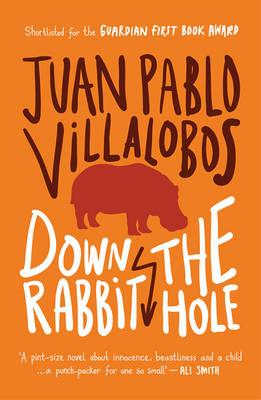
Firstly, Down the Rabbit Hole by Juan Pablo Villalobos (tr.Rosalind Harvey, 2011), which I picked up after reading Shoshi’s excellent review.  It is published by And Other Stories, a not-for-private-profit company which concentrates mainly on translated fiction. That sentence makes me feel better about the world 🙂

9781908276285

Back to the novel: Tochtli (rabbit in Nahuatl, an indigenous language of Mexico), tells us about his love of samurai films, hats, learning new words, and his life as the young son of a drug baron, Yolcaut (rattlesnake).

“I think we have a very good gang. I have proof. Gangs are all about solidarity. So solidarity means that because I like hats, Yolcaut buys me hats, lots of hats, so many that I have a collection from all over the world and all periods of the world. Although now more than new hats what I want is Liberian pygmy hippopotamus. I’ve already written it down on the list of things I want and given it to Miztli. That’s how we always do it, because I don’t go out much, so Miztli buys me all the things I want on orders from Yolcaut.”

The isolation is a necessary part of his father’s business, whose paranoia is an occupational hazard that is no doubt keeping them all alive. The tragic effect that this is having on young Tochtli becomes increasingly apparent as the story progresses. Tochtli accepts his life, knowing no different, but to the adult reader he displays worrying signs of severe anxiety: wanting his head shaved because he doesn’t want ‘dead’ hair on him, compulsively wearing hats, constant severe stomach pains, and later, after he sees something his father tried to keep hidden, selective mutism. He also takes violence pretty much in his stride:

“One of the things I’ve learnt from Yolcaut is that sometimes people don’t turn into corpses with just one bullet. Sometimes they need three or even fourteen bullets. It all depends where you aim them. If you put two bullets in their brains they’ll die for sure. But you can put up to 1,000 bullets in their hair and nothing will happen, though it might be fun to watch.”

Although dealing with extremely serious subject matter, there is humour is the novel, such as Tochtli’s description of the preparation for a drug run to Liberia which he also goes on in order to get one of his beloved pygmy hippos:

“By the way, Franklin Gomez started being Franklin Gomez yesterday in the airport. That’s what his passport from the country of Honduras says: Franklin Gomez. There were problems because Franklin Gomez didn’t want to be Franklin Gomez. Until Winston Lopez convinced him.”

In such a short tale (70 pages in my edition)Villalobos effectively widens the narrative of drug trade away from the usual barons/dealers/ users paradigm to show how the fallout from the industry can reach far and wide, including devastating those too young to have a choice about their own involvement. It is a truly moving story, not about drugs (you can read an article by the author where he refutes the term narcoliteratura here), but about children trying to cope with the messy, corrupt world adults create around them: sadly, pretty much a universal theme.

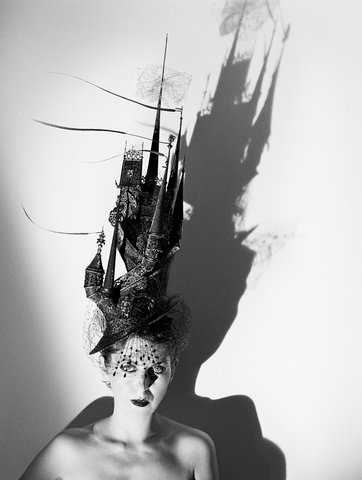
Fellow hat enthusiast, the late Isabella Blow, wearing Philip Treacy's Castle hat

Fellow hat enthusiast, the late Isabella Blow, wearing Philip Treacy’s Castle hat

Image from here

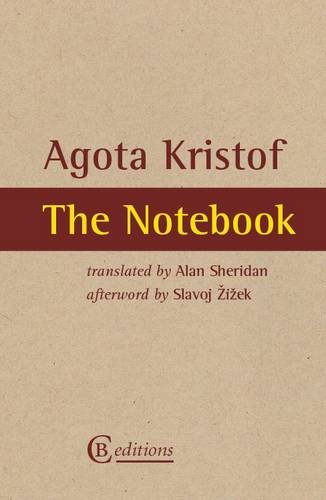
Secondly, The Notebook by Agota Kristof (1986, tr. Alan Sheridan, 1989) published by CB editions,  a publishing house which focuses on short fiction, poetry and translations. Kristof was Hungarian but was exiled to French-speaking Switzerland in 1956, and wrote this, her first novel, in French.

notebook

Like Down the Rabbit Hole, The Notebook is told from a child’s point of view, in this instance twin boys – we never know their individual names and they always use the first-person plural – who are evacuated to live with their maternal grandmother in the countryside of an unnamed nation, but which is generally thought to be Hungary.

“We call her Grandmother. People call her the Witch. She calls us ‘sons of a bitch’…Grandmother never washes. She wipes her mouth with the corner of her shawl when she has finished eating and drinking. She doesn’t wear knickers. When she wants to urinate, she just stops wherever she happens to be, spreads her legs and pisses on the ground under her skirt.”

This woman shows them no love or affection (although as the novel progresses we learn to recognise the small signs that she does care for them) and life is tough. They work on her smallholding and undertake various psychological ‘exercises’ to try and adjust to their straightened circumstances.

“ ‘My darlings! My loves! My joy! My adorable little babies!’ When we remember these words, our eyes fill with tears. We must forget these words because, now, nobody says such words to us and because our memory of them is too heavy a burden to bear. So we begin our exercise again in a different way…By repeating them we make these words gradually lose their meaning and the pain that they carry in them is reduced.”

The tone of the narration is astonishing. As the boys become more and more detached in an effort to preserve themselves from the horrors they witness, the reader is faced with filling in the gaps regarding what is happening. The delivery is so matter-of-fact that more the once I found myself stopping, thinking ‘Wait a minute, what the…’, going back and finding that something devastating had been described and I’d nearly missed it.

“Words that define feelings are very vague; it is better to avoid using them and to stick to description of objects, human beings and oneself; that is to say, to the faithful description of facts.”

The Notebook is a shattering work, and a challenging read. Human relationships are warped under the pressures of war. More than once, these pretty, golden twins get drawn into adult sex games. A young girl who is named after her birth anomaly – Harelip is apparently her given name – engages in some truly upsetting sexual acts. A neighbour behaves with horrific cruelty toward a group of starving people (presumably Jewish prisoners) and the boys wreak a terrible revenge (which they never admit in the text but you know what has happened and why). It is a difficult read but a powerful one, which does not shy away from the damage done when the acts of nations cause individuals to lose sight of their humanity. It is a political book, but not a polemical one: the twins’ equanimity leaves the reader to draw their own conclusions.

“Later, we have our own army and government again, but our army and government are controlled by our Liberators. Their flag flies over all the public buildings. The photograph of their leader is displayed everywhere. They teach us their songs and their dances; they show us their films in our cinemas. In the schools, the language of our liberators is compulsory; other foreign languages are forbidden.”

Highly recommended, but go in prepared – brilliantly written and completely brutal.

The Notebook was adapted into a film in 2013, which completely passed me by. From this trailer it looks excellent, and thankfully laws protecting children and animals means certain scenes are guaranteed to have not been filmed, surely?