“One often felt ungrateful in literary matters, as in so many others.” (Anthony Powell)

This is the ninth instalment in my 2024 resolution to read a book per month from Anthony Powell’s A Dance to the Music of Time sequence. Published between 1951 and 1975, and set from the early 1920s to the early 1970s, the sequence is narrated by Nicholas Jenkins, a man born into privilege and based on Powell himself.

The ninth volume, The Military Philosophers, was published in 1968 and is set in the latter part of World War Two. It forms the final part of the war trilogy within the sequence, after The Valley of Bones and The Soldier’s Art.

Nick is working in Whitehall as a military liaison during the later stages of the war, and Powell captures the quirks and foibles of his colleagues in these powerful – for some – administrative roles. He demonstrates how soldiers are still people with all their flaws; and how everyday concerns run alongside such enormous ones as the fate of nations and the likelihood of imminent death.

During an air raid, Nick reflects:

“Rather from lethargy than an indifference to danger, I used in general to remain in my flat during raids, feeling that one’s nerve, certainly less steady than at an earlier stage of the war, was unlikely to be improved by exchanging conversational banalities with neighbours equally on edge.”

While I don’t suppose Powell was anti-war or anti-establishment, he brings his clear sight to all he portrays, including the venerated men of war. An imposing portrait of the man who came to personify the previous war is described:  

“Kitchener’s cold and angry eyes, haunting and haunted, surveying with the deepest disapproval all who came that way.”

And in a rare instance of Powell describing a real-life character (though never named), Field-Marshall Montgomery is all too believably portrayed:

“An immense, wiry, calculated, insistent hardness […] one felt that a great deal of time and trouble, even intellectual effort of its own sort, had gone into producing this final result. The eyes were deep set and icy cold.”

There’s absolutely no jingoism in The Military Philosophers. Nick is a loyal soldier, but he doesn’t automatically equate the behaviour of his country with honourable deeds:

“The episode strongly suggested that the British, when it suited them, could carry disregard of all convention to inordinate length; indulge in what might be described as forms of military bohemianism of the most raffish sort.”

Truly terrifying is the development of Widmerpool in this volume. Already a deeply unnerving character, Powell has him arrive in the volume with some levity:

“‘You must excuse me,’ he said. ‘I was kept by the Minister. He absolutely refused to let me go.’

 Grinning at them all through his thick lenses, his tone suggested the Minister’s insistence had bordered on sexual importunity.”

Later we are reminded of Widmerpool’s absolute lack of any morality, when he describes the Kattyn Forest Massacre as merely “regrettable”.

By the end, he is truly sinister, observing “I have come to the conclusion that I enjoy power.” He informs Nick that he will revel in the command of empire overseas. The racism is explicitly stated; the violence of imperialism implied.

Various associates from Nick’s past reappear in his life. We learn that Nick’s childhood friends Stringham and Templar are both most likely dead, and sadly so is my favourite character General Conyers, succumbing to a heart attack after chasing looters and trying to stop the theft of a refrigerator.  

Stringham’s niece, Pamela Flitton, plays a significant role in this volume, essentially by sleeping with a lot of different men and being furious the whole time. Let’s just say her taste in partners leaves a lot to be desired…

There are lighter moments too, and I particularly enjoyed Nick’s colleague Finn risking both a court martial and being stripped of his VC, in his desperation to collect a fresh salmon and using a military car to do so.

The volume ends with the Victory Service at St Paul’s, and then Nick going to collect some civilian clothes at Olympia. It is a subdued ending, deliberately so.

“Everyone was by now so tired. The country, there could be no doubt, was absolutely worn out.”

I found the tone very moving, reflective of all the loss that had been experienced through the war years and all that must now be endured in the immediate post-war period.

“The London streets by this time were, in any case, far from cheerful: windows broken: paint peeling: jagged, ruined brickwork enclosing the shells of roofless houses. Acres of desolated buildings, the burnt and battered City lay about St Paul’s on all sides.”

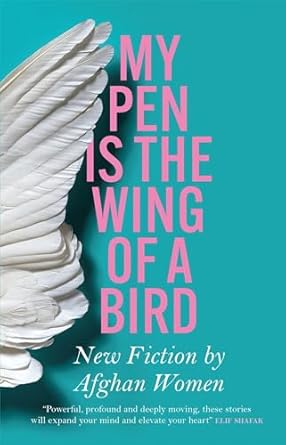
#WITMonth: My Pen is the Wing of A Bird (Maclehose Press)

Continuing my plan to focus on countries I’ve yet to visit on my Around the World in 80 Books reading challenge for this year’s Women in Translation Month, I was pleased to find an anthology of short stories from Afghanistan in my oft-visited local charity bookshop. I later found out it was the first anthology of short fiction by Afghan women translated into English.

My Pen is the Wing of a Bird: New Fiction by Afghan Women (2022) brings together twenty-three stories by eighteen women (ten of whom have since left Afghanistan) as part of the UNTOLD Narratives project. The stories are translated by a variety of translators from the Pashto and Dari languages.

This will be a really short review (for me!) because if I find writing about short story collections by one author difficult, writing about an anthology by different writers is nearly impossible. So I’ll just say from the start that I found this collection powerful, evocative, moving. It was a compelling read and I’d urge anyone to get hold of a copy.

Often short story collections – even by the same author – can seem patchy but I thought this collection was remarkably consistent. The stories focus on the daily life for women and children in Afghanistan, some set in the past and evoking the country’s long history of conflict, but most with a contemporary setting. I’ll just pick out a few moments to hopefully give a sense of the collection.

There are several stories which are a tough read; domestic violence in particular features in a few. But a sense of hope and resilience pervades. In A Common Language by Fatema Haidari (transl. from Dari by Dr Zubair Popalzi), young female workers leave their hard-won jobs in support of a colleague who is sexually harassed, realistic but still hopeful about their chances of finding further employment. This is immediately followed by The Late Shift by Sharifa Pasun (transl. from Pashto by Zarghuna Kargar) where Sanga, a young working mother, continues to go to her work as a newsreader in 1985, despite the falling bombs all around her.

“Before she entered the studio, she took off her shoes and put on the special sandals that were kept in a metal cupboard. The people in charge of the studios didn’t want anyone bringing in dust that could harm the equipment […] The studios were soundproof; no sound from explosions could enter from outside.”

There are a couple of stories dedicated to those who have died. Blossom by Zainab Akhlaqi (transl. from Dari by Dr Negeen Kargar) is one, dedicated to Afghan schoolgirls and the students who died at Sayed ul-Shuhada high school on 8 May 2021. Through the story, the narrator comes to realise the importance of her friend’s question: “If a person never reads a book how can he change?”  This is carefully explored and never clunky.

I don’t think it’s a spoiler as such but do skip the next bit where I talk about the ending if you wish! The final lines of the story are simple yet intensely moving:

“I put on my black school uniform and white scarf and filled my bag with notebooks. I cut a fresh branch of blossom from our garden and went to school.”

My Pillow’s Journey of Eleven Thousand, Eight Hundred and Seventy-Six kilometres by Farangis Elyassi (transl. from Dari by Dr Zubair Popalzai) is one of the few stories set somewhere other than Afghanistan and shows that leaving your home country can be an ambivalent experience. The narrator moves to a life in the United States, but struggles for the first time in her life with insomnia. She is convinced it is linked to the loss of her comfortable pillow, made for her by her mother. Slowly she realises it is more complex (again, skip the next quote to avoid spoilers):

“my sleep was bound to the warm embrace of my country, it was bound to visiting my beloved mother, it was bound to the chatter I shared with my sisters, to the friendship and silliness so I shared with my brother, to the laughter I enjoyed with my friends. My peaceful sleep was because of the small service I used to do for my country, because of my streets, because of a sense of freedom one can feel only in one’s country.”

Looking at the UNTOLD Narratives website, I can see that this month they published My Dear Kabul, a collective diary from the women who wrote My Pen is the Wing of a Bird. It sounds unmissable.

“Real conflict for me at least always turns out to be wordless, which is why I find drama and the theatre so unreal.” (Margaret Drabble, The Garrick Year)

Back in June I was inspired by heavenali’s a year with Margaret Drabble to read the author’s first novel, A Summer Bird-Cage (1963). I was really impressed by what she’d achieved when she was just 24, and so I was keen to pick up her second novel The Garrick Year (1964), which was written only a year later. Once again I found the sure style really striking.

“All that strange season, that Garrick year, as I should always think of it, which proved to me to be such a turning point, though from what to what I would hardly like to say.”

Emma is an ex-model and mother to toddler Flora and baby Joe. She’s a bit adrift as to what she wants to do with her life, but is keen when offered a newsreader’s job. Unfortunately her selfish, self-serving husband David also gets offered a job, which involves moving from London to Hereford for a year so he can act in the local theatre productions by acclaimed director Wyndham Farrar.

At first David seems an outright pig, telling Emma she has no choice and he’s already signed the contract. It turns out this isn’t true and Emma never thought it was. Still, they both know it might as well be. This is the early 1960s and while staying behind for a year might be theoretically possible for a married woman with small children, it’s not hugely likely even with a nanny.

“I could hardly believe that marriage was going to deprive me of this [job] too. It had already deprived me of so many things which I had childishly overvalued: my independence, my income, my twenty-two inch waist, my sleep, most of my friends who had deserted on account of David insults, a whole string of finite things, and many more indefinite attributes like hope and expectation.”

Drabble captures that compelling mid-twentieth century time where women are starting to have a sense of more possibilities and life choices opening up, but these options still don’t seem wholly obtainable.

So David isn’t quite as dreadful as he first appears, but neither is he particularly likable. And he’s about to get worse, as he brings his roles home with him:

“this time I was condemned to a whole season of Flamineo who happened to be a self-centred existentialist pimp.”

As in her first novel, The White Devil by John Webster is heavily referenced. I’d be interested to know why this slightly bonkers, bloody Jacobean play seems so significant for Margaret Drabble at the start of her career. (And I say that as someone whose MA was on ritualistic bloodshed on the early modern stage – bonkers and bloody theatre is right up my street 😀 )

But The Garrick Year isn’t a pity-fest for Emma in contrast to David. She’s young and self-centred too, an intellectual thinker but not personally reflective. She can be quite bitchy, describing ingenue Sophy “as stupid and as shiny as an apple”, but I don’t think we’re supposed to take pronouncements like: “The provinces have never appealed to me, except as curiosities.” entirely seriously. Emma knows she can be a snob, and contrary.

“I feel that I’m insulting something when I am bored… My tastes are shallow; My life is shallow; and I like anonymity, change and fame. In Hereford I could have none of these things: I was condemned to familiarity, which beyond anything I find hard to maintain with ease.”

Her insight is limited, so when she starts an affair with Wyndham, she doesn’t really understand why she would do such a thing. It’s not particularly passionate, and remains unconsummated for the majority of its frankly tedious duration (tedious in terms of events, not portrayal!)

Drabble balances really well the spiky, sharp observations of Emma with a degree of sympathy for her. I don’t think as readers we’re supposed to necessarily like her, but not despise her either. Rather we’re encouraged to recognise how incredibly thwarted and frustrated she is, at a time when she has agency and choices but not enough of either.

“I personally, I myself, the part of me that was not a function and a smile and a mother, had been curled up and rotten with grief and patience and pain.”

I’ve read somewhere that Drabble goes off the boil in later novels, but these early ones are really hitting the spot for me now. I find women’s lives in this period endlessly interesting, and she captures that time so well. She’s not afraid to make her characters recognisably real even when they are not particularly appealing, and she incorporates her intellectual considerations seamlessly so they never obscure characters or plot. I’m looking forward to exploring her further.

To end, I may be a fellow Londoner but I’m baffled as to Emma’s problem with lovely Hereford:

“In the besieged city everything is unusual but everything is at the same time ordinary.” (Alma Lazarevska)

For this year’s Women in Translation Month I’m trying to focus on countries I’ve yet to visit on my Around the World in 80 Books reading challenge. Today I’m off to Bosnia and Herzegovina via Death in the Museum of Modern Art by Alma Lazarevska (1996 transl. Celia Hawkesworth 2014) published by Istros Books.

Death in the Museum of Modern Art is a collection of six stories set during the siege of Sarajevo, although Lazarevska never names the “besieged city” that features in all the tales. Lazarevska is a Bosnian writer and survivor of the siege.

I always find it really hard to write about short story collections, so I’ll just focus on the opening and closing tales.  In Dafna Pehfogl Crosses the Bridge between There and Here, the titular character reflects on her long. “unlucky”, “clumsy” life, starting when the maid burned the last coffee listening to her mother’s labour screams. Dafna is something of a scapegoat for her family and remained unmarried as her suitors weren’t smart enough for her family. Now in old age she finds herself alone in the war-torn city. Her family on “the other side” have arranged her passage to safety.

“She stepped boldly and decisively. Freed from other people’s gaze and lengthy sighs. Her feet were light on the deserted bridge between there and here.”

This is the only story in the collection written in the third person, but it didn’t distance Dafna in any way. I really hoped she’d make it to safety…

The final story, Death in the Museum of Modern Art has a dry humour to it. The narrator is answering questions that will form part of an exhibition at MoMA, including “How would you like to die?”

“I would have liked to tell him about that terrible feeling I have of being late… the feeling that I have being overtaken and I’m losing my sense of being present. Neither here, nor there.”

Without heavy judgement, Lazarevska demonstrates how the lived experience of war is being simplified and packaged up for art consumers. The impossibility of the questionnaires even beginning to capture anything meaningful from such a situation.

“But for an American, one ‘easy’ is the same as another. Hence a visitor to the Museum of Modern Art may read that my friend the writer wanted to die easily. He understands that, but the writer does not. That word introduces confusion into the writer’s answer. Can wishes of this kind be expressed in a foreign language, particularly one that does not distinguish one ‘easily’ from another?”

Lazarevska writes in a constrained style, both tonally and structurally. She doesn’t waste a word and has a real command of the short story form – I thought the six stories in this collection were all equally strong.

Lazarevska writes about the siege of Sarajevo in a way that is evocative but not overly emotive, trusting that the circumstances are extraordinary and shocking enough that they don’t need embellishment. Her focus is broadly domestic, looking at how ordinary lives find ways to carry on. The result is a compelling and memorable collection that places the reader alongside the characters as they hold onto their humanity through the most brutal experience.

“The hand I write with his healed. If any new questions should ever arrive, I shall write my answers myself. I’m writing all of this with my own hand.”

“Why don’t words come automatically with threads that we can yank to pull them back inside ourselves?” (Jokha Alharthi, Bitter Orange Tree)

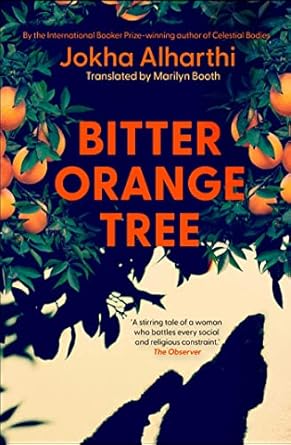
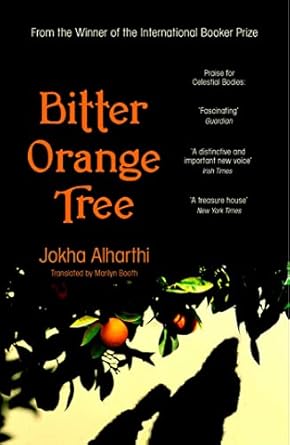
For this year’s Women in Translation Month I’m trying to focus on countries I’ve yet to visit on my Around the World in 80 Books reading challenge. This meant I was delighted to find a copy of Bitter Orange Tree by Jokha Alharthi (2016, transl. Marilyn Booth 2022) in my much-frequented local charity bookshop, as I’ve not read a book by an Omani author before.

I had completely missed Celestial Bodies for which Alharthi and Booth won the Man International Booker Prize in 2019. At that time Alharthi was the first Omani woman to be translated into English.

Bitter Orange Tree is a short novel, just 214 pages in my edition with quite large type, which I read entirely during a train journey back from Newcastle. (In fact, everyone around my table was reading a print book – it was like the olden days! For balance, I should say on the journey up I was sat next to someone who spent the whole time scrolling through TikTok and Insta, never watching any of the short content through to the end. I found it exhausting and had to mind my own business in the end 😀 )

The story is told from the point of view of Zuhour, a young woman who has left Oman to study in a nameless, cold, foreign city (most likely Edinburgh). She balances descriptions of her current life where a friend’s sister has fallen in love with a man her family wouldn’t approve of, with memories of Oman and particularly her grandmother-figure, Bint Aamir.

Zuhour harbours guilt regarding not staying with her grandmother, who has now died. A comment to a friend is the starting point for memories and reflections on Bint Aamir’s life:

“She always longed to own some land… just a tiny patch, with date palms growing on it, even if there was only space for five or so. And a few little fruit trees – lemon, papaya, banana, bitter orange. She would even plant those herself. She would water them and take care of them. And eat from them. And rest in their shade.”

Bint Aamir’s life is not easy, expelled along with her brother from her father’s house, she struggles for money. Gradually she finds a role in a relative’s home and while owning nothing, she provides almost everything.

“Bint Aamir’s feet were submerged in the soil that was the ground of our lives. She built the walls that made this household exist and thrive, mud brick by mud brick.”

Zuhour’s past and present conflate frequently, and I thought Alharthi conveyed so effectively the way memories underpin and inform the present. The conflation and the movement back and forwards between different times was seamless and never confusing.

“Tears run from my eyes, from both my eyes, from my two sound eyes. My tears spill over her one eye, which is damaged; over the herbal concoctions that were prescribed by ignorance; over the violence and harshness of childhood; over children orphaned by their mothers deaths and thrown out by their fathers, and over their brothers tragic ends; over a field she did not possess; over a companion she was never fortunate enough to have; over son who is not hers; over the grandchildren of a friend who died before she did.”

There’s also some humour, and I particularly liked this description of Zuhour’s friend Christine:

“Her cup of decaf coffee with soy milk was tall and skinny: it looked just like her. Here at this party, she was an exact scan of the figure I always saw at the university: T-shirt jeans running shoes ponytail nose ring tattoo long skinny cup.”

There were aspects of the story that were less successful for me though. Alongside the friends’ illicit relationship that Zahour has complex, unresolved feelings about, there is also a story of domestic violence involving her sister Sumayya. Both these sub-plots were too shallowly explored, before they petered-out. I felt that either Bitter Orange Tree needed to be longer, or one of these sub-plots needed to be cut and the other further developed.

While I liked the imaginative style, sometimes it became overly sentimental, particularly with regard to Bint Aamir. Although Zahour acknowledges “All her contentment was drawn from the happiness of the people for whom she cared.” she sometimes goes on flights of fancy regarding what her grandmother didn’t have in life, without knowing how her grandmother felt. These seemed clunky to me, although in fairness this may have been deliberate, to emphasise Zahour’s callow inexperience and inability to think beyond cliches at times.

But I only blog about books I like and I did like Bitter Orange Tree. The handling of past and present was so deft, and the style so readable. From looking online I think a lot of people preferred Celestial Bodies so I’d be keen to give that a try. If you’ve read Celestial Bodies I’d love to hear how you found it.

“Everything alters, yet does remain the same.” (Anthony Powell)

This is the eighth instalment in my 2024 resolution to read a book per month from Anthony Powell’s A Dance to the Music of Time sequence. Published between 1951 and 1975, and set from the early 1920s to the early 1970s, the sequence is narrated by Nicholas Jenkins, a man born into privilege and based on Powell himself.

The eighth volume, The Soldier’s Art, was published in 1966 and is set in 1941.Unlike the previous few novels, this only had three chapters, the middle one depicting Nick’s leave in London, bookended by his experiences in the army while still billeted in Northern Ireland.

As I mentioned in the previous volume’s post, Nick doesn’t really fit in with army life. But he doesn’t particularly labour on this, or feel sorry for himself. I enjoyed this exchange when he runs into Bithel again:

“’Told me you were a reader – like me – didn’t you?’

‘Yes I am. I read quite  a lot.’

I no longer attempted to conceal the habit, with all its undesirable implications. At least admitting to it put one in a recognisably odd character of persons from whom less need be expected than the normal run.”

In this volume I felt I saw a much fuller picture of Nick’s touchstone Widmerpool. Is machinatious a word? If it isn’t, the character of Widmerpool suggests it should be, because his machinations inform his behaviour through and through.

Nick is acting as his secretary, desperate to get away.

“Indeed, it was often necessary to remind oneself that low spirits, disturbed moods, sense of persecution, were not necessarily the consequences of serving in the army, or being part of a nation at war, with which all inclusive framework depressive mental states now seemed automatically linked.”

Nick manages to stay out of Widmerpool’s connivances due to the latter’s egomaniacal need for control. However, he can observe his senior officer’s behaviour at much close quarters than before, including:

“An amateur soldier in relation to tactical possibilities, and … a professional trafficker in intrigue”

“[My] incredulity was due, I suppose, to an underestimation, even after the years I had known him, of Widmerpool’s inordinate, almost morbid self-esteem.”

By the end of the novel Widmerpool is moving on, and I had a horrible feeling that by the end of this novel sequence he might be Prime Minister…

Another of Nick’s schoolfriends is present in the company. Stringer, maintaining his sobriety, turns up as a mess waiter.

“Friendship, popularly represented as something simple and straightforward – in contrast with love – is perhaps no less complicated, requiring equally mysterious nourishment”

Stringer is an intriguing character, with a deep sense of sadness about him. We’ve never learnt what led him to self-medicate with alcohol, and now he is sober he seems to have an extreme resignation to life. He seems too equanimous, knowing no joy. I find him quite haunting.

In the middle chapter Nick uses his leave to visit friends in London. His wife Isobel and young child get a passing reference. If I was Isobel I’d be mightily annoyed that my husband spent his army leave in Blitz-torn London rather than in the country with his newly-expanded family, but maybe she’s more tolerant than I am.

This middle section was hugely moving. Powell conveys the tragedy of war, of lives cut short without warning. Of the senseless waste and cruel arbitrariness of it all. He does it all with understatement which perfectly drives home the horror, and how this became a regular occurrence for so many. It was an astonishing chapter.

It is in army life that Powell finds his comedy and satire. This was probably the most sad, most moving, and most silly and funny of all the volumes I’ve read so far.

I particularly enjoyed a completely daft dinner scene between two Colonels, one called Eric, one called Derrick. Powell uses the rhyming names to full effect, having both of them end their sentences with the other’s name, as they engage in a furious, but politely mannered argument.

“Both habitually showed anxiety to avoid a junior officer’s eye at meals in case speech might seem required. To make sure nothing so inadvertent should happen, each would uninterruptedly gaze into the other’s face across the table, with all the fixedness of a newly engaged couple, eternally enchanted by the charming in appearance of the other.”

There’s also Nick’s experience of inciting the wrath of a General, when he admits he doesn’t like Trollope and prefers another author:

“‘There’s always Balzac, sir.’

‘Balzac!’

General Liddament roared the name. It was impossible to know if Balzac had been a very good answer or a very bad one.”

The more I read of this sequence the more impressive I find it. Powell’s wit, humanity, clear-sightedness, and ability to balance the various aspects of life are really extraordinary. And he does it all with such a light touch.

“All the same, although the soldier might abnegate thought and action, it has never been suggested that he should abnegate grumbling.”

To end, I’m feeling quite smug for working out that I can shoehorn in an 80s pop video by choosing one by some of the Blitz Kids (and fair to say 80s pop videos did not generally follow an Anthony Powell-esque light touch 😀 ):

Shrouded – Sólveig Pálsdóttir (transl. Quentin Bates) blog tour

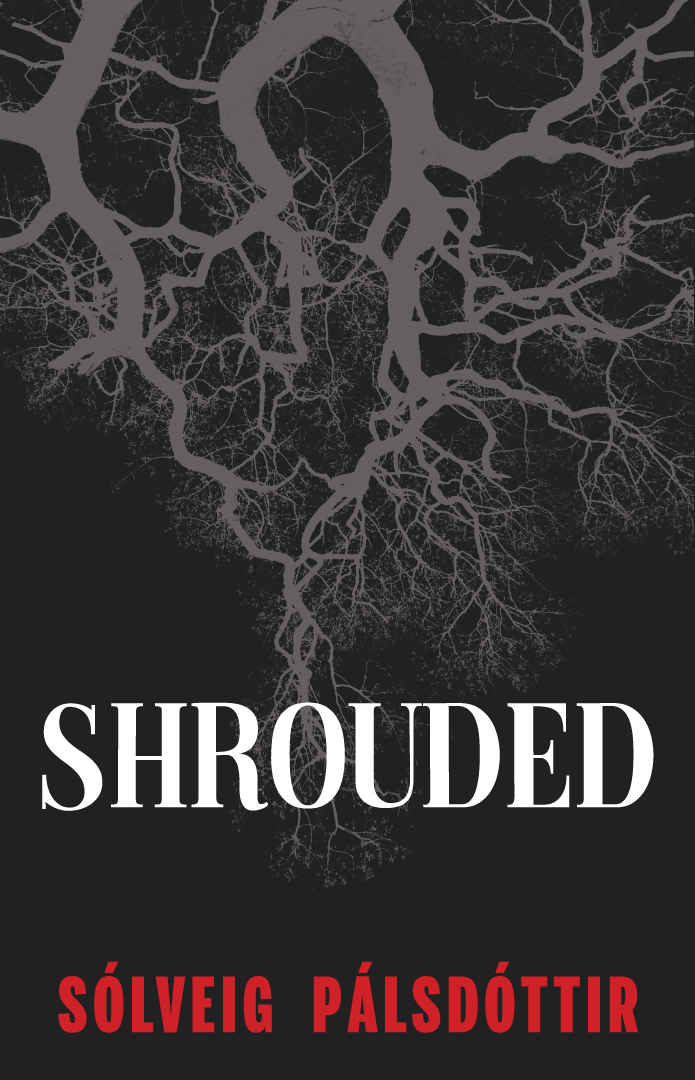
I’m always a bit trepidatious about agreeing to blog tours, which is why I don’t do many. What if I don’t enjoy the book? I only blog about books I like so what if I have to drop out? Thankfully Corylus Books have never done me wrong, consistently offering excellent crime novels in translation.

When they suggested Shrouded by Sólveig Pálsdóttir (2023, transl. Quentin Bates 2023), I had two questions: did it matter that I hadn’t read the others in the series? Was it gory (I can’t do gore)? Reassured on both counts, I’m so glad I took the opportunity to join in because I found much to enjoy in this novel.

My allotted date for the tour was 1 August so this is also my first post for Women in Translation Month (#WITMonth), a wonderful and well-established event running for the whole of August.

Here is the blurb from Corylus Books:

“A retired, reclusive woman is found on a bitter winter morning, clubbed to death in Reykjavik’s old graveyard. Detectives Guðgeir and Elsa Guðrún face one of their toughest cases yet, as they try to piece together the details of Arnhildur’s austere life in her Red House in the oldest part of the city.

Why was this solitary, private woman attending séances, and why was she determined to keep her severe financial difficulties so secret? Could the truth be buried deep in her past and a long history of family enmity, or could there be something more? Now a stranger keeps a watchful eye on the graveyard and Arnhildur’s house.

With the detectives running out of leads, could the Medium, blessed and cursed with uncanny abilities, shed any light on Arnhildur’s lonely death?”

The story opens with Arnhildur preparing to go to a séance. We are privy to her thoughts, her frustrations and her little vanities. In a very short space, Pálsdóttir creates a sense of Arnhildur so that when she is murdered, the injustice is fully realised. Although the reader is witness to the murder, it isn’t remotely gory or gratuitous. It’s a responsible and carefully balanced portrait which insists that the murder of an older woman, someone seemingly entirely ordinary, is taken seriously.

Having not read the rest of the series, when police detectives Guðgeir and Elsa Guðrún arrive to investigate I was expecting some clunky exposition to bring readers up to speed. This never happened, and instead we are presented with an established working relationship, respectful and gently teasing, in which we are expected to draw our own conclusions regarding the personalities of the individuals and the dynamic between them.

“‘It’s never this dark in Akureyri,’ Elsa Guðrún assured him, a tie between her teeth as she pulled her brown hair back into a ponytail.

‘Really?’ Guðgeir grinned. This north country pride that some would describe as conceit had always amused him. ‘All the same, it’s a good way further north than Reykjavík.’

Elsa Guðrún wasn’t going to accept Guðgeir’s straightforward geographical point.”

The relationships with the wider team are well drawn, with a sense of professionals rubbing along together as best they can with some tensions and frustrations – in other words, most people’s working lives. There is humour too, and I particularly enjoyed tightly-wound senior officer Særós’ penchant for Insta-type inspiration:

“As always, the week’s aphorism hung on the wall behind her, a print out with black letters on white in a simple IKEA frame. This week it said, Always be the best possible version of yourself.”

Arnhildur was resistant to change and technology, which means no mobiles with sophisticated GPS, laptops or tablets of hers are available to aid the investigation. This made for a police procedural that felt pleasingly traditional while still rooted in the modern world.

One shortcut that might have been available was the presence of Valthór, a medium. I know some readers whose hearts sink at the presence of a psychic in detective stories, but Pálsdóttir never uses the character as an easy way to resolve any plot, despite one of her detectives being open to the possibility of Valthór’s skills:

“Growing up in the west of Iceland, he had been aware that most older people had some belief in an afterlife, and that there were a few people with the ability to converse with the dead. Many of them also believed in premonitions, dreams and prophecies. The people with whom Guðgeir had grown up had fought for their existence, in close touch with the brutal forces of nature that regularly demanded people’s lives. These people had been more down-to-earth than any Guðgeir knew today, and he was still convinced that there was much about the world that could be neither felt nor seen.”

Valthór is a really affecting character, truly suffering in the aftermath of Arnhildur’s death and he enables a continued emotional resonance within the story as Guðgeir and Elsa Guðrún pragmatically and doggedly work to solve the crime.

They discover aspects of Arnhildur’s past that led to her estrangement from her family, and truly disturbing events touching her life before she died. There are a couple of very sinister characters that are deeply unnerving in their believability.

Shrouded is a quick pacy read that I whizzed through on a train journey to Liverpool. Initially I was smugly congratulating myself that I’d guessed certain elements and I was somewhat surprised that a novel which seemed so accomplished had resolved things rather straightforwardly. However, I was far too quick to pat myself on the back 😀 I’d made all the assumptions and deductions Pálsdóttir had guided the reader towards, and I’d missed others entirely, which meant the very end made for a surprising and really satisfying conclusion.

Shrouded is responsible in its treatment of the victim, it’s never sensationalist. It has plenty to say about how people who don’t easily fit in are treated. It demonstrates the complexities of relationships between flawed people (ie all of us) without having characters behave in ridiculous ways.

I realise I’m making it sound dull when it really isn’t! It makes important points without losing sight of the story. I really enjoyed Shrouded and now I need to read the preceding novels in the series; my TBR is never going down, is it…?

Here are the rest of the stops on the blog tour so do check out how other readers found Shrouded:

“The story of our lives still isn’t finished, and it never will be.” (Beatriz Bracher, Antonio)

Trigger warning: mentions mental illness and infant death.

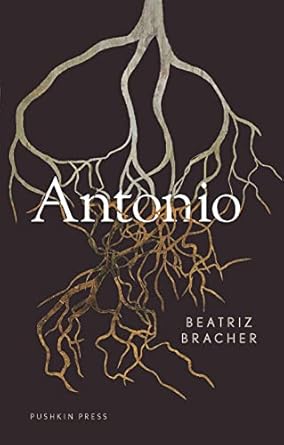
Stu over at WinstonsDad’s blog is hosting Spanish Portuguese Lit Month for the whole of July and so this was the perfect opportunity to get to a novella by Brazilian author Beatriz Bracher which had been languishing in the TBR: Antonio (2007, transl. Adam Morris 2021) published by the wonderful Pushkin Press.

I want to start with the disclaimer that I don’t think I’ve really got to grips with Antonio, so this post is just some initial impressions. Although only 187 pages long it is incredibly densely written and it took me a week to read. Admittedly work has been really demanding lately, but usually it still wouldn’t take me that long to read a book of that length.

Also looking online, there are many effusive reviews praising the socio-political commentary of Antonio, which I’m sure I didn’t fully comprehend. I did pick up some, but I’m certain I need to re-read Antonio at some point.

The novella is told through the alternating viewpoints of three people: Raul, Isabel and Haroldo. Their silent interlocutor is Benjamim, who is awaiting the birth of his first child, the titular Antonio. The imminent arrival of his son has prompted Benjamim to probe into his family history in more depth.

“I’d like to think your mother was also a free person, and maybe you can hold onto that thought, instead of clinging to fear and rage.”

Benjamim knows that his father was Teodoro and that his mother was  Elenir.  Elenir had a son with Benjamim’s grandfather Xavier first, who they also called Benjamim and who died very young. The second Benjamim was raised by his father after his mother died in childbirth.  

Raul is his father’s friend, Isabel is his paternal grandmother, and Haroldo was Benjamim’s grandfather’s friend. They all provide histories of Benjamim’s family that echo and contradict each other, and none seem any more reliable or authoritative than any other. Each has their own truth.

The family is well-off and privileged in São Paulo, but their history is a troubled one. Both Xavier and Teodoro had periods of intense mental illness.

For Xavier, this occurred after the death of Benjamim. As Haroldo recalls:

“[Elenir] looked like a bent piece of wood. She didn’t cry. She received each condolence with correct politeness. Xavier was the total opposite: he was in pieces […] I managed to gain entry to that hell three times. The last time, I brought a team of nurses, to drag my friend out of there and take him to a sanatorium.”

Later, Xavier meets and marries Isabel and they raise a family. They are the generation that came of age in the 1950s and 1960s, idealistic and, in Isabel’s case, driven:

“In a family we’re always a me or and I who’s scattered and complex. It’s only at work, especially work that has to do with ideas, but it’s possible to feel ourselves out and let the contours assume the shape.”

Their youngest son Teo rejects the urban privilege he is born into and goes to live in rural Minas. He throws himself into village life but ultimately becomes rudderless and unwell. Isabel reminds Benjamim of his early childhood:

“You’re from this family, so you are this family. Your father wanted to be rid of all that, and shed himself along with it. The history that he crafted for himself in Minas was a non-history. He went too deep. By the time I brought him back, there was nothing left to hold onto, no handle I could use to hoist him back out: only damaged pieces.”

This is one of central themes of Antonio: how to live an authentic and conscious life, but not be overwhelmed by the search for meaning. How to truly find who you are, alongside the demands of daily life. Isabel believes the answer is hard work, but only Big Work. Haroldo points out:

“She raised a bunch of irresponsible ingrates who are incapable of the most basic displays of solidarity, like visiting their dying mother. Isabel cultivated a true horror of responsibility in them, and at the same time overloaded them with the responsibility to be nothing but the best.”

Isabel recognises that privilege brings responsibility, but she also remains an elitist. When she observes: “I never understood any language that wasn’t well spoken Portuguese.” she is being both literal and metaphorical. The family’s wealth isn’t what it once was and she is unhappy at her children’s middle-class existence.

To me Isabel was the strongest of the three narrators and I got a real sense of her. But Raul, living an ordinary life and baffled by what happened to his childhood friend, and the somewhat reprehensible, colourful Haroldo were also distinct characters if not entirely differing voices, and Bracher balances the three viewpoints well.

I’ve focused on some of the ideas rather than the events of Antonio and that is partly because the novella has some graphic scenes in it – of extensive mental breakdown, one of pig-killing and one of caring for a dead body by someone who doesn’t know what they are doing. None of these are gratuitous but they mean Antonio can be very difficult to read in places.

Bracher avoids conclusions about the causes of Xavier and Teo’s ill health and whether there is a genetic component or whether it is the demands of society on the individual. She vividly, sometimes viscerally, evokes the pressures of family and the search for self in late twentieth-century Brazil.

“To live long and stay well, stay away from your relatives.”

“Literature illuminates life only for those to whom books are a necessity.” (Anthony Powell)

This is the seventh instalment in my 2024 resolution to read a book per month from Anthony Powell’s A Dance to the Music of Time sequence. Published between 1951 and 1975, and set from the early 1920s to the early 1970s, the sequence is narrated by Nicholas Jenkins, a man born into privilege and based on Powell himself.

The seventh volume, The Valley of Bones, was published in 1964 and is set at the start of World War Two, when Nick has joined the army as an officer.

I’ve said when reading previous novels in the sequence that I’m intrigued by Nick’s outsider’s view, as it’s not clear where it comes from since he seems so much a part of the society he portrays. In the army, the distinction is clearer. Nick finds himself billeted to South Wales within a company made up mostly of bankers, very different to his bohemian artsy London life.

“I indicated that I wrote for the papers, not mentioning books because, if not specifically in your line, authorship is an embarrassing subject for all concerned.”

Nick casts his sharp eye over these new associates in the same way he has for his friends, family and acquaintances up to this point. A central character is Captain Rowland Gwatkin, a man who seems simultaneously devoted to the army and entirely bewildered by it too:

“Gwatkin lacked in his own nature that grasp of ‘system’ for which he possessed such admiration. This deficiency was perhaps connected in some way with a kind of poetry within him…Romantic ideas about the way life is lived are often to be found in persons themselves fairly coarse- grained.”

Gwatkin is really tightly wound, and there is a sense of impending doom at best, destruction at worst with him.

Nick is an indifferent soldier, neither very good nor absolutely awful. There is some consideration of philosophical theories of war, but primarily Nick is interested in those who surround him:

“It is a misapprehension to suppose, as most people do, that the army is inherently different from all other communities. The hierarchy and discipline give an outward illusion of difference, but there are personalities of every sort in the army, as much as out of it.”

Powell brilliant portrays the simmering tensions in the company, both from the mix of personalities attempting to work together within and the increasing threat from Hitler without. There are those with alcohol problems, death by suicide, and broken hearts, yet the days mostly pass in utter tedium. Nothing changes even after the company is uprooted to a posting to Northern Ireland:

“At Castlemallock I knew despair. The proliferating responsibilities of an infantry officer, simple in themselves, yet, if properly carried out, formidable in their minutiae, impose a strain in wartime even on those to whom they are a lifelong professional habit; the excruciating boredom of exclusively male society is particularly irksome in areas at once remote from war, yet oppressed by war conditions.”

As Adjutant Maelgwyn-Jones observes: “That day will pass, as other days in the army pass.”

Yet there is some light relief too, such as an inspection from a visiting General, seemingly obsessed with breakfast foodstuffs:

“The General stood in silence, as if in great distress of mind, holding his long staff at arm’s length from him, while he ground it deep into the earth the surface of the barnhouse floor. He appeared to be trying to contemplate as objectively as possible the concept of being so totally excluded from the human family as to dislike porridge.”

And Nick does get some weekend leave in order to catch up with his family. There he finds people thrown together, behaving oddly and under strain. In other words, not so very different from his army posting. As his pregnant wife Isobel observes: “the war seems to have altered some people out of recognition and made others more than ever like themselves.”

In The Valley of Bones Anthony Powell shows himself uninterested in the glorification of war or in any sort of jingoism. He also doesn’t fall into the trap of a wholly satirical, detached point of view either. He manages a delicate balance between conveying the seriousness of war alongside the human inadequacies and frailties of those expected to enact it.

He also pulls an absolute masterstroke at the finish. The boredom, the admin, the essentially unthreatening – if somewhat self-destructive – colleagues are turned upside down in an instant, and Nick finds himself carried forward, powerless in a situation about which he has a deep sense of foreboding. It’s a chilling ending and I’m anxious to see how it plays out in the next volume, The Soldier’s Art.

“In the army – as in love – anxiety is an ever present factor where change is concerned.”

To end, a song absolutely synonymous with wartime Britain for many, which seems particularly apt for Nick as he’s always running into people he met previously:

“People are better inside your head.” (Donal Ryan, The Thing About December)

I never take enough books away with me. So having finished The Garden of Evening Mists during my New Forest weekend, I ducked into the Oxfam Bookshop in Lymington and was gratified to find a copy of The Queen of Dirt Island by Donal Ryan (2022). Ryan is one of my favourite contemporary authors and I was yet to read his most recent novel.

Characters from his previous novel Strange Flowers make a reappearance here, but they are not the main focus. The story belongs to Saoirse Aylward, her mother Eileen, and her paternal grandmother Nana who all live together in Nenagh, County Tipperary.

We follow Saoirse from her 1980s childhood to her thirties, with the tensions and strains, and unwavering warmth and love that the women create within their family home.

Saoirse’s father died a few days after she was born and she sometimes feels guilty for not feeling his loss.

“Every other house in the small estate that had children in it also had a father, a living one.

None of them looked like they were of much use except for cutting grass with the same shared lawnmower, taking turns to cut the verges in the small green area at the front of the estate and the smaller green at the back.”

The Aylward women are an enclosed, loving unit, viewed as somewhat eccentric by the rest of the town. Eileen is uninterested in men for the most part, her heart lying with her dead husband. She is sweary and gruff and no-one understands why she and her mother-in-law are living together.

“She realised that she and her mother rarely spoke properly at all. That most of mother’s speech was indirect, utterances flung around like fistfuls of confetti, vaguely aimed and scattering randomly. But she supposed this to be the way of all parents and child relationships. Her mother told her every single night that she loved her.”

Nana might be less sweary, but in her own way she is just as direct, such as when speaking to Saoirse about her Uncle Chris:

“Whatever he was at inside me he made a pure hames of my pipework. He started as he meant to go on, anyway, that’s for sure.”

His brother Paudie has a dramatic and mysterious life, helping on the farm until he is suddenly arrested and sent to prison.

“They never looked comfortable down here in the angular lowlands of the estate. They were shaped to the contours of hills and hedgerows, their feet only sure on giving ground.”

Yet it is Saoirse’s teenage years that bring the most disruption to the house. Ryan is excellent at capturing this time, such as this description of Saoirse’s first boyfriend:

“His miasma of Lynx and sweat and stolen cigarettes, his uncertain swagger, his damp hand in hers.”

But Saoirse is learning about the darker sides of life too, which have previously not infiltrated her safe home: self-harm, domestic abuse, suicide, sexual assault. Her mother and Nana can’t protect her from everything.

And within her family, there is a threatening presence: her uncle Richard. He is her mother’s brother, and while Eileen is estranged from her family, her father has left her the titular land. Richard wants it back, and this tension bubbles in the background through the years.

The tone of The Queen of Dirt Island felt very well-balanced, not shying away from trauma but not unrelentingly bleak either. Nana in particular provided humorous moments. The women all felt fully realised and believable, their voices beautifully evoked.

This is not a novel to read for positive portrayals of men, however. Nana advises young Saoirse:

“You only get one life, and no woman should spend any part of it being friends with men. That’s not what men are for.”

The Queen of Dirt Island is a warm-hearted book, compassionate to its flawed characters, which was a joy to read. I could have spent another 200 pages at least with the Aylward women.

Ryan writes with a poetic restraint, and the story is told through a series of vignettes. Each section is 500 words including a title, and at just 242 pages it’s a really quick read. Thankfully I’d also found a collection of Dorthe Nors short stories in the Oxfam bookshop so I managed to keep myself going on the return journey home 😉

“She was glad of mother’s unwavering impolitic nature, her peculiar loving manner, and she knew that Nana loved mother with the same gruff constancy.”

To end, the author reading one of the vignettes, which I read in an interview was based on a childhood experience with his mother: