“Writing fiction is an act of almost unreasonable empathy.” (Donal Ryan)

This is my final contribution to Reading Ireland Month 2022 aka The Begorrathon, hosted by Cathy at 746 Books. It’s always a fantastic event and I’m so pleased to have taken part despite my reading and blogging capacity being very poor these days.

I’ve chosen two short novels that feature pretty unsympathetic protagonists. In both instances the writing was so good it kept me right alongside them, and maybe it’s the after-effects of covid (it probably is) but they both made me cry.

 Night Boat to Tangier (2019) is only 214 pages in my edition, with lots of dialogue and spaces on the page, yet it still manages to be a fully realised portrait of two men in middle age, coming to terms with regret.

Charlie and Maurice sit in the port of Algeciras looking for a young woman they expect to turn up there at some point:

“Two Irishmen sombre in the dark light of the terminal make gestures of long sufferance and woe – they are born to such gestures, and offer them easily.”

Quite quickly we realise that Charlie and Maurice are not to be messed with. They accost a young man named Benny and the threat they pose is both insidious and comic:

“The stories we could tell, Benny. Did you ever try and buy 350 goats off a fella in Marrakesh, did you?

On credit.

In a Cork accent.”

The narrative moves back and forth in time, and we learn how it is that these two men have ended up bound together, why one has a limp and the other a damaged eye, who the girl is they are looking for and how they made their money.

What I enjoyed was the affection the two men had for each other, as easily expressed as their violence.

“Is it me or was I something like a Matt Dillon-type in my younger days?

You were the bulb off him, Charlie. But come here.  Have you seen Mickey Rourke lately?

Think I saw him on the number eight going up MacCurtain Street. Top-right-hand seat, overhead the driver.

He’s after leaving himself go something shockin’.

He is, yeah. They nearly had to turf him off the number eight.”

That interaction reminded me of the easy, bordering surreal, dialogue in Roddy Doyle’s Two Pints novellas, but overall it was of Samuel Beckett that Night Boat put me in mind. The two males waiting for someone without knowing when they will arrive, the nihilism and humour, a sense of despair and endurance of hope…

But Night Boat is absolutely its own story. Barry brilliantly evokes the two men as they are in 2018 and as they were in the late 90s/early 00s, showing how their life choices caused such pressure that it took all their strength not to fracture irrevocably. Charlie and Maurice are not very commendable but neither are they one-dimensional baddies. They are deeply flawed and also deeply vulnerable.

Barry writes simply but also has some startling turns of phrase:

“Charlie’s smile is, of its own right, an enlivened thing. It travels the terminal as though disembodied from him. It leaves a woven lace of hysterical menace in its wake.”

To me Night Boat is ripe for adaptation, so I googled and apparently Michael Fassbender has acquired the rights. Intriguing…

“A troubled silence descends – the old times are shifting again; they are rearranging like faultlines.”

Secondly, All We Shall Know by Donal Ryan (2016). I only started reading Ryan a few years ago but he’s quickly become one of my favourite authors. He writes beautifully, but with a pared-back style, and he always demonstrates such compassionate understanding. I thought his quote about this quality was a suitable title for this post about questionable characters.

Melody Shee narrates the story, and she is not a sympathetic character, as she tells us from the off:

‘Martin Toppy is the son of a famous Traveller and the father of my unborn child. He’s seventeen, I’m thirty-three. I was his teacher. I’d have killed myself by now if I was brave enough.”

The novel follows Melody from twelve weeks of pregnancy through to giving birth, as she reflects on her adolescence and early marriage, her relationship with her parents and her history of appalling decision-making.

Her mother was probably depressed, although this is never said, and had a difficult relationship with Melody’s father, which Melody emulated to try and please her mother. She feels guilty about this now, as her father is possibly the nicest man ever:

“There’s no kindness in me. I can feel it, and think about it, but I can never act it, or be it, the way my father is, the way he’s selfless without effort, a man who has kindness in the marrow of his bones, a soul with barely a blemish.”

She married Pat, her childhood sweetheart, and they seem to have spent most of their time verbally destroying one another:

“The boy who’d grown to adulthood beside me, curled around me, stunting himself, stunting me, a twisted tangle of boughs, hunched and bowed and facing inwards.”

“We merged over time into one person, I think, and it’s easy to be cruel to oneself.”

The pregnancy due to another man is the final straw, and they break up, leaving Melody alone in the house, in a town where everyone knows each other’s business. She finds herself strongly drawn to Mary Crothery, a Traveller woman who, although she lives with her family, is somewhat ostracised from her community. As Melody teaches Mary to read, the two form a close bond, and it’s this that pushes the narrative forward as they both anticipate and cope with life-changing events.

Alongside the current day pregnancy and this relationship with Mary, Melody recalls the heart-breaking story of her childhood best friend, Breedie Flynn. While as a reader it is possible to see the cruelty of young adults who don’t comprehend the damage they are doing as unthinking, it is still an all too believable tragedy, and Melody’s intense guilt and grief don’t seem at all misplaced.

Ryan has made a brave choice in centring a woman who has wreaked so much damage on other people’s lives. But Melody isn’t remotely self-pitying or self-justifying, and in a wholly misguided way, she tries to do better. What I haven’t captured here is that she and Mary are both very funny. Melody literally screaming her frustrations at small town judgement and gossip, and Mary’s snarky asides lift the story and stop it being bleak. It’s not depressing, it’s human and messy and there’s sadness and cruelty and love.

I adore Donal Ryan’s writing and even if this story doesn’t appeal, I’d urge you to seek out his work. His writing is so sensitive and precise, and so readable.

“I’m frightened about what will reach my father’s ears, and how his heart will speed and slow in worry and fear, and how he’ll want to help but won’t know how, so will stand at the window, and watch the weather, and wait.”

To end, Cathy’s post about her favourite Irish films reminded me how much I love The Commitments and hadn’t watched it in years – something being stuck on the sofa with covid gave me a chance to remedy. Robert Arkins, who played Jimmy Rabbitte, sang a few songs on the soundtrack, but wasn’t shown singing in the film. I thought he did a great version of Slip Away, but I couldn’t find decent footage of that, so here he is singing Treat Her Right:

“Serious fiction is a dream which can become a nightmare.” (Brian Moore)

Thank you to everyone who left kind comments last week. Covid is dragging on with me but I do seem to be slowly improving – it’s not been great, despite my being tripled vaxxed (and very careful). I sincerely hope you all stay safe and well. Here is my second contribution to Reading Ireland Month 2022 aka The Begorrathon, hosted by Cathy at 746 Books. Do join in with the event if you can!

My choice this week was inspired by the Brian Moore at 100 readalong which Cathy also hosted throughout last year. I really wanted to join in, but my reading was pitiful. It’s not massively improved now to be honest, but it has improved enough that I was finally able to pick up this lovely hardback edition out of the TBR pile:

The only other Brian Moore I’ve read was The Colour of Blood, which I didn’t massively get on with. I didn’t dislike it, and I could tell it was really well written, but I just didn’t connect with it. All the Brian Moore love during last year’s event persuaded me to give him another try and I’m so glad I did. I Am Mary Dunne (1968) was an expertly written, engaging read and a complex character portrait.

We spend a day with the titular 32-year-old narrator, and it’s a bad day she’s having. A receptionist at her hairdressers asks for her name and she finds it escapes her. This sends her into a spiral of anxiety and reminiscences.

“When people say they remember everything that happened in their lives, they’re deceiving themselves. I mean if I were to try and tell anyone the story of my life so far, wouldn’t it come out as fragmentary and faded as those old snapshot albums, scrapbooks, and bundles of letters everyone keeps in some bottom drawer or other?”

She has been married three times, changing her name each time. With each of her husbands, escape seems to be motivating factor driving the marriage. She marries Jimmy in order to leave Canada and escape her home; she marries Hat to escape Jimmy; and she marries Tee because she wants to escape Hat, although with her third husband she also finds love and sexual satisfaction.

The narrative is fragmented, flicking back and forth between her past and present. We gradually piece together her life but Mary remains somewhat unknowable. Her husbands and her friend Janice – with whom she rows in restaurant – are more fully realised.  It’s a really clever piece of writing by Moore, where as readers we don’t get to know Mary despite the first-person narrative, because she doesn’t know herself.

“ ‘You’re an ingenue type.’ It was my acting epitaph, although I did not know it at the time. And in real life it’s no different. I play an ingenue role, with special shadings demanded by each suitor.”

Mary is attractive and Moore demonstrates how her physicality means people project their fantasies on to her. Because Mary is so obscure to herself, she easily gets lost in other people’s versions of her. She believes her first husband when he calls her insatiable, and she believes her second husband when he says she is a cold virgin. She accepts an older woman with a crush calling her Maria and attempting a Pygmalion scenario, and a full obliteration of her name through her third marriage “I am introduced to everyone as Mrs Terence Lavery”.

But Mary is not wholly sympathetic. She doesn’t always behave well, or kindly. She uses derogatory terms that I’m pretty sure would have been outdated and offensive in 1968. She sheds friends like she sheds identities. She changes people’s names too: Jimmy, Hat, and Tee are her husbands’ abbreviated names; the older Miss MacIver becomes Mackie. A man with a long-standing crush is amazed she doesn’t remember a nickname she gave him.

Mary refers frequently to an evil twin throughout the day, the part of her that behaves badly which she attributes to PMS. She says things she doesn’t mean and shakes uncontrollably. Part of the ambiguity around Mary is that by the end of the novel, I didn’t know if she was having a really bad day compounded by PMS (or PMDD); or whether she was seriously unwell. I did enjoy this bitchy thought that popped into her head about the portraits in her husband’s study:

“When I think of it, the arrogance of a man who could do the trivial work he does under the scrutiny of the likes of Tolstoy and Yeats. Proust gave up a world for his work. Terence wouldn’t even give up a party.”

I Am Mary Dunne sees the narrator having an existential crisis, fearing obliteration without any idea of who is being obliterated.

“I am beginning to die because some future me cannot keep me in mind.”

Yet I didn’t feel particularly hopeful by the end that the assertion in the novel’s title was any further realised than at the start of the story. It wasn’t a depressing tale, but Mary still seemed to have no idea of who she was. It was one of those stories that left me wondering what happened the next day, after the novel finished…

“I am no longer Mary Dunne, or Mary Phelan, or Mary Bell, or even Mary Lavery. I am a changeling who has changed too often and there are moments when I cannot find my way back.”

To end, a song about shifting identities by a master of reinvention:

“Idleness is an appendix to nobility.” (Robert Burton)

A little while ago I saw an epidemiologist on tv saying that eventually everyone will have had covid. And I thought, ‘no thank you all the same’, and carried on distancing as far as I could and wearing a mask. You can guess what’s happened, Reader. This post is brought to you from my covid-addled brain, apologies in advance if it’s even more waffly and incoherent than usual…

This is a contribution to Reading Ireland Month 2022 aka The Begorrathon, hosted by Cathy at 746 Books. It’s a great event so do join in if you can!

I’ve chosen two late novels by Molly Keane for this post and I really enjoyed revisiting this author who isn’t like anyone else. Her evocation of moneyed families in early twentieth-century Ireland is so deeply strange and disturbing, I always feel a sense of trepidation opening one of her stories…

Good Behaviour was published in 1981, when Keane had not published a novel for 29 years and nothing at all since the play Dazzling Prospect 20 years earlier. It was a huge success and shortlisted for the Booker Prize. It is a blistering, dark comedy of manners, perfectly paced and sharply observed.

It begins:

“Rose smelt the air, considering what she smelt; a miasma of unspoken criticism and disparagement fogged the air between us.”

I knew from that line that I’d love Good Behaviour, and now having finished the novel I can say it sets up the story and themes brilliantly: the domestic setting, sense of things rotting, the odd power dynamics, the uneasy roles, the undercurrents of anger.

Someone dies early on, in a way that leaves the reader uncertain as to how far they were nudged towards it, and this sense of not quite trusting that we are being given the full story continues as we are taken back in time by Aroon St Charles, daughter of an aristocratic family living in Temple Alice, a decaying pile, with her indifferent mother and philandering father.

“Behind him the green luminous gloom of glass within glass retreated inside the doors of a breakfront cabinet that filled one end of the dining room. Mummie had lined it with grey linen, so that all the glass objects floated and were lost in its spaces. It was like water or air at his back, as though the end wall were open to air or water. The austere outdoor look I knew had melted from him into the air, like the glass in the cupboard. Sitting there, he seemed extraordinarily dulled, dulled and happy.”

The novel is Aroon describing her childhood and early adulthood amongst the trappings of her class in 1920s Ireland. This being Keane, of course there is hunting and horses, but aside from a few pages where I thought the litany of dead animals was never going to end, it wasn’t too bad for squeamish readers such as myself.

Aroon does not fit in: she is not her adored brother Hubert; she is not physically adept; she is not charming and witty; and she is not beautiful. She enjoys food and is tall, in a time where women were expected to be flat-chested and dainty. She is not rich and so no men are interested in her. Her father likes her but is absent in various different ways throughout her life; her mother is at best indifferent to her but often mentally abusive.

“I turned away, my loneliness walking with me, taller than my own height as a shadow is tall – and irremediable as my height was.”

Aroon is a complex creation. At times I felt she couldn’t possibly be as naïve as her narration would have us believe. Did she really think the housekeeper was rubbing her father’s missing leg under the bedclothes to relieve phantom pain? Does she really not realise her brother is gay and his best friend is his lover? Does she really think she is concussed rather than completely sloshed? This isn’t me viewing it with twenty-first century eyes; other characters are perfectly aware of her father’s behaviour, the full extent of the housekeeper’s role, and her brother’s sexuality. They try to tell her but she doesn’t hear it and blunders on regardless.

Whether or not Aroon is an unreliable narrator or just hopelessly naïve, this characterisation is a master-stroke by Keane in balancing out the pitch black comedy of Good Behaviour. Aroon’s voice is so credulous, the novel written with such a light touch, that it means you whizz through the story without becoming hopelessly depressed at how grim Aroon’s situation is or how deeply unpleasant many of the people are. Good Behaviour is both eminently readable and deeply disturbing.

Queen Lear (also known as Loving and Giving, which I tell you so you don’t make the same mistake as me and end up blissfully unaware that you own two copies of the same novel) was published in 1988. Like Good Behaviour it features a female protagonist, Nicandra (named after her father’s favourite horse “the first Nicandra”), daughter of gentry, lonely and unhappy.

The story opens with eight-year-old Nicandra doing a round of the enormous home she lives in, visiting her parents and servants, barely tolerated by all. Again, the opening is lovely piece of scene-setting, telling the reader all we need to know about the characters and setting.

Nicandra’s mother is glamorous and engaging, and entirely uninterested in her daughter:

“When she was absent, the shadow of her presence was the assurance of a world of love. To earn her displeasure was to forgo all delight; through the days Nicandra devised love tokens, as much to stimulate interest towards herself as to express her deep affection.”

In one particularly unpleasant scene, Maman ties Nicandra to a chair, not to be released until she eats the cold spinach she hates. Her Aunt Tossie rescues her, much to Nicandra’s dismay, who was trying to psych herself up to eating the spinach and making this sacrifice for her mother.

In a novel full of selfish, unpleasant people, Aunt Tossie was the nearest I got to actually liking someone:

“She enjoyed nearly everything, even widow’s weeds, as her married life had not been as exciting as she might have wished”

That day, her mother runs off with one of the servants. She doesn’t say goodbye to her child, and no-one explains to Nicandra what has happened.

“Whatever it was that had come over her family today, Nicandra could not guess at. She had done her utmost to excite, please, soothe, serve; yet everything had gone awry. Pigeons, butterfly, bantams, Maman, Aunt Tossie – she had given her all to each, only Dada was left.”

From these inauspicious beginnings, the novel jumps forward to Nicandra as a young woman in the interwar years. Unsurprisingly, she has grown up naïve and desperate for love. She remains almost wilfully blind to everyone else’s relentless self-focus, to the extent where it’s hard to feel for her. She seems so determinedly oblivious as to be as self-obsessed as everyone else.  

There are also repeated references to her childhood bullying of Silly-Willie, a child on the estate who initially seems to have learning difficulties, expressed in the derogatory terms of the 1920s/1930s. Despite these prejudices, he grows up to essentially run the entire estate – albeit in a dilapidated condition due to Dada racing through money. Nicandra struggles with this arrangement as “a little incident” between them, buried in the past, is something she feels extremely uncomfortable about.

Nicandra of course falls for the first charming bounder to show her any interest, desperately seeking his love as she once did her mother’s, with about the same level of reciprocity.

“Although in manners bound, he held and played with her hand for the rest of the drive home, he felt he could have done instead with a nice talk about hunting.”

With very little else to occupy her, Nicandra marries Andrew. He enjoys her beauty and money, as well as an affair with her best friend Lal (this isn’t really a spoiler as the prospect is introduced almost simultaneously with the awful characters).

There are some very nasty elements for a novel titled Loving and Giving:  the bullying, and Andrew’s crass and cruel suggestion of how Nicandra should procure money from her family for an abortion (that she doesn’t want) “say it’s to drain the West Bog”. Repulsive.

What stops Loving and Giving from being absolutely relentlessly bleak in its portrayal of “cheap and amusing” lives where “tragedy gets tidied away” is the humour. We aren’t supposed to take these characters particularly seriously, or think that they are admirable or lead remotely useful lives. I particularly liked this pithy comment on the butler’s behaviour:

“the slight upwards twist he gave to the bottle took the place of the wry smile he would never allow himself to give”

And this observation on family politics:

“Properly speaking, Aunt Tossie should have presented Nicandra at court, which she would have greatly enjoyed doing. Dada, however, raised every obstacle and objection he could think of to baulk this plan because, as he put it, (only to himself), the dear old girl might feel her oats and something unfortunate could happen.”

Molly Keane is pretty blistering in her characterisation of the upper classes and in portraying the lives they live. Her novels are almost Gothic – certainly there are ruined buildings, hauntings from the past, almost ghoulish characters – but no supernatural elements. I enjoy her original phrasing and sharp observation, I even enjoy her awful characters (some of them anyway) when I’m in the right mood. I do find I need a palate cleanser afterwards though!

To end, a song about a family house, albeit a very different one to the those which Keane’s characters live in, and which provided the title of last week’s post:

“Our house, in the middle of our street.” (Madness)

This my second contribution to the wonderful #ReadIndies2 events hosted by Kaggsy and Lizzy.

This time I’ve chosen two novels linked by the theme of communities.

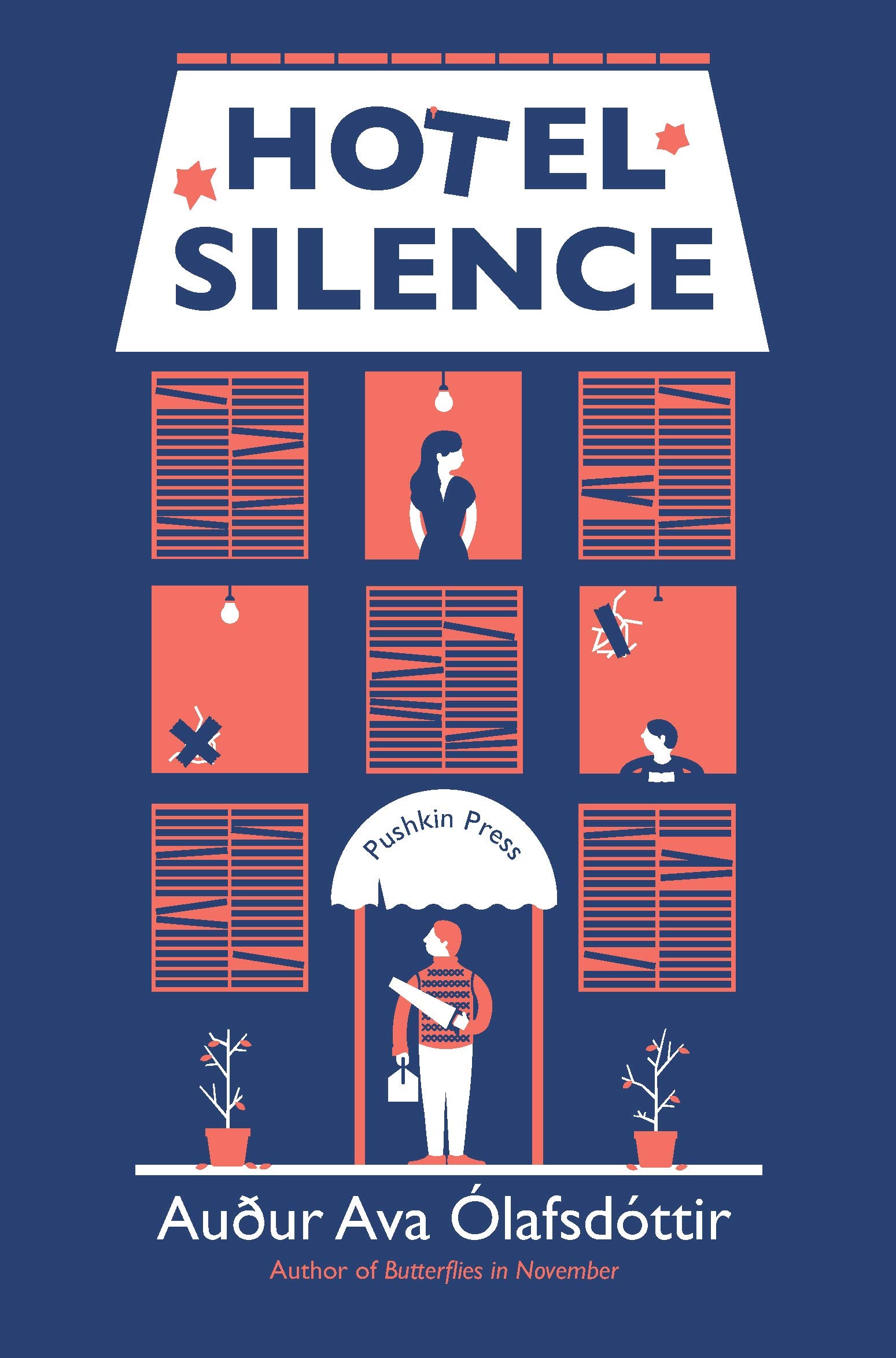
Firstly, Hotel Silence by Auður Ava Ólafsdóttir (2016 trans. Brian FitzGibbon 2018) published by Pushkin Press. I wrote about Butterflies in Novemberby this author in my previous post, explaining that I’d also enjoyed Miss Iceland. Unlike both these novels, Hotel Silence features a male narrator and is set away from Iceland.

Jónas Ebeneser is just shy of 50 and his wife has left him, telling him that his daughter, Gudrun Waterlily, is not his. His elderly mother has dementia and is fixated on war. All this has prompted a significant crisis:

“Will the world miss me? No. Will the world be any poorer without me? No. Will the world survive without me? Yes. Is the world a better place than when I came into it? No. What have I done to improve it? Nothing.”

So he decides to end his life. But because he doesn’t want Gudrun Waterlily to find his body, he decides to do so in another country. He flies to an unnamed country that has just seen the end of conflict:

“The situation is said to be precarious, and it is unclear whether the ceasefire will hold. It seems ideal”

The first section, Flesh ends with his arrival at the titular hotel. The second part, Scars, forms the rest of the book, in which Jónas finds his skills as a handyman in great demand as an entire generation of men has been wiped out.

He helps May and Fifi, the young siblings who run the hotel, and gets roped in to making western saloon doors for the nearby Restaurant Limbo where he takes his meals. Word spreads, and Jónas begins to heal, albeit with scar tissue – not a return to what was before.

“My unhappiness is at best inane when compared to the ruins and dust that lie outside my window.”

He also assists with healing in others, as he helps May and Fifi rebuild their hotel. There is a mosaic of cultural significance somewhere in the building, but also more prosaically rooms that need rewiring and painting. The brother and sister hope to see tourists back soon, although to a very different hotel than before the war, as the uncovered shop postcards attest:

“What strikes me are the bright colours, the vibrant blue sky and golden sand; the world was still in colour back then and people didn’t know what was in store, they’re alive, both their legs are of the same length, they have plans for the future, maybe they’re going to change cars or kitchen units or take a trip abroad.”

Hotel Silence shows the power of community to heal both collectively and for the individuals within it. It is about how hope doesn’t mean a diminishment of pain, but a way to live alongside it. And it’s about how both hope and healing can be found in the most unexpected places, if we can find the strength to stay open to such possibilities.

Secondly, Esperanza Street by Niyati Keni (2015) published by AndOtherStories, a not-for-profit publisher whose website explains: “And Other Stories publishes some of the best in contemporary writing, including many translations. We aim to push people’s reading limits and help them discover authors of adventurous and inspiring writing.”

They are a publisher I really enjoy, one where I’ll pick up a novel simply because it’s one of theirs, which is exactly what I did with Esperanza Street. The story is one of a community in a port town in the Philippines, told by Joseph, an eight-year old houseboy: “Esperanza, one of the oldest streets in Puerto, its heartbeat made up of a thousand smaller pulses, lulled us with its apparent constancy.”

Joseph’s mother has died, and shortly before this his father takes him to Mary Morelos’ house to work. Mary is kind but exacting, and Joseph gets to know her sons, good-looking mechanic Dub and artistic Benny as well as the cook America.

We follow Joseph and the inhabitants of the street through the next few years, beginning in 1981 with the Marcos’ in power. It’s a poor but busy area with food stalls, coffee shops and beauty parlours, and I thought Keni achieved a good balance of evoking the environment without indulging in poverty porn:

“from the gate, I watched the street turn to velvet and everything become rich, convivial. In a line stretching from the brow of the hill down to the jetty, the lamps came on in clusters, their yellow light seeping through the smoke that layered upwards from the braziers.”

The threat of redevelopment hangs over Esperanza Street. Local gangster Eddie Casama has left the area behind through his accumulation of wealth – though his mistress lives in the area – and he has an interest in seeing the area change. “he looked like the kind of man who’d let his kids ride on his back at weekends.” Yet his potential for violence and disregard for others is never in doubt.

There isn’t a huge amount of plot to Esperanza Street, though there several strands that we watch unfold. The inhabitants of the street are subject to their own passions and also to external forces of politics and money, all of which determine their fates. Joseph is an intelligent boy and both Mary and his father are anxious that he finishes school, but there will be events that loom large in his life along the way.

“I read with the hope something would finally arrive that would illuminate everything, a single piece of knowledge that would show how my life would unfold.”

Keni grew up in London though she has travelled a lot in the Philippines, so I would be interested to know how accurate her portrayal of the area is. It’s certainly a fully realised fictional portrait, which I found very evocative.

To end, a song named after a street near where I live:

“Sometimes me think, ‘What is friend?’ Then me say, ‘Friend is someone to share the last cookie with.’” (Cookie Monster)

This is a contribution to the wonderful #ReadIndies2 events hosted by Kaggsy and Lizzy.

The two books for this post were buried in my TBR, so I’ve put them together as they are linked by the theme of friendship.

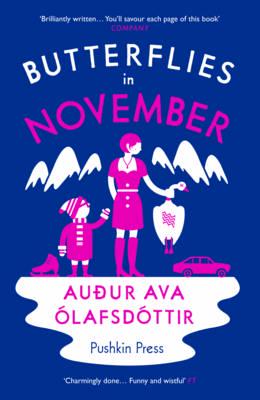
Firstly, Butterflies in November by Auður Ava Ólafsdóttir (2004 trans. Brian FitzGibbon 2013) published by Pushkin Press (which I thought was an indie, then panicked that it had been bought by Penguin, but which Lizzy has helpfully reassured me is definitely an indie!)

I really enjoyed Miss Iceland by this author so I was looking forward to this. Like Miss Iceland, this novel has a central female protagonist whose voice is bone dry, determinedly going her own way.

At the start of the novel, the unnamed narrator returns home to her husband after a meeting with her lover, one of her translation clients as she speaks 11 languages. She doesn’t seem especially attached to either man:

“After we had slept together for the first time, he looked surprised when I handed him the bill with the VAT clearly highlighted.”

Her husband announces he is leaving, to be with his pregnant girlfriend. This doesn’t seem like any great loss, given that as he’s going, he details her failure to live up to his ideals of womanhood:

“‘The amount of times I’ve prayed to God to ask him to make you buy a skirt suit.’

‘Wouldn’t it have been simpler just to ask me?’”

She moves to a new apartment but her wet blanket husband keeps turning up, so she starts daydreaming of foreign travel somewhere warm. However, her best friend Auður is pregnant with twins, and needs to stay in hospital for the late stages of the pregnancy. This means she finds herself driving round the Icelandic ring road which circles the whole island, with Auður’s son Tumi:

“a deaf four-year-old clairvoyant boy with poor eyesight and one leg three centimetres shorter than the other, which makes him limp when he is only wearing his socks.” 

There seems little worry that Tumi will miss any education, as his teacher demonstrates ableism, gender stereotyping and racism, all within a remarkably short conversation.

The plan is to travel east to a prefab cottage that she won in a lottery for the Association for the Deaf. This involves her returning homewards, and we get glimpses of her past which may explain some of her detachment, although things are never fully explained.

What follows is a road trip story – funded by her and Tumi winning another lottery, which they split 50/50 –  whereby the two meet a variety of characters. My personal favourite was the Estonian choir who kept turning up. There are also some lovers, as predicted by a clairvoyant at the start of the novel:

“three men in your life over a distance of 300 kilometres, three dead animals, three minor accidents or mishaps, although you aren’t necessarily directly involved in them, animals will be maimed, but the men and women will survive. However, it is clear three animals will die before you meet the man of your life.”

The animals: suffice to say there were passages I had to skip. But skipping those didn’t detract from the overall story at all so I would still recommend this novel, even if you share my sensitivities.

Tumi is a sweet, self-possessed boy “He always stands at the back of the group, avoiding conflict.” and I thought his relationship with the narrator was nicely evoked without sentimentalism.

Looking on goodreads, the reviews for this are a very mixed bag. My tolerance from whimsy is pretty high and I don’t mind things left unexplained, so I enjoyed this novel, and I do really like Ólafsdóttir’s detached female voices.

“A relationship for me is all about the right body and the right smell, the home is a shell for the body, not a place for exchanging existential views and having discussions. Even though you still have to load the washing machine and cook for the body.”

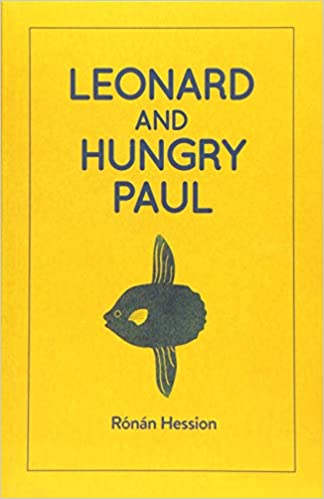
Secondly, Leonard and Hungry Paul by Rónán Hession published by Bluemoose Books, an independent publisher based in Hebden Bridge, whose manifesto explains “At Bluemoose our aim is to publish cracking stories that engage and inspire.”

I tried to read L&HP back in the summer and totally failed, but it had a lot of positive reviews in the blogosphere and so I gave it another shot. Now my reading is recovering somewhat I zipped through it with ease, so I’m sure my earlier troubles were indicative of my reading slump and not Hession’s writing.

The titular friends are men around their mid-thirties, who are easily overlooked. Leonard is grieving his mother, who he lived with in the family home until she died, never moving out because they got on well and there was no reason to. I found this relationship very touching. So often parent/child relationships are dramatized as being full of unspoken judgements and resentments, and it was a pleasant change to see someone who loved his parent, but also liked and respected them.

“Had he the courage, Leonard would have spoken up and said that his mother looked after everyone in her life as though they were her garden birds: that is to say, with unconditional pleasure and generosity.”

Leonard’s grief is of the quiet, ordinary kind where you still get up and go to work every day, carrying a deep sadness with you. In other words, the type pretty much everyone experiences.

“Leonard took off his noise-cancelling society-repelling headphones and went to the kitchenette for a mid-morning cup, even though he always disliked the awkward wait for the water to boil and the prospect of kettle-related time-killing small talk.”

I am with you Leonard.

Hungry Paul – whose attributive adjective is never explained – still lives at home with his parents, happy to bumble along, working as a casual postman and seeing Leonard regularly for their boardgame nights.

“He had no interest in, or capacity for, mental chatter. He had no internal narrator. When he saw a dog he just saw a dog, without his mind adding that it should be on a lead or that its tongue was hanging out like a rasher.”

Paul’s quiet stillness comes into its own when his mother insists he join her as a volunteer hospital visitor. While his extrovert mother chats away happily with one patient, Paul becomes the only one another patient will tolerate “He sat there calmly, simply sharing the moment with the woman.”

Not very much happens in L&HP but there is enough plot to pull the reader along. Paul’s sister Grace is getting married; Leonard begins a tentative romance; Hungry Paul enters a competition at the Chamber of Commerce. Really though, the novel isn’t so much about what happens as providing a glimpse into ordinary, quiet lives, and showing how they are worthy of attention:

“Their friendship was not just one of convenience between two quiet, solitary men with few other options, it was a pact. A pact to resist the vortex of busyness and insensitivity that had engulfed the rest of the world. It was a pact of simplicity, which stood against the forces of competitiveness and noise.”

I found L&HP to be a paean to the kindness and the gentleness found in the everyday small gesture:

“She was a person for whom kindness was a very ordinary thing, who believed that the only acceptable excuse for not having a bird feeder in the back garden was that you had one in the front garden”

(Or in my case, because you live in a London flat and the management company have banned them because the rats feast on them ☹)

It’s not an overly worthy novel though, there is plenty of humour. No-one is put down, but the absurdities of people are gently ribbed, such as Leonard’s colleague “Okey dokey. This will take just one minutiae. Take a load off, compadre,’ said Greg, unable to complete one conventional sentence.”

As an introvert who despairs at the relentless noise of modern life (why do shops think blaring out music will entice you to spend more time and money there? Why are cinema volumes now kept at ear-bleeding decibel levels?!) and who firmly believes in the meaning of the everyday, I was definitely the target audience for L&HP. If this sounds like you too, then I think you’ll enjoy this novel.

“We live in an age of cacophony.  Everyone talking and thinking out loud, with no space or oxygen left for quiet statements and silence.”

To end, one of the best TV theme songs ever, all about being a friend:

“You think your pain and your heartbreak are unprecedented in the history of the world, but then you read.” (James Baldwin)

Trigger warning: mention of rape, domestic violence, racist violence

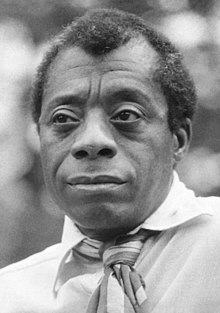
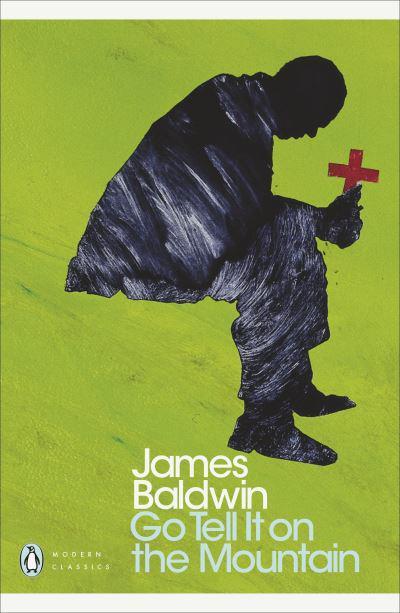
I was delighted when Go Tell It on the Mountain was selected for today’s review-a-long, as it has sat in my TBR for ages. I also really enjoyed October’s Vanity Fair review-a-long, and I fell in love with James Baldwin’s writing when I read Giovanni’s Room for the 1956 Club, back in October 2020.

Despite these various motivators, I was still worried I wouldn’t manage to join in, as my reading is slowly improving but still very poor, and my blogging is essentially non-existent. However, Go Tell It on the Mountain (1953) proved a good choice, as despite being a really tough read in terms of subject matter, it’s only 256 pages in my edition, can be read in an afternoon, and is full of Baldwin’s lyrical beauty.

Photo by Allan Warren, courtesy Wikimedia Commons

The remaining obstacle is that it feels impossible to write about Go Tell It on the Mountain. It’s such a richly complex book and tackles such enormous themes, that I’m not even going to manage to approach doing it justice. So what follows is a few random thoughts 😊

The novel opens:

“Everyone had always said that John would be a preacher when he grew up, just like his father. It had been said so often that John, without ever thinking about it, had come to believe it himself. Not until the morning of his fourteenth birthday did he really begin to think about it, and by then it was already too late.”

John’s father Gabriel Grimes preaches at the Temple of the Fire Baptized, a Pentecostal storefront church in Harlem. John is ambivalent about religion, finding it restrictive and acutely aware of the temptations all around him;

“For John excelled in school, though not, like Elisha, in mathematics or basketball, and it was said that he had a Great Future. He might become a Great Leader of His People. John was not much interested in his people and still less in leading them anywhere, but the phrase so often repeated rose in his mind like a great brass gate, opening outward for him on a world where people did not live in the darkness of his father’s house, did not pray to Jesus in the darkness of his father’s church, where he would eat good food, and wear fine clothes, and go to the movies as often as he wished.”

However, he does have faith. We follow John throughout his birthday as goes to the cinema and enjoys Central Park, but also attends church:

“The Sunday morning service began when Brother Elisha sat down at the piano and raised a song. This moment and this music had been with John, so it seemed, since he had first drawn breath.”

Aged fourteen, John is still finding out who he is. This is bound up in religion and church, but also in his academic accomplishments which mark him out at school and within his family; and his rejection of his father as a masculine role model who demonstrates violence and hypocrisy, beating his family often.

“His father’s arm, rising and falling, might make him cry, and that voice might cause him to tremble; yet his father could never be entirely the victor, for John cherished something that his father could not reach. It was his hatred and his intelligence that he cherished, the one feeding the other.”

In the second part of the novel the prayers of John’s father, mother and aunt are powerfully explored. I don’t want to say too much about the plot here, as the characterisations first introduced through John’s point of view are so sensitively deepened through this second part, including that of his abusive father (who remains wholly unlikeable, but a fully realised character). As a reader I enjoyed watching these complex adults emerge without any foreknowledge.

John’s parents are the first generation since emancipation, and the trauma of slavery is just within lived experience, as GTIOTM is set in 1935. The depictions of racism, every day and institutional, are enraging.

“She looked out into the quiet, sunny streets, and for the first time in her life, she hated it all—the white city, the white world. She could not, that day, think of one decent white person in the whole world. She sat there, and she hoped that one day God, with tortures inconceivable, would grind them utterly into humility, and make them know that black boys and black girls, whom they treated with such condescension, such disdain, and such good humor, had hearts like human beings, too, more human hearts than theirs.”

Through John’s aunt Florence and his mother Elizabeth, Baldwin explores the additional patriarchal oppression women have to contend with. Florence’s academia is ignored to prioritise Gabriel’s, despite her desire for learning and his total disregard for it. Pregnancy outside of wedlock is left for the women to deal with. A woman who is gang-raped by white men is outcast:

“No man would approach her in honor because she was a living reproach”

There is a lot of compassion throughout the novel for female experience. With everyone there is a sense of things unspoken, in contrast to the vocal exuberance of preaching, and this is particularly true for the female characters.

“And he knew again that she was not saying everything she meant; in a kind of secret language she was telling him today something that he must remember and understand tomorrow. He watched her face, his heart swollen with love for her and with an anguish, not yet his own, that he did not understand and that frightened him.”

The final part of the novel follows John experiencing vivid religious visions, but I felt the ending was ambiguous, undermining the fervour. Baldwin demonstrates that human experience is subject to unpredictable forces, both internal and external, and I felt any certainty John believed in one day could be undone tomorrow. (For one thing, John doesn’t seem to acknowledge sexual attraction to Elisha, though as readers it seems to be there.)

As I mentioned at the beginning. I’ve found Go Tell It on the Mountain almost impossible to write about. I hope these few thoughts and extensive quotes have given some sense of it though! Baldwin is such gorgeous writer even with such harrowing subject matters: skilled but approachable, angry and compassionate, humane and unsentimental.

Now to dig If Beale Street Could Talk out of the TBR…

I’ll add in links to the other bloggers taking part today as I find them. Early signs are I’m out on a limb with this one, so please do check out the other reviews 🙂 :

Fiction Fan

Katrina

Rose

Kelly

“Where is Blitzen, baby?” (The Ramones)

Well, it’s been another difficult year for everyone, but I hope that the festive season sees you getting some restorative fun in whatever way you choose. For this Christmas post I’ve chosen two books that aren’t ostensibly about Christmas but which I can still proclaim as such for the purposes of this post 😀

Firstly, Professor Andersen’s Night by Dag Solstad (1996, trans. Agnes Scott Langeland 2011). This novella (154 pages in my edition) is my first encounter with Solstad which is clearly a big omission, as he’s described as ‘Norway’s most distinguished living writer’ on the back cover. While I didn’t love this novella, I did find it a very readable exploration of complex themes and I’d be interested to read more by this author.

It begins with the titular academic enjoying Christmas Eve on his own:

“Professor Andersen felt at peace, tonight. He had this feeling of inner peace which was not of a religious but of a social kind. He liked to indulge these Christmas rituals, which in fact meant nothing to him.”

His tranquillity is disturbed when he witnesses a young woman being strangled in an apartment opposite. In response to this shocking violence, he does precisely nothing:

“He went over to the telephone, but didn’t lift the receiver. ‘What shall I say,’ he thought, ‘that I have seen a murder? Yes, that’s what I have say. And they will laugh at me, and tell me to go and lie down, and to call back when I have sobered up’”

But he doesn’t call back when he’s sobered up either.

”Something had happened, something he had witnessed. He couldn’t warn them about something irreversible.”

Instead he ties himself in existential knots, wondering about his life in middle age and what happened to his generation of self-appointed radicals (a dinner party includes discussion on whether to join the EC or not – plus ça change…) As an Ibsen scholar, he wonders if Ibsen (and by implication, his own work) has any relevance in the twentieth century.

Witnessing the murder seems to fix the professor irreversibly in the position of observer, or throw into sharp relief how this has always been the case. Having done nothing about the crime, his intellectual explorations demonstrate how little he is the protagonist of his own life. He is acted upon by various societal forces (such as the Christmas ritual that is meaningless to him) but enacts very little himself.

So despite starting with a murder, this is not a crime novel. Professor Andersen’s Night is a long dark night of the soul, rather than a whodunnit. How much you enjoy the novella might depend on your attitude to Hamlet. If you find yourself carried along with Hamlet’s crises to a heart-breaking denouement, you’ll probably have sympathy with the Professor. If you find Hamlet torturous rather than tortured, maybe give this a miss…

“Ever since the murderer had entered his life, he had had a tendency to get hung up on impossible abstractions, ones which quite simply made him feel a bit sick.”

Secondly, Small Pleasures by Clare Chambers (2020), another new-to-me author despite her six other novels. I’ve decided to claim this as a Christmas story because a virgin birth is a major plot point 😊

Jean is approaching middle-age and lives with her mother in south-east London. Her mother not an easy character and home can be a bit suffocating. Jean is able to escape to her job as a journalist on the North Kent Echo and takes her chances for reprieve where she finds them:

“Of all the various liberties available, her favourite was to unfasten her girdle and lie at full stretch on the couch with an ashtray on her stomach and smoke two cigarettes back to back. There was no reason why she couldn’t do this in her mother’s presence – lying down in the day might prompt an enquiry about her health, no more- but it wasn’t nearly so enjoyable in company. The summer variant of this practice was to walk barefoot down the garden and smoke her cigarettes lying on the cool grass.”

A woman called Gretchen Tilbury approaches the paper to explain that her ten-year-old daughter is the result of a virgin birth. The men on the team seem somewhat reluctant to investigate further, so the story is assigned to Jean as the only woman. For reasons of her own, Jean approaches the story with an open mind. Gretchen is glamorous, an accomplished seamstress and baker, and seems to Jean to have the perfect life.

“Jean felt the tug of friendship, but it would have to resisted. If it came to delivering unwelcome news in due course then it was essential to maintain a sensible, professional distance.”

It’s no great spoiler to say that Jean doesn’t manage to maintain that distance. She’s feels herself drawn into the lives of Gretchen, her husband Howard, and their daughter Margaret. Gretchen seems to have everything Jean barely admits to herself that she wants, but she senses a sadness in Gretchen that she can’t quite identify.

Jean has kept herself if not exactly happy, then ticking over, with her work and her small pleasures. Gradually her world begins to open up towards something broader.

“She wondered how many years – if ever – it would be before the monster of awakened longing was subdued and she could return to placid acceptance of a limited life.”

What I liked about Small Pleasures is that although there is a mystery and a romance to drive the plot along (although as with so many books, I would have preferred a more ruthless edit) it is fundamentally a story of friendship, of reaching out to people and of letting people in, thereby finding community and solace in unexpected places.

“It violated every code that she had been brought up to live by, but the urge to tell him was unstoppable. Decorum, secrecy, self-control were all blown away by the force of this need to confide.”

This is especially poignant given the 1957 setting, which is beautifully evoked. It’s a time after the war but before the rapid social changes of the 1960s. Things are shifting, but reticence and decorum inhibit authentic behaviour. People are forced to hide important aspects of their lives and experiences, and also hide the pain that these unspoken sacrifices cause.  

“She hated being aligned with the forces of narrow-mindedness and conservatism, even though that was where she felt most at home… As a touchstone, she imagined her mother’s opinion – and rejected it.”

“She would collapse later, she promised herself, between seven and seven-thirty, when she had got home from work and done her chores.”

Small Pleasures doesn’t shy away from pain, but it doesn’t shy away from the joys of life either. It shows that the latter can be fleeting, but finding the small pleasures – and friends – can help us survive.

Looking at Goodreads, it seems lots of people hated the ending of this novel. I didn’t mind it but I did realise what it would be about halfway through (there is some pretty hefty foreshadowing). So I wouldn’t say that Chambers plays unfairly with the reader, but I did want to mention it as many seem quite annoyed!

To end, despite my long-held love of terrible twentieth-century Christmas pop tunes, I’ve only just found out that The Kinks made a Christmas record:

“When you have expectations, you are setting yourself up for disappointment.” (Ryan Reynolds)

I would say my blogging this year has been a continual exercise in humility or humiliation, depending on my mood 😀 Once again, I have failed to realise my own expectations, this time that I would read The River (1946) and Breakfast with the Nikolides (1942) for Brona’s Rumer Godden Reading Week which ends today. I’ve really enjoyed the Rumer Godden novels I’ve read (The Greengage Summer, Black Narcissus, China Court, Kingfishers Catch Fire). Godden is a prolific author and I’ve barely scratched the surface so I was excited to see Brona’s event.

But sadly (predictably) yet again, I’ve ended up posting right up to the wire for a reading event. I’m just back from a weekend away in the New Forest with friends, and while I had a lovely time I got minimal reading done, so I’m not going to manage to squeeze in the second book. I have at least managed The River, which given that it’s only 111 pages cannot be taken as a sign my reading is recovering in any great way. Ah well…

In the preface to my edition, Godden describes how the novel was written following her passing-by her childhood home after many years, and the tone of the novella is elegiac, full of feeling for a time long past. It begins:

“The river was in Bengal, India, but for the purpose of this book, these thoughts, it might as easily have been a river in America, in Europe, in England, France, New Zealand … Its flavour would be different in each […]

That is what makes a family, the flavour, the family flavour, and no one outside the family, however loved and intimate, can share it.”

The family are a middle-class white family, living in India. Although told in third person, the point of view is that of Harriet, on the cusp of adolescence. Her family comprises her pregnant mother, father who runs a jute factory, older sister Bea and younger brother Bogey, toddler Victoria, and Nan.

Harriet is great character: strong-willed, stubborn, imaginative and inquisitive. She writes poems and it’s easy to assume that she is based on Godden. She’s struggling with changes in herself and her family. Bea is that bit older and drawing away from childhood, and therefore her younger siblings. Bogey is interested in local fauna and happy to be left to explore these alone. Harriet is left betwixt and between.

“ ‘You are always trying to stop things happening, Harriet, and you can’t.’

But Harriet still thought, privately, that she could.”

The short novel is full of gorgeous descriptions of India, from the bazaar:

“Harriet and the children knew the bazaar intimately; they knew the kite shop where they bought paper kites and sheets of thin exquisite bright paper; they knew the shops where a curious mixture was sold of Indian cigarettes and betel nut, pan, done up in leaf bundles, and coloured pyjama strings and soda water; they knew the grain shops and the spice shops and the sweet shops with their smell of cooking sugar and ghee, and the bangle shops, and the cloth shop where bolts of cloth showed inviting patterns of feather and scallop prints, and the children’s dresses, pressed flat like paper dresses, hung and swung from the shop fronts.”

To the plants and flowers:

“Soon the bauhinia trees would bud along the road, their flowers white and curved like shells. Now the fields were dry, but each side of the road was water left from the flood that covered the plain in the rains; it showed under the floating patches of water-hyacinth and kingfishers, with a flash of brilliant blue, whirred up and settled on the telegraph wires, showing their russet breasts.”

As a twenty-first century reader, I’m reading at a very different time to when The River was written, and I do approach Godden’s novels set in India with some trepidation. We know that imperialism and colonialism underpin this fictional family’s way of life. While Godden was definitely a product of this herself, I found the descriptions in this novella evocative rather than exoticising. I didn’t get a sense of othering in The River but maybe a more astute reader would. Harriet views India as home although she is aware she doesn’t wholly fit in.

The natural environment and Harriet’s developing identity come together when she has an almost mystical experience by the cork tree in the garden:

“She put her hand on the tree and she thought she was drawn up into its height as if she were soaring out of the earth. Her ears seemed to sing. She had the feeling of soaring, then she came back to stand at the foot of the tree, her hand on the bark, and she began to write a new poem in her head.”

Although Harriet is infatuated with Captain John – a man injured both physically and psychologically by the war – it is her love affair with words that comes through so strongly. It’s a profound portrait of a child who will grow into a writer and how deeply the vocation is felt within her.

I think even if I hadn’t read the preface, the sense of how Godden came to write this is so clear. It is someone trying to evoke a place and life close to their hearts, with an awareness it has gone forever. The River is a quick read, not plot heavy, but a distinctive and memorable portrait of the gains, pains, lessons and losses of growing up.

Jean Renoir adapted The River in 1951 but the trailer seemed to me to be taking a very different tone to the book. I don’t know if this is reflective of the film itself, but it means it’s back to 80s pop videos! Regular readers of my witterings will not be at all surprised at the song choice to finish this post:

“They let you dream/Just to watch ’em shatter/You’re just a step/On the boss-man’s ladder” (Dolly Parton, 9 to 5)

I’ve not done too badly with contributing to November’s plethora of reading events, despite my snail-like reading speed. Unfortunately I’m not going to manage a #MARM post, but I did find a short novel by an Australian author to squeeze in, so here on the final day of the month is my hastily written contribution to AusReadingMonth hosted by Brona at This Reading Life. At 204 pages it is just a teeny bit too long to count for #NovNov though…

I went into Bobbin Up by Dorothy Hewett (1958) with quite low expectations, set by the author herself 😀 In her introduction to my 1985 VMC edition, she explains “looking back on the 36-year-old Communist who wrote Bobbin Up, I am embarrassed by at her proselytising, stubborn blindness, this Antipodean Alice in Wonderland who had a protracted love affair with an idealised working class.”

However, she also acknowledges: “Sometimes sentimental, sometimes didactic, sometimes clumsy and overwritten Bobbin Up was the work of a still young writer struggling to find her own style and voice. Its form, which was criticised at the time as too episodic, seems to me to suit the subject perfectly”

As a middle-class woman who chose to work in a factory and then write about it, I was put in mind of Nell Dunn.  While both authors are open to accusations of class tourism and exploitation, I think they wrote with the best of intentions, attempting to shine a light on ignored and marginalised female workers. The novels are sixty or so years old, and these days we understand allyship differently.

These disclaimers out the way, I really enjoyed Bobbin Up. I thought it was stronger than Hewett suggested and was a compassionate portrait of the lives of women on low incomes in 1950s Sydney. Although she sets in the fictional Jumbuck Woollen Mills, the frequent references to songs playing on the radio and the sputnik gliding overhead root it firmly in a specific time.

Hewett captures the work environment in broad strokes before focussing in on particular workers:

“Women came in from everywhere, laughing and chiacking down the long, slippery aisles between the rovers, spinners, and winders. Relief healed their aching backs, relief loosened their tongues, they ran and pushed and scurried, jamming into the washroom, five minutes to change and scrub up and catch the bus to Redfern, Marrickville, Paddo, Woollahra and all points north, south, east and west.”

Their lives are hard and the women’s bodies are broken by tough, unrelenting work.

“Violet McHendry, forty-five, sharped tongued, hard as nails, was always fighting a losing battle with life in the grey, warped, weatherboard semi in Maddox Lane. But she still kept, until the day she died over her washtubs, ten years later, that peculiar girlishness, that grace of face and voice, that has nothing to do with time.”

The best time they can hope for is when they are young, still fit and might have some energy to enjoy the times when they’re not at work.

“[Beth] passed proudly and yet compassionately, conscious of her youth and motherhood. The old men stared after her, jealous of the radiance they could never share again, loafing on borrowed time, unwanted, under the dapple of poplar trees.”

There is domestic violence, self-medicating with alcohol, sixteen-year-olds being told they’ll be raped if they ‘lead men on’. But also some tender relationships, resilience and hope.

“Upstairs Lil had a view. Across the crooked slate and corrugated iron roofs of Waterloo and Redfern the Housing Commission flats stood out like a dream of luxury amidst green lawns. The sunlight slanted golden against their solid brick walls, a rainbow of mist from their water sprinklers circled them with enchantment.”

For Nell, the committed communist (presumably based on Hewitt, and she does seem to make her the most self-critical character), the hope is for a better society:

“Everything fell into place like the pieces in a jigsaw puzzle, and the best part of it was she knew she had always been right. There was something more than the narrow, bitter, cranky world she’d been reared in. There was another world to be built, here on earth, based on the kind of brotherhood and selflessness and energy she’d seen displayed long ago in the strike in the textile mills.”

I do agree with Hewett that Bobbin Up is somewhat overwritten and clunky in places, but it wasn’t particularly torturous. Amidst the bleak subject matter, it balanced the story somewhat, without obscuring the difficulties the women face.

“You could never be lonely in Waterloo, always conscious of the myriad lives woven and interwoven with your own, breathing, battling, loving, fighting, suffering in the stifling summer dusk.”

To end, a song about the charms of women who work in factories:

“A tree’s wood is also its memoir.” (Hope Jahren)

This week I’m joining in with Nonfiction November hosted by What’s Nonfiction. Despite not being a big non-fiction reader, I’ve been inspired by the month long event and also by Novellas in November, hosted by Cathy at 746 Books and BookishBeck. So I’m reading some short nonfiction to take part in both at once 😊

I’ve really enjoyed the novels by Deborah Levy that I’ve read: Swimming Home and Hot Milk. The first two volumes of her ‘living autobiography’ have been languishing in the TBR, so I’m grateful these two reading events prompted me to pick them up.

The first volume, Things I Don’t Want to Know (2013, 163 pages) is a response to George Orwell’s essay Why I Write, using the same headings (political purpose/historical impulse/sheer egoism/aesthetic enthusiasm). However, I think it’s also very much in conversation with Virginia Woolf’s A Room of One’s Own, as Levy considers what it means to be a professional writer for women in the twenty-first century.

“A female writer cannot afford to feel her life too clearly. If she does, she will write in a rage when she should write calmly.”

Yet the ‘living autobiography’ is written in the midst of events, without the distance of hindsight. This means the writing has an immediacy and is highly engaging, but there is also the discipline and consideration that comes from Levy being such a highly skilled writer.

The two sections that bookend the essay see Levy in Majorca at a time when she is deeply unhappy, finding herself crying on escalators. She escapes to Palma to think about her life, and also her art and the influence of other female artists. With Zofia Kalinska she observes:

“Content should be bigger than form – yes, but that was a subversive note to a writer like myself, who had always experimented with form, but it is the wrong note for a writer who has never experimented with form.”

While Things I Don’t Want to Know doesn’t follow a usual form for essay or memoir – it’s non-linear, never sets out a clearly-stated argument and hops between memories and broader observations – the content does remain bigger than form, because Levy’s observations are so sharp and her memories clear-sighted and unsentimental.

If I’m making this sound very heavy then I’m doing Levy a disservice, because she is humorous and has a wonderfully light touch. For example, she repeatedly returns to Duras in her artistic considerations, but wonders:

“Was Marguerite Duras suggesting that women are not so much a dark continent as a well-lit suburb?”

There is a strong feminist sensibility that runs throughout Things I Don’t Want to Know. In responding to Orwell, Levy highlights the very different experience of trying to work alongside the particular expectations and responsibilities faced by many women.

“We were to be Strong Modern Women while be subjected to all kinds of humiliations, both economic and domestic. If we felt guilty about everything most of the time, we were not sure what it was we had actually done wrong.”

In the Historical Impulse section, Levy reflects on her childhood in South Africa, where her father was imprisoned for being part of the African National Congress. As a child much of what is happening goes over her head though she also picks up on plenty; I found her portrait of her godmother’s daughter (who has to hide her relationship with her Indian boyfriend) very affecting:

“Melissa was the first person in my life who had encouraged me to speak up. With her blue painted-on eyes and blonde beehive that was nearly as tall as I was, she was spirited and brave and making the best of her lot. I couldn’t hear her but I knew her words were to do with saying things out loud, owning up to the things I wished for, being in the world and not being defeated by it.”

In the Sheer Egoism section, Levy moves to England with her family, and starts scribbling on paper napkins in cafes, not sure what she is doing but certain she has to write.

“Writing made me feel wiser than I actually was. Wise and sad. That was what I thought writers should be. I was sad anyway, much sadder than the sentences I wrote. I was a sad girl impersonating a sad girl.”

The Cost of Living sees Levy leaving her marriage and moving into a flat with her daughters. We learn very little about her husband or her marriage – which I was quite happy about – and instead Levy takes us with her as she considers what she wants from life and how she wants to live.

“Chaos is supposed to be what we most fear but I have come to believe it might be what we most want.”

The flat is not glamorous – visitors are creeped out by the communal areas Levy nicknames The Corridors of Love. She buys some plants, fixes her own plumbing, and works to her own hours.

“After all the heavy lifting, it was shock to be figuring out how to land the cadence of one single sentence”

Levy does not give the impression of being happy – she is grieving the breakdown of her marriage and she is very aware that she has not taken the easy choice – but she is living authentically. It is more sustainable and rewarding than fleeting happiness.

“To become the person someone else had imagined for us is not freedom – it is to mortgage our life to someone else’s fear.”

The strong themes of feminism, womanhood and the life of a writer established in Things I Don’t Want to Know continue through this volume. Levy has left behind the roles of Wife and Homemaker. She remains a mother but her children are older and don’t need her quite as they did.

“It was possible that femininity, as I had been taught it, had come to an end. Femininity, as a cultural personality, was no longer expressive for me. It was obvious that femininity, as written by men and performed by women, was the exhausted phantom that still haunted the early twenty-first century.”

Levy is a daughter and the section about her mother dying is very moving. She is also a friend and therefore not alone: her friend Celia helps her by providing the writing shed where her late husband (the poet Adrian Mitchell) used to work. Levy writes there trying to stay warm and listening to apples thud onto the roof.

At no point is The Cost of Living didactic. Levy doesn’t suggest for one moment that anyone should make the same choices she has. The title is literal and metaphorical: she has to work to earn money as this is a very real concern, but simultaneously to feel she is truly living there has been the cost of her marriage. All choices bring associated costs.

But with the right choices those costs are price worth paying. Levy is living her truth, has friends and fun, and she finds great meaning in her work:

“It is always the struggle to find language that tells me it is alive, vital, of great importance.”

I really loved both these volumes. Levy is so wise, funny and readable. She is never boring or pedestrian. The interesting choices she has made in life are reflected in the engaging choices she makes with her writing. I’m looking forward to reading the third volume of these memoirs, Real Estate, which was published this year.

To end, a song about a woman assessing her life choices: