Novella a Day in May #26

Less than a week left of Novella a Day in May and I’m feeling quite giddy 😀 So much so that I’m upping my game for the last few days and looking at authors who seemed to favour the novella as they wrote more than one. Today: Nell Dunn.

Nell Dunn came from an aristocratic family, somewhat incongruously as the two novellas I’m going to look at portray working-class life. But Dunn wasn’t a class tourist; she left school at 14, moved to Battersea (now an expensive area of London capturing the overspill from the highly salubrious Chelsea, but in the 1960s before the slum clearances it was fairly dilapidated) and worked in a factory. Her writing always seems absolutely authentic.

Up the Junction (1963, 133 pages) is a series of sketches of life in 1960s south London for three young women, Lily, Sylvie and Rube, living in an area filled with the workers of the local factories.

“The sweet smell of cow-cake from Garton’s blows up the road with the violet smoke from the Power Station…Sylvie and I walk up the summer evening road to the Prodigal. An old lady in slippers comes out of the off licence with a zip bag weighing her sideways. From open windows the tellys call.”

 

1280px-Battersea_Power_Station_(6902827902)

Life is hard for these women, but it is also vibrant, eventful, and energetic. Dunn has an unflinching eye (there is a horrible episode detailing an illegal abortion) but she has affection for the people she portrays and although there is no sentimentality in her writing, there is sensitivity:

 “Ada opens the door crying: her little brother had burnt all her clothes. ‘He set fire to the pram where I keeps them…’ …In Ada’s room the floor is covered in clean newspaper…In the middle of it all stands the smouldering pram. Out in the passage ten pigeons fly about. ‘Aren’t they beauties? Aren’t they darlings?’ says her dad. ‘I have to keep the windows sealed in case one escapes.’”

Dunn effectively captures the voices of the area, humour sitting alongside poverty and desperation:

 “ ‘So I went along to tell his daughter. ‘He’s just dropped dead!’ Of course I didn’t tell her about the bacon puddin’. ‘What have you done with his clothes?’ she says. ‘You’re not havin’ them,’ I says, ‘what about me rent?’ So I takes them round to the rag man and I got twelve shillings and I buys meself a quarter of whisky and a packet of fags…I had a drop of whisky what me brother gave me last night and I meant to save the rest for Christmas and then I thought well I mightn’t be here for Christmas…’

Up the Junction is a fascinating insight into a life that in many ways has passed: the swinging sixties, the dominance of factory work, women seeking emancipation before the arrival of the Pill. At the same time it still has plenty to say about power relations on small and large scales and about human resilience. As a voice of working class women, it is unfortunately still a voice which remains rarely heard.

Up the Junction was adapted for TV in 1965 by Ken Loach (which you can see in its entirety on YouTube) and into a film in 1968. It also inspired this 1979 song by Squeeze:

Unlike Up the Junction, Poor Cow (1967, 141 pages) has an overarching narrative to it, detailing Joy’s attempts to survive as a young single mother when her criminal partners are in jail. The story begins with Joy going out for something to eat in her maternity gown, because her husband forgot to bring any of her clothes to the hospital [contains swearing]:

“Outside in the street a young woman passed pushing a pram, a fag hanging from her lip. ‘Now I look like that.’ She ate the dark brown cottage pie, mixing the mash in with her fork, a great relieving warmth filled her stomach and the sweet tea lifted her spirits. Above her head an ad with a lot of golden girls in bathing suits read COME ALIVE. YOU’RE IN THE PEPSI GENERATION.

‘Fuck that,’ she said as the snow fluttered thoughtlessly against the window pane. She put a penny in the Fortune Teller DON’T REGRET. TRY AGAIN.”

Joy’s life isn’t easy, but she doesn’t seem ground down by it. She gets on with what needs to be done and loves her son Jonny, even though she’s not happy with her husband, Tom.

“He didn’t really want to be happy, or be married like we was. He always wanted more out of life than what he had.”

When Tom’s sent to prison, Joy finds happiness with his friend Dave. However, Dave is also a burglar, and so their happiness is short-lived.

 “Joy was back in Fulham. She’d moved in with her Auntie Emm, who lived in one room, off the National Assistance, and pills.”

In Fulham she gets a job in a bar, and this leads to soft-porn modelling. Joy doesn’t feel degraded by this and refuses to follow a friend into prostitution (sort of…), but she does end up sleeping with quite a few men, discovering that she enjoys sex. I was surprised at how much sex there is in Poor Cow. It’s not detailed but it is referred to and I’d be interested to know if this was scandalous in 1967 or seen as just part of Swinging London?

Joy’s an interesting woman, who doesn’t really know what she wants. Part of her would like a settled life, another part of her acknowledges that all her bad choices were consciously made and perhaps more truly what she desired:

“I’d just like to be secure. You know, something out of life that everybody else’s got. When I’m walking down the road I see people happy, I want that, but when I come to think of it I can have it one day and I may not want it.”

Poor Cow somehow isn’t as depressing as it should be, despite the rather bleak existence of Joy and the nihilism of her lifestyle:

“that night Joy lay entangled in Dave’s arms and thought ‘Even if it’s only for six months that might be six months of happiness and anyway it’s six months of life got through.”

The narrative is mixed, switching between third-person, first-person and Joy’s letters to Dave. This works well, capturing the fragmentary nature of Joy’s life and her conflicted personality.

“ ‘I’ve got a lot to give up,’ thought Joy. She looked round the room. ‘At the same time I haven’t got a lot to give up.’”

Poor Cow shows all the conflict, confusion, freedom, constraint, joy and drudgery for a young woman at a point where a particular society is going through considerable change. It’s neither wholly happy or sad, but it felt wholly real.

Like Up the Junction, Poor Cow was also adapted into a film by Ken Loach, the same year it was published:
Novella a Day in May #25

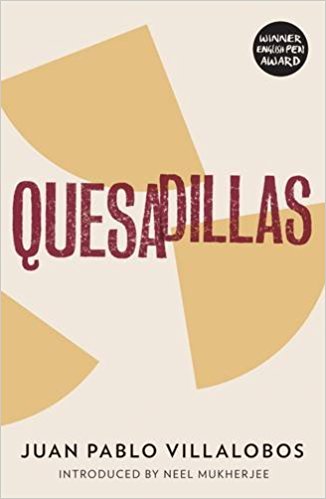
Quesadillas – Juan Pablo Villalobos (2012, trans. Rosalind Harvey 2013) 180 pages

Quesadillas is Juan Pablo Villalobos’ second novel, which I picked up having greatly enjoyed his first, Down the Rabbit Hole. Also, it’s published by AndOtherStories, who really are a wonderful publisher of contemporary, mainly translated, fiction. I highly recommend checking out their catalogue.

Back to Quesadillas. Like Down the Rabbit Hole, it is told from a child’s perspective, this time an older, more wordly child as Orestes (his father loves Greek mythology) is 13 years old. He lives with his five brothers, one sister and parents in a town where:

“there are more cows than people, more charro horsemen than horses, more priests than cows, and the people like to believe in the existence of ghosts, miracles, spaceships, saints and so forth.”

His mother insists the family is middle-class (unlikely as their home is “a shoe box with a lid made from a sheet of asbestos”) while his father swears profusely at the television:

“My father remained loyal to his healthy habit of insulting all politicians, applying a level of hostility in direct proportion to the devaluation of the peso.”

This is 1980s Mexico, where there is economic chaos and corrupt elections. Telling the tale from a 13-year-old’s point of view enables Villalobos to make astute political points about the impact of state mismanagement on the poor, without being overly didactic:

“ ‘we only have thirty-seven quesadillas and 800 grams of cheese left.’

We entered a phase of quesadilla rationing that led to the political radicalisation of every member of my family. We were all well aware of the roller coaster that was the national economy due to the fluctuating thickness of the quesadillas my mother served at home. We’d even invented categories – inflationary quesadillas, normal quesadillas, devaluation quesadillas and poor man’s quesadillas …. [in which] the presence of cheese was literary: you opened one and instead of adding melted cheese my mother had written the word ‘cheese’ on the surface of the tortilla”

Orestes’ twin brothers (no prizes for guessing they’re called Castor and Pollux) go missing and Oreo (as he’s known) sets off with older brother Aristotle to find them. Aristotle is convinced they’ve been abducted by aliens. After a fight, Oreo heads off alone and experiences life on the road. He manages to make money through peculiar means (there is a slight vein of magic realism running through the novella which explodes in all-out weirdness at the end) before returning home.

“What they were asking me to do was to start making up some lies that tallied with their idea of the world, damn it. But I hadn’t come home to tell the truth or learn to lie. I had come back because the class struggle had worn me out and I wanted to eat quesadillas for free.”

Quesadillas has a strong narrative voice in Oreo and it is funny, engaging and astute. The humour and surreal elements never obscure the portrayal of corruption or poverty. An entertaining and thought-provoking read.

Novella a Day in May #24

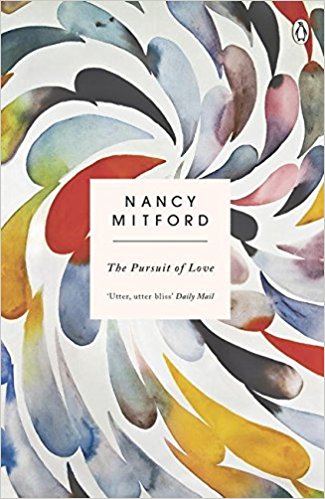
The Pursuit of Love – Nancy Mitford (1945, 192 pages)

The Pursuit of Love was Nancy Mitford’s first novel in a trilogy about the Radletts, a bonkers upper class family.

“My Uncle Matthew had four magnificent bloodhounds, with which he used to hunt his children. Two of us would go off with a good start to lay the trail, and Uncle Matthew and the rest would follow the hounds on horseback. It was great fun. Once he came to my home and hunted Linda and me all over Shenley Common. This caused the most tremendous stir locally, the Kentish weekenders on their way to church were appalled by the sight of four great hounds in full cry after two little girls.”

The narrator is Fanny, cousin to the Radletts and rather different in temperament. Her mother leads a peripatetic life according to which man she is with, earning her the nickname The Bolter. Fanny is therefore raised by her lovely Aunt Emily, and the two have a placid, ordered existence, but it is the chaotic holidays Fanny spends with the Radletts which occupy the story.

“The Radletts were always either on a peak of happiness or drowning in black waves of despair; their emotions were on no ordinary plane, they loved or they loathed, they laughed or they cried, they lived in a world of superlatives.”

It’s thinly disguised biograpy of course. The Radletts are home educated along similar lines to Nancy and her famous sisters: in French and horsewomanship, and not much else.

“They picked up a great deal of heterogeneous information, and gilded it with their own originality, while they bridged gulfs of ignorance with their charm and high spirits, they never acquired any habit of concentration, they were incapable of solid hard work. One result, in later life, was that they could not stand boredom, Storms and difficulties left them unmoved, but day after day of ordinary existence produced an unbearable torture of ennui, because they completely lacked any form of mental discipline.”

Fanny focuses the story on that of Linda, her cousin and best friend. Linda is more like The Bolter than Fanny ever is, and has a disastrous marriage to a Tory followed by a disastrous affair with a communist, before finding a true love. The Pursuit of Love is not romantic though, Mitford’s comic eye is far too sharp for that. If it wasn’t for this, my inverted snobbery may have come to the fore and left me thinking ‘So what? Who wants to read about a bunch of ill-educated, over-privileged idiots?’ Well, as it turns out, I do. I find Mitford truly funny and accomplished in her writing. No-one escapes her wit, least of all the upper-classes and their mores:

“The behaviour of civilised man really has nothing to do with nature … all is artificiality and art more or less perfected.”

She’s not above the downright silly either, such as describing a baby as “the usual horrid sight of a howling orange in a fine black wig”.

The Pursuit of Love does provide some intriguing insights into the mid-twentieth century landowning classes though, such as their attitude to travel in the post-war period:

“it would never have occurred to the Alconleighs to visit the continent for any other purpose than that of fighting”

The Pursuit of Love is very funny but there is a brittleness there; a sense that things easily splinter and true sadness and tragedy are only ever just below the surface. The ending emphasises this element and is truly moving, all the more so as it is something of a jolt given what has gone before.

Novella a Day in May #23

Two Pints – Roddy Doyle (2012, 89 pages)

Two Pints is a series of conversations between two men who meet in a pub. Doyle has an excellent ear for dialogue and his first novel, The Commitments, was very dialogue-heavy. This is even more so, with no description at all. It’s set on specific dates and documents the characters’ reactions to events in 2011 and 2012.

Before some examples, a trigger warning for language. Roddy Doyle presents authentic voices, and those voices are sweary. Something he is quite renowned for (I’ve included this clip before, but g’wan, you will!):

There is an ongoing conversation as to the whereabouts of Colonel Gaddafi:

“…An’ anyway, that’s when I see him.

– Who?

– Gaddafi.

– From the chipper?

– No the other one. From Libya.

– In Dublin Airport?

– Terminal 2.

– Fuck off.

– Swear to God. That’s where he’s hidin’.

[…]

– You’re sure it was him?

– Course I am. I winked at him.

– Wha’ did he do?

– He winked back.”

There are also discussions of cultural issues, both high and low:

“- D’yeh ever read poetry?

– Wha’?!

– D’you ever –

– I heard yeh. I just can’t fuckin’ believe I heard yeh.

-Well look it –

– G’wan upstairs to the lounge if yeh want to talk abou’ poetry.”


“- Wha’ does ‘thinkin’ outside the box’ mean?

– You were watchin’ The Apprentice last night, weren’t yeh?”

By the end I really felt as if I’d been in a pub overhearing two old friends talking. The simplicity of Two Pints doesn’t mean it’s prosaic though: the stories regarding a young member of the family, Damien, become increasingly surreal, with an escalating collection of exotic animals and his fracking in the back garden using a magimix. You’re never quite sure what will happen next.

“ – See the Queen’s goin’ to mention Ireland in her Christmas speech.

– Ah, great. I might mention her in mine.

-It’s a big deal.

– Not really. I just say a few words to the family.”

Warm, witty and wonderful.

Novella a Day in May #22

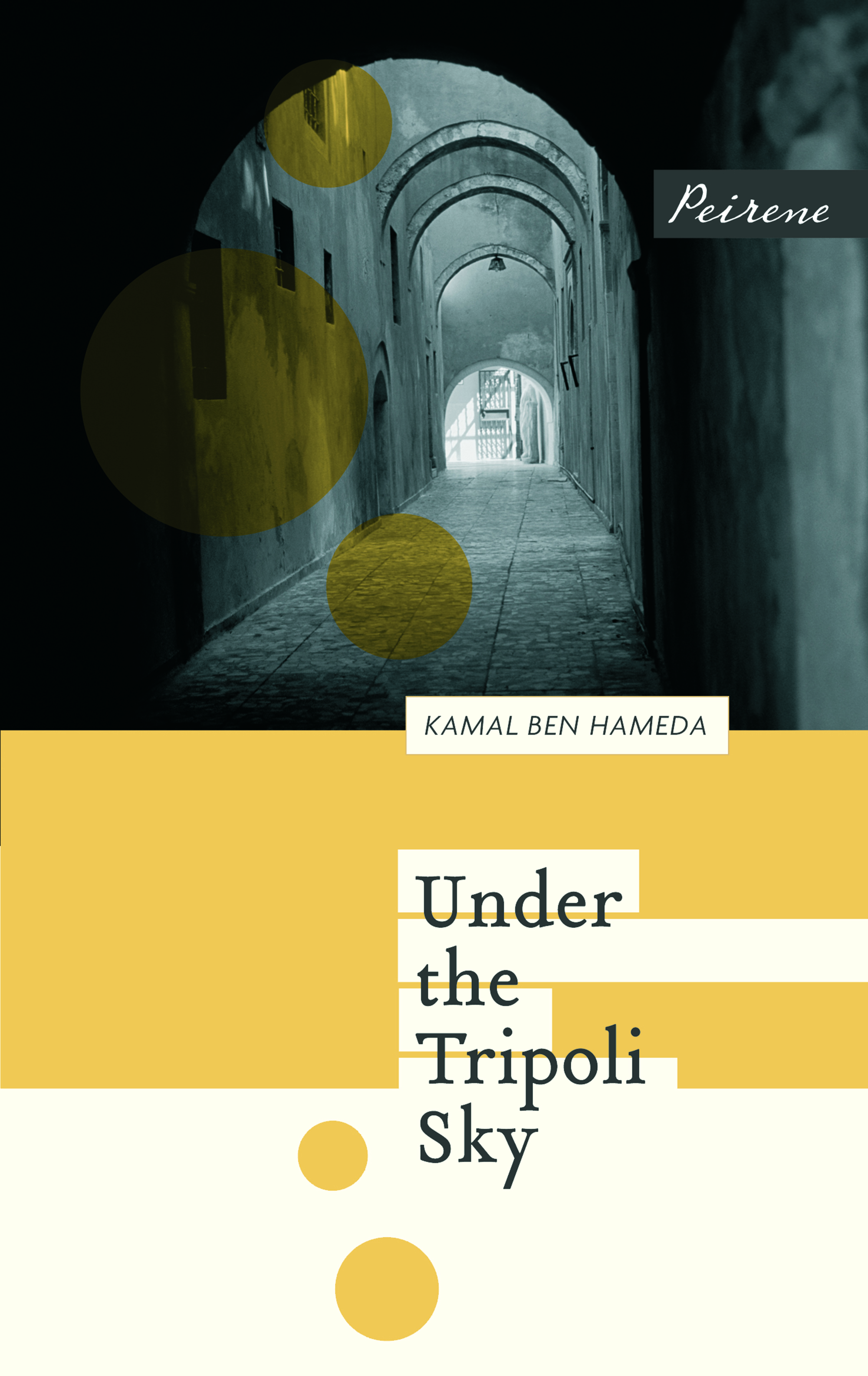
Under the Tripoli Sky – Kamal Ben Hameda (2011, trans. Adriana Hunter 2014) 104 pages

Under the Tripoli Sky by Kamal Ben Hameda is published by Peirene Press who specialise in publishing contemporary European novellas, aimed to be read in one sitting. Under the Tripoli Sky (written in French by a Libyan author now living in Holland) is part of their Coming of Age series. It’s also one more stop on my Around the World in 80 Books Reading challenge, hosted by Hard Book Habit.

Hadachinou is a young boy living in Libya before the revolution of 1969. The novella details his experience growing up in Tripoli surrounded by women: his mother, her friends, their daughters. Through a series of sketches he builds up an evocative, affectionate but unsentimental view of the lives of women where men are either absent or a drunken threat:

“My father, a solitary man given to prayer, shut himself away in the small bedroom at the back of the house when he came home from his shop or from the mosque. … As for Uncle Hadi, he spent nights in the company of other drunkards. ‘If their young wives want some fun and relaxation, they have to search for it elsewhere,’ Aunt Nafissa often commented, with her usual bitterness towards the male gender.”

The women don’t really notice Hadachinou and so he is given extraordinary access to their lives and experience.

“The tea ceremony was the only part of the day when my mother and her friends could live their lives in real time and tell their own stories. At last they could talk about dreams, longings and anxieties all in the same breath, and their bodies were at peace.”

He also moves across other boundaries in the city, attending mosque, synagogue and church. There is a sense of an exile looking back, and Tripoli with its heat, light, and bustling activity is beautifully realised. What also adds to a sense of Hadachinou recalling with longing, is the focus on food. This is not the story to read if you are on a diet. As homemakers, a great deal of the women’s lives are given over to preparing food, and Hadachinou describes the various meals in mouth-watering detail:

 “Signora Filomena would take us to the pizzeria, where each of us could salivate over his or her choice of either a pizza with tomatoes and oregano flavoured anchovies, or an ice-cream with a subtle vanilla taste set off by crunchy slivers of bitter chocolate. She herself preferred the bar opposite and its famous sandwiches: grilled sardines between two slices of crusty bread whose dough was impregnated with olive oil infused with garlic and red chillies.”

Peirene’s inclusion of this as a coming of age story is understandable. Hadachinou undergoes his circumcision early in the novella; he also experiences awakening sexual desire. But while he is moving towards adulthood, this is very much a portrait of a city and a community on the brink of enormous change. It is stunningly written, capturing a society about to be torn asunder.

“Another person’s eyes are your origins and your kingdom. But other people can’t see you if they’re blinded by their search for an illusion…”

Novella a Day in May #21

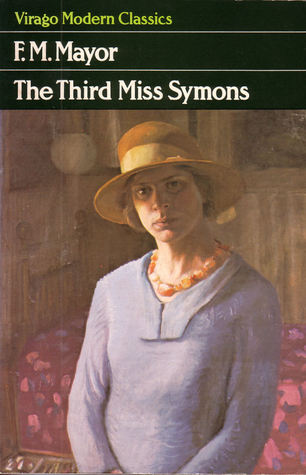
The Third Miss Symons – FM Mayor (1913, 144 pages)

FM Mayor tells the life story of Henrietta (Etta) Symons, from birth to death at the latter part of the nineteenth century. Despite doing this in such a short space, she manages an in-depth portrait of an unappealing woman.

“At five her life obtained its zenith. She became a very pretty, charming little girl […] When she was eight her zenith was past, and her plain stage began.  Her charm departed never to return.”

Her charm departs and what is left is a grumpy woman, ordinary and without any redeeming talents or qualities. FM Mayor is compassionate towards Etta, but clear-sighted and unsentimental.

“This was the problem: Why was it that people did not love her? – she to whom love was so much that if she did not have it, nothing else in the world was worth having.”

It’s certainly true that Henrietta is treated unfairly by people and experiences injustice, but it is also clear that if only she could be a little more pleasant to people, her life would be vastly improved. The Third Miss Symons is most definitely an example that you get back what you put out in life, and what Henrietta gets back is distance and indifference at best.

“She would have been astonished if she had known what an infinitesimal difference she made to their lives”

Yet it is not a depressing tale, although it certainly veers towards it at times. For a start, Mayor has taken a woman so easily disregarded in art, literature and society and given Henrietta her own story. She is the waspish spinster, the homemaker (for her parents and brothers), unmarried, childless, failure even in her attempts to do charitable good works. For centuries the judgement from society has been that such women have no value. Yet Mayor, in her concentration on Henrietta, insists that her value is recognised, and that there is acknowledgement of the society and culture that has contributed towards Henrietta’s frustrations.

“throughout her fairly long, dull life Henrietta was always cursed with her tidy little income.”

“Bad health is another resource for unoccupied women, and it certainly occurred to her as an occupation, but she realised that it and roving cannot be combined, and of the two she preferred roving.”

Henrietta can only really concentrate on her misery. If only she had a vocation, she would be different and her life would be different. But Mayor will not let Henrietta or the reader off so easy. Henrietta will remain unfulfilled.

“She was not one of those women whom nothing will satisfy but marriage; on the whole she did not care very much for men. She wanted what she had always wanted, something to love and something to love her.”

I couldn’t help thinking she should have become a dog breeder.

Mayor is entirely non-didactic and the portrait of Henrietta is unblinking, but the sadness is rescued from harshness by a good dose of humour.

“When in doubt, go abroad. She went abroad again for three months. Her companion was picked up from nowhere in particular, an odd woman like herself. They went to Italy. Neither of them cared in the smallest degree for sculpture, architecture, painting, archaeology, poetry, history, politics, scenery, language or foreigners.”

The Third Miss Symons is a compassionate, wise novel, psychologically astute and ultimately very moving. If you’d like to spend some time with grumpy, intractable Henrietta, and I highly recommend you do, you can read the novel at Project Gutenberg here.

Novella a Day in May #20

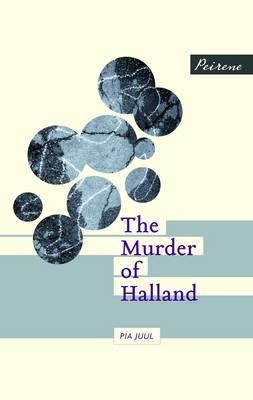
The Murder of Halland – Pia Juul (2009, trans. Martin Aitken 2012, 189 pages)

This novella is published by Peirene Press who specialise in publishing contemporary European novellas, aimed to be read in one sitting. The Murder of Halland is part of their Small Epic series.

The story opens with a domestic scene, Bess and her partner Halland watching a detective series before he goes to bed and she returns to her study to continue her work as a successful novelist. By the third page however, she is woken by a man at the door claiming he is arresting her for the murder of her husband: Halland has been shot dead in the town square outside their flat.

“The wet cobbles glistened in the morning light. Normally, the square would be deserted. Now it was filling with people. Roses bloomed against the yellow and whitewashed walls.”

While The Murder of Halland could be classed as a crime novel, I think this is misleading.  The focus is not on finding out who killed Halland but rather the grief of Bess as she ricochets around the small town in confusion, discovering Halland wasn’t quite who she thought he was and wondering if she is grieving in the right way.

“I could see why Halland had hung up the picture. It was our first year together and we were happy. Anyone could see that. At least I could, now. Halland’s hair had turned completely white during his illness, but here his long mane was dark and only just starting to turn in grey. I traced the sharp line of his nose with my finger, his full mouth. He was looking at me, saying something. What did we say to each other in those days? What did we ever say? I couldn’t remember us talking. Did we even say good morning? Yes, we said good morning.”

Bess’ detached narration makes The Murder of Halland an unsettling read. We know it was not a happy relationship, but we don’t know exactly why. We don’t know in what way Halland was ill. All Bess’ relationships seem to occur at a step removed: she has tense phone calls with her mother, a half-hearted reconciliation with her grandfather, an estranged daughter who arrives back in her life but they don’t explore what this means for either of them…

This strange detachment meant that I started to doubt Bess’ reliability as a narrator. When I read crime fiction it’s weirdly, for comfort, partly because I stick to Golden Age, and partly for all the ends to be tied up nice and neatly.  The Murder of Halland is not this type of novel. It leaves the reader with many more questions than answers, most of all through it’s “WHAT????” ending . Surprisingly, I didn’t think this made for an unsatisfactory read. The Murder of Halland is an intriguing character study at a moment of crisis, as complicated and unresolved as life itself.

Novella a Day in May #19

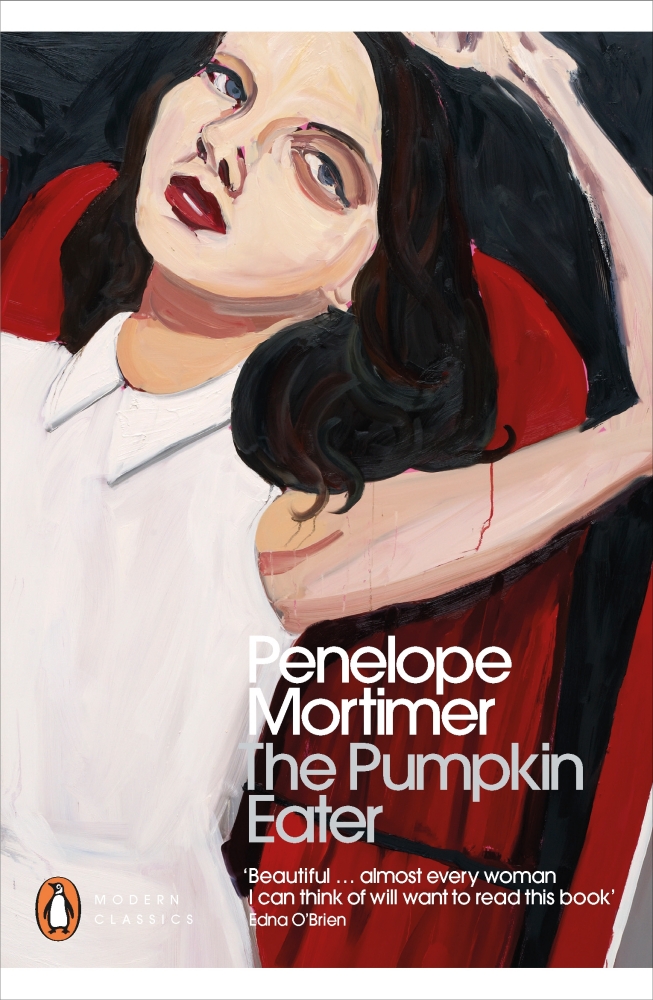
The Pumpkin Eater – Penelope Mortimer (1962) 144 pages

The Pumpkin Eater begins with a woman speaking to her psychiatrist, a silent interlocutor with whom she reflects on the pressures her unhappy marriage exerted on her mental health. We come to know her as Mrs Armitage, wife of a successful screen writer, Jake Armitage, who is selfish and unfaithful. Although Mrs Armitage has been married before, she feels as trapped in this marriage as any 1960s wife who would be reluctant to ask for a divorce.

“It must have been then, I think, that Jake and life became confused in my mind, and inseparable. The sleeping man was no longer accessible, no longer lovable. He increased monstrously, became the sky, the earth, the enemy, the unknown. It was Jake I was frightened of; Jake who terrified me; Jake who in the end would survive. He rolled over, his mouth slightly open, and began to snore.”

Mrs Armitage lives in London while they are building a big glass tower of a family home in the countryside. Jake frequently travels, leaving her with their ever-increasing number of children.  As tensions between them increase, Mortimer brilliantly portrays  “the complex, subtle and occasionally tragic conversations which are the last resort of communication between men and women.”

It is thought that this novel was semi-autobiographical, detailing the disintegration of the author’s marriage to John Mortimer, and it is absolutely scathing in its treatment of the male protagonist:

“His eyes were still quite empty, and I realised now that they never changed, even in love.”

However, Mortimer does not just tear Jake/John apart, The Pumpkin Eater is better than that. She is interested in the destructiveness of human relationships, with those we claim to love.

“We should have been locked up while it lasted, or allowed to kill each other physically. But if the choice had been given, it would not have been each other we would have killed, it would have been ourselves.”

I’ve made this sound heavier than it is; I think Mortimer writes this unflinching dissection of a marriage with a heavy dose of bone-dry humour. Ultimately, The Pumpkin Eater is, if not exactly optimistic, about how we survive such pain and how it possible to endure.

 “I began, very tentatively, to believe in myself. It was as though I were feeling my own face with my fingertips in the dark.”

Novella a Day in May #18

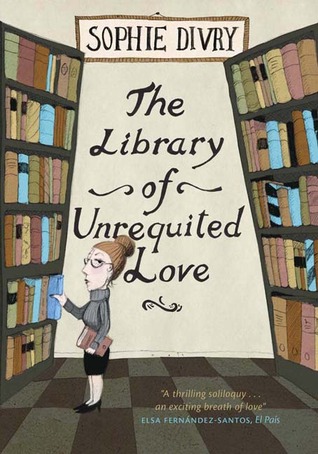
The Library of Unrequited Love – Sophie Divry (2010, trans. Sian Reynolds 2013) 92 pages

The Library of Unrequited Love by Sophie Divry is a monologue delivered by a librarian to a reader who she discovers has been locked in the library overnight, when she opens up in the morning. The librarian is middle-aged and frustrated about a plethora of things, including her job:

“Being a librarian isn’t an especially high-level job I can tell you. Pretty close to being in a factory. I’m a cultural assembly line worker.”

She is committed to librarianship however, and throughout the novella her love of books emerges, as does her appreciation of the Dewey decimal system:

“they didn’t just classify by author, they sometimes put books on the shelf by size, or date of acquisition. Now I think of it, the confusion it must have caused. Glad I didn’t live then, I couldn’t have put up with that kind of anarchy.”

The reader remains a silent interlocutor as the librarian spills out all her feelings. Although she claims she has given up on love, you get the sense this isn’t quite true:

 “One of my favourite authors, you’ve already gathered that, is Guy de Maupassant. Now there’s a man for you. Just imagine, he wrote two hundred and ninety short stories and seven novels in ten years. And then on Sundays, he went rowing on the Seine. A real force of nature, eh? He must have had terrific biceps and been fantastically intelligent.”

There are also her unrequited feelings for a regular library reader:

“With that lovely neck of his. It would disappoint me if a man as clever as Martin were to be in love. But you have to be prepared for anything.”

The librarian is a funny and acerbic narrator:

“That’s another reason I don’t go travelling. Napoleon’s always been there first. I can’t stand it.”

She is slightly self-deceiving but she is also wise, sad, honest and above all, entertaining. I enjoyed my short time in her company, mostly because The Library of Unrequited Love is actually about a love that is always fulfilled, over and over: the love of books.

“Book and reader, if they meet up at the right moment in a person’s life, it can make sparks fly, set you alight, change your life.”

Novella a Day in May #17

The Final Solution – Michael Chabon (2005, 127 pages)

An elderly once-famous detective has retired to Sussex to keep bees. Sound familiar? The detective is never identified by name, but it’s reasonable to assume he’s Sherlock Holmes.

“Even on a sultry afternoon lie this one, when cold and damp did not trouble the hinges of his skeleton, it could be a lengthy undertaking, done properly, to rise from his chair, negotiate the shifting piles of ancient-bachelor clutter – newspapers both cheap and of quality, trousers, bottles of salve and liver pills, learned annals and quarterlies, plates of crumbs – that made treacherous the crossing of his parlour, and open his front door to the world.”

Chabon is brilliant at capturing the frailties and fears of old age and fading faculties:

“The memory of the taste of scotch was in his mouth lie the smell of burning leaves lingering on a woollen scarf. But the cords that held him together were so few and threadbare that he feared to loosen them.”

“Over his bearing, his speech, the tweed suit and tatterdemalion Inverness there hung, like the odour of Turkish shag, all the vanished vigour and rectitude of the Empire.”

It is 1944, and the old man is asked to investigate the disappearance of a parrot, which has been reeling off lists of numbers of great interest to various shady persons. The parrot is the only friend of a mute Jewish boy, and shortly after it disappears a lodger at the same premises of the boy is found murdered.

The old man relishes the opportunity to use his much-lauded skills again. Yet while it is a mystery novella, this is not the main point of the story. Rather it is about how some things are so huge – wars, the Holocaust –  they defy reason and straightforward explanation. Answers can be comforting, but sometimes they are not there to be found.

 “A delicate, inexorable lattice of inferences began to assemble themselves, like a crystal, in the old man’s mind, shivering, catching in the glints and surmises. It was the deepest pleasure life could afford, this deductive crystallisation, the paroxysm of guesswork, and one that he had lived without for a terribly long time.”