“The clever men at Oxford/Know all that there is to be knowed./But they none of them know one half as much/As intelligent Mr. Toad!” (Kenneth Grahame, The Wind in the Willows)

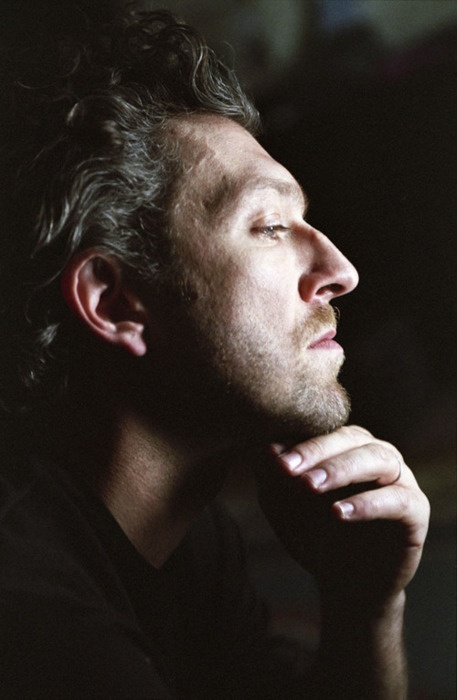
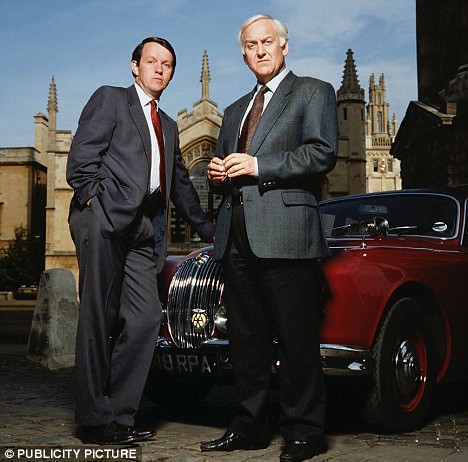
I’m in Oxford at the moment, a city I love.  I thought I would look this week at novels set in Oxford, and although there are lots to choose from (I guess lots of writers chose to evoke their alma mater) I’ve picked two crime novels, as Oxford seems to encourage this type of story.  I’m not sure why this occurs, but maybe it’s because it’s seen as such a respectable institution and it’s fun to think of a seething mass of violence and intrigue below the calm façade.  Here’s a picture of Oxford’s most famous fictional detective, to compensate for the fact that I’m not looking at any Colin Dexter novels:

Image

Image from (http://www.dailymail.co.uk/femail/article-1101952/So-did-Morse-lie-love-In-final-seasonal-serial-young-Morses-secret-admirer-reveals-identity–learn-truth-mysterious-car-crash.html)

Firstly, The Case of the Gilded Fly by Edmund Crispin.  This was the first in a series of novels featuring the sleuthing Oxford don Gervase Fen, and is from the Golden Age of Detective fiction, written in 1944.  The opening paragraph struck a chord with me:

“To the unwary traveller, Didcot signifies the imminence of his arrival at Oxford; to the more experienced, another half-hour at least of frustration.  And travellers in general are divided into these two classes; the first apologetically haul down their luggage from the racks on to the seats, where it remains until the end of the journey, an encumbrance and a mass of sharp, unexpected edges; the second continue to stare gloomily out of the window at the woods and fields into which, by some witless godling, the station has been inexplicably dumped”

Well, the woods and fields may be much less evident, but otherwise… seventy years on and nothing changes.  Travelling on this train are Gervase Fen, his friend Sir Richard Freeman who is Chief Constable of Oxfordshire and wishes he was a don (while Fen wishes he was police officer) and various members of a drama group, who will return to London with their numbers somewhat diminished. Fen is a likeable, eccentric don, whose “normal overplus of energy …led him to undertake all manner of commitments and then gloomily to complain that he was overburdened with work and that nobody seemed to care”; he distracts himself on the train by wishing for “’A crime! …A really splendidly complicated crime!’ And he began to invent imaginary crimes and solve them with unbelievable rapidity.”

The first murder, of uber-bitch Yseult Haskell, takes place in a room in college close to Fen’s office, and so much to his delight he is distracted from his work on minor eighteenth-century satirists to investigate:

“His usually slightly fantastic naivety had completely disappeared, and its place was taken by a rather formidable , ice-cold concentration. Sir Richard, who knew the signs, looked up from his conference with the Inspector and sighed.  At the opening of the investigation, the mood was invariable, as always when Fen was concentrating particularly hard; when he was not interested in what was going on, he relapsed into a particularly irritating form of boisterous gaiety; when he had discovered anything of importance he quickly became melancholy […] and when an investigation was finally concluded, he became sunk in such a state of profound gloom it was days before he could be aroused from it.  Moreover these perverse and chameleon-like habits tended not unnaturally to get on people’s nerves.”

I’m not going to say too much about the plot as its nearly impossible not to give spoilers.  But if you think the eccentric Fen is someone you’d like to spend time with do look at The Case of the Gilded Fly.  I loved the dry, yet gentle humour in the writing, and it was a well-paced, easy read.  My favourite character however, was one of the minor players; unlike a lot of detectives, Fen does not have a complicated romantic life filled with encounters with unsuitable lovers, but is married to the brilliantly indulgent Mrs Fen:

“After she had greeted the Inspector with a slow, pleasant smile, Fen seized up the gun and handed it to her, saying:

‘Dolly, would you mind committing suicide for a moment?’

‘Certainly,’ Mrs Fen remained unperturbed at this alarming request, and took the gun in her right hand, with her forefinger on the trigger; then she pointed it at her right temple.

‘There!’ said Fen triumphantly.

‘Shall I pull the trigger?’ asked Mrs Fen.

‘By all means,’ he said absently, but Sir Richard surged up from his chair crying hoarsely: ‘Don’t! It’s loaded!’ and snatched the gun away from her.  She smiled at him. ‘Thank you, Sir Richard,” she said benignly, ‘but Gervase is hopelessly forgetful, and I shouldn’t have dreamed of doing such a thing.  Is that all I can do for you gentlemen?’”

What a woman. Next, a much more recent tale (2005) whose title tells you exactly what to expect: The Oxford Murders by Guillermo Martinez (trans. Sonia Soto). The novel is narrated by a postgraduate mathematics student, who shortly after arriving in England finds his landlady murdered, discovering the body at the same time as his hero, Professor Arthur Seldom “a rare case of mathematical genius”. The Professor is there because he received a note telling him that something would happen “the first of the series” followed with a mathematical symbol, a circle.  As more people die, Seldom continues to receive notes ending with symbols, and believes the murderer is taunting him specifically as he wrote a book on mathematics where he argues that “except in crime novels and films, the logic behind serial murders…is generally very rudimentary…the patterns are very crude, typified by monotony, repetition, and the overwhelming majority are based on some traumatic experience or childhood fixation”. Some serial killers may take that as a challenge…

The two start working together, using their academic approaches to try and decipher the logic of the murders.  There’s a lot of maths talk, but it’s not overwhelming even for someone like me whose dealings with numbers is limited entirely to their monthly budget.  The combination works well and doesn’t feel forced:

“There is a theoretical parallel between mathematics and criminology; as Inspector Petersen said, we both make conjectures.  But when you set out a hypothesis about the real world, you inevitably introduce an irreversible element of action, which always has consequences.”

Can they make their hypotheses apply in the real world and solve the symbolic series in time to prevent more murders?  What do the symbols really represent?  The Oxford Murders is a short novel and not particularly complex despite the setting in elite mathematics; it’s well written but if you’re a crime aficionado you may find it a bit too straightforward.

The Oxford Murders was made into a film a few years back; from this trailer I would say it’s a fairly faithful adaptation:

Here’s my attempt at a vaguely mathematical end: from the shaded area of a Venn diagram of Oxford and books, here is a picture of one of the most beautiful libraries you’ll ever see – the Radcliffe Camera in central Oxford.  The picture’s wonky because it was blowing a gale and I was up the top of the tower of St Mary the Virgin, where the wind was so strong I thought I, or at the very least my phone, was about to get whipped off the viewing balcony into the square below.  Thankfully we both made it back intact.

Image

“Critics! Appalled I ventured on the name./Those cutthroat bandits in the paths of fame.” (Robert Burns)

Saturday is Burn’s Night, in honour of Scotland’s favourite son, Robert Burns (1759-1796).  I’m posting today however, because tonight I am going to a Burn’s Night supper.  This will consist of Arbroath smokies, followed by haggis, tatties and neeps, followed by clootie dumpling, followed by an argument as to whether I’m going to dance at the ceilidh.   Although I have two left feet I quite enjoy a dance, but my suggestion that we do it before a three course stodge-fest has been met with derision.  Needless to say, I think I’ll be lying down in a corner while the more hardy among my number whizz around in Celtic fashion. To celebrate I’ve chosen a novel written in Scottish vernacular, and a poem by a Scottish writer. I like them both so I hope Burns won’t find me to be one of the “cutthroat bandits” he refers to with such derision. Slainte Mhath!

Firstly, Buddha Da by Anne Donovan (2002).  This was Anne Donovan’s first novel, and it is a confident and accomplished debut.  It tells the story of Jimmy, a Glaswegian painter and decorator, who becomes interested in Buddhism.  His desire to put his newly-discovered beliefs into the practice of his daily life cause strain in his relationships with his wife Liz and daughter Anne-Marie, and all three lend their voices to individual chapters to tell the story.

Jimmy learning to meditate: “It was as if ah’d never felt ma body afore; felt the tightness in ma airms and legs, the openness of ma chest, the wee niggles that ran aboot inside me that usually I never even think aboot. Then as ma breathin slowed doon and ah sterted tae feel mair relaxed he took me through each person in turn.  That was the really hard bit because as each feelin came up he tellt me no tae judge it.  Wi Anne Marie ah just felt ashamed that ah’d let her doon […] Then Liz. That was haurd too cos ah love her – always have – but somehow ah cannae get her tae unnerstaund how this is that important tae me. There’s a gap openin up between us. Ah can feel it and ah’m scared.”

The relationships do start to break down, but Donovan is very even-handed and you don’t apportion blame, you can just see how it’s happening as people grow apart.  The first person narrative from all three characters means you can empathise with them all.  Liz doesn’t always behave in the best way, but I still felt sympathy for her as she struggles to make the life she wants:

“It was five o’clock in the morning but ah didnae want tae go back to sleep in case the dream started again.  It wasnae the most frightenin dream ah’d ever had but it was confusin.  Usually if ah have a dream it’s dead obvious what it means, but this.  Ah leaned back on the pillows, shut ma eyes and the feelin came back tae me; the cauld of the water beneath ma feet, the panic as ah started tae sink and the relief as ah sprung up oot the water, the green castin an eerie light all round the sky and this dark, shadowy figure waitin for me on a rock on the other side.”

And between them both, their daughter Anne Marie.  After she plays her parents a song she’s made with her friend:

“And ah was dead chuffed that they liked it but efterwards, sittin in ma room, ah kept feelin that there was sumpn missin. As if they hadnae really got it. And ah really wanted them, no just tae like it, but tae unnerstaund it.  And ah didnae think they did.”

And that really is the crux of Buddha Da.  It’s about how the people we love may not always be the ones who really understand us.  It’s about the gaps that exist even in our closest relationships.  Donovan writes with real affection for the characters, and so these themes aren’t depressing.  It’s a warm novel about living with imperfections and muddling through together. If you’re interested in Scottish vernacular novels, two famous examples you may want to try are Trainspotting by Irvine Welsh, and How Late It Was, How Late by James Kelman.

Secondly, a poem by the Poet Laureate, Carol Ann Duffy, who was born in Glasgow.    I love Duffy’s writing, and she’s managed the rather astonishing feat of writing decent poems within her remit of commemorating national events. Warming Her Pearls (from Selling Manhattan (1987)) was written long before she took office, and is one of her more famous verses.  However, I still went ahead and chose it rather than something more obscure, as I do think it’s brilliant.  You can read the full poem here.  It is spoken in the voice of a maidservant to a rich society woman:

“Next to my own skin, her pearls. My mistress

bids me wear them, warm them, until evening

when I’ll brush her hair. At six, I place them

round her cool, white throat. All day I think of her”

This to me is a good example of Duffy’s writing: accessible, simple language to convey an unconventional literary voice, in this case, a maid’s erotic love for her mistress.  The power dynamic of the relationship with its “bidding” and the rope of pearls adds a slightly BDSM element, and Duffy plays with the idea of power throughout the poem.  The maid is emboldened by her desire outside of social class, rather than cowed by it.  I love the following image:

“[I] picture her dancing

with tall men, puzzled by my faint, persistent scent

beneath her French perfume, her milky stones.”

The insidious nature of the maid infiltrating her mistress’ life through her body odour is so clever, slyly humorous and evocative; the idea of bodies betraying themselves is carried on in the next stanza: the soft blush seep through her skin/like an indolent sigh.   The tenderness with which the maid approaches her mistress, a reflection of her feelings, is wonderfully evoked through this beautiful language.  Warming Her Pearls is as delicate and subtle as the situation it portrays.

Finally, a little bonus, another poem by Carol Ann Duffy, this is from The World’s Wife, where she imagines the stories of the wives of famous men.  ‘Mrs Darwin’ is one of the shortest, so here it is in its entirety:

7 April 1852.

Went to the Zoo.

I said to Him –

Something about that Chimpanzee over there reminds me of you.

I could end with a picture of the books, but I doubt Burns would approve of such a prosaic choice.  Instead, here’s one of the most Scottish things you’ll ever see:

Image

(Image from http://www.sattlers.org/mickey/culture/clothing/kilts/hallOfFame.html)

“By working faithfully eight hours a day you may eventually get to be boss and work twelve hours a day.” (Robert Frost)

Oh, the joys of mid-January.  The seemingly never-ending greyness of it all.  The lights of Christmas and resolutions of New Year have long faded and you’re back at work.  Work: the daily commute wedged into someone’s armpit, steam rising off everyone’s drizzle-soaked clothes; arriving at your office to realise your colleague has stolen your favourite coffee mug and still hasn’t eaten the unidentifiable gelatinous foodstuff they brought in from home 3 weeks ago; faux-friendly emails from your work-shy boss asking you for fourteen completed reports before the end of the day, signed off with an inappropriate and frankly borderline-sarcastic emoticon. If this is your experience take comfort from the fact that you are far from alone.  This week I’m looking at novels that deal with the daily grind of our work lives.

Firstly, Post Office by Charles Bukowski (1971). Bukowski is one of the best-known beat generation authors, and Post Office was his first novel.  It’s a short work (160 pages in my edition) and details the insanity of working for the titular organisation with its impossible targets and low pay. Henry Chinaski (Bukowski’s alter-ego) suffers at the hands of his bullying supervisors, indifferent colleagues and the unpredictable public.  His hard-living ways do not anaesthetise the situation:

“Each route had its traps and only the regular carriers knew of them.  Each day it was another god damned thing, and you were ready for a rape, murder, dogs, or insanity of some sort.  The regulars wouldn’t tell you their little secrets.  That was the only advantage they had – except knowing their case by heart.  It was gung ho for a new man, especially one who drank all night, went to bed at 2am, rose at 4.30am after screwing and singing all night long, and, almost, getting away with it.

One day I was out on the street and the route was going well, though it was a new one, and I thought, Jesus Christ, maybe for the first time in two years I’ll be able to eat lunch.”

Needless to say, he doesn’t get lunch.  Bukowski is great at describing the tedium of a job that holds no meaning (for him, my particular postie has been doing the job for 30 years this year and tells me he loves it for the most part), and the seediness of the life he lives and those who surround him.  But he tempers the tale with humour which stops the portrait being too relentlessly bleak:

“I picked my cap up out of the street, put it on my head.  Put the sack back onto the left side of my spine, started out again. 100 degrees.

I walked past one house and a woman ran out after me.

‘Mailman! Mailman!  Don’t you have a letter for me?’

‘Lady, if I didn’t put one in your box, that means you don’t have any mail.’

‘But I know you have a letter for me!’

‘What makes you say that?’

‘Because my sister phoned and said she was going to write me.’

‘Lady, I don’t have a letter for you.’

‘I know you have! I know you have! I know it’s there!’

She started to reach for a handful of letters.

‘DON’T TOUCH THE UNITED STATES MAILS, LADY!  THERE’S NOTHING THERE FOR YOU TODAY!’

I turned and walked off.

“I KNOW YOU HAVE MY LETTER!”

Another woman stood on her porch.

‘You’re late today.’

‘Yes, mam.’

‘Where’s my regular man today?’

‘He’s dying of cancer.’

‘Dying of cancer? Harold is dying of cancer?’

‘That’s right,’ I said.

I handed her mail to her.

‘BILLS!BILLS! BILLS!’ she screamed. ‘IS THAT ALL YOU CAN BRING ME? THESE BILLS?’

‘Yes, mam, that’s all I can bring you.’

I turned and walked on.”

Post Office is unrelenting in the cynical gaze it casts over tragi-comedy of the working day.  If you’re sick of your job, this is the novel for you.

Secondly, Year of the King by Antony Sher.  I’m going a bit off-piste here because this is a diary and not fiction, but Jeanette Winterson says there’s no such thing as autobiography, only art and lies, so I think this allows for admission into a blog about fiction.  (Confession: when I first thought of this blog post I was going to write about Then We Came to the End by Joshua Ferris as the second book, but I started it 3 weeks ago and I’m only 100 pages in.  It had cracking reviews so I’m surprised I’m not getting on with it.  If you’ve read it can you tell me, should I persevere or give up?) So, I chose Year of the King for this theme as it details a year in a working life, in this case one of the finest actors of his generation as he grapples with the eponymous role in Richard III.  If you love your work but worry constantly that you’re not good enough, this is the book for you.  It’s so reassuring to read how this incredible actor feels he struggles with the language of Shakespeare, and messes up his first reading in front of the rest of the cast.  Having admired so many of his accomplished performances, I found myself thinking really? Well, if Antony Sher struggles maybe I’m not doing so badly after all…

“‘Just read it,’ says Bill grinning.

‘ “Now is the winter of our discontent…”’

I read badly, rather monotonously or else I over-stress.  Mercifully Bill stops me after about ten lines and starts to pick at words and discuss meanings.

We have begun.”

Sher is a great writer (it’s something he’s done more and more of) and his style is easy to read yet vivid.

“Bill suggests running the scene ‘trying to be more bestial’.  The result is a disaster.  Behaviour not from the animal world but the world of pantomime.  Cackling laughter, food being thrown around, sinewy ‘wicked’ acting. Although I’m participating and probably responsible for some of the worst excesses, I can hardly bear to watch the others.  Have to bury my head on the crutches for much of the scene.”

Ah yes, the crutches.  If you don’t know, Sher performed the “bottled spider” role in crutches.  What’s so interesting is amongst all the self-doubt and creative process, are vacillations over the use of the crutches, which for the reader 30 years on is a source of amusement.  The play went down a storm, Sher’s performance was showered with praise, and the crutches became stuff of theatrical legend:

The book holds all the things you would expect in an actor’s diary: taking us though the research process, details of the politics of rehearsal, fond (and discreet) portraits of his fellow actors and theatre professionals (Michael Gambon in particular seems a large, hilarious personality).  But Sher offers much more, such as beautiful images of the surrounding environment:

“An oil slick on the river today, from the long weekend’s abuse.  In the morning sunshine it’s as if a rainbow has fallen in the water and is being gently rubbed against the bank, washed and cleaned until its transparent again.”

The diary is also filled with his brilliant drawings, such as this one of Olivier, whose filmed performance of Richard casts a long shadow:

Image

Year of the King has a lot to offer the great variety of readers (little – very little – joke there for any Shakespeare fans): if you’re interested in the acting process, in approaches to Shakespeare, in the realities of theatrical production, or in Antony Sher himself, you’ll find Year of the King a rewarding read.

To end, here is a clip to bring some joy & colour into these grey January days spent in dreary magnolia offices:

“The book is a film that takes place in the mind of the reader.” (Paulo Coelho)

It is a truth universally acknowledged, that the film version of a book is never as good as the original text.  Except I don’t think that’s true.  This week I’m going to look at two books where I think the film was better, but the novels are still worth reading.  Slightly odd tack for a book blog to take, and I may end up regretting this, but let’s crash ever onwards!

Firstly, The Commitments by Roddy Doyle (1987).  Here’s the trailer for the 1991 film, with a brilliant script by the author, in collaboration with the long-term writing partnership of Dick Clement and Ian La Frenais.

The Commitments is Roddy Doyle’s first novel, detailing how a group of white, working class Dubliners set up a soul band together.  I think in this novel Doyle is really learning his craft, and his writing gets progressively stronger as he goes along.  The Commitments is a far from terrible book, but it’s a bit slight, and filled with so much dialogue it reads more like a script than a novel for much of it.  Still, if you’re going to have a novel filled with dialogue it may as well be written by Roddy Doyle, who has a great ear for how people speak and seems to take real joy in capturing it on the page:

“-Grow a pair o’ tits, pal, an’ then yeh can sing with them, said Billy.

– Are you startin’ somethin’?

-Don’t annoy me.

– Here! Said Jimmy. –None o’ tha’.

The time was right for a bit of laying down the law.

-No rows or scraps, righ’.

-Well said, Jim.

– An’ annyway, said Jimmy. –The girls are the best lookin’ part o’ the group.

– Dirty bastard, said Natalie.

-Thanks very much, Jimmy, said Imelda.

-No sweat ‘melda, said Jimmy.

-What’ll we sing? Bernie asked Joey The Lips.

-You know Walking in the Rain?

-Lovely.

– I WANT HIM, Imelda sang.

– It doesn’t exactly have a strong feminist lyric, does it? said James.

– Soul isn’t words, Brother, said Joey The Lips. – Soul is feeling. Soul is getting out of yourself.”

You can see that this is writing really stripped back: minimal punctuation, not always clear who is speaking.  The style suits the tale of a bunch of people with very little creating music with only their voices and few instruments.  It makes The Commitments a quick read, and the characters are evoked with warmth through minimal authorial intervention. By writing in such a sparse way, Doyle allows the characters to speak for themselves. At other times he uses scant detail, rarely embellished with imagery, to portray the lives of the band:

“’Joey The Lips got one of his dress suits dry-cleaned. Dean crawled in under his bed and found the one he’d flung under there. He soaked the jacket till the muck was nearly all gone. Then he brought it down to the cleaners.

Black shoes were polished or bought or borrowed.”

The Commitments is a well-observed story, evocative and humorous. However, a novel about music will always have much to gain from being filmed; hearing the talented cast of the film give their voice to soul classics brings the characters into being in a way that is nearly impossible in print.

Secondly, The Princess Bride by William Goldman (1973).  Here’s the trailer for the 1987 film adaptation, screenplay by the author:

One of my favourite films from childhood that I still love to watch today – a definite winner on a rainy Sunday afternoon.  Again, it’s not that the book is bad (the film is scripted by Goldman after all so you wouldn’t expect a great deal of difference) but the film is better.  It takes all the best bits of the book and distils them into a fast-paced, funny narrative; the book can be a bit flabby at times by comparison.  The film also offers some of the best cameos ever: Billy Crystal as Miracle Max, Mel Smith as the torturer, comic genius Peter Cook as the Impressive Clergyman, as well as a perfectly cast set of main characters.  But if you like the film, you’ll like the book.  The same dry, silly humour runs through it, and who wouldn’t love a tale of: “Fencing. Fighting. Torture. Poison. True love. Hate. Revenge. Giants. Hunters. Bad men. Good men. Beautifulest ladies. Snakes. Spiders. Beasts of all natures and descriptions. Pain. Death. Brave men. Coward men. Strongest men. Chases. Escapes. Lies. Truths. Passion. Miracles.”

The tale is one of Princess Buttercup, who falls in love with the stable boy Westley.  He goes off to seek his fortune, and is captured by the Dread Pirate Roberts, who famously leaves no survivors.  Believing her One True Love to be dead, Buttercup agrees to marry the hunting-obsessed Prince Humperdink.  Before they can marry she is kidnapped by a gang comprising the cunning Vizzini (“never start a land war in Asia, [… and] never go against a Sicilian when death is on the line”), the giant Fezzik , and genius-swordsman-with-a-vendetta Montoya (“my name is Inigo Montoya, you killed my father, prepare to die!”) They are followed by the mysterious Man in Black, who seeks to foil their plans… Will goodness triumph? Will true love conquer all? Yes, of course, to both.  This is a lovely escapist fantasy, but at the same time it is a  satire on established rule and its abuses, which gives the story a more serious dimension. Prince Humperdink has arranged the kidnap of Buttercup in order to blame a neighbouring country and start a war.  (Fill in your own contemporary analogy here.)  He tells his henchmen to seek the “villains” in the thieves quarter:

““My men are not always too happy at the thought of entering the Thieves Quarter.  Many of the thieves resist change.”

“Root them out. Form a brute squad.  But get it done.”

“It takes at least a week to get a decent brute squad going,” Yellin said. “But that is time enough.

[…]

The conquest of the Thieves Quarter began immediately.  Yellin worked long and hard each day […] Most of the criminals had been through illegal roundups before, so they offered little resistance.””

Goldman is also able to extend his humour in the novel towards the processes around writing, which he couldn’t do in the film; for example his editor querying his translation of the “original” story by S. Morgenstern:

“this chapter is totally intact. My intrusion here is because of the way Morgenstern uses parentheses.  The copy editor at Harcourt kept filling the margins of the galley proofs with questions: […] “I am going crazy. What am I to make of these parentheses? When does this book take place? I don’t understand anything. Hellllppppp!!!” Denise, the copy editor, has done all my books since Boys and Girls and she had never been as emotional in the margins with me before.”

So there we go: two film recommendations as well as two book recommendations in the same post – call it a late Hogmany present from me to you, dear reader. Enjoy!

Image

“Make your mistakes, next year and forever.” (Neil Gaiman)

Happy New Year!  I’ve quoted the lovely Neil Gaiman to start off 2014, and do please check out the full context of the quote here, as I’m sure it will get your year off to a flying start.  Here’s to many more mistakes in 2014!

And now, I’d like to entirely ignore New Year.  This is a blog post for my brother.  His birthday is 1 January, and it’s a crap time to have a birthday.  It gets entirely subsumed in Christmas and New Year, and once you’re no longer a child, everyone you know spends your birthday with a monster hangover.  Rubbish.

Like Neil Gaiman, my brother is a lovely man, who despite reading very little fiction always reads my blog posts and likes them on Facebook.  That’s who we’re dealing with, people.  So what to write about? Well, he likes poetry and I think he has a really good feel for it, an innate understanding.  So this post will look at two poems that I think he’ll appreciate. This is for you, T.  Entirely for you with no thematic link to New Year at all.  Happy Birthday, brother of mine.

Image

(Image from: http://hdwallpaperspictures.com/birthday-cake/)

Firstly, The Door by Miroslav Holub (trans. from Czech by Ian Milner).  You can hear Joseph Fiennes read the whole poem here. This is a hugely clever poem, disguised in simple language.  The poet repeatedly urges the reader to “Go and open the door”, and speculates as to what is on the other side.  The first stanza is:

Go and open the door.

Maybe outside there’s

a tree, or a wood,

a garden,

or a magic city.

This is a poem you can read to a child: the idea and language is so simple, they will quickly relate to the opportunity to let their imagination run riot.  Yet it works on a variety of levels that adults can appreciate, and can be about the search for inspiration; the courage to take new, unexplored paths in life:

Go and open the door,

If there’s a fog

it will clear.

Go and open the door.

Even if there’s only

the darkness ticking,

even if there’s only

the hollow wind,

even if

nothing

is there,

go and open the door.

The images of “darkness ticking” and “hollow wind” are eerie, and add an unsettling quality to the poem.  They bring a sense of form to the formless, effectively creating how the unknown can still be scary. However, this door and what lays beyond is not entirely unknown; I think one of the really clever things about this poem is that the door is a definite article: “the door”, not the indefinite “a door”.  It’s a small thing, but by suggesting the door is specific one, Holub delicately reminds us that this door to new ideas and new ways of living is within reach, already identified, carried within ourselves.  And if nothing else, the final lines remind us:

At least

there’ll be

a draught.

A lovely, humorously deprecating end to an unpretentious poem that can follow you through life.

Secondly, A Glimpse of Starlings by Brendan Kennelly. You can read the full poem here.   This is an astonishing and powerful poem, full of intriguing imagery. It begins:

I expect him any minute now although

He’s dead. I know he has been talking

All night  to his own dead…

It’s not clear who “he” is, or if he is really dead, or only living among the dead.  Googling this poem tells you it is about the poet’s father, struggling to deal with the loss of his wife.   The struggle is beautifully and tenderly evoked through a variety of images:

Sipping a cup of tea, fingering a bit of bread,

Eating a small photograph with his eyes.

The questions bang and rattle in his head


[…]Daylight is as hard to swallow as food

Love is a crumb all of him hungers for.

How gorgeous, and heartbreaking, are those lines?  The frequent use of full-stops keeps the pace of the poem low-key and quiet, creating a sense of the poet’s careful approach towards the grieving man.  The transfer of images between food and the environment “eating a small photograph”, daylight being “hard to swallow”, skilfully shows how the sustenance of a man’s life has disappeared, affecting everything.  The hungering for a crumb of love is a beautiful way of evoking the yearning emptiness of grief that can never be sated.

The image of starlings is created in the last few lines:

…over his shoulder a glimpse of starlings

Suddenly lifted over field, road and river

Like a fist of black dust pitched in the wind.

This is an oblique image so I’ll leave it with you to find your own meaning.  I find this poem extremely powerful and the images truly haunting.

To end, here is a video of the astonishing display of a murmuration of starlings:

I hope you liked them, T. Have a great day one and all!

Feminist Sundays: The Woman Who Walked into Doors – Roddy Doyle

Feminist Sundays is a meme created by Elena over at Books and Reviews. Here’s what she says about it: “Feminist Sundays is a weekly meme created at Books and Reviews. The aim is simply to have a place and a time to talk about feminism and women’s issues. This is a place of tolerance, creativity, discussion, criticism and praise. Remember to keep in mind that everyone is entitled to their own opinion, although healthy discussion is encouraged.” Do head over to Books and Reviews to read the excellent posts for this meme so far.

This week for Feminist Sundays I thought I’d put a downer on Christmas – if you’re full of festive cheer you may want to stop reading now.  I love Christmas, and I’ve had a great time this week decorating my flat (OK, so I’m a bit behind), wrapping presents and icing Christmas cakes.  I do this in anticipation of the day itself which for me will be fun, silly, relaxed, full of food, and getting slightly tipsy (OK, fairly drunk – when else do you drink alcohol at breakfast?  Why does the birth of Jesus make early morning Bucks Fizz acceptable? Whatever – it’s a fine tradition) in the company of my lovely family. I can confidently state in advance that there will be no weird atmospheres, no aggression, no physical assaults.  But this is not the case for everyone.  Unfortunately, the Christmas period consistently sees a rise in domestic violence compared with the rest of the year.  And although I’m looking at this topic as part of Feminist Sundays, (as the majority of domestic violence cases are male violence towards women) domestic violence can happen to anyone: any gender, any sexuality. It’s a subject Roddy Doyle explored in his 1996 novel, The Woman Who Walked into Doors.

The novel is narrated by Paula Spencer, a woman who is beaten regularly by her violent husband Charlo.  Paula works as a domestic cleaner, and self-medicates with alcohol.  Hers is a voice rarely heard in fiction; Doyle does a brilliant job creating the character and all that surrounds her through a narrative that intertwines the present with reminiscences of the past:

“Where I grew up – and probably everywhere else – you were a slut or a tight bitch, one or the other, if you were a girl – and usually before you were thirteen. You didn’t have to do anything to be a slut. If you were good-looking; if you grew up fast. If you had a sexy walk; if you had clean hair, if you had dirty hair. If you wore platform shoes, and if you didn’t. Anything could get you called a slut. My father called me a slut the first time I put on mascara. I had to go back up to the bathroom and take it off. My tears had ruined it anyway.”

Into this world comes Charlo Spencer, a sexy man who literally takes Paula’s breath away: “I suddenly knew that I had lungs because they were empty and collapsing.”  The romance of their first meeting contains a horrible irony in the soundtrack:

“His timing was perfect.  The Rubettes stopped and Frankie Valli started singing My Eyes Adored You.[…] He’d been drinking.  I could smell it but it didn’t matter.  He wasn’t drunk.  His arms rested on my hips and he brought me round and round.

-But I never laid a hand on you-

My eyes adored you-

I put my head on his shoulder.  He had me.”

This is immediately followed by a description of the aftermath of an assault:

“I knew nothing for a while, where I was, how come I was on the floor.  Then I saw Charlo’s feet, then his legs, making a triangle with the floor.  He seemed way up over me.  […] his face was full of worry and love.  He skipped my eyes. – You fell, he said.”

Charlo’s violence escalates, and Paula gradually comes to realise that he will not change, and that she is not alone in this experience. Doyle achieves the extraordinary balance of writing responsibly about a serious subject and still providing hope:

“For seventeen years.  There wasn’t one minute when I wasn’t afraid, wasn’t waiting. Waiting to go, waiting for him to come.  Waiting for the fist, waiting for the smile.  I was brainwashed and braindead, a zombie for hours, afraid to think, afraid to stop, completely alone. I sat at home and waited. I mopped up my own blood.  I lost all my friends, and most of my teeth.”

Ultimately Paula is a survivor: Doyle returned to her in the sequel Paula Spencer, ten years later.  I haven’t read the sequel (one of many on my TBR pile) but I highly recommend TWWWID. Roddy Doyle is hugely talented at capturing authentic voices in his writing, and TWWWID is no exception.

If you are affected by domestic violence, please, please contact Refuge (UK) or the equivalent service in your country.  They are there to help, not to judge.   Here’s a powerful video make-up artist Lauren Luke made on behalf of Refuge:

Feminist Sundays: Beatrice in Much Ado About Nothing

Feminist Sundays is a meme created by Elena over at Books and Reviews. Here’s what she says about it: “Feminist Sundays is a weekly meme created at Books and Reviews. The aim is simply to have a place and a time to talk about feminism and women’s issues. This is a place of tolerance, creativity, discussion, criticism and praise. Remember to keep in mind that everyone is entitled to their own opinion, although healthy discussion is encouraged.” Do head over to Books and Reviews to read the excellent posts for this meme so far.

So, this isn’t my usual sort of post, with a theme and two book choices.  Instead, as part of Feminist Sundays I was thinking about any times that a feminist discussion has come up around something I’m reading.  And I remembered a tutor of mine saying that she thought she’d been such a doormat in her first marriage because she’d unconsciously integrated the misogynistic attitudes towards women from her specialism, Renaissance literature (inappropriate disclosure to her students about her personal life was another speciality of hers).

Now, I love Early Modern literature, but I’m not going to try and claim that sixteenth-century England was a progressive, proto-feminist society.  However, at the same time I think my tutor was talking nonsense.  When we look back at Early Modern texts, there are strong females for us to identify with, and I’m going to take a look at one of my favourites, the brilliant Beatrice in Much Ado About Nothing by William Shakespeare. Here’s Emma Thompson in the role:

Beatrice

Image from: (http://www.monologuedb.com/comedic-female-monologues/much-ado-about-nothing-beatrice/)

This is one of Shakespeare’s most popular plays; the city I live in (London) has seen 3 productions I can think of in recent years (one at the Globe in 2011, the other with Catherine Tate and David Tennant at Wyndams the same year, one this year with Vanessa Redgrave and James Earl Jones at the Old Vic); Joss Whedon also released a film version earlier this year.  I think this is a good indication that Beatrice is a character who still has something relevant to say to us.

For those of you who don’t know the story: a group of soldiers arrive in Messina.  One of the officers, Benedick, has some romantic history with Beatrice (niece of Messina’s governor), and they spend a lot of their time bickering and proclaiming they’re not interested in each other at all – lies, all lies.  Their friends conspire against them, convincing each of the other one’s feelings.  Meanwhile one of the younger soldiers, Claudio, wants to marry the governor’s daughter, Hero, but the evil Don John works to tear this all apart…

This being a comedy, it all works out OK in the end.  Along the way we have some brilliant sparky dialogue from Beatrice.  On hearing Benedick will arrive:

“In our last conflict four of his five wits went halting off, and now is the whole man governed with one: so that if he have wit enough to keep himself warm, let him bear it for a difference between himself and his horse;”

Ouch.  Their first meeting:

Benedick. Then is courtesy a turncoat. But it is certain I am loved of all ladies, only you excepted: and I would I could find in my heart that I had not a hard heart; for, truly, I love none.

Beatrice. A dear happiness to women: they would else have been troubled with a pernicious suitor. I thank God and my cold blood, I am of your humour for that: I had rather hear my dog bark at a crow than a man swear he loves me.

Benedick. God keep your ladyship still in that mind! so some gentleman or other shall ‘scape a predestinate scratched face.

Beatrice. Scratching could not make it worse, an ’twere such a face as yours were.

Beatrice strives to establish and maintain her own personality amongst a society that deems women should be seen and not heard – something she resolutely refuses to do.  She’s witty, she holds her own against Benedick’s jibes, and she’s caring and honest.  She’s also feisty until the end:

Benedick. Do not you love me?

Beatrice. Why, no; no more than reason.

Benedick. Why, then your uncle and the prince and Claudio
Have been deceived; they swore you did.

Beatrice. Do not you love me?

Benedick. Troth, no; no more than reason.

Beatrice.Why, then my cousin Margaret and Ursula
Are much deceived; for they did swear you did.

Benedick. They swore that you were almost sick for me.

Beatrice.They swore that you were well-nigh dead for me.

Benedick. ‘Tis no such matter. Then you do not love me?

Beatrice.No, truly, but in friendly recompense.

[…]

Beatrice. I would not deny you; but, by this good day, I yield upon great persuasion; and partly to save your life,for I was told you were in a consumption.

Benedick. Peace! I will stop your mouth. (Most productions have him kiss her at this point)

Aww, true love conquers all.  And although my feminist side balks at her mouth being stopped once she’s in a relationship, I also think you could never keep Beatrice down, and marriage will not silence her. She and Benedick form a relationship of equals. Compared to the insipid rent-a-virginal-romantic-lead Hero, Beatrice is a fully realised, complex and intriguing female character.  She’s definitely one of my feminist icons.

Here’s a clip from the very enjoyable Globe production mentioned earlier.  Eve Best plays Beatrice, bantering with Charles Edward’s Benedick:

“You have a grand gift for silence, Watson. It makes you quite invaluable as a companion.” (Sherlock Holmes/Sir Arthur Conan Doyle)

Yesterday I was vegging out in front of the TV, when I saw something that got me very excited:

Sherlock’s back!  Sherlock’s back!  Sherlock’s back!

OK, now I’ve composed myself, let’s have a discussion about books.  Sherlock’s back!

I’ve gone the obvious route for my first choice, one of the original Sherlock Holmes stories, The Hound of the Baskervilles by Sir Arthur Conan Doyle.  I chose it because I think this was the first story that made me aware of Sherlock Holmes, watching an old black and white film version starring Basil Rathbone on TV (my mother told me the books were much better and the portrayal of Watson was rubbish – how right she was).  The story is not long, but it crams a great deal in, and is a fast-paced, creepily gothic read.  The story is narrated by Holmes’ loyal companion Dr Watson, who remains loyal despite being on the receiving end of such back-handed compliments from Holmes as: “It may be that you are not yourself luminous, but you are a conductor of light. Some people without possessing genius have a remarkable power of stimulating it. I confess, my dear fellow, that I am very much in your debt.” Charming.  The two are employed by Dr Mortimer to investigate the death of Sir Charles Baskerville, and potential danger to his heir, Sir Henry Baskerville.  Henry has inherited a huge pile in the middle of Dartmoor, and rumours of a supernatural, vicious hound that roams the moor abound.  The eerie atmosphere is beautifully evoked, such as Watson’s first view of Baskerville Hall:

“We had left the fertile country behind and beneath us. We looked back on it now, the slanting rays of a low sun turning the streams to threads of gold and glowing on the red earth new turned by the plough and the broad tangle of the woodlands. The road in front of us grew bleaker and wilder over huge russet and olive slopes, sprinkled with giant boulders. Now and then we passed a moorland cottage, walled and roofed with stone, with no creeper to break its harsh outline. Suddenly we looked down into a cuplike depression, patched with stunted oaks and firs which had been twisted and bent by the fury of years of storm. Two high, narrow towers rose over the trees. The driver pointed with his whip.

“Baskerville Hall,” said he.

[…]

The avenue opened into a broad expanse of turf, and the house lay before us. In the fading light I could see that the centre was a heavy block of building from which a porch projected. The whole front was draped in ivy, with a patch clipped bare here and there where a window or a coat of arms broke through the dark veil. From this central block rose the twin towers, ancient, crenelated, and pierced with many loopholes. To right and left of the turrets were more modern wings of black granite. A dull light shone through heavy mullioned windows, and from the high chimneys which rose from the steep, high-angled roof there sprang a single black column of smoke.

“Welcome, Sir Henry! Welcome to Baskerville Hall!””

The story really is expertly crafted, and it’s understandable why Sherlock Holmes endures.  Doyle succeeds in writing pacey, interesting, atmospheric tales that keep you hooked until the end.  And of course, at the centre of it all is one of the most intriguing characters ever created: a brilliant mind for whom no detail is insignificant, and whose genius means he is stimulated in ways that the rest of us may not fully comprehend: “He burst into one of his rare fits of laughter as he turned away from the picture. I have not heard him laugh often, and it has always boded ill to somebody.”

I’ll stop right there before I give away any spoilers as to the mystery.  On to my second choice, Whose Body? by Dorothy L Sayers (1923, my copy 2003, Hodder & Stoughton).  Sayers is one of the authors identified with the Golden Age of Detective Fiction, and this novel is the first to feature Lord Peter Wimsey, an aristocratic amateur detective, who likes to “go off Sherlocking” and went on to feature in many more novels and short stories by Sayers.

I found this novel hugely enjoyable.  It was well-paced (maybe flagging a little towards the end, but maybe I’m just used to Hollywood-style rapid denouements) it was witty, and didn’t take itself too seriously, with a few meta-comedy moments at the expense of detective fiction: “Sugg’s a beautiful, braying ass,” said Lord Peter.  “he’s like a detective in a novel…”; “Its  only in Sherlock Holmes and stories like that , that people think things out logically.”

As the meta moments suggest, Sayers is a clever novelist.  But I never felt she was trying to prove how clever she was.  The story, of a body found in a bathtub and a missing family friend (events Lord Peter believes are connected), remains believable and accessible. Sayers has a confident voice in her first novel, and an interesting turn of phrase: “His long, amiable face looked as if it had generated spontaneously from his top hat, as white maggots breed from Gorgonzola.”

I have one proviso to this recommendation: I found offensive the anti-Semitic remarks made by some characters in Whose Body? . The inter-war period was obviously a time that saw a growth in fascism throughout Europe with devastating consequences, and Sayers is probably just putting in her characters’ mouths the repugnant views that were expressed at the time.  According the Wikipedia page on Sayers, she was surprised at accusations of anti-Semitism in Whose Body?, stating the only characters “treated in a favourable light were the Jews!”  Certainly those who express anti-Jewish views are generally portrayed as old-fashioned and/or stupid, but it still makes for uncomfortable reading in this day and age.

I don’t want to end on a negative, so for all you fellow bibliophiles out there, here is a description of Lord Peter’s favourite room:

“Lord Peter’s library was one of the most delightful bachelor rooms in London. Its scheme was black and primrose; its walls were lined with rare editions, and its chairs and Chesterfield sofa suggested the embraces of the houris.  In one corner stood a black baby-grand, a wood fire leaped on a wide old-fashioned hearth, and the Sevres vases on the chimney-piece were filled with ruddy and gold chrysanthemums.”

I for one could spend hours in that room.

Normally I finish with a picture of the books, but they have disappeared, nowhere to be found.  ‘Tis truly a mystery: who could I call on, that is up to the task of solving this curious case…..?

Image

(Image from http://www.bbc.co.uk/programmes/b018ttws )

“Writing about music is like dancing about architecture.” (Variously attributed)

I was thinking about how this blog is supposed to be themes that relate books to life and how there are gaping holes in what I’ve covered so far.  This week I attempt to redress the balance by picking something that is a huge part of most people’s lives: music.  However, as the title quote shows, I may be digging myself the most enormous hole here, as trying to capture an aural experience through words is nigh on impossible.  Let’s take a breath and have some music so if nothing else this post does make some sort of melodic offering.  One of my favourite bands, and one of my mother’s favourite songs, Frogs Legs and Dragon’s Teeth by Bellowhead:

That was for you Maman!  Right, back to books, and two brave writers who’ve made music a big part of their novels.

Firstly The Courage Consort by Michel Faber (Canongate, 2002).  I’m fan of Michel Faber’s writing – I love his sparse style and unpredictability.  Anything can happen his books, there’s no “typical Faber”.  The Courage Consort is a novella (121 pages in my edition) told from the point of view of Catherine, one of five members of the titular a capella group headed by her husband, Roger.  Catherine is emotionally fragile (we are introduced to her trying to decide whether to jump out of the window) and her husband seemingly oblivious to her pain.  They join three others to rehearse an insanely complex piece called Partitum Mutante in an eighteenth-century chateau in Belgium.  The composer arrives briefly to assist them, a madman who attacked his ex with a stiletto in an airport and tells them to make their singing “more extreme, but more soft also…quiet but loud”.  Working on this seemingly doomed project, the disparate personalities that make up “the seventh most-renowned serious vocal ensemble in the world” start to come into conflict, but not in an entirely predictable way.

Faber creates a believably comic situation and the characters are generally well-observed, if bordering on national stereotypes at times.  The character of Catherine is sympathetic and Faber shows how music carries over into her musings about life in general:

“Other people might think it was terribly exciting when two females singing in thirds made the airwaves buzz weirdly, but Catherine was finding that her nerves were no longer up to it.  Even the way a sustained A flat tended to make an auditorium’s air-conditioning hum gave her the creeps lately.  It was as if her face was being rubbed in the fact that music was all soundwaves and atoms when you stripped the Baroque wrapping-paper off it.   But too much sonic nakedness wasn’t good for the spirit.  At least that was what she was finding lately, since she’d started coming…adrift.”

But things are not necessarily what they seem: Catherine hears screaming in the night and is told a ghost story about the forest that surrounds them.  No-one else hears it, and Catherine goes on to have an experience in the forest which is not told to the reader.  This lack of explication stops The Courage Consort being a straightforwardly comic novel, as an eeriness creeps around the house and its inhabitants.  Things do not go as planned, but ultimately the group comes to fully comprehend just how healing the experience of music can be.

Secondly, Grace Notes by Bernard MacLaverty (Vintage, 1997).  Grace Notes tells the story of another Catherine, this one a composer struggling to manage her art alongside the demands of her life.  These demands include a new baby and ensuing post-natal depression, her father’s death, and conflict with her mother.  Musicality comes naturally to her, and she has an innate understanding form an early age:

“One day, when she was only three or four, she’d slipped away from the kitchen as her mother baked and listened to the radio.  On this particular day the piano lid was open.  Catherine had reached up above her head and pressed the keys as softly as she could.  No sound came from them.  She had to press harder to make the sound come.  It frightened her when it did.  Dar, deep , thundery.  The booming faded away and the noise of the birds outside came back.  She tried further up the piano where the notes were nicer, not so frightening.  She pressed a single note, again and again.  It wasn’t the note which made her feel funny – it was the sound it made as it faded away.  The afterwards.  It made her feel lonely. “

This idea, later defined as “the notes between the notes” – grace notes – is the novel’s theme and main image: what happens in the spaces between events, what is left unsaid, what is defined and what is undefinable.    Catherine gradually comes to terms with her life throughout the course of the novel and moves onwards, creating a new symphony, but the grace notes continue: “it began with a wisp of music, barely there – a whispered five-note phrase on the violins and she was right back on that beach with her baby. […] Like the artist’s hand which moves to begin a drawing but makes no mark”.  Having described Catherine’s life in an interwoven way – memories that come to her interspersed with descriptions of her life in the present – MacLaverty describes her music similiarly, the literal description of the action of instruments interwoven with the images that have inspired Catherine as she writes the symphony.  It’s a highly effective method, and probably the nearest I’ve read to a representation of sound, and the feeling it evokes, written down.

As the novels are about two musical women, here they are pictured with two more musical women: Dusty Springfield and Lily Allen Cooper:

Image

“Raindrops on roses and whiskers on kittens/Bright copper kettles and warm woollen mittens/Brown paper packages tied up with strings/These are a few of my favourite things” (Maria Rainer/Julie Andrews, The Sound of Music)

I write to you from within a fog of lemsip and cough syrup.  Yes, this week I’ve had a grotty cold.  Nothing major by any means, but just enough to make me feel grim and make the days a little greyer.  So I thought for this post I’d cheer myself up and be totally self-indulgent, by choosing two books that are thematically linked only in the fact that they are two of my favourites.

Firstly, If Nobody Speaks of Remarkable Things by Jon McGregor (Bloomsbury, 2002).  This was McGregor’s first novel, longlisted for the Booker, and written when he was only twenty-six.  Choking down my jealousy, I am able to tell you that the accolades are highly deserved.  I think this is such a beautifully written, confident debut.  It tells the story of an ordinary street and its ordinary inhabitants, over the course of a day.

“The short girl with the painted toenails, next door, she says oh but did you see that guy on the balcony, he was nice, no he was special and she savours the word like a strawberry, you know she says, the one on the balcony, the one who was speeding and kept leaning right over, and they all know exactly who she means, he’s in the same place most weeks, pounding out the rhythm like a panelbeater, fists crashing down into the air, sweat splashing from his polished head.”

“In his kitchen, the old man measures out the tea-leaves, drops them into the pot, fills it with boiling water.  He sets out a tray, two cups, two saucers, a small jug of milk, a small pot of sugar, two teaspoons.  He breathes heavily as his hands struggle up to the high cupboards, fluttering like the wings of a caged bird.”

“She opens her front door, just a little, just enough, and she hops down her front steps, the young girl from number nineteen, glad to be out of the house and away from the noise of her brothers.  The television was boring and strange anyway, it was all people talking and she didn’t understand.  She taps her feet on the pavement, listening to the sound her shiny black shoes make against the stone…”

I hope these three examples give a good idea of why I love this novel so much.  McGregor is so skilled at finding the poetry in ordinary lives and how the self is expressed through seemingly innocuous actions.  Gradually the inhabitants of the street emerge as fully realised characters from the details of this one day.  This narrative is intertwined with a first person narrative, and you begin to realise that something significant, and tragic, took place on this ordinary day.  If Nobody Speaks of Remarkable Things is a novel of startling sensitivity and lyricism.

If this has whetted your appetite for McGregor’s novels, I discuss his second novel, So Many Ways to Begin here.

Secondly, Death and the Penguin by Andrey Kurkov trans. George Bird (1996, English translation 2001, Harvill Press).  How to describe this novel?  It’s frankly a bit bonkers and one of those I think I understand, but maybe it’s about something else entirely.  It’s a great read though.  It tells the story of Viktor, an aspiring writer who gets a job writing obituaries, and his pet penguin Misha, who he took on when Kiev zoo gave all its animals away: “he had been feeling lonely. But Misha brought his own kind of loneliness, and the result was now two complimentary lonelinesses, creating an impression more of interdependence than amity.”

The character of this depressed penguin is as vividly realised as any of the human characters, and you really start to feel for this bird who symbolises the existential crisis of his owner and others caught up in a post-Soviet world that they do not understand: “Sleeping lightly that night, Viktor heard an insomniac Misha roaming the flat, leaving doors open, occasionally stopping and heaving a deep sigh, like an old man weary of both life and himself.”

The fragile relationship between Viktor and Misha is tested to its limit by a series of surreal events.  Viktor’s friend Misha-Non-Penguin leaves his daughter Sonya with Viktor, and so he drifts into a family unit with this self-contained little girl and her nanny.  But meanwhile, someone is using his obituaries as a hit-list, and he is being followed by a mysterious stranger known only as the fat man…

“The Chief considered him through narrowed eyes.

“Your interest lies in not asking questions,” he said quietly.  But bear in mind this: the minute you’re told what the point of your work is, you’re dead. […] He smiled a sad smile.  “Still, I do, in fact, wish you well.  Believe me.””

Death and the Penguin is a surreal adventure story, a post-Soviet satire, an examination of the individual spirit up against forces that seek to control.  It’s funny and it’s sad, it has something to say, and it says it in a truly unique and engaging way.

Here are the novels with another of my favourite things, my psychotic cat (he looks calm in this photo, but trust me, he is hell-bent on world domination):

Image