“Domestic life in the past was smelly, cold, dirty and uncomfortable, but we have much to learn from it.” (Lucy Worsley)

I’ve really enjoyed the three EH Young novels I’ve read but it’s been ages since I picked her up. I’m thankful to the 1937 Club, running all week and hosted by Kaggsy at Kaggsy’s Bookish Ramblings and Simon at Stuck in a Book for prompting me to get back to her!


Like the other novels by Young that I’ve read, Celia is set in the fictional Upper Radstowe (based on lovely Clifton in Bristol) amongst middle-class domestic life. Celia is forty-five, living in genteel shabbiness with her husband Gerald and their son Jimmy and daughter Catherine. She is quietly despairing.
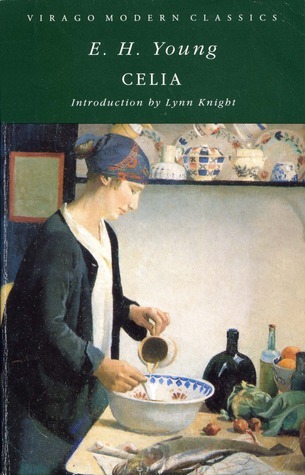
Gerald is an architect who designs unimaginative houses that Celia despises: “here was the same puzzle of gain and loss, more money for the family and a little less beauty in the world.”

Young portrays with frankness that Celia and Gerald have a sexless marriage, because Celia cannot bear the thought of physical intimacy with her husband:

by neglecting some of the duties of a good housewife, she stored the energy necessary for avoiding friction; by avoiding as much as possible, Gerald’s demonstrations of affection, and she had almost perfected her technique, she could give him the friendship and the kindness which vanished when more was asked of her.”

But in all honesty, she also neglects those other housewife duties too because they hold no real interest for her. She is an indifferent housekeeper (I can definitely relate) and cook, and spends a lot of her time at step removed from her surroundings. She dreams of a lost love – Richard, the brother of schoolfriend Pauline – and talks to herself.

“She had always a secret pride in its intangible persistence, its difference from a love nourished by the senses, and a more secret fear that what gave it life was its dreamlike quality.”

Those around her are used to vagueness and detachment. Living nearby is her “very stupid” sister May, her solicitor husband Stephen and their daughters including Susan. Celia’s brother John inherited the family drapery business and also lives close by, with his wife Julia and their various offspring. Another sister Hester is living a scandalously single life in London.

May and Julia form a pair, keeping each other company with their distracting daily small rivalries.

“She was congratulating herself on a superior wit because these two had supplied her with so much unintentional amusement, but she knew she had supplied them with something they valued more than laughter, an opportunity for criticism and disapproval.”

As the above quote shows, Celia can be judgemental of others. There are times when she is really quite cruel to her relatives, telling them what to do and not being entirely kind about it. But she is also fond, loving, intelligent, silly and funny. She’s a wonderful, fully-rounded, very believable creation.

The least likable character is her brother John: “John’s sense of duty towards his family was chiefly confined to criticism.” Even loving wife Julia loses patience with him at one point:

“She was enraged by John’s masculine belief in the sufficiency of his lasting passion for her, his primitive conviction that she was honoured by it and for its sake must gladly endure his faults of character and his intolerance of her own. In this rarely candid moment, she searched her mind for any other reason why she should like him and could not find one, but he was a habit and she would have been lost without him.”

We follow the extended family through various dramas, some larger than others. Stephen takes himself off for a few days, leaving May wondering if she’s been abandoned. John has to face his eldest son not wanting to follow him into the business. Celia’s son Jimmy has a crush on May’s daughter Susan (first cousins – eek). Celia has to wrestle with her mother-in-law, and there various intrigues which amount to very little. As Celia observes:

I live in a teacup and forget it isn’t the whole world.”

However, Celia isn’t a comfort read. It is concerned with the realities of married life at a time when divorce was very rare and opportunities for women generally were very limited. Young portrays the frustrations, sadnesses, tedium, and even fear her characters experience alongside the small joys, affection and love in their lives.  It feels very real, and while it is not depressing it also doesn’t offer any false hope or sentiment either.

“The art of living, the only one Celia tried to practise, was as exacting as any other.”

By end of the novel the characters know themselves and each other slightly better, and have gained some wisdom and insight through small incremental steps. There are no major epiphanies and no huge outward changes. It is a finely written and closely observed tale of interwar middle-class lives that above everything else, carry on.

While it was an involving and affecting novel, I didn’t feel Celia was the strongest of Young’s work that I’ve read – there were too many superfluous characters and the light plotting couldn’t quite sustain the length. For me, it would have benefitted from cutting one branch of the family and around 100 pages. But EH Young not at her tip-top best is still so very good and there is a great deal to enjoy in Celia.

“She had a calm indifference to what anyone might think of her, not because she herself was indifferent people, but because while she was interested in herself, as any intelligent person must be, she did not expect or wish to arouse interest in others, she had no apologies to make for what she was not, or explanations of what she was.”

To end, a Bristolian classic:

“Men are my hobby—if I ever got married, I’d have to give it up.” (Mae West)

My last post was about a romantically-involved couple for Valentine’s Day; this week I thought I’d look at a single person status much distrusted throughout literature: that of the spinster. Both my spinsters are inhabitants of beautiful Bristol, which I’d like to claim was down to well thought-through post-planning on my part, but was actually a total coincidence.

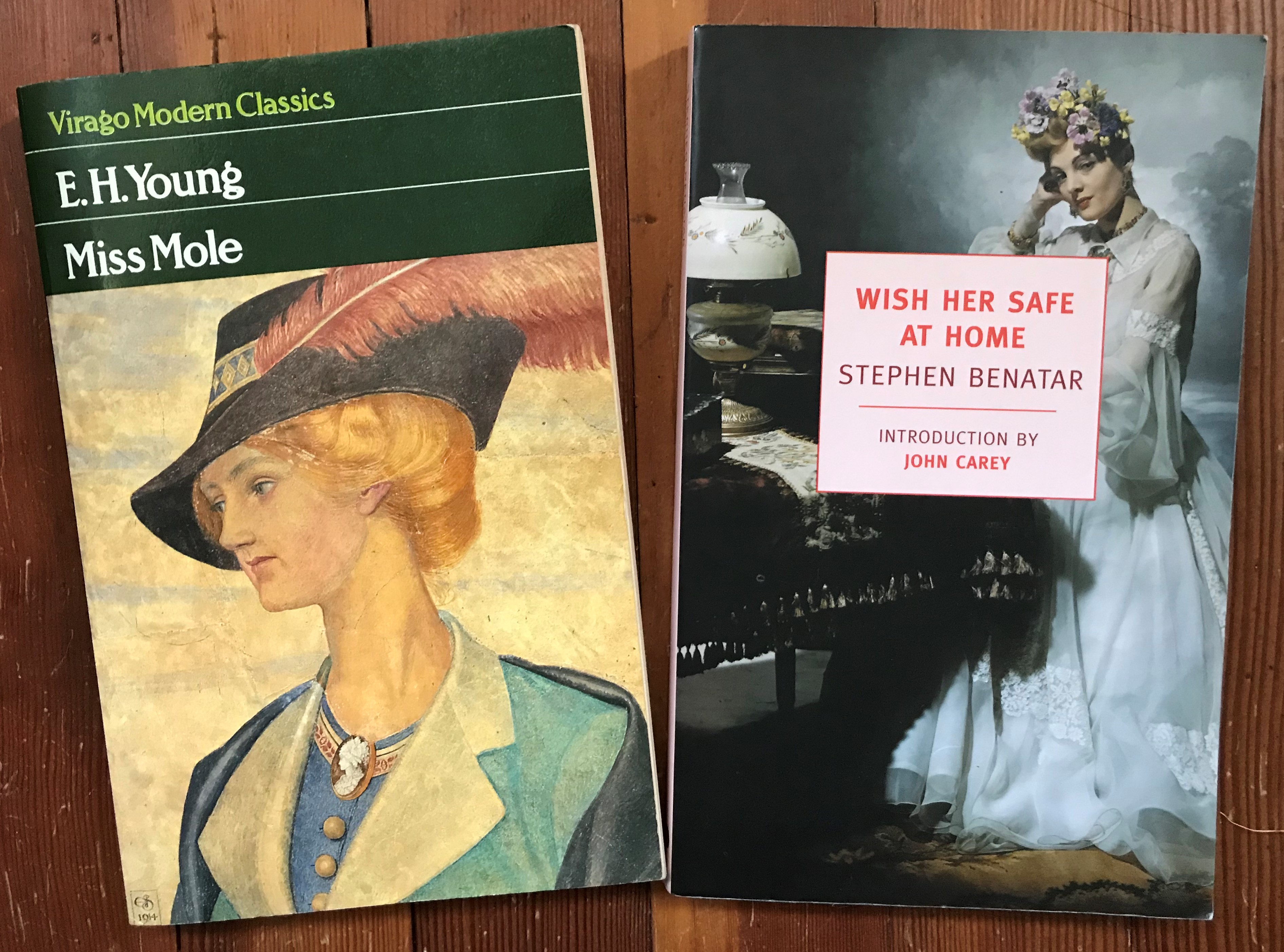
My first choice is the wonderful Miss Mole, titular heroine of the 1930 novel by EH Young. Hannah is in her late thirties, alone and shabby and the envy of no-one, yet she is a robust character who finds ways to survive and even enjoy life.

“She judged herself by the shadow she chose to project for her own pleasure and it was her business in life – and one in which she usually failed – to make other people accept her creation. Yes, she failed, she failed! They would not look at the beautiful, the valuable Hannah Mole: they saw the substance and disapproved of it and she did not blame them: it was what she would have done herself and in the one case where she had concentrated on the fine shadow presented to her, she had been mistaken.”

She is not delusional, rather she refuses to see herself as others see her -and why should she?

“This capacity for waiting and believing that the good things were surely approaching had served Hannah very well through a life which most people would have found dull and disappointing. She refused to see it so: it would have been treachery to herself. Her life was almost her only possession and she was as tender with it as a mother”

There is a strong streak of mischief in Hannah Mole too, and she enjoys teasing her well-to-do cousin Lilla, who finds her a job as a housekeeper to the reverend Robert Corder and his daughters Ethel and Ruth. This is not a remotely romantic set-up though. Corder is good at his job but he is also vain and self-centred, and enjoys his position in society because it means few people challenge him. Hannah sees him unblinkingly, and he does not like her.

“it would have horrified him to learn that he could not judge a clever or plain woman fairly. A clever one challenged him to combat in which he might not be the victor and a plain one roused in him a primitive antagonism. In failing to please him, a woman virtually denied her sex and became offensive to those instincts which he did his best to ignore.”

Hannah decides to improve things for his unhappy daughters, and feels a bond with his dead wife as she sets out to do so. She will manage things successfully, but in her own inimitable way:

“Hannah was not scrupulous about truth. She was not convinced of its positive value as human beings knew it, she considered it a limiting and an embarrassing convention.”

Hannah is realistic, but also hopeful and not remotely self-pitying. We also learn early on that she is brave, rescuing a suicidal man by smashing a window. She and a fellow tenant in her boarding house, Mr Blenkinsop, conspire to improve things for the man’s family, despite appearing to communicate at cross-purposes a great deal of the time. As she makes things work out for those around her, I really wanted things to work out for Hannah too, despite a shadow from her past looming – I think I viewed her with more compassion than she allowed herself:

“The desires, the energy, the gaiety were there, but they were ruled by an ironic conception of herself”

I really enjoyed spending time with Miss Mole. It’s a gentle novel, but it also doesn’t hide away from the realities of life for single women who are no longer young and without much money in the first half of the twentieth century, and how a judgemental society limits their choices.

Secondly, a spinster who would probably have done better without much money, Rachel Waring in Wish Her Safe at Home by Stephen Benatar (1982).  Rachel is in her late 40s with a boring job and a flatshare in London. Then her Great Aunt Alicia dies and leaves her a house in Bristol, and everything changes.

“And the hitherto dull, diffident, middle-aged woman who said to the taxi driver ‘Paddington please,’ felt in some respects more like a girl of seventeen setting out for exotic climes”

Rachel moves into the house and is determined to make the best of this fresh start:

“I had often discovered the secret of happiness: courage on one occasion, acceptance on another, gratitude on a third. But this time there was rightness to it – certainty, simplicity – which in the past mightn’t have seemed quite so all-embracing. Gaiety, I told myself. Vivacity. Positive thinking. I could have cheered.”

Gradually however, this vivacity spills over into something more. She becomes obsessed with the slave trade reformer Horatio Gavin who lived in her house centuries ago. She sees a portrait in a shop she believes to be him:

“I saw the portrait in the window.

I laughed out loud. I laughed right there, standing on the pavement, a spontaneous burst of laughter that was partly the effect of my ecstatic recognition of him and partly an aid to his more sober recognition of me

Wish Her Safe At Home details Rachel’s descent into serious mental illness. It is brilliantly done. Rachel begins as eccentric and gradually becomes truly unwell. The description of seeing the portrait is a perfect example. Most of us at some point have lost our filter in public: suddenly laughing at something remembered, or saying something out loud which we didn’t mean to. There are often experiences that we believe to be serendipitous for one reason or another. But Rachel suddenly takes this experience a step further in believing the portrait recognises her.

A novel from the first-person perspective of someone who is losing their mind is a tough read. I found it really got under my skin, more than any novel I’ve read in a long time. The first-person perspective also works brilliantly in positioning the reader in a place not exactly like Rachel’s, but certainly confused and paranoid on her behalf. There is a young couple, Roger and Celia who seem to like Rachel – why? Are they after her house? Do they feel sorry for her? Are they playing her from the start? Are they completely oblivious? Rachel’s unreliable narration means we cannot be sure.

“I don’t know when the following dialogue took place. Somehow it seems cut adrift from time, like a rowboat quietly loosened from its moorings, while its occupant, entranced, oblivious to each hill or field or willow tree upon her way lies whitely gleaming in her rose embroidered silk, trailing a graceful hand and sweetly carolling beneath a canopy of green”

That passage is meant to be overblown: Rachel is such a desperate character. Her delusions are romantic and an attempt to grasp a life so far half-lived, before it is too late. There’s nothing vindictive or cruel in her, and she is so incredibly vulnerable.

“Sometimes I felt utterly convinced I had been singled out for glory.

But not always. Far more often I felt I simply didn’t stand a chance”

I’ve not remotely done justice to the power, skill and subtlety of Wish Her Safe At Home. All I can say is: read it.

To end, the trailer for the film that apparently inspired Wish Her Safe at Home. The Ghost and Mrs Muir has had a special place in my heart since childhood. In all the times I’ve seen it, it’s never occurred to me that Mrs Muir is mentally ill. Wish Her Safe at Home has made me question everything…

“I think Isambard Kingdom Brunel would be a good chap to have supper with. Anyone who builds a railway and then builds a steamship when he gets to Bristol and can’t go any further must be a good chap.” (Fergus Henderson)

This week I’ll be briefly visiting the beautiful city of Bristol for work, so in preparation I’ve read 2 books by EH Young, who fictionalised Bristol as Radstowe throughout her novels.


bristol-2312860_960_720

EH Young’s world is one of genteel middle-class, and at first I wasn’t sure The Misses Mallett (1922) was for me. The descriptions of the beauty of Radstowe were somewhat overblown, and I wondered if it was going to be clumsy Austen-lite. I’m pleased to say I was completely wrong. The Misses Mallet is acutely observed and Young’s characterisation is excellent. Those who people her world are complex, not always likable but always so believable.

Caroline and Sophia are elderly unmarried Mallet sisters who spend their days reliving past glories, which may not be exactly as Caroline remembers:

“ ‘And men like what they fear,’ Caroline added.

‘Yes dear,’ Sophia said, A natural flush appeared round the delicate dabs of rouge. She hoped she might be forgiven for her tender deceits. Those young men in white waistcoats had often laughed at Caroline rather than her wit; she was, as Sophia had shrinkingly divined, as often as not their butt, and dear Caroline had never known it; she must never know it, never know it.”

The elderly Miss Malletts are comically but fondly drawn, with their frills and lace, their make-up which doesn’t hide their age, Caroline’s mistaken belief that she is wordly, and their constant self-mythologising. Rose, their younger step-sister, is different:

“restraint and a love of danger lived together in her nature and these two qualities were fed by the position in which she found herself, nor would she have had the position changed. It supplied her with the emotion she had wanted. She had the privilege of feeling deeply and dangerously yet of preserving her pride.”

She is in love with Francis Sales, but realised it too late and he married another. As Young details above, this arrested love affair quite suits her. Sales’ wife is housebound in constant pain since a fall from a horse that she believes Rose engineered. They are locked in a co-dependent, vindictive relationship bound up in what has not been said, in blame and in guilt.

Yet overall the lives of the Misses Malletts are calm and routine.

“the Mallets did not criticise their actions or analyse their minds”

This all changes with the arrival of Henrietta, their young orphaned niece.

“the Mallets don’t marry, Henrietta. Look at us, as happy as the day is long, with all the fun and none of the trouble. We’re terrible flirts, Sophia and I. Rose is different, but at least she isn’t married. The three Miss Malletts of Nelson Lodge! Now there are four of us, and you must keep up our reputation.”

But Henrietta may not be quite so ready to adopt the Miss Mallett way of life. She also falls for Francis Sales, whilst being courted by the socially awkward Charles Batty:

“He was plain; he was getting bald; his trousers bagged; his socks wrinkled like concertinas; his comparative self-assurance was quite unjustified.”

What follows is a novel written with great lightness of touch, but it is the excellent characterisation that stops it being cosy or sentimental. It is a world that has passed, but it is a world that is fully realised and Young shows that it, and the people in it, can still be recognised and understood. The Misses Mallett, and those who surround them, will stay with me a long time.


Secondly, William which came 3 years after The Misses Mallett. I found the descriptive writing in this a lot more restrained and so I wonder if either 3 years saw the maturing of EH Young’s writing style, or if she was actually having a sly dig at purple prose romances in The Misses Mallett and I missed the pastiche. Either way, William is brilliantly written and was her most successful novel. It is primarily a character study of the titular man, a self-made shipping magnate.

“William Nesbitt had no yearnings for the sea: he had had enough of it in his youth, but the thought of it was always with him and would have been with him even if his business had not compelled him to constant communication with it; and the fact that it lay down there beyond the river and out of sight, was like the presence of a woman, still beautiful, whom he loved no longer with desire, but with knowledge, understanding and satisfaction.”

William is someone who life has treated well, and he has an affection for it:

“Life was interesting, a great adventure, enlivened by countless minor episodes. It was difficult to believe anybody could find it dull. Every personality was more or less of an excitement to him – Kate, Janet, Lydia, the captains of his ships, the clerks in his office, the ships themselves, the very gulls swooping for garbage in the river, cutting the air with wings like swords.”

However, although he has worked hard and continues to do so, he has never really been tested. This is about to change. One of his five children, his daughter Lydia, leaves her husband to live with her lover. The post-war times are a-changing, and William finds himself in opposition to his wife as they cope with the fallout. William finds he is able to love his children unconditionally. His affection for life is undiminished and expanded.

“ ‘I’ve told you Kate, we can’t have them as we want them. We’re lucky to have them as they are.’”

His wife on the other hand, is outraged at Lydia’s unconventional choice and becomes embittered as she realises she holds absolutely no power to change the situation.

“He had lived with her for nearly forty years, not deceiving himself into the belief of perfect union, but in accord, with humour, with much happiness, and now, in the face of first trouble, he had lost touch with her, as though his consort were only for smooth waters.”

William is a rich novel despite not being overly long (a good thing to my way of thinking). Once again, EH Young displays excellent characterisation and psychological insight, not only towards her main protagonist but also the characters of his wife and their children. There is sadness in the novel, with Kate’s moral rigidity causing her deep pain and William’s realisation that although his marriage is basically happy “He had missed ecstasy”. However, it is not a sad novel. Rather it captures the human impact of societal change and it does so without preaching, showing how both human beings and love endure. EH Young challenges the institution of marriage (she lived in a ménage a trois for many years) whilst also showing its advantages:

“‘There’s a great deal of humbug about marriage… and a forced loyalty is the devil. And if Oliver couldn’t hold Lydia by love, why should he hold her by law?’”

It is a testament to EH Young’s writing that while society has moved on to an extent that the central dilemma no longer exists, William remains a deeply moving and compelling novel.

These were my first two novels by EH Young and I’m already a huge fan. In this year of my book buying ban, I’m pleased to find I have 4 more of her novels in the TBR mountain (it’s this kind of excess which has led to the aforementioned ban); I’ll definitely be reading them soon.

To end, a band that named themselves after their home town near Bristol: