“We look before and after, and pine for what is not” (Percy Bysshe Shelley)

My lovely friend H feels I take life too seriously & this is reflected in my choice of reading matter.  As such, she keeps lending me light reads in the hope that I’ll chill out & stop living my life like I’m a some sort of doomed Hardy heroine (which I dispute: I harbour no plans to start bedding down at Stonehenge.  Far too cold, I prefer central heating. Probably just as well as they’ve restricted access to the monument now.) But because she is a good friend & I love her (and she’s probably right in general), I read the books she gives me.  This week it was Death Comes to Pemberley by PD James (Faber & Faber, 2011), so I decided to write about it here, making the theme of the post prequels and sequels.

Death Comes to Pemberley is a sequel to Pride and Prejudice, set 6 years after the end of Austen’s novel, where Darcy & Elizabeth are happily married with 2 sons. I’m not a big crime reader, so I hadn’t read any PD James before, but I know crime aficionados who highly rate her.  To me the crime element of this novel was its weakest link – the plot was very slight and there’s no detective work as such, the crime is solved as the murderer confesses.  But I never wanted to blog about books in a critiquing way, so I’ll stop and look at what is to celebrate, as I planned.  James has great fun with the concept of a sequel to Pride and Prejudice, with comments on the backstory like: “If this were fiction, could even the most brilliant novelist contrive to make credible so short a period in which pride had been subdued and prejudice overcome?” (Answer: Yes).  She also explains potential problems in the original, like why Darcy’s first proposal and following letter were so rude (he was trying to make Elizabeth hate him so he wouldn’t have to deal with his attraction to her).  Whether or not you like this explanation depends on how you’ve read the original, and while it’s a shame to pad out the room for interpretation which helps readers feel a sense of ownership over a novel, James is as entitled to her view as anyone else. She is obviously a huge fan of Austen and characters from Emma also make an appearance thorough a verbal report: a child is adopted by Mrs Harriet Martin nee Smith, friend of Mrs Knightley.

Part of modern scholarship on Austen is to look at what is hidden in her work: the slavery hinted at in Mansfield Park, for example. Writing from a 21st century perspective, James can make explicit certain factors like feminism and the Napoleonic War which readers today may pick up on but are only shadows in Austen’s works:

“We have entered the nineteenth century; we do not need to be a disciple of Mrs Wollstonecraft to feel that women should not be denied a voice in matters that concern them.  It is some centuries since we accepted that a woman has a soul. Is it not time that we accepted that she also has a mind?”

“The war with France, declared the previous May, was already producing unrest and poverty; the cost of bread had risen and the harvest was poor. Darcy was much engaged in the relief of his tenants ..”

In this way James’ novel offers a chance to view well-known characters in more well-rounded way, taking into account their social and political circumstances in a wider perspective, beyond that of the Regency marriage market.  However, and I realise this is an obvious point so I won’t linger on it, PD James is not Jane Austen, and as such the novel reads a bit flat.  The effervescent wit is gone and there’s not really anything to replace it.

It was a brave decision that James made with Death Comes to Pemberley, as writing a sequel to Pride and Prejudice is really a thankless task.  Austen and her characters are so greatly loved I doubt any author other than Austen herself could do them justice.  While placing them in genre fiction like crime is probably a good idea so that its clear you’re working within conventions other than those of the original novel, I can’t help feeling that Death Comes to Pemberley may prove disappointing for both crime fans and Austen fans.

For the prequel part of this post I’ve chosen probably the most well-known of all prequels: Wide Sargasso Sea by Jean Rhys (1966, my copy Penguin 1993). Wide Sargasso Sea looks at the events that occurred prior to Jane Eyre, and how Rochester’s first wife became the madwoman in the attic. Rochester marries the Creole heiress Antoinette Cosway in the Carribean.  There is a strong sexual attraction between them as Rochester describes:

“Only the sun was there to keep us company. We shut him out. And why not? Very soon she was as eager for what’s called loving as I was – more lost and drowned afterwards.”

But this is not enough to cover the differences between them “It was all very brightly coloured, very strange, but it meant nothing to me. Nor did she, the girl I was to marry.” and the cracks in their marriage soon start to appear, with distrust, jealousy and violence on both sides.  The result of this we already know…

What happens to Antoinette is a commentary on both men’s exertion of power over women, and the coloniser’s power over the colonised.  Rhys takes the “other” of Jane Eyre and gives her a voice, placing us alongside Antoinette and showed how flawed and racist notions of “other” are.  Rochester, the rich white Englishman, seeks to control Antoinette and does so by renaming her and confining her – the parallels with slavery are clear.  As a woman, she is also subjugated by a society that is on Rochester’s side:

“When a man don’t love you, more you try, more he hate you, man like that…”

“I cannot go…I am not rich now, I have no money of my own at all, everything I had belongs to him…that is English law”

However, by giving the narrative voice to Rochester as well as Antoinette, Rhys ensures a balance to Wide Sargasso Sea that means you can’t write it off as limited perspective polemic. It has had a huge influence on how Jane Eyre is read, and I think this is because it is so sensitive and subtle a reading and portrayal of the characters.  Rhys succeeds in creating a backstory that is wholly believable and recasts the frames of reference through which Jane Eyre is viewed, without ever undermining the original work.  This can be seen in interpretations such as the BBC’s 2006 version of Jane Eyre which emphasised Bertha’s (as she is then named) sexuality, associated her with the colour red as in Wide Sargasso Sea, and had her played by the beautiful Claudia Coulter to make Rochester’s physical attraction to her easy to understand (the BBC also filmed a version of Wide Sargasso Sea the same year). The fact that Sandra Gilbert and Susan Gubar’s behemoth of feminist literary criticism took the title The Madwoman in the Attic (1979, Yale University Press) shows how the character of Bertha (and characters like her) are being reassessed, and I think it’s reasonable to assume Wide Sargasso Sea played no small part in that.  Unlike Death Comes to Pemberley, Wide Sargasso Sea stands alone as a great novel, and simultaneously hugely enhances reading the source work.  I recommend the latter unreservedly, and the former as a point of interest and a quick, throwaway read.

I was wondering how to photograph the books in a way that represented the theme, then as I looked at the covers I realised they sort of represented a before and after already – la petite mort followed, inevitably, by le grande mort.  What a depressing note to end on – I think H has got her work cut out…….
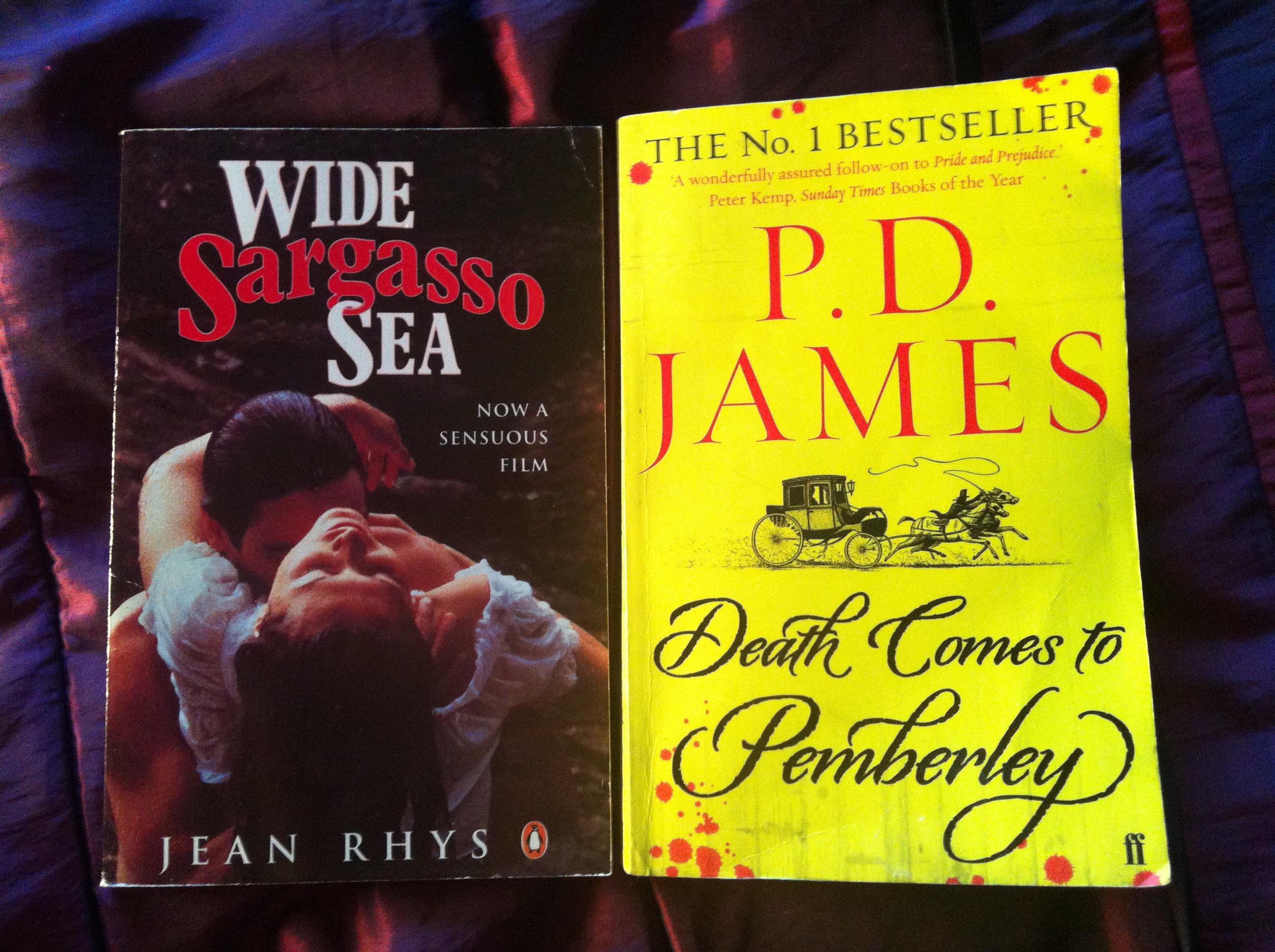
Image

“Take a good book to bed with you – books do not snore.” (Thea Dorn)

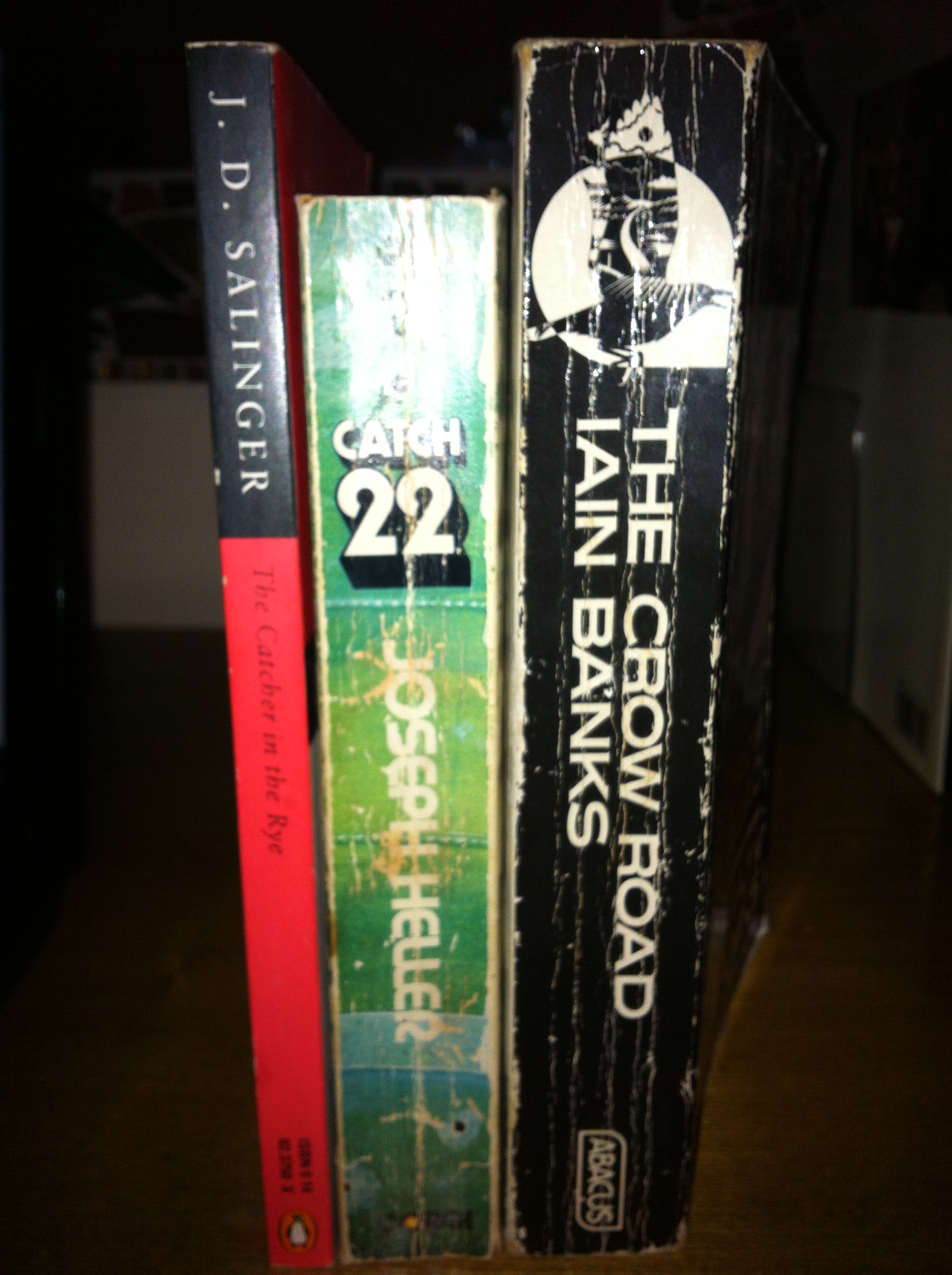
A couple of weeks ago I read an interview with Ricky Gervais in which he explained that, despite his partner being a novelist, he had only read one book, The Catcher in the Rye.  This got me thinking, if as a bibliophile you meet a bibliophobe, and they ask you for a recommendation, where would you even begin?  Of course, the answer is to go with what you know they’re interested in: the fantasy-lover starts with Tolkien, a seasoned traveller with the literature of a land they love, the feminist with Jong (who’s funny as well, I can’t help thinking it’s probably a good idea to go for funny when dipping a toe in the waters of literature, humour so often makes things seem accessible).  That’s the thing – you want it to be accessible.  Because why haven’t they discovered the joy of reading?  (And I really think this is something anyone can experience). Probably they’ve been given the wrong things to read (stuff they’re not interested in), or taught badly, and told there is “good” and “bad” literature.  I can’t stand this type of snobbery.  If you like it, then it’s worth reading. At the same time, you’d want to give your eager bibliophobe something you felt was well written enough to open their eyes to what books can offer.  Somewhere between the two extremes of rending your garments, wailing “I can’t believe you’ve never read Proust!” and half-heartedly tossing the latest celebrity embryo’s autobiography in their direction is probably the ground you want to occupy. So…we’re looking for something well written but accessible, funny but thought provoking, something that you can almost guarantee they’ll like as it speaks to everyone…I’ve got it.  The answer’s staring me in the face.  It’s The Catcher in the Rye.

OK – Salinger seems to have ensured this is my shortest post ever.  But I’ll go on to discuss two more books anyway.  I’m not suggesting these are where everyone should start, or that these are the greatest books ever written, because I don’t want to get into that “Oh, you simply must read…” snobbery that this theme dangerously skirts around.  I’ve chosen them because they both have something in common with The Catcher in the Rye, and they’re both books that I know people who aren’t big readers have read and enjoyed.

Firstly, Catch-22 by Joseph Heller (1961, my copy Corgi, 1974):

Well written?   Accessible?

I think the fact that the concept of a Catch-22 situation is so understood and constantly referred to (to such an extent that I don’t feel the need to define it when writing this) shows how brilliantly Heller has captured something people identify with and find meaningful.  The wide range of readers shows its accessibility, the pervasiveness of the concept shows how smart it is.

Funny?

So funny – you have to read this novel.  It’s silly: one of the characters is called Major Major Major Major.  It’s dry: “What the hell kind of a name is Yossarian?” Lieutenant Scheisskopf had the facts at his fingertips.  “It’s Yossarian’s name, sir.” It’s scathing: “The enemy,” retorted Yossarian with weighted precision, “is anybody who’s going to get you killed, no matter which side he’s on, and that includes Colonel Cathcart. And don’t you forget that, because the longer you remember it, the longer you might live.”

Thought-provoking?

OK – here’s the definition: “Orr would be crazy to fly more missions and sane if he didn’t, but if he was sane, he had to fly them. If he flew them, he was crazy and didn’t have to; but if he didn’t want to, he was sane and had to. Yossarian was moved very deeply by the absolute simplicity of this clause of Catch-22 and let out a respectful whistle.”

It’s hugely thought-provoking about the madness of war, the impartial cruelty of bureaucracy, the struggle of an individual against power structures that try to oppress…about so many things, and sadly it hasn’t dated.

Things in common with The Catcher in the Rye – Written around the same time but published 10 years apart (as Heller spent seven years writing the novel) both consider themes of alienation within and cynicism about contemporary Western society. Both made Time’s list of the 100 best modern English-language novels ; both were rated by Modern Library as amongst the 100 best English-language novels of the 20th century. Apparently it’s sold 10 million copies. Surely Time, Modern Library and 10 million people can’t all be wrong? I can’t help thinking Yossarian would snort with derision in answer to that question…

Secondly, The Crow Road by Iain Banks (1992, Abacus, my copy 1996):

Well written? Accessible?

Iain Banks is great at creating highly readable, plot-driven narratives that you can fly through. At the same time, this means it’s easy to overlook how beautifully he writes, without superfluity:

“Pencil-thin and nearly as leaden, the tall and still dramatically black-haired Mr Blawke was dressed somewhere in the high nines, sporting a dark grey double-breasted suit over a memorable purple waistcoat that took its inspiration from what looked like Mandelbrot but might more charitably have been Paisley.  A glittering gold fob watch the size of a small frying pan was anchored in the shallows of one waistcoat pocket by a bulk-carrier grade chain. Mr Blawke always reminded me of a heron; I’m not sure why.  Something to do with the sense of rapacious stillness perhaps, and also the aura of one who knows that time is on his side.”

“The rain fell with that impression of gentle remorselessness west coast rain sometimes appears to possess when it has already been raining for some days and might well go on raining for several days more.  It dissolved the sky-line, obliterated the view of the distant trees, and continually roughed the flat surface of the loch with a thousand tiny impacts each moment, every spreading circle intersecting, interfering and disappearing in the noise and clutter of their successors.  It sounded most loud as it pattered on the hoods of their jackets.

“Ken, are sure fish are going to bite in this weather?””

Funny?

Hopefully that’s apparent already.  There’s also no better example than the opening line, see below.

Thought-provoking?

Not in the way that The Catcher in the Rye and Catch-22 are, perhaps.  Those are novels that use their outrage to force the reader to confront uncomfortable truths about the world we live in.  The Crow Road doesn’t have this driving force, but as the narrator, Prentice, tries to find out what happened to his Uncle Rory who disappeared without a trace, he exposes the fault lines that run through the family.  While most families may not have such dramatic occurrences within them as those in The Crow Road, it does have something to say about how those we are nearest to are also those it can be hardest to communicate with, and that the ones we love the most can be the ones we hurt the most.

Things in common with The Catcher in the Rye – Fantastic opening line: “It was the day my grandmother exploded.” Tell me you don’t want to keep reading after that?  And brilliantly, it distils into a few words so much about the story that will follow: it will be about family and death, it will be unnerving, absurd and funny.

I hope that whether you are a bibliophile or bibliophobe (probably the former as you’re reading this in the first place), I’ve convinced you to give these novels a try.

Sadly, reading brilliantly inventive fiction is no guarantee that you will become brilliantly inventive yourself.  I couldn’t think of a unique way of presenting these books, so here they are, unadorned, nothing phony – I hope Holden Caulfield would approve.

Image

“One can no more approach people without love than one can approach bees without care. Such is the quality of bees” (Leo Tolstoy)

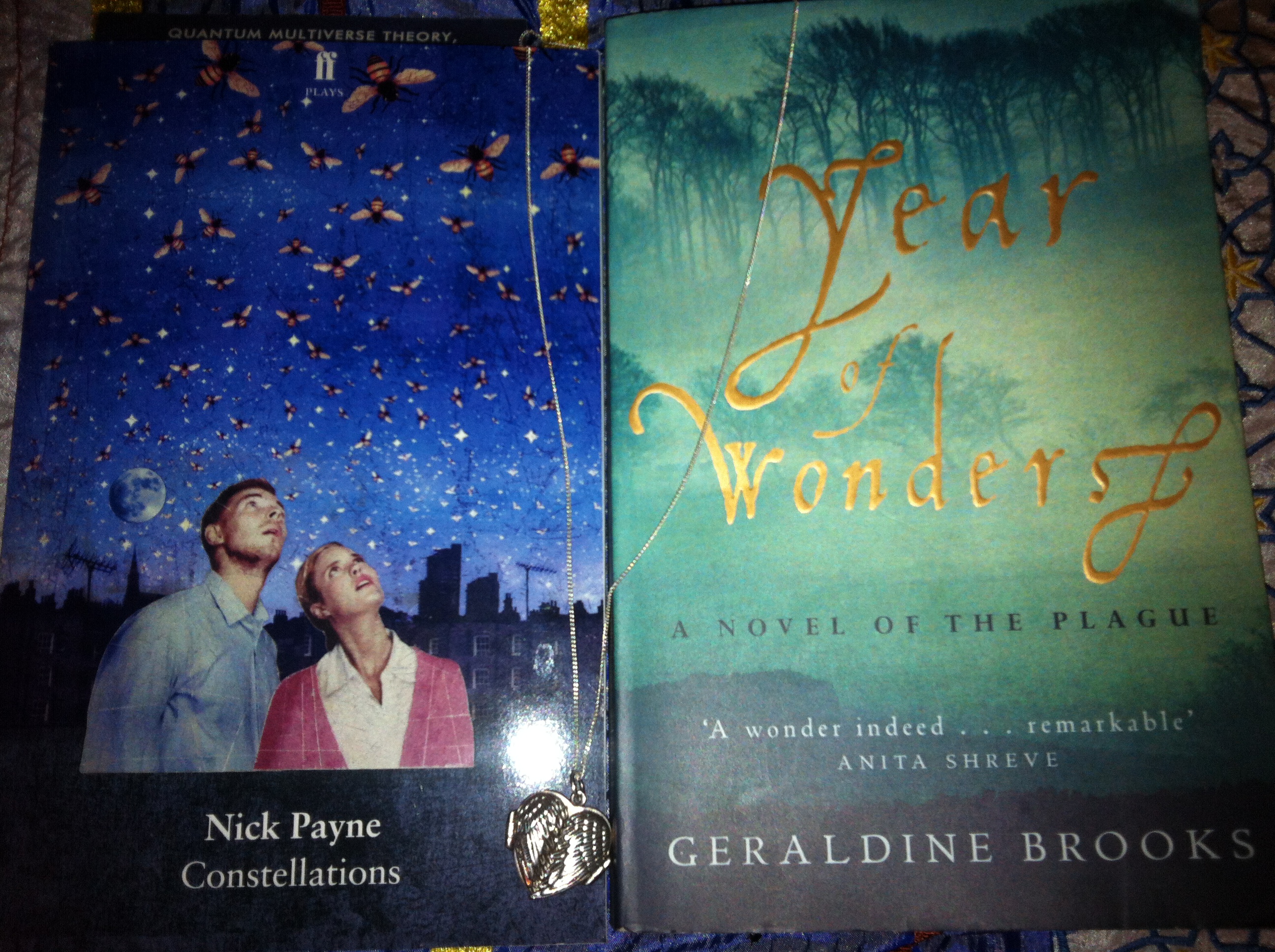
Happy Valentine’s Day!  I’m late as usual, but I hope you spent the day feeling loved/with loved ones, whether it was with a romantic partner, friends, family or simply re-reading David Gandy by Dolce and Gabanna (don’t judge me).  For those of you feeling a bit unloved, may I suggest a dog? There are loads that need rescuing, and they will provide unconditional adoration and support.  Picking up excrement in public with a hand clothed in a plastic bag is a small price to pay in return (note: this only applies to dogs.  If a human being offers you adoration in return for picking up their poo, it’s totally not worth it.  Unless you enjoy that sort of thing, in which case, Congrats! You’ve found your soulmate). Anyhow, in much the same way that this post seems to have been hijacked by doggy-do, Valentine’s Day has been hijacked by romance.  According to the ever-reliable Wikipedia, as well as being the patron saint of affianced couples, happy marriages and love, St Valentine is also the saint for bee keepers, plague, epilepsy and against fainting (it’s about time someone took a stand against impromptu unconsciousness).  So for this Valentine’s post I’m going to look at a play featuring a bee-keeper and a novel about the plague – who needs love?  (Not me, I’ve got David Gandy by Dolce and Gabanna).

Firstly, Constellations by Nick Payne (Faber & Faber 2012).  I know reading a play is secondary to seeing it performed, and also that sometimes reading plays can feel secondary to reading a novel, a form written to be read.  But I think it’s worth doing.  Theatre can be prohibitively expensive, and depends on you being able to see the performance within a set period at a location you can reach.  These factors can mean you never make it to the show.  Reading the playtext enables engagement with the art (sorry, I couldn’t think how else to phrase that, I know it sounds affected, sorry, sorry) even if you never set foot in the theatre.  I saw Constellations performed, and it was astounding.  Reading the playtext doesn’t give you Rafe Spall’s and Sally Hawkins’ brilliant comic timing and emotionally nuanced performances, nor does it show you Tom Scutt’s beautiful design.  But it does give you the characters, the plot, the language.

Marianne and Roland meet and fall in love.  They meet and never see each other again.  They meet and date.  It goes well, it goes badly. They split up.  They stay together.  Roland keeps bees and sells honey.  Marianne is a theoretical early universe cosmologist.  Which is handy, as she can explain multiverse theory as we watch all the possibilities of their relationship played out across multiple universes:

“In the quantum multiverse, every choice, every decision you’ve ever and never made exists in an unimaginably vast ensemble of parallel universes”

Scenes are played out with minute changes and big changes, and the skill of Nick Payne’s writing ensures this stays fresh.  The layering of scenes on top of each other means we end up with a great depth of understanding of the characters, seeing how the same person can react differently given only slight changes in circumstance.  It does mean however, that it’s difficult to give you a quote from the play, as the dialogue really gains meaning within the set of scenes and the play as a whole.  What I’ll give you, as it’s Valentine’s day, is part of Roland’s proposal speech (that’s not a spoiler, as its only one of the many possible outcomes…)

“…in a strange sort of way I’m jealous of the humble honey bee and their quiet elegance. If only our existence were that simple. If only we could understand why it is that we’re here and what it is that we’re meant to spend our lives doing. I am uncertain when it comes to a great many things. But there is now one thing that I am defiantly certain of….Marianne Aubele, will you marry me?”

Yes, Constellations is romantic.  But looking at all the possible outcomes means it is resolutely realistic as well, despite the unreality of watching a multiverse romance from our monoverse (is that a word?) perspective.  Throughout the different multiverses one event recurs again and again, unchanging.  This underpins all the variations and creates a dramatic tension, pulling the characters towards a single conclusion.  Even if you don’t usually read plays, I highly recommend you give the inventive and thought-provoking Constellations a shot (in at least this one of the many multiverses, you’ve got all the others in which to totally ignore me…)

Secondly, Year of Wonders by Geraldine Brooks (4th estate, 2001).  Based on the true story of the village of Eyam, it tells the story of a village that chose to quarantine itself from the outside world in 1666 when plague struck.  The narrator of the story is Anna, a young woman who loses her family and watches the village assaulted in body, mind and spirit, as the disease and its consequences takes its toll.  Everyday life in extraordinary circumstances is sensitively described, such as when Anna starts acting a midwife for the village:

“Randoll burst through the blanket-door when he heard his lusty son, and his big miner’s hand fluttered like a moth from the damp head of the babe to his wife’s flushed cheek and back again, as if he didn’t know which of them he most wanted to touch… We laughed. And, for an hour, in that season of death, we celebrated a life…But even in the midst of that joy, I knew that I would have to leave the babe nursing at his mother’s breast and return to my own cottage, silent and empty, where the only sound that would greet me would be the phantom echoes of my own boys’ infant cries.”

At the time of the plague, Britain was caught between an age of religion and an age of science, and the villagers struggle between these two forces as they try to find an explanation for what they endure.  In that year witchcraft, madness and illicit passions stalk the village while wild justice is meted out.  By the time the year ends, every inhabitant of the village is hugely, irrevocably changed.  But in the midst of the tragedies, there are miracles.

Geraldine Brooks never lets her research get in the way of the story as you sometimes find with historical novels, and the balance between historical detail and narrative drive creates a novel that is both vivid and gripping.

Bees and bubonic plague – feel the love, people……….

Image

“It is the test of a novel writer’s art that he conceal his snake-in-the-grass; but the reader may be sure that it is always there.” (Anthony Trollope)

Happy Chinese New Year!  This year is the Year of the Snake, so I chose a snake related quote to start, and had originally planned to take a snakey, not-too-obvious look at literature for Chinese New Year, but sadly my brain failed me.  So I’ve gone the more obvious route of choosing two authors of Chinese origin; there are two great novels and I hope you like them.  (I had intended to be much more timely and publish this post on 10 February, but with a belly full of celebratory Peking duck and seafood noodles working their soporific effect, I failed in this also.  So far it’s fair to say that the year of the snake is not off to a flying start with me).

Firstly, A Concise Chinese-English Dictionary for Lovers by Xiaolu Guo (Vintage 2007).  The female protagonist of the novel, Z (because the Brits can’t pronounce Zhuang), arrives in London speaking minimal English.  Over the course of a year in which she has a relationship with an older British man, she learns the language and some life lessons.  The novel is divided up into months, charting Z’s year, and each section has chapter headings of words and definitions that Z learns as she masters the English language.  For example:

“Confusion

Confuse v mix up; perplex; disconcert; make unclear

English food very confusing. They eating and drinking strange things. I think even Confucius have great confusion if he studying English.

….I confusing again when I look at whipped cream on little blackboard. What is that mean? How people whip cream? I see a poster somewhere near Chinatown. On poster naked woman wears only leather boots and leather pants and she whipping naked man kneeling down under legs.  So a English chef also whipping in kitchen?”

This fresh take on the English language makes for a really entertaining read.  Obviously the image of some sort of BDSM kitchen in a café offering afternoon tea is funny, but it also makes you consider why we use the words we use, and the way language can seem arbitrary.  Certainly she highlights oddities like:

“why there two go for one sentence? Why not enough to say one go to go?…”I go” is enough expressing “I am going to go…”Really.”

She’s right – why do we say “go” twice?  And language snobs take note, language is not set down in golden, irrefutable, unchanging rules :

“One thing, even Shakespeare write bad English.  For example, he says “where go thou?” If I speak like that Miss Margaret will tell me wrongly.”

While exploring language in a truly inventive way, Guo has done a great job of creating a distinct character’s voice, and not just because she starts off in stilted English and becomes more fluent throughout the year (by the end of the book Z writes: “I take the snowdrops. I gaze at the flowers in my hand. So delicate, they are already wilting in the heat of my palm.”)  It’s because Z is forceful, unique and engaging person who you really feel you know by the time you turn the last page.

For the second book I thought I’d look at Sour Sweet by Timothy Mo (Abacus 1982). The voice in this novel is very different to Z’s.  Guo’s novel is written in the first person, a very forthright engagement with the reader including direct questions. Sour Sweet is written in the third person and takes a broad look at the Chinese community in 1960s London through the Chen family and the Triads.  When these two “families” intersect, tragedy ensues.  The third person narrative allows for an ironic distance, but simultaneously you really feel for the characters.  When Chen meets the Triads to ask for a loan he constantly tops up the tea they aren’t drinking and fears his fruit offering is damaged:

“He noticed his best shoes had become quite sodden with tea. He exclaimed and moved away, seeing that the fruit in the bags had indeed been squashed and, as he had feared, there were greasy-looking patches on the brown paper.  The bags were already starting disintegrate.  Perhaps this was why they had rejected his offering.”

This passage demonstrates so much about the novel as a whole: the insight into a culture and power that operates across countries, the pathos of every day life, the humour of every day life.  Small tragedies that can escalate.  Failures to communicate even when you speak the same language.

And I suppose the idea of communication is what unites these novels as well as their consideration of Chinese cultures.  Both highlight the inadequacies of language, and the inadequacies of language users, as we try to reach out to others through imperfect means. Both are funny, both are sad.  Sour Sweet indeed.

“Anyone who doesn’t take truth seriously in small matters cannot be trusted in large ones either.” (Albert Einstein)

Two days ago I went to a talk at the London Review Bookshop entitled The Real Jane Austen: A Life in Small Things with Paula Byrne and John Mullan. These two authors have both recently published works on Austen, and realised that they shared common ground in their consideration of the treatment of “small things” in her work, hence the joint talk.  I hadn’t read either of their books, but if they are as lively, learned and accessible in print as they are in person, and you are interested in Jane Austen, I would hazard a guess that seeking out their work would be time well spent.

So this got me thinking about the treatment of small things in literature and I came home to peruse my bookshelves and decide on which books to discuss in this post. I was struck by how many were suitable, how many look at the small things in our lives.  I suppose novels lend themselves to this – it is an intimate form, taking us inside people’s heads, but via our own internal voice.  The gap between ourselves and the story becomes almost imperceptible. Novels can detail the minutiae of life, and I often think that is where the intimacy is.  You know a person well when you know the small things.  A writer who knew the value of small things is oddly, a writer whose most famous work was epic.  James Joyce, author of Ulysses, used to document what he called epiphanies, to use in his work.  What exactly constitutes an epiphany and how to define it is a matter of debate, but I don’t think it matters that we can’t exactly say what they are. In Stephen Hero (an unpublished precursor to A Portrait of the Artist as a Young Man) Joyce defines epiphanies as “the most delicate and evanescent of moments”. Not all of his recorded epiphanies survive, but an oft-quoted one is as follows:

“The Young Lady-(drawling discreetly) … 0, yes … I was … at the … cha … pel …

The Young Gentleman- (inaudibly) … I … (again inaudibly) … I …

The Young Lady-(softly) … 0 … but you’re … ve … ry … wick … ed .”

The meaning that Joyce found in this delicate, evanescent moment cannot be known for sure, but the epiphanies show us that this great writer took small matters seriously and sought out their truth.

If you’ve given Ulysses a bash & given up, you are far from alone.  I only know one person who’s finished it.  But don’t let that put you off Joyce entirely.  Dubliners is a collection of 15 stories set in the Irish capital and is far more accessible than Ulysses.  Deceptively so, as the more you look into the stories the more complex and multi-layered they reveal themselves to be, a bit like the small things in life that we actually attach great meaning to. But the stories can be read easily and a lot gained from doing so, without even exploring their complexities.  They are written in groups of ages, starting off with tales of childhood, then young adulthood, progressing to the final story, The Dead. Eveline is the fourth story, (from the young adult group) and begins:

“She sat at the window watching the evening invade the avenue.  Her head was leaned against the window curtains and in her nostrils was the odour of dusty cretonne.  She was tired.”

In these opening three sentences Joyce evokes so much about Eveline’s situation through the small things: exactly why she is tired, why the curtains are dusty, and why she is looking out into the city become more apparent throughout the story, and these small things have a cumulative meaning of great significance.  But Joyce never explicitly states the epiphanies of his stories, leaving it instead for the reader to extract meaning.  The stories are determinedly small (like Austen’s “two inches of ivory”) but at the same time, by allowing readers to decide for themselves, Joyce ensures they are also limitless.

I saw Annie Proulx interviewed once and she said the short story was her favourite form as every word counts. Joyce described the style of Dubliners as one of “scrupulous meanness”, and he famously spent days constructing sentences: “the right words in the right order” (how did Ulysses ever get finished?), making every word count.  I think this is what makes him both the perfect observer and constructor of small things.

In keeping with the theme of this post, I’m only discussing one book this time.  There didn’t seem to be another one as perfect for this theme as Dubliners, so I decided it was clear I should keep the post a small thing in itself.  (There were lots of contenders though; I’ll have to work out how to squeeze them into another theme). And rather than a photo, this time I’ll leave you with a question raised in this video of one of the greatest moments in one of the greatest sitcoms: are small things really small, or just far away……?

“We can be heroes, just for one day” (David Bowie)

This year is the bicentenary of Jane Austen’s “own darling child”, Pride and Prejudice.   This has led to a flurry of promotion and events created around, above & beyond this much neglected classic –barely read, rarely adapted and little known, it’s great that so much interest is being focussed at Austen’s most obscure novel…  I jest of course, and while any attention directed towards books and reading is a positive thing, it’s not like P&P needs any marketing; a certain wet shirt ensured this perennially popular classic was seared into the consciousness of a whole new generation of TV viewers and subsequent readers. Plus there’s the whole Pride and Prejudice and Zombie Ghost Vampires or whatever it’s called.  So I thought this was an apt time to dedicate a post to unsung heroes: books/characters/authors which for whatever reason haven’t garnered as much attention as they might.

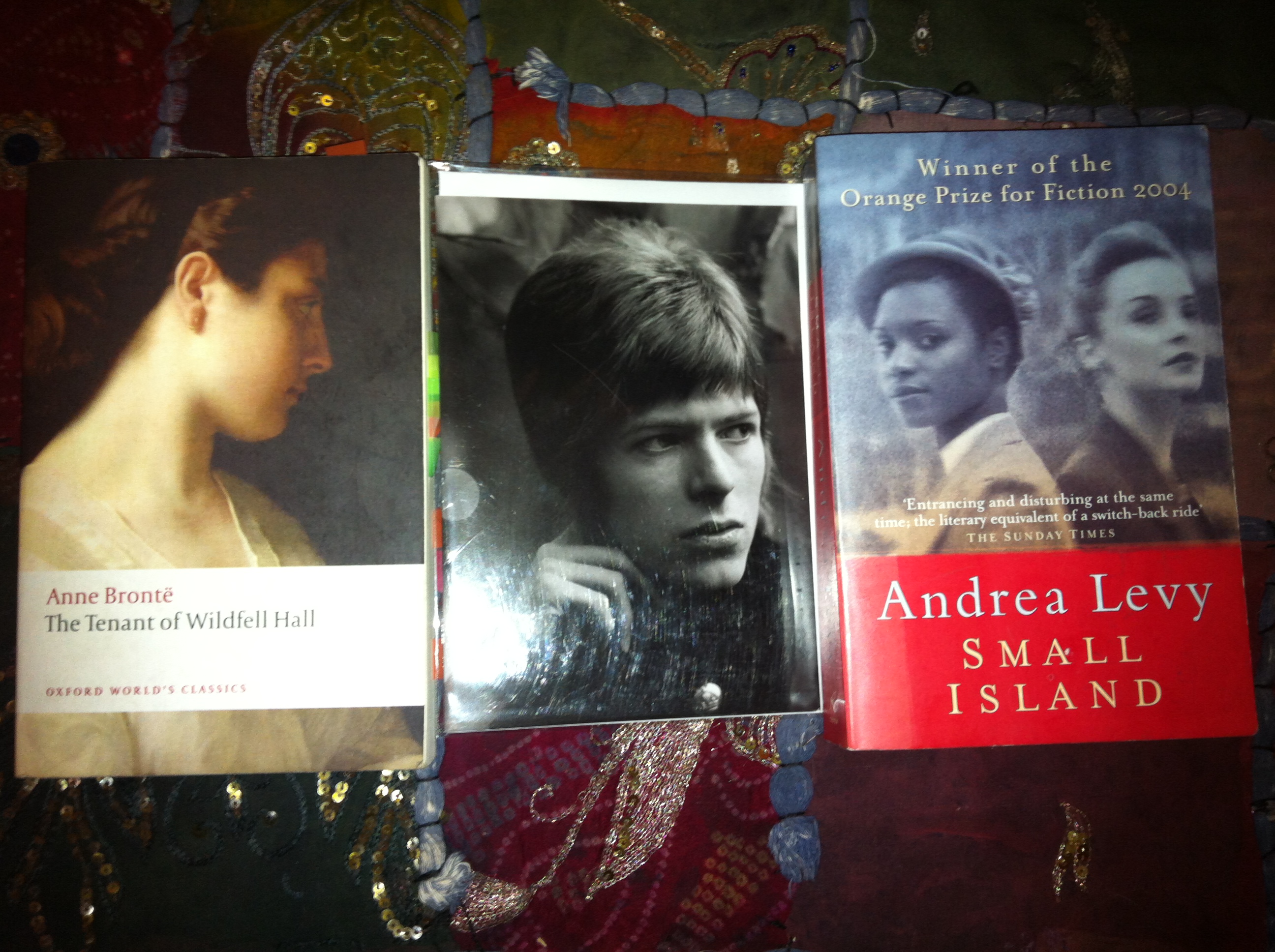
Firstly, Anne Bronte, particularly The Tenant of Wildfell Hall (published 1848, my edition 2008 Oxford World’s Classics).  The least known and least read of the Bronte sisters, I think the inevitable lumping together of her with Charlotte and Emily does her no favours.  She is a very different writer, with little of the gothic, romantic sensibilities of her sisters.  Anne actually sits more comfortably amongst the Victorian realist fiction of writers like Eliot and Gaskell, and in that way was a much more modern writer than Charlotte and Emily.  The Tenant of Wildfell Hall takes on some pretty major issues that Victorian Britain would have preferred to have ignored: alcoholism, domestic abuse, the complete lack of legal rights for women, the damaging effects of believing boys & girls should be educated differently, single parenthood.  Unsurprisingly, it was perceived as scandalous on its publication in 1848 and torn apart by those guardians of good taste, the critics.

Helen, a young widow, arrives in the town of Linden-Car with her young son, and attracts the attention of a farmer, Gilbert Markham.  He pursues her despite the fact that she is extremely spiky (proof that you don’t have to be a giggling hair-flicking moron to get your man/woman/whoever you fancy) and she eventually gives him her diary to read, which details her young adulthood in Regency England, an experience a million miles away from Austen’s Regency romance. Helen had married the charming Arthur Huntingdon, who turns out to be an alcoholic, abusive, unfaithful rake (unfortunately those gorgeous breeches and big white shirts can only cover so much).  When Helen sees the effect this profligate behaviour is having on her young son she flees.  Back in the present day of the novel, she learns that Huntingdon is dying, and returns to him.  I don’t think it’s a massive SPOILER to say he dies, allowing Helen and Markham to live happily ever after. This really isn’t a fairytale romance, though.

From the start Helen struggles to maintain a sense of herself as an individual, and her own integrity. Two years into the marriage, she realises the love of a good woman has not rescued him, and “how much of my higher and better self is indeed unmarried” – a scandalous thought for Victorian Britain but a reality for many couples who would be educated separately in different disciplines, barely know each other before marriage and then find they had no common language.  Jane Eyre and Wuthering Heights are high gothic romance, and while Tenant features a woman alone in a huge house in desolate surroundings, (fierce winds and thorny trees abound) it is more interested in the harsh realities of being married to the wrong man when “the ‘romance’ of our attachment is worn away”.  As Huntingdon’s alcoholism escalates so does his abuse of Helen, and she is left in a situation where legally she cannot divorce her husband (although he can her) and her child would be left with his wholly unsuitable father as guardian. He can beat her legally, and all her wealth is judged to belong to him.  Tenant is utterly damning of this situation, and if you’ll permit me the anachronistic term, Helen’s bid for freedom and a life on her own terms makes her a feminist icon.  Once she achieves her freedom she doesn’t become a simpering Victorian “angel in the home” but ultimately drives her second marriage when she passes Markham a winter rose: “Look Gilbert, it is still as fresh and blooming as a flower can be, with the cold snow even now on its petals.  Will you have it?” The subtext is clear: Helen is no young blushing virgin, a romance heroine, but an experienced woman, choosing to marry for love (and presumably, sexual attraction) though she need not because she is financially independent.  Anne Bronte gives us a much more complex heroine than those wailing women running around on moors (just kidding, JE and WH fans).

So why are Anne Bronte and Helen unsung heroes?  There are difficulties with the book: Anne Bronte was clearly still learning her craft (but, I would argue, so was Emily) and it is flawed.  The separate voices in the book aren’t distinct, and don’t always ring true in terms of how people speak.  Emily was much better at this, and Charlotte was much more skilled in the craft of novel writing.  Helen is a character with a highly developed sense of right and wrong, and this sometimes proves tricky for readers now, in that a character entrenched in Victorian morality can seemly judgemental to the point of priggishness.  But it would take a heart of stone not to root for this brave, resolute and strong woman, and I urge you to give Tenant a go.  The legal and educational situation may have changed but the story of a struggle for individual fulfilment against societal pressures remains timeless.  And there’s a bit of romance too.

Incidentally, for those of you who enjoyed the BBC adaptation of P&P, they also did a very decent version of Tenant just a year later; Tara FitzGerald portrayed Helen, with Toby Stephens as Markham and Rupert Graves as Huntingdon (the first two of whom acted together again a decade later in the BBC’s Jane Eyre, fact fans), a gorgeous and hugely talented cast who did the characters great justice (dir. Mike Barker).

Secondly, I thought I’d look at a portrayal of an everyman hero, the type of person who is unsung in life, if not in the novel.  The sub-theme of this post is clearly men called Gilbert, as I’ve chosen Gilbert Joseph from Andrea Levy’s Small Island (2004, Review Books).  Andrea Levy is not an unsung author, thankfully, as she’s brilliant and fully deserves the recognition she receives.  Small Island won the Orange Prize for Fiction in 2004, proving that sometimes these awards panels actually get it right.

It’s really hard to give a plot summary of the book without giving away some major spoilers, so I’ll avoid it all together.  Purposely vague description to follow: the book looks at post-war Britain, and the experiences of interconnected characters following the migration to Britain by people from Caribbean.  Queenie rents out her rooms to the new arrivals and encounters racism by association; Gilbert and Hortense are married immigrants, and quickly realise their experience is not going to be the one they were promised before they left Jamaica.  The three of them, and Queenie’s husband Bernard, take turns to tell the story, having chapters to themselves at a time.  The book is divided into Before and 1948, showing how the events of the war have far-reaching consequences on a personal level, not just national and political.

The character of Gilbert demonstrates that heroism is something that is not just found in extreme actions and extreme circumstances, such as war, but in the quiet, unassuming actions of the everyday.  He finds himself in a cold, unwelcoming country, miles away from home, part of a nation that has used him as a soldier and then abandoned him, with a wife who looks down on him and where he is subjected to racism daily.  And within these awful circumstances Gilbert doesn’t get ground down, and he doesn’t get bitter.  Instead at the end of the novel he does something selfless and noble, and utterly believeable, and he also stands up for himself:

“You know what your trouble is, man?” he said.  “Your white skin.  You think it makes you better than me.  You think it gives you the right to lord it over a black man.  But you know what it make you?  You wan’ know what your white skin make you man?  It make you white.  That is all, man.  White.  No better, no worse than me – just white.”

I can’t fully explain what makes Gilbert such a hero without ruining the story for you, but I highly recommend this readable, insightful novel and if you read it I’m sure you’ll agree with me.  Gilbert shows the greatness of ordinary people – we all know a Gilbert, and the least he deserves is to be recognised as a hero, which within the pages of Small Island, he is.

Here are the books alongside a hero of mine, David Bowie, who provided the title of this post.  Like P&P, he also celebrated an anniversary this month (66th birthday on 8 January): see, there is a method buried somewhere amongst these rambling posts, I promise……

Image

“There are two types of women in the world: those who like chocolate and complete bitches” (Dawn French)

Happy New Year! (for those of you using the Gregorian calendar).  It is one of life’s small cruelties that if you live in the Northern hemisphere, a grey, dark, cold time of year is also inexorably bound with resolutions to lose weight.  It’s entirely illogical: your body is bound up in layer upon chunky layer of clothing, and all you want to eat is comforting, stodgy carbs.  Far better to start a diet in March – its brighter, starts getting warmer, the prospect of salad is less likely to send you howling in despair from the room (unless that’s your modus operandi all year round, and you are not alone).  There’s a sense of approaching summer and the associated disrobing to act as an incentive to lose those extra layers you’ve acquired that you can’t hang in the wardrobe.  But right now its January. So, until those spring-like days, let us glory in girth, fellow book-lovers, and embrace loose baggy monsters.  This was Henry James’ term for those long Victorian novels, and they are perfect for this time of year.  If the holiday season has left you feeling like a baggy monster yourself, settle down with a huge book: you can wallow, a verb that suits your newly enormous body, in its vastness & lose yourself and the dark days that surround you; you can claim it’s a novella and make your body look smaller by comparison, optical illusion being so much easier than giving up all the fun stuff; and if you go for a paper version rather than an e-book the weight itself will act equally as well as a gym workout for your biceps (er, maybe). ‘Tis the season of the baggy monster!

I’ve gone for an obvious choice of baggy monster, George Eliot’s Middlemarch (published 1871-2. My copy: Penguin Classics 1965). Writing about Middlemarch is really difficult for me as it’s my favourite novel ever.  Ever.  And I find when things are that close to me, I can’t really explain them or talk about them objectively.  Lots of people can’t bear George Eliot and find her too intellectual and moralising.  Fine – I have no come back.  She’s both of those things.  But if you give Middlemarch a chance, the rewards can be huge.  The characterisations of the inhabitants of this middle-England town are fully drawn, as the length of the novel allows for such scope.  There is no reliance on stereotypes (Mr Dickens, take note), and even the unlikeable characters are understandable.  Eliot can be as witty and incisive as Jane Austen (“plain women he regarded as he did the other severe facts of life, to be faced with philosophy  and investigated by science”/ “she held it still more natural that Mr Lydgate should have fallen in love at first sight of her.  These things happened so often at balls, and why not by morning light, when the complexion  showed all the better for it?”), but for those of you who share my brother’s view that Austen is just “full of silly girls giggling behind fans” rest assured she’s also very different.  Virginia Woolf called Middlemarch “one of the few English novels written for grown up people”, by which I think she means that the story continues beyond marriage – the ultimate purpose of the plot is not achievement of a socially acceptable breeding arrangement but more a study of how people work, individually and within society.  There are big themes tackled: politics, education, professional fulfilment, religion…If that sounds dry, I promise there’s enough plot to keep you going, with the various stories of the ambitious Dr Lydgate, idealistic Dorothea, vacuous Rosamond, immature Fred Vincy… and now I’ll stop reducing Eliot’s great characters to a single adjective.  It’s also got Will Ladislaw in it, a Byronic hero who can easily equal Darcy in the “pouting air of discontent” love-god stakes, it’s just that the latter’s PR is so much more tenacious.  One of my tutors once told me he re-read Middlemarch regularly, and the final few paragraphs always made him cry (not that it’s  a tragic ending, just realistic).  I hope if you give Middlemarch a go, that it truly moves you.

In the course of writing the above paragraph I’ve realised that this post will turn into a baggy monster itself if I continue to attempt to capture these vast panoramic books in any sort of meaningful description.  So, like so many New Year’s resolutions, I’m going abandon my good intentions and instead write about a book that (in my copy) runs to a comparatively succinct 222 pages. Like Water for Chocolate by Laura Esquivel (published 1989. My copy: Black Swan, 1994), unlike the baggy monsters, keeps the plot fairly simple – Tita and Pedro love each other, tradition dictates they can’t be together, so he marries her sister to be around her.  You may not get a wallow in the depths of 800+ pages but it’s still a great choice for this time of year.    Firstly, its set in Mexico (and I should admit I read it in translation, if you can read it in the original Spanish so much the better) so if you can’t afford a warm holiday away from all the grey you can at least travel between the pages of a book.  Secondly, each chapter has a month title and an associated recipe and is hugely evocative around food: vicarious calories are delicious and also involve no cheating from your diet if you are insane enough to try and lose weight in January.  Amongst quail in rose petal sauce (March) and northern style chorizo (May) there is also a recipe for making matches (June), just in case you wondered. Finally, it is magic-realist in style: the female protagonist’s birth sees the kitchen awash in tears “When the uproar had subsided and the water had been dried up by the sun, Nacha swept up the residue the tears had left on the red stone floor. There was enough salt to fill a ten-pound sack – it was used for cooking and lasted a long time.” A bit of unreality – just what you need to help face the harsh realities of a northern winter.

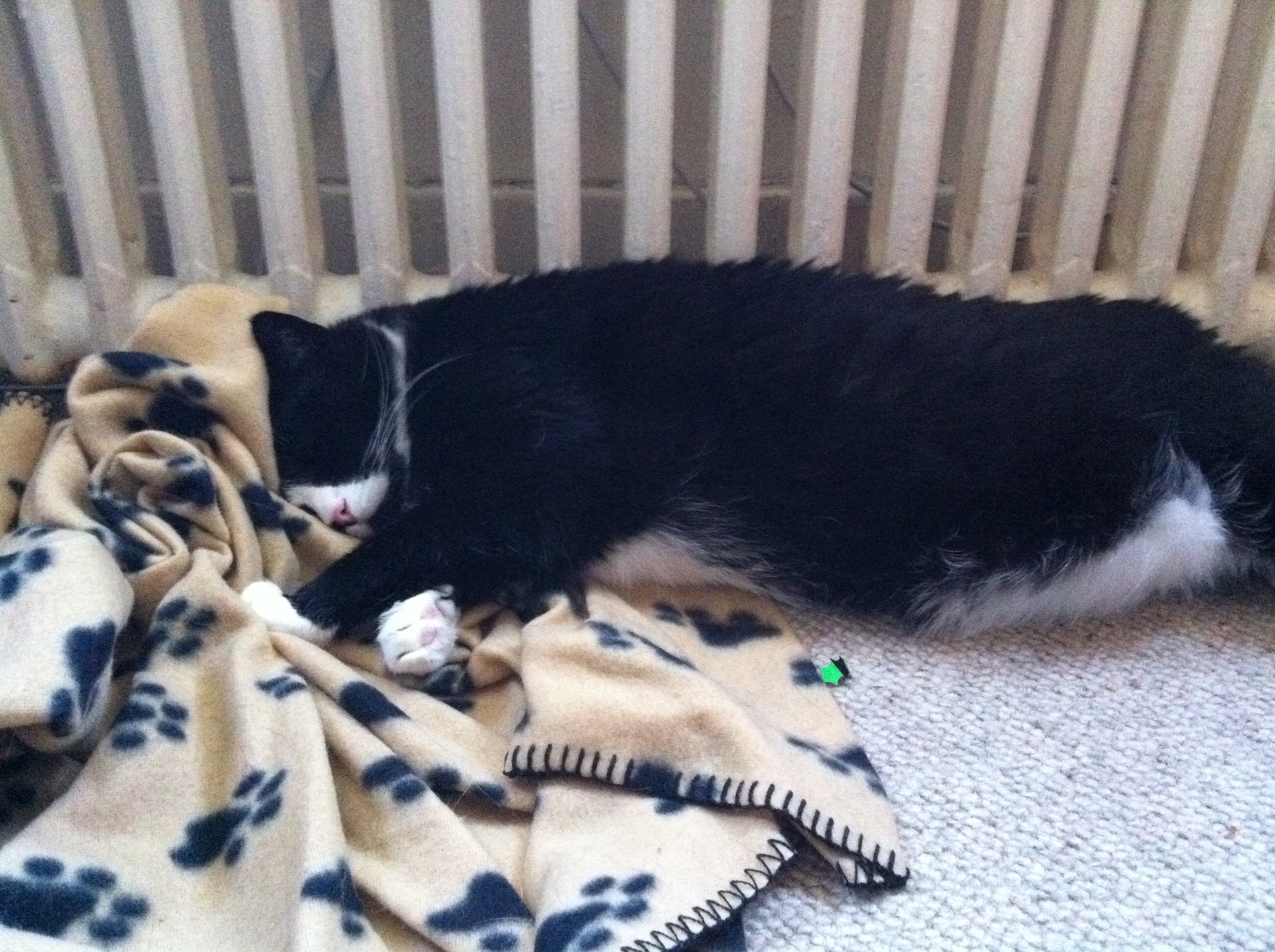
So settle down with a great (in terms of both literary value and/or size) book and enough provisions to see you through (e.g. Kendal mint cake, or a family bar of chocolate.  With the latter you can always claim to be striking a blow against sociocultural constructions as a method of control (or something) by eating it all yourself.  This also works for family bags of crisps) and enjoy! I was planning to picture the books alongside some mojito cupcakes that I’d made for a friend’s birthday, but they went totally wrong – possibly due to the fact that my scales broke and so I guessed all the ingredients weights.  Hmmn, thinking about it, that’s almost definitely where my error lay. This succeeded in putting me in a cranky mood and incapable of thinking of another picture so instead here is a baggy monster who lives with me.  Proof, if proof were needed, that the world is a better place for having baggy monsters in it.

Image

“And once he had got really drunk on wine, Then he would speak no language but Latin.” (Chaucer)

This post has been subject to a radical redraft.  I sat next to a monumentally annoying mother (not my own) on the train and came back and wrote an extremely ranty few paragraphs.  If I give you the first few lines, you’ll get the general idea:

Are you an aspirational, pretentious, and over-compensating parent?  Did you give up your career to raise children, and subsequently treat your offspring as a project management opportunity?  Did your own life lack meaning, and so you decided to add to our vastly over-populated planet through your own woefully mediocre gene pool?  Then this post is for you!

Oh dear. I promise I’m not a really horrible person.  I was driven temporarily insane by spending 20 minutes sat next to this woman.  I’ve decided to stick with the book recommendations I was going to make, but keep this post mercifully short so I don’t expose what a nasty, judgemental person I am any more than necessary.

Here are a couple of ideas for stories that kids might like which may not be the first to spring to mind.  They’re also established classics so if you are a certain sort of art-enforcing parent (a clue as to where my first draft rant continued to) you can gain kudos amongst your peers as you sit in your planet murdering off-road vehicles waiting for the Sushi-Making for the Under 5’s class to end (sorry, sorry, I promise I’ll stick to books from now on).

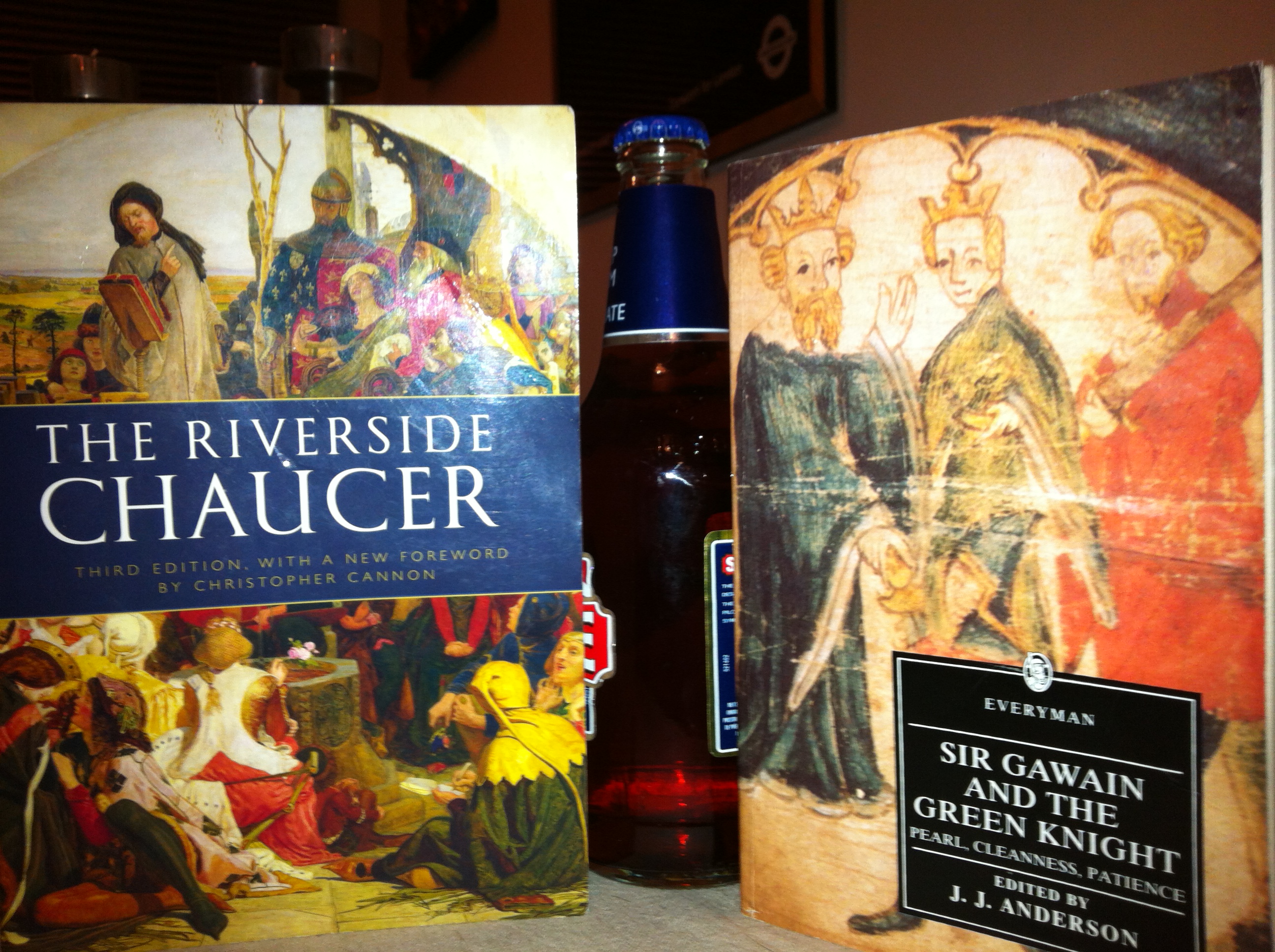
Firstly, Chaucer’s The Miller’s Tale.  Stay with me here, I’m not suggesting you get your child grappling with Middle English while they’re still learning to read and write the contemporary version.  Either do your own version or read it in translation (you’ll want to check it first, Chaucer can be pretty saucy). An older man marries a younger woman (it may be over 600 years old but will still offer your child an insight into contemporary celebrity culture) who then shags a younger model behind his back (obviously this is a point you may wish to gloss over with your young charges).  Meanwhile, a delicate type also has designs on our earthy young heroine.  Well, she is gorgeous: “fair was this yonge wyf, and therwithal/As any wezele hir body gent (delicate) and small”. Er….thanks Chaucer.  Every woman wants to think she has a body as good as any weasel.  For his troubles, the delicate suitor gets not one, but two bottoms shoved in his face.  Firstly he kisses his beloved’s “naked ers/ful savourly” whereupon he feels “a thyng al rough and long yherd (haired)” – apparently this comely lass really does have a body like a weasel, including a hairy backside.  Away runs our young suitor, only to return for her lover to “leet fle a fart/As greet as it had been a thunder-dent” in his face, for which the farter gets a red-hot poker shoved up his rectum in retribution.  Tell me what child isn’t going to love this?  Hairy arses being kissed, farting, and pokers up the bum.  There’s a reason Chaucer is proclaimed the greatest English poet.

Secondly, Sir Gawain and the Green Knight.  Seriously, Middle English literature is the place to go to, trust me.  If your child likes Merlin, they’ll love this.  If you’re one of those parents who doesn’t let their child watch TV, well, first off, stop that.  Stop it before they hate you forever.  But after that, even they don’t watch Merlin, they’ll still love it.  King Arthur has knight arrive in court  during Christmas celebrations (like the “family friends” you avoid all year but at the first sniff of turkey you’re exchanging recycled chocolate/soap gifts and making small talk over mulled wine, desperately wishing all the alcohol hadn’t evaporated so you could numb yourself to the whole stultifying experience.  Or is that just me?)  Unlike my unwelcome guests, he is a humongous green giant (no, not that one, although I suspect you still wouldn’t like him when he’s angry.  No, not the  maize-pimping one either.)  This one is a bit of snappy dresser, albeit like many fashion-types he sticks to a limited colour palette – I think you can guess which colour.  He wears a close fitting coat, an ermine trimmed cloak (how Dr Zhivago) green tights (men seemed to have abandoned that look for some reason) and gold spurs – quite some bling there.  What’s more, when Gawain (he’s the one in Merlin who always looks like he’s filming a shampoo commercial in between Round Table duties – and that’s not a criticism) chops his head off he recovers with apparent ease: smooooth.   He then challenges Gawain to the sort of endeavour that knights seem to get up to on a regular basis, in other words, it involves honour, a journey, and doesn’t exactly make a lot of sense.  At the end of it all it turns out Morgan Le Fay (Morgana in Merlin) was behind the shenanigans, as she normally is, the cheeky minx.  Everything works out in the end and happiness reigns, as well as King Arthur.  I haven’t quoted any of it here as the Middle English variant used is much harder to pick up than Chaucer, but it’s a ripping yarn and definitely worth looking out for in translation.

Happy reading!  I was going to illustrate this with a picture of the books in a playground, but my local one is always busy and I was concerned one of the feral youths would knife me if I delayed their turn on the swings (rather aptly for this post, some parts of south London really are quite medieval) so instead I’ve taken a photo of them with some Kentish ale, because firstly, I didn’t have any mead, and secondly, the pilgrims in The Canterbury Tales were on their way to, well, I think you know.  And the Miller was drunk so he probably would have partaken of a Kentish ale or ten at some point.

“Having your book turned into a movie is like seeing your oxen turned into bouillon cubes” (John Le Carre)

This week I went and saw Skyfall. I know, I know, only weeks after everyone else.  I am never going to be one of those cool types who only listens to unsigned bands and rocks a retro look rather than looking like they haven’t bought any new clothes for a decade (I’ve been busy & I’m tall so I always bang my elbows on dressing cubicle walls which is bloody painful and puts me off, ok?)

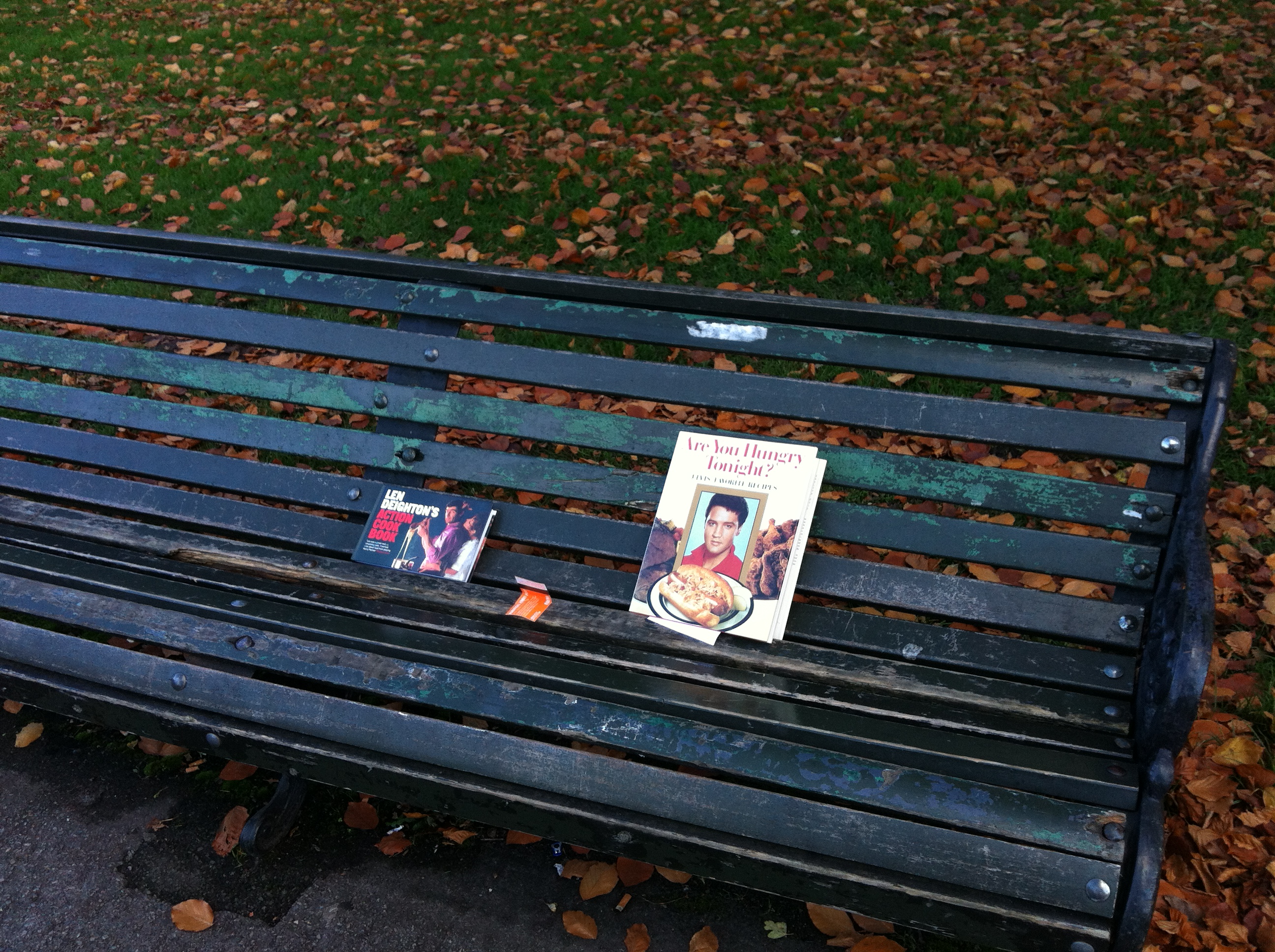
I realised I hadn’t read any Bond novels, so I thought I would go to my beloved local charity bookshop and get one to write about here.  Like a Bond villain, I was foiled in this (not so dastardly) plan, through them not having any in stock.   However, they did have the brilliant Len Deighton’s Action Cook Book (Harper Perennial, 1965, 2009) for the bargain price of £3, which I thought was a suitable alternative.  It has the greatest cover I’ve ever seen on a cook book, and may replace Are You Hungry Tonight? Elvis’ Favourite Recipes (Bluewood Books, 1992) as my culinary bible.

I wish Len was my father, as rather than “it’s never too early to start a pension plan”, his advice runs along the lines of: “taste a new cheese two or three times a week” (in fairness to my father, he would probably endorse the latter exhortation as well as the former). I most certainly will, Mr Deighton.  As my cholesterol climbs alongside my girth I will be safe in the knowledge that I am doing your sophisticated 1960s-style bidding.  He also counsels: “Do not forgive the guest who prods or pummels your Camembert”.  I wouldn’t dream of doing so.  That kind of behaviour is unforgiveable, and frankly anyone I invite into my home is lucky to be offered any coagulated milk products.  I guard my cheese jealously, and they’re definitely not getting their hands on my Roquefort (not a euphemism).

If you want to plan a party as if you were an urbane thriller writer, Len Deighton allows the following alcohol per guest: “half a bottle per head each two hours. Oddly enough, for each subsequent two hours you must allow three-quarters of a bottle per head, since drinking will increase if they haven’t gone by then”.  Oddly enough? Oddly enough?  That throwaway adverbial phrase creates a casual tone that belies the fact that for a guest who arrives at 9pm and leaves at 3am (because who’s going to leave after 2 hours?  How shit is this party?) Len Deighton suggests you need 3 entire bottles per person.  I’ve been a student for more of my adult life than is strictly decent, and even to me that seems….actually, fair play.  Maybe allow a few extra just in case.

But this isn’t supposed to be a blog about cookery books, which is clearly working well so far. Third entry and I’m totally off topic.  Fear not, I will redeem myself thusly: for spy fiction, even if you don’t normally read spy fiction, Madame Bibi recommends Mark Gatiss’ Lucifer Box novels. I don’t normally read spy fiction (hence Ian Fleming and I are strangers, and my local charity shop conspires to keep us so) but I made an exception for these as Mark Gatiss seems totally lovely so I’m happy to give him my money, and he has done such a great job writing various television scripts over the last few years that I reasoned I was probably in safe hands.

How right I was.  The Vesuvius Club (2004), The Devil in Amber (2006), Black Butterfly (2008) (all Pocket Books) are all witty, plot-driven light reads that revel in the genre.  You’ll enjoy them, I promise, it’s impossible not to as they clearly are enjoying themselves so much:

“I nodded and took out my cigarette case. It is flat and well-polished with my initials in Gothic script upon it, yet it has never been called upon to save my life by absorbing the impact of a bullet. That’s what servants are for.”

You have to be a bit in love with the hero in this type of story, and here it’s easy as Lucifer is described as completely gorgeous, and in possession of that type of arch, dry wit that makes me think he’d be a nonchalant cigarette smoker:

“It was midway between the fish course and the pudding, as Supple began another interminable tale, that I did the decent thing and shot him.”

Plus he likes boys and girls, so there’s none of that probably-overcompensating-for-something-that-happened-at-Eton vibe that you get with Bond.

Lucifer is also brave and dashing, adept at everything, and more than likely slightly sociopathic – all you would expect from your heroic spy:

“Taking up a desert spoon, I dug it into Supple’s left socket and carefully removed the old fellow’s glass eye…I looked at the iris and smiled. It was just the shade of green I had in mind for a new tie and now I had a match for my tailor.  What a happy accident!”

Alas, apparently there are no plans for any further Lucifer outings, but at least that means you can embrace these without worrying they will descend into formulaic flabbiness, unlike some other series that suck you in then break your heart with their money-grubbing mediocrity ………..no names.

Here are my books exchanging a message (OK, my ticket to Skyfall) on a park bench in true spy style (before it all went digital). Admittedly it should probably have been St James’ and not Regent’s Park, but I was closer to Regent’s and I’m very, very lazy.  My copy of The Vesuvius Club is in cunning disguise as Are You Hungry Tonight?

Image

The drop went OK, in case you were wondering.

“When a man is tired of London, he is tired of life” (Samuel Johnson)

So, to start I thought I’d look at my home city.  I am Londoner born and bred – that’s the truth, people.  Sometime in the last few years perceptions of London seem to have got confused with those of LA, and taxi drivers don’t believe any one is born here, they only move here.  Tedious conversations regarding my birthplace are the price I pay for one the best things about London: the constant ebb and flow of people from just about everywhere. Anyone of these people who live in London will tell you that this great city (for great it is, far from perfect, but still great, like Battersea Power Station) suffers in its portrayals.  Actually that’s not true.  I suspect a lot of Londoners haven’t given a second thought as to how their city is portrayed.  They don’t give a shit.  And that, that is what makes them Londoners.  How I miss it when I’m away.

I digress…. as I was failing to say, rarely am I presented with a London I recognise (Michael Winterbottom’s Wonderland aside, which I truly recognised, given that it was partly shot in my local supermarket.  Don’t let that banal detail put you off, it’s a very good film, you should watch it). Yet there are a few examples of London literature that Madam Bibi recommends.

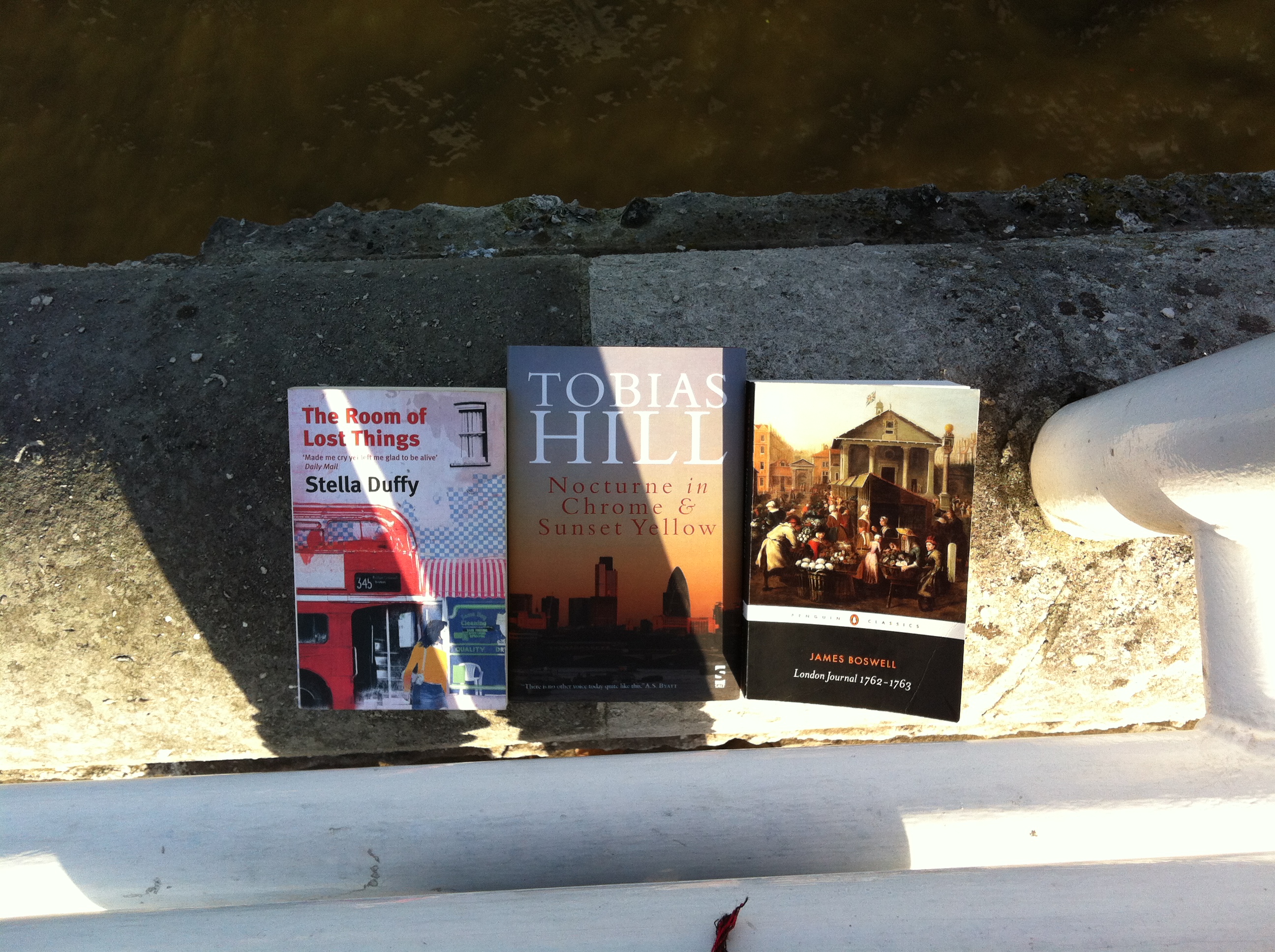
Firstly, The Room of Lost Things, by Stella Duffy (Virago, 2008).  Robert teaches Akeel the ropes of the dry cleaning business in Loughborough Junction.  Over a cup of tea they shake hands in contract: “They hardly know each other.  It’s a beginning.”  This beginning leads to a delicate, unspoken understanding between two very different characters. The men are the protagonists of the novel, but South London is the hero.

“Robert hears a shout from below and turns round to look back up Coldharbour Lane to where Dan is whooping and Charlie grinning from their perch on his old settee, the one he dragged out two nights ago. They lift their Special Brew cans like hand weights and belch belly laughs as one after the other, and slowly, half a dozen crates of carefully stacked tomatoes and red peppers and potatoes fall from their perfect positioning outside the halal shop and flow into the road, a guilty skateboarder racing off, the mix of brown and clashing reds running into the gutter.”

Beautiful, right?  And so completely London. Stella Duffy looks at people and the city with an entirely unsentimental eye, and yet still shows the beauty that exists in places where it’s not usually looked for or expected.

As a proud south Londoner (we are a beleaguered people, yet secure in the knowledge that the great advantage of our part of the city is a distinct lack of smug north Londoners) it pleased me to see the bus I caught to work for 4 years on the cover of this artfully written, closely observed novel.  The 345 even has a supporting role in the story.  If you want to know the breadth of South London (and why wouldn’t you?) catch this bus for the duration of its route.  From the sterile squares of South Ken to the not-so-sterile streets of Peckham, it’s a most unlikely journey.  One time I caught the 345 at a bus stop littered with a lobster carcass, and I got off at a bus stop littered with chicken bones.  I’ll leave it to you to guess which direction I was travelling in. Back to The Room of Lost Things: “A regular river crossing is the gift of South London.”

Secondly, the poetry of Tobias Hill. If you find contemporary poetry off-putting but fancy giving it a chance, there are worse places to start than this accessible poet who looks unflinchingly at the isolation that exists within the crowds of cities, and casts a unique perspective through inventive language.  In his second volume Midnight in the City of Clocks (Oxford University Press, 1996) there are poems about Japanese cities and Rio as well as London.  For Zoo (Oxford University Press, 1996), Tobias Hill was the inaugural Poet for Zoos, and writes about London Zoo in particular. Nocturne in Chrome and Sunset Yellow (Salt, 2006, 2007) is his most recent collection and includes A Year in London, with a poem for each month.  Here is the first stanza of November:

London – there’s a rhythm to the name,

its ending an echo of its beginning,

as if London were the name of somewhere

full to the brim with its own echoes.”

This is what Tobias Hill does so well – points out something you can’t believe you hadn’t noticed before, and makes the wholly familiar newly unsettling.

Finally, James Boswell’s London Journal (Penguin).  Unlike my previous examples, I can’t claim for the veracity of the portrayal of London, seeing as how it was written in 1762-3. What I can vouch for is that it’s a brilliantly entertaining read.  James Boswell is 22, arriving in London for the second time in his life, and completely in love with the city and all it offers.  He evokes London in vivid detail: the people in high society, the prostitutes in the parks, chestnut sellers, his nights at the opera and theatre, visits to exhibitions, and his restaurant meals.

“The conversation was on indifferent common topics.  The Peace.  Lord Bute. Footmen & Cookery. I went to Douglasse’s & drank tea. I next went & called in Southampton Street Strand, for Miss Sally Forrester my first love.  Who lived at the blue Periwig.  I found that the People of the house were broke & dead & could hear nothing of her.  I also called for Miss Jenny Wells in Barrack Street Soho, and found that she was fled and they knew not whither & had been ruined with extravagance.”

It’s unintentionally funny; Boswell wants to be so much better than he is, and that remains timeless.  “Since my being honoured with the friendship of Mr Johnson [Samuel, who provided the title of this entry], I have more seriously considered the dutys of Morality and Religion, and the dignity of Human Nature.  I have considered that promiscuous concubinage is certainly wrong…. Notwithstanding of these Reflections, I have stooped to mean profligacy even yesterday.”

Oh James, we’ve all been there, led astray by the city.  I haven’t slept with a prostitute in ages (that’s a joke, promise), but my own internal struggle is usually along the following lines: “I need to lose weight.  I’m going on a diet…. But if God wanted me to be thinner, he wouldn’t have invented cheese…..or wine……or France……or Europe….or the Middle East.  I’m hungry. That’s it, I’m off to Edgware Road.”  Damn you, Edgware Road.

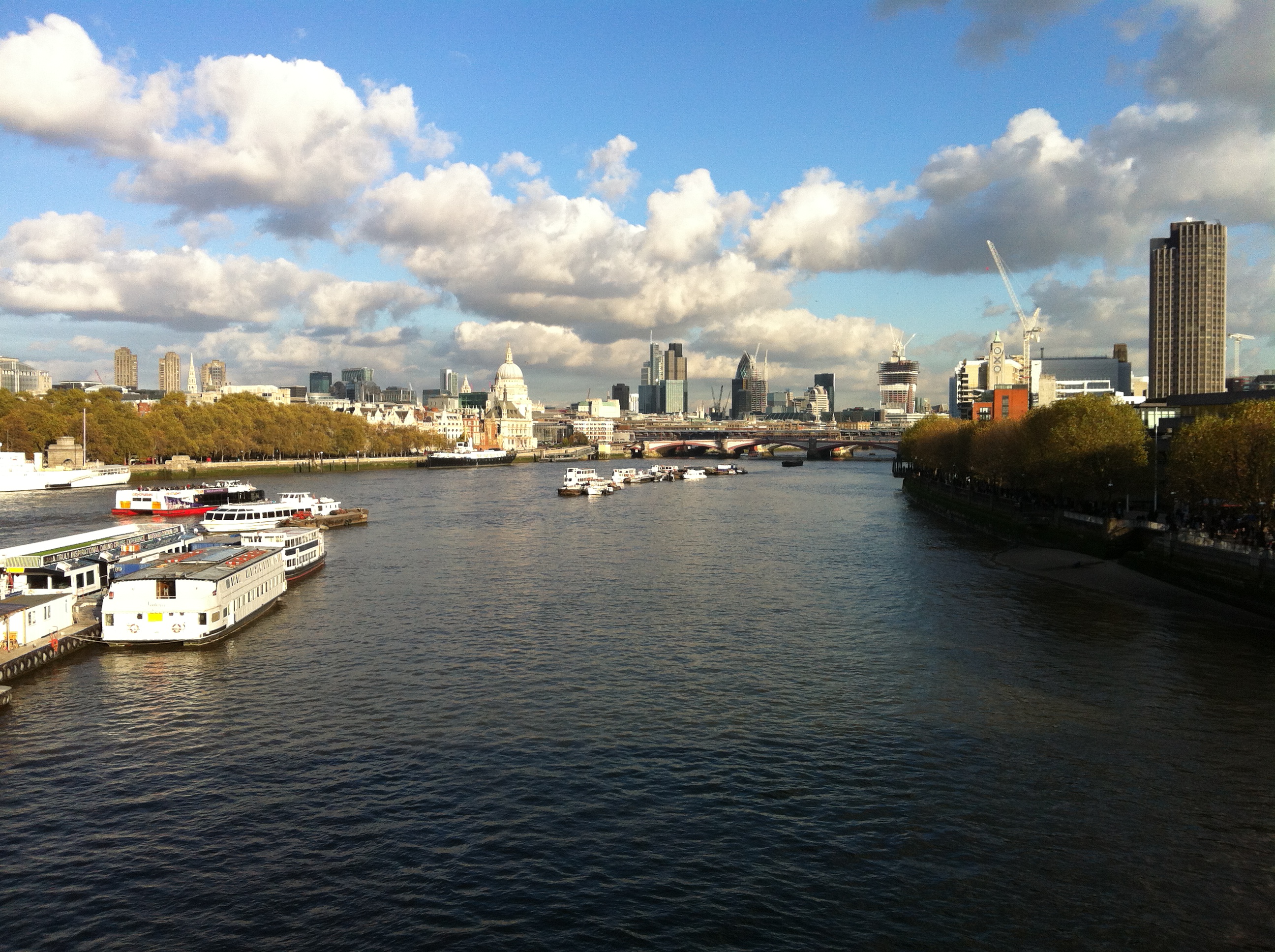
And so to finish, I choose neither North nor South London, but directly in between, and one of the greatest ground level (OK, slightly elevated, otherwise you’d get wet) views you can find in the city –immortalised by Ray Davies for a reason.  Here are my books on Waterloo Bridge. (We caught the 345 to Battersea Bridge and walked east along the river to get there).  I had hoped to capture the books in front of the view (that would have made a decent photo), but I couldn’t work out how to do this safely – leaping into the Thames in a failed rescue attempt of my rapidly disappearing books would not impress the river police, I fear.  So instead a poor photo of the view, and a picture of my books precariously balanced on the bridge, much to the bemusement of the Scandinavian tourists just out of shot, who watched my every move without offering to help.  Maybe they thought it was a weird English thing, which I suppose it sort of was.   I hope they enjoyed their trip to London, and that they read a book that captures the atmosphere for them as they remember it.

Image

Image

Maybe if you squint, turn your head sideways and jiggle the screen a little, you’ll get the photo I was aiming for….