“Happiness is a very fragile thing.” (Barbara Comyns)

It was JacquiWine’s review of The Juniper Tree by Barbara Comyns (1985) last month that encouraged me pick this from the TBR in time for Novellas in November, hosted by hosted by Cathy and Bookish Beck.
I really enjoy Comyns’ individual voice. She can give a sharp edge to stories presented seemingly without guile which works well within the premise here, taking as a starting point the Grimm Brothers fairytale of the same name:

My mother she killed me,
My father he ate me,
My sister, little Marlinchen,


Gathered together all my bones
Tied them in a silken handkerchief,


Laid them beneath the juniper-tree,
Kywitt, kywitt, what a beautiful bird I am.

Thankfully Comyns writes a less cannibalistic/abusive version but there are fairytale motifs from the story scattered throughout. This gives the novella a somewhat unreal, atemporal quality, although references are made to the 1980s.

The striking opening scene directly draws on the Grimm tale, as Bella Winter (physically similar to Snow White, although she feels highly self-conscious of a facial scar) travels to Richmond in search of a job:

“I noticed a beautiful fair woman standing in the courtyard outside her house like a statute, standing there so still. As I drew nearer I saw that her hands were moving. She was paring an apple out there in the snow and as I passed, looking at her out of the sides of my eyes, the knife slipped, and suddenly there was blood on the snow.”

The affluent woman is Gertrude, married to Bernard.  Bella ultimately gets a job over the river in Twickenham with Mary:

“Her teeth were small and pointed rather as an animal’s, indeed she resembled an animal with her delicate boned face with its merry expression, perhaps a squirrel.”

But this doesn’t prevent Bella becoming more and more entwined in Gertrude and Bernard’s life. It’s not surprising that she is in search of a family. Her mother is cold and judgemental:

“There was one shadow that I kept in the back of my mind as much as possible, and that was my mother. To me she was almost like a wicked fairy, poor woman.”

Bella also left behind a selfish lover Stephen, who was driving when the accident occurred which left her with the scar on her face, for which he blames her.

But Bella has a young daughter Marline, also known as Tommy, who she loves dearly. Tommy is biracial and both she and her mother face racism throughout. However, they build a happy life, living above Mary’s antique/junk shop and transforming a “gritty” back yard into a pretty walled garden.

They regularly cross the river to Gertrude and Bernard’s abundant, if carefully curated, home. Bella enjoys sitting with Gertrude under the titular tree, where territorial magpies build their nest and watch the comings and goings.

It’s hard to say more without venturing into spoilers, but if this is sounding a bit contrived and fey, there are enough prosaic details to ground the story, and humour too:

“I was glad to return to the freedom of the shop and to be queen of my own home—eat cornflakes or baked beans for supper, wear a dressing gown for breakfast and read books that did not improve the mind in bed.”

I also thought there was scepticism regarding relationships between the sexes here, no guarantee of happy-ever-afters. As well as positive portrayals, both Stephen and Bella’s mother are abusive to partners, and Bernard is in an ambiguous Pygmalion role. Families are shown as places of anger and destruction as well as nurturing, and Bella has to chose her people to create a happy life.

The undercurrent of death also stops the story feeling whimsical, and there is a very upsetting death which takes place, precipitating Bella needing inpatient mental health care. Although not gratuitous or gruesome, it is something some readers would want to avoid so if you want to know, DM me!

The introduction to my NYRB edition mentions the ending being abrupt, but I have to disagree. The ending ties up everything as much as it can and I can’t see anywhere further the story could go, having fulfilled its fairytale basis and continued into a pragmatic 1980s conclusion.

To end, a very young Björk making her film debut in an adaptation of the Grimm Tale:
“The power of books, this marvellous invention of astute human intelligence.” (Mariama Bâ)

My Around the World in 80 Books reading challenge is much neglected, so I was pleased to find a novella from a Sengalese writer in my local charity bookshop/goldmine, in time for Novellas in November hosted by Cathy and Bookish Beck.

So Long a Letter by Mariama Bâ (1980, transl. Modupé Bodé-Thomas, 1981) is only 89 pages long but covers major themes, around choices available to women in 1970s Senegal; polygamous marriage; Sengalese society emerging from colonialism; and generational difference. It is framed as a letter from Ramatoulaye to her long-term friend Aissatou, but as one long letter with no reply, it doesn’t really feel like an epistolary novel.

At the start of the novel, Ramatoulaye’s husband Modou has just died. As she undertakes four months and ten days of mourning as part of her Islamic faith, she reflects on the pain caused when Modou took his second wife, Binetou, a friend of their eldest daughter.

“I have enough memories in me to ruminate upon. And these are what I am afraid of, for they smack of bitterness. May their evocation not soil the state of purity in which I must live.”

Ramatoulaye trained as a teacher and works at the university, but finds herself considering what she gave up for married life:

“How many dreams did we nourish hopelessly that could have been fulfilled as lasting happiness and that we abandoned to embrace others, those that have burst miserably like soap bubbles, leaving us empty handed?”

Having met her husband during training, she has been married for thirty years and raised twelve children. Now the children are older and with her husband gone, she finds herself caught between generations:

“It was the privilege of our generation to be the link between two periods in our history, one of domination, the other of independence. We remained young and efficient, for we were the messengers of a new design.”

Yet her daughters are the ones achieving a marriage of equal partners, and while Ramatoulaye welcomes this, she struggles with other behaviours such as wearing trousers and smoking:

“The unexpectedness of it gave me a shock. A woman’s mouth exhaling the acrid smell of tobacco instead of being fragrant.”

The full extent of Modou’s disregard of Ramatoulaye emerges later in the novel: he didn’t tell Ramatoulaye he was courting Binetou or considering marriage, but leaves one day not to return. His friends arrive at the house to explain he has married again and left the family.

A strength of the story is Ramatoulaye’s refusal to outright condemn the young second bride. She recognises that Binetou has been pushed by her mother to marry for financial gain.

“Binetou, like many others, was a lamb slaughtered on the altar of affluence.”

And when Binetou doesn’t behave kindly, Ramatoulaye frames it thus:

“A victim, she wanted to be the oppressor. Exiled in the world of adults, which was not her own, she wanted her prison gilded. Demanding, she tormented. Sold, she raised her price daily. What she renounced, those things which before used to be the sap of her life which she would bitterly enumerate, called for exorbitant compensations, which Modou exhausted himself trying to provide.”

There is a strong sense of sisterhood running through So Long a Letter. In writing to her recently divorced friend, the narrative remains between two women, creating an intimacy and a focus on unmediated female experience.

“I am not indifferent to the irreversible currents of women’s liberation that are lashing the world. This commotion that is shaking up every aspect of our lives reveals and illustrates our abilities.

My heart rejoices each time a woman emerges from the shadows.”

To end, a film adaptation was released this year. From the trailer, it looks faithful to the book:

“My nails are my rhythm section.” (Dolly Parton)

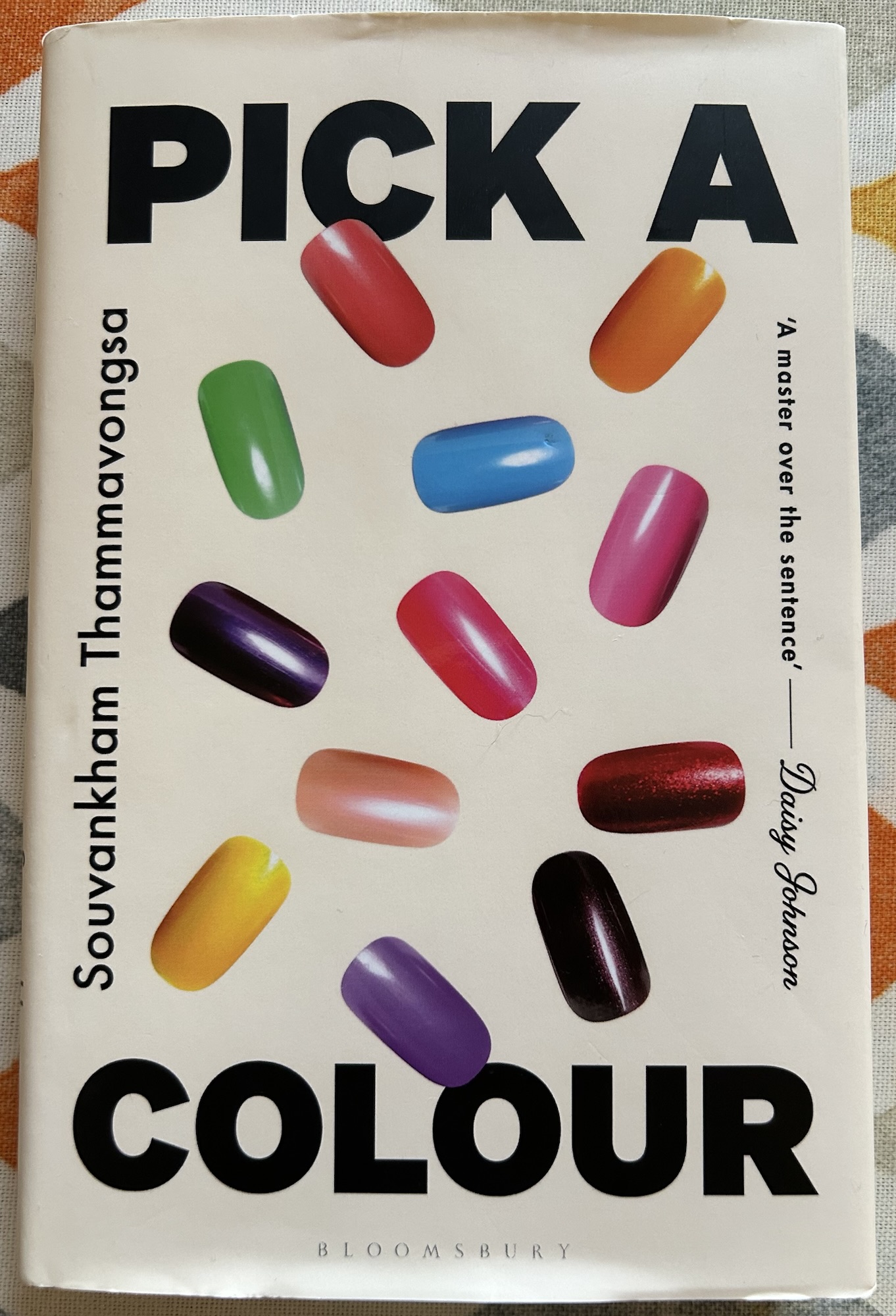
I mentioned buying two novellas in my post for A Room Above a Shop, and the other one was Pick A Colour by Souvankham Thammavongsa (2025). Once again, it was Susan’s enticing review which sent me in search of a copy!

Thank you so much to everyone who left good wishes when I mentioned finishing at work, and this post about a novella in a workplace seems apt for the update that I have a new job – I am extremely relieved! But I’ve a few weeks off between and so far I’m enjoying lots of reading and relaxation 😊

Earlier this year I read Marzahn, Mon Amour by Katja Oskamp which is set in a chiropodist/nail bar in a Berlin suburb. There’s something so appealing about a workplace setting, with disparate characters thrown together, and with a shop there’s the added unpredictability of who can walk in the door at any moment. Pick a Colour is set over the course of one day in Susan’s nail bar and manages all these elements so well.

Susan’s is owned by Ning, an ex-boxer who used to work for the bullying Rachel at the Bird and Spa salon a small distance away. Her nail bar has been open for five years and is called Susan’s because everyone who works there – including Ning – wears name badges with that name on it. The customers don’t notice.

“Looking at the two of us, them sitting on a chair above me, and me down low, you’d think I am not in charge. But I am. I know everything about them, whether or not they tell me. You look at something long enough and you begin to see everything in its details. And you’d be surprised what people tell you when they think you are a stranger and they’re never going to see you again.”

There is a strong theme of power, privilege and colonialism running through Pick a Colour. The city it is set in is unnamed, and the language spoken by the nail technicians is not specified, but they speak it in front of clients who don’t share it, and don’t understand that they are being appraised and gossiped about.

Quick-witted colleague Mai has a suggestion for Ning’s young, serial-dating and phone-obsessed client:

“She says quickly, ‘I know a guy for her.’ It is as if she’s been lining them up somewhere just for this moment.

‘What guy do you know.’

‘My dad,’ she says. ‘He’s single.’

We laugh because the man is old as a raisin that fell underneath the fridge from eighty years ago.

‘He doesn’t know how to text, though,’ I say. ‘So I don’t think it will work out for them.’

 I turn back to the waitress.”

Ning deliberately remains enigmatic: to her clients, her colleagues and as a narrator. A new staff member, Noi, joins and Ning is stern with her. She doesn’t join the others for lunch and for clients who ask about her life she makes something up. As readers we are privy to her memories of working for Rachel and her boxing coach Murch so we are aware of some of her trauma, but much remains unexplained.

“I look at the finger I don’t have. I’m actually quite proud of it and want to hold it up anytime someone sits in my chair. If my body has a centrepiece, it’s this space where something used to be.”

We follow Ning, Mai and Noi throughout the day as they expertly manage the logistics of the salon and the psychologies of their clients with skill, humour, compassion and also disdain when appropriate. Pick a Colour has a deceptive lightness of touch in its exploration of some major themes, encouraging consideration of what lays beyond the surface.

“I’m sure she has friends to talk to over brunch, maybe a therapist, but you don’t want to tell your friends stuff like this. Want to keep up the appearance of what everyone thinks happiness should look like.”

To end, I nearly chose My Name is Not Susan by Whitney Houston, but instead here are Dolly and Patti LaBelle demonstrating the title quote:

“All of my close friends are emotional train wrecks.” (Patrick de Witt)

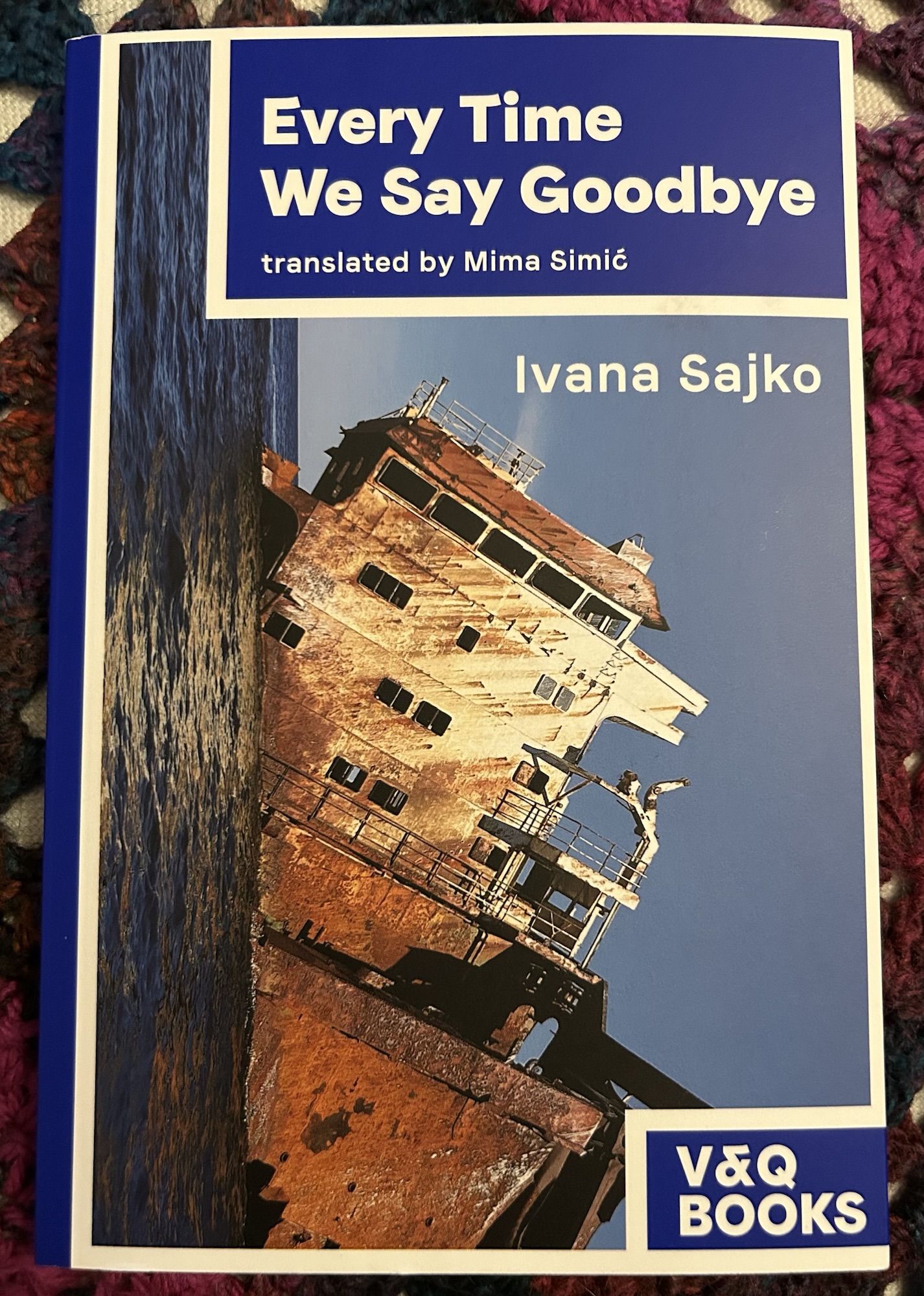
I don’t get many books sent to me by publishers, but I was really pleased to be offered Every Time We Say Goodbye from V&Q Books who specialise in writing from Germany. Ivana Sajko was born in Zagreb and her translator Mima Simić is Croatian, they both now live in Berlin. Back in 2023 I read Love Story from the same author, translator and publisher and found it powerful and unflinching.

With everything that’s been going on for me with work it’s taken me some time to get to it, but at 118 pages it’s a perfect Novellas in November read, hosted by Cathy and Bookish Beck.

A writer leaves his partner to catch a train from south-east Europe through to Berlin.

“Leaving nothing behind but the story of a man travelling through Europe hit by another crisis, boarding a train convinced that it doesn’t really matter why he’s leaving, as he has no reason to stay, the story of a man sinking into his notebook, grasping mid-descent at his messy notes, each of them opening a new abyss beckoning another fall, a man who still cannot bring himself to open the flat box of photographs from his mother’s drawer,”

Each short chapter is a single sentence, and while I know this sounds off-putting, I thought it worked brilliantly. The long, weaving sentences broken by commas perfectly captured the sense of memories surfacing back and forth against the physical rhythm of the train journey.

The narrator is not particularly likable but he is recognisable and believable. As he considers how his relationship failed and looks back on his life so far, his experiences are inextricably bound to the time and geography he lives within.

“Everyone left because they had to: my mother, my father, my brother, and all these goodbyes weren’t dramatic gestures but quiet moments of stepping onto a train or a bus, followed by long rides in uncomfortable seats with stiff legs, full bladders, a restless heart and the anticipation of the final stop, which meant a new beginning and facing expectations”

Twenty-first century Europe is shown as a place of dislocation, whether through wars, socio-economic pressures, or pandemics. The impossibility of the personal and political being distinct from one another is variously explored. The writer’s depression is at least partly due to what he witnessed as a journalist:

“I lay on the ground at Tovarnik station amid garbage and people now grown in distinguishable, on the filthy platform strewn with large stones, under the European Union flag that flapped ironically next to a border crossing sign that read ‘Croatia’ and ‘EU’”

And I particularly liked this observation about how international covid restrictions made explicit the shortcomings in his and his mother’s relationship:

“The plague was our internal standard, and now that it had also driven the rest of the world apart, our few metres gap became the global standard, the plague revealed the fatality of the smallest gestures and the significance of shortest distances, a single step towards or away from a person could help or harm them; gestures we’d used to hurt each other suddenly became protective, so we didn’t really need to make an effort to adopt the new regulations”

Grounded as it is the events and establishments of the day, Every Time We Say Goodbye still remains a slippery narrative, questioning the subjectivity and reliability of memory and how we understand our experiences:

“I’d like to write about him making faces and winking at me across the table, but none of that is true, I remember none of it, my brother has no face at all, he has no smile, no voice, no drops of sweat glisten on his skin, no scabs on his knees, he has no clear outline, there are no concrete details to him, every time I look in his direction, all I can see is a murky silhouette of a boy, he’s too far away”

There is a lot packed into this slim novella. It is undoubtedly a commentary on contemporary Europe; but it also portrays the inadequacy of human communication and understanding, and how this can wreak damage in our closest and most intimate relationships. Trauma is visited on large and small scales.

Not an easy read, but one I am glad to have read for its brave choices in style and subject matter. If, like me, you enjoy a Translator’s Note, there is a really interesting one from Mima Simić included.

To end, of course I was going to go with the obvious choice, an absolute classic:

“Small and growing businesses are the beating heart of our economy and the soul of our communities.” (Mary Portas)

I’ve finished at work now and my leaving gift was bookshop.org vouchers (to quote my colleague: “Tell me what you want so you don’t get some rubbish you’ll never use” 😀 ) which of course I started spending the same day! My first purchase was two novellas because it is #NovNov after all, hosted by hosted by Cathy and Bookish Beck.

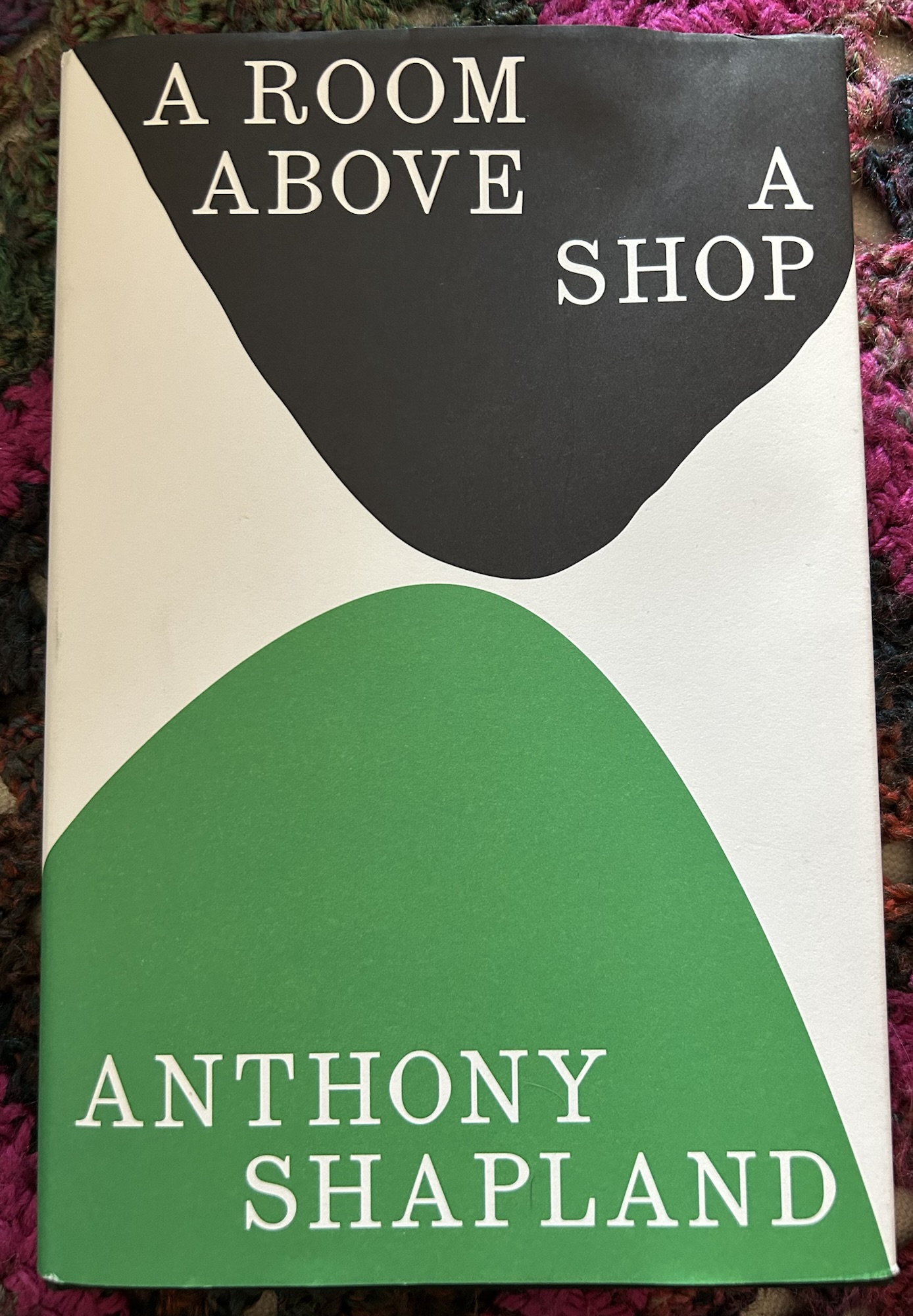
It was Susan’s review of A Room Above a Shop by Anthony Shapland (2025) which made it a must-read for me, and my astronomical expectations were met entirely. It’s a beautifully written, carefully observed and deeply moving novel.

M has inherited a hardware shop from his father. Part of the place for years and providing a community service, everyone knows who he is without knowing him at all.

“Keeping shop hours, he is the ear of the village, the listener. They never register his life at all, upstairs in that one room.”

He meets B, somewhat younger than him, in the pub, and invites him to meet on Carn Bugail on New Year’s Eve.

“He’s not quite sure what he’s walking towards. A pulling and pushing – his instinct says go; his anxiety says stay. Either choice feels wrong. He can’t not act.”

They know it is the start of something, they know there is attraction between them, but they live in a small community, still reeling from miners’ strikes and with increasing homophobia driven by a fear of a new illness, HIV.

“Paid work is fragile, rare. Divisions still run deep; picket-angry graffiti still visible, disloyal homes shunned. Pockets are empty, borrowing and mending and patching. Everything feels temporary. Desperate.”

When B takes a job at M’s shop and moves into the spare space upstairs, little more than a cupboard but useful for appearances’ sake, they build a life together. But it is a hidden life which takes place behind closed doors, and runs beneath the performance they undertake each day as colleagues in the shop. It is both familiar and filled with tension.

“This hill is a bright map of his childhood. A play track for stunt bikes, a den, a place to be lost, to disappear with siblings. Or away from them. A place to loiter and mitch dull school days out until the bell. The place to be alone with this feeling that he’s different to the others.”

Shapland achieves something remarkable in just 145 pages, with plenty of space on the page. He crafts a fully realised portrait of two people and their relationship within a clearly evoked setting. The historical details are light touches, just enough to give a flavour of the time and certainly enough to build the pressure that M and B are living under.

His writing is incredibly precise, so although the story is short, it is not a quick read. Every single word carries its full weight to create beautiful sentences. I found myself double-checking the author bio to see if he was poet as he writes with such sparse care, but apparently not.

A Room Above a Shop is so moving. Witnessing the silences that surround M and B, the way they are unable to make the most everyday, harmless expressions of love and care towards one another, or to have their relationship acknowledged by anyone other than themselves, is quietly devastating.

“No word or deed reaches the ground from this floating platform, on this mattress, this raft, on this ocean adrift in the afternoon sun. This room lightly tethered by stairs.”

To end, a scene of coming out in a 1980s Welsh mining village from Pride, and apparently pretty accurate of the real-life person’s experience:

“I’ve always looked at myself from above, as pleased as an omniscient narrator.” (Empar Moliner, Beloved)

Trigger warning: mentions childhood sexual abuse

This is my contribution to the wonderful Novellas in November 2024 hosted by Cathy at 746 Books and Beck at Bookish Beck.

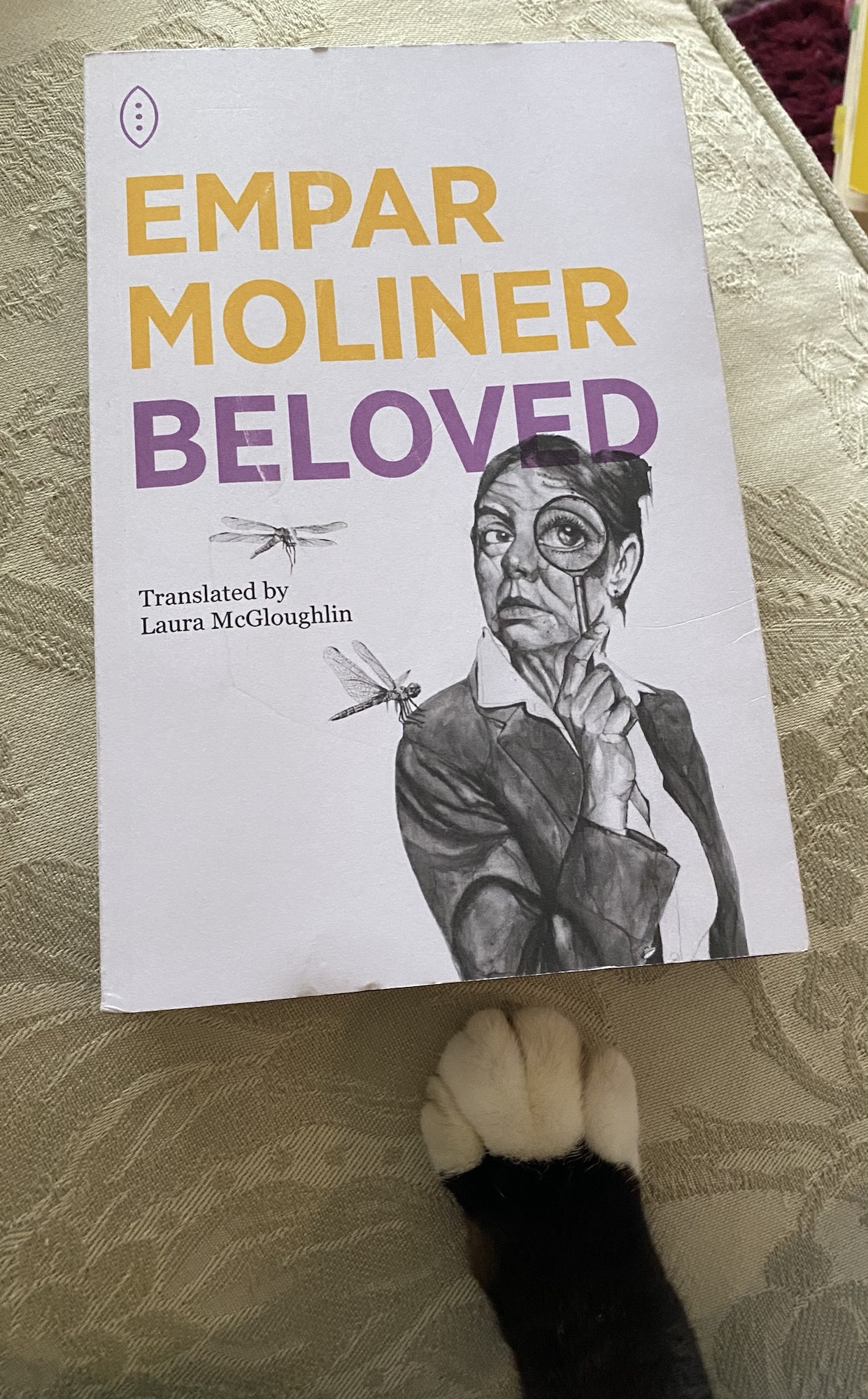
I heard about Beloved by Empar Moliner (transl. Laura McGloughlin 2024) through Stu at Winston’s Dad’s blog. I was immediately tempted and it seemed a good choice for my resolution to buy a book a month from an indie press/bookshop. The lovely 3TimesRebel Press even included a tote bag 😊

The striking cover illustration is by Anna Pont, a Catalan artist. She died from cancer earlier this year and all the proceeds from Beloved are being donated to cancer research.

The paw is courtesy of Fred aka Horatio Velveteen aka Mike Woznicat (as like the comedian Mike Wozniak he has a handsome moustache). Anyway, enough of my blithering about my cat. On with novellas!

Remei is in her early 50s and going through menopause. She is married to a musician ten years younger and at the start of the novella she has a revelation:

“Falling oestrogen, combined with lactose intolerance and loss of near sight, makes me see the world through the light wings of a dragonfly. Because of this I can see, with utter clarity, that my man is going to fall in love with this other woman.”

The novella follows Remei as she works out how she will manage this, as she tries to cope with her bodily changes and memories of a traumatic past at the same time.

She is a witty, forthright, slightly sardonic narrator. I really enjoyed the distinctive voice of this resilient woman.

“I must point out I find modesty overrated: I’m still a good deal. What’s more, until now I’ve performed pre-feminist sexual positions with total dedication and delight.”

Her husband, whom she calls Neptune, is not as clearly drawn. But this is not his story: we are firmly in the first person narration of Remei. She and her husband don’t seem hugely well-suited:

“I like music much more than him and I’m an illustrator. But he likes comics much more than me and he’s a musician.”

“I like everyone, in one way or another. He likes hardly anyone, in one way or another.”

“That’s how we see life too, he and I. Me: everything and right now, so nothing is left over. Him: only what fits, even if what is discarded will rot.”

But she loves him and she loves being a mother to their daughter. Her career is successful, although not quite in the way she planned. However, she is not entirely happy. She self-medicates with alcohol:

“My whole life is a gallop between the pretentious and the epic, depending only on how many drinks I’ve had.”

As she goes for runs with her friends, she reflects on the sexual abuse of her childhood, sanctioned by her family. She is estranged from her brother, after she spoke about what was happening and they were taken into care. Remei seems very much alone, despite all the people that surround her.

She is blisteringly honest about her attitude to her husband and the confusion of feelings as she recognises future events:

“Do I want him to continue to love me as much as ever? Yes. No. I want to float along, no more. I want him to be frozen.”

There is a lot of humour too. Remei never demonises Cris, the young colleague of her husband, but wryly observes her behaviour:

“Punctual, efficient, her ovaries functioning at top speed.”

Beloved shows how control is only sustained through the lightest of ties. Remei is a functional alcoholic who could tip over at any time; she realises her relationship with her daughter is on the brink of change as the latter grows older and more aware; she attempts to control her body with running but aging is relentless; and she takes steps to manoeuvre her husband and Cris in a way that will allow her to cope with the affair, but where will this leave her?

Remei is so flawed, so honest, so tenderly vulnerable and spikily self-sufficient, I was really rooting for her to find a way through all the hurt.

To end, the ever wonderful Tracy Chapman singing about changes in life:

“Writing is not a profession but a vocation of unhappiness.” (Georges Simenon)

November is the month of many reading events, and I definitely won’t manage them all, but I’m starting with Novellas in November, hosted by Cathy at 746 Books and BookishBeck.

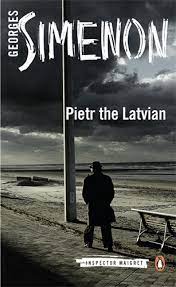
I’m taking this as a good opportunity to carry on with my much-neglected Le Monde’s 100 Books of the Century reading challenge, reading Pietr the Latvian by Georges Simenon (1930, transl. David Bellos 2013) which is No.84 in the list.

This was Maigret’s first outing and Simenon clearly had a very thorough understanding of his policeman from the start. Like many Maigret stories it is novella length, coming in at 162 pages in my English translation.

“Not that he looked like a cartoon policeman. He didn’t have a moustache and he didn’t wear heavy boots. His clothes were well cut and made of fairly light worsted. He shaved every day and looked after his hands.

But his frame was proletarian. He was a big, bony man. Iron muscle shaped his jacket sleeves and quickly wore through knew trousers. He had a way of imposing himself just by standing there. His assertive presence had often irked many of his own colleagues.”

In this first story, Maigret is in pursuit of a thief and conman, Pietr the Latvian, who may not even be from Latvia. (I was anticipating some xenophobia, which there wasn’t in the novel, but be warned there is Antisemitism at points.)

There is intelligence that Pietr has travelled to Paris from the Netherlands and Maigret is tasked with apprehending him. At the Gare du Nord he thinks he spots Pietr, but is then called to a train to identify the body of a man who also matches the description.

Following the first man takes Maigret into the world of well-heeled Parisian hotels:

“Maigret persisted in being a big black unmoving stain amidst the gilding, the chandeliers, the comings and goings of silk evening gowns, fur coats and perfumed, sparkling silhouettes.”

Things become more complex as Maigret follows various leads around the first man. His unshowy, procedural approach is evident from the start as he doggedly pursues evidence throughout Paris and to Fécamp at the coast. The conman knows Maigret is closing in and the danger grows.

I’ve not read all the Maigrets as there are at least eleventy million of them, but I would say from my limited knowledge that this isn’t the strongest. For such a short novel, it is repetitive at times and I wonder if this is because it was published firstly as a serial. In that format the repetitions would work well, but in the novel they weakened the story and it could have done with an edit with the new format in mind.

However, there is still so much to enjoy. The evocation of Paris, the character of Maigret and the novella length make this a quick, entertaining read. Simenon’s affection for his creation is evident and this makes his Detective Chief Inspector so appealing.

“The Latvian was on a tightrope and still putting on a show of balance. In response to Maigret’s pipe he lit a cigar.”

“A tree’s wood is also its memoir.” (Hope Jahren)

This week I’m joining in with Nonfiction November hosted by What’s Nonfiction. Despite not being a big non-fiction reader, I’ve been inspired by the month long event and also by Novellas in November, hosted by Cathy at 746 Books and BookishBeck. So I’m reading some short nonfiction to take part in both at once 😊

I’ve really enjoyed the novels by Deborah Levy that I’ve read: Swimming Home and Hot Milk. The first two volumes of her ‘living autobiography’ have been languishing in the TBR, so I’m grateful these two reading events prompted me to pick them up.

The first volume, Things I Don’t Want to Know (2013, 163 pages) is a response to George Orwell’s essay Why I Write, using the same headings (political purpose/historical impulse/sheer egoism/aesthetic enthusiasm). However, I think it’s also very much in conversation with Virginia Woolf’s A Room of One’s Own, as Levy considers what it means to be a professional writer for women in the twenty-first century.

“A female writer cannot afford to feel her life too clearly. If she does, she will write in a rage when she should write calmly.”

Yet the ‘living autobiography’ is written in the midst of events, without the distance of hindsight. This means the writing has an immediacy and is highly engaging, but there is also the discipline and consideration that comes from Levy being such a highly skilled writer.

The two sections that bookend the essay see Levy in Majorca at a time when she is deeply unhappy, finding herself crying on escalators. She escapes to Palma to think about her life, and also her art and the influence of other female artists. With Zofia Kalinska she observes:

“Content should be bigger than form – yes, but that was a subversive note to a writer like myself, who had always experimented with form, but it is the wrong note for a writer who has never experimented with form.”

While Things I Don’t Want to Know doesn’t follow a usual form for essay or memoir – it’s non-linear, never sets out a clearly-stated argument and hops between memories and broader observations – the content does remain bigger than form, because Levy’s observations are so sharp and her memories clear-sighted and unsentimental.

If I’m making this sound very heavy then I’m doing Levy a disservice, because she is humorous and has a wonderfully light touch. For example, she repeatedly returns to Duras in her artistic considerations, but wonders:

“Was Marguerite Duras suggesting that women are not so much a dark continent as a well-lit suburb?”

There is a strong feminist sensibility that runs throughout Things I Don’t Want to Know. In responding to Orwell, Levy highlights the very different experience of trying to work alongside the particular expectations and responsibilities faced by many women.

“We were to be Strong Modern Women while be subjected to all kinds of humiliations, both economic and domestic. If we felt guilty about everything most of the time, we were not sure what it was we had actually done wrong.”

In the Historical Impulse section, Levy reflects on her childhood in South Africa, where her father was imprisoned for being part of the African National Congress. As a child much of what is happening goes over her head though she also picks up on plenty; I found her portrait of her godmother’s daughter (who has to hide her relationship with her Indian boyfriend) very affecting:

“Melissa was the first person in my life who had encouraged me to speak up. With her blue painted-on eyes and blonde beehive that was nearly as tall as I was, she was spirited and brave and making the best of her lot. I couldn’t hear her but I knew her words were to do with saying things out loud, owning up to the things I wished for, being in the world and not being defeated by it.”

In the Sheer Egoism section, Levy moves to England with her family, and starts scribbling on paper napkins in cafes, not sure what she is doing but certain she has to write.

“Writing made me feel wiser than I actually was. Wise and sad. That was what I thought writers should be. I was sad anyway, much sadder than the sentences I wrote. I was a sad girl impersonating a sad girl.”

The Cost of Living sees Levy leaving her marriage and moving into a flat with her daughters. We learn very little about her husband or her marriage – which I was quite happy about – and instead Levy takes us with her as she considers what she wants from life and how she wants to live.

“Chaos is supposed to be what we most fear but I have come to believe it might be what we most want.”

The flat is not glamorous – visitors are creeped out by the communal areas Levy nicknames The Corridors of Love. She buys some plants, fixes her own plumbing, and works to her own hours.

“After all the heavy lifting, it was shock to be figuring out how to land the cadence of one single sentence”

Levy does not give the impression of being happy – she is grieving the breakdown of her marriage and she is very aware that she has not taken the easy choice – but she is living authentically. It is more sustainable and rewarding than fleeting happiness.

“To become the person someone else had imagined for us is not freedom – it is to mortgage our life to someone else’s fear.”

The strong themes of feminism, womanhood and the life of a writer established in Things I Don’t Want to Know continue through this volume. Levy has left behind the roles of Wife and Homemaker. She remains a mother but her children are older and don’t need her quite as they did.

“It was possible that femininity, as I had been taught it, had come to an end. Femininity, as a cultural personality, was no longer expressive for me. It was obvious that femininity, as written by men and performed by women, was the exhausted phantom that still haunted the early twenty-first century.”

Levy is a daughter and the section about her mother dying is very moving. She is also a friend and therefore not alone: her friend Celia helps her by providing the writing shed where her late husband (the poet Adrian Mitchell) used to work. Levy writes there trying to stay warm and listening to apples thud onto the roof.

At no point is The Cost of Living didactic. Levy doesn’t suggest for one moment that anyone should make the same choices she has. The title is literal and metaphorical: she has to work to earn money as this is a very real concern, but simultaneously to feel she is truly living there has been the cost of her marriage. All choices bring associated costs.

But with the right choices those costs are price worth paying. Levy is living her truth, has friends and fun, and she finds great meaning in her work:

“It is always the struggle to find language that tells me it is alive, vital, of great importance.”

I really loved both these volumes. Levy is so wise, funny and readable. She is never boring or pedestrian. The interesting choices she has made in life are reflected in the engaging choices she makes with her writing. I’m looking forward to reading the third volume of these memoirs, Real Estate, which was published this year.

To end, a song about a woman assessing her life choices:

“Vienna is just the best place to be.” (Conchita Wurst)

It’s November, so ‘tis the season of many wonderful reading events. Margaret Atwood Reading Month is being hosted by Buried in Print; What’s Nonfiction is hosting Nonfiction November; AusReading Month is being hosted by Brona at This Reading Life. I’m hoping to join in with them all, but I doubt I’ll be able to because my reading and blog writing is still positively sloth-like.

However, with this post I’m managing to contribute to Novellas in November, hosted by Cathy at 746 Books and BookishBeck; and German Literature Month, hosted by Lizzy  Siddal, and Caroline at Beauty is a Sleeping Cat. And I’m only cheating slightly by counting the same book for both 😀

Week 1 for German Literature Month is focussed on writing from or set in Austria, so I’ve picked two novels by Austrian authors who have also set their stories in Austria.

Firstly, The Tobacconist by Robert Seethaler (2012, trans. Charlotte Collins 2016) which at 234 pages is a short novel but a wee bit long to count for #NovNov. Set in 1937, teenage Franz leaves his lakeside home for the hustle and bustle of Vienna:

“the noise – there was an incessant roaring in the air, an incomprehensible jumble of sounds, tones and rhythms that peeled away, flowed into each other, drowned each other out, shouted, bellowed over each other. And the light. Everywhere a flickering, a sparkling, flashing and shining: windows, mirrors, advertising signs, flagpoles, belt buckles, spectacle lenses.”

He has a job as an assistant to old friend of his mother’s, working in the tobacconist’s shop. His boss Otto is non-smoker with a rather unique approach to his job:

“Reading newspapers was the only important, the only meaningful and relevant part of being a tobacconist; furthermore if you didn’t read newspapers it meant the you weren’t a tobacconist”

Despite this unpromising start, Franz’s horizons begin to widen. The newspapers give him a burgeoning political awareness, and the vibrant city offers opportunities for romance. Even the shop stock suggests vistas unknown:

“Each brand had its own particular smell, yet they all had this in common: they bore within them the aroma of a world beyond the tobacconist’s, Währingerstrasse, the city of Vienna, beyond even this country and the whole wide continent.”

Franz is a sweet and endearing character, but not sentimentalised or idealised. His earnestness and energy can be somewhat tiresome, if entirely believable. He even tests the patience of his most famous customer:

“Freud sighed. For a fraction of a second he considered yielding to the sense of anger that was welling up deep inside, and stubbing out his Hoyo on the brow of this impertinent country lad. He decided against it and puffed smoke rings into the air instead.”

I’m not usually a fan of fictionalised real people, but the friendship between the eminent psychoanalyst and the young Franz is subtly evoked and not remotely heavy-handed. Seethaler doesn’t try and shoehorn in loads of Freudian references to demonstrate how much research he’s done; Freud is shown as an aging man and very vulnerable as a Jewish person amongst the escalating political situation in Austria.

“the colossal difference between their ages automatically established the distance Freud found agreeable and which was, indeed, the thing that made close contact with the majority of his fellow humans tolerable”

The focus is primarily on Franz as he ricochets around the city, falling in and out of love, writing to his mother and growing up, all while Nazism tightens its hold. The insidious nature of this is brilliantly done through incidental details:

“In front of the town hall, children and youths were gathering in small groups. They were hanging around on corners, standing arm in arm, blocking the pavements or running across the square, laughing and shouting, waving hats and swastika flags.”

Until suddenly it’s not incidental anymore. Violence explodes, Franz has to deal with the Gestapo, people disappear, and Freud is persuaded to leave his home forever…

The Tobacconist is a tragedy that never portrays itself as such. It tells a deeply ordinary story – despite the famous person in its midst – and uses the reader’s knowledge of history to fill in the gaps. It’s a brilliant technique, because it takes a protagonist we all recognise, having all been teenagers discovering a wider world at some point, and places him inescapably within the brutality of a genocide, making historical events resonate on a personal level.

There is an ambiguity to the ending of The Tobacconist which rather than being frustrating I thought entirely apt. Under a brutal regime, so often people have to live with not knowing.

“For it was well known that waiting and seeing was always the best, perhaps even the only way to let various troubles of the times flow past and leave you unscathed.

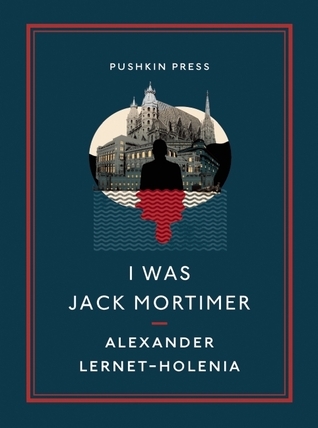
Secondly, I Was Jack Mortimer by Alexander Lernet-Holenia, (1933, trans. Ignat Avsey 2013) which in my Pushkin Press edition is 203 pages but they are not standard size, and when it was published in a Pushkin Vertigo edition it was 160 pages, so counts for Novellas in November – hooray!

A disclaimer to start, because although I enjoyed I Was Jack Mortimer a great deal, I thought the fundamental premise was completely silly.

Spooner is a young cab driver who at the start of the novel is stalking a young woman – so far, so yuck. Then a man gets into his cab, but by the end of the journey the passenger has been shot dead, without Spooner hearing or seeing a single thing.

“Spooner stood in the middle of the room, and the events of the past minutes raced through his mind, like short, randomly edited film clips; the dead man, the speeding cars, the news stand, the dead man, the carriageway, the blood, the dead man, the streets, the dead man.”

What would you do? I think almost entirely everyone would go to the police. But this wouldn’t make much of a thriller, as the police would take the story out of your hands and you’d have to go back to smoking with the other cabbies, boring them with the story, and being creepy towards women.

So instead, for reasons best known to himself, Spooner disposes of the body and starts to inveigle himself into the man’s life.

“he was pretty sure that as soon as the crime was discovered it’d be put at his door, so that in the end he began to feel as though he had in fact perpetrated it himself. And had he really been the murderer, in all probability he wouldn’t have been behaving any differently from the way he was now.”

I Was Jack Mortimer is a really enjoyable thriller, if you can get past the unbelievable set-up of Spooner’s decision-making. I just put that element to one side and allowed the pacy writing to carry me along as Spooner gets increasingly out of his depth. The 1930s and the city of Vienna are beautifully evoked with a wonderful sense of time and place.

The trouble with writing about thrillers is that you can say practically nothing for fear of spoilers. What I will say is that towards the end Spooner has the following epiphany:

“All I needed to do was go to the police and report I had a dead person in the car and didn’t know who shot him, and in the end they’d have had to believe me and I’d have been released. Instead, I’ve done just the opposite and have landed myself in no end of a mess.”

Well, quite.

“One doesn’t step into anyone’s life, not even a dead man’s, without having to live it to the end.”

To end, I tried to find a trailer for one of the film adaptations of I Was Jack Mortimer, but failed. So instead a chance for me to totally indulge myself with the trailer for my most favouritest-ever film, which is set in post-war Vienna: