I thought the cover of Lemon was absolutely perfect. The simple image of an absent woman suspended in sky strikingly captures the unsettling quality of this story about a murdered young woman.
Lemon is not a whodunit, although I think that central question is answered obliquely. There is no satisfying resolution with all the ends tide up neatly – that is not what this novella is about. Rather, it is about people struggling to find a way through life when it has been touched by a violent crime. It is about how to try and find peace when there are no easy answers.
The murder of 19-year-old Kim Hae-on in 2002 shocks the local community. The killer is not found, despite two local boys being suspected. Predictable tabloid sensationalism means it becomes known as the High School Beauty Murder, as Kim Hae-on was strikingly beautiful and somewhat unknowable. Yet beyond the cliches lies a life taken and a grieving family.
The various chapters in Lemon have different narrators between 2002 and 2019. It begins with Hae-on’s younger sister Da-on, struggling to understand who she is in the wake of her sister’s killing.
“Does this mean I’m still not free? That I’m not free, not one iota, from those smooth, fair, irrelevant details from 16 years ago, those endless memories of my sister’s loveliness, which had made me undergo plastic surgery, turning my own face into a crude patchwork of her features?”
We gain perspective on Da-on from the memories of a classmate, Sanghui:
“Da-on, the younger sister, was the one who looked after Hae-on, as one would after a little sister. She’d stop her big sister on the street before they reached the school gate and then circle her examining the front and back of her uniform to make sure nothing was out of place.”
[..]
“Then you could witness the older sister fleeing gracefully down the hall or across the school field with her long lithe limbs, while the younger one raced shrieking after her, like some wild animal. They seem never failed to give both teachers and students a good laugh. That was Da-on’s gift. She had a lively, bubbly kind of warmth that could pull Hae-ons devastating, otherworldly, even glacial, beauty into our reality, dissolving it in laughter.”
We learn later on that there was a clear reason for this protectiveness. Hae-on seemed unaware of the modesty expected in society and could forget to wear underwear, sitting in a way that exposed this. Da-on would try to ensure this didn’t happen but the external misreading of this behaviour probably played a part in her sister’s disappearance. There is never any sense of victim-blaming from any of the narrators in Lemon, with one exception and the reader is clearly not expected to align with those views.
More details of the day of the murder emerge through the shifting views, bound up in the lives that continued beyond. There is real sadness here, particularly in the grief of Hae-on’s immediate family and also for Han Manu, one of the suspects.
There is a haunting quality in Lemon. It is never so crass as to make the murder of a young woman anything other than it is; it is not gory entertainment nor is it made easier through a suggestion of any sort of metaphysicality. But by capturing the fallout of the violence onto the everyday lives of those who knew Hae-on, Kwon Yeo-sun expertly demonstrates the ongoing destructiveness of a life taken.
“It will go on endlessly, until the end of Da-on’s life, or maybe beyond that. Not being able to put an end to an incident so horrific – I couldn’t begin to imagine that kind of weight on her life.”
Winter in Sokcho – Elisa Shua Dusapin (2016 trans. Aneesa Abbas Higgins 2020) 154 pages
Day 2 and I’m delighted that yesterday Simon at Stuck in a Book posted that he’ll be joining me with his #ABookaDayinMay, surely adding many more titles to my TBR mountain 🙂
The narrative voice in Winter in Sokcho is an intriguing one: detached yet painfully intimate, ambiguous yet pragmatically clear. A nameless young woman records what happens to her, but it is up to the reader to decipher the meaning.
She works in a hotel in out of season Sokcho, a coastal tourist town sixty kilometres south of the border with North Korea. It is not a glamorous hotel even in peak season:
“Orange and green corridors, lit by blueish light bulbs. Old Park hadn’t moved on from the days after the war, when guests were lured like squids to their nets, dazzled by strings of blinking lights.”
“I loved this coastline, scarred as it was by the line of electrified barbed wire fencing along the shore.”
A guest arrives at the hotel, a French graphic novelist named Kerrand. Slowly he and the woman form a bond that is never quite articulated. It could be sexual. It could be father/daughter (her absent father is French too). He wants her to show him the area as she knows it, but it is a flawed premise from the start:
“He’d never understand what Sokcho was like. You had to be born here, live through the winters. The smells, the octopus. The isolation.”
The isolation both geographical and individual lends the story a bleakness that verges on Gothic, despite all the neon lights. A trip to the border is downright eerie; the other guest in the hotel is permanently swathed in bandages as she recovers from cosmetic surgery.
The pressures on women and their appearance bear heavily on the narrator. Her mother chastises her for eating too little, and she seems to have body dysmorphia/an eating disorder. Her boyfriend leaves for Seoul for a modelling career, casually accepting he’ll undertake facial surgery if that is what is needed for work, and urging her to do the same.
Like so much else in her life, she seems to feel somewhat detached from her boyfriend. There is a sense of everything in her life being a step removed. She has no friends, her mother is suffocating yet pitable and distances with her need to be carefully managed. The narrator speaks with Kerrand in English despite her French being more fluent.
As her involvement with Kerrand grows, she feels an ambivalence around his drawings of women, which never make it into his published work:
“In bed later, I heard the pen scratching. I pinned myself against the thin wall. An gnawing sound, irritating. Working its way under my skin. Stopping and starting. I pictured Kerrand, his fingers scurrying like spiders legs, his eyes travelling up, scrutinising the model, looking down at the paper again, looking back up to make sure his pen conveyed the truth of his vision, to keep her from vanishing while he traced the lines.”
This ambivalence moves towards an ending that is wholly ambiguous. It could be read several ways and I remain unsure as to what I think happened. This isn’t remotely unsatisfying but entirely apt. Winter in Sokcho is a compelling exploration of the unknown: in ourselves, in others, and in the forces of history we all live with. How we reconcile ourselves to this is for the individual to discover. I think the narrator did find a way, I’m just not sure what it was…
“You may have had your wars, I’m sure there are scars on your beaches, but that’s all in the past. Our beaches are still waiting for the end of a war that’s been going on for so long people have stopped believing it’s real. They build hotels, put up neon signs, but it’s all fake, we’re on a knife-edge, it could all give way at any moment.”
The Story of Stanley Brent – Elizabeth Berridge (1945) 75 pages
Oh dear, I am so behind on everyone’s blogs and of course my own blogging. I hope everyone is well and reading lots of lovely books, and that those in the northern hemisphere are enjoying the longer, lighter days. I’m really hoping May sees me catching up with the blogosphere, and against my better judgement I’m going to give my annual Novella a Day in May a bash too…
Elizabeth Berridge is a writer that I really wanted to get to, and thankfully she has a couple of novellas to her name, so this month seemed the perfect time. The Story of Stanley Brent was her debut and at 75 pages it just makes my criteria for a novella* rather than a short story (in modern editions, my old edition is a bit shorter so I’m starting the month by cheating 😀 )
Opening five years into the last century with a proposal of marriage hastily undertaken on an aunt’s landing, Berridge expertly sets up the themes of her novella: domesticity, social awkwardness, romantic hopes butting up against worldly realities (in this instance, not being able to embrace fully as Ada is in a dressing gown and risks her decency).
The proposal brings out the very different characters of the titular protagonist and his betrothed:
“Ada saved quietly and fiercely for a good home, Stanley lived in the moment and hoped for some stroke of luck, content with the right to kiss his fiancé and hold her hand without reproach, to sit out dances with her. She was promised to him, that was enough.”
Things being enough while Ada hopes for more, will continue through their marriage. Stanley, so determinedly placed by Berridge at the centre of the story, is rarely the leading man of his own life. He drifts into middle management but doesn’t drive the estate agency in any direction and fails to keep up with the changing world. The First World War happens away from him, unable to join up due to a back problem. The Great Strike has a limited impact on his life beyond the train disruption challenging his commuting routine.
His lack of reflection or insight has traumatic consequences for Ada on their wedding night. The impact of total sexual ignorance is dealt with frankly by Berridge, reminding me of Ian McEwan’s On Chesil Beach:
“That her body, washed meticulously and yet ignored by her, should attain such an importance, should cause a good and decent man like Stanley to be so – so bestial and undignified, was shattering. If Stanley could not be trusted, who could? And yet her friends who were married seemed happy enough, they had children… at this a fierce fearful doubt struck her. Suppose they, as Stanley had said, taut and angry, his patience gone, suppose they enjoyed this hateful and frightening thing?”
Somehow the couple recover, conceive two children, and things tick along. Ada has an extra-marital affair, Stanley drinks more heavily over the years. They are lives of quiet desperation, and I felt Stanley’s story was a sad one, all the more so because he didn’t seem to realise he had the power to make it a different one.
“He shook his head. It was all too big for him, he must keep to the small things, the concrete reasons, solid as stepping stones in turbulent waters.”
His father-in-law is another powerless, sad man in the story, one who plays an unfinished tune on the violins he makes and mends. A melancholy refrain in the book but somehow I didn’t find TSOSB depressing. It ends on a hopeful note, but one which may or may not be realised.
I was so impressed by this first encounter with Elizabeth Berridge and it definitely made me keen to read more. I have Across the Common by her and it’s fewer than 200 pages so maybe I’ll even manage it later this month 😊
Someone less impressed than me was a previous owner of my very old secondhand copy, who inscribed it with the following:
“Berthe, from Mother. Sorry, a very bad choice. No Spiritual Outlook. October 1945.”
I would love to have known how Berthe found it. I hope she enjoyed it more than her mother did.
This my second contribution- just in time!- to the wonderful ReadIndies event which has been running all month, hosted by Karen and Lizzy.
Initially I planned for this post to be two novellas published by Fitzcarraldo Editions, in honour of the event’s origins as Fitzcarraldo Fortnight. However, the second novella I read was so unrelentingly brutal and grubby – though expertly written and translated – that ultimately I couldn’t recommend it that much. So instead this post covers the initial Fitzcarraldo novella which I loved, and the independently published novel I read after the second novella in order to recover!
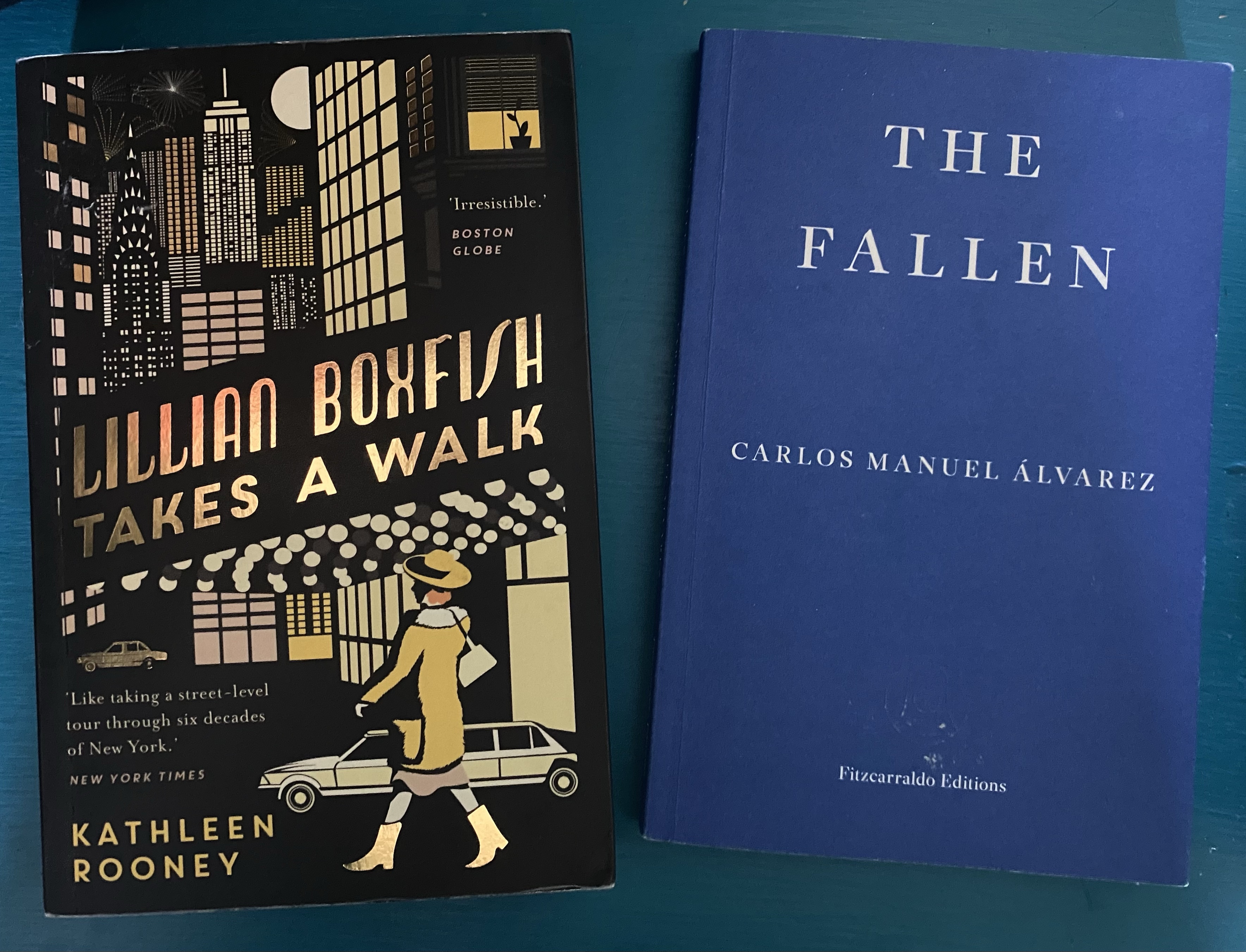
Firstly, The Fallen by Carlos Manuel Álvarez (2018 trans. Frank Wynne 2019) which forms a stop on my Around the Word in 80 Books challenge as it’s set in Cuba. The story follows one family over a short period, each member narrating a chapter at a time.
The mother, Mariana, is experiencing black-outs and fits, attributed to the treatment she had for womb cancer. Her husband Armando is a manager in a state-owned tourist hotel, committed to the communist ideals of the past even as the world moves on around him. His daughter María works with him and helps care for Mariana:
“I didn’t want to contradict her, I simply stood and watched. Just then, she hunched over and the strangest thing happened. Her face drained away, seemed to contract, like when you clench a fist, as though everything was drawing back around her nose. Her eyes fell, her forehead and mouth shrivelled and her cheeks began to wither. Then she burst into tears and collapsed.”
Meanwhile her brother Diego is completing his military service, devoid of any commitment to the cause:
“Armando, indefatigable, continued inoculating me with his positive energy, his moral code, his inexhaustible optimism, injecting me with a radioactive material that, on contact with the real world, simply exploded like acid in a burst battery and was transformed into frustration. I’m eighteen years old but I feel like an old man.”
All the characters are flawed in their different ways but all are recognisably human and sympathetic. I felt most for poor Armando, surrounded by corruption that nobody cared about but him:
“The truth is, they were firing him because he refused to accept others stealing, but since they couldn’t tell him that, they told him they were dismissing him for stealing,”
The contrast between Armando and his children effectively demonstrates the tension between the ideals of the past and the reality of the present. However, this is never done at the expense of characterisation the individual relationships. The tension within a family, vulnerable to disintegration as the health of its matriarch deteriorates, felt very real.
The polyphonic style builds up a picture of a loving family with all it’s frustrations, secrets and things left unsaid. It also demonstrates the differing responses of people to the same situation as we hear the same events given a different meaning by the various characters. This wasn’t at all frustrating as Álvarez managed to sustain an engaging and coherent narrative.
I really loved this novella. I thought the language was beautiful without obscuring the difficulties it was exploring for the family, and the device of using one family to explore wider Cuban society and history didn’t feel at all clunky or contrived.
“The acrid smell that tickled my grandfather’s nostrils still lingers. This is a pueblo fecund with the dry bittersweet dust of horseshit and with the sea a few kilometres away, even if we turn our back on it. The last street in the pueblo, the street that leads to the train station, the street where my grandfather settled, where my father started out in life, where later I started out, is broad but deserted, with much light on the asphalt, with light that trickles down the gutters and lighting the potholes, as though light were contained in a glass and the glass had tipped over. No one comes here.”
Secondly, the delightfully titled Lillian Boxfish Takes a Walk by Kathleen Rooney (2017) published by Daunt Books. This was a lovely escapist read – just the ticket after the second traumatic novella.
It’s New Year’s Eve in 1984, and the titular heroine is one year older than the century (although no-one knows this as she routinely lies about her age). Having moved to New York City when she started out on her career, she dons her fur coat (yuck) and her flame orange lipstick, to take a circuitous route around the city she loves – just about:
“The city I inhabit now is not the city that I moved to in 1926; It has become a mean-spirited action movie complete with repulsive plot twists and preposterous dialogue.
[…]
I love it here, this big rotten apple. I’m near my old haunts, my Sycamore trees, my trusty RH Macy’s.”
Lillian became an advertising copywriter for the famous store, the highest-paid woman in the industry in the 1930s, pioneering her own particular style:
“Nobody was funnier than I was, not for a long time, not for years. Mine was a voice that no one had heard speaking in advertisement before, and I got them to listen. To listen and then, more importantly, to act on what they’d heard.”
Lillian is based on the real person of Margaret Fishback, and the novel was written with the cooperation of Margaret’s family, with Lillian’s quoted copy actually belonging to Margaret.
Certainly Lillian’s memories of her life in New York seem authentic as she navigates a sexist working world unused to professional women. This may sound reminiscent of Mad Men, but I would say it’s not nearly as dark. It’s not totally light either – we learn Lillian had some very difficult times – but Lillian is resilient and peppy, and her voice rings out.
Like Mad Men though, Lillian Boxfish… brilliantly evokes a time and a place. You gain a wonderful sense of New York in the early decades of the twentieth century, with it’s rapid, optimistic growth, ever skywards.
“It was freshly built when Helen and I moved in, completed in 1926. The street noise then was different than now – everything was being constructed, going up, up, up. Progress is loud: riveters riveting, radios blaring.”
We hear about Lillian’s friends, her marriage to the dashing Max (contrary to all her plans) and raising her son Gian. But most of all we hear about Lillian’s relationship with herself, and it is one that has not always been easy:
“But there was no way to know, and no way to go back. I could not revise. I had been who I had been, and so I largely remained.”
Still, Lillian remains undaunted and in her ninth decade she remains interested in people. She encounters a few on her night-time perambulation, seemingly enjoying chatting about the mundane as much as she does the more dramatic encounters. Her career long behind her, she retains her pithy turn of phrase:
“Salt and pepper hair shellacked into an oceanic sweep above his leonine face. Like so many public television people, he was a former radio guide, with a voice made for broadcasting: even his name sounded like an avuncular chuckle.”
I really enjoyed my time with Lillian. Her voice was distinct, unique and entertaining. She described the love of her life – New York City – with clearsighted affection. A formidable woman, and a likable one.
“I am not going to stay off the street. Not when the street is the only thing that still consistently interests me, aside from maybe my son and my cat. The only place that feels vibrant and lively. Where things collide. Where the future comes from.”
To end, Lillian is haunted by a song she keeps hearing on the streets, a rap that she enjoys. Finally, it is identified for her:
This is a contribution to the wonderful ReadIndies event running all month, hosted by Karen and Lizzy.
I’ve also taken the opportunity to visit two more places on my much-neglected Around the Word in 80 Books challenge, which is not so separate as it might first seem. Deciding to read a book written by a person from each place I visit (rather than set there but written by an author from elsewhere), means I’m dependent on English language translations being available. Based on absolutely no evidence except my impression, it seems to me that independent presses are more willing to look far and wide for their lists.
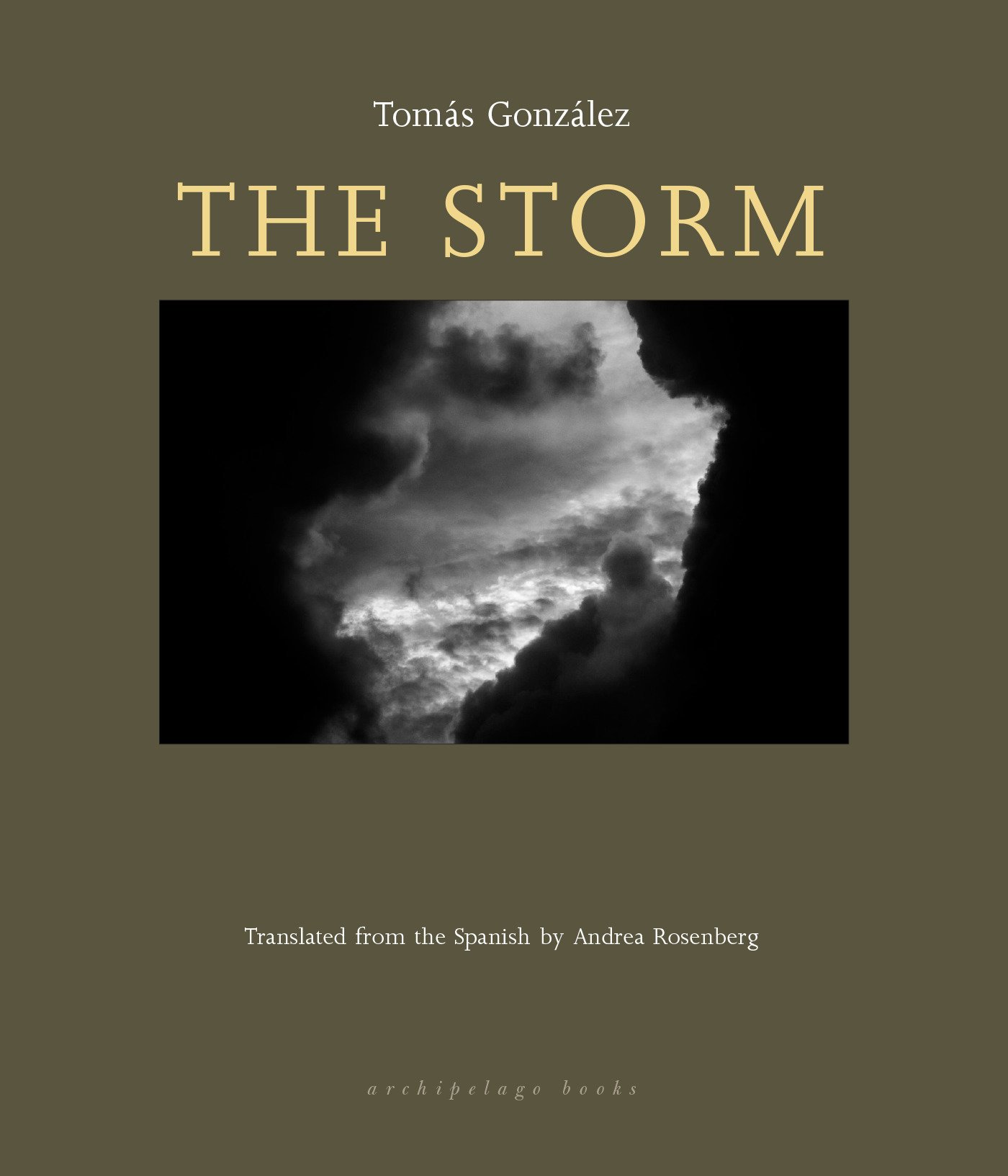
This is certainly the case for Archipelago Books, who publish my first choice of The Storm by Tomás González (2014, trans. Andrea Rosenberg 2018). They are a “not-for-profit press devoted to publishing excellent translations of classic and contemporary world literature.”
The Storm follows a family of hoteliers/fishermen as they set out for their usual catch, despite the impending titular weather. Set in a Columbian costal village, we also hear from the residents and tourists who are there the same night.
Mario and Javier are twins who despise their abusive father but are tied to him through where they live and how they earn their money. The novel opens with them loading their boat at the father’s insistence that they go out, despite the storm.
“To someone looking in from the outside, who couldn’t see the orange glow of hatred in the son’s belly nor the greenish flame of contempt in the father’s, time would seem to keep flowing the way it always had.”
The novella follows the three men out at sea and cuts back at various times to people in the village. The many voices didn’t feel clearly distinguished to me, but that may have been a deliberate choice as they form an effective Greek chorus. This includes the twins’ mother Doña Nora’s hallucinations. She is extremely unwell and the twins are loyal to her, blaming their hated father.
“Look, look at that sunset! he thought then, as if the orange on the horizon were presenting the conclusive argument against his brother’s darkness, his own darkness, and even the cruel and involuntary darkness of the madwoman back onshore.”
The Storm is determinedly unidealistic about family and coastal Caribbean tourist destinations – no pristine powdery white sand here – but it’s not depressing either. There is a humour and resilience, and even some compassionate moments between Doña Nora and the other permanent residents.
González expertly builds the tension in the novella, the family relationships reflecting the increased pressure and movement towards breaking point which occurs with a storm.
“Out at sea, the storm’s display intensified. Nobody really felt like talking, especially not about landscapes, so they didn’t say much, but now and then one of them would turn his head to look at it.”
Secondly, Love Novel by Ivana Sajko (2015 trans. Mima Simić 2022) which like The Storm is about the destructive force of family. They also have in common that both books are lovely paperbacks with French flaps and both have the translators names on the covers – hooray!
Love Novel is published by V&Q Books and it was very kindly sent to me by ReadIndies host Kaggsy, so this seemed the perfect time to read it! V&Q Books is the English-language imprint of Voland & Quist, a German independent publisher.
The title is ironic, as the relationship between the young couple, parents to a small child, (all unnamed) is filled with barely supressed violence and hatred. They are both struggling to stay afloat in the circumstances they find themselves. She was an actor but has stopped working to care for their child; he is an unemployed scholar of Dante, living in his own circle of hell as the (unnamed) country they are in deteriorates further.
The novel begins in media res as we are thrown into a screaming fight between the two:
“reacting like a typical female, typical by his standards, meaning excessive, hysterical and self-destructive, since she’d deliberately pulled her hair out, deliberately curled up in the pose of a crushed alarm clock and forced tears to her eyes as if to take revenge on him with his classic scene of domestic violence.”
Sajko expertly balances the domestic detail alongside more surreal images that never detract from the desperate, oppressive circumstances she is depicting:
“Words comparable to quicksand. Crumbling between their teeth, getting crushed into slimy sand, slipping from their lips like muddy bubbles with no meaningful content. Dripping down their chins. They should both look in the mirror and commit the image to memory. To make them sick of it. But they won’t. They’d rather keep the mud gurgling until they run out of oxygen…”
The writing is also very even-handed between the two protagonists. There is no sense of taking sides as they are both shown as trapped and powerless, flailing against forces beyond them. She is constantly indoors:
“Women walk a mile between walls, lose a whole night over some bullshit, put superhuman effort into it, and then, instead of breaking down, surrendering and finally resting, they stay bolt upright, as if they’d swallowed a broom or simply turned to stone. They even manage to wear clean clothes.”
While he concerns himself with wider economic and political circumstances, without agency:
“All the days he slobbered away on the couch watching live parliamentary sessions and listening to them tell him from the podium that it’s time to tighten his belt, or take out a loan, at the top up kind, for bread, milk and phone bills, because everything that could be looted has been looted and everything that could be sold has been sold, and all the money is now gone until someone lends him some; and so they warned him to be careful with that, too, because other people’s money is easily spent and hard to pay back”
The style Sajko uses, with those long running sentences, works extremely well in depicting an unravelling situation, full of uncontrolled reactions and little reflection. (Paradoxically, I suspect to use this style well requires a lot of control and reflection!)
What I especially liked about Love Novel is that it demonstrates how love doesn’t occur in a vacuum. Sajko takes an ordinary couple in ordinary circumstances, and shows how unlikely enduring love is, if human beings are not allowed to thrive. If the economic and political situation of your country is entirely stacked against you, trying to cling onto your humanity and express love for another can seem an act of resistance, one that not everyone will have the strength for.
“While they still believed that love saves, that love feeds, that love fixes what’s broken, that love offers tacit answers to the most difficult questions and that it is, thank God, free.”
“And it didn’t matter that they tightened their belts down to the size of a noose”
Love Novel is undoubtedly a tough read, but it is not resolutely depressing. There is resilience there, and some hope, however qualified.
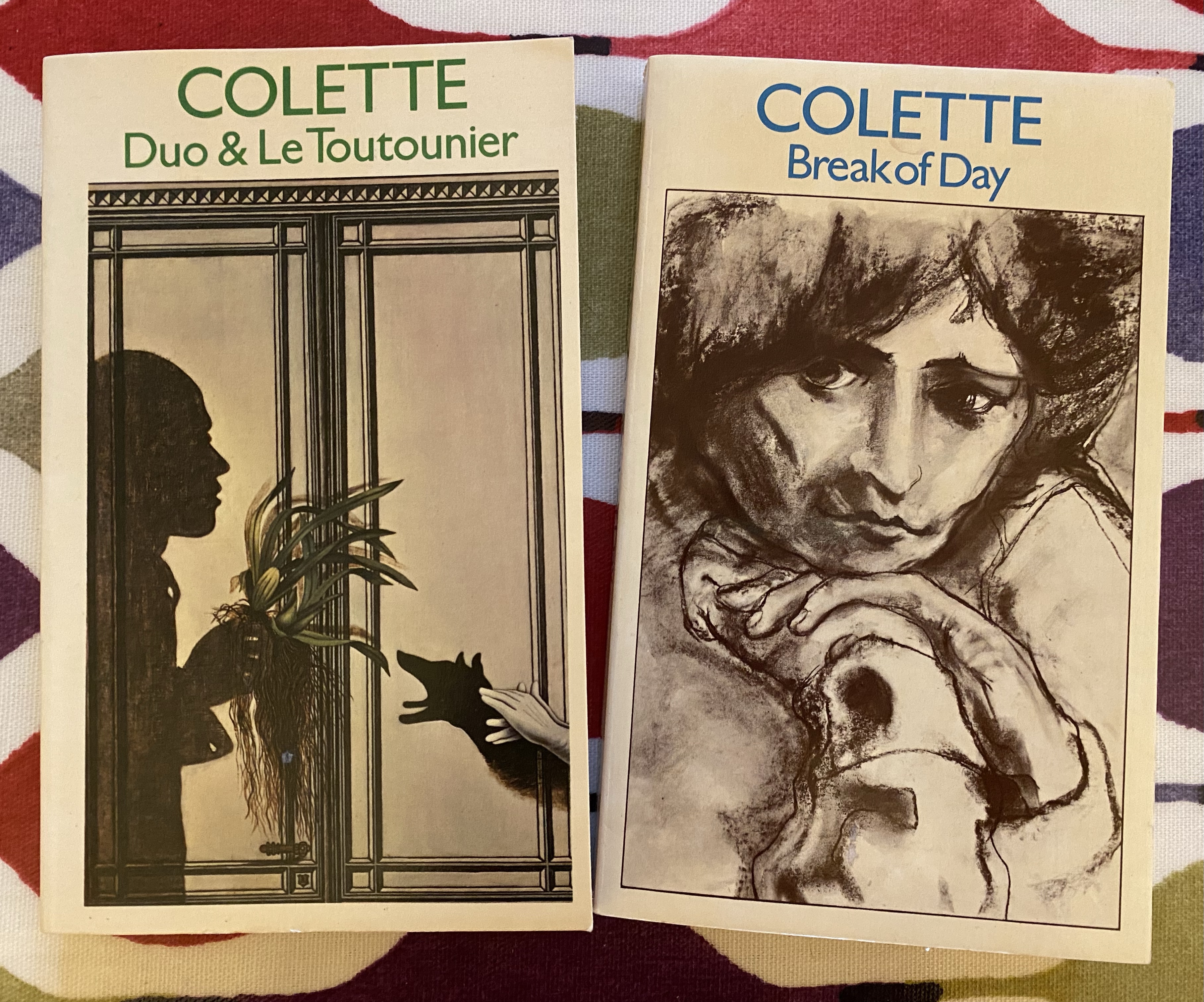
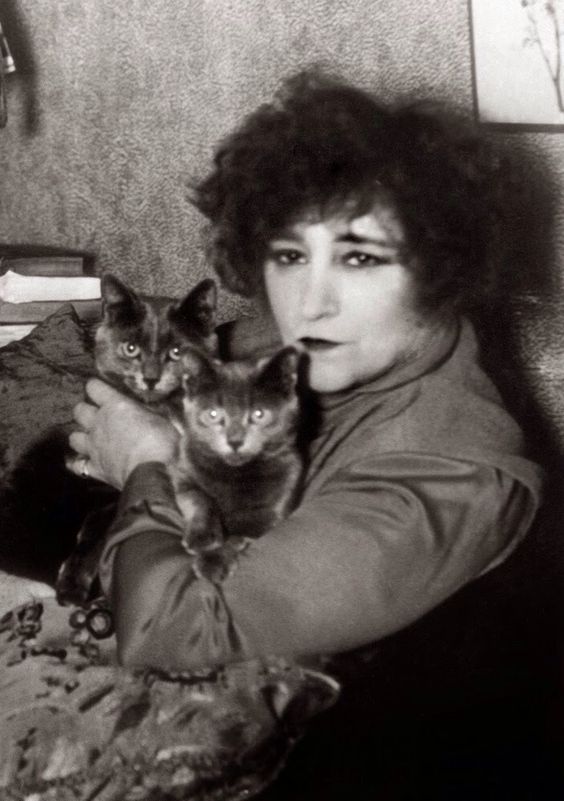
Mallika’s annual Book and Author Anniversaries post alerted me to the fact that today is the 150th anniversary of Colette’s birthday, and the perfect prompt for me to get two of her books out of the TBR (in Women’s Press editions which pleases me – how I regret clearing out loads of my The Women’s Press books when I was trying to streamline before a move one time. Never get rid of books kids – better to die under a toppling pile than live with regret 😉 )
Firstly, Duo and it’s short sequel Le Toutounier (1934 & 1939; trans. Margaret Crosland 1974). Duo follows the discovery by Michel and immediate aftermath of his wife Alice’s short-lived affair with a colleague. They are on holiday in the south of France, somewhat isolated and under the watchful eye of Michel’s family retainer Maria. The novel is primarily dialogue between the couple as they try and decide what remains for them.
Colette’s love of the natural world is very much in evidence as she captures their holiday home and Alice’s feelings of suffocation:
“On the poplars the golden bronze of the new leaves still wrongfully occupied the place of the green. A crabapple tree, its white petals lined with bright red, had defeated the somewhat sickly Judas tree and the syringas in their attempt to escape the destructive shade of the shiny aucubas, extended their slender branches and their butter white stars through the broad grasping leaves, which were mottled like snakes.”
Her precise descriptions of people and their mannerisms also suit this tale especially well, expertly capturing the tension and careful watchfulness between two people fearful of their disintegrating relationship.
“He caressed her with a few crude words, which she heard with a quiver of her eyelashes, as though he had shaken a bunch of flowers over her. They both accepted these exchanges, which were caused by chance, travel, a sudden change of season.”
Michel and Alice don’t tear each other apart, but at the same time their relationship seems doomed. However, the precision and containment of the story to a few days in a specific place, doesn’t make for a heavy or oppressive read. Colette’s humour is always present, with some surprising phrases:
“Out of modesty the servant placed a saucepan lid over the milk.”
During Duo, we learn something of Alice’s family, her sisters Colombe, Hermine and Bizoute.
“When I think about my family as much as that, it’s because I’m finding Michel terribly boring.”
In Le Toutounier she visits their stuffy, smoke-filled Paris apartment with the titular “huge, indestructible sofa of English origin, battered down like a forest road in the rainy season.”
It’s a short novel (80 pages) and I can see why it was put in the same volume as Duo as I think it is best read following on from its predecessor, forming a portrait of an interlude in Alice’s life.
Bizoute is away from home, leaving Colombe and Hermine together with their complicated love lives. Neither of them are with available men and the situation escalates. But the focus in Le Toutounier is not on relationships between the sexes but rather between the sisters, and what it means for women in a family to be close to one another. As so often, Colette focuses her sensual descriptions on women, showing appreciation but not sentimentality:
“The fine woollen dressing gown with a pattern of embossed stitching fell over her quivering shoulders, and it’s pink glow rose to her cheeks, where the makeup had lost its delicate morning colour beneath successive layers of powder.”
Secondly, Break of Day (1928, trans. Enid McLeod 1949) which nowadays would probably be called autofiction, occupying a place between biography and outright fiction. ‘Colette’ spends the summer in Provence, contemplating her past and wondering about the future. All her preoccupations are here – the natural world, animals:
“After dinner I mustn’t forget to irrigate the little runnels that surround the melons, and to water by hand the balsams, phlox and dahlias, and the young tangerine trees, which haven’t yet got roots long enough to drink unaided in the depths of the earth, or strength to break into leaf without help, under the steady scorching of the heavens. The young tangerine trees, planted … for whom? I don’t know. Perhaps for me. The cats will spring sideways at the months when by ten the air is blue as a morning glory. The pair of Japanese hens, perching drowsily on the arm of a rustic arm chair, will chirp like birds in a nest. The dogs, already far away from this world, will be thinking of the coming dawn, and I shall have the choice of a book, bed, or the coast road”
Men and women:
“My true friends have always given me that supreme proof of devotion, a spontaneous aversion for the man I loved.”
“When a man’s glance is following certain household preparations, especially those for a meal, there is apt to be a look on his face that combines religious attention, boredom and fear.”
Her mother:
“On an autumn morning she was the first and only one to see herself reflected in the first disc of ephemeral ice in the well bucket, before her nail cracked it.”
“She would, alas, have judged us plainly, with that divine cruelty of hers which was innocent of wrath.”
Break of Day is fairly plotless save for a slight drama with two young people, but not quite stream of consciousness either, written in a more structured style. If you enjoy Colette’s writing then this is a little gem, but definitely not one to read when you want to be pulled along by a cracking yarn.
Overall the sense is of Colette (author/character) coming to terms with the last part of her life, with aging and with what remains. It isn’t sad but it has a melancholy quality, although I sensed few regrets and an acceptance of how her life had been lived so far and how it would continue.
“Everything is much as it was in the first years of my life, and little by little I recognised the road back.”
I loved all of these reads. It’s been a while since I picked up Colette and I wondered why I’d left it so long. She’s funny, incisive, precise, sensual, and absolutely in command of her own voice. There’s no-one like her.
To end, a 1970s performance to match my 1970s editions, about the breaking of day:
My final novella of Novella a Day in May 2022! Each time I’ve done this project I’ve been uncertain I would finish and this year more than ever looked shaky, as my post-covid brain hasn’t recovered to quite the extent I thought. Still, I’m really glad to have made it and discovered some wonderful novellas along the way. It’s been especially great this year to have Simon at Stuck in a Book doing the project too, and adding many more novellas to my TBR 😊
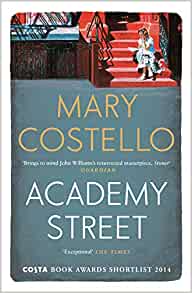
My final choice is a novella that I remember getting a lot of love in the blogosphere when it was published in 2014. Academy Street by Mary Costello follows Tess Lohan from her childhood in Ireland to adulthood in the US, raising her son on the titular New York street in the 1960s.
Do you know, dear reader, I started writing this post in my usual style but I’ve just deleted it all. I’ve decided instead to pull my favourite passage from Academy Street, and simply say that if you like this, I think you’ll like the novella. The scene is adult Tess, cutting her taciturn father’s hair. He is a grieving man in a great deal of pain over many years, and this has made him distant from his children.
“He turns his head towards her, and she waits to be denounced. He looks at her, baffled, stunned, as if he has suddenly found himself somewhere else. His chin begins to quiver, and he looks down. She is flooded with tender feelings for him. She sees for the first time all he has endured. Holding things together, holding himself together, poised, always, to defend against a new catastrophe. She gets up and lays a towel on his shoulders and begins to cut his hair. Neither of them says a word. She is moved by his silent acquiescence. Gently she takes each strand and cuts, the sound of the scissors in the air between them, the hair falling to the floor. And his sorrow, for all that is lost, lying silent within him.”
I really loved Academy Street. A beautifully observed novella of a quiet, ordinary life and of the distances and touchpoints between people.
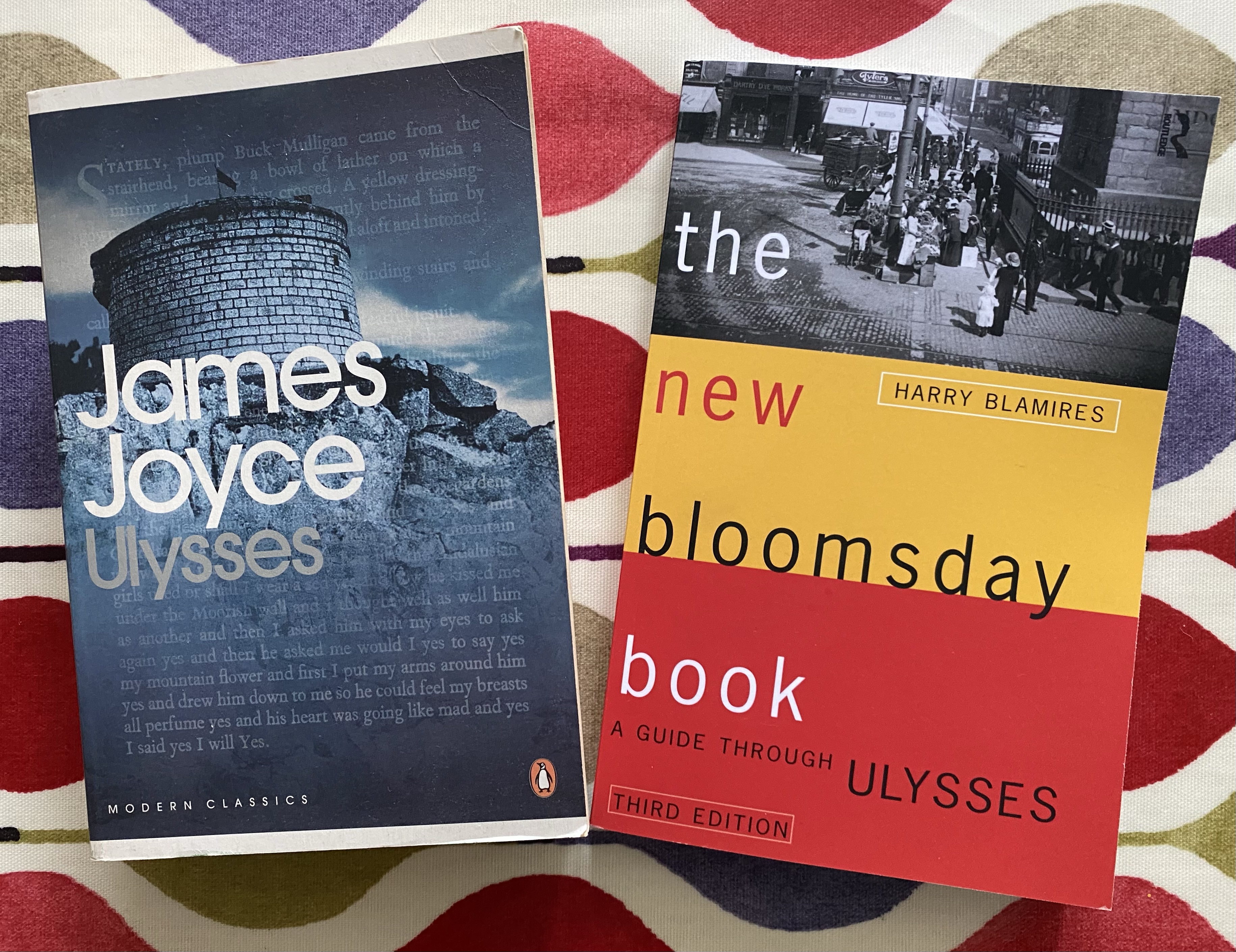
So that’s it! Another NADIM come to end. Despite flagging at times I’ve really enjoyed it. And now I plan to go from one extreme to the other. From 31 books under 200 pages, to a single tome of 933 pages. I’m setting myself the goal of getting it read by 16 June. Those of you who recognise the date as Bloomsday will be way ahead of me here. It was published 100 years ago, and so for the centenary I’m finally going in…
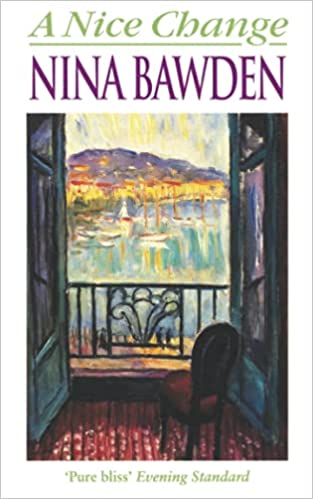
Although I wouldn’t describe Nina Bawden as a comfort read – she is far too sharply observant for that – it was with some relief that I started A Nice Change, after the traumas of The Gold-Rimmed Spectacles yesterday. A middle-class comedy of manners amongst holidaymakers in Greece sounded free of serious consequence and therefore just the ticket.
The story opens with solicitor Amy arriving in Athens airport with her husband Tom, a Labour MP, who has spotted his ex-mistress Portia heading to the same hotel as them:
“What the hell is she doing here? What the hell can he do? Amy has booked (a package deal, paid in advance) this reportedly comfortable hotel entirely for his benefit. She hates lying around pools, or on beaches, is bored by rich food as she is bored by rich people, likes to keep on the move when she travels. But he has just had a small but humiliating operation that made bicycling around Brittany, their earlier, energetic plan for this summer fortnight, out of the question.”
Despite being a philandering politician, Tom isn’t especially despicable. He’s not especially likable either. He’s just a middle-aged man worried about his waistline, dissatisfied at work but feeling too old to start anything new. He’s recognisable and ordinary, rather than a moustache-twirling villain.
“He could never again think of himself as an honest man. (There is a certain enjoyment in this self-abasement that he acknowledges occasionally, even though most of the time he prefers to see it as a decent humility.)”
Amy, on the other hand, seems quite a decent and caring person.
“Now it is only with Tom that she feels these physical characteristics to be shameful, disabling. With other people (more often with women than men) she is unselfconscious, competent, kindly, a good listener, even a good talker, on rare occasions quite witty. Well, cheery, anyway, she corrects herself.”
She is aware of Tom’s affair and knows it is over. She doesn’t want to know any details, so Tom spends the holiday worrying that Amy will discover who Portia is. Tom’s charming father arrives too, adding to his concerns.
Alongside these domestic woes are the other guests: Mr and Mrs Boot, an older couple who refer to each other as Mother and Daddy belying Mr Boot’s somewhat less-than-paternal traits; lovely young doctor Prudence Honey (ha!) awaiting the arrival of her extrovert grandmother; grieving widower Philip; and some mysterious elderly female twins, who Amy thinks look vaguely familiar…
Bawden is a great social observer, but never harshly judgemental:
“Connection thus established, they nod, and smile, and make various other small facial gestures to express friendly intentions towards each other and amused dismay at the suddenly crowded bar; every seat taken and not even much standing room since several of the newcomers have crutches or zimmer frames which they deploy cunningly to give them extra floor space.”
Although it’s a novella, Bawden handles all the characters expertly and none felt under-explored to me. There are various mysteries around the guests which gradually come to light without feeling contrived, and I thoroughly enjoyed my time at Hotel Parthenon.
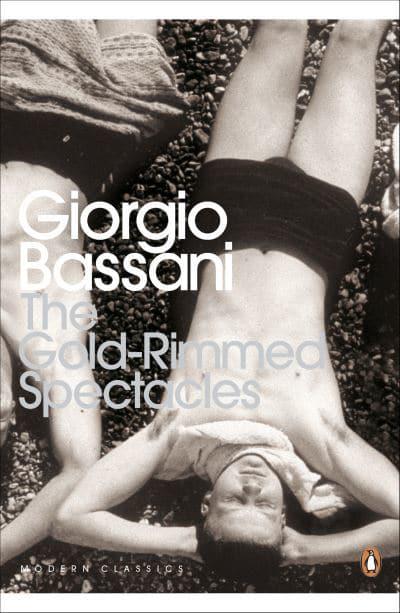
The Gold-Rimmed Spectacles – Giorgio Bassani (1958 trans. Jamie McKendrick 2012) 125 pages
I’ve been meaning to read Giorgio Bassani for a while and have The Garden of the Finzi-Continis in the TBR. This project in May seemed the ideal opportunity to read the first of his novels set in Ferrara, The Gold-Rimmed Spectacles. From this first encounter I can say I found Bassani to be a truly devastating writer.
The titular eyewear belongs to Dr Athos Fadigati, who has left Venice to settle in Ferrara. His story is told by a narrator looking back to when he was a young man and knew the doctor:
“It was in 1919, just after the other war. Because of my age, I who write this can only offer a rather vague and confused picture of that period. The town centre caffes spilt over with officers in uniform; lorries bedecked with flags continually passed by […] in front of the north face of the castle, a huge, scarlet advertising banner had been unfurled, inviting the friends and enemies of Socialism to come together to drink APERITIF LENIN”
The doctor is well-liked in the town, affable and competent at his work, a breath of fresh air after the old-fashioned medics previously available. In a small town though, people take an interest in everyone’s business, and no-one can work out why Dr Fadigati is single, or where he goes of an evening. When they realise he is gay, no-one cares so long as he is discreet. An insidious homophobia that can easily become explicit and threatening.
“Yes – they said – now that his secret was no longer a secret, now that everything was as clear as could be, at least one could be sure how to behave towards him. By day, in the light of the sun, to show him every respect; in the evening, even if pressed chest to chest against him in the throng of Via San Romano, to show no sign of recognising him.”
Dr Fadigati starts commuting to Bologna along with the young university students of the town. He is such a sweet, kind man, who only wants to connect with others.
“He was happy, in the end, with the least thing, or so it seemed. He wanted no more than to stay there, in our third-class compartment, with the air of an old man silently warming his hands in front of a big fire.”
Unfortunately, the students – who have known him and been cared for by him their whole lives – do not always behave well: “little by little, without meaning to, all of us began to show him scant respect”. This includes a humiliating exchange with one of the young men, Deliliers, who doesn’t respect the doctor’s privacy and alludes to his sexuality in derogatory ways.
Things escalate during the annual family holiday to Riccione. The narrator sees the doctor and Deliliers together, and the town can no longer ignore the doctor’s sexuality. Around the same time, the narrator faces increasing antisemitism, demonstrated by fellow holiday-maker Signora Lavezzoli’s support of Hitler. The family find themselves treading a similar tightrope to the one Dr Fadigati has had to navigate, trying to stay safe amongst a discriminatory and prejudiced society.
“Romantic, patriotic, politically naive and inexperienced like so many Jews of his generation, my father, returning from the Front in 1919, had also enrolled in the Fascist Party. He had thus been a Fascist ‘from the very beginning’, and at heart had remained one despite his meekness and honesty. But since Mussolini, after the early scuffles, had begun to reach an agreement with Hitler, my father had started to feel uneasy.”
The Gold-Rimmed Spectacles makes full use of the reader’s knowledge of history. It is a deeply upsetting read, showing how quickly unspoken prejudice can escalate and be supported by wider political and legal frameworks. It demonstrates how easy it is for ordinary people to become part of widespread evil – one of the narrator’s friends decides to join the government, not through any ideological belief but because it is a useful opportunity. The ease with which it happens and the casual acceptance of the racial laws, is horribly believable.
Bassani uses the story of Dr Fadigati to fully drive home the consequences of the rise of Fascism and Nazism. It’s remarkable in portraying the tragedy that ensues in a deeply emotional but also carefully restrained way.
“The setting sun, cleaving through a dark cope of cloud that lay low on the horizon, vividly lit up everything: the Jewish cemetery at my feet the apse and bell tower of the Church of San Cristoforo only a little further on, and in the background high above the vista of brown roofs, the distant bulk of the Estense Castle and the Duomo. It was enough for me to recover the ancient, maternal visage of my hometown, to reclaim it once again all for myself, that atrocious feeling of exclusion that had tormented me in the last days to fall away instantly. The future of persecution and massacres that perhaps awaited us – since childhood I had heard them spoken of as always a possible eventuality for us Jews – no longer made me afraid.”
I’m so glad I finally picked up Bassani and I’ll be returning to him for sure. Just as soon as I’ve recovered from this novella, which could take some time…
The novella opens with Thérèse Desqueyroux being acquitted of trying to poison her husband.
“The smell of fog and of baking bread was not merely the ordinary evening smell of an insignificant country town, it was the sweet savour of life given back to her at long last. She closed her eyes and breathed deeply of the perfume of the sleeping earth, of wet, green grass. She tried not to listen to the little man with the short legs who never once addressed his daughter.”
As she journeys back to her home among pine forests in Landes in south-west France, she reflects on her marriage to Bernard and life so far.
“All around us was the silence: the silence of Argelouse! People who have never lived in that lost corner of the heath-country can have no idea what silence means. It stands like a wall about the house, and the house itself seems as though it was set solid in the dense mass of the forest, whence comes no sign of life, save occasionally the hooting of an owl. (At night I could almost believe that I heard the sob I was at such pains to stifle.)”
There is never any doubt that she tried to poison him. Her family know it and Bernard knows it. However, there is never an obvious reason given for her drastic action. It was an unhappy marriage, a strategic match between Catholic middle-class families, but Thérèse seems to have gone along with it happily enough, mainly due to her fondness for Bernard’s sister Anne (some commentators have suggested Thérèse is gay). She doesn’t love Bernard and she feels no desire for him, but surely history would be littered with bumped-off spouses if that were a reason for murder.
“When all was said, Bernard wasn’t so bad. There was nothing she detested more in novels than the delineation of extraordinary people who had no resemblance to anyone whom one met in normal life.”
When she returns to her husband, she is surprised to learn that the plan is for her to stay, but on what terms?
Thérèse Desqueyroux is a beautifully written, intriguing novel that raises questions without seeking trite answers, including who pays the price for male power; how to create agency when you have almost no choices; the nature of justice.
‘But if I did give you a reason it would seem untrue the moment I got it into words…’
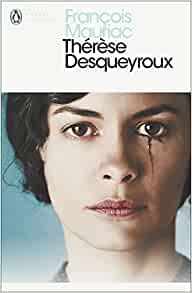
As the cover of the Penguin Classics edition shows, this novella was adapted to film (for the second time) in 2012. This trailer suggests a wonderfully shot, faithful adaptation:





 madame bibi lophile recommends