Novella a Day in May 2020 #1

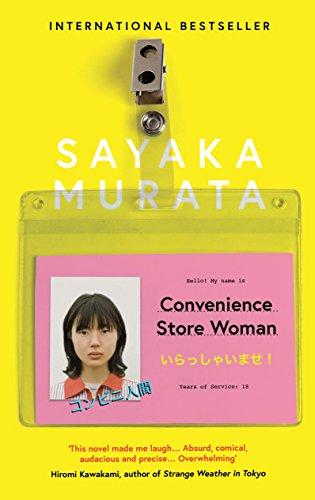
Convenience Store Woman – Sayaka Murata (2016, trans. Ginny Tapley Takemori 2018) 163 pages

It’s always with some trepidation that I embark on Novella a Day in May, as I’m never sure I’ll make it to the end. This year the feeling is even more marked, as with all that is happening in the world I’m finding it hard to read as well as write blog posts. But I do really enjoy NADIM, so I’m making a start and I’ll try not to berate myself if I don’t finish this year. Onwards! 

I shouldn’t really worry about not feeling ready or particularly organised, as the world has a way of laughing at such endeavours. I read Convenience Store Woman a while ago and thought I’d get it written up well in advance of NADIM 2020. Then somehow the document got overwritten  – and by somehow I mean I stupidly overwrote it – and I couldn’t recover it. So I’m writing this months after I initially read the novella. It speaks to its strength that even with my terrible memory I could recall how good it is and how much I enjoyed it.

Keiko is in her mid-thirties and has been working in a convenience store half her life. For all of her life, she has never fitted in:

“My parents were at a loss what to do about me, but they were affectionate to me as ever. I’d never meant to make them sad or have to keep apologizing for things I did, so I decided to keep my mouth shut as best I could outside home. I would no longer do anything of my own accord, and would either just mimic what everyone else was doing, or simply follow instructions.”

Within the highly ordered, routine environment of the Hiiromachi Station Smile Mart convenience store, Keiko finds her approach works well.

“For the first time ever, I felt I’d become a part of the machine of society. I’ve been reborn, I thought. That day, I actually became a normal cog in society.”

However, as a woman approaching middle-age, Keiko comes under pressure to become a different type of normal cog. She is always single, with no interest in sex. She will not be getting married or having children any time soon, and the job that was at first tolerated by others, is now thought odd as it is not a career. Her sister has helped by thinking up a lie she can use, that she has health issues that suit a part-time job, or elderly parents that need her support, but still Keiko finds herself coming under closer scrutiny for her life choices.

A new employee at the store, Shiraha, may offer a solution. He is a misogynist with ill-thought out social theories and is completely unlikable. However, if they live together, Shiraha gets a place to stay and Keiko can pretend to fit in. What could possibly go wrong?

Keiko is a truly unique character. She is detached to an almost disturbing extent – whacking a playmate over the head with a shovel as a child, idly wondering about knifing her nephew to keep him quiet. Ultimately though, she is a convenience store woman to her core:

“A convenience store is not merely a place where customers come to buy practical necessities, it has to be somewhere they can enjoy and take pleasure in discovering things they like. I nodded in satisfaction and walked briskly around the store checking the displays. […] I could hear the store’s voice telling me what it wanted, how it wanted to be. I understood it perfectly.”

Convenience Store Woman is funny and almost surreal in places, but it is also an incisive look at what it means to be a woman struggling to find a place of acceptance within a society that oppresses who she truly is.

“I like to think if I’d stuck with cricket I could have been a Welsh Ian Botham.” (Nicky Wire, Manic Street Preachers)

Well, it’s strange times indeed that we are living through my bookish friends. May you all, and your families and friends, stay safe and well.

My blogging was already decidedly scarce although I kept making (wasted) efforts to get it back on track. Now with all that is happening my workload is through the roof (those tips on how to fill your hours during home working/isolation etc are completely wasted on me) and what hours I do have to spare I’m finding it hard to read in due to all the anxious feelings.

I have started doing yoga every morning though, which I’ve been claiming I’m about to do for at least the last eleventy million years, so its not all bad 😀 (and for anyone else feeling anxious, it seriously helps. If nothing else swearing at the perfect vision of the instructor as you sweatily try to wrap your ankles round your head is a great stress reliever.)

Anyway, I read a wonderful novella a while ago in preparation for the Wales Readathon 2020 aka Dewithon hosted by the lovely Paula at Book Jotter. Originally I was going to pair it with How Green Was My Valley by Richard Llewellyn but sadly that classic remains unread on my shelves due to the aforementioned brain chatter. Instead, here is just one book but it’s totally deserving of a post all to itself.

Cove by Cynan Jones (2016) is only 95 pages long and shows how intense such a tight form can be. The writing is lyrical, precise, beautiful. Every word carries its full weight.

A man is adrift at sea, having been struck by lightning. He is disoriented and in pain.

“His mouth is crusted with salt. He does not know where he is. There is a pyroclast of fine dried ash across his skin.

When he comes to, the strongest thing he feels is the tingling in his hands. It feels as if they are distant things, strange ringing bells. Finds out anew he cannot move his arms. He does not remember getting back into the kayak. Does not understand. The ground is moving. Is sure that if he moves he will abolish himself. Holds on to himself like a thought coming out of sleep.”

Gradually, a sense of where he is and what he needs to do to survive emerges:

“Saw on his skin, a grey dust above the point his arm had lain in the water, felt the knowledge of it flutter, float inside him. A sense of himself, a fly trapped the wrong side of the glass.”

We stay with the man as he assesses what resources he has; what state he is in physically; and as his memories gradually return, hazy and confused, Eventually he has a sense of a particular reason that he must return home, but will he make it?

“When he saw the address label on the bag he saw his name. It was like looking into an empty cup. Then he heard a voice say it. The knowledge it gave down was as delicate as an image sitting on the surface of the water, disrupting as he moved to reach it.

He let it go, instinctively.”

Cove is a stunning novella that occupies a space between prose and poetry. Its economy and lyricism make it poetic, its clear plot pulls you through the story. 

I’ve not done Cove justice at all as my brain is kaput, so all I can do is urge you to read it for yourselves 😊

To end, if you’d like to embrace some Welsh culture but are also finding reading a struggle, I can recommend an excellent Welsh language tv thriller, Hidden (it’s bilingual on BBC4). Both series (I’ve just finished watching the second) are pared back and tense. You always know who did it; the interest is in the quiet, steady way the police piece it together and the psychological portraits of all involved. They are also a really, really tough watch, so now might not be the best time, but for future times when we’re feeling more robust…

Novella a Day in May 2019 #31

The Bluest Eye – Toni Morrison (1970) 164 pages

Trigger warning: this post mentions rape and child abuse

The final post of NADIM 2019! It been a close call at times as to whether I’d manage it but here’s the last novella I’m looking at: The Bluest Eye, Toni Morrison’s first novel.

This incredibly powerful novella has been banned in several states schools and the opening sentence tells you why:

“Quiet as it’s kept, there were no marigolds in the fall of 1941. We thought, at the time, that it was because Percola was having her father’s baby that the marigolds did not grow.”

Through the character of the abused child Percola Breedlove, Morrison interrogates the pervasive, destructive force of racism; what it does to individuals and what it does to communities. It is insidious, yet also visible and commonplace.

“Adults, older girls, shops, magazines, newspapers, window signs – all the world had agreed that a blue-eyed, yellow-haired, pink skinned doll was what every girl child treasured. ‘Here,’ they said, ‘this is beautiful, and if you are on this day ‘worthy’ you may have it.’”

Percola’s parents abuse one another physically, her mother is distant and her father an alcoholic. Yet Morrison at no point demonises them, even when Cholly Breedlove rapes his daughter. There are flashbacks to show how the adults arrived at the terrible place they are now in. Morrison demonstrates how, if a society tells you that you are worthless, a lesser human and without any value, it is extremely difficult not to internalise that judgement on yourself.

“The Breedloves did not live in a storefront because they were having temporary difficulty adjusting to cutbacks at the plant. They lived there because they were poor and black, and they stayed there because they believed they were ugly.”

Told mainly from the point of view of Claudia, a friend of Percola’s, the child’s view stops the violence and degradation being too relentless, but also shows how the youngest and most vulnerable members of society take in what they witness with devastating effect.

Even when not being directly abused, Percola experiences the daily wounds of racism, chipping away at her self-worth, such as the reaction from the shop owner when she goes to buy sweets:

“She looks up at him and sees the vacuum where curiosity ought to lodge. And something more. A total absence of human recognition – the glazed separateness.”

This means Percola passionately believes that if she could possess an outward marker of white ‘beauty’, things would improve for her.

“Each night, without fail, she prayed for blue eyes. Fervently, for a year she prayed. Although somewhat discouraged, she was not without hope. To have something as wonderful as that happen would take a long, long time.”

The Bluest Eye is brilliantly written and highly readable; Morrison never loses sight of the story or the characters under the weight of the immense, important themes she is exploring. It is an incredibly tough read that does not pull its punches, but neither is it voyeuristic or melodramatic. It shows how racism degrades us all and the vital need to strive for something better.

 “Along with the idea of romantic love, she was introduced to another – physical beauty. Probably the most destructive ideas in the history of human thought. Both originated in envy, thrived in insecurity, and ended in disillusion.”

Here’s Toni Morrison talking about The Bluest Eye and what led her to write it:

Novella a Day in May 2019 #30

Sleepless Nights – Elizabeth Hardwick (1979) 151 pages

Sleepless Nights is a fictional autobiography, told by a woman with the same name as the author. It begins:

“It is June. This is what I have decided to do with my life just now. I will do this work of transformed and even distorted memory and lead this life, the one I am leading today. Every morning the blue clock and the crocheted bedspread with its pink and blue and grey squares and diamonds. How nice it is – this production of a broken old woman in a squalid nursing home.”

The distorted memory means the reminiscences, memories and life story are like the crochet blanket: a series of separate pieces that come together to form a whole. So what we have are memories that dart back and forth across the woman’s life, a memory from marriage prompting a memory from childhood, prompting a memory of a neighbour, interspersed with a letter to a friend, prompting a memory of a bohemian young lifestyle in New York…

It is very cleverly written. It feels more coherent than I expected when I began the novella, and it effectively conveys the way memory works: we don’t sit and remember the beginning of our lives, working through sequentially to the current day.

“I like to remember the patience of old spinsters, some that looked like sea captains with their clear blue eyes, hair of soft, snowy whiteness, dazzling cheerfulness. Solitary music teachers, themselves bred on toil, leading the young by way of pain and discipline to their own honourable impasse, teaching in that way the scales of disappointment.”

I sat and read this straight through, but you could also just dip in for a paragraph and out again. Hardwick is master of the astonishing image:

“It has happened that someone I do not know is staying in the apartment with me. One of those charitable actions insisted upon by a friend. The stranger, thin as the elegant crane outside the window, casts a shadow because she has arrived when I was thinking about the transformations of memory. She fills the space with both the old and the new twilight, the space reserved for thoughts of my mother.”

Sleepless Nights has been published by NYRB Classics, always a reliable choice. I read it in an old VMC edition, which told me it was hailed as a literary masterpiece. I think if I was being super-picky, this might be my slight reservation. Its hugely impressive as a piece of writing but it didn’t fully move me. This is obviously a very personal thing, but for me to love a book I need strong characterisation. The narrator remained slightly enigmatic: she emerged to a degree from her memories but often she was in the shadows of them, the light cast on other people.

While enjoying a somewhat grim, dingy time as a young woman in New York, there are memories of seeing Billie Holliday live. Hardwick captures her talent, the tragedy, glamour and grit of her life very effectively. While she doesn’t shy away from what addiction did to the singer, she allows her some beautiful images too.

“Her whole life had taken place in the dark. The spotlight shone down on the black, hushed circle in a café, the moon slowly slid through the clouds. Night – working, smiling, in make up, in long silky dresses, singing over and over, again and again. The aim of it all is just to be drifting off to sleep when the first rays of the sun’s brightness begin to threaten the theatrical eyelids.”

And so to end, here is Lady Day herself:

Novella a Day in May 2019 #29

Pinocchio – Carlo Collodi (1883, trans. Geoffrey Beck 2009) 160 pages

Pinocchio, like a lot of classic children’s literature, is deeply weird and dark. I didn’t read it at all as a child, despite seeing the Disney cartoon which is very different. I picked it up as an adult because its published by the ever reliable NYRB Classics, and it turned out to be an intriguing read.

The basic premise I think everyone knows: a wooden puppet comes to life, wants to be a real boy, misbehaves and every lie he tells has a very obvious effect on his physiognomy.

“ ‘Lies, my boy, are immediately recognizable, for there are two kinds: lies that have short legs and lies that have long noses. Yours happen to be the long-nosed variety.’

Pinocchio, wanting to hide his face in shame, tried to run from the room – but he couldn’t. His nose was so long that it wouldn’t fit through the doorway.”

Pinocchio isn’t very likeable. He’s totally idle and only interested in himself.

“ ‘Of all the trades in the world, there’s only one that really suits me.’

‘And what trade would that be?’

‘That of eating, drinking, sleeping, playing, and wandering wherever I like from sunup to sundown.’

‘For your information,’ said the Talking Cricket, with his usual calm, ‘everyone who plies that trade ends up either in a poorhouse or a prison.’

‘Watch out, you doom-and-gloom Cricket! If I snap, you’ll be sorry!’”

Pinocchio does snap, and kills the Cricket stone dead. A short-lived relationship with an insect, who is nothing like the top hat and frock coat wearing, enduring friend of the cartoon.

The story is episodic, with Pinocchio going on several adventures, invariably taking the wrong decision, and failing to learn from his mistakes. It has the feel of folk tales rather than fairy tales, being grounded in an earthy reality of poverty and banditry, even when the bandits are a fox and cat double act. Pinocchio is always appealing even though he is selfish and unheeding, but there is never any sentimentality in the tale.

However, there is the strong didactic element associated with fairy tales, and Pinocchio is constantly lectured, by the cricket, by adults, and by the fairy with sky blue hair who crops up in various guises.

“ ‘Dear boy,’ said the Fairy, ‘people who talk that way almost always end up either in a prison or a poorhouse. For your information, everyone, whether they’re born rich or poor, is obliged to do something – to keep busy, to work. Woe to anyone who yields to idleness! Idleness is a dreadful disease and must be treated at once, starting in childhood. If not, it will be too late by the time we grow up.’”

Pinocchio does eventually learn and does become a real boy, but there’s something irrepressible about him. The feeling at the end is not of conservative integration where all is right with the world, but rather that the subversive elements that have been present all along are still there, waiting to spill out at any minute.

It’s a tale that can be enjoyed by children and adults. My edition included contributions from intellectual heavyweights to say the least: an Introduction by Umberto Eco, an Afterword by Rebecca West and a quote on the back by Italo Calvino. This shows how Pinocchio has been so widely recognised and why it endures; deceptively simple, hiding its complexities in an engaging children’s tale, it can be read differently each time.

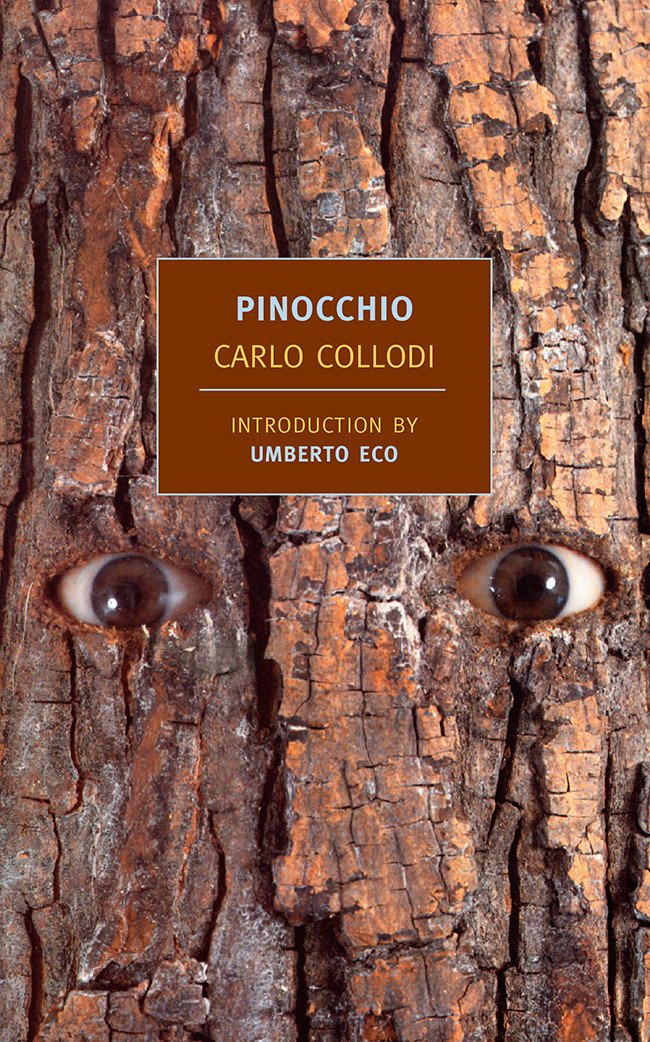
I really didn’t like the cover of the NYRB Classics edition, finding it creepy, but it captures the unsettling quality of the tale of an animated puppet perfectly:

Novella a Day in May 2019 #28

Familiar Passions – Nina Bawden (1979) 160 pages

Trigger warning: this post mentions rape and sexual assault

Like Eudora Welty who I wrote about yesterday, it was last year’s NADIM that saw me finally pick up one of Nina Bawden’s novels (for adults, despite the fact I’d loved her as a child). Devil by the Sea was truly unsettling and I was keen to read more. The lovely Ali over at heavenali had sent me this novella with another which I won in her giveaway, and its confirmed my childhood view that Bawden is a brilliant writer 😊

Familiar Passions begins with James telling Bridie, his much younger wife of 13 years, that he wants to leave her.

“After a brief interval he went on speaking flatly, in a measured voice, like a chairman reading a company report. ‘There are a couple of things I feel I ought to say. To sum things up. One is, that considered as a parental team, we haven’t done too badly. Adrian’s defection from the middle class norm, though disappointing, is not unusual for the times we live in.”

James is repugnant. At first he seems cold and self-serving, but its worse than that. The night they split up, Bridie wakes to find James raping her.

“She did not know she was afraid of James. If she had been told she would have laughed.”

Although James has suggested she stay on as a housekeeper so he has a nice home to return to in the UK while he works abroad (!) Bridie decides she is getting out.

“ ‘You don’t have to stay, you know,’ as if consoling a scared child.

The words came unbidden, without conscious thought, but as soon as she had spoken them she understood why she had addressed herself like this, as if she were someone younger and weaker than she was. It was the only way she could force herself to act.”

Bridie never seems a victim in this. She is still young – only 32 – having married James at 19, when he was a widower and raised his two children, as well as having a daughter together. She has no work experience and worries how she will get on in the world, but she is a good mother and her step-children both like her, probably more than they like their horrible father.

“The children’s faces sustained and calmed her. It came to her with the force of something she had always known but only now acknowledged, that they were the only reason she had stayed so long; their pictures, the only thing she would take with her.”

Bridie goes home to her parents. They adopted her as a baby and she has no idea about her biological parents. Her father Martin is a psychologist, her mother Muff was a nurse.

“She had always orchestrated her emotions in this way to get and keep her mother’s sympathy; softening down the discord of her coarser feelings and playing up the tender sounds that pleased her mother’s ear. Perhaps Muff’s liking for a sweet, clear tune was what was called bringing out the best in people. But it wasn’t bringing out the best in her, Bridie began to feel. Only something that, although not altogether false, was never quite the truth.”

Bridie housesits for a patient of her father’s, in Islington which is portrayed as rather rough and down at heel – how times have changed! She gradually adapts to and starts to enjoy her new life, but the ending of her marriage prompts her to find out about her birth and origins. In doing so, she uncovers way more than she ever bargained for…

Familiar Passions is a pacey novella but it never feels overplotted. The betrayals and revelations that emerge are the type that can exist in any family. It’s very much of its time – particularly regarding Bridie’s rape (and her later sexual assault) with her awareness of how few options she has. There is anger here for sure, about the limited roles and choices for women, but it never overwhelms the narrative or characterisation.

Familiar Passions is resolutely unsentimental about families but also shows how valuable they can be: how destructive but also how nurturing, in their own unique and deeply flawed ways. Ultimately it’s a hopeful novel, about realising who you are and finding your own way; bound up as both those things will be in who you have been in the past and where you have come from.

Novella a Day in May 2019 #27

The Optimist’s Daughter – Eudora Welty (1972) 180 pages

Last year’s Novella a Day in May introduced me to Eudora Welty, when I read and loved The Ponder Heart. I was very happy to revisit her again this year, with her Pulitzer Prize winning novella, The Optimist’s Daughter.

This isn’t as comic as The Ponder Heart. Instead it’s a quiet study of people experiencing the immediate aftermath of grief. Laurel lives in Chicago, but travels back to New Orleans at the time of Mardi Gras, to be with her father who is having eye surgery.

“At the sting in her eyes, she remembered for him there must be no tears in his, and she reached to put her hand into his open hand and press it gently.”

She is an only child and her mother died several years ago. Her father, Judge McKelva, remarried after 10 years, a much younger woman named Fay. Fay is completely self-centred and unable to see beyond her own needs. She can’t believe that the older man she married has the audacity to be ill and frail.

“ ‘All on my birthday. Nobody told me this was going to happen to me!’ Fay cried, before she slammed her door.”

Spoiler: the Judge dies, and Laurel and Fay return to Mississippi to see him buried. Here, Laurel rediscovers the compassion and care of a community who have known her for her entire life. (This being Welty the cast of characters includes someone named Miss Tennyson Bullock). She moves around the home she once knew and remembers her mother and father.

“In her need tonight Laurel would have been willing to wish her mother and father dragged back to any torment of living because that torment was something they had known together, through each other. She wanted them with her to share her grief as she had been the sharer of theirs. She sat and thought of only one thing, of her mother holding and holding onto their hands, her own and her father’s holding onto her mother’s, long after there was nothing more to be said.”

The Optimist’s Daughter is a gentle tale, about memory, loss, love, community and pain. It’s about how our experience of these is unique to us. It’s a novella full of images around sight, and it shows how seeing clearly demonstrates the need to be kind to ourselves and others.

I’m fast becoming a huge Welty fan.

Novella a Day in May 2019 #26

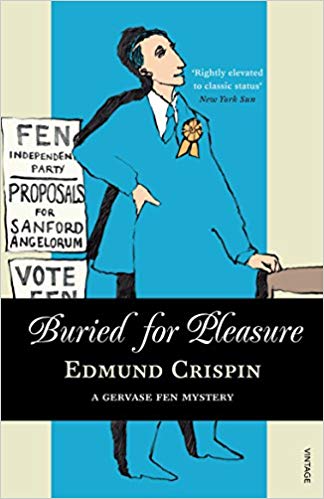
Buried for Pleasure – Edmund Crispin (1948) 176 pages

Although I’m not a big reader of contemporary crime, I do like a golden age mystery and I enjoy Crispin’s tales of amateur detective/Oxford professor Gervase Fen’s adventures. In Buried for Pleasure, Fen has left Oxford to travel to the delightfully named Sandford Angelorum, where he is standing for Parliament as an Independent.

“This panorama displeased Fen, he thought it blank and unenlivening. There was, however, nothing to be done about it except repine. He repined briefly and extracted himself and his luggage from the compartment.”

Fen stays at The Fish Inn where loud renovations undertaken by the owner blast him out of bed every morning. He seems surrounded by comely women – the bar manager, the bar maid, the local taxi driver.  Thankfully once their attractiveness is established it isn’t dwelt on and there’s some good characterisation of women in this, which is not always present in GA novels. In fact, the resident detective novelist, Mr Judd, is quite scathing about the whole thing:

“Characterisation seems to me a very overrated element in fiction. I can never see why one should be obliged to have any of it at all, if one doesn’t want to. It limits the form so.”

Crispin pokes fun at everyone in this novel. Novelists, academics, and of course politicians all come in for a gentle ribbing. There is the response to Fen’s first loquacious, entirely meaningless political speech:

“ ‘You’re a natural, old boy … can you keep that sort of thing up?’

‘Indefinitely,’ Fen assured him. ‘The command of cliché comes of having had a literary training.’”

And the political system as a whole:

“ ‘Now, these Sandford people don’t know you as well as I do,’ Captain Watkyn pursued, with a confidence which their quarter-hour acquaintance did not seem to Fen entirely to justify, ‘and … they’re quite likely to elect some scoundrelly nitwit who’ll help send the country to the dogs. Therefore, they’ve got to be jollied along a bit – for their own good, d’you see?’

‘As Plato remarked.’

‘As whatsit remarked, yes.’”

This is not the GA novel to read if you’re in the mood for a good murder with plenty of suspects and clues to work out. This side of the novel – a poisoning before Fen arrives, a stabbing after he becomes resident in the village – is pretty negligible.

However, it’s funny, light, endearing, and doesn’t fall into many of the prejudices which can mar this genre, although the villagers are portrayed as a bit yokely.

Buried for Pleasure was just what I needed after the gothic tribulations of O Caledonia yesterday: complete and utter nonsense and none the worse for it 😀


Novella a Day in May 2019 #25

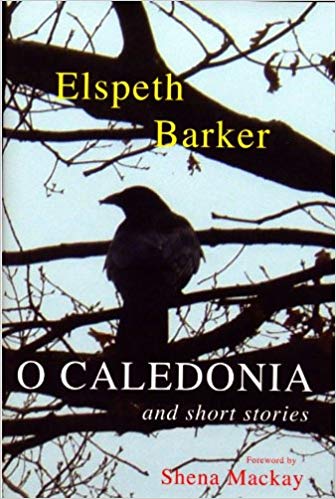
Following on from yesterday’s post about Anita Brookner who began her career as a novelist at 53, today I’m looking at another late debut writer; Elspeth Barker wrote this gothic novella at the age of 51. It concerns a teenager though: 16-year-old Janet has been found dead at the bottom of the stairs, dressed in her mother’s black lace evening dress, mourned only by her pet jackdaw who then kills itself, and her siblings. The novella then goes back in time over Janet’s life, but this is less a murder mystery and more of a character study.

Janet is an awkward child. She gets angry. She’s socially ill at ease. She has frizzy, unmanageable hair. She gets car sick. She irritates her parents. She reads a lot and is more clever than her classmates ,which causes distance. She is miserable and life is unfair. Her family don’t fit in where they are.

“Anger and outrage welled within her: she would speak the truth. ‘It was because of the witch. I wanted them to see if the witch was there,’ she wailed. ‘Don’t talk such nonsense; you know as well as I do that witches are only in fairy stories; and you read too many of those if you’d like my opinion.’ The mothers exchanged satisfied glances: they all thought Vera went too far in her choice of children’s reading; and she smoked cigarettes and wore slacks.”

Soon, however, they inherit an ancient, crumbling pile in the far north of Scotland, and Janet loves it:

“Auchnasaugh, the field of sighing, took its name from the winds which lamented around it almost all the year, sometimes moaning softly, filtered through swathes of pine groves, more often malign, shrieking over battlements and booming down the chimneys”

“She had no fear of its lofty shadowed rooms, its dim stone passages, its turrets and towers and dank subterranean chambers, dripping with Verdigris and haven to rats.”

It also has her eccentric aunt Lila, who wafts around dressed in black collecting fungi and incurring the wrath of Janet’s mother Vera; Jim, a taciturn odd-job man skulks around the place.

“It was a rigorous life, but for Janet it was softened by the landscape, by reading, and by animals whom she found it possible to love without qualification. People seemed to her flawed and cruel.”

So although Janet finds solace, she is still an outsider. Very much a loner and isolated at her boarding school. We follow her through the years and what emerges is a young life of a deeply awkward, lonely girl.

“What use was it to be racked by pain for animals and the general woes of the world when she was unmoved by the sorrows of people she knew?”

O Caledonia is thoroughly gothic so you need a pretty strong stomach at times – something I don’t have, particularly around animals. But it’s superbly written, startling and atmospheric.

Overall, I was left with a feeling of sadness. Janet has a lonely life and then before she’s had a chance to carve out anything better for herself, she is killed. O Caledonia really gets under your skin.

Novella a Day in May 2019 #24

Family and Friends – Anita Brookner (1985) 187 pages

Many years ago I read Anita Brookner’s Booker-winning Hotel du Lac and although I remember very little about it I remember that I didn’t like it much. Recently I’d begun to think I should give her another try; I suspect my early 20s was a bit too young for Brookner and her incisive consideration of loneliness and disappointment. I was discussing this with a colleague, and so she lent me Family and Friends, Brookner’s follow-up to Hotel du Lac. A novella seemed a perfect way to dip my toe in again, and I’m so glad I did. I loved it.

It is the study of the Dorn family: matriarch Sofka and her children Frederick, Alfred, Betty and Mimi, beginning in the 1920s. The unnamed narrator is gazing at a wedding photograph of them all:

“I find it entirely appropriate that Sofka should have named her sons after kings and emperors and her daughters as if they were characters in a musical comedy. Thus were their roles designated for them. The boys were to conquer, and the girls to flirt. If this implies something unfinished, as if the process were omnivorous but static, that too would be characteristic. Sofka sees her children’s futures as being implicit in their names, and she has given much thought to the matter; indeed, one wonders whether she thinks about anything else.”

Throughout the novel this device is repeated: the photograph with the aging subjects and their relationships unwittingly captured over the years. Brookner’s portraits of her characters are unflinching:

“Betty is one of those women who believe in acting out a passion before they really feel it […] Mimi is not the type of girl who will, or indeed, can, do anything independently. But Betty knows that her mission in life is to be a woman who prevents men from staying with their virgin loves, and she is eager to embark on this career.”

Betty is keen to escape and uses one man to get to Paris – thwarting Mimi’s delicately-held fantasies in the meantime, and being quite aware of doing so – and then another man to get to the States, from where she never returns.

Likewise, Frederick, who is supposed to be running the family empire, flees to the French Riviera with a woman deemed wholly unsuitable by Sofka, but who makes feckless Frederick quite happy and contented. The responsibility of the business therefore falls to Alfred before he is out of his teens:

“He has, above all, obeyed his mother in everything. He does not yet know that men who obey their mothers in everything rarely win the admiration of other women.”

Over the years, perhaps only Frederick is happy. Betty is selfish and untalented, with zero insight and so unable to work out why her life is not evolving as she hoped. Alfred is disappointed in life generally, and delicate, beautiful Mimi is prone to depression.

“She has been questing unconsciously for that man, that alien, that stranger, that appointed one, who will deliver her, the sleepwalker, from her sleep. Thus, in the bosom of her family, Mimi, the good daughter, has been one of the most ready, the most willing, to defect.”

Family and Friends is about precisely what the title says. It is a study of these people over several years, with very little plot other than the typical events of people’s lives, and sparse dialogue. Although Brookner is unflinching, she is not without compassion. She sees plainly, but doesn’t sit in judgement on her characters, despite her clear-sighted discernment of all their weaknesses and the hurt they cause one another and themselves.

Anita Brookner is the ideal writer of novellas. She is so concise, not a word is wasted and every word carries its full weight. Her skill is astounding.

Despite only starting to write novels at the age of 53, Brookner was prolific and produced around a book a year for the rest of her writing life. I’m looking forward to exploring more of these now I know what I’m missing. And first on the list is a re-read of Hotel du Lac 😊