Murder Tide – Stella Blómkvist (transl. Quentin Bates) Blog Tour

Today I’m taking part in a blog tour for Corylus Books, a lovely indie publisher with a focus on translated crime fiction.

Murder Tide (2017, transl. Quentin Bates 2024) is the third Stella Blómkvist mystery I’ve read as part of Corylus’ blog tours and I enjoyed reacquainting myself with her world: her daughter Sóley Árdís; the deepening relationship with Rannveig; her cousin Sissi; newshound Máki; and of course her antagonistic relationship with the local police.

Here is the blurb from Corylus Books:

“Left to drown by the rising tide at the dock by Reykjavík’s Grótta lighthouse, the ruthless businessman with a murky history of his own had always had a talent for making enemies.

The police have their suspect – who calls in Stella Blómkvist to fight his corner as he furiously protests his innocence. Yet this angry fisherman had every reason to bear the dead man a grudge.

It’s a busy summer for razor-tongued, no-nonsense lawyer Stella. A young woman looking for a long-lost parent finds more than she bargained for. An old adversary calls from prison, looking for Stella to   broker a dangerous deal with the police to put one of the city’s untouchable crime lords behind bars at long last.

Is the mysterious medium right, warning that deep waters are waiting to drag Stella into the depths?”

Murder Tide is grounded in the realities of Iceland in 2011. Grímúlfur, the murdered man, was nicknamed the ‘Quota King’ and made a lot of money out of Iceland’s financial crash in 2008. People who took out enormous foreign currency loans had to hand over their businesses to the banks, who then sold on the loans to their cronies who had the loans written off. Grímúlfur was one of the cronies and he bought fishing quota rights too.

“‘The quota system has split the country for the last two decades, as it has provided a chosen few with great wealth just as it has wrecked many rural communities and added to the inequality and injustice in Icelandic society,’ Máki writes.”

Stella’s client is a fisherman who suffered under this system, and she soon finds out that as well as the many who Grímúlfur ripped off, his family bear him some pretty significant grudges too.

At the same time she is helping a young woman called Úlfhildur find her birth father, who unfortunately for Úlfhildur seems to be a truly sinister man married to a threatening woman, who together run a cult.

Her third client is the decidedly dodgy Sævar whose case highlights police corruption and reinforces Stella’s cynical world view:

“Bitter experience has taught me that there’s nobody in this world who can be trusted. It’s all about uncertainty and coincidence.”

The three strands in Murder Tide are woven together well and even my poor brain managed to keep track of what was happening. The societal commentary felt intrinsic to the plot rather than slowing it down, and I whizzed through this pacy story.

Stella felt more likable in this book and the habit she has of referring to brand names and labouring over material possessions has eased off a bit. She’s leading a slightly more settled life as she and Rannveig continue the relationship which began in Murder Under the Midnight Sun. But Stella’s domestic life is generally in the background, as she tears around working just as hard as ever.

She really does need to stop sexually assaulting people though. This time it was for a different reason than her own gratification, but for a character who is supposed to follow her own moral compass in opposition to self-serving businessmen and corrupt police officers, I would really welcome her incorporating informed consent into her world view.

However, this isn’t a significant part of Murder Tide so please don’t be put off! What worked especially well was the menace of characters and genuine sense of danger, alongside humour. Chapters frequently end with a quote from Stella’s mother, a woman who seems to have had an aphorism for every occasion, ranging from the insightful to the clichéd, the incomprehensible to the remarkably plain-speaking. These really made me smile and kept the character of Stella grounded in a more recognisable reality, while she rode motorbikes at speed, visited career criminals in prisons and exposed corruption with the help of Sissi’s technical expertise.

The tone is also carefully balanced. There were some very dark aspects to Murder Tide, and Blómkvist is expert at conveying these clearly, without ever being gratuitous or voyeuristically gruesome.

As always with Stella’s stories, the pace and plotting worked seamlessly. But what I especially enjoyed in Murder Tide was the deepening characterisation of Stella, and I’m looking forward to seeing where she goes next.

Here are the stops from the rest of the tour, so do check out how other bloggers got on with Murder Tide:

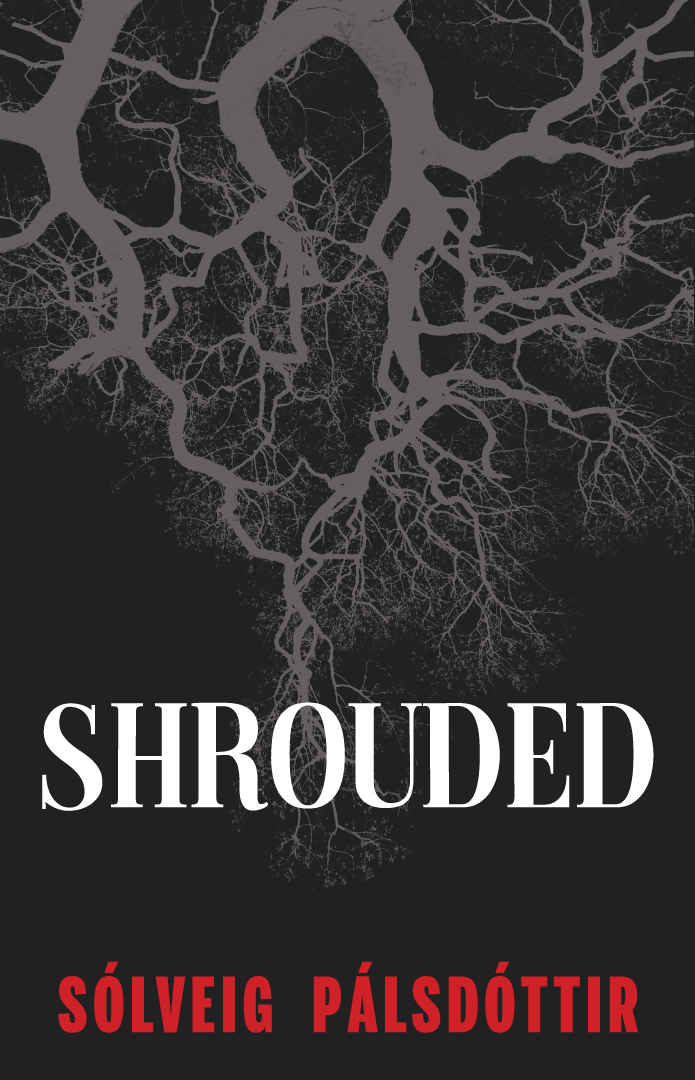
Shrouded – Sólveig Pálsdóttir (transl. Quentin Bates) blog tour

I’m always a bit trepidatious about agreeing to blog tours, which is why I don’t do many. What if I don’t enjoy the book? I only blog about books I like so what if I have to drop out? Thankfully Corylus Books have never done me wrong, consistently offering excellent crime novels in translation.

When they suggested Shrouded by Sólveig Pálsdóttir (2023, transl. Quentin Bates 2023), I had two questions: did it matter that I hadn’t read the others in the series? Was it gory (I can’t do gore)? Reassured on both counts, I’m so glad I took the opportunity to join in because I found much to enjoy in this novel.

My allotted date for the tour was 1 August so this is also my first post for Women in Translation Month (#WITMonth), a wonderful and well-established event running for the whole of August.

Here is the blurb from Corylus Books:

“A retired, reclusive woman is found on a bitter winter morning, clubbed to death in Reykjavik’s old graveyard. Detectives Guðgeir and Elsa Guðrún face one of their toughest cases yet, as they try to piece together the details of Arnhildur’s austere life in her Red House in the oldest part of the city.

Why was this solitary, private woman attending séances, and why was she determined to keep her severe financial difficulties so secret? Could the truth be buried deep in her past and a long history of family enmity, or could there be something more? Now a stranger keeps a watchful eye on the graveyard and Arnhildur’s house.

With the detectives running out of leads, could the Medium, blessed and cursed with uncanny abilities, shed any light on Arnhildur’s lonely death?”

The story opens with Arnhildur preparing to go to a séance. We are privy to her thoughts, her frustrations and her little vanities. In a very short space, Pálsdóttir creates a sense of Arnhildur so that when she is murdered, the injustice is fully realised. Although the reader is witness to the murder, it isn’t remotely gory or gratuitous. It’s a responsible and carefully balanced portrait which insists that the murder of an older woman, someone seemingly entirely ordinary, is taken seriously.

Having not read the rest of the series, when police detectives Guðgeir and Elsa Guðrún arrive to investigate I was expecting some clunky exposition to bring readers up to speed. This never happened, and instead we are presented with an established working relationship, respectful and gently teasing, in which we are expected to draw our own conclusions regarding the personalities of the individuals and the dynamic between them.

“‘It’s never this dark in Akureyri,’ Elsa Guðrún assured him, a tie between her teeth as she pulled her brown hair back into a ponytail.

‘Really?’ Guðgeir grinned. This north country pride that some would describe as conceit had always amused him. ‘All the same, it’s a good way further north than Reykjavík.’

Elsa Guðrún wasn’t going to accept Guðgeir’s straightforward geographical point.”

The relationships with the wider team are well drawn, with a sense of professionals rubbing along together as best they can with some tensions and frustrations – in other words, most people’s working lives. There is humour too, and I particularly enjoyed tightly-wound senior officer Særós’ penchant for Insta-type inspiration:

“As always, the week’s aphorism hung on the wall behind her, a print out with black letters on white in a simple IKEA frame. This week it said, Always be the best possible version of yourself.”

Arnhildur was resistant to change and technology, which means no mobiles with sophisticated GPS, laptops or tablets of hers are available to aid the investigation. This made for a police procedural that felt pleasingly traditional while still rooted in the modern world.

One shortcut that might have been available was the presence of Valthór, a medium. I know some readers whose hearts sink at the presence of a psychic in detective stories, but Pálsdóttir never uses the character as an easy way to resolve any plot, despite one of her detectives being open to the possibility of Valthór’s skills:

“Growing up in the west of Iceland, he had been aware that most older people had some belief in an afterlife, and that there were a few people with the ability to converse with the dead. Many of them also believed in premonitions, dreams and prophecies. The people with whom Guðgeir had grown up had fought for their existence, in close touch with the brutal forces of nature that regularly demanded people’s lives. These people had been more down-to-earth than any Guðgeir knew today, and he was still convinced that there was much about the world that could be neither felt nor seen.”

Valthór is a really affecting character, truly suffering in the aftermath of Arnhildur’s death and he enables a continued emotional resonance within the story as Guðgeir and Elsa Guðrún pragmatically and doggedly work to solve the crime.

They discover aspects of Arnhildur’s past that led to her estrangement from her family, and truly disturbing events touching her life before she died. There are a couple of very sinister characters that are deeply unnerving in their believability.

Shrouded is a quick pacy read that I whizzed through on a train journey to Liverpool. Initially I was smugly congratulating myself that I’d guessed certain elements and I was somewhat surprised that a novel which seemed so accomplished had resolved things rather straightforwardly. However, I was far too quick to pat myself on the back 😀 I’d made all the assumptions and deductions Pálsdóttir had guided the reader towards, and I’d missed others entirely, which meant the very end made for a surprising and really satisfying conclusion.

Shrouded is responsible in its treatment of the victim, it’s never sensationalist. It has plenty to say about how people who don’t easily fit in are treated. It demonstrates the complexities of relationships between flawed people (ie all of us) without having characters behave in ridiculous ways.

I realise I’m making it sound dull when it really isn’t! It makes important points without losing sight of the story. I really enjoyed Shrouded and now I need to read the preceding novels in the series; my TBR is never going down, is it…?

Here are the rest of the stops on the blog tour so do check out how other readers found Shrouded: