I can’t remember where I first heard about the 2022 reissue of Rosemary Tonks’ The Bloater (1968) but I remember thinking it sounded appealing. Just four short years later and here we are!
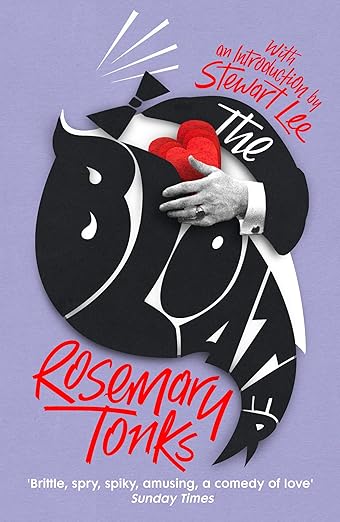
The narrator is Min, who works at the BBC Radiophonic Workshop (apparently Tonks recorded a poem with this forerunner of experimental, electronic music).
“Obviously it’s no good being slightly vulgar; you must be absolutely vulgar. Taste in the arts and theatre should never be confused with good taste, which is static and middle class.”
She is married to George, who barely gets a mention throughout the entire book. The titular Bloater is Carlos, her opera-singer tenant who is trying to seduce her, which Min seems to find in equal measure repulsive and captivating.
“And until the moment he enters it, the bedroom is only a very ordinary room with a bed in it. Then suddenly—snap pool! It’s a boudoir, it’s a dangerous liaison, it’s the fourth floor of a Lisbon brothel, it’s Madame de Pompadour and Louis XV all over again in some unaired voluptuary’s den.”
Meanwhile there is also Claudi, an older male friend caught up in the shenanigans, Fritz the cleaner, Billy her colleague and potential lover, and Jenny her colleague who is thrall to her lover ‘the guitar’. Min is jealous and adversarial towards Jenny, as she is towards so many in her life:
“She’s sitting there as though she’s just laid an egg.”
Apparently this novel took Tonks four weeks to write, with the plan of making ‘a lot of red-hot money’. While I didn’t think it was truly stream-of-consciousness as some reviews describe, I did think the somewhat plotless style wasn’t particularly suited to huge mainstream success.
For the length of a novella, I enjoyed Min’s relentless defensiveness which resulted in witty, barbed comments. The observations are astute and the use of imagery surprising (Tonks was an experimental poet.)
Had it been longer than 142 pages, I suspect my enjoyment of The Bloater would begin to wane. Min’s immaturity means she takes out her immense fear of reflection and rejection on everyone else, which is hard to stay with over too long a period. The characterisation all-round is thin, no-one really leaps off the page as fully realised person, perhaps reflecting Min’s self-focus and fears. However, I also think if the characters were better drawn, the bitterness of the humour would be harder to take, so perhaps this was an astute comic choice overall.
There’s no doubt Tonks was a highly skilled writer, and she didn’t make The Bloater longer, she kept it short. So claiming I wouldn’t like a novel she didn’t write really is entirely unfair! I would absolutely read more by her on the basis of this novella.
“Ah, parking! The graveyard of so many good evenings.”
To end, not the Tonks recording but a poem performance with the BBC radiophonic Workshop from around the same time:

