This is a contribution to the wonderful ReadIndies event running all month, hosted by Karen and Lizzy.

I’ve also taken the opportunity to visit two more places on my much-neglected Around the Word in 80 Books challenge, which is not so separate as it might first seem. Deciding to read a book written by a person from each place I visit (rather than set there but written by an author from elsewhere), means I’m dependent on English language translations being available. Based on absolutely no evidence except my impression, it seems to me that independent presses are more willing to look far and wide for their lists.
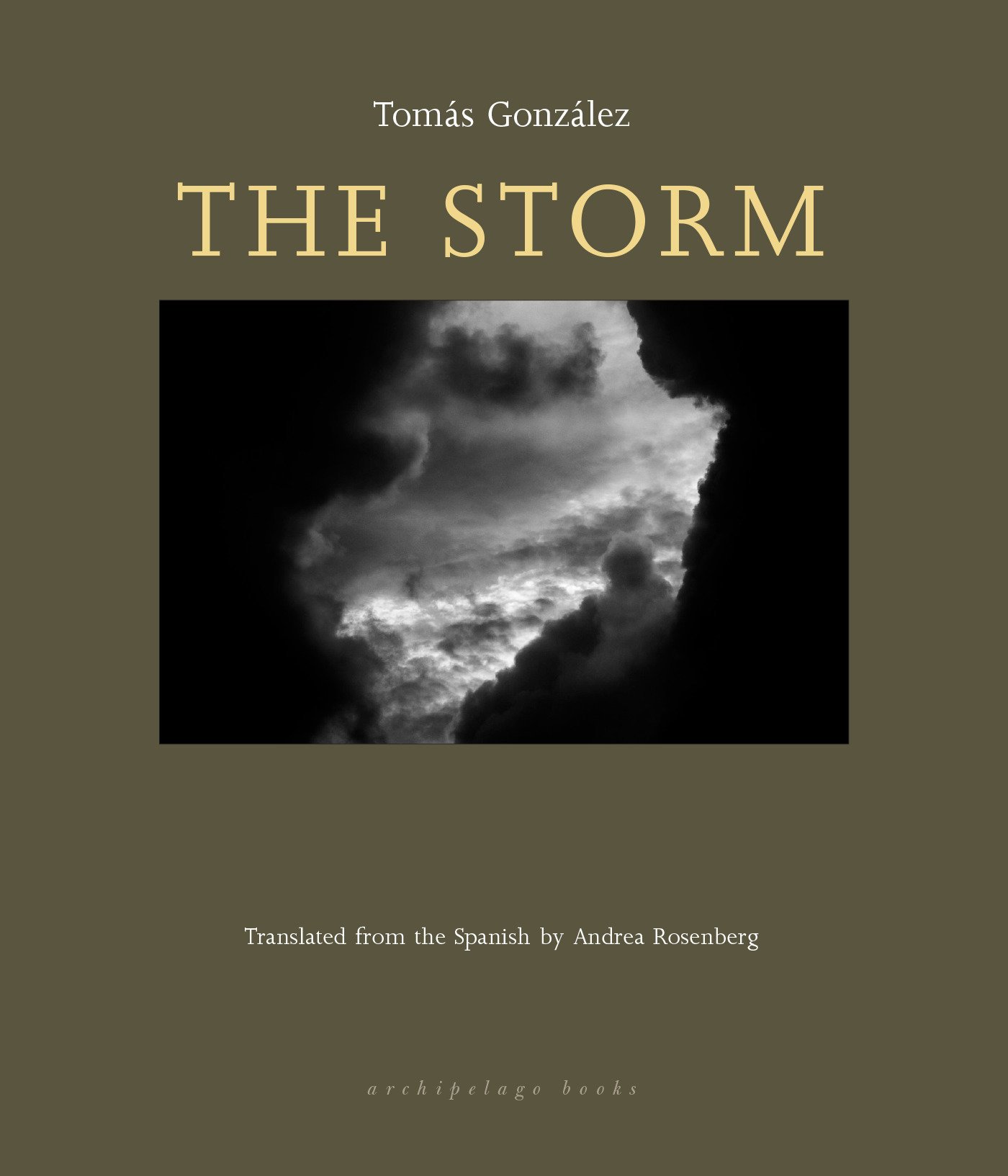
This is certainly the case for Archipelago Books, who publish my first choice of The Storm by Tomás González (2014, trans. Andrea Rosenberg 2018). They are a “not-for-profit press devoted to publishing excellent translations of classic and contemporary world literature.”
The Storm follows a family of hoteliers/fishermen as they set out for their usual catch, despite the impending titular weather. Set in a Columbian costal village, we also hear from the residents and tourists who are there the same night.
Mario and Javier are twins who despise their abusive father but are tied to him through where they live and how they earn their money. The novel opens with them loading their boat at the father’s insistence that they go out, despite the storm.
“To someone looking in from the outside, who couldn’t see the orange glow of hatred in the son’s belly nor the greenish flame of contempt in the father’s, time would seem to keep flowing the way it always had.”
The novella follows the three men out at sea and cuts back at various times to people in the village. The many voices didn’t feel clearly distinguished to me, but that may have been a deliberate choice as they form an effective Greek chorus. This includes the twins’ mother Doña Nora’s hallucinations. She is extremely unwell and the twins are loyal to her, blaming their hated father.
“Look, look at that sunset! he thought then, as if the orange on the horizon were presenting the conclusive argument against his brother’s darkness, his own darkness, and even the cruel and involuntary darkness of the madwoman back onshore.”
The Storm is determinedly unidealistic about family and coastal Caribbean tourist destinations – no pristine powdery white sand here – but it’s not depressing either. There is a humour and resilience, and even some compassionate moments between Doña Nora and the other permanent residents.
González expertly builds the tension in the novella, the family relationships reflecting the increased pressure and movement towards breaking point which occurs with a storm.
“Out at sea, the storm’s display intensified. Nobody really felt like talking, especially not about landscapes, so they didn’t say much, but now and then one of them would turn his head to look at it.”

Secondly, Love Novel by Ivana Sajko (2015 trans. Mima Simić 2022) which like The Storm is about the destructive force of family. They also have in common that both books are lovely paperbacks with French flaps and both have the translators names on the covers – hooray!
Love Novel is published by V&Q Books and it was very kindly sent to me by ReadIndies host Kaggsy, so this seemed the perfect time to read it! V&Q Books is the English-language imprint of Voland & Quist, a German independent publisher.
The title is ironic, as the relationship between the young couple, parents to a small child, (all unnamed) is filled with barely supressed violence and hatred. They are both struggling to stay afloat in the circumstances they find themselves. She was an actor but has stopped working to care for their child; he is an unemployed scholar of Dante, living in his own circle of hell as the (unnamed) country they are in deteriorates further.
The novel begins in media res as we are thrown into a screaming fight between the two:
“reacting like a typical female, typical by his standards, meaning excessive, hysterical and self-destructive, since she’d deliberately pulled her hair out, deliberately curled up in the pose of a crushed alarm clock and forced tears to her eyes as if to take revenge on him with his classic scene of domestic violence.”
Sajko expertly balances the domestic detail alongside more surreal images that never detract from the desperate, oppressive circumstances she is depicting:
“Words comparable to quicksand. Crumbling between their teeth, getting crushed into slimy sand, slipping from their lips like muddy bubbles with no meaningful content. Dripping down their chins. They should both look in the mirror and commit the image to memory. To make them sick of it. But they won’t. They’d rather keep the mud gurgling until they run out of oxygen…”
The writing is also very even-handed between the two protagonists. There is no sense of taking sides as they are both shown as trapped and powerless, flailing against forces beyond them. She is constantly indoors:
“Women walk a mile between walls, lose a whole night over some bullshit, put superhuman effort into it, and then, instead of breaking down, surrendering and finally resting, they stay bolt upright, as if they’d swallowed a broom or simply turned to stone. They even manage to wear clean clothes.”
While he concerns himself with wider economic and political circumstances, without agency:
“All the days he slobbered away on the couch watching live parliamentary sessions and listening to them tell him from the podium that it’s time to tighten his belt, or take out a loan, at the top up kind, for bread, milk and phone bills, because everything that could be looted has been looted and everything that could be sold has been sold, and all the money is now gone until someone lends him some; and so they warned him to be careful with that, too, because other people’s money is easily spent and hard to pay back”
The style Sajko uses, with those long running sentences, works extremely well in depicting an unravelling situation, full of uncontrolled reactions and little reflection. (Paradoxically, I suspect to use this style well requires a lot of control and reflection!)
What I especially liked about Love Novel is that it demonstrates how love doesn’t occur in a vacuum. Sajko takes an ordinary couple in ordinary circumstances, and shows how unlikely enduring love is, if human beings are not allowed to thrive. If the economic and political situation of your country is entirely stacked against you, trying to cling onto your humanity and express love for another can seem an act of resistance, one that not everyone will have the strength for.
“While they still believed that love saves, that love feeds, that love fixes what’s broken, that love offers tacit answers to the most difficult questions and that it is, thank God, free.”
“And it didn’t matter that they tightened their belts down to the size of a noose”
Love Novel is undoubtedly a tough read, but it is not resolutely depressing. There is resilience there, and some hope, however qualified.
You can read Kaggsy’s review of Love Novel here.
To end, no prizes for guessing the 80s pop video I’ve gone with…
 madame bibi lophile recommends