Although June was Pride month, in London it culminated with a Pride parade during the sunny weekend just gone, so this week’s post is two novels involving LGBT+ themes.

The first thing that struck me on picking up Orlando by Virginia Woolf (1928) is that Penguin Classics have managed to disprove what I had previously taken to be an absolute truth: that film tie-in covers are always repulsive. Apparently not when Tilda Swinton is involved (credit also to Billy Zane’s arms):
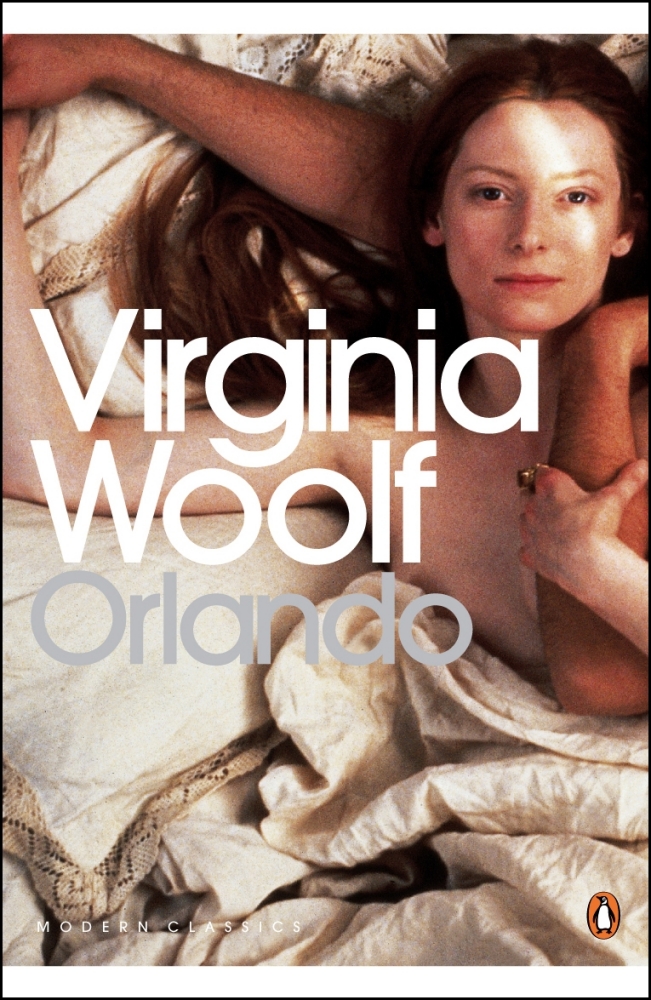
Orlando is a love letter to Vita Sackville-West, and the novel is full of references to her: her family, history, homes, lovers. As Orlando, Woolf makes Vita someone who is not bound by the laws of time, or by gender. At the start of the novel, Orlando is a young man living in Elizabethan England. I took Shakespearean Studies for my MA and I enjoyed Woolf poking fun at the nobleman poets of the time:
“He was describing, as all young poets are forever describing, nature…Green in nature is one thing, green in literature another. Nature and letters seem to have a natural apathy; bring them together and they tear each other to pieces. The shade of green Orlando now saw spoilt his rhyme and metre…one drops the pen, takes one’s cloak, strides out of the room, and catches one’s foot on a painted chest as one does so. For Orlando was a trifle clumsy.”
The oak tree on Orlando’s estate is a recurring motif, as Orlando writes throughout their life the epic poem The Oak Tree:
“To the oak tree he tied [his heart] and as he lay there, gradually the flutter in and about him stilled itself; the little leaves hung, the deer stopped; the pale summer clouds stayed; his limbs grew heavy on the ground; and he lay so still that by degrees the deer stepped nearer and the rooks wheeled round him and the swallows dipped and circled and the dragonflies shot past, as if all the fertility and amorous activity of a summer’s evening were woven web-like around his body.”
He is popular in the Elizabethan court and romances a Russian princess named Sasha (based on Vita’s lover for many years, Violet Trefusis). Sasha ultimately breaks his heart and Orlando retreats from court, but is later and ambassador to Turkey for Charles II. While in Constantinople he falls asleep for several days and wakes quite altered:
“Orlando had become a woman – there is no denying it. But in every other respect, Orlando remained precisely as he had been. The change of sex, though it altered their future, did nothing whatsoever to alter their identity.”
This change enables Woolf to make several pointed comments about gender roles:
“For women are not (judging by my own short experiences of the sex) obedient, chaste, scented and exquisitely apparelled by nature. They can only attain these graces, without which they may enjoy none of the delights of life, by the most tedious discipline.”
Ultimately though, Woolf is not interested in preaching. Orlando is an enjoyable romp through the centuries with plenty of sly digs at writers of the past and satirising of British society through the ages. It’s also about the difficulty of writing, both biography (Woolf-as-biographer addresses the reader directly to highlight these difficulties) and fiction as Orlando struggles with The Oak Tree and takes centuries to finish it (I enjoy Sackville-West’s writing but apparently Woolf didn’t rate it much).
For me, Orlando isn’t Woolf at her best, but I don’t think it was intended to be; she referred to it as ‘a writer’s holiday’. However, like all her writing, it is multi-layered and lends itself to re-reading. For all its complexities it’s a surprisingly easy read and can be whizzed through if you’re not stopping to read footnotes to catch all the allusions 🙂
Secondly, The Spell by Alan Hollinghurst (1998). This was a lesson to me to keep an open mind. If I didn’t rate Hollinghurst as a writer I would never have picked up this novel from the description on the back, taken from The Times review: “Alex drops a tab of ecstasy, provided by young Danny, and embarks on a bewildering voyage of self-discovery in a drug-fuelled London club scene”. To me, that sounds like an incredibly tedious premise for a novel. Thankfully, it seems The Times book reviewers were as inept then as they are now* and this is not what the novel’s about. What The Spell is about is dealing with the pain of heartbreak, and the awkward negotiations of intimacies when you’re male and British and don’t say what you feel.
Alex is nursing a broken heart when his ex-partner Justin invites him to spend the weekend with him and his new partner, Robin. Robin’s son Danny is there and Alex and Danny start a relationship. Alex is conservative; he works for the government and lives a quiet life. Danny is several years younger and completely different:
“He took in the jumble on the mantlepiece, but didn’t study the the curling snapshots too closely for fear of cutting himself on the grins and glints of Danny’s world. He had an impression of life as a party, as a parade of flash-lit hugs and kisses, in a magic zone where everyone was young and found to be beautiful.”
Robin is also negotiating his relationship with Danny and Hollinghurst captures the pain and guilt of the divorced parent:
“Even though the marriage had broken up eighteen years ago, Danny’s visits still left Robin with an aftertaste of disappointment, of adulterated sweetness; sometimes they had been anxious charades of the life they might have led together, but played out with an eye on the clock and a mawkishness which shifted from one to the other.”
Over the period of their relationship, as The Times review mentioned, Danny introduces Alex to London nightlife:
“He could easily argue the feeling away as the elation of drink and dancing and the company of a thousand half-naked men. Though the men were beautiful, it was true, in the cascades and strafings of coloured light.”
The Spell isn’t Hollinghurst’s most sophisticated novel but it’s simplicity makes it touching. It’s a look at a period of time in four ordinary, connected lives, written before he went onto the broader scope of The Line of Beauty and The Stranger’s Child. It’s about how we deal with pain, both big (bereavement, heartbreak) and small (the tiny hurts we cause one another each day). The final image is one of friendship, and as this endures, one of hope.
To end, the theme of this year’s London Pride was #PrideMatters. It’s about the importance of Pride as people who are LGBT+ still face discrimination and abuse. A pretty depressing state of affairs in 2018. And I am struck yet again at how audacious Jimmy Somerville was in making this video 34 years ago:
*Not that I read the Murdoch rag but instead base my opinions on the much more reliable source of Twitter. I saw Matt Haig’s tweet about their review of his latest book which showed all the nuanced understanding of mental health that you’d expect 😦

 madame bibi lophile recommends