“Orange is red brought nearer to humanity by yellow.” (Wassily Kandinsky)

This is my contribution to Dean Street December hosted by Liz at Adventures in Reading, Running, and Working From Home. Tom Tiddler’s Ground by the delightfully named Ursula Orange (1941) is part of their Furrowed Middlebrow imprint and I thought it was an absolute joy.
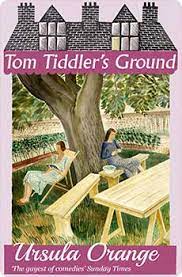
It tells the story of Constance Smith and her childhood friend Caroline Cameron, who find themselves living together again in the early days of World War II. Caroline is urbane and worldly, leaving behind her life in London with her husband John. She is entirely self-focussed and amoral, but also quite caring regarding people. Despite her shortcomings, I really liked her.

Constance could not be more different. We are introduced to her early on through the thoughts of the billeting officer who is trying to persuade people in the quiet village of Chesterford to take evacuees:

“Mrs Latchford grimaced and lit a cigarette. A thoroughly unenviable job altogether, and she felt she deserved a few minutes respite with nice, schoolgirlish, foolish Constance Smith. Foolish? Well, of course, it always looked a little foolish to see a woman of over thirty behaving like an enthusiastic bride, even after two years of marriage. But apart from that and her volubility and her poppings out and her nippings in and all her silly mannerisms, was Constance at all foolish? Certainly she handled the relations-in-law-in-the-village situation well, or rather did not handle it at all, but accepted it so naturally and pleasantly that she might really be said to be on the best of terms with her sister-in-law, Mary Hodges, the local greengrocer’s wife.”

Her husband Alfred is an utterly self-centred snob, intent on social climbing and ashamed of his sister. He married well-to-do Constance for social advancement and he doesn’t love her. Caroline sees this clearly on arrival in the village with her daughter Margeurite.

The other evacuee is Mrs Gossage, who seems entirely disinterested in everyone, including her baby son Norman.  

We follow this unlikely group of housemates as they adjust to their much-changed living arrangements. The story moves between the characters but is told primarily from Caroline’s point of view, which I thought worked well. She has good insights into other people and is entirely clear-sighted about herself too:

“There was a certain note in her voice that led Caroline to suspect that Lavinia belonged to that large class of people who find children sweet, but rather prefer they should go and be sweet upstairs in the nursery. It was an attitude she entirely sympathised with and absolutely hated people for.”

Constance as narrator would be far too guileless to carry the reader along. And of course, Caroline’s arrival in the village offers an outsider’s view on the characters and various intrigues. But what is lovely too, is Caroline’s changing attitude towards the village. Initially she is greatly amused by everyone, but as time moves on she starts to see them as real people, her “strange lapses into sincerity” possibly becoming longer lasting. This isn’t a trite city-girl-learns-the-true-value-of-Things-when-forced-into-small-town-life tale however. Orange is not at all sentimental about people:

“Caroline, looking at the expression on Mary’s face, marvelled at the extraordinary cruelty of the thoroughly respectable woman.”

“There was no doubt Constance, in her misery, was very pathetic. There was no doubt she was also rather irritating.”

But there’s not a bitter tone either. I found the characters recognisable and portrayed with human understanding. Caroline would be rather a controversial figure for the time, but Orange doesn’t judge her.

“It’s my red finger-nails that put the idea of asking me into her head, I’m sure.”

I liked the fact that Caroline didn’t overly judge herself, which would seem somehow hypocritical, but she does recognise that her actions hurt people, which she regrets.

There are serious concerns in Tom Tiddler’s Ground; adultery, bigamy, child neglect and lack of choices for women. Somehow Orange balances that with a knowing humour without belittling the issues at all.

My favourite character was George, Constance’s gentle, drifting brother:

“What could you do with a man who loved women, who loved domestic life, but who (according to Constance) had never seemed to want to marry anyone in particular? A man who obviously adored other people’s children, but who had none of his own? A man who had plenty of personality and probably (under all that indolence) considerable abilities, but who had never settled any profession or career? The only answer was – nothing, you could do nothing with him. And […] that was, of course, what George preferred. Caroline liked him enormously.”

We learn more about George’s background, who to my twenty-first century eyes had PTSD from World War I. Orange builds to a satisfying denouement, tying up many characters pasts with the present in a way that promises a better future, despite the war.

I really loved Tom Tiddler’s Ground, and got very excited about the thought of exploring Ursula Orange further, thinking the humour and characterisation made her another Margery Sharp. However, Stacy Marking’s excellent introduction to this edition explains the publishers took exception to Caroline as a character, and so she adjusted her style for later books, which also contained more snobbery (somewhat in evidence here but not overly stressed – Mrs Gossage is definitely treated with condescension, but also compassion). If anyone has read any other novels by Ursula Orange I’d love to know how you found them, especially as DSP publish some other titles.

“‘I suppose we ought to be thinking about Christmas,’ said Constance, a few days later. Everybody became conscious of a very strong disinclination to think about anything of the sort.”

To end, it’s a time of year when Nat King Cole is on heavy rotation, and quite right too. Here he is singing about orange (sort of 😉 )


“To die will be an awfully big adventure.” (Peter Pan)

Happy Birthday Beryl Bainbridge, who would have been 91 today! I thought I wouldn’t manage a post for Reading Beryl Week hosted by Annabookbel as I had a couple of false starts. I love Beryl but the two I had in the TBR didn’t work for me – probably the wrong time (I seem to be catching #AllTheWinterViruses).

Then I thought I’d let fate decide (admittedly I knew the odds were stacked in my favour, but I just like to pretend to myself that I’m not always going to buy a book 😀 ) and I went to the consistently wonderful charity bookshop across the road from me… of course they had plenty on their shelves, including one I keep meaning to read, An Awfully Big Adventure (1989).

I could just squeeze it in because Beryl generally wrote very short novels; this one comes in at 197 pages. So I’m counting it towards Novellas in November too, hosted by Cathy at 746 Books and BookishBeck.

Set just after the war, young Stella is encouraged to pursue dramatic interests by her Uncle Vernon, who feels she needs an outlet for all her feelings:

“Emotions weren’t like washing. There was no call to peg them out for all the world to see.”

But despite Stella’s emotional reactivity, she is also strangely detached. Uncle Vernon and Aunt Lily raised her, but she is not intimate with them. She never talks to them about what is happening for her or how she feels.

This theme of the distances between people continues when Stella joins an acting troupe at the local theatre, helping backstage and playing small parts. There are complex histories, resentments and intrigues between the players, which Stella only partly grasps.

“Bunny agreed with Meredith that there was nothing wrong with Dawn Allenby apart from her love of beauty, an affliction she was ill-equipped to fight. He put it in a nutshell when he said she was the sort of girl who, if there had been a meadow handy, would have been out there in a flash picking cowslips.”

Stella is naïve and self-focussed, which means the reader sees much more than she does. She can make sharp observations but lacks the sophistication to fully comprehend their meaning. She falls for Meredith, the nicotine-stained, spiky director:

“She suspected it was education and breeding that enabled him to keep his face and his feelings separate.”

But she is so wrapped up in her own feelings she barely registers how little she knows of him, or his lack of any interest in her:

“Endeavouring to be what she imagined was his ideal, she altered her demeanour several times a day.”

The reader knows Stella will never, ever be Meredith’s ideal. But Stella remains wilfully ignorant and intent on very shaky self-reinvention. I would say this seems to be a recurrent theme in Bainbridge – the psychological warfare people can wage on one another, though self-involved disregard of others, rather than outright mendacity.

Also typical of Bainbridge is the witty, pithy turn of phrase and humour threaded throughout the darkness.

“She plumped out my vowels. I tend to have flat ones. It’s to do with catarrh as much as region.”

Apparently An Awfully Big Adventure was partly biographical with Bainbridge drawing on her time working at the Liverpool Playhouse. It certainly felt very authentic, with lots of detail about the daily drudge of postwar life, such as when Stella wants a bath:

“It meant paraffin had to be fetched from Cairo Joe’s chandlers shop next door to the Greek Orthodox Church, and then the stove lugged two flights of up the stairs and the blanket nailed to the window with tacks. In the alleyway beyond the back wall stood a row of disused stables and a bombed house with the wallpaper hanging in shreds from the chimney breast, and sometimes women, no better than they ought to be, lured men into the ruined shadows.”

An Awfully Big Adventure is ultimately very dark. Stella’s seduction by seasoned actor PL O’Hara is treated by Stella with the same detachment with which she views nearly all her relationships. But the consequences will be tragic, and again, the reader is left to realise far more than Stella.

For newcomers to Bainbridge, this would be a good place to start. It covers many of the themes she returns to and is so tonally distinctive, in the way her novels are. For those who are already fans, she is at the height of her powers here. An Awfully Big Adventure was one of the five books that gained her a Booker nomination, which she never won.

“In the end everyone expected a return on love, demanded a rebate of gratitude or respect. It was no different from collecting the deposit on lemonade bottles.”

To end, An Awfully Big Adventure was adapted to film in 1995. I have a vague memory of seeing it in the cinema at the time. This trailer has reminded me how perfectly cast it was, and how much I miss Alan Rickman’s performances:

“Compared to memory, every possession can only ever seem disappointing” (Giorgio Bassani)

This is my final post for the 1962 Club, hosted by Simon and Kaggsy, which has been running all week. It’s been a great event as always, and I’m really pleased it prompted me to pick the three I’ve read off the TBR pile at long last!

(Please note, despite the subject matter I’ve made a deliberate choice not to draw contemporary parallels. I think Lisa explained this decision really well in her blog post here.)

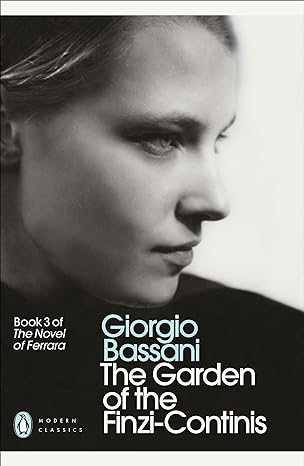
I adored Giorgio Bassani’s The Gold-Rimmed Spectacles (1958) when I read it last year, so I had high expectations when I approached The Garden of the Finzi-Continis (transl. Jamie McKendrick, 2007), the third book in his Romanzo di Ferrara cycle. It fully lived up to those expectations.

The unnamed narrator tells us in the Prologue that he is looking back from 1957 to a time before World War II. However the tone is more elegiac than nostalgic, as he also tells us that those he recalls perished in concentration camps.

Before the war the Finzi-Continis were a prosperous family, but the conflict destroyed them and all they owned. The large house is now squatted in, and the titular space:

“All the broad-canopied trees, limes, elms, beeches, poplars, plane trees, horse chestnuts, pines, firs, larches, cedars of Lebanon, cypresses, oaks, holm oaks, and even the palm trees and eucalyptuses planted in their hundreds by Josette Artom during the last two years of the first world war, were cut down for firewood, and for some time the land had returned to the state it was in when Moisè Finzi-Contini acquired it”

So it is with this knowledge that we then meet the younger, somewhat callow narrator, and follow his developing friendship with the younger Finzi-Contini’s, Alberto and Micòl, son and daughter of Professor Ermanno and Signor Olga.

Racial laws are coming into effect in Italy in the late 1930s, and this sees the narrator invited into the walled estate, as Jewish people are banned from places such as the local tennis club.

“They entirely left aside the existence of a far greater intimacy, a secret one, to be valued only by those who shared it, which derived from the fact that our two families, not by choice, but by virtue of a tradition more ancient than any possible memory, belonged to the same religious observance, or more accurately to the same ’School’”

Despite the growing pressures of the outside world, within the Finzi-Continis walls the narrator remembers a time where:

“The weather remained perfect, held in that state of magical suspension, of glassy, luminous, soft immobility which is the special gift of some of our autumns. In the garden it was hot, just slightly less than if it was summer.”

In this enchanted space the narrator falls for Micòl, but their relationship never develops, characterised by misunderstandings and ambiguity that they are too young to resolve. Being too young for what life throws at you is also shown through the political conversations with Giampi Malnate, an older Christian friend of Alberto, as well as an experience of terminal illness.

What I thought was so subtle and clever from Bassani is that nothing overly dramatic happens. Rather, things fade out. The huge events that we know are looming take place outside of the novel, and instead we are shown how we can take for granted the moments that seemingly have no wider ramifications. Except of course, they do. This is a formative time for the narrator.  

The Garden of the Finzi-Continis is not a plot-driven novel. It is a beautifully written evocation of a time before unimagined horrors. It is reflective and elegiac in tone without ever letting sentimentality lessen the portrait of a family obliterated by the Holocaust. It’s a truly devastating read.

The novel was adapted into a film in 1970, which won the Best Foreign Language Oscar that year. Has anyone seen it? It looks pretty faithful to the book so I’m interested to watch it:

“Writing’s not always a pleasure to me, but if I’m not writing every other pleasure loses its savour.” (John Braine)

This is my second contribution to the 1962 Club, hosted by Simon and Kaggsy, which is running all week. Do check out all the wonderful posts!

I picked up Life at the Top by John Braine because it is the sequel to Room at the Top (1957) which I really rated, with its depiction of the postwar north of England and Joe Lampton’s determination to leave his working -class life behind, whilst juggling complex sexual relationships. Life at the Top I didn’t find as compelling, but there was still a lot to enjoy.

Set ten years after Room at the Top, the novel follows Joe as he lives the life he thought he always wanted. Even if you’ve not read the first novel, take a guess as to how that’s working out for him 😀

“The truth was that I actually wanted a drink now, I wanted something to blur things slightly, to put a haze between me and the pink wallpaper and the pink cupboards and the white refrigerator and the electric oven and the mixing machine and the pink wall table and the pink covered stool; it was too bright and shiny and hygienic at eight o’clock on a March morning with Harling Crescent quiet under the weight of Sunday, it reminded me rather too coldly that I was thirty-five and a father of two children and at least ten pounds overweight.”

Joe adores his young daughter Barbara but feels alienated from his son Harry, who has been sent away to a school of his grandfather’s choosing. He and his wife Susan still sexually desire one another, but there seems to be little intimacy. Working at the family firm (Susan’s family), Joe is frustrated:

“I had stopped wanting things. I wanted power, power to put through my own ideas; I wanted to be taken seriously, I wanted to be something more than the boss’s son-in-law.”

He is going to become a local councillor, but that doesn’t suggest fulfilment to him (nor should it, bloomin’ Tory! 😀 )

“The prosperous middle-aged grumblers, the solid sensible citizens; I would sit here or in the committee room listening to them; taking great care not to offend them, and without my realising it, I would become exactly like them. Waiting my turn to grumble, waiting my turn for thrombosis, waiting my turn for death.”

So what does Joe do? Talk honestly with his nearest and dearest? Seek out a life of authenticity? Reflect honestly on the deep-rooted cause of his dissatisfaction and what he can do to make his life more fulfilling? No, of course not. He starts an affair with an attractive young journalist named Norah Hauxley and runs away to London.  The shadow of his former lover (from Room at the Top) still looms large, and I felt Alice was really the only woman Joe had loved:

“She was grown up. I hadn’t met a grown up woman in ten years, and for ten years I hadn’t felt the need to be with one. And Alice, even Alice, had been broken somewhere, she had lost the habit of happiness.”

Joe is not likable. He takes decisions that hurt others. He behaves selfishly. He’s a bit of a misogynist.But still I found myself staying alongside him as narrator, because he’s so honest. He doesn’t ask the reader to like him, because he doesn’t much like himself. I thought Braine did a brilliant job of presenting a man so of his time, and so completely believable.

Life at the Top doesn’t have a huge amount of plot, but I found it a compelling read in its honesty, particularly around flawed human relationships.

“I looked at her in surprise; I had not felt so close to her since we were first married. But I made no move to comfort her.”

Life at the Top is a short read, and I may not have stuck with it had it been longer. But as it was it was well-judged, and there are some developments in Joe’s familial relationships toward the end that I found truly moving. I’m glad the 1962 Club prompted me to finally pick this one up after it had been languishing in the TBR for many a year.

Life at the Top was adapted into a film in 1965, with the magnetic Laurence Harvey, who also starred in Room at the Top. Unfortunately the director changed from the first excellent film, and although I tried to watch the sequel, I found it so heavy-handed and unsubtle compared to the book that I gave up. But it did make me appreciate the book more!

So rather than a trailer for the film, here’s a 1962 song about rain, which the West Yorkshire town of Warley would be no stranger to:

“I regret profoundly that I was not an American and not born in Greenwich Village.” (John Lennon)

The 1962 Club, hosted by Simon and Kaggsy, starts today and is running all week which I am very excited about 😊 The Club weeks are always great and I’m really looking forward to seeing the posts. This is the first of  what I hope will be three contributions, but as I never blog as much as I mean to, failure is almost inevitable!

The Golden Spur was Dawn Powell’s last novel, and it’s a humorous look at the bohemian arts scene of late 1950s New York, specifically Greenwich Village. This was a world Powell was very much a part of and my edition features an effusive introduction from Gore Vidal who was one of her close friends.

We are introduced to the artists and writers – both up and coming, and those very much faded and failing – their hangers-on and their varied associates through the outsider view of Jonathan Jaimison. He is in his late twenties and recently discovered that his father isn’t the domineering tyrant he grew up with, but someone from this scene, back when his mother was hanging out with Prohibition-era flappers.

So Jonathan leaves his Ohio home and soon makes his way to the titular bar, at the start of his quest to find his biological father:

“Through a gap in the plum velvet cafe curtains he could see the bar … He breathed deep of the heady New York air, that delirious narcotic of ancient sewer dust, gasoline fumes, roasting coffee beans, and the harsh smell of the sea that intoxicates inland nostrils. Then he pushed open the door.”

He’s quickly adopted by Lize and Darcy, two frenemies who sleep with the same male artists, although it’s not entirely clear why, as they seem to have no great fondness for men or for art:

“The girls never asked questions about a man’s private interests or listened when he tried to tell them. For them it was enough that he was a man and that he was there. Who needs a talking man?”

“That his newest canvas was gone should have told her something, but she wasn’t sure which was the new one because all his pictures looked alike to Lize. Great lozenges of red and white (‘I love blood,’ he always said), black and grey squares (‘I love chess,’ he’d say), long green spikes (‘I love asparagus’). All Lize had learned about art from her life with painters was that the big pictures were for museums and the little ones for art.”

As Jonathan makes his way in New York, he moves between two generations: the young artists and the fading interwar generation. There is a nostalgia for the Prohibition period and what New York was then which is beautifully evoked, alongside a recognition that New York is a city that continually makes itself and its inhabitants anew:

“Jonathan recognised New York as home. His whole appearance changed overnight, shoulders broadened, apologetic skulk became swagger; he looked strangers in the eye and found friendship wherever he turned. With the blight of Jaimison heritage removed, his future became marvellously incalculable, the city seemed born fresh for his delight. He took for granted that his mother’s little world, into which he had dropped, was the city’s very heart.”

Although The Golden Spur is described as a comic novel, I didn’t find it laugh-out-loud funny. Rather I’d describe it as affectionately satirical. It ribs the 1950s arts scene and the vacuous people drawn to it, but it never has a bitter or nasty tone:

“Anybody with a tube of paint and a board was an artist. But writers were not writers unless decently unpublished or forever muffled by a Foundation placebo.”

“‘I just want to be overestimated,’ Earl shouted, ‘like everybody else, goddammit.’”

Despite the overarching plot being Jonathan’s search, this really isn’t a plot-driven novel. Rather, the question of his paternity is a device to introduce the various characters and their world. It’s a novel to read for the evocation of the city, of a particular society found within it, and for the characterisation and the wit. In the way that Tales of the City was serialised in the San Franciso Chronicle, I felt The Golden Spur could have worked similarly in The Village Voice. It’s almost a series of sketches, albeit well realised ones.

I can’t say I loved this quite as much as Gore Vidal clearly did, but then he probably recognised a lot of the characters and situations within the novel. I still found a great deal to enjoy, and Powell certainly has a way with words:

“She was making more and more passes at the wrong men, then trying to recoup with stately cultural pronouncements in her refined Carolina accent, which she kept polished up like her grandfather’s shotgun, ready to bring recalcitrant suitors into line.”

To end, I was going to go with the song Little Lize because that’s the only other time I’ve come across the name. I thought it would be easy to get a good quality version as the massively successful Fisherman’s Friends have recorded it. But I couldn’t find a decent one so here they are instead singing about never leaving home. New York isn’t for everyone…

“I think of a writer as a river: you reflect what passes before you.” (Natalia Ginzburg)

A desperate scrabbling attempt to get a final post written for Women in Translation Month!

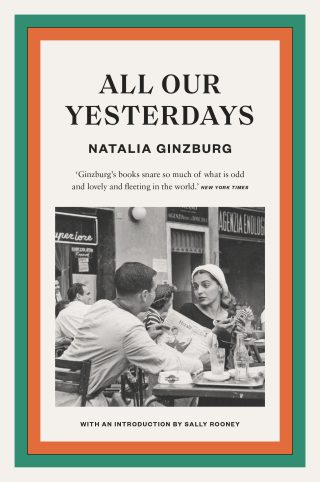
Daunt Books are such an interesting publisher and I was keen to read Natalia Ginzburg having heard wonderful things in the blogosphere, so I swooped on All Our Yesterdays (1952, transl. Angus Davidson 1956) when it turned up in my local charity bookshop. I think I’d read somewhere that this wasn’t the best place to start with this author, but I absolutely loved it.

The novel follows two families living in a northern Italian town from the 1930s, through the war years to peacetime. Although the blurb on the French flaps of my edition suggests Anna, the daughter of the poorer family, is the protagonist, really Ginzburg follows them all to a greater or lesser extent, with no overarching plot other than the sequence of years.

Although this approach sounds like a shortcoming, it works so well. It’s not a documentary novel but it gestures towards this with an omniscient neutral(ish) viewpoint and only reported speech. This felt unusual to read, but is so clever in capturing the everyday experiences of those living through extraordinary circumstances.

Anna’s siblings are Concettina, Ippolito, and Giustino. Concettina is popular with boys but struggles to find a purpose in life; Ippolito channels his energies into anti-Fascist activities with his friend from the richer family across the road:

“Emanuele and Ippolito did not even know Italy, they had never seen anything except their own little town, and they imagined the whole of Italy to be like their own little town, an Italy of teachers and accountants with a few workmen thrown in, but even the workmen and the accountants became rather like teachers in their imagination.”

Their lives are equally dictated by world events and by commonplace ones. Anna falls pregnant by her boyfriend and marries an eccentric older man, Cenzo Rena, moving with him to the southern village of Borgo San Costanzo. Her affair with her self-involved, callow boyfriend was no great passion, and while her marriage to Cenzo Rena attracts approbation, he is a warmer, more generous man than the one her own age.

“She was alone with Giuma’s face that gave her a stab of pain in her heart, and every day she would be going back with Giuma amongst the bushes on the river bank, every day she would see again that face with the rumpled forelock and the tightly closed eyelids, that face that had lost all trace both of words and of thoughts of her.”

These are people destined to be on the outskirts of war. Cenzo Rena holds a lot of sway in his local area and does help Jewish people fleeing the Nazi occupation, but on the whole the story of All Our Yesterdays is not one involving soldiers or revolutionaries. It is about ordinary people and for them the conflicts of war are reported facts not lived experience. The latter for them includes a lot of mundanity:

“And the bread in town was rationed and was a kind of soft, grey dough that you couldn’t ever digest, the bread was like the soap and the soap was like the bread, both washing and eating had become very difficult.”

Yet this doesn’t mean the story isn’t affecting, or that the characters avoid tragedy. There are some truly tragic events that are hugely affecting. Ginzburg manages to be even-handed in her treatment of her characters but not detached. Her writing is warm but unsentimental as she demonstrates that flawed people are as worthy of love and mourning as idealised ones.

In case I’ve made it sound unremittingly serious, I should mention that there humour in All Our Yesterdays too. There are romantic entanglements that are treated with a degree of levity, and eccentric housekeepers/family retainers with various foibles. All life is here.

I can’t think of another writer who approaches Ginzburg’s style, and looking back on it I can’t explain how she does what she does. This was a story that snuck up on me, the deceptively simple storytelling drawing me in more than I realised until I was totally immersed. An extraordinary novel.

“Fanfares of trumpets usually announced only small, futile things, it was away fate had of teasing people. You felt a great exultation and heard a loud fanfare of trumpets in the sky. But the serious things of life, on the contrary, took you by surprise, they spurted up all of a sudden like water.”

To end, of course there’s a very famous song I could post on the theme of Yesterday, but instead, to continue the mix of despair alongside levity: have you seen a parrot singing Creep by Radiohead?

“Well, I woke up Sunday morning/With no way to hold my head that didn’t hurt./And the beer I had for breakfast wasn’t bad,/So I had one more for dessert.” (Kris Kristofferson)

I had such a book hangover after Bleak House. I couldn’t settle to anything. A friend of mine who loves a certain 80s singer has a phrase when she hears other warblers: “He’s alright, but he’s not George Michael.” Well, I kept picking up books that were alright, but they weren’t Bleak House. So few books are, I find…

Then I remembered that when Simon did his books of the year round up last year, I’d recognised two were on my TBR pile. Surely books good enough to make the final cut would see me right? Of course they did 😊 Hooray for bloggers and their brilliant recommendations!

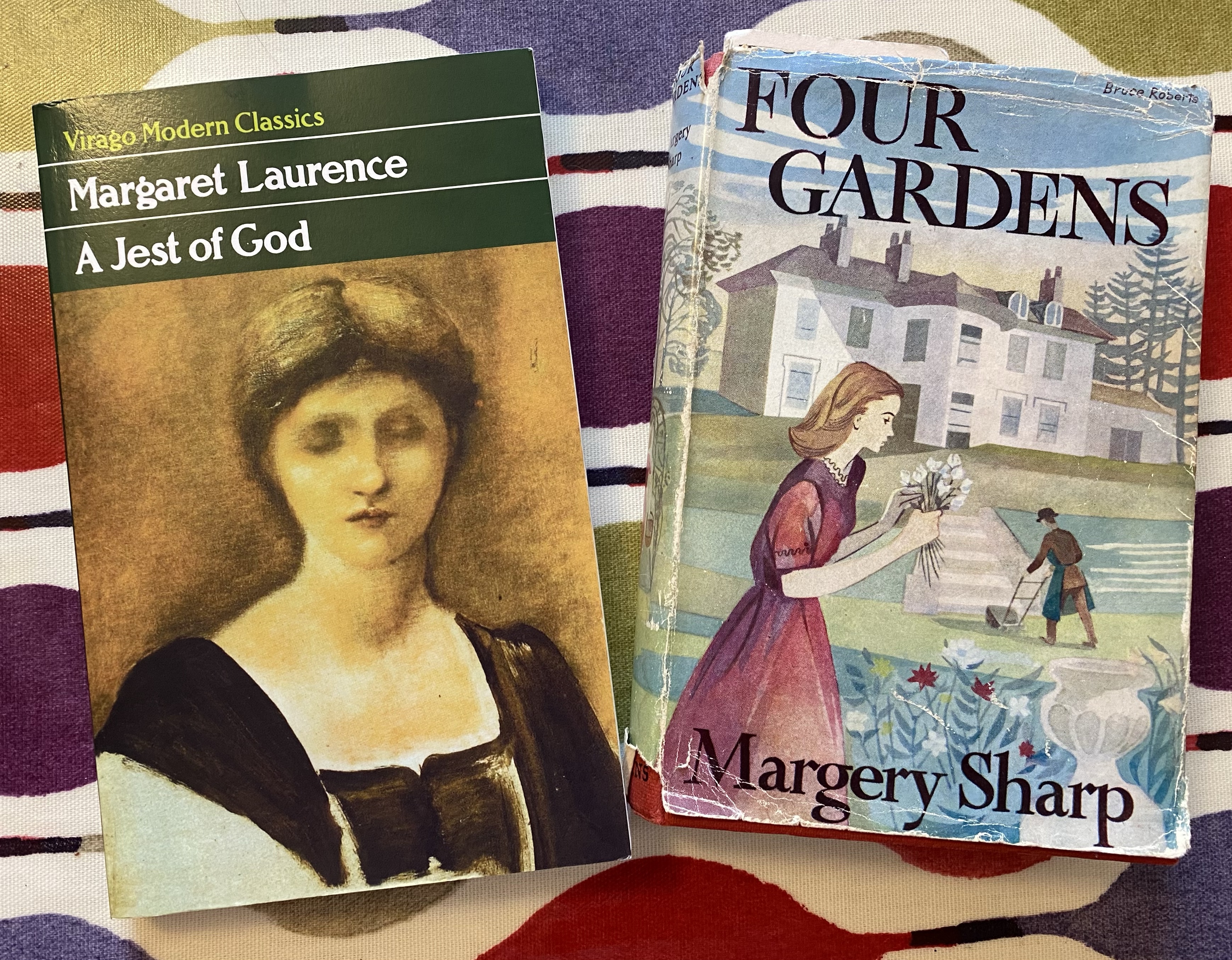
Firstly, the novella which made the top of Simon’s list, A Jest of God by Margaret Laurence (1966). This was the second in Laurence’s Manawaka sequence, but thankfully they can all be read as standalones as I’d not read anything by her before. On the strength of this, I’ll definitely be seeking out her writing again.

A Jest of God is an intimate character study of Rachel Cameron, a thirty-four-year-old teacher who lives with her emotionally manipulative mother above the Manitoba funeral business her father ran until he died.

The novel is narrated in the first-person, and Rachel’s mind is an oppressive and tense place to be. She is highly anxious and self-censoring:

“There. I’m doing it again. This must stop. It isn’t good for me. Whenever I find myself thinking in a brooding way, I must simply turn it off and think of something else. God forbid that I should turn into an eccentric. This isn’t just imagination. I’ve seen it happen. Not only teachers, of course, and not only women who haven’t married. Widows can become extremely odd as well, but at least they have the excuse of grief.”

This anxiety and second-guessing is not helped by her mother’s behaviour, which is self-pitying, judgemental and highly manipulative. Rachel recognises this, but is at a loss as to how to extricate herself:

“Her weapons are invisible, and she would never admit even to carrying them, much less putting them to use.”

“All such words cling to the mind like burrs to hair, and I can never seem to brush them away, as I know I should do.”

Rachel’s mother is not an out-and-out baddie though, and Laurence expertly demonstrates the vulnerability and fear that underlies her machinations. Similarly, Rachel does not always behave well. In one particular scene early in the book, she actually behaves despicably and doesn’t make amends despite her instant remorse. She is a complex, contradictory character, wholly believable. Laurence treats her tenderly but unflinchingly; without judgement but also without sentiment.

Rachel could so easily be a stereotype: a lonely single woman, living with her mother. But Laurence side-steps clumsy characterisation, or easy dismissal of Rachel, by delicately exploring the true meaning of the adjective so often attached to unmarried women approaching middle-age: she is desperate. She is absolutely desperate and despairing. She is lonely, and feels trapped in the life she has always known, with no way out. She wants things to be different, but she doesn’t know how. She is deeply, existentially sad.

1966 is a time of societal change, when women like Rachel could feel stifled by convention and also have some sexual freedom. So when Nick, and old schoolfriend appears, there are brief moments of physical connection. But in only seeing things from Rachel’s point view, the reader is able to realise how little intimacy there is. And that is what Rachel needs, more than the sex which Nick offers. Yet she doesn’t know how to achieve this:

“I talk to him, when he is not here, and tell him everything I can think of, everything that has ever happened, and how I feel and for a while it seems to me that I am completely known to him, and then I remember I’ve only talked to him like that when I’m alone. He hasn’t heard and doesn’t know.”

In some of Nick’s reported speech, the reader picks up on things Rachel ignores. She is so bound in her own intense feelings, she can’t really hear the cues Nick gives, over her relentless inner voice.

“He’s thirty-five, not fifteen. His past such gauche public performances. What he worried about Rachel? I’m not worried. I’m perfectly alright. Well, relax, then. I am relaxed. Oh? Shut up. Just shut up.”

A Jest of God is such an accomplished novel that is also so approachable. I found Rachel’s voice got under my skin very quickly and distinctly, and I had to read on. I think it works very well as short novel, longer would have been too oppressive and difficult to sustain I suspect. But at the length it is it remains powerful and impactful, and not as depressing as I’ve made it sound!

Ultimately there is resilience and change for Rachel, even some defiance. And there are brief moments of humour, such as Rachel trying to duck her colleague Calla’s constant invitation to attend Tabernacle with her:

“At least I have postponed it, and perhaps by that time some reasonable excuse will come along, or I’ll be dead.”

A stunning novel: a precise and compassionate character study, clever and humane. I’m so glad to have discovered Margaret Laurence at long last.

“Something must be the matter with my way of viewing things. I have no middle view. Either I fixed on a detail and see it as though it were magnified – a leaf with all its veins perceived, the fine hairs on the back of a man’s hands – or else the world recedes and becomes blurred, artificial, indefinite, an abstract painting of a world.”

Secondly, after being in Rachel’s head, I looked forward to some comic relief from an author I always enjoy: Margery Sharp. Four Gardens (1935) was number ten in Simon’s list. But this wasn’t as comic as some of her other novels; it had a slightly elegiac tone and the relationships included a certain sadness. But it wasn’t a sad novel overall, and I sunk into Four Gardens with pleasure.

Four Gardens follows the life of Caroline Chase from late teens to middle-age and the titular spaces she finds herself in. The device with gardens isn’t remotely heavy-handed and for a significant section of the novel they barely feature. But Caroline is a gardener, given half a chance, and it is instinctive and natural to her:

“Her step, as she now redescended to the rose garden, was therefore a proper gardeners tread – slow, considerate, with long abstracted pauses for survey and meditation. She also, without thinking, removed her hat and gloves.”

This is her first garden, one she trespasses into, and as she meets her first love there, it has a dreamlike quality. Perhaps this is why her love of gardening is so easily disregarded when she leaves behind youthful folly to marry the determinedly sensible Henry:

“For all these things in themselves – love at first sight, undying devotion, and general aloofness – were very exciting indeed; it was only in connection with Henry that they became so curiously prosaic.”

And so for many years Caroline doesn’t garden at all. She runs a house and she raises her son and daughter in the town where she has always lived. She is the creator of a safe space for her children and an unwavering routine for her staid but affectionate husband.

Despite the love she feels for her family and the tranquillity of her home life, I did find an element of melancholy to Caroline’s domestic arrangements. Her family are near and dear, but there seemed to be very little intimacy: she and Henry rarely communicate about anything beyond practical considerations, and she doesn’t really understand her children at all. She also despises her closest friend in the village, Ellen Watts  – a monstrous and wholly believable creation. Caroline reflects very little though, and so any concerns are quickly subsumed in the relentless demands of domesticity:

“Thinking – the deliberate exercise of the brain – did not come naturally to her.”

But I wouldn’t want to give the impression that Four Gardens is ponderous or heavy-going in any way. It felt quite a realistic presentation of Edwardian contentment, though not without Sharp’s gentle jibes, such as this discussion of wallpaper where Caroline evokes her husband’s approval to counteract her mother’s reservations:

“Mrs Chase was at once silenced. […] It would have seemed perfectly reasonable to her that Caroline, who was in the house all day, should have suited her surroundings to the taste of a man who was out of it.”

I did want Caroline to exert herself in some way, to stake a claim beyond her roles meeting everyone else’s needs. Finally she does it, when she starts growing runner beans during World War I, and realises how much she is nurtured by time with her plants:

“there was usually a quiet space, between twelve and half-past, when the first work of the house was finished and before the children’s dinner became a pressing consideration; and these thirty minutes Caroline began to guard and cherish as a precious treasure.”

The war years are beautifully evoked by Sharp, with all their worry alongside self-serving censorious behaviour of some in the village.  After the war, everything changes. Caroline finds herself mistress of a large house, with a garden she can’t touch unless she wants to incur the wrath of a succession of gardeners:

“The garden was looking well. But it always did look well, and gave her no special pleasure […] It was perfectly designed and perfectly kept, and to Caroline completely uninteresting.”

Meanwhile, her children are vaguely affectionate, patronising strangers. They change the names she loves, Lily becoming Lall and Leonard, Leon. They are academically accomplished and having had money their whole lives, utterly contemptuous of it. These Bright Young Things live by a morality that is absolutely baffling to Caroline, and there is a lovely echo of an earlier scene between Caroline and her mother in a later conversation between Caroline and Lall. The reader can see they are so much more alike than either realises, dramatic irony at its lightest.

I’m not one for biographical readings of novels but something of the tone of Four Gardens – affectionate, gentle, slightly sad –  did make me consider the dates. In Caroline, Sharp is writing about her parents’ generation, so maybe that explains it… or maybe it has nothing to do with it at all, who knows?  

Caroline’s fourth garden finally sees her able to do as she pleases. I couldn’t help feeling she might really surprise her children, and herself 😊 A warm, engaging story of a woman’s outwardly ordinary adult life during great societal change.

To end, Paul Newman adapted A Jest of God as Rachel, Rachel for his directorial debut. This very odd trailer doesn’t make it seem overly appealing:

“There are no ordinary cats.” (Colette)

Mallika at Literary Potpourri’s wonderful event  Reading the Meow has been running all week, do check out all the great posts prompted by our feline friends! Here is my post just in time…

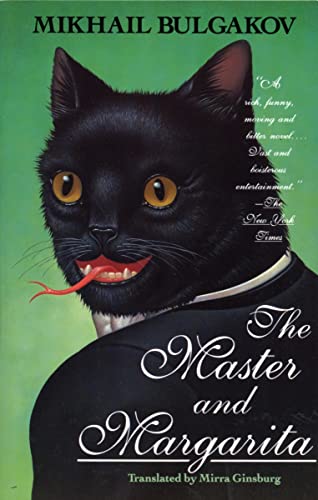
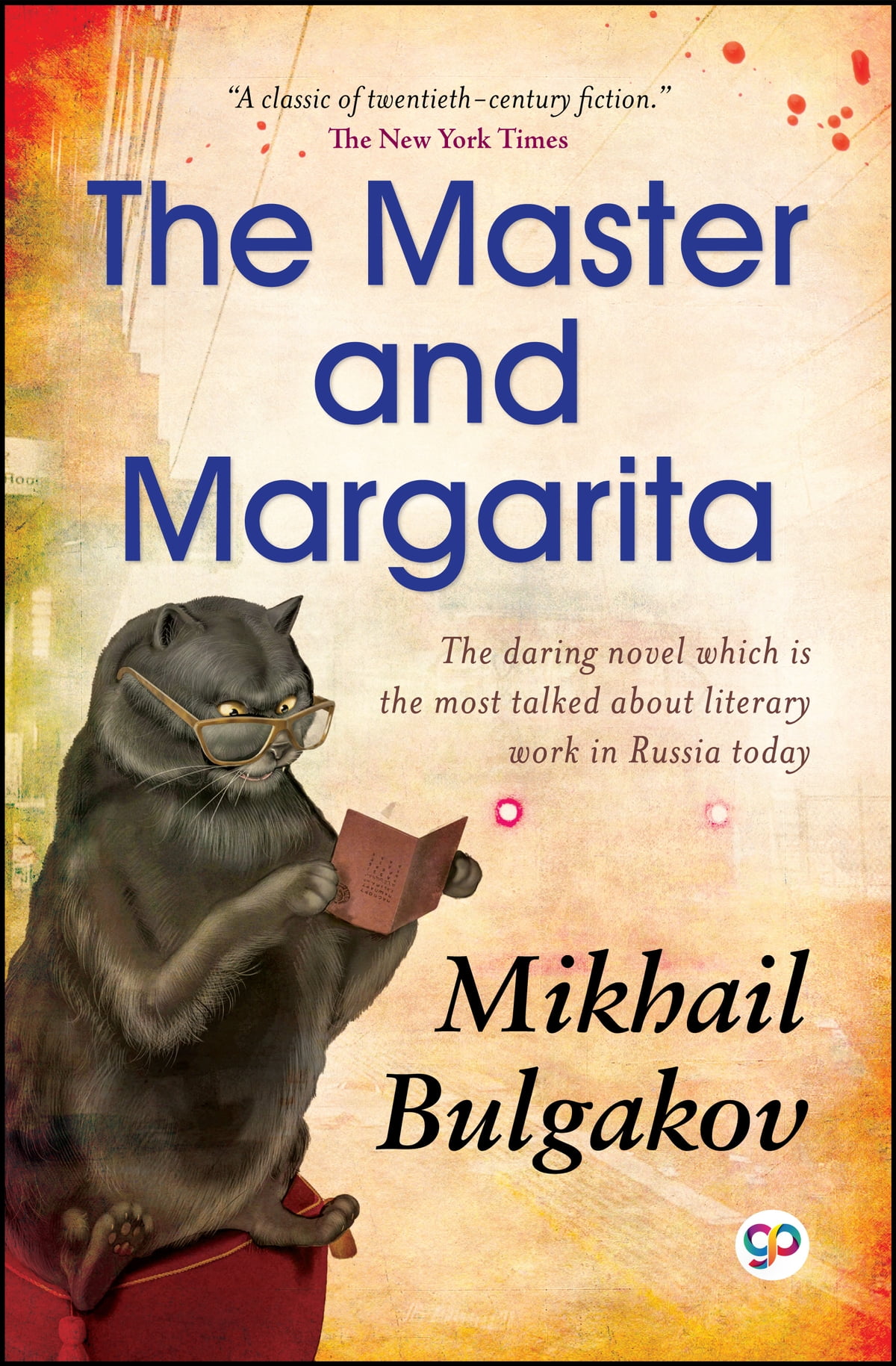
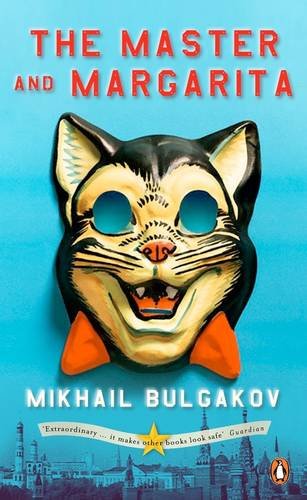
I’m grateful to Reading the Meow for finally getting me to pick up The Master and Margarita by Mikhail Bulgakov (finished in 1940, published in 1966) which is part of my Le Monde’s 100 Books of the Century Reading Challenge and has been languishing in my TBR for years. Although not ostensibly a book about cats, one does feature prominently as these various edition covers will attest:

The reason it had lain unread for so long was because I’m (aptly) a big scaredy-cat. I was really intimidated by this classic of twentieth-century fiction and I thought it would be far too complex and clever for me to understand. Which as it turned out, was broadly correct. I’m sure I didn’t pick up all the allusions and references, even with the notes in the back of my edition to help me (Alma Classics, trans. Hugh Aplin 2020 – I definitely recommend this edition and translation).  However, I still found it very readable and a lot to enjoy, especially regarding Behemoth, the character that meant I was reading it this week particularly.

The Devil arrives in 1930s Moscow as a Professor Woland, along with his entourage: red headed, bizarrely dressed Korovyev; sinister vampiric Azazello; beautiful Hella; and Behemoth, an enormous cat that walks on his hindlegs, talks, drinks vodka and plays chess.

The proceed to wreak havoc for three days in a series of carnivalesque scenes, using the greed and corruption of people against them.  It’s absolute chaos and carnage, but brilliantly Bulgakov shows that the devil doesn’t have to push very hard for all this to occur.

At the start of the novel, Woland predicts the shocking and absurd death of Berlioz, head of Massolit, a literary organisation. Once people hear of his death, this description of a barrage of statements in order to get Berlioz’s apartment is a good example of how Bulgakov balances social realism, satire, the comic and the desperate throughout:

“In them were included entreaties, threats, slanders, denunciations, promises to carry out refurbishment at people’s own expense, references to unbearably crowded conditions and the impossibility of living in the same apartment as villains. Among other things, there was a description, stunning in its artistic power, of the theft of some ravioli, which had been stuffed directly into a jacket pocket, in apartment No.31, two vows to commit suicide and one confession to a secret pregnancy.”

Meanwhile, Margarita, beautiful and unhappily married, is distressed because her lover, The Master, has committed himself to an institution and renounced his writing.

This is interspersed with the story of Pontius Pilate and Yeshua (Jesus), with the two stories echoing one another, and it emerges that this was the novel The Master was writing.

It is through the titular characters that Bulgakov prevents his satire becoming too bitter and alienating. Their devotion to each other and Margarita’s belief in The Master’s work is truly touching.

I don’t really want to say too much more as The Master and Margarita is such a complex, riotous piece of work that I think the more I try and pin it down the more I’ll tie myself in knots! It tackles the biggest of big themes; religion, state oppression, the role of art, love, faith, good and evil, how to live… It is a deeply serious work that isn’t afraid to be comical too.

But as this post is prompted by Behemoth, here is my favourite scene with him, getting ready for Satan’s Grand Ball on Good Friday and trying to distract from the fact that he is losing at chess:

“Standing on his hind legs and covered in dust, the cat was meanwhile bowing in greeting before Margarita. Around the cat’s neck there was now a white dress tie, done up in a bow, and on his chest a ladies mother-of-pearl opera glass on a strap. In addition, the cat’s whiskers were gilt.

‘Now what’s all this?’ exclaimed Woland. ‘Why have you gilded your whiskers? And why the devil do you need a tie if you’ve got no trousers on?’

‘A cat isn’t meant to wear trousers, Messire,’ replied the cat with great dignity. ‘Perhaps you’ll require me to don boots as well? Only in fairy tales is there a puss in boots, Messire. But have you ever seen anyone at a ball without a tie? I don’t intend to find myself in a comical situation and risk being thrown out on my ear! Everyone adorns himself in whatever way he can. Consider what has been said to apply to the opera glasses too, Messire!’

‘But the whiskers?’

‘I don’t understand why,’ retorted the cat drily, ‘When shaving today Azazello and Korovyev could sprinkle themselves with white powder – and in what way it’s better than the gold? I’ve powdered my whiskers, that’s all!’

[…]

‘Oh, the rogue, the rogue,’ said Woland shaking his head, ‘every time he’s in a hopeless position in the game he starts talking to distract you, like the very worst charlatan on the bridge. Sit down immediately and stop this verbal diarrhoea.’

‘I will sit down,’ replied the cat sitting down, ‘but I must object with regards your final point. My speeches are by no means diarrhoea, and you’re so good as to express yourself in the presence of a lady, but a series of soundly packaged syllogisms which would be appreciated on their merits by such connoisseurs as Sextus Empiricus, Martianus Capella even, who knows, Aristotle himself.’

‘The kings in check,’ said Woland.

‘As you will, as you will,’ responded the cat, and began looking at the board through the opera glass.”

I think overall I probably admire The Master and Margarita more than love it, and I enjoyed Bulgakov’s A Country Doctor’s Notebook more. But there is so much in this extraordinary, unique novel that will stay with me, and I’m sure it will reward repeat readings too.

To end, I tried to get my two moggies to pose with the book. With typical cattitude, they flatly refused 😀  So it’s back to 80s pop videos:

“Life has to be endured, and lived. But how to live it is the problem.” (Daphne du Maurier)

I was disappointed to miss posting for Ali’s annual Daphne du Maurier Reading Week this year, due to the demands of blogging on novellas every day for a month, so once that madness was over I thought I would enjoy a visit to this ever-readable author.

(Also, thank you to everyone who commented on which Big Massive Tome I should pick up after so many novellas. Bleak House was far and away the winner, so I’m embarking on Dickensian legal wrangling next 😊)

Apparently DDM said that Frenchman’s Creek (1941) was the only romantic novel she wrote. This meant I went into it expecting a similar experience to when I read Jamaica Inn, that is: enjoying it but wishing I had read it as a teenager. Now I’m older I’m more inclined towards the psychological darkness of My Cousin Rachel and her frankly terrifying short stories.

However, these expectations were confounded. Frenchman’s Creek can definitely be read as a romance: a young beautiful noblewoman leaves her stifling court life and starts running around the Cornish coast with a sexy French pirate. But I thought there were some much more interesting themes being explored in this novel too.

Dona St Columb is married to the ineffectual Harry, and is part of the indulgent court of Charles II. After a particular prank that she regrets, she leaves London and makes her way to Harry’s country pile in Cornwall.

“The sense of futility had been growing upon her for many months, nagging at her now and again like dormant toothache, but it had taken Friday night to arouse in her that full sense of self-loathing an exasperation, and because of Friday night she was jolting backwards and forwards now in this damnable coach, bound on a ridiculous journey to a house she had seen once in her life and knew nothing about, carrying with her, in anger and irritation, the two surprised children and their reluctant nurse.”

Once there, her pompous neighbour lets her know that dangers lurk amongst the beautiful countryside and coast, in the form of a successful pirate from Brittany.

“‘No lives have been lost as yet, and none of our women have been taken,’ said Godolphin stiffly, ‘but as this fellow is a Frenchman we all realise that it is only a question of time before something dastardly occurs.’”

Throughout the novel anyone expressing xenophobia is shown to be monumentally stupid, which is not always what I expect in novels of this period and it was certainly refreshing.

It isn’t long before Dona crosses paths with the captain of La Mouette, Jean Benoit Aubréy. Undoubtedly his portrait is romantic: he sketches birds, reads poetry, and of course is extremely handsome. Dona finds she has much in common with Jean Benoit, namely the search for an authentic life and personal freedom. As his loyal man William explains:

 “’Approve and disapprove are two words that are not in my vocabulary, my lady. Piracy suits my master, and that is all there is to it. His ship is his Kingdom, he comes and goes as he pleases, and no man can command him. He is a law unto himself.’”

Dona longs for something similar, but it is clearly demonstrated how limited she is due to being a woman. She has to meet the expectations of domestic roles, and also of her class. It is the insistence of her male neighbours that brings Harry to Cornwall, and his mendacious friend Rockingham, who poses a real threat to Dona.

Du Maurier expertly builds the tension as a trap is laid for the pirate, and he takes phenomenal risks to outmanoeuvre his enemies. Frenchman’s Creek is real page-turner, but it is also a believable exploration of a woman’s search for meaning and personal agency in her life. Her romantic partner is fully portrayed but not overly dwelt upon – this is Dona’s story and the romantic relationship is one that brings her back to herself:

“She felt, in a sense, like someone who had fallen under a spell, under some strange enchantment, because this sensation of quietude was foreign to her, who had lived hitherto in a turmoil of sound and movement. And yet at the same time the spell awoke echoes within her that she recognised, as though she had come to a place she had known always, and deeply desired, but had lost, through her own carelessness, or through circumstances, or the blunting of her own perception.”

Du Maurier really is so good at what she does. In Frenchman’s Creek she creates a compelling adventure alongside some lovely evocations of the natural world while highlighting the enduring challenges of the expectations placed on women. Dona’s quest for a life that will enable a fulfilling expression of self remains as relevant and compelling as ever.

“Much will be forgotten then, perhaps, the sound of the tide on the mud flats, the dark sky, the dark water, the shiver of the trees behind us and the shadows they cast before them, and the smell of the young bracken and the moss. Even the things we said will be forgotten, the touch of hands, the warmth, the loveliness, but never the peace that we have given to each other, never the stillness and the silence.”

I wanted to end with a trailer for the 1944 film adaptation with Joan Fontaine, but alas I couldn’t find it anywhere. So here is a clip from the 1998 BBC adaptation, which for reasons best known to itself has moved the story to the time of the Glorious Revolution and completely invented a scene. Has anyone seen this version? It doesn’t look very enticing but I do think Tara Fitzgerald is a good actor:

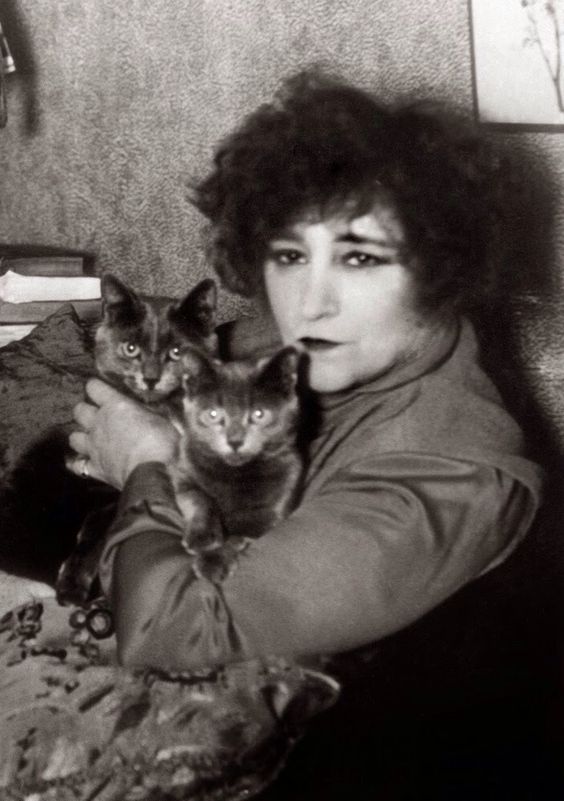
“Our perfect companions never have fewer than four feet.” (Colette)

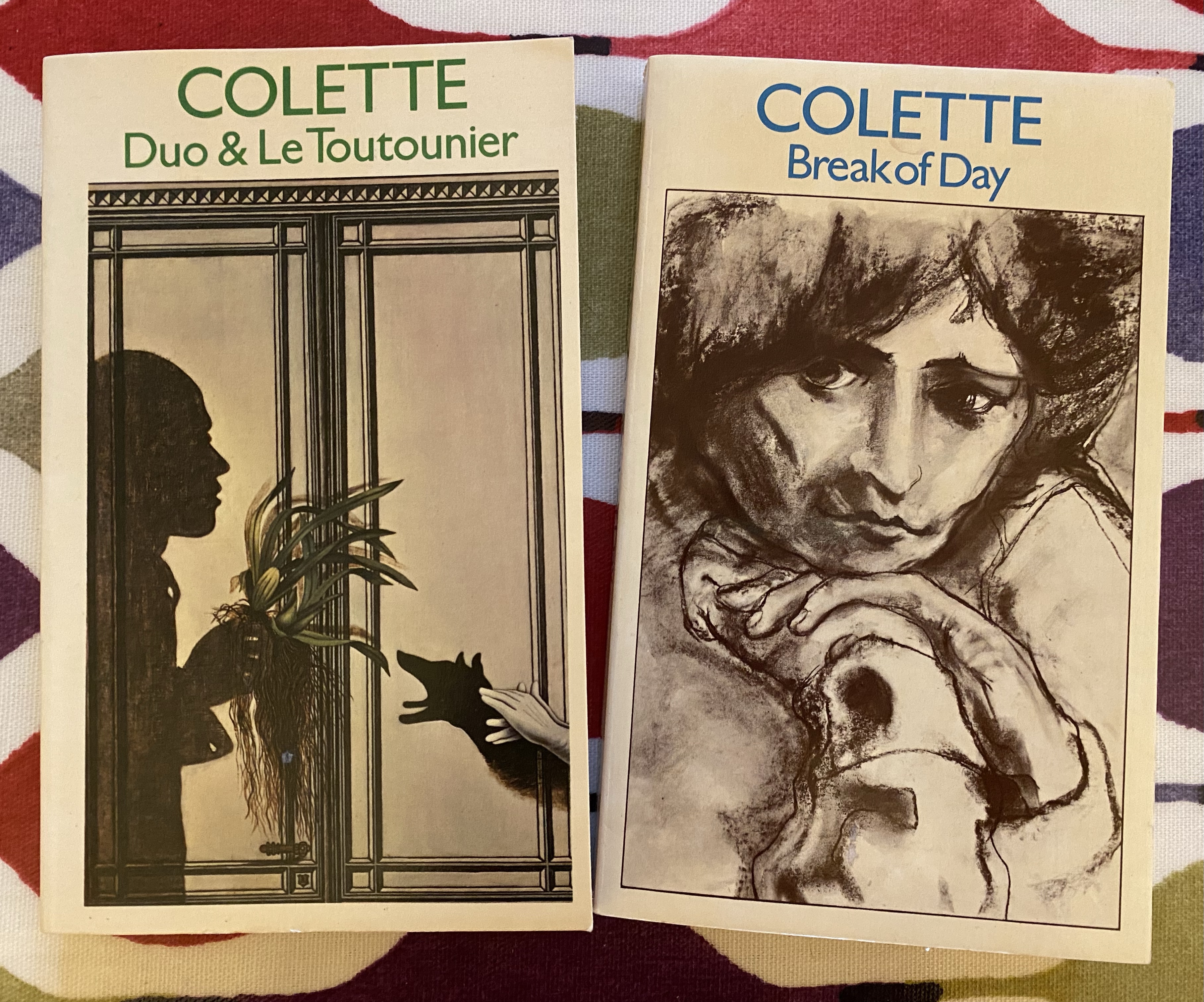
Mallika’s annual Book and Author Anniversaries post alerted me to the fact that today is the 150th anniversary of Colette’s  birthday, and the perfect prompt for me to get two of her books out of the TBR (in Women’s Press editions which pleases me – how I regret clearing out loads of my The Women’s Press books when I was trying to streamline before a move one time. Never get rid of books kids – better to die under a toppling pile than live with regret 😉 )

Firstly, Duo and it’s short sequel Le Toutounier (1934 & 1939; trans. Margaret Crosland 1974). Duo follows the discovery by Michel and immediate aftermath of his wife Alice’s short-lived affair with a colleague. They are on holiday in the south of France, somewhat isolated and under the watchful eye of Michel’s family retainer Maria. The novel is primarily dialogue between the couple as they try and decide what remains for them.

Colette’s love of the natural world is very much in evidence as she captures their holiday home and Alice’s feelings of suffocation:

“On the poplars the golden bronze of the new leaves still wrongfully occupied the place of the green. A crabapple tree, its white petals lined with bright red, had defeated the somewhat sickly Judas tree and the syringas in their attempt to escape the destructive shade of the shiny aucubas, extended their slender branches and their butter white stars through the broad grasping leaves, which were mottled like snakes.”

Her precise descriptions of people and their mannerisms also suit this tale especially well, expertly capturing the tension and careful watchfulness between two people fearful of their disintegrating relationship.

“He caressed her with a few crude words, which she heard with a quiver of her eyelashes, as though he had shaken a bunch of flowers over her. They both accepted these exchanges, which were caused by chance, travel, a sudden change of season.”

Michel and Alice don’t tear each other apart, but at the same time their relationship seems doomed. However, the precision and containment of the story to a few days in a specific place, doesn’t make for a heavy or oppressive read. Colette’s humour is always present, with some surprising phrases:

“Out of modesty the servant placed a saucepan lid over the milk.”

During Duo, we learn something of Alice’s family, her sisters Colombe, Hermine and Bizoute.

“When I think about my family as much as that, it’s because I’m finding Michel terribly boring.”

In Le Toutounier she visits their stuffy, smoke-filled Paris apartment with the titular “huge, indestructible sofa of English origin, battered down like a forest road in the rainy season.”

It’s a short novel (80 pages) and I can see why it was put in the same volume as Duo as I think it is best read following on from its predecessor, forming a portrait of an interlude in Alice’s life.

Bizoute is away from home, leaving Colombe and Hermine together with their complicated love lives. Neither of them are with available men and the situation escalates. But the focus in Le Toutounier is not on relationships between the sexes but rather between the sisters, and what it means for women in a family to be close to one another. As so often, Colette focuses her sensual descriptions on women, showing appreciation but not sentimentality:

“The fine woollen dressing gown with a pattern of embossed stitching fell over her quivering shoulders, and it’s pink glow rose to her cheeks, where the makeup had lost its delicate morning colour beneath successive layers of powder.”

Secondly, Break of Day (1928, trans. Enid McLeod 1949) which nowadays would probably be called autofiction, occupying a place between biography and outright fiction. ‘Colette’ spends the summer in Provence, contemplating her past and wondering about the future. All her preoccupations are here – the natural world, animals:

“After dinner I mustn’t forget to irrigate the little runnels that surround the melons, and to water by hand the balsams, phlox and dahlias, and the young tangerine trees, which haven’t yet got roots long enough to drink unaided in the depths of the earth, or strength to break into leaf without help, under the steady scorching of the heavens. The young tangerine trees, planted … for whom? I don’t know. Perhaps for me. The cats will spring sideways at the months when by ten the air is blue as a morning glory. The pair of Japanese hens, perching drowsily on the arm of a rustic arm chair, will chirp like birds in a nest. The dogs, already far away from this world, will be thinking of the coming dawn, and I shall have the choice of a book, bed, or the coast road”

Men and women:

“My true friends have always given me that supreme proof of devotion, a spontaneous aversion for the man I loved.”

“When a man’s glance is following certain household preparations, especially those for a meal, there is apt to be a look on his face that combines religious attention, boredom and fear.”

Her mother:

“On an autumn morning she was the first and only one to see herself reflected in the first disc of ephemeral ice in the well bucket, before her nail cracked it.”

“She would, alas, have judged us plainly, with that divine cruelty of hers which was innocent of wrath.”

Break of Day is fairly plotless save for a slight drama with two young people, but not quite stream of consciousness either, written in a more structured style. If you enjoy Colette’s writing then this is a little gem, but definitely not one to read when you want to be pulled along by a cracking yarn.

Overall the sense is of Colette (author/character) coming to terms with the last part of her life, with aging and with what remains. It isn’t sad but it has a melancholy quality, although I sensed few regrets and an acceptance of how her life had been lived so far and how it would continue.

“Everything is much as it was in the first years of my life, and little by little I recognised the road back.”

I loved all of these reads. It’s been a while since I picked up Colette and I wondered why I’d left it so long. She’s funny, incisive, precise, sensual, and absolutely in command of her own voice. There’s no-one like her.

To end, a 1970s performance to match my 1970s editions, about the breaking of day: