“I coulda had class. I coulda been a contender.” (Marlon Brando, On The Waterfront, 1954)

The 1954 Club is running all this week, hosted by Simon and Kaggsy. Do take a look at the posts and join in if you can, the Club weeks are always great events 😊

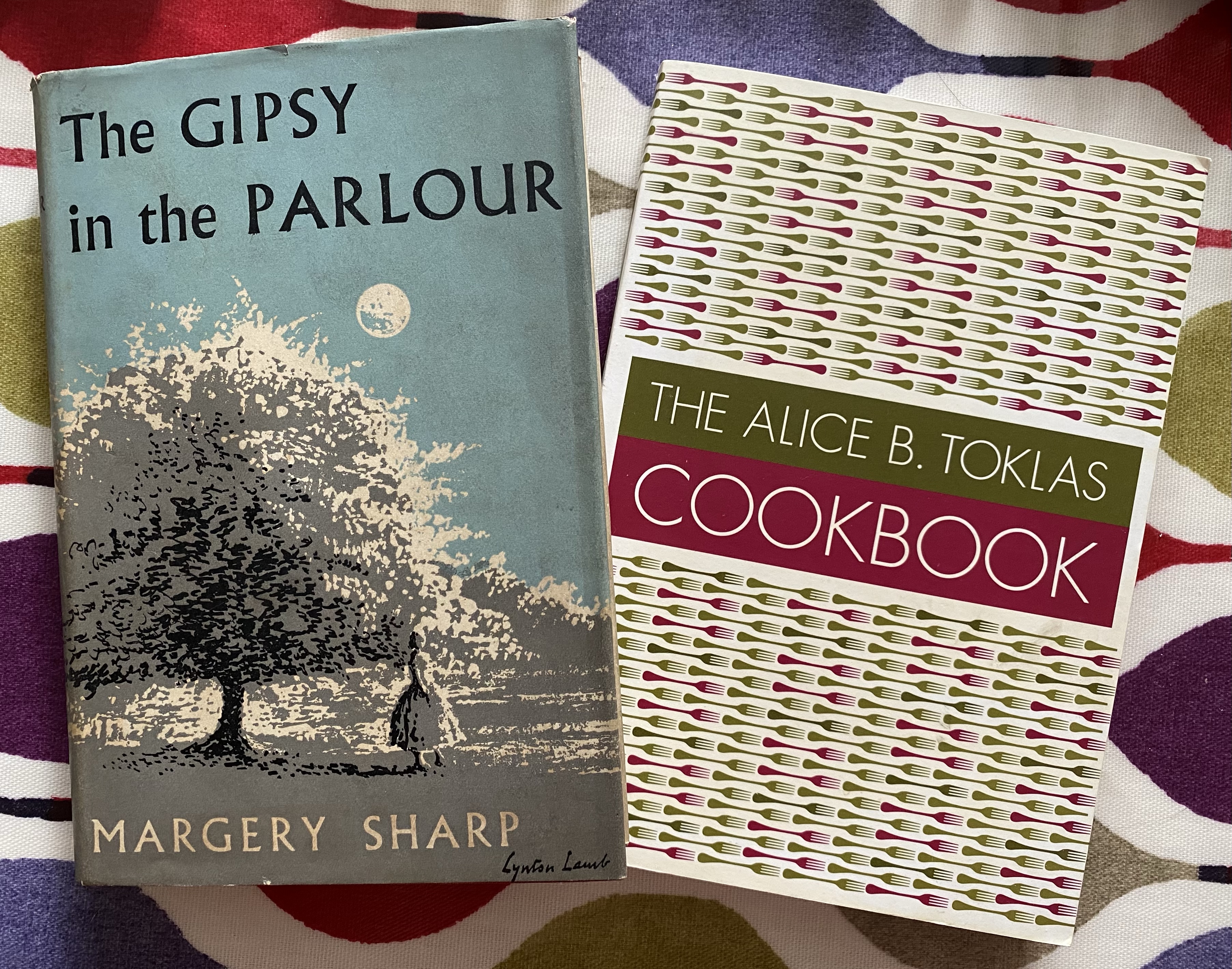
For this contribution, I thought I’d look at two books on a domestic theme. Firstly, The Gipsy in the Parlour by Margery Sharp. Despite the concerning title I can confirm while there is definitely dated language, it’s not prevalent throughout the novel.

The story is set in the 1870s and told from the point of view of an unnamed cousin of the family, looking back on her childhood as an adult now in the 1920s. This means Sharp manages a 11 year-old’s point of view without getting too caught by it, and it works well.

The child loves visiting her family in Devon, leaving behind the fog and grime of London for a West Country summer. She also leaves behind her cold, distant parents for her beloved aunts, Charlotte, Grace and Rachel. They have all married into the Sylvester family and form a capable team who run the domestic affairs of the farm with good-natured hard work.

“Nature had so cheerfully designed them that even wash-day left them fair-tempered: before the high festivity of a marriage their spirits rose, expanded and bloomed to a solar pitch of jollification.”

At the start of the novel they await the arrival of a fourth sister-in-law, who is going to marry Stephen Sylvester, the kindest of the male members of the family (who feature very little in the child’s world, due to their “effortlessly preserved complete inscrutability”). However, when Fanny Davis arrives, she is very different to the rest of the family – thin and pale rather than hale and hearty.

“She seemed to have nothing to say. She had neither opinions nor tastes. She hadn’t even an appetite. The amount she left on her plate would have fed a plough-boy – I believe often did feed a plough-boy”

The family know very little about Fanny “the most that could be discovered was a sort of shadow-novelette” but they welcome her in. However, it isn’t long before trouble strikes. Although Fanny attends a dance with family, whirling around quite happily, it isn’t long before she enters a Decline, and has to spend her days laying in the parlour.

The 11 year-old enlightens us:

“I knew a good deal about declines. A friend of my mother’s had a daughter who had been in one for years. Declines also occurred frequently in cook’s novelettes

And

“No common person ever went into one. Common persons couldn’t afford to. Also, there needed to be a sofa. No sofa, no decline.”

As the narrator boldly plans to cure Fanny, in the manner of an Angel-Child in a novelette, the reader knows more is going on than the characters realise. Quite what Fanny is up to only gradually emerges, and in the meantime Sharp shows how destructive one person can be for previously happy family. Fanny may be persistently reclined but she is never passive, and she causes a great deal of stress and heartache for the Sylvesters.

Meanwhile, the narrator back in London is making a great friend of Clara Blow, the sort-of landlady to her handsome cousin Charlie. Despite Fanny’s frequent assurances to the young girl that they are “special friends”, it is loyalty to Clara that causes conflict for the narrator and makes her question what is actually happening back in Devon.

Will Fanny’s machinations come to light? Will the Sylvester family find a way back to happiness? Will everything work out in the end? Despite this being not as broadly comic as other Sharp novels I’ve read, I was never in any doubt that all would come right. Which it did 😊

Secondly, a slight departure, as I’m going to review a cookery book. Except it’s not really a review of the recipes in The Alice B Toklas Cookbook. There are plenty of recipes, but the book is a memoir too, which is what makes it all the more interesting. Alice B Toklas was the life-partner of Gertrude Stein, and as she reminisces about growing and eating food, she records their life together and meals taken with the many well-known artists who crossed their path, such as decorating a bass fish to entertain Picasso (we’ve all been there, desperately trying to create piscine entertainment for a Cubist in a Rose Period).

Image from wikimedia commons

She also recalls living through France during the war: “In the beginning, like camels, we lived on our past.”  They live through rationing: trading cigarettes with soldiers, and Gertrude Stein acquiring food on the black market through force of personality.

“When in 1916 Gertrude Stein commenced driving Aunt Pauline for the American Fund for the French Wounded, she was a responsible if not an experienced driver. She knew how to do everything but go in reverse.”

Aunt Pauline is their Model T Ford, succeeded by Godiva:

“Even though Godiva was what a friend ironically called a gentleman’s car, she took us into the woods and fields as Auntie had. We gathered the early wildflowers, violets at Versailles, daffodils at Fontainebleau, hyacinths (the bluebells of Scotland) in the forest of Saint Germain. For these excursions there were two picnic lunches I used to prepare.”

But just in case this excursion sounds too idyllic…

“Back in Godiva on the road again it was obvious that somewhere we had made a wrong turning. Was Godiva or Gertrude Stein at fault? In the discussion that followed we came to no conclusion.”

One of my favourite stories was of Alice making raspberry flummery for a friend in the resistance who has a sweet tooth. It leads to a conversation about gelatine, the friend borrowing several sheets. Alice later finds out this is because it is essential for making false papers.

This is not the book to read if you want some easy, quick recipes to cook after work (and of course Alice and Gertrude had domestic staff to help them, several described in the book). There is more than one recipe that calls for 100 frogs legs, but as Maureen Duffy points out in her introduction, is that the legs of 100 frogs, or 100 legs in total? There’s also the detailing of how to prepare a leg of mutton by injecting it with orange juice and brandy for a week.

In case it’s not already apparent, this is also not the book to support a plant-based diet. Toklas acknowledges this, naming Chapter 4Murder in the Kitchen.  A vast quantity of eggs seem necessary to many recipes. When I came across a recipe for frangipane tart I thought I’d finally found something I’d enjoy, but it was like no frangipane I’d ever encountered. However, Chapter 5 Beautiful Soup, was quite tempting with its descriptions of various ways to make gazpacho.

I didn’t know this before I read the book, but the interwebs tell me that the recipe for haschich fudge is the most famous. Apparently the first publisher didn’t realise what it was and so allowed it to be printed, perhaps misled by Alice’s mischievous suggestion that “it might provide an entertaining refreshment for Ladies Bridge Club or a chapter of the DAR”.

My favourite chapter was 13, “The Vegetable Gardens at Bilignin”. Alice’s passion for the garden shone through:

“For fourteen successive years the gardens at Bilignin were my joy, working in them during the summers and planning and dreaming of them during the winters”

Her descriptions of the gardens and produce were absolutely lovely:

“The day the huge baskets were packed was my proudest in all the year. The cold sun would shine on the orange-coloured carrots, the green, the yellow and white pumpkins and squash, the purple eggplants and a few last red tomatoes. They made for me a more poignant colour than any post-Impressionist picture.”

Again, the love of Alice’s life undercuts the romanticism:

“Gertrude Stein took a more practical attitude. She came out into the denuded wet cold garden and, looking at the number of baskets and crates, asked if they were all being sent to Paris, that if they were the expressage would ruin us.”

There are a million quotable and notable passages in this cookbook. If you’ve any interest in Stein and Toklas, in interwar France, or in generation perdu, I’d urge you to get this. You can just dip into it and there’s always something to entertain, but probably not much to cook…

“From Madame Bourgeois I learned much of what great French cooking was and had been but because she was a genius in her way, I did not learn from her any one single dish. The inspiration of genius is neither learned nor taught.”

To end, Dorothy Dandridge in an Oscar-nominated performance in 1954’s Carmen Jones:

“I hate the idea of sequels. I think you should be able to do it in one book.” (Jane Gardam)

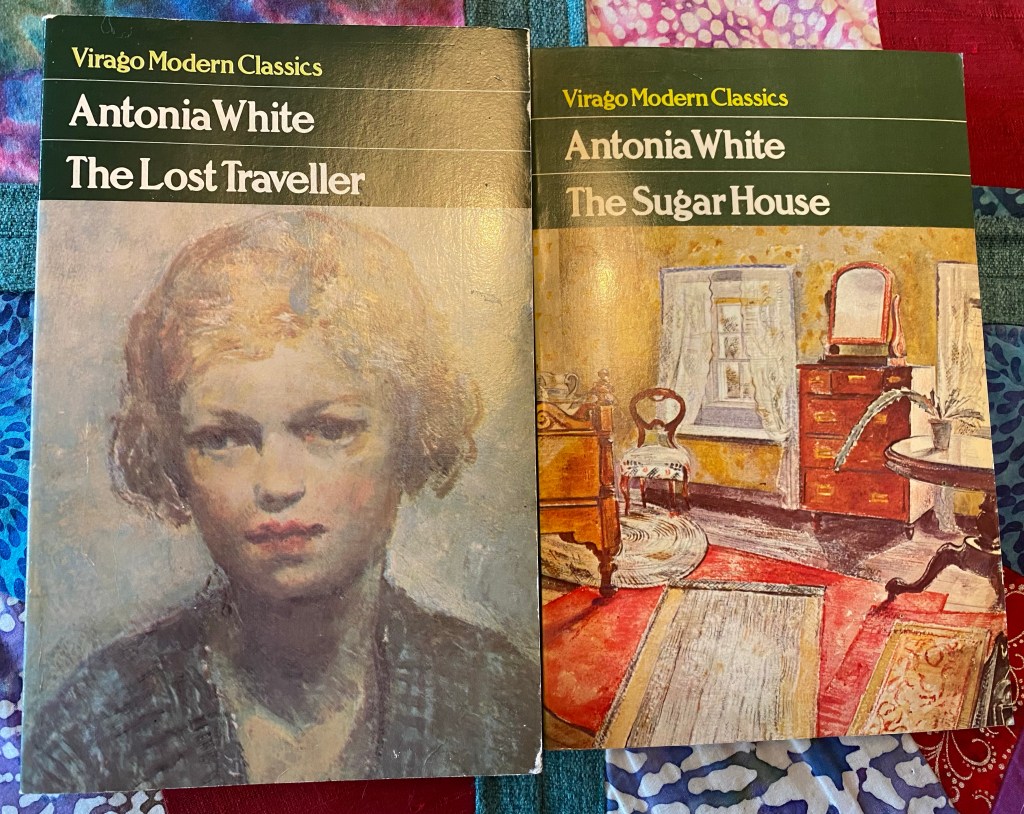
This week I’m looking at two novels by Antonia White, prompted by the pending arrival of next week’s 1954 Club, hosted by Simon and Kaggsy. When I looked at the TBR for 1954 novels, one that I had was Beyond the Glass. However, it’s the final novel in a quartet, and I hadn’t read the middle two…

It’s been six years since I read Frost in May and I’m not sure why it’s taken me so long to pick up Antonia White again, because I really enjoyed that first instalment. Frost in May was written in 1933, and White didn’t continue the story again until 1950, going on to write the last two in the quartet in 1952 and 1954.

The Lost Traveller (1950) sees Nanda from Frost in May renamed Clara and returning to her childhood home in West Kensington to attend the funeral of her paternal grandfather. Her father is bereft, but in 1914 emotions were to be controlled absolutely:

“Suddenly he was touched by an old fear of which he had never spoken to anyone, the fear that one day he might lose all control of his mind. Against that there was only one weapon; his obstinate will.”

Mr Batchelor is a teacher who harbours academic ambitions for Clara. His feckless wife Isabel wants Clara to be beautiful. She is both of these things, but not to the extent that either of her parents would like. The complex family relationships are brilliantly portrayed by White: the mismatched parents, the passive aggressive power struggles between Isabel and her mother-in-law (“Mrs Batchelor’s face … assumed a look of patient malice.”) and in the middle of it all, adolescent Clara.

“At home, to be silent was taken for a sign one was sulking.”

After her mother is ill with the mysterious women’s problems that were always so common and yet so unspoken, Clara’s father can no longer pay her school fees (the NHS was over 30 years away) and so she has to leave Catholic boarding school to attend a local Protestant school. She’s actually quite happy there, and makes two friends, although neither of them are Catholic, to the concern of her convert parents.

“Isabel, who would never have come to such a decision on her own, was willing to follow him. Catholicism seemed to her a poetical and aristocratic religion.”

Clara’s religion plays a large part in The Lost Traveller, as she tries to establish what it means for her as a young adult, away from the structures of her convent school.

Of course, with the year being 1914, readers know what the family is about to live through. However, when war breaks out, the only person it really affects is Mr Batchelor, as he sees the population of his old boys steadily wiped out.

“If only he could have gone to the front with them, he would have been completely happy.”

Although Clara prides herself on not being as vacuous as her mother, in some ways she is just as self-focussed and oblivious:

“Since she had nobody at the front in love with her and was too young to be a nurse or W.A.A.C, Clara refused to take any interest in the progress of the war.”

So while the war takes place somewhere else, Clara struggles with her sense of self, trying to work out who she is and how to manage the tumultuous feelings of teenage life in a family where so much goes unspoken. Her father is devout, strict, and given to tempers. Clara adores him and yet there is distance between them:

“Why couldn’t he understand without being told that there was nothing she would not do, cut her hair off, hold her hand to the fire, if it would bring any comfort? Why couldn’t he realise that the one impossible thing was to speak?”

Meanwhile her mother is struggling with her life choices – or lack thereof – and is drawn to one of her husband’s colleagues, Reynaud Callaghan, who encourages her romantic fancies.

“‘But I love Versailles,’ she went on dreamily. ‘I had an ancestress at the court of Louis XVI. I should have adored that life. Those exquisite clothes and the balls by candlelight and the masquerades by moonlight.’”

Isabel is great creation: vain, shallow, a snob, and yet in many ways she sees more clearly than anyone else. She tries to talk to Clara about childbirth and sex, but Clara stops her. Clara’s naivete about both is astonishing yet believable.

An opportunity comes up for Clara to be a governess for six months to an aristocratic Catholic family,  which her family are keen she take up. I found her charge thoroughly unpleasant – an over-privileged, spoilt, entitled little brat. The type that grows up to run the country 😉

It’s there that Clara meets Archie Hughes-Follett, injured in the line of duty. He will come to play a much larger role in her life in The Sugar House.

“When she considered her vanity and duplicity and how little her beliefs influenced her behaviour, she began to wonder whether she might not be insensibly growing into a hypocrite.”

The Sugar House (1952) picks up Clara’s story six years later in 1920. She is an actress, having paid for her drama tuition herself with money made from working in a government office. She doesn’t seem wholly committed to her profession, but she is to her older lover Stephen Tye.

Needless to say, the reader may not be quite so enamoured of a man given to pronouncements such as: “‘No female novelist is worth reading,’ said Stephen. ‘Women can’t write novels any more than they can write poems.’” He then wheels out the tired old misogynist cliché that Branwell wrote Wuthering Heights. Sigh…

Thankfully we don’t have to endure this awful man for too long, as he ends up on a different tour to Clara. I thought the touring life was wonderfully evoked by White:

“Though towns changed, landlady’s sitting-rooms remained the same. There were always round tables with red or green serge cloths, aspidistras, photographs of seaside towns in plush frames and, in lucky weeks, a tinny, yellow-keyed piano.”

Clara often finds herself sharing rooms with fellow actor Maidie, who is at once much more devout and much more worldly than Clara. Religion is not such a strong theme throughout The Sugar House as it was in The Lost Traveller, but it is there as a constant.

When things fall apart with Stephen – as the reader knows they inevitably will – Clara returns to the security of what she knows: home, and Archie. He loves her, and unlike Stephen he respects her writing:

“I didn’t think even you could write anything which got me so much.”

However, he is conflicted and confused. He has the same childlike quality he had in The Lost Traveller, but his self-medicating with alcohol has worsened:

“Often he had sulked like a schoolboy but never had she seen him in this mood of aggressive bitterness.”

Clara doesn’t love him, but she marries him. Although Maidie has helped Clara to become less naïve, she is still hopelessly ignorant and to a modern reader the whole thing is doomed to failure. Probably to 1950s readers too, as this is Clara on her wedding day:

“She wondered if he had really expected her to run away. Her will was too paralysed even to formulate the wish.”

The titular house is their first married home, as Clara is desperate to leave the stifling atmosphere of her parents’ house. She finds a place in Chelsea, the portrayal of which is amusing for twenty-first century readers. Now it is one of the most expensive parts of London, but apparently in the 1920s it was bohemian and considerably less salubrious. This does not go down well with her upright father:

“ ‘No doubt you fill the place with short-haired women and long-haired men. Archie has all my sympathy if he prefers the public house.”

The horror!

Interestingly, what draws Clara to this atmosphere is the evidence of people working. Artists wander the streets with the tools of their trade tucked under the arms, and Clara realises she is desperate to write:

“Oh, God, don’t let me be just a messy amateur.”

However, her increasingly stressful married life where Archie fritters away money and drinks heavily means that she finds it hard to focus on work. The house, with its distempered walls that look like sugar icing, cramped rooms and two untidy people living it, begins to oppress her almost as much as her parents’ house.

“Once this sense of non-existence was so acute that she ran from the basement to the sitting room full of mirrors almost expecting to find nothing reflected in them.”

Eventually things reach a breaking point, at once dramatic and understated, entirely believable and very sad. I wouldn’t normally read books by the same author so close together, but I’m glad I did here. I’ve felt very much submerged into Clara’s world and completely involved in her story.

“Yet here, as there, she found herself both accepted and a little apart. She was beginning to wonder if there were any place where she did perfectly fit in”

All being well, Beyond the Glass next week!

(I should mention there is antisemitism expressed in both novels, particularly The Lost Traveller. However, the characters stating such views are never portrayed as admirable. I think writing in the 1950s, White was reminding a contemporary readership who would have had the holocaust in recent living memory, of the pervasiveness of racism in society).

To end, a song that sums up Clara and Archie’s situation pretty well:

‘We look to Scotland for all of our ideas of civilization.’ (Voltaire)

After bookish travels (sadly not actual travels) to Ireland and Wales in March, I thought I would start April with a visit to Scotland and a stop on my Around the World in 80 Books reading challenge. As with actual travels, things did not go entirely plan…

Image from Wikimedia Commons

I have piles of Scottish authors in the TBR but my initial choices did not work out. The first novel I chose was excellent but brutal, so I just wanted to leave it behind at the end and not blog about it. My second choice I thought was safe; an established and accomplished author. Unfortunately I chose a novel she wrote at age 21, before she realised that sentences need a coherent structure. I got so sick of re-reading to try and work out which pronoun referred to which character that it was a rare DNF for me.

Given my reading pace is so slow at the moment, I then panicked and chose a novella and a short story to try and get something read. Thankfully these turned out to be enjoyable reads 😊

Firstly, Edinburgh-born Muriel Spark’s final novel, The Finishing School (2005). The titular institution is College Sunrise, on the shores of Lake Geneva, run by Rowland and Nina Mahler, although by Rowland in name only:

“To conserve his literary strength, as he put it, he left nearly all the office work to Nina who spoke good French and was dealing with the bureaucratic side of the school and with the parents, employing a kind of impressive carelessness.”

Feckless Rowland is thrown of kilter by the arrival of Chris Wiley at the school:

“His own sense of security was so strong as to be unnoticeable. He knew himself. He felt his talent. It was all a question of time and exercise. Because he was himself unusual, Chris perceived everyone else to be so.”

Chris is writing a novel about Mary Queen of Scots, unhindered by the actual facts of what happened. Although Rowland is tutor to the young artistic students, Chris keeps his writing progress secret, fully aware that this stokes Rowland’s obsession with him.

In this short novel, the other pupils and staff at the school are sketched in lightly but enjoyably, such as Mary: “her ambition was to open a village shop and sell ceramics and transparent scarves”.

Not a great deal happens, but the tension builds as Rowland becomes more fixated on Chris, and the two end up in a co-dependent relationship, as Chris observes:

“I need his jealousy. His intense jealousy. I can’t work without it.”

This being Spark, I couldn’t guess which way the novel would end as she mixes the very dark with a lightness of touch:

“ ‘Too much individualism,’ thought Rowland. ‘He is impeding me. I wish he could peacefully die in his sleep.’”

I wouldn’t say The Finishing School was Spark at the height of her powers – I found it a diverting read and an enjoyable one, but for me, Spark at her best is breath-taking, almost shocking. If you’re already a fan, there’s still much to enjoy here though. The askance view of human relationships, the morbid alongside the comic, the skewering of pretentious writers, and the arresting non-sequiturs.

Secondly, Until Such Times by Inverness-born writer Jessie Kesson (1985), which I had as part of the anthology Infinite Riches: Virago Modern Classics Short Stories (ed. Lynn Knight, 1993). It was a pretty good match for Spark although I didn’t plan it as such, with some darkly comic characterisation and a very unnerving ending.

The bairn is taken to live with her Grandmother and Aunt Edith:

“But you weren’t here to stay forever! Your Aunt Ailsa had promised you that. You was only here to stay… ‘Until Such Times’, Aunt Ailsa had said on the day she took you to Grandmother’s house…”

We join her with the house in a vague state of uproar trying to prepare for a visit from Aunt Millie and Cousin Alice. There is a suggestion that the visitors are respectable and admirable, whereas the bairn and Aunt Ailsa are somehow disreputable.

The narrative moves back and forth, showing the reader more than the bairn understands about her family situation and expertly drawing the dynamics between Grandmother, Aunt and child. The tension for a child living in a strict household and the manipulations and judgements of the Aunt (who is somehow unwell but never quite clear how; she is referred to by an old-fashioned term no longer used) was so well evoked.

At only 11 pages long, Kesson shows all that can be achieved in a short story: well-drawn characters, social commentary, narrative tension and a recognisable world. The final sentence was a perfect ending. I thought Until Such Times was really impressive and I’ll definitely look out for more of Kesson’s work.

To end, a Scottish treat for my mother, who is a big fan:

“They let you dream/Just to watch ’em shatter/You’re just a step/On the boss-man’s ladder” (Dolly Parton, 9 to 5)

I’ve not done too badly with contributing to November’s plethora of reading events, despite my snail-like reading speed. Unfortunately I’m not going to manage a #MARM post, but I did find a short novel by an Australian author to squeeze in, so here on the final day of the month is my hastily written contribution to AusReadingMonth hosted by Brona at This Reading Life. At 204 pages it is just a teeny bit too long to count for #NovNov though…

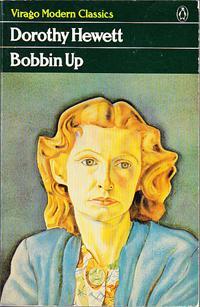
I went into Bobbin Up by Dorothy Hewett (1958) with quite low expectations, set by the author herself 😀 In her introduction to my 1985 VMC edition, she explains “looking back on the 36-year-old Communist who wrote Bobbin Up, I am embarrassed by at her proselytising, stubborn blindness, this Antipodean Alice in Wonderland who had a protracted love affair with an idealised working class.”

However, she also acknowledges: “Sometimes sentimental, sometimes didactic, sometimes clumsy and overwritten Bobbin Up was the work of a still young writer struggling to find her own style and voice. Its form, which was criticised at the time as too episodic, seems to me to suit the subject perfectly”

As a middle-class woman who chose to work in a factory and then write about it, I was put in mind of Nell Dunn.  While both authors are open to accusations of class tourism and exploitation, I think they wrote with the best of intentions, attempting to shine a light on ignored and marginalised female workers. The novels are sixty or so years old, and these days we understand allyship differently.

These disclaimers out the way, I really enjoyed Bobbin Up. I thought it was stronger than Hewett suggested and was a compassionate portrait of the lives of women on low incomes in 1950s Sydney. Although she sets in the fictional Jumbuck Woollen Mills, the frequent references to songs playing on the radio and the sputnik gliding overhead root it firmly in a specific time.

Hewett captures the work environment in broad strokes before focussing in on particular workers:

“Women came in from everywhere, laughing and chiacking down the long, slippery aisles between the rovers, spinners, and winders. Relief healed their aching backs, relief loosened their tongues, they ran and pushed and scurried, jamming into the washroom, five minutes to change and scrub up and catch the bus to Redfern, Marrickville, Paddo, Woollahra and all points north, south, east and west.”

Their lives are hard and the women’s bodies are broken by tough, unrelenting work.

“Violet McHendry, forty-five, sharped tongued, hard as nails, was always fighting a losing battle with life in the grey, warped, weatherboard semi in Maddox Lane. But she still kept, until the day she died over her washtubs, ten years later, that peculiar girlishness, that grace of face and voice, that has nothing to do with time.”

The best time they can hope for is when they are young, still fit and might have some energy to enjoy the times when they’re not at work.

“[Beth] passed proudly and yet compassionately, conscious of her youth and motherhood. The old men stared after her, jealous of the radiance they could never share again, loafing on borrowed time, unwanted, under the dapple of poplar trees.”

There is domestic violence, self-medicating with alcohol, sixteen-year-olds being told they’ll be raped if they ‘lead men on’. But also some tender relationships, resilience and hope.

“Upstairs Lil had a view. Across the crooked slate and corrugated iron roofs of Waterloo and Redfern the Housing Commission flats stood out like a dream of luxury amidst green lawns. The sunlight slanted golden against their solid brick walls, a rainbow of mist from their water sprinklers circled them with enchantment.”

For Nell, the committed communist (presumably based on Hewitt, and she does seem to make her the most self-critical character), the hope is for a better society:

“Everything fell into place like the pieces in a jigsaw puzzle, and the best part of it was she knew she had always been right. There was something more than the narrow, bitter, cranky world she’d been reared in. There was another world to be built, here on earth, based on the kind of brotherhood and selflessness and energy she’d seen displayed long ago in the strike in the textile mills.”

I do agree with Hewett that Bobbin Up is somewhat overwritten and clunky in places, but it wasn’t particularly torturous. Amidst the bleak subject matter, it balanced the story somewhat, without obscuring the difficulties the women face.

“You could never be lonely in Waterloo, always conscious of the myriad lives woven and interwoven with your own, breathing, battling, loving, fighting, suffering in the stifling summer dusk.”

To end, a song about the charms of women who work in factories:

“Vienna is just the best place to be.” (Conchita Wurst)

It’s November, so ‘tis the season of many wonderful reading events. Margaret Atwood Reading Month is being hosted by Buried in Print; What’s Nonfiction is hosting Nonfiction November; AusReading Month is being hosted by Brona at This Reading Life. I’m hoping to join in with them all, but I doubt I’ll be able to because my reading and blog writing is still positively sloth-like.

However, with this post I’m managing to contribute to Novellas in November, hosted by Cathy at 746 Books and BookishBeck; and German Literature Month, hosted by Lizzy  Siddal, and Caroline at Beauty is a Sleeping Cat. And I’m only cheating slightly by counting the same book for both 😀

Week 1 for German Literature Month is focussed on writing from or set in Austria, so I’ve picked two novels by Austrian authors who have also set their stories in Austria.

Firstly, The Tobacconist by Robert Seethaler (2012, trans. Charlotte Collins 2016) which at 234 pages is a short novel but a wee bit long to count for #NovNov. Set in 1937, teenage Franz leaves his lakeside home for the hustle and bustle of Vienna:

“the noise – there was an incessant roaring in the air, an incomprehensible jumble of sounds, tones and rhythms that peeled away, flowed into each other, drowned each other out, shouted, bellowed over each other. And the light. Everywhere a flickering, a sparkling, flashing and shining: windows, mirrors, advertising signs, flagpoles, belt buckles, spectacle lenses.”

He has a job as an assistant to old friend of his mother’s, working in the tobacconist’s shop. His boss Otto is non-smoker with a rather unique approach to his job:

“Reading newspapers was the only important, the only meaningful and relevant part of being a tobacconist; furthermore if you didn’t read newspapers it meant the you weren’t a tobacconist”

Despite this unpromising start, Franz’s horizons begin to widen. The newspapers give him a burgeoning political awareness, and the vibrant city offers opportunities for romance. Even the shop stock suggests vistas unknown:

“Each brand had its own particular smell, yet they all had this in common: they bore within them the aroma of a world beyond the tobacconist’s, Währingerstrasse, the city of Vienna, beyond even this country and the whole wide continent.”

Franz is a sweet and endearing character, but not sentimentalised or idealised. His earnestness and energy can be somewhat tiresome, if entirely believable. He even tests the patience of his most famous customer:

“Freud sighed. For a fraction of a second he considered yielding to the sense of anger that was welling up deep inside, and stubbing out his Hoyo on the brow of this impertinent country lad. He decided against it and puffed smoke rings into the air instead.”

I’m not usually a fan of fictionalised real people, but the friendship between the eminent psychoanalyst and the young Franz is subtly evoked and not remotely heavy-handed. Seethaler doesn’t try and shoehorn in loads of Freudian references to demonstrate how much research he’s done; Freud is shown as an aging man and very vulnerable as a Jewish person amongst the escalating political situation in Austria.

“the colossal difference between their ages automatically established the distance Freud found agreeable and which was, indeed, the thing that made close contact with the majority of his fellow humans tolerable”

The focus is primarily on Franz as he ricochets around the city, falling in and out of love, writing to his mother and growing up, all while Nazism tightens its hold. The insidious nature of this is brilliantly done through incidental details:

“In front of the town hall, children and youths were gathering in small groups. They were hanging around on corners, standing arm in arm, blocking the pavements or running across the square, laughing and shouting, waving hats and swastika flags.”

Until suddenly it’s not incidental anymore. Violence explodes, Franz has to deal with the Gestapo, people disappear, and Freud is persuaded to leave his home forever…

The Tobacconist is a tragedy that never portrays itself as such. It tells a deeply ordinary story – despite the famous person in its midst – and uses the reader’s knowledge of history to fill in the gaps. It’s a brilliant technique, because it takes a protagonist we all recognise, having all been teenagers discovering a wider world at some point, and places him inescapably within the brutality of a genocide, making historical events resonate on a personal level.

There is an ambiguity to the ending of The Tobacconist which rather than being frustrating I thought entirely apt. Under a brutal regime, so often people have to live with not knowing.

“For it was well known that waiting and seeing was always the best, perhaps even the only way to let various troubles of the times flow past and leave you unscathed.

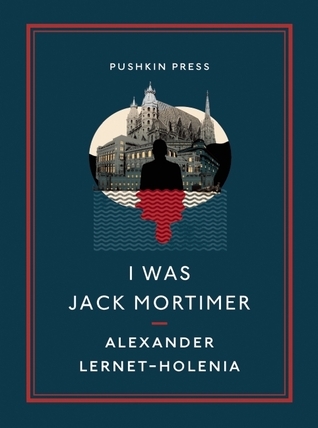
Secondly, I Was Jack Mortimer by Alexander Lernet-Holenia, (1933, trans. Ignat Avsey 2013) which in my Pushkin Press edition is 203 pages but they are not standard size, and when it was published in a Pushkin Vertigo edition it was 160 pages, so counts for Novellas in November – hooray!

A disclaimer to start, because although I enjoyed I Was Jack Mortimer a great deal, I thought the fundamental premise was completely silly.

Spooner is a young cab driver who at the start of the novel is stalking a young woman – so far, so yuck. Then a man gets into his cab, but by the end of the journey the passenger has been shot dead, without Spooner hearing or seeing a single thing.

“Spooner stood in the middle of the room, and the events of the past minutes raced through his mind, like short, randomly edited film clips; the dead man, the speeding cars, the news stand, the dead man, the carriageway, the blood, the dead man, the streets, the dead man.”

What would you do? I think almost entirely everyone would go to the police. But this wouldn’t make much of a thriller, as the police would take the story out of your hands and you’d have to go back to smoking with the other cabbies, boring them with the story, and being creepy towards women.

So instead, for reasons best known to himself, Spooner disposes of the body and starts to inveigle himself into the man’s life.

“he was pretty sure that as soon as the crime was discovered it’d be put at his door, so that in the end he began to feel as though he had in fact perpetrated it himself. And had he really been the murderer, in all probability he wouldn’t have been behaving any differently from the way he was now.”

I Was Jack Mortimer is a really enjoyable thriller, if you can get past the unbelievable set-up of Spooner’s decision-making. I just put that element to one side and allowed the pacy writing to carry me along as Spooner gets increasingly out of his depth. The 1930s and the city of Vienna are beautifully evoked with a wonderful sense of time and place.

The trouble with writing about thrillers is that you can say practically nothing for fear of spoilers. What I will say is that towards the end Spooner has the following epiphany:

“All I needed to do was go to the police and report I had a dead person in the car and didn’t know who shot him, and in the end they’d have had to believe me and I’d have been released. Instead, I’ve done just the opposite and have landed myself in no end of a mess.”

Well, quite.

“One doesn’t step into anyone’s life, not even a dead man’s, without having to live it to the end.”

To end, I tried to find a trailer for one of the film adaptations of I Was Jack Mortimer, but failed. So instead a chance for me to totally indulge myself with the trailer for my most favouritest-ever film, which is set in post-war Vienna:  

“I got a brand new combine harvester.” (The Wurzels, 1976)

My blogging is still decidedly patchy but I really enjoy Kaggsy and Simon’s Club weeks, so I was determined to take part in this week’s 1976 Club. So far it’s shaping up to be another excellent selection so do head over to their blogs to see all links to reviews 😊

I decided to go with two authors I’m very fond of, but who perhaps don’t provide the sharpest contrast… these are two short, spiky novels, darkly humorous and incisive in their portrayals of ordinary lives.

Firstly, A Quiet Life by Beryl Bainbridge. The cover of my edition has a quote from Hilary Mantel calling it ‘one of the funniest books I have ever read’, which tells me that Hilary Mantel and I have very different senses of humour. There are definitely funny moments in A Quiet Life but, like a lot of Bainbridge’s writing, I found it pretty bleak too.

Set just after the end of the Second World War, it tells the story of a family from the point of view of the eldest son Alan. Living in a coastal town near Liverpool (probably Formby, where Beryl grew up), his parents are very much unhappily married.

Once well-off, they now live in straightened circumstances. His mother expected more, going to a finishing school abroad and marrying a self-made man, who now unfortunately, has lost all he made. Theirs is a house of loaded silences, resentments, bickering, secrets and frustration.

“The marble statue of Adam and Eve, recently brought down from the landing, was shaky on its pedestal. Even the row of decorative plates, painted with roses and hunting scenes, might roll on their shelf above the door and bounce upon the red carpet. Madge said it was like walking through a minefield.”

Bainbridge captures perfectly the constant repressed tensions of living in such a situation. There is no honesty here, just lives of quiet desperation as his mother reads romantic fiction and his father struggles in isolation.

“Though the war was over, Father was still caught in a cross-fire, harassed by battles, by phantom cities tumbling about his ears. This moment – as then – he could be slumped over the driving wheel, hands raised in an abject gesture of surrender.”

Meanwhile their two children muddle through. Depressingly, Alan sees his future playing out just like his parents. This doesn’t particularly bother him, despite the fact that:

“He always did as he was told and he resented that no-one noticed.”

Meanwhile, Madge his sister runs wild, doing exactly what she likes and knowing how to manipulate her way out of any repercussions. She isn’t remotely vicious, she just knows what will enable her to do what she wants.

“She didn’t seem to grasp that it was the trouble she caused him personally that was his main concern. He was long past marshalling the reasons for his parents behaviour […] All he wanted was for Madge to stay indoors at night, so he needn’t return to find his father jumping up and down, demented, at the kerb.”

The dejection and anxiety of all their lives – except possibly Madge, who seems determined to carve out something more – is brilliantly captured by Bainbridge in small, telling details. In a world where no-one says very much and very little happens, she manages to build the tension to breaking point, to an ordinary, sadly predictable tragedy.

‘We had a garden when your father and I were first married, big enough for a game of tennis. We had a maid called Matty. We had so much space…You have no idea what it was like.’ She stood by the hearth, one foot resting on the cracked tiles.

‘We’ve got space now,’ said Madge from the floor. ‘You won’t let us use it.’

Alan thought suddenly it was why Madge went out so much, why he did himself. There wasn’t room for them. If he had his way he’d light a fire every day in the lounge and lie full-length upon the good-as-new sofa.”

Secondly, Afternoon of a Good Woman by Nina Bawden. The titular woman is Penelope, ironically named as she herself observes, as she is not a faithful wife but plans to leave her husband Eddie and her two daughters for her lover, after she has finished her afternoon’s work as a Justice of the Peace.

“Will they blame me? I hope not. I have taught them to be tolerant as I have taught them regular habits and sound ethical principles. The only thing I have failed to teach them, I sometimes think guiltily, is how not to be boring.”

The afternoon she spends in court sees her reflect on her life so far, her choices and attitudes. It is not only her major life-altering decision that is prompting this introspection:

“Someone has sent me twenty aspirins in a brown envelope, and that anonymous accusation rumbles on in the depths of my mind like a monotonous menacing drum, sharpening my sympathies with all accused persons, alerting my memory, forcing me to examine my own failures, seek out my own guilt.”

This unnerving situation adds a sense of foreboding, or even slight menace, to the day. Yet there is insidious violence throughout Penelope’s experiences, which gradually emerge.

Penelope sees herself at the more liberal end of society’s views:

“ ‘Do you think old, respectable aunts should not be listened to?’ The Judge smiles politely. He knows about compassionate lady magistrates, that smile says; all their soft-hearted arguments.

I am stung. Does he think I am not worth listening to?”

Yet some of her views expressed in this novel are deeply disturbing: “Some women invite [flashers] behaviour”; “Girls often pretend to be more upset than they are. It’s expected of them.”

As well as her internalised misogyny, Penelope has to manage the daily sexism of a 1970s workplace, a mix of being patronised and/or lusted after. The condescending Judge invites her to a lunch that is clearly more than a meal…

As she reflects on her relationship with her step-brother Steve, step-sister April’s violent marriage, and her step-mother Eve’s mental ill health, I think Penelope is supposed to be callow and unthinking, certainly in terms of how she viewed April’s violent marriage when she was younger. However, Penelope is not wholly unlikable, mainly because she doesn’t cut herself much slack and she does try to help people, however misguidedly. She doesn’t justify what she’s doing or try to make it better than it is. She simply explains how she reached that point:

“My life, my active, happy, purposeful life suddenly seemed empty to me, dreary and useless. The speed with which this had happened was terrifying. One minute I was walking calmly along, feet on firm ground, the next I had tumbled into this frightening black chasm. How had it happened? Why did I feel like this? It was more than unhappiness.”

Afternoon of a Good Woman feels like a snapshot in time, not only of Penelope’s life but also of 1970s attitudes to women, violence, crime, sexual behaviour (Eddie’s preferences are detailed and Penelope’s affair is a somewhat contentious relationship, even without the betrayal), sexual assault, work and family, public versus private personas. For a short novel it covers a lot of ground, and manages to do so with ease. I’m really glad I read it for the 1976 Club as it felt very much of it’s time.

“And indeed, to be fair to myself (and if I can’t be fair to myself, how can I be trusted to be fair to others?), in the magistrates court, where I sit almost weekly, the margin of error that puts me on the side of the judges and not of the judged sometimes seems very narrow.”

To end, of course the 1970s give me an opportunity to indulge my love of David Bowie. In 1976 he starred in The Man Who Fell to Earth:

Novella a Day in May 2020 #14

No Signposts in the Sea – Vita Sackville West (1961) 156 pages

Continuing with the Virago theme from yesterday, here is another of their delightful offerings. I do enjoy Vita Sackville-West’s writing and I feel like she never gets the recognition she deserves. I suppose when your name is forever linked with the genius of Virginia Woolf, you’ll always suffer by comparison… No Signposts in the Sea is her final novel and it’s a brittle, slightly flawed gem.

Edmund Carr is a successful journalist and self-made man, who knows he doesn’t have long to live. As a result, he has followed the woman he loves from afar, Laura Drysdale, onto a cruise to unnamed places which seem to be southern Pacific islands.

The narrative is entirely from Edmund’s viewpoint, and at first I thought I’d struggle because that viewpoint seemed to be relentlessly bitchy one:

“ ‘it is lucky for some people,’ I say to Laura, ‘that they can live behind their own faces.’”

However, Edmund’s incredibly painful situation – both in terms of his life nearing its end and his unspoken love for Laura (possibly a reference to Petrarch?) means that he is more vulnerable than he has ever been.

“Geographically I do not care and scarcely know where I am. There are no signposts in the sea.”

As he reflects on life and on the nature of romantic love, Edmund does develop as a character and begins to soften his brittle, urbane exterior:

“I realised for the first time how greatly our apprehension of people depends on the variation of conditions under which we see them, and thought it possible that we may never truly perceive them at all.”

Certainly the reader sees more of Laura than he does. In our objectivity something is obvious to us that Edmund remains unaware of, caught as he is in his obsession, his jealousy, and his confusion. Sackville-West shows how much those early romantic feelings can often be a reflection of the lover’s insecurities, fantasies and desires, and very little to do with the loved one.

“I heard her say no, no more coffee thank you, and it was as though she had said Edmund, my darling, I love you.

Love does play queer tricks.”

No Signposts in the Sea is a romantic novel in its way though, because it suggests that by moving beyond these infatuated feelings, a deep love and rewarding companionship – such as Vita enjoyed with Harold Nicholson – is possible.

Less romantic are the racist views in evidence among the white, privileged, cruise passengers, sadly of its time but surely beginning to be outdated in 1961.

I didn’t think No Signposts in the Sea was a strong as some of the other novels I’ve read by Sackville-West. The characterisation is a bit thin, especially regarding Edmund’s love rival, Colonel Dalrymple. Vita Sackville-West was extremely unwell as she wrote this so could not have been at the height of her powers, but there is still much to enjoy.

“Dusk began to fall; I wished never to arrive; I wished to continue forever between land and water in a dream region so wild and beautiful.”

Novella a Day in May 2020 #13

The Aloe – Katherine Mansfield (1916, this edition 1983) 79 pages

The Aloe was Katharine Mansfield’s first punt at writing her short story Prelude, and so while it’s not entirely satisfactory as a fully realised story in its own right, there’s still a lot to enjoy here. It also forms another stop on my Around the World in 80 Days Reading Challenge

It begins with the Burnell family moving to a new home further out in the New Zealand countryside. The opening is told from the children’s point of view as the three of them are old enough to realise what is happening but too young to take an active part. I thought Mansfield captured the detailed minutiae of children’s lives so well:

“Kezia liked to stand so before the window. She liked the feeling of the cold shining glass against her hot little palms and she liked to watch the funny white tops that came on her fingers when she pressed them hard against the pane”

Once they arrive at the larger, more remote house, the attention shifts to the adults. Mansfield is incredibly subtle in her characterisation, drawing psychologically astute portraits but leaving the reader to work out what it means for this group of people to be living together.

Stanley Burnell is optimistic and eager about the move, little realising the various pressures it places on the women of the household, mainly because he is out in town all day:

“He was enormously pleased – weather like this set a final seal upon his bargain – he felt somehow – that he had bought the sun too and got it chucked in dirt cheap.”

His wife Linda is neither entirely happy nor completely unhappy, but certainly she is part of a generation of women given to mysterious ailments like headaches which enable her to spend a day in a room closed off from the rest of the household. She able to do so because her mother Mrs Fairchild is so capable and domesticated:

“There was a charm and grace in all her movements. It was not that she merely ‘set in order’; there seemed to be an almost positive quality in the obedience of things in her fine old hands.”

One piece of characterisation I really liked was Beryl, Linda’s sister. There is a hint that she may be trying to seduce her brother-in-law, mainly through boredom and a need to feel loved. As she writes a letter to her friend full of news that she knows is insincere, superficial prattle, she has this insight:

“Perhaps it was because she was not leading the life that she wanted to – she had not a chance to really express herself – she was always living below her power – and therefore she had no need of her real self – her real self only made her wretched.”

In lesser hands Beryl would just be a flighty, flirty, dreamer with the potential for real destruction, but Mansfield shows how all the women are forced into certain roles because society doesn’t give them the choices it affords to men. This is never didactic though; the reader is left to draw their own conclusions.

The Aloe only covers two days in this family’s life (though Mansfield ultimately wrote three short stories about the Burnells) but so much is explored, reading it is still a rich experience. My only reservation is that my delicate sensibilities could have done without the duck-killing scene (which I skimmed.) The novella does end rather abruptly but then it was never quite intended to be read as it is now.

Novella a Day in May 2019 #30

Sleepless Nights – Elizabeth Hardwick (1979) 151 pages

Sleepless Nights is a fictional autobiography, told by a woman with the same name as the author. It begins:

“It is June. This is what I have decided to do with my life just now. I will do this work of transformed and even distorted memory and lead this life, the one I am leading today. Every morning the blue clock and the crocheted bedspread with its pink and blue and grey squares and diamonds. How nice it is – this production of a broken old woman in a squalid nursing home.”

The distorted memory means the reminiscences, memories and life story are like the crochet blanket: a series of separate pieces that come together to form a whole. So what we have are memories that dart back and forth across the woman’s life, a memory from marriage prompting a memory from childhood, prompting a memory of a neighbour, interspersed with a letter to a friend, prompting a memory of a bohemian young lifestyle in New York…

It is very cleverly written. It feels more coherent than I expected when I began the novella, and it effectively conveys the way memory works: we don’t sit and remember the beginning of our lives, working through sequentially to the current day.

“I like to remember the patience of old spinsters, some that looked like sea captains with their clear blue eyes, hair of soft, snowy whiteness, dazzling cheerfulness. Solitary music teachers, themselves bred on toil, leading the young by way of pain and discipline to their own honourable impasse, teaching in that way the scales of disappointment.”

I sat and read this straight through, but you could also just dip in for a paragraph and out again. Hardwick is master of the astonishing image:

“It has happened that someone I do not know is staying in the apartment with me. One of those charitable actions insisted upon by a friend. The stranger, thin as the elegant crane outside the window, casts a shadow because she has arrived when I was thinking about the transformations of memory. She fills the space with both the old and the new twilight, the space reserved for thoughts of my mother.”

Sleepless Nights has been published by NYRB Classics, always a reliable choice. I read it in an old VMC edition, which told me it was hailed as a literary masterpiece. I think if I was being super-picky, this might be my slight reservation. Its hugely impressive as a piece of writing but it didn’t fully move me. This is obviously a very personal thing, but for me to love a book I need strong characterisation. The narrator remained slightly enigmatic: she emerged to a degree from her memories but often she was in the shadows of them, the light cast on other people.

While enjoying a somewhat grim, dingy time as a young woman in New York, there are memories of seeing Billie Holliday live. Hardwick captures her talent, the tragedy, glamour and grit of her life very effectively. While she doesn’t shy away from what addiction did to the singer, she allows her some beautiful images too.

“Her whole life had taken place in the dark. The spotlight shone down on the black, hushed circle in a café, the moon slowly slid through the clouds. Night – working, smiling, in make up, in long silky dresses, singing over and over, again and again. The aim of it all is just to be drifting off to sleep when the first rays of the sun’s brightness begin to threaten the theatrical eyelids.”

And so to end, here is Lady Day herself:

Novella a Day in May 2019 #24

Family and Friends – Anita Brookner (1985) 187 pages

Many years ago I read Anita Brookner’s Booker-winning Hotel du Lac and although I remember very little about it I remember that I didn’t like it much. Recently I’d begun to think I should give her another try; I suspect my early 20s was a bit too young for Brookner and her incisive consideration of loneliness and disappointment. I was discussing this with a colleague, and so she lent me Family and Friends, Brookner’s follow-up to Hotel du Lac. A novella seemed a perfect way to dip my toe in again, and I’m so glad I did. I loved it.

It is the study of the Dorn family: matriarch Sofka and her children Frederick, Alfred, Betty and Mimi, beginning in the 1920s. The unnamed narrator is gazing at a wedding photograph of them all:

“I find it entirely appropriate that Sofka should have named her sons after kings and emperors and her daughters as if they were characters in a musical comedy. Thus were their roles designated for them. The boys were to conquer, and the girls to flirt. If this implies something unfinished, as if the process were omnivorous but static, that too would be characteristic. Sofka sees her children’s futures as being implicit in their names, and she has given much thought to the matter; indeed, one wonders whether she thinks about anything else.”

Throughout the novel this device is repeated: the photograph with the aging subjects and their relationships unwittingly captured over the years. Brookner’s portraits of her characters are unflinching:

“Betty is one of those women who believe in acting out a passion before they really feel it […] Mimi is not the type of girl who will, or indeed, can, do anything independently. But Betty knows that her mission in life is to be a woman who prevents men from staying with their virgin loves, and she is eager to embark on this career.”

Betty is keen to escape and uses one man to get to Paris – thwarting Mimi’s delicately-held fantasies in the meantime, and being quite aware of doing so – and then another man to get to the States, from where she never returns.

Likewise, Frederick, who is supposed to be running the family empire, flees to the French Riviera with a woman deemed wholly unsuitable by Sofka, but who makes feckless Frederick quite happy and contented. The responsibility of the business therefore falls to Alfred before he is out of his teens:

“He has, above all, obeyed his mother in everything. He does not yet know that men who obey their mothers in everything rarely win the admiration of other women.”

Over the years, perhaps only Frederick is happy. Betty is selfish and untalented, with zero insight and so unable to work out why her life is not evolving as she hoped. Alfred is disappointed in life generally, and delicate, beautiful Mimi is prone to depression.

“She has been questing unconsciously for that man, that alien, that stranger, that appointed one, who will deliver her, the sleepwalker, from her sleep. Thus, in the bosom of her family, Mimi, the good daughter, has been one of the most ready, the most willing, to defect.”

Family and Friends is about precisely what the title says. It is a study of these people over several years, with very little plot other than the typical events of people’s lives, and sparse dialogue. Although Brookner is unflinching, she is not without compassion. She sees plainly, but doesn’t sit in judgement on her characters, despite her clear-sighted discernment of all their weaknesses and the hurt they cause one another and themselves.

Anita Brookner is the ideal writer of novellas. She is so concise, not a word is wasted and every word carries its full weight. Her skill is astounding.

Despite only starting to write novels at the age of 53, Brookner was prolific and produced around a book a year for the rest of her writing life. I’m looking forward to exploring more of these now I know what I’m missing. And first on the list is a re-read of Hotel du Lac 😊