“London is too full of fogs and serious people.” (Oscar Wilde)

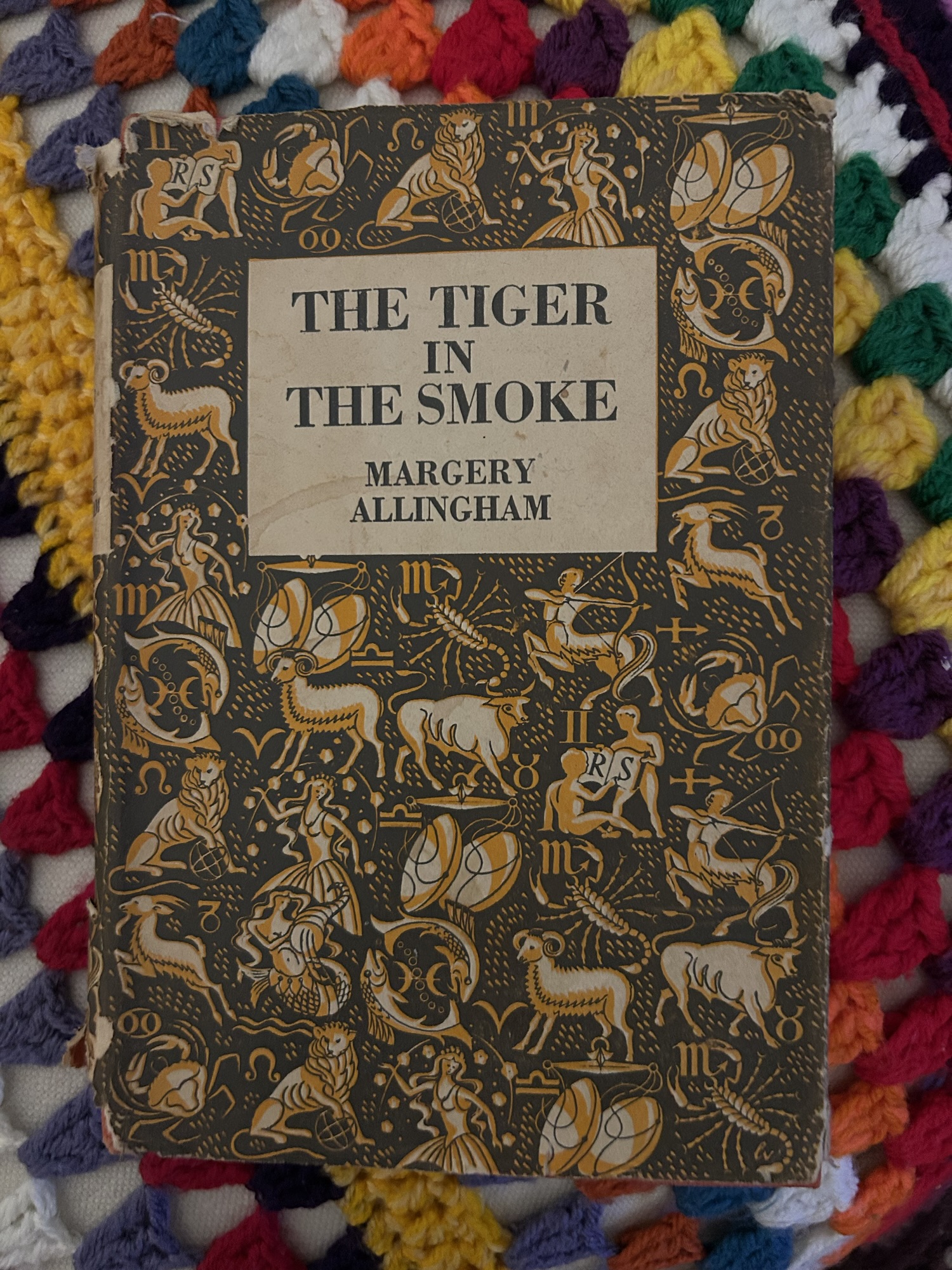
This is a contribution to Kaggsy and Simon’s 1952 Club, running all week. I found a few contenders in the TBR including several golden age mysteries, so I’m starting today with a pretty famous one, Tiger in the Smoke by Margery Allingham.

The titular smoke is a London pea-souper, a thick smog that chokes the airways and severely limits visibility – perfect for dastardly crimes to be committed!

“The fog was like a saffron blanket soaked in ice-water. It had hung over London all day and at last was beginning to descend. The sky was yellow as a duster and the rest was a granular black, overprinted in grey and lightened by occasional slivers of bright fish colour as a policeman turned in his wet cape.”

The story opens with Geoffrey Levett and Meg Elginbrodde crawling through the fog-bound traffic in a taxi. They are one of those wonderful postwar stiff-upper-lipped couples whose romantic chit-chat takes place along the following lines:

“Look, we’ll get out of this somehow and we’ll go through with the whole programme. We’ll have everything we planned, the kids and the house and the happiness, even the damned great wedding. It’ll be alright, I swear it, Meg.”

Love it!

The blight on their nuptials is that someone has been sending blurry photos to Meg of someone who could be her first husband Martin, presumed dead in the war. So she meets friend of the family  – and Allingham’s regular detective  – Albert Campion, along with Inspector Charlie Luke, at a train station.

It quickly emerges that the man is not her husband but a criminal named Duds Morrison. As the group begin to unravel what is going on and why, there is less mystery and more of a character study of a truly sinister criminal named Havoc. Inspector Luke is unnerved:

“Just then he had a presentiment, a warning from some experienced-born six sense, that he was about to encounter something rare and dangerous. The whiff of tiger crept to him through the fog.”

A gang of criminals appear and my heart sank a bit, as they all had various physical differences and I was braced for ableism. But while that is certainly present, the real menace in the book lies with Havoc, and Allingham labours over how physically perfect he is:

“His beauty, and he possessed a great deal […]

His face was remarkable, in feature it was excellent, conventionally handsome […]

Jail pallor, which of all complexions is the most hideous, could not destroy the firmness of his skin […]

He was a man who must have been a pretty boy, yet his face could never have been pleasant to look at. Its ruin lay in something quite peculiar, not in expression only but in something integral to the very structure. The man looked like a design for tragedy. Grief and torture and the furies were all there naked, and the eye was repelled even while it was violently attracted. He looked exactly what he was, unsafe.”

In other words, as beautiful and deadly as a tiger.

In comparison there is my favourite character, Canon Avril, Meg’s father:

“he asked so little of life that its frugal bounty amazed and delighted him. The older he grew and the poorer he became, the calmer and more contented appeared his fine gentle face.”

In fact, Tiger in the Smoke had an increasing amount of religious references and imagery as it went along (though it isn’t didactic at all) and I found myself reminded of Muriel Spark. I ended up googling Margery Allingham to see if she had a strong faith like Spark but couldn’t find it referenced. Tiger in the Smoke isn’t like Spark tonally, but it is certainly concerned with notions of good and evil in a similar way to her novels.

Although this is a Campion mystery, he barely features. Apparently the 1956 film cut him out entirely, and this wouldn’t be difficult at all. His sarcastic retainer Lugg also appears, and his wife Amanda along with Oates from Scotland Yard “a drooping figure in a disgraceful old mackintosh” but this could just as easily be a standalone novel.

While there isn’t a mystery as such, the plot is satisfyingly complex and the novel is expertly paced. The foggy atmosphere is used to full effect and Allingham creates a real page-turner. I was whizzing through Tiger in the Smoke to find out what happened.

It leads to a tense denouement, underpinned by a real sadness. A hugely satisfying start to my 1952 Club reading!

“Havoc was ‘police work’. There was no mystery surrounding his guilt. He was something to be trapped and killed, and Campion was no great man for blood sports.”
“Waiting for something to happen in the deathly, unhappy silence.” (Edna O’Brien, The Country Girls)

This is the first of what I hope will be a few posts for Cathy’s annual Reading Ireland Month aka The Begorrathon.

I really enjoyed August is a Wicked Month by Edna O’Brien when I read it a few years ago, and resolved to read The Country Girls trilogy. Admittedly it’s taken me a while but I have finally picked up the first in the trilogy, and O’Brien’s debut novel, The Country Girls (1960). Cathy and Kim are also hosting A Year with Edna O’Brien throughout 2025 so I’m joining in with that too 🙂

The girls of the title are Cait and Baba, growing up in 1950s rural Ireland, and the tale is told by Cait. Once again, I found O’Brien so intensely readable. She is great at small details that illuminate so much, without overwriting:

“Slowly I slid onto the floor and the linoleum was cold on the soles of my feet. My toes curled up instinctively. I owned slippers but Mama made me save them for when I was visiting my aunts and cousins; and we had rugs but they were rolled up and kept in drawers until visitors came in the summer-time from Dublin.”

Cait lives with her parents and man-of-all-work Hickey, on their farm which is hanging on by a thread, not helped by her father going on frequent alcohol benders. Her mother is loving but they all live in fear of her father’s return and the violence he brings.

“Her right shoulder sloped more than her left from carrying buckets. She was dragged down from heavy work, working to keep the place going, and at night-time making lampshades and fire-screens to make the house prettier.”

Baba’s family is better off financially, but they have their own sadnesses including her mother also self-medicating with alcohol. Baba can be a spiteful bully, but Cait experiences a growing awareness of how much Baba needs her too.

“Coy, pretty, malicious Baba was my friend and the person whom I feared most after my father.”

Village life is not idyllic in O’Brien’s world. There is a lot of poverty, there is violence, deep unhappiness and gossip. The girls are subject to the sexual attentions of much older men, even as they are at school.

Cait is academic and wins a scholarship to a convent school. Baba’s family pay for her to have a place too, and so the girls leave their village for the first time.

Baba despises the school with her whole being:

“Jesus, tis hell. I won’t stick it for a week. I’ll drink Lysol or any damn thing to get out of here. I’d rather be a Protestant.”

O’Brien brilliantly creates the cold, the disgusting food, the boredom and the oppressive rules laid down by the nuns.

“The whole dormitory was crying. You could hear the sobbing and choking under the covers. Smothered crying.

The head of my bed backed onto the head of another girl’s bed; and in the dark a hand came through the rungs and put a bun on my pillow.”

Eventually Baba engineers a way for her and Cait to leave, which to my twenty-first century eyes was very funny, but perhaps contributed to the banning of the book in Ireland and the burning of it by a priest when it was first published.

So in disgrace, the girls make their way to Dublin and all the seductions of city life, which Baba in particular is keen to embrace.

“Forever more I would be restless for crowds and lights and noise.”

The scandal The Country Girls created in 1960 seems very dated now. The only part I found concerning was a relationship that Cait begins with Mr Gentleman, a married man much older than she is, when she is still at school. This continues throughout the novel; it remains unconsummated but is wholly inappropriate and what we would now call grooming.

Apparently O’Brien wrote this in three weeks which is just extraordinary. Her evocations of environment and people, her ear for dialogue and her fluidity of style are all so well observed.

The novel ends on an anti-climax which initially I found an odd decision, but reflecting on it I think it is one of its strengths. It emphasises O’Brien’s choice to write about the realities of life for young women at that time, the life she knew. It insists on its truth, more than overly dramatic scenes, to engage the reader.

I’m looking forward to catching up with Cait and Baba in The Lonely Girl – hopefully it won’t take me another two years!

“I was not sorry to be leaving the old village. It was dead and tired and old and crumbling and falling down. The shops needed paint and there seemed to be fewer geraniums in the upstairs windows than there had been when I was a child.”

To end, a great interview with the author from the time of her memoir being published. She discusses The Country Girls around 11 minutes in:

“An Edwardian lady in full dress was a wonder to behold, and her preparations for viewing were awesome.” (William Manchester)

Last year Kaggsy and Lizzy’s brilliant #ReadIndies event led to me discovering Gertrude Trevelyan’s novels Two-Thousand Million Man-Power (1937) and William’s Wife (1938). These are published by Boiler House Press, part their Recovered Books series edited by Brad Bigelow, founder of www.neglectedbooks.com, which brings “forgotten and often difficult to find books back into print for a new generation to enjoy.”

#ReadIndies 2025 felt a perfect opportunity to return to Gertrude Trevelyan and her 1934 novel, As It Was In The Beginning, also part of the Recovered Books series.

This was quite different in style to her other novels I’d read, sustaining stream-of-consciousness. This approach lent itself perfectly to the story, as a woman lies dying in a nursing home, remembering her life.

“Alone with the white sheets and the polished floor and the fire crackling jerkily in the sunken grate and the sun beating against the yellow blinds, and the dull white furniture. All quite clean. Everybody finished up and gone.”

Millicent is well-to-do, formerly Lady Chesborough. She isn’t particularly likeable: she is grouchy, ill-tempered, and rude to the nursing staff. We are privy to her dismissive, judgmental thoughts about those who care for her.

“Oh, so it isn’t the pink-cheeked one this time. Thin and sallow. Dark. Sister, that’s it. Scrubbed all the pink out with the carbolic. Suppose a Sister has been scrubbed longer than a nurse.”

Millicent is also vain about looking younger than she is, about her slender frame and her hair. The reader is aware that she may no longer look as she thinks she does. In this way her vanity is almost defiant, a refusal to accept what is happening to her. It is also bound up in her affair with a younger man, Phil, who used her for money after her husband died.

“That slow smile that seemed to pick things up and weigh them and find they weren’t worth your while and put them down with gentle derision: knowing it was nothing, but not wanting to hurt too much.”

Millicent’s awareness of Phil’s caddishness comes and goes. Her reminiscences are interwoven with her present, muddling her memories with visits from her niece Sonia, the doctor on his rounds and the nurses she is so rude about.

This so well done, meaning the reader becomes a detective, working out what is real, what is imagined, what is memory; what is Millicent’s self-delusion from the time and what is delusion now.

We are then taken back to her marriage with Harold, and Trevelyan deals frankly with Millicent trying to fit in with the expectations for a privileged woman at the start of the last century, and how this stifles her needs and wants, including sexual desire.

“It wasn’t a woman Harold married, but a shell: that’s the truth of it. Something correct in white satin, labelled The Bride.”

Trevelyan doesn’t demonise Harold, but shows how he and Millicent are both products of their time. (Although never specified, I’ve assumed Millicent was born around the 1880s, to be in her fifties or thereabouts when the novel was published, and coming of age in Edwardian England.) They are unable to voice what is lacking for them, and struggle to understand this lack when they have done all that is expected. Millicent has a brief outburst of passion which shocks Harold, and they retreat into distance.

“It was that way of appropriating his surroundings; everything having to fit into a relationship with himself. My house. My wife. Yes, that’s it: Harold’s wife, not myself. That’s what I felt, all those years. My wife, my dog: though he was courteous enough: I’m not fair to Harold. Never could be fair to him. He was too fair himself in that cold way. Not that I ever wanted him to be anything but cold: it was just that which made things bearable: that routine of courteous remoteness we’d settled into.”

This leaves her vulnerable to the later manipulations of Phil, who offers her sexual passion in return for her money.

As Millicent leaves the present further behind, the narrative focuses more and more on her reminiscences. It is expertly done, as the nurses and the clinical surroundings fade further away.

We learn of her childhood, and her struggles as she is taught societal expectations. Her relationship with her first love, a childhood friend, is affected negatively when she becomes old enough to have to put her hair up and can no longer play with him as they used to, as she is now considered a woman rather than a girl.

Millicent’s past explains her choices – and lack thereof – so clearly. As a child she found her body cumbersome. She feels she failed Harold by not giving him a child. She worries she is not enough for Phil because she is nearly old enough to be his mother.

“Don’t want to be a little girl. Don’t want to be a grown up either, grown-ups are silly. They don’t know anything. Don’t ask so many questions: that’s when they don’t know things. Don’t be silly, you’ll know that when you grow up, you’ll find that out soon enough, plenty of time for that when you’re older, little pitchers have long ears, little girls should be seen and not heard curiosity killed the cat.”

Trevelyan uses Millicent to explore the disproportionate focus put on (privileged Edwardian) women’s appearance as their main role and contribution. She has her vanities because society has told her this is her value. There is a sense that as she leaves her body behind, Millicent is achieving the freedom she always wanted.

“I don’t know why people should look at me like that. I suppose they can see I’m not anything. I don’t see how they can see I’m not anything. They’re all solid and I’m hollow, but they can’t see that.”

I would absolutely urge anyone to pick up Trevelyan, but As It Was In The Beginning is probably not the best starting point. I’m fine with stream-of-consciousness, but I thought the first part with the memories of Phil was slightly too long and could have done with an edit. The other two novels I have read by her I thought were stronger, and more approachable in style.

However, I thought stream-of-consciousness was perfect for this story. As It Was In The Beginning provides a powerful exploration of the role of women at that time in a way that is intensely personal, while making astute observations about society. Trevelyan is such an accomplished writer who always manages to drive home her wider points without ever losing sight of her characters. I’m so glad Boiler House Press have rescued three of her novels as she deserves to be so much better known.

“People think because a novel’s invented, it isn’t true. Exactly the reverse is the case.” (Anthony Powell, Hearing Secret Harmonies)

I did it! This is the final instalment in my 2024 resolution to read a book per month from Anthony Powell’s A Dance to the Music of Time sequence. I’d been put a bit behind by labyrinthitis but I finished on 31 December. I’d hoped to write and post this the same day but I got distracted by my Christmas jigsaw puzzle on The World of Virginia Woolf 😀

Published between 1951 and 1975, and set from the early 1920s to the early 1970s, the sequence is narrated by Nicholas Jenkins, a man born into privilege and based on Powell himself. The twelfth volume, Hearing Secret Harmonies, was published in 1975 and opens in 1968.

Much of Hearing Secret Harmonies is concerned with the past but it opens by introducing a new character, the sinister Scorpio Murtlock who is camping on Nick and Isobel’s land with some of his followers. Nick, always such an astute observer of people, is not taken in by Murtlock’s charisma:

“When Murtlock smiled the charm was revealed. He was a boy again, making a joke, not a fanatical young mystic. At the same time he was a boy with whom it was better to remain on one’s guard.”

“Murtlock himself possessed to a marked degree that characteristic – perhaps owing something to hypnotic powers – which attaches to certain individuals; an ability to impose on others present the duty of gratifying his own whims.”

It’s a masterstroke of Powell’s writing that while Murtlock remains elusive, he is also deeply unnerving. There’s no doubt as to how dangerous he could be, fully realised by the novel’s end.

Nick then attends two dinners which work well as devices for him to meet past friends and acquaintances, drawing them into the final sequences, and alerting the reader as to has left the Dance for good. There is a sense of time folding in on itself:

“Members, his white hair worn long, face pale and lined, had returned to the Romantic Movement overtones of undergraduate days.”

And of course Widmerpool, Nick’s talisman of sorts, reappears. He is quite extraordinary: a former beacon of the Establishment now refuting his knighthood, asking to be called Ken, wearing a grubby red polo neck to formal occasions and focussing on the power of 1960s youth movements for societal change. His involvement with Scorpio Murtlock seems inevitable…

This final volume works well in balancing reflections of the past without becoming overly contrived. There is a sense of reflection occurring organically, without being maudlin, sentimental or nostalgic. Powell is far too astute and insightful for the ending to take such tones.

There’s also a great deal of humour, from larger set pieces with Murtlock’s naked dancing cult providing a bathetic contrast with the central image of the novel sequence:

“It was not quite the scene portrayed by Poussin, even if elements of the Season’s dance was suggested in a perverted form; not least by Widmerpool, perhaps naked, doing the recording.”

To smaller moments such as disagreement over paintings at a retrospective of Deacon’s work:

“Well Persepolis isn’t unlike Battersea Power Station in silhouette.”

And Nick’s various assessments of himself:

“Pressures of work, pressures of indolence.” (my life frustrations in a sentence!)

“These professional reflections, at best subjective at worst intolerably tedious,”

I have really enjoyed reading A Dance to the Music of Time and it hasn’t been an arduous undertaking at all. I’m sure it will reward re-reading; there are so many allusions and subtleties that have certainly passed me by. For me, the sequence peaked with the war trilogy, but each novel held its own joys, working on an individual level as well as part of a whole sequence. I’m going to really miss Nick, even though he remained half-hidden to me throughout the twelve volumes.

“Two compensations for growing older are worth putting on record as the condition asserts itself. The first is a vantage point gained for acquiring embellishments to narratives that have been unfolding for years beside one’s own, trimmings that can even appear to supply the conclusion of a given story, though finality is never certain, a dimension always possible to add.”

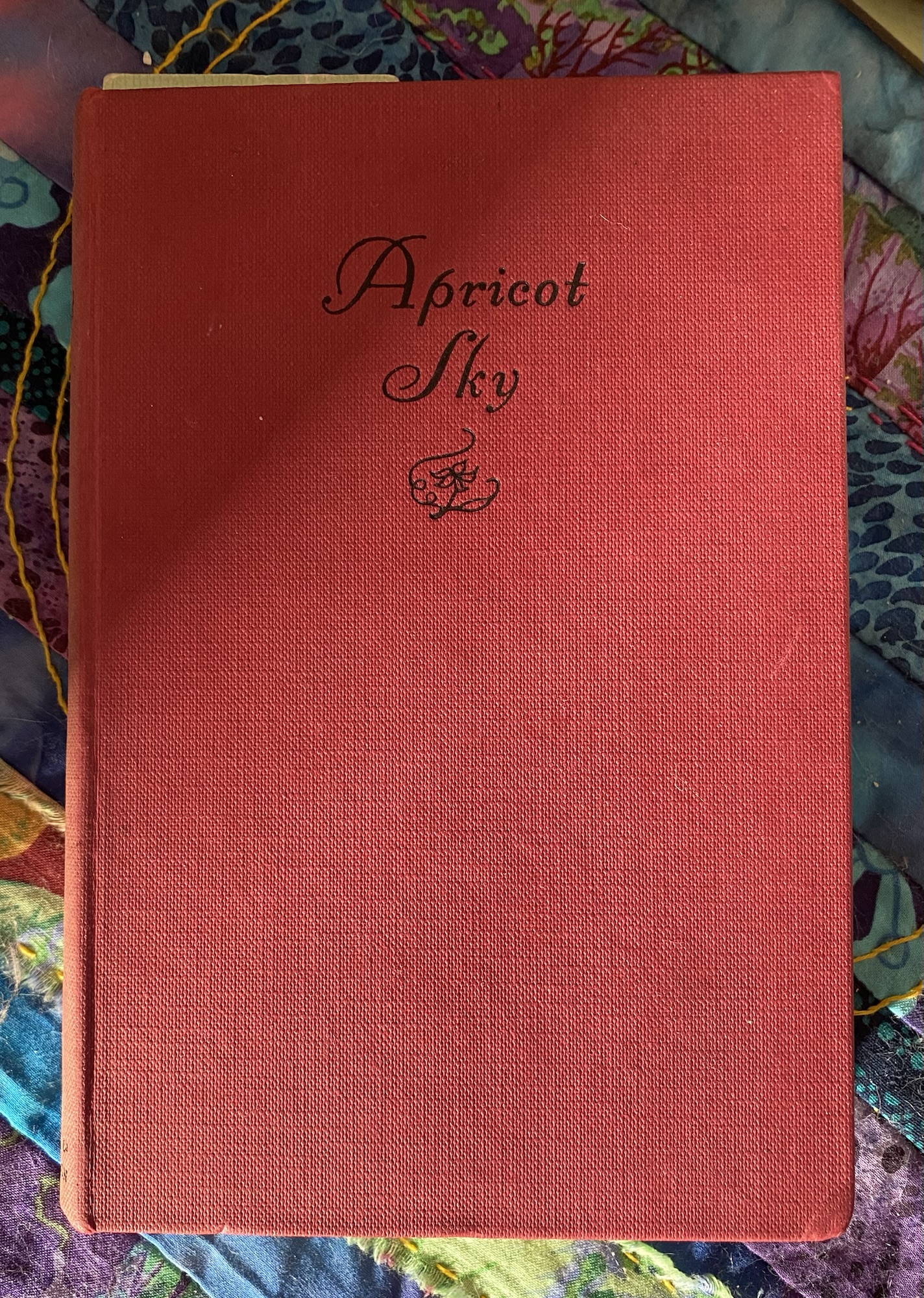
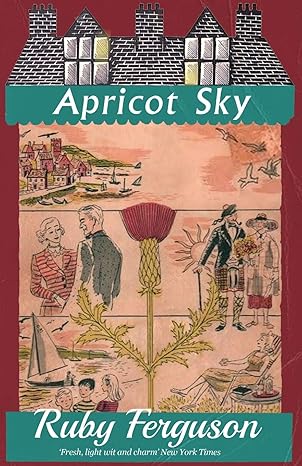
“Have you practised swooning?” (Ruby Ferguson, Apricot Sky)

This is my contribution to Dean Street December, a month-long celebration of this wonderful indie publisher, hosted by Liz at Adventures in Reading, Running and Working from Home.

Dean Street Press’ imprint Furrowed Middlebrow focuses on early and mid-twentieth century women writers, and it’s from this collection that I’ve chosen my read, Apricot Sky by Ruby Ferguson (1952 – please note for Simon and Kaggsy’s 1952 Club running next year!)

I must confess that rather than a DSP edition, my copy is a nice little hardback I found in my local charity shop, inscribed with the author’s love to Flossie and John 😊 I picked up her later novel The Leopard’s Coast at the same time, also given with the author’s love, so I wonder if Flossie and John lived near me and their books have been cleared out…?

Aside from the Jill pony books I read as a child, I only knew Ruby Ferguson from Lady Rose and Mrs Memmary  (1937) republished by Persephone Books. But I’d enjoyed that so much that I felt confident enough to swoop up the two books when I saw them; and what a total joy Apricot Sky turned out to be.

Set in 1948 in the Highlands of Scotland, the story follows the MacAlvey family through the events of one summer. A descriptive passage on the first page sets the tone:

“The charm of islands which changed their colour every few minutes, of lilac peaks smudged on the farthest horizon, of white-capped waves on windy days, of distant steamers chugging romantically on their ways, of little boats with faded brown sails scudding before the breeze, of sudden storms pouring fiercely across the terrific expanse of sky and water, of thousands of seabirds planing and diving, of floods of sunshine scattering millions of diamonds upon the rippling waves, all this made-up the view about which the MacAlvey’s visitors had so much to say while the MacAlvey’s themselves listened indulgently and with inward amusement.”

The MacAlvey’s are a nice family living a life not without trials but without any great drama, comfortably well-off and settled.

“Kilchro House was noted for its hospitality. It was a gay house where a gay family gave charming entertainment and never tried to descend into banality by prattling about themselves.”

The MacAlvey’s younger daughter Raine is due to marry Ian, brother of the Laird of Larrich. This is the thread which runs through the novel, as the wedding gathers apace for the September ceremony.

Raine’s older sister Cleo is back from three years in America, everyone expecting her much changed, but her heart stayed with her Highland home, and Neil, the Laird. Whenever she sees him she becomes utterly tongue-tied, and feels entirely inadequate alongside the charms of Inga Duthie, a sophisticated widow who is new to the area.

“Cleo MacAlvey could think of no worse desolation than that those she liked should not like her. She was a great deal more diffident than her sister Raine, who barged through life without caring whether people liked her or not, and was about as introverted as a fox-terrier puppy.”

Alongside these adult concerns are the younger children, left to their own devices. Primrose, Gavin, and Archie were orphaned by the war and live with their grandparents. The whole summer stretches before them:

“At Strogue there was no promenade and no cinema or skating-rink and only about three shops, and you couldn’t move without getting yourself in a mess with tar and fish and stuff left about, but everything you did there was full of exhilaration and had a way of turning out quite otherwise than you expected.”

They love boats and beaches and being out of doors. The only blight on their idyll is distant cousins Elinore and Cecil who come to stay for a few weeks. They are refined and self-contained, and in the case of Elinore, an unmitigated snob.

The children’s adventures are reminiscent of the Famous Five: there are islands, swimming and a big focus on picnics. There is post-war rationing to contend with, but it is seemingly straightforward to overcome – they frequently manage sweets, pies, jam, sandwiches and fizzy drinks.

For the adults, the trials are tedious houseguests in the shape of Dr and Mrs Leigh, and the appalling Trina, married to their son James. Mrs MacAlvey loves having guests though, and loves her family and her garden. Her part of the world gives her all she needs and she feels no desire to venture any further:

“She found herself unable to picture it, for she had never been to England, and always thought of it as being full of successful people living in Georgian houses.”

Despite being so rooted in her domestic life, she remains blissfully unaware of what her grandchildren get up to all day, and how tortured poor Cleo is by her unspoken love for Neil:

“Nobody talked about their feelings at Kilchro House, it was considered one stage worse than talking about your inside.”

I thoroughly enjoyed my summer with the MacAlvey family in a beautifully evoked part of the world, far away from chilly London. The stakes were soothingly low, and the humour was gentle. Any drama was short-lived, and things worked out exactly as they should.

If you are looking for a warm-hearted, escapist read, Apricot Sky will serve you well.

“‘All right,’ said Raine, holding out a ten-shilling note. ‘I’ll try anything once, even altering the course of history.’”

“Reading novels needs almost as much talent as writing them.’ (Anthony Powell)

This is the eleventh instalment in my 2024 resolution to read a book per month from Anthony Powell’s A Dance to the Music of Time sequence. Published between 1951 and 1975, and set from the early 1920s to the early 1970s, the sequence is narrated by Nicholas Jenkins, a man born into privilege and based on Powell himself.

The eleventh volume, Temporary Kings, was published in 1973 and is set towards the end of the 1950s. I can’t believe I’m at the penultimate volume!

I’m writing this as I recover from labyrinthitis; today is the first time I’ve been able to sit up after two and a half days flat on my back. So I’m not sure how much sense this post will make, but I wanted to get it written in November. Please bear with me!

Temporary Kings is set for the most part at a cultural conference in Venice in 1958, which Nick has been sent to somewhat unwillingly, by Mark Members who has organised it but can’t be bothered to go himself.

I felt a sense of slowing down, as old acquaintances arrive and new people join the dance; it is almost a series of character sketches. Given Powell’s enormous talent for incisive but never cruel summations of people in just a few lines, this made for an enjoyable read.

For example, how’s this for a description of Louis Glober, a filmmaker:

“What did not happen in public had no reality for Glober at all. In spite of the quiet manner, there was no great suggestion of interior life. What was going on inside remained there only until it could be materially expressed as soon as possible.”

I also liked the new character of Dr Brightman, an academic who:

“had made clear a determination to repudiate the faintest suspicion of spinsterish prudery that might, very mistakenly, be supposed to attach to her circumstances.”

The Widmerpools turn up trailing controversy in their wake: Kenneth has lost his seat as an MP and so given a knighthood and a seat in the Lords (sigh…) and Pamela has been embroiled in a sex scandal. I do enjoy Pamela’s relentless creation of discomfort wherever she goes:

“She had the gift of making silence as vindictive as speech.”

On returning to the UK, Nick finds the conference hard to shake off:

“The conference settled down in the mind as a kind of dream, one of those dreams laden with the stuff of real life, stopping just the right side of nightmare, yet leaving disturbing undercurrents to haunt the daytime, clogging sources of imagination – whatever those may be – causing their enigmatic flow to ooze more sluggishly than ever, periodically cease entirely.”

There is an unsettling feeling to the scenes, and sense of so much unknown among the characters which could implode at any moment. Somehow it doesn’t entirely, but I felt a creeping sense of doom alongside the belief that things will just carry on.

We also have Stringham’s suspected death in a POW camp confirmed. More than any other, that character broke my heart.

Towards the end of the novel, Nick reflects:

“One’s fifties, in principle less acceptable than one’s forties, at least confirm most worst suspicions about life, thereby disposing of an appreciable tract of vain expectation, standardised fantasy, obstructive to writing, as to living […] After passing the half-century, one unavoidable conclusion is that many things seeming incredible on starting out, are, in fact, by no means to be located in an area beyond belief.”

This is a terrible post and I’ve missed so much out! I blame my ears 😉 But I hope it’s given something of the sense of the novel.

Paula’s recent Winding Up the Week post alerted me to this wonderful article about Violet Pakenham, Anthony Powell’s wife and her role in the production of Dance. It’s also a great portrait of postwar Bohemian family life. I really recommend it and you don’t have to have read any of Powell to enjoy it.

To end, a song from 1972 but a UK hit the same year as Temporary Kings was published. I chose it from many 1973 hits because after 11 volumes, Nick still remains somewhat elusive to me as a reader:

“I have looked for life, but I can’t find it.” (Vicki Baum, Grand Hotel)

November is the month of sooooo many reading events, and I’m hoping to take part in Margaret Atwood Reading Month and Novellas in November, but I thought I’d start with German Literature Month XIV, hosted by Caroline at Beauty is a Sleeping Cat and Lizzy Siddal at Lizzy’s Literary Life.

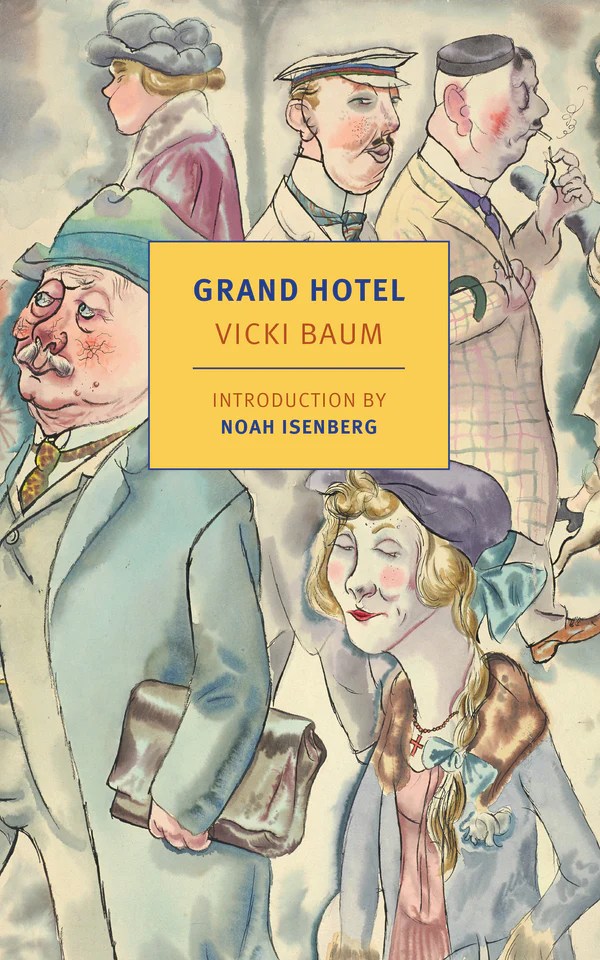
Grand Hotel by Vicki Baum (1929, transl. Basil Creighton 1930-1 revised by Margot Bettauer Dembo 2016) is a novel I’ve been meaning to get to for some time, republished by the wonderful New York Review of Books Classics.

I find a Weimar Republic setting always so enticing, and this novel was a bestseller in it’s day, originally serialised in a magazine. Sometimes with serials you can really see the joins when they are placed in novel form, but the episodic nature of hotel stays by various guests works well and Grand Hotel felt entirely coherent.

The titular building is opulent and glamorous:

“The music of the jazz band from the Tearoom encountered that of the violins from the Winter Garden, and mingled with the thin murmur of the illuminated fountain as it fell into its imitation Venetian basin, the ring of glasses on tables, the creaking of wicker chairs and, lastly, the soft rustle of the furs and silks in which women were moving to and fro.”

As readers we know that momentum for World War Two is building, but for the guests at this time it is the shadow of World War I which still looms large. Doctor Otternschlag’s face has been severely damaged by a shell. Every day he asks if a letter has arrived for him which it never has. We don’t know what this quiet, traumatised man is waiting for.

“Doctor Otternschlag lived in the utmost loneliness – although the earth is full of people like him…”

Glamour is brought by Grusinskaya, a prima ballerina desperately trying to hang on to physical vigour against the forces of aging. She is somewhat ambivalent, feeling driven to be as she has always been, and exhausted by it all:

“Perhaps the world would have loved her as she really was, as she looked now, for example, sitting in her dressing room – a poor, delicate, tired old woman with worn out eyes, and a small careworn human face.”

The most pathos occurs in the guest who doesn’t fit in: Kringelein, a clerk from Fredersdorf, given a terminal prognosis and determined to squeeze the pips from life before it’s too late. He chooses the Grand Hotel as his boss, Herr Preysing, stays there when in Berlin.

“He felt again, here in the bar of Berlin’s most expensive hotel, the same intoxication, a sense of exuberant plenty as well as of anxiety and alarm, the faint threat haunting the wicked joy of wrongdoing, the excitement of an escapade.”

Kringlein’s difficulty is, he is unsure of how to achieve his somewhat nebulous aim. Doctor Otternschlag tries to help but fails, unsurprising given his jaded, damaged view of the world. More successful is gentleman thief Gaigern, a dashing young nobleman who charms everyone:

“I am quite without character an unspeakably inquisitive. I can’t live an orderly life and I’m good for nothing. At home I learned to ride and play the gentleman. At school, to say my prayers and lie. In the war, to shoot and take cover. And beyond that I can do nothing. I am a gypsy, an outsider, an adventurer.”

He kits out Kringelein in fine clothes and takes him for fast drives in cars and up in a plane, but what are his motives? As Kringelein throws his hard-earned but limited money around, what will Gaigern do?

“Human kindness and warmth was so much a part of his nature that his victims always received their due share of them.”

Baum weaves together these disparate lives expertly, as they bump against each other within the Grand Hotel to a greater or lesser extent. There are overarching plots that draw characters together but Baum demonstrates that while hotels are places where change may occur, they do not lend themselves to resolution so easily. Hotels are by nature transitory and lives must be continued, consequences dealt with, once the guests pass through the revolving doors and back into the world.

Perhaps there is no such thing as a whole, completed destiny in the world, but only approximations, beginnings that come to no conclusion or conclusions that have no beginnings.

The tone is so well-balanced, with moments of light humour, almost slapstick, alongside darker elements. I did feel a constant undercurrent of sadness, but this highlighted the resilience of the characters who keep on keeping on during this interwar period, rather than being depressing.

Grand Hotel provides a compelling evocation of the Weimar era too, with glamour, seediness, riches and poverty all bound together in a vibrant, intoxicating, overwhelming Berlin. I’m so pleased to have finally read this novel.

“The room had taken on that utterly strange and enchanted appearance often encountered in hotel bedrooms.”

Grand Hotel was adapted by Hollywood in 1932, which despite my love of Garbo I’ve never seen. Time to remedy the situation!

“I loved all of Harlem gently.” (Louise Meriwether, Daddy Was a Number Runner)

The 1970 Club is running all week hosted by Karen at Kaggsy’s Bookish Ramblings and Simon at Stuck in a Book. The Club weeks are always great fun, so do check out the posts!

Whenever the club weeks are announced I always go straight to the TBR to see what I’ve got available. 1970 didn’t yield as many fruits as 1937 Club back in April, but it did offer four choices. Unfortunately I don’t think 1970 is my year as far as my TBR pile goes…two DNFs and a third I wish I had DNF’d rather than ploughed through. Thankfully the fourth I found to be excellent!

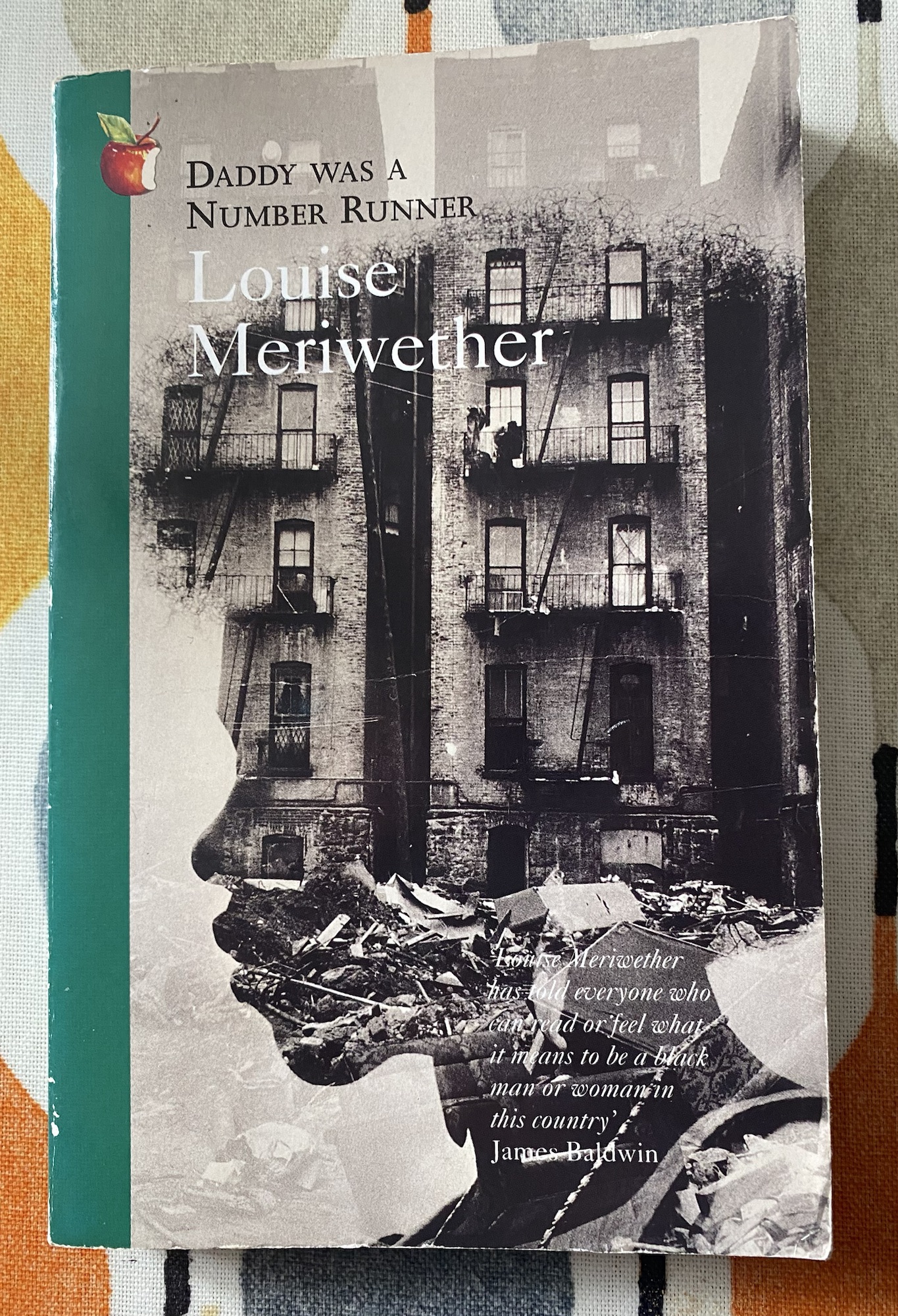
Daddy Was a Number Runner was the first novel by Louise Meriwether and widely acknowledged to be bona fide classic in its evocation of 1930s Harlem, through the eyes of a twelve-year-old girl, Francie Coffin. In the Foreword, James Baldwin writes:

“she has so truthfully conveyed what the world looks like from a black girl’s point of view, she has told everyone who can read or feel what it means to be a black man or woman in this country. She has achieved an assessment, in a deliberately minor key, of a major tragedy.”

From the opening lines as Francie helps her father with his titular illegal lottery, her voice is so direct and distinctive. As she runs home to try and get to school on time, we are thrust into a hot summer’s day in Harlem.

“The air outside wasn’t much better. It was a hot, stifling day, June 2, 1934. The curbs were lined with garbage cans overflowing into the gutters, and a droopy horse pulling a vegetable wagon down the avenue had just deposited a steaming pile of manure in the middle of the street.

 The sudden heat had emptied the tenements. Kids too young for school played on the sidewalks while their mamas leaned out of their windows searching for a cool breeze or sat for a moment on the fire escapes.”

Francie’s family are incredibly poor, and running the numbers brings some money in. If lotteries are a tax on hope, Harlem is full of hope. It’s also full of bed bugs, rats and roaches. Poor Francie is eaten alive every night and has to go armed into her favourite pastime:

“I was sitting at the dining room table reading a library book, armed with my usual supply of weapons. Tonight I had a hammer, a screwdriver, and two hairbrushes. When I heard a noise I threw the hammer toward the kitchen and the rats scurried back into their holes. When I got down to my last piece of ammunition I would give the dining room up to the rats and go on to bed.”

Reading and schooling are seen as a way out of the ghetto. Francie’s older brother Sterling is bright and just about staying in school. Her other brother, James Junior, found school hard and, much to the worry of his loving parents, he is running with the local gang:

“He wasn’t mean enough to be an Ebony Earl nohow. How could he ever mug anybody, good-natured and nice as he was. Why, when he smiled his whole face laughed. He wasn’t like old Sterling who didn’t like anybody and whose narrow, old man’s face was full of dark, secret shadows.”

Francie’s parents are loving and kind, and how they hold onto those traits against the relentless grind of poverty is a miracle.

“[Mother] was always either soaking clothes or scrubbing them or hanging them out on the line. With all of that activity we should have been super clean but somehow we weren’t.”

“Daddy played by ear and could swing any piece after he heard it only once.”

Francie’s father is proud and doesn’t want to accept state relief or for his wife to work. But eventually he has to give in on both counts:

“They don’t give you enough money to live on so you have to bootleg some kind of work, then they deduct that from your relief check, too. I wonder how they expect you to live. Didn’t I tell you I didn’t want to mess with those people?” But for once he didn’t shout, seeming to be more tired than angry.”

The structural racism faced by Francie, her family, and everyone she knows is brilliantly evoked. Meriwether displays it through various characters, and there is an enormous tragedy looming for several families. The fallout on children is vivid, through Francie but also her peers. Her best friend Sukie is always filled with fury, which young Francie fails to see is due – at least in part – to Sukie’s father seeking release in alcohol and her sweet sister China Doll working for a violent pimp who beats her in front of onlookers.

Meriwether also articulates issues directly to the reader in her portrayals of, or references to, real life characters who Francie encounters, such as Reverend Adam Clayton Powell, Father Divine, Marcus Garvey, and the Scottsboro case.

There is so much hardship in Daddy Was a Number Runner, and outside of the home Francie has to navigate violence and sexual attention from many that grows into assaults. There’s also a horrible scene with a cat. What stops the novel being unremittingly bleak is her loving parents; her love of books; and Francie’s resilient, honest, humorous, indignant voice.

“I walked to 110th St and looked across Central Park at the lights twinkling in the skyscrapers. That was another world, too, all those lights way over there and this spooky park standing between us. But what good would those lights do me anyway?”

“It is not what happens to people that is significant, but what they think happens to them.“ (Anthony Powell)

This is the tenth instalment in my 2024 resolution to read a book per month from Anthony Powell’s A Dance to the Music of Time sequence. Published between 1951 and 1975, and set from the early 1920s to the early 1970s, the sequence is narrated by Nicholas Jenkins, a man born into privilege and based on Powell himself.

The tenth volume, the wonderfully titled Books Do Furnish a Room, was published in 1971 and is set just after World War Two. (If you google, there are some marvellous images of Anthony Powell in his book-furnished study, reclining on a red chaise longue 😊)

It opens with Nick back at Oxford, researching a book on Burton’s Anatomy of Melancholy and meeting old tutor Sillery. At the end of the novel he again returns to an educational establishment from his past, organising a place for his son at Eton and meeting old tutor Le Bas. Between times, he is in London, part of a literary scene, where people are trying to re-establish themselves after the upheaval of the preceding years.

“The war had washed ashore all sorts of wrack of sea, on all sorts of coasts. In due course, as the waves receded, much of this flotsam was to be refloated, a process to continue for several years, while the winds abated. Among the many individual bodies sprawled at intervals on the shingle, quite a lot resisted the receding tide. Some just carried on life where they were on the shore; others – the more determined – crawled inland.”

After the focus on companies of men in the war trilogy, much of this novel reads like an extended character study of one person: author X Trapnel. And what a character he is – uncommonly bearded (for the time), wearing a safari suit, tie embossed with nude ladies, and dyed black RAF greatcoat, he carries a skull-topped sword stick.

“When he began to talk, beard, clothes, stick, all took shape as necessary parts of him, barely esoteric, as soon as you were brought into relatively close touch with the personality. That personality, it was at once to be grasped, was quite tough.”

And yet:

“The practical expression of the doctrine of ‘panache’… played a major part in Trapnel’s method of facing the world.”

As with all Powell’s characterisations, his presentation of Trapnel is clear-sighted but never nasty. He has a way of being unsentimental but never unpleasant; discerning but non-judgemental. He seems to enjoy people as they are.

“No brief definition is adequate. Trapnel wanted, among other things, to be a writer, a dandy, a lover, comrade, and eccentric, a sage, virtuoso, a good chap, a man of honour, hard case, spendthrift, an opportunist, a raisonneur; to be very rich, to be very poor, to possess a thousand mistresses, to win the heart of one love to whom he was ever faithful, to be on the best of terms with all men, to avenge savagely the slightest affront, to live to a hundred full years and honour, to die young and unknown but recognised the following day as the most neglected genius of the age.”

Around Trapnel swirl the other characters and events of this time. He is employed by publishers Quiggin and Craggs to write for a new magazine, Fission. The ever-present Widmerpool is an investor, and his beautiful wife Pamela continues to bring disdain and chaos with her wherever she goes.

Widmerpool is an MP, as is Nick’s brother-in-law Roddy Cutts, and I enjoyed this brief portrait of Nick’s visit to Westminster:

“We rose from the table, exchanging the claustrophobic pressures of the hall where the meal had been eaten, for a no less viscous density of parliamentary smoking rooms and lobbies, suffocating, like all such precincts, with the omnipresent and congealed essence of public contentions and private egotisms; breath of life to their frequenters.”

Where of course he and Roddy run into Widmerpool:

“The two MP’s were in sharp competition as to whose passion for directness and simplicity was the more heartfelt, at least could be the more forcibly expressed.”

There are also some great descriptions of the seedier parts of London (now very swish areas, but back then poorer and war torn).

Books Do Furnish a Room is quite a contrast to the immediately preceding war novels and a really effective evocation of a chaotic and impoverished postwar London literary scene. I can’t believe there’s only two more left in the sequence for me to read.

“It turned out in due course that Trapnel impersonations of Boris Karloff were to be taken as a signal that a late evening must be brought remorselessly to a close.”

“One often felt ungrateful in literary matters, as in so many others.” (Anthony Powell)

This is the ninth instalment in my 2024 resolution to read a book per month from Anthony Powell’s A Dance to the Music of Time sequence. Published between 1951 and 1975, and set from the early 1920s to the early 1970s, the sequence is narrated by Nicholas Jenkins, a man born into privilege and based on Powell himself.

The ninth volume, The Military Philosophers, was published in 1968 and is set in the latter part of World War Two. It forms the final part of the war trilogy within the sequence, after The Valley of Bones and The Soldier’s Art.

Nick is working in Whitehall as a military liaison during the later stages of the war, and Powell captures the quirks and foibles of his colleagues in these powerful – for some – administrative roles. He demonstrates how soldiers are still people with all their flaws; and how everyday concerns run alongside such enormous ones as the fate of nations and the likelihood of imminent death.

During an air raid, Nick reflects:

“Rather from lethargy than an indifference to danger, I used in general to remain in my flat during raids, feeling that one’s nerve, certainly less steady than at an earlier stage of the war, was unlikely to be improved by exchanging conversational banalities with neighbours equally on edge.”

While I don’t suppose Powell was anti-war or anti-establishment, he brings his clear sight to all he portrays, including the venerated men of war. An imposing portrait of the man who came to personify the previous war is described:  

“Kitchener’s cold and angry eyes, haunting and haunted, surveying with the deepest disapproval all who came that way.”

And in a rare instance of Powell describing a real-life character (though never named), Field-Marshall Montgomery is all too believably portrayed:

“An immense, wiry, calculated, insistent hardness […] one felt that a great deal of time and trouble, even intellectual effort of its own sort, had gone into producing this final result. The eyes were deep set and icy cold.”

There’s absolutely no jingoism in The Military Philosophers. Nick is a loyal soldier, but he doesn’t automatically equate the behaviour of his country with honourable deeds:

“The episode strongly suggested that the British, when it suited them, could carry disregard of all convention to inordinate length; indulge in what might be described as forms of military bohemianism of the most raffish sort.”

Truly terrifying is the development of Widmerpool in this volume. Already a deeply unnerving character, Powell has him arrive in the volume with some levity:

“‘You must excuse me,’ he said. ‘I was kept by the Minister. He absolutely refused to let me go.’

 Grinning at them all through his thick lenses, his tone suggested the Minister’s insistence had bordered on sexual importunity.”

Later we are reminded of Widmerpool’s absolute lack of any morality, when he describes the Kattyn Forest Massacre as merely “regrettable”.

By the end, he is truly sinister, observing “I have come to the conclusion that I enjoy power.” He informs Nick that he will revel in the command of empire overseas. The racism is explicitly stated; the violence of imperialism implied.

Various associates from Nick’s past reappear in his life. We learn that Nick’s childhood friends Stringham and Templar are both most likely dead, and sadly so is my favourite character General Conyers, succumbing to a heart attack after chasing looters and trying to stop the theft of a refrigerator.  

Stringham’s niece, Pamela Flitton, plays a significant role in this volume, essentially by sleeping with a lot of different men and being furious the whole time. Let’s just say her taste in partners leaves a lot to be desired…

There are lighter moments too, and I particularly enjoyed Nick’s colleague Finn risking both a court martial and being stripped of his VC, in his desperation to collect a fresh salmon and using a military car to do so.

The volume ends with the Victory Service at St Paul’s, and then Nick going to collect some civilian clothes at Olympia. It is a subdued ending, deliberately so.

“Everyone was by now so tired. The country, there could be no doubt, was absolutely worn out.”

I found the tone very moving, reflective of all the loss that had been experienced through the war years and all that must now be endured in the immediate post-war period.

“The London streets by this time were, in any case, far from cheerful: windows broken: paint peeling: jagged, ruined brickwork enclosing the shells of roofless houses. Acres of desolated buildings, the burnt and battered City lay about St Paul’s on all sides.”