I’m late joining Reading Ireland Month, hosted by Cathy at 746 Books which is such a shame as I really enjoy this event every year. But I’m hoping to squeeze a few reads in before the end of the month and so far I’ve manged two novellas by a new-to-me author.
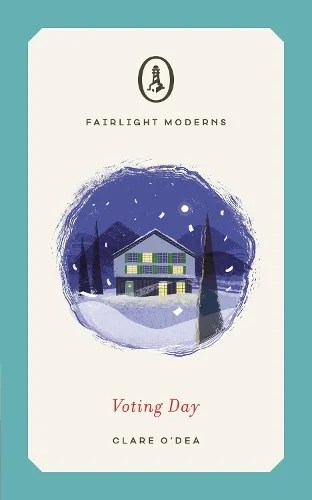
Voting Day by Clare O’Dea (2022), is published by indie Fairlight Books. The author is originally from Dublin but has been living in Switzerland for more than two decades. The novella explores the failure of women’s suffrage in the referendum of 1959; Swiss women didn’t get the vote until 1971.
We start the day of the referendum with Vreni, exhausted wife of a farmer, who believes:
“The system worked well and women didn’t know enough about politics.”
She is travelling to Bern, for surgery on her prolapsed womb. I really felt for her when she reflected:
“Rest was the word that jumped out at her when he explained the ins and outs. She was giddy about the prospect of rest. She would be looked after, two weeks in hospital and one week in the convalescent home.”
Meanwhile, her daughter Margrit is one of the first generation of young single women to work independently in the city, encountering misogynistic assumptions from male colleagues about what this means for her sexual availability:
“They did not profess their profound respect for you before beginning a campaign of casual touching that seemed to reflect special understanding between you […] nor were they handsome and cultured, these dangerous men. They hid their claws until it was too late.”
On her admission to hospital, Vreni catches the eye of the cleaner Esther, who is from the Yenish traveller community. She has suffered under the racist policies of social services:
“Somebody somewhere decided that our little home was too full and too free. They took three of us away and left the younger ones. They wanted to see children in straight lines with clean dresses and plaited hair.”
Esther subsequently struggled as a single mother:
“I had to solve my problem during Ruedi’s naps before the money ran out. When he fell asleep in my arms after a feed, I would gently place him in the playpen where he would be safe if he woke. And I would run, run from one end of the town to the other, looking for solutions.”
And we realise that Ruedi is Vreni’s foster child. The situation is so heart-rending, Vreni unintentionally exacerbating Esther and Ruedi’s pain. Pivotal is Beatrice, Esther’s boss and the only one of the four protagonists truly concerned with the referendum.
“She thought she had braced herself for this, but hope would always wriggle in, that treacherous friend.”
Voting Day effectively demonstrates the way women’s rights are circumscribed in society by both formal and informal systems of power. It does so without losing sight of its characters and conveys so much of their individual stories in an incredibly short space. I found it highly readable, whizzing through it to an end that was reassuring without being entirely unrealistic.
“Can you be content and heartbroken in the same bed on the same night? It seems you can.”
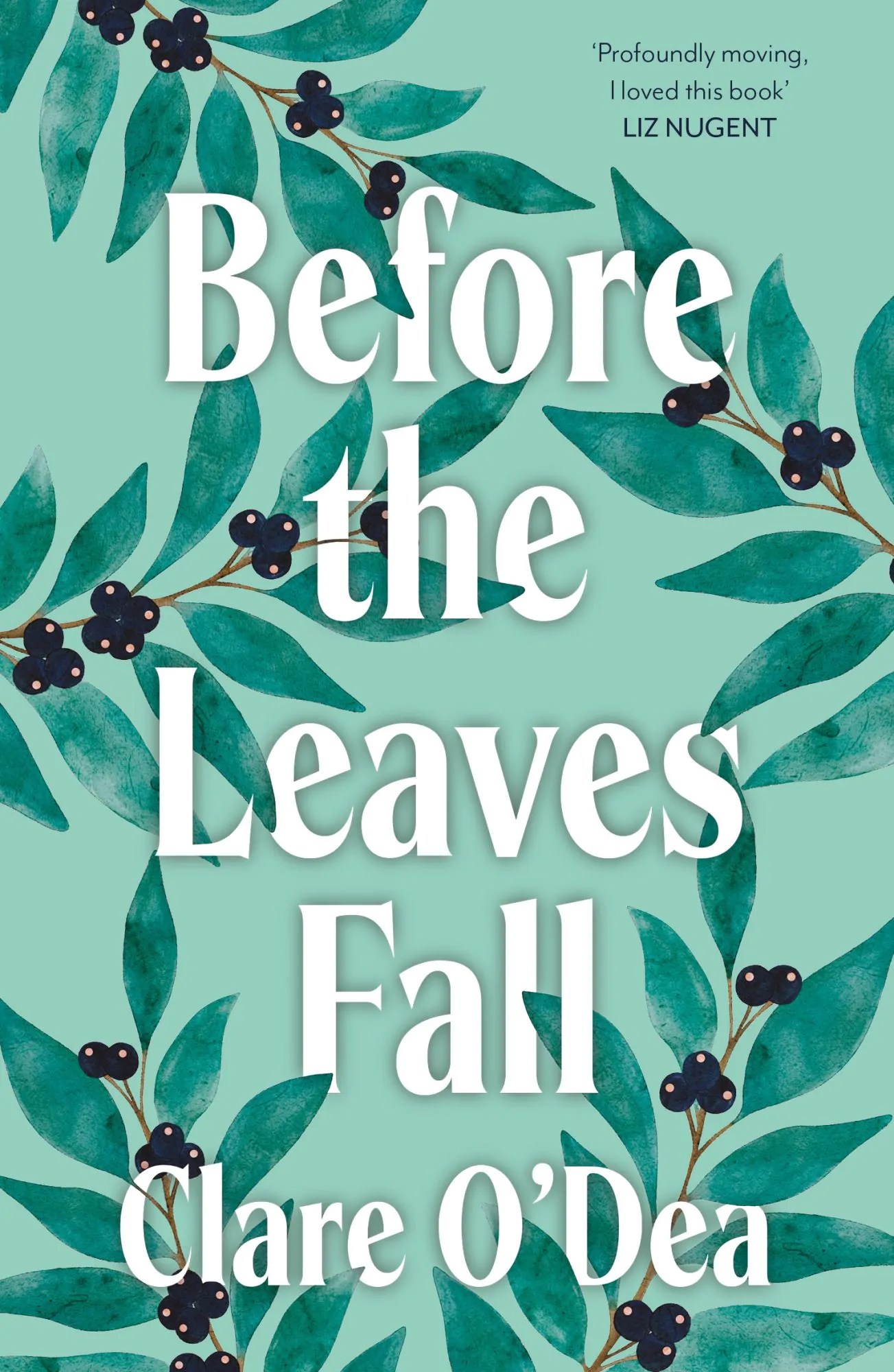
In Before the Leaves Fall (2025, also Fairlight Books) O’Dea revisits Ruedi and Margrit, now both in old age. There are some lovely echoes throughout, such as the opening scenes of rösti, Vreni’s homemade expertise contrasting with Ruedi’s ‘slimy’ shop-bought version.
Margrit is in a care home, spiky and determined to avoid the enforced social niceties at all costs:
“Better this than the nonsense Nadja was peddling, yoga and meditation. Margrit had been caught in a talk about mindfulness the other day because her legs were acting up, and she hadn’t been able to leave the dayroom quickly enough. You had to be vigilant in this place.”
Ruedi is retired, widowed and now working for Depart, an assisted dying organisation. This is the decision Margrit has taken, reluctant to live through another winter (hence the title) and struggling with her significantly reduced mobility and lack of independence. Ruedi is her assigned volunteer, to ensure she is comfortable with her decision. He mustn’t become emotionally involved.
“She was not only escaping. She was also reaching for something. Not freedom necessarily, not oblivion, but the feeling of putting herself first. She wanted to own herself once and for all, regardless of what the others – her husband, had children, the experts, even the people in this home – might think or want.”
But of course, once they realise who one another are, feelings are quick to grow. Margrit was a beacon of kindness and compassion in Ruedi’s difficult childhood.
“Margrit, a person who finally looked at him and saw something worth kindling. Margrit Sutter with the lovely wavy hair and smart clothes, the girl who smiled and played Ludo with him and told stories of Bern.”
He now becomes one of the few she allows beyond her tough carapace, as they remember the old days and learn who one another became. Both are disappointed in the relationships they have with their children and grandchildren. Both are grieving their spouses, particularly Ruedi who had a happy marriage.
“‘I grew old.’
‘It happens to the best of us.’ She smiled for the first time since he had met her.”
O’Dea is very good at writing children – sweet Ruedi in Voting Day and now his grandson Florian, perhaps less likeable but entirely believable.
Before the Leaves Fall follows the developing friendship between Margrit and Ruedi, as they both reflect on seemingly uneventful lives and how well these have been lived, as well as what living there is left to do. It’s deeply moving in its portrayal of how we hurt the ones we love and how insurmountable gaps in communication can seem.
As different relationships grow and develop through Before the Leaves Fall, they are evoked with compassion but without sentimentality.
Both novellas tackle Big Issues but without any didacticism. The interest is not in what should or shouldn’t be happening, but in what does happen and how this affects ordinary people.
“The bottle of grief was never empty. Always another sip to take, and another sip after that. You got used to the taste.”
To end, how I first learnt of women’s suffrage, dubbed into the language of the characters of these books:
 madame bibi lophile recommends
I enjoyed both of these. As you say, big issues handled with empathy and humanised. I never cease to be shocked by that date when Swiss women finally got the vote.
LikeLiked by 1 person
So glad you liked these too Susan. It is so surprisingly late for the vote isn’t it? Similarly I only learned fairly recently that women in the UK could get an independent mortgage without a male co-signatory from 1975! Shockingly recent!
LikeLiked by 1 person
I love that video!
When we see little gems like these two books, it does seem as if Irish women writers have made the novella their own…
LikeLiked by 1 person
Glad you enjoyed the clip Lisa!
They are two little gems for sure.
LikeLiked by 1 person
Pingback: It’s Reading Ireland Month 2026!
I really enjoyed both of these, mainly because, like you say, she writes about issues without making her narrative seem issue-led. She has a great eye for character I think.
LikeLiked by 1 person
Absolutely, I find I can’t stick with issue-focussed novels at all if the characters aren’t believable. She balances this so well. So glad you enjoyed these too Cathy!
LikeLiked by 1 person
These went onto my list immediately I finished reading your review. The setting and historical context is especially interesting to me as my uncle has lived in Switzerland since 1971. His (Welsh) wife did find adjusting to the new culture quite difficult for the first few years of marriage in the early 1980s.
The way complex and important issues seem to have been handled, without being preachy or didactic sounds masterful. I am off to see how I can source my copies!
LikeLiked by 1 person
Oh great! I’m so glad these appealed. The characterisation is really lovely. I hope you enjoy them, especially given your family connection.
LikeLike