“The first words of every story tasted fresh.” (Bernard MacLaverty, Midwinter Break)

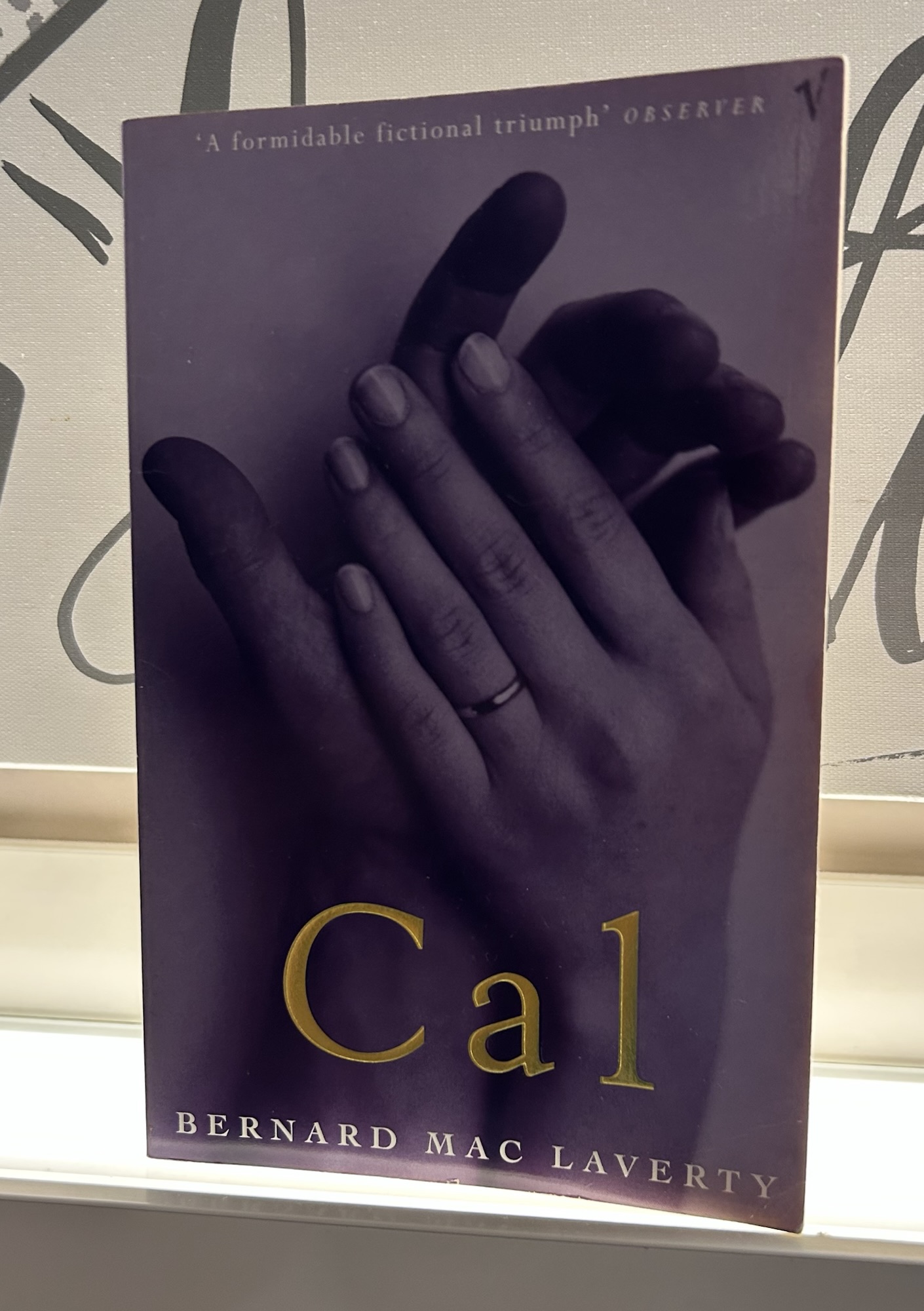
I read Grace Notes by Bernard MacLaverty when it came out in 1997 – nearly 30 years ago! I really loved it and although generally with books I remember themes, atmosphere and how I felt reading it, I rarely remember specifics such as characters or plot. With Grace Notes I can still remember some of the exquisite sentences, so it is a mystery to me why I have only just returned to this writer. Thank goodness for Reading Ireland Month, hosted by Cathy at 746 Books giving me a push!

Midwinter Break (2017) follows Gerry and Stella, a long-term couple now in late middle-age, as they spend a short city break in Amsterdam. Without explicitly stating their situation, but rather presenting it for the reader to observe, MacLaverty conveys their shared history, love and sense of humour.

“I suppose we’re lucky to have each other to ignore.”

They are entirely used to each other’s presence as a constant, both used to considering the other as much from habit as from affection.

“He had to cross the main road rumbling with traffic and reached out to take Stella by the hand before realising she wasn’t with him.”

Yet over the space of the weekend, tensions from deep-rooted differences and past trauma will come to the fore. Stella is undergoing an existential crisis:

“There are important questions to be answered. How can we best live our lives? How can we live good lives?”

She is a lifelong Catholic, while Gerry is an atheist. There is a sense that this need not be an insurmountable difference, except Gerry is dismissive of her beliefs and his drinking is becoming problematic. He foolishly believes his various deceptions go unnoticed by his wife. She has given up trying to get him to understand what religion gives her:

“Prayer was summoned intensity, held there in the head and in the heart. Something good, something spiritual. Articulated, spoken inwardly, wished to the point of aching.”

As they visit tourist destinations such as the Rijksmuseum (where a long description of the old woman reading portraits sounded very much like my avatar picture!) they talk, bicker, laugh, eat, drink. It is a testament to MacLaverty’s excellent characterisation and subtle evocation of their relationship that these surface behaviours exist alongside deeper crises without lessening their seriousness.

He portrays this couple with such a light touch, so although the reader feels they have reached a point of no return in their marriage, where after this mini-break nothing will be the same, it never feels melodramatic.

Similarly, MacLaverty crafts passages of such precise beauty, yet Midwinter Break never feels overwritten.

“Gerry’s hands lay in his lap and his eye was drawn to the window. The end of the daylight striking the glass obliquely created a glittering, grisaille effect. Like ground glass, a layer of dust activated by almost horizontal light transformed the window into Waterford crystal. No expense spared for the Irish pubs of Amsterdam.”

I thought that was just stunning: perfectly evoking an everyday scene so clearly, so poetically, and then undermining it with the gentle comedy of the prosaic final line.

Another description I found so tenderly observant was Gerry meeting his son for the first time:

“You are mine and I will love you till the day I die. He kissed his fingertips and conveyed the kiss to the baby’s face slowly, as if it could be spilled on the way down.”

Midwinter Break is just shy of 250 pages yet it captures the big questions of life alongside finely observed evocations of the everyday. I thought it was entirely wonderful.

The adaptation of the novel is in cinemas now and I’m going to see it on Sunday. Given the two leads, I have high hopes…

“Writing about music is like dancing about architecture.” (Variously attributed)

I was thinking about how this blog is supposed to be themes that relate books to life and how there are gaping holes in what I’ve covered so far.  This week I attempt to redress the balance by picking something that is a huge part of most people’s lives: music.  However, as the title quote shows, I may be digging myself the most enormous hole here, as trying to capture an aural experience through words is nigh on impossible.  Let’s take a breath and have some music so if nothing else this post does make some sort of melodic offering.  One of my favourite bands, and one of my mother’s favourite songs, Frogs Legs and Dragon’s Teeth by Bellowhead:

That was for you Maman!  Right, back to books, and two brave writers who’ve made music a big part of their novels.

Firstly The Courage Consort by Michel Faber (Canongate, 2002).  I’m fan of Michel Faber’s writing – I love his sparse style and unpredictability.  Anything can happen his books, there’s no “typical Faber”.  The Courage Consort is a novella (121 pages in my edition) told from the point of view of Catherine, one of five members of the titular a capella group headed by her husband, Roger.  Catherine is emotionally fragile (we are introduced to her trying to decide whether to jump out of the window) and her husband seemingly oblivious to her pain.  They join three others to rehearse an insanely complex piece called Partitum Mutante in an eighteenth-century chateau in Belgium.  The composer arrives briefly to assist them, a madman who attacked his ex with a stiletto in an airport and tells them to make their singing “more extreme, but more soft also…quiet but loud”.  Working on this seemingly doomed project, the disparate personalities that make up “the seventh most-renowned serious vocal ensemble in the world” start to come into conflict, but not in an entirely predictable way.

Faber creates a believably comic situation and the characters are generally well-observed, if bordering on national stereotypes at times.  The character of Catherine is sympathetic and Faber shows how music carries over into her musings about life in general:

“Other people might think it was terribly exciting when two females singing in thirds made the airwaves buzz weirdly, but Catherine was finding that her nerves were no longer up to it.  Even the way a sustained A flat tended to make an auditorium’s air-conditioning hum gave her the creeps lately.  It was as if her face was being rubbed in the fact that music was all soundwaves and atoms when you stripped the Baroque wrapping-paper off it.   But too much sonic nakedness wasn’t good for the spirit.  At least that was what she was finding lately, since she’d started coming…adrift.”

But things are not necessarily what they seem: Catherine hears screaming in the night and is told a ghost story about the forest that surrounds them.  No-one else hears it, and Catherine goes on to have an experience in the forest which is not told to the reader.  This lack of explication stops The Courage Consort being a straightforwardly comic novel, as an eeriness creeps around the house and its inhabitants.  Things do not go as planned, but ultimately the group comes to fully comprehend just how healing the experience of music can be.

Secondly, Grace Notes by Bernard MacLaverty (Vintage, 1997).  Grace Notes tells the story of another Catherine, this one a composer struggling to manage her art alongside the demands of her life.  These demands include a new baby and ensuing post-natal depression, her father’s death, and conflict with her mother.  Musicality comes naturally to her, and she has an innate understanding form an early age:

“One day, when she was only three or four, she’d slipped away from the kitchen as her mother baked and listened to the radio.  On this particular day the piano lid was open.  Catherine had reached up above her head and pressed the keys as softly as she could.  No sound came from them.  She had to press harder to make the sound come.  It frightened her when it did.  Dar, deep , thundery.  The booming faded away and the noise of the birds outside came back.  She tried further up the piano where the notes were nicer, not so frightening.  She pressed a single note, again and again.  It wasn’t the note which made her feel funny – it was the sound it made as it faded away.  The afterwards.  It made her feel lonely. “

This idea, later defined as “the notes between the notes” – grace notes – is the novel’s theme and main image: what happens in the spaces between events, what is left unsaid, what is defined and what is undefinable.    Catherine gradually comes to terms with her life throughout the course of the novel and moves onwards, creating a new symphony, but the grace notes continue: “it began with a wisp of music, barely there – a whispered five-note phrase on the violins and she was right back on that beach with her baby. […] Like the artist’s hand which moves to begin a drawing but makes no mark”.  Having described Catherine’s life in an interwoven way – memories that come to her interspersed with descriptions of her life in the present – MacLaverty describes her music similiarly, the literal description of the action of instruments interwoven with the images that have inspired Catherine as she writes the symphony.  It’s a highly effective method, and probably the nearest I’ve read to a representation of sound, and the feeling it evokes, written down.

As the novels are about two musical women, here they are pictured with two more musical women: Dusty Springfield and Lily Allen Cooper:

Image