It’s been years since I read Han Kang but I did like The Vegetarian and Human Acts, so I was looking forward to reading the novella which came between those two, Greek Lessons (2011, transl. Deborah Smith and Emily Yae Won, 2023).
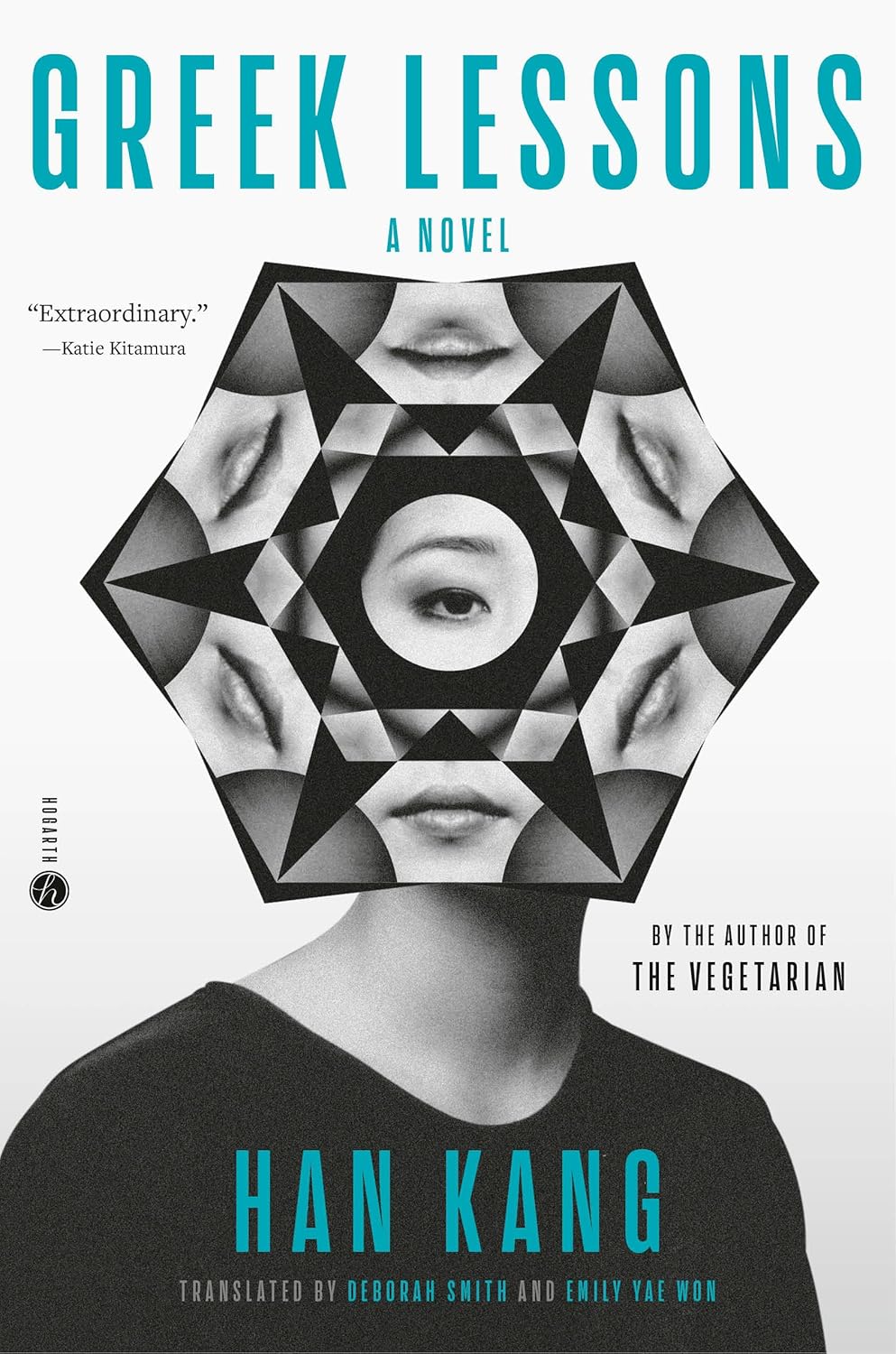
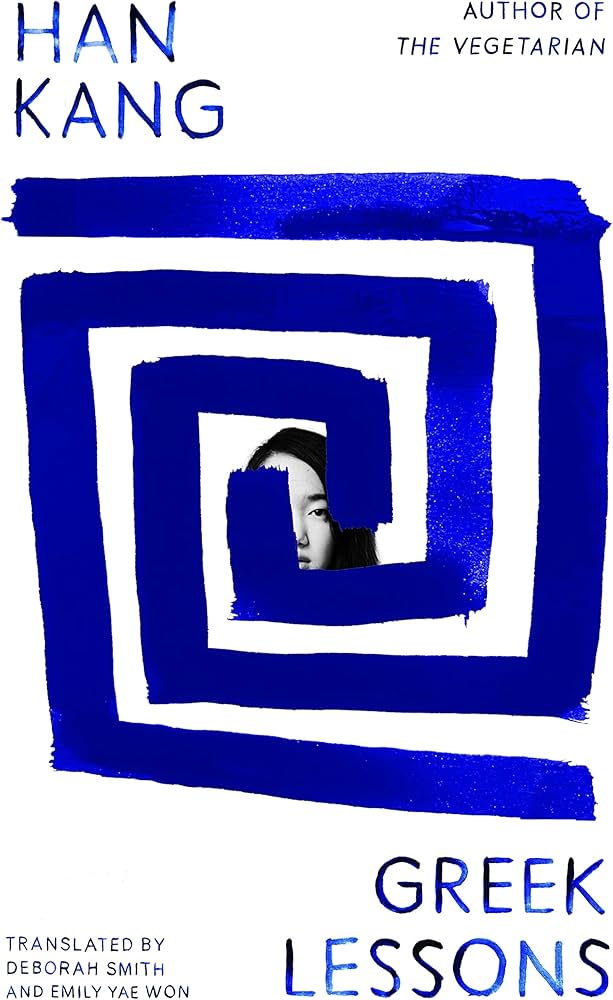
In mainly alternating chapters, it tells the story of a teacher of Ancient Greek who is losing his sight due to a long-standing condition, and his pupil who has spontaneously stopped speaking for the second time in her life. His chapters are mainly first-person, hers are third-person.
To be honest, if I heard this premise described without knowing the author I would think it sounded clunky, and I’m a bit tired of unnamed narrators too. But that just shows how little I know because Greek Lessons was a tenderly realised exploration of human connection and the role of language.
The woman is recently bereaved and has also lost custody of her son. She lives alone and is entirely isolated:
“She knows that no single specific experience led to her loss of language. Language worn ragged over thousands of years, from wear and tear by countless tongues and pens. Language warm ragged over the course of her life, by her own tongue and pen.”
The teacher reminisces about a love he had when young. She was deaf and used sign language. He was worried that when he lost his sight they wouldn’t be able to communicate:
“I know now that, had we in fact lived together, I wouldn’t have needed your voice after I went blind. For even as the visible world would gradually have receded like an ebb tide, at the same time, the silence we shared would have gradually become replete.”
In this way Greek Lessons looks closely at language: its limitations, the silences between what is said, what it opens up and what it closes off.
“Despite what her psychiatrist and mother had hoped, the stimulus of social interaction couldn’t fracture her silence. Instead a brighter and more concentrated stillness filled the dark clay jar of her body. In the crowded streets on the way home, she walked weightless, as though moving encased in a huge soap bubble. Inside this gleaming quiet, which was like gazing up at the surface under water, cars roared thunderously by and pedestrians elbows jabbed her in the shoulders and arms, then vanished.”
As these two people move towards one another, Kang questions how much true intimacy is derived from a shared language, and how much language enables avoidance of intimacy:
“She would have still had language then, so the emotions would have been clearer, stronger.”
Greek Lessons is very densely written, so although it’s short it isn’t a fast read. It is a detailed exploration of loss in many guises: the senses, people, love, roles, choices. There isn’t really a plot and there isn’t resolution, so definitely not the read for when you’re looking for those. But as a fractured, elliptical exploration of her themes through the lives of two lost people, it is engrossing.

